
SciELO - Scientific Electronic Library Online

 
vol.52 issue2Access to medicines in patients with breast cancer: A narrative review of the literatureContribution to the development of a nanogel for the controlled release of latanoprost author indexsubject indexarticles search
Home Pagealphabetic serial listing  

Services on Demand

Journal

Article

Indicators

Related links

  • On index processCited by Google
  • Have no similar articlesSimilars in SciELO
  • On index processSimilars in Google

Share


Revista Colombiana de Ciencias Químico - Farmacéuticas

Print version ISSN 0034-7418On-line version ISSN 1909-6356

Rev. colomb. cienc. quim. farm. vol.52 no.2 Bogotá May/Aug. 2023  Epub May 01, 2023

https://doi.org/10.15446/rcciquifa.v52n2.106817 

Scientific Research Articles

Analysis of phytochemical composition, antioxidant activity, and β‐glucuronidase inhibition potential of Arisaema tortuosum leaf extract

Análisis de la composición fitoquímica, actividad antioxidante y potencial de inhibición de la β-glucuronidasa del extracto de hoja de Arisaema tortuosum

Análise da composição fitoquímica, atividade antioxidante e potencial de inibição da β-glucuronidase do extrato da folha de Arisaema tortuosum

1Department of Applied Sciences, Galgotias College of Engineering & Technology

2Department of Chemistry, Rayat Bahra University

3Department of Pure and Industrial Chemistry, University of Nigeria


Abstract

Introduction

Medicinal plants contain essential phytochemicals and are used in traditional herbal therapy for ages. These phytochemicals are bioactive compounds and possess significant antibacterial and antifungal properties in addition to more biologically important potentials. The important bioactive phytochemicals include polyphenolic compounds and flavonoids. Arisaema tortuosum has been reported as a medicinal plant in literature and is used in treating many health issues.

Aim

To investigate the phytochemical composition, total polyphenolic content (TPC), total flavonoid content (TFC), antioxidant capacity, and β-glucuronidase inhibition potential of the extract obtained from leaves of A. tortuosum.

Methods

The phytochemical composition, TPC, TFC, and antioxidant capacity of the extract was analysed. β-glucuronidase inhibition assay was used to determine β-glucuronidase inhibition potential. The dose-dependent data was used to determine IC50 value of the extract.

Results

The gas chromatography-mass spectroscopy (GC-MS) analysis identified the fifty-three components from the leaf extract that was observed to possess a significant volume of TPC and TFC. 1,1-diphenyl-2-picryl-hydrazyl (DPPH) assay revealed a IC50 value of 936 µg/mL indicating a high antioxidant activity of the extract.

Conclusion

The study revealed the presence of many biologically important phytochemicals and a rich number of total polyphenols and flavonoids in leaf extract of A. tortuosum signifying the potential biomedical applications.

Keywords Arisaema tortuosum; antioxidant activity; anti-inflammatory potential; total flavonoid content; total polyphenolic content

Resumen

Introducción

las plantas medicinales contienen compuestos fitoquímicos esenciales y se utilizan en la terapia herbolaria tradicional desde hace siglos. Estos fitoquímicos son compuestos bioactivos y poseen importantes propiedades antibacterianas y antifúngicas, además de potenciales efectos biológicamente más importantes. Los fitoquímicos bioactivos importantes incluyen compuestos polifenólicos y flavonoides. En la literatura se ha reportado a la Arisaema tortuosum como una planta medicinal y que se usa para tratar muchos problemas de salud.

Objetivo

investigar la composición fitoquímica, el contenido polifenólico total (TPC), el contenido total de flavonoides (TFC), la capacidad antioxidante y el potencial de inhibición de la β-glucuronidasa del extracto obtenido de las hojas de A. tortuosum.

Métodos

se analizó la composición fitoquímica, TPC, TFC y la capacidad antioxidante del extracto. Se utilizó el ensayo de inhibición de β-glucuronidasa para determinar el potencial de inhibición de este agente. Los datos dependientes de la dosis se usaron para determinar el valor IC50 del extracto.

Resultados

el análisis de cromatografía de gases-espectroscopía de masas (GC-MS) permitió identificar cincuenta y tres componentes del extracto de hojas, que se observó que poseían un volumen significativo de TPC y TFC. El ensayo de 1,1-difenil-2-picril-hidrazilo (DPPH) reveló un valor IC50 de 936 μg/mL, lo que indica una alta actividad antioxidante del extracto.

Conclusión

este estudio reveló la presencia de muchos compuestos fitoquímicos biológicamente importantes y una gran cantidad de polifenoles totales y flavonoides en el extracto de hoja de A. tortuosum, lo que significa aplicaciones biomédicas potenciales.

Palabras clave Arisaema tortuosum; actividad antioxidante; potencial antiinflamatorio; contenido total de flavonoides; contenido de polifenoles totales

Resumo

Introdução

as plantas medicinais contêm compostos fitoquímicos essenciais e têm sido utilizadas na terapia tradicional à base de plantas há séculos. Esses fitoquímicos são compostos bioativos e possuem importantes propriedades antibacterianas e antifúngicas, além de efeitos potencialmente mais importantes biologicamente. Fitoquímicos bioativos importantes incluem compostos polifenólicos e flavonóides. Arisaema tortuosum tem sido relatada na literatura como planta medicinal e utilizada para o tratamento de diversos problemas de saúde.

Objetivo

investigar a composição fitoquímica, teor de polifenóis totais (TPC), teor de flavonoides totais (TFC), capacidade antioxidante e potencial de inibição da β-glucuronidase do extrato obtido das folhas de A. tortuosum.

Métodos

foram analisados a composição fitoquímica, TPC, TFC e a capacidade antioxidante do extrato. O ensaio de inibição da β-glucuronidase foi utilizado para determinar o potencial de inibição deste agente. Os dados dependentes da dose foram usados para determinar o valor IC50 do extrato.

Resultados

a análise por cromatografia gasosa-espectroscopia de massa (GC-MS) permitiu a identificação de cinquenta e três componentes do extrato da folha, que apresentaram um volume significativo de TPC e TFC. O ensaio de 1,1-difenil-2-picril-hidrazil (DPPH) revelou um valor de IC50 de 936 µg/mL, indicando uma alta atividade antioxidante do extrato.

Conclusão

este estudo revelou a presença de muitos compostos fitoquímicos biologicamente importantes e uma grande quantidade de polifenóis totais e flavonóides no extrato da folha de A. tortuosum, significando potenciais aplicações biomédicas.

Palavras-chave Arisaema tortuosum; atividade antioxidante; potencial anti-inflamatório; teor total de flavonoides; teor total de polifenóis

Introduction

Medicinal plants have remarkable importance in traditional Ayurveda and Unani treatments because of their significant biological activities including antibacterial, antioxidant, and anti-cancer potential [1]. Scientists have analyzed various phytochemicals present in various parts of medicinal plants including leaves, stem, root, and fruits for their antioxidant and antibacterial potential [2]. Many phytochemicals such as phenolic compounds, proteins, flavonoids, and terpenoids have been found to possess significant biological potential and hence these can be used as therapeutic agents in health care [3]. Along with their potent antioxidant action, flavonoids and phenolic compounds have also been identified as anti-inflammatory agents [4]. The different inflammation-related enzymes may be targeted by a collection of phenolic compounds that includes proteolytic enzymes of neutrophils [5]. Additionally, the effects of anti-inflammation may come from a synergistic action of scavenging radicals and interactions with enzymes of inflammation [6]. Hence, there is a continuous search to explore phytochemicals in medicinally important plants [7].

Arisaema tortuosum belonging to subfamily Aroideae relates to the herbaceous Araceae family and is popularly referred to as "Cobra or Whipcord lily". Various species of genus Arisaema are widely distributed throughout the world especially in the Himalayan region and have been explored for their biological potential [8]. The essential oil obtained from A. fargesii has been found to have a great inhibitory impact on the development of Aedes mosquito larvae and hence it is utilized to control Aedes mosquito hatchlings to forestall the spread of dengue fever [9]. The methanolic extract of the A. utile rhizomes has been found to exhibit significant cytotoxic activity against cancer and antioxidant activity [10]. The essential oil obtained from A. lobatum and A. franchetianum has been found to have the anthelmintic effect against Haemonchus contortus[11]. The Methanolic root extract of A. jacquemontii displayed antibacterial action against Fusarium oxysporum[12].

A. tortuosum is another medicinally important species of genus Arisaema as its various parts are utilized for the treatment of many contagious and bacterial diseases [5]. It is also utilized to check the noxious effect of snakebite and hair follicle infection in addition to its use for recuperation of cracked bones and as antinematodal [13]. The leaves of A. tortuosum are utilized to treat stomachache and rheumatism [14]. It has also been found to exhibit cyto-toxic activity against human cancer cells [15]. These biological activities like antifungal, antimicrobial, anti-inflammatory, and anticancer properties have been attributed to the presence of various metabolites and phytochemical compounds like alkaloids, polyphenols, terpenoids, glycosides, saponins, amino acids, lactones, and flavonoids, etc. [10]. Thus, it is very important to ascertain the phytochemical composition and recognize the medicinally important plants.

However, there is no study available in the literature on the phytochemical analysis of leaf extract of A. tortuosum, to the best of our knowledge. Consequently, the purpose of this research was to offer a scientific knowledge of its phytochemical composition, as well as support for its ethnomedicinal use in the treatment of different illnesses. The study has been directed to analyze the different volatile organic components of the extract obtained from leaves of A. tortuosum. The study also explores the antioxidant as well as the β-glucuronidase inhibition potential of the extract of this medicinally important plant.

MATERIALS AND METHODS

Preparation and Characterization of Extract

The collection of the plant was carried out from the Himalayan region of Dharamshala (Naddi), Himachal Pradesh, India and identification was carried out at the University school of Agricultural Sciences (RBU, Chandigarh) under voucher with Ref. No. RBU/USAS/HOD/22/190. Young and healthy leaves of A. tortuosum were selected and firstly cleaned by washing with tap water and afterward with demineralized water to expel the residue and dust particles over their surface. After draining free water, the material was dried under the shade at the room temperature for 30 days and ground to obtain the powdered form. 100 g of the powdered sample was processed for 12 hrs. By the Soxhlet extraction process utilizing 300 mL of methanol as a solvent at its boiling point [16]. The solvent was removed from the extract by using a rotary vacuum evaporator. The obtained final product was characterized by gas chromatography-mass spectroscopy (GC-MS) analysis (Model THERMO Scientific Trace 1300GC) using the capillary column (Model, Restek USA RTx-5Sil MS) with dimensions of 30 m × 0.25 mm × 0.25 mm. Helium was delivered at a flow rate of 1 mL/min. as a carrier at a split ratio of 1:5. The mass spectra were acquired utilising the electron ionisation (EI) mode with an energy of 70 electron volts (eV) at a spectral range (m/z) of 40-700. The experimental setup involved setting the interface temperature to 280 °C and the ion source temperature to 200 °C. The identification of different constituents was conducted through the comparison of their retention time and mass spectral data with the Wiley8 and NIST11 library spectral database. The quantification of the compounds was performed by analysing the area under the peak, and the resulting data was expressed as a percentage. The analysis of each sample was conducted in triplicate.

Total Phenolic Content

The Folin-Ciocalteu spectrophotometric method was used for the quantitative determination of the total phenolic content of the extract as described by Rebaya et al.[17]. 1 mL of extract (1 mg/mL) or standard gallic acid solution (30-150 mg/L) was diluted up to 10 mL by adding deionized water followed by addition of Folin-Ciocalteu reagent solution (1 mL). After the addition of 2 mL of sodium carbonate solution, 20% (w/v), the mixture was kept in dark for 60 min. and the absorbance was measured at 750 nm (UV-Visible spectrophotometer, Agilent Cary 60). The calibration curve provided the estimate of the total phenolic content (mg of gallic acid equivalent per g of dry extract weight).

Total Flavonoid Content

Aluminum chloride colorimetric technique was used to assess the TFC present in the extract as outlined by Stoyanova et al.[18]. 1 mL of extract (1 mg/mL) or standard Rutin trihydrate solution (60-300 mg/L) was diluted up to 5 mL by adding deionized water. After adding 0.3 mL of NaNO2 solution, 5% (w/v), the mixture was left untouched for 5 min. In this mixture, 0.3 mL of AlCl3 solution, 10% (w/v) and 2 mL of 1 M NaOH were added followed by dilution to 10 mL with deionized water. The mixture was again kept in dark for 30 minutes at 25 °C and the absorbance at 510 nm was recorded (UV-Visible spectrophotometer, Agilent Cary 60). The total flavonoid content (mg of rutin trihydride equivalent per g of dry extract weight) was estimated from the calibration curve.

Antioxidant potential (DPPH Assay)

The antioxidant potential of the extract was quantitatively determined as free radical scavenging assay by using the DPPH method as given by Garcia et al.[19]. 3 mL of fresh DPPH solution (0.1 mM) was poured into 0.2 mL of extract (1 mg/mL) and kept in dark for 30 minutes. The absorbance was recorded by Agilent Cary 60 UV-Visible spectrophotometer at 517 nm. The scavenging impact of the extract against DPPH free radical was determined using Ascorbic acid as a standard on the basis of the equation given below.

% \mathrm{scavenging~effect} = \left[1 - \frac{A_{\mathrm{test}}}{A_{\mathrm{control}}}\right]\times 100

Where Atest and Acontrol are the absorbances of test sample/ standard solution and control respectively.

Anti-inflammatory Potential (β-glucuronidase inhibition assay)

As per the method given by Otang-Mteng et al.[1], 0.1 mL of the extract, with varying dosage from 25-100 mg/mL, was preincubated for 5 min. in 0.1 M acetate buffer (pH 7.4) at 37 °C [1]. This mixture was further kept in dark for 30 min. after addition of 0.1 mL β-glucuronidase solution and 2 mL of NaOH (0.5 N) was added to terminate the reaction. A reference, Salicylic acid, was utilized with a concentration of 1 mM and the absorbance of the solution was recorded at 410 nm (UV-Visible spectrophotometer, Agilent Cary 60).

RESULTS

GC-MS analysis

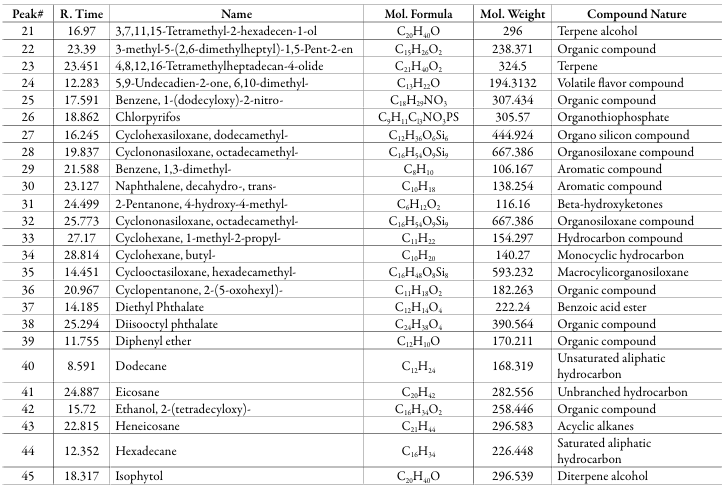
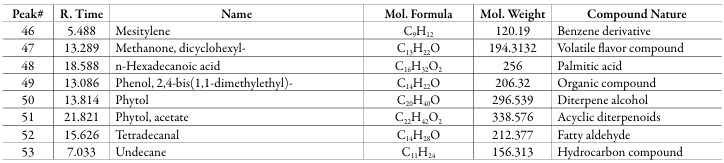
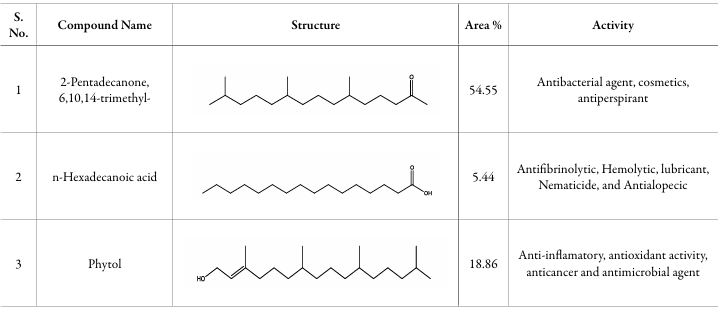
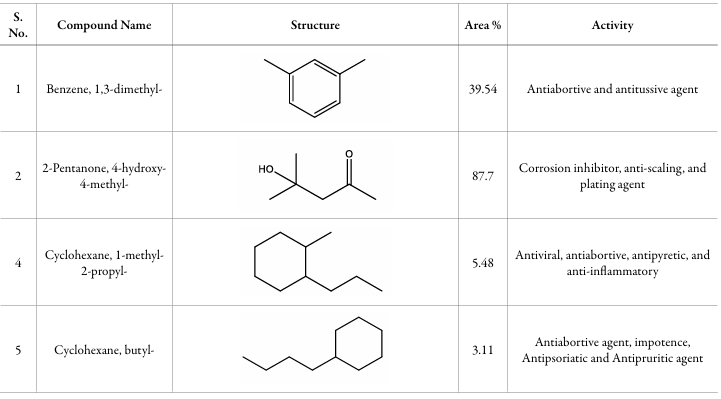
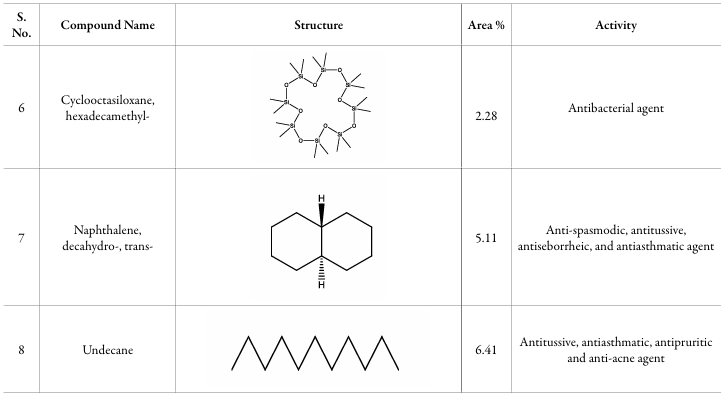
Figure 1 illustrates the existence of various secondary metabolites or phytochemicals in the GC-MS profile of the extract. A total of fifty-three phytochemicals were detected in the chromatograph of the methanolic leaf extract of A. tortuosum as shown in Table 1. Nonane was eluted first with a retention time of 4.064 min. in the leaf extract. The major peak area was obtained for 6, 10, 14-trimethyl-2-pentadecanone as 54.55% and phytol as 18.86% in the leaf extract. The other identified major phytochemicals included 2-Pentadecanone, 6,10,14-trimethyl-, Phytol, Benzene, 1,3-dimethyl-, 2-Pentanone, 4-hydroxy-4-methyl-, Cyclohexane, (2-methylpropyl)-, Cyclohexane, 1-methyl-2-propyl-, Cyclohexane, butyl-, Naphthalene, decahydro-, trans-, Undecane and hexadecamethyl cyclooctasiloxane. The results confirmed the presence of important bioactive compounds like terpenoids, polyphenols, hydrocarbons and organosiloxanes in the leaf extract of A. tortuosum. Some of these phytochemicals with significant biopotential have been listed in Table 2.

Figure 1 GC-MS analysis of leaf extract of A. tortuosum. 

Total Phenolic Content (TPC)

The total phenolic content is the quantitative approach to determine the amount of polyphenols present in the plant. Phenols are one of the important plant constituents as the radical scavenging ability depends on the hydroxyl group [12]. The phenolic groups are secondary metabolites and have redox properties that allow them to function as a radical scavenger in various natural activities such as antioxidant, antibacterial and antifungal [20]. The total phenolic content also depends upon the nature of the extraction method and solvent used. The quantity of phenolic content available in methanolic leaf extract of A. tortuosum was calculated from a calibration curve. The TPC for leaf extract of A. tortuosum was found as 171.05 gallic acid equivalents/g. The high phenolic content of the plant extract has been correlated with the high antioxidant activity of the medicinal plants in various reports [21, 22].

Total Flavonoid Content (TFC)

Flavonoids such as flavanols and flavones are secondary plant metabolites that are more soluble in polar solvents as compared to the nonpolar solvent, due to this methanol extract has higher flavonoid content as compared to the other extract [17]. These metabolites are responsible for the color as well as antioxidant, anti-inflammatory and antimicrobial activity of plants. The antioxidant activity of the extract is also found to be dependent upon the quantity and position of hydroxyl groups in the flavonoids. The amount of flavonoid present in the leaf extract of A. tortuosum was also measured by the regression calibration curve. TFC for the leaf extract was found as 183.5 rutin trihydride equivalents/g. A similar result was reported previously in the case of tuber extract of A. tortuosum[5].

Antioxidant Assay

The polyphenolic compounds present in medicinal plants are referred to as antioxidant agents and used as radical scavengers or metal chelators [16]. The antioxidant effect of the plant depends on phytochemicals present as both major and minor constituents that play an effective role in DPPH radical activity. Literature reports different methods for evaluating the antioxidant activity dependent upon free radical scavenging activity having different mechanisms [23-25].

The general mechanism given for DPPH activity has been illustrated in Figure 2 [25]. In this examination, the leaf extract of A. tortuosum was found to exhibit significant DPPH scavenging activity with IC50 value as 936 μg/mL. The results have been found consistent with similar studies carried out on the tuber extract of A. tortuosum with scavenging activity against stable DPPH radical having IC50 value of 852 μg/mL [5].

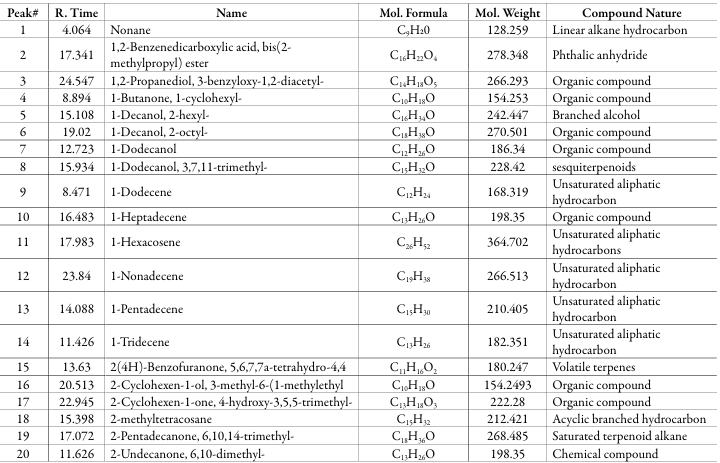
Figure 2 Illustrative mechanism for DPPH scavenging activity. 

Table 1 GC-MS analysis of the leaf extract of A. tortuosum 

Table 2 Structure and activities of major phytocompounds reported in GC-MS analysis 

β-Glucuronidase inhibition potential

β-glucuronidase, an enzyme found in neutrophil lysosomal membranes, has been identified as one of the mediators of the inflammatory response [5]. Hence, the anti-inflammatory potential of leaf extract was determined in terms of β-glucuronidase inhibition. A substantial inhibitory action against the β-glucuronidase enzyme in a concentration-dependent manner was observed, with the highest inhibition observed at a concentration of 100 mg/mL in comparison to the control (salicyclic acid). 82.36% inhibition was observed for the extract (IC50 value as 37.45 mg/mL) as compared to the 72.81% inhibition by the control. Thus, A. tortuosum leaf extract exhibited a greater ability to inhibit β-glucuronidase activity than an established anti-inflammatory agent, salicylic acid [26].

CONCLUSION

In this study, the analysis of GC-MS has identified fifty-three bioactive compounds including mainly phytol, terpenoids, and siloxanes, from the leaf parts of A. tortuosum. The presence of diverse bioactive compounds justifies that this plant can be used for treating various ailments. The extract exhibited significant availability of high content of total polyphenols and flavonoids and possessed significant antioxidant and β-glucuronidase inhibition activity. Therefore, this plant can be used for many biomedical applications. But, isolating specific phytochemical constituents and confining their biological activity will provide beneficial outcomes. Further studies are however needed to ensure its profile of bioactivity for potential biomedical applications.

References

[1] W. Otang-Mbeng, I.J. Sagbo, Cytotoxic, cellular antioxidant, and antiglucuronidase properties of the ethanol leaf extract from Bulbine asphodeloides, Sci. World J., 2021, 6622318 (2021). Doi: https://doi.org/10.1155/2021/6622318 [ Links ]

[2] A. Ceesay, M. Nor Shamsudin, M. Aliyu-Paiko, I.S. Ismail, M.F. Nazarudin, N.M. Alipiah, Extraction and characterization of organ components of the Malaysian Sea Cucumber Holothuria leucospilota yielded bioactives exhibiting diverse properties, Biomed Res. Int., 2019, 2640684 (2019). Doi: https://doi.org/10.1155/2019/2640684 [ Links ]

[3] O.S. Edori, J.D. Nwineewii, I.B. Nwoke, Metals and phytochemical composition of leaves and peels of Pawpaw (Carica Papaya) sold within Port Harcourt, Rivers State, Nigeria, Pharmacophore, 10(4), 57-61 (2019). [ Links ]

[4] G.R.P.I. Abeysiri, R.M. Dharmadasa, D.C. Abeysinghe, K. Samarasinghe, Screening of phytochemical, physico-chemical and bioactivity of different parts of Acmella oleraceae Murr. (Asteraceae), a natural remedy for toothache, Ind. Crops Prod., 50, 852-856 (2013). Doi: https://doi.org/10.1016/j.indcrop.2013.08.043 [ Links ]

[5] S.H. Nile, S.W. Park, HPTLC analysis, antioxidant, anti-inflammatory and antiproliferative activities of Arisaema tortuosum tuber extract, Pharm. Biol., 52(2), 221-227 (2014). Doi: https://doi.org/10.3109/13880209.2013.831110 [ Links ]

[6] A.K. Martial-Didier, K.K. Hubert, K.E.J. Parfait, T. Kablan, Phytochemical properties and proximate composition of Papaya (Carica papaya L. var solo 8) peels, Turkish J. Agric. - Food Sci. Technol., 5(6), 676-680 (2017). Doi: https://doi.org/10.24925/turjaf.v5i6.676-680.1154 [ Links ]

[7] M.S. Nagano, C. Batalini, Phytochemical screening, antioxidant activity and potential toxicity of Azadirachta indica A. Juss (neem) leaves, Rev. Colomb. Cienc. Quim. Farm., 50(1), 29-47 (2021). Doi: https://doi.org/10.15446/rcciquifa.v50n1.95447 [ Links ]

[8] H. Verma, V.K. Lal, K.K. Pant, N. Soni, A ethnomedicinal review on Arisaema tortuosum, Int. J. Adv. Pharmacy, Biol. Chem., 1(2), 176-179 (2012). [ Links ]

[9] M. Jia, Q. He, W. Wang, J. Dai, L. Zhu, Chemical composition and acaricidal activity of Arisaema anurans essential oil and its major constituents against Rhipicephalus microplus (Acari: Ixodidae), Vet. Parasitol., 261, 59-66 (2018). Doi: https://doi.org/10.1016/j.vetpar.2018.08.006 [ Links ]

[10] S. Mubashir, W.A. Shah, Antimicrobial, cytotoxic and antioxidant activities of Arisaema utile, J. Pharm. Res., 5(3), 1368-1370 (2012). [ Links ]

[11] L. Zhu, J. Dai, L. Yang, J. Qiu, Anthelmintic activity of Arisaema franchetianum and Arisaema lobatum essential oils against Haemonchus contortus, J. Ethnopharmacol., 148(1), 311-316 (2013). Doi: https://doi.org/10.1016/j.jep.2013.04.034 [ Links ]

[12] S.A. Baba, S.A. Malik, Determination of total phenolic and flavonoid content, antimicrobial and antioxidant activity of a root extract of Arisaema jacquemontii Blume, J. Taibah Univ. Sci., 9(4), 449-454 (2015). Doi: https://doi.org/10.1016/j.jtusci.2014.11.001 [ Links ]

[13] S. Swarnkar, S.S. Katewa, Ethnobotanical observation on tuberous plants from tribal area of Rajasthan (India), Ethnobot. Leafl., 12, 647-666 (2008). [ Links ]

[14] F. Hussain, S.M. Shah, H. Sher, Traditional resource evaluation of some plants of Mastuj, District Chitral, Pakistan, Pakistan J. Bot., 39(2), 339-354 (2007). [ Links ]

[15] V. Dhuna, J.S. Bains, S.S. Kamboj, J. Singh, Shamugavel, A.K. Saxena, Purification and characterization of a lectin from Arisaema tortuosum schott having in-vitro anticancer activity against human cancer cell lines, J. Biochem. Mol. Biol., 38(5), 526-532 (2005). Doi: https://doi.org/10.5483/bmbrep.2005.38.5.526 [ Links ]

[16] A. Sharma, D.S. Cannoo, A comparative study of effects of extraction solvents/techniques on percentage yield, polyhenolic composition, and antioxidant potential of various extracts obtained from stems of Nepeta leucophylla: RP-HPLC-DAD assessment of its polyphenolic constituents, J. Food Biochem., 41(2), e12337 (2017). Doi: https://doi.org/10.1111/jfbc.12337 [ Links ]

[17] A. Rebaya, S.I. Belghith, B. Baghdikian, V.M. Leddet, F. Mabrouki, E. Olivier, J.K. Cherif, M.T. Ayadi, Total phenolic, total flavonoid, tannin content, and antioxidant capacity of Halimium halimifolium (Cistaceae), J. Appl. Pharm. Sci., 5(1), 052-057 (2015). Doi: https://doi.org/10.7324/JAPS.2015.50110 [ Links ]

[18] I. Stoilova, A. Krastanov, A. Stoyanova, P. Denev, S. Gargova, Antioxidant activity of a ginger extract (Zingiber officinale), Food Chem., 102(3), 764-770 (2007). Doi: https://doi.org/10.1016/j.foodchem.2006.06.023 [ Links ]

[19] E.J. Garcia, T.L. Cadorin-Oldoni, S.M. de Alencar, A. Reis, A.D. Loguercio, R.H. Miranda-Grande, Antioxidant activity by DPPH assay of potential solutions to be applied on bleached teeth, Braz. Dent. J., 23(1), 22-27 (2012). Doi: https://doi.org/10.1590/S0103-64402012000100004 [ Links ]

[20] M.A. Soobrattee, V.S. Neergheen, A. Luximon-Ramma, O.I. Aruoma, T. Bahorun, Phenolics as potential antioxidant therapeutic agents: Mechanism and actions, Mutat. Res. - Fundam. Mol. Mech. Mutagen., 579(1-2), 200-213 (2005). Doi: https://doi.org/10.1016/j.mrfmmm.2005.03.022 [ Links ]

[21] W. Sun, M.H. Shahrajabian, M. Lin, Research progress of fermented functional foods and protein factory-microbial fermentation technology, Fermentation, 8(12), 688 (2022). Doi: https://doi.org/10.3390/fermentation8120688 [ Links ]

[22] M.A.R. Mia, Q.U. Ahmed, A.B.M. Helaluddin, S. Ferdosh, M.M. Siddique, S.N.H. Azmi, J. Ahmed, M.Z.I. Sarker, Acute and subacute toxicity assessment of liquid CO2 extract of Phaleria macrocarpa fruits flesh in mice model, J. King Saud Univ. - Sci., 34(4), 101912 (2022). Doi: https://doi.org/10.1016/j.jksus.2022.101912 [ Links ]

[23] M. Hosny, M. Fawzy, Y.A. El-Badry, E.E. Hussein, A.S. Eltaweil, Plant-assisted synthesis of gold nanoparticles for photocatalytic, anticancer, and antioxidant applications, J. Saudi Chem. Soc., 26(2), 101419 (2022). Doi: https://doi.org/10.1016/j.jscs.2022.101419 [ Links ]

[24] R. Balakrishnan, D. Vijayraja, S.H. Jo, P. Ganesan, I. Su-kim, D.K. Choi, Medicinal profile, phytochemistry, and pharmacological activities of Murraya koenigii and its primary bioactive compounds, Antioxidants, 9(2), 101 (2020). Doi: https://doi.org/10.3390/antiox9020101 [ Links ]

[25] S. Bhardwaj, S. Lata, R. Garg, Phyto-mediated green synthesis of silver nanoparticles using Acmella oleracea leaf extract: Antioxidant and catalytic activity, Pharmacogn. Mag., 18(77), 22 (2022). Doi: https://doi.org/10.4103/pm.pm_586_20 [ Links ]

[26] R.N. Gacche, N.A. Dhole, Antioxidant and possible anti-inflammatory potential of selected medicinal plants prescribed in the Indian traditional system of medicine, Pharm. Biol., 44(5), 389-395 (2006). Doi: https://doi.org/10.1080/13880200600751691 [ Links ]

CONFLICT OF INTERESTSThe authors report no conflict of interest.

AUTHOR CONTRIBUTIONS

Conceptualization and software: Rajni Garg.

Writing - original draft: Rajat Kahol.

Data curation: Diksha Puria.

Validation: Nnabuk Okon Eddy.

Writing - review & editing: Rajni Garg and Nnabuk Okon Eddy.

How to cite this articleR. Garg, R. Sharma, D. Puria, N.O. Eddy, Analysis of phytochemical composition, antioxidant activity, and β-glucuronidase inhibition potential of Arisaema tortuosumleaf extract, Rev. Colomb. Cienc. Quim. Farm., 52(2), 1021-1038 (2023). https://doi.org/10.15446/rcciquifa.v52n2.106817

Received: January 18, 2023; Revised: March 23, 2023; Accepted: July 30, 2023

Creative Commons License All the contents of this journal, except where otherwise noted, is licensed under a Creative Commons Attribution License