




 English (pdf)
 Article in xml format
 Article references
 Automatic translation
 Send this article by e-mail
 Cited by SciELO
  Cited by Google
  Similars in
SciELO
Similars in
SciELO  Similars in Google
 Permalink

Introduction
Healthy eating enables adults to lead a healthy life, reduces the burden of disease, and increases the level of well- being in work settings.1-3
The term "dietary pattern" is used to describe the eating patterns of individuals at their main meals (i.e. breakfast, lunch, or dinner) or smaller meals (i.e. mid- morning and mid- afternoon snacks). These patterns are influenced by three fundamental constructs: patterning, which refers to the frequency, regularity, skipping, and timing of meals; format, which relates to the types of food combinations, their sequencing, and their nutrient content; and context, which includes eating with others or with the family, eating in front of the television, or eating outside the home.4
The dietary pattern is characterized by diurnal and uninterrupted sequence of eating episodes (meals) and fasting intervals.5 Meal frequency is of importance in regulating metabolism and body weight, and is inversely associated with body mass index,6,7 so a relatively stable breakfast- feeding pattern positively influences proper metabolic and circadian regulation.8
The dietary pattern has changed over time, resulting in an increase in dietary risks attributed to social changes such as urbanization, the incorporation of women into the labor market, and greater consumption of processed and ultra- processed products.9,10 This is coupled with low consumption of fruits, vegetables, dried fruit, seeds, and foods rich in omega- 3 fatty acids, and high consumption of salt, sugars, and trans and saturated fats.9
Ultra- processed products (i.e. packaged snacks, ice cream, chocolates, sweets, cookies, soft drinks, energy drinks, milk- based sugary drinks, and frozen meals such as pizza, hamburgers, among others) have a poor nutritional quality11,12 due to their high energy content and low nutrient content, and their consumption is perhaps the main cause of weight gain12 and the incidence of non- communicable diseases (NCDs).10,13 Moreover, it has been established that the consumption of this type of food can be addictive.13,14 Conversely, following a healthy diet through the daily consumption of foods from all food groups in adequate amounts allows us to maintain an optimal state of health and to carry out daily activities.15
Healthy eating in adults can reduce the risk of illness and death from NCDs such as obesity, hypertension, heart disease, cancer, diabetes mellitus, among others.9,16 It is critical to prevent these diseases as they are a serious public health problem since, for example, obesity in adults has a major socio- health impact due to the costs and the demand for health services.17
Often, work environments, instead of facilitating proper nutrition, are an obstacle to maintaining healthy eating due to the availability of vending machines that deliver unhealthy food. In addition, workers may not have the money to buy quality food, the time to prepare and consume their food, or an adequate place to eat, so they must resort to street food.18
The prevalence of overweight and obesity in administrative workers at universities in Latin America varies between 52% and 64%.19,20 However, this figure is higher in Colombian universities, where, according to Uribe- Bustos et al.,21 it is 61.83% in workers at the Bogota Campus of the Universidad Nacional de Colombia (UNAL) and, according to Hoyos- Loaiza et al.,22 it is 92.15% in employees of a university in Manizales, Colombia. This situation is worrisome, as these data are even above the prevalence of overweight and obesity estimated for the Colombian population (56.5%) in the Encuesta Nacional de Situacion Nutricional - ENSIN de 2015 (2015 National Survey of Nutritional Status).23
Studies carried out in international universities report that the adult working population has inadequate eating habits such as low consumption of fruits, vegetables20,24 and water,25 and high consumption of salty foods, soft drinks,25 sweet foods, and soft drinks/artificial juices.26 They have also revealed that the prevalence of consumption of breakfast, lunch, dinner and mid- morning and mid- afternoon snacks is 86%, 93%, 91%, 63%, and 25%, respectively.24
Few studies have demonstrated the association between dietary patterns and sociodemographic and occupational variables, and the results of the available studies are not conclusive. For example, while da Cruz Ferreira- Silva et al.27 report that there is a relationship between fruit and vegetable consumption with age, sex, income level, educational level, and marital status, but not with other types of food,27 Gamboa- Delgado et al.28 found no such relationship.
Regarding the desirable dietary pattern in Colombia, the Food- Based Dietary Guidelines (FDBG)15 recommend daily consumption of milk and derivatives, eggs, whole fruits, fresh vegetables, and water (4- 6 glasses); weekly consumption of offal; and consumption \ge 2 times/week of dried legumes. On the other hand, the 2010 ENSIN29 recognizes 5 mealtimes during the day, 3 main meals (breakfast, lunch, and dinner), and 2 snacks (a mid- morning and a mid- afternoon snack).
At the time of writing this article, no studies had been published that showed the dietary pattern of UNAL workers, so the objective of this study was to characterize the dietary pattern of this population and to determine the factors associated with it. The importance of this research lies in the fact that, based on its results, interventions that contribute to promoting healthy eating and increase the well- being of these workers could be proposed. Furthermore, it should be noted that the study was carried out taking into account that the dietary pattern of these individuals is possibly better than that of the general population given their working conditions and labor welfare.
Materials and methods
Study type and sample
Cross- sectional study carried out using data on food consumption in workers at the Bogota Campus of the UNAL. The universe consisted of 1 409 employees and the sample was chosen by convenience, given that the employees who were interested in the study and signed the informed consent form were included. Pregnant women were excluded, resulting in a final sample of 126 workers.
Procedures
Food consumption patterns were measured with an adapted version of the questionnaire on food consumption frequency in the last month taken from the Encuesta Nacional de Situacion Nutricional -- ENSIN de 2010 (2010 National Nutritional Situation Survey),29 which had already been used in a similar study.30 This instrument was used to ask about the frequency of consumption of 7 food groups, water, and supplements (Annex 1).
Information was collected between October 2017 and June 2018, and was handled by students of the course Semillero de Promocion de la Salud (Health Promotion Seedbed) of the UNAL Faculty of Medicine, who contacted the workers by email or visited their work site to conduct the interview.
The questionnaire collected data on the following variables: sex (male or female), socioeconomic stratum (1-6) (Table 1), marital status (single/separated/widowed or married/domestic partnership), age, type of occupation (according to the International Standard Classification of Occupations - ISCO-08 and obtained from the database provided by the University),31 tenure (in decades), and educational level (incomplete high school, completed high school, technical or associate degree, and undergraduate and postgraduate education).
Table 1. Socioeconomic strata in Colombia according to the National Administrative Department of Statistics.
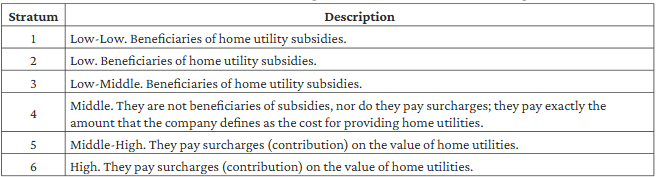
Source: Own elaboration based on DANE reports.32
The dietary pattern was established on the basis of the frequency of consumption of various food groups in the last month: 1) cereals (and derivatives), roots, tubers, and plantains; 2) fruits and vegetables; 3) milk and dairy products; 4) meats, eggs, legumes, dried fruit, and seeds; 5) fats (fried foods, mayonnaise, heavy cream, butter, margarine); 6) sugars (added sugars and sweets); 7) processed and ultra- processed products; and 8) water and nutritional supplements. The frequency of consumption of each food group was categorized into: daily (consumption of one or more foods from the group once, twice, or more times in a day); weekly (consumption of one or more foods from the group once, two to three, or four to five times a week); biweekly (consumption of one or more foods from the group once every two weeks); monthly (consumption of one or more foods from the group once a month); and never (no consumption of foods from the group in the last month).
In addition, the proportion of workers who complied with the recommendations for daily consumption of fruits, vegetables, milk/dairy products, eggs, dried fruit and water, and weekly consumption of meat (at least once/week) and legumes (at least twice/week) was established according to the recommendations of the Colombian GABA15 and the recommendation of the Pan American Health Organization (PAHO)10 of not consuming artificial juices, fast foods, soft drinks, packaged foods, sweets, and cold meats. Participants were also asked about their eating habits at different mealtimes throughout the day (breakfast, mid- morning snack, lunch, mid- afternoon snack, and dinner).
Statistical analysis
Data are described using absolute and relative frequencies for categorical variables and means and standard deviations (SD) for quantitative variables. To determine the association between the independent variables (sociodemographic and occupational) and the dependent variables (recommended consumption pattern of each food or food group and daily consumption of the 3 main meals), bivariate analyses were performed using Pearson's chi- square or Fisher's exact tests and calculating prevalence ratios (PR) with their respective 95% confidence intervals (95% CI); a significance level of p<0.05 was considered.
It should be mentioned that the following variables were recategorized for the analysis: age (\le 47 and \ge 48 years), educational level (high school and technician/professional), stratum (low and medium/high), marital status (with a partner and without a partner), and position (administrative/managerial [includes university/specialized professional, executive secretary, advisors, administrative assistants, cashier, coordinator and head of unit] and operators [includes auxiliary, orderly, mechanical driver, operator, technician, and officer]). Statistical analysis was performed in SPSS Statistics (version 26).
Ethical considerations
The study was approved by the Ethics Committee of the Faculty of Medicine of the UNAL according to Minutes No. 016-244-17 of October 26, 2017. Similarly, the ethical principles for biomedical research involving human subjects of the Declaration of Helsinki33 and the scientific, technical and administrative standards for health research of Resolution 8430 of 1993 of the Colombian Ministry of Health34 were observed, guaranteeing the protection and confidentiality of the participants' data and their exclusive use for this research.
Informed consent was obtained from the participants.
Results
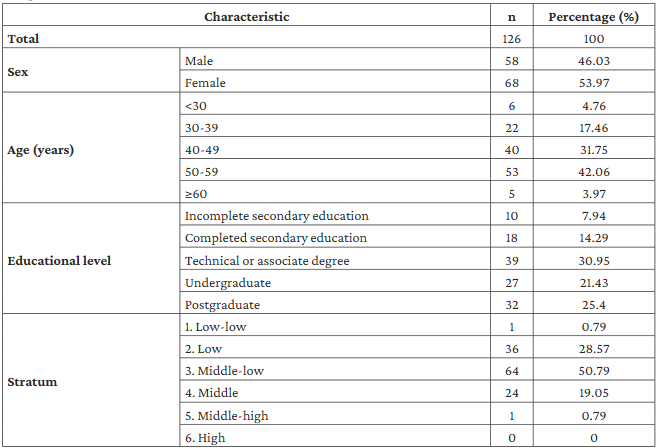
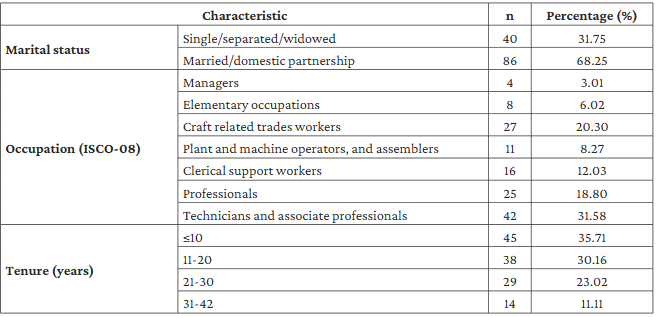
Of the 126 participants, 53.97% were women. The average age was 46.85±8.65 years, with ages ranging from 25 to 64 years. In addition, 42.06% were between 50 and 59 years old. The average length of tenure was 16.15±10.27 years (minimum length of time 0.67 and maximum of 42 years), and 35.71% had worked for ≤10 years at the university. Likewise, 50.79% were from the lower-middle stratum, 30.95% had a technical/associate degree, 68.25% were married or living in a domestic partnership, and 31.58% had an occupation classified as technicians and mid-level professionals (Table 2).
Table 2. Characterization of the administrative staff of the Universidad Nacional de Colombia, Bogotá campus. 2017-2018.
The foods most consumed daily were fruits (whole and in juice) and cereals and derivatives (84.13% and 80.95%, respectively); only 56.35% of the participants ate vegetables daily (Table 3).
Regarding the food consumption recommendations or food groups of the Colombian GABAS15 and PAHO,10 we found that 13.49%, 32.54% and 69.05% of the participants complied with the recommended daily consumption of dried fruit, eggs and milk, and dairy products, respectively. We also observed that 45.83% had not consumed sweets in the last month, and that 44.17% added sugar, raw sugarcane or honey to their food preparations on a daily basis. Although 69.05% of the workers consumed dry legumes weekly, only 40.48% complied with the recommendation of consumption ≥2 times/week. Also, 9.52% consumed offal once a week, of which 7.35% were women (Table 3).
On the other hand, a low proportion of daily consumption of fried foods (6.35%) and mayonnaise, heavy cream, butter and/or margarine (7.50%) was found (Table 3).
Regarding the consumption of processed and ultra- processed products, it was found that in the last month 76.19%, 65.08% and 64.17% of the participants had not drunk boxed juices or powdered soft drinks, packaged foods, or soft drinks, respectively. On the contrary, there was a lower proportion of consumption of fast foods and cold/processed meats in the last month (46.83% and 34.92%, respectively), with the weekly intake of these foods being the most representative (25.40% and 44.44%). Finally, 84.13% complied with the daily water consumption recommendation (Table 3).
Regarding mealtimes, 92.9% of the participants had breakfast, 98.4% had lunch, 91.3% had dinner, 69.00% had a mid- morning snack, and 43.70% had a mid- afternoon snack.
As for the place of origin of the three main meals, 79.37%, 52.38% and 85.71% of workers reported eating breakfast, lunch and dinner, respectively, at home or bringing meals prepared at home, while 46.03%, 46.83% and 24.06% consumed lunch, mid- morning snacks and mid- afternoon snacks at university cafeterias or restaurants near the university.
The most frequently omitted main meal was dinner (8.73%), followed by breakfast (7.14%), and lunch (1.59%). 30.16% and 56.35% of the participants did not have a mid- morning or mid- afternoon snack, respectively.
Table 3. Frequency of food consumption in the last month among workers of the Universidad Nacional de Colombia, Bogotá Campus. 2018.
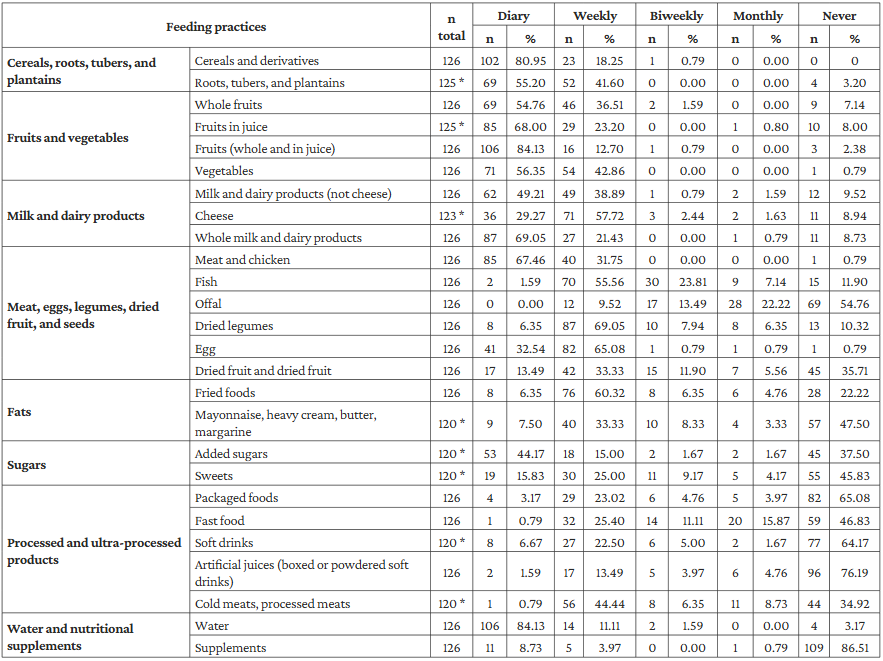
*The number of participants is lower due to failure to respond to these items.
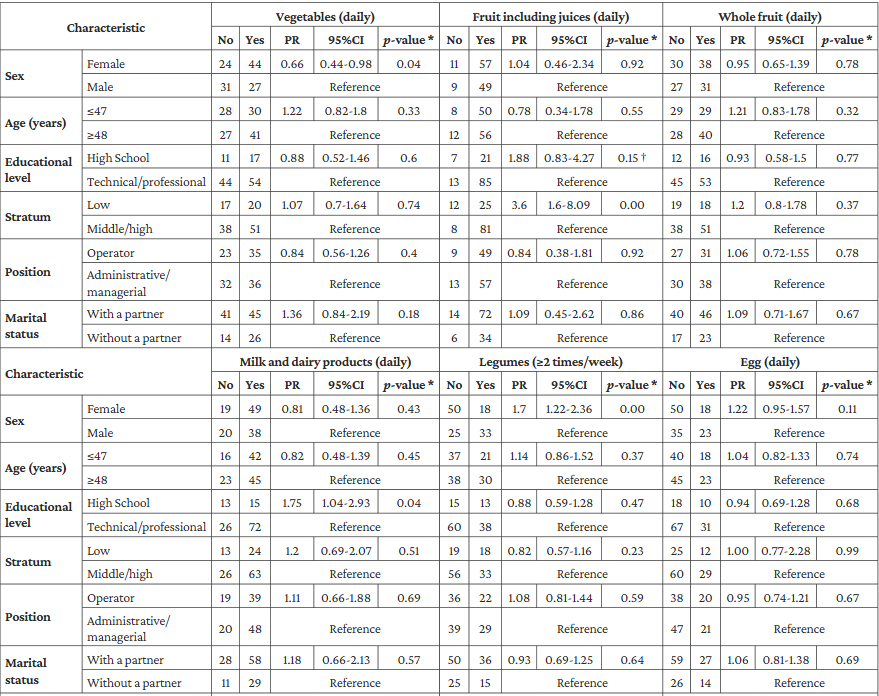
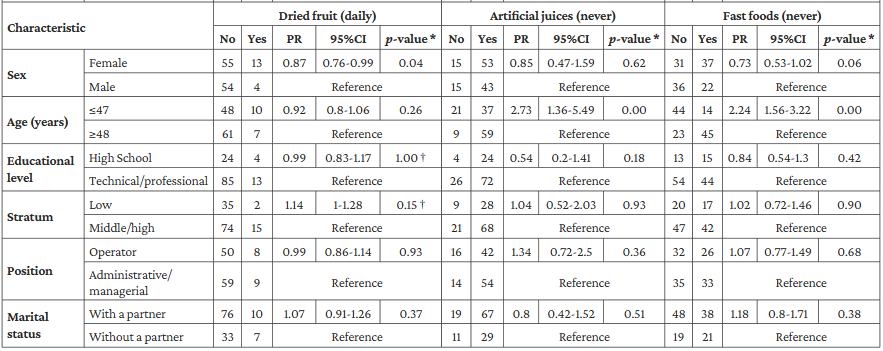
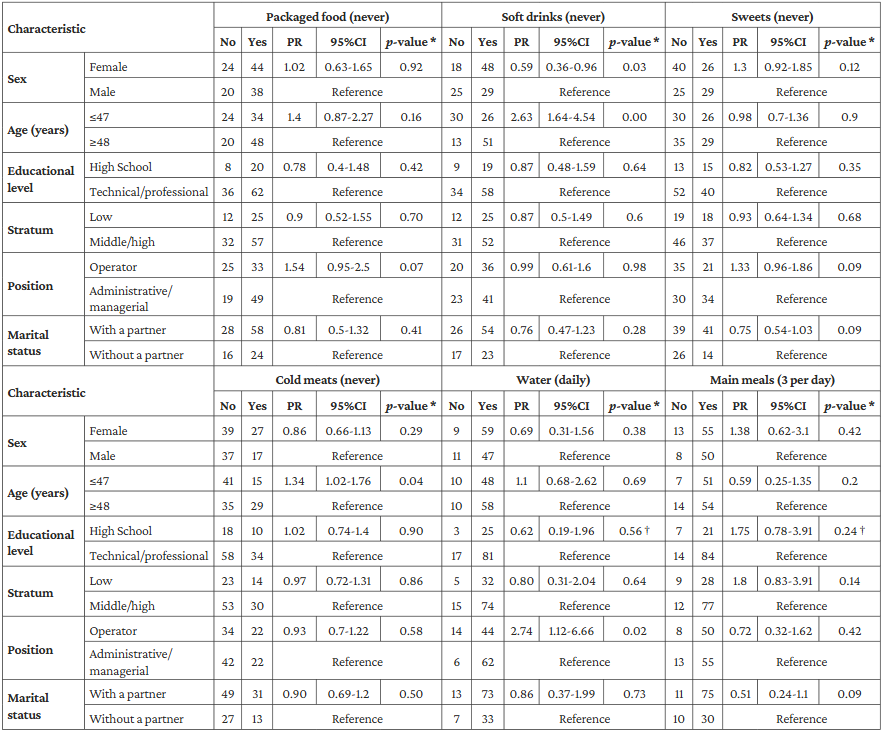
Concerning the factors related to the consumption pattern, it was found that being a female reduces the risk of not meeting the daily recommendation for vegetable and dried fruit consumption by 44% (PR=0.66; p=0.04) and 13% (PR=0.87; p=0.04), respectively, as well as the risk of consuming soft drinks by 41% (PR=0.59; p=0.03), and increases the risk of not meeting the recommended weekly consumption of dried legumes (≥2 times/week) by 70% (PR=1.7; p=0.00), compared to being male (Table 4).
It was also found that: i) being 47 years old or younger was associated with a higher likelihood of consuming fast foods (PR=2.24; p=0.00), soft drinks (PR=2.63; p=0.00), cold meats (PR=1.34; p=0.04), and artificial juices (PR=2.73; p=0.00) in the last month compared to being 48 years or older; ii) having a high school degree was associated with a higher likelihood of not consuming milk and dairy products on a daily basis (PR=1.75; p=0.033) compared with having a higher education level (technical or higher); iii) having a low socioeconomic status (stratum 1 and 2) was associated with a higher probability of not consuming fruit daily (PR=3.6; p=0.00) compared to having a middle/higher stratum, and iv) working in an operator position increased the probability of not complying with daily water consumption recommendations (PR=2.74; p=0.02) compared with holding administrative/managerial positions. No significant association was found between marital status and food/water intake and consumption of three meals a day (Table 4).
Discussion
In the present study, most participants reported consuming fruits daily (84.13%), thus complying with the recommendations of the Colombian GABA15 of including whole fruits and fresh vegetables in each meal. This number is higher than what has been reported in other research carried out in Latin America. For example, Rosales- Hidrobo,35 in a study conducted in 70 workers of the Ministry of Agriculture and Livestock of Ecuador, reported daily fruit consumption in 75.7% of the participants (40% 2-3 times a day and 35.7% once a day); Liska de Leon & Garcia,24 in a study conducted in 125 employees of the Faculty of Chemistry and Pharmacy of a university in Guatemala (69 professors and 56 administrative and service personnel), found that 55% of the administrative workers complied with this recommendation; and Tonini et al.,25 in a study of 130 employees of a Brazilian university, found that only 19.2% of the participants ate fruit daily, although the latter study only inquired about consumption during the working day.
The foregoing suggests that UNAL employees have better fruit consumption habits, which can be attributed to better knowledge of healthy eating. In this sense, in order to increase daily fruit consumption,15,36 it is recommended to offer these foods on campus, thereby improving the intake of vitamins, minerals, and fiber.37
Daily vegetable consumption in the present study (54.14%) was higher than what was reported by the 2010 ENSIN29 for the Colombian population (5-64 years) (9.6% cooked vegetables and 16.1% raw vegetables), which could be attributed to the fact that vegetable consumption was higher in women, who had a slight predominance in our sample (53.97%). Moreover, this could also be related to the fact that 52.38% and 85.71% of workers ate lunch and dinner, respectively, at home, or alternatively such meals were prepared at home, so one might expect a high probability of including vegetables in these home preparations compared to the lunch/dinner options available at the university and nearby places such as cafeterias and restaurants, where one may choose not to include this food group on the plate.
In the present study, only 40.48% of the workers complied with the weekly legume consumption recommendation established by the Colombian GABA15 (≥2 times/week), with these foods being important because of their protein, fiber, vitamin, and mineral content. Also, consumption was higher in men than in women (26.19% vs. 14.285), a re- sult similar to that reported by Domínguez-Gabriel et al.,38 who, in a group of 141 workers from a higher education institution in Medellín (Colombia), found that each week, on average, men consumed 2 servings of legumes while women consumed 1 serving, and by Santín et al.,39 who, in a study conducted with data from the 2019 Brazilian National Health Survey that included 88 531 adults, found that 74.9% of men and 62.5% of women consumed legumes according to healthy food consumption markers for this country.
The frequency of daily egg consumption in the present study (32.54%) was higher than that reported in the 2010 ENSIN29 (27.7%), but similar the one described by Chamorro-Pinchao,8 who, in a study conducted in 182 workers of the Alpina company headquarters in San Gabriel (Ecuador), found that 32.4% consumed eggs daily. It should be noted that the Colombian GABA15 recommends consuming eggs on a daily basis due to their high biological value protein content and their low cost.
On the other hand, although the GABA15 in Colombia recommends consuming milk and dairy products every day, only 69.05% of the workers complied with this recommendation. However, this proportion is higher than what was described in the 2010 ENSIN29 (48.7%) and what was reported in the studies by Rosales-Hidrobo35 (52.9%) and Chamorro-Pinchao8 (53.2%). This demonstrates the need to promote better habits, as these foods are an important source of protein, calcium, and vitamins.37
An outstanding finding is that the frequency of daily consumption of added sugars in the present study (44.17%) was much lower than the one reported in the 2010 ENSIN29 (94.6%). Although the Rosales-Hidrobo35 study, as the present study, only included workers, the difference with the ENSIN finding could be explained by the inclusion of children and adolescents in the national survey. In contrast, Rosales-Hidrobo35 reported a high daily sugar consumption (92%). At this point, it is worth noting that the recommen- dation of the Colombian GABA15 is to reduce the consumption of this group of foods with added sugars in order to maintain a healthy weight, which should be promoted among UNAL workers.
On the other hand, only 7.50% of the participants reported consuming saturated fats (mayonnaise, heavy cream, butter, and/or margarine) on a daily basis, a much lower proportion than reported in the 2010 ENSIN29 (32.7%). This difference could be attributed to university workers' knowledge of the harmful effects of high consumption of these foods, such as increased risk of obesity and/or cardiovascular disease.40
Ultra- processed foods are considered unhealthy due to their high sodium and saturated fat content, which is why PAHO does not recommend their consumption.10 In the present study, 65.08% of the participants reported that they had not consumed packaged foods in the last month, a figure higher than that reported in the 2010 ENSIN29 (30.4%), so it could be assumed that, compared to the general Colombian population, UNAL workers have better eating habits and, therefore, a lower risk of developing NCDs.10 However, this difference could be explained by the differences in the age groups analyzed, since the ENSIN includes children and adolescents, and also by the fact that these workers are more aware of the disadvantages of consuming this group of foods.
In the present study, 64.17% of the workers interviewed did not consume soft drinks in the last month, a finding that differs from that reported in the study by Rosales- Hidrobo,35 where 57.1% of the participants consumed this type of beverage 2 to 3 times a day. In this sense, although the prevalence of consumption of this type of beverages was not as high in the present study, it is necessary to implement strategies to further reduce the frequency of their consumption among UNAL workers, since these foods are not healthy due to their high content of sugar, colorants, and additives.40
Regarding fast foods, 25.40% of the participants reported that they consumed them weekly, this figure being lower than that reported in the 2010 ENSIN29 (49.4%) and by Rosales- Hidrobo35 (64.3%). These differences may be related to the age ranges of the population included in the studies, considering that in the present study most of the participants were middle- aged, whereas the 2010 ENSIN29 included a population between 5 and 64 years of age, and in the Rosales- Hidrobo study35 a high percentage were young adults. Therefore, it is important to remember that the consumption of fast foods is not recommended because they are rich in saturated fats, sodium, and calories, and may increase the risk of developing NCDs.10
In the present study, belonging to a low socioeconomic stratum was a risk factor for not consuming fruit daily, while being a female was a protective factor against not consuming vegetables daily. This is similar to the findings of Da Cruz Ferreira- Silva et al.,27 who found in a study using data from people aged 18 years and older that participated in the National Survey of Risk Factors in Argentina that women and people with income >4 501 Argentine pesos were more likely to consume fruits and vegetables 5 or more times per week. However, it should be pointed out that, given that said study does not include only workers and that the consumption of these foods is measured weekly and not daily, their results are not entirely comparable with ours, but we include this information because no other studies were found that took into account the association of these variables with the consumption of fruits and vegetables. In any case, the findings highlight the need to keep the cost of fruits on the university campus low so that low- income workers can access them, and to promote the consumption of vegetables among male workers.
In the present study, being female also reduced the risk of soft drinks consumption, which coincides with the findings reported by Rombaldi et al.,41 in a study of 972 adults aged 20-69 years in Brazil, in which they found that being male was a risk factor for regular consumption (≥5 times/week) of these beverages. This is attributed to the fact that women are generally more concerned about their diet, take more care of their body image and health, and prefer healthier beverages.
On the other hand, being 47 years of age or younger was a risk factor for soft drink consumption in the present study, which is also consistent with the findings reported by Rombaldi et al.41 for participants between 20 and 39 years of age. It is worth mentioning that such study differs from the present one in that here the recommendation was not to consume soft drinks in the last month, while Rombaldi et al.41 considered regular consumption to be the intake ≥5 times per week of a food, and that no other studies were found that took these variables into account. Considering these results, it is evident that it is necessary to implement actions aimed at limiting the supply of soft drinks in vending machines, replacing them with water, and to promote the use of water filters placed in different parts of the campus. This should be supported by an information, education and communication strategy on the risks of soft drink consumption focused on workers under 48 years of age.
It is worth emphasizing that one limitation of the present study was the small sample size, which is why the results reported here cannot be extrapolated to other populations and new studies with representative samples are needed. Likewise, due to the cross- sectional design of the study, the associations established between the consumption pattern and the sociodemographic and occupational variables analyzed do not allow establishing causality. Consequently, further studies on the subject should focus on the measurement of daily fruit and vegetable consumption and on the effect of the food environment on the consumption pattern of fruits and vegetables.
Conclusions
The dietary patterns identified in the present study were better in comparison with those reported in similar studies. However, among UNAL workers, there was a prevalence of inadequate dietary intake, which occurred more as a function of personal characteristics than of the work structure and environment. Despite the high weekly consumption of fast foods and soft drinks, the daily consumption of fruits, vegetables, and milk and dairy products is noteworthy. The factors associated with consumption were sex, age, educational level, position, and socioeconomic stratum, so interventions should focus on workers with one or more of the following characteristics: men, ≤47 years old, and low socioeconomic status.

