




 English (pdf)
 Article in xml format
 Article references

 Automatic translation
 Send this article by e-mail
 Cited by SciELO
 Cited by Google
 Similars in
SciELO
 Similars in Google

 Permalink


Introduction
The impact of the COVID-19 pandemic on health, social relations, and the economy, as well as the lack of effective treatments for severe cases and complications of the disease, have made immunization a key strategy to achieve herd immunity, thereby reducing SARS-CoV-2 transmission rates and the risk of mortality from severe COVID-19.1,2 At the beginning of March 2023, 13.33 billion doses of COVID-19 vaccines had been administered worldwide, of which 953.85 million were administered in South America and, specifically, 90.2 million in Colombia.3
Surveillance of the side effects of vaccines, which is part of pharmacovigilance, is essential to preserve the safety of the population outside the context of a controlled clinical trial and to make an adequate assessment of their risk-benefit ratio.4 Likewise, reporting adverse events associated with the use of vaccines allows establishing measures to minimize the occurrence of these events.4 In this regard, the objectives of the safety analysis of COVID-19 vaccines are to identify possible adverse events and reactions that were not observed during clinical trials and to determine whether their occurrence is caused by the vaccine or not.5
Pharmacovigilance studies on the different types of COVID-19 vaccines report that the most frequent adverse events are fatigue, headache, muscle pain, fever, and pain at the injection site.6,7,8 Similarly, serious adverse events such as anaphylaxis, thrombocytopenia syndrome among premenopausal females, and myocarditis and pericarditis among younger men have been reported.9
Active pharmacovigilance is characterized by the comprehensive search for adverse events in a specific population based on a previously established methodological process.10 This is a strategy to strengthen existing pharmacovigilance programs11 and to overcome the problem of under-reporting of adverse events in spontaneous reporting systems.12,13
A number of reasons exist for monitoring the effectiveness and safety of currently available COVID-19 vaccines. Of particular note is that they were developed with technologies and mechanisms of action that had not been used in large populations and that were approved under clinical trials of short duration and completed early,6,14 as well as the fact that they were administered to groups not considered in their clinical trials, such as people over 80 years of age, people who have already had COVID-19, and people with atopy, autoimmune diseases, among others.7
Furthermore, information on the safety of COVID-19 vaccines between the northern and southern hemispheres shows significant disparities. The reason for this is that, firstly, immunization included different brands of vaccines in each country and, secondly, in the northern hemisphere there are generally more robust drug monitoring systems that performed more detailed follow-ups on the safety of vaccines.15-18
In Colombia, mass vaccination against COVID-19 began in February 2021. Figure 1 presents detailed information on the vaccines used, the dates they arrived at the country for use, and the procurement mechanisms.
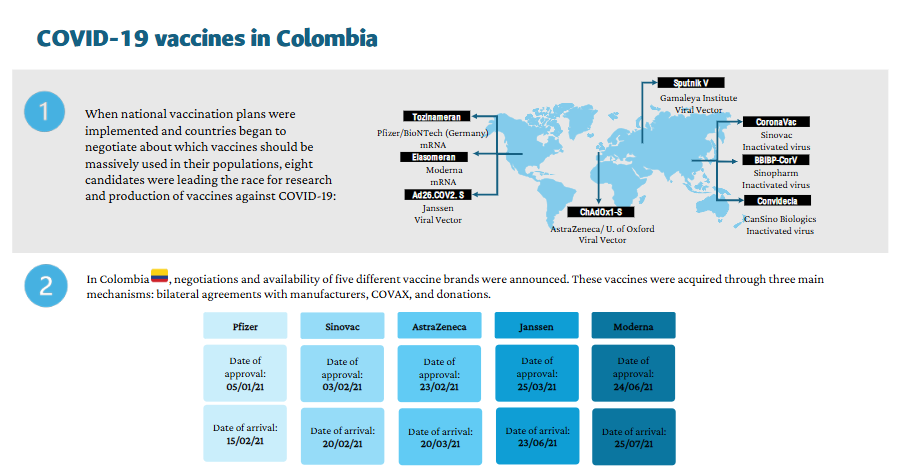
In view of the above, the objectives of the present study were to determine the frequency of adverse events following immunization (AEFI) with COVID-19 vaccines in individuals enrolled in a university health services unit of Bogotá, Colombia, and to evaluate the risk factors associated with an increased probability of presenting an AEFI.
Materials and methods
Study population and sample
The study population comprised all the individuals who were enrolled in the Health Services Unit of the Universidad Nacional de Colombia (UNISALUD), Bogotá Campus, in March 2021 (N=10 587). Only individuals enrolled in UNISALUD who had received at least one dose of a COVID-19 vaccine between March 2021 and January 2022 (N=9 399) and responded a telephone adverse event follow-up survey were included, yielding a final sample of 4 078 people. It should be noted that the patients treated at UNISALUD are administrative staff, faculty members, and retirees of the Universidad Nacional de Colombia (UNAL) and their beneficiaries.
Procedures
Every two months through January 2022, UNISALUD provided an update on the number of individuals vaccinated with at least one dose of a COVID-19 vaccine. Once these individuals were identified, they were contacted by telephone between June 2021 and April 2022 in order to conduct a survey.
For the telephone survey, a pre-designed questionnaire of 41 open and closed questions (the closed ones with a single answer and multiple choices) was used to collect data on the following variables: age; biological sex; type of relationship with the UNAL (administrative staff, faculty, retiree, beneficiaries); type of housing; access to public services (water, electricity, telephone, natural gas, and internet); use of any treatment to prevent or cure COVID-19 and whether it was prescribed by a physician; use of ivermectin, hydroxychloroquine/chloroquine, azithromycin, dexamethasone, colchicine, chlorine dioxide, aspirin/acetylsalicylic acid, or other drugs and substances to prevent or treat COVID-19; occurrence and duration of AEFIs attributed to the COVID-19 vaccine; and whether any action(s) had been taken to try to alleviate AEFIs. This survey also inquired about whether the patient had reported the occurrence of an AEFI to a health care agency (UNISALUD, INVIMA, etc.). The instrument used is available as supplementary material upon request to the authors.
The questionnaire was administered by 10 research assistants from different health sciences disciplines (medicine, nursing, and pharmacy), who, besides being trained to administer the questionnaire, had a written guide to make the telephone calls in a standardized manner. UNISALUD also provided the following additional clinical information for each participant: brand of COVID-19 vaccine received, number of doses received, presence of comorbidities, and presence or history of allergies. The information collected was entered and organized in a database created in Microsoft Excel 365 by the project's information engineer and a person in charge of ensuring the quality of the information.
The answers to the open-ended questions, which inquired about the AEFIs reported by the patients, were classified by one of the authors (JJL) according to the symptoms described by the patient, assigning the medical term that best described those symptoms as per the MedDRA medical dictionary. Then, a second author (JVZ) reviewed the classification. Respondents' comorbidities were categorized according to ICD-10 coding.
Statistical analysis
After being entered and organized in the database created in Microsoft Excel 365, the data were exported to the R software (version 4.2.1) for analysis. Data are described using absolute and relative frequencies for categorical variables and means and standard deviations for quantitative variables.
Moreover, a logistic regression model was fitted to evaluate the effect of the following variables on the probability of presenting an AEFI: sex, age adjusted by ranges (≤35 years, 36-64 years, and >64 years), brand of vaccine received, presence or history of allergies, presence of comorbidities (cancer, blood disorders, autoimmune disorders, endocrine system disease, cardiovascular disease, respiratory disease, and renal disease), use of medications or other therapies to treat comorbidities (including hormone therapy, either through the use of contraceptives or replacement therapies), and use of medications or other substances to treat or prevent COVID-19 (ivermectin, hydroxychloroquine/chloroquine, azithromycin, dexamethasone, colchicine, and chlorine dioxide).
The response variable was the presence (1) or absence (0) of an AEFI. The quality of the model was assured by evaluating the assumptions in terms of residual and sensitivity analysis. No imputation methods were applied since the models were built only from participants with complete information. Additionally, in this model, the vaccines were ordered alphabetically; therefore, having been vaccinated with the AstraZeneca biologic was used as a reference comparator. Importantly, given that all COVID-19 vaccines were considered novel and there was uncertainty in all cases about their safety, the choice of AstraZeneca as comparator was based solely on a methodological decision.
After verifying the fulfillment of assumptions, in order to arrive at a reduced model, a selection of variables was made using the stepwise method (both directions) based on the Akaike information criterion (AIC). The results of the logistic model are presented as ORs with their respective 95% confidence intervals (95%CI).
Ethical considerations
The study followed the ethical principles for biomedical research involving human subjects established in the Declaration of Helsinki19 and the scientific, technical, and administrative standards for health research contained in Resolution 8430 of 1993 issued by the Colombian Ministry of Health.20 Also, it was approved by the Research Ethics Committee of the Faculty of Sciences of the UNAL through Minutes No. 02-2021 of March 5, 2021, and all participants signed an informed consent prior to their inclusion in the research. Confidentiality and privacy of the participants were guaranteed at all times.
Results
Of the 4 078 participants, 57.14% were female and the mean age was 69.3 years (±15.13). Also, at the time of the telephone survey, 11.03%, 75.80%, and 9.00% had received 1, 2, and 3 doses of vaccines, respectively (data reported by the patient and verified in the UNISALUD system), with Sinovac and Pfizer being the most frequently administered vaccines (42.75% and 40.09%); it is important to mention that 3.11% of the participants did not report the vaccine brand either during the telephone call or directly to UNISALUD. The detailed characteristics of the participants are presented in Table 1.
Table 1. Characteristics of the participants (n=4 078).
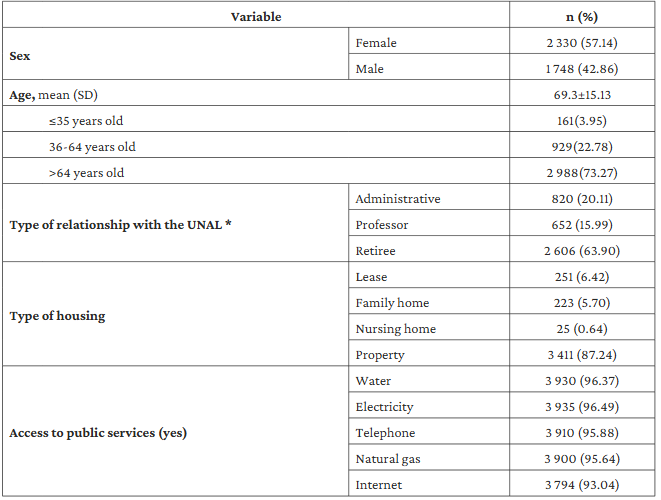
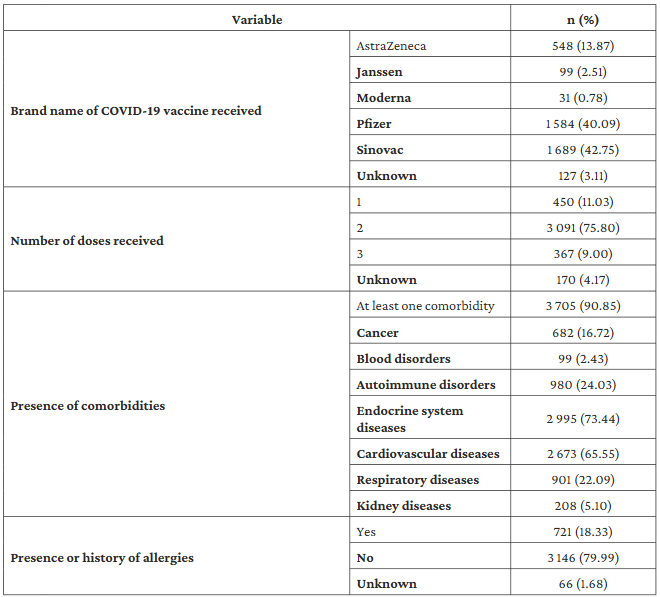
UNAL: Universidad Nacional de Colombia.* Results for "beneficiaries" are not included since the individuals surveyed as beneficiaries were also retirees and were therefore included in the latter group.
The majority of Sinovac and AstraZeneca brand vaccines were administered to individuals aged >64 years (98.16% and 93.80%, respectively), while most Moderna and Janssen vaccines were administered to individuals aged ≤64 years (67.74% and 88.89%) (Table 2).
Table 2. Percentage of people per vaccine brand and age group.

Note: Information for the group of individuals for whom the brand name of the vaccine is unknown is excluded.
Moreover, 14.78% (n=583) reported having used some treatment to prevent or cure COVID-19, and the treatment was prescribed by a physician in 36.02% (201) of these cases. A total of 260 participants reported the use of any medications and substances specifically asked about in the survey (Figure 2) for disease prevention or treatment, while the remaining 323 reported the use of other substances, such as herbal drinks and juices, which were not initially included in the list of treatments investigated.
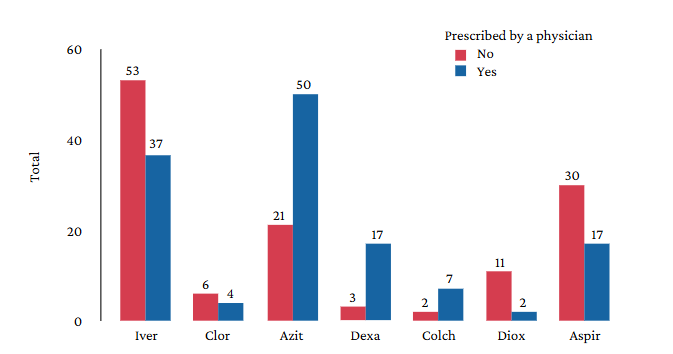
Figure 2. Use of drugs and substances investigated to prevent or treat COVID-19.Iver: ivermectin; cloro: hydroxychloroquine/chloroquine; Azit: azithromycin; Dexa: dexamethasone; Colch: colchicine; Diox: chlorine dioxide; Aspir: Acetylsalicylic acid-Aspirin.
Regarding the occurrence of AEFIs, 36.66% (n=1 495) of the participants reported the occurrence of at least one after vaccination; of these, 90.36% (n=1 351) stated that the AEFIs appeared within the first 5 days after being vaccinated and only 7.82% (n=117) reported the occurrence of these events to a health agency. Moreover, AEFIs lasted between 1 and 3 days in 65.21% (n=971) of the respondents and more than 3 days in 21.16% (n=315). Concerning the occurrence of AEFIs by vaccine type, Moderna was found to be the vaccine in which the highest proportion of participants presenting AEFIs was observed (77.42%, 24/31), followed by Janssen with 59.60% (59/99), Pfizer with 49.43% (783/1 584), AstraZeneca with 33.58% (184/548), and Sinovac with 23.03% (389/1 689). Figure 3 depicts the distribution of participants and the duration of AEFIs by brand of vaccine administered.
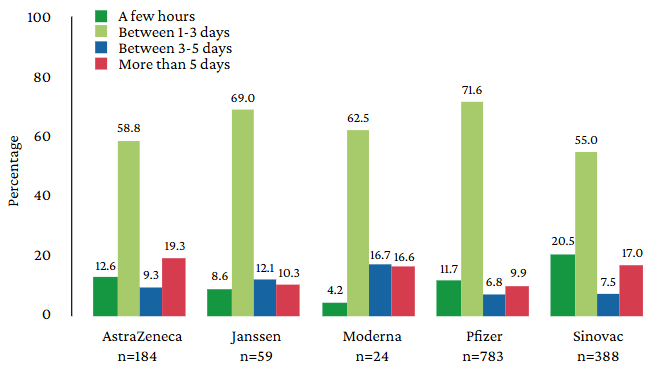
Figure 3. Duration of adverse events following immunization by vaccine brand received.Note: Excluded from the graph are 57 participants who reported some adverse event following immunization but did not report the brand of vaccine.
A total of 2 477 AEFIs were reported, the most frequent being pain at the injection site (30.44%, n=754), unspecified pain (12.96%, n=321), headache (12.15%, n=301), and fatigue (10.98%, n=272). Table 3 describes the AEFIs identified according to their level of frequency; it is worth mentioning that, given their extent, the total distribution of AEFIs by brand of vaccine administered is available as supplementary material upon request to the authors.
Table 3. Description of adverse events following immunization by COVID-19 vaccine by frequency of reporting.
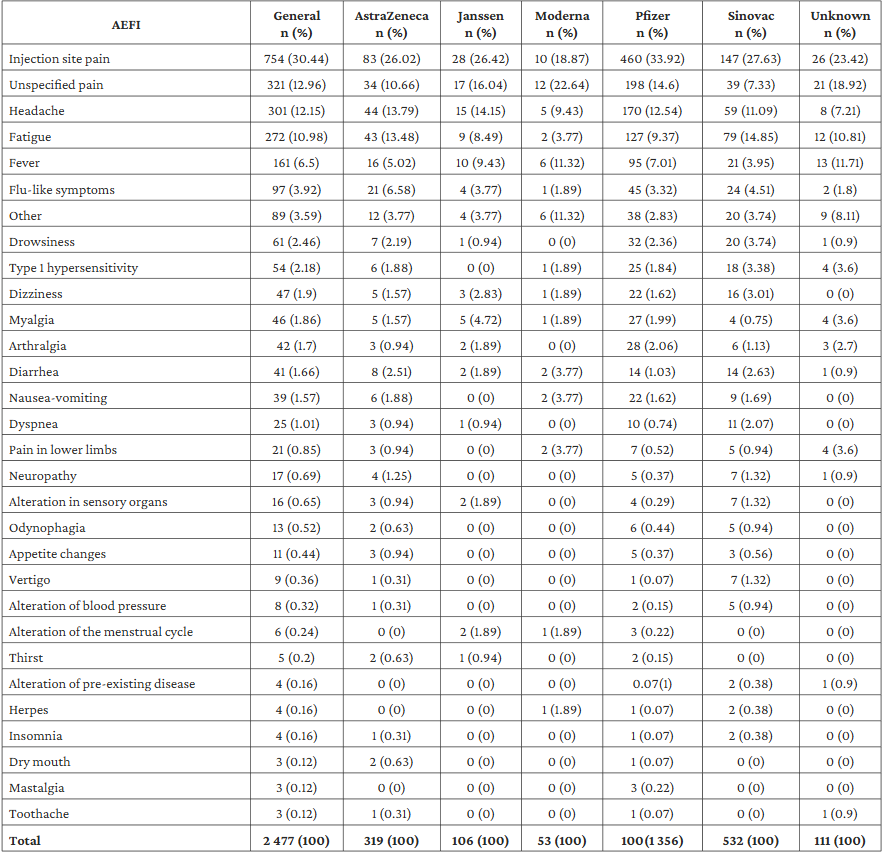
AEFI: adverse events following immunization.
Among the AEFIs classified as "other", some rare but deemed serious cases were identified in three vaccines, namely: Sinovac: transient ischemic attack (n=1), nosebleed (n=1), and fainting (n=1); Pfizer: change in urine color (n=1), facial paralysis (n=1), necrosis at the vaccine site (n=1), angina pectoris (n=1), and nervous and anxiety crisis (n=1); and AstraZeneca: angina pectoris (n=1) and facial paralysis (n=1). Other serious AEFIs included herpes zoster virus reactivation (Moderna and Pfizer with 1 case each and Sinovac with 2 cases), depression (AstraZeneca and Sinovac with 1 case each), tachycardia (AstraZeneca and Pfizer with 1 case each), and menstrual cycle disorders (Moderna and Pfizer with 1 case each and Jansen with 2 cases).
Regarding the treatment of AEFIs, 526 (35.18%) respondents who experienced at least one AEFI (n=1 495) reported taking some action(s) to try to alleviate the adverse event(s), with the use of acetaminophen being the most common action (90.87%). Other actions included placing a wet compress on the vaccination site (6.27%); drinking teas, infusions, and juices (4.18%); and using aspirin (1.90%) and loratadine (1.71%).
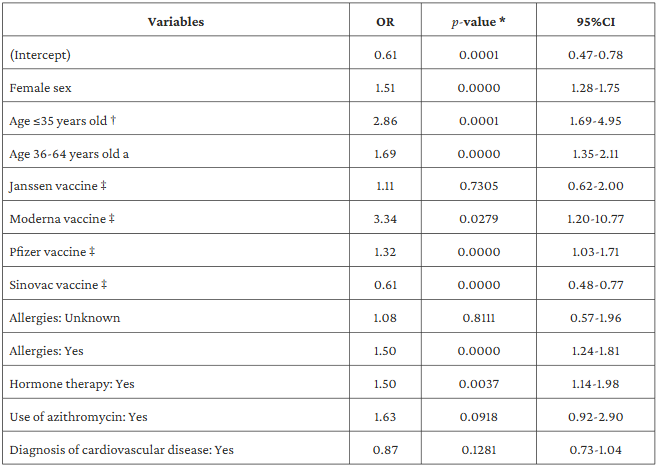
The logistic regression model found that the following factors were associated with an increased risk of AEFI: being female (OR=1.51, 95%CI: 1.28-1.75); being younger than 35 years (OR=2.86, 95%CI: 1.69-4.95) compared with being older than 64 years; having been vaccinated with the Moderna (OR=3.34, 95%CI: 1.20-10.77) or Pfizer (OR=1.32, 95%CI: 1.03-1.71) biologic compared with AstraZeneca; presence or history of allergies (OR=1.50, 95%CI: 1.24-1.81); and using hormone therapy (OR=1.50, 95%CI: 1.14-1.98).
Furthermore, it was found that, compared to AstraZeneca, individuals vaccinated with Sinovac are less likely to present an AEFI (OR=0.61, 95%CI: 0.48-0.77). Lastly, the possible risk of occurrence of an AEFI due to the use of azithromycin was considered clinically relevant (OR=1.63, 95%CI: 0.92-2.90). Table 4 presents the results for the selected variables.
Discussion
This research is a contribution to the studies related to the follow-up of the safety of the COVID-19 vaccines, and particularly to the pharmacovigilance actions undertaken by the Colombian National Government during the first year of immunization with this new group of vaccines.21 In this specific case, the contribution focuses on a closed cohort that is part of the university community of the UNAL, Bogotá Campus.
The relevance of the present study lies in the fact that, although there are studies that monitor the effectiveness and immunogenicity of the vaccines against COVID-19 used in the Colombian population, such as Patermina-Caicedo et al.22 in 719 735 individuals over 40 years of age who were followed up between March 1 and August 15, 2021, and Arregocés-Castillo et al.23 in 2 828 294 individuals over 60 years of age evaluated between March 11 and October 26, 2021, there are no identified studies that have evaluated the safety and pharmacovigilance of these vaccines in the country. Consequently, this research aims to address these information gaps.
In our study, 36.66% of the respondents reported at least one AEFI after receiving the COVID-19 vaccine and they occurred with a higher proportion in individuals vaccinated with Moderna (77.42%; 24/31), followed by Janssen (59.60%; 59/99), and Pfizer (49.43%; 783/1 584) vaccines. This finding about the Pfizer and Janssen vaccines differs from the literature: Polack et al.,24 in a multinational, placebo-controlled, observer-blinded, pivotal efficacy trial, found that 27% of the 21 720 participants who received BNT162b2 injections reported adverse events, while Sadoff et al.,25 in a phase 3 international, randomized, double-blind, placebo-controlled, double-blind trial, found that 0.4% of the 21 895 recipients of the Ad26.COV2.S vaccine reported serious adverse events. In the case of the Moderna vaccine, the frequency of AEFIs found in our study is similar to what was described by Baden et al.26 in a phase 3, randomized, observer-blinded, placebo-controlled trial conducted in 99 centers in the United States, in which 79.4% of the participants who received this vaccine reported some adverse event.
These differences could be explained by the transition from controlled conditions to real-life use and the disadvantages of passive pharmacovigilance. Spontaneous reports are known to underestimate the prevalence of adverse effects, as opposed to active pharmacovigilance where adverse effects are investigated over a specific period.27 Our study found that almost 80% of the patients who reported at least one AEFI after vaccination did not report it to any health agency, a result consistent with the low percentage of adverse events reported by the Colombian authorities at the time.21
On the other hand, Moderna and Janssen vaccines had the highest proportion of AEFIs, which is consistent with the fact that these were the brands administered to the youngest group of participants (<65 years). This is in line with what has been reported in the literature, as pivotal clinical trials for these biologics indicate higher percentages of adverse events in participants between 18 and 59 years of age.25,26 The low frequency of AEFIs in people over 60 years of age could be attributed to immunosenescence, a situation that causes a deterioration of innate and adaptive immune responses, which are related to reactogenicity and the appearance of the AEFIs found in the present study.28
The adverse events most frequently reported by the participants in our study coincide with those described in previous research that developed similar methodologies. For example, Ortiz-Prado et al.,29 in a cross-sectional study conducted in Ecuador using a 32-question online survey that included responses from 6 654 participants who had been vaccinated with AstraZeneca, Pfizer or Sinovac, found that the most common AEFIs were pain, redness or swelling at the injection site, headache, muscle pain, and fatigue.
Similarly, Ripabelli et al.,30 in a cross-sectional study conducted in Italy in 340 healthcare workers who had received the Pfizer vaccine and in which a 42-question survey was administered by telephone follow-up, found that pain and redness at the injection site, fatigue, and headache were the most frequently reported AEFIs.
Likewise, the AEFIs most frequently reported in the present study match the AEFIs published in phase 3 clinical trials conducted for the different brands of the vaccines studied,24-26,31,32 as well as in their respective marketing authorization data sheets.33 These AEFIs are categorized as mild or non-serious and respond mainly to immune system reactogenicity mechanisms upon vaccine administration, which, except for the age of the participants (as mentioned above), are independent of the sex or other pathophysiological characteristics of the vaccine recipients.34,35
In the present study, some rare but serious AEFIs were reported, such as facial paralysis, herpes zoster, and menstrual cycle disorders, which are consistent with those described in previous research on adverse effects of COVID-19 vaccination.36-38 Despite their low frequency, it is important to understand how these AEFIs occur in pathophysiological and immunological terms and how they affect the health and the social and economic lives of those who suffer them. Therefore, qualitative studies with anthropological and sociological perspectives should be developed to analyze the occurrence of these events.
Regarding the risk factors for AEFI identified in our study (being female, age <65 years old, and presence or history of allergy), we found similarities with those reported in the literature. For example, Suehiro et al.,39 in a case-control study conducted through a telephone survey of 7 965 Japanese individuals who received the Moderna vaccine, found that sex (female) and history of allergies were risk factors for developing an AEFI. Tran et al.,40 in a cross-sectional study using an online survey administered to 1 028 Vietnamese people aged 18 years and older who had received the AstraZeneca vaccine, reported that females complained of AEFIs more frequently than males. Chen et al.,41 in a study on adverse events of COVID-19 vaccine booster doses conducted using data from the Taipei Veterans General Hospital (China), found that AEFIs were significantly higher among females. Villanueva et al.,42 in a nested cohort study conducted between March 2020 and April 2021 in 1 219 health care workers in Brazil (n=988) and Australia (n=231) who had received the AstraZeneca, Pfizer, or Sinovac vaccine, found that the risk of AEFI was higher in younger participants and in women. Finally, Ong et al.,43 in a study of 120 adults with epilepsy treated between November 8, 2021, and January 12, 2022, at the Universiti Kebangsaan Medical Center Neurology Clinic in Malaysia, reported that women presented significantly more AEFIs than men and that the age group that presented with these events was significantly younger than those who did not develop them.
This comparative analysis emphasizes the complexity of factors that may influence the manifestation of AEFIs following COVID-19 vaccination, reinforcing the need for further research that considers multiple contextual and demographic variables to make a comprehensive assessment of vaccine safety.
Inquiring about the use of drugs and other substances to prevent or treat COVID-19, such as chlorine dioxide, made it possible to analyze possible additional risk factors for the occurrence of adverse events and AEFIs. It should be noted that in most cases the use of these drugs was the result of self-medication, which can lead to situations of irrational use and other safety problems. Analyses of these effects are beyond the scope of the present study, but it is worth mentioning that they have been explored in previous research on the subject.44-46
On the other hand, in the present study, although the difference was not statistically significant (OR=1.63, 95%CI: 0.92-2.90; p=0.0918), it was found that the use of azithromycin was considered a relevant factor for the occurrence of AEFIs. Although this has not been reported in other studies, it is an important finding, especially considering the self-administration of this drug during the COVID-19 pandemic and the development of cardiovascular adverse events described in the literature that could be exacerbated by COVID-19 vaccines.44,47,48
The development of cardiovascular disease is considered a clinically relevant situation, since, as demonstrated by Khaity et al.49 in their systematic review of adverse cardiovascular events associated with vaccination against COVID-19, the most common cardiovascular complications after vaccination are myocarditis, myopericarditis, arrhythmia, and ischemic heart disease, with a higher incidence with the Pfizer and Moderna vaccines. Likewise, Chen & Su,50 in a review of the benefits and harms of COVID-19 vaccines in relation to cardiovascular disease, found that high incidence rates of myocarditis and pericarditis have been reported in adolescents and young adults after vaccination. In this regard, it is necessary to determine whether patients with cardiovascular diseases are predisposed to develop this type of AEFIs and what risk mitigation strategies would be most appropriate for this population.
Concerning the use of hormone therapy, this was the risk factor for which the least information was found in the scientific literature to support or refute our findings. However, considering the use of hormone therapy as a risk factor for developing AEFIs following COVID-19 vaccination is of particular interest, especially because different studies have established that the use of AstraZeneca and Janssen vaccines has been associated with cases of thrombosis with thrombocytopenia syndrome (TTS),51-53 and it has been established that the use of hormone therapy and vaccination with adenoviral vectors can cause TTS.52,53 Based on the above, these findings (i.e., the association of azithromycin consumption, the presence of cardiovascular disease, and the use of hormone therapy as risk factors for AEFI in the COVID-19 context) should be understood as safety signals that need to be further studied in subsequent studies as they are clinically relevant.
The findings of this study have an added value, as they provide aggregate data on the pharmacovigilance activities carried out by UNISALUD. In addition, the selected closed cohort population follow-up could continue indefinitely and should include not only the COVID-19 vaccines, but other vaccines used by this population.
The strengths of this research include the generation of high-impact public health knowledge related to the pandemic because, first, it provides information on the safety of vaccines in populations not included in clinical trials, such as the elderly, and second, it provides information, so far limited, on some brands such as Sinovac, used mainly in countries of the Global South.33
However, despite multiple attempts, it was not possible to survey all UNISALUD patients, and only 43% were included in the study. This limitation is explained by the proposed methodological approach, since nowadays people are reluctant to answer and provide personal information over the telephone. Consequently, the results presented here do not represent the entire UNISALUD population, although they do provide a close approach to the real situation regarding the safety of the COVID-19 vaccine.
Furthermore, it is important to note that our results are valid only for the specific sample analyzed and cannot be extrapolated directly to the entire population of Bogotá, because this is a closed population with characteristics that do not necessarily reflect the characteristics of the city. Nevertheless, they provide signals that should be studied in greater depth in subsequent research.
Conclusions
Slightly more than one-third of participants reported having at least one AEFI after being vaccinated against COVID-19. In addition, almost 2 500 AEFIs were reported, the most frequent being pain at the injection site, unspecified pain, and headache. Most AEFIs occurred within the first 5 days after vaccine administration and lasted between 1 and 3 days. These results are consistent with the expected reactogenicity of the vaccine. The development of an AEFI was more common in participants who received the Moderna vaccine. These findings are consistent with what has been reported in the literature.
Finally, according to the results of the logistic regression analysis, several factors were associated with an increased risk of AEFI, in particular, sex (female), age (<65 years), administration of Moderna and Pfizer vaccines, presence or history of allergies, and use of hormone therapy.

