




 English (pdf)
 Article in xml format
 Article references

 Automatic translation
 Send this article by e-mail
 Cited by SciELO
 Cited by Google
 Similars in
SciELO
 Similars in Google

 Permalink

Introduction
The Rosaceae family is known for its diversity of genera and species. Over 200 Rosa species and over 18 000 plant cultivars have been identified (Gudin, 2000; Baydar et al., 2004; Baydar and Baydar, 2005; Boskabady et al., 2011). They are primarily shrubs distributed in the various temperate zones of the Northern Hemisphere. The genus Rose is represented by 31 species in the Armenian flora, two of which are R. damascena Mill. and R. centifolia L., listed as cultivated species (Takhtajan, 1958). In many parts of the world, R. damascena is cultivated for use in perfume, pharmaceutical, and food industries. Nevertheless, until recently, it was grown mainly for food and as an ornamental plant in Armenia.
Microsatellite genotyping revealed that accessions of R. damascena from Bulgaria, Iran, and India, as well as old European Damask rose varieties possess identical microsatellite profiles, suggesting a common origin. The data indicates that clones of one genotype derived by vegetative propagation were obtained and spread in various distant geographic regions of the world, where they have been successfully cultivated and propagated for centuries (Rusanov et al., 2005).
The extraction of essential oil (EO) from rose petals has a history spanning centuries. R. damascena can now be found in the wild in Morocco, Andalusia, the Middle East, and the Caucasus. As Damask roses were initially introduced from the Middle East into Western Europe, it is thought that Damask rose’s origin and center of diversity can be found in this region. In Iran, the cultivation and consumption of Damask roses has a long history. In this country, known for its high genetic variability of R. damascena landraces, the extraction of EO from R. damascena flowers started sometime during the 7th century A.D. (Tabaei-Aghdaei et al., 2007; Babaei et al., 2007). Iran remained the leading producer and exporter of rose oil until the 16th century (Rusanov et al., 2005). Later, R. damascena was introduced for cultivation in Asia Minor, Africa, India, and Europe (Mahboubi, 2016). In the contemporary era, R. damascena is extensively cultivated for EO production in Bulgaria, France, Italy, Portugal, Turkey, Iran, Morocco, the USA, and India (Topalov, 1962; Topalov, 1978; Zargari, 1982; Zheljazkov et al.,1996; Nedkov and Attanassova, 2004; Nikbakht and Kafi, 2004; Nunes and Miguel, 2017; Khaleghi and Khadivi, 2020).
Medieval healers and physicians have frequently referenced the multiple beneficial properties of rose oil. They recommend it for treating various diseases and to prepare ointments and medicines. In the Middle Ages, R. damascena was used to treat abdominal and chest pain, strengthen the heart, treat menstrual bleeding and digestive problems, and reduce inflammation, especially of the neck. In his work entitled The Canon of Medicine, Ibn Sina, a 10th-century Muslim physician and philosopher-scientist, extensively discussed the medicinal properties of various plants, including roses. He was aware of the therapeutic properties of rose petals and their potential benefits in medicine. In general, R. damascena has been widely used in medicine and perfume making throughout the Muslim world. Several commercial distilleries were built in 1600 in Shiraz, Fars (Nikbakht and Kafi, 2004). Approximately at the same time, the Armenian physician Amirdovlat Amasiatsi described in his famous book Useless for Ignorants rose oil’s “drying and cooling” properties, which he used to cure causes of inflammation or so- called ‘hotness’ (Amasiatsi, 1926).
In modern-day aromatherapy, R. damascena oil is considered beneficial for wound healing and general skin health. Inhalation of R. damascena oil has been demonstrated to help treat allergies, headaches, and migraines (Rakhshandeh et al., 2008; Boskabady et al., 2011). Rose oil has also been documented to have pharmacological properties, including antioxidant, antibacterial, antimicrobial (Pal and Mahajan, 2017; Kumar et al., 2016), anti-inflammatory (Fatemi et al., 2020), anticancer (Abdel-Hameed et al., 2013), and anti-HIV (Boskabady et al., 2011) properties.
Furthermore, Labban and Thallaj (2020) highlight that the medicinal properties of the Rosaceae family plants are partly attributed to the abundance of phenolic compounds, which exhibit a wide range of pharmacological properties, such as antioxidant, anti- inflammatory, antimutagenic, and antidepressant properties.
Because of asexual reproduction (through cuttings), there is low genetic variation among Damask rose accessions and landraces (Yousefi and Aghdaei, 2018). The composition of R.-damascena EO is complex and primarily influenced by genetic and environmental factors. Thus, plants with the same genotype and morphological characteristics could result in varying amounts of chemical components in their EO.
The global demand for rose oil continues to rise daily. Approximately 4.5 tons of rose oil are produced annually on a worldwide scale (Kovacheva et al., 2010; Kovacheva et al., 2011). The global rose- oil market is projected to experience a compound annual growth rate (CAGR) of 6.8 % between 2019 and 2025, reaching an annual number of USD 442 million. The market is driven by an increasing preference of consumers for the natural and organic ingredients in their day-to-day products. Moreover, the antispasmodic, antidepressant, and antibacterial properties of rose oil render it a harmless and safe alternative to allopathic solutions. The product also provides calmness and relaxation due to its pleasing scent (Grand View Research, 2019).
Due to the complex relief and altitudinal-zonal alternation in Armenia, there are ten landscape zones, from semi-deserts to snow-capped highlands, which have formed dependent on the geological history of the areas, landscape components, and local climate. As a result, on the small territory of the country (about 30 000 km2), there are about 3800 species of vascular plants. Armenia is a globally significant center of origin of agrobiodiversity, housing wild relatives of numerous cultivated plants (Ministry of Nature Protection of the Republic of Armenia, 2014).
Armenia is a mountainous country without large areas for planting economically valuable raw materials for the production of essential oil. At low altitudes, fields are utilized by growing vegetable and fruit crops. Our experience in cultivating essential oil plants in mountainous regions may be beneficial to countries with similar topographical features. Before, Damask rose was cultivated at low altitudes. The results of this study indicate that the cultivation of Damask rose and the production of rose oil are both viable in mountainous regions. The purpose of the experiment was to establish the qualitative and quantitative indicators of essential oil derived from raw materials cultivated at an altitude of 1600 m. The detrimental effects of global warming on ecosystems have been a primary area of focus for scientists globally for an extended period.
In Armenia, with several zones with steep terrains, climatic differences exacerbate as the altitude of the terrain increases. Especially in connection with the problems of global warming, it becomes relevant to grow crops on the territory located closer to the upper mountain belt, at altitudes of 1600 - 2000 m, in areas where increases in temperature do not affect them significantly.
Climate is one of the major factors affecting vegetation dynamics by changing soil moisture, nutrients, and microbial activity as a result of different atmospheric conditions, thus affecting plant physiology and growth (Islam et al., 2021). Rising temperatures could increase the intensity and frequency of droughts and exacerbate moisture stress on vegetation, thus negatively affecting vegetation (Chen et al., 2012).
The main goals of the study were to evaluate the yield of essential oil from R. damascena grown in Armenia at an altitude of 1600 m, to compare the chemical composition of essential oil obtained from R. damascena grown in Armenia with oil obtained from plants grown at other altitudes and in other countries, and to develop recommendations for optimizing cultivation conditions and distillation technology to enhance the quality and yield of essential oil on an industrial scale. Lastly, the work aims to demonstrate Armenia’s potential as a promising region for large- scale production of essential oil from R. damascena, which could contribute to the development of agriculture and industry in the country.
Materials and methods
Plant material
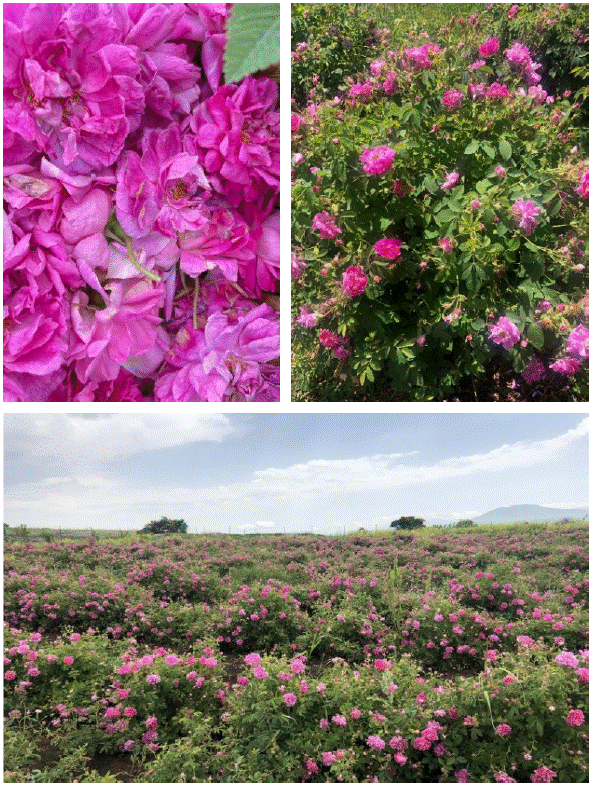
R. damascena plants were cultivated in the Aragyugh Village (Kotayk province, Republic of Armenia) at 1600 m a.s.l. at the farm of Nairian CJSC (Figure 1).
The plants were identified at the Department of Advanced Plant Taxonomy and Geography of the A. Takhtajyan Institute of Botany. The herbarium material of the genus Rosa from the region and international collections was studied at the herbarium of the Institute of Botany (ERE).
The first part of the study was agricultural work: applying organic fertilizers, plowing and removing weeds. After the soil was ready, Damask rose seedlings were planted. As a rule, Damask rose is planted in spring, when the soil warms up to 15 º - 16 º. When planting the seeds, a nutrient mixture prepared from mineral fertilizers was poured into the bottom of each planting pit, as well as humus and humus in combination with fertile soil. In this case, the root necks of the seedlings are usually buried 4 cm - 5 cm.
When the root system is covered with soil, Damask rose must be abundantly watered, and soil must be mulched with peat humus or sawdust. During the summer, weeds are cleaned and inter- row loosening of the soil is regularly carried out (Kholyavko and Globa-Mikhaylenko, 1976). Roses are collected before the sun touches their petals, otherwise, the fragrance will evaporate, and petals are picked by hand. The harvested roses should be fresh and have a strong fragrance. They are allowed to contain maximum 1 % non-oily parts.
The flowers were collected for EO distillation between 5 a.m. and 11 a.m. The essential oil (EO) was extracted by hydro distillation from the fresh flowers using a Clevenger apparatus. The distilled EO was dehydrated with anhydrous sodium sulfate and stored in airtight bottles at 4 °C in the dark, until further analysis.
Determination of essential oil composition
The composition of the R. damascena EO grown by Nairian CJSC was analyzed at the Nairian laboratory. Gas chromatography (GC) analysis was carried out using a Bruker 450 GC Gas Chromatograph (Bruker, USA) equipped with a 60 m × 0.25 mm × 0.25 μm OPTIMA-FFAP column (MACHEREY-NAGEL, Germany). The temperature of the oven varied from 40 º to 220 °C, with a scanning rate of 3 °C/min; the temperature of the evaporator was maintained at 220 °C. Helium (purity 5.6) was used as a carrier gas at a flow rate of 1 mL/min. The GC was equipped with a Hewlett-Packard 5972 Series MS detector. The MS operating parameters were an ionization voltage of 70 eV and an ion source temperature of 250 °C. The samples of EO diluted in 2 µL were injected manually. EO was then diluted in methanol in a proportion of 1:50 (v/v) to avoid overloading the GC column. The identification of peaks was tentatively carried out based on a library search using NIST-2013.
The efficiency (oil yield) was calculated as a percentage using the following formula:

Results and discussion
Oil-bearing roses have been, and continue to be, propagated by vegetative means through rooted cuttings (Nedkov and Attanassova, 2004; Zheljazkov et al., 1996). Due to asexual reproduction, Damask rose breeds have low genetic variation. However, specific weak morphological changes can occur depending on ecological conditions.
Our experience has shown that, to improve Damask rose propagation, it is best to take perennial cuttings from plants from 4 to 10 years old. Cuttings from such mother plants have an increased capacity (8 % - 32 %) to regenerate than older or younger ones. When planting perennial cuttings during the second half of autumn (with temperatures between 5 º and 12 º C), two to three times more seedlings are obtained than when planting in winter or spring. Seedlings can also be obtained by root cuttings when uprooting old plantations of varietal roses in late winter or early spring.
Some research results have shown that the environment affects the quality and quantity of flowers and EO yield (Misra et al., 2002). Some authors also have noted that Damask rose is hybridogenic (Zielinski, 1982; Khatamsaz, 1992). For example, Mahboubi (2016) proposes that R. damascena is a hybrid between R. gallica and R. phoenicia. Other authors suggest that R. damascena is a hybrid between R. gallica and R. moscata (Afsari Sardari et al., 2019).
According to Singh and Kayiyar (2001), the key distinguishing characteristics of Rosa species include plant growth habit, shrub form, prickle shape, stipule shape, leaflet shape, leaf margin type, vestiture of the leaflet’s ventral side, and flower shape. Additionally, the essential distinguishing traits among accessions within a species include flower color, petal number, hip shape, and hip color (Khaleghi and Khadivi, 2020).
R. damascena cultivated in Armenia has distinct phenotypic characteristics retained during vegetative propagation. The Armenian cultivars of R. damascena are characterized by a high density of peduncle prickles and relatively high flower and petal weights. The prickles on the stem are primarily curved.
Damask rose bushes in the Aragyukh plantation (Figure 1) are 1 cm - 1.25 cm high, flowers are double, pink, with 60 to 85 petals, and each one of them weights between 3 g and 3.5 g. They propagate well by layering, budding, and cuttings. This type of rose is cultivated in almost all regions of Armenia. It grows exceptionally well in lowlands and dry conditions. The R. damascena landraces belonging to temperate, warm temperate, and arid regions have higher EO yields than those from cool, cool- to-temperate, semiarid, and humid areas. According to some reports, R. damascena’s life span reaches up to 50 years, with an economic production period of approximately 25 years. The gestation period to reach economic productivity is approximately three years (Boskabady et al., 2011). Once fully established, the plants are drought-resistant.
The expected essential oil yield for R. damascena can vary depending on several factors, including the cultivar, growing conditions, and processing methods. The general guidelines are as follows:
Average essential oil yield: 0.5 % - 1.5 % (w/w) of the fresh flower weight.
Typical essential oil yield: 0.8 % - 1.2 % (w/w) of the fresh flower weight.
High-yielding cultivars: 1.5 % - 2.5 % (w/w) of the fresh flower weight.
Low-yielding cultivars: 0.2 % - 0.8 % (w/w) of the fresh flower weight.
In general, R. damascena landraces from temperate, warm climates, and arid regions have higher essential oil yields than those from cool, temperate, semiarid, and humid areas.
This culture flowers once per season, with a flowering period typically lasting 20 to 25 days. The flowering cycle includes an initial phase, a peak, and a subsequent decline. Our observations indicate that the duration of flowering and the completeness of bud opening are influenced by temperature, air humidity, and wind strength during the flowering period. The optimal conditions for extended flowering (up to 28 days) and maximal bud opening are temperatures of maximum 20 ºC and relative air humidity of at least 60 %.
Flower picking starts daily at dawn and lasts about 20 to 25 days. To get one kilogram of rose petals, 400 to 500 roses must be picked. The EO yield of the past five years of rose harvest and distillation at Nairian CJSC is presented below (Table 1).

These results indicate a low-yield cultivar. It was established that nutrient provision and irrigation are two of the most important factors influencing the production of essential oils. As is generally known, soil characteristics influence plant growth and development, and, in consequence, yield quantity and quality (Ghavam, 2021). In the case of the EO obtained by Nairian, low air humidity during the harvest and the company’s use of non- standard distillation equipment are two factors that substantially contribute to low EO yields.
Variations in the composition of R. damascena EO are influenced by environmental conditions and landrace, along with environment interactions (Yousefi and Aghdaei, 2018). Environmental and abiotic stress can impact plant behavior and progeny, since volatile terpenoids released from flowers play a role in attracting pollinators and providing protection against various stresses (Muhlemann et al., 2014). The diverse climatic conditions in Armenia allow Rosa damascena to adapt well, exhibiting minimal cultivation requirements.
For the first time in Armenia, R. damascena was grown on a large scale for EO distillation by Nairian CJSC. Sahakyan et al. (2020) identified the following main components of the oil through chromatographic analysis: linalool (6.88 %), citronellol (38.04 %), geraniol (26.32 %), neryl acetate (7.12 %), terpineol (2.17 %), nonadecane (4.90 %), geranial (0.72 %), α-pinene (0.74 %), limonene (0.52 %), and terpinen- 4-ol (0.59 %).
According to Baser et al. (2003), citronellol and geraniol concentrations should range between 20 % - 34 % and 15 % - 22 %, respectively. The citronellol/geraniol ratio preferred by the perfumery industry ranges typically 1.25 - 1.30. The citronellol/ geraniol ratio of Armenian (Kotayk region) R. damascena oil, determined by spectral analysis, was 1.44, which is slightly above the industry standard and aligns with ‘village oils’ from Anatolia, primarily produced using non-standard equipment. This discrepancy may be addressed by improving distillation techniques and using standardized equipment On the other hand, the citronellol content supports the botanical authenticity of the R. damascena essential oil. High- quality oils from authentic sources tend to have a higher citronellol content than oils from adulterated or synthetic sources. R. damascena essential oil with a higher citronellol content (typically above 30 %) is considered of higher quality and more suitable for various applications.
Citronellol is believed to contribute to the oil’s therapeutic properties, including its anti- inflammatory, antiseptic, and antimicrobial effects. The higher the citronellol content, the more pronounced these effects may be. Ochard and van Vuuren (2017) conducted studies on the antimicrobial activities of R. damascena EO from the Kotayk region at YSU. The oil demonstrated pronounced antibacterial activity against various Gram-positive and Gram- negative bacteria, exhibiting strong inhibitory effects. These results indicate that this EO is suitable for applications in skin care, pharmacology, and the food industry. Its high citronellol content makes it ideal for skincare products targeting common skin conditions such as acne and rosacea.
Armenian rose oil contains high levels of geraniol (27.97 %) and cis-geraniol (31.41 %), exceeding the concentrations reported for Bulgarian (Atanasova et al., 2016) and Turkish (Mahboubi, 2016) rose oil (Table 2). Armenian rose oil has a lower phenylethyl alcohol content (0.82 %) compared to Bulgarian (5 % - 10 %) (Atanasova et al., 2016) and Iranian oil (Mahboubi, 2016), reducing its sweet and honey- like notes. Likewise, Armenian rose oil contains significantly higher levels of hydrocarbons (eicosane, heneicosane, etc.), giving it a denser texture and longer-lasting aroma but reducing the lightness characteristic of Bulgarian oil.
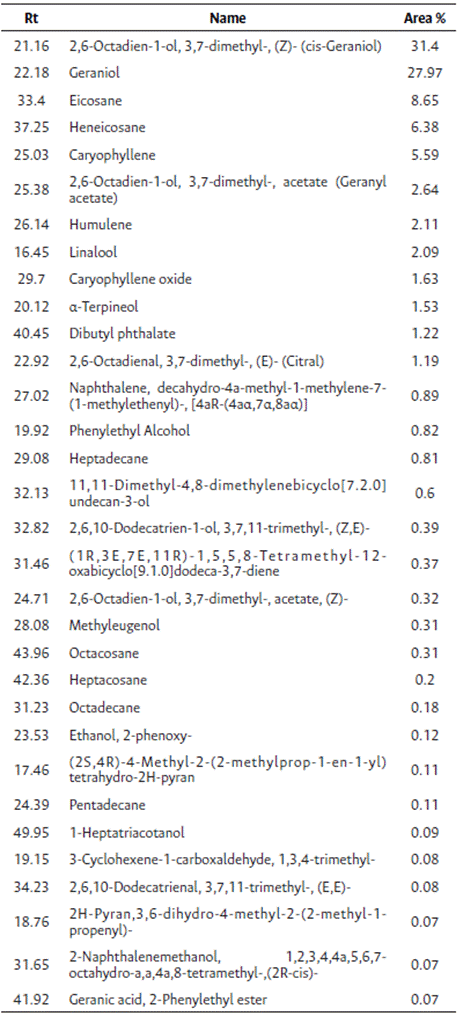
Armenian rose oil stands out for its distinct composition and therapeutic potential, serving as an excellent alternative to Bulgarian, Turkish, and Iranian oils in products emphasizing skincare benefits over traditional fragrance profiles.
The presence of additional hydrocarbons and sesquiterpenes in the oil contributes to its depth and the longevity of the fragrance, reflecting both the exceptional quality of the raw materials and the favorable climatic conditions of the region for rose cultivation.
Conclusion
The cultivation of R. damascena in Armenia presents a promising opportunity for agricultural development, particularly considering the challenges posed by global warming and desertification. Damask rose, known for its high essential oil content, thrives in moderate temperatures and humid conditions, but its adaptability to high altitudes and arid conditions makes it well-suited for Armenian climates.
The research underscores several key factors influencing the quality of rose essential oil, including propagation methods, harvest timing, temperature, humidity, and distillation techniques. The favorable climatic conditions in regions such as Aragyugh and other high-altitude areas of Armenia -characterized by significant precipitation, thunderstorms, and altitude- demonstrate that these areas are well suited for high-quality rose cultivation.
Armenia’s diverse climatic conditions and wide altitude range make it an ideal location for cultivating R. damascena. This suggests that the cultivation of R. damascena could represent both a lucrative and sustainable agricultural practice for Armenia.
High concentrations of cis-geraniol and geraniol are responsible for the oil’s floral and sweet aroma and exhibit potent antiseptic and anti-inflammatory properties. The unique chemical profile of this oil distinguishes it from Bulgarian, Turkish, and Iranian rose oils, characterized by a notably lower phenylethyl alcohol content, which reduces its sweet and honey-like notes. Higher levels of hydrocarbons (eicosane, heneicosane, etc.) contribute to a denser texture and longer-lasting fragrance. Additionally, the oil demonstrates significant therapeutic potential, making it an excellent alternative for skincare products that prioritize therapeutic benefits over traditional fragrance profiles. This study highlights the exceptional quality of the raw material and the favorable climatic conditions of the region for cultivating Rosa damascena.
Given the limited availability of arable land in Armenia, focusing on high-value crops like Damask rose could enhance agricultural productivity and economic returns. The potential for developing new cultivars suited to highland conditions, along with improvements in agricultural practices, further supports the viability of this endeavor.
Overall, R. damascena offers a promising avenue for Armenia to expand its agricultural sector, leveraging its unique environmental conditions to produce high-quality essential oil. This approach aligns with global trends towards sustainable agriculture and could position Armenia as a significant player in the essential oil market. Adaptability of R. damascena to high altitudes and the quality of the essential oil produced suggest that, with improved cultivation and distillation techniques, Armenia could become a significant player in the global rose oil market.
Considering its unique composition and properties, Armenian rose essential oil offers a range of opportunities for use in the following industries and applications:
Perfumery and fragrance industry: Its distinct floral scent, characterized by high levels of geraniol and cis-geraniol, makes it an attractive component for creating niche fragrances and perfumes that deviate from traditional “rosy” profiles.
Skincare and cosmetics: The potent antiseptic and antioxidant properties of Armenian rose oil, along with its anti-inflammatory effects, make it an excellent addition to skincare products aimed at addressing issues such as acne, aging, and sensitive skin.
Aromatherapy and wellness: The calming and uplifting qualities of the oil’s floral and woody notes, coupled with its therapeutic benefits, suggest potential applications in aromatherapy and wellness products.
Pharmaceuticals and medicine: The oil’s antiseptic and anti-inflammatory properties could be utilized in the development of pharmaceuticals and medical products.
Food and beverages: The unique fragrance profile of Armenian rose oil presents opportunities for its use in food and beverage products, such as flavored beverages, desserts, and confectionery items.
Developing sustainable and environmentally friendly methods for cultivating Armenian roses would not only ensure the long-term viability of their production but also contribute to environmental stewardship. To fully capitalize on the potential of Armenian rose essential oil -and as a consequence, to enhance yield and oil quality-, further research and development are necessary.

