




 English (pdf)
 Article in xml format
 Article references
 Automatic translation
 Send this article by e-mail
 Cited by SciELO
  Cited by Google
  Similars in
SciELO
Similars in
SciELO  Similars in Google
 Permalink
Introduction
Banana (Musa paradisiaca L.) belongs to the Musaceae family and is a monocotyledonous perennial plant that grows in the humid and subhumid tropics of low- and medium-altitude areas (Zulkifli et al., 2019). As of september 2021, Colombian fresh banana exports reached a total of 19.3 million tons, representing about 3 % of the global production (AGRONET, 2022). Banana is one of the most popular fruits worldwide, with an annual production exceeding 100 million tons. Although it is grown in more than 150 countries, most of its production is concentrated in a few key nations, such as India, China, the Philippines, Ecuador and Brazil (FAO, 2023).
Minimally processed technology (fresh-cut) is one of the innovative approaches widely applied to vegetables. The demand for fruits is increasing because of their nutrients, which make them suitable for a healthy diet. Therefore, the market for fresh-cut fruits and vegetables is growing globally at a rapid rate. These products are considered convenient because they reduce preparation time by eliminating inedible parts while preserving flavor and succulence (Yousuf et al., 2020). The International Fresh-Cut Produce Association (IFPA) defines fresh-cut products as “any fruit or vegetable, or a combination of these, that has been physically altered but remains fresh” (IFPA, 2024).
In particular, bananas are highly susceptible to enzymatic browning due to their high content of phenolic compounds and the presence of polyphenol oxidase, which is one of the main causes of the loss of quality and commercial value of its fresh-cut product, leading to significant changes in appearance, flavor, and texture (Solís et al., 2023). Different physical and chemical techniques are applied to fresh-cut fruits to prevent enzymatic browning, including disinfection, refrigeration, and packaging (Dussán-Sarria et al., 2020), antioxidant chemical dips (Arora et al., 2021; Solís et al., 2023), and edible coatings (Dussán-Sarria et al., 2020).
According to Rodríguez-Arzuaga and Piagentini (2017), the application of citric acid combined with CSteine has proven to be an effective method for the conservation of green banana slices packaged in vacuum plastic bags. In their study, physicochemical quality attributes and firmness showed minor changes, prolonging the storage life for up to 21 days at 11±2°C and 92±2 % relative humidity (RH).
However, minimal processing also affects the texture and color of banana slices during storage. To mitigate these effects, various preservation techniques are employed, including chemical immersion, edible coatings, and controlled-atmosphere storage (Wani et al., 2017). Processing operations in fruits such as bananas affect their quality and appearance, leading to economic losses and reduced consumer acceptance. Therefore, the objective of this study was to evaluate the effect of cutting method, antioxidant agents (citric acid and L-cysteine) and the type of packaging on the quality of bananas stored under refrigeration.
Materials and methods
Raw material
For this study, bananas of the Cavendish variety were obtained from a local supermarket in the city of Palmira, Valle del Cauca, Colombia. The fruits were selected at a ripeness stage of 5 on the 1 to 7 color scale, corresponding to yellow peel with green tips, uniform size, and absence of defects (CEAGESP, 2006). They were then transported to the Palmira campus of the National University of Colombia and stored at 11±2 C and 85±2% relative humidity (RH) for 24h prior to minimal processing.
Preparation of fruit cuts and application of coatings
Initially, the fruits were sanitized by immersion in chlorinated water (200ppm for 5min), peeled, and manually cut into cubes measuring 3cm on each side and slices of 4cm in diameter using a knife. The cut types, previously determined through experimentation, were evaluated in a sensory analysis with untrained consumers. Banana cuts were then treated by immersion for 3min in two antioxidant solutions: anhydrous citric acid at 0.92% (w/v) (Dussán-Sarria et al., 2020), and L-cysteine at 0.50% (w/v) (Arora et al. 2021; Dussán-Sarria et al., 2020). A control batch without antioxidants was also applied to fruit cuts as a control. After immersion, excess moisture was removed from the fruit cuts with absorbent paper, and the samples were packaged.
Packaging and storage
Cut bananas (200g) were packaged in two types of containers: polyethylene terephthalate boxes (Alico Ref. AL 69P) (16cmx12cmx4.6cm) and polystyrene trays (10 cm x 10 cm x 5 cm) covered with 16μm- thick polyvinyl chloride (PVC). The respective gas permeabilities were as follows: PET to CO2, 112cm3m-2 day-1; PET to O2, 3940cm3m-2day-1; PVC to CO2, 5183cm3m-2 day-1; and PVC to O2, 14803cm3m-2day-1. The packaged fruit cuts were stored at 11±2°C and 85±2% RH. Refrigerated storage was used to simulate retail display conditions. The physicochemical attributes of the fruit were monitored every 2 days for 12 days of refrigerated storage.
Physicochemical analysis
Titratable acidity was determined from a macerated sample diluted in distilled water and titrated with 0.1 N NaOH, following the Colombian Technical Standard NTC 4623 (ICONTEC, 1999). Results were expressed as a percentage of malic acid (g malic acid/100 g sample). The pH was measured with a Metrohm 744 digital pH meter, previously calibrated with buffer solutions at pH 4 and 7, according to the Colombian Technical Standard NTC 4592 (ICONTEC, 1999).
Color evaluation
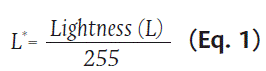
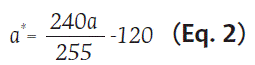
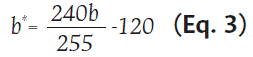
The surface color of the banana slices was determined using a Konica Minolta colorimeter (Model CR-400). Color was expressed in the L* a* b* color space, with D65 as illuminant and a 2 ° observation angle. Color measurements were expressed in terms of luminosity (L*) (L* = 0 for black and L* = 100 for white) (Equation 1), coordinate a* (green [-], red [+]) (Equation 2), and coordinate b* (blue [-], yellow [+]) (Equation 3). The color coordinate values were calculated using the following equations: during storage and three repetitions per treatment, for a total of 252 experimental units. The data were analyzed using analysis of variance (ANOVA) and Tukey’s test (p<0.05) for the comparison of means. All statistical analyses were performed using the statistical program IBM SPSS v. 20.0 (Table 1).
Browning index
The browning index (BI) was calculated from the CIELAB color coordinates (L*, a*, b*) using Equations 4 and 5.

Where:
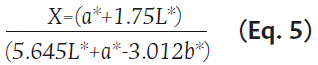
As the BI increases, the degree of darkening of the fruits also increases. The equations for determining color coordinates, such as the browning index, were proposed by Pathare et al. (2013).
Experimental design and statistical analysis
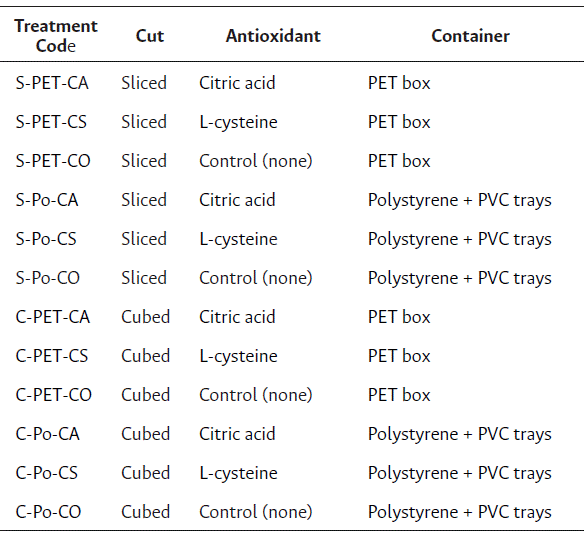
A completely randomized experimental design was used with a 2x2x3 factorial arrangement, corresponding to 12 treatments derived from three factors: the type of cut (slices and cubes), type of container (PET boxes and polystyrene trays), and type of antioxidant (citric acid, L-cysteine, and control). The experiment included seven evaluation periods during storage and three repetitions per treatment, for a total of 252 experimental units. The data were analyzed using analysis of variance (ANOVA) and Tukey’s test (p<0.05) for the comparison of means. All statistical analyses were performed using the statistical program IBM SPSS v. 20.0 (Table 1).
Results and discussion
The results of the evaluation of the quality attributes during the refrigerated storage of fresh-cut bananas are presented and discussed below. Figures 1 to 5 provide a visual summary of the data, with two bar graphs. The bars on the left illustrate the mean values of the quality attributes for each treatment across the 12 days of storage. The bars on the right present the average of the quality attribute values evaluated in all treatments for each specific day of evaluation. This format allows to analyze the overall performance of all attributes evaluated.
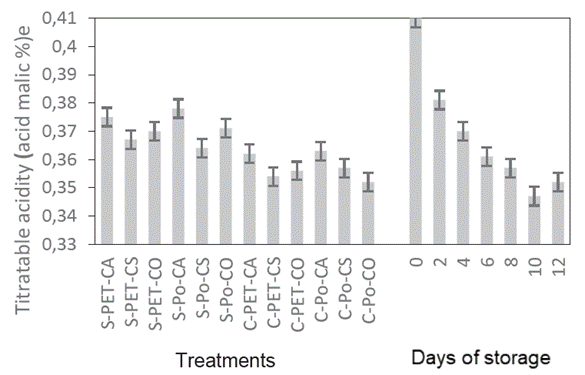
Figure 1 Evolution of titratable acidity values of fresh-cut bananas, sliced (S) and cubed (C), packaged in PET containers and polystyrene containers + PVC (Po), and treated with citric acid (CA), cysteine (CS), and control (CO), during 12 days of storage at 11 ± 2 °C and 85 ± 2 % relative humidity (RH). Vertical lines indicate the standard error.
Titratable acidity (TA)
Figure 1 illustrates a decrease in titratable acidity, expressed as malic acid, across all treatments during the 12 days of refrigerated storage. According to Bazaz et al. (2018), fruit acidity results from the production of organic acids through the degradation of polysaccharides, pectic substances, and uronic acids. On the other hand, Passos et al. (2016) reported that the malic acid content in bananas decreases as organic acids are converted into sugars during the ripening process driven by respiration. In most climacteric fruits, such as bananas, metabolism continues after harvest, leading to the breakdown of polymeric carbohydrates (pectic substances and hemicellulose), which increases sugar content while decreasing organic acids (Bazaz et al., 2018).
Up to the fourth day, significant differences (p < 0.05) were observed in titratable acidity (TA) values between the two cut types. Throughout storage, the six treatments of sliced bananas presented higher malic acid content, with an average value of 0.38 %, compared to 0.36 % in the six treatments of cubed bananas. This indicates that sliced bananas presented lower malic acid losses, which contributed to better preservation of this organic acid during storage.
Significant differences (p<0.05) were observed among treatments throughout the evaluation period. Bananas cut into slices (R) and treated with citric acid (CA) maintained higher acidity levels in the two packaging types compared to the other treatments. The elevated acidity values in these samples suggest better control of the ripening process and, consequently, improved fruit preservation. CA was more effective than L-cysteine (CS), as it maintained the highest acidity during refrigerated storage. In contrast, cuts treated with CS showed greater malic acid losses, represented by TA, similar to the control treatment (CO), which indicates higher consumption of organic acids during ripening and, therefore, lower preservation effectiveness.
Regarding the effect of the container type on TA, there was no incidence of this factor in the variation of this attribute. No interaction was observed between the cut type and the packaging type, whereas a significant interaction was found between the packaging type and the antioxidant type (p<0.05).
When considering packaging alone, no significant difference (p<0.05) was detected between bananas stored in polystyrene + PVC trays (mean 0.37%) and those stored in PET boxes (mean 0.36%) during the 12 days of storage.
pH
Considering all treatments (bars on the right side), a progressive increase in pH was observed up to day 6 of refrigerated storage, followed by a slight decrease until day 12. This behavior contrasts with the reduction in TA values during the same period.
Similar findings were reported by Passos et al. (2016), who showed a relationship between increasing pH and a decreasing malic acid in ‘Prata’ bananas stored for 12 days at 23°C. Likewise, De Paula et al. (2018) attributed the increase in pH to the loss of malic acid in fresh-cut bananas stored for 15 days at 27±2 C (Figure 2).
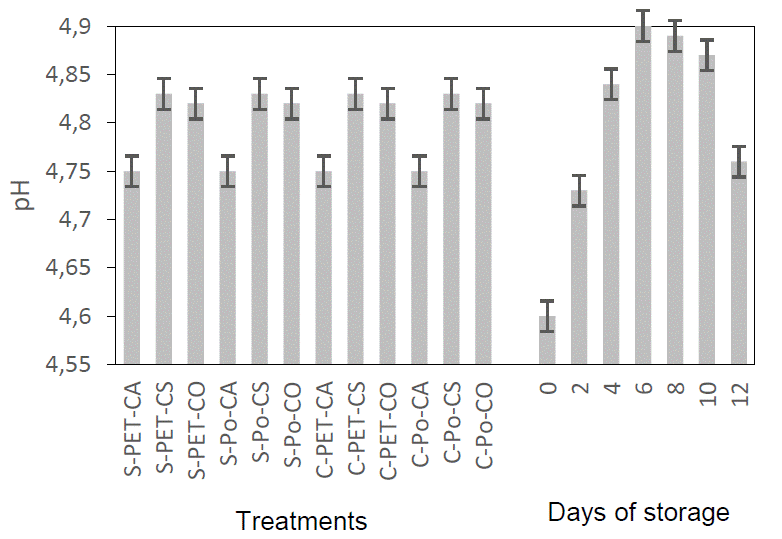
Figure 2 Changes in pH values of fresh-cut banana, sliced (S) and cubed (C), packaged in PET containers and polystyrene containers + PVC (Po), and treated with citric acid (CA), cysteine (CS), and control (CO), during 12 days of storage at 11 ± 2 °C and 85 ± 2 % relative humidity (RH). Vertical lines indicate the standard error.
As observed in the analysis of TA values, the treatments that included the antioxidant citric acid (CA) exhibited the lowest pH values during refrigerated storage. A significant difference (p<0.05) was found between banana cuts treated with CA and those treated with L-cysteine (CS) for both packaging types, with mean values of 4.75 and 4.83, respectively. No interaction was observed between the factors ‘type of cut’ and ‘type of packaging’, whereas a significant interaction (p<0.05) was detected between the type of packaging and type of antioxidant.
According to Damodaran and Parkin (2021), the pH of a food matrix is one of the main stability factors because it ensures safety and, in turn, maintains sensory quality, especially in foods susceptible to enzymatic browning. pH values in food equal to or lower than 4.5 make them stable from a microbiological point of view and inhibit the enzymatic activity responsible for the formation of melamine pigments derived from the oxidation of phenolic compounds. This suggests that citric acid in fresh-cut bananas, regardless of the type of cut and packaging used, exerts not only an antioxidant effect against enzymatic browning but also antimicrobial and preservative effects. Bhat et al. (2021) indicated that the addition of organic acids to foods increases the concentration of protons, thereby acidifying the cytoplasm of microbial cells and leading to their inhibition when the pH falls below the range required for their normal development. Similarly, Wani et al. (2017) reported that citric acid inhibits the activity of enzymes such as polyphenol oxidase (PPO) in cut apples, since their catalytic action is interrupted under low-pH conditions.
Color coordinates
An evident decrease in the luminosity (L*) of the cut fruit was observed during refrigerated storage in all treatments (Figure 3, bars on the right side). These results are consistent with those reported by De Paula et al. (2018) in fresh-cut bananas, who observed a progressive reduction in luminosity throughout the experiment under refrigeration conditions (27±2°C).
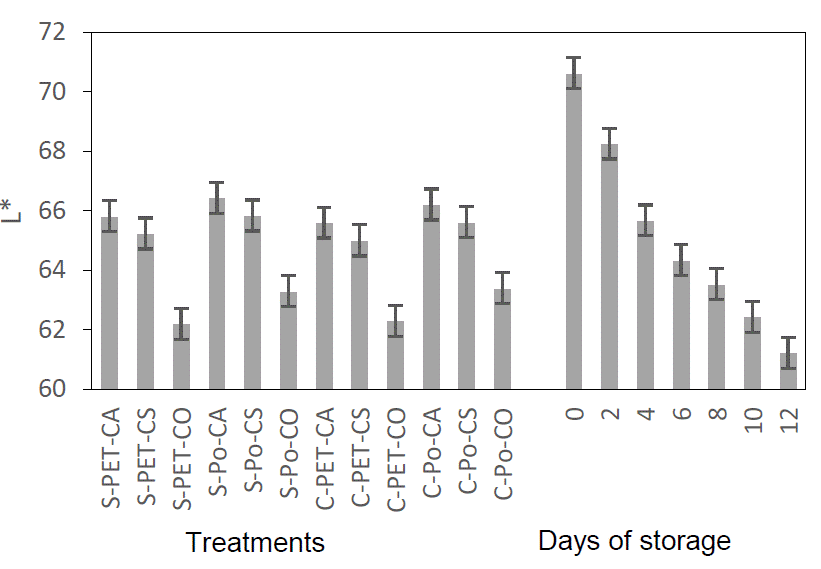
Figure 3 Evolution of luminosity (L*) values of fresh-cut banana, sliced (S) and cubed (C), packaged in PET containers and polystyrene containers + PVC (Po), and treated with citric acid (CA), L-cysteine (CS), and control (CO), during 12 days of storage at 11 ± 2 °C and 85 ± 2 % relative humidity (RH). Vertical lines indicate the standard error.
Similarly, Bazaz et al. (2018) reported slight darkening on the surface of banana pulp stored at 25°C for 90 days, attributed to the activity of polyphenol oxidase in the presence of oxygen and phenolic compounds. This enzymatic activity leads to loss of the characteristic color of the fruit.
Despite the apparent darkening of the fruit, banana slices treated with CA and those treated with CS maintained higher L* values during storage, with no significant difference (p<0.05) between them, showing mean values of 66.0 and 65.4, respectively.
In contrast, the mean L* values of the control were significantly lower (p<0.05), with an average of 62.8 throughout the storage period. Over the entire storage time, the CA-treated banana cuts showed a reduction in luminosity of 6.5%, whereas the control cuts exhibited a reduction of 24.2%.
These results can be attributed to the fact that the antioxidant compounds CA and CS have a positive effect on the control of enzymatic browning by decreasing pH, which in turn reduces the activity of polyphenol oxidase. Similar results were reported by Dussán-Sarria et al. (2020) in fresh-cut green banana ‘Dominico Hartón’ (Musa AAB Simmonds), where pretreatment with ascorbic acid led to a decrease in L* values during the final phase of the study. According to Arora et al. (2021), at low concentrations, L-cysteine promotes browning until it reaches a relatively high concentration, after which it inhibits the process. This effect on banana darkening is exerted by the inhibition of PPO activity at pH values below 6.5.
In the bars on the right side, a clear decrease in the b* coordinate values was observed through the storage period. In the CIELAB color space, the b* coordinate corresponds to tones on the surface of the product ranging from blue (-) to yellow (+); thus, the decrease in b* values in all treatments indicates a loss of the yellow or cream color characteristic of ripe banana pulp. This reduction in b* values may be associated with oxidative degradation processes that lead to pulp darkening during storage. Arora et al. (2021) also reported a significant decrease in L* and b* values, along with an increase in the a* value, in banana pulp during storage (Figure 4).
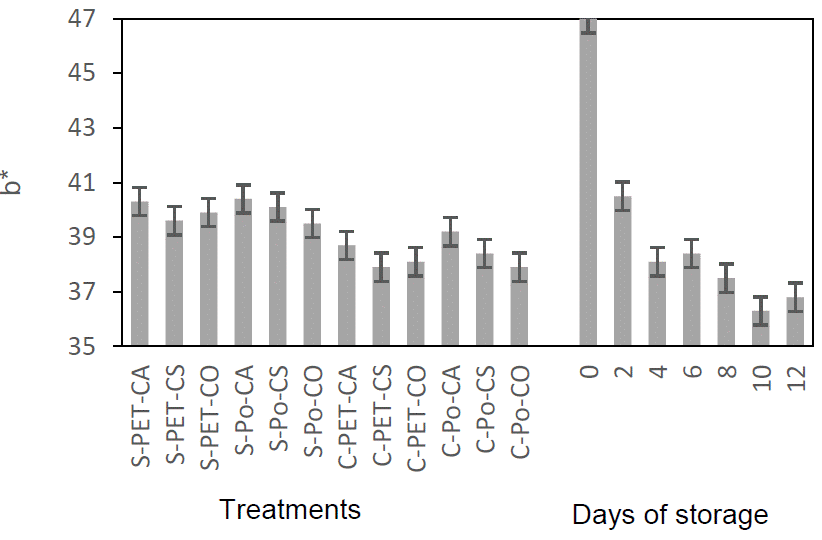
Figure 4 Evolution of the b* coordinate values of fresh-cut banana, sliced (S) and cubed (C), packaged in PET containers and polystyrene containers + PVC (Po), and treated with citric acid (CA), L-cysteine (CS), and control (CO), during 12 days of storage at 11±2°C and 85±2% RH. Vertical lines indicate the standard error.
The maintenance of the yellow hue, reflected in higher b* values, was observed in sliced banana cuts treated with CA in both types of packaging. In contrast, the greater loss of this color coordinate occurred in cubed bananas treated with L-cysteine, regardless of the packaging. At the end of storage, the b* values of the banana cuts treated with CA decreased by only 4.5% across all treatments, whereas cuts treated with L-cysteine showed a reduction of 17.7%, and the control cuts exhibited a 15.2% loss in yellow coloration. The color-stabilizing effect of citric acid may be attributed to its role as chelating agent, interacting with copper at the active site of PPO, and thereby preventing the oxidation of phenolic compounds, as previously suggested by Wani et al. (2017) and Arora et al. (2021).
In their study, Bhat et al. (2021) used citric acid to reduce the activity of PPO in kiwi fruits. They reported that the browning of these fruits considerably decreased compared to untreated samples. In addition to its antioxidant effect, citric acid also contributed to increased brightness and greener color tones. Similarly, Bazaz et al. (2018) demonstrated that treating banana slices with a combination of 0.1% citric acid and 0.1% potassium metabisulfite was effective in preventing browning and inhibiting PPO activity. Furthermore, several authors have suggested that combining antioxidant agents with edible coatings significantly enhances the preservation of color in fresh-cut products (Dussán-Sarria et al., 2020; Passos et al., 2016).
On the right side of the bars (Figure 5), the a* coordinate of the banana cuts showed an increasing trend during refrigerated storage, ranging between 5 and 11. The highest a* values were observed in banana slices treated with L-cysteine, with an average of 10.1, whereas the lowest values corresponded to the banana slices without antioxidants (CO) and those treated with citric acid, with mean values of 8.1 and 8.0, respectively. No interaction was observed between the factors ‘type of cut’ and ‘type of packaging’, while a significant interaction (p<0.05) was observed between the type of packaging and type of antioxidant.
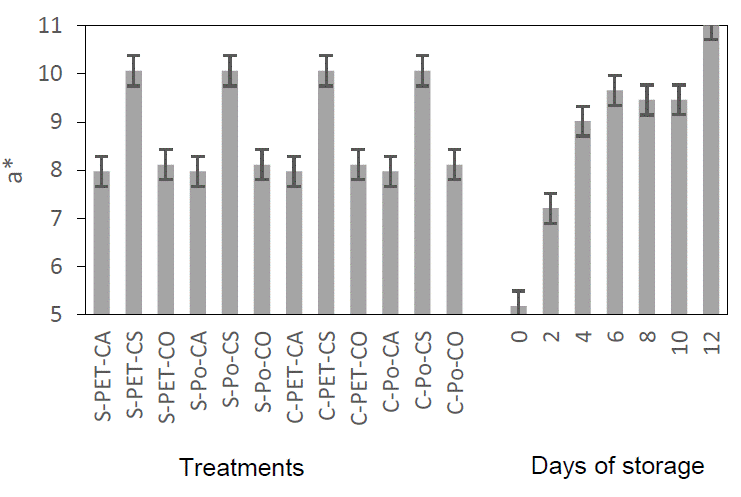
Figure 5 Evolution of the a* coordinate values of fresh-cut banana, sliced (S) and cubed (C), packaged in PET containers and polystyrene containers + PVC (Po), and treated with citric acid (CA), L-cysteine (CS), and control (CO), during 12 days of storage at 11±2 C and 85±2% RH. Vertical lines indicate the standard error.
The highest a* values and the lowest b* values were observed in sliced bananas treated with L-cysteine in both types of packaging. This suggests that L-cysteine exerts the opposite effect to the desired one, since it promoted the appearance of pinkish pigments on the surface of banana cubes and slices after four days of storage. This effect was more evident in samples packaged in PET containers. Bazaz et al. (2018) reported that when L-cysteine is used as an enzyme inhibitor at concentrations below 0.5%, a pink coloration may develop. Similarly, Dussán-Sarria et al. (2020), working with another Musaceae variety, the green banana ‘Dominico Hartón’ (Musa AAB Simmonds), cut into slices and packaged under vacuum in PET, reported that the application of citric acid provided greater product stability than the application of 0.50% (w/v) L-cysteine.
In the evolution of the browning index (BI) values of fresh-cut bananas, a direct relationship was observed between the progressive increase in BI and the decrease in both luminosity (L*) and the b* coordinate. The lowest BI values throughout the storage period were observed in both banana slices and cubes packaged in polystyrene + PVC trays and treated with citric acid, with mean values of approximately 72.1 and 76.5, respectively. These results suggest that there was a delaying effect of citric acid and L-cysteine on enzymatic darkening, preventing the formation of brown pigments, with citric acid showing the highest effectiveness (Figure 6).
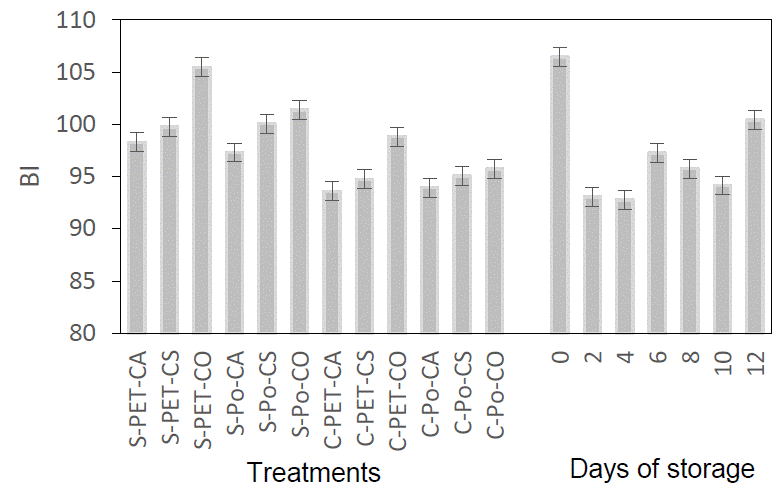
Figure 6 Browning index (BI) values of fresh-cut bananas sliced (S) and cubed (C), packaged in PET containers and polystyrene containers + PVC (Po), and treated with citric acid (CA), L-cysteine (CS), and the control (CO), during 12 days of storage at 11±2°C and 85±2% relative humidity (RH). Vertical lines indicate the standard error.
Regarding the effect of the two types of packaging evaluated, no significant influence was observed on the overall stability of the banana cuts. Due to its design, the PET container did not ensure adequate hermetic sealing and allowed internal air circulation.
In contrast, the use of 10cm×10cm×5cm polystyrene trays covered with 16μm-thick polyvinyl chloride (PVC) showed positive effects. Although PVC is not an effective barrier to oxygen because of its high permeability, it provided a modified atmosphere that helped regulate changes associated with the fruit ripening process.
Color deterioration in fresh-cut vegetables, according to Bazaz et al. (2018), is likely associated with the accelerated loss of pigments such as carotenoids and flavonoids, which are responsible for the yellow coloration of fruits. In the present study, this was evidenced by the darkening of the pulp, the increase in a* values, and the decrease in b* values in the fresh-cut bananas, which together reduced fruit quality during the last days of storage. Among the types of packaging, banana slices stored in PET containers exhibited greater deterioration in color and physical appearance, whereas those packed in polystyrene + PVC trays maintained superior stability in both color and overall appearance.
The treatment of sliced bananas with citric acid, combined with packaging in polystyrene + PVC trays, resulted in higher acidity values, lower pH, and reduced losses in the b* and L* values and BI color parameters during its conservation.
Conclusions
The cutting method, the use of antioxidants, and the use of different packaging materials influence the shelf life of fresh-cut bananas during refrigerated storage. The application of the antioxidant citric acid at 0.92% (w/v) and L-cysteine at 0.50% (w/v) demonstrated inhibitory effects on enzymatic browning and contributed to the preservation of the physicochemical and color attributes of the fruit for longer periods. Among the evaluated treatments, sliced bananas treated with 0.92% (w/v) citric acid and packaged in polystyrene trays covered with PVC film showed the greatest fruit stability for up to 12 days of storage at 11±2 C and 85±2% relative humidity.

