




 English (pdf)
 Article in xml format
 Article references
 Automatic translation
 Send this article by e-mail
 Cited by SciELO
  Cited by Google
  Similars in
SciELO
Similars in
SciELO  Similars in Google
 Permalink
Introduction
Sour guava or Costa Rican guava ( Psidium friedrichsthalianum Nied.) is a fruit produced by a tree of the Myrtaceae family, distributed from southern Mexico to eastern Venezuela. In Colombia, this species grows naturally in the Cauca and Magdalena valleys, from sea level up to 800 m of altitude, as it is sensitive to low temperatures. Generally, the fruit is used to prepare beverages, jellies, and jams (Lim, 2012). The fruit is globose, measuring between 3 cm and 6 cm in diameter, with a fleshy and acidic pulp. During ripening, its exocarp changes color from green to yellowish hues (Muñoz-Arrieta et al., 2021). Recent studies have highlighted the phytochemical and pharmacological potential of this species, mainly attributing it to its high antioxidant and antimicrobial activities (Santos et al., 2023), as well as to the presence of flavonoids and ellagic acid derivatives as the main bioactive compounds (Cuadrado-Silva et al., 2017).
According to Singh (2011), during guava ripening, the chlorophyll content generally decreases while carotenoid levels increase. Furthermore, fruit softening is accompanied by an increase in soluble pectin and a decrease in certain carbohydrates such as cellulose, hemicellulose, lignin, and starch. Therefore, several postharvest handling factors are crucial to ensure fruit quality, including temperature management (> 8 °C - 10 °C), prevention of physical damage, control of water loss, and reduction of dry rot incidence. Although some studies have reported the effect of the application of 1-methylcyclopropene (1-MCP) on cv. ‘Allahabad Safeda’ (Singh and Pal, 2008), melatonin on cv. ‘Zhenzhu’ (Fan et al., 2022), and edible coatings on cv. ‘Lalit’ and ‘pear’ guava (Vishwasrao and Ananthanarayan, 2016; Hong et al., 2012), only one investigation has addressed the extension of sour guava shelf life using silver nitrate, mercuric chloride, and sodium hypochlorite at different doses and exposure times (Villalobos et al., 1999).
Edible coatings are widely used and well accepted in fruit preservation as a barrier to gases, water vapor, and external contamination (Aljabary et al., 2025). Nevertheless, the combined application of this technology with superficial and non-ionizing radiation, such as ultraviolet shortwave radiation (UV-C), remains very limited, particularly in species belonging to the Myrtaceae family. Previous studies suggest that the combined use of postharvest technologies may exert a positive effect on shelf life and bioactivity of sour guava. Therefore, the aim of this study was to evaluate the effect of combining UV-C and a sodium alginate edible coating on the postharvest quality and antioxidant potential of sour guava.
Materials and methods
Raw material
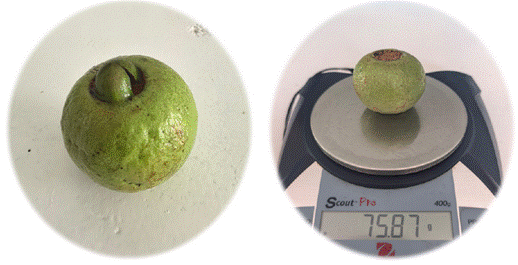
Approximately 1.7 kg of sour guava (Psidium friedrichsthalianum Nied.) was obtained from Génova, Quindío, Colombia. Guavas were transported to the RoastLab at Universidad del Valle, Caicedonia Regional Campus, where they were rinsed, washed, and air-dried under ambient conditions (Figure 1).
Chemical reagents
Sodium acetate buffer, gallic acid, and Folin-Ciocalteu reagent used in this study were purchased from Alpha Chemika (Mumbai, MH, India). 2,4,6-tris(2-pyridyl)- s-triazine (TPTZ), 2.2-diphenyl-1-picrylhydrazyl (DPPH), and 2.2'-azino-bis-(3-ethylbenzothiazolinone- 6-sulfonic acid (ABTS) radicals were obtained from Sigma-Aldrich (St. Louis, MO, USA). Hydrochloric acid was supplied by Panreac AppliChem (Castellar del Vallès, Barcelona, Spain). Ferric chloride (FeCl3) and potassium peroxodisulfate were purchased from Millipore Corporation (Darmstadt, Hesse, Germany). Absolute ethanol (95 %) was locally procured from San Jorge (Cali, Valle del Cauca, Colombia).
Fruit treatments and storage
The fruits were divided into three lots according to the treatment applied: 1) control (C), 2) UV, and 3) UV+EC. The first lot consisted of guavas without treatment. The second lot was irradiated for 5 min with UV-C. For this purpose, sets of eight fruits were placed under a 20 W UV lamp (UVC20W, ANTIVID19, Ecolite S.A.S., Cali, VAC, CO) positioned 10 cm above the guavas (Acevedo-Daza et al., 2024). The lamp intensity was 58.549 W/m2, and the applied dose was 2.196 kJ/m2, calculated according to the extensive source with spherical emission (ESSE) model (Gardner and Shama, 1999).
UV-C irradiation was performed away from laboratory personnel to prevent skin and eye exposure. The last lot was subjected to UV-C irradiation followed by the application of a sodium alginate edible coating (EC). The coating formulation contained 2 % (w/w) sodium alginate, 1.5 % (w/w) glycerol, 0.1 % (w/w) polysorbate 80, and 96.4 % (w/w) distilled water. It was applied with a soft brush to form a layer approximately 0.2 mm thick and then dried by forced convection. Finally, all fruits were stored under refrigeration (8 °C and 70 % relative humidity, RH) for 21 days.
Physicochemical analysis
pH was measured using a potentiometer (HI 991001, HANNA Instruments, Woonsocket, RI, USA). Total soluble solids (TSS) were determined using a digital refractometer (HI96800, HANNA Instruments), while firmness was assessed using a digital penetrometer equipped with a 7.9-mm diameter probe (GY-M30, Shenzhen, GD, CN). Titratable acidity (TA) was determined following the AOAC 942.15 method, considering citric acid as the predominant organic acid (AOAC, 2022). Weight loss (WL%) was calculated as the percentage difference between the initial weight and the weight recorded during storage (Peralta-Ruiz et al., 2020).
Color evaluation
Color parameters in the CIE L*a*b system were obtained using a 3NS800 spectrophotometer (3NH, Zengcheng District, GZ, CN), calibrated with a D65 illuminant and a 10 ° standard observer.
Antioxidant activity
Preparation of extracts
Sample extracts were prepared using 1 g of sour guava and 10 mL of absolute ethanol. The mixtures were subjected to an ultrasonic bath for 15 min and subsequently centrifuged for 15 min at 3600 rpm (Z 206 A; Hermle Benchmark, Franklin, WI, USA) (Garzón-García et al., 2023). The extracts were diluted by a factor of 50 before being used in the subsequent tests.
Total phenolic content
Total phenolic content was determined according to Pérez-Perez et al. (2020). 200 μL of extract and 500 μL of 1 N Folin-Ciocalteu reagent were mixed and kept under refrigeration for 5 min. Subsequently, 500 μL of 20 % NaCO3 and 2.8 mL of distilled water were added.
The mixture was allowed to stand for 30 min, after which the absorbance was measured at 760 nm using an UV-Vis spectrophotometer (UV-1200; MAPADA INSTRUMENTS, Songjiang District, SH, CN). A calibration curve was constructed using gallic acid as the standard, with concentrations ranging from 0 g/ mL to 0.4 g/mL (R2 = 0.990). Results were expressed as milligrams of gallic acid equivalents per 100 g of fresh sample.
Antioxidant capacity by ABTS assay
The antioxidant capacity by the ABTS assay was determined according to González-Vega et al. (2021). Initially, a radical solution was prepared by dissolving 19.3 mg of ABTS in 5 mL of distilled water. Separately, 0.0378 g of potassium persulfate was dissolved in 1 mL of distilled water. Subsequently, 88 µL of the persulfate solution was added to the initial solution. This resulting mixture was kept in the dark for 12 h, after which it was adjusted to an absorbance of 0.7 ± 0.01 at a wavelength of 734 nm. For the measurements, 250 µL of extract was mixed with 3375 µL of the prepared radical cation solution, and the absorbance was measured at 734 nm after 30 min. Results were expressed as radical inhibition capacity (%) according to Equation 1, using distilled water as the control.

Antioxidant capacity by DPPH assay
The antioxidant capacity by the DPPH assay was evaluated based on the methodology proposed by Pérez-Perez et al. (2020) with some modifications. A total of 1.5 mg of DPPH radical was dissolved in 50 mL of methanol. This solution was adjusted to an absorbance of 0.7 ± 0.01 at a wavelength of 515 nm. Subsequently, 300 µL of extract and 3 mL of the radical solution were mixed. The mixture was allowed to stand in the dark for 30 min, after which the absorbance was measured at a wavelength of 515 nm. Results were expressed as radical inhibition capacity (%) according to Equation 1, using distilled water as the control.
Antioxidant capacity by ferric reducing antioxidant power (FRAP)
Antioxidant capacity by the FRAP assay was determined following the methodology proposed by Garzón-García et al. (2023) with some modifications. Three stock solutions were prepared: a 300 mM sodium acetate buffer (pH 3.6), a 20 mM FeCl3 × 6H2O solution, and a 10 mM TPTZ solution in 40 mM HCl. The working solution was prepared by mixing the solutions in a 10:1:1 (v/v/v) ratio (buffer, FeCl3 × 6H2O, and TPTZ-HCl, respectively). 3.5 mL of the working solution was added to 250 µL of extract, and the mixture was allowed to stand for 30 min. The absorbance of this mixture was measured at a wavelength of 638 nm. A calibration curve was constructed using gallic acid as the standard, with concentrations ranging from 0 mg/mL to 0.1 mg/mL (R2 = 0.995). The results were expressed as milligrams of gallic acid equivalents per 100 g of fresh sample.
Statistical analysis
Results were presented as the mean of triplicate measurements ± standard error. A completely randomized design with two factors was employed. The first factor was treatment type, with three levels (C, UV, and UV+EC), while the second factor was storage time, with four levels (0, 7, 14, and 21 days). A two-way ANOVA followed by Tukey’s post hoc test was conducted to assess the effects of treatment type and storage time on the physicochemical parameters, color attributes, and antioxidant activity (p < 0.05). All statistical analyses were performed in Minitab 17 (Minitab Inc, State College, PA, US).
Results
Physicochemical parameters
Treatment type, storage time, and their interaction had a significant effect on pH and TA (p < 0.05). The pH values ranged from 2.763 to 2.947, 2.727 to 2.693, and 2.813 to 2.827 for C, UV, and UV+EC treatments, respectively. During storage, TA values decreased in control samples and increased for UV and UV+EC (C: 2.240 % - 1.173 %, UV: 1.920 % - 2.880 %, UV+EC:2.027 % - 2.240 %).
Total soluble solids (TSS) were significantly affected by storage time and by the interaction between storage time and treatment type (p < 0.05). TSS values increased rapidly in fruits from C and UV treatments (11.5 - 17.1 °Brix and 11.1 - 17.9 °Brix, respectively), whereas the combined UV+EC treatment delayed this increase (10.3 - 11.5 °Brix). These results indicate that the combined treatment effectively slowed metabolic activity during storage.
All factors and their interaction had a significant effect on firmness and weight loss (p < 0.05). As shown in Figure 2, sour guavas from the UV treatment exhibited the highest firmness values at the end of storage, along with weight loss levels similar to those observed in the control fruits. Thus, weight loss likely contributed to firmer fruits during texture assessment. Conversely, fruits subjected to the combined UV+EC treatment showed lower firmness and weight loss values than those observed in the C and UV treatments.
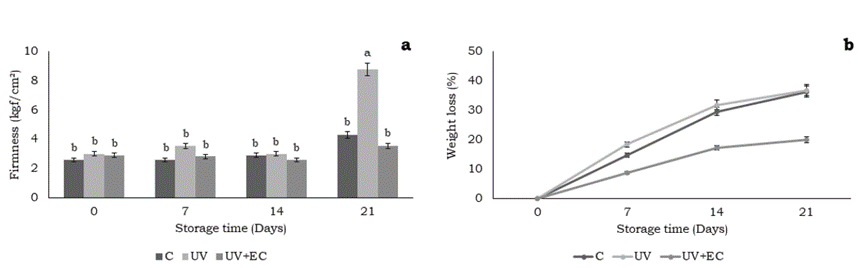
Figure 2. Firmness (a) and weight loss (b) of sour guava subjected UV, and UV+EC treatments, as well as the control (C), during storage at 8 °C and 70 % relative humidity for 21 days. Note. Bars represent the mean values, and the vertical lines above the bars correspond to the standard error. Different lowercase letters above the bars indicate significant differences among treatments during storage, according to Tukey’s post hoc test (p < 0.05).
Color parameters
The coordinates L*, a*, and b* (where L* represents luminosity, -L* = black and +L* = white; a* indicates color from -a* = green to +a* = red; and b* from -b* = blue to +b* = yellow) were assessed in sour guavas during 21 days of storage (Figure 3). According to the statistical analysis, treatment type, storage time, and their interaction significantly affected the CIE L*a*b coordinates (p < 0.05). Luminosity (L*) of fruits from C and UV treatments slightly decreased during storage, whereas L* values in fruits from the combined UV+EC treatment remained nearly constant. Additionally, a* values progressively increased over time, while b* values remained relatively stable in fruits from the control and UV+EC treatments. These results indicate that postharvest treatments significantly contributed to preserving the visual appearance of the fruits during storage. In contrast, fruits from the control treatment exhibited darker and more yellowish tones at the end of storage, indicating accelerated ripening.
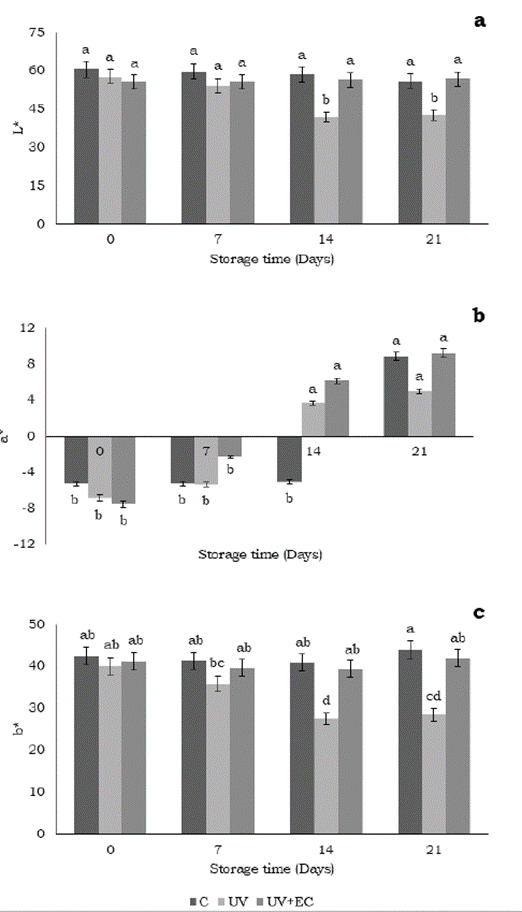
Figure 3. Color coordinates L* (a), a* (b), and b* (c) of sour guava subjected to UV, and UV+EC treatments, as well as the control (C), during storage at 8 °C and 70 % relative humidity for 21 days. Note. Bars represent the mean values, and the vertical lines above the bars correspond to the standard error. Different lowercase letters above the bars indicate significant differences among treatments during storage, according to Tukey’s post hoc test (p < 0.05).
Antioxidant activity
Antioxidant activity was evaluated using different antioxidant capacity assays and by determining total phenolic content. For both the ABTS and DPPH assays, all factors and their interactions significantly influenced antioxidant capacity (p < 0.05). As shown in Figure 4, the inhibition of ABTS radical cation tended to decrease at the end of the storage; however, the highest values were recorded in samples from the UV and UV+EC treatments. For DPPH radical inhibition, fruits exposed to the UV treatment showed an increase and maintained the highest values throughout storage.
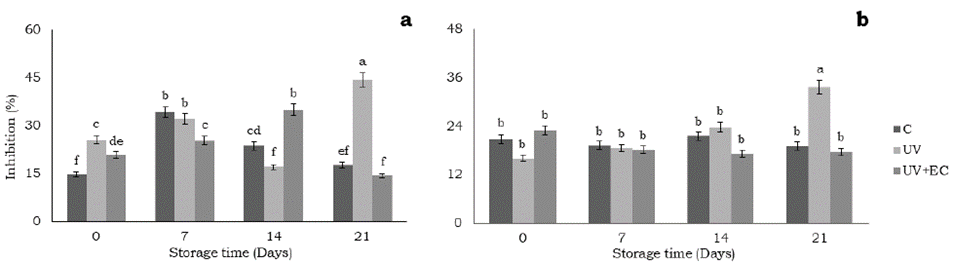
Figure 4. ABTS (a) and DPPH (b) radical inhibition percentage in sour guava subjected to UV, and UV+EC treatments, as well as the control (C), during storage at 8 °C and 70 % relative humidity for 21 days. Note. Barsrepresent the mean values, and the vertical lines above the bars correspond to the standard error. Different lowercase letters above the bars indicate significant differences among treatments during storage, according to Tukey’s post hoc test (p < 0.05).
All factors and their interaction had a significant effect on total phenolic content and antioxidant capacity determined by the FRAP assay (p < 0.05). As shown in Figure 5, total phenolic content significantly decreased after day 14 of storage, whereas fruits subjected to the UV treatment exhibited the highest values, followed by those treated with the UV+EC treatment. The antioxidant capacity determined by the FRAP assay showed a trend similar to that observed for total phenolic content. A significant reduction in antioxidant capacity was detected after day 14 of storage, with the highest values recorded in UV-treated samples, followed by those subjected to the combined UV+EC treatment.
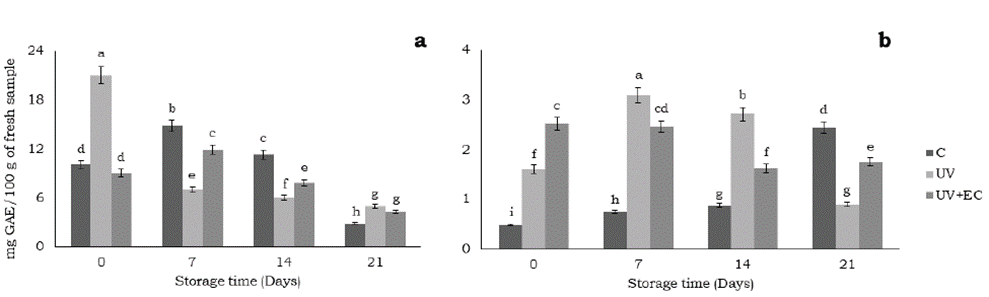
Figure 5. Total phenolic content (a) and antioxidant capacity determined by the FRAP assay (b) in sour guava subjected to UV, and UV+EC treatments, as well as the control (C) during storage at 8 °C and 70 % relative humidity for 21 days. Note. Bars represent the mean values, and the vertical lines above the bars correspond to the standard error. Different lowercase letters above the bars indicate significant differences among treatments during storage, according to Tukey’s post hoc test (p < 0.05).
Discussion
Physicochemical parameters provided a partial assessment of the metabolic response to treatments. In some cases, particularly in control samples, the observed decrease in pH may be attributed to the formation of free acids, ascorbic acid degradation, and pectin hydrolysis (Wagh et al., 2022). Labib et al. (2025) reported that the application of edible coatings based on chitosan, cinnamon essential oil, aloe vera gel, propolis, and gum Arabic, applied individually or in combination on ‘Thai 5’ guava fruits, resulted in a slower conversion of organic acids into sugars. This effect delayed the increase in TSS and pH, and the reduction of TA during 12 days of storage.
The rapid increase in TSS after radiation treatments has already been widely reported. Yousaf et al. (2023) found that low doses of γ-irradiation (< 1.5 kGy) caused a rapid rise in TSS in ‘Gola’ guava during 20 days of storage, as the treatment did not slow down ripening and starch was hydrolyzed into sugars and organic acids. In another study, the application of edible coatings based on 2 % sodium alginate and 0.2 % - 0.8 % Cyclea barbata leaves extract on ‘Getas Merah’ guavas maintained stable TSS levels until day 16 of a 20-day storage period. By the end of storage, TSS values had decreased to approximately 6 °Brix (Utama et al., 2022).
The reduced firmness loss and weight loss at the end of storage observed in the UV+EC treatment can be attributed to the barrier generated by the edible coating. Hasan et al. (2022)) reported that 2 % sodium alginate-based edible coatings reduced weight and firmness loss in guavas during 16 days of storage at 11 °C and 85 % RH, as alginate coatings effectively limit the activity of polyphenol oxidase, peroxidase, cellulase, polygalacturonase, and pectin methylesterase.
Regarding color parameters, fruits from the UV+EC treatment exhibited a more uniform and characteristic coloration. In contrast, control fruits showed a marked increase in b* values along with reduced luminosity, with a more intense yellowish appearance indicating accelerated deterioration. This behavior is consistent with findings reported by Hasan et al. (2022), who observed a similar evolution of color in uncoated mature guavas stored for 16 days at 11 °C.
The inhibition of both the DPPH radical and ABTS radical cation was higher in samples from the UV treatment, followed by those from the UV+EC treatment. This effect could be attributed to UV-C radiation stimulating the shikimic acid pathway and phenylalanine ammonia-lyase activity, thereby enhancing the synthesis of hydroxycinnamic acids (Surjadinata et al., 2017). In addition, during storage, lipophilic phenolic compounds, including flavonoids, may persist and stabilize free radicals by donating electrons. On the other hand, Yousaf et al. (2023) reported that γ-irradiation at doses between 0.2 kGy and 1.0 kGy significantly reduced DPPH radical inhibition in ‘Gola’ guava samples stored for 20 days, likely due to increased polyphenol oxidase activity, which promotes the production of free radicals.
Total phenolic content and FRAP assay results were expressed using gallic acid as the standard, according to the report by Bibi Sadeer et al. (2020). Total phenolic content of sour guavas was lowerthan the values reported for Psidium araca and Psidium guajava L. cv. ‘Thai’ (Zapata et al., 2013; Hasan et al., 2022). The UV treatment also generated higher values for both the FRAP assay and total phenolic content. A similar behavior was observed in ‘Barafkhana’ guavas exposed to different UV-C doses (0, 1.6, 2.0, and 2.4 kJ/m2), stored under refrigeration for 20 days, where control fruits exhibited a reduction in total phenolic content toward the end of the storage period (Menaka et al., 2024). Furthermore, edible coatings may help limit oxygen uptake and reduce the accumulation of reactive oxygen species (ROS) (Labib et al., 2025).
This trend aligns with the findings of Hasan et al. (2022), who observed a decrease in antioxidant capacity determined by the FRAP assay at the end of 16 days of storage at 11 °C in guavas (Psidium guajava L.) treated with different formulations of 2 % sodium alginate-based edible coatings. The behavior observed for the FRAP assay also resembles that of ascorbic acid content, as the antioxidant capacity measured by this assay may reflect the presence of hydrophilic bioactive compounds capable of stabilizing free radicals through electron donation, such as ascorbic acid (Bibi Sadeer et al., 2020; Yousaf et al., 2024).
Conclusions
This study enabled the evaluation and comparison of the effects of emerging postharvest technologies on a promising exotic fruit. The combined treatment consisting of UV-C irradiation followed by the application of a sodium alginate edible coating effectively delayed the ripening and senescence of sour guava, as demonstrated by improvements in physicochemical and color attributes. Nevertheless, this treatment did not promote an increase in antioxidant activity but rather contributed to its preservation during storage.
Conversely, UV-C irradiation alone resulted in an increase in antioxidant activity; however, it did not exert the same positive influence on overall fruit quality as the combined treatment. Further omics analyses are necessary to determine which bioactive compounds and metabolic pathways are involved in the response of sour guava to different postharvest treatments. Overall, this investigation corresponds to an initial step toward highlighting underutilized species with nutraceutical potential, as well as postharvest strategies that could be scalable and sustainable for the food industry in the region.

