
SciELO - Scientific Electronic Library Online

 
vol.53 issue2Perception of pediatric anesthesiology training in Colombia: a qualitative studyConstruction and content validation of an Advance Directive Document form for advance care planning in Colombia: a Delphi study author indexsubject indexarticles search
Home Pagealphabetic serial listing  

Services on Demand

Journal

Article

Indicators

Related links

  • On index processCited by Google
  • Have no similar articlesSimilars in SciELO
  • On index processSimilars in Google

Share


Colombian Journal of Anestesiology

Print version ISSN 0120-3347On-line version ISSN 2256-2087

Rev. colomb. anestesiol. vol.53 no.2 Bogotá Apr./June 2025  Epub Mar 27, 2025

https://doi.org/10.5554/22562087.e1136 

Original article

Development of the PreAnestesiApp® application for perioperative risk estimation in adults

David A. Rincón-Valenzuelaa  b 
http://orcid.org/0000-0003-0344-6297

Karina María Vélezc 
http://orcid.org/0000-0002-0859-219X

a Research and Development Management, Colsanitas. Bogotá, Colombia.

b School of Medicine, Universidad Nacional de Colombia. Bogotá, Colombia.

c Oftalmosanitas. Bogotá, Colombia.


Abstract

Introduction

Preoperative assessment is fundamental in perioperative medicine, as inadequate evaluation and insufficient patient preparation can increase the risk of anesthetic complications. In Colombia, there are currently no interoperable preoperative clinical information systems that integrate cognitive aids and support for decision-making.

Objective

The objective of this project was to develop a functional prototype of an application that integrates perioperative risk estimation and cognitive aids for entering information in the electronic medical record during preoperative assessment in adults.

Methods

To develop the PreAnestesiApp® application software, the spiral model was used in six iterative phases: 1) requirements definition, 2) design, 3) development, 4) testing and integration, 5) implementation, and 6) operation.

Results

The project enabled the development of a functional prototype of PreAnestesiApp®, an application software that integrates perioperative risk estimation and cognitive aids to prompt documentation in the electronic medical record during preoperative assessment in adults. Since its implementation in October 2013 until December 2023, PreAnestesiApp® has been used in five healthcare institutions, where more than 171,000 preoperative assessments have been performed.

Conclusions

PreAnestesiApp® is an application software designed to assist in perioperative risk estimation in adults, with potential use in perioperative medicine education.

Keywords: Anesthesia; Software design; Preoperative period; Risk management; Medical records; Clinical decision rules

Resumen

Introducción:

La valoración preoperatoria es fundamental en la medicina perioperatoria, ya que una evaluación inadecuada y una preparación insuficiente del paciente pueden aumentar el riesgo de complicaciones anestésicas. En Colombia, actualmente no existen sistemas de información clínica preoperatoria interoperables que integren ayudas cognitivas y soporte de decisiones.

Objetivo:

El objetivo de este proyecto fue desarrollar un prototipo funcional de una aplicación que integre la estimación de riesgo perioperatorio y ayudas cognitivas para el registro de historia clínica electrónica durante la valoración preoperatoria en adultos.

Métodos:

Para desarrollar el software de aplicación PreAnestesiApp®, se utilizó el modelo en espiral en seis fases iterativas: 1) definición de requerimientos, 2) diseño, 3) desarrollo, 4) pruebas e integración, 5) implementación y 6) operación.

Resultados:

El proyecto permitió el desarrollo de un prototipo funcional de PreAnestesiApp®, un software de aplicación que integra la estimación del riesgo perioperatorio y ayudas cognitivas para el registro de historia clínica electrónica durante la valoración preoperatoria en adultos. Desde su implementación, de octubre de 2013 hasta diciembre de 2023, PreAnestesiApp® se ha utilizado en cinco instituciones de salud, en las que se han realizado más de 171.000 valoraciones preoperatorias.

Conclusiones:

PreAnestesiApp® es un software de aplicación diseñado para la estimación del riesgo perioperatorio en adultos, con potencial de uso para la enseñanza de la medicina perioperatoria.

Palabras clave: Anestesia; Diseño de software; Periodo preoperatorio; Gestión de riesgos; Registros médicos; Reglas de decisión clínica

What do we know about this problem?

The lack of interoperable clinical information systems represents significant gap, which could hinder adequate patient preparation and potentially increase the risk of complications during and after surgical interventions. This lack of tools that combine perioperative risk estimation with cognitive aids for electronic medical record documentation further exacerbates this situation.

What does this study contribute with?

The successful development and implementation of preAnestesiApp® represent a considerable advance in the management of preoperative assessment in adults. This application not only improves perioperative risk estimation but also effectively contributes to learning and teaching in the field of perioperative medicine.

INTRODUCTION

Preoperative evaluation (also known as preanesthesia assessment) is considered the reference framework for the perioperative management of patients. This assessment consists of several strategies aimed at managing the clinical risk inherent to the surgical or diagnostic procedure, the surgical pathology, and other coexisting conditions, as well as anesthetic interventions. 1,2 The implementation of an effective preoperative consultation, led by anesthesiology specialists, before surgical and diagnostic procedures, has been shown to be associated with a decrease in the likelihood of cancellations and delays in operating rooms. 3,4 Additionally, this consultation promotes resource management efficiency and improves preoperative patient education5, resulting in a reduction in perioperative mortality. 6 Inadequate preoperative evaluation, along with insufficient patient preparation, is considered one of the main causes of anesthetic complications. 7

Preoperative estimation using risk models is useful for shared decision-making, determining the need for paraclinical evaluations and specialized interventions, supporting invasive monitoring and postoperative stay in intensive care units (ICUs), and allowing the comparison of clinical performance among professionals and institutions, among other advantages. 8 Furthermore, preoperative estimation using risk models has the potential to reduce the risk of postoperative complications, including mortality. 9,10 Compared to manual preanesthesia evaluation forms, electronic forms provide superior quality in terms of information and data, meeting the expectations of anesthesiology specialists and helping to reduce the loss of vital and important information. 11 The use of electronic decision support tools (EDST) significantly improves adherence to clinical guidelines compared to relying solely on memory or traditional cognitive aids. Additionally, these tools can prevent inappropriate interventions associated with increased healthcare costs. 12 It has been observed that when clinical information systems work in conjunction with EDST, there is a reduction in complications of between 10% and 20%, resulting in a decrease in perioperative mortality. 13 Moreover, it has been found that the proper design of clinical information systems could positively impact the incidence of burnout among healthcare personnel. 14

In Colombia, regulations such as Resolutions 1995 of 1999 and 839 of 2017 from the Ministry of Health and Social Protection, and Congress Laws 1581 of 2012 and 2015 of 2020 govern the structure, management, custody and confidentiality of the medical record. In the short term, these regulations will translate into the implementation of Electronic Medical Record Interoperability (IHCE). In the 1990s, a computerized system for preoperative management of patients was developed in the country to simplify, protocolize, and rationalize the use of preoperative paraclinical tests. 15 However, to date, there are no preoperative clinical information systems in Colombia that comply with national regulations, include EDST and cognitive aids, or allow integration with other previously implemented clinical information systems. It is possible that, if a clinical information system with all these functionalities were available, patient outcomes could be improved, resource use optimized, and patient and anesthesiology specialist satisfaction enhanced, thus contributing to the fulfillment of all the pillars of the quadruple aim in health 16 and creating value for the healthcare system. 17 The objective of this project was to develop a functional prototype of an application that combined perioperative risk estimation with cognitive aids to facilitate documentation in the electronic medical record during preoperative assessment in adult patients.

METHODS

The financial and technical resources invested in this project were exclusively provided by the development team. To develop this application software for the management and entry of preoperative assessment information, a general methodology was followed, adapting the spiral model for software development and improvement with modifications. 18 Briefly, the spiral model follows six iterative phases: 1) requirements definition, 2) application design, 3) application development, 4) testing and integration into processes, 5) implementation of developments, and 6) operation and maintenance. The development process considered that the application should have the scope of a clinical decision support system and not a complete medical record system. Additionally, the development focused on obtaining a non-responsive interface to be implemented on desktop and laptop computers, but without design scope for tablets and mobile devices.

Requirements definition

The requirements for the application were identified through interviews conducted with anesthesiology specialists and graduate students. During these interviews, references to other applications or forms where these requirements had been implemented were requested. References were also made to other computer applications and clinical information systems implemented in healthcare institutions in Colombia. A crucial part of the requirements definition consisted of identifying relevant scales, risk indices, classifications, constructs, and cognitive aids for preoperative assessment in adults. Some incomplete, ambiguous, or contradictory requirements were identified, which were resolved through consensus among the development team members.

Application design

For the design phase, the general functioning of the application was determined without delving into excessively specific technical details. Factors related to the implementation of available technology, such as hardware, software, intranet, and internet connection, were considered. Some use cases were taken into account to cover the functions to be implemented in the application, and the entities defined in the requirements phase were transformed into design aspects to obtain a model close to object-oriented programming.

The processes of definition, adaptation, and adoption of models for perioperative risk characterization and estimation were carried out through a panoramic literature review that sought to synthesize and summarize the available evidence on the topics defined in the requirements phase. A non-systematic search strategy was used, employing the snowball method, including reference tracking (retrospective snowball) and citation tracking (prospective snowball), with the aim of obtaining a wide variety of relevant sources. 19 Additionally, the identified sources were complemented with the personal knowledge of the research team, their social and academic networks, and serendipitous discovery. 20

Application development

This phase, although the most evident in the system development process, paradoxically was not expected to be the most extensive. Despite the absence of direct advice from a professional in computer systems engineering during this stage, efforts were made to facilitate the direct translation of the anesthesiology specialists' requirements into the final application result. The complexity and duration of the development phase depended to a large extent on the programming language used, so accessible languages in terms of cost, availability, and ease of learning for application development were selected.

Testing and integration into processes

During the testing phase, two strategies were applied to ensure the application worked correctly. The first strategy was carried out by the development team and consisted of testing each module of the application individually to ensure each one operated properly. The second strategy, carried out by end users, involved comprehensive functionality testing in a test environment and then during the real clinical exercise of preoperative assessment. It was considered important that the tests were conducted by individuals with no experience in application development testing, in this case, anesthesiology specialists, to evaluate the clarity of the entries and the application's processes or tasks, ensuring that any user could understand them. Tests were also conducted by systems engineers to focus on details that inexperienced personnel might not consider during evaluations.

In addition to functionality tests, necessary support was provided to ensure the application could operate to complement the clinical information systems implemented in healthcare institutions. Efforts were made to integrate the application into established administrative and clinical processes, so it could be used effectively and efficiently in preoperative assessment in adults. The testing phase was crucial to ensure the quality and effectiveness of the application. Various tests were conducted to identify potential application errors and malfunctions, with the aim of addressing them and ensuring the application could be used effectively in preoperative assessment in adults. The testing process was carried out rigorously, with the collaboration of anesthesiology specialists and systems engineers, to ensure the application met end user requirements and expectations.

Implementation of developments

In the documentation phase, a complete set of essential documents for project development and application management was created. Diagrams, user and technical manuals, tests, and other related documents were created to ensure adequate support for future developments, corrections, usability adjustments, preventive and corrective maintenance, and application performance enhancements. Additionally, a strategy was designed to keep these documents up-to-date at all times and in line with user needs and technological changes. A detailed description of the application's features was also included, allowing future developers to understand the system's characteristics and make necessary modifications to meet specific user needs. A maintenance manual was also included, detailing the procedures for preventive and corrective maintenance of the application, ensuring its optimal and prolonged operation. All of the above was done to ensure the application's long-term durability and efficiency.

Operation and maintenance

During this phase, planned as the longest of the project, the objective was to maintain and improve the application to address detected errors and emerging requirements. To achieve this objective, an incident tracking and management system was implemented, allowing users to report errors found in the application for the development team to correct them as quickly as possible. Additionally, preventive maintenance activities were established to minimize the occurrence of future errors. Improvements in usability and application functionalities were also made in response to user needs and clinical trends in perioperative risk management. Before implementing any changes in the application, exhaustive tests were conducted to ensure its proper functioning and avoid disruptive effect for the clinical practice of anesthesiology specialists.

A set of data and metadata was defined to generate indicators of the application's operation for monitoring purposes. The defined indicators were the number of assessments performed, the number of registered users, and the duration of each assessment (minutes).

RESULTS

Activities to create the application began in October 2013 (first cycle). The second cycle started in June 2015, the third in July 2016, and the fourth, still ongoing, in August 2019. The operation and maintenance phase of the fourth software development cycle began in May 2020, in accordance with the spiral development model.

PreAnestesiApp® (Registration 13-44174, 15/Oct/2014, National Copyright Office, Colombia) was the brand name chosen for the application software, taking into consideration recall and ease of writing criteria. Web access was established through Uniform Resource Locators (URL).

The structure of the preoperative assessment was based on the proposal published in the 2009 version of the minimum safety standards of the Colombian Society of Anesthesiology and Resuscitation (S.C.A.R.E.), in force when the application development began. 21

Table 1 shows a consolidated list of requirements identified between the first and fourth development cycles. Over the more than ten years during which the project has been developed, only the scale for estimating difficult airway has been excluded from the PreAnestesiApp® features. In the second cycle, the scale proposed by Arné et al. 22 was selected, and in the third cycle, the one proposed by Kheterpal et al. 23 was adopted with modifications, including a history of limited mouth opening and a history of difficult airway. The use of scales to assess difficult airway risk was excluded from the fourth development cycle, as observational study results suggest that scales may not be better than traditional airway assessment. 24-26

Table 1 Definition of requirements and considerations for the design of PreAnestesiApp®. 

Requirement Considerations for the development of PreAnestesiApp®
General functioning
Compliance with current regulations on medical records and personal data protection in Colombia

  • - Law 23 of 1981 of the Congress of the Republic (art. 35).

  • - Resolution 1995 of 1999 of the Ministry of Health (art. 3).

  • - Law 1581 of 2012 of the Congress of the Republic.

  • - Resolution 839 of 2017 of the Ministry of Health.

  • - Law 2015 of 2020 of the Congress of the Republic.

Interoperability with other medical record systems Mechanisms must be created to facilitate interoperability with other medical record systems used in the different hospitals and clinics where PreAnestesiApp® is potentially implementable.
Relational database architecture

  • - The variables included in the application's medical record format contain sufficient and relevant information.

  • - There is no redundant information. All variables must be entered only once.

  • - The application prevents essential information from being omitted by the user (error-proof design, poka-yoke) 28.

Complementary modules
Self-administered preoperative screening by patients Perioperative risk screening in adults as support for preoperative assessment. 30,32,33
User interface
Structured format

  • - Structured formats increase documentation of essential information. 34

  • - The learning curve and quality indicators of clinical record completion are superior with structured formats. 35

  • - The preanesthetic assessment structure proposed by the 2009 Minimum Safety Standards of S.C.A.R.E. was adopted. 21

Dark background screen - Interfaces with dark backgrounds (blue or black) reduce harmful effects on ocular physiology, circadian rhythm, and sleep physiology compared to interfaces with bright backgrounds (white). 36,37
Keyboard and mouse navigation - There is insufficient information to associate computer work using mouse and keyboard, with the development of carpal tunnel syndrome. 38
Calculated variables
Age Calculated in years and months based on the date of birth and the current date.
Gestational age and estimated delivery date Calculated in weeks based on the date of the last menstruation and the current date.
Body surface area Calculated from weight and height. 39,40
Body mass index Calculated from weight and height. 41
Ideal weight Calculated from sex and height. 42,43
Lean weight Calculated from sex, weight, and body mass index. 44
Glomerular filtration rate Calculated using the formula developed by the Chronic Kidney Disease Epidemiology Collaboration (CKDEPI). 45-47
Mean plasma glucose Calculated from glycated hemoglobin (HbA1C). 48
Permissible blood loss

  • - Estimation of blood volume. 49

  • - Estimation of permissible blood loss. 50

Predicted current and postoperative FEV1

  • - Reference values for forced expiratory volume (FEV1) from participants in the Third National Health and Nutrition Examination Survey (NHANES III). 51

  • - Predicted postoperative FEV1 as a risk estimator for lung resection. 52

  • - Model to predict immediate postoperative FEV1 after major lung resections. 53

Univariable scales
Type of procedure - Adapted from the integration between the classification proposed by Gupta et al. 54 and the POSPOM scale. 55
Unique classification of health procedures (CUPS) - Taken from Resolution 2336 of 2023 of the Ministry of Health and Social Protection of Colombia.
ICD-10 - Taken from the International Classification of Diseases, 10th edition.
Functional capacity

  • - Estimated with the Duke Activity Status Index (DASI) 56, integrated into perioperative risk assessment. 57

  • - Linguistic validation of the DASI index to Colombian Spanish. 58

  • - Estimation of exercise capacity adjusted for age. 59

ASA physical status - According to the 2020 statement on the ASA Physical Status Classification System (American Society of Anesthesiologists). Taken from: https://www.asahq.org
Surgical severity - Adapted from the BUPA classification used in the SORT scale 60, complemented by the definitions proposed by Holt et al. 61
NCEPOD intervention classification - According to the 2004 statement of the National Confidential Enquiry into Patient Outcome and Death (NCEPOD). Taken from: www.ncepod.org.uk
Multivariable scales
Chest pain classification - Classification of chest pain according to its clinical characteristics (typical, atypical, and non-anginal) .62,63
Glasgow coma scale - Glasgow Coma Scale (GCS) to assess the level of alertness in patients. 64
Airway examination - Modification of the LEMON mnemonic 65, with the inclusion of the Upper Lip Bite Test (ULBT) . 66
Charlson comorbidity index

  • -According to the validated model of the Charlson Comorbidity Index (CCI). 67,68

  • -Adaptation of the CCI to the Colombian population. 69

Rapid cognitive assessment for mild cognitive impairment detection - Use of the Mini-Cog and Rapid Cognitive Screen (RCS) tests for the detection of mild cognitive impairment as a precursor to postoperative delirium and prolonged hospitalization. 70,71
Risk estimation
Difficult airway risk - Based on the subjective risk estimation by the anesthesiology specialist. The use of any qualitative or quantitative scale is not considered. 24-26,72
Pulmonary aspiration risk - Based on the subjective risk estimation by the anesthesiology specialist in accordance with patient risk factors. 73,74
Postoperative nausea and vomiting risk - Estimated with the model proposed by Apfel et al. 75
Postoperative mortality risk in non-cardiac surgery

  • - 30-day mortality estimation according to the SORT scale. 60,76

  • - In-hospital mortality estimation according to the POSPOM scale. 55

Frailty

  • - Modified frailty index. 77

  • - FRAIL scale. 78

Abnormal hemostasis risk - Risk estimation based on risk factors identified in the anamnesis. 79,80
Cardiovascular risk in non-cardiac surgery

  • - Revised Cardiac Risk Index (RCRI) according to the model proposed by Lee et al. 81 Modified with the criterion of renal function deterioration as determined by a glomerular filtration rate < 30 mL/min. 82 Updated outcome values to 2017. 83

  • - Risk model validated by Gupta et al. 54

  • - American University of Beirut (AUB-HAS2 Cardiovascular Risk Index) model. 84,85)

Pretest probability of coronary artery disease - Prediction model to estimate the presence of coronary artery disease. 86
Thromboembolic risk in patients with atrial fibrillation - Clinical risk stratification to predict strokes and thromboembolism using risk factors (CHA2DS2VASc model) . 87
Postoperative pulmonary complications - ARISCAT score for estimating the risk of postoperative pulmonary complications. 88
Postoperative thromboembolic risk - Risk model (simplification of the Caprini score) to predict deep vein thrombosis and pulmonary embolism events in surgical patients at 90 days. 89
Postoperative acute kidney injury risk - Acute kidney injury risk index for patients undergoing general surgery. 90
Obstructive sleep apnea screening - STOPBANG questionnaire to detect patients with obstructive sleep apnea in the perioperative period. 91
Clinical thyroid function assessment - The Zulewski score is a tool used in preanesthesia assessment to estimate thyroid function based on clinical findings. 92
Postoperative mortality risk in cardiac surgery - Based on the second version of the European System for Cardiac Operative Risk Evaluation (EuroSCORE II). 93
Cognitive aids
Body mass index classification - Classification proposed by the World Health Organization (WHO) based on Body Mass Index (BMI). 94
Chronic kidney disease classification - Classification of glomerular filtration rate by the Kidney Disease: Improving Global Outcomes (KDIGO) initiative. 95
Preoperative paraclinical test recommendations - Recommendations from the National Institute for Health and Care Excellence (NICE) guidelines for preoperative paraclinical test requests. 96,97
Preoperative fasting recommendations - Recommendations adjusted to the guidelines of the American Society of Anesthesiologists (ASA). 98,99
Blood product request protocol - Optimization of preoperative blood product requests with a maximum order protocol for specific surgical procedures. 100
Perioperative management of antirheumatic medications - Recommendations from the American College of Rheumatology and the American Association of Hip and Knee Surgeons for the perioperative management of antirheumatic medications. 101
Perioperative management of oral anticoagulants and antiplatelet agents - Recommendations from the European Society of Cardiology (ESC) guidelines on cardiovascular assessment and treatment of patients undergoing non-cardiac surgery. 102

Source: Authors.

A relational database structure was adopted for the functioning of the application's constants and parameters. 27 The application design considered the need for ten independent databases related through Boolean equality operators. The databases used were: 1) implemented user interfaces, 2) sites (healthcare institutions), 3) users, 4) insurers, 5) pre-established preoperative recommendations (by site), 6) type of procedures, 7) patients, 8) preanesthesia data (assessment and informed consent), 9) codes of the Unique Classification of Health Procedures (CUPS), 10) codes of the International Classification of Diseases 10th edition (ICD-10).

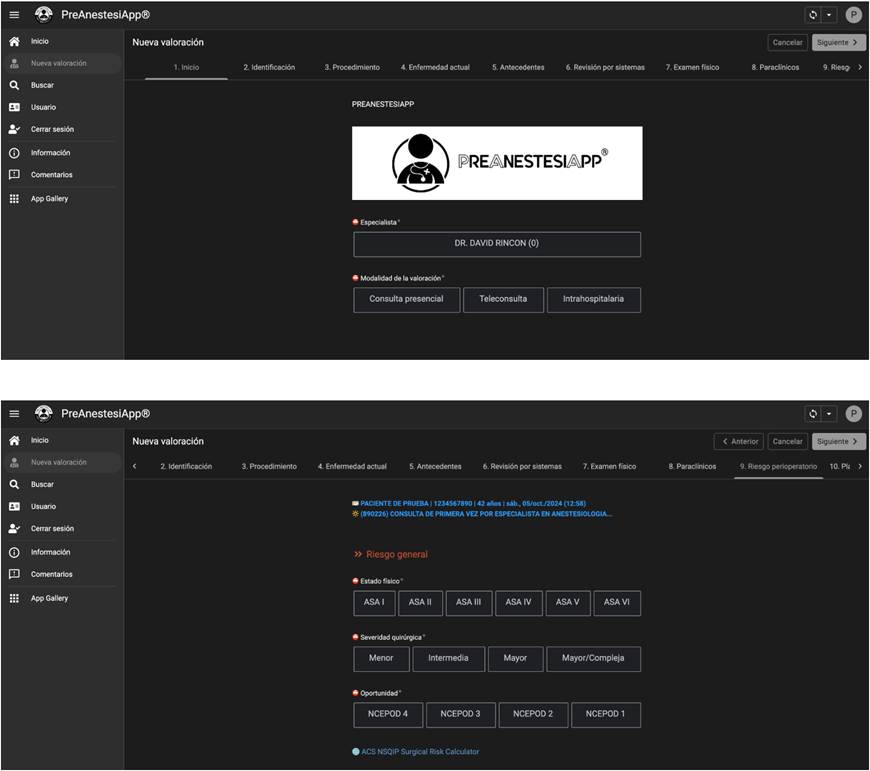
A fail-safe design (Poka-Yoke) was implemented to avoid missing data in the medical record due to lack of completion. 28 This design ensures that advanced features require mandatory minimum necessary data (Table 2). These items are highlighted when they do not contain information, using a homogeneous visual code for the entire user interface of the application (Figure 1).

Table 2 Mandatory fields and advanced functions of PreAnestesiApp®. 

Mandatory fields Advanced features for assessment and informed consent

  • - Medical record number

  • - Full name

  • - Sex

  • - Date of birth

  • - Consultation modality

  • - Proposed procedure

  • - Procedure laterality

  • - Procedure classification

  • - ICD-10 diagnosis code

  • - Surgical history

  • - Anesthetic history (and anesthetic complications)

  • - Allergic history

  • - Pharmacological history

  • - Pathological history

  • - Toxic history

  • - Transfusion history

  • - Other history

  • - Functional dependence

  • - Functional capacity (DASI Scale)

  • - General condition

  • - Glasgow Coma Scale

  • - Weight and height (with a self-reported option)

  • - ASA physical status

  • - NCEPOD intervention classification

  • - Difficult airway risk

  • - Pulmonary aspiration risk

  • - Assessment result

  • - Fasting recommendations

  • - Intensive care reservation

  • - Blood product reservation

  • - Print

  • - Download in PDF format

  • - Send assessment result by e-mail

  • - Copy plain text to clipboard

Source: Authors.

Screenshots showing the PreAnestesiApp® user interface (Google AppSheet version - Google LLC, Alphabet Inc.). The adoption of dark background interfaces, whether blue or black, can mitigate the negative impacts on ocular physiology, circadian rhythm, and sleep quality compared to interfaces that use bright backgrounds, predominantly white 36,37. Source: Authors.

Figure 1 PreAnestesiApp® user interface. 

The first development cycle was programmed in Excel for Windows (Microsoft Office, version 15; Microsoft, 2013), using Visual Basic for Applications (VBA) to automate the tasks defined in the application requirements. The second development cycle was programmed in FileMaker Pro (version 14; FileMaker, Inc., 2015), and task automation was achieved through the script functionality included in this relational database software. The third development cycle was programmed in FileMaker Pro (version 15; FileMaker, Inc., 2016), with the same task automation strategy. The most important change included in this development cycle was separating the user interface from the printable content by translating the variables into a plain text report, optimizing paper usage and including more scales defined in the requirements phase. In this cycle, web access to the application and cloud server functionality were implemented for the first time.

The most recent development cycle (fourth cycle) began with the aim of reducing access costs and allowing operation on institutional computer platforms without the need to install third-party applications on corporate computers, as these requirements were identified in previous cycles as a barrier to implementing PreAnestesiApp® in some clinics and hospitals. This functionality was developed by copying to the clipboard and pasting into the institutional system. This integration capability was measured during functional and user acceptance tests, with a success rate of 100%. For this cycle, the application was developed using Google's AppSheet (Google LLC, Alphabet Inc.). Task automation was achieved using AppSheet's integrated functionalities, facilitating workflow creation and management.

The application implements advanced security measures to protect sensitive clinical information collected during preoperative assessments. This includes the use of robust encryption protocols to ensure that all data stored and transmitted through the application is protected against unauthorized access. Additionally, PreAnestesiApp® complies with national data protection regulations, in accordance with Law 1581 of 2012 (Personal Data Protection Law in Colombia), ensuring that all data handling practices are transparent and user-oriented. Role-based access controls have also been implemented to ensure that only authorized personnel can access clinical information. The application is regularly subjected to security audits and penetration tests to identify and mitigate potential vulnerabilities. This ensures that the system is up-to-date against emerging security threats, maintaining a secure patient information management environment.

Between October 2013 and December 2023, PreAnestesiApp® has been implemented in five healthcare institutions, where 171,328 preoperative assessments have been performed. The implementation of PreAnestesiApp® was not carried out within the framework of a clinical study with a protocol approved by an ethics committee but was directly adopted as an additional system to optimize preoperative data collection and entry in the medical record. The application was integrated into existing processes in the institutions, allowing preoperative assessment results to be stored in the electronic medical record to facilitate access and analysis by medical personnel. The annual evolution of the number of assessments performed using PreAnestesiApp® is shown in Figure 2. To evaluate the effectiveness of the PreAnestesiApp® application, various methods were used, such as activity log data analysis, direct observation, and task synchronization. The log data analysis, derived from electronic medical record (EMR) databases, allowed to measure the application's efficiency through metrics such as total EMR usage time per visit (average of 10.6 minutes, with a standard deviation of 6.2 minutes) and information entry time, helping to identify possible inefficiencies. Direct observation and task synchronization were used to evaluate how users, including physicians and anesthesia graduate students, interacted with the application, demonstrating that PreAnestesiApp® improves the efficiency of the preoperative assessment process by reducing the time needed to obtain quality clinical information. Additionally, the application's ability to integrate with different healthcare information systems was evaluated, observing that the copy and paste function facilitates transfer of preoperative assessment content to EMR systems, demonstrating its versatility and ease of use in various clinical and educational settings.
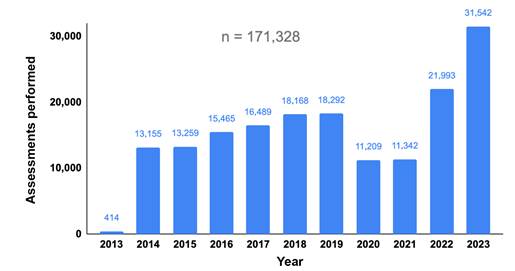
Annual evolution of the number of assessments performed, analyzing a total of 171,328 assessments carried out between October 2013 and December 2023 in five institutions where PreAnestesiApp® has been implemented. Source: Authors.

Figure 2 Chronological evolution of the number of assessments performed in PreAnestesiApp®. 

Non standardized tests were conducted to evaluate the usability or user experience (UX) of PreAnestesiApp®. Qualitative feedback was collected to identify areas for improvement in the user interface and application features. User feedback highlighted the ease of navigation, clarity of instructions, and usefulness of the educational content provided through the application. Suggestions for improvements included adding more multimedia content and interface customization options.

For the implementation phase, consultation documents were created for end users and the development team. These documents can be queried in the application's user interface. In the operation and maintenance phase of the four development cycles, the least amount of work has consisted of fixing errors or incidents. In contrast, most of the time has been dedicated to extending the application's features to cover emerging requirements.

DISCUSSION

This project resulted in a functional prototype for an application software that integrates perioperative risk estimation and cognitive aids for documenting information in the electronic medical record (EMR) during preoperative assessment in adults. Unlike a systematic review, which follows a rigorous protocol for searching and selecting studies and performs a statistical analysis of the data, the panoramic review focuses on providing an overview of the available literature and summarizing the main findings of the included studies. Although the "overview" review does not follow a rigorous protocol, it remains a useful tool for providing an overview of the available evidence on a research topic and can be useful for identifying gaps in the literature that need to be addressed in future research. 29

Previous publications have shown successful experiences in creating applications useful in the context of preoperative assessment. Osman et al., in 2020, reported a successful experience in developing a self-administered form for patients that obtained clinical information valuable for clinical decision-making. 30 Similarly, in Colombia, there have also been reports on the development of software for use in other perioperative medicine scenarios; for example, the report by Tafur-Betancourt et al., with their contribution of tools to improve safety based on Lean methodology. 31

Among the advantages of the application, its adaptability to different information systems of healthcare institutions stands out, as with the 'copy and paste' option, the content of the assessment can be easily transferred to these systems. Among its potential strengths, PreAnestesiApp® has a short learning curve, even for users with basic competencies in applications and computer systems. Another advantage that could be highlighted, subject to validation clinical studies, would be its usefulness in education, particularly aimed at anesthesia graduate students. This application would improve the efficiency of the preoperative assessment process by reducing the time needed to obtain an adequate amount of quality clinical information. In other words, other tools might require more time to obtain the same information, and some, although faster, would probably provide a smaller amount of relevant clinical data.

A limitation of this tool is that it is currently used by few users, so the costs of platforms and technical requirements are high. Studies are needed to evaluate the satisfaction of anesthesia specialists and graduate students. It is also necessary to evaluate patient outcomes over time in terms of the ability to predict risk from a quality preanesthetic assessment.

Another possible limitation of this application is the use of the 'copy and paste' function, which facilitates the transfer of preoperative assessment content to other health information systems. Although this features improves integration and data transfer, it is important to recognize that the use of 'copy and paste' does not always meet the accepted standards of interoperability in the healthcare field. This method can introduce risks, such as data integrity loss or the transfer of outdated information. To mitigate these risks, the application includes verification mechanisms to ensure the accuracy and completeness of the transferred data. However, this function does not replace the need for more robust and standardized interoperability systems, which are crucial for streamlined and secure integration with other clinical information systems.

In conclusion, PreAnestesiApp® was developed as a useful application software for perioperative risk estimation in adults, with interoperability with clinical information systems, which can be applied during preanesthesia assessment.

ETHICAL RESPONSIBILITIES

Ethics committee approval

PreAnestesiApp® was not implemented as part of a clinical study supported by a protocol approved by an ethics committee. Instead, it was directly incorporated as an additional tool aimed at improving preoperative data collection and entry in the medical record.

Protection of human and animal subjects

The authors declare that no experiments were conducted on humans or animals for this research. The authors declare that the procedures followed were in accordance with the ethical standards of the responsible human experimentation committee and consistent with the World Medical Association and the Declaration of Helsinki.

Data confidentiality

The authors declare that they have followed their workplace protocols regarding the publication of patient data.

Right to privacy and informed consent

The authors declare that no patient data are disclosed in this article. The authors have obtained informed consent from the patients and/or subjects referred to in the article. This document is kept by the corresponding author.

ACKNOWLEDGMENTS

Authors' contributions

DAR: Conception of the original project, study planning, data collection, data analysis, interpretation of the results, drafting of the manuscript, and approval.

KMV: Data collection, interpretation of the results, drafting of the manuscript, and approval.

Acknowledgments

The authors thank all colleagues and professionals in training as anesthesiology specialists who have conducted tests and contributed invaluable comments to the current state of the PreAnestesiApp®.

REFERENCES

1. De Hert S, Staender S, Fritsch G, et al. Pre-operative evaluation of adults undergoing elective noncardiac surgery: Updated guideline from the European Society of Anaesthesiology. Eur J Anaesthesiol. 2018;35(6):407-65. https://doi.org/10.1097/EJA.0000000000000817Links ]

2. Blitz JD. Preoperative evaluation in the 21st Century. Anesthesiology. 2023;139(1):91-103. https://doi.org/10.1097/ALN.0000000000004582Links ]

3. Ferschl MB, Tung A, Sweitzer B, Huo D, Glick DB. Preoperative clinic visits reduce operating room cancellations and delays. Anesthesiology. 2005;103(4):855-9. https://doi.org/10.1097/00000542-200510000-00025Links ]

4. Correll DJ, Bader AM, Hull MW, Hsu C, Tsen LC, Hepner DL. Value of preoperative clinic visits in identifying issues with potential impact on operating room efficiency. Anesthesiology . 2006;105(6):1254-9. https://doi.org/10.1097/00000542-200612000-00026Links ]

5. Schiff JH, Frankenhauser S, Pritsch M, et al. The Anesthesia Preoperative Evaluation Clinic (APEC): a prospective randomized controlled trial assessing impact on consultation time, direct costs, patient education and satisfaction with anesthesia care. Minerva Anestesiol. 2010;76(7):491-9. [ Links ]

6. Blitz JD, Kendale SM, Jain SK, Cuff GE, Kim JT, Rosenberg AD. Preoperative evaluation clinic visit is associated with decreased risk of in-hospital postoperative mortality. Anesthesiology . 2016;125(2):280-94. https://doi.org/10.1097/ALN.0000000000001193Links ]

7. Woldegerima Y, Kemal S. Clinical audit on the practice of documentation at preanesthetic evaluation in a specialized university hospital. Anesth Essays Res. 2018;12(4):819. https://doi.org/10.4103/aer.AER_131_18Links ]

8. Pace NL, Eberhart LHJ, Kranke PR. Quantifying prognosis with risk predictions. Eur J Anaesthesiol . 2012;29(1):7-16. https://doi.org/10.1097/EJA.0b013e32834d9474Links ]

9. Ghaferi AA, Birkmeyer JD, Dimick JB. Variation in hospital mortality associated with inpatient surgery. N Engl J Med. 2009;361(14):1368-75. https://doi.org/10.1056/NEJMsa0903048Links ]

10. Wijeysundera DN. Predicting outcomes: Is there utility in risk scores? Can J Anesth Can Anesth. 2016;63(2):148-58. https://doi.org/10.1007/s12630-015-0537-2Links ]

11. Almeshari M, Khalifa M, El-Metwally A, Househ M, Alanazi A. Quality and accuracy of electronic pre-anesthesia evaluation forms. Comput Methods Programs Biomed. 2018;160:51-6. https://doi.org/10.1016/j.cmpb.2018.03.006Links ]

12. Hand WR, Bridges KH, Stiegler MP, et al. Effect of a cognitive aid on adherence to perioperative assessment and management guidelines for the cardiac evaluation of noncardiac surgical patients. Anesthesiology . 2014;120(6):1339-53. https://doi.org/10.1097/ALN.0000000000000251Links ]

13. Moja L, Kwag KH, Lytras T, et al. Effectiveness of computerized decision support systems linked to electronic health records: A systematic review and meta-analysis. Am J Public Health. 2014;104(12):e12-e22. https://doi.org/10.2105/AJPH.2014.302164Links ]

14. Muhiyaddin R, Elfadl A, Mohamed E, et al. Electronic health records and physician burnout: A scoping review. En: Mantas J, Hasman A, Househ MS, Gallos P, Zoulias E, Liaskos J, eds. Studies in health technology and informatics. IOS Press; 2022. https://doi.org/10.3233/SHTI210962Links ]

15. Ibarra P, Rojas MA, Sarmiento Á. Presentación de un novedoso sistema para optimizar la consulta preanestésica. Colombian Journal of Anesthesiology . 1996;24(2):145-55. [ Links ]

16. Couch JB. How to use electronic health records to achieve the quadruple aim. JAMA Intern Med. 2013;173(3):250. https://doi.org/10.1001/jamainternmed.2013.1620Links ]

17. Orkin FK. Moving toward value-based anesthesia care. J Clin Anesth. 1993;5(2):91-8. https://doi.org/10.1016/0952-8180(93)90133-YLinks ]

18. Boehm B. A spiral model of software development and enhancement. ACM SIGSOFT Softw Eng Notes. 1986;11(4):14-24. https://doi.org/10.1145/12944.12948Links ]

19. Wohlin C, Kalinowski M, Romero Felizardo K, Mendes E. Successful combination of database search and snowballing for identification of primary studies in systematic literature studies. Inf Softw Technol. 2022;147:106908. https://doi.org/10.1016/j.infsof.2022.106908Links ]

20. Greenhalgh T, Peacock R. Effectiveness and efficiency of search methods in systematic reviews of complex evidence: audit of primary sources. BMJ. 2005;331(7524):1064-65. https://doi.org/10.1136/bmj.38636.593461.68Links ]

21. Ibarra P, Robledo B, Galindo M, Niño C, Rincón D. Normas mínimas 2009 para el ejercicio de la anestesiología en Colombia. Colombian Journal of Anesthesiology . 2009;37(3):235-53. https://doi.org/10.1016/S0120-3347(09)73007-2Links ]

22. Arné J, Descoins P, Fusciardi J, et al. Preoperative assessment for difficult intubation in general and ENT surgery: predictive value of a clinical multivariate risk index. Br J Anaesth. 1998;80(2):140-6. https://doi.org/10.1093/bja/80.2.140Links ]

23. Kheterpal S, Healy D, Aziz MF, et al. Incidence, predictors, and outcome of difficult mask ventilation combined with difficult laryngoscopy. Anesthesiology . 2013;119(6):1360-9. https://doi.org/10.1097/ALN.0000435832.39353.20Links ]

24. Nørskov AK, Rosenstock CV, Wetterslev J, Astrup G, Afshari A, Lundstrøm LH. Diagnostic accuracy of anaesthesiologists’ prediction of difficult airway management in daily clinical practice: a cohort study of 188 064 patients registered in the Danish Anaesthesia Database. Anaesthesia. 2015;70(3):272-81. https://doi.org/10.1111/anae.12955Links ]

25. Nørskov AK, Wetterslev J, Rosenstock CV, et al. Effects of using the simplified airway risk index vs usual airway assessment on unanticipated difficult tracheal intubation - a cluster randomized trial with 64,273 participants. Br J Anaesth . 2016;116(5):680-9. https://doi.org/10.1093/bja/aew057Links ]

26. Nørskov AK, Wetterslev J, Rosenstock CV, et al. Prediction of difficult mask ventilation using a systematic assessment of risk factors vs. existing practice - a cluster randomised clinical trial in 94,006 patients. Anaesthesia. 2017;72(3):296-308. https://doi.org/10.1111/anae.13701Links ]

27. Wesley D. Relational database design. J Insur Med N Y N. 2000;32(2):63-70. [ Links ]

28. Drotz E, Poksinska B. Lean in healthcare from employees’ perspectives. J Health Organ Manag. 2014;28(2):177-95. https://doi.org/10.1108/JHOM-03-2013-0066Links ]

29. Grant MJ, Booth A. A typology of reviews: an analysis of 14 review types and associated methodologies: A typology of reviews. Health Inf Libr J. 2009;26(2):91-108. https://doi.org/10.1111/j.1471-1842.2009.00848.xLinks ]

30. Osman T, Lew E, Lum EPM, et al. PreAnaes- Thesia computerized health (PATCH) assessment: development and validation. BMC Anesthesiol. 2020;20(1):286. https://doi.org/10.1186/s12871-020-01202-8Links ]

31. Tafur Betancourt LA, Zorrilla-Vaca A, Vallejos- Medina LP, et al. Development of MyCheckTime ® software for perioperative safety based on Toyotaʼs Lean Methodology. Colombian Journal of Anesthesiology . 2020;48(1):12-9. https://doi.org/10.1097/CJ9.0000000000000148Links ]

32. Badner NH, Craen RA, Paul TL, Doyle JA. Anaesthesia preadmission assessment: a new approach through use of a screening questionnaire. Can J Anaesth. 1998;45(1):87-92. https://doi.org/10.1007/BF03012002Links ]

33. Vetter TR, Boudreaux AM, Ponce BA, Barman J, Crump SJ. Development of a preoperative patient clearance and consultation screening questionnaire. Anesth Analg. 2016;123(6):1453-7. https://doi.org/10.1213/ANE.0000000000001532Links ]

34. Marco AP, Buchman D, Lancz C. Influence of form structure on the anesthesia preoperative evaluation. J Clin Anesth . 2003;15(6):411-7. https://doi.org/10.1016/S0952-8180(03)00079-5Links ]

35. Naik S, Mohammad B, Dhulkhed V. An audit of comparison of perioperative outcomes with the introduction of standardized preoperative evaluation form at a tertiary care hospital in rural India. Anesth Essays Res . 2017;11(2):426. https://doi.org/10.4103/0259-1162.194584Links ]

36. Chang AM, Aeschbach D, Duffy JF, Czeisler CA. Evening use of light-emitting eReaders negatively affects sleep, circadian timing, and next-morning alertness. Proc Natl Acad Sci. 2015;112(4):1232-7. https://doi.org/10.1073/pnas.1418490112Links ]

37. Tosini G, Ferguson I, Tsubota K. Effects of blue light on the circadian system and eye physiology. Mol Vis. 2016;22:61-72. [ Links ]

38. Thomsen JF, Gerr F, Atroshi I. Carpal tunnel syndrome and the use of computer mouse and keyboard: A systematic review. BMC Musculoskelet Disord. 2008;9(1):134. https://doi.org/10.1186/1471-2474-9-134Links ]

39. Mosteller RD. Simplified calculation of body-surface area. N Engl J Med . 1987;317(17):1098. https://doi.org/10.1056/NEJM198710223171717Links ]

40. Rincón DA, Komaromy CY. Evaluación de seis fórmulas usadas para el cálculo de la superficie corporal. Rev Fac Med. 2004;52(2):115-20. [ Links ]

41. Keys A, Fidanza F, Karvonen MJ, Kimura N, Taylor HL. Indices of relative weight and obesity. J Chronic Dis. 1972;25(6-7):329-43. https://doi.org/10.1016/0021-9681(72)90027-6Links ]

42. McCarron MM, Devine BJ. Clinical Pharmacy: Case Studies: Case Number 25 Gentamicin Therapy. Drug Intell Clin Pharm. 1974;8(11):650-5. https://doi.org/10.1177/106002807400801104Links ]

43. Pai MP, Paloucek FP. The origin of the “ideal” body weight equations. Ann Pharmacother. 2000;34(9):1066-9. https://doi.org/10.1345/aph.19381Links ]

44. Janmahasatian S, Duffull SB, Ash S, Ward LC, Byrne NM, Green B. Quantification of Lean Bodyweight. Clin Pharmacokinet. 2005;44(10):1051-65. https://doi.org/10.2165/00003088-200544100-00004Links ]

45. Levey AS, Stevens LA, Schmid CH, et al. A new equation to estimate glomerular filtration rate. Ann Intern Med. 2009;150(9):604. https://doi.org/10.7326/0003-4819-150-9-200905050-00006Links ]

46. Mooney JF, Ranasinghe I, Chow CK, et al. Preoperative estimates of glomerular filtration rate as predictors of outcome after surgery. Anesthesiology . 2013;118(4):809-24. https://doi.org/10.1097/ALN.0b013e318287b72cLinks ]

47. Cywinski JB, Mascha EJ, Kurz A, Sessler DI. Estimated glomerular filtration rate better predicts 30-day mortality after non-cardiac surgery than serum creatinine: a retrospective analysis of 92,888 patients. Can J Anesth Can Anesth . 2015;62(7):745-52. https://doi.org/10.1007/s12630-015-0398-8Links ]

48. Rohlfing CL, Wiedmeyer HM, Little RR, England JD, Tennill A, Goldstein DE. Defining the relationship between plasma glucose and HbA1c. Diabetes Care. 2002;25(2):275-8. https://doi.org/10.2337/diacare.25.2.275Links ]

49. Allen TH, Peng MT, Chen KP, Huang TF, Chang C, Fang HS. Prediction of blood volume and adiposity in man from body weight and cube of height. Metabolism. 1956;5(3):328-45. [ Links ]

50. Gross JB. Estimating allowable blood loss. Anesthesiology . 1983;58(3):277-80. https://doi.org/10.1097/00000542-198303000-00016Links ]

51. Hankinson JL, Odencrantz JR, Fedan KB. Spirometric reference values from a sample of the general U.S. population. Am J Respir Crit Care Med. 1999;159(1):179-87. https://doi.org/10.1164/ajrccm.159.1.9712108Links ]

52. Nakahara K, Ohno K, Hashimoto J, et al. Prediction of postoperative respiratory failure in patients undergoing lung resection for lung cancer. Ann Thorac Surg. 1988;46(5):549-52. https://doi.org/10.1016/S0003-4975(10)64694-2Links ]

53. Brunelli A, Varela G, Rocco G, et al. A model to predict the immediate postoperative FEV1 following major lung resections. Eur J Cardiothorac Surg. 2007;32(5):783-6. https://doi.org/10.1016/j.ejcts.2007.07.014Links ]

54. Gupta PK, Gupta H, Sundaram A, et al. Development and validation of a risk calculator for prediction of cardiac risk after surgery. Circulation. 2011;124(4):381-7. https://doi.org/10.1161/CIRCULATIONAHA.110.015701Links ]

55. Le Manach Y, Collins G, Rodseth R, et al. Preoperative score to predict postoperative mortality (POSPOM). Anesthesiology . 2016;124(3):570-9. https://doi.org/10.1097/ALN.0000000000000972Links ]

56. Hlatky MA, Boineau RE, Higginbotham MB, et al. A brief self-administered questionnaire to determine functional capacity (The Duke Activity Status Index). Am J Cardiol. 1989;64(10):651-4. https://doi.org/10.1016/0002-9149(89)90496-7Links ]

57. Wijeysundera DN, Beattie WS, Hillis GS, et al. Integration of the Duke Activity Status Index into preoperative risk evaluation: a multicentre prospective cohort study. Br J Anaesth . 2020;124(3):261-70. https://doi.org/10.1016/j.bja.2019.11.025Links ]

58. Sánchez-Ropero EM, Vera-Giraldo CY, Navas-Ríos CM, et al. Validación para Colombia del cuestionario para la “Medición de la capacidad funcional en pacientes con falla cardíaca.” Rev Colomb Cardiol. 2018;25(6):356-65. https://doi.org/10.1016/j.rccar.2018.04.004Links ]

59. Morris CK, Myers J, Froelicher VF, Kawaguchi T, Ueshima K, Hideg A. Nomogram based on metabolic equivalents and age for assessing aerobic exercise capacity in men. J Am Coll Cardiol. 1993;22(1):175-82. https://doi.org/10.1016/0735-1097(93)90832-LLinks ]

60. Protopapa KL, Simpson JC, Smith NCE, Moonesinghe SR. Development and validation of the Surgical Outcome Risk Tool (SORT). Br J Surg. 2014;101(13):1774-83. https://doi.org/10.1002/bjs.9638Links ]

61. Holt NF, Silverman DG. Modeling perioperative risk: Can numbers speak louder than words? Anesthesiol Clin N Am. 2006;24(3):427-59. https://doi.org/10.1016/j.atc.2006.05.007Links ]

62. Patterson RE, Horowitz SF, Eng C, et al. Can exercise electrocardiography and thallium-201 myocardial imaging exclude the diagnosis of coronary artery disease? Am J Cardiol . 1982;49(5):1127-35. https://doi.org/10.1016/0002-9149(82)90036-4Links ]

63. Patterson RE, Horowitz SF. Importance of epidemiology and biostatistics in deciding clinical strategies for using diagnostic tests: A simplified approach using examples from coronary artery disease. J Am Coll Cardiol . 1989;13(7):1653-65. https://doi.org/10.1016/0735-1097(89)90361-6Links ]

64. Teasdale G, Jennett B. Assessment of coma and impaired consciousness: A practical scale. The Lancet. 1974;304(7872):81-4. https://doi.org/10.1016/S0140-6736(74)91639-0Links ]

65. Reed MJ. Can an airway assessment score predict difficulty at intubation in the emergency department? Emerg Med J. 2005;22(2):99-102. https://doi.org/10.1136/emj.2003.008771Links ]

66. Khan ZH, Kashfi A, Ebrahimkhani E. A Comparison of the upper lip bite test (a simple new technique) with modified mallampati classification in predicting difficulty in endotracheal intubation: A prospective blinded study. Anesth Analg . 2003;96(2):595-9. https://doi.org/10.1097/00000539-200302000-00053Links ]

67. Charlson ME, Pompei P, Ales KL, Mac-Kenzie CR. A new method of classifying prognostic comorbidity in longitudinal studies: Development and validation. J Chronic Dis . 1987;40(5):373-83. https://doi.org/10.1016/0021-9681(87)90171-8Links ]

68. Charlson M, Szatrowski TP, Peterson J, Gold J. Validation of a combined comorbidity index. J Clin Epidemiol. 1994;47(11):1245-51. https://doi.org/10.1016/0895-4356(94)90129-5Links ]

69. Oliveros H, Buitrago G. Validation and adaptation of the Charlson Comorbidity Index using administrative data from the Colombian health system: retrospective cohort study. BMJ Open. 2022;12(3):e054058. https://doi.org/10.1136/bmjopen-2021-054058Links ]

70. Borson S, Scanlan J, Brush M, Vitaliano P, Dokmak A. The Mini-Cog: a cognitive ‘vital signs’ measure for dementia screening in multi-lingual elderly. Int J Geriatr Psychiatry. 2000;15(11):1021-7. https://doi.org/10.1002/1099-1166(200011)15:11<1021::AID-GPS234>3.0.CO;2-6Links ]

71. Tran J, Nimojan T, Saripella A, et al. Rapid cognitive assessment tools for screening of mild cognitive impairment in the preoperative setting: A systematic review and meta-analysis. J Clin Anesth . 2022;78:110682. https://doi.org/10.1016/j.jclinane.2022.110682Links ]

72. Giraldo-Gutiérrez DS, Ruíz-Villa JO, Rincón-Valenzuela DA, Feliciano-Alfonso JE. Multivariable prediction models for difficult direct laryngoscopy: Systematic review and literature metasynthesis. Rev Esp Anestesiol Reanim Engl Ed. 2022;69(2):88-101. https://doi.org/10.1016/j.redare.2020.11.010Links ]

73. Green SM, Leroy PL, Roback MG, et al. An international multidisciplinary consensus statement on fasting before procedural sedation in adults and children. Anaesthesia. 2020;75(3):374-85. https://doi.org/10.1111/anae.14892Links ]

74. Valero Bernal JF, Navarro Vargas JR, Rincón-Valenzuela DA, Castillo Londoño JS. Prevención de la aspiración pulmonar en pacientes que requieren manejo de la vía aérea. Pardo Turriago R, ed. Corcas Editores; 2010. [ Links ]

75. Apfel CC, Läärä E, Koivuranta M, Greim CA, Roewer N. A simplified risk score for predicting postoperative nausea and vomiting. Anesthesiology . 1999;91(3):693. https://doi.org/10.1097/00000542-199909000-00022Links ]

76. Wong DJN, Harris S, Sahni A, et al. Developing and validating subjective and objective risk-assessment measures for predicting mortality after major surgery: An international prospective cohort study. Menon D, ed. PLOS Med. 2020;17(10):e1003253. https://doi.org/10.1371/journal.pmed.1003253Links ]

77. Farhat JS, Velanovich V, Falvo AJ, et al. Are the frail destined to fail? Frailty index as predictor of surgical morbidity and mortality in the elderly. J Trauma Acute Care Surg. 2012;72(6):1526-31. https://doi.org/10.1097/TA.0b013e3182542fabLinks ]

78. Morley JE, Malmstrom TK, Miller DK. A simple frailty questionnaire (FRAIL) predicts outcomes in middle aged African Americans. J Nutr Health Aging. 2012;16(7):601-8. https://doi.org/10.1007/s12603-012-0084-2Links ]

79. Seicean A, Schiltz NK, Seicean S, Alan N, Neuhauser D, Weil RJ. Use and utility of preoperative hemostatic screening and patient history in adult neurosurgical patients: Clinical article. J Neurosurg. 2012;116(5):1097-105. https://doi.org/10.3171/2012.1.JNS111760Links ]

80. Weil IA, Seicean S, Neuhauser D, Schiltz NK, Seicean A. Use and utility of hemostatic screening in adults undergoing elective, non-cardiac surgery. Villa E, ed. PLOS ONE. 2015;10(12):e0139139. https://doi.org/10.1371/journal.pone.0139139Links ]

81. Lee TH, Marcantonio ER, Mangione CM, et al. Derivation and prospective validation of a simple index for prediction of cardiac risk of major noncardiac surgery. Circulation. 1999;100(10):1043-9. https://doi.org/10.1161/01.CIR.100.10.1043Links ]

82. Davis C, Tait G, Carroll J, Wijeysundera DN, Beattie WS. The Revised Cardiac Risk Index in the new millennium: a single-centre prospective cohort re-evaluation of the original variables in 9,519 consecutive elective surgical patients. Can J Anesth Can Anesth . 2013;60(9):855-63. https://doi.org/10.1007/s12630-013-9988-5Links ]

83. Duceppe E, Parlow J, MacDonald P, et al. Canadian Cardiovascular Society Guidelines on Perioperative Cardiac Risk Assessment and Management for Patients Who Undergo Noncardiac Surgery. Can J Cardiol. 2017;33(1):17-32. https://doi.org/10.1016/j.cjca.2016.09.008Links ]

84. Dakik HA, Chehab O, Eldirani M, et al. A New Index for Pre-Operative Cardiovascular Evaluation. J Am Coll Cardiol . 2019;73(24):3067-78. https://doi.org/10.1016/j.jacc.2019.04.023Links ]

85. Dakik HA, Sbaity E, Msheik A, et al. AUBHAS2 Cardiovascular Risk Index: Performance in surgical subpopulations and comparison to the revised cardiac risk index. J Am Heart Assoc. 2020;9(10):e016228. https://doi.org/10.1161/JAHA.119.016228Links ]

86. Genders TSS, Steyerberg EW, Hunink MGM, et al. Prediction model to estimate presence of coronary artery disease: retrospective pooled analysis of existing cohorts. BMJ. 2012;344:e3485. https://doi.org/10.1136/bmj.e3485Links ]

87. Lip GYH, Nieuwlaat R, Pisters R, Lane DA, Crijns HJGM. Refining clinical risk stratification for predicting stroke and thromboembolism in atrial fibrillation using a novel risk factor-based approach. Chest. 2010;137(2):263-72. https://doi.org/10.1378/chest.09-1584Links ]

88. Canet J, Gallart L, Gomar C, et al. Prediction of postoperative pulmonary complications in a population-based surgical cohort. Anesthesiology . 2010;113(6):1338-50. https://doi.org/10.1097/ALN.0b013e3181fc6e0aLinks ]

89. Pannucci CJ, Laird S, Dimick JB, Campbell DA, Henke PK. A validated risk model to predict 90-day VTE events in postsurgical patients. Chest. 2014;145(3):567-73. https://doi.org/10.1378/chest.13-1553Links ]

90. Kheterpal S, Tremper KK, Heung M, et al. Development and validation of an acute kidney injury risk index for patients undergoing general surgery. Anesthesiology . 2009;110(3):505-15. https://doi.org/10.1097/ALN.0b013e3181979440Links ]

91. Chung F, Yegneswaran B, Liao P, et al. STOP questionnaire: a tool to screen patients for obstructive sleep apnea. Anesthesiology . 2008;108(5):812-21. https://doi.org/10.1097/ALN.0b013e31816d83e4Links ]

92. Zulewski H, Müller B, Exer P, Miserez AR, Staub JJ. Estimation of tissue hypothyroidism by a new clinical score: Evaluation of patients with various grades of hypothyroidism and controls. J Clin Endocrinol Metab. 1997;82(3):771-6. https://doi.org/10.1210/jcem.82.3.3810Links ]

93. Nashef SAM, Roques F, Sharples LD, et al. EuroSCORE II. Eur J Cardiothorac Surg . 2012;41(4):734-45. https://doi.org/10.1093/ejcts/ezs043Links ]

94. Wynn-Hebden A, Bouch DC. Anaesthesia for the obese patient. BJA Educ. 2020;20(11):388-95. https://doi.org/10.1016/j.bjae.2020.07.003Links ]

95. Stevens PE, Ahmed SB, Carrero JJ, et al. KDIGO 2024 Clinical Practice Guideline for the Evaluation and Management of Chronic Kidney Disease. Kidney Int. 2024;105(4):S117-S314. https://doi.org/10.1016/j.kint.2023.10.018Links ]

96. National Guideline Centre (UK). Preoperative Tests (Update): Routine Preoperative Tests for Elective Surgery. National Institute for Health and Care Excellence (NICE) (internet). 2016 (cited: 2024 Mar. 31). Available at: Available at: https://www.nice.org.uk/guidance/ng45Links ]

97. O’Neill F, Carter E, Pink N, Smith I. Routine preoperative tests for elective surgery: summary of updated NICE guidance. BMJ. Published online July 14, 2016:i3292. https://doi.org/10.1136/bmj.i3292Links ]

98. American Society of Anesthesiologists (ASA). Practice Guidelines for Preoperative Fasting and the Use of Pharmacologic Agents to Reduce the Risk of Pulmonary Aspiration: Application to Healthy Patients Undergoing Elective Procedures. Anesthesiology . 2017;126(3):376-93. https://doi.org/10.1097/ALN.0000000000001452Links ]

99. Joshi GP, Abdelmalak BB, Weigel WA, et al. 2023 American Society of Anesthesiologists Practice Guidelines for Preoperative Fasting: Carbohydrate-containing Clear Liquids with or without Protein, Chewing Gum, and Pediatric Fasting Duration-A Modular Update of the 2017 American Society of Anesthesiologists Practice Guidelines for Preoperative Fasting. Anesthesiology . 2023;138(2):132-51. https://doi.org/10.1097/ALN.0000000000004381Links ]

100. Frank SM, Rothschild JA, Masear CG, et al. Optimizing preoperative blood ordering with data acquired from an anesthesia information management system. Anesthesiology . 2013;118(6):1286-97. https://doi.org/10.1097/ALN.0b013e3182923da0Links ]

101. Goodman SM, Springer BD, Chen AF, et al. 2022 American College of Rheumatology/American Association of Hip and Knee Surgeons Guideline for the Perioperative Management of Antirheumatic Medication in Patients With Rheumatic Diseases Undergoing Elective Total Hip or Total Knee Arthroplasty. Arthritis Care Res. 2022;74(9):1399-408. https://doi.org/10.1002/acr.24893Links ]

102. Halvorsen S, Mehilli J, Cassese S, et al. 2022 ESC Guidelines on cardiovascular assessment and management of patients undergoing non-cardiac surgery. Eur Heart J. 2022;43(39):3826-924. https://doi.org/10.1093/eurheartj/ehac270Links ]

Study assistance None declared.

Financial support and sponsorship None declared.

Presentations Partial and preliminary advances of the technological development described in this manuscript were presented as original research results at the Colombian Congress of Anesthesiology in 2021 and 2023.

How to cite this article Rincón-Valenzuela DA, Vélez KM. Development of the PreAnestesiApp® application for perioperative risk estimation in adults. Colombian Journal of Anesthesiology. 2025;53:e1136.

Received: April 01, 2024; Accepted: November 23, 2024; other: February 20, 2025

Correspondence: Colsanitas, AC 100 11B-67. Bogotá, Colombia. E-mail:daarincon@colsanitas.com

Conflict of interest

The authors completed a conflict of interest identification form (available at https://www.aamc.org/convey) and declared no conflicts of interest. The positions expressed in this manuscript are the responsibility of the authors and do not necessarily represent the official position of their institutions.

Creative Commons License This is an open-access article distributed under the terms of the Creative Commons Attribution License