

SciELO - Scientific Electronic Library Online

 
vol.41 issue4Familial aggregation of restless legs syndrome: A case report of four affected relatives in a Colombian family, with a narrative reviewClinical and radiological analysis of right temporal variant of frontotemporal dementia: A case report author indexsubject indexarticles search
Home Pagealphabetic serial listing  

Services on Demand

Journal

Article

Indicators

Related links

  • On index processCited by Google
  • Have no similar articlesSimilars in SciELO
  • On index processSimilars in Google

Share


Acta Neurológica Colombiana

Print version ISSN 0120-8748On-line version ISSN 2422-4022

Acta Neurol Colomb. vol.41 no.4 Bogotá Oct./Dec. 2025  Epub Nov 18, 2025

https://doi.org/10.22379/anc.v41i4.1974 

Review

Non-motor symptoms in Parkinson's disease: Recognition, diagnosis, and implications for comprehensive management

Síntomas no motores en la enfermedad de Parkinson: reconocimiento, diagnóstico e implicaciones para un manejo integral

Salomón Páez-García1 
http://orcid.org/0009-0005-9488-8868

Jacobo Ramírez-Triana1 
http://orcid.org/0000-0002-4699-0033

Lussiana Folleco-Insuasty1 
http://orcid.org/0009-0002-0832-5363

Santiago Orozco-Castro1 
http://orcid.org/0009-0000-0632-8371

Sebastián Fernández-de Castro1 
http://orcid.org/0000-0002-3871-846X

Elkin Garcia-Cifuentes1  2  3 
http://orcid.org/0000-0003-4214-0266

Catalina Cerquera-Cleves1  2  4 
http://orcid.org/0000-0002-3874-0261

1 Neuroscience and Aging Research Group, Institute on Aging, School of Medicine, Pontificia Universidad Javeriana, Bogotá, Colombia

2 Hospital Universitario San Ignacio, Department of Neuroscience, Neurology Unit, Bogotá, Colombia

3 Antioquia Neuroscience Group, School of Medicine, Universidad de Antioquia, Medellín, Colombia

4 Neuroscience Research Program, CHU de Québec-Université Laval Research Center, Québec City, QC, Canada


Abstract

Introduction:

Parkinson's disease is traditionally defined by motor symptoms such as bradykinesia, rigidity, and tremors. However, non-motor symptoms are now recognized as central contributors to disability, often preceding motor onset and remaining underdiagnosed.

Materials and methods:

This narrative review is based on a focused literature analysis of nonmotor symptoms in Parkinson's disease, including neuropsychiatric, cognitive, sensory, sleep, and autonomic domains. Articles were selected for clinical relevance and pathophysiological insights.

Results:

The reviewed literature indicates that non-motor symptoms are highly prevalent and significantly impact quality of life in Parkinson's disease. These symptoms often correlate with disease progression and motor fluctuations. Various management strategies have been described, although underdiagnosis remains common due to limited screening in routine clinical practice.

Conclusions:

Early identification and targeted treatment of non-motor symptoms are critical for optimizing clinical outcomes, improving patient quality of life, and reducing healthcare burdens. Comprehensive clinical assessments and the integration of multidisciplinary care models are essential to meet the complex needs of patients with Parkinson's disease.

Keywords: Affective symptoms; Early diagnosis; Cognitive dysfunction; Parkinson's disease; Sleep-wake disorders; Therapeutic interventions

Resumen

Introducción:

La enfermedad de Parkinson se ha definido tradicionalmente por síntomas motores como bradicinesia, rigidez y temblores. Sin embargo, los síntomas no motores son reconocidos actualmente como contribuyentes centrales a la discapacidad, a menudo precediendo al inicio motor y permaneciendo infradiagnosticados.

Materiales y métodos:

Esta revisión narrativa se basa en un análisis focalizado de la literatura sobre los síntomas no motores en la enfermedad de Parkinson, abarcando aspectos neuropsiquiátricos, cognitivos, sensoriales, del sueño y del sistema nervioso autónomo. Se seleccionaron artículos por su relevancia clínica y aportes sobre la fisiopatología.

Resultados:

La literatura revisada indica que los síntomas no motores son altamente prevalentes y tienen un impacto significativo en la calidad de vida de los pacientes con enfermedad de Parkinson. Estos síntomas suelen correlacionarse con la progresión de la enfermedad y las fluctuaciones motoras. Se han descrito diversas estrategias de manejo, aunque el subdiagnóstico persiste debido a la escasa evaluación sistemática en la práctica clínica habitual.

Conclusiones:

La identificación temprana y el tratamiento específico de los síntomas no motores son fundamentales para optimizar los resultados clínicos, mejorar la calidad de vida del paciente y reducir la carga para el sistema de salud. Se requiere una evaluación clínica integral y un enfoque multidisciplinario para abordar estas manifestaciones complejas.

Palabras clave: diagnóstico precoz; disfunción cognitiva; enfermedad de Parkinson; intervención temprana; síntomas afectivos; trastornos del sueño-vigilia

Introduction

Parkinson's disease (PD) is a progressive neurodegenerative disorder classically associated with motor symptoms, including bradykinesia, tremor, and rigidity. However, beyond these motor manifestations, PD is increasingly recognized for a wide range of non-motor symptoms that contribute substantially to overall disease burden. Over the past three decades, PD has become the fastest-growing neurological condition globally, affecting approximately 5-7.3% of individuals over the age of 65 1. The neuropatho-logical hallmarks of PD include the degeneration of dopaminergic neurons in the substantia nigra pars compacta, resulting in striatal dopamine depletion, along with the presence of intracellular α-synuclein aggregates forming Lewy bodies 2.

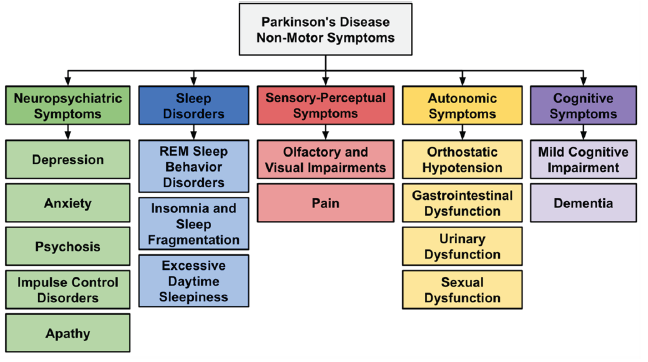
Non-motor symptoms can appear during the prodromal phase, preceding the onset of classical motor signs, and persist throughout the disease course 3-5. These symptoms encompass a broad spectrum, including neuropsychiatric disturbances, cognitive decline, autonomic dysfunction, sleep disorders, and sensory-perceptual abnormalities. The most common non-motor symptoms and features in PD are shown in Figure 1. Recognizing their clinical relevance, the Movement Disorder Society (MDS) diagnostic criteria for PD incorporate olfactory loss as a supportive criterion, while also considering the absence of common non-motor features beyond five years of disease as a red flag 6.
Source: Own elaboration.

Figure 1 Most common non-motor symptoms and features in Parkinson's disease 

The underdiagnosis of non-motor symptoms, due to gaps in their assessment and treatment, leads to poor disease control, diminished quality of life, and complications at various stages of the disease 7. A thorough understanding of non-motor symptoms is therefore essential for accurate diagnosis, timely therapeutic intervention, and the development of comprehensive, individualized care strategies. This review synthesizes current evidence on the clinical presentation, assessment, and management of nonmotor symptoms in PD, underscoring their critical role in shaping patient outcomes.

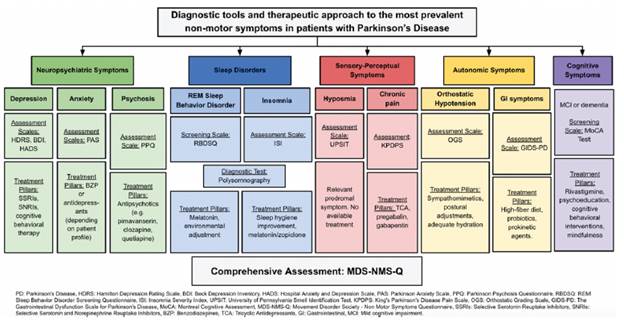
Figure 2 provides an overview of the most commonly used diagnostic tools and therapeutic approaches for the most prevalent non-motor symptoms in patients with PD.
Source: Own elaboration.

Figure 2 Most commonly used diagnostic tools and therapeutic approaches for the most prevalent non-motor symptoms in patients with Parkinson's disease 

Materials and methods

A comprehensive literature search was conducted using PubMed, EMBASE, and SciELO databases. The search strategy combined Medical Subject Headings (MeSH), Emtree terms, and relevant free-text keywords, including "Parkinson Disease" and specific terms for each non-motor symptom, such as "Depression", "Anxiety", "Psychosis", "Disruptive, Impulse Control, and Conduct Disorders", "Apathy", "Sleep Wake Disorders", "Dyssomnias", "REM Sleep Behavior Disorder", "Sensation Disorders", "Pain", "Autonomic Nervous System Diseases", "Hypotension, Orthostatic", "Gastrointestinal Diseases", "Urinary Bladder, Neurogenic", "Urinary Incontinence", "Sexual Dysfunction, Physiological", and "Cognitive Dysfunction". The complete systematic search strategy, separated by database and organized by each group of non-motor symptoms, is detailed in Appendix A.

An initial set of studies was identified through database queries, and additional relevant literature was retrieved using a snowball approach, which involved screening the reference lists of selected articles and tracking citations of key publications.

Studies were included if they addressed the prevalence, assessment, diagnosis, clinical impact, or management of non motor symptoms in PD, regardless of study design. Selection was based on the authors' criteria, not systematically. Articles published in English, Spanish, and Portuguese were considered eligible. Studies focusing only on motor manifestations or unrelated topics and without full-text access or available only in abstract form were excluded.

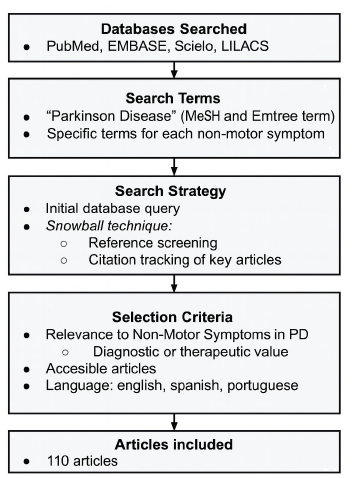
A total of 110 studies were selected according to the mentioned criteria, based on their relevance to non-motor symptomatology in PD and their contribution to understanding its clinical implications and therapeutic approaches. The quality of the included studies (grouped by subsection) was stratified according to the Oxford Centre for Evidence-Based Medicine classification and is detailed in Appendix B. The flowchart outlining the search strategy is presented in Figure 3.
Source: Own elaboration.

Figure 3 Flowchart of the article search and selection strategy 

1. Neuropsychiatric symptoms

1.1 Depression

In PD, depression manifests in subtypes such as minor depression, dysthymia, and others 8,9. Major depressive disorder affects approximately 17% of PD patients, minor depression 22%, and dysthymia 13% 10. While numerous studies have addressed depression in PD, many patients exhibit depressive symptoms without meeting the criteria for a specific depressive disorder 11. Subsyndromal depression in PD includes excessive pessimism, rumination, and hopelessness, which are common in this condition 12. Anxiety often coexists with depressive disorders, requiring thorough evaluations in PD patients. These symptoms can emerge during the prodromal stages and tend to worsen in advanced stages 13. Depression is the most common neuropsychiatric symptom prior to diagnosis 14 and is associated with non-motor fluctuations during "off" periods in PD 13,15.

Evaluating depression in PD is challenging due to overlapping symptoms 8, emotional responses to diagnosis, and medication side effects 16. Early assessment in primary care is crucial, with tools such as the Hamilton Depression Rating Scale, Beck Depression Inventory, and Hospital Anxiety and Depression Scale aiding in screening depressive symptoms in PD. Non-pharmacological interventions such as cognitive-behavioral therapy (CBT) and aerobic exercise have shown utility 17,18. Pharmacological options include selective serotonin reuptake inhibitors (SSRIs), serotonin-norepinephrine reuptake inhibitors (SNRIs), and tricyclic antidepressants (TCAs), each with varying efficacy and side-effect profiles 16,19. SNRIs are considered the safest option for depressive symptoms but do not improve other PD symptoms 16,19. Medications like pramipexole (dopamine agonist), primarily used for motor symptoms, may also benefit patients with specific depressive symptoms 20. First-line pharmacological management recommendations include SSRIs or SNRIs at standard doses, with regular evaluations for efficacy and adverse effects 21.

1.2 Anxiety

Anxiety is characterized by excessive worry and distress, which may become pathological in the absence of a clear stimulus. According to the DSM-5, while anxiety symptoms are common and may be transient, an anxiety disorder is diagnosed when these symptoms are persistent, excessive, and cause significant impairment in social, occupational, or other important areas of functioning, which may occur in PD 9,22. Anxiety symptoms are common in PD patients 22 and can manifest as generalized anxiety disorder (apprehension, fear, worry), separation anxiety disorder, selective mutism, specific phobias, social anxiety disorder, and panic disorder, among others 9. Anxiety frequently coexists with depression and may emerge during the prodromal stage of PD, becoming more prevalent during "off" periods 13,23.

Early evaluation in primary care is essential due to the negative impact of anxiety on quality of life. Assessment tools like the Parkinson Anxiety Scale, which specifically evaluates persistent and episodic anxiety through 12 items, are helpful for clinical screening 24. Although current evidence is limited, higher doses of antidepressants, particularly SSRIs, have been associated with adequate responses in treating anxiety in PD 25,26. Non-pharmacological strategies such as CBT have been shown to have an impact on this symptom 27.

1.3 Psychosis

Psychotic disorders in both the general population and PD include symptoms such as hallucinations, delusions, and alterations in language (e.g., impaired discourse organization, reduced verbal fluency, and difficulties with pragmatic language use) and thought 9,28. Hallucinations may present as fleeting phenomena and illusions (45%), visual hallucinations (15%), or non-visual hallucinations (35%) 29. Their prevalence increases in advanced PD stages 30, typically beginning with fleeting perceptions or feelings of presence that progress to hallucinations as the disease evolves 30. The Parkinson Psychosis Questionnaire is used to assess the frequency and severity of these symptoms 24.

Treatment involves reducing dopaminergic therapy, particularly dopaminergic agonists, identifying potential triggers such as infections, and avoiding pro-hallucinatory medications, including anticholinergics 24. When pharmacological intervention is required, pimavanserin has demonstrated efficacy in reducing psychotic symptoms in PD. 31. Alternative options include quetiapine and clozapine 32,33, and rivastigmine may be beneficial in cases associated with dementia 34. Electroconvulsive therapy can be useful in severe cases 35. Other strategies such as CBT, psychoeducation, and environmental modifications (e.g., minimizing sensory overload and improving lighting, among others) can also be beneficial 36,37.

1.4 Impulse control disorders (ICDs)

Defined in the DSM-5 as the inability to resist impulses that may harm the patient or others, these disorders encompass behaviors such as pathological gambling, compulsive shopping, and binge eating 9. Other characteristic behaviors include punding (engagement in purposeless repetitive motor activities) and hobbyism (excessive preoccupation with hobbies or activities) 24. The prevalence of ICDs in PD is approximately 14%, with a 5-year cumulative incidence of up to 46% 38,39.

The primary risk factor is the use of dopaminergic agonists, followed to a lesser extent by levodopa and amantadine 40. The Questionnaire for Impulsive-Compulsive Disorders Rating Scale, along with the MDS Non-Motor Symptoms -Questionnaire (MDS-NMS-Q), aids in evaluating these symptoms in PD 24,41. Primary interventions involves reducing dopaminergic agonists and monitoring withdrawal symptoms 42.

1.5 Apathy

Apathy in PD manifests as a loss of motivation without cognitive impairment, characterized by reduced goal-directed behavior and thought. Its prevalence ranges between 15 and 70% in PD patients 24. Assessment tools include the Apathy Evaluation Scale (AES), Apathy Scale, and Apathy Inventory, with the AES-12PD being specific for PD 43. Treatment options are limited; evidence suggests that cholinesterase inhibitors and levodopa during "on" periods may be beneficial 44,45.

2. Sleep disorders

Up to 71% of PD patients are affected by sleep disturbances, significantly impacting their quality of life 46. These symptoms occur at all stages of the disease and are associated with other psychiatric and cognitive manifestations 47.

2.1 Rapid Eye Movement (REM) Sleep Behavior Disorder

REM behavior disorder (RBD) is characterized by the loss of REM sleep atonia, allowing patients to physically act out their dreams 48. It is a key prodromal symptom, appearing 10-15 years before a PD diagnosis 49,50. Studies show that over 90% of patients with isolated RBD progress to PD or other α-synucleinopathies, with PD being the most common 51,52. RBD is confirmed via polysomnography and treated with melatonin (up to 12 mg) or clonazepam (0.25-4 mg) to regulate the sleep cycle, alongside environmental modifications to prevent injuries 48,53. Early detection is crucial for patient safety and quality of life.

2.2 Insomnia and sleep fragmentation

Insomnia in PD involves difficulty initiating or maintaining sleep, affecting 30-80% of patients 54. Initiation insomnia is linked to psychiatric disorders, while maintenance insomnia-affecting 70% of PD patients-is the most common, exacerbated by nocturnal "off" periods due to symptoms like pain, sweating, and nocturia 50. Other triggers include obstructive sleep apnea syndrome, restless legs syndrome, and periodic limb movement disorder, which cause sleep fragmentation and excessive daytime sleepiness (EDS) 50. The Insomnia Severity Index aids in diagnosing and monitoring insomnia. Initial treatment includes melatonin (3-5 mg), adjustments in dopaminergic medications, and sleep hygiene measures 47,53.

2.3 Excessive daytime sleepiness

EDS, affecting approximately 35% of PD patients, is characterized by the need for daytime naps, often linked to dopaminergic dysfunction and insomnia 55,56. The Epworth Sleepiness Scale, with scores above 10, is commonly used to identify EDS 47. Management strategies involve stimulants like coffee and evening exercise, which promote wakefulness and provide antioxidant benefits 57. Modafinil or methylphenidate is reserved for specific cases, with risk assessments 48. Non-pharmacological treatments such as bright light therapy and sleep hygiene measures can help regulate circadian rhythms, improving sleep schedules 58. Identifying coexisting insomnia and EDS can substantially improve patients' quality of life.

3. Sensory-perceptual symptoms

The majority of PD patients experience sensory-perceptual disturbances, which are often under-diagnosed and receive limited clinical attention, despite potentially preceding motor symptoms by up to five years. This highlights their value for early detection 59.

3.1 Olfactory and visual impairments

Olfaction and vision are the most commonly affected senses in PD, with alterations reported in up to 80% of patients 60,61. Hyposmia, which may precede motor symptoms by several years, indicates disease progression and suggests invasion of Lewy bodies into olfactory circuits 60,62. Studies indicate that this symptom results from the loss of cholinergic and dopaminergic neurons in the olfactory bulb 60. Assessment tools include the University of Pennsylvania Smell Identification Test 63,64.

Visual changes include difficulties with contrast sensitivity, color discrimination, diplopia, and blurry vision, affecting up to 82% of patients 65. Dopaminergic cell loss in the retina, associated with a reduction in synaptic contacts with melanopsin-containing retinal ganglion cells, has been linked to visual dysfunction and impaired contrast sensitivity in PD 66.

3.2 Pain

Pain affects up to 85% of PD patients, with both nociceptive and neuropathic pain fluctuating during "on" and "off" periods, being associated with an increase of pain when dopamine levels drop, as there is increased rigidity, bradykinesia, and abnormal postures, which may contribute to mechanical strain and inflammation 67. The pathophysiology of pain in PD involves complex, multifactorial disruptions in dopaminergic, glutamatergic, serotonergic, nor-adrenergic, and cholinergic systems that alter pain modulation, perception, and transmission throughout disease progression 67.

Neuropathic pain, which may result from small fiber neuropathy, manifests as burning or prickling sensations, particularly during "off" periods and on the more affected side 68,69. Management includes tricyclic antidepressants and neuromodulators such as pregabalin and gabapentin 67. Options like lidocaine (off-label) and safinamide might be effective in cases of inadequate response and persistence of radicular pain 70,71. Safinamide has demonstrated a reduction in pain levels when used as an adjunct to levodopa, especially during "off" periods 72. Regarding other strategies, physical exercise, yoga, or tai chi might help to improve pain 73. Evaluation involves a detailed anamnesis and the use of the MDS-NMS-Q to assess pain severity and its psychological impact 41. More advanced diagnostic methods, such as microneurography and evoked potentials, may also be employed but are not routinely used due to high costs 67,68.

4. Autonomic Symptoms

4.1 Orthostatic hypotension (OH)

Orthostatic hypotension in PD refers to a drop in blood pressure upon standing, associated with α-synuclein deposits and loss of efferent sympathetic neurons 74. It affects up to 30% of patients, increasing the risk of falls 75. Distinguishing neurogenic from non-neurogenic OH is essential, as the former reflects the underlying pathophysiology of PD, while the latter often stems from reversible factors such as dehydration or physical deconditioning 76. Dopaminergic treatment may exacerbate OH 77.

This symptom in PD is clinically diagnosed by a sustained drop of ≥20 mmHg systolic or ≥10 mmHg diastolic within 3 minutes of standing, after ruling out other causes. The MDS-NMS-Q and the Orthostatic Grading Scale are useful tools for diagnosis 41,78. Non-pharmacological strategies include lifestyle modifications, such as postural adjustments, adequate hydration, and avoiding large meals 76. Pharmacological treatment, when needed, involves sympathomimetic agents such as droxidopa, midodrine, and fludrocortisone 79.

4.2 Gastrointestinal dysfunction

Gastrointestinal (GI) symptoms in PD, such as dysphagia, early satiety, and constipation, often emerge early and are linked to α-synuclein accumulation in the GI tract 80. The frequency of these symptoms in PD patients varies: dysphagia may develop in more than 80% of patients as the disease progresses 81; sialorrhea affects up to 80% 82; and symptoms of gastroparesis (such as nausea, vomiting, and abdominal bloating) occur in up to 45% of patients 83, impacting nutrition and quality of life. Small intestinal bacterial overgrowth, observed in around 50% of patients, exacerbates GI symptoms and may worsen motor dysfunction 84.

Management includes probiotics to regulate intestinal microbiota, dietary adjustments emphasizing high fiber intake, coffee intake, and adequate hydration 85-87. Additional treatments involve prokinetic agents like domperidone, though dopamine D2 receptor antagonists that cross the blood-brain barrier, such as metoclopramide, are contraindicated in PD 88. Domperidone should be administered with caution, as it has been associated with cardiac electrophysiological abnormalities and an increased risk of mortality 89. In severe cases, laxatives may be employed, with careful monitoring of levodopa absorption and efficacy 90. Other treatment strategies, such as gastric electrical stimulation or botulinum toxin injections into the pyloric or anal sphincters and submandibular glands, have been studied but currently have limited evidence 83,86.

4.3 Urinary dysfunction

Approximately 27-85% of PD patients experience urinary dysfunction early on, with detrusor hyperactivity linked to central dopaminergic degeneration, autonomic dysfunction, and impaired inhibitory control by the basal ganglia 91-93. Symptoms include increased frequency and incontinence, which are associated with increased fall risk and potentially worse motor and cognitive prognosis 94. The International Consultation for Incontinence Questionnaire and the Over Activity of the Bladder Questionnaire facilitate clinical evaluation 95. Management includes anti-muscarinic agents, α-3 adrenergic agonists, intravesical botulinum toxin, and lifestyle adjustments such as scheduled voiding and controlled fluid intake 93,96. Deep brain stimulation of the subthalamic nucleus may also improve detrusor hyperactivity and nocturia 97.

4.4 Sexual dysfunction

Sexual dysfunction affects over 50% of early-stage PD patients and includes reduced libido, erectile and ejaculatory disorders, and vaginal dryness, primarily due to dopaminergic depletion 92. Tools like the International Index of Erectile Function and Female Sexual Function Index assess these symptoms 98. Management is individualized and may involve CBT and sex therapy and pharmacological treatment such as sildenafil and apomorphine (for erectile disorder in men) 98.

5. Cognitive symptoms

Cognitive impairment in PD spans from early to advanced stages. Between 24.5% and 31.1% of patients develop dementia, rising to 46% after 10 years and up to 83% after 20 years post-diagnosis (99,100. Approximately 20% of patients exhibit mild cognitive impairment (MCI) at diagnosis 99. Risk factors include hallucinations, advanced age, low educational attainment, and depression, with up to 40% of cases potentially preventable through early lifestyle interventions 101,102. Mitochondrial dysfunction, amyloid deposition, and cerebrovascular alterations contribute to cognitive decline, alongside dysfunction in frontotemporal neural networks 99. Affected domains include visuospatial, attentional, memory, and executive functions 103.

Cognitive phenotypes in PD include subjective cognitive decline (SCD), MCI, and dementia. SCD refers to self-perceived decline without objective impairment on standardized tests 104. MCI involves deficits in one or more cognitive domains, with preserved functional independence 103. Dementia is characterized by impairment in at least two domains, severe enough to interfere with daily life beyond the impact of motor symptoms 99,105.

The Montreal Cognitive Assessment (MoCA) is the most commonly used screening tool for cognitive impairment in PD, offering good sensitivity for early deficits and guiding the need for further neuropsychological evaluation 99,106. Treatments include rivastigmine for PD dementia, while non-pharmacological strategies are employed for MCI, though long-term outcomes remain uncertain 107. Psychoeducation, cognitive-behavioral interventions, and mindfulness-based approaches show promising results, but their efficacy remains under investigation 108,109. Physical exercise, especially resistance and aerobic training, improves memory, attention, and processing speed, positively impacting quality of life 110.

Conclusions

PD presents a multidimensional clinical challenge, with non-motor symptoms contributing substantially to functional decline, reduced quality of life, and increased healthcare complexity. These symptoms, spanning neuropsychiatric, cognitive, autonomic, and sensory domains, require continuous and personalized management beyond initial diagnosis. Tools like the MDS-NMS-Q 41) provide structured frameworks for symptom evaluation, while domain-specific instruments support more precise clinical assessment and therapeutic decision-making. Moreover, motor fluctuations deserve particular attention, as "off" and "on" periods in PD can contribute to the exacerbation of non-motor symptoms.

Despite growing awareness of the relevance of non-motor symptoms, significant gaps persist in their systematic assessment and integration into routine care. Advancing multidisciplinary, patient-centered strategies requires not only early detection but also ongoing reassessment and therapeutic plans tailored to evolving patient needs. Future research should focus on identifying and validating biomarkers capable of detecting and monitoring non-motor symptoms at early stages, facilitating prompt and targeted interventions.

In parallel, the development of disease-modifying therapies suitable for early use, along with more effective and individualized symptomatic treatments, remains a key objective for improving long-term outcomes. Enhancing the understanding and management of non-motor symptoms is essential to advance the quality of care in PD, not only by improving clinical outcomes but also by alleviating the broader personal and societal burden associated with the disease 7.

References

1. GBD 2016 Parkinson's Disease Collaborators. Global, regional, and national burden of Parkinson's disease, 1990-2016: A systematic analysis for the Global Burden of Disease Study 2016. Lancet Neurol. 2018;17(11):939-953. https://doi.org/10.1016/s1474-4422(18)30295-3Links ]

2. MacMahon Copas AN, McComish SF, Fletcher JM, Caldwell MA. The pathogenesis of Parkinson's disease: A complex interplay between astrocytes, microglia, and t lymphocytes? Front Neurol. 2021;12:666737. https://doi.org/10.3389/fneur.2021.666737Links ]

3. Roos DS, Klein M, Deeg DJH, Doty RL, Berendse HW. Prevalence of prodromal symptoms of Parkinson's disease in the late middle-aged population. J Parkinsons Dis. 2022;12(3):967-974. https://doi.org/10.3233/JPD-213007Links ]

4. Postuma RB, Berg D. Advances in markers of prodromal Parkinson disease. Nat Rev Neurol. 2016;12(11):622-634. https://doi.org/10.1038/nrneurol.2016.152Links ]

5. Berg D, Postuma RB, Bloem B, Chan P, Dubois B, Gasser T, et al. Time to redefine PD? Introductory statement of the MDS Task Force on the definition of Parkinson's disease. Mov Disord. 2014;29(4):454-462. https://doi.org/10.1002/mds.25844Links ]

6. Postuma RB, Berg D, Stern M, Poewe W, Olanow CW, Oertel W, et al. MDS clinical diagnostic criteria for Parkinson's disease. Mov Disord. 2015;30(12):1591-1601. https://doi.org/10.1002/mds.26424Links ]

7. Santos-García D, de Deus Fonticoba T, Suárez Castro E, Aneiros Díaz A, McAfee D, Catalán MJ, et al. Non-motor symptom burden is strongly correlated to motor complications in patients with Parkinson's disease. Eur J Neurol. 2020;27(7):1210-1223. https://doi.org/10.1111/ene.14221Links ]

8. Marsh L. Depression and Parkinson's disease: Current knowledge topical collection on movement disorders. Curr Neurol Neurosci Rep. 2013;13(409). https://doi.org/10.1007/s11910-013-0409-5Links ]

9. American Psychiatric Association. Diagnostic and Statistical Manual of Mental Disorders - DSM V. American Psychiatric Publishing; 2014. [ Links ]

10. Reijnders JSAM, Ehrt U, Weber WEJ, Aarsland D, Leentjens AFG. A systematic review of prevalence studies of depression in Parkinson's disease. Mov Disord. 2008;23(2):183-189. https://doi.org/10.1002/mds.21803Links ]

11. Ray S, Agarwal P. Depression and anxiety in Parkinson disease. Clin Geriatr Med. 2020;36(1):93-104. https://doi.org/10.1016/j.cger.2019.09.012Links ]

12. Laux G. Parkinson and depression: Review and outlook. J Neural Transm. 2022;129(5-6):601-608. https://doi.org/10.1007/s00702-021-02456-3Links ]

13. van der Velden RMJ, Broen MPG, Kuijf ML, Leentjens AFG. Frequency of mood and anxiety fluctuations in Parkinson's disease patients with motor fluctuations: A systematic review. Mov Disord. 2018;33(10):1521-1527. https://doi.org/10.1002/mds.27465Links ]

14. Schrag A, Horsfall L, Walters K, Noyce A, Petersen I. Prediagnostic presentations of Parkinson's disease in primary care: A case-control study. Lancet Neurol. 2015;14(1):57-64. https://doi.org/10.1016/S1474-4422(14)70287-XLinks ]

15. Armstrong MJ, Okun MS. Diagnosis and treatment of Parkinson disease: A review. JAMA. 2020;323(6):548-560. https://doi.org/10.1001/jama.2019.22360Links ]

16. Mills KA, Greene MC, Dezube R, Goodson C, Karmarkar T, Pontone GM. Efficacy and tolerability of antidepressants in Parkinson's disease: A systematic review and network meta-analysis. Int J Geriatr Psychiatry. 2018;33(4):642-651. https://doi.org/10.1002/gps.4834Links ]

17. Wu PL, Lee M, Huang TT. Effectiveness of physical activity on patients with depression and Parkinson's disease: A systematic review. PLoS One. 2017;12(7):1-14. https://doi.org/10.1371/journal.pone.0181515Links ]

18. Dobkin RD, Menza M, Allen LA, Gara MA, Mark MH, Tiu J, et al. Cognitive-behavioral therapy for depression in Parkinson's disease: A randomized, controlled trial. Am J Psychiatry. 2011;168(10):1066-1074. https://doi.org/10.1176/appi.ajp.2011.10111669Links ]

19. Zhuo C, Xue R, Luo L, Ji F, Tian H, Qu H, et al. Efficacy of antidepressive medication for depression in Parkinson disease: A network meta-analysis. Medicine (Baltimore). 2017;96(22):e6698. https://doi.org/10.1097/MD.0000000000006698Links ]

20. Ji N, Meng P, Xu B, Zhou X. Efficacy and safety of pramipexole in Parkinson's disease with anxiety or depression: A meta-analysis of randomized clinical trials. Am J Transl Res. 2022;14(3):1757-1764. [ Links ]

21. Ahmad MH, Rizvi MA, Ali M, Mondal AC. Neurobiology of depression in Parkinson's disease: Insights into epidemiology, molecular mechanisms and treatment strategies. Ageing Res Rev. 2023;85:101840. https://doi.org/10.1016/j.arr.2022.101840Links ]

22. Landau S, Harris V, Burn DJ, Hindle J V, Hurt CS, Samuel M, et al. Anxiety and anxious-depression in Parkinson's disease over a 4-year period: A latent transition analysis. Psychol Med. 2016;46(3):657-667. https://doi.org/10.1017/S0033291715002196Links ]

23. Schapira AHV, Chaudhuri KR, Jenner P. Non-motor features of Parkinson disease. Nat Rev Neurosci. 2017;18(7):435- 450. https://doi.org/10.1038/nrn.2017.62Links ]

24. Weintraub BD, Irwin D. Diagnosis and treatment of cognitive and neuropsychiatric symptoms in Parkinson disease and dementia with Lewy bodies. Contin (Minneap Minn). 2022;28(5):1314-1332. https://doi.org/10.1212/CON.0000000000001151Links ]

25. Troeung L, Egan SJ, Gasson N. A meta-analysis of randomised placebo-controlled treatment trials for depression and anxiety in Parkinson's disease. PLoS One. 2013;8(11). https://doi.org/10.1371/journal.pone.0079510Links ]

26. Jakubovski E, Johnson JA, Nasir M, Müller-Vahl K, Bloch MH. Systematic review and meta-analysis: Dose-response curve of SSRIs and SNRIs in anxiety disorders. Depress Anxiety. 2019;36(3):198-212. https://doi.org/10.1002/da.22854Links ]

27. Moonen AJH, Mulders AEP, Defebvre L, Duits A, Flinois B, Köhler S, et al. Cognitive behavioral therapy for anxiety in Parkinson’s disease: A randomized controlled trial. Mov Disord. 2021;36(11):2539-2548. https://doi.org/10.1002/mds.28533Links ]

28. Gargano G, Caletti E, Perlini C, Turtulici N, Bellani M, Bonivento C, et al. Language production impairments in patients with a first episode of psychosis. PLoS One. 2022;17(8):e0272873. https://doi.org/10.1371/journal.pone.0272873Links ]

29. Fénelon G, Soulas T, Zenasni F, Cleret de Langavant L. The changing face of Parkinson's disease-associated psychosis: A cross-sectional study based on the new NINDS-NIMH criteria. Mov Disord . 2010;25(6):763-766. https://doi.org/10.1002/mds.22839Links ]

30. Hommel ALAJ, Meinders MJ, Lorenzl S, Dodel R, Coelho M, Ferreira JJ, et al. The prevalence and determinants of neuropsychiatric symptoms in late-stage parkinsonism. Mov Disord Clin Pract. 2020;7(5):531-542. https://doi.org/10.1002/mdc3.12968Links ]

31. Tariot PN, Cummings JL, Soto-Martin ME, Ballard C, Erten-Lyons D, Sultzer DL, et al. Trial of pimavanserin in dementia-related psychosis. N Engl J Med. 2021;385(4):309-319. https://doi.org/10.1056/NEJMoa2034634Links ]

32. Srisurapanont M, Suradom C, Suttajit S, Kongsaengdao S, Maneeton B. Second-generation antipsychotics for Parkinson's disease psychosis: A systematic review and network meta-analysis. Gen Hosp Psychiatry. 2024;87:124-133. https://doi.org/10.1016/j.genhosppsych.2024.02.008Links ]

33. Seppi K, Ray Chaudhuri K, Coelho M, Fox SH, Katzenschlager R, Perez Lloret S, et al. Update on treatments for nonmotor symptoms of Parkinson's disease-an evidence-based medicine review. Mov Disord. 2019;34(2):180-198. https://doi.org/10.1002/mds.27602Links ]

34. Reilly S, Dhaliwal S, Arshad U, Macerollo A, Husain N, Costa A Da. The effects of rivastigmine on neuropsychiatric symptoms in the early stages of Parkinson's disease: A systematic review. Eur J Neurol. 2024;31(2):e16142. https://doi.org/10.1111/ene.16142Links ]

35. Takamiya A, Seki M, Kudo S, Yoshizaki T, Nakahara J, Mimura M, et al. Electroconvulsive therapy for Parkinson's disease: A systematic review and meta-analysis. Mov Disord. 2021;36(1):50-58. https://doi.org/10.1002/mds.28335Links ]

36. Weintraub D, Aarsland D, Biundo R, Dobkin R, Goldman J, Lewis S. Management of psychiatric and cognitive complications in Parkinson’s disease. BMJ. 2022;379:e068718. https://doi.org/10.1136/bmj-2021-068718Links ]

37. Foley JA, Bell V. CBT for psychosis in Parkinson’s disease: A framework for how and why. Schizophr Res. 2025;280:69- 75. https://doi.org/10.1016/j.schres.2025.04.023Links ]

38. Papay K, Xie SX, Stern M, Hurtig H, Siderowf A, Duda JE, et al. Naltrexone for impulse control disorders in Parkinson disease: A placebo-controlled study. Neurology. 2014;83(9):826-833. https://doi.org/10.1212/WNL.0000000000000729Links ]

39. Corvol JC, Artaud F, Cormier-Dequaire F, Rascol O, Durif F, Derkinderen P, et al. Longitudinal analysis of impulse control disorders in Parkinson disease. Neurology. 2018;91(3):e189-201. https://doi.org/10.1212/WNL.0000000000005816Links ]

40. Grall-Bronnec M, Victorri-Vigneau C, Donnio Y, Leboucher J, Rousselet M, Thiabaud E, et al. Dopamine agonists and impulse control disorders: A complex association. Drug Saf. 2018;41(1):19-75. https://doi.org/10.1007/s40264-017-0590-6Links ]

41. Weintraub D, Chaudhuri KR, Schrag A, Martinez-Martin P, Rizos A, Mamikonyan E, et al. Validation of the international Parkinson and movement disorder society non-motor symptoms questionnaire (MDS-NMS-Q). Mov Disord . 2025;40(6):1037-1046. https://doi.org/10.1002/mds.30202Links ]

42. Weintraub D, Claassen DO. Impulse control and related disorders in Parkinson's disease. Int Rev Neurobiol. 2017;133:679-717. https://doi.org/10.1016/bs.irn.2017.04.006Links ]

43. Stankevich Y, Lueken U, Balzer-Geldsetzer M, Dodel R, Gräber-Sultan S, Berg D, et al. Psychometric properties of an abbreviated version of the apathy evaluation scale for Parkinson disease (AES-12PD). J Am Assoc Geriatr Psychiatry. 2018;26(10):1079-1090. https://doi.org/10.1016/j.jagp.2018.06.012Links ]

44. Devos D, Moreau C, Maltête D, Lefaucheur R, Kreisler A, Eusebio A, et al. Rivastigmine in apathetic but dementia and depression-free patients with Parkinson's disease: A double-blind, placebo-controlled, randomised clinical trial. J Neurol Neurosurg Psychiatry. 2014;85(6):668-674. https://doi.org/10.1136/jnnp-2013-306439Links ]

45. Theleritis C, Siarkos K, Politis A, Smyrnis N, Papageorgiou C, Politis AM. A systematic review of pharmacological interventions for apathy in aging neurocognitive disorders. Brain Sci. 2023;13(7):1061. https://doi.org/10.3390/brainsci13071061Links ]

46. Dodet P, Houot M, Leu-Semenescu S, Corvol JC, Lehéricy S, Mangone G, et al. Sleep disorders in Parkinson's disease, an early and multiple problem. NPJ Park Dis. 2024;10(1):46. https://doi.org/10.1038/s41531-024-00642-0Links ]

47. Gros P, Videnovic A. Sleep and circadian rhythm disorders in Parkinson's disease. Curr sleep Med reports. 2017;3(3):222- 234. https://doi.org/10.1007/s40675-017-0079-yLinks ]

48. Boeve BF, Silber MH, Saper CB, Ferman TJ, Dickson DW, Parisi JE, et al. Pathophysiology of REM sleep behaviour disorder and relevance to neurodegenerative disease. Brain. 2007;130(11):2770-2788. https://doi.org/10.1093/brain/awm056Links ]

49. Gros P, Videnovic A. Overview of sleep and circadian rhythm disorders in Parkinson disease. Clin Geriatr Med. 2020;36(1):119-130. https://doi.org/10.1016/j.cger.2019.09.005Links ]

50. Howell MJ. Rapid eye movement sleep behavior disorder and other rapid eye movement parasomnias. Continuum (Minneap Minn). 2020;26(4):929-945. https://doi.org/10.1212/CON.0000000000000896Links ]

51. Schenck CH, Bundlie SR, Mahowald MW. Delayed emergence of a parkinsonian disorder in 38% of 29 older men initially diagnosed with idiopathic rapid eye movement sleep behaviour disorder. Neurology. 1996;46(2):388-393. https://doi.org/10.1212/WNL.46.2.388Links ]

52. Schenck CH, Boeve BF, Mahowald MW. Delayed emergence of a parkinsonian disorder or dementia in 81% of older men initially diagnosed with idiopathic rapid eye movement sleep behavior disorder: A 16-year update on a previously reported series. Sleep Med. 2013;14(8):744-748. https://doi.org/10.1016/j.sleep.2012.10.009Links ]

53. Schütz L, Sixel-Döring F, Hermann W. Management of sleep disturbances in Parkinson's disease. J Parkinsons Dis. 2022;12(7):2029-2058. https://doi.org/10.3233/JPD-212749Links ]

54. Duan X, Liu H, Hu X, Yu Q, Kuang G, Liu L, et al. Insomnia in Parkinson's disease: Causes, consequences, and therapeutic approaches. Mol Neurobiol. 2024;62:2292-2313. https://doi.org/10.1007/s12035-024-04400-4Links ]

55. Maggi G, Vitale C, Cerciello F, Santangelo G. Sleep and wakefulness disturbances in Parkinson's disease: A meta-analysis on prevalence and clinical aspects of REM sleep behavior disorder, excessive daytime sleepiness and insomnia. Sleep Med Rev. 2023;68:101759. https://doi.org/10.1016/j.smrv.2023.101759Links ]

56. Feng F, Cai Y, Hou Y, Ou R, Jiang Z, Shang H. Excessive daytime sleepiness in Parkinson's disease: A systematic review and meta-analysis. Parkinsonism Relat Disord. 2021;85:133-40. https://doi.org/10.1016/j.parkreldis.2021.02.016Links ]

57. Rodrigues TM, Castro Caldas A, Ferreira JJ. Pharmacological interventions for daytime sleepiness and sleep disorders in Parkinson's disease: Systematic review and meta-analysis. Parkinsonism Relat Disord. 2016;27:25-34. https://doi.org/10.1016/j.parkreldis.2016.03.002Links ]

58. Taximaimaiti R, Luo X, Wang XP. Pharmacological and non-pharmacological treatments of sleep disorders in Parkinson’s disease. Curr Neuropharmacol. 2021;19(12):2233-2249. https://doi.org/10.2174/1570159X19666210517115706Links ]

59. Chaudhuri KR, Schapira AH V. Non-motor symptoms of Parkinson's disease: Dopaminergic pathophysiology and treatment. Lancet Neurol. 2009;8(5):464-474. https://doi.org/10.1016/S1474-4422(09)70068-7Links ]

60. Torres-Pasillas G, Chi-Castañeda D, Carrillo-Castilla P, Marín G, Hernández-Aguilar ME, Aranda-Abreu GE, et al. Olfactory dysfunction in Parkinson's disease, its functional and neuroanatomical correlates. NeuroSci. 2023;4(2):134- 151. https://doi.org/10.3390/neurosci4020013Links ]

61. Nieto-Escamez F, Obrero-Gaitán E, Cortés-Pérez I. Visual dysfunction in Parkinson's disease. Brain Sci. 2023;13(8):1173. https://doi.org/10.3390/brainsci13081173Links ]

62. Jellinger KA. Neuropathology of nonmotor symptoms of Parkinson's disease. Int Rev Neurobiol. 2017;133:13-62. https://doi.org/10.1016/bs.irn.2017.05.005Links ]

63. Morley JF, Cohen A, Silveira-Moriyama L, Lees AJ, Williams DR, Katzenschlager R, et al. Optimizing olfactory testing for the diagnosis of Parkinson's disease: Item analysis of the university of Pennsylvania smell identification test. NPJ Park Dis. 2018;4(1):2. https://doi.org/10.1038/s41531-017-0039-8Links ]

64. Doty RL. Olfaction in Parkinson's disease and related disorders. Neurobiol Dis. 2012;46(3):527-552. https://doi.org/10.1016/j.nbd.2011.10.026Links ]

65. Borm CDJM, Visser F, Werkmann M, de Graaf D, Putz D, Seppi K, et al. Seeing ophthalmologic problems in Parkinson disease: Results of a visual impairment questionnaire. Neurology. 2020;94(14):e1539-1547. https://doi.org/10.1212/WNL.0000000000009214Links ]

66. Ortuño-Lizarán I, Sánchez-Sáez X, Lax P, Serrano GE, Beach TG, Adler CH, et al. Dopaminergic retinal cell loss and visual dysfunction in Parkinson Disease. Ann Neurol. 2020;88(5):893-906. https://doi.org/10.1002/ana.25897Links ]

67. Cattaneo C, Jost WH. Pain in Parkinson's disease: Pathophysiology, classification and treatment. J Integr Neurosci. 2023;22(5):132. https://doi.org/10.31083/j.jin2205132Links ]

68. Contijoch Roqueta C, Izquierdo MF, Arrabal Solano L. Neuropatía de fibras pequeñas: una revisión. Med Fam. 2020;46(4):277-282. https://doi.org/10.1016/j.semerg.2019.11.003Links ]

69. Schestatsky P, Kumru H, Valls-Solé J, Valldeoriola F, Marti MJ, Tolosa E, et al. Neurophysiologic study of central pain in patients with Parkinson disease. Neurology. 2007;69(23):2162-2169. https://doi.org/10.1212/01.wnl.0000295669.12443.d3Links ]

70. Cattaneo C, Kulisevsky J, Tubazio V, Castellani P. Long-term efficacy of safinamide on Parkinson's disease chronic pain. Adv Ther. 2018;35(4):515-522. https://doi.org/10.1007/s12325-018-0687-zLinks ]

71. Buhmann C, Ip CW, Oehlwein C, Tönges L, Wolz M, Reichmann H, et al. Parkinson disease and pain - diagnostic and therapeutic approaches to a challenging non-motor symptom. Fortschr Neurol Psychiatr. 2018;86(S01):S48-58. https://doi.org/10.1055/a-0590-4464Links ]

72. Tsuboi Y, Koebis M, Kogo Y, Ishida T, Suzuki I, Nomoto M, et al. Effects of safinamide adjunct therapy on pain in patients with Parkinson's disease: Post hoc analysis of a Japanese phase 2/3 study. J Neurol Sci. 2021;429:118070. https://doi.org/10.1016/j.jns.2021.118070Links ]

73. Deuel LM, Seeberger LC. Complementary therapies in Parkinson disease: A review of acupuncture, tai chi, qi gong, yoga, and cannabis. Neurother J Am Soc Exp Neurother. 2020;17(4):1434-1455. https://doi.org/10.1007/s13311-020-00900-yLinks ]

74. Fanciulli A, Leys F, Falup-Pecurariu C, Thijs R, Wenning GK. Management of orthostatic hypotension in Parkinson's disease. J Parkinsons Dis. 2020;10(s1):S57-64. https://doi.org/10.3233/JPD-202036Links ]

75. Mu F, Jiao Q, Du X, Jiang H. Association of orthostatic hypotension with Parkinson's disease: A meta-analysis. Neurol Sci. 2020;41(6):1419-1426. https://doi.org/10.1007/s10072-020-04277-wLinks ]

76. Lamotte G, Lenka A. Orthostatic hypotension in Parkinson disease: What is new? Neurol Clin Pract. 2022;12(5):e112- 115. https://doi.org/10.1212/CPJ.0000000000200068Links ]

77. Liu Z, Su D, Zhou J, Wang X, Wang Z, Yang Y, et al. Acute effect of levodopa on orthostatic hypotension and its association with motor responsiveness in Parkinson's disease: Results of acute levodopa challenge test. Parkinsonism Relat Disord. 2023;115:105860. https://doi.org/10.1016/j.parkreldis.2023.105860Links ]

78. Pavy-Le Traon A, Amarenco G, Duerr S, Kaufmann H, Lahrmann H, Shaftman SR, et al. The movement disorders task force review of dysautonomia rating scales in Parkinson's disease with regard to symptoms of orthostatic hypotension. Mov Disord . 2011;26(11):1985-1992. https://doi.org/10.1002/mds.23742Links ]

79. Wieling W, Kaufmann H, Claydon VE, van Wijnen VK, Harms MPM, Juraschek SP, et al. Diagnosis and treatment of orthostatic hypotension. Lancet Neurol. 2022;21(8):735-746. https://doi.org/10.1016/S1474-4422(22)00169-7Links ]

80. Yemula N, Dietrich C, Dostal V, Hornberger M. Parkinson's disease and the gut: Symptoms, nutrition, and microbiota. J Parkinsons Dis . 2021;11(4):1491-1505. https://doi.org/10.3233/JPD-212707Links ]

81. Suttrup I, Warnecke T. Dysphagia in Parkinson's disease. Dysphagia. 2016;31(1):24-32. https://doi.org/10.1007/s00455-015-9671-9Links ]

82. Isaacson J, Patel S, Torres-Yaghi Y, Pagán F. Sialorrhea in Parkinson's disease. Toxins (Basel). 2020;12(11):691. https://doi.org/10.3390/toxins12110691Links ]

83. Heetun ZS, Quigley EMM. Gastroparesis and Parkinson's disease: A systematic review. Parkinsonism Relat Disord. 2012;18(5):433-440. https://doi.org/10.1016/j.parkreldis.2011.12.004Links ]

84. Li X, Feng X, Jiang Z, Jiang Z. Association of small intestinal bacterial overgrowth with Parkinson's disease: A systematic review and meta-analysis. Gut Pathog. 2021;13(1):25. https://doi.org/10.1186/s13099-021-00420-wLinks ]

85. Jin X, Dong W, Chang K, Yan Y, Liu X. Efficacy of probiotic supplements on Parkinson's disease: A systematic review and meta-analysis. Complement Ther Med. 2024;82:103045. https://doi.org/10.1016/j.ctim.2024.103045Links ]

86. Warnecke T, Schäfer KH, Claus I, Del Tredici K, Jost WH. Gastrointestinal involvement in Parkinson's disease: Pathophysiology, diagnosis, and management. NPJ Park Dis. 2022;8(1):31. https://doi.org/10.1038/s41531-022-00295-xLinks ]

87. Asuku AO, Ayinla MT, Olajide TS, Oyerinde TO, Yusuf JA, Bayo-Olugbami AA, et al. Chapter One - Coffee and Parkinson's disease. In: Moradikor N, Chatterjee IBTP in BR, eds. Neuroscience of Coffee Part B. Elsevier; 2024:1-19. https://doi.org/10.1016/bs.pbr.2024.06.001Links ]

88. Soliman H, Coffin B, Gourcerol G. Gastroparesis in Parkinson disease: Pathophysiology, and clinical management. Brain Sci. 2021;11(7):831. https://doi.org/10.3390/brainsci11070831Links ]

89. Simeonova M, de Vries F, Pouwels S, Driessen JHM, Leufkens HGM, Cadarette SM, et al. Increased risk of all-cause mortality associated with domperidone use in Parkinson’s patients: A population-based cohort study in the UK. Br J Clin Pharmacol. 2018;84(11):2551-2561. https://doi.org/10.1111/bcp.13708Links ]

90. Safarpour D, Sharzehi K, Pfeiffer RF. Gastrointestinal dysfunction in Parkinson's disease. Drugs. 2022;82(2):169-197. https://doi.org/10.1007/s40265-021-01664-1Links ]

91. Pfeiffer RF. Autonomic dysfunction in Parkinson's disease. Neurother J Am Soc Exp Neurother. 2020;17(4):1464- 1479. https://doi.org/10.1007/s13311-020-00897-4Links ]

92. Sakakibara R, Uchiyama T, Yamanishi T, Kishi M. Genitourinary dysfunction in Parkinson's disease. Mov Disord . 2010;25(1):2-12. https://doi.org/10.1002/mds.22519Links ]

93. Chen Z, Li G, Liu J. Autonomic dysfunction in Parkinson's disease: Implications for pathophysiology, diagnosis, and treatment. Neurobiol Dis. 2020;134:104700. https://doi.org/10.1016/j.nbd.2019.104700Links ]

94. Yeo L, Singh R, Gundeti M, Barua JM, Masood J. Urinary tract dysfunction in Parkinson's disease: A review. Int Urol Nephrol. 2012;44(2):415-424. https://doi.org/10.1007/s11255-011-9969-yLinks ]

95. Pavy-Le Traon A, Cotterill N, Amarenco G, Duerr S, Kaufmann H, Lahrmann H, et al. Clinical rating scales for urinary symptoms in Parkinson disease: Critique and recommendations. Mov Disord Clin Pract. 2018;5(5):479-491. https://doi.org/10.1002/mdc3.12636Links ]

96. Batla A, Tayim N, Pakzad M, Panicker JN. Treatment options for urogenital dysfunction in Parkinson's disease. Curr Treat Options Neurol. 2016;18(10):45. https://doi.org/10.1007/s11940-016-0427-0Links ]

97. Tabakin AL, Tunuguntla HSGR. Does deep brain stimulation improve Parkinson's disease-related lower urinary tract symptoms and voiding dysfunction? Bl (San Fr Calif). 2021;8(2):e46. https://doi.org/10.14440/bladder.2021.825Links ]

98. Ng YF, Chen CYT, Chia GTH, Tan BBJW, Chan LL, Tan EK. The association between Parkinson's disease and Sexual dysfunction: Clinical correlation and therapeutic implications. Ageing Res Rev. 2022;79:101665. https://doi.org/10.1016/j.arr.2022.101665Links ]

99. Aarsland D, Batzu L, Halliday GM, Geurtsen GJ, Ballard C, Ray Chaudhuri K, et al. Parkinson disease-associated cognitive impairment. Nat Rev Dis Prim. 2021;7(1):47. https://doi.org/10.1038/s41572-021-00280-3Links ]

100. Aarsland D, Zaccai J, Brayne C. A systematic review of prevalence studies of dementia in Parkinson's disease. Mov Disord . 2005;20(10):1255-1263. https://doi.org/10.1002/mds.20527Links ]

101. Marinus J, Zhu K, Marras C, Aarsland D, van Hilten JJ. Risk factors for non-motor symptoms in Parkinson's disease. Lancet Neurol. 2018;17(6):559-568. https://doi.org/10.1016/S1474-4422(18)30127-3Links ]

102. Livingston G, Huntley J, Sommerlad A, Ames D, Ballard C, Banerjee S, et al. Dementia prevention, intervention, and care: 2020 report of the Lancet Commission. Lancet. 2020;396(10248):413-446. https://doi.org/10.1016/S0140-6736(20)30367-6Links ]

103. Chaudhary S, Kumaran SS, Kaloiya GS, Goyal V, Sagar R, Kalaivani M, et al. Domain specific cognitive impairment in Parkinson's patients with mild cognitive impairment. J Clin Neurosci. 2020;75:99-105. https://doi.org/10.1016/j.jocn.2020.03.015Links ]

104. Mills KA, Schneider RB, Saint-Hilaire M, Ross GW, Hauser RA, Lang AE, et al. Cognitive impairment in Parkinson's disease: Associations between subjective and objective cognitive decline in a large longitudinal study. Parkinsonism Relat Disord . 2020;80:127-32. https://doi.org/10.1016/j.parkreldis.2020.09.028Links ]

105. Goldman JG, Sieg E. Cognitive impairment and dementia in Parkinson disease. Clin Geriatr Med. 2020;36(2):365-377. https://doi.org/10.1016/j.cger.2020.01.001Links ]

106. Marras C, Armstrong MJ, Meaney CA, Fox S, Rothberg B, Reginold W, et al. Measuring mild cognitive impairment in patients with Parkinson's disease. Mov Disord . 2013;28(5):626-633. https://doi.org/10.1002/mds.25426Links ]

107. Maidment I, Fox C, Boustani M. Cholinesterase inhibitors for Parkinson's disease dementia. Cochrane database Syst Rev. 2006;(1):CD004747. https://doi.org/10.1002/14651858.CD004747.pub2Links ]

108. Orgeta V, McDonald KR, Poliakoff E, Hindle JV, Clare L, Leroi I. Cognitive training interventions for dementia and mild cognitive impairment in Parkinson's disease. Cochrane database Syst Rev. 2020;2(2):CD011961. https://doi.org/10.1002/14651858.CD011961.pub2Links ]

109. Alloni A, Quaglini S, Panzarasa S, Sinforiani E, Bernini S. Evaluation of an ontology-based system for computerized cognitive rehabilitation. Int J Med Inform. 2018;115:64-72. https://doi.org/10.1016/j.ijmedinf.2018.04.005Links ]

110. da Silva FC, Iop R da R, de Oliveira LC, Boll AM, de Alvarenga JGS, Gutierres Filho PJB, et al. Effects of physical exercise programs on cognitive function in Parkinson's disease patients: A systematic review of randomized controlled trials of the last 10 years. PLoS One. 2018;13(2):e0193113. https://doi.org/10.1371/journal.pone.0193113Links ]

Citation/Citación Páez-García S, Ramírez-Triana J, Folleco-Insuasty L, Orozco-Castro S, Fernández-de Castro S, Garcia-Cifuentes E, et al. Non-motor symptoms in Parkinson's disease: Recognition, diagnosis, and implications for comprehensive management. Acta Neurol Colomb. 2025;41(4):e1974. https://doi.org/10.22379/anc.v41i4.1974

Authors' contributions. SPG: Conceptualization, formal analysis, investigation, methodology, project administration, visualization, writing-original draft, writing-review & editing; JRT: Investigation, visualization, project administration, writing-original draft, writing-review & editing; LFI: Investigation, writing-original draft, writing-review & editing; SOC: investigation, writing-original draft, writing-review & editing; SFC: Investigation, writing-original draft, writing-review & editing; EGC: Project administration, supervision, writing-review & editing, and CCC: Conceptualization, methodology, project administration, supervision, writing-review & editing.

Ethical implications. This narrative review does not involve human participants or identifiable data and, therefore, does not require approval from an ethics committee or informed consent.

Funding. The authors received no financial support for the research, authorship, or publication of this article.

AI disclosure statement. The authors declare that no artificial intelligence (AI) was used in the creation or writing of this article.

Data availability statement. The authors declare that there are no open-access data available in repositories. For any inquiries or requests related to the article, please contact the corresponding author.

Supplementary material

Appendix A. Search queries for each database

Search date: April 2025

PubMed

1. Neuropsychiatric Symptoms

  1. (Parkinson's disease[Title/Abstract]) AND (Depression[Title/Abstract]) AND (Anxiety[Title/Abstract]) Filters: in the last 10 years

  2. (Parkinson's disease[Title/Abstract]) AND (Psychosis[Title/Abstract]) Filters: in the last 10 years

  3. (Parkinson's Disease[Title/Abstract]) AND ("Impulse Control Disorders"[Title/Abstract] OR Compulsive Behavior[MeSH]) Filters: in the last 10 years

  4. (Parkinson's disease[Title/Abstract]) AND (Apathy[Title/Abstract]) Filters: in the last 10 years

2. Sleep disorders

  1. (Parkinson's disease[Title/Abstract]) AND (Sleep Wake Disorders[Title/Abstract] OR Dyssomnias[Title/Abstract] OR REM Sleep Behavior Disorder[Title/Abstract]) Filters: in the last 10 years

3. Sensory-Perceptual Symptoms

  1. Parkinson's disease[Title/Abstract] AND (Sensation Disorders[MeSH] OR Autonomic Nervous System Diseases[MeSH]) Filters: in the last 10 years

4. Autonomic Symptoms

  1. Parkinson's disease[Title/Abstract] AND Hypotension, Orthostatic[MeSH] Filters: in the last 10 years

  2. Parkinson's disease[Title/Abstract] AND Gastrointestinal Diseases[MeSH] Filters: in the last 10 years

  3. Parkinson's disease[Title/Abstract] AND (Urinary Bladder, Neurogenic[MeSH] OR Urinary Incontinence[MeSH]) Filters: in the last 10 years

  4. Parkinson's disease[Title/Abstract] AND Sexual Dysfunction[MeSH] Filters: in the last 10 years

5. Cognitive Symptoms

  1. Parkinson's disease[Title/Abstract] AND (Cognitive Dysfunction[MeSH] AND Dementia[Title/Abstract]) Filters: in the last 10 years

Embase

1. Neuropsychiatric Symptoms

  1. ('parkinson disease':ti,ab AND depression:ti,ab AND anxiety:ti,ab) AND [2015-2025]/py

  2. ('parkinson disease':ti,ab AND psychosis:ti,ab) AND [2015-2025]/py

  3. ('parkinson disease':ti,ab AND ('impulse control disorder':ti,ab OR 'compulsive behavior'/exp)) AND [2015-2025]/py

  4. ('parkinson disease':ti,ab AND apathy:ti,ab) AND [2015-2025]/py

2. Sleep disorders

  1. ('parkinson disease':ti,ab AND ('sleep wake disorder':ti,ab OR dyssomnia:ti,ab OR 'rem sleep behavior disorder':ti,ab)) AND [2015- 2025]/py

3. Sensory-Perceptual Symptoms

  1. ('parkinson disease':ti,ab AND olfactory impairment'/exp) AND [2015-2025]/py

  2. 'parkinson disease':ti,ab AND 'visual impairment' AND [2015-2025]/py

  3. 'parkinson disease':ti,ab AND 'pain' AND [2015-2025]/py

4. Autonomic Symptoms

  1. 'parkinson disease':ti,ab AND 'orthostatic hypotension'/exp AND [2015-2025]/py

  2. ('parkinson disease':ti,ab AND 'gastrointestinal disease'/exp) AND [2015-2025]/py

  3. ('parkinson disease':ti,ab AND ('neurogenic bladder'/exp OR 'urinary incontinence'/exp)) AND [2015-2025]/py

  4. ('parkinson disease':ti,ab AND 'sexual dysfunction'/exp) AND [2015-2025]/py

5. Cognitive Symptoms

  1. ('parkinson disease':ti,ab AND 'cognitive disorder'/exp AND dementia:ti,ab) AND [2015-2025]/py

Scielo

  1. "Parkinson's disease" AND (depression OR depressão OR depresión) AND (anxiety OR ansiedade OR ansiedad)

  2. "Parkinson's disease" AND (psychosis OR psicose OR psicosis)

  3. "Parkinson's disease" AND ("impulse control disorder" OR "transtorno do controle do impulso" OR "trastorno del control de impulsos" OR "compulsive behavior" OR "comportamento compulsivo" OR "conducta compulsiva")

  4. "Parkinson's disease" AND (apathy OR apatia)

  5. "Parkinson's disease" AND ("sleep disorder" OR "distúrbio do sono" OR "trastorno del sueño" OR dyssomnia OR dissonia OR "REM sleep behavior disorder")

  6. "Parkinson's disease" AND ("olfactory disorder" OR "olfactory dysfunction" OR "smell disorder" OR "transtorno olfativo" OR "disfunção olfativa" OR "trastorno olfativo" OR "disfunción olfativa")

  7. "Parkinson's disease" AND (pain OR "chronic pain" OR "neuropathic pain" OR dor OR "dor crônica" OR "dor neuropática" OR dolor OR "dolor crónico" OR "dolor neuropático")

  8. "Parkinson's disease" AND ("orthostatic hypotension" OR "hipotensão ortostática" OR "hipotensión ortostática")

  9. "Parkinson's disease" AND ("disfagia")

  10. "Parkinson's disease" AND ("sialorrea")

  11. "Parkinson's disease" AND ("neurogenic bladder" OR "bexiga neurogênica" OR "vejiga neurógena" OR "urinary incontinence" OR "incontinência urinária" OR "incontinencia urinaria")

  12. "Parkinson's disease" AND ("sexual dysfunction" OR "disfunção sexual" OR "disfunción sexual")

  13. "Parkinson's disease" AND ("cognitive dysfunction" OR "disfunção cognitiva" OR "disfunción cognitiva") AND (dementia OR demência OR demencia)

Appendix B quality stratification of included studies based on Oxford Centre for Evidence-Based Medicine Classification 

Subsection Oxford Centre for Evidence Based Medicine Classification
1a 1b 1c 2a 2b 2c 3a 3b 4 5
Neuropsychiatric symptoms 7 5 0 7 5 1 0 2 1 9
Sleep disorders 1 0 0 2 2 0 0 1 0 7
Sensory/perceptual symptoms 0 2 0 0 0 0 0 3 0 11
Autonomic symptoms 2 0 0 2 0 0 1 1 0 20
Cognitive dysfunction 2 1 0 2 3 0 0 0 0 4
Total (n=102) 12 8 0 13 10 1 1 7 1 51

Note. Articles cited in the introduction section not included.

Source: Own elaboration.

Received: May 12, 2025; Revised: August 04, 2025; Accepted: September 19, 2025; Published: November 18, 2025

*Correspondence/Correspondencia Catalina Cerquera-Cleves, Hospital Universitario San Ignacio, Unidad de Neurología, Sexto Piso, Carrera 7 # 40-62, Bogotá, Colombia. E-mail: sccerquerac@gmail.com

Conflicts of interest.

All authors meet the authorship criteria as defined by the International Committee of Medical Journal Editors (ICMJE), declare no conflicts of interest, and confirm that no related papers from the same study, nor any similar manuscripts, have been published elsewhere.

Creative Commons License This is an open-access article distributed under the terms of the Creative Commons Attribution License