

SciELO - Scientific Electronic Library Online

 
vol.41 issue1Clinical Efficacy and Implementation of the Low-FODMAP Diet in Irritable Bowel Syndrome: A Systematic ReviewSevere Anemia Secondary to Trichuris trichiura Hyperinfestation: The Critical Role of Endoscopic Evaluation author indexsubject indexarticles search
Home Pagealphabetic serial listing  

Services on Demand

Journal

Article

Indicators

Related links

  • On index processCited by Google
  • Have no similar articlesSimilars in SciELO
  • On index processSimilars in Google

Share


Revista colombiana de Gastroenterología

Print version ISSN 0120-9957On-line version ISSN 2500-7440

Rev. colomb. Gastroenterol. vol.41 no.1 Bogotá Jan./Mar. 2026  Epub Apr 28, 2026

https://doi.org/10.22516/25007440.1348 

Reporte de casos

Management of Benign Pyloric Syndrome through Endoscopic Ultrasound-Guided Gastroenterostomy: Case Report

Jesús Pérez-Orozco1 
http://orcid.org/0000-0002-0878-9742

Tatiana Paola Pérez-García2  * 
http://orcid.org/0009-0004-0262-2812

Pedro Antonio Plaza-Ricardo2 
http://orcid.org/0009-0003-9820-019X

David Cerra-Ortegón2 
http://orcid.org/0000-0002-8736-010X

Camila González-Fernández de Castro2 
http://orcid.org/0009-0003-0947-1693

1MD, General Surgeon, Specialist in Gastroenterology and Endoscopic Surgery, Endomedical IPS. Barranquilla, Colombia.

2MD, General Surgery Resident, Universidad Libre, Barranquilla Campus. Barranquilla, Colombia.


Abstract

Introduction:

Pyloric syndrome is a clinical condition characterized by epigastric abdominal pain and postprandial vomiting. Etiologies varies, most commonly including peptic ulcer disease and caustic injuries. The most frequent clinical manifestations include epigastric pain, vomiting, and weight loss. Standard management primarily involves dilation using stent placement, which is associated with high failure rates. Consequently, endoscopic gastroenterostomy has recently been implemented as an alternative therapeutic strategy, as illustrated in the present case.

Case Report:

A case is reported involving a female patient presenting with epigastric abdominal pain and recurrent emetic episodes. Upper gastrointestinal endoscopy revealed complete pyloric obstruction. Initial endoscopic dilation was unsuccessful; therefore, endoscopic management was performed through endoscopic gastroenterostomy, resulting in low morbidity and restoration of intestinal transit within 72 hours.

Discussion:

Pyloric syndrome has multiple etiologies, both malignant and benign, including complete pyloric obstruction, which produces symptoms such as epigastric pain, vomiting, and weight loss. The present report aims to highlight current management strategies based on endoscopic surgical approaches in order to reduce patient morbidity.

Conclusion:

Pyloric syndrome is a complex pathology that predisposes patients to poor quality of life due to symptom burden and associated malnutrition. Endoscopic surgical management via gastroenterostomy currently demonstrates promising outcomes, including reduced hospital length of stay and lower morbidity.

Keywords: Pyloric stenosis; hypertrophic pyloric stenosis; natural orifice transluminal endoscopic surgery; surgical anastomosis

Resumen

Introducción:

El síndrome pilórico es un síndrome clínico caracterizado por dolor abdominal epigástrico y vómitos posprandiales. La etiología varía, entre las entidades principales se encuentra la úlcera péptica y las lesiones cáusticas. Las características clínicas más comunes fueron dolor epigástrico, vómitos y pérdida de peso. El manejo principal es la dilatación por medio de stent, que tiene altas tasas de fracaso, por lo que actualmente se está implementando la realización de gastroenteroanastomosis endoscópica, como en el siguiente caso.

Reporte de caso:

Se reporta un caso en una paciente que cursa con dolor abdominal en el epigastrio, además de episodios eméticos, y se le diagnosticó obstrucción del píloro por medio de endoscopia de vías digestivas altas con obstrucción total, la cual fue llevada a dilatación endoscópica fallida, por lo que se realizó el manejo endoscópico por medio de una gastroenteroanastomosis endoscópica con baja morbilidad y recuperación del tránsito intestinal a las 72 horas.

Discusión:

El síndrome pilórico tiene diversas etiologías, tanto malignas como benignas, entre ellas la obstrucción total del píloro, que ocasiona síntomas como dolor epigástrico, vómitos y pérdida de peso. Lo que queremos dar a conocer es el manejo actual por medio de cirugía endoscópica para disminuir la morbilidad en los pacientes.

Conclusión:

El síndrome pilórico es una patología compleja que predispone a una baja calidad de vida por la sintomatología y el estado de desnutrición. El manejo quirúrgico endoscópico por medio de la gastroenteroanastomosis actualmente muestra resultados prometedores con menor estancia hospitalaria y menor morbilidad.

Palabras clave: Estenosis pilórica; estenosis hipertrófica del píloro; cirugía endoscópica por orificios naturales; anastomosis quirúrgica

Introduction

Pyloric syndrome, or gastric outlet obstruction (GOO), is a condition characterized by the inability of the stomach to empty its contents, secondary to motility disorders or, more commonly, mechanical causes1,2. The latter arise from intrinsic or extrinsic obstruction at the level of the distal stomach, pylorus, or duodenum. These conditions cause acute or chronic symptoms such as abdominal pain, nausea, vomiting, and postprandial fullness4. Prior to the introduction of proton pump inhibitors, peptic ulcer disease was the most common cause of gastric outlet obstruction, although its incidence varied across different regions of the world. Currently, this condition is strongly associated with malignant disease and accounts for approximately 50% to 80% of cases. It predominantly affects men, with a male-to-female ratio of 3:15-7.

The onset of symptoms varies primarily according to the underlying etiology, with acute causes such as pancreatitis, gallstones, peptic ulcer disease, and volvulus more commonly producing pain, abdominal distension, and post-prandial fullness. Malignant causes, in addition to abdominal pain and food intolerance, are also associated with weight loss and chronic malnutrition3,8,9.

Diagnostic suspicion is established through appropriate clinical evaluation and a detailed history of symptoms and prior conditions. Imaging studies may be required depending on clinical suspicion, such as computed tomography, which can provide information regarding intrinsic or extrinsic pathology. However, confirmation is generally achieved through endoscopy, which allows objective evaluation of the etiology and enables additional diagnostic procedures, such as biopsy, according to endoscopic findings10,11.

The management of GOO depends on the underlying etiology. In both benign and malignant conditions, different therapeutic alternatives may be required to achieve adequate relief of the obstruction. These range from conservative approaches focused on local control of inflammation to surgical management (gastroenteric bypass) and endoscopic interventions such as dilation, stent placement, and diversion procedures, including natural orifice transluminal endoscopic surgery (NOTES) and endoscopic ultrasound-guided gastroenterostomy (EUS-GE)10,12,13. The latter has emerged as a safe alternative, as it avoids surgical morbidity and reduces the risk of recurrent obstruction, stent migration, or tumor ingrowth14.

The aim of this article is to present the experience of a high-complexity referral center in Colombia with EUS-GE, as well as to describe technical aspects of the procedure and patient outcomes.

Patient and methods

The case of a 62-year-old female patient with a medical history of arterial hypertension, type 2 diabetes mellitus, chronic peptic ulcer disease, and hypertrophic pyloric stenosis is presented. She had previously undergone endoscopic stent placement on two occasions, the most recent two months prior. She presented to the emergency department with a 24-hour history of burning epigastric pain associated with multiple episodes of emesis and intolerance to oral intake. Over the previous two months, she reported an approximate weight loss of 8 kg, as well as early satiety and nausea following food intake during the previous two weeks. Given the patient’s symptoms and medical history, upper gastrointestinal endoscopy was performed. Imaging demonstrated punctate benign pyloric stenosis (Figure 1) with complete luminal occlusion and no evidence of malignant tissue.

Considering the patient’s history of two prior dilations and the findings on upper gastrointestinal endoscopy, a structured clinical evaluation was performed. This evaluation revealed a high comorbidity burden and high nutritional risk. The patient was deemed unsuitable for surgical gastrojejunostomy due to the high risk of complications. Therefore, endoscopic ultrasound-guided gastrojejunostomy was selected using a lumen-apposing metal stent (LAMS).
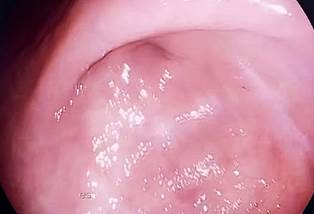
Figure 1 Punctate pyloric stenosis visualized by upper gastrointestinal endoscopy. Image property of the authors. 

Technical procedure

Upper gastrointestinal endoscopy confirmed punctate pyloric stenosis. The pylorus was subsequently intubated using a Fogarty extraction balloon to advance a biliary guidewire distally (Figure 2). The guidewire was then advanced through the Fogarty balloon, contrast was administered, and the guidewire was visualized within the jejunal loop. The guidewire was left in situ, followed by advancement of a nasojejunal tube. Through the large-caliber tube, methylene blue irrigation of the jejunal loop was performed (Figure 3).
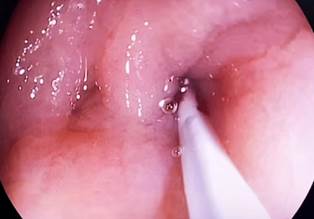
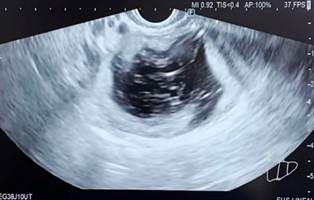
Figure 2 Pyloric intubation using a Fogarty balloon. Image property of the authors. 

Figure 3 Irrigation and dilation of the jejunal loop through a nasojejunal tube visualized by endoscopic ultrasound. Image property of the authors. 

Subsequently, deployment of a 10 × 15 mm Hot AXIOS lumen-apposing metal stent (Boston Scientific) was performed. The prosthesis was deployed (Figure 4) to create the gastroenteroanastomosis. A guidewire was then advanced through the prosthesis, and both the afferent and efferent loops were successfully identified (Figure 5).

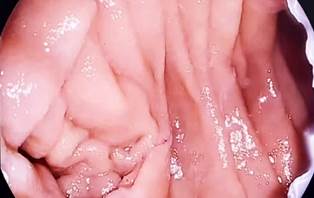
Figure 4 10 × 15 mm lumen-apposing metal stent (Hot AXIOS). Image property of the authors. 

Figure 5 Gastroenteroanastomosis using a 10 × 15 mm lumen-apposing metal stent. Afferent and efferent loops. Image property of the authors. 

The patient was transferred to the general ward after the procedure. She was reassessed at 24 hours, at which time oral intake was initiated with a liquid diet. At 48 hours, the diet was advanced to soft consistency, which was well tolerated without recurrence of obstructive symptoms. The patient was discharged at 72 hours without complications.

Discussion

Pyloric syndrome, or gastric outlet obstruction, is a disabling condition associated with high treatment costs. Although therapeutic approaches vary according to etiology, the use of self-expanding metal stents is widely adopted in both benign and malignant conditions to relieve obstruction. However, this strategy presents important limitations due to recurrence of luminal obstruction caused by tumor ingrowth or prosthesis migration15. Surgical gastroenterostomy represents another established alternative. Although it appears to effectively resolve obstruction with a lower risk of tumor ingrowth into the lumen, it is associated with higher complication rates, longer hospital stays, and consequently greater morbidity and healthcare costs16.

The development of endoscopic ultrasound over recent decades has enabled the emergence of several advanced endoscopic techniques, some of which remain under investigation. These advances have positioned EUS-GE as a safe, reproducible option associated with lower morbidity. Since early experimental animal studies conducted by Fritscher-Ravens et al.17 and Binmoeller Shah et al.18, multiple case series have reported favorable outcomes with EUS-GE, including those described by Khashab-Kumbhari et al.14. More recently, in 2025, two meta-analyses published by Rizzo et al.19 and Canakis et al.20 demonstrated that EUS-GE is a minimally invasive technique with a high success rate of up to 90%. Nonetheless, performance of this procedure requires centers with specialized expertise due to potential technical challenges, including intestinal loop identification, endosonographic localization, and precise puncture. Technological advances in dedicated devices, such as lumen-apposing metal stents, have facilitated the implementation of these techniques21.

Conclusions

Pyloric syndrome is a multifactorial condition caused by pyloric stenosis. It significantly affects patients’ quality of life and is associated with high nutritional risk. This condition predisposes individuals to a greater likelihood of complications, which may interact with surgical risk during therapeutic management.

Endoscopic management is currently the most widely accepted therapeutic approach and typically begins with endoscopic balloon dilation. However, as demonstrated in this case, although endoscopic ultrasound-guided gastroenteroanastomosis is a relatively recent technique with limited available literature, the present experience supports EUS-GE as a safe technical alternative associated with low morbidity for the management of benign pyloric syndrome. Multicenter randomized controlled trials are required to incorporate this technique into an initial management algorithm. Such incorporation should take into account patient-specific variables and institutional expertise.

Referencias

1. Kumar A, Annamaraju P. Gastric Outlet Obstruction. En: StatPearls [Internet]. Treasure Island (FL): StatPearls Publishing; 2024 [citado el 15 de agosto de 2024]. Disponible en: Disponible en: http://www.ncbi.nlm.nih.gov/books/NBK557826/Links ]

2. Appasani S, Kochhar S, Nagi B, Gupta V, Kochhar R. Benign gastric outlet obstruction--spectrum and management. Trop Gastroenterol Off J Dig Dis Found. 2011;32(4):259-66. [ Links ]

3. Balekuduru A, Sheik S, Prakash BSS, Vilmann P. Gastric outlet obstruction-A rare cause. Indian J Gastroenterol Off J Indian Soc Gastroenterol. 2016;35(2):150. https://doi.org/10.1007/s12664-016-0628-1Links ]

4. Koop AH, Palmer WC, Stancampiano FF. Gastric outlet obstruction: A red flag, potentially manageable. Cleve Clin J Med. 2019;86(5):345-53. https://doi.org/10.3949/ccjm.86a.18035Links ]

5. Sukumar V, Ravindran C, Prasad RV. Demographic and Etiological Patterns of Gastric Outlet Obstruction in Kerala, South India. North Am J Med Sci. 2015;7(9):403-6. https://doi.org/10.4103/1947-2714.166220Links ]

6. Cienfuegos A. Serie de la fisiología a la clínica: Secreción gástrica e inhibidores de bomba de protones. Rev Colomb Gastroenterol. 2010;25(1):94-8. https://doi.org/10.1016/S0210-5705(10)70001-7Links ]

7. Maharshi S, Sharma D, Sharma SS, Sharma KK, Pokharna R, Nijhawan S. Aetiology and clinical spectrum of gastric outlet obstruction in North West India. Trop Doct. 2023;53(4):433-6. https://doi.org/10.1177/00494755231183989Links ]

8. Arango M LA, Díaz T CP, Caicedo Q CA, Ángel Rodríguez C, Arango M LA, Díaz T CP, et al. Estado actual del diagnóstico y manejo de la pancreatitis crónica. Rev Colomb Gastroenterol. 2019;34(4):376-84. https://doi.org/10.22516/25007440.301Links ]

9. Schwartzberg DM, Brandstetter S, Grucela AL. Crohn’s Disease of the Esophagus, Duodenum, and Stomach. Clin Colon Rectal Surg. 2019;32(4):231-42. https://doi.org/10.1055/s-0039-1683850Links ]

10. Cominardi A, Tamanini G, Brighi N, Fusaroli P, Lisotti A. Conservative management of malignant gastric outlet obstruction syndrome-evidence based evaluation of endoscopic ultrasound-guided gastroentero-anastomosis. World J Gastrointest Oncol. 2021;13(9):1086-98. https://doi.org/10.4251/wjgo.v13.i9.1086Links ]

11. ASGE Standards of Practice Committee, Fukami N, Anderson MA, Khan K, Harrison ME, Appalaneni V, et al. The role of endoscopy in gastroduodenal obstruction and gastroparesis. Gastrointest Endosc. 2011;74(1):13-21. https://doi.org/10.1016/j.gie.2010.12.003Links ]

12. Rizzo GEM, Carrozza L, Quintini D, Ligresti D, Traina M, Tarantino I. A Systematic Review of Endoscopic Treatments for Concomitant Malignant Biliary Obstruction and Malignant Gastric Outlet Obstruction and the Outstanding Role of Endoscopic Ultrasound-Guided Therapies. Cancers. 2023;15(9):2585. https://doi.org/10.3390/cancers15092585Links ]

13. Heo J, Jung MK. Safety and efficacy of a partially covered self-expandable metal stent in benign pyloric obstruction. World J Gastroenterol WJG. 2014;20(44):16721-5. https://doi.org/10.3748/wjg.v20.i44.16721Links ]

14. Khashab MA, Kumbhari V, Grimm IS, Ngamruengphong S, Aguila G, El Zein M, et al. EUS-guided gastroenterostomy: the first U.S. clinical experience (with video). Gastrointest Endosc. 2015;82(5):932-8. https://doi.org/10.1016/j.gie.2015.06.017Links ]

15. Choi WJ, Park JJ, Park J, Lim EH, Joo MK, Yun JW, et al. Effects of the Temporary Placement of a Self-Expandable Metallic Stent in Benign Pyloric Stenosis. Gut Liver. 2013;7(4):417-22. https://doi.org/10.5009/gnl.2013.7.4.417Links ]

16. Khashab M, Alawad AS, Shin EJ, Kim K, Bourdel N, Singh VK, et al. Enteral stenting versus gastrojejunostomy for palliation of malignant gastric outlet obstruction. Surg Endosc. 2013;27(6):2068-75. https://doi.org/10.1007/s00464-012-2712-7Links ]

17. Fritscher-Ravens A, Mosse CA, Mills TN, Mukherjee D, Park PO, Swain P. A through-the-scope device for suturing and tissue approximation under EUS control. Gastrointest Endosc. 2002;56(5):737-42. https://doi.org/10.1067/mge.2002.129084Links ]

18. Binmoeller KF, Shah JN. Endoscopic ultrasound-guided gastroenterostomy using novel tools designed for transluminal therapy: a porcine study. Endoscopy. 2012;44(5):499-503. https://doi.org/10.1055/s-0032-1309382Links ]

19. Rizzo GEM, Facciorusso A, Binda C, Mazza S, Maida M, Rancatore G, et al. What is the benefit of endoscopic ultrasound-guided gastrojejunal anastomosis for patients with benign gastric outlet obstruction? A systematic review with meta-analysis. Dig Liver Dis. 2025;57(8):1603-1614. https://doi.org/10.1016/j.dld.2025.03.012Links ]

20. Canakis A, Tugarinov N, Bapaye J, Gilman AJ, Hathorn KE, Twery B, et al. EUS-Guided Gastroenterostomy for Benign Gastric Outlet Obstruction: A Systematic Review and Meta-analysis. J Clin Gastroenterol. 2026;60(2):143-150. https://doi.org/10.1097/MCG.0000000000002130Links ]

21. Mussetto A, Fugazza A, Fuccio L, Triossi O, Repici A, Anderloni A. Current uses and outcomes of lumen-apposing metal stents. Ann Gastroenterol. 2018;31(5):535-40. https://doi.org/10.20524/aog.2018.0287Links ]

Citation: Pérez-Orozco J, Pérez-García TP, Plaza-Ricardo PA, Cerra-Ortegón D, González-Fernández de Castro C. Management of Benign Pyloric Syndrome through Endoscopic Ultrasound-Guided Gastroenterostomy: Case Report. Revista. colomb. Gastroenterol. 2026;41(1):78-82. https://doi.org/10.22516/25007440.1348

Informed consent Patients provided written informed consent authorizing the use of their medical records and diagnostic images for research and case report purposes. The case report and methodology were approved by the institutional Scientific Ethics and Research Committee under approval record No. 023/22, dated May 17, 2021, in accordance with Resolution 8430 of 1993 (risk-free research) and Resolution 2378 of 2007 issued by the Colombian Ministry of Social Protection, as well as the provisions of the Universal Declaration on Bioethics and Human Rights of the United Nations Educational, Scientific and Cultural Organization (UNESCO).

Funding sources This article was funded through institutional resources and the authors’ own funds.

Received: April 02, 2025; Accepted: May 29, 2025

*Correspondence: Tatiana Pérez-Orozco. tatianap0211@gmail.com

Conflicts of interest

The authors declared no conflicts of interest.

Creative Commons License This is an open-access article distributed under the terms of the Creative Commons Attribution License