




 English (pdf)
 Article in xml format
 Article references
 Automatic translation
 Send this article by e-mail
 Cited by SciELO
  Cited by Google
  Similars in
SciELO
Similars in
SciELO  Similars in Google
 Permalink

INTRODUCTION
The past decades have seen increasingly rapid advances in international security, in both its challenges and its actors redefining the concepts of war and armed conflict in the 21st century. Complex threats arise constantly, configuring multifaceted security scenarios that demand appropriate responses from the international system (Cujabante-Villamil et al., 2023). Additionally, governments and supranational institutions are being pushed to their limits to deal with uncertainty and provide timely responses.
The development of chaotic episodes such as the UN's ineffectiveness in volatile scenarios (Jones, 2001; Kisangani, 2000), illegal migration (Andersson, 2014), the rise of maritime piracy (Hastings & Phillips, 2015), and the war against drugs and extremism (Dobbins, 2007) have questioned the suitability of the security sector and the need for outsourcing tasks to ensure a better ratio of response and effectiveness. This global landscape on security has been marked by an increasing reliance on private actors for functions traditionally associated with the State. This trend, which accelerated in the post-Cold War era, is often linked to perceived efficiencies and a desire to augment or replace state security capabilities (Mandel, 2001).
These circumstances have brought back to the international arena a longstanding debate on the role of Private Military and Security Companies (PMSCs) in contributing to a more stable and secure world. PMSCs are generally defined as private business entities that provide military and/or security services, including “armed guarding and protection of persons and objects, such as convoys, buildings, and other places; maintenance and operation of weapons systems; prisoner detention; and advice to or training of local forces and security personnel” (International Committee of the Red Cross, 2024). Given the refinement of such services provided, the lines between traditional state actors (military and police) and non-state actors (PMSCs) in conflict and post-conflict settings have been progressively blurred, creating a shift in civil-military relations in terms of accountability, transparency, and the legitimacy of force.
Authors such as Avant (2016), Axelrod (2013), and Petersohn (2017) have suggested that PMSCs may contribute to military effectiveness in fragile states at the expense of increased conflict severity; alternatively, scholars like Andreopoulos and Kleinig (2015), McFate (2014), and Urueña-Sánchez (2020b) advocate for more substantial control over PMSCs due to their increasing predominance and lack of accountability. Within this context, Colombia offers a valuable opportunity to understand the transformations like war in the 21st century, particularly in Latin America and other regions facing similar challenges involving various actors, including guerrillas, paramilitaries, drug cartels, and State forces.
Enduring a protracted internal armed conflict, grappling with extensive drug trafficking, and historically characterized by the presence of numerous non-state armed actors, Colombia has witnessed substantial growth in its private security sector (Macías, 2012; Mittal, 2024) and has not been an exception in using PMSCs to assist the Military Forces and the National Police in dealing with crescent security and defence challenges. Distorting the lines between traditional State and non-state actors has created unique governance and civilian control challenges. The ongoing peace processes with the irregular armed group National Liberation Army (ELN) since 2022 (Insuasty-Rodríguez et al., 2023; Ríos Sierra, 2024; Villalba-Garcia, Coronado-Camero, & Sierra-Gutiérrez, 2022) and with dissident groups from the 2016 peace accord with the irregular armed group Revolutionary Armed Forces of Colombia (FARC), such as the Segunda Marquetalia (Erazo, 2024) and the Estado Mayor Central (Valencia, 2024), have brought up new security threats further highlight the importance of understanding global trends in peacebuilding (Villalba-Garcia, Coronado-Camero, Sierra-Gutiérrez, et al., 2022), the role of PMSCs in Colombia and their implications for the future of the country.
Whilst some research has been carried out on PMSCs in Colombia, a more central question about its utilization of PMSCs in Colombia and future perspectives has been ignored. Apart from the works of Inclán (2023), Jiménez Reina et al. (2019), López López (2016), Mestanza Arias (2015), Pastrana Buelvas & Gehring (2019), Pérez (2018), Perret (2009), Urueña-Sánchez (2017), 2018, 2019, 2020a, 2020b), and Vargas Cano et al. (2024), no comprehensive recollection of the theme has been made. Additionally, the public information available is irregular and, to some extent, contradictory.
Given this intricate scenario, it is necessary to revisit the evolution of PMSCs in Colombia and examine their status and prospects. This paper seeks to address this knowledge gap by arguing that the privatization of security in Colombia has redefined the concepts of war and armed conflict in the 21st century, introducing new actors, dynamics, and implications for national security and peacebuilding. In addition, in Colombia, the Military Forces and, primarily, the National Police have specialized their capabilities to address complex security and defence challenges, leaving behind less noticeable criminal organizations and day-to-day crimes that affect citizens permanently. Such a scenario has created a gap in public security, which has both fostered the rise of PMSCs to secure individual rights and affected the State's monopoly on violence and governance, typically considered an indication of shared sovereignty and criminal governance that challenges the Colombian state model (Niño et al., 2023).
Therefore, the paper is divided into four parts. The first section examines the evolution of PMSCs in Colombia. Secondly, it analyses the current situation of Colombian PMSCs and the development of surveillance and the private security sector. The third section presents a typology of PMSCs in Colombia, along with some examples. Finally, this paper provides some conclusions on the topic.
ORIGINS AND EVOLUTION OF PMSCS IN COLOMBIA
The origins of PMSCs in Colombia can be traced back to the inception of the Colombian State. Indeed, Colombian independence wars were assisted by British legions led by Colonel James Rooke and small independent units from Belgium and Germany (Gómez Jaramillo, 2010, pp. 2-6). This tendency concurs with other regional liberation conflicts, such as those in the United States, Peru, and Argentina, which had support from foreign militaries (Chartrand & Back, 1991; Morea, 2013).
Nevertheless, the evolution of PMSCs in Colombia has been contrary to international experience. In general, numerous countries around the world have seen how PMSCs, such as Executive Outcomes and Sandline International, were first involved in legal combat support operations as private combat companies (Kinsey, 2006, p. 13) or military provider firms (Singer, 2008) and then migrated to other less-lethal activities such as military advice, security services, and logistical support (Kinsey, 2006). In the cases of Angola, Sierra Leone, Papua New Guinea, and South Africa, PMSCs were hired under legal, governmental agreements to provide combat support against rebel movements (Dinnen et al., 1997; Francis, 1999), and then progressively transitioned out of business or shifted to more administrative tasks.
In contrast, the Colombian armed conflict witnessed how PMSCs, and especially freelance operators, first served as illegal military advisers, employed by right-wing organizations to fight against the guerrillas, and then moved into legal and government-sponsored agreements to provide combat-focused activities to deal with drug trafficking, transnational crime, and terrorism. This is the case with companies such as Spearhead Ltd. that provided 1980s unlawful military training to right-wing militias, commonly wrongly named by social groups and academia as paramilitaries, to fight against insurgents (Farah, 1990; Shahak, 1989). Similarly, Irish Republican Army advisers were hired by the FARC left-wing guerrillas in 2001 to train them in the use of explosives and sabotage (McDermott, 2007). In opposition, companies such as Defence Systems Ltd., DynCorp, ITT, and ARINC during the 1990s and 2000s supported the Colombian military and the National Police in the war against drug trafficking and terrorism (Alvarez Calderon, 2017).
For some authors, such as Mittal (2024), the emergence of private security in Colombia can be traced back to the intense violence of the 1980s and 1990s, a period marked by the significant influence of drug cartels such as those in Medellin and Cali, alongside the protracted guerrilla warfare waged by leftist groups like the FARC and ELN. This environment created substantial security gaps, particularly for international corporations conducting business in high-risk areas, which led them to rely on private actors to ensure their safety and operational continuity (Britto, 2020).
During the 1990s, the rise of oficinas de cobro (collection offices) further illustrated this trend. Often managed by paramilitary leaders or retired personnel from the police and military, these entities catered to the security needs of drug cartels and other criminal organizations, facilitating the transportation of illicit profits, products, and weapons across the country, as well as providing bodyguards and hired assassins -hitmen- (sicarios) (Badillo-Sarmiento & Trejos-Rosero, 2023; Hollander, 2025; InSight Crime, 2004). This early period reveals a blurring of the lines between private security provision and involvement in illegal activities. The United States' interventions in the region, particularly the "War on Drugs" initiated in the 1980s, also indirectly contributed to the growth of a domestic private security industry through the allocation of resources and the provision of training, shaping the landscape of security provision within the nation (Calvo Ospina, 2024).
Several key government policies during that period significantly impacted Colombia's growth and formalization of PMSCs. Decree 356 of 1994, known as the Private Surveillance and Security Statute (Estatuto de Vigilancia y Seguridad Privada), is a pivotal piece of legislation. This decree loosened regulations surrounding the establishment and operation of security companies, allowing individuals and corporations to create "special security services" referred to as "Convivir" and notably granting them access to heavy weaponry (Peña Jaramillo, 2005; Republica de Colombia, 1994). The Convivir program, established under this decree, aimed to organize security for communities affected by insurgent activity. However, it faced widespread accusations of supporting paramilitary militias and exacerbating the fragmentation of violence within the country (Grajales, 2011, 2017; Human Rights Watch, 1996).
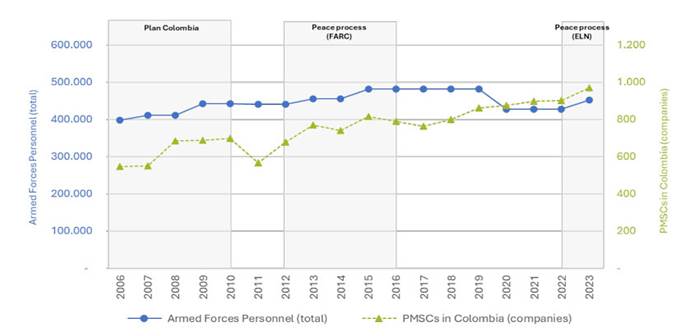
The major outbreak of PMSCs in Colombia occurred with the implementation of Plan Colombia in 1999, a United States-led initiative focused on counternarcotics efforts that further spurred the growth of private security, mainly through the involvement of American private military contractors. Several companies were contracted to train Colombian security forces and participate in counter-narcotics operations, marking a significant influx of international PMSCs into the Colombian security environment. During 2006, the U.S. Defence and State Department spent almost 300 million dollars on PMSCs, representing nearly 50% of the funds allocated by the U.S. Congress, where DynCorp received 164 million in contracts, doubling its profit from previous years. Additionally, Lockheed Martin, which is responsible for providing maintenance and logistical support for the UH-60 helicopters, tripled its revenue to USD$ 80 million in 2007 (Alvarez Calderon, 2017). Similarly, between 2000 and 2008, 70% of the USD $ 6 billion budget was allocated to PMSCs to support the fight against drug cartels and guerrilla groups (Hobson, 2014) (Figure 1).
Source: prepared by the authors based on the information of the Superintendence of Surveillance and Private Security (2024a) and the World Bank (2024)
Figure 1 Comparison of personnel of the Colombian Armed Forces (Army, Navy, Air Force, and National Police) vs. PMSCs in Colombia (2006-2023).
This figure presents the number of Armed Forces personnel and the number of PMSCs. We would have liked to make a direct comparison of the same variable, "personnel/troops," for both the Armed Forces and the PMSCs, but the Superintendency of Private Surveillance and Security has not provided us with this information despite our multiple requests. With this clarification, we can still analyze some aspects of the comparison of the two variables presented.
First, Colombian Armed Forces personnel have remained relatively stable, ranging between 400,000 and 500,000 during the analyzed period, while the PMSCs have shown sustained growth, reaching nearly 1,000 companies by 2023. Regarding trends and key moments, during Plan Colombia (approximately 2006-2010), there was an increase in the number of Armed Forces personnel, which coincides with the heavy investment in security and the fight against insurgencies. Meanwhile, during the peace process with the FARC (2012-2016), the number of Armed Forces personnel stabilized, while the number of PMSCs steadily increased. Finally, during the post-agreement phase with the FARC and the peace process with the ELN (2017-2023), a reduction in the Armed Forces was observed around 2018, while the number of PMSCs continued to grow. This could reflect a greater demand for private security in a scenario of partial demobilization.
Regarding the impact of the growth of private security, the increase in PMSCs may indicate that the private sector has assumed a more relevant role in security, perhaps due to distrust of public forces or specific security needs in business and residential sectors. This may also reflect the outsourcing of security services, reducing the burden on the State. However, this also raises concerns about control, regulation, and potential conflicts with the monopoly on the legitimate use of force. Regarding political and social factors, the correlation between peace processes and the growth of PMSCs suggests that, while the State seeks to reduce its spending on public security, the private sector compensates for this decrease by contracting for security services. Furthermore, in areas where the State has reduced its military presence, PMSCs may be filling security gaps, which could generate inequalities in access to security depending on purchasing power. Finally, all of the above creates regulatory challenges. A large number of PMSCs require regulation to prevent abuses or illegal practices. Furthermore, it is essential to evaluate whether this growth in PMSCs has led to improvements in citizen security or generated new challenges in terms of oversight and operational effectiveness.
On the other hand, Perret (2009) and Vauters and Smith (2006) suggest that the United States' use of PMSCs during Plan Colombia simplified the development of U.S. foreign policy, as U.S. contracting laws did not require congressional oversight over contracts with PMSCs valued at less than 50 million dollars. Using PMSCs in Colombia offered the U.S. a unique opportunity to achieve maximum military effectiveness without the political risks associated with decision-making on foreign soil and the dangers of possible casualties when deploying North American soldiers abroad.
The noteworthy spending on contracts for PMSCs, in addition to alleged human rights violations and other crimes perpetrated by U.S. contractors (Human Rights Watch, 2005; Lindsay-Poland, 2018), deviated media attention and academic efforts to scrutinize the goals of Plan Colombia, its methods, objectives, and goals. As expected, much of the literature has focused on providing a pessimistic account of the strategy employed, accusing the U.S. government of interventionism and the Colombian government of embracing a new form of colonialism. This situation has further perpetuated the negative perception of PMSCs and their operators in Colombia, neglecting an unbiased evaluation and a more comprehensive topic analysis.
MODERN PMSCS IN COLOMBIA
Factors such as political instability, the rise of drug trafficking, the influence of international actors such as the United States, and the growing demand for security by companies and citizens have marked the evolution of PMSCs in Colombia. These factors have contributed to their proliferation and diversification in roles and functions.
The roles and functions of PMSCs in Colombia have undergone considerable evolution over time. Initially, they primarily served to fill security gaps for international corporations operating in dangerous regions. Over time, their functions expanded to provide personal protection and strategic advisory services. They became increasingly involved in counterinsurgency and counter-narcotics operations, often working alongside or supporting Colombian security forces (Estrada, 2009). More recently, their roles have broadened to encompass broader societal security functions, such as guarding private properties and potentially managing correctional facilities (Bohórquez et al., 2023).
Traditional companies like Vise Ltda., Seguridad Superior Ltda., and Fortox S.A. have specialized in business security or protecting critical infrastructure such as pipelines and mines. In contrast, others, such as Seguridad Atlas Ltda., Prosegur Ltda., G4S Secure Solutions Colombia S.A., and Securitas Colombia S.A., have focused on personal security and the transportation of valuables. This diversification reflects the growing demand for security in different areas and the ability of PMSCs to adapt to market needs. Notably, Colombia has also emerged as a significant exporter of PMSCs' services in recent years, leveraging the extensive combat experience of its military personnel gained through decades of internal conflict (Rivera, 2025; Stacey, 2024).
In addition to the U.S. aid to Plan Colombia during its main effort (1999-2008), valued at 540 million dollars per year, the Colombian government increased military expenditure to improve the strategy employed (Mejia, 2016). Nonetheless, this investment progressively decayed as the coca plantations and the FARC decreased its impact on the national and regional security environment. These cuts led to the cancellation of significant contracts with prominent PMSCs, leaving the primary responsibility for addressing security and defence challenges to the Colombian Military Forces and the National Police.
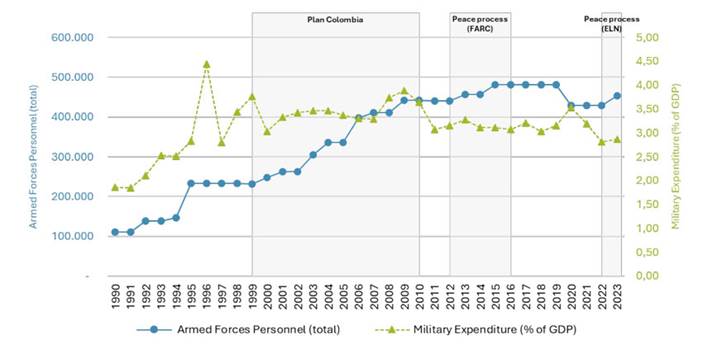
The disappearance of key PMSCs as actors in the Colombian conflict signified an overlooking of the rise of other PMSCs and a steadiness and even reduction in military expenditure and Armed Forces personnel, especially given the development of the peace process with the FARC (initiated in 2012 and signed in 2016) and the preliminary reduction in violence by a series of cease-fire pronouncements during the peace talks with the ELN (commenced in 2022). This tendency may be seen in Figure 2, which depicts the progression of military spending (as a percentage of GDP) and the personnel of the Armed Forces (including the National Police).
Source: prepared by the authors based on the information of the World Bank (2024).
Figure 2 Comparison of the personnel of the Colombian Armed Forces (Army, Navy, Air Force, and National Police) vs. Colombian military expenditure (1990-2023).
This figure illustrates steady growth in the number of Armed Forces personnel from 2000 to approximately 2017, followed by a slight decline thereafter. Meanwhile, military spending fluctuates significantly, with notable peaks and declines occurring at specific periods.
Regarding key trends and relevant events, during Plan Colombia (2000-2010), a sharp increase in troop numbers is observed, reflecting the impact of U.S. military support and the intensification of the fight against insurgent groups. On the other hand, a peak in military spending is evident (~2003-2004), which coincides with an escalation in the war against the FARC and other armed groups. Subsequently, relative spending decreases and rebounds, reflecting fiscal adjustments and strategic priorities. During the peace process with the FARC (2012-2016), while military personnel continued to increase or remain stable, military spending as a percentage of GDP stabilized or declined slightly. This may indicate a reorientation of the budget toward other sectors in anticipation of a peace settlement. Finally, in the post-agreement phase with the FARC and the process with the ELN (beginning around 2017), a reduction in Armed Forces personnel and a notable drop in military spending as a percentage of GDP are observed, possibly due to cost-cutting efforts following the demobilization of the FARC.
Regarding the relationship between Military Spending and Military Personnel, it is observed that during the most remarkable troop expansion (2000-2010), military spending as a percentage of GDP also fluctuated significantly. Subsequently, the stabilization of military personnel coincides with a period of more moderate military spending in terms of GDP. Finally, in recent years (post-peace agreement), the reduction in military personnel appears to be accompanied by a drop in military spending.
Regarding the strategic and economic implications, a high dependence on military spending is observed in the security strategy. That is, the variability in spending suggests that political and economic decisions have significantly influenced the Armed Forces' operational capacity. On the other hand, the relative decrease in military spending may reflect an attempt to reallocate resources to other sectors following the signing of the peace agreements. However, it may also imply limitations on military modernization and equipment. Finally, reductions in military spending could be due to economic and fiscal pressures, which could affect the capacity to respond to emerging threats such as drug trafficking or armed dissidents.
Finally, future challenges and considerations can be mentioned, such as whether the reduction in military spending is sustainable. Regarding this, while the peace process has made it possible to reduce some defence needs, the persistence of illegal armed groups could require further adjustments to the military budget. It also poses challenges regarding reforms to the security model; it is crucial to assess whether advancements in technology, intelligence, and international cooperation offset the reduction in military personnel. Finally, concerns arise regarding the balance between security and development: lower military spending can free up resources for investment in infrastructure, education, and health, but it also poses challenges in terms of internal security.
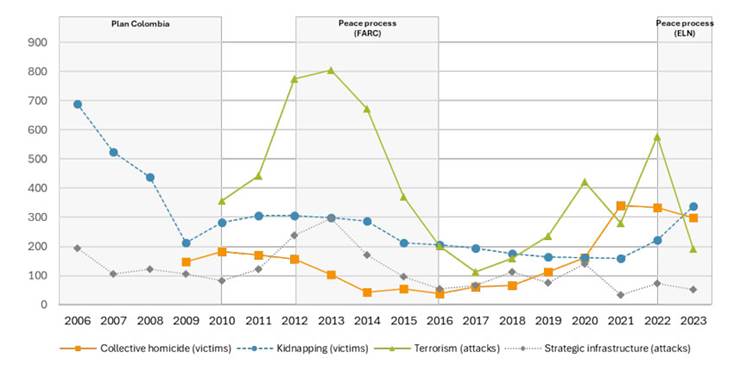
This tendency is not innovative. Authors such as Ruhl (2005) and Fernandez-Osorio (2017) have demonstrated that countries with stable security conditions during peace processes tend to reduce their military budgets, aiming to divert funds into social and economic development plans. Still, the complex threats in Colombia have proven intense resilience and a high degree of flexibility. Because of this scenario, the Colombian Armed Forces have maintained its personnel and capabilities, remaining as a highly professional military specialized in dealing with significant security and defence challenges in rural areas, such as illegal mining (Páez Murillo et al., 2025), drug trafficking, terrorism, kidnapping, and attacks against strategic infrastructure (oil pipelines, electric towers, bridges) (Figure 3).
Source: prepared by the authors based on the information of the Colombian Ministry of Defence (2024).
Figure 3 Progression on security threats in Colombia (2006-2023).
Regarding victims of collective homicides, it is observed that in the early years (during Plan Colombia), the figure appears high, reflecting the strong presence of illegal armed groups and territorial conflicts. Later, there was a progressive decrease, coinciding with the peace process with the FARC, suggesting that the demobilization of this group contributed to a decrease in these crimes. In recent years, an upswing has been observed, which may be related to the reorganization of dissident groups or the emergence of new violent actors in certain regions. This implies that despite the positive impact of the peace agreement with the FARC, the recent increase suggests that organized violence remains a problem, perhaps with new groups disputing territories previously controlled by the FARC.
Regarding victims of kidnapping, during Plan Colombia, kidnapping was one of the guerrillas' most frequently used tactics, which explains its high incidence in those years. With the peace process with the FARC, the figure dropped significantly, as this group was one of the foremost perpetrators of this crime. In the most recent phase, the number of kidnappings appears to remain relatively low, although with some increases, possibly linked to residual groups or criminal gangs. This implies that the reduction in kidnappings is one of the most apparent effects of the peace process with the FARC. However, recent increases could indicate the need to strengthen security and prevention strategies in regions affected by criminal gangs or the ELN.
Regarding terrorist attacks, a peak was observed in the years prior to the peace process with the FARC, possibly due to the intensification of the conflict before the negotiations. However, attacks decreased dramatically after the signing of the agreement. However, in recent years, there has been an upward trend, suggesting that other groups have filled the vacuum left by the FARC or have adopted violent tactics. The above implies that although the post-agreement reduction is a success, the reactivation of these attacks could be associated with dissidents, the ELN, or new forms of urban violence. Therefore, it is crucial to strengthen intelligence and security in critical areas to prevent this trend from continuing to rise.
Finally, regarding attacks on electrical infrastructure, these acts have been a recurring tactic of insurgent groups aimed at destabilizing regions. A sharp increase has been observed at certain times during the conflict, with a notable reduction after the peace agreement with the FARC. In the most recent phase, some spikes could be related to the actions of the ELN or other actors in the dispute. This implies that critical infrastructure security remains a challenge, and the recent upswing suggests that some groups continue to employ these tactics. The State's response must include physical security and technological protection measures for these systems.
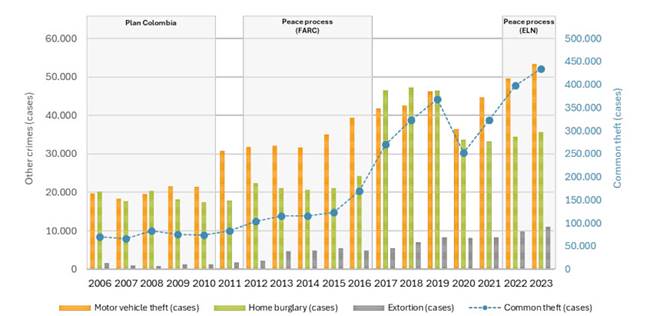
On the other hand, security threats generated by dissidents and criminal organizations started to migrate towards less noticeable and more profitable urban activities (Alvarez-Calderon et al., 2022), such as motor vehicle theft, common theft, home burglary, and extortion, producing a notable rise in cases and victims (Figure 4).
Source: prepared by the authors based on the information of the Colombian Ministry of Defence (2024).
Figure 4 Progression on day-to-day security threats in Colombia (2006-2023).
This figure shows that in the early years (during Plan Colombia), the incidence of car theft appears relatively stable, albeit with some increases. Later, there were fluctuations during the peace process with the FARC, but the general trend did not show a drastic reduction. A more pronounced increase has been observed in recent periods, which may be associated with the reconfiguration of criminal gangs and the greater sophistication of theft networks. This implies that car theft is highly lucrative for organized criminal groups. At the same time, the upward trend suggests the need to strengthen prevention strategies, utilize vehicle security technology, and implement more effective police action against organized crime networks.
Regarding home burglaries, a progressive increase is observed during the analysed period, with more pronounced growth in specific years. Although the armed conflict has decreased in certain regions, this type of crime may have increased due to the expansion of criminal structures in urban and peri-urban areas. This may be related to the displacement of criminal activities following the reduction in insurgent violence. Furthermore, strengthening community security strategies and improving the response capacity of local authorities is key.
As for extortion, this has historically been a crime linked to illegal armed groups. During Plan Colombia, figures appear to have remained at significant levels, possibly due to the presence of guerrillas and criminal groups financing their operations. Subsequently, following the peace process with the FARC, the reduction in the conflict did not translate into a drastic decrease in extortion; on the contrary, in some periods, there was an increase, suggesting that other actors occupied this space. In more recent years, extortion has remained at worrying levels, indicating that it continues to be a key financing mechanism for criminal gangs and dissident groups. This suggests that, despite the peace process, extortion structures have not disappeared but have diversified and been taken over by other organizations. Therefore, it is crucial to strengthen the protection of merchants and citizens, implement safe reporting programs, and reinforce action against extortion networks.
Finally, regarding common robbery, the figure shows a sustained increase in this crime over time, with some pronounced peaks at certain times. An apparent acceleration in growth is observed in the last period analysed, indicating that this crime continues to rise. It can be said that common robbery is linked to structural problems such as unemployment, the economic crisis, and the strengthening of illegal economies in certain territories. Furthermore, the high incidence of this crime impacts the population's perception of security, which can generate pressure for adjustments in public security policies.
The empty spaces left by Military Forces, and especially the National Police, have fostered a market for PMSCs to prevent, rather than tackle, day-to-day menaces to citizens. With this approach, PMSCs, on the one hand, have benefited from a spiral set of new transnational companies attracted to invest in Colombia that require a great range of security services (facilities guard, close protection for directives, armored vehicles). On the other hand, they profited from increasing public support, as private security has no negative perception, unlike military support tasks by PMSCs.
Hence, a significant expansion of PMSCs has occurred in Colombia since 2012, as various laws and governmental decisions have been implemented to address security and defence gaps by endorsing private companies. For instance, in Colombia, PMSCs are overseen by a governmental body known as the Superintendence of Surveillance and Private Security (SSPS). This organization is a technical agency of the national order, attached to the Colombian Ministry of Defence, with administrative and financial autonomy.
As established by Colombian law, the SSPS is responsible for exercising control, inspection, and supervision over the surveillance and private security sector to achieve the following objectives. 1) To improve the levels of security and public trust in the sector through coordinated action with different entities and state agencies, 2) To ensure that the rights and freedoms of the community are respected in the development of surveillance and private security activities, 3) To provide reliable, timely and real-time information for the State to make the decisions on policy formulation, regulation and inspection, supervision, and control related to surveillance services and private security, 4) To provide information, reliable and timely for users of surveillance services and private security, and 5) To deliver adequate protection to users of surveillance services and private security (Superintendence of Surveillance and Private Security, 2024b).
Although control over PMSCs has been established to ensure accountability, and the SSPS has made significant advances, a gap remains in access to public information about financial reports on the surveillance and private security sector. Indeed, in 2019, only 88% of private security and surveillance cooperatives, 88% of armoured vehicle leasing companies, and 97% of private security and surveillance companies submitted the financial and operational information required by law to the SSPS (Superintendence of Surveillance and Private Security, 2019). Similarly, the most current public information on PMSC personnel from the SSPS is dated 2016. PMSCs in Colombia pose significant challenges to governance, civilian control, and accountability. The lack of transparency in financial and operational information, as well as the possibility of links to illegal armed groups, are risks that must be addressed to ensure the country's security and stability.
The SSPS has structured its oversight on five areas: 1) Surveillance and security in all its forms, 2) Transport of values, 3) Armouring for surveillance and private security, 4) Community and special surveillance and private security, 5) Training in surveillance and private security (2024b), but it offers limited, and sometimes, inconsistent data about PMSCs’ development and status. These oversight areas suggest seven types of PMSCs in Colombia, as reported annually by the SSPS (Table 1); however, they do not provide an adequate typology to characterize PMSCs in Colombia and their capabilities.
Table 1 Types of PMSCs in Colombia (as coded by the Superintendence of Surveillance and Private Security)
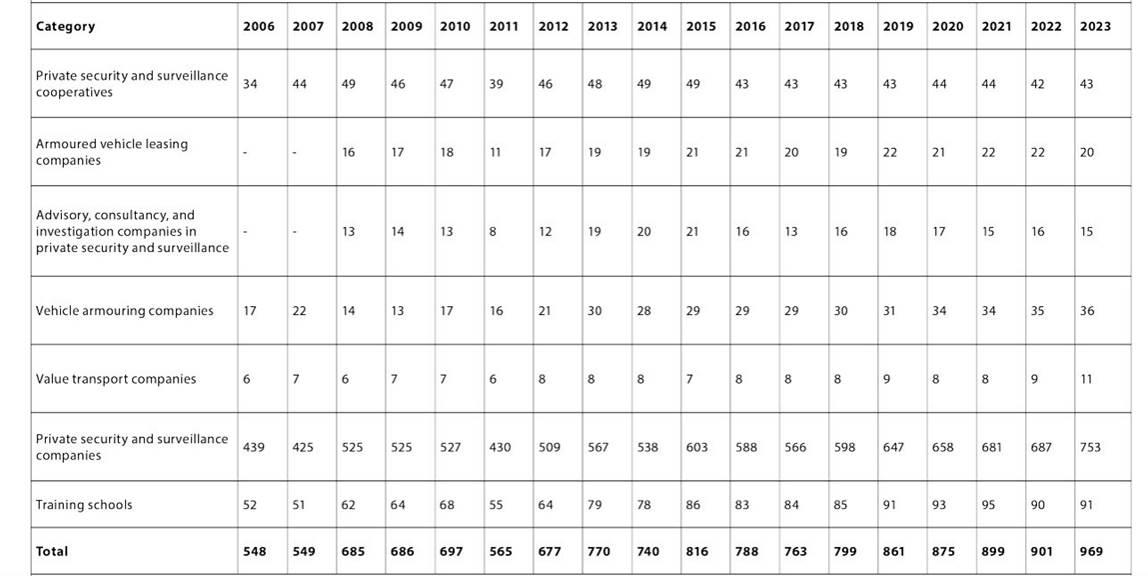
Source: prepared by the authors based on Superintendence of Surveillance and Private Security (2024a).
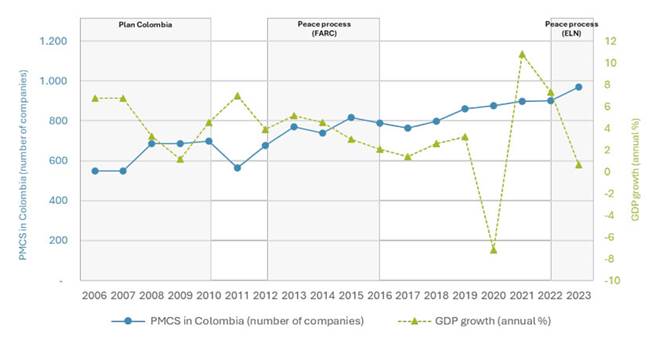
Figure 5 illustrates the relationship between the number of PMSCs in Colombia and the yearly GDP growth. Despite the deceleration of the Colombian Gross Domestic Product (GDP), the number of PMSCs has progressively increased, reaching 77% more in 2023 compared to 2006.
Source: prepared by the authors based on Superintendence of Surveillance and Private Security (2024a) and World Bank (2024).
Figure 5 Comparison of PMSCs in Colombia vs. GDP growth (2006-2023).
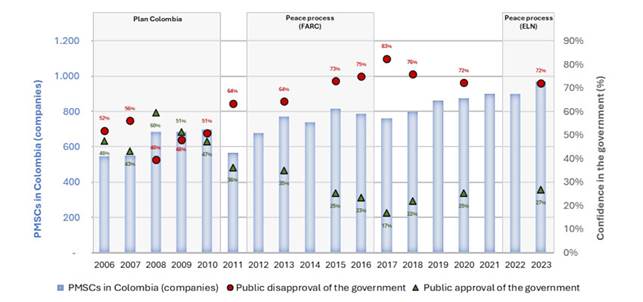
This phenomenon may be explained by the rise in the perception of insecurity in both central cities and rural towns and the generalized lack of confidence in the government and the judiciary system by the Colombians (Departamento Administrativo Nacional de Estadística, 2017; Meernik et al., 2021; Semana, 2018; Voyvodic, 2021) (Figure 6). Many companies and citizens have recognized PMSCs as a response to the lack of effectiveness in law enforcement; perhaps this is the reason why, within the sector, the private security and surveillance companies accounted for 84,4% of the sector’s total profits (3,8 million dollars) (Superintendence of Surveillance and Private Security, 2023).
This figure indicates that in the early years of the analysis, the number of private military and security companies (PMSCs) ranged between 600 and 800. Towards the most recent years (2022-2023), this number approached 1,000 companies, showing a substantial increase. In contrast, economic growth (as measured by annual GDP percentage change) exhibits marked fluctuations, with periods of strong growth and abrupt declines, particularly in 2020, when GDP declined by around 7% due to the pandemic.
On the other hand, a general upward trend in the number of private security companies is observed over time, with slight fluctuations. Likewise, during Plan Colombia, economic growth was relatively stable. However, during the peace process with the FARC, an inevitable slowdown was observed, which was exacerbated by the 2020 crisis. Subsequently, an economic rebound was followed by a further slowdown. Thus, the 2020 crisis coincided with a decline in GDP and subsequent recovery, while PMSCs continued to increase, suggesting that private security is a growing sector, regardless of economic crises.
The above highlights some implications. For example, regarding security and citizen perception, the increase in private security companies may be a response to rising crime or the perception of insecurity. On the other hand, regarding the privatization of security, although PMSCs complement the work of State forces, their uncontrolled growth could lead to excessive dependence on the private sector in security matters. Finally, regarding role differentiation, while the Armed Forces have a constitutional mandate, PMSCs operate for profit, which can generate differences in their conduct and priorities.
Regarding regulation and oversight, a clear regulatory framework and government oversight are necessary to prevent abuses and ensure that PMSCs operate within the law. Also, regarding competition with the State, if private companies offer better working conditions than State forces, this could lead to talent migration and a weakening of public security. Finally, regarding areas of operation, it is crucial to ensure that PMSCs are not exploited by illicit actors or that they operate in high-conflict zones with strict regulation.
Finally, regarding political and social factors, we can mention the legitimacy of the State in the sense that excessive growth in private security can raise doubts about the State's ability to guarantee order and citizen protection. Furthermore, there would be an impact on the monopoly of force if PMSCs operated with greater power than State forces in certain regions, which could lead to an imbalance in territorial control. Finally, regarding citizen perception, the growth of private security can be interpreted as a symptom of state weakness, which undermines public confidence in its institutions.
Source: prepared by the authors based on Superintendence of Surveillance and Private Security (2024a) and Latinobarometro (2024).
Figure 6 Comparison of PMSCs in Colombia vs. confidence in the Colombian government (2006-2023).
The figure shows the evolution of the number of private security companies in Colombia (PMSCs) and the level of trust in the government. Throughout the period analysed, the number of PMSCs has remained within a range between 600 and almost 1,000 companies, while trust in the government has fluctuated, with periods of increase and decline. First, a gradual growth in the number of PMSCs is observed, with some fluctuations. During the peace process with the FARC, the number of PMSCs remained relatively stable; however, in recent years, it has increased. On the other hand, trust in the government has varied significantly. In some periods, trust drops dramatically, while in others, it recovers.
Second, the increase in PMSCs could indicate a greater demand for private security, possibly due to a lack of trust in the State's ability to guarantee public safety. If trust in the government decreases, companies and citizens may turn to private protection services, which strengthens the private security market. In terms of regulation and oversight, the growth of the private security sector poses regulatory challenges, as these companies may operate under varying levels of state oversight. An uncontrolled boom could generate risks of unfair competition with the State, improper use of force, or illegal activities.
Finally, regarding political and social factors, the rise of private security in the context of changing trust in the government could reflect a crisis of state legitimacy in providing security. This could affect public perceptions of the State's monopoly on force, generating uncertainty about governability and institutional stability. This profitable sector presents a dilemma regarding the State's monopoly on violence. On the one hand, PMSCs erode the legitimacy of the Colombian Military Forces and the National Police to fulfill their constitutional mission and contradict the government’s decision on small arms. As Colombia restricted the ownership of self-defence weapons by citizens in 2017, the PMSCs have become the exclusive solution to address security and defence deficiencies; hence, the use of private contractors tends to displace the role of the State.
Consequently, the increased responsibilities of PMSCs in security have led to an increase in the number of PMSC personnel, which challenges the Armed Forces' manpower. Table 2 shows a high ratio between the workforces of the Colombian Armed Forces and PMSCs. In 2016, this ratio reached 1.97, which corresponds to one PMSC contractor for every two soldiers or police officers, a ratio similar to that experienced during the Gulf War (1:58) or in Iraq (1:6) (Avant, 2006).
Table 2 Comparison of PMSC personnel vs Armed Forces in Colombia
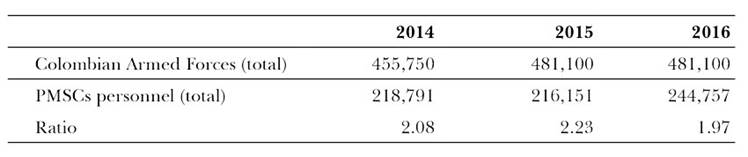
Source: prepared by the authors based on (Superintendence of Surveillance and Private Security (2019) and World Bank (2024).
This information gap, evidenced by the obsolescence of the 2016 data, is not merely an academic limitation but a symptom of a more profound transparency problem. As of March 2025, the authors of this article have filed two petitions with the Superintendency of Private Surveillance and Security, requesting updated figures on the number of operational personnel registered between 2006 and 2024, distributed by position and gender, but have yet to receive a response. The opacity of a public entity that oversees such a critical aspect of security is worrying and supports recent complaints from the Colombian government itself. These suggest that this lack of oversight and transparency may be benefiting illegal groups (Semana, 2025) and has allowed serious irregularities (Superintendence of Surveillance and Private Security, 2025), such as the existence of 62,664 weapons whose whereabouts are unknown (Rodríguez, 2025), but which are allegedly under the supervision of the entity. Therefore, the challenge lies not only in the numerical magnitude of the private sector but also in the alleged failures of governance and oversight of the very state institution designed to regulate it.
On the other hand, PMSCs offer flexibility in addressing security and defence challenges. They can recruit skilled personnel within demanding time, retain experts by offering high salaries, and mobilize or deploy bespoke forces at short notice. Additionally, logistics support and decision-making are enhanced for the armed forces due to reduced bureaucracy, and pension liabilities are minimized by utilizing fixed-term contracts. Moreover, PMSCs have a vast range of retired specialists who can offer their experience to support junior Armed Forces personnel, thereby helping to improve the effectiveness of the Military or National Police. Additionally, the increasing profitability of the surveillance and private security sector presents a stable option for unemployed soldiers or police officers whom criminal groups may tempt to participate in illicit ventures.
Likewise, PMSCs have a potential dual role in peacebuilding and reconciliation scenarios in Colombia, which must be managed responsibly to maximize opportunities and mitigate risks. On the one hand, strategic management could turn this sector into a catalyst for stabilization. For example, job retraining programs could be designed to incorporate ex-combatants, following a rigorous vetting process and certified training in human rights and international humanitarian law, into non-lethal security roles within PMSCs that meet high-quality standards. This would offer a stable employment alternative that competes with illicit economies. Additionally, PMSCs could be contracted to protect critical assets and infrastructure in post-conflict zones, such as oil pipelines or rural development projects, thus freeing up the security forces to focus on their constitutional functions of citizen security and territorial control.
On the other hand, lax or deregulated management carries the imminent risk of recreating failed phenomena of the past, such as the Convivir cooperatives of the 1990s, which ended up linked to serious human rights violations and the expansion of paramilitary groups (Acemoglu et al., 2013). The primary danger lies in the possibility that PMSCs could be exploited by economic elites or illicit actors to establish private security domains, thereby fragmenting the State's monopoly on force and generating new hotbeds of violence. The balance between opportunity and risk, therefore, depends on the implementation of a robust governance framework that goes beyond current oversight. Such a framework must explicitly define the limits of their action, allowing for protective roles but prohibiting their involvement in law enforcement operations, and require mandatory adherence to international codes of conduct, along with independent oversight that actively engages civil society. To identify the different types of PMSCs in Colombia, it is necessary to use an adequate typology. The following section presents a characterization model and provides some examples.
A TYPOLOGY FOR COLOMBIAN PMSCS
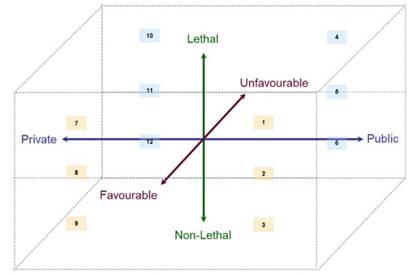
To characterize modern PMSCs in Colombia, the typology model proposed by Kinsey (2006) is employed but expanded to include a third axis. Figure 7 shows the structure proposed. Following Professor Kinsey, the axes are not intended to provide a quantitative measure but to estimate each component. The proposed typology enables PMSCs in Colombia to be classified based on their primary function, relationship with the State, and level of lethality. The vertical axis represents the "means of securing the object" in terms of lethality or non-lethality, and the horizontal axis represents the "object to be secured," depending on whether it is related to the public or private sector.
Source: prepared by the authors based on Kinsey (2006, pp. 10-11).
Figure 7 Typology of PMSCs in Colombia.
The third axis added to Professor Kinsey's model represents the public's support or perception of the object regarding favourability or non-favourability. As a result, the axes divide the plane into four quadrants. The front right-hand quadrant is divided into three parts (top, centre, and bottom, numbered 1, 2, and 3). It represents the PMSCs that offer security and defence services to the State, having the capability of lethal or non-lethal responses with favorable support from public opinion. In this sector, it may be localized PMSCs with non-lethal capability in charge of humanitarian demining, such as The Halo Trust, Humanity & Inclusion, Norwegian Popular Aid (APN), Colombian Campaign Against Mines (CCCM), Colombian Association of Technicians and Experts in Explosives and Fire Researchers and NBQR (ATEXX), Perigeo NGO, Danish Demining Group (DDG), and Polus Centre (Descontamina Colombia, 2019).
The rear right-hand quadrant is divided into three parts (top, centre, and bottom, numbered 4, 5, and 6) and represents the PMSCs that offer security and defence services to the State, having the capability of lethal or non-lethal responses, with less favourable support from public opinion. In this sector, companies such as DynCorp, Northrop Grumman, and Airscan are used to spread herbicides for coca crop eradication with airplanes and provide security for the operation. In Colombia, aerial fumigation has received much criticism due to the alleged carcinogenic effects of the chemical (glyphosate) used to destroy coca plantations.
The front left-hand quadrant is divided into three parts (top, centre, and bottom, numbered 7, 8, and 9). It represents the PMSCs that offer security and defence services to the private sector, possessing the capability for both lethal and non-lethal responses, with favourable support from public opinion. Companies such as Atlas Security, Vise Ltd., G4S Secure Solutions Colombia, Fortox, and Prosegur may be among the top 5 companies in this sector.
The rear left-hand quadrant is divided into three parts (top, centre, and bottom, numbered 10, 11, and 12) and represents the PMSCs that offer security and defence services to the private sector, having the capability of lethal or non-lethal responses, with less favourable support from public opinion. In this sector, companies such as Convivir and Spearhead Ltd. used to be located in areas where serious crimes were committed, negatively impacting Colombia's reputation.
This classification helps to understand the diversity of PMSCs and design more specific regulation and control strategies. The typology also has implications for regulating and controlling PMSCs in Colombia. Competent authorities, such as the SSPS, must develop regulatory frameworks considering the diversity of PMSCs and their distinct roles and activities.
CONCLUSIONS
The necessity of better and timely responses to global security challenges is undebatable, as is the slow and sometimes inadequate response of governments and international bodies to such tasks. The continuous emergence of PMSCs reflects profound changes in the relations within the international system and the strategic priorities of certain states and organizations. It is also a symptom of the influence of globalization and modernity that has been achieved during the present Century.
Companies' military and security services have taken an unexpected pace and direction; likewise, it makes a bet on the future of some armed forces that will decide to subcontract more activities than they do currently to ensure their dedication to accomplishing their mission. The Colombian experience with PMSCs offers valuable lessons for the international debate on privatizing security in modern conflicts, as the need for effective regulation, the importance of civilian control and accountability, and the challenges to peacebuilding are issues that must be addressed comprehensively to ensure the security and stability of countries.
This paper demonstrates how the evolution of PMSCs in Colombia exhibits peculiarities that distinguish it from the international experience. Although some authors consider companies' use in armed conflicts problematic (Toro & Macías, 2012), they are a source of skills and experience that can improve a security and defence scenario. On the one hand, companies can offer security and defence services more efficiently, quickly, and cheaply than the armed forces. This reduction in costs may favour states with limited defence budgets. Additionally, through training services, professionals with experience transfer knowledge and implement best practices in security and defence. On the other hand, the lack of appropriate control and oversight of PMSCs may lead to deviations from the assigned mission, ties with criminal organizations, or a lack of public accountability.
In Colombia, the SSPS is responsible for exercising control, inspection, and supervision over the surveillance and private security sectors; however, despite significant advances towards open accountability of PMSCs, further actions are still needed. For instance, the information available is incomplete and sometimes contradictory or missing; likewise, academia has focused its efforts on criticizing the already concluded Plan Colombia, overlooking the evolution of current PMSCs and the construction of a sound narrative on the topic.
To strengthen the governance and oversight of PMSCs in Colombia, it is imperative to move beyond generic recommendations and toward concrete reforms. First, to improve transparency, the reporting framework of the Superintendency of Private Surveillance and Security should be reformed, requiring companies to publish standardized, publicly accessible annual reports detailing not only their finances but also key operational data such as the number of contracted personnel, incidents of use of force, and contracts signed with state entities. This would close the information gap highlighted in this analysis. Second, to strengthen the institutional capacity of the Superintendency, an update to Decree 356 of 1994 is necessary, granting it greater sanctioning powers, including the immediate suspension of licenses for human rights violations, and an adequate budget to conduct unannounced on-site inspections rather than relying on self-declaration of documents. Finally, to foster practical and subordinate cooperation, the creation of formal liaison mechanisms is proposed, such as Joint Security Roundtables at the local level, where the National Police would lead coordination with certified PMSCs to share intelligence and optimize urban crime prevention strategies, always ensuring the primacy and control of the State. Only through these specific measures will Colombia be able to manage the growing private security sector in a way that strengthens, rather than erodes, security and democratic governance.

