




Services on Demand
Journal
Article
 text in
  English (pdf)
 Article in xml format
 Article references
 Automatic translation
 Send this article by e-mail
Indicators
-
 Cited by SciELO
 -
 Access statistics
Related links
-
 Cited by Google
 -
 Similars in
SciELO
Similars in
SciELO -
 Similars in Google
Share

 Permalink
Prospectiva
Print version ISSN 0122-1213On-line version ISSN 2389-993X
Prospectiva no.39 Cali Jan./June 2025 Epub Jan 01, 2025
https://doi.org/10.25100/prts.v0i39.14272
Original article
Approximation of Experiences of Care and Unpaid Work of Women Living in Rural Areas of the Regions of Antofagasta and Los Ríos, Chile

1Universidad Academia de Humanismo Cristiano. Santiago, Chile. Correo electrónico: lomuma@gmail.com
This article shows the relevance and characteristics of unpaid work and care work carried out by women in rural contexts. For this purpose, the research was developed from a qualitative perspective. For the information collection strategy, two rural areas in the northern and southern Chile were visited, where it was possible to collect stories about women's experiences from these localities, through biographical interviews. The research findings allowed us to find out the living conditions that women in rural territories have to deal with reproductive tasks and their possibilities of reconciling with paid work.
The study's conclusions show that women in rural areas are overburdened with work, with few governments support measures and co-responsibility for care. Likewise, visualize the particularities these territories possess to recognize their needs, problems, and challenges regarding care.
Keywords: Care; Rural territories; Unpaid work; Gender equality; Co-responsibility
Este artículo da a conocer la relevancia y características que posee el trabajo no remunerado y de cuidados que efectúan las mujeres en contextos de ruralidad. Para este objetivo, se desarrolló la investigación desde una perspectiva cualitativa. Para la estrategia de levantamiento de información se visitaron dos zonas rurales del norte y sur de Chile, donde fue posible recabar relatos sobre experiencias de mujeres de estas localidades, por medio de entrevistas de tipo biográfico. Los hallazgos de la investigación permitieron poner en evidencia las condiciones de vida de las mujeres en territorios rurales, para hacer frente a las tareas reproductivas y sus posibilidades de conciliación con el trabajo remunerado. Las conclusiones del estudio permiten observar la sobrecarga de trabajo que deben asumir las mujeres en contextos rurales, con escasas medidas de apoyo gubernamentales y de corresponsabilidad para los cuidados. Así también, visualizar las particularidades que poseen estos territorios para el reconocimiento de sus necesidades, problemáticas y desafíos en materia de cuidados.
Palabras clave: Cuidados; Territorios rurales; Trabajo no remunerado; Igualdad de género; Corresponsabilidad
1. Introduction
This research approached the care issue in rural contexts and the unpaid work carried out by women in these territories. An attempt was made to analyze the unequal distribution of domestic work that falls on women, whose causes are associated not only with the logic of the market but also with the economic, structural, social, and familial relations that are established at the local level (Durán-Heras et al., 2001).
This is how an approach to women's work was carried out in the territories where the research was carried out, showing its relevance in the history of rural indigenous communities. This is because the value of their work in rural contexts would still be invisible within the framework of patriarchal culture and capitalist relations, which benefit from the reproductive work of women (Federici, 2013). Therefore, it becomes relevant to value the contribution to women's care issues in rural contexts (Linardelli & Pessolano, 2021). The research also sought to highlight the importance of considering the territorial, ethnic, and cultural heterogeneity in Chile regarding paid and unpaid work, the need to recognize this diversity, and the particularities that rural contexts have.
The study seeks to contribute to the field of knowledge about care under the premise that the crisis of care and social reproduction (Durán-Heras, 2018; Herrera, 2011; Parella-Rubio, 2003) has highlighted the need to reorganize the forms of coverage of this care, to cover the diversity of contexts and situations that this involves. For this, care was defined as those reproductive tasks of daily management of one's and others' well-being, which encompasses essential activities for functioning homes and families where there is required availability to care for others (Camps, 2021; Durán-Heras, 2018).
In this regard, the research's theoretical perspective was oriented towards understanding the feminization of care problem and its underestimation at a social level, women's work overload, and the need for co-responsibility and conciliation policies (Camps, 2021; Durán-Heras, 2018; Pérez-Orozco, 2010). Also, taking as a reference the notion of “social care”, in which addressing the problem necessarily involves the participation of the State, market, civil society, and family (Daly & Lewis, 2000).
The study also determined the care's ethical perspective, from the notions of justice, cooperation, reciprocity, and democracy, as fundamental aspects to achieve the transformation of policies and social relations around care issues (Camps, 2021; Durán-Heras, 2018; Gilligan, 2013; Pérez-Orozco, 2010; Tronto, 2013). In this regard, feminist theorizations have deepened the understanding of gender inequalities, linking them with the precariousness of women's reproductive work and gender norms (Butler, 2009).
A qualitative methodology was applied to the study, with biographical interviews (Bertaux, 2005), which allowed a comprehensive approach to the observed reality and assessed the possibility of delving into the study territories.
The results show that the overload involved in women's paid and unpaid work in the study locations becomes a risk factor as important as discrimination or social exclusion (Durán-Heras et al., 2001). This is relevant because the overload that women experience in these contexts due to the unequal distribution of domestic and care work can have negative consequences on their health, autonomy, and economy (International Labor Organization [ILO], 2019; International Labor Organization [ILO] & United Nations Development Program [UNDP] 2009; United Nations Development Programme [UNDP], 2010, 2014). Faced with this, men in the domestic sphere must participate more to reduce this burden of workload (Durán-Heras, 1986).
The research findings also made it possible to demonstrate the need to avoid homogenizing the experiences and practices of women in the field of care; that reason is why it becomes essential to integrate the notion of intersectionality for the understanding of the social and/or cultural variables that are decisive for care and in turn they affect the women life circumstances in rural contexts (Muñoz-Cabrera, 2011; Parella-Rubio, 2003). Therefore, the results allowed us to recognize the heterogeneity and particularities of care in rural territories and the importance of situated experiences for understanding their social and cultural organization (Jacob et al., 2021; Leavy, 2019). Likewise, to recognize the importance of the political and ideological perspective to interpret and intervene in the territories from a situated social context and the generation of a purposeful opinion (Riera-Vázquez & Fabré-Machado, 2023).
Finally, the study shows the need to move towards a paradigm shift and a reinterpretation of care, understanding it as a public value (Camps, 2021; Durán-Heras, 2018; Pérez-Orozco, 2010). This underlines the importance of co-responsibility and conciliation policies based on an ethic of care (Camps, 2021; Durán-Heras, 2018; Pérez-Orozco, 2010).
Although Chile has been making progress in public policy and care, it is concluded that it still requires a process that integrates the diversity of situations and territorial contexts8.
2. Methodology
In this research, a strategy based on the biographical perspective was implemented (Bertaux, 2005; Bourdieu, 1986), specifically through biographical or narrative interviews (Bertaux, 1980; Denzin, 1970; García-Ferrando et al., 1986; Pujadas-Muñoz, 1992; Valles, 1999). This is due to its pertinence in gathering stories and knowledge about the study problem and, particularly, in revealing present aspects of the sociocultural and sociostructural relationships that may affect rural territories' quality of life.
Regarding the study unit, a description of the criteria that guided the selection of the interviewees is presented below, with the purpose that this study can account for some of their social, family, work, and contextual characteristics relevant for their subsequent analysis and interpretation, also accounting for the participants profile, from a territorially situated perspective, giving importance to the logic in which care is deployed at the local level (Cazorla-Becerra & Gamboa-Morales, 2023) (Table 1).
Table 1 Study Unit Characterization*.
| Name | Age | Resides in | Education level | Works in | Lives with | She takes care of | Performed domestic work (DW)** |
|---|---|---|---|---|---|---|---|
| Irene | 38 | Toconao | Elementary school | Family hostel | Sons/Daughters | Sons | Unpaid family work |
| Valentina | 61 | Yaye | Elementary school | Merchant | Sons/Daughters | Grandchildren | Housework, PW outside home. |
| Daniela | 60 | Río Grande | Elementary school | PDW | Daughter | Daughter | UNPDW in her home and other homes |
| Victoria | 47 | Toconao | High School | Housework | Son | Son | UNPDW & care in her home |
| Paula | 45 | San Pedro A | Middle School | Housework | Parents | Father | UNPDW & Care |
| Lucía | 68 | San Pedro A | Elementary school | Family hostel | Sons | Grandchildren | Unpaid family work |
| Ana | 58 | Machuca | No studies | PDW | Sons/Daughters | Sons | UNPDW in her home and other homes |
| Gabriela | 56 | Quitor | Middle School | Family hostel | Son | Son | Unpaid family work |
| Mariana | 72 | El Manzano | Elementary school | Housework | Parents | Parents | UNPDW & care in her home |
| Carolina | 69 | Huapi | Middle School | Dependant | Sons | Parents | Housework, PW outside home. |
| Katherine | 42 | Chaihuín | Elementary school | PDW | Daughters, father | Daughters, father | UNPDW in her home and other homes |
| Ximena | 35 | Cadillal | High School | Independent | Daughter/mother | Daughter/mother | Housework, PW outside home. |
Source: own elaboration 2024. (*Table abbreviations: DW domestic work, PDW paid domestic work. UNPDW unpaid domestic work. PW paid work. **Classifications defined based on the typologies of unpaid domestic work proposed by the National Time Use Survey in Chile ENUT (Instituto Nacional de Estadísticas [INE], 2016).
It should be noted that the interviewees' names were modified to protect their anonymity.
Therefore, it is necessary to mention that the fieldwork in Chile's northern and southern areas was part of a broader process of doctoral research between 2018 and 2023. Therefore, the phase that includes this research mainly focuses on collecting experiences of unpaid domestic work and care and learning about the life circumstances of women in rural territories and the strategies they must implement for family support.
At the beginning of the fieldwork, it was decided to explore the northern area, specifically in the San Pedro de Atacama commune, located 100 kilometers from Calama, Antofagasta Region. Figure 1 below presents a general map of the northern area.
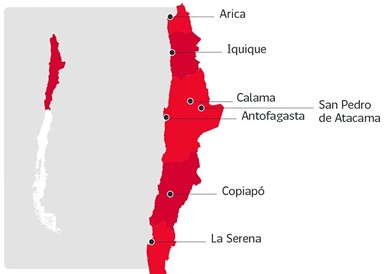
It should be noted that within the San Pedro de Atacama commune, interviews were conducted in the following localities: San Pedro, Quitor, Yaye, Río Grande, Machuca, and Toconao. A description of the localities is presented below. (Table 2)
Table 2 Characterization of the northern zone localities.
| Category | San Pedro de Atacama | Rural localities (Quitor, Yaye, Río Grande, Machuca, Toconao) |
|---|---|---|
| Population | 5,436 inhabitants (INE, 2017) | 1,700 inhabitants (INE, 2017) |
| Distribution by sex | Men: 52%, Women: 48% (INE, 2017) | Men: 51%, Women: 49% (INE, 2017) |
| Dependency rate | 58.7% (INE, 2017) 13.8 points over the country's dependency ratio of 44.9 | 66.7% (INE, 2017) 21.8 points over the country's dependency ratio of 44.9 |
| Indigenous peoples | 20% Lickanantai (INE, 2017) | 45% Lickanantai (INE, 2017) |
| Educational level | High School: 80%, University: 30% (Ministry of Social Development and Family [MDSF], 2020) | Elementary: 60% High school: 20%, University: 5% (MDSF, 2020) |
| Average monthly income | CLP 400,000 (Banco Central Chile, 2019) | $250,000 CLP (Banco Central de Chile, 2019) |
| Main sources of employment | Tourism: 60%, Trade and services: 30%, Agriculture and crafts: 10% (Banco Central de Chile, 2019) | Agriculture: 40%, Livestock: 30%, Crafts: 20%, Seasonal tourism: 10% (Banco Central de Chile, 2019) |
| Health infrastructure | 1 primary health center, (Ministry of Health [MINSAL], 2021) | Health posts in Toconao and Río Grande (MINSAL, 2021) |
| Educational infrastructure | 4 schools, 1 technical high school (Ministry of Education [MINEDUC], 2020) | Primary schools in Toconao and Río Grande (MINEDUC, 2020) |
| Access to basic services | 90% with access to drinking water, electricity, and sewage (Ministry of Housing and Urban Development [MINVU], 2020) | 50% with regular access to drinking water and electricity (MINVU, 2020) |
| Poverty rate | 15% (MDSF, 2020) | 30%-40% (MDSF, 2020) |
| Socioeconomic level | Middle (MDSF 2020) | Low (MDSF, 2020) |
| Housing conditions | Variety: adobe bricks and modern (MINVU, 2020) | Mostly adobe bricks, limited access to essential services (MINVU, 2020) |
| Service dependency | Basic access to health and education (Gobierno Regional de Antofagasta, 2020) | They depend on San Pedro de Atacama for services (Gobierno Regional de Antofagasta, 2020) |
Source: own elaboration 2024.
Subsequently, based on the reflections made after this first approach to fieldwork, the need arose to continue the research in the south of Chile to recognize whether the logic in which care and reproductive work are organized, which are present in the rural sectors of the north and south, are expressed in similar ways.
The research was continued with interviews in the southern part of the country, specifically in the commune of Corral, located 64 kilometers from the city of Valdivia, the provincial capital of the Los Ríos Region, to carry on the fieldwork. Below, in Figure 2, a general map of the southern area is presented.
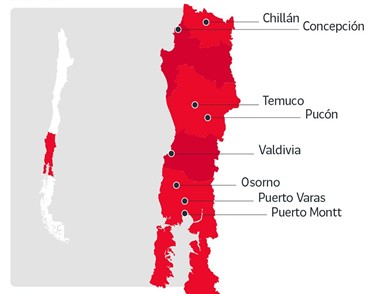
Within the commune of Corral, interviews were conducted in the rural localities of: Chaihuín, Huapi, El Manzano and El Cadillal. A description of these localities is presented below. (Table 3).
Table 3 Characterization of the southern zone localities.
| Category | Corral | Chaihuín, Huapi, El Manzano and El Cadillal |
|---|---|---|
| Population | 4,022 inhabitants (INE, 2017) | 1,800 inhabitants (INE, 2017) |
| Distribution by sex | Men: 50.5%, Women: 49.5% (INE, 2017) | Men: 51%, Women: 49% (INE, 2017) |
| Dependency rate | 58.7% (INE, 2017) | 66.7% (INE, 2017) |
| Indigenous peoples | 15% Mapuche-Huilliche (INE, 2017) | 30% Mapuche-Huilliche (INE, 2017) |
| Educational level | High School: 75%, University: 20% (Ministry of Social Development and Family [MDSF], 2020) | Elementary: 60% High school: 25%, University: 5% (MDSF, 2020) |
| Average monthly income | $350,000 CLP (Banco Central Chile, 2019) | $200,000 - $250,000 CLP (Banco Central de Chile, 2019) |
| Main sources of employment | Tourism: 40%, Artisanal fishing: 30%, Trade: 20%, Agriculture: 10% (Banco Central de Chile, 2019) | Subsistence agriculture: 50%, Livestock farming: 20%, Marine product gathering: 20%, Seasonal tourism: 10% (Banco Central de Chile, 2019) |
| Health infrastructure | 1 Hospital, one primary health center, (Ministry of Health [MINSAL], 2021) | Health rural posts in Chaihuín and Huapi; limited access in El Manzano and El Cadillal (MINSAL, 2021) |
| Educational infrastructure | 1 elementary school, 1 high school (Ministry of Education [MINEDUC], 2020) | Primary schools in Chaihuín and Huapi; limited access in El Manzano and El Cadillal (MINEDUC, 2020) |
| Access to basic services | Good access to drinking water, electricity, and sewage (Ministry of Housing and Urban Development [MINVU], 2020) | 40% with regular access to drinking water and electricity (MINVU, 2020) |
| Poverty rate | 15% (MDSF, 2020) | 30%-40% (MDSF, 2020) |
| Socioeconomic level | Middle (MDSF 2020) | Low (MDSF, 2020) |
| Housing conditions | Variety: adobe bricks and modern (MINVU, 2020) | Mostly adobe bricks and wood, limited access to essential services (MINVU, 2020) |
| Service dependency | With access to health and education services (Gobierno Regional de Antofagasta, 2020) | They depend on Corral for better health and education services (Gobierno Regional de Antofagasta, 2020) |
Source: own elaboration 2024.
Regarding the information analysis strategy, following Valles (1999), it should be specified that the composition of the story considered for this research is not subject to the process of forming a life story. In this sense, the author emphasizes the difference between “life stories analyzed and presented “thematically” from the stories treated preserving the body of the cases” (Valles, 1999, p. 243). For this research, the analysis of the stories was of a thematic order, giving rise to the dimensions in which the presentation of the results is structured to be constructed and organized based on the emerging themes (Mieles-Barrera et al., 2012), also extracting literal fragments of the narrative, in order to generalize themes based on the selected texts (Negre-Rigol, 1986).
3. Research findings
A summary of the results obtained for the main emerging themes is presented below as a basis for analyzing the construction of their empirical definition and considering integrating elements from the theoretical-bibliographic review. These results represent the main themes that the interviewees associate with domestic and care work within the framework of their life experiences.
3.1 Women caregivers in rural contexts
With regard to this first topic, it was observed that women continue to be primarily responsible for reproductive tasks, thus having less time available than men, whether or not they work outside the home (Durán-Heras, 2018; INE, 2016). It is worth mentioning that although caregiving activities are usually based on affection and emotions, they are still a job that requires excellent listening skills, perception, and skills to overcome situations (Durán-Heras, 2018; Pérez & Llanos, 2017; Pérez-Orozco, 2010; Villalba-Quesada, 2002).
Faced with these care needs, family and community networks become indispensable. The response adopted by communities has been to turn to direct or extended family members to care for the dependent, mainly run by women. In this case, the networks made possible by the extended family meet the needs for family protection through the exchange of help, which has overlooked the need for outsourcing of care services, which are covered by women (Flaquer, 2004), as is the situation of the interviewees.
This leads us to think about the necessary restructuring of the socioeconomic system and the integration of the gender perspective as a fundamental analytical category (Pérez-Orozco, 2021), facing the lack of social support measures, with family proximity being, in this case, what defines the possibilities of care (Economic Commission for Latin America and the Caribbean [ECLAC], 2012; Flaquer, 2004; Villalba-Quesada, 2002).
In this context, women feel that they have given up on developing aspects of their lives, such as forming their own family, searching for work or professional options, and giving up these options in favor of caring for elderly parents or dependent relatives. In this sense, the interviewees from the older age group relate how they have dedicated a large part of their lives to care work.
Yes, I never got married. I am single. I never had children; I never had a husband because I had to take care of my parents, both died at eighty years old. (Mariana, personal communication, March 4, 2019)
In this regard, the interviewees' stories make visible how the social protection of the family is primarily supported by women's unpaid work, delegating to them the responsibility of caring for the family and dependent persons (Arriagada, 2007). Likewise, in the stories, an exhaustion associated with this way of life becomes visible. Even in the case of the youngest interviewees, this situation is replicated, an experience shared to this day.
My mother is 74 years old, and my daughter is 12 (…). I take care of all my mother's things, all my daughter's things, I take care of my house financially… I tell my brothers that I have no life… I'm not the only one who goes through this, especially here, because many women have been left taking care of their parents and without time to have children. (Ximena, personal communication, February 25, 2020)
Within the framework of this analysis, it is possible to point out that the care of dependent persons should be addressed as an issue of social responsibility and protection of individual rights and necessarily seen as a commitment assumed between families, community, market, and State (United Nations General Assembly, 1999).
The problem is that care continues to be understood as an activity that falls within the private sphere of families. It is perceived as a consumer good rather than a social right essential for vital development (Batthyány, 2015; Pérez-Orozco, 2010). An example of this is the situation experienced by the women interviewed, who are practically entrusted with all the care responsibilities.
3.2 Intergenerational transmission of knowledge for care
Regarding this topic, the interviewees come from hard-working families who have traditionally dedicated themselves to fishing, farming, raising animals, and artisanal work such as weaving. In the older interviewees' stories, it is possible to observe their knowledge and experiences about work and agriculture, which have prevailed in their families for generations.
We planted, made a vegetable garden, and planted lots of potatoes. Everything was for home consumption because I learned that and liked to work. (Mariana, personal communication, March 4, 2019)
Here we do the planting, although a little, we have a greenhouse, vegetables… The same things from the sea that one does not buy, one goes to the sea to grab them (Carolina, personal communication, February 27, 2019)
Many of the lessons learned from childhood reflect the transmission of values and practical knowledge that boys and girls receive from their elders, usually from women in the family. In learning these activities and practices, it is also observed that although boys and girls learned how to cultivate the land and raise animals from a young age, girls were mainly taught cooking, cleaning, and other household chores. Faced with these practices that reflect patriarchal social structures, the integration of a collaborative logic for care becomes complex, thereby perpetuating structures of oppression for women (Díez, 1999; León, 1995; Martínez, 1995).
On the other hand, it should be noted that for many families, girls and boys learning traditional community trades from a young age was extremely important, even as much or more than learning formal education. This is because many trades are essential for survival in rural contexts.
I grew up with my grandparents, and they taught me to work; that is it! That I had to earn a living by working. So, I started working as a little child. I didn't know what it was like to have a childhood or adolescence, and nothing. My life was very fast. (Katherine, personal communication, February 26, 2020)
This is how the older age group interviewees mention their experiences of working since childhood and then in the company of their children, which are linked to family subsistence, often in adverse conditions.
Working in the sea with my children when they were little, they were probably five years old, and they would accompany me to the seaweed recollection… We took tents, everything, with their beds and I went with my little ones like that. One year, I suffered a lot because they got sick; I would leave one sick kid and then the other, and so on. (Carolina, personal communication, February 27, 2019)
Working since childhood is a situation that is also replicated in the younger age range interviewees.
I have always worked; I was ten years old when we collected "luga," we took out little shells and clams and sold everything. (Katherine, personal communication, February 26, 2020)
As the interviewees mentioned, boys and girls were involved from a young age in planting, harvesting, and fishing tasks, among others, and in particular, girls had to help their mothers with household chores and some care tasks.
To this, the interviewees comment that the responsibilities of work, household chores, and care that they had to assume from a young age caused an entire generation of women in their localities not to have access to formal education, except for very few exceptions in the case of younger women.
Women were like their mothers' helpers, and at 12, they stopped studying… before that, I think that no one studied, no woman. I think that we were the exception in continuing to study. (Ximena, personal communication, February 25, 2020)
These stories undoubtedly lead us to reflect on how justice, cooperation, reciprocity, and democracy acquire special relevance concerning care from a feminist perspective (Camps, 2021; Tronto, 2013). Therefore, these principles must be the basis for a more equitable and supportive society for women (Durán-Heras, 2018; Gilligan, 2013; Pérez-Orozco, 2010).
Likewise, the interviewees comment that today, the role of women has been changing; the artisanal and culinary work they do has been valued, which has become a source of work and, in turn, a way of preserving the knowledge and trades that have prevailed in their rural Indigenous communities for generations.
Yes, they respect it much more now. They respect the food and fabrics the girls make, which is an option for work. There are works with "coirón" that, apart from being for the home, are a job for the people; they can be sold with added value because a Mapuche person made them. (Ximena, personal communication, February 25, 2020)
From these narratives, it is possible to recognize the knowledge and strategies women have had to implement to sustain their families' material and food needs. Based on these experiences, it is necessary to recognize these women's significant contributions by preserving knowledge and practices necessary for care, such as security, food, and health (ECLAC, 2007).
In this context, social protection for women becomes necessary, recognizing that gender inequalities constitute social determinants that undermine their quality of life and health (ECLAC, 2007). This also highlights the role played by Indigenous women in rural contexts in care tasks, as well as their right to be cared for (Mendoza-Mendoza et al., 2021), where the rural environment is also seen as a space for environmental conservation and with productive capacity (Querol-Vicente et al., 2020).
3.3 Migration from rural areas
A problem that has long affected communities in rural areas has been the migration of children and young people for study and work. Due to the remoteness of these areas, children and young people must travel to access formal education, which has meant separation from their families. This represents a problem that families in rural areas in the north and south have had to face for generations, and this has resulted in family disintegration, estrangement of children, and uprooting, among other problems. Furthermore, it is common that, once they have finished their studies, young people do not return to the area and remain in the cities to continue their studies or to opt for better jobs.
Although access to education has not changed completely, some measures have been implemented in the town, such as improved transportation. Similarly, even the younger women interviewed experienced these difficulties in accessing education, as some recall.
I could not see my mom for months; imagine 12 years... she would come to look for me for 3 weeks during the holidays. (Ximena, personal communication, February 25, 2020)
Once they had finished their basic studies in the town, they had to emigrate to continue their secondary education, which is a practice that continues to occur in the town.
Before, we were a whole family; we all lived here together, and we were happy with this issue of distance… Of course, because the education in San Pedro is bad… I also sent the eldest to Antofagasta, but he returned because he couldn't adapt; he suffered panic and anxiety. (Victoria, personal communication, March 3, 2018)
Another aspect mentioned by the interviewees is that migration makes it very difficult to transmit their Indigenous culture between generations, as well as to educate and develop values for children and young people in their territories and to create support networks for care.
People have to emigrate, which many do not want, but it has to be done. I spent a long time living in Calama raising my children, but if they had had access to everything while here, we would never have needed to leave in the first place. (Valentina, personal communication, February 7, 2019)
Likewise, most young people who emigrate to access education do not return to the town.
The youngest emigrate to study or for work... we take them to the city, but most of the time, they do not return. (Valentina, personal communication, February 7, 2019)
The interviewees report that, in the case of the young people who remain in the town, the working conditions they can access are extremely precarious, with the summer being the only time when it is possible to develop other types of activities mainly linked to tourism. The interviewees from the younger segment commented that this situation continues in the town, with few job prospects for the younger generations.
A massive group of teenagers stay here and wander around; they work collecting seaweed, and in winter, they fish for shellfish on the shore… Everything is overexploited. Because there are not many jobs here, in the summer, there is work, but it is also very short. (Katherine, personal communication, February 26, 2020)
Adult men must also migrate from rural areas to access work sources in other cities, remaining away from home for long periods or sometimes permanently. The stories of the older interviewees give an account of the role of men and how their migration for work reasons has affected the families in the areas. This leaves women in charge of all the work of caring for and supporting the home.
Then, my husband went to work in the south, and I stayed here with my son and the twin girls. (Carolina, personal communication, February 27, 2019)
This theme is also represented in the story of one of the youngest interviewees, who refers to the roles of men and women and the limited possibilities of formal work.
Here, the women dedicate themselves to knitting and household chores; when you get married, you stay as a householder, and the men go out to work. Here, there is no stable job with a salary, nothing. There is no social security or health care; only a few formal jobs are here. (Katherine, personal communication, February 26, 2020)
For their part, some women in the area also find it necessary to migrate. Regarding this, the interviewees comment that migration to the Metropolitan Region to work in private homes is a work option, even offered by the employment offices closest to their towns.
We went to the social worker in Valdivia, and she asked us if we wanted to work. I have several possibilities to work, but in Santiago as a nanny. I remember it was a lot of money, something I would not have worked in Valdivia. (Ximena, personal communication, February 25, 2020)
On this point, it is possible to observe that migration also affects younger women in rural areas, who see migrating to the capital to do household work as a viable option and thus gain access to better income, compared to the possibilities they can choose in their area. For this reason, it is common for many women who work in the capital as domestic workers to come from rural areas in the south and north of the country, generally being women from Indigenous and/or rural communities with little access to resources and services of all kinds in their area, in addition to conditions of poverty or precarious employment.
These situations are indeed related to the crisis of care and social reproduction (Herrera, 2011) that is experienced primarily in cities, and also reveals the importance of talking about care when we talk about globalization, development, and migration, also understanding that care would be the invisible basis of the current socioeconomic system (Pérez-Orozco, 2010).
3.4 Forms of work for subsistence
The interviewees comment that in the areas where they live, many women spend a large part of their time on agricultural work and crafts to survive. These jobs involve great physical strain. In some cases, they also do domestic and care work for other households. The older age group interviewees describe how women have experienced these situations in the area for generations.
My mother, with the money she earned as a fisherwoman catching shellfish, sea urchins, and everything else, there was so much abundance that they loaded their boat and went to Valdivia rowing to sell. (Mariana, personal communication, March 4, 2019)
I never lacked work; I always looked for someone to work for; I took care of children, washed, ironed, and cooked. (Daniela, personal communication, February 14, 2018)
They also describe how this exhausting and effortful work affects women's health.
My mother was the one who got sick; she got a cold, one of those intense illnesses like pneumonia, because she worked a lot at sea under those downpours. (Mariana, personal communication, March 4, 2019)
I have been working since I was 14. I have never stopped, but I got sick. I have been raising animals for many years now. (Daniela, personal communication, February 14, 2018)
In the same way, they also relate how this type of work has allowed them to generate resources for the family's subsistence.
When I have to take things out of the sea, I take things out of the sea. I take out "luche", seafood and everything when I have to sell. (Carolina, personal communication, February 27, 2019)
This lifestyle causes wear and tear on women's health, and despite this, they must continue working because their subsistence depends on these activities. Jobs that they must keep even though they are not entirely compatible with their health situation, as one of the older age group interviewees relates.
I even told my oldest son not to come and told me not to work because I would stop working when I couldn't anymore. I also have illnesses I have thyroid, diabetes, cholesterol, high blood pressure, and hyperthyroidism. (Carolina, personal communication, February 27, 2019)
About these subsistence strategies, some women have managed to generate family businesses around tourism by renting cabins during the summer and preparing food in kitchens and restaurants as seasonal options in the face of the scarce job opportunities in their localities. In this sense, women of different age ranges agree that they are the ones who have generated their own employment strategies and businesses linked to tourism.
Apart from taking care of the house, I also work taking care of the family hostel... There are opportunities in tourism, and women have hostels and kitchens to work with their children. (Gabriela, personal communication, February 13, 2019)
One of the interviewees comments that this has led to tremendous respect and appreciation for the tradition of weaving and crafts in her area, where younger women have taken on leadership roles at the local level.
Now, one has the right to speak, give one's opinion, and be a leader. In my case, I am the president of the indigenous community; there is a female president of the fishermen's union, so now women are respected and valued regardless of whether they are Mapuche or not. (Katherine, personal communication, February 26, 2020)
The stories given by the interviewees on this topic highlight the importance of recognizing the role those Indigenous women and girls play in preserving life and subsistence in rural areas (UN Women, 2020). This shows a pending task on the State's part in safeguarding access to sources of work and an adequate quality of life level for women and families in rural areas of the country.
3.5 Resources and essential services in rural contexts
In the accounts of the interviewees, it is possible to observe how their daily lives are affected by the difficulties in accessing essential services, especially in health, as well as the scarcity of material resources and food. This is because these supplies and services are not accessible in their area, and those that are available are accessed insufficiently. For this reason, they still have to travel long distances to obtain what they need or access health care. They comment that life in their localities continues to be very difficult since these accessibility conditions have not changed sufficiently over time.
One of the older age range interviewees commented on her experience and difficulties in accessing health care, medicines, and transfers to care for her mother.
I sometimes went out, and I had to go to Valdivia to buy something for her (her mother), medicines, and other things. Yes, I had to go out because I arrived there on foot or on horseback. There was no transportation. It took me a whole day to get to Valdivia. I arrived with all my feet blistered. (Mariana, personal communication, March 4, 2019)
Another of the younger segment interviewees corroborates this situation by commenting on the experience lived by her mother in this regard. Although this has changed mainly with access to transportation, the services are still far from the town.
My mother had to make long walks, up to 8 hours, to get to Corral to buy necessary things. Usually, it was done on horseback or by boat, but... it was super difficult. (Ximena, personal communication, February 25, 2020)
In this context, women in the older age groups highlight the difficulties of access to health and medical check-ups that older adults in the town experience, mainly due to the distance from the services.
Let us think that the people who go from here to Calama are an hour's journey, and without considering the people who are from the outskirts of the town... imagine that they are primarily grandparents who live on the outskirts; if they get sick, they have no choice but to walk. (Valentina, personal communication, February 7, 2019)
In the case of one of the younger interviewees, they have difficulty accessing health services for medical check-ups for their sons and daughters.
Well, here, the health part is tricky. One of my children got very sick; I had to travel to Antofagasta because there were no specialized doctors in Calama. In that part, it has been difficult for me to get an education and maintain good health. (Victoria, personal communication, March 3, 2018)
In this theme, being unable to count on sufficient education and health services in their territories has greatly affected families. There are sectors of the towns where there is still no transport, and where it is available, it is scarce. One of the younger interviewees commented on the difficulties of accessing education due to distance.
Of course. In our case, while the children were in school, we would drop them off; in the winter, they went to a boarding school because it was too far away. (Katherine, personal communication, February 26, 2020)
Another of the interviewees mentions the consequences of the difficult access to health in the town.
… enormous sacrifice with a sick child; many times, the children died on the way. They had to get to Corral and, from Corral, refer them to Valdivia. (Ximena, personal communication, February 25, 2020)
Likewise, the interviewee comments on the difficulties she and her brother faced in their childhood in accessing education.
To go to school on long weekends, my brother would get together with a group and walk 8 hours to get home to see his family and return on Sunday. From the age of 6-8, I no longer lived constantly with my mother; that is, permanently, I was either in boarding school or studying. (Ximena, personal communication, February 25, 2020)
Based on these situations, the interviewees perceived the discontent with public institutions and the lack of state protection regarding their localities.
So we are living in these situations; the government does not take care of us, our town is changing for the worse, and they no longer respect us as a community. (Ana, personal communication, February 8, 2019)
These facts mentioned by the women show that policy measures have not accompanied the needs of families per their demands. This is why a series of public policy measures should be considered aimed at the social inclusion of rural sectors, whose demands remain little visible, to facilitate families' access to newly created policies (Moreno-Mínguez & Acebes-Valentín, 2008).
3.6 Mutual help for care
The scenario of scarce public aid and services discussed in the previous section has led communities to resolve part of their problems based on the social help they provide each other. Communities are used to supporting each other and providing mutual help in the face of care needs, among others.
The sports club collects money and food when something happens, such as someone dying or falling ill. This is more important because to ask for help outside (municipality), you have to do much paperwork, move a lot of paperwork, and go out. (Carolina, personal communication, February 27, 2019)
It should be added that in the face of these unmet needs at a social level, the communities of the localities have created their own support network for care and economic and food supply around fishing, agriculture, and other economic activities that are carried out in the sector. They feel that the community is a space of protection; in particular, women tend to help each other. In this regard, it is relevant to point out here that, although there is participation of men and women in these processes, the representation of women is significantly more significant, especially in the organization and leadership that they play when it comes to generating instances of care and networks of mutual aid at the level of their communities. In this context, the burden on women regarding family care and care of dependent persons becomes noticeable (Arriagada, 2007; Durán-Heras, 1986). The above is expressed in the story of one of the interviewees.
Of course, we support each other. There is a young in the town who works to help her home... She is the head of the household because her husband left her... We all have the habit here of helping out with anything. (Carolina, personal communication, February 27, 2019)
The younger age interviewees also agree on how important it has been for the community to create support and collaboration networks that allow them to meet the needs they face in the territory, helping each other:
Of course, if you need it, there is a network here. In that sense, if someone gets sick, everyone is always there, whether it is your family or not. (Katherine, personal communication, February 26, 2020)
On the other hand, one aspect that has impacted this sense of mutual help has been the arrival of tourism in their sector. The women comment that some traditions have been lost in the town since the arrival of tourism, commercialization, and the use of money. They comment that until recently, in their communities, bartering and solidarity help coming from the affection and sharing between neighbors prevailed, especially around farm work. They mention that although tourism has contributed to generating economic resources in the sector, this has led to people becoming more uprooted and individualistic.
People are becoming more and more individualistic… Before, everything was free, and it was a favor and affection at the bottom; now, everything was for money. It was lost like… like that, like kindness, affection for the neighbor. One is becoming uprooted. (Ximena, personal communication, February 25, 2020)
The interviewees commented that the above would respond to a recent phenomenon since their memory of their territories is of union, solidarity, affection, and sharing what one has with the community.
The same people here used to be super affectionate; they would invite you to their house. We never lack anything… but with very few people, it happens. It was like a barter of things, but now it does not. (Ximena, personal communication, February 25, 2020)
On this point, there is agreement in the interviewees' perceptions from different age groups when referring to the exacerbated openness to tourism in the town.
You walk down the street and see only tourists... there was some grazing animal husbandry here, and now less and less, and we are even losing that way of life... tourism is destroying their animals. (Paula, personal communication, February 5, 2019)
These transformations have generated a feeling in the community of uprooting from their traditions with the emergence of tourism and commerce in the town. Without a doubt, these changes are generating new social risks that must be addressed through social policies since, if not considered, they could increase poverty rates and, therefore, social exclusion (Moreno-Mínguez & Acebes-Valentín, 2008).
3.7 Reconciling work and parenting in rural contexts
The interviewees from the northern and southern areas agree that they teach their children early in childhood to be independent and take care of themselves when mothers have to go out to work. The interviewees from the southern area comment that they have always chosen to work with their children or leave them at home.
There, I would go out with them (their children) to work or leave them at home because they have always been independent. Since they were children, we have taught them that they must care for themselves. When I was at work, they looked after each other. (Katherine, personal communication, February 26, 2020)
For their part, the interviewees from the northern area comment on their experiences of informal work in company with their children.
I worked raising lambs, carried my baby on my back, and cared for him... I dedicated myself to raising my children, working, and ensuring they had what they needed... I could only survive. (Ana, personal communication, February 8, 2019)
Although in both areas, there are few institutions to support care, such as kindergartens, which often do not respond to the cultural relevance and needs of the localities, women are also beginning to open up to the use of these, given the need to go out to work. However, the difficulties of conciliation experienced by those interviewed a few decades ago continue to be replicated. This shows that the changes that have occurred are insufficient to cover care needs, conciliation, and co-responsibility. The option for conciliation is the distribution of tasks, mainly among women, in an intergenerational manner (Durán-Heras, 2018; Martínez, 1995). Likewise, in these rural or geographically distant sectors, it is necessary to analyze from their own sociocultural particularities the search for an adequate implementation of care systems and the strengthening of families and communities (Osorio-Parraguez et al., 2022).
These difficulties in reconciling work and family life, combined with the precariousness of employment, have led mothers to have to leave home and sometimes migrate, so older women become the leading providers of care, unlike men (Durán-Heras, 2018). As can be seen in the interviewees' stories, this is an intergenerational practice of care by women, which continues today.
Sometimes, the grandmothers also care for the children, so they also teach them and have greater wisdom... (Gabriela, personal communication, February 13, 2019)
Although these care practices by women have been essential in these territories, they also involve an overload of work and an unequal distribution of care responsibilities. In these rural contexts, gender inequalities also respond to the economic relationships established between men and women (Durán-Heras et al., 2001), where women must give up their productive and reproductive capacity (Durán-Heras, 1986). This is based on the biology of motherhood and the cultural, normative, and value-based construction anchored in the collective ideology (León, 1995). It is also related to other determining social divisions, such as culture of origin or social class (Izquierdo, 2001; Parella-Rubio, 2003).
4. Conclusions
Family care practices and the strategies implemented by women to reconcile work and family are related to the intergenerational transmission of knowledge, the traditions of community life, and collaborative work, among others. The reality of women's work in both localities is relevant to analyzing the overload that falls on them and the strategies they must deploy to deal with economic, material, and food needs. This is added to the difficulties of access to essential services and the poor presence of public institutions that contribute to conciliation and co-responsibility, to facilitate greater access to work for women.
It should be noted that although the research refers to different territorial contexts, which also have different ethnic-cultural identities and ways in which they interpret the rural world, both areas share characteristics such as their geographical distance from the capital, the difficulties of access to services due to their remoteness from urban centers, as well as a rural lifestyle that gives relevance to the community aspect, from which emerges the need to make visible their particular social demands.
Therefore, the interviewees' stories analysis reveals feelings of lack of protection towards the family and disinterest from part of the State. This, with respect to the needs and particularities of their territories, from their own logic of life, culture, and social and economic relations, generates uncertainty and insecurity regarding the well-being of women and care tasks at the family and social level.
It can also be concluded that these care and reproductive tasks must be understood as a responsibility shared by the community of origin and valued as a social good inherent to human relations (Camps, 2021; Gilligan, 2013; Tronto, 2013). However, it is worth saying that, about the organization of domestic work and care, in most cases, it is women who continue to take on these tasks (Durán-Heras et al., 2001; Durán-Heras, 1986; León, 1995; Villalba-Quesada, 2002). This can also be observed in the interviewees' accounts regarding the intergenerational transmission of knowledge, the construction of their identity as a people, their sense of unity, support in agricultural work, and family help, where women undoubtedly play a leading role.
Within the framework of these social relations, in the sectors to which the interviewees refer, care tasks can be understood as a form of identity and otherness construction that gives them a sense of totality. It is a narrative construction contained in the story, which refers to their identity, to close experiences (Geertz, 1994), and to a dialectical process of cultural relations that, for the interviewees, function as significant totalities linked to a broader social structure of belonging (Larouche, 1973) related to the rural world, as well as to reproductive tasks and family and social care.
On the other hand, in the rural localities where the interviewees live, women have found a source of paid work in agricultural work such as sowing, cultivating, harvesting, making preserves and artisanal products, raising animals, and fishing, in addition to tourism and family businesses, which allow them to generate income and material and food resources for their subsistence and that of their families. However, these types of work are generally exhausting and informal, so they do not have any social protection. Added to this is the unpaid work time they must dedicate to care and domestic tasks, which in practice translates into a context characterized by proactivity from the organizational practices of rural women (Álvarez-Plazas & López-López, 2022), which combine the development of both paid and unpaid work, which represents an intense work overload for them. As a reference, at a national level, women dedicate more than 6 hours a day to unpaid work (INE, 2016), which is even more intense in rural areas and highlights the double shift of women and the need to have policies that safeguard the social security of rural territories and the women who inhabit them.
In this sense, it becomes essential to recognize the relevance of overcoming structural knots that recognize women's informal work and unpaid work in order to overcome socioeconomic inequalities and the persistence of poverty, discriminatory and violent patriarchal cultural patterns, and the predominance of the culture of privilege, the sexual division of labor and the unjust organization of care, the concentration of power, as well as hierarchical relations (ECLAC, 2016).
REFERENCES
Álvarez-Plazas, A. Y., y López-López, W. I. (2022). Trabajo Social territorial: interacciones familiares y comunitarias para la producción frutícola de durazno en Tuta, Boyacá, Colombia. Prospectiva. Revista de Trabajo Social e intervención social, (34), 197-221. https://doi.org/10.25100/prts.v0i34.11926 [ Links ]
Arriagada, I. (2007). Familias y políticas públicas en América Latina: una historia de desencuentros. CEPAL. https://www.cepal.org/es/publicaciones/2504-familias-politicas-publicas-america-latina-historia-desencuentros [ Links ]
Asamblea General de las Naciones Unidas. (1999). Protocolo Facultativo de la Convención sobre la eliminación de todas las formas de discriminación contra la mujer. https://www.ohchr.org/es/instruments-mechanisms/instruments/optional-protocol-convention-elimination-all-forms [ Links ]
Banco Central de Chile. (2019). Cuentas Nacionales de Chile. Evolución de la actividad económica tercer trimestre de 2019. https://www.bcentral.cl/documents/33528/762418/Cuentas_nacionales_tercer_trimestre_2019.pdf [ Links ]
Batthyány, K. (2015). Las políticas y el cuidado en América Latina. Una mirada a las experiencias regionales. CEPAL. https://www.cepal.org/es/publicaciones/37726-politicas-cuidado-america-latina-mirada-experiencias-regionales [ Links ]
Bertaux, D. (1980). El enfoque biográfico, su validez y sus potencialidades. Revista Cahiers lnternationaux de Sociologie, 69, 197-225. [ Links ]
Bertaux, D. (2005). Los relatos de vida. Perspectiva etnosociológica. Ediciones Bellaterra. [ Links ]
Bourdieu, P. (1986). L’illusion biographique. Actes de la recherche en sciences sociales, 62(1), 69-72. https://www.persee.fr/doc/arss_0335-5322_1986_num_62_1_2317 [ Links ]
Butler, J. (2009). Vida precaria: El poder del duelo y la violencia. Paidós. [ Links ]
Camps, V. (2021). Tiempo de cuidados: otra forma de estar en el mundo. Arpa. [ Links ]
Cazorla-Becerra, K., y Gamboa-Morales, D. (2023). Cartografía participativa de cuidadoras informales: disputa de lugares y tiempos en la práctica del cuidar en Chile. Prospectiva. Revista de Trabajo Social e intervención social, (36). https://doi.org/10.25100/prts.v0i36.12614 [ Links ]
Comisión Económica para América Latina y el Caribe [CEPAL]. (2007). Consenso de Quito, Décima Conferencia Regional sobre la Mujer de América Latina y el Caribe. 1-9. https://repositorio.cepal.org/handle/11362/40449 [ Links ]
Comisión Económica para América Latina y el Caribe [CEPAL]. (2012). El Estado frente a la autonomía de las mujeres. https://www.cepal.org/es/publicaciones/27974-estado-frente-la-autonomia-mujeres [ Links ]
Comisión Económica para América Latina y el Caribe [CEPAL]. (2016). Estrategia de Montevideo para la Implementación de la Agenda Regional de Género en el Marco del Desarrollo Sostenible hacia 2030. Décimotercera Conferencia Regional sobre la Mujer de América Latina y el Caribe. https://www.cepal.org/es/publicaciones/41011-estrategia-montevideo-la-implementacion-la-agenda-regional-genero-marco [ Links ]
Daly, M., & Lewis, J. (2000). The concept of social care and the analysis of contemporary welfare states. The British journal of sociology, 51(2), 281-298. https://doi.org/10.1111/j.1468-4446.2000.00281.x [ Links ]
Denzin, N. (1970). El acto de investigación en sociología: una introducción teórica a los métodos sociológicos. Butterworths. [ Links ]
Díez, R. (1999). La mujer en el mundo (2 ed.). Acento. [ Links ]
Durán-Heras, M. Á. (1986). La jornada interminable. Icaria Editorial. [ Links ]
Durán-Heras, M. Á. (2018). La riqueza invisible del cuidado. Universitat de València. [ Links ]
Durán-Heras, M. Á., Serra-Yoldi, I., y Torada, R. (2001). Mujer y trabajo: problemática actual. Germania. [ Links ]
Federici, S. (2013). Revolución en punto cero (2 Ed.). Tinta Limón. [ Links ]
Flaquer, L. (2004). La articulación entre familia y el Estado de bienestar en los países de la Europa del sur. Papers, 73, 27-58. https://doi.org/10.5565/rev/papers/v73n0.1105 [ Links ]
García-Ferrando, M., Ibáñez, J., y Alvira, F. (Comps.) (1986). El análisis de la realidad social. Métodos y técnicas de investigación. Alianza editorial. [ Links ]
Geertz, C. (1994). Conocimiento local. Ensayos sobre la interpretación de las culturas. Páidos. [ Links ]
Gilligan, C. (2013). In a different voice: Psychological theory and women's development. Harvard University Press. [ Links ]
Gobierno Regional de Antofagasta. (2020). Informe de Infraestructura Pública 2020. https://www.dipres.gob.cl/597/w3-multipropertyvalues-24548-25190.html [ Links ]
Gobierno Regional de Los Ríos. (2020). Informe de Infraestructura Pública. https://www.dipres.gob.cl/597/w3-multipropertyvalues-24587-25190.html#ejecucion [ Links ]
Herrera, G. (2011). Cuidados globalizados y desigualdad social: reflexiones sobre la feminización de la migración andina. Nueva sociedad, 233, 87-97. https://nuso.org/articulo/cuidados-globalizados-y-desigualdad-social-reflexiones-sobre-la-feminizacion-de-la-poblacion-andina/ [ Links ]
Instituto Geográfico Militar . (s.f.a). Mapa zona norte de Chile. https://www.igm.cl/?page=mapoteca-igm&menu=1 [ Links ]
Instituto Geográfico Militar . (s.f.b). Mapa zona sur de Chile. https://www.igm.cl/?page=mapoteca-igm&menu=1 [ Links ]
Instituto Nacional de Estadísticas [INE]. (2017). Resultados censo de población y vivienda 2017. https://redatam-ine.ine.cl/redbin/RpWebEngine.exe/Portal?BASE=CENSO_2017&lang=esp [ Links ]
Instituto Nacional de Estadísticas [INE]. (2016). Documento de Principales Resultados ENUT 2015. https://www.ine.gob.cl/docs/default-source/uso-del-tiempo-tiempo-libre/publicaciones-y-anuarios/publicaciones/documento_resultados_enut.pdf?sfvrsn=cf66dad0_7 [ Links ]
Izquierdo, M. J. (2001). Sin vuelta de hoja. Sexismo: Placer, poder y trabajo. Editorial Bellaterra. [ Links ]
Jacob, A., Palermo, M. L., Remorini, C., y Romero-Gozzi, P. (2021). Organización social y relaciones de cooperación para el cuidado infantil en una población rural del Noroeste Argentino. Población y sociedad, 28(2), 168-199. https://doi.org/10.19137/pys-2021-280209 [ Links ]
Larouche, F. (1973). L’immigrant dans une ville minière. Une étude de l’interaction. Recherches sociographiques, 14(2), 203-228. https://doi.org/10.7202/055615ar [ Links ]
Leavy, P. (2019). Entre las fincas y la escuelita bíblica… o policial. Un análisis etnográfico sobre el cuidado infantil en contextos rurales de Orán, Salta. Runa, 40(2), 75-91. https://doi.org/10.34096/runa.v40i2.6254 [ Links ]
León, M. (1995). Familia nuclear: origen de las identidades hegemónicas femenina y masculina. En L. G. Arango, M. León, y M. Viveros (Comps.), Género e Identidad. ensayos sobre lo feminino y lo masculino (pp. 169-192). Tercer Mundo Editores; Ediciones Uniandes. [ Links ]
Linardelli, M. F., y Pessolano, D. (2021). Mujeres rurales latinoamericanas y trabajo reproductivo: debates actuales, hallazgos y problemáticas en discusión. En C. C. Anzorena, P. K. N. Schwarz y S. Yáñez (Comps.), Reproducir y sostener la vida: abordajes feministas y de género del trabajo de cuidados (pp. 131-160). Editorial Teseo. https://www.trabajo-social.org.ar/wp-content/uploads/9789877233049_110485.pdf [ Links ]
Martínez, R. (1995). La familia en el umbral del siglo XXI: Transformaciones y tendencias en América Latina. CEPAL. [ Links ]
Mendoza-Mendoza, S., Barrera-Almaraz, C. I., y Ramírez-Ramírez, D. A. (2021). ¿A quién le toca cuidar? Mujeres cuidadoras en contextos rurales e indígenas. Revista de cooperación.com, 19, 321-327. https://www.revistadecooperacion.com/numero19/19-33.pdf [ Links ]
Mieles-Barrera, M. D., Tonon, G., y Alvarado-Salgado, S. V. (2012). Investigación cualitativa: el análisis temático para el tratamiento de la información desde el enfoque de la fenomenología social. Universitas humanística, (74), 195-225. https://revistas.javeriana.edu.co/index.php/univhumanistica/article/view/3648 [ Links ]
Ministerio de Desarrollo Social y Familia [MDSF]. (2020). Encuesta de Caracterización Socioeconómica Nacional (CASEN) 2020. https://observatorio.ministeriodesarrollosocial.gob.cl/encuesta-casen-en-pandemia-2020 [ Links ]
Ministerio de Educación [MINEDUC]. (2020). Informe de Educación Regional. https://www.dipres.gob.cl/597/w3-multipropertyvalues-14437-25190.html [ Links ]
Ministerio de Salud [MINSAL]. (2021). Informe de Red de Salud. https://deis.minsal.cl [ Links ]
Ministerio de Vivienda y Urbanismo [MINVU]. (2020). Informe de Desarrollo Urbano 2020. https://centrodeestudios.minvu.gob.cl [ Links ]
Moreno-Mínguez, A., y Acebes-Valentín, R. (2008). Estado de bienestar, cambio familiar, pobreza y exclusión social en España en el marco comparado europeo. Revista del Ministerio de Trabajo e Inmigración, 75, 31-50. https://libreriavirtual.trabajo.gob.es/libreriavirtual/descargaGratuita/W0140875 [ Links ]
Muñoz-Cabrera, P. (2011). Violencias Interseccionales. Debates feministas y marcos teóricos en el tema de la pobreza y violencia contra las mujeres en Latinoamérica. Central America Women’s Network (CAWN). https://americalatinagenera.org/interculturalidad/violencias-interseccionales-debates-feministas-y-marcos-teoricos-en-el-tema-de-pobreza-y-violencia-contra-las-mujeres-en-latinoamerica/ [ Links ]
Negre-Rigol, P. (1986). De los relatos de vida al estudio de casos sobre la prostitución. Revista Internacional de Sociología (RIS), 44(3), 375-400. [ Links ]
ONU Mujeres. (2020). Familias en un mundo cambiante. ONU Mujeres. https://www.unwomen.org/sites/default/files/Headquarters/Attachments/Sections/Library/Publications/2019/Progress-of-the-worlds-women-2019-2020-es.pdf [ Links ]
Organización Internacional del Trabajo [OIT], y Programa de las Naciones Unidas para el Desarrollo [PNUD]. (2009). Trabajo y Familia: Hacia nuevas formas de conciliación con corresponsabilidad social. OIT; PNUD. https://www.undp.org/es/mexico/publicaciones/trabajo-y-familia-hacia-nuevas-formas-de-conciliacion-con-corresponsabilidad-social [ Links ]
Organización Internacional del Trabajo [OIT]. (2019). Guía para Establecer una Ordenación del Trabajo Equilibrada. https://www.ilo.org/es/media/402931/download [ Links ]
Osorio-Parraguez, P., Martín Gómez, Á., Navarrete Luco, I., y Rivera Navarro, J. (2022). Organización social de la provisión de cuidados a personas mayores en territorios rurales: los casos de España y Chile. Cultura de los Cuidados, 26(62), 176-190. https://doi.org/10.14198/cuid.2022.62.13 [ Links ]
Parella-Rubio, S. (2003). Mujer, inmigrante y trabajadora: la triple discriminación. Anthropos. [ Links ]
Pérez, M., y Llanos, M. (2017). Vulnerable women in a thriving country: An analysis of twenty-first-century domestic workers in Peru and recommendations for future research. Latin American Research Review, 52(4), 552-570. https://doi.org/10.25222/larr.67 [ Links ]
Pérez-Orozco, A. (2010). Cadenas Globales de cuidado. ¿Qué derechos para un regimen global de cuidados? Instituto Internacional de Investigaciones y Capacitación de las Naciones Unidas para la Promoción de la Mujer (UN-INSTRAW). https://trainingcentre.unwomen.org/instraw-library/2010-R-MIG-GLO-GLO-SP.pdf [ Links ]
Pérez-Orozco, A. (2021). Subversión feminista de la economía. Traficantes de Sueños. [ Links ]
Programa de las Naciones Unidas para el Desarrollo [PNUD]. (2010). Desarrollo Humano en Chile. Género: los desafíos de la igualdad. http://repositorio.cultura.gob.cl/handle/123456789/2939 [ Links ]
Programa de las Naciones Unidas para el Desarrollo [PNUD]. (2014). Estrategia de Igualdad de Género del PNUD 2014-2017. El futuro que queremos: derechos y empoderamiento. https://www.undp.org/es/latin-america/publicaciones/estrategia-de-igualdad-de-genero-del-pnud-2014-2017 [ Links ]
Pujadas-Muñoz, J. J. (1992). El método biográfico: El uso de la historia de vida en ciencias sociales. Cuadernos Metodológicos, (5), 7-85. [ Links ]
Querol-Vicente, V. A., Ginés-Sánche, X., y Aparici-Castillo, A. A. (2020). Nueva ruralidad y generación de discursos sociales desde el ámbito productivo: pastoreando significados (Castellón, España). Ager: Revista de estudios sobre despoblación y desarrollo rural, (28), 161-183. https://doi.org/10.4422/ager.2019.15 [ Links ]
Riera-Vázquez, C. M., y Fabré-Machado, I. (2023). Construcción del conocimiento en Trabajo Social para una praxis profesional emancipadora en Cuba. Prospectiva. Revista de Trabajo Social e intervención social, (36). https://doi.org/10.25100/prts.v0i36.12586 [ Links ]
Tronto, J. C. (2013). Caring Democracy: Markets, Equality, and Justice. NYU Press. [ Links ]
Valles, M. (1999). Técnicas cualitativas de investigación social. Reflexión metodológica y práctica profesional. Editorial Síntesis. [ Links ]
Villalba-Quesada, C. (2002). Abuelas cuidadoras: una aportación para el Trabajo Social. Tirant Lo Blanch. [ Links ]
Notes:
8En 2024 se lanza el Sistema Nacional de Apoyos y Cuidados “Chile Cuida” que busca constituirse en un nuevo pilar de la protección social en Chile. Más información disponible en: https://chilecuida.cl
Notes:
Financing The author declares that she did not receive any funding for the writing or publication of this article.
Ethical implications The author has no ethical implications to declare in the writing and publication of this article.
¿How to cite this article? Muñoz-Madrid, L. P. (2025). Approximation of Experiences of Care and Unpaid Work of Women Living in Rural Areas of the Regions of Antofagasta and Los Ríos, Chile. Prospectiva. Revista de Trabajo Social e intervención social, (39), e20914272. https://doi.org/10.25100/prts.v0i39.14272
Received: June 17, 2024; Revised: September 17, 2024; Accepted: October 01, 2024
 Este es un artículo publicado en acceso abierto bajo una licencia Creative Commons
