




 English (pdf)
 Article in xml format
 Article references
 Automatic translation
 Send this article by e-mail
 Cited by SciELO
  Cited by Google
  Similars in
SciELO
Similars in
SciELO  Similars in Google
 Permalink
1. INTRODUCTION
Because of the current decline in fossil fuel supplies, rising air pollution, and global warming, it is fascinating to consider using alternative fuels in place of fossil fuels. Therefore, it is very important to develop alternative fuels from biomass waste. Biomass waste is the source of pyrolysis oil (PO), a sustainable and clean energy (T. Bridgwater et al., 1999; Bridgwater, 2012; Chong & Bridgwater, 2017; Zhang et al., 2007). In recent studies, PO usage in internal combustion engines has gained importance (Barth & Kleinert, 2008; Han et al., 2023; Lee et al., 2015; Kim & Lee, 2015; Sakthivel et al., 2019; Yalçin & Mutlu, 2022). PO is a liquid produced through the pyrolysis process, which involves the decomposition and evaporation of organic material (like biomass) under oxygen-free, high temperature conditions (350°C-700°C), cooling, and condensing (A. Bridgwater, 2013; Prakash et al., 2013). Unlike hydrothermal liquefaction (HTL), which operates at high temperatures and pressures (250°C-350°C, 10-25 MPa) and is effective for wet biomass, pyrolysis can process a broader range of dry feedstocks with simpler equipment requirements (Gollakota et al., 2018). Transesterification, on the other hand, specifically targets fats and oils to produce biodiesel using alcohol and catalysts, making it less versatile compared to pyrolysis (Ma & Hanna, 1999). Supercritical fluid extraction uses supercritical fluids, such as CO2, to extract bio-oil with high purity, although a higher costs and complexity (Reverchon, 1997). Biochemical conversion methods use microorganisms or enzymes, generally offering a more sustainable approach but often with lower efficiency and slower processing compared to pyrolysis (Himmel et al., 2007). Other vegetable oils can be used as alternative fuels in diesel engines, such as PO. Vegetable oils have an energy density like diesel fuel and have a high viscosity. This high viscosity can make it difficult for the fuel to atomize properly through the engine injectors. Vegetable oils generally produce lower carbon monoxide (CO) and carbon dioxide (CO2) emissions but may result in higher nitrogen oxides (NOx) emissions (Hellier et al., 2015; Nury, A., Garzón et al., 2019; Jaafar et al., 2018). PO typically has lower energy density and high viscosity, which negatively impacts engine performance and fuel atomization.
PO tends to produce higher carbon and particulate emissions and can cause rapid wear of engine components (Bridgwater, 2003).
PO's poor qualities, including its high kinematic viscosity, low cetane number, high pH, and high-water content, restrict its direct application in diesel powered engines (Kim et al., 2015; Kim & Lee, 2015; Lee et al., 2019, 2020). Numerous reserach works have been performed to improve the inadequate properties of PO and tested it as a fuel in internal combustion engines (Alcala & Bridgwater, 2013; Chiaramonti et al., 2003; Huang et al., 2012; Ikura et al., 2003; Jiang & Ellis, 2010; Lee et al., 2014; Lin et al., 2016; Lu et al., 2012; Han et al., 2022). Blending PO with traditional hydrocarbon fuels like diesel (D) to enhance fuel properties is recommended for the safe use of PO in diesel engines (Honnery et al., 2008; Murugan et al., 2009; Doğan et al., 2012; Volli et al., 2014; Martínez et al., 2014; Karagöz, 2020).
Due to polarity and density differences, PO cannot form a stable mixture with conventional hydrocarbon fuels, and phase separation occurs in a short time (Alcala & Bridgwater, 2013; Lee & King, 2015; Lee et al., 2019, Lee et al., 2020). Therefore, it is necessary to add chemical additives to blend PO homogeneously with conventional hydrocarbon fuels and use it successfully as fuel in engines. Stable and uniform mixes of diesel and PO can be created by adding n-butanol as organic solvent (Huang et al., 2012 ; Han & Somers, 2021). Since n-butanol has a kinematic viscosity value close to that of diesel, it can effectively reduce the viscosity of blended fuels (Lee et al., 2020). However, diesel, PO, n-butanol fuel mixtures do not meet the auto-ignition condition because PO and n-butanol have lower auto-ignition properties (Kim & Lee, 2015). Therefore, for stable combustion, cetane enhancers like 2-ethylhexyl nitrate (2-EHN) are required, which improve auto-ignition (Kim et al., 2015). In this research, PO was created using the biological waste process of pyrolysis using sour cherry kernels. Blended fuels consisting of PO, diesel, n-butanol and 2-EHN were examined in a diesel-powered engine with a single-cylinder and direct injection, and analysed with regards to combustion behaviour, exhaust emissions and engine performance.
2 MATERIALS AND METHODS
TEST FUELS
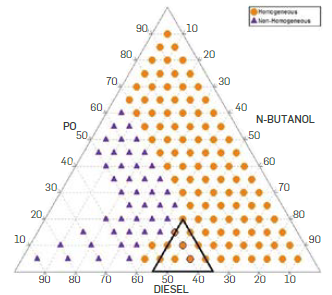
In this study, PO was obtained from a fast pyrolysis conversion process. PO did not mix with diesel due to unsatisfactory fuel properties. Accordingly, PO and diesel were mixed with n-butanol using a similar methodology as Alcala and Bridgwater (Alcala & Bridgwater, 2013). To summarize, three-component mixtures were prepared at room temperature with different weight percentages (wt%) in bottles, maintaining a fixed total weight of 10 g. The bottles were closed, gently shaken, and allowed to rest for 48 hours at room temperature. Subsequently, the mixtures were visually examined for their homogeneity. All mixtures prepared as 5 wt% and their multiples were categorized as qualitatively immiscible (non-homogeneous) and miscible (homogeneous) according to a visual evaluation on the ternary phase diagram shown in Figure 1.
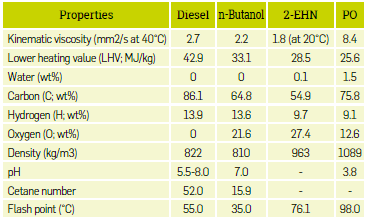
The presence of 35 wt% diesel in blended fuels indicates insufficient auto-ignition properties (Lee et al., 2020). Reducing the diesel content in blends is one of the study's objectives. To enhance auto-ignition, base fuel combinations with 40 wt% diesel and 60 wt% n-butanol, chosen from the small triangular zone displayed in the ternary phase diagram were selected. Subsequently, blended fuels with 5 wt% and 15 wt% PO were created by decreasing the n-butanol ratio and increasing the PO ratio in the base fuel. Measurements showed that the mixed fuels had lower cetane values than diesel due to their physicochemical properties. Consequently, the blended fuels were supplemented with 5 wt% 2-EHN to raise their cetane numbers. The fuel compositions and characteristics for diesel, n-butanol, 2-EHN, and PO are shown in Table 1. Diesel, n-butanol and 2-EHN were purchased separately from local suppliers, and their physicochemical properties were provided by the suppliers. Additionally, the physicochemical properties of PO and blended fuels were measured in a nationally accredited laboratory.
ENGINE TEST METHOD
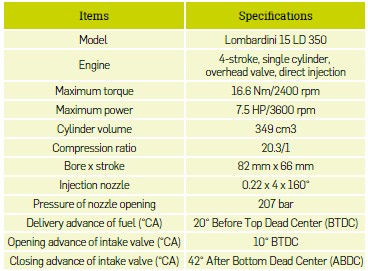
The engine tests were conducted with a single-cylinder diesel powered engine operating at speeds of 1500,1800,2400,3000, and 3600 rpm, with a total engine load of 10 Nm. The specific features of the tested engine are given in Table 2.
In the engine experiments, a direct current dynamometer (Kemsan) capable of producing 15 kW of power was used. Engine torque was measured with a torque measurement unit (Kistler 4550A). Using an encoder (Kistler 2614B), all angular movements of the crankshaft, top dead center, and engine speed measurements were detected precisely. Cylinder internal pressure was measured using a charge amplifier (Kistler 5064) and a high-sensitivity cylinder internal pressure sensor with a piezoelectric operating principle (A3 Kistler 6052C). A piezoresistive pressure sensor (Kistler 4065B) was used to detect the fuel line pressure. The KiBox data acquisition system manufactured by Kistler, was used to record fuel line pressure data, ncluding all signals produced for every 0.1-degree crank angle. The engine test setup is shown schematically in Figure 2.
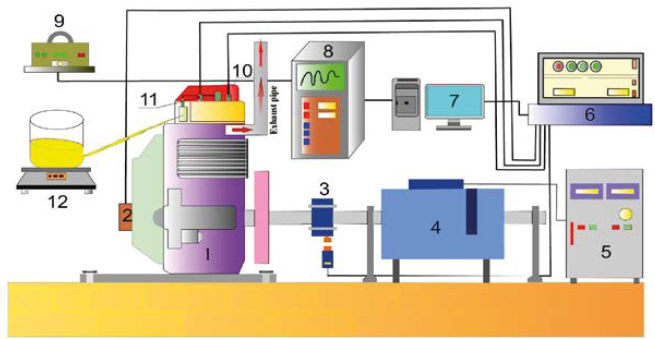
Figure 1 Schematic of the engine test unit; 1. Engine, 2. Encoder, 3. Torque Meter, 4. Dynamometer, 5. Control Panel, 6. KiBox, 7. Computer, 8. Emission Gas Analyzer, 9. Smoke Meter, 10. Cylinder Pressure Sensor, 11. Fuel Line Pressure Sensor, 12. Electronic Scales
Using KiBox Cockpit software, the maximum cylinder pressure, cylinder position, the combustion's start and end angles, heat release rate, and maximum heat release rate of the test fuels were computed. The heat release rate was determined using the following equation:
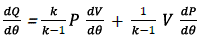
Heat losses from the cylinder wall are not considered when calculating the heat release rate. In the equation, Q, 9, P, V, and k represent heat energy, cylinder pressure, cylinder volume, and the constant polytropic exponent (with k=1.37), respectively. Release of heat is represented by the start of combustion (SOC) and the end of combustion (EOC), which accounts for 5% and 90%, respectively. The duration of combustion (CD) is calculated as SOC minus EOC. The crank angle degree at which the injector rises to the opening pressure, which is set at 207 bar, is known as the start of injection (SOI). The time interval between SOI and SOC is referred to as the ignition delay (ID). Furthermore, for the emission measurements, an exhaust gas analyzer, Mobydick 5000 Kombi, was used
3 RESULTS AND DISCUSSION
COMPARISON OF FUEL PROPERTIES
At this stage, homogeneous fuel mixtures blended with PO, diesel, and n-butanol were selected to determine their physicochemical properties. Those mixtures with properties closer to diesel were chosen for engine testing. The properties of Dl, D2, D3 and D4 fuels are shown in Table 3. According to Table 3, the density and kinematic viscosity of fuels blended with 40 wt% diesel, 0-5-15 wt% PO, and 60-55-45 wt% n-butanol are close to conventional diesel fuel. The cetane numbers of the blended fuels range from 26 to 27.7. The European Union specifies a minimum cetane number of ≥51, while the United States sets it at ≥40 for diesel fuel (Lapuerta et al., 2009)
The cetane number decreased in the blended fuels as the PO content increased. A low cetane number is undesirable because it reduces the auto-ignitability of fuels, causes ID, delays SOC, and causes incomplete combustion (Hossain et al., 2016; Kaewbuddee et al., 2018; Prasad & Murugavelh, 2020). Hence, 5 wt% 2-EHN was added to the blends to increase the cetane number of the blended fuels (Lee et al., 2020). With the addition of 2-EHN, the cetane numbers of the tested blends increased to meet the minimum cetane number specification for diesel, ranging from 46.9 to 51.6, as shown in Table 4. Additionally, a one-degree increase in the flash points of the 2-EHN blended fuels was observed.
PERFORMANCE CHARACTERISTICS
The torque changes obtained in the engine experiments conducted with D1, D2, D3 and D4 fuels (with 2-EHN) in the 1500-3600 rpm engine speed range and under full load are shown in Figure 3. The maximum engine torque was achieved with D1 fuel between 24003000 rpm, averaging 13.57 Nm. The maximum engine torque values for blended fuels created with the addition of PO, n-butanol and 2-EHN, are very close to each other, averaging 11.28 Nm, and were obtained in the engine speed range of 2400-3000 rpm. In addition compared to Dl fuel, the engine torque decreased by an average of 16.83% in D2, D3 and D4 fuels in the 2400-3000 rpm range.
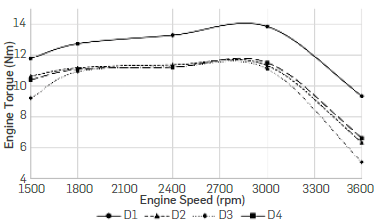
Figure 3 Engine torque change depending on engine speeds D1: Diesel 100% / PO 0% / NB 0% / 2-EHN 0%, D2: Diesel 40% / PO 0% / NB 55% / 2-EHN 5%, D3: Diesel 40% / PO 5% / NB 50% / 2-EH 5% and D4: Diesel 40% / PO 15% / NB 40% / 2-EHN 5%
Table 3. Properties of test fuels (without 2-EHN) D1: Diesel 100% / PO 0% / NB 0%, D2: Diesel 40% / PO 0% / NB 60%, D3: Diesel 40% / PO5% / NB 55% and D4: Diesel 40% / PO 15% / NB 45%

Table 4 Properties of fuels (with 2-EHN) D1: Diesel 100% / PO 0% / NB 0% / 2-EHN 0%, D2: Diesel 40% / PO 0% / NB 55% / 2-EHN 5%, D3: Diesel 40% / PO 5% / NB 50% / 2-EHN 5% and D4: Diesel 40% / PO 15% / NB 40% / 2-EHN 5%

Engine power changes of the experimental studies conducted with D1, D2, D3 and D4 fuels (with 2-EHN) under full load in the 15003600 rpm engine speed range are shown in Figure 4. The maximum engine power of 4.35 kW was reached with D1 at 3000 rpm. The maximum engine powers for the blended fuels created with the addition of PO, n-butanol and 2-EHN, are very close to each other, averaging 3.55 kW at 3000 rpm. Engine power for D2, D3 and D4 fuels at 3000 rpm decreased by an average of 18.37% compared to D1 fuel.
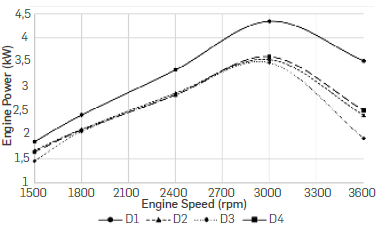
Figure 3 Engine power change depending on engine speeds D1: Diesel 100% / PO 0% / NB 0% / 2-EHN 0%, D2: Diesel 40% / PO 0% / NB 55% / 2-EHN 5%, D3: Diesel 40% / PO 5% / NB 50% / 2-EHN 5% and D4: Diesel 40% / PO 15% / NB 40% / 2-EHN 5%
The changes in heat release rate and cylinder pressure of D1, D2, D3 and D4 test fuels at different engine speeds (1500-3600 rpm) and full load (10 Nm) related to crank angle are shown in Figure 5. The cylinder pressure peak of D3 and D4 fuels containing PO is lower at all engine speeds compared to D1 and D2 fuels. Notably, D2 fuel exhibits the highest cylinder pressure peak at 1500, 1800 and 2400 rpm. This is because D2 fuel contains a higher amount of n-butanol than other blended fuels. The combustion of D2 takes place is shorter as compared to other fuels, which comes from the higher oxygen amount of D2, thus improving the combustion process. When comparing D3 and D4 test fuels containing PO, the peak cylinder pressure decreases as the PO ratio increases at all engine speeds. This decrease is due to the lower oxygen content, reduced calorific value, increased kinematic viscosity and density, resulting from the increase of PO and the decrease of the n-butanol content in the blends. Additionally, under full load, the maximum cylinder pressures for all blended fuels decreases and reaches the minimum pressure value when the engine speed increases from low to high rpm. The increase in engine speed leads to longer ignition delay and shorter combustion time, which results in lower combustion temperature and reduced cylinder internal pressure due to decreased combustion quality. Among all test fuels, D2 exhibits the highest maximum heat release rate across all engine speeds, attributed to its higher n-butanol content. It is observed that the fuels with lower n-butanol content (D3 and D4) have lower maximum heat release rate values than the fuel with higher n-butanol content (D1). This is because increasing the PO ratio in the fuel mixtures reduces the oxygen content and LHV of the tested fuels, while increasing density and kinematic viscosity.
EMISSION CHARACTERISTICS
The characteristics of fuel mixtures' nitrogen oxide (NOx) emissions at varying engine speeds under full engine load are depicted in Figure 6. According to the findings, NOx emissions for PO, n-butanol and 2-EHN fuel mixtures are quite stable compared to D1. Additionally, NOx emissions for all fuels decrease as engine speed increases under full load.
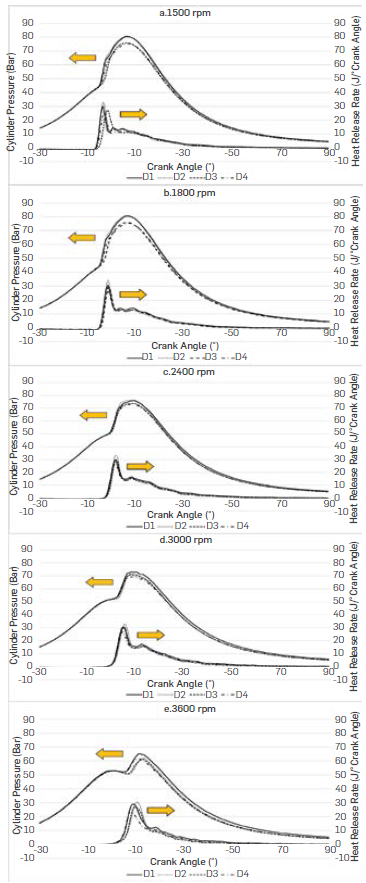
Figure 5 a-e. Heat release rate and in-cylinder pressure changes of blended fuels D1: Diesel 100% / PO 0% / NB 0% / 2-EHN 0%, D2: Diesel 40% / PO 0% / NB 55% / 2-EHN 5%, D3: Diesel 40% / PO 5% / NB 50% / 2-EHN 5% and D4: Diesel 40% / PO 15% / NB 40% / 2-EHN 5%
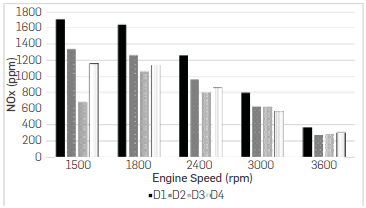
Figure 6 NOx emissions of blended fuels at varying engine speeds D1: Diesel 100% / PO 0% / NB 0% / 2-EHN 0%, D2: Diesel 40% / PO 0% / NB 55% / 2-EHN 5%, D3: Diesel 40% / PO 5% / NB 50% / 2-EHN 5% and D4: Diesel 40% / PO 15% / NB 40% / 2-EHN 5%
Since the mixtures of PO, n-butanol and 2-EHN have lower calorific values, their heat release rates are lower and, therefore, the maximum cylinder pressure values are lower than D1. Consequently, the maximum in-cylinder temperatures occurring during combustion are also lower, leading to lower NOx emissions for these blends at all engine speeds compared to D1. Lower maximum temperatures, resulting from reduced maximum cylinder pressures, contribute to decreased NOx emissions (Emiroglu et al., 2018).
Figure 7 displays the carbon monoxide (CO) emission characteristics of blended fuels at varying engine speeds under full engine load. N-butanol addition, one of the alcohols with a high oxygen content, results in a decrease of CO because of the adequate oxygen amount and high combustion chamber temperature. Furthermore, carbon-to-hydrogen (C/H) ratio is lower in blends with alcohol compared to D1 fuel, which is another factor in their reduced CO emissions (De Caro, 2001; Swarna et al., 2022; Yao et al., 2010). Since D2 fuel has the highest n-butanol content and lowest C/H ratio, it produces less CO than D1 at low engine speeds. D2 fuel produces less CO than D3 and D4 fuels at all engine speeds. It is observed that CO emissions increase because of higher PO and lower n-butanol ratios in fuels. This increases the viscosity and water content, leading to lower combustion temperature and impaired fuel atomization properties respectively (Keskin, 2017).
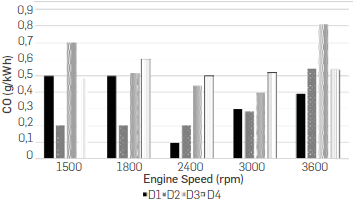
Figure 7 CO emissions of blended fuels at varying engine speeds D1: Diesel 100% / PO 0% / NB 0% / 2-EHN 0%, D2: Diesel 40% / PO 0% / NB 55% / 2-EHN 5%, D3: Diesel 40% / PO 5% / NB 50% / 2-EHN 5% and D4: Diesel 40% / PO 15% / NB 40% / 2-EHN 5%
At full engine load and varying engine speeds, the tested fuels' hydrocarbon (HC) emissions are shown in Figure 8. Compared to D1, test fuels D2, D3 and D4 have lower HC emissions at all engine speeds. This reduction is attributed to the higher oxygen content in the fuel mixtures due to the presence of PO, n-butanol, and 2-EHN (Lee etat., 2020).
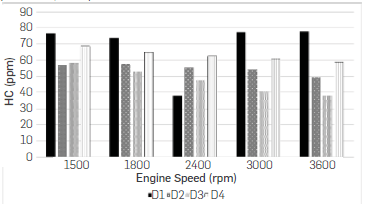
Figure 8 HC emissions of blended fuels at varying engine speeds D1: Diesel 100% / PO 0% / NB 0% / 2-EHN 0%, D2: Diesel 40% / PO 0% / NB 55% / 2-EHN 5%, D3: Diesel 40% / PO 5% / NB 50% / 2-EHN 5% and D4: Diesel 40% / PO 15% / NB 40% / 2-EHN 5%
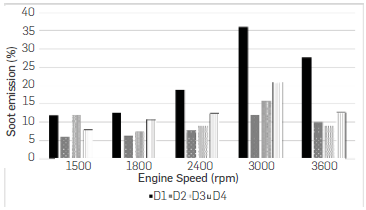
The test fuels' soot generation under full load and at varying engine speeds are shown in Figure 9. Our findings show that D2, D3 and D4 test fuels have lower soot (smoke density) emissions than D1 fuel under full engine load and at all engine speeds. Soot is caused by the incomplete combustion of carbon and hydrocarbon particles in the fuels. It is thought that the blended fuels containing PO, n-butanol and 2-EHN reduce soot emissions because they have a lower C/H ratio and higher oxygen content than D1 fuel. Among the test fuels, D2 fuel has the highest oxygen concentration and the lowest C/H ratio, resulting in the lowest soot formation. Conversely, D4 has the highest C/H ratio and the lowest oxygen concentration, leading to the highest soot formation. Therefore, as the PO ratio increases in the blended fuels, the oxygen content decreases, the C/H ratios increase, and soot emissions then increase.
CONCLUSIONS
In this research work, the usability of PO, a fuel obtained from the pyrolysis of sour cherry kernels, was tested in a compression ignition engine. Blended fuels, designated as D1, D2, D3, and D4 were tested in an air-cooled single cylinder diesel engine under full load at engine speeds of 1500, 1800, 2400, 3000 and 3600 rpm. The results of our work lead to the following conclusions:
Maximum engine torque and power were achieved with D1 fuel. Compared to D1, engine torque, and power values for D2, D3, and D4 fuels were lower at all engine speeds. This reduction is attributed to the higher viscosity and lower LHV of the blended fuels.
The cylinder pressure peak of D3 and D4 fuels containing PO was lower at all engine speeds than D1 and D2 fuels. D2 exhibited the highest cylinder pressure, which is derived from the higher n-butanol content.
The maximum heat release rate was highest for D2 fuel across all engine speeds, which is attributed to its higher oxygen content from the n-butanol. The maximum heat release rate values of D3 and D4, which contain lower amounts of n-butanol due to PO addition, were lower than D1.
NOx emissions from D2, D3, and D4 fuels were remarkably lower than D1 at all engine speeds and full load. Additionally, NOx emissions from the blended fuels decreased with increasing engine speed.
Due to its higher n-butanol ratio and lower C/H ratio, D2 fuel produced less CO emissions at low engine speeds than D1, D3, and D4 fuels.
The HC emissions from D2, D3, and D4 fuels were lower than D1at all engine speeds. This reduction is likely due to the increased oxygen content from the addition of PO, n-butanol, and 2-EHN in fuel mixtures.
Soot emissions of D2, D3 and D4 blended fuels were lower at all engine speeds compared to D1 fuel. The amount of oxygen in blended fuels reduces as the PO ratio increases, leading to an increase in C/H ratios, and soot emissions.
Blended fuels of pyrolysis oil and diesel offer a promising path toward sustainability by reducing carbon footprints and enhancing energy security, while also providing economic benefits. However, challenges such as variable fuel quality, engine compatibility issues, and regulatory hurdles currently limit their widespread use. Advances in technology and infrastructure could help overcome these limitations, making blended fuels a more viable alternative in the future.
According to the results, we can consider that blends containing PO, diesel, n-butanol and 2-EHN are possible biofuels for diesel engine applications.

