




 English (pdf)
 Article in xml format
 Article references

 Automatic translation
 Send this article by e-mail
 Cited by SciELO
 Cited by Google
 Similars in
SciELO
 Similars in Google

 Permalink


1. INTRODUCTION
The petroleum industry is a primary contributor to the global energy sector, supplying a significant portion of the world's energy needs. However, this industry faces substantial challenges, particularly n EOR while minimizing costs. One of the major challenges is overcoming reservoir conditions that hinder efficient oil production. A key issue encountered in water injection is viscous fingering, a phenomenon that occurs due to unfavorable mobility ratios between injected water and reservoir oil (Elsharafi 2018). This results in poor macroscopic displacement efficiency (low swept area), as illustrated n Figure 1(a). Additionally, gas injection faces another challenge, particularly in reservoirs with high vertical permeability. This issue, known as gravity override, arises due to density contrast between gas and reservoir fluids, causing the injected gas to migrate toward the upper layers while bypassing significant oil volumes (Massoud, Li, and Amar 2022; Mohammed Alsharif Samba, Aldokali, and Elsharaf 2019). Consequently, microscopic displacement efficiency s reduced, as shown in Figure 1(b).
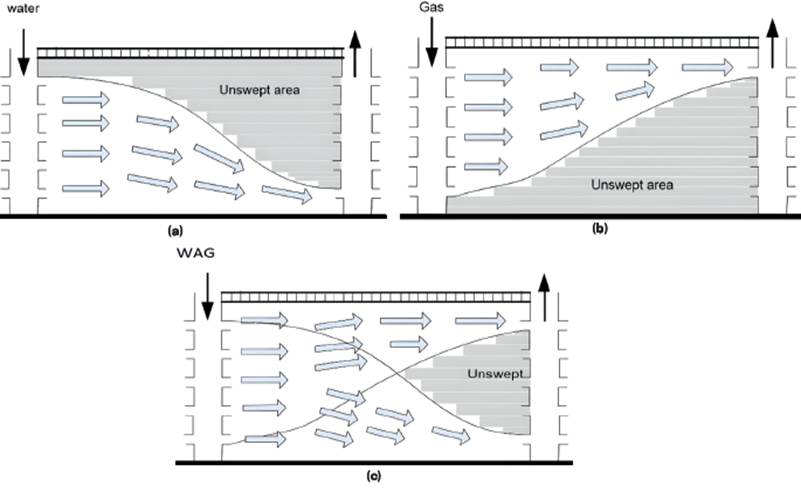
Figure 1 Gravity effects during: (a) Water injection, (b) Gas injection, (c) WAG injection (adapted from Elsharafi 2018).
To address these challenges, a breakthrough in EOR was introduced n 1957 with the development of WAG injection (Christensen, Stenby, and Skauge 2001). This method involves alternating the injection of water and gas to improve sweep efficiency. Water injection helps displace oil in the lower layers, while gas injection targets the upper layers, as shown in Figure 1(c). This process enhances macroscopic displacement efficiency and ultimately increases the recovery factor. Furthermore, WAG injection can be used to delay gas breakthrough, act as a piston to advance a miscible slug, and maintain reservoir pressure (Caudle and Dyes 1958,Al-Mudhafar and Rao 2017).
Given its proven effectiveness in addressing multiple reservoir challenges, the WAG injection method has been further developed and categorized into various types, including: Miscible WAG Injection, Simultaneous Injection of Water and Gas Behind the Front, Immiscible WAG Injection, Foam-Assisted Water-Alternating-Gas (FAWAG) Process and Chemical WAG Injection (W J Al-Mudhafar, Rao, and McCreery 2017). Each type is selected based on specific reservoir conditions and project objectives. For instance, the FAWAG process is used to mitigate gas override by improving mobility control, whereas immiscible WAG injection is preferred when gas resources are limited or when reservoir conditions prevent miscible gas injection.
To maximize the success of a WAG injection project, several critical factors must be carefully assessed during the design phase. Key considerations include reservoir characteristics and heterogeneity, oil composition, rock and fluid properties, injection gas composition, and injection patterns. Additionally, maintaining miscibility, optimizing the WAG ratio and cycle, accounting for three-phase relative permeability effects, and managing flow dispersion are essential (Christensen, Stenby, and Skauge 2001; Schneider and Shi 2005).
These parameters play a crucial role in determining WAG performance and enhancing ultimate recovery efficiency. When properly designed and implemented, WAG injection has consistently proved successful across a wide range of reservoir conditions. It has been widely adopted in various oil fields, reinforcing its reliability as an EOR technique. A 2011 survey highlighted the successful application of WAG injection in reservoirs with different rock types (Christensen, Stenby, and Skauge 2001). Notably, carbonate, limestone, and dolomite formations have predominantly used miscible displacement, whereas sandstone, carbonate, and limestone reservoirs have effectively used both hydrocarbon and non-hydrocarbon gases as injection fluid. However, the majority of WAG applications have been conducted in sandstone reservoirs, as llustrated in Figure 2.
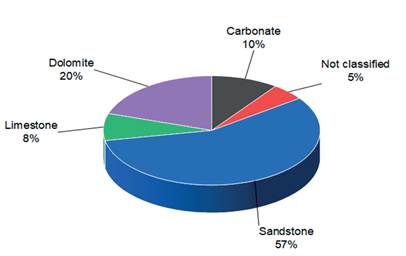
Figure 2 Typical reservoir types where WAG injection has been successfully applied ( after Christensen, Stenby, and Skauge 2001)
The application of WAG injection to different types of reservoirs has not been limited to a specific type of gas; rather, it has been mplemented with various gas types, depending on reservoir conditions and resource availability (Christensen, Stenby, and Skauge 2001; Elsharafi 2018). However, the majority of WAG applications have used CO2, as illustrated in Figure 3.
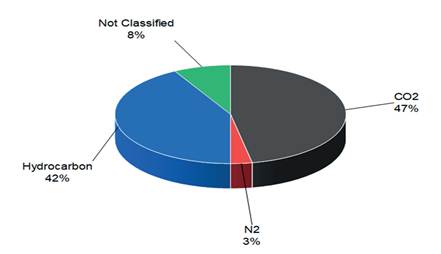
Figure 3 Classification of gases commonly used in WAG applications ( adapted from Christensen, Stenby, and Skauge 2001).
The selection of the injection gas type primarily depends on the field's geographic location and gas availability. For example, n the Phitsanulok Basin, WAG injection has been successfully implemented given the abundant availability of gas, regardless of ts specific composition (Jaturakhanawanit and Wannakomol 2011). A notable case is the Ekofisk field, where hydrocarbon WAG was as the choice as the preferred method (Sulak 1991). Although laboratory experiments suggested that CO2 WAG could yield higher incremental production (Wei et al. 2021), the lack of CO2 availability n the field required the use of hydrocarbon gas for WAG injection. Similarly, Christensen et al. (2001) observed that offshore fields predominantly use hydrocarbon WAG, although the potential application of CO2 WAG is currently under evaluation (Christensen, Stenby, and Skauge 2001).
In addition to its flexibility in gas selection, WAG injection has been implemented with various injection patterns, with the five-spot pattern being the most widely used across studied fields (Christensen, Stenby, and Skauge 2001; Elsharafi 2018). Although this pattern incurs higher operating costs, it provides better control over the displacement process, making it a preferred choice. Choosing an appropriate injection pattern depends on reservoir geology, reservoir type, and the volume of oil-bearing rock targeted for sweep efficiency optimization. However, a major challenge in modern field development is the lack of a structured development plan in the early life of the reservoir. Frequently, wells are drilled randomly without prior planning, making it difficult to establish an effective injection strategy. Proper reservoir development planning at an early stage is essential to ensure optimal WAG implementation and to avoid the complications associated with uncontrolled drilling patterns.
Given the versatility of WAG injection across a wide range of reservoir types, this method has gained broad acceptance as an EOR technique and is often preferred over continuous gas injection due to its improved sweep efficiency and improved mobility control. In recent years, there has been a significant increase in the application of Artificial Intelligence (AI) techniques to predict WAG performance. Numerous studies have demonstrated the potential of AI-based models, particularly artificial neural networks (ANNs), in optimizing WAG injection strategies and forecasting production performance. Although WAG injection has been extensively studied from a reservoir engineering perspective, previous studies have largely focused on operational strategies and fluid-rock interaction, while limited attention has been given to AI-based predictive models. To the best of the authors' knowledge, no comprehensive review has been conducted that systematically examines ANN methodologies applied to WAG injection. In this paper, these gaps are addressed by means of a detailed synthesis of emerging ANN techniques for WAG optimization. A taxonomy of ANN architectures is presented, comparative performance data across studies are compiled, and key challenges and future research directions are identified. Through this approach, novel insights are provided for petroleum engineers seeking to apply AI in the optimization of WAG injection strategies.
2. RESEARCH APPROACH
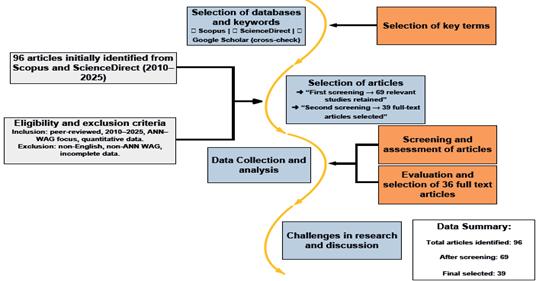
The research methodology adopted for this review is outlined in Figure 4, showing a comprehensive flowchart tht summarizes the key steps and decision points in the review process. The approach is divided into four main sections, as explained below:
SECTION 1: SELECTION OF DATABASE AND KEYWORDS
To ensure the comprehensiveness and reliability of this study, relevant research papers and thesis were sourced exclusively from peer-reviewed scientific journals, focusing on those indexed n Scopus. A set of specific keywords was carefully identified to enhance the precision of the literature search. The keywords were selected to cover critical aspects of ANN and WAG injection techniques while avoiding plural variations to maintain search accuracy.
The keywords used in the search process included:
SECTION 2: SELECTION OF ARTICLES
To maintain the scientific rigor of this paper, over 96 articles were initially collected. Only highly relevant papers related to WAG injection and ANN-based predictive models were retained, while unrelated studies were excluded.
SECTION 3: DATA COLLECTION AND ANALYSIS
A systematic screening process was implemented in two stages: First screening: An initial review of the collected articles reduced the selection to 69 highly relevant studies. Second screening: A more detailed examination was conducted, resulting in the selection of 39 key scientific studies that support this review, as shown in the appendix.
3. PREDICTIVE MODELS
Predictive modeling encompasses a range of mathematical techniques designed to establish relationships between input and output variables. The accuracy of a model is typically assessed based on the average error percentage, which varies depending on the researcher's objective. To account for this uncertainty, it is crucial to use a prediction interval, often set at a 95% confidence level (Kenig et al. 2001).
The magnitude of prediction error is influenced by the actual target value. For instance, if the actual value is 95 and the predicted value is 90, the error is approximately 5%. However, if the actual value is 3.2 and the predicted value is 2, the error increases to around 37.5%. This is why although a prediction may numerically be close to the actual value, the relative error percentage can vary significantly depending on the scale of the target variable
4. BENEFITS DERIVED FROM PREDICTIVE MODELLING
Developing reliable field models is often time-consuming and expensive. Nevertheless, advancements in simulation software have significantly reduced the time to develop accurate models. With continuous technological improvements, computational efficiency has increased, leading to reduced simulation runtimes. In the past, reservoir simulations required over 24 hours to process data, whereas modern techniques can complete simulations in less than an hour.
Predictive models further contribute to reducing computational time by providing initial estimations without requiring full simulation. Instead of running extensive simulations, predictive models allow for approximating results based on mathematical equations derived from model training. This significantly enhances decision-making efficiency in various engineering applications.
Case Studies Demonstrating Time Reduction Using Predictive Models:
WAG Injection Optimization: An ANN-based predictive model was trained using historical reservoir simulation data to forecast production performance under different Water-Alternating-Gas injection schemes. Once trained, the model could generate predictions in minutes, compared to days required for full-scale numerical simulations, with an average error below 5% (Smith, J. 2018).
CO2 Flooding Scenario Analysis: In a CO2 injection project, predictive models were used to estimate oil recovery and reservoir pressure profiles for multiple injection strategies. The ANN model reduced the overall simulation time by more than 80%, enabling rapid evaluation of multiple scenarios and optimizing injection strategies efficiently (Chen, L. 2020).
These examples confirm that predictive modeling, particularly ANN-based approaches, can substantially cut simulation time while maintaining reliable accuracy. By providing fast and reasonably accurate estimations, predictive models allow engineers to explore a wider range of operational scenarios, make timely decisions, and optimize field performance without full-scale simulations for each case.
Limitations and Simplification Risks:
While predictive models offer significant advantages, they also involve simplification of complex reservoir behavior, which can introduce errors if the training data do not fully capture reservoir heterogeneity or rare operating scenarios. Predictive models depend highly on data, which means that the quality, range, and representativeness of input data directly affect prediction accuracy. Over-reliance on these models without validation vs. actual simulations may result in underestimation or overestimation of critical parameters.
Therefore, predictive models should be used as complementary tools with traditional simulations. Practitioners are encouraged to apply prediction intervals and cross-validation techniques to ensure that the models provide reliable guidance for decision-making.
5. ANNS IN PREDICTIVE MODELLING
Several predictive modeling techniques exist, with ANNs being one of the most common. ANNs are effective for predictive modeling due to their ability to learn complex patterns and relationships within datasets. They have been successfully applied to various petroleum-engineering applications and are recognized as universal function approximations under specific conditions (G. P. Zhang, Patuwo, and Hu 2001; Zhong et al. 2019). A properly constructed ANN can replicate any continuous functional mapping with a high degree of accuracy.
6. HISTORICAL BACKGROUND OF ANNS
ANNs were first introduced during the 1965 Dartmouth Conference, where the potential of computers to perform intelligent tasks was discussed (van Assen et al. 2022). Early developments focused on simulating the biological brain, with key contributions from F. Rosenblatt, who introduced the perceptron, and B. Widrow, who developed adaptive systems (Arbib 2003).
These foundational advancements have enabled the application of ANNs in various fields, including petroleum engineering, where they are widely used for reservoir modeling, production forecasting, and optimizing enhanced oil recovery processes. By emulating complex nonlinear relationships, ANNs provide rapid, data-driven predictions that complement traditional simulation methods.
7. BASIC CONCEPTS OF ANNS
ANNs are computational models relying on the biological structure of neurons and their interconnection. They consist of artificial neurons connected in a network, where information is processed and transmitted as numerical values. These neurons interact similar to a synapses in the human brain. The flow of information in an ANN typically occurs in one direction, making it mathematically convenient and suitable for predictive tasks.
ANNS OPERATE IN THREE MAIN STAGES:
Training Stage: The network learns from input patterns in a training dataset and establishes a foundation for recognizing patterns. Testing Stage: The network is evaluated using new input data to assess its ability to generalize learned patterns. Performance Stage: The trained network is deployed to perform predictions and decision-making tasks.
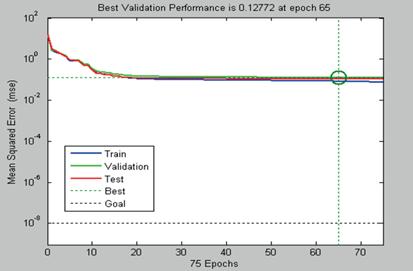
The data should be divided into training and testing sets. Typically, models use 70% of the data for training and 30% for testing. However, this ratio is not fixed and depends on the researcher's objectives. In general, increasing the proportion of testing data can lead to a more accurate assessment of the model's performance. Once the training and testing split is determined, the model is trained until it reaches the desired target, as shown in Figure 5.
8. ESSENTIAL ELEMENTS OF NEURAL NETWORK ARCHITECTURE
As shown in Figure 6, a neural network consists of three fundamental layers:
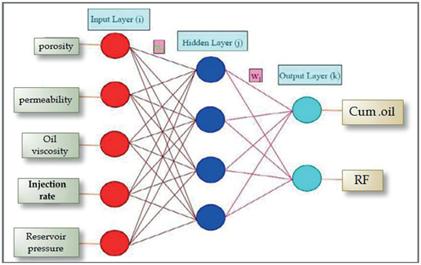
Input Layer: This layer receives raw input data, which directly influences the accuracy of predictions. It must include all relevant parameters affecting the target variable.
Hidden Layer: The hidden layer processes information and performs computations. It acts as an intermediary between the input and output layers. The number of hidden neurons depends on the complexity of the problem. According to the "rule of thumb," the number of hidden neurons is approximately 1.5 times the number of input neurons. However, this is not a strict rule, and optimization is required through training (Amr et al. 2011).
Output Layer: The output layer generates the final prediction, which is then used for decision-making. The accuracy of the output is refined by adjusting the hidden layer and neuron connections. Each layer is interconnected, with adjustable weights that determine the strength of connections between neurons. During the training process, these weights are optimized to enhance prediction accuracy. The adjusted weights are then applied to the target through a specific function.
9.OVERFITTING IN ANN MODELS
Sometimes, an ANN model achieves low error during training and testing but produces significantly higher errors when applied to real-world data. This occurs due to overfitting, where the model learns the training data too well, including noise and minor variations, rather than identifying the general patterns. The model. Nontheless, it performs well within the training environment but fails to generalize to new, unseen data, thus leading to inaccurate predictions. To ensure the reliability of the ANN model, researchers must validate its performance using independent datasets outside the simulation environment after the training and testing phases. This helps verify that the error values are accurate and that the model can be effectively applied in practical scenarios.
An ANN model often achieves low-error during training and testing, but results in significantly higher errors when applied to real-world data. This occurs due to overfitting, where the model learns the training data too well, including noise and minor variations, rather than identifying the underlying general patterns. Hence, the model performs well within the training environment but fails to generalize to new, unseen data, leading to inaccurate predictions.
To ensure the reliability of the ANN model, researchers must validate its performance using independent datasets outside the simulation environment after the training and testing phases. This helps verify that the error values are accurate and that the model can be effectively applied in practical scenarios. Mitigation Techniques:
Several strategies can help reduce overfitting in ANN models:
Dropout: Randomly deactivating a fraction of neurons during training to prevent the network from becoming too reliant on specific nodes.
Regularization: Techniques such as L1 or L2 regularization add a penalty term to the loss function to discourage overly complex models.
Cross-Validation: Splitting the dataset into multiple folds to ensure that the model's performance is consistent across different data subsets.
Early Stopping: Monitoring validation error during training and stopping once the error stops decreasing, hence preventing overtraining.
By applying these methods, ANN models can achieve better generalization, maintain prediction accuracy, and be more reliable for real-world applications.
10. ANN IN WAG PROJECTS
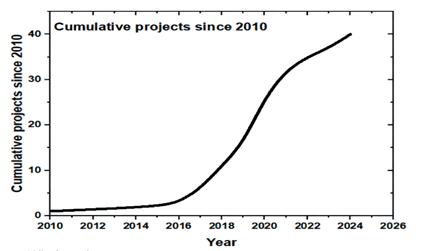
ANNs have been widely used to predict WAG injection efficiency, production rates, and ultimate oil recovery. Figure 7 illustrates the initial phase of ANN applications in WAG injection projects. As mentioned above, this review focuses exclusively on studies where the ANN was applied to predict parameters during WAG injection. The trend of the curve shows the number of ANN-based WAG injection case studies undertaken over time, with most projects being conducted during the 2010s.
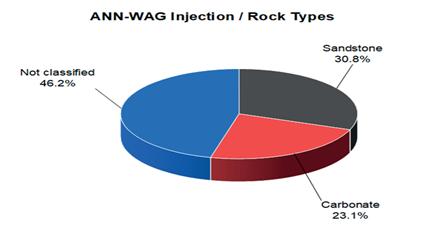
ANN-based WAG injection project predictions have been applied to various rock types. However, a review of the literature reveals that a significant proportion of studies (approximately 46.2%) do not specify the rock type used, which is crucial for assessing model applicability. For example, a model developed for sandstone cannot be directly applied to carbonate or other rock types because of their distinct petrophysical properties. Some studies incorporate multiple rock types within the same analysis, while 30.8% specifically focus on sandstone reservoirs, the predominant rock type in petroleum systems. Additionally, 23.1% of the studies are based on carbonate formations, as illustrated in Figure 8.
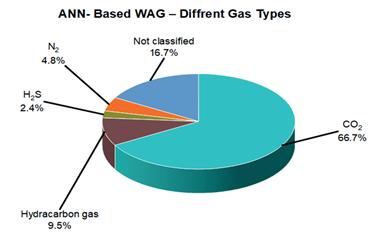
ANN-based WAG injection project predictions have also been applied to various gas types. However, approximately 16.7% of studies do not specify the type of gas used. In such cases, these studies are not considered highly applicable, as gas type is a critical parameter for an appropriate model choice-unless the model is specifically designed for a well characterized field.
CO2 is the most commonly studied gas in ANN-WAG injection projects, accounting for 66.7% of cases given its dual role in both enhanced oil recovery (EOR) and carbon management. The dominance of CO2 stems from its favorable miscibility characteristics, wide availability from anthropogenic sources, and its critical role in Carbon Capture, Utilization, and Storage (CCUS) projects. By injecting CO2 into depleted or producing reservoirs, operators can not only improve oil recovery but also achieve permanent CO2 sequestration, mitigating greenhouse gas emissions. Therefore, CO2-based WAG studies are strongly aligned with global CCUS objectives and sustainability goals.
Additionally, 9.5% of ANN-WAG injection projects focus on hydrocarbon gas, a crucial component of petroleum systems. However, its use requires careful review to ensure there are no existing sales contracts and that partial reinjection does not affect the required gas supply. Furthermore, 4.8% of studies focus on N2 injection, while 2.4% examine H2S injection, as shown in Figure 9.
Recent studies have demonstrated the growing application of ANNs in optimizing WAG processes. Gao et al. (2023) applied multilayer neural networks combined with PSO and GA to forecast cumulative oil production and CO2 storage in a tight reservoir, achieving improved predictive accuracy (Gao et al. 2023). Andersen et al. (2022) used hybrid ML algorithms, including PSO- and GA-LSSVM models, to estimate oil recovery factors in stratified WAG reservoirs with reliable performance under varying conditions (Andersen, Nygârd, and Kengessova 2022). Similarly, Sun et al. (2021) integrated numerical simulation with ML approaches for CO2-WAG field design, significantly reducing computational time while optimizing cycle duration and slug size. These studies confirm that ANN-based methods are increasingly effective in predicting WAG performance and guiding injection strategy optimization (Sun et al. 2021).
Based on reviewed papers, the activation functions commonly used in artificial neural networks (ANN) can be categorized into Log-Sigmoid, Tan-Sigmoid, and Rectified Linear Unit (ReLU). Approximately 19.5% of the studies did not specify the type of activation function used. Among the studies that did, the Log-Sigmoid function was the most frequently applied, appearing in 58.8% of cases. The Tan-Sigmoid function was used in 17.1% of the studies, while the ReLU function appeared in only 2.4%, as illustrated in Figure 10.
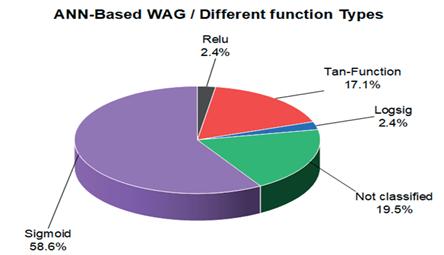
Historically, the Sigmoid function was widely utilized due to its smooth, differentiable, and bounded properties. However, in modern deep learning, it has largely been replaced by advanced activation functions such as ReLU, Leaky ReLU, and ELU, which effectively mitigate vanishing gradient issues and improve convergence speed. Despite these advantages, such modern functions are rarely used in petroleum research, as many studies rely on shallow networks, small datasets, or legacy software frameworks that were originally built around traditional activation functions. Further, limited computational resources and the emphasis on model interpretability over complexity in petroleum engineering often discourage the adoption of deeper architectures where modern activations show their full benefit. Hence, ReLU and its variants are only gradually being introduced into ANN applications within the oil and gas domain.
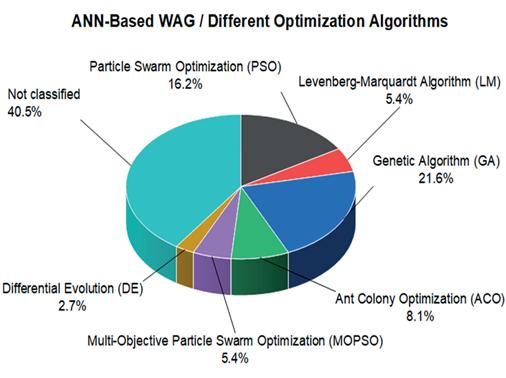
In ANN models, choosing an optimization method is essential for improving the model's performance by minimizing the error and adjusting parameters (weights and biases). Various optimization algorithms can be used, and the reviewed paper mentions several, such as Genetic Algorithm (GA), Ant Colony Optimization (ACO), Particle Swarm Optimization (PSO), Levenberg-Marquardt Algorithm (LM), Multi-Objective Particle Swarm Optimization (MOPSO), and Differential Evolution (DE).
As shown in Figure 11, Genetic Algorithm (GA) is the most widely used method for ANN-WAG optimization in the reviewed literature. This preference is attributed to GA's strong global search capability and its effectiveness in handling complex, nonlinear problems. Mirroring the natural selection process, GA can efficiently explore a vast solution space while avoiding local optimization. It is highly adaptable to various optimization tasks and applicable across different reservoir conditions. Furthermore, the crossover and mutation operations in GA enhance solution diversity, thereby improving optimization accuracy. Although Particle Swarm Optimization (PSO) is known for its speed and convergence efficiency, GA is often favored in the literature for delivering more robust solutions in complex, multi-variable reservoir simulations.
11.DATA COLLECTION IN ANN WAG INJECTION MODEL
To develop an accurate model, data should be collected from different categories. The first category includes design parameters such as gas and water injection rates, ensuring that the injection pressure remains below the fracture pressure of the reservoir. The second category is derived from field experience, where it is essential to verify that the selected variations accurately represent real field conditions. Examples of field experience-based data include the reservoir area and thickness.
The third category consists of screening criteria for WAG injection, which include key reservoir properties such as porosity and permeability. When implementing the model, it should be applied in accordance with the researcher's screening criteria used during its development.
One of the main challenges in selecting input data for WAG injection lies in the compositional model parameters and variations in relative permeability. In compositional models, density and viscosity are pressure and temperature functions, whereas in black oil models, these properties can be directly set as input parameters. This fundamental difference adds complexity to the modeling process and must be carefully addressed.
12. CHALLENGES AND FUTURE WORK
Due to the numerous influencing factors and complex mechanisms during WAG injection, traditional prediction models often use simplistic structures, resulting in low prediction accuracy and weak generalization. This paper highlights key aspects of using ANN in the context of WAG injection. Among these challenges, data quality and model interpretability are identified as the highest priorities, as they have the greatest influence on model performance and practical implementation. The main challenges identified in the research are:
Data Quality and Quantity (Highest Priority): A significant challenge in implementing ANN technologies for WAG models is data availability and quality. The lack of historical data and varying data formats from different sources may hinder the development of ANN models. Ensuring sufficient, accurate, and standardized datasets is essential to improve model robustness and generalization.
Model Interpretability (High Priority): ANN-based models are often perceived as black boxes, making it challenging to interpret their decisions and understand the underlying mechanisms of WAG injection. This lack of transparency limits user confidence and slows adoption in practical applications. Future studies should emphasize explainable AI techniques and hybrid models to improve their interpretation.
Algorithm Complexity: Designing ANN algorithms that can effectively handle the complex and nonlinear nature of WAG injection is a significant challenge. WAG involves multiple variables, such as fluid composition, gas injection rate, water injection rate, WAG ratio, and WAG cycle. These factors interact in intricate ways, making it difficult to develop models that accurately capture these interactions and provide reliable predictions.
Oil Composition Effects: Oil composition plays a critical role in modelling, particularly factors such as oil density and viscosity, which are temperature-dependent and often used as input parameters. However, to enhance model accuracy, it is essential to identify a more precise parameter that effectively represents oil composition. Variability in these parameters can significantly affect the model's accuracy and reliability, thus requiring careful selection and validation of input data.
Integration with Existing Systems: Integrating ANN technologies into existing oil and gas infrastructure and data management systems can be complex. Compatibility issues, data security concerns, and resistance to change from traditional practices may be challenging during the implementation phase.
Environmental and Economic Considerations: Most predictive models focus on forecasting the recovery factor and other production-related parameters. However, studies often lack predictions related to economic and environmental parameters, which are crucial for comprehensive project evaluation. Integrating these aspects into predictive models would enhance their applicability for decision-making in field development and management.
Addressing these challenges will require significant advancement in data collection, model development, and system integration. Future work should prioritize improving data quality and model interpretability, followed by algorithm development and integration efforts, to enhance the scalability and reliability of ANN systems for WAG injection processes. Additionally, future research should explore hybrid physics-informed machine learning frameworks that combine data-driven and physical modeling approaches to better represent reservoir behavior. The adoption of explainable AI techniques will enhance transparency, while integration with digital twin technologies can enable real-time optimization and monitoring of WAG operations. Furthermore, incorporating uncertainty quantification methods will be essential for assessing prediction confidence and improving decision-making in complex field applications.
CONCLUSIONS
An extensive review of the ANN-based WAG injection process has been presented, highlighting its growing role in improving the understanding and optimization of EOR performance. This study has showed that artificial neural networks can effectively predict WAG injection efficiency, production rates, and recovery factors when properly trained and validated. The findings indicate that the accuracy of ANN models is strongly influenced by input data quality, the choice of activation functions, and optimization algorithms used. It has also been observed that CO2 remains the most widely used gas in ANN-WAG modeling due to its dual role in improving oil recovery and contributing to carbon storage. Furthermore, sandstone formations have been the primary focus of existing studies, underscoring the need for broader evaluation across carbonate and mixed lithologies.
Despite the notable progress, several challenges remain, including the lack of standardized datasets, limited transparency in model structures, and insufficient validation against field-scale data. Addressing these issues will be essential for improving model reliability and ensuring broader applicability.
Overall, this review has provided valuable insights into the integration of ANN technologies with WAG processes, identified key research gaps, and outlined directions for future work-particularly toward hybrid modeling approaches, improved data curation, and real-time optimization frameworks for enhanced oil recovery.

