




 English (pdf)
 Article in xml format
 Article references
 Automatic translation
 Send this article by e-mail
 Cited by SciELO
  Cited by Google
  Similars in
SciELO
Similars in
SciELO  Similars in Google
 Permalink

Introduction
Russia’s aggression against Ukraine, which began over 11 years ago and escalated into a full-scale invasion in February 2022, has profoundly altered the lives of people, reshaped worldviews, and disrupted educational institutions across the country.
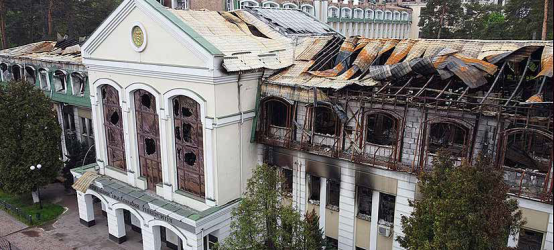
The first significant blow to Ukrainian higher education came in 2014 with Russia’s occupation of Crimea and large parts of the Donetsk and Luhansk regions. As a result, numerous universities were forced to relocate to government-controlled territories. The full-scale invasion in 2022 inflicted an even greater impact, leading to further displacement of universities, destruction of infrastructure, loss of academic personnel, and severe disruptions in research and education.
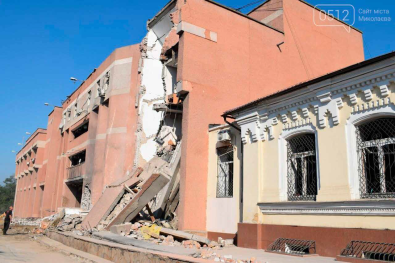
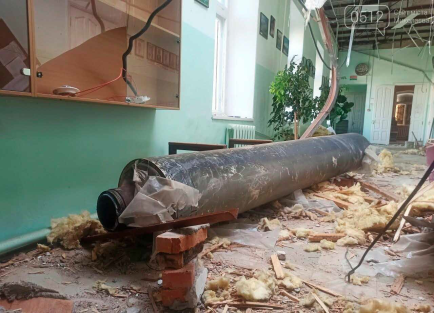
Between 2014 and 2024, 1,516 educational and research institutions, including universities, schools, and administrative bodies, were forced to relocate from Russian-occupied regions - Luhansk, Donetsk, Zaporizhzhia, Kherson, Kharkiv, and Crimea. This displacement meant that many institutions left behind their facilities, equipment, and resources, now under enemy control.3 The full-scale war has changed everything, affecting every aspect of life. It has devastated millions of innocent lives, claimed tens of thousands of lives, and turned countless Ukrainian cities and towns into war zones. Urban infrastructure, residential buildings, businesses, hospitals, and schools have been destroyed or severely damaged. Universities were not spared: Russia’s aggression has led to the destruction of approximately 1,500 educational and research facilities, while the number of damaged scientific equipment units approaches a thousand.4 By spring 2022, Russia’s occupation of new Ukrainian territories forced additional universities to relocate to safer areas. A total of 25 universities and 19 of their branch campuses were evacuated, displacing around 54,000 students and nearly 7,000 faculty members.5 Scholars and students from Mariupol, Melitopol, Berdiansk, and Kherson had to flee the occupied territories, seeking refuge in 16 Ukrainian cities that provided temporary shelter. Among the universities extending their support was Oles Honchar Dnipro National University, which welcomed the East Ukrainian Volodymyr Dahl National University and the Donbas State Pedagogical University6. Beyond forced relocations, the war’s negative impact on higher education manifests in the widespread destruction of academic infrastructure across major cities such as Kyiv, Kharkiv, Odesa, Lviv, Kryvyi Rih, and Dnipro. The war has triggered mass migration of students and academic staff, disrupted educational processes, caused class cancellations, lowered teaching quality, and posed constant threats to the lives and well-being of educators and students.
The war has particularly reshaped two interconnected pillars of higher education: the university network and its academic community. Since 2014, 31 state universities have been relocated from occupied or front-line areas: 12 between 2014 and March 2022, and an additional 19 from March to November 2022, including eight that had to relocate twice.7 Many of these universities were hosted by leading institutions in safer regions, driving an optimization of the academic network through mergers. By 2022, five universities and one institute had been reorganized and integrated into four leading institutions.
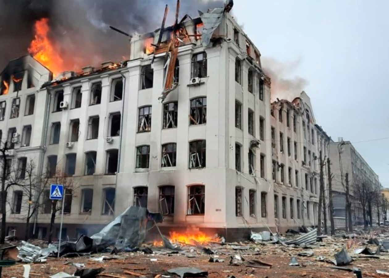
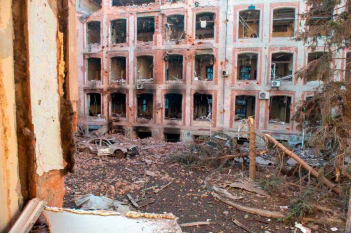
The ongoing war has inflicted enormous material losses on Ukraine’s higher education system. As of July 1, 2023, four universities in Donetsk Oblast had been completely destroyed, according to the Ministry of Education and Science (MES). Despite the devastation, as of early 2023, Ukraine still had 332 higher education institutions, including 191 state-run universities. These were overseen by various government ministries: 133 under the MES, 17 under the Ministry of Health, 13 under the Ministry of Culture and Information Policy, 9 under the Ministry of Internal Affairs, 7 under the Ministry of Defense, and 12 under other state agencies. Additionally, 25 were municipal institutions, and 116 were privately owned. 8
The transformation of Ukraine’s university system is set to continue, aiming to streamline its structure, optimize resources, and enhance safety and efficiency. The MES has initiated public discussions on a draft law for modernization, which, if enacted, could reduce the number of universities by up to threefold. The proposed reforms take into account city population sizes and student enrollments, ensuring that in cities with fewer than 100,000 residents, a single university will be preserved if it serves as a key educational center, while two universities in such cities will be merged; in cities with populations between 100,000 and 350,000, two competing universities may coexist; and in cities with over 350,000 residents, the university network will be structured into three categories: teaching institutes, research universities, and academic academies. Additionally, state universities (except for those essential to a city’s economic and social structure) must have at least 5,000 full-time students and a total enrollment of no less than 10,000 students. 9 This ongoing transformation is not merely a reaction to war but a step toward a more resilient and efficient higher education system, better suited to meet the challenges of Ukraine’s future.
A significant challenge for the higher education system in wartime conditions is the difficulty in forming and maintaining student cohorts, ensuring access to higher education for students from various regions of Ukraine and those abroad, and creating safe conditions for organizing and conducting a high-quality educational process. More than 8 million people have become internally displaced, while over 6 million have been forced to leave Ukraine. As of the end of 2022, among the 4.18 million Ukrainian citizens registered in European countries under temporary protection due to military actions, there were 665,000 students and school pupils and 25,000 educators. The number of high school graduates has decreased from 640,000 in 2008 to 360,000 in 2023, with a projected decline to 300,000 by 2030.10
The Ministry of Education and Science (MES) has implemented measures to simplify admission procedures for higher education institutions in 2022-2023, ensuring access to education for residents of temporarily occupied and high-risk territories, and organizing testing abroad. These efforts have enabled Ukrainian universities to form necessary student cohorts and sustain the higher education system under new conditions. Overall, more than 214,000 individuals participated in the 2022 admission campaign. Due to MES initiatives and university efforts, the situation has been stabilized: as of early 2023, the total number of higher education students was 1.113 million, including 869,400 in institutions under MES jurisdiction. The continued application of simplified admission procedures in 2023 and beyond, encouraging young people abroad to study at domestic universities, and ensuring safe learning conditions will contribute to maintaining student communities. In 2023, 267,000 students were enrolled in the first year of bachelor’s programs, 40,000 more than in 2022.
In 2024, MES updated the Admission Procedure for Higher Education. Special support measures were introduced for institutions located in frontline and border regions by establishing a regional coefficient applied to applicants’ competitive scores when choosing institutions near combat zones and territories affected by Russian aggression. Special admission conditions were also established for master’s applicants who obtained their bachelor’s degree in 2024 and either reside in or were displaced from temporarily occupied territories after January 1, 2024. Admission requirements for second higher education degrees at the master’s and PhD levels were also simplified.
A crucial step in integrating domestic higher education into the European framework is the approval of a new List of Fields of Study and Specialties for higher education programs 11. The previous list included 28 fields and 122 specialties, whereas the new list comprises 11 fields, ten of which align with the International Standard Classification of Education (ISCED), with an additional eleventh field, “Security and Defense,” reflecting wartime conditions. This decision also implements Article 9 of the Law on developing the List based on ISCED. The number and names of specialties in the new List (approximately 90) and their correspondence to the 2015 List will be subject to public discussion. The implementation of this List will also facilitate MES’s planned review of higher education standards in 2025 and the transition to updated educational programs.
In April 2024, Ukraine adopted the Law “On Amendments to Certain Laws of Ukraine Regarding the Development of Individual Educational Trajectories and the Improvement of the Higher Education Process,” 12 a key component of the comprehensive transformation of higher education. This law significantly expands university autonomy in designing and implementing educational programs and enhances students’ ability to shape their individual educational trajectories. Amendments have been made to various articles regulating educational programs, higher education standards, and the educational process organization. A “field-based admission” model is introduced, allowing students to choose a specific specialty after one or 1.5 years of interdisciplinary study based on labor market demands. Graduates of interdisciplinary programs will have the same rights as those who obtained their education in corresponding traditional fields and specialties.
Students will also be able to study multiple educational programs simultaneously at different institutions, provided they obtain only one qualification per higher education level funded by the state budget. Tuition-paying students will have the flexibility to determine the duration of their studies: completing a four-year bachelor’s program in three years or accumulating 240 European Credit Transfer and Accumulation System (ECTS) credits over 6-8 years while combining studies with work.
Sections 4, 5, and 6 of Article 10, “Higher Education Standards,” have been expanded and revised, with Section 3 substantially reformulated. These sections define educational program requirements, including the number of ECTS credits necessary for each degree level, minimum practical training requirements, descriptions of subject areas, theoretical content, practical methodologies, and necessary tools and equipment for professional activities. They also outline admission requirements, mandatory graduate competencies, forms of final assessment, additional interdisciplinary program requirements, and relevant legal or professional standards.
The war has significantly impacted the accreditation of educational programs and the validity of accreditation documents. The government has permitted the National Agency for Higher Education Quality Assurance (NAQA) to conduct temporary remote accreditations and approve conditional (deferred) accreditations without full expert reviews and without requiring universities to pay accreditation fees. The validity of accreditation certificates for higher education institutions and educational programs in effect as of February 24, 2022, has been extended. These decisions are contingent upon universities providing justification for their inability to conduct accreditation under standard procedures due to war-related damages.13
Discussions are ongoing regarding the reduction of higher education management structures by excluding the National Academy of Sciences of Ukraine and sectoral academies from the governance framework and limiting the number of sectoral governing bodies. It is proposed to retain only those managing military educational institutions, military training units, and universities with specific training conditions. Optimizing governance structures, modernizing the higher education network, expanding academic autonomy, and enhancing efficiency align with contemporary challenges, European integration prospects, and contribute to the sector’s reconstruction, renewal, and innovative development in the post-war period.
The full-scale Russian invasion of Ukraine in 2022 has created an unprecedented crisis for the national system of higher education. The war has resulted in the destruction of infrastructure, displacement of universities, loss of academic personnel, and significant disruptions to the educational process. These challenges have exposed critical vulnerabilities in the capacity of Ukrainian universities to maintain institutional continuity under extreme conditions. Despite this, certain institutions have demonstrated a remarkable degree of resilience, adapting their operations to ensure the continuity of teaching, research, and civic engagement. However, existing research on wartime education in Ukraine remains largely descriptive and fragmented, lacking in-depth case-based analyses that apply a coherent theoretical framework to understand how resilience is operationalized at the institutional level.
This study addresses the need to explore how universities function not only as educational institutions but also as pillars of social stability during periods of armed conflict. In doing so, it responds to a gap in the academic literature on the mechanisms through which higher education institutions adapt structurally, pedagogically, and socially under conditions of war. The scientific problem underlying this research, therefore, concerns the absence of systematic knowledge about the institutional strategies, governance models, and adaptive practices that enable universities to survive and serve society in wartime.
The objective of this study is to examine, through the case of Oles Honchar Dnipro National University, how Ukrainian universities has responded to the existential challenges posed by full-scale military aggression. The research aims to analyze Oles Honchar Dnipro National University strategies of adaptation and resilience across multiple dimensions, including digital transformation, organizational governance, humanitarian engagement, and infrastructural security. By situating the case within the theoretical framework of institutional resilience, the study seeks to generate insights that are transferable to other contexts facing protracted crises, thereby contributing to a broader understanding of the role of higher education in sustaining national capacity and societal cohesion during periods of war conflict.
Methodology
This study adopts a qualitative case study approach grounded in resilience theory, which provides a framework for understanding how institutions adapt to, recover from, and transform under conditions of extreme disruption. Specifically, the research draws upon the conceptualization of organizational resilience as articulated by Norris et al. (2008), which emphasizes adaptive capacity, resourcefulness, and institutional learning in response to external shocks.14 Within this framework, the university is examined as a dynamic actor capable of sustaining core functions and innovating under conditions of existential threat.
The selection of Oles Honchar Dnipro National University (DNU) as the focal case is justified by its geographical proximity to front-line regions, its institutional history of public engagement, and its role as a major academic center in eastern Ukraine. The case study design enables an in-depth analysis of this university’s multifaceted response to wartime conditions, viewed through the theoretical lens of resilience in higher education.
The research relies on a triangulated set of data sources, including primary institutional documents such as Rector’s Reports from 2022 and 2024, official university decrees, and communications released during the period of martial law. Additional data were drawn from legislative and policy documents issued by the Ministry of Education and Science of Ukraine, scholarly publications on wartime education, and media reports documenting the experiences of displaced students and faculty.
The methodological procedures were conducted in several stages. First, data collection was carried out through the systematic retrieval of official institutional and governmental documents published between February 2022 and December 2024. These sources were selected based on their relevance to the categories of academic continuity, digital transformation, civic engagement, infrastructure adaptation, and support for displaced populations. A corpus of core documents and sources was assembled for analysis.
In the second stage, a thematic coding process was applied to the collected materials. Drawing on principles of qualitative content analysis, the text was examined line by line to identify recurring patterns, strategies, and outcomes. These codes were then grouped into broader categories corresponding to the dimensions of institutional resilience: adaptive governance, digital infrastructure, social embeddedness, and knowledge continuity. These analytical categories were not imposed a priori but were derived through inductive iteration, in line with grounded theory logic.
Third, the findings were interpreted in light of the selected theoretical framework. Each identified institutional strategy was evaluated in terms of its alignment with the attributes of resilient systems, such as redundancy, flexibility, rapid response, and learning feedback loops. The resilience framework thus served as both an analytical guide and a conceptual bridge connecting empirical observation to theoretical insight.
Finally, the study applied a process-tracing approach to reconstruct the sequence of institutional decisions and adaptations from the onset of the full-scale invasion in February 2022 through the first quarter of 2025. This temporal analysis allowed the researchers to identify not only what strategies were deployed, but how they evolved in response to shifting wartime conditions and policy changes.
Throughout the study, validity was strengthened through triangulation of sources, member checking where feasible, and cross-referencing with secondary literature. Although the focus remains on a single institution, the methodological design supports the broader analytical goal of drawing generalizable insights about the role of universities in national resilience and societal continuity during crises.
The Establishment of Oles Honchar Dnipro National University
Oles Honchar Dnipro National University is one of the most renowned classical universities in independent Ukraine. It was founded on August 20, 1918, as Katerynoslav University.15 The institution emerged as a result of the joint efforts of local self-government and the city’s public, with the support of the government of the Ukrainian State led by Hetman Pavlo Skoropadskyi.16
In 1926, the Bolsheviks transformed the university into the Dnipropetrovsk Institute of Public Education. In 1933, it was reestablished as Dnipropetrovsk State University. Alongside the country, the university endured the horrors of Stalin’s dictatorship, including the mass repressions of the Great Terror. Many distinguished scholars, such as physicists A. E. Malynovskyi and A. S. Reva, educator and social scientist V. M. Fidorovskyi, and chemist V. S. Finkelstein, were unjustly executed during this period and rehabilitated only in the 1950s. Remarkably, in some cases, the academic authority of university scholars was so significant that even Stalinist authorities refrained from their physical elimination, although they were deprived of their right to teach and conduct research, as was the case with Academician D. I. Yavornytskyi.
The university’s development was disrupted by the devastation of World War II. During this time of immense hardship, when the fate of not only Ukraine but also global civilization was at stake, more than 600 students, faculty, and staff of the university took up arms to defend their homeland.
During the wartime occupation, the university suffered significant material damage and human losses. All its academic buildings were burned down.
The postwar years saw the university’s rapid resurgence. In 1951, the Faculty of Physics and Technology was established to train specialists in a new field - rocket engineering. DNU soon became known as a “space university.” Most faculties and departments engaged in both fundamental and applied scientific research. New scientific schools emerged and flourished in mathematics, mechanics (Professors M. P. Korniichuk, V. I. Mossakovskyi), physics, radio electronics (Professors F. I. Kolomoitsev, M. I. Varych, I. S. Miroshnychenko), biology and biotechnology (Professors O. L. Belgard, H. B. Melnikov), chemistry (Professor V. S. Malynovskyi), rocket and space technology (Professors V. A. Makhin, M. F. Herasiuta, V. M. Kovtunenko, M. I. Duplishchev), as well as social and humanitarian sciences. The range of academic disciplines expanded, faculty numbers grew, and new faculties, departments, laboratories, and research institutes were established, strengthening the university’s infrastructure.
From the mid-1960s, construction of a new university complex with a well-developed socio-cultural infrastructure began. The transformation of the university into one of the leading higher education institutions in Ukraine and the former USSR is largely credited to Academician V. I. Mossakovskyi, who served as its rector for 22 years (1964-1986).
Over its history, the university has trained more than 70,000 specialists. Among its distinguished graduates are the second President of independent Ukraine, Leonid Kuchma (1994-2005); Prime Minister Yulia Tymoshenko (2005, 2007-2010); writers Oles Honchar and Pavlo Zahrebelnyi; the head of Ukraine’s National Space Agency, Yurii Alekseiev; and renowned rocket and space system designers such as S. M. Koniukhov, Yu. P. Semenov, A. K. Nedaivoda, V. A. Sichovyi, and V. H. Komanov. Additionally, notable academics such as V. P. Shevchenko, V. P. Horbulin, P. P. Shirshov, H. M. Savin, I. M. Khalatnykov, O. M. Trubachov, and V. V. Pylypenko have contributed to various fields.
In recognition of the university’s national and international achievements, its role in the development and implementation of key governmental programs in the humanities, and the global recognition of its scholars and scientific schools, the President of Ukraine granted it the status of a national university on September 11, 2000. 17 On June 25, 2008, by decree of the Cabinet of Ministers of Ukraine, the university was named after its distinguished alumnus, writer Oles Honchar (1918-1995).18
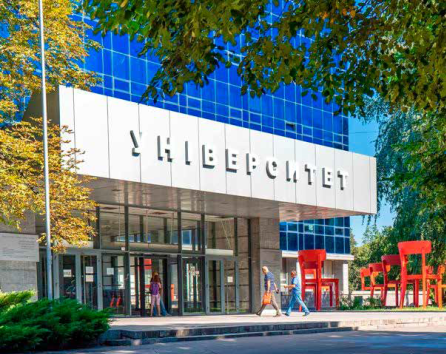
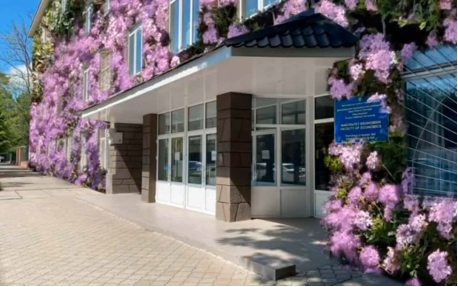
Oles Honchar Dnipro National University During the Full-Scale Russia-Ukraine War
The year 2022 posed an immense challenge not only for Oles Honchar Dnipro National University and Ukraine’s education system but also for the nation as a whole. The full-scale war necessitated significant adjustments in all aspects of the university’s operations. Combined with prior pandemic-related restrictions, these challenges profoundly impacted the organization of academic activities, research, international collaborations, and financial stability. Nevertheless, the university maintained its leadership among higher education institutions in the central region and across Ukraine.
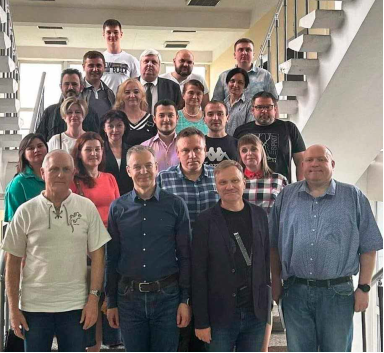
Academic Activities During Russia’s Full-Scale Invasion
In accordance with the Presidential Decree “On the Introduction of Martial Law in Ukraine” (February 24, 2022, No. 64/2022) and Article 2, Part 3 of the Law of Ukraine “On Higher Education,” the university issued an order (No. 13-г, February 24, 2022) suspending classes from February 24 to February 28, 2022. In line with a directive from the Ministry of Education and Science of Ukraine (No. 1/3276-22, February 25, 2022), the university implemented changes to the academic schedule and introduced emergency breaks for all students. 19
On March 18, 2022, the university issued an order (No. 15-г) to resume academic activities in an online format starting March 21. This order outlined regulations for making up missed classes, adapting the educational process to wartime conditions, and conducting practical training. Subsequently, a revised academic schedule, a Temporary Procedure for Individual Learning Plans, and Guidelines for Online Examinations for the 2021-2022 academic year were introduced. 20
Online education was conducted via the Microsoft 365 platform, with synchronous learning sessions (live interactions through chats, audio, and video conferencing) held according to the official timetable. 21.
On October 20, 2022, a new directive (No. 364) introduced comprehensive guidelines for online education, considering wartime challenges such as power outages and unstable internet connectivity. This policy enabled both synchronous and asynchronous learning, including the recording of lectures, ensuring equal access to education for all students. 22.
Additionally, DNU joined the Coursera for Campus program, providing students and faculty with free access to over 5,200 courses and 2,200 projects from leading universities and institutions. Successfully completed courses could be credited as part of formal or informal learning. Faculty members could also count them toward professional development requirements.23
For the 2022/2023 academic year, the university secured free access to Zoom Meetings for Education under a joint initiative of the Ministry of Education and Science of Ukraine and Zoom. The expanded Large Meeting feature allowed for recording sessions and hosting online lectures for up to 1,000 participants simultaneously.24
Student Enrollment at Dnipro National University
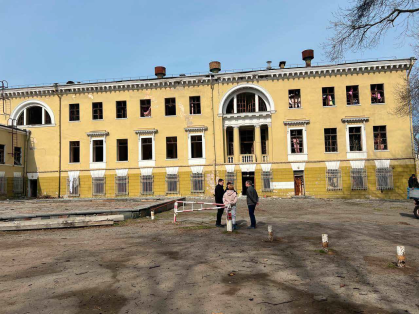
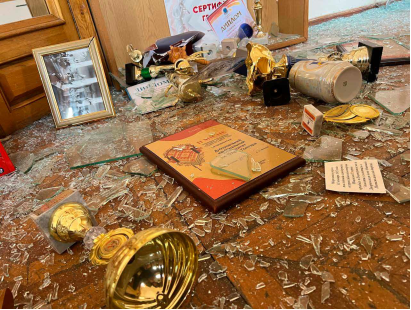
As of October 1, 2022, the student body at Dnipro National University (DNU) comprised 8,510 individuals, including 80 international students (compared to 8,195 students, including 135 international students, as of October 1, 2021). A total of 3,646 students pursued higher education at all academic levels with state funding, which is 119 more than the previous year (3,527 students). Meanwhile, 4,864 students financed their education through private or corporate funding, an increase of 196 students from the previous year (4,668). Additionally, 43 students were enrolled in evening study programs at the Center for Distance and Evening Education.
As of March 2025, DNU enrolls 9,284 students across all levels of higher education, including 7,828 in full-time programs, 1,429 in part-time programs, 9 in evening study, and 18 in distance learning.25 Despite the ongoing full-scale war, student enrollment has increased.
Faculty and Academic Staff
As of October 1, 2022, DNU employed 1,901 individuals, including 759 academic staff members responsible for educational activities. This included 167 doctors of science (professors), 466 candidates of science (associate professors), and 104 research staff. Among the full-time academic staff, there were 24 academicians and 5 corresponding members of scientific academies.26
By December 5, 2024, the university’s staff totaled 1,526, with 647 academic staff members, including 60 external part-time lecturers. The full-time academic staff consisted of 587 individuals, categorized as follows: 100 professors (doctors of science), 29 associate professors (doctors of science), 3 senior researchers (doctors of science), 268 associate professors (candidates of science), 5 senior researchers (candidates of science), and 88 candidates of science.27
Enhancement and Implementation of Educational Programs
In 2025, DNU offers 250 active educational programs across 79 specialties, including 130 at the bachelor’s level, 80 at the master’s level, and 40 at the doctoral (educational-scientific) level. Faculties continuously improve these programs, incorporating recommendations from stakeholders and expert groups based on accreditation evaluations.28
The introduction of new programs expands competitive learning opportunities, updates educational content, aligns with labor market demands, and supports innovation. Before approval by the Academic Council, proposed program updates undergo public discussions involving employers, student governance bodies, academic staff, alumni, and other stakeholders. In the past year, DNU introduced four new educational programs, available on the university’s website.
High-quality academic and methodological support ensures effective education. The university systematically reviews and updates educational materials to reflect innovative developments and labor market requirements. Course syllabi, methodological guidelines for independent work, and other instructional materials are aligned with the competencies and learning outcomes defined in each program. These resources are available on the university’s website, faculty pages, the university’s digital repository, and the Microsoft 365 corporate learning environment.
Compliance with Technological Requirements for Educational Activities
According to the Ministry of Education and Science of Ukraine’s Order No. 912 (June 23, 2017), DNU holds state-owned real estate necessary for its educational activities.29 The university’s total facility area is 191,620 m², with 48,813 m² allocated for educational purposes. As of December 1, 2024, the student body numbered 9,284, ensuring 5.25 m² of educational space per student, meeting licensing standards.30
The material and technical resources meet quality and quantity requirements for higher education, ensuring students have access to classrooms, computer labs, sports facilities, a scientific library, student palaces, a botanical garden, dormitories, cafeterias, and more. Lecture halls are equipped with modern technology, including multimedia boards, projectors, and laptops. Specialized computer labs and research facilities are also available. Students have free internet access, and the library collection is regularly updated.
DNU supports digital education through its e-library, Microsoft 365 educational environment, and an open-access repository. Students and staff can also access major research databases, including Elsevier’s Scopus and the Web of Science, via the university’s network.31
For distance learning, the university has secured free licenses for Microsoft 365, including MS Teams, and Zoom, allowing students and faculty to install these tools on up to five devices. Students also have access to educational resources at partner institutions for practical training and research.
All university facilities comply with health, safety, and fire regulations. Dormitory accommodations are available for students from other regions. The university promotes students’ physical and spiritual well-being and ensures medical and nutritional support.
For students from temporarily occupied territories or those facing difficult circumstances, DNU provides psychological support services to help them adapt.32 A legal clinic operates within the university.
To uphold anti-corruption policies, DNU has implemented a dedicated program (http://www.dnu.dp.ua/view/protidiya_korupcii), which outlines procedures and preventive measures.33 The university has an appointed anti-corruption officer, an anonymous hotline, and trust boxes, with regular training sessions on corruption prevention.
DNU has 508 classrooms, including 81 equipped with multimedia technology, 56 computer labs, and 92 specialized laboratories. Portable multimedia devices ensure at least 75% of classrooms have access to modern teaching equipment.34
The official university website (http://www.dnu.dp.ua) provides comprehensive information on educational programs, research, admissions, and university contacts.35
DNU’s material and technical infrastructure fully complies with licensing requirements for educational activities.36
National-Patriotic and Civic Education
With the onset of large-scale military actions, the staff and students of Oles Honchar Dnipro National University (DNU) joined the university-wide resistance program, choosing their own front of work to support Ukraine. In March, on the initiative of the university’s rector, Serhii Okovytyi, a project was developed to counter Russian information aggression. Each faculty focused on specific contributions to enhancing the country’s defense capability and societal resilience. 37
The first phase of the project aimed at exposing Russian propaganda and manipulations on social media. Students and faculty members from most faculties joined the cyber forces of DNU, carrying out crucial tasks assigned by curators. One of the key activities included organizing mass DDOS attacks on Russian propaganda platforms, successfully blocking channels such as “Russia Today.” Faculty members from the Department of Systems and Mass Communication conducted continuous monitoring of the information space, presenting their findings at both national and international levels.
The second phase involved publishing popular science content to debunk Russian propaganda narratives. Several faculties actively participated in this initiative, including the Faculty of History (S. Svitlenko, D. Arkhireiskyi), the Faculty of Systems and Mass Communication (O. Kyrylova), the Faculty of Social Sciences and International Relations (O. Tretiak), and the Faculty of Ukrainian and Foreign Philology and Art Studies (I. Kirkovska). D. Arkhireiskyi and O. Kyrylova, supported by O. Tretiak, created relevant content from March to June, which was translated into English, French, German, and Russian by the Faculty of Ukrainian and Foreign Philology and Art Studies and disseminated through national and international media channels.38
Since March 2022, as part of the university-wide project “Russian Historical Myths,” historians at DNU prepared materials in three thematic areas: “Ukrainian Historical Counter-Propaganda,” “The Historical Truth of Ukraine,” and “Hero Cities of Ukraine.”
The third phase of the project took the form of a televised talk show, “zROZUMity,” broadcast on DniproTV from July to November and shared via social media channels. The show’s audience included students from the Faculty of History and the Faculty of Systems and Mass Communication.
Other specialized projects by DNU experts included training in first aid, psychological support services, the collection of war crime evidence for the Hague Tribunal, legal consultations on wartime legislation (organized by the Faculty of Law and DNU’s Legal Clinic), Ukrainian counter-propaganda efforts debunking Russian historical myths (through projects like “Ukrainian Historical Counter-Propaganda,” “The Historical Truth of Ukraine,” and “Hero Cities of Ukraine”), preservation of archival museum collections and cultural heritage, analysis of economic sanctions against the aggressor state, and patriotic online initiatives such as the flash mob “Peaceful Sky Over Ukraine,” where students and alumni appealed to the global community to help stop the war in Ukraine. Additional efforts included assessing the environmental impact of the war and conducting international information campaigns to support Ukraine.
The university’s news agency, “UNI-Press,” provided extensive media coverage of these initiatives. Through its efforts, continuous updates about DNU’s wartime activities appeared on the university’s online platforms and regional media outlets. To keep faculty, students, and prospective applicants informed, the agency maintained a dedicated webpage titled “Information on DNU’s Operational Support.” This resource provided updates on university services and educational processes during martial law. At the request of leading regional media, interviews with the university administration were organized, while DNU’s website featured war-related materials marking significant commemorative dates, such as International Women’s Day (March 8), Volunteer Day (March 15), the Day of Remembrance and Reconciliation (May 8), the Defenders of Ukraine Day (October 14), and the Armed Forces of Ukraine Day (December 6).
On DNU’s website and social media platforms (Facebook, Instagram, Telegram) under the hashtag #Together_to_Victory (#Разом_до_Перемоги), numerous reports highlighted the university community’s active volunteer work, as well as the activities and living conditions of displaced educators from other universities who found refuge at DNU.39
Representatives of DNU’s Student Palace also actively engaged in military-patriotic education. The folk modern vocal studio “Mriya” participated in the city project “Dnipro - Ukraine’s Outpost.” Artists, actors, and musicians united in their commitment to use artistic expression to bring Ukraine closer to victory. A music video and an accompanying soundtrack were produced to support the volunteer movement. Creative teams from the Palace began touring military locations to perform for the Armed Forces of Ukraine (AFU). Concert brigades included members from four student artistic groups: the “Ovation” violin ensemble, the “Rainbow” folk circus studio, the “Masks” folk theater studio, and the “Mriya” folk modern vocal studio.40
In 2022, DNU’s scientific library hosted an event featuring Lieutenant Colonel V. Tymchuk of the AFU, a recipient of multiple literary awards and author of five books donated to the university. Students from the Faculty of Systems and Mass Communication also attended a meeting with war correspondents, Colonel T. Hren and Major Ye. Romanov. Additionally, the Center for Journalistic Solidarity of the Dnipropetrovsk Regional Organization of the National Union of Journalists of Ukraine conducted a military journalism training session for DNU students.
Volunteering and Social Initiatives
Following Russia’s full-scale invasion in February 2022, volunteering became a key pillar of civic engagement at DNU. Active members of the university community provided humanitarian assistance to the Armed Forces of Ukraine and internally displaced persons, including students from temporarily occupied territories and active combat zones.41
From the onset of the war, DNU’s Student Council swiftly established a humanitarian aid collection point. Students gathered food and essential supplies for territorial defense units and displaced persons at the university’s Building 9. Additionally, the Student Council of the Faculty of History raised funds to purchase food and necessities for the Dnipro Volunteer Center, which supports both displaced individuals and military personnel.
From the earliest days of the war, the Faculty of Medical Technologies, Diagnostics, and Rehabilitation, in collaboration with DNU’s Psychological Support Service, organized a series of training sessions on critical topics such as first aid and psychological resilience.
In March 2022, DNU staff and students responded to an urgent request from medical personnel at the Dnipro Regional Clinical Military Hospital to procure essential medicines. The university’s volunteer team successfully raised UAH 125,000 to support the hospital’s needs.
In April, DNU representatives facilitated the delivery of humanitarian aid from European partners to the military hospital and other medical institutions in Dnipro. Thanks to support from “Pharmacists Without Borders” (Germany), medical facilities treating wounded soldiers received several tons of antibiotics and painkillers worth nearly €130,000. Furthermore, with assistance from the Mittweida University (Germany), 35 tons of medications and medical equipment - including electrically adjustable hospital beds and ventilators - were delivered to Ukraine.42
A new initiative by Dnipro National University in supporting wounded military personnel has been the launch of the charity photo exhibition “Everyone Has Their Own Front,” which has been on display at the Students’ Palace of Dnipro National University since November 22, 2022. This university-wide exhibition was organized with the support of the Dnipropetrovsk Regional Military Administration (Dnipropetrovsk OVA) and partners, including the Cossack Charitable Foundation “Memorial of Sirko.” The exhibition features 50 photographs depicting the relentless efforts of university members in resisting Russian aggression - graduates, faculty, and students of Dnipro National University, local citizens who fight daily for victory either on the front lines or through their work on the home front.
One notable example of how photography serves the cause of assisting military hospitals within the exhibition is the project “Denial of Reality” by students from the Faculty of Economics. This series of photographs captures the horrors of war as seen through the eyes of young people today.
In total, the “Everyone Has Their Own Front” exhibition featured photographic works and anti-war posters from five faculties: Economics; Ukrainian and Foreign Philology and Art Studies; Psychology and Special Education; Systems and Mass Communications; and Law. The event aimed to raise funds for equipping a new surgical unit in the military hospital with laparoscopic equipment, specifically for purchasing an aspiration and irrigation pump along with related materials for endoscopic surgeries. Additionally, the university’s esports student committee organized a charity competition to financially support the Armed Forces of Ukraine (AFU). The original Chill Cup tournament attracted around 300 university students.43
Another noble endeavor by the Dnipro National University community has been engaging with wounded soldiers. In October 2022, ahead of the triple celebration of Defenders of Ukraine Day, Ukrainian Cossacks Day, and the Feast of the Protection of the Holy Virgin, faculty members from the Department of English for Non-Philology Specialties, alongside students, visited Ukrainian defenders at the Dnipro Military Hospital.
Before the New Year of 2023, faculty members and student volunteers from the University’s Center for Social Initiatives and Volunteering visited another hospital caring for AFU soldiers. They delivered New Year’s gifts handcrafted by children from families of internally displaced persons to the heroic defenders.
Throughout the prolonged months of war, faculty, staff, and students of Dnipro National University have been actively involved in various volunteer efforts aimed at bringing Ukraine closer to victory. Their contributions range from protecting historical and cultural heritage from damage to weaving camouflage nets and making trench candles. For instance, in March 2022, faculty and students from the History Faculty helped relocate around 1,000 rare books from the university’s scientific library to a safe location. In April-May 2022, history students assisted in packing humanitarian aid for victims of Russian aggression.
Since September 2022, students from the History Faculty have participated in making trench candles at the TAPS-Dnipro (TAPS Resilience Center). This initiative, titled “Give Warmth to a Defender,” was later joined by students from the Faculty of Ukrainian and Foreign Philology and Art Studies, the Faculty of Psychology and Special Education, the Faculty of Medical Technologies, Diagnostics, and Rehabilitation, the Faculty of Mechanics and Mathematics, and the Faculty of Economics. As part of this effort, students of Dnipro National University also donated 60 pairs of socks, sweets, and touching gifts to the military.
Students of Dnipro National University actively engage in civic initiatives, dedicating their time to volunteer activities. Among them, history students such as D. Lyabagova, a member of the All-Ukrainian NGO “Solidarity Youth” and the NGO “DUIT,” work to send essential supplies, clothing, and food to the AFU and displaced persons, participate in patriotic events, and combat Russian propaganda through informational campaigns. N. Karimov, also a member of “Solidarity Youth,” has been volunteering since the war’s onset by providing supplies to the AFU, making financial donations, participating in patriotic events, and countering Russian propaganda and collaboration. In December 2022, he was awarded the Mayor’s Scholarship named after Oleksandr Pol. K. Horobets, in addition to his volunteer work, focuses on reviving the traditions of Zaporizhian Cossacks in the region and was awarded a certificate and medal “For the Revival of Cossack Traditions” in September by the International NGO “Zaporizhian Cossacks.” M. Podobedov is an active volunteer supporting the AFU and military families, aiding displaced persons from occupied territories, and assisting in securing state aid for Ukrainian farmers. M.Netesa is also an active volunteer. O.Morozevych, a dedicated volunteer, holds a certificate from the Coordination Headquarters of Dnipro Volunteers.44
In October 2022, history students also participated in a blood donation drive at the Mechnikov Hospital. Students from the Faculty of Ukrainian and Foreign Philology and Art Studies also contributed to the “Victory Runs Through Your Veins” campaign. Additionally, students took part in weaving camouflage nets in Dnipro, Kryvyi Rih, and Kamianske.
Another major humanitarian effort of Dnipro National University during wartime has been supporting internally displaced persons residing in Dnipro. This initiative is actively led by the University’s Center for Social Initiatives and Volunteering under the guidance of Acting Dean of the Faculty of Psychology and Special Education, Zoia Bondarenko. Volunteers and social partners of the Center have organized educational excursions, entertainment programs for children from displaced families, and introductory events about the university. The university’s Botanical Garden, Educational and scientific complex “Aquarium,” Zoological Museum, Students’ Palace, and Scientific Library have warmly welcomed displaced persons and their families.
For instance, in support of displaced lecturers and graduate students, the University Library has provided them with workspaces and fulfilled their academic and literary requests. Three library tours were conducted, including the latest titled “Behind the Scenes of the Library: A Day in the Life of the Scientific Library.”
The Students’ Palace has also welcomed displaced persons. On March 23, it hosted an excursion for the creative elite from Kharkiv. On April 5, the Palace opened its doors to children from temporarily occupied territories. On April 7, educators from evacuated universities relocated to Dnipro National University visited the historical building. On October 2, 2022, Teacher’s Day, teachers from Mariupol, Lysychansk, Luhansk, and Sievierodonetsk toured the Students’ Palace.
Throughout the year, volunteers from the Center for Social Initiatives and Volunteering, along with students and faculty, devoted special attention to supporting children from displaced families. Over five charity events were organized during the New Year period alone. For example, for St. Nicholas Day, university representatives, in collaboration with REHAB Center and the “For the Future of Ukraine” Charity Fund, hosted three major celebrations for around 100 children. Volunteers decorated venues, registered guests, played with children, ensured their safety, and distributed toys and sweets.
On December 20 and 22, 2022, university students held workshops for children on making Christmas ornaments and greeting cards for the AFU. These activities aimed to enhance children’s color perception, creativity, aesthetic appreciation, and fine motor skills.
On December 30, 2022, volunteers visited a university dormitory housing displaced educators. On New Year’s Eve, they organized a joyful celebration for children, featuring games and contests, with personalized greeting cards and sweets from the Faculty of Psychology and Special Education.
Additionally, since the war’s onset, Dnipro National University has provided shelter to approximately 360 displaced students and staff from East Ukrainian National University named after Volodymyr Dahl and Donbas State Pedagogical University, including the Horlivka Institute of Foreign Languages. Humanitarian aid was coordinated with the International Organization for Migration (IOM) under the UN, which helped refurbish collective housing centers and provide essential supplies.45.
The university also collaborates with the “Embrace Ukraine” Charity Fund from Samar, which has donated eight fully equipped computers for student use. Additionally, students have actively supported local animal shelters by donating food and medicine and volunteering at shelters like “Pegas” and “Fidelity.”46
Strengthening Dnipro University as a Secure Educational Environment During Wartime
During the war in Ukraine, models were developed to respond to the severe challenges, programs were designed to compensate for educational losses, and grant initiatives were launched. In Dnipro, modern teaching methods are being effectively implemented, and a safe environment is being created for all participants in the educational process.47
On February 5, 2025, the main building of Oles Honchar Dnipro National University hosted the official opening of CLUST SPACE DNIPRO, the second smart shelter for students in Ukraine and the first in the eastern region. The event was attended by representatives from the student community, the education sector, and business.48
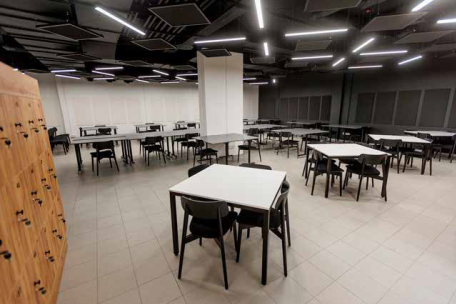
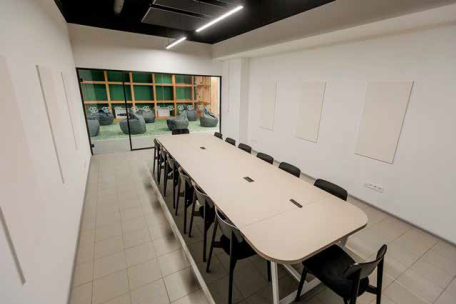
CLUST SPACE is a charitable project aimed at establishing smart shelters for students in Ukrainian higher education institutions. It was initiated and funded by entrepreneur Ruslan Tymofieiev as part of CLUST’s corporate social responsibility efforts. The project’s goal is to implement innovative security solutions that enable comfortable offline learning. To achieve this, modern smart shelters are being built at universities, integrating shelter functionality with co-working spaces.
CLUST SPACE DNIPRO is the second facility of its kind in Ukraine. The first smart shelter, CLUST SPACE KYIV, has been operational for over a year in the Scientific and Technical Library of Igor Sikorsky Kyiv Polytechnic Institute. Over the past year, approximately 66,000 people have visited the space, where presentations, competitions, hackathons, and academic defenses have been held. CLUST SPACE KYIV has already proven its effectiveness as a place where students can continue their studies even during air raid alarms, maintaining the quality of education.
The safe space for students at Dnipro National University follows the smart shelter concept, where every square meter serves a purpose. Spanning 550 m², it features a large open space, a sports and recreation area, rooms for group work and meetings, video call pods, individual workspaces, a cafeteria, restrooms, and showers. Additionally, CLUST SPACE DNIPRO complies with State Emergency Service (SES) regulations for shelters and can accommodate up to 350 people. The entire infrastructure, including ventilation systems, is designed for prolonged stays during emergencies.49
The construction of CLUST SPACE DNIPRO took approximately four months and cost $350,000. Numerous partners contributed to the project, including Usyk Foundation, Svichado Charitable Foundation, Lenovo, and the Epicenter chain. The main donor of CLUST SPACE DNIPRO was Freedom Holding Corp., which has been actively supporting charitable initiatives for Ukrainians since the beginning of the full-scale invasion.
The administration of Dnipro National University continuously implements measures to sustain the educational process, ensure the completion of academic requirements, and maintain high-quality education. These efforts are guided by Ukraine’s Law on Higher Education and the university’s internal regulations. To minimize the impact of wartime challenges, new protocols for organizing education are regularly developed and introduced, prioritizing the safety of students and staff while upholding their rights.
Educational activities across all levels of higher education are conducted using synchronous distance learning technologies through the Microsoft 365 (MS Teams) corporate platform in dedicated virtual classrooms created by faculty members.
Decisions regarding the format of practical, laboratory, and seminar-based classes are made by the university administration in consultation with the regional military administration, faculty leadership, academic program guarantors, and student representatives. These decisions are based on the necessity of hands-on learning, the availability of students and faculty, and logistical considerations. Whenever possible, these sessions are also live-streamed online.
In the event of an air raid alarm or other emergency alerts during in-person classes, students and faculty must immediately relocate to the shelter and remain there until the all-clear signal is given. The educational process format is adjusted throughout the academic year depending on the security situation in Ukraine and Dnipro and is formalized by a university rector’s decree, in coordination with the regional military administration.50
Conclusions
The study reveals that Oles Honchar Dnipro National University has demonstrated a multi-dimensional model of institutional resilience in response to the ongoing war in Ukraine. The university’s ability to maintain academic continuity, safeguard its community, and fulfill its broader social mission amid conditions of extreme disruption reflects a coherent and adaptive institutional strategy. Key areas of resilience emerged across five interrelated domains: academic transformation, digital infrastructure, humanitarian engagement, civic mobilization, and physical security.
First, the university rapidly transitioned to digital learning formats, implementing synchronous and asynchronous instruction through Microsoft 365 and expanding access to external platforms such as Coursera and Zoom. This ensured the continuity of the educational process for thousands of students despite displacement, infrastructural damage, and frequent power outages. The development of individualized learning trajectories and flexible admission policies further strengthened institutional responsiveness.
Second, DNU played a vital humanitarian role by offering shelter, resources, and psychosocial support to internally displaced students, educators, and partner institutions. It established mechanisms for integrating displaced universities and hosted academic communities from occupied regions, thus preventing educational exclusion and fostering academic solidarity.
Third, the university engaged in proactive civic initiatives, particularly in the realm of information resistance. Faculty and students collaborated to counter wartime disinformation, producing multilingual content to debunk Russian propaganda, organizing media campaigns, and supporting public discourse with fact-based narratives. These efforts positioned the university as an active agent in the information war and a contributor to national psychological resilience.
Fourth, DNU’s material infrastructure was adapted to wartime conditions through the development of innovative protective environments, including the creation of Ukraine’s first smart shelter in the eastern region. This facility, integrating safety with educational and co-working functions, serves as a model for resilient academic infrastructure under emergency conditions.
Finally, the institution maintained stable or even increased student enrollment, introduced new educational programs aligned with labor market needs, and sustained international partnerships. This reflects not only its operational continuity but also its strategic vision for long-term development despite adverse conditions.
In a broader sense, the case of DNU demonstrates how a university can function as a stabilizing force during national crisis. Its capacity to integrate digital education, social support systems, civic responsibility, and institutional innovation illustrates a model of higher education that goes beyond survival to actively contribute to societal resilience. The findings suggest that universities in conflict-affected regions can and must evolve into hubs of adaptive leadership, civic mobilization, and post-crisis reconstruction.

