


 text in
  English (pdf)
 Article in xml format
 Article references
 Automatic translation
 Send this article by e-mail
 Cited by SciELO
  Cited by Google
  Similars in
SciELO
Similars in
SciELO  Similars in Google
 Permalink

INTRODUCTION
Metals are released into the environment by anthropogenic and natural sources (Ansari et al., 2004; Ismail, 2006; Anbuselvan et al., 2018) and are often highly reactive, generating negative impacts in aquatic ecosystems (Gheorghe et al., 2017). In most organisms, even exposure to low concentrations may be extremely toxic if it exceeds their threshold concentration (Castañé et al., 2003; Ahmed et al., 2013; Gall et al., 2015). The non-biodegradable nature of these potentially toxic elements favors their bioaccumulation in trophic networks (Gall et al., 2015; Zhang et al., 2016). In marine and coastal ecosystems, metal contamination is predominantly influenced by river discharges that carry considerable amounts of sediments and transport diverse compounds along their continental path (Morillo et al., 2004), as well as by direct discharges. Once they enter an ecosystem, they can accumulate in sediments or be absorbed by organisms (Wright and Mason, 1999; Pérez-López et al., 2003).
Metal deposition in sediments depends on environmental conditions and the physical and chemical alterations of these potentially toxic elements. Likewise, due to said changes, metals may return to the water column through diffusion and mixing processes, which are facilitated by benthic organism activity or resuspension (Meyerson et al., 1981; Campbell and Guy, 1995). The high availability of metals deposited in sediments can impact some species directly, which may accumulate high concentrations and even exhibit chronic effects in their populations (Cosma et al., 1982; Acosta et al., 2002).
In metal sedimentation and transport processes in estuarine zones, physical, chemical, and biological processes are involved. Current circulation, river and underground water discharges, tidal flooding, the entry and resuspension of sediments, salinity, the redox potential, and pH, along with the presence of organisms, determine the mobility of metals (Botsou et al., 2011; de Souza-Machado et al., 2016). Although the net effect often generates complex distribution patterns, it has been found that sediment composition, especially regarding particle size, is one of the most influential factors in the retention and mobilization of metals (Krumgalz et al., 1992; Okoro et al., 2013; Yao et al., 2015).
In Colombia, metal contamination reports associated with the industrial, agricultural, and mining sectors are commonplace (Pabón et al., 2020). However, reports categorizing this contamination are scarce. Therefore, this study aims to determine the metal contamination levels in two sectors of the Colombian Caribbean, which are influenced by the Magdalena and Sinú Rivers in two climatic seasons (rainy and dry), as well as their relationship with environmental variables.
STUDY AREA
Sampling was carried out in two sectors. The first sector was dubbed Magdalena and spans five localities (El Rodadero, ROD; Tasajera, TAS; Ciénaga Grande de Santa Marta, CGSM; Salamanca, SAL; and Atlántico, ATL) influenced by the Magdalena River, and the second sector was named Sinú, also encompassing five localities (Caimanera, CAI; Cispatá, CIS; Sinú, ZEN; Tinajones, TIN; and Isla Fuerte, ISF) influenced by the Sinú River mouth.
The climate regime of the Colombian Caribbean Sea is determined by its location in the intertropical convergence zone (ITCZ), which is why there is no marked seasonality as in temperate zones (Lozano-Duque et al., 2010). This region is characterized by a convective, bimodal rainfall regime influenced by the south-north movement of the ITCZ and by its influence on the northeastern trade winds (Pujos et al., 1986; Andrade, 1993; Lozano-Duque et al., 2010). Historically, the dry climatic season takes place between December and April, and the rainy one during the rest of the year, interrupted by a relative minimum in July and August, popularly known in Colombia as veranillo de San Juan (Saint John’s little summer) (Salzwedel and Müller, 1983; Andrade-Amaya and Thomas, 1988; Andrade, 1993). During the dry season, the ITCZ is positioned to the south, and the trade winds strongly and constantly blow from the northeast, whereas, in the rainy season, the ITCZ is positioned to the north, weakening the winds with a variable direction, given the influence of its instability (Pujos et al., 1986; Bernal et al., 2006). Starting in December, the northeastern wind exhibits an increasing trend regarding its magnitude, reaching maxima in February and March. From April, the magnitude gradually decreases, and there is a prevalence of south-southwest winds (Bernal et al., 2006; Mancera-Pineda et al., 2013).
In the Magdalena sector, the CGSM locality is in an area with estuarine conditions, which is characterized by the presence of mangroves, tropical fry forests, and aquatic plants associated with freshwater swamps, as a result of the influence of the Magdalena River on the Pajarales Complex (Bernal, 1996; Espinosa et al., 2011). The remaining localities are in the marine area between El Rodadero (department of Magdalena) and Puerto Velero (department of Atlántico).
In the Sinú sector, the ZEN and ISF localities are in an area of greater marine influence, while the CIS and TIN localities exhibit a higher incidence of continental waters, as they are located in Cispatá Bay and the Tinajones Delta, respectively, in the Sinú River mouth (Estela and López-Victoria, 2005). The selection of localities aimed to estimate the metal concentrations of marine, deltaic, and estuarine sites. The Sinú River can influence the ciénaga of La Caimanera, given the exchange of waters of the latter with the Gulf of Morrosquillo (Figure 1).
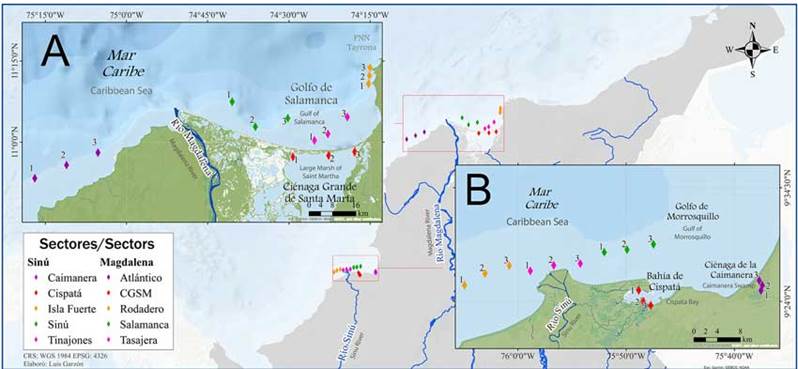
METHODOLOGY
Field phase
In each locality, three stations were evaluated. From each of these stations, three sediment samples were collected with a van Veen dredge. At least 950 g of sediments were obtained, which were divided into 600 g for metal concentration analysis, 300 g for granulometric analysis, and 50 g for organic matter determination. The samples were stored in low-density polyethylene bags with airtight closure, which had been previously labeled. These bags were kept refrigerated until their analysis in the lab.
Laboratory phase
Determining the metal concentration
The metal concentration was determined in the Toxicology and Environmental Management Laboratory of Universidad de Córdoba (Montería, Colombia), using sediments ≤ 63 μm and atomic absorption spectrometry (Baird et al., 2017) while following the corresponding procedures for each metal. For mercury (Hg), the EPA 7473 PLTX methodology was used, which is based on the direct analysis of Hg via thermal decomposition, amalgamation, and atomic absorption spectrometry (Fernández-Martínez et al., 2015). For chromium (Cr) and nickel (Ni), the EPA 3015-SM3111B-FLAAS PLTX-012 method was employed, as well as EPA 3015 A-FLAAS PLTX-019 for copper (Cu). These methods consist of introducing the sample into a flame, where it is atomized. Thus, the vapor solution releases the atoms of the element of interest, some of which are thermally excited by the temperature of the flame. However, most of them remain in their ground state. Ground-state atoms can absorb radiation of a specific wavelength generated by an emission source containing the analyzed element (Cantle, 1982). Lead (Pb) and cadmium (Cd) were analyzed through the EPA 3015A-GFAAS PLTX-009 methodology, which is based on the same principle as FLAAS, albeit replacing the standard burner head with a graphite furnace (GFAAS) at approximately 3000 °C (Welz and Sperling, 1999). Finally, arsenic (As) was determined through hydride generation atomic absorption spectrometry (HGAAS), which consists of three fundamental stages: the generation and volatilization of hydrides, their transfer, and their later atomization in the atomic absorption spectrometer, under the EPA 3051 A-HGAAS PLTX-021 method (Minoia and Caroli, 1992).
Granulometric analysis
150 - 200 g of collected sediments were dried in an oven at 90 ± 5 °C. Afterwards, 100 g of dry sediments were weighed. When the samples agglomerated, these 100 g were diluted in 1 L of deionized water with 40 mL of 1 % (NaPO3)6 (6.2 g/L) for 24 h, in order to achieve the dispersion of particles of different sizes. Once the disaggregated or diluted dry sediment had been obtained, the samples were sieved to separate them by grain size (between 1 mm and 63 µm). Finally, each fraction was weighed separately, and the particles were classified were classified as very coarse sand (1 mm), coarse sand (500 µm), medium sand (250 µm), fine sand (180 - 125 µm), very fine sand (90 - 63 µm), and mud (< 63 µm).
Organic matter determination
5 g of each sample were placed in previously weighed and labeled crucibles, and they were dried in a muffle furnace for 5 h at 550 °C. Afterwards, they were placed in a desiccator for 2 h, and they were weighed again to determine the organic matter content by mass difference:
MO = inicial weight (5 g) - final weight
Cabinet phase
A descriptive analysis of the metal concentrations was conducted by means of the arithmetic mean and the standard deviation. The concentrations were compared against the limit values proposed by the NOAA for both threshold effect levels (TEL) and probable effect levels (PEL) (Buchman, 2008). Based on these, the potential ecological risk index (PERI) was calculated.
Potential ecological risk index (PERI)
The level of contamination, the toxicity, and the reaction of the environment due to As, Cd, Cr, Cu, Hg, Ni, and Pb concentrations in sediment samples for each climatic period were determined by calculating the potential ecological risk coefficient (PERC) of each metal (Table 1). This coefficient is calculated by multiplying the contamination factor (fi) by the Hakanson toxicity coefficients (CTH) of each metal (Hakanson, 1980).
CREP i = CTH × F i
Table 1 Reference values for the toxic response factors of metals in sediments. TEL: tolerable effect level for the biota and the ecosystem. CTH: Hakanson toxicity coefficients.

The contamination factor fi is defined as the quotient between the recorded concentration of each metal in the sediment (Ci) and the reference value (Cb) of the TEL for the biota and the ecosystem (Table 1) described by Buchman (2008):
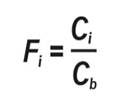
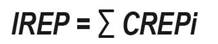
Once the PERC values for each metal had been obtained, the PERI of each period was finally calculated (Table 2) using the equation proposed by González et al. (2018) and Lie (2021).

To determine whether there were metal concentration differences between sectors (SE, k = 2), periods (PE, k = 2), and localities (LO, k = 5), a univariate permutation analysis (Permanova) was conducted in the Primer software, version 7.0.21. 9999 permutations were executed using the Euclidean distance. A residual permutation under a reduced model was also carried out, as well as the Monte Carlo test ant the type III sum of squares (Anderson et al., 2008). Finally, a permutation test of the linear model based on the DistLM distance was carried out, using the step-wise model with the AICc selection criterion (Clarke and Gorley, 2015).
RESULTS
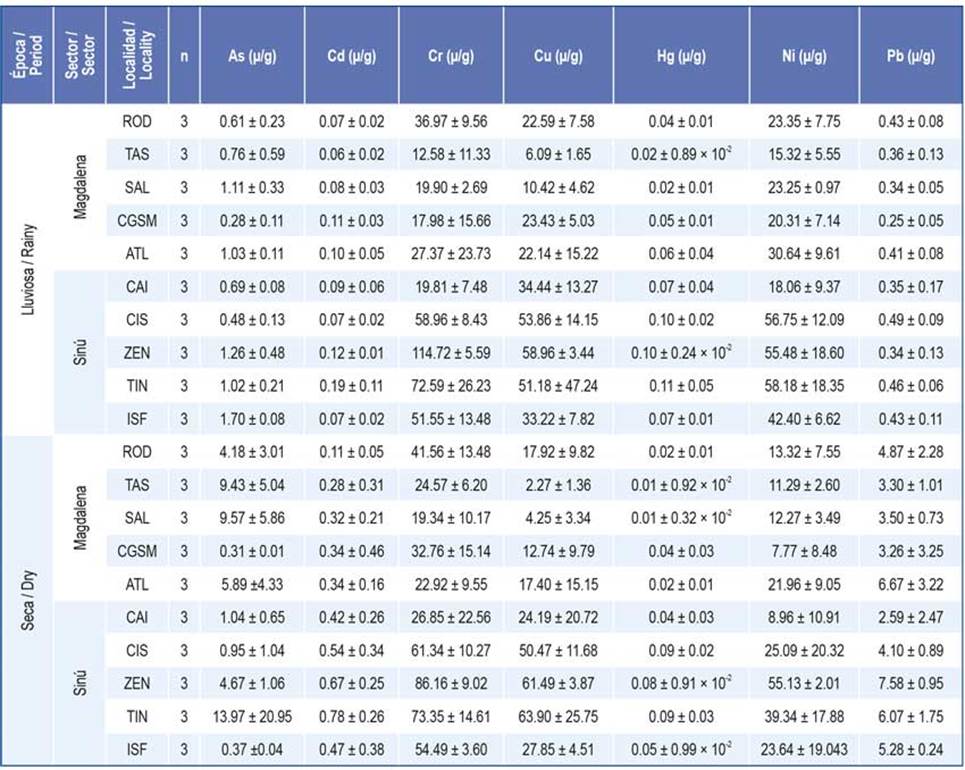
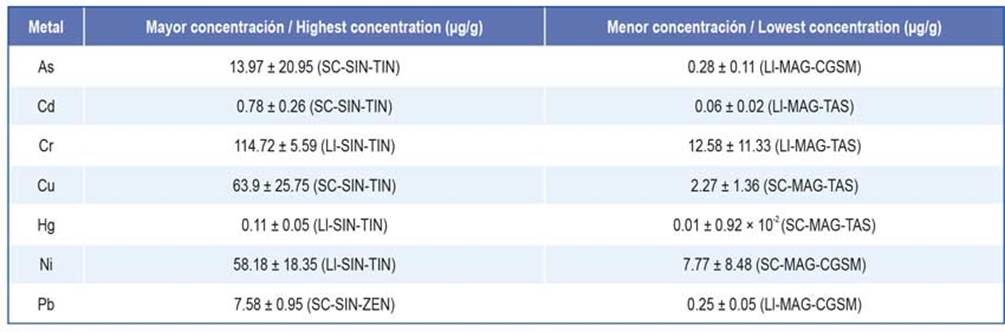
The Sinú sector exhibited the highest average metal concentrations in the two climatic periods, especially at the TIN and ZEN localities. The lowest values were often found in the Magdalena sector, in TAS and CGSM (Annex 1).
The highest concentrations of As, Cd, Cu, and Pb were recorded during the dry period, and those of Ni, Cr, and Hg were observed in the rainy period. The lowest concentrations of As, Cd, Cu, and Pb were measured during the rainy period, while those of Cu, Hg, and Ni were determined in the dry period. Unlike the other metals, the variations in the concentration of Cr and Cu were not influenced by the time of the year; for them, both the highest and lowest concentrations were estimated during the same climatic period (Table 3).
Table 3 Highest and lowest average concentration (µ/g) of each metal during both climatic periods (SC: dry; Ll: rainy) in both studied sectors (SIN: Sinú; MAG: Magdalena). TIN: Tinajones, CGSM: Ciénaga Grande de Santa Marta, TAS: Tasajera, and ZEN: Sinú.
When comparing the concentrations reported in this study against the TEL and PEL reference values, we evidenced that the concentrations of Ni exceeded these levels at some localities of the Sinú sector in both periods. During the dry period, As was the only metal that exhibited concentrations above the TEL in more localities of the Magdalena sector (in comparison with the Sinú sector). The other metal exhibited concentrations both above and below the TEL, except for Pb, which did not exceed the reference value (Figure 2).
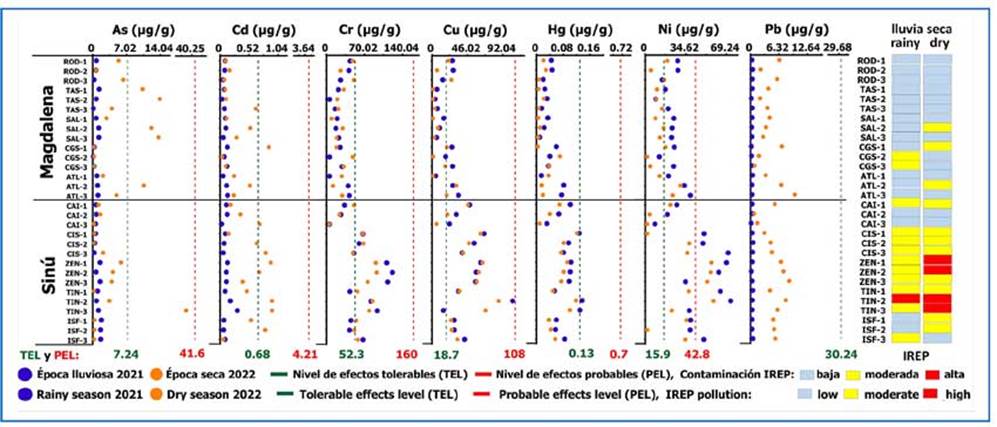
Figure 2 Metal concentrations in localities of the Magdalena and Sinú sectors, in comparison with the TEL and PEL reference values during the dry and rainy periods.
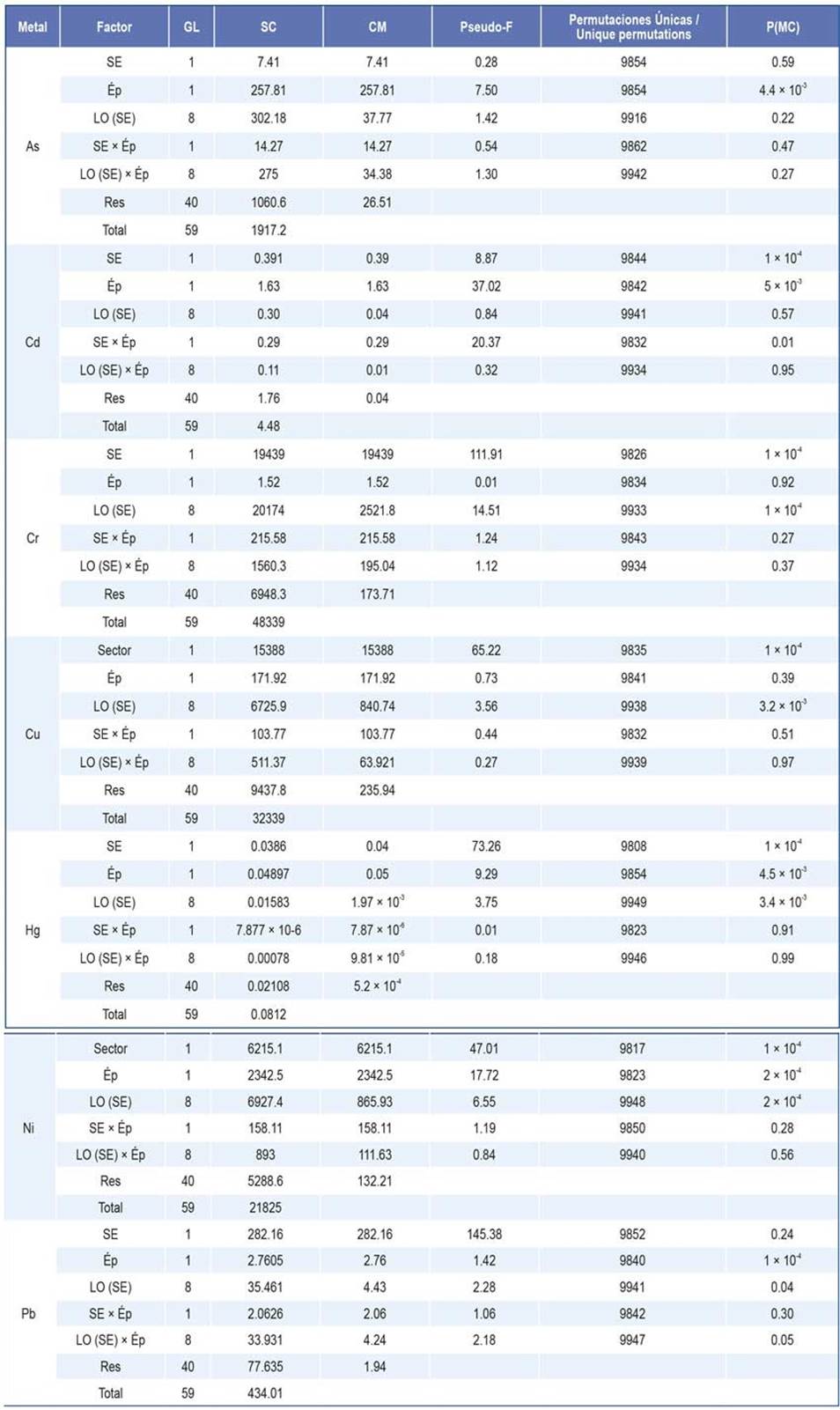
All the metals exhibited significant differences between sectors, periods, and localities, as well as in the interaction between factors. The concentrations of Hg and Ni showed differences in the three factors, and Cd exhibited differences between periods, sectors, and their interaction. Meanwhile, Cr and Cu recorded significant differences between sectors and localities, but not between periods. On the other hand, Pb exhibited differences between periods and localities, but not between sectors. Finally, As only showed differences between periods (Annex 2).
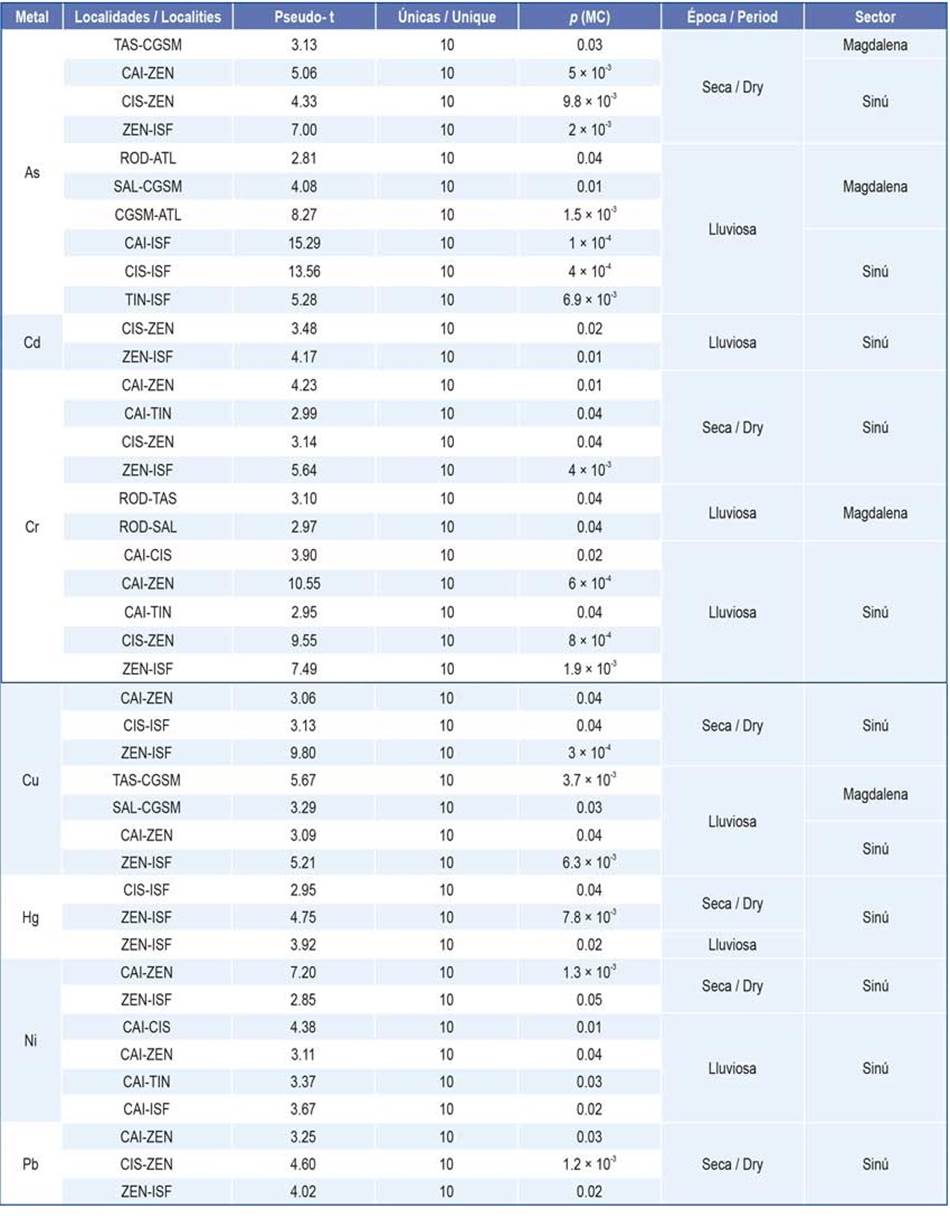
The pairwise comparison Permanova indicates that the localities of the Magdalena sector exhibited significant differences in the concentration of As, Cr, and Cu during the rainy period. On the other hand, in the dry period, significant differences were only observed in the concentration of As for the TAS and CGSM localities. Meanwhile, in the Sinú sector, significant differences in the concentrations of As, Cd, Cr, Cu, Hg, and Ni were detected during both dry and rainy periods (Annex 3).
Relationship between metal concentrations and predictor variables
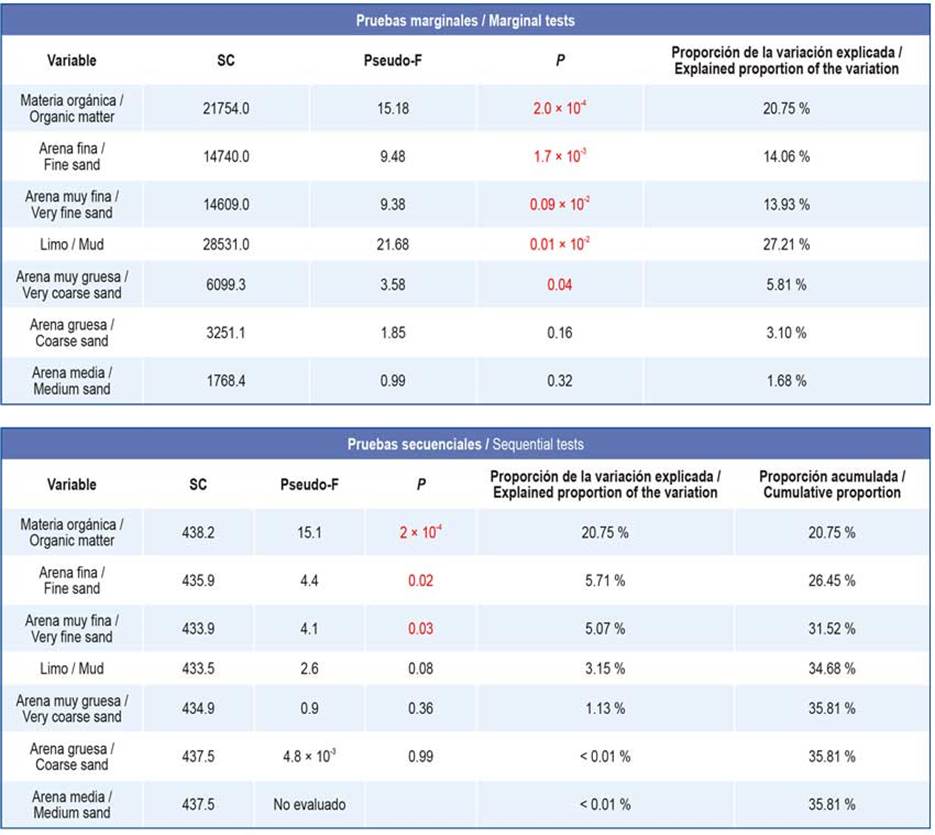
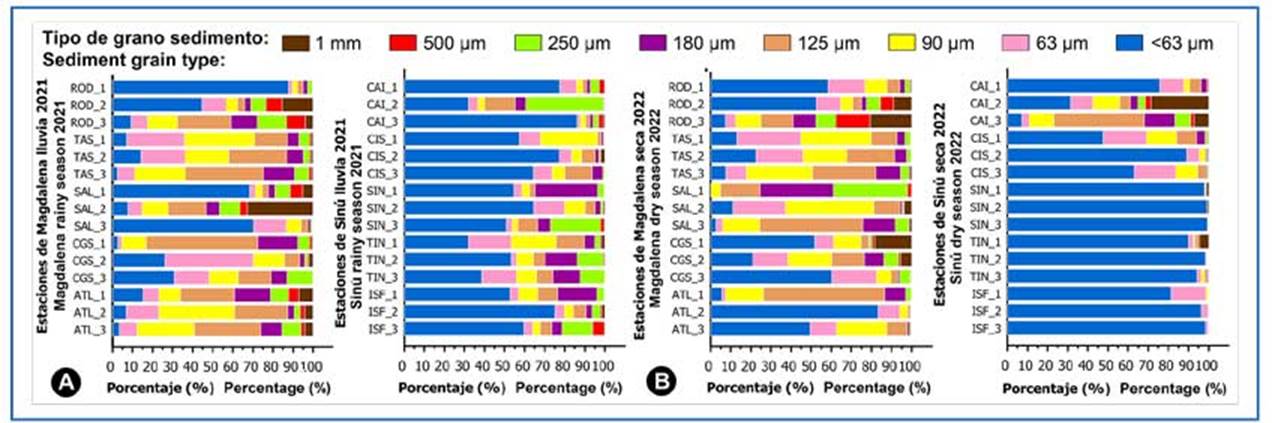
The results of the DistLM analysis allowed confirming the existence of a positive correlation between the metal concentration, the smallest grain sizes, and organic matter (Table 4). In this vein, it is understandable that higher concentrations were found in the Sinú sector, where the stations exhibited a dominance of muds and clays. This, in comparison with the Magdalena sector, which mud percentage was lower in both periods (Figure 3). The highest percent variation in metal concentration is apparently explained by the mud content (27.1 %), followed by the organic matter content (20.74 %), and the amount of fine sands (14.05 %), very fine sands (13.93 %), and very coarse sands (5.82 %). When considering all variables as a whole based on the sequential multivariate model, it was observed that only the organic matter content and the fine and very fine sands explained 31.52 % of the variation in the metal content of the sediments (Table 4).
Table 4 Results of the marginal and sequential DistLM tests regarding the metal concentration explained by seven predictor variables, which were identified by means of the All Specified model (9999 permutations). SC: sum of squares.
Potential ecological risk coefficient (PERC) and potential ecological risk index (PERI)
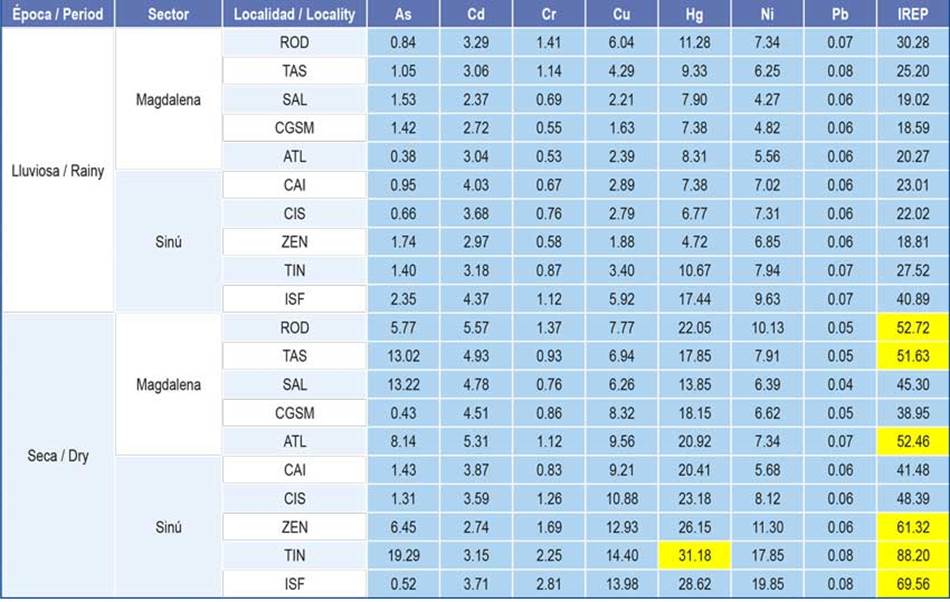
The PERC was low for most of the metals in both periods, except for Hg in Tinajones during the dry period, which was moderate. Likewise, the PERI indicates a low contamination in all localities during the rainy period, as well as moderate levels in most of them during the dry period (Annex 4). This value increased due to the larger number of stations with moderate to high levels (Figure 2).
DISCUSSION
It is possible that marine pollution by metals is the result of continental anthropic activities, which are usually the main cause of increased concentrations of these elements in aquatic ecosystems (Tulonen et al., 2006), as they can be transported by rivers, water currents in estuaries and channels, surface and underground water flows, and submarine sewage outfalls, which also introduce large amounts of organic matter (Escobar, 2002). All these pollution sources may favor the accumulation of high metal concentrations in the sediments, as was found in this study.
The alteration of the natural metal concentrations, which result from natural processes such as precipitation, soil erosion (Baize and Sterckeman, 2001; Yang et al., 2020), or volcanism and geothermal phenomena (Bundschuh et al., 2021) has been associated with the industry, agricultural activity, and mining (Londoño-Franco et al., 2016). The main causes for the high metal concentrations in Tinajones and Sinú likely have to do with their proximity to the Sinú River mouth, as this river can transport metals from the different sectors where it flows to the sediments of the stations near its mouth. In the localities of Atlántico and El Rodadero (Magdalena), the high concentrations found in this work may be due to the proximity to anthropic activities in cities like Barranquilla, which features significant industrial activity, and Santa Marta, which has a submarine outfall.
The high concentrations of As, Cd, Cr, Cu, and Ni, above the TEL and PEL, in some samples from the Sinú River’s area of influence may be mainly due to activities such as extensive agriculture, mining, and the influence of the Urrá dam. In the case of agriculture, pesticides and fertilizers are often used which may alter the natural metal concentrations (Gimeno-García et al., 1996; Roozbahani et al., 2015). Large areas are allocated for the cultivation of corn, cotton, and rice, among other products (Cadena-Torres et al., 2021), allowing agriculture to become one of the sources for the high concentrations of these metals in the sector. The influence of mining on the high concentration of metals such as Ni could be related to the presence of the largest iron and nickel mine in Latin America (Cerro Matoso) and to other small-scale exploitation activities near the upper basin of the Sinú River (Marrugo-Negrete et al., 2017; Arenas et al., 2022). On the other hand, the influence of the Urrá dam as a potential source of heavy metal enrichment is due to the flooding of 7400 ha of land, which accelerated the leaching of metals and the constituents of the soil affected by downstream discharge from the dam, as well as to the decomposition of the vegetation present before the flooding (Feria et al., 2010). In the Magdalena sector, the high concentrations of Ni and Cu during both climatic periods, as well as those of As and Cd during the dry period, are likely due to the treated and non-treated effluents from different industries related to oil activity, hydrocarbon transport, and the disposal of compounds and particles from industrial emissions (Tejeda-Benitez et al., 2016).
It must also be considered that the extensive agricultural, mining, and water impoundment activity generates an imbalance in natural contents, causing the metal concentration of the soils flooded by the river to exhibit a decreasing order, i.e., (Zn) > (Cu) > (Ni) > (Hg) > (Pb) > (Cd), in both the middle and lower basin of the Sinú River (Marrugo-Negrete et al., 2017). The most abundant metals (Zn, CU, and Ni) stem from a common source, which could be lithology of the floodplain areas, given that the conditions generated in soils flooded for long periods of time may favor the formation of volatile acids, a sulfate-reducing environment, and the subsequent release and availability of the metals (Poot et al., 2007). In addition to these processes, the proximity to mining activities in the course of the Sinú may have caused the concentrations of Ni and Cu to exceed the TEL in all localities (Figure 2). The concentrations of As, Cd, Hg, and Pb (Figure 2), which were below the reference values during the rainy period, may evince a low anthropic contribution, allowing these elements to continue their natural processes in aquatic environments, where they are rapidly deposited in solid material, given their low solubility (Förstner and Wittmann, 1981), and accumulate in the sediments with higher concentrations than those of the surrounding waters (Tessier and Campbell, 1988), albeit with a low probability of generating harmful effects.
The metal distribution in the bottom sediments it not only affected by anthropogenic influence, but also by the mineral composition, the suspended material composition, and by in situ processes such as sediment deposition, absorption, microbial activity, and interactions with dissolved organic and inorganic ligands, among others (Jain et al., 2005; Sander et al., 2015). All these processes dictate the availability of metals, and, even though no concentrations were found which indicate sediment pollution by As, Cd, and Hg during the rainy period (and by Pb in both climatic periods) (Figure 2), it cannot be guaranteed that the environment is not polluted because these metals might be accumulating in other components of the ecosystem.
The Magdalena exhibits direct and indirect waste discharges through its tributaries along its course through 11 departments, which deteriorates its water quality (Ortiz-Romero et al., 2015). This river also features the greatest sediment contribution of the great rivers in the Caribbean (Restrepo and Kjerfve, 2000). However, only an apparent pollution by Cu and Ni is observed. It is likely that the other metals exhibit incorporation and accumulation processes in organisms at different points in the river (Noreña-Ramírez et al., 2012) or in influence areas such as the Ciénaga Grande de Santa Marta (Campos, 1990). This metal incorporation may be the reason for the low sediment concentrations.
An enrichment of metals such as Cd, Mn, Ni, Cr, Cu, Hg, Pb, and Zn in the Sinú River has been described, which is due to erosive processes on the riverbanks, its tributaries, and in floodplain areas (Feria et al., 2010). Nevertheless, this study only evidenced that metal enrichment in sediments corresponds to Cu, Ni, and, to a lesser extent, Cr, highlighting that Ni and Cr exhibited significantly lower concentrations in the furthest stations from the river mouth, in the CAI and ISF localities (Figure 1), which underscores the relevance of more frequent monitoring to better describe the pollution in said region.
The results obtained via DistLM analysis show that the highest explained variability corresponds to organic matter and the size of the smallest particles. It has been mentioned that the normalization method, which consists of the relationship between an element and the amount of fine-grain material in each sample, may lead to erroneous interpretations when the last fraction separated from the sediments is smaller than 63 µm. At this size, a mixture of muds and clays can be found, with the latter representing the fraction with the highest adsorption capacity; if they are not correctly represented, interpretation errors may occur (Szava-Kovats, 2008). Considering the above, it is possible that, when relating the clay content to the concentration of different metals, the proportion of the explained variability increases.
During metal accumulation in an environment, the number of particles of a given size, the mobilization of metals to the interstitial water, chemical speciation, and the influence of bioturbation and salinity intervene, among other factors (Bryan et al., 1992; Krumgalz et al., 1992). In addition, sediments are not only final pollutant deposits; they can also serve as entry sources into benthic organisms and benthic trophic networks in general (Griscom and Fisher, 2004). The above favors the fact that the variability in the metal concentrations that is not explained by grain size or organic matter content lies in the influence and interactions of these environmental factors, which were not considered in this study.
As for the relationship of variables represented through the sequential DistLM test between fine sizes, organic matter, and metal concentration, it is evidenced that size is a fundamental property of sediment particles, which affects their movement, transport, and deposition (Pye and Blott, 2004), showing an increase in the metal content as the amount of fine particles increases (Harbison, 1986; Rubio et al., 2000; Tansel and Rafiuddin. 2016). This demonstrates a preferential association of metals with finer sediments, since the latter have larger relative surface areas, on which the former can bind or be adsorbed (Libes, 2011).
On the other hand, organic matter may influence the concentration of metals such as As, which is often retained in organic matter contents, preventing it from accumulating in the lower soil strata (Kabata-Pendias and Pendias, 2001). The lower concentrations of this metal both in the rainy period and in the CGSM, CAI, and CIS localities can be explained by an increase in the concentration of organic matter stemming from a greater contribution by rivers and runoff, as well as by the degradation of the litter from the mangrove growing in these areas (Orihuela et al., 2004). Nevertheless, there is no evident difference in the amount of organic matter in this and other localities of the same sectors, which is likely due to the fact that this type of matter can by metabolized by a diversity of organisms, or it can be exported in dissolved form or as suspended particles (López-Portillo and Ezcurra, 2002). The differences in the metal concentration of the localities with a similar fine particle content may be due to processes altering particle size, sedimentation speed distribution, erosion processes, water content, minerology, cationic exchange capacity, flow disturbances, the deposition rate, bioturbation, or the organic matter content (McCave, 1984; Matagi et al., 1998).
CONCLUSIONS
The sediments in the influence areas of the Sinú and Magdalena Rivers exhibit high concentrations of Cu, Cr, and Ni, above the reference values proposed by the NOAA, likely as a result of diverse anthropic activities. The anthropic influence seems to have a greater impact on the Sinú, which is why concrete measures should be identified to regulate the contribution of said metals, especially in the case of Ni, whose high concentrations are highly capable of generating harmful effects to the environment. The low concentrations of As, Cd, Hg, and Pb found in the sediments do not guarantee their absence in the river mouths, as they can appear in other chemical forms with higher bio-availability, and they may be incorporated by organisms in these places’ trophic networks, which in turn depend on the availability of organic matter and the predominance of fine particles in the sediments that is typically associated with the climatic period.