




 text in
  English (pdf)
 Article in xml format
 Article references
 Automatic translation
 Send this article by e-mail
 Cited by SciELO
  Cited by Google
  Similars in
SciELO
Similars in
SciELO  Similars in Google
 Permalink

INTRODUCTION
The rivers of the Peruvian coast originate in the Andes, at an altitude exceeding ~4000 m above sea level, with unique environmental conditions that challenge the survival and persistence of biological communities (Stern and Echavarría, 2013). Lotic environments are characterized by a marked hydrological dynamic, with a fast and turbulent water flow that hinders the establishment and migration of some organisms(Jacobsen, 2008). Furthermore, the natural physicochemical factors of each river system, combined with its heterogeneity and riparian vegetation, influence the presence or absence of these organisms in high and low (Miserendino, 2001) areas.
Anthropogenic activities can also have a significant impact on macroinvertebrate communities by altering their structure, composition, and diversity (Rivera-Usme et al., 2013). The discharge of domestic waste, the use of agrochemicals in agriculture, and intensive grazing, among other anthropogenic factors, alter the physicochemical conditions of water bodies, affecting turbidity, salinity, and suspended solids. This leads to a greater dominance of certain species tolerant to pollution, such as Chironomidae and Physidae, and a decrease in abundance, density, and diversity (Arroyo and Jiménez, 2011; Rivera-Usme et al., 2013). In this context, the study area is not unfamiliar with environmental issues caused by human activities, as the lower basin of the river receives pollutants originating from the upper basin of the Cañete River, a result of the mining industry dedicated to the extraction of lead, copper, and zinc (Ministerio de la Cultura Perú, 2015).
Climatic conditions also influence the response of macroinvertebrate communities; thus, in the dry season, the decrease in flow and the increase in temperature can result in a lower availability of suitable habitats for these organisms. Likewise, the alteration of the physicochemical conditions of the water affects diversity and abundance (Vörösmarty et al., 2010), and species with high colonization potential and short life cycles dominate the aquatic fauna during this season, which decreases equity in the community (Flecker and Feifarek, 1994).
During the rainy season, the variation of physicochemical parameters restricts the establishment and migration of organisms, such as fish and macroinvertebrates, favoring the persistence of the more adaptable ones (Miranda et al., 2020). In some studies, conducted in tropical rivers of Costa Rica and Colombia, it has been shown that the physicochemical characteristics of the water column (pH and conductivity) vary considerably between the rainy and dry seasons, which impacts the composition of macroinvertebrates (Nguyen et al., 2017; Atoche-Bazán et al., 2024).
In the Cañete River, studies of macroinvertebrates conducted in its basin are scarce (Sifuentes, 2017), and those that exist have focused on the communities in the upper parts of the river (2500 and 4000 m above sea level). These studies have reported abundance patterns at the family level considering the influence of seasonality in order to evaluate the spatial and temporal variability of macroinvertebrate communities (Acosta, 2009; Acosta and Prat, 2010; Ríos-Touma et al., 2014). Likewise, the relationship between biotic indices and historical data of the physicochemical parameters of the water has been analyzed (Villegas, 2021), concluding that temporality does not represent a determining factor in the structure of the communities, unlike the physicochemical conditions of the water column, which do show a significant influence. In the lower basin of the Cañete River, no studies have been reported on macroinvertebrates or other aquatic organisms, despite the fact that various anthropogenic activities are carried out in this area that could generate a significant impact on the physical, chemical, and biological characteristics of the aquatic ecosystem. The aim of this study was to determine the composition, richness, dominance, relative density, and similarity of the macroinvertebrate community, which allows for an approximation of possible alterations in water quality; additionally, it sought to evaluate the response of the invertebrate community, in terms of structure, composition, and diversity, in relation to the physicochemical parameters of the water and the temporal variations by sampling stations.
STUDY AREA
The lower basin of the Cañete River belongs to the Central Andes (Argollo, 2006) and is located in the central and western region of Perú, oriented from northeast to southwest (11°58’19”- 13°18’55” S, 75°30’26” - 76°30’46” W) (ONERN, 1970). The Cañete River belongs to the western slope of the Andes; it originates at 4,830 m above sea level. from the melting of the Ticlla snowcap in the Pichcahuajra mountain range. It travels approximately 219 km until it reaches its mouth on the central Pacific coast, with a basin area of 6062 km² (ONERN, 1970). The lower basin of the river up to 2000 m above sea level is characterized by its scarce or almost nonexistent rainfall, with temperatures ranging between 23.6 °C and 16.3 °C (February and August), with an annual average of 19 °C. The average monthly humidity fluctuates between 81% and 87% for the dry and rainy seasons, respectively.
Sampling locations
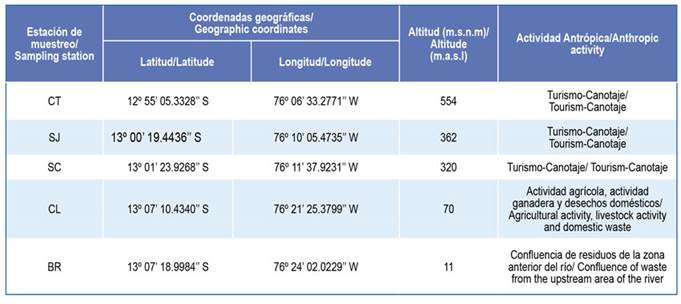
The study area comprised the lower part of the Cañete River basin. The lower valley begins in the lower section of the Socsi annex (Lunahuaná district) and extends to the boundary with the coast (Ministerio de la Cultura, Perú, 2015); in this area, five stations were sampled in two seasons: rainy (May) and dry (June). During the course of the river, especially at the sampling points, economic, productive, and social activities such as agriculture, livestock farming, and tourism (canoeing) were observed; unlike the upper basin, where mining activities are carried out (Ministerio de la Cultura, Peru, 2015) (Figure 1, Table 1). Regarding the vegetation at the sampling stations, the genera Gynerium, Acacia, Schinus, Salix, Cantua, and Solanum were recorded, and in the areas near the sea, “salt grass” (Distichlis spicata), Salicornia fruticosa, and reed beds were mainly identified.
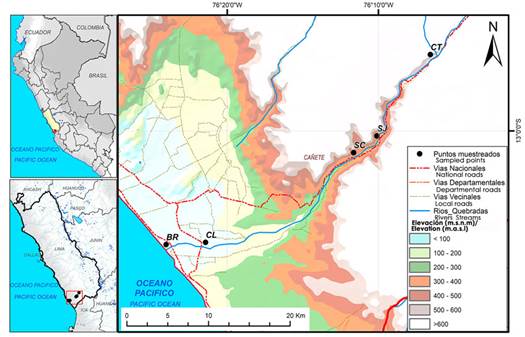
Figure 1 Sampling stations in the lower basin of the Cañete River, Lima-Peru (CT:Catapalla, SJ: San Jerónimo, SC: Socsi, CL: Puente Clarita, BR: Boca del Río).
MATERIALS AND METHODS
Sampling and identification of aquatic macroinvertebrates
At each sampling station, three microhabitats were selected (areas with incipient vegetation or submerged roots, areas exposed to the sun, and interstices between rocks). In shallow areas with rocky substrate, a 250 µm Surber net was used for 5 minutes (Needham and Usinger, 1956), and in areas with strong currents, a D-type net (Sermeño-Chicas et al., 2010) was used. The samples were taken in triplicate, placed in 50 mL bottles, and transported at 4 °C to the laboratory for further analysis. The samples were sieved (500 µm) and preserved in ethanol (70 %), and the taxonomic identification of the organisms was carried out at the family level, using the keys of Roldán (1996) and Domínguez and Fernández (2009).
Richness, diversity, dominance, equity,relative density, and similarity indices
The assessment of differences in the composition of macroinvertebrate communities between sampling stations and seasons of the year was conducted using diversity indices (Shannon), richness (Margalef), dominance (Simpson), evenness (Pielou), and similarity (Bray-Curtis), the latter to determine the similarity of family abundance and physicochemical variables by stations and seasons. These analyses were conducted using the statistical package PAST (PAleontological STatistics) (Hammer et al; 2001). The density was determined by obtaining the drift density (abundance / Time). Flow rate. Area; D= (Ab)/(T.V.) A)) (Smok, 1996).
Physicochemical parameters
In situ measurements were taken in triplicate for pH, dissolved oxygen (DO, %), electrical conductivity (EC, µS/cm), total dissolved solids (TDS, ppm), and water temperature (°C) at each station, using a multiparameter probe (Hanna HI9829-03041). Simultaneously, water samples were collected in triplicate in 500 mL plastic bottles and stored at 4 °C to measure certain nutrients. The determination of nutrients was carried out according to the following methodology: nitrogen in the form of nitrate nitrogen (NO3 -, ppm) by the SM4500-N03-1-D method and the electrometric technique (Rice and Bridgewater, 2012); ammoniacal nitrogen (NH4 +, ppm) by the UNE 77028:1983 method and the determination of total phosphorus (P, ppm) by the SM4500-P B, E method (AENOR, 2002).
Statistical analysis
The evaluation of the differences in physicochemical parameters between the rainy and dry seasons and between the sampling stations was conducted using a two-factor ANOVA with interaction to determine possible significant differences, utilizing the PAST statistical package (PAleontological STatistics). A principal component analysis (PCA) was applied to determine the associations between the abundance of macroinvertebrates, physicochemical parameters, and climatic seasons using IBM SPSS Statistics - Version 31.
RESULTS
Composition and abundance of the macroinvertebrate community
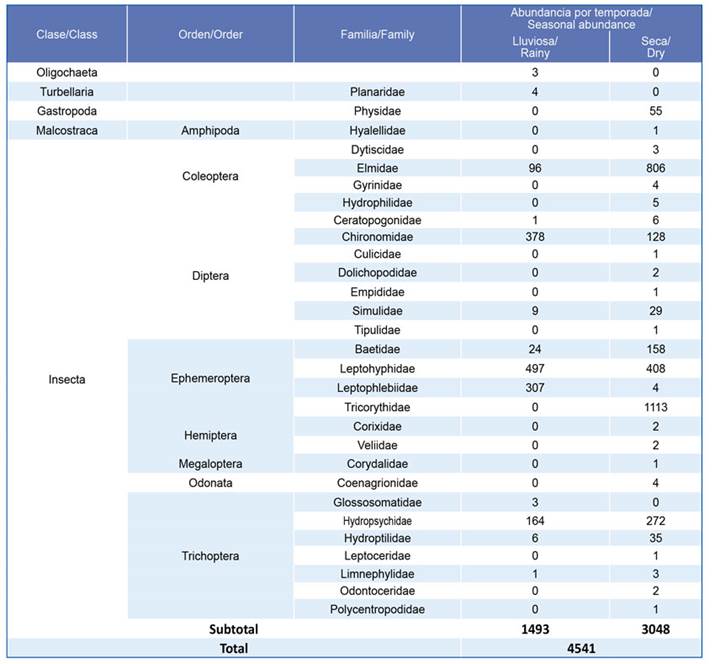
The composition of the macroinvertebrates was grouped into 5 Classes, 7 orders, and 30 families. The class Insecta presented the largest number of orders and families, with the predominance of the orders Diptera and Trichoptera, each with seven families. A total of 4541 individuals were collected, of which 1493 were recorded in the rainy season, with the families Leptohyphidae (497 individuals), Chironomidae (378 individuals), Leptophlebiidae (307 individuals), and Hydropsychidae (164 individuals) standing out for their abundance. During the dry season, 3,048 individuals were obtained, with greater abundance in the families Tricorythidae (1,113 individuals), Elmidae (806 individuals), Leptohyphidae (408 individuals), and Hydropsychidae (272 individuals). On the other hand, the Oligochaeta, Turbellaria, and Gastropoda were the least representative taxa (Table 2).
Richness, diversity, and dominance indices
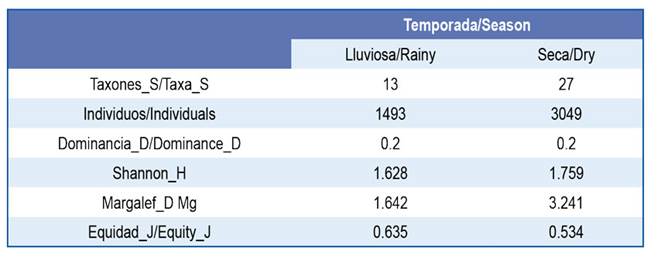
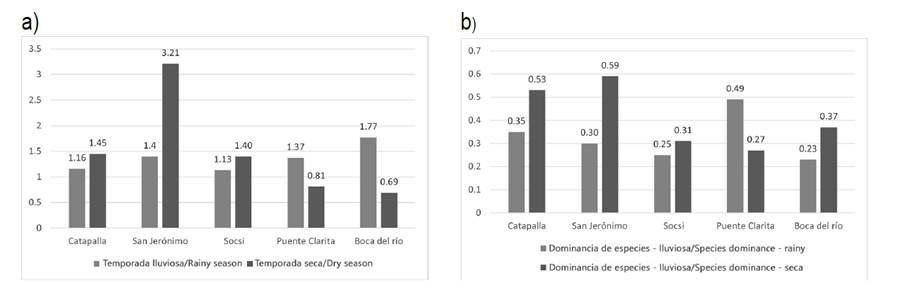
The highest values of Margalef’s richness index (D Mg) and Shannon’s diversity index (H’) were recorded in the dry season with 27 different taxa and 3,049 individuals, but with lower evenness in distribution and equal dominance for both seasons (Table 3).
In Figures 2a and 2b, it is observed that, during the rainy season, the greatest species richness was recorded in Boca del Río (D Mg = 1.77) and the lowest in Socsi (D Mg = 1.13); regarding the highest dominance, Puente Clarita stood out (D = 0.49), while the lowest occurred in Boca del Río (D = 0.23). In the dry season, San Jerónimo showed the greatest species richness and dominance (D Mg = 3.21; D = 0.59), while Boca del Río exhibited the lowest species richness (D Mg = 0.69) and Puente Clarita the lowest dominance (D = 0.27).
DENSITY
In relation to density, of the 29 families of macroinvertebrates identified in the study, 12 were collected during the rainy season, with the highest densities, in decreasing order, for the families Chironomidae, Leptohyphidae, and Hydropsychidae (Figure 3a). During the dry season, 27 of the 29 families recorded in the study were recognized, with the highest relative density being Tricorythidae, Elmidae, Leptohyphidae, Hydropsychidae, Baetidae, and Chironomidae (Figure 3b).
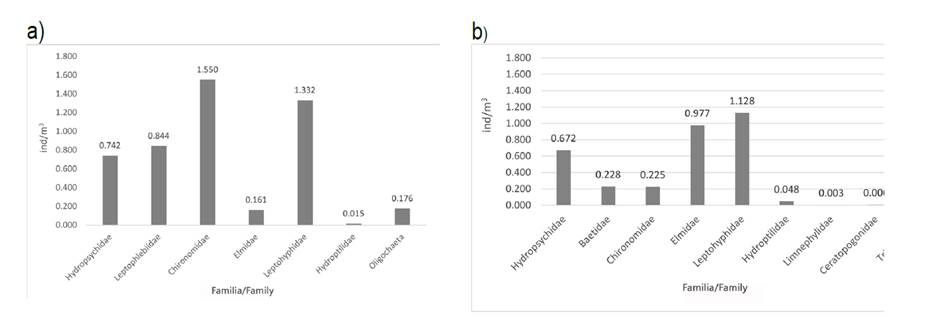
Figure 3 Distribution of density in macroinvertebrate families. a) Density in the rainy season; b) Density in the dry season.
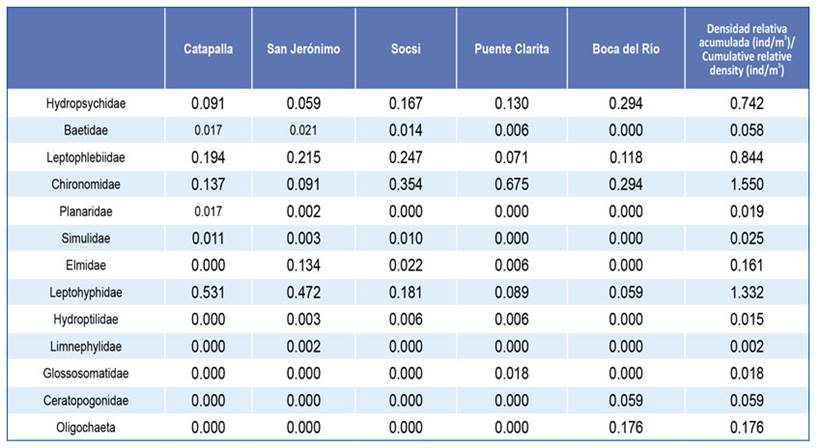
During the rainy season, the Chironomidae family recorded the highest accumulated density at the five sampling points (1.550 ind/m3); however, in Catapalla and San Jerónimo, Leptohyphidae achieved the highest density (0.531 ind/mL and 0.675 ind/m3, respectively). In Socsi and Puente Clarita, the Chironomidae family stood out with 0.354 ind/m3 and 0.675 ind/m3, respectively, and in Boca del Río, Hydropsychidae reached 0.294 ind/m3 (Table 4).
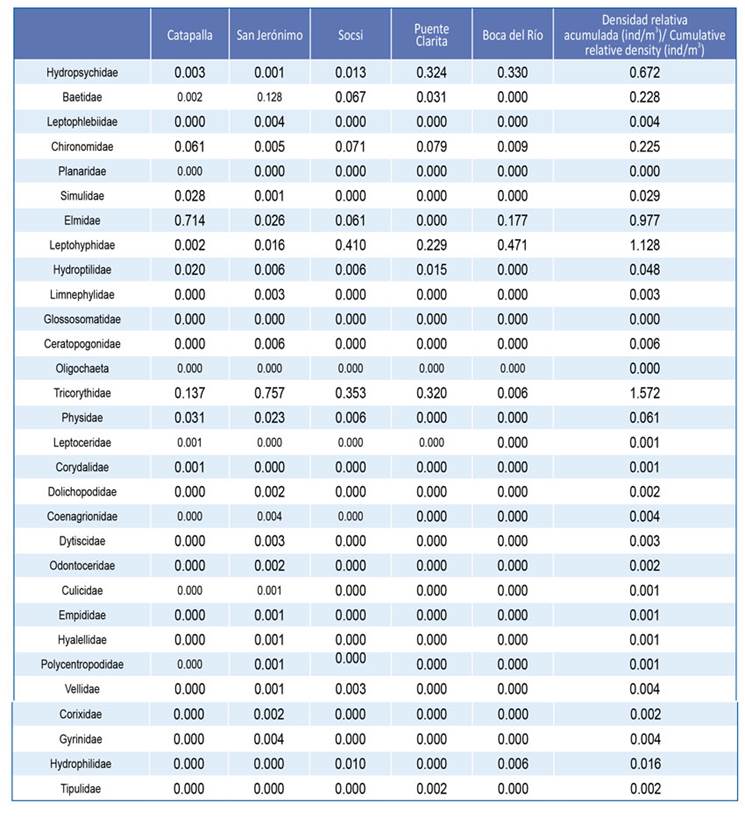
During the dry season, the highest relative densities by family and sampling station were recorded in Catapalla, with 0.714 ind/m3 of the Elmidae family; in San Jerónimo, Tricorythidae reached a density of 0.757 ind/m3; Socsi and Boca del Río had densities of 0.410 and 0.471 ind/m3, respectively, both corresponding to Leptohyphidae; and in Puente Clarita, Hydropsychidae recorded a density of 0.324 ind/m3. The highest accumulated relative density corresponded to the families Tricorythidae, with 1,572 ind/m3, and Leptohyphidae, with 1,128 ind/m3 (Table 5)
SIMILARITY ANALYSIS
The rainy season showed, through the Bray-Curtis similarity dendrogram (Figure 4a), that the composition and abundance of macroinvertebrates at the San Jerónimo, Socsi, and Catapalla stations were similar, while at Puente Clarita and Boca del Río the abundances differed at each station (Figure 4a). On the other hand, the values of the physicochemical variables in Socsi, Catapalla, and San Jerónimo were similar, while Puente Clarita and Boca del Río showed notable differences (Figure 4b)
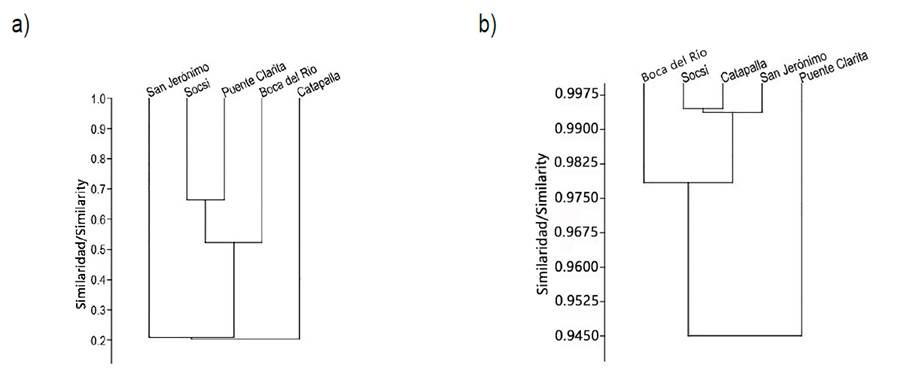
Figure 4 Similarity dendrogram for the rainy season. a) Regarding the abundance of macroinvertebrates by sampling station; b) Regarding the physicochemical parameters by sampling station.
In the dry season, the Bray-Curtis similarity dendrogram showed that the Socsi and Puente Clarita stations had the greatest similarity in terms of abundance by family, followed by Boca del Río. In contrast, Catapalla and San Jerónimo differed from the rest of the sampling stations (Figure 5a). The values of the physicochemical variables were similar between Puente Clarita and Boca del Río, as well as between San Jerónimo, Socsi, and Catapalla (Figure 5b).
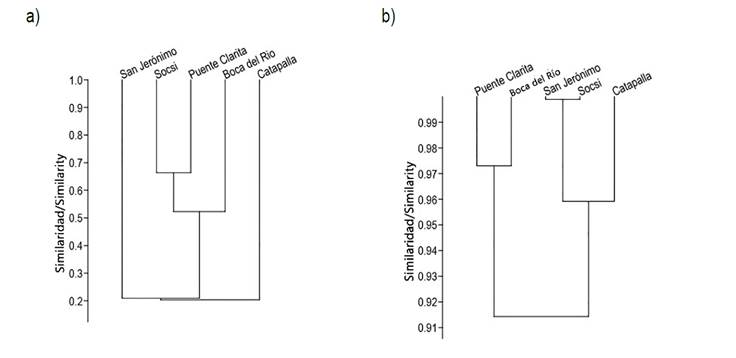
PHYSICOCHEMICAL CHARACTERISTICS OF THE AQUATIC ECOSYSTEM
The analysis of variance (ANOVA) showed significant differences (p < 0.05) in most physicochemical variables between the sampling stations and between the climatic seasons (Table 6). The pH values remained stable during the rainy and dry seasons; Puente Clarita showed a different pH (slightly acidic) compared to the other stations during the rainy season, while in the dry season Catapalla exhibited a different value from the other stations. Dissolved oxygen (DO) was higher in the rainy season compared to the dry season. In both seasons, Puente Clarita and Boca del Río showed similar values. Electrical conductivity (EC) in San Jerónimo and Socsi was similar between seasons, but it was different from that of the other stations. The highest values for STD were recorded in Boca del Río and Puente Clarita for both seasons. During the rainy season, Catapalla, San Jerónimo, and Socsi did not show significant differences, while in the dry season, San Jerónimo and Socsi maintained similar values.
The temperature recorded higher values in the dry season. Socsi and Puente Clarita had similar records in the rainy season, while in the dry phase, thermal similarity occurred in San Jerónimo and Socsi. For NO3 -, no significant differences were detected between stations during the rainy season, but in the dry season, San Jerónimo showed values that differed from the rest of the sites. Ammoniacal nitrogen (NH4 +) remained stable, both between stations and between seasons. Phosphorus (P) did not show differences between seasons, but it did between climatic phases (Table 6). During the dry season, higher values of temperature and NO3 - were recorded, while the levels of DO and P were lower. During the rainy season, these patterns were reversed.
Table 6 Physicochemical parameters in water samples from the sampling stations Catapalla (CT), San Jerónimo (SJ), Socsi (SC), Puente Clarita (CL), and Boca del Río (BR) in two seasons. The average values ± the standard error are reported. Comparisons between means are included, where different letters indicate significant differences (p < 0.05).
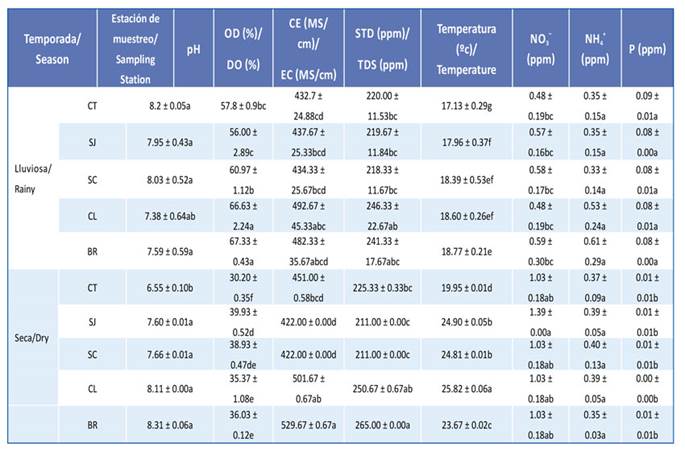
Note: The same letter indicates that there are no significant differences (p < 0.05). Physicochemical parameters: hydrogen potential (pH), dissolved oxygen (DO), electrical conductivity (EC), total dissolved solids (TDS), nitrate nitrogen (NO3 -), ammoniacal nitrogen (NH4 +), phosphorus (P).
Principal Component Analysis (PCA) applied to the physicochemical parameters and sampling stations showed that components 1 and 2 explained 83% of the data variance. This analysis showed a clear separation between the rainy and dry seasons, indicating a significant variation in physicochemical conditions according to the climatic phase of the year. The vectors for the physicochemical parameters had similar lengths, so the contribution to the variability of the samples was similar among them (Figure 6).
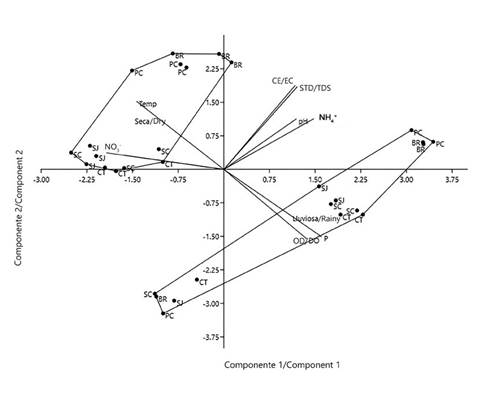
Figure 6 Principal Component Analysis (PCA) of physicochemical parameters according to sampling stations and seasons (rainy and dry). Legend: PC (Puente Clarita), BR (Boca del Río), SJ (San Jerónimo), SC (Socsi) CT (Catapalla), TDS (total dissolved solids), DO (dissolved oxygen), EC (electrical conductivity), and P (phosphorus).
The temperature and the concentration of NO3 - were positively correlated and increased during the dry season; in particular, NO3 - increased mainly at the San Jerónimo, Socsi, and Catapalla stations, while the temperature rose uniformly at all stations. Dissolved oxygen (DO) and the concentration of P were positively correlated and increased during the rainy season, more significantly at the Socsi, Jan Jerónimo, and Catapalla stations. Electrical conductivity (EC), TDS, pH, and NH4 + concentration showed a positive correlation and an increase at the Boca del Río and Puente Clarita stations. However, these parameters did not vary significantly between seasons. The temperature and the concentration of NO3 - decreased as the concentration of P and the percentage of DO increased (Table 6, Figure 6).
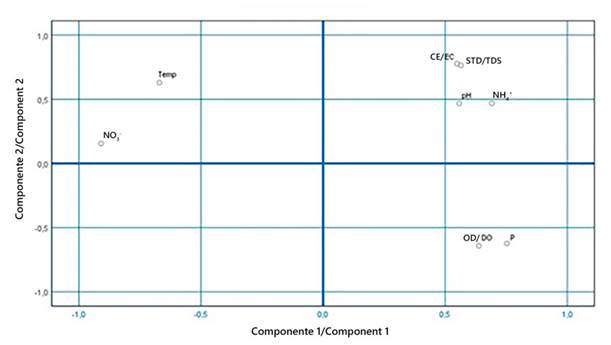
Additionally, a PCA was conducted to identify the main sources of variability in the observations of physicochemical parameters. Two main components were identified that grouped 81.29% of the variability of the observations.
It was observed that the physicochemical variables grouped into three positively correlated sets. The first group was composed of EC, TDS, pH, and NH4+ concentration; the second group, by DO and P; and the third group, by temperature and NO3-. All parameters showed high eigenvalues associated with component 1, with magnitudes greater than 0.50. Nitric nitrogen (NO3-) showed the highest eigenvalue (0.909), indicating that it was the most influential parameter in the variability of the observations (Figure 7).
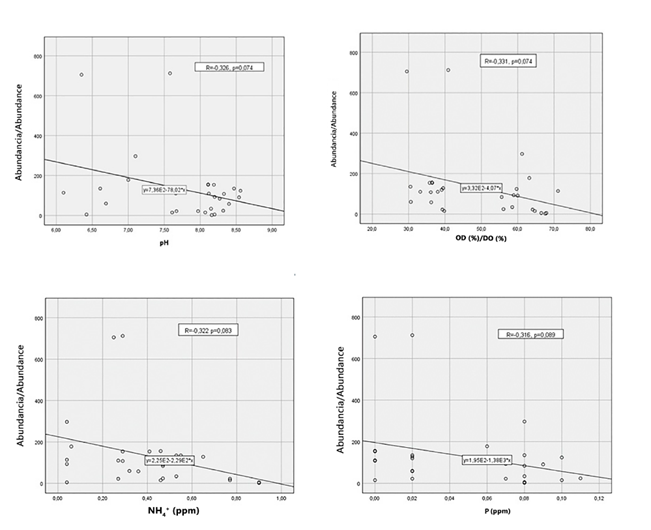
A correlation analysis was conducted between the abundance of macroinvertebrates and the measured physicochemical variables (Figure 8). No variable showed a strong correlation with abundance, but inverse, moderate, and significant correlations at 95% were observed with pH, DO (%), NH4 + concentration (ppm), and P concentration (ppm). An increase in these variables was moderately associated with a decrease in the abundance of macroinvertebrates observed in the samples. These trends are shown in Figures 8a, 8b, 8c. For its part, the EC (μS/cm), TDS (ppm), temperature, and NO3 - concentration (ppm) did not show a significant correlation.
DISCUSSION
Composition and abundance
The composition and structure of biological communities are key to understanding the functioning and ecological state of lotic ecosystems (Reyes-Morales, 2013). The composition of the registered families was fundamentally due to the types of microhabitats at the sampling stations, such as areas with incipient vegetation or submerged roots, areas with sun exposure and interstices between rocks, as well as the presence of vegetation along the river. These areas contribute to increasing heterogeneity and providing options for food and shelter, which promotes the abundance and richness of macroinvertebrates in lotic systems (Vásquez-Ramos and Reinoso, 2012; Dávila-Recinos et al., 2019). This result coincides with the observations of Wright and Ryan (2016), who point out those different habitats, such as sediments and vegetation in riparian zones and estuaries, favor the presence of insects, flatworms, annelids, mollusks, and crustaceans.
Abiotic parameters such as seasonality influence the number of species and the composition of macroinvertebrates, as shown by the results reported in the Huacamarcanga River, Peru (Tafur et al., 2010), and the study by Minchola et al. (2025), which indicates that individuals increase during the rainy season. Similarly, physicochemical parameters, anthropogenic disturbances, and soil types influence the life cycle of organisms (Johnson and Host, 2010).
The class Insecta represented 98% (4541 individuals) of the macroinvertebrate community, with the families Leptohyphidae, Chironomidae, Leptophlebiidae, and Hydropsychidae standing out for their abundance in the rainy season; meanwhile, the families Tricorythidae, Elmidae, Leptohyphidae, Chironomidae, and Hydropsychidae predominated in the dry season. These results were similar to those reported by Reyes-Morales (2013) in lentic water bodies of the Maya region, Guatemala, where the families with the greatest abundance were Chironomidae (Diptera) and Elmidae (Coleoptera). Likewise, Vásquez-Ramos and Reinoso (2012) recorded the highest abundances for the families Chironomidae, Leptohyphidae, Leptophlebiidae, Baetidae, Hydropsychidae, and Glossosomatidae. In the Cañete River, the highest number of macroinvertebrate taxa was observed during the dry season, due to the decrease in flow and current speed of the Cañete River from June to November; these conditions favored the formation of various microhabitats that made the presence of the families Tricorythidae and Leptohyphidae (Ephemeroptera), Hydropsychidae (Trichoptera), and Chironomidae (Diptera) possible, which are considered indicators of water quality (Cheneaux, 2015).
Richness, dominance, relative density, and similarity
During the dry season, the greatest richness and dominance were recorded in San Jerónimo, located in the middle area of the Cañete River basin. The results match those reported by Custodio and Chanamé (2016) in the Cunas River and by Núñez-Bustamante et al. (2021) in the Tingo River, during the dry season. Molina et al. (2008) reported similar information for rivers in Bolivia during the dry season and determined that low values in hydrological parameters were associated with high densities of individuals and an increase in the number of taxa. Likewise, the high species richness was associated with places with stones and vegetation that allowed for the presence of a high diversity of macroinvertebrates, compared to areas where only stones are present or in others where there is no aquatic or marginal (Jerves-Cobo et al., 2018) vegetation.
Vinson and Hawkins (1998) noted that the most consistent patterns of richness are related to substrate size, disturbance regime, predation, annual temperature variation, flow intermittence, and biome type. The San Jerónimo station seems to meet these conditions, as it is located in the middle part of the basin where the substrate is gravel/pebble and rock, anthropic intervention is minimal, and the intermittence of water flow is almost nonexistent. The higher temperature affects the body of water, allowing the reproduction of macroinvertebrates (Dou et al., 2022) and the availability of food, especially for insects (Henriques-Oliveira y Nessimian, 2010). Likewise, temperature and partial oxygen pressure are variables that influence species richness and limit the diversity of the benthic community (Jacobsen et al., 2003; Jacobsen and Marín, 2007; Jacobsen, 2008 ).
The highest relative densities in the rainy season were recorded in Catapalla and San Jerónimo, especially from the Leptohyphidae family. They were followed by the Socsi and Puente Clarita sites, where Chironomidae were abundant. Lastly, the locality Boca del Río was ranked, with Hydropsychidae as the most abundant family. The Bray-Curtis index related these high densities by stations, with San Jerónimo, Socsi, and Catapalla being similar in the number of individuals and in the values of the physicochemical parameters, while Puente Clarita and Boca del Río differed. In the dry season, the highest density was found in Catapalla, represented by Elmidae, in San Jerónimo by Tricorythidae, in Socsi and Boca del Río by Leptohyphidae, and in Puente Clarita by Hydropsychidae. The Bray-Curtis similarity dendrogram showed that the Socsi, Puente Clarita, and Boca del Río stations had the greatest similarity in terms of abundance and physicochemical parameters, in contrast to Catapalla and San Jerónimo, which differed from the other locations. This result is similar to that found by Carrasco et al. (2020) in Andean wetlands, where the families with the greatest relative abundance were Elmidae (Coleoptera), Chironomidae (Diptera), Gripopterygidae (Plecoptera), and Baetidae (Ephemeroptera).
The macroinvertebrates from the families Tricorythidae and Leptohyphidae had higher densities in the rainy season, while the Chironomidae predominated in the dry season. In accordance with what was reported in this study, Kasangaki et al. (2006) stated that the macroinvertebrate taxa of the families Chironomidae and Tricorythidae are well adapted to stressed environments and are rapid colonizers after disturbances. Additionally, they exhibit characteristics such as tolerance to low water quality, firm adherence (using hooks or claws), flexible body shapes, hydrodynamic or flattened bodies, and a life history strategy tolerant to desiccation (diapause), among other attributes. Acosta (2009) indicated that the genera of this Chironomidae family represented 30% of the macroinvertebrates in the Andean basin of the Cañete River.
The presence of the order Ephemeroptera (Leptohyphidae) at the different sampling points was influenced by high DO values. On the other hand, Trichoptera increased with the rise in conductivity and temperature values. The large nutrient loads promote the growth of biofilms on the stream substrate, and since the biofilm is an important food source for some Trichoptera, its biomass may have increased in sites with high nutrient loads and elevated conductivity(Piscart et al., 2009).
The richness, dominance, and density of macroinvertebrate communities are influenced by the geomorphological characteristics of rivers, the aquatic microhabitat, oxygen-producing macrophytes, riparian vegetation that provides organic matter, and microclimates. These aspects modify the presence, abundance, and distribution patterns of invertebrates and the relationships that exist between these traits(Herrera and Burneo, 2017).
Physicochemical characteristics
The physicochemical variables, especially DO, EC, TDS, temperature, NO3 -, and P, showed seasonal climatic (rainy and dry) and spatial differences at some stations (Catapalla and Boca del Río). These differences were due to the substrates coming from the upper part of the river (upper basin) that are carried along the river, the melting of the glacial area of the Ticllay Pichcahuajra mountain ranges (Acosta, 2009), and the agricultural activities in the upper (Catapalla) and lower parts of the study area (Puente Clarita). The results obtained partially coincide with those found by Núñez-Bustamante et al. (2021), who observed spatial but not temporal differences in their study conducted on effluents from the headwaters of the Tingo River.
The pH values showed significant differences between sampling stations and seasons, consistent with what was determined in the Rímac River (Pascual et al., 2019). The opposite was observed in the Pindo Grande River, Ecuador (Endara e Hinojosa-Garró, 2020), where the pH did not show differences between seasons (rainy and dry). However, similar to our study, there was a slight increase in pH at the end of the river’s course during the dry season. The increase in pH has been linked to the presence of organic matter, temperature, sampling time, and the river (Mutlu, 2019) flow. This last stretch of the river carries agricultural, livestock, and domestic waste that converges with the salinity of the seawater. Likewise, the slight increase in pH may indicate a higher number of dissolved ions, especially carbonates, which generally increase in the lower parts of rivers due to the washing of the entire basin.
The DO values increased during the rainy season at all sampling stations, with a significant difference observed between seasons. High DO values have been linked to the increased flow of the stream, which allows for the diffusion and mixing of atmospheric oxygen in the water (Ioryue et al., 2018). There is a contrast with previous results reported in the Rímac River, where the average DO in the dry season was higher than in the rainy season, due to the temporal influence during the period of higher precipitation of untreated domestic wastewater and other anthropogenic activities such as mining liabilities, agriculture, and industries Pascual et al., 2019).
The values for EC showed significant differences between sampling stations and between seasons, coinciding with the findings made in the Tingo María River (Núñez-Bustamante et al., 2021). During the rainy season, the high values obtained at some sampling stations near the river’s mouth can be explained by the increase in surface runoff, causing the incorporation of ions into the river’s course. This comes from sea spray that contributes salts to aquatic systems near the coast and those with greater influence from anthropogenic activities (Rascón et al., 2021).
The CE records were related to the presence of STD, due to the high presence of salts, especially in Puente Clarita. This is due to the discharge of waste from agricultural, domestic, and livestock activities. This result is similar to what was reported and shows similarity with the studies conducted in the Rímac (Pascual et al., 2019) and Huacamarcanga (Mora et al., 2020) rivers.
In our study, we found STD values with significant differences between the sampling stations and between the climatic seasons, especially for Puente Clarita and Boca del Río, where there is an incidence of agricultural activity residues. The data obtained in this study are similar to those reported for the Pindaré River, Brazil (Muniz et al., 2020). The low STD values at higher altitude stations (such as Catapalla) compared to other locations are due to the fact that the wash area of the basin is much larger for the lower region of the river, which increases the ionic richness in this sector (Charkhabi and Sakizadeh, 2006).
The temperature values were different in the sampling seasons. The water temperature was higher during the dry season and lower during the rainy season. The findings obtained in the present investigation coincide with the data from the Huacamaracanga River, Peru (Mora et al., 2020). High values are related to the exposure of the waters to solar radiation. On the other hand, there are also significant differences observed between the temperatures at the sampling stations in the river. However, the influence of the altitude of the stations does not seem to greatly affect the temperature values, unlike the study conducted in the Rímac River (Pascual et al., 2019), where the higher altitude areas were characterized by low temperatures. It should be considered that the elevation differences between the stations studied on the Cañete River are not very large (544 m), so the effect of altitude on temperature is limited.
A significant variation was found in the NO3 - values between seasons, with the highest records in the dry season due to the increase in temperature that favors the nitrification process in the benthos and along the riverbank. This was especially evident at the San Jerónimo and Socsi stations, where the greatest abundance of macroinvertebrates was found. Such responses are complemented by the processes reported in the Pindaré River, Brazil, where the highest nitrite values were attributed to the increase in intensive agricultural activities and the waste from animal husbandry.
The measurements were variable for NH4 +; however, no significant differences were found between seasons or between sampling stations. It has been reported that the increase of this chemical parameter could generate direct toxicity on aquatic (Dehedin et al., 2013) organisms; for the Cañete River, the average was 0.4 ppm, considered relatively high.
The P concentrations showed significant differences between seasons, but not for the sampling stations. It has been determined that the variations between seasons depend on the river discharge, whose increase during the rainy season causes internal removal and conditions the flow of P (Kang et al., 2018). This would explain the high values obtained during the rainy season of this study. On the other hand, the low P values are influenced by the increase in TDS, temperature, and pH (Zhou et al., 2018).
Faced with the different physicochemical parameters, the families of macroinvertebrates responded with greater abundance and richness when there were low TDS values and higher DO concentration, with the presence of indicators of good water quality, including Leptohyphidae and Elmidae. The opposite occurred with the Chironomidae, which are indicators of polluted waters. Therefore, the proximity of agricultural or livestock activities, runoff, climate, and the geomorphological structure of the river would cause certain changes in the physicochemical conditions, which in turn determine the responses and consequently the structure of the macroinvertebrate community, especially the presence of Leptohyphidae, Leptophlebiidae, Hydropsychidae, Tricorythidae, Elmidae, and Chironomidae (Villamarín et al., 2021). It is important to mention that these families registered within the order Ephemeroptera (Leptohyphidae, Leptophlebiidae, and Tricorythidae) are excellent indicators of clear and clean waters, but some species tolerate certain levels of organic pollution. The Diptera (Chironomidae) are an extremely diverse group, and a large majority are indicators of contaminated waters (Castillo-Velásquez and Huamantinco-Araujo, 2020). The larvae of Trichoptera (Hydropsychidae) build shelters from small stones, sand, and leaves, and are considered excellent indicators of clean and cold waters; some species tolerate certain levels of organic pollution and high temperatures (Cheneaux, 2015).
The Hydropsychidae family is sensitive to agricultural pollution, meaning it was negatively associated with the physicochemical variables of agricultural pollution (NH4 +, temperature, and TDS), both in the rainy season and the dry season. These findings provide additional evidence supporting the fact that stress induced by agriculture has differential effects on the distribution patterns of macroinvertebrates (Akamagwuna et al., 2023).
Species associated with degraded environments, such as Chironomidae, experience population increases due to changes in DO, temperature, pH, heavy metals, and other emerging contaminants (Ríos-Touma and Ramírez, 2018, Carrasco-Baquero et al., 2025). Furthermore, it is suggested that this family can tolerate reduced levels of DO in organically contaminated environments (Canning and Death, 2019), which may be possible due to their feeding habit in bacteria-rich sediments (Timms, 2010). The Chironomidae family is characterized by being found in environments with anthropogenic intervention, and it is very common to find it in systems with high loads of organic matter (Thelma, 2012). In particular, the Chironomidae family is considered the most resistant and resilient, as it adapts to anoxia by possessing compounds similar to hemoglobin that allow it to absorb oxygen more effectively (Sinche et al., 2022; Williams-Subiza et al., 2022). Furthermore, it exhibits a great ease of distribution, adapting to various conditions of disturbance or stress (Rodríguez-Romero et al., 2021). These characteristics allowed it to be found at all sampling stations, but with variations in its abundance largely caused by local environmental factors, such as DO, pH, conductivity, and altitude (Garay et al., 2020).
CONCLUSIONS
The main macroinvertebrates inhabiting the Cañete River from Catapalla to Boca del Río belonged to the families Leptohyphidae, Leptophlebiidae, Hydropsychidae, Tricorythidae, Elmidae, and Chironomidae, which are good indicators of water quality. The greatest richness was recorded in the dry season at the Catapalla station, where families such as Tricorythidae, Chironomidae, and Leptohyphidae showed high density values; however, Chironomidae and Leptohyphidae were present in both seasons. The similarity between the sampling stations was due to spatially located groups: Catapalla, San Jerónimo, and Socsi in the upper area, which differed from Puente Clarita and Boca del Río in the lower part of the basin. Apparently, the responses of the abundance, richness, and density of macroinvertebrates were influenced by the geomorphological characteristics of the river and the riparian vegetation, which modify oxygen production and microclimates. Likewise, the physicochemical variables showed significant differences by seasons and at some sampling stations (Catapalla and Boca del Río), probably due to the discharge of agricultural, domestic, and livestock waste. DO and temperature seem to play key roles in the increase of abundance and richness of invertebrates, while the increase of TDS, NH4 +, and P tend to decrease them. Climatic seasons play a significant role in the presence of some families, such as Tricorythidae, which appeared only during the rainy season.

