




 text in
  English (pdf)
 Article in xml format
 Article references
 Automatic translation
 Send this article by e-mail
 Cited by SciELO
  Cited by Google
  Similars in
SciELO
Similars in
SciELO  Similars in Google
 Permalink

INTRODUCTION
All bodies of water are characterized by their hydrochemical conditions in addition to the long-term interaction with the surrounding environment during the circulation process, which can indicate the history of the water, formation, and migration (Kanduc et al., 2008). Knowledge of the hydrochemical conditions of coastal water bodies is essential for their conservation and management (Morales-Ojeda et al., 2010). These processes are important in the ecological and biogeochemical balance because they control the diagenetic changes in the water column and sediments (Bonilla et al., 2003).
In addition to the physicochemical and biological factors that regulate the concentration of micronutrients in a body of water, the levels can increase significantly due to anthropogenic inputs, generating an excessive biological growth (phytoplankton biomass growth), ultimately leading to a collapse of the coastal system through the process of eutrophication (Smith, 2003; Akinawo, 2023). After the eutrophic level is reached, due to the excessive growth of aquatic plants, the production of organic matter increases and consequently its biodeposition on the bottoms, followed by a decrease in the concentration of dissolved oxygen present in the environment due to biogeochemical processes (Smith, 2003; Sonarghare et al., 2020; Zeng et al., 2022).
It has been determined that the northeastern coastal zone of Venezuela is the most important fishing region in the country and the Caribbean Sea, with a biomass of small pelagics of 2.6 x 10^5 metric tons (Rueda-Roa and Müller-Karger, 2013; FAO, 2024). This fertility has several causes: firstly, the seasonal coastal upwelling with marked interannual variation that is reflected in primary production and phytoplankton biomass (Ferraz-Reyes, 1987; Müller-Karger et al., 2004), and secondly, it is necessary to consider the discharges from South American rivers, which during the rainy season flood the platform (Monente, 1977, 1997).
To date, there are few published works that indicate the water quality of the area. Most of the studies have been conducted in the Gulf of Paria and the nearby area, as demonstrated by the works of Gade (1961a, 1961b), Fukuoka (1965), Bonilla (1977), and Moigis and Bonilla (1985). Also, Castellanos et al. (2002), and since 2000, as a result of the boom in oil exploration in the region, geological studies and measurements of certain parameters have been conducted to assess water quality (Martín et al., 2007).
The interannual variability of microalgae and coastal upwelling on the northern coast of Paria is considered the most important factor in the evaluation of marine resources in the eastern zone, and in relation to the production of the bivalve, Perna perna, as an accumulator of toxins due to the consumption of phytoplankton. In this regard, Umasangaji and Ramili (2021) place the southeastern Caribbean among the areas with the most intense upwelling worldwide. These authors point out that among the areas with the most intense and productive upwelling in the world are the South American waters, the Benguela Upwelling System (BUS) on the African coast (Wells et al., 2024), the area off the southern coast of the island of Java in Indonesia and its surroundings. Moreover, the increase in nutrients in the waters is often accompanied by an increase in various species of toxic algae (harmful algal blooms, HABs), which are detrimental to the local fishing system. This could result in an increase in the mortality of certain organisms such as sardines (Sardinella aurita), the main raw material for the marine canning industries, one of the main sources of employment in the area, as well as affecting other members of the food chain such as those existing in natural mollusk banks; P. perna, and Arca zebra, the largest in the country and the Caribbean, the main source of work for local fishermen for local consumption and for the artisanal preparation of preserves. Biological and oceanographic studies are essential to support marine and fisheries development in this area of the southern Caribbean. The evaluation and understanding of this dynamic is extremely important, especially in light of the current climate crisis and where there have been precedents of toxic events occurring. Furthermore, by understanding its hydrochemical conditions, measures could be taken to reduce eutrophication problems, especially in the more populated areas such as Río Caribe and El Morro.
For this reason, the objective was set: to establish the spatio-temporal variation of some environmental variables in the surface waters of 7 natural banks of P. perna existing on the northern coast of the Paria Peninsula, S.E. of the Caribbean, Venezuela, during two periods: June 2012-July 2013 and then January-October 2015.
MATERIALS AND METHODS
Study Area
The Paria Peninsula is located in the northeasternmost part of Venezuela, southeast of the Caribbean Sea, surrounded by a mountainous region that rises up to 1,449 meters above sea level and drops abruptly to the sea. At its base, the rocky coast facilitates the development of benthic organism populations and also serves as natural refuges and sites for nesting and spawning of sea turtles (Rondón et al., 2010; Velásquez et al., 2010). Monthly samples were taken for: nutrients, chlorophyll, water samples for toxins, and also samples of mussels. Perna perna, in the places where natural banks are found (Table 1).
Table 1 Georeferenced locations (natural mussel banks) of the northern coast of the Paria Peninsula, S.E. Caribbean, Venezuela
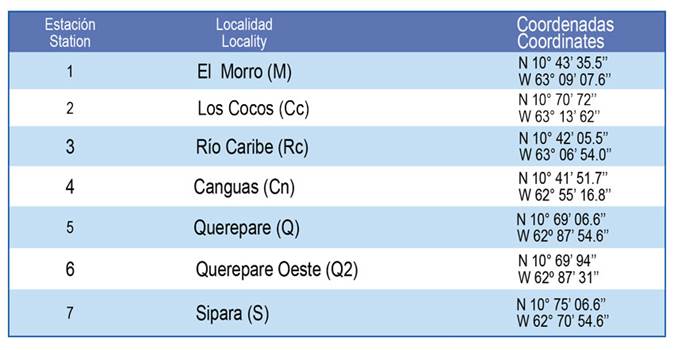
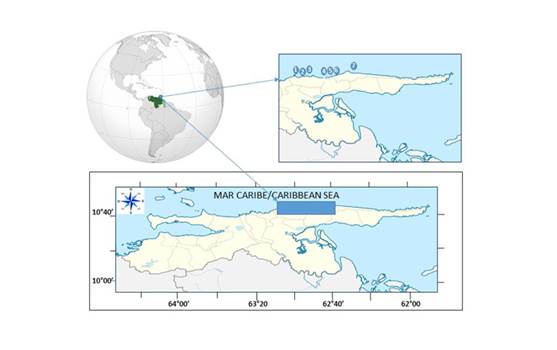
The study area is influenced by seasonal coastal upwelling, of wind origin (López-Monroy and Troccoli-Ghinaglia, 2014; Jury, 2017, 2018), caused by the trade winds blowing over the continental shelf and the sedimentary input from the waters of the Orinoco River (Castellanos et al., 2002), events that together support a rich and abundant marine fauna (Fig. 1).
Sampling design
The meteorological data (wind speed and precipitation) were taken from the website of the Trinidad Airport (PIARCO://www.aeropuertos.net/aeropuerto-internacional-de-piarco/). Seven stations were established in the vicinity of the natural banks of the mussel P. perna (Fig. 1). The sampling was conducted monthly from June 2012 to July 2013 and then from January to October 2015. The study area is a remote and difficult-to-access zone, very far from the area of influence of the Oceanographic Institute of the University of Oriente.
The sampling was carried out aboard a small boat from the town of Río Caribe. At each station, water transparency was determined with a Secchi disk and water temperature was measured with an environmental thermometer (± 0.1 °C) for precision and water transparency with a Secchi disk (30 cm in diameter). The samples to quantify dissolved oxygen were taken in BOD bottles and immediately fixed to determine the gas concentration (mL.L-1) according to the Winkler method (Parsons et al., 1984).
Surface water samples to determine nutrients were taken in polyethylene bottles (500 mL capacity) and stored in a cooler with ice until transported to the laboratory. There the samples were frozen (-20°C) until the time of processing. The concentration of ammonium (NH4 +) was determined according to the Koroleff (1969) method; nitrite (NO2 -) by visible spectrophotometry (Bendschneider and Robinson, 1952); nitrate (NO3 -) using a Technicon II autoanalyzer system (Wood et al., 1967; Treguer and Le Corre, 1975). The concentration of soluble reactive phosphorus (SRP) was determined by spectrophotometry according to Murphy and Riley (1962). A Thermo Spectronic spectrophotometer model GenesisTM-8 was used in the determination of the concentration of NO2 -, NH4 +, and FRS. The results are expressed in μmol L-1. All nutrients were determined with a precision of +/- 0.001 μmol L-1.
The determination of chlorophyll a concentration (Chlor. a) and pheopigments were carried out according to the method described by Lorenzen, modified by Parsons et al. (1984). Surface seawater samples were taken with amber plastic bottles (1.5 L Cap). Seawater was concentrated using a Millipore system and a vacuum pump (GAST). Using fiberglass filters (1.5 μm pore, 4.7 cm Ø; Whatman GF/C). The extraction of the pigments was carried out with 8 mL of 90% acetone and the absorbance of the samples was measured using a Shimadzu UV-120 spectrophotometer. Finally, the concentrations of Chlor. a and pheopigments were expressed in mg m-3 and were determined using Lorenzen’s equations (Parsons et al., 1984), utilizing the Excel spreadsheet.
Due to the nutrient load, especially in the more populated areas where anthropogenic discharges are greater, the Karydis (1992) multivariate index was used to characterize the trophic state over periods, based on each nutrient. For this, the Excel spreadsheet and the formula were used:
IT=(C/C-Log Xi) + Log A
Where IT is the trophic index for a specific nutrient, C is the sum of the nutrient concentration per station, Xi is the average monthly concentration of the nutrient per station, and A is the number of stations. The numerical scale that determines the trophic level is as follows: <3, Oligotrophic; 3-5, Mesotrophic; >5, Eutrophic.
To determine differences between periods, monthly and by locations, the non-parametric Kruskal-Wallis test (Sheskin, 2004) was applied, after verifying the non-fulfillment of the ANOVA assumptions such as normality (Kolmogorov-Smirnov) and homoscedasticity through Bartlett’s index (Zar, 1996), with the results expressed in box-and-whisker plots according to Boyer et al. (1997). Principal Component Analysis (PCA) was also applied to establish the relationships between the different variables analyzed (Sheskin, 2004). For the execution of the statistical tests, the software Statgraphics Centurion 5.1 was used. The significance level used was p<0.05.
RESULTS
The summary of the physicochemical and biological variables is shown in Table 2. The sea surface temperature showed a wide range of fluctuation (7°C). This behavior was determined for the concentration of NH4 +, NO3 -, and Chlor. a. The variables: concentration of NH4 +, and concentration of Chlor. they presented differences between years, months, and locations (p<0.05). The sea surface temperature, NO3 - concentration, NO2 - concentration, and FRS concentration did not show statistically significant differences regarding the study locations. In this work, only the results of those variables with significant outcomes are discussed.
Table 2 Summary of the basic statistics of the physicochemical and biological variables determined in the coastal zone of the Paria Peninsula, S.E. Caribbean, Venezuela, during the periods 2012-2013 and 2015.
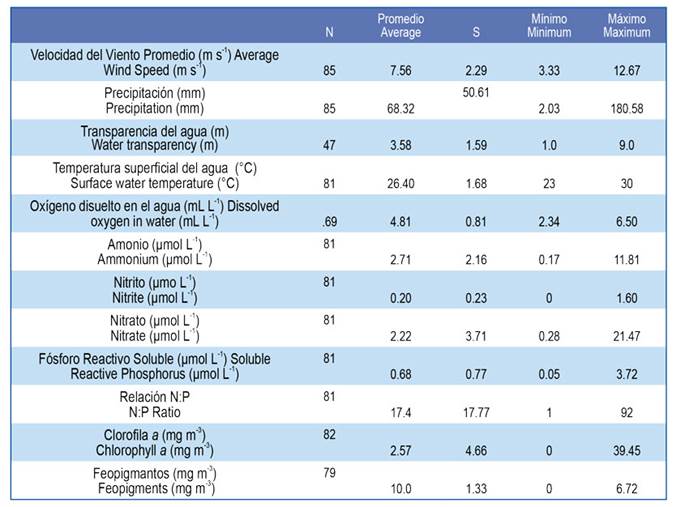
N: Sample size; S: Standard deviation
In relation to meteorological variables, the wind speed fluctuated between 5.9-8.2 m s-1 in September 2012 and March 2013, respectively. Whereas, in 2015 it was in the range of 9.6-5.3 m s-1 in September and October 2015, respectively, without a clear pattern of seasonality (Fig. 2A). During the 2012-13 period, precipitation exceeded 40.37 mm. In the second period (2015), this variable decreases from January (52.32 mm) until April 2015 (nd) then begins to rise until June 2015 (120 mm) with a maximum in August of the same year (176.8 mm; Fig. 2A).
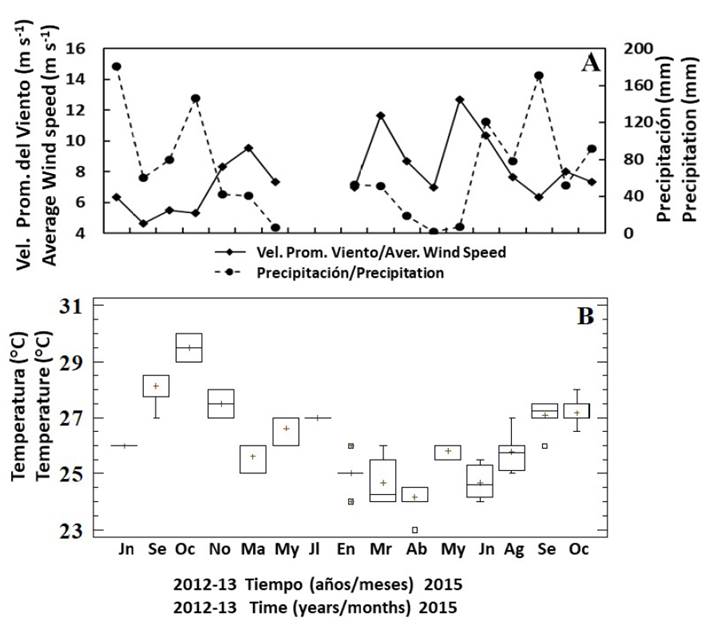
Figure 2 Monthly variation of: A. Average wind speed (m s-1) and precipitation (mm). B. sea surface temperature (°C) measured on the northern coast of the Paria Peninsula, S.E. Caribbean, Venezuela during the period June 2012 - July 2013 and January - October 2015.
Sea surface temperature showed differences between periods and months (K-S=2.96; KW=75.39; p<0.05 Fig. 2B). The highest average temperature was recorded in 2012-13 (27.4°C), while 2015 was characterized by the lowest average temperature (25.6°C). In relation to the months, the maximum and minimum temperatures were detected in October 2012 and March 2013 (29.5 and 25.3°C, respectively); while in 2015 the minimum and maximum temperatures were detected in April and October (24.2 and 27.2°C, respectively; Fig. 2B).
The concentration of NH4 + showed significant differences between periods, months, and locations (K-S=3.44; KW=37.31; KW=14.63; p<0.05; Fig. 3 A, B, C). The highest and lowest average concentration was determined during the period 2012-13 and 2015 (3.34 and 2.23 μmol L-1; Fig. 3A). During 2012-13, the highest and lowest averages were detected in March and May 2013 (4.7 and 2.2 µmol L-1, respectively). While in the 2015 period, the lowest and highest concentrations were recorded in May and June (1.1 and 4.2 μmol L-1, respectively; Fig. 3B). In relation to the locations, in Querepare2 and Río Caribe, the minimum and maximum averages of NH4 + were determined (1.44 and 4.47 μmol L-1, respectively (Fig. 3C).
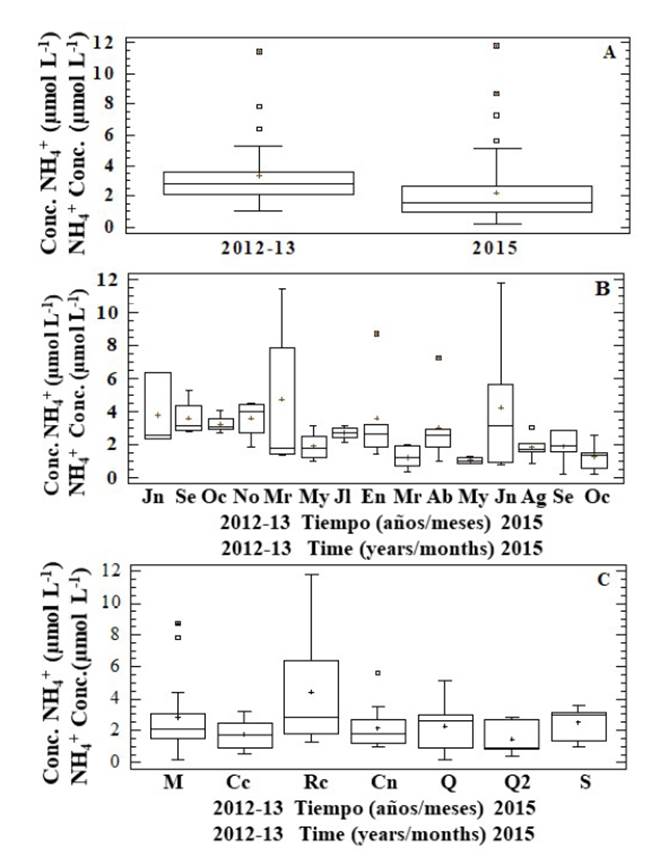
Figure 3 Variation of NH4 + concentration (μmol L-1) on the northern coast of the Paria Peninsula, S.E. Caribbean, Venezuela, during the period June 2012-July 2013 and January - October 2015. A, annual variation; B, monthly variation; C, location.
The concentration of NO2 - only showed significant differences between periods and months (K-S= 1.51; KW=45.62 p<0.05). In relation to the periods, the minimum and maximum concentration was detected in 2012-2013 and 2015 (0.13 and 0.35 μmol L-1; respectively; Fig. 4A). While the monthly variation was higher and lower in June 2012 and July 2013 (0.54 and 0.03 μmol L-1; respectively). In the second study period (2015), the maximum and minimum averages were recorded in January and May (0.51 and 0.04 μmol L-1; respectively; Fig. 4B).
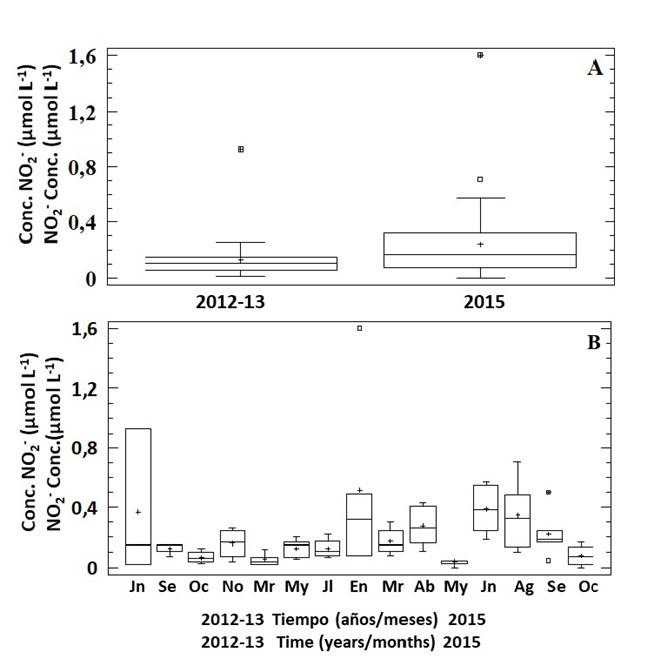
Figure 4 Variation of NO2 - concentration (μmol L-1) on the northern coast of the Paria Peninsula, S.E. Caribbean, Venezuela, during the period June 2012-July 2013 and January - October 2015. A, annual variation; B, monthly variation.
On the northern coast of Paria, the concentration of NO3 - showed significant differences in relation to the temporal factor (periods and months; K-S=1.53; KW=32.00; p<0.05). In the 2012-13 period, the average was higher at 3.20 μmol L-1, while in 2015 it was lower (1.32 μmol L-1; Fig. 5A). The monthly variation of NO3 - showed its maximum and minimum average values in June 2012 and May 2013 (11.85 and 1.13 μmol L-1 respectively; Fig. 5B); while in 2015 the maximum and minimum average concentrations of NO3 - were detected in January and June (2.29 and 0.90 μmol L-1) respectively (Fig. 5B).
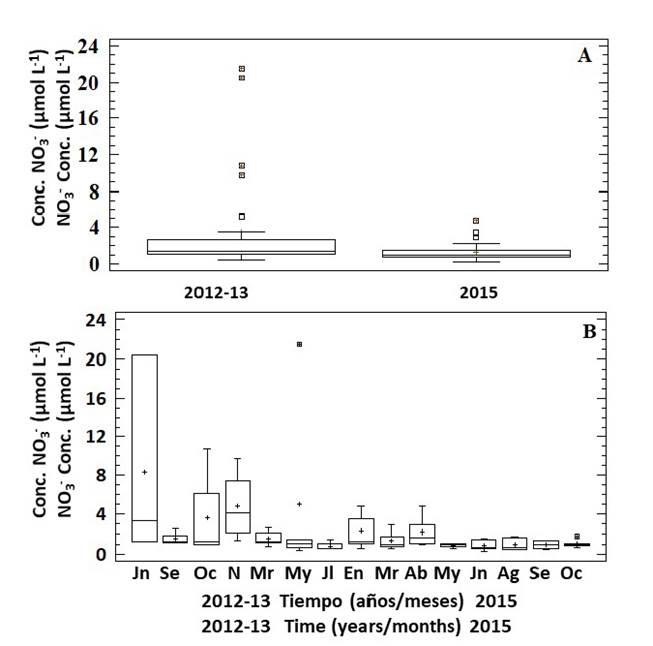
Figure 5 Variation of NO3 - concentration (μmol L-1) on the northern coast of the Paria Peninsula, S.E. Caribbean, Venezuela, during the period June 2012-July 2013 and January - October 2015. A, annual variation; B, monthly variation.
Regarding the FRS, significant differences were detected between periods (K-S=1.53 p<0.05) and months (KW=56.63 p<0.05). The minimum and maximum average was detected in 2012-13 and 2015 (0.27 and 0.97 µmol L-1) respectively (Fig. 6A). The monthly distribution of this variable showed its maximum and minimum averages in June and September 2012 (0.40 and 0.19 μmol L-1), respectively (Fig. 6B). On the other hand, during 2015 the minimum and maximum averages were determined in May and June (0.19 and 2.05 μmol L-1) respectively (Fig. 6B).
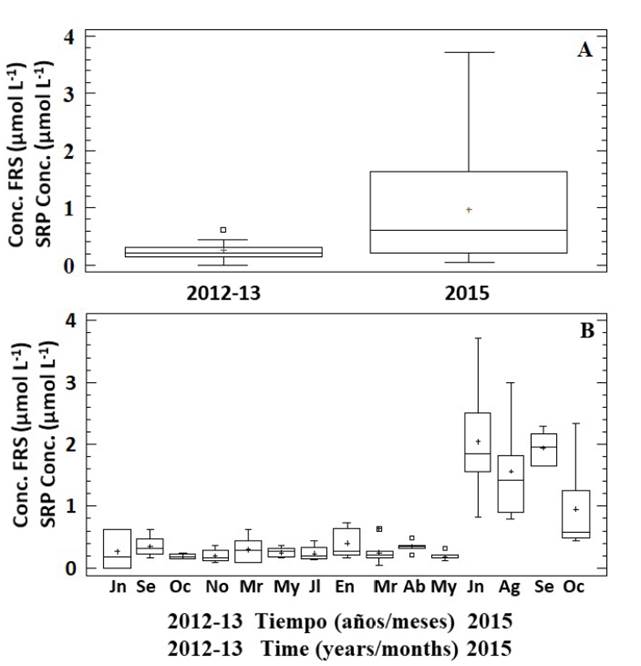
Figure 6 Variation of FRS concentration (μmol L-1) on the northern coast of the Paria Peninsula, S.E. Caribbean, Venezuela, during the period June 2012-July 2013 and January - October 2015. A, annual variation; B, monthly variation.
Phytoplankton biomass, measured as Chlor. a, showed significant differences between: periods, months, and locations (K-S=2.79; KW=48.77; KW=13.87; p<0.05; respectively (Fig. 7A, B, C). The 2012-13 period presented the lowest average of Chlor. a (1.83 mg m-3); whereas in 2015 the average was higher (3.13 mg m-3; Fig. 7A). Between months, this variable fluctuated in the range of 0.36-13.44 mg m-3 from June 2012 to March 2013 (Fig. 7B). However, in 2015, two peaks of Chlorophyll a were determined, the first in March and the second in June of the same year (4 and 6.24 mg m-3). By location, the lowest average of Clor. It was determined in Sipara (0.54 mg m-3), while the highest average was detected in Río Caribe (4.57 mg m-3) with a maximum of 39.45 mg m-3 in March 2013 (Fig. 7B).
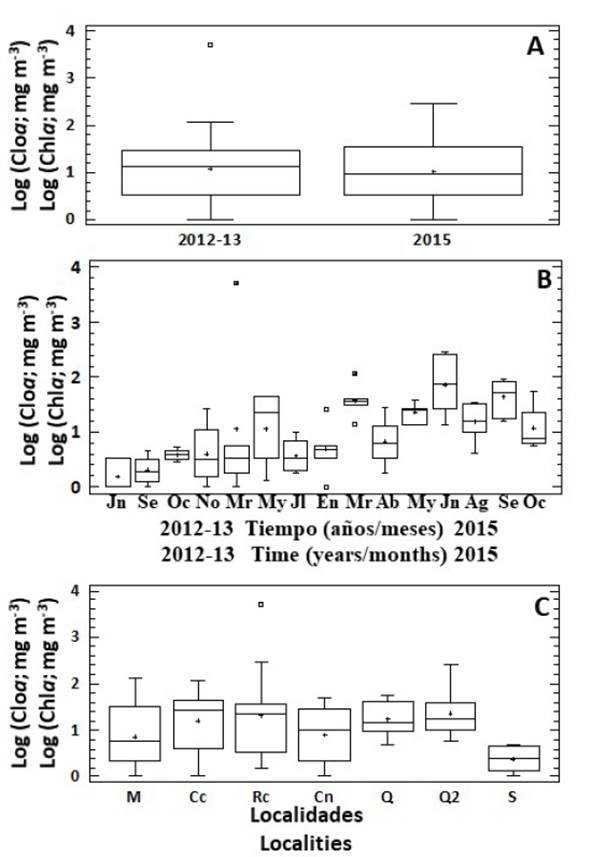
Figure 7 Variation of chlorophyll a concentration (mg m-3) on the north coast of the Paria Peninsula, S.E. Caribbean, Venezuela, during the period June 2012-July 2013 and January-October 2015. A. Annual variation, B. Monthly variation, C. Locality.
During the 2012-13 period, the surface waters of the northern coast of the Paria Peninsula, S.E. of the Caribbean, showed a trophic index (TI) for NH4 + with a minimum (2.2) and maximum (5.0) at the locations of Playa Los Cocos and Río Caribe. In relation to NO2 - and FRS, the behavior of the TI was similar; that is, minimums in Los Cocos (1.23; 1.50; respectively) and maximums in Río Caribe (2.34; 2.70; respectively); while in relation to the IT for NO3 -, the minimum (2.7) was determined in Sipara and the maximum (6.5) in Río Caribe (Fig. 8).
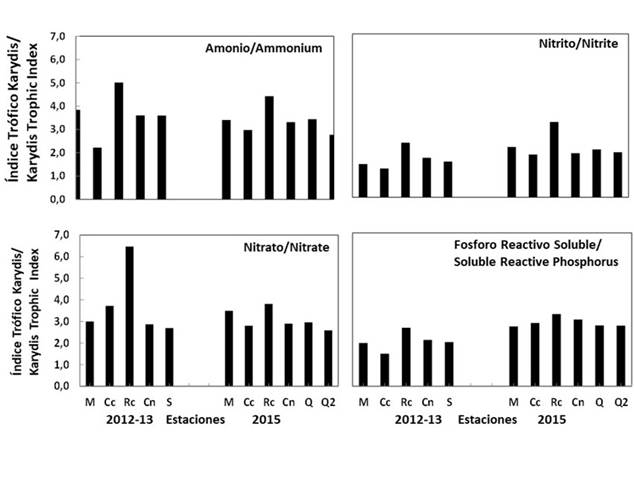
Figure 8 Seasonal variation of the Karydis trophic index (T.I.) for: A) ammonium, C) nitrite, E) nitrate, and D) FRS in the coastal area of Paria, S.E. Caribbean, Venezuela, during June 2012 - July 2013 and January - October 2015.
In 2015, the majority of nutrients showed a trend of decreasing the TI value. However, the surface waters of Querepare2 and Río Caribe presented the minimum (2.8) and maximum (4.40) values for NH4 +. NO3- and FRS exhibited a similar behavior to that determined for NH4+; with minimum values (2.60 and 2.76) and maximum (3.80 and 3.30) in Querepare2 and Río Caribe, respectively. The IT for NO2 - had a different behavior with a minimum (2.72) and maximum (3.30) in the surface waters of Los Cocos and Río Caribe (Fig. 8).
In relation to the PCA, for the 2012-13 period, the accumulated variance of the first three components was 77.68%. Component 1 (35.28%) was positively correlated with NH4 +, NO2 -, NO3 -, rain, FRS, being weakly correlated with Chlor. a and water temperature. This group of variables correlated negatively with dissolved oxygen and average wind speed. Component 2 (23.57%) was positively correlated with: average wind speed, dissolved oxygen, and negatively with water temperature (Fig. 9A).
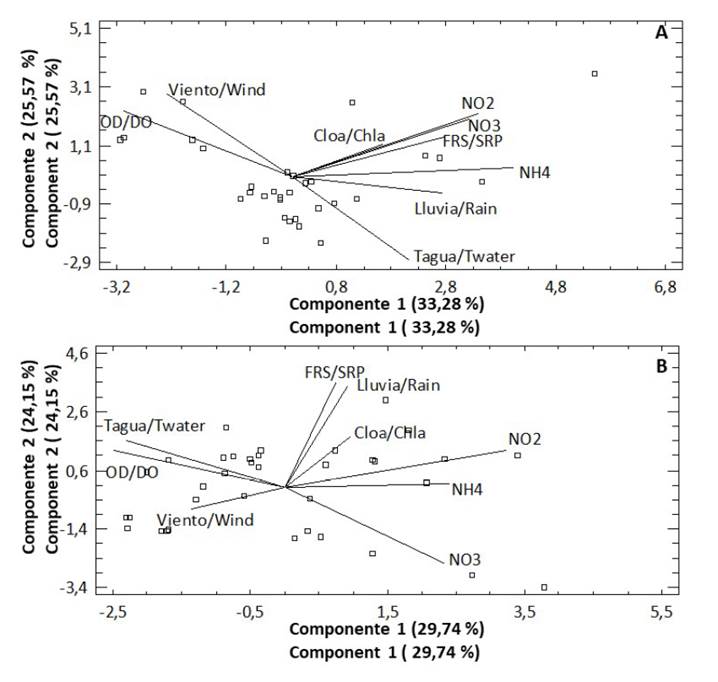
Figure 9 Orthogonal projection of some physicochemical and biological variables in the space defined by the first two components of the PCA during: A. 2012-13. B. 2015, on the northern coast of the Paria Peninsula, S.E. Caribbean, Venezuela. Rain: Rain, Wind: Average wind speed, TEM: Sea surface temperature, OXI: Dissolved oxygen in water, CLORa: Chlorophyll a, FEOP: Pheopigments, NH4: Ammonium (NH4 +), NO2: Nitrite (NO2 -), NO3: Nitrate (NO3 -), FRS: Soluble reactive phosphorus.
In the 2015 period the accumulated variance of the first three components of the PCA was 70.83%. With component 1 (29.74%), a positive correlation was found between: NO2 -, NH4 +, NO3 -; being negative with water temperature, dissolved oxygen, and average wind speed. Both groups of variables were inversely correlated with each other. In relation to component 2 (24.19%), the correlation was positive with FRS, rain, being weak with Clor. a and negative with NO3 - (Fig. 9B).
DISCUSSION
The northern coast of the Paria Peninsula was characterized by strong winds and waves; however, the calmest month was October 2015 (5.3 m s-1). Aparicio-Castro (2003) indicated that the strong waves are due to a marked seasonality in the wind field, which influences the wave regime along the northeastern coast of Venezuela and established the January - June semester as a period of intense waves with frequency of occurrence values, of waves between 1.8 and 3 m in height, greater than 10%.
The wind speed results differ from those detected by Subero-Pino (2014) at the Guaracayal station, Gulf of Cariaco, and also from the work of Márquez et al. (2011) in the eastern sector of the Gulf of Cariaco (in the range of 1-6 m s-1). However, they are within the range detected by Rueda-Roa et al. (2018) in the southern Caribbean zone (5-9 m s-1), also indicating that they are within the favorable range for the coastal upwelling phenomenon.
In relation to temperature, the amplitude of the annual temperature cycle of 5°C coincided with what was indicated by Aparicio-Castro (2003). The high water temperature detected during the first period (2012-13) is possibly due to the fact that most of the samples were taken during the rainy/calm season; additionally, the samples were taken from the surface layer. In this regard, Okuda et al. (1978) in a study conducted in the Gulf of Cariaco, it is noted that the surface layer is the one that directly receives solar radiation and therefore heats up more than the rest of the water column. This occurs because during the rainy/calm season, as the wind speed decreases, the vertical exchange and the heat flow from the upper layers to the depths are reduced, and simultaneously, surface evaporation increases.
In relation to the decrease in temperature observed in March 2013 and April 2015 (drought/upwelling), it is due to coastal upwelling, caused by the coastal Ekman transport resulting from the seasonal intensification of the Trade Winds in the Caribbean Sea (Rueda-Roa et al., 2018). An important event occurs in June 2015 when the sea surface temperature decreases, the concentration of NH4 + and FRS increases, associated with the increase in Chlor concentration. a. This has been mentioned by Rueda-Roa and Müller-Karger (2013) and also by Rueda-Roa et al. (2018) and they called it secondary upwelling or mid-year upwelling. In this study, the secondary upwelling occurred in June 2015. Müller-Karger et al. (2004); Rueda-Roa (2000); Rueda-Roa and Müller-Karger (2013); Rueda-Roa et al. (2018) indicate that the mid-year secondary upwelling is also characterized by being shorter and warmer (1-2 °C, more). This mid-year upwelling has been observed subsequently in other years of the CARIACO time series; it is distinct and separate from the primary upwelling season noted by Herrera and Febres (1975). In the coastal area of Paria, when the primary and secondary upwelling ends, as in August 2015, the dominant event depends on the discharges of the Orinoco River (Gómez, 1998). In this case, in August, the sea surface temperature begins to rise (by an additional 1-2 °C) compared to the average detected for the upwelling in the first half of the year; while the concentration of Chlor. and the nutrients remain high, highlighting the influence of the Orinoco River waters between August-October 2015, whose maximum discharge is in August (Müller-Karger and Varela, 1990; Monente, 1997; Aparicio-Castro, 2003). These results indicate that the area is fertilized during the first months of the year by the primary upwelling (Herrera and Febres, 1975), then in June by the secondary upwelling (Rueda-Roa and Müller-Karger, 2018), and when the upwelling decreases in August, the discharges from large rivers like the Orinoco River (Monente, 1977, 1997) and local rivers also contribute to the fertilization of the waters. This sequence of events is favorable for the local fishing system, as it maintains high fishing productivity throughout the year.
The results of this work are consistent with the findings of Xiu et al. 2018 with respect to surface temperatures in northern South America. These authors point out that in this region the waters are cooler than in the central and northern Caribbean. The in situ temperature records indicated a lower average temperature (25.6°C) during the second period, evidence of the maintenance of the hydrochemical conditions in this area of the Caribbean that make upwelling a sustainable event over time.
During both periods, NH4 + was the predominant form of inorganic nitrogen at all stations on the northern coast of the Paria Peninsula; it is noteworthy that in Río Caribe, this variable reached the highest concentration in June 2015 (11.81 μmol L-1). The high concentration of NH4 + and the wide range of fluctuation in both periods may be due to the supply of nutrients from primary upwelling (Herrera and Febres, 1975), secondary upwelling (Rueda-Roa et al., 2018); the discharge of large rivers like the Orinoco, whose maximum discharge (> 65000 m3 s-1) occurs in August (Monente, 1977), the intermittent discharges of local rivers, which only during the rainy season pour their waters into the sea carrying a large amount of organic matter, domestic discharges from the locality, the washing and gutting of fish from the market, promote the production of NH4 + by bacterial action. De Santis Braga et al. (2018) also add as sources of NH4 +: excretion by zooplankton, other animals, and anoxic bacterial activity on NO3 -. Martínez et al. (2012) mention that the concentration of NH4 + is higher in areas near the most populated centers; this is the case for El Morro and Río Caribe. In Querepare 2, the minimum averages of NH4 + were detected, possibly due to consumption by microalgae, associated with a high concentration of Chlor. to. It is worth noting that in Sipara the concentration of this nutrient was higher (2.79 μmol L-1); however, the Chlor a. average was lower (0.6 mg m-3), this is possibly due to the biological activity of organisms in the natural mussel beds P. perna. These organisms feed on microalgae, reducing the biomass, and as an excretion product, they generate NH4 +.
In relation to the concentration of NO2 -, since it is considered an intermediate product between NH4 + and NO3 -, its presence in the environment is short-lived. Therefore, the concentration of NO2 - is considered normal for this type of ecosystem.
It has been noted that NO3 - enters the nitrogen cycle as the main support for phytoplankton growth; subsequently being regenerated from organic forms by bacteria (Senior, 1991, 2009). The low concentrations of NO3 - detected in March 2013 and 2015 coincide with the highest biomass values, which are possible due to the consumption of this nutrient by microalgae (Márquez et al., 2011).
In general terms, the concentration of FRS coincides with the records of Martínez et al. (2012); however, between June-October 2015, higher values were determined, associated with a high concentration of chlorine. possibly due to enrichment related to: the mid-year secondary upwelling indicated by Rueda-Roa and Müller-Karger (2013) and Rueda-Roa et al. (2018); following the intrusion of waters from the Orinoco River through the Boca Dragón strait via the Gulf of Paria (Müller-Karger and Varela, 1990; Monente, 1997). Other sources of FRS are: the use of pesticides and fertilizers from agricultural activity, the use of polyphosphate detergents which, through the effect of hydrolysis and bacterial activity, increase phosphorus in the environment (Martínez et al., 2001; Morales et al., 2010). Domestic discharges and decomposition of marine product waste dumped directly into the sea.
On the northern coast of Paria, the maximum averages of Chlor. a were associated with low temperatures, low nitrate, high FRS, and NH4 + as happened in March 2013, March and April 2015, and then between June and October 2015. This could be the result of nutrient supply from upwelling and river discharges. These are the main sources of enrichment in the area, which differs from what was indicated by Márquez et al. (2011) in the eastern sector of the Gulf of Cariaco where a shift in Chlor. was observed. to the nutrients, attributed to a process of acclimatization of the microalgae, in this work that does not occur. However, it coincides with what was reported by Richard (1963), Subero-Pino (2014), Márquez-Rojas et al. (2022) in the same Gulf of Cariaco, suggesting that the upwelling is the main source of enrichment in the area. The maximum of Clor. a detected in March 2013 (in Río Caribe), was due to a diatom bloom associated with a decrease in sea surface temperature, excess NH4+ , and an increase in the concentration of FRS. These events are typical of subsurface water upwelling, with low temperatures and high nutrients. For logistical reasons, Playa Sipara was only sampled during 2012-13, in which the minimum average of Chlor. a detected in the locality of Sipara was due to the fact that in 2012-13 the sampling began during the rainy/calm season, in addition, it is a very shallow water column, with little turbulence and the transparency reaches the bottom where perhaps, there is surface photoinhibition. It is also possible that the low concentration of chlorine is due to consumption by mollusks in the natural banks of the area.
Trophic indices provide synoptic information about the trophic state of ecosystems, which allows for the generation of ecological criteria to define management and conservation actions for these environments. In the Paria Peninsula, S.E. of the Caribbean, the trophic index used was that of Karydis. The IT results in the area differ slightly from those determined by Prado-España (2017) in Guayaquil-Ecuador, using the Karydis TI. In this case, the trophic state was mesotrophic, with higher values in the inner estuary probably due to inputs from anthropogenic activities; whereas, in the surface waters of the northern coast of the Paria Peninsula (S.E. Caribbean), each location exhibited different behavior. The mussel bank of Querepare had the lowest IT for all nutrients; being mainly oligotrophic. Apparently, the nutrients produced are possibly intended to support the phytoplankton biomass determined in the area. While the mussel bank of Sipara varied from mesotrophic for NH4 + to oligotrophic for the rest of the nutrients. The trophic state of Cangua remained between a mesotrophic to oligotrophic condition without significant variations between periods, supporting a moderate biomass (Fig. 7C). While the TI of the surface waters of Río Caribe was the highest for all nutrients, it was in a eutrophic state for NH4 + and NO3 - during 2012-13 and mesotrophic for NO2 - and FRS both in 2012-13 and in 2015. The results indicate the influence of anthropogenic contributions on all nitrogen due to the eutrophic condition for these nutrients. This suggests the control of wastewater emissions of anthropogenic origin.
So far, the microalgae blooms, like the one detected in this locality due to the high biomass determined (39.45 mg m-3 of Chlor. a) apparently, have not been harmful to other trophic levels. However, at some point the assimilative capacity of the environment could be exceeded, causing a system collapse due to the prolonged eutrophication process, favoring the excessive growth of microalgae, which could lead to the death of other organisms either by: oxygen depletion, intoxication, or suffocation. This is important in the area where other toxic events with fatal outcomes have already been reported, as mentioned by Reyes-Vásquez et al. (1979) to the northeast of the state of Sucre, (Río Caribe). event that occurred at the end of July 1977, when 9 children died after consuming mussels, showing the typical symptoms of paralytic shellfish poisoning (Reyes-Vásquez et al., 1979).
The results of this work are consistent with the findings of Xiu et al. (2018) with respect to surface temperatures in northern South America. These authors point out that in this region the waters are cooler than in the central and northern Caribbean. The in situ temperature records indicated a lower average temperature (25.6°C) during the second period, evidence of the maintenance of hydrochemical conditions in this area of the Caribbean that make upwelling a sustainable event over time. These results also match those obtained by Gómez and Acero (2020). The results of this research demonstrate the sustainability of the upwelling over time due to the temperature values obtained in this work and compared with those of other authors. The eastern part of Venezuela has greater fertility and fish production because the Subtropical Subsurface Water mass supplies the upwelling during the first months of the year (drought). In the second semester, when the upwelling relaxes, the area is enriched with organic matter from the Orinoco River and the contribution of phytoplankton biomass from coastal lagoons, gulfs, and semi-enclosed bays. The breadth of the continental shelf also plays a fundamental role with the presence of archipelagos, major and minor islands that cause local enrichments and the concentration and retention of plankton. This latter increases biological productivity and promotes the reproduction of those organisms.
CONCLUSIONS
The study demonstrates that the hydrochemical conditions of the northern coast of the Paria Peninsula, S. E. of the Caribbean, are influenced by several factors: the primary upwelling due to the seasonal strengthening of the Trade Winds. The secondary upwelling during June-July due to an intensification of the Caribbean Current during June and July when the local intensities of the coastal winds weaken. Both would carry all the nutrients (NO3 -, NO2 -, NH4 +, and FRS) from the deep waters to the surface, favoring the concentration of Chlor. a. Subsequently, when the upwelling stops, the rains increase the discharge of the rivers, bringing nutrients that act on the Chlor a. Finally, the local rivers intermittently and the anthropogenic discharges.
The Karydis trophic index indicated that the waters of the natural mussel bank of Río Caribe are eutrophic for NH4 +, NO3 - and oligotrophic to mesotrophic for NO2 - to FRS; with Río Caribe having the highest IT value in each of these trophic conditions. This is very important since the IT is higher where human activity is more intense, potentially altering biogeochemical processes, potentially modifying the concentration of nutrients and/or proportions in coastal waters, changing their trophic state leading to eutrophication and ultimately favoring the development of harmful algal blooms, which are detrimental to the local fishing system. This could result in an increase in the mortality of certain organisms such as sardines (Sardinella aurita), the main raw material for the marine canning industries, one of the main sources of employment in the area, as well as affecting other members of the food chain such as those in the natural banks of mollusks Perna perna and Arca zebra, the largest in the country and the Caribbean.
Because the results of the Karydis trophic index reveal that the waters in the area range from mesotrophic to eutrophic for nutrients, the Chlor. a is related to phytoplankton abundance, in data not yet published, where fishing and bivalve extraction have been long-standing and there are no signs of resource overexploitation, there is the possibility of changes in ocean currents and in the regional rainfall pattern, under the influence of the climate crisis. This warrants the establishment of at least one time series station to monitor possible changes in bivalve beds and nektonic communities.

