




 English (pdf)
 Article in xml format
 Article references
 Automatic translation
 Send this article by e-mail
 Cited by SciELO
  Cited by Google
  Similars in
SciELO
Similars in
SciELO  Similars in Google
 Permalink
Introduction
Exploring teachers’ and students’ perceptions of VLOs in higher education provides valuable guidance to instructional designers as they make informed pedagogical decisions when designing online courses. This study aimed to explore how teachers and students perceived the usefulness, ease of use, and technical quality of VLOs designed for an online English program at a Colombian public university, as well as their attitudes towards them and their perceived competence to use them.
We framed this study within a quantitative paradigm with a survey research approach. To do that, we employed two questionnaires based on the technology acceptance model (TAM). We obtained valid answers from 63 teachers and 290 students enrolled in intermediate English courses.
Information and Communications Technologies (ICT) and Education
The integration of ICTs into education has revolutionized teaching and learning processes across the globe, as ICTs have offered innovative tools and resources that enhance both teaching efficiency and student engagement (Clark & Mayer, 2016). Within this technological shift, computer-assisted language learning (CALL) emerged as a key area of interest, focusing on the use of computers and digital media to support language learning (Bax, 2003). CALL tools have proven effective in providing interactive and personalized learning experiences, fostering learner autonomy, and supporting diverse learning styles (Beatty, 2013).
Within the developments of CALL, the concept of virtual learning environments (VLEs) and learning management systems (LMS) have emerged to group online platforms designed to facilitate learning by integrating various digital resources, including multimedia, interactive exercises, and communication tools (Coates at al., 2005). VLEs provide a space for both synchronous and asynchronous learning, promoting collaboration and engagement among learners and instructors in a flexible, accessible format (Garrison & Kanuka, 2004; Herrera Mosquera, 2017).
Virtual Learning Objects (VLOs)
Generally placed within VLEs or LMS, or sometimes used as a standalone feature, VLOs have become critical components in learning resources. These objects are considered powerful pedagogical tools, enabling educators to create modular, flexible learning experiences that align with diverse learning needs and objectives (Hernández Urrego, 2019).
The Colombian Ministry of National Education (Colombia, MNE) defined a VLO as a digital resource designed for reuse across various educational settings. Examples include courses, diagrams, photos, films, videos, and documents that serve well-defined educational purposes (2017).
VLOs have several features. For example, they are reusable (Konstantinidis et al. 2019; Pito Salas, 2020), they engage students in interactive and flexible learning experiences (Onofrei & Ferry, 2020), they are implicitly linked to learning or teaching or education (Pito Salas, 2020), they are objects that can be placed in different learning scenarios (Pito Salas, 2020), and they may lead to increasing autonomy in language learning (Khan et al., 2019; Konstantinidis et al., 2019; Montiel et al., 2020; Redmond et al., 2018; Shafrir, 2020, Yanfang et al., 2018).
According to Tamayo Cuenca (2015), a VLO includes content analysis, learning activities, and evaluation tools that can be adapted to various learning contexts and should be equipped with metadata and contextualization elements to enhance its effectiveness.
Technology Acceptance Model (TAM)
The TAM proposed by Davis (1989) as part of the theory of reasoned action explains users’ acceptance of new information systems in organizational settings. It is used for studying users’ perceptions and behaviors regarding technology adoption. According to Cabero Almenara et al. (2016), this model aims to predict users’ behaviors regarding their attitudes and intentions. Over time, adaptations and extensions to the model have been made available as TAM2, TAM3, unified theory of acceptance and use of technology (UTAUT), and UTAUT2 (Davis et al., 2020; Marikyan & Papagiannidis, 2023; Venkatesh & Bala, 2008; Venkatesh & Davis, 2000).
TAM’s core idea, according to Farahat (2012), is that the acceptance of some technology by any user is determined by the technology’s perceived usefulness (PU) and perceived ease of use (PEOU), leading to users determining their behavioral intention to use it. A positive attitude towards technology is established when users think of it as being useful and easy to use, and it may be predicted by PU and PEOU levels. In addition to determining users’ behavioral intention, Farahat found out that the TAM is a positive predictor of their attitude towards using a new technology.
Literature Review
In this section we present studies in the Latin American context highlighting the importance of using VLOs in language learning and some studies on the use on the application of TAM in language learning and teaching. The studies show that VLOs promote motivation and strengthen learning processes, and students spend more time learning English with VLOs, leading to improved academic performance. Although research is limited, we present some studies that point out to external factors that have an effect on PU and PEOU when predicting a user’s attitude towards using technology as well as how PEOU positively impacts the attitude toward online learning.
VLOs and Language Learning and Teaching
In the Latin American context, even though literature in this topic is scarce, some studies are worth noting. In the context of an Ecuadorian middle school, Saltos-Solorzano et al. (2022) highlight the importance of using VLOs in the language and literature classroom as a means of increasing students’ level of motivation for learning and understanding diverse contents. In the same vein, Martínez-Palmera et al. (2018) had claimed that VLOs are a valuable tool to enhance students’ learning skills when technological devices are used, which allows meaningful and contextualized learning to take place.
Also, in a study assessing the introduction of VLOs into Spanish teaching and learning in Cuba, Hernández Dominguez et al. (2018) observed that VLOs complement face-to-face sessions by reinforcing skills among students and as a way to foster interaction. Going a step forward, in a research project carried out with Colombian high school learners in a technical English learning class, Parra Diettes (2022) proposed the creation of VLOs by students using the Universidad del Valle’s five-stage model for media creation (Borrero et al., 2009), which is based on Pressman’s (2006) web and software development model. This study showed that adding gamification attributes to VLOs promoted motivation and strengthened learning processes, resulting in improved learning outcomes.
On the methodology side, Redondo and Urbina (2019) carried out a study to identify the relationship between the use of VLOs in an English laboratory class and the development of listening skills among undergraduate students of an English-Spanish learning and teaching major in Colombia. They adopted the definition established by the Colombian Ministry of Education of (Colombia, MNE, 2017, p. 25)-and expanded it by stating that they are designed as units of independent digital instruction capable of being combined to create varied learning experiences. One of the findings highlighted by the authors is that the students spent more time learning English since VLOs could be accessed anywhere with an internet connection. They also found that interaction with VLOs in class increased motivation towards listening activities, leading to improved academic performance.
TAM and Language Learning and Teaching
In their literature review, on measuring e-learning acceptance by using the TAM, Salloum et al. (2019) pointed out that external factors have an effect on PU and PEOU when predicting a user’s attitude towards using technology. Salloum et al. (2019) identifies computer self-efficacy, subjective/social norm, perceived enjoyment, system quality, information quality, content quality, and accessibility as external factors that affect the adoption of e-learning and its acceptance in different contexts. These factors positively impact students’ PU and PEOU in e-learning systems and subsequently favor students’ intentions to use those systems. Furthermore, according to Ibrahim et al. (2017) and Nuryakin et al. (2023), PU has a significant positive impact on both satisfaction and attitude; and PEOU positively impacts the attitude toward online learning, thus positively influencing student satisfaction.
Although research on the application of the TAM in language learning is limited, some studies-such as those by Soleimani et al. (2014) and Liu et al. (2023)-illustrate its relevance in assessing learners’ adoption of technology-based tools. Soleimani et al. (2014) investigated mobile-assisted language learning (MALL) among postgraduate English-as-a-second-language students at Universiti Kebangsaan Malaysia. Their findings revealed a high PEOU, indicating that students found MALL convenient and accessible. However, PU was moderate, as students valued mobile devices for communication but faced limitations due to internet reliance. Despite a strong behavioral intention to use MALL, actual usage remained moderate, suggesting a gap between perception and practice.
Similarly, Liu et al. (2023) applied TAM to examine English-as a foreign language (EFL) learners’ perception of ChatGPT in informal digital learning. Their study, based on data from 405 Chinese students, found that PU played a more decisive role than PEOU in shaping learners’ attitudes toward ChatGPT. While PEOU did not directly influence attitudes, it affected learners’ perception of the tool’s benefits. Those who found ChatGPT useful developed a positive attitude, which strongly predicted behavioral intention and actual engagement.
Method
This section outlines the methodological approach employed in the study. It begins with a description of the design and structure of VLOs evaluated, followed by an explanation of the study type, the validation process of the data collection instruments, the procedures for data analysis, and the participants’ profiles. It then details the data collection instruments -structured questionnaires based on the TAM.
Structure and Contents of VLOs
VLOs in this study were designed to reach a B1 level of English on the CEFR scale. The 29 VLOs from this study, with 64 linguistic resources and 179 pedagogical activities, were designed under the SCORM standard1 (2004 version), which is used for “the packaging and deployment of web-based learning objects” (Godwin-Jones, 2004, p. 7).
As Figure 1 shows, VLOs have several features such as the unit’s name and task number, objectives, linguistic input, and pedagogical activities. Figure 1 shows other VLOs features such as access to multimedia content, a progress bar to help students monitor their tasks completion, automatic feedback, and a tool called Global Progress (GP) which allows students and teachers to monitor their advancement in the VLO, indicating the number of times students have worked on a given activity and their score each time they try to complete it. Table 1 summarizes the topics covered in VLOs. They range from meeting new online friends to learning how to cite and reference sources in academic texts.
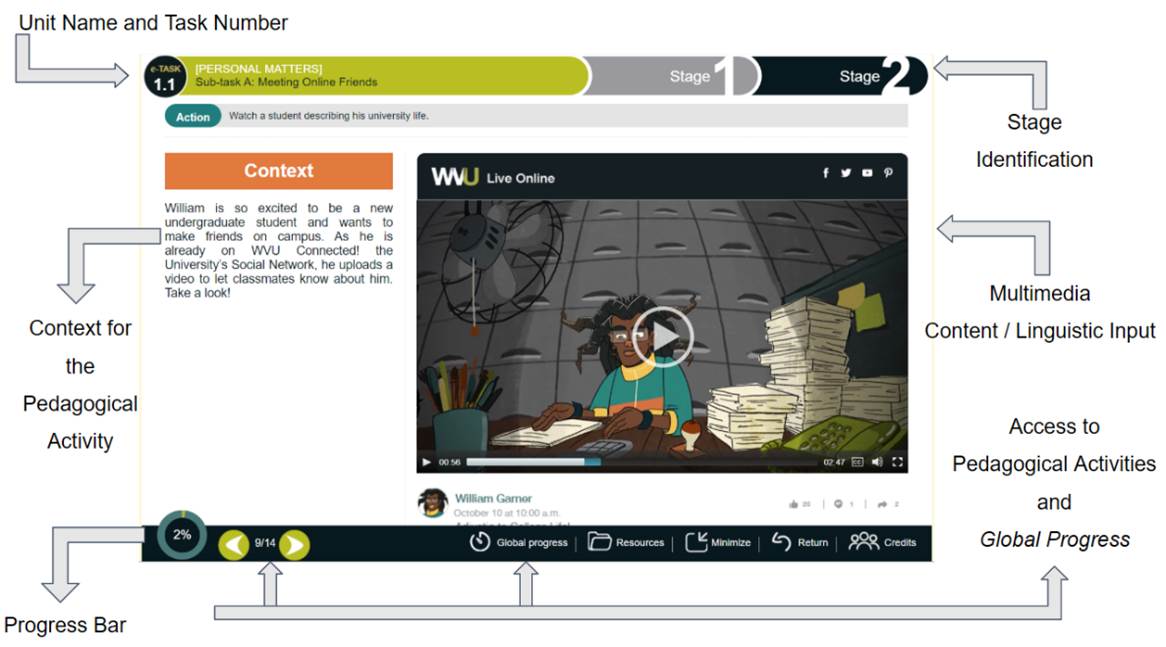
Table 1 VLO Contents
| Level | Topic |
| English 1 | Meeting online friends |
| A day in my life | |
| This is my family | |
| This is my home | |
| Learning about opportunities to see the world | |
| Looking for opportunities to see the world | |
| Academic endeavors in daily life | |
| English 2 | The big five personality traits |
| College life and personal interests | |
| Looking for new opportunities | |
| International job interview | |
| Cultural events at the university | |
| Important spots on main campus | |
| Academic life in the university | |
| English 3 | Heroes in our cities |
| Controversial people in the city | |
| Emblematic landmarks in Medellín | |
| Living abroad | |
| Telling short sci-fi stories | |
| English 4 | A vacation trip |
| Ways to travel | |
| Our Indigenous ancestors | |
| The history of a race | |
| Colombian personalities | |
| Science for well-being | |
| Predatory journals: A threat to scientific communication | |
| English 5 | Citing and referencing |
Type of Study
This quantitative study employed a survey research approach (Check & Schutt, 2012; Salloum et al., 2019) with a cross-sectional design to collect data at a single point in time (Creswell, 2012). We used two TAM-based structured questionnaires (Cabero-Almenara et al., 2021; Davis, 1989; Mohd Latip et al., 2017; Yong et al., 2010) -one for teachers and another one for students.
The questionnaires inquired about the following:
How do teachers and students perceive VLOs’ usefulness and ease of use in an online English program?
What is the attitude of teachers and students towards using VLOs for teaching English in an online English program?
What is VLOs’ perceived technical quality?
To what extent do teachers and students feel competent using VLOs?
Content validity for the questionnaires was established using expert validation as suggested by Artino et al. (2014), looking for the opinion of two experts in the field and by piloting the questionnaires on a sample of 5 teachers and 20 students from the online English program. Feedback led to rewording and adjusting some items in the questionnaires. The reliability of the questionnaires was measured for each TAM model construct using Cronbach’s alpha, which was also used for the two additional constructs we added to the questionnaires: technical quality (TQ) and technical competence (TC). The reliability level was found to be above the recommended minimum standard of 0.60 for all five measures in the two questionnaires. The calculated Cronbach’s alphas are presented in Table 2.
Table 2 Cronbach’s Alphas of Questionnaires
| Construct | Teacher Questionnaire | Student Questionnaire |
|---|---|---|
| PU | α=0.76 | α=0.74 |
| PEOU | α=0.76 | α=0.75 |
| ATU | α=0.72 | α=0.71 |
| TQ | α=0.78 | α=0.76 |
| TC | α=0.78 | α=0.75 |
Abbreviations: PU: perceived usefulness; PEOU: perceived ease of use; ATU: attitude towards using a new technology; TQ: technical quality; TC: technical competence.
Data obtained were analyzed using descriptive statistics (Creswell, 2012). We calculated means and standard deviations (SD) to provide answers to the study’s research questions. We employed the scale in Table 3 to proceed with data interpretation from the results obtained in both questionnaires.
Teacher Questionnaire
The questionnaire included seven sections, which made a total of 41 items (Table 4). The first section gathered demographic information about the participants. Sections two, three, and four measured the TAM model constructs (perceived usefulness, perceived ease of use, attitudes toward using the technology), while sections five and six integrated two additional constructs, namely, VLOs’ technical quality and the participants’ technical competence to use them. Finally, section seven collected teachers’ opinions regarding the use of VLOs for teaching English. Teachers were asked to rate each item using a five-point Likert-style response ranging from 1 (strongly disagree) to 5 (strongly agree) as shown in Table 3.
Table 4 Description of the Teacher Questionnaire
| Section | Description | Items | Source(s) |
|---|---|---|---|
| 1. General information | This section asks about teachers’ demographic information. | 7 | Creswell, 2012, Yong et al., 2010 |
| 2. PU | This section asks teachers whether they perceive VLOs to be helpful for their English teaching. | 15 | Cabero-Almenara et al., 2016; Chang et al., 2017; Davis et al., 2020; Farahat, 2012; Fathema et al., 2015; Gong et al., 2004; Mohd Latip et al., 2017; Roca et al., 2006 |
| 3. PEOU | This section asks teachers if they feel using VLOs for teaching purposes is easy. | 6 | Chang et al., 2017; Davis, 1989; Davis et al., 2020; Farahat, 2012; Fathema et al., 2015; Park, 2009; Mohd Latip et al., 2017; Roca et al., 2006 |
| 4. ATU | This section asks teachers about their attitude towards using VLOs for teaching purposes. | 3 | Fathema et al., 2015; Roca et al., 2006; Sánchez & Hueros, 2010 |
| 5. TQ | This section asks teachers about their perception of the VLOs’ technical quality. | 6 | Cabero-Almenara et al., 2016; Salloum et al., 2019 |
| 6. TC | This section asks teachers about how qualified they feel using VLOs. | 3 | Arteaga & Hueros, 2010; Cabero-Almenara et al., 2016; Garcia et al., 2010; Healey, 2018 |
| 7. Closing section | This section lets teachers express their opinions about using VLOs for teaching purposes. | 1 | Creswell, 2012 |
The Student Questionnaire
This questionnaire included six sections, with a total of 35 items (see Table 5). The first section gathered demographic information about the students. Sections two, three and four explored the TAM constructs. Sections five and six explored VLOs’ TQ and the participants’ TC to use them. All items required five-point Likert-style responses ranging from 1 (strongly disagree) to 5 (strongly agree), as shown in Table 3.
Table 5 Sections in the Students’ Questionnaire
| Section | Description | Items | Source(s) |
|---|---|---|---|
| 1. General information | This section asks about the students’ demographic information. | 6 | Creswell, 2012 |
| 2. PU | This section asks students whether they perceive the VLOs to be helpful for their English learning. | 12 | Cabero-Almenara et al., 2016; Chang et al., 2017; Davis et al., 2020; Fathema et al., 2015; Gong et al., 2004; Farahat, 2012; Roca et al., 2006; Mohd Latip et al., 2017 |
| 3. PEOU | This section asks students if they feel using VLOs for learning purposes is easy. | 6 | Chang et al., 2017; Davis et al., 2020; Davis, 1989; Roca et al., 2006; Park, 2009; Farahat, 2012; Fathema et al., 2015; Mohd Latip et al., 2017 |
| 4. ATU | This section asks students about their attitude towards using VLOs for learning purposes. | 4 | Fathema et al., 2015; Roca et al., 2006; Sánchez & Hueros, 2010 |
| 5. TQ | This section asks students about their perception of the VLOs’ technical quality. | 5 | Cabero-Almenara et al., 2016; Salloum et al., 2019 |
| 6. TC | This section asks students about how qualified they feel to use the VLOs. | 2 | Cabero-Almenara et al., 2016; Arteaga & Hueros, 2010; Healey, 2018 |
Participants
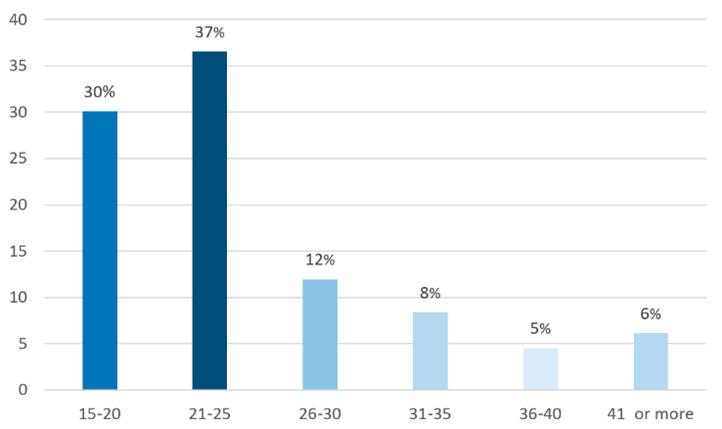
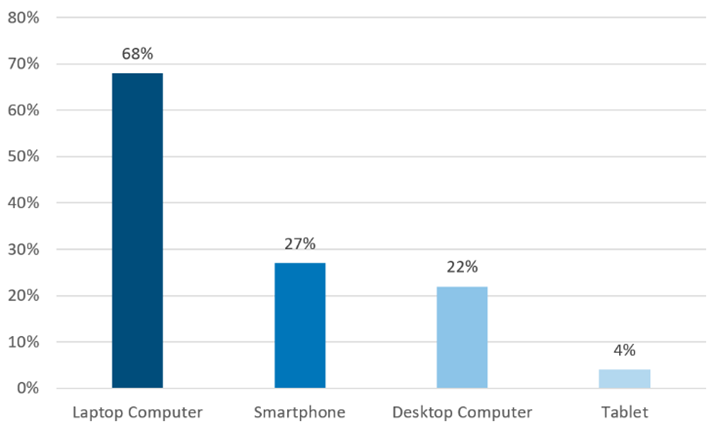
We sent the questionnaire to 150 teachers and 1656 students enrolled across all levels of an online English program. We had an answer rate of 17% for students and 42% for teachers. Therefore, the valid responses for the questionnaires were 63 for teachers and 290 for students. Teachers’ age was 46.7 years (minimum age: 28; maximum age: 60) on average. Their general experience teaching languages was of 20.2 years (minimum years of experience: 1; maximum: 41). And their average experience with online languages tutoring was 5.4 years (minimum years of experience: 1; maximum: 20). Meanwhile, most students were between 21 and 25 years of age (see Figure 2 for age breakdown). They accessed VLOs from laptops (68%), followed by smartphones (27%), desktop computers (22%), and tablets (4%), as seen in Figure 3.
Ethical Considerations
All participants were informed about the characteristics of the study; how data would be processed, reported, and analyzed; the strategies to guarantee their anonymity; the potential risks; and their right not to participate in the study if they chose so. This study obtained approval from an institutional ethics committee for social sciences.
Findings
In this section we will present how teachers and students perceive VLOs usefulness; then, teachers’ and students’ attitude towards using VLOs for teaching English. And, finally, what is VLOs’ perceived technical quality and how competent teachers and students feel using them.
How Do Teachers and Students Perceive VLOs Usefulness, and Ease of Use in an Online English Program?
This section delves into how teachers and students perceive the usefulness (PU) and ease of use (PEOU) of VLOs. We examine their perceptions to understand the strengths and areas for improvement of VLOs as learning tools. The subsequent analysis highlights areas of consensus and divergence in teacher and student experiences regarding VLOs’ PU and PEOU.
Teachers’ VLOs PU
The overall mean rating (OMR) of 4.30 for this construct indicates a very high level of PU for VLOs in the educational context (see Table 6). Specifically, teachers expressed strong agreement (mean = 4.63) with the assertion that VLOs foster English language learning through videos, texts, and podcasts. Furthermore, VLOs were perceived as highly relevant to students’ personal and academic lives (mean = 4.62) and effective in developing technological skills (mean = 4.62). The interactive exercises embedded within VLOs also obtained positive feedback, with a mean score of 4.59, suggesting their efficacy in facilitating English language acquisition. Similarly, the automatic feedback mechanisms incorporated into VLOs were viewed favorably (mean = 4.56).
While teachers acknowledged the benefits of VLOs across a range of skills, some areas received comparatively lower, though still positive, ratings. Written production skills (mean = 3.76) and oral skills (mean = 3.49), while still falling within a positive range, were identified as areas where VLOs might require further development or integration of specific pedagogical strategies. Academic skills (mean = 4.08) and study skills (mean = 3.90) also received slightly lower means, suggesting potential avenues for enhancing VLOs.
The standard deviations generally remained below 1, indicating a reasonable degree of consensus among teacher responses. However, the higher standard deviations observed for written production skills (SD = 1.15) and oral skills (SD = 1.18) suggest a greater divergence of opinions regarding the effectiveness of VLOs in these specific areas.
Table 6 Teachers’ VLOs PU
| Number | Items | Mean | SD |
|---|---|---|---|
| 1 | The videos, texts, and podcasts foster English learning. | 4.63 | 0.58 |
| 2 | VLOs are related to the students’ personal and academic lives. | 4.62 | 0.61 |
| 3 | VLOs help develop technological skills. | 4.62 | 0.73 |
| 4 | The interactive exercises in VLOs assist in learning English. | 4.59 | 0.61 |
| 5 | The automatic feedback provided by the interactive exercises helps identify mistakes. | 4.56 | 0.69 |
| 6 | VLOs help complete the final task at the end of each unit. | 4.50 | 0.68 |
| 7 | Using VLOs helps my students to improve their language level. | 4.46 | 0.78 |
| 8 | VLOs help develop listening skills. | 4.41 | 0.75 |
| 9 | VLOs foster interaction about topics from the students’ personal and academic lives. | 4.35 | 0.86 |
| 10 | VLOs help develop written comprehension skills. | 4.25 | 0.90 |
| 11 | The report from GP helps identify aspects to improve and self-regulate the students’ learning process. | 4.25 | 0.98 |
| 12 | VLOs help develop academic skills. | 4.08 | 0.87 |
| 13 | VLOs help develop study skills. | 3.90 | 1.03 |
| 14 | VLOs help develop written production skills. | 3.76 | 1.15 |
| 15 | VLOs help develop oral skills. | 3.49 | 1.18 |
| OMR | 4.30 |
Students’ VLOs PU
The OMR of 3.67 for this construct indicates a high level of VLOs PU among students, even if it falls below the teachers’ OMR of 4.30 (see Table 7). This discrepancy suggests that while students find value in VLOs, their perceptions are not as highly positive as those of their teachers. Mirroring the teachers’ highest-rated aspect, students also found the automatic feedback in interactive exercises helpful in identifying errors (mean = 4.08). Similarly, students acknowledged the contribution of videos, texts, and podcasts to their English language learning (mean = 4.00), though this appreciation is less pronounced than among teachers. The perceived helpfulness of the GP report in identifying problematic aspects and regulating English learning garnered a mean of 3.91, demonstrating a lower endorsement compared to the teachers’ responses.
Like teachers, students rated VLOs as beneficial for developing technological skills (mean = 3.88). However, student data revealed a trend of decreasing mean scores across items related to specific language skills: study skills (mean = 3.52), academic skills (mean = 3.48), linguistic skills (mean = 3.36) and fluency (mean = 3.08). This pattern aligns with teacher perceptions, where written and oral production skills also received lower ratings. Notably, students rated the impact of VLOs on grammatical aspects of English lower (mean = 3.59) than teachers did for written skills, suggesting a potential area for improvement. The standard deviations in the student survey indicate a greater diversity of opinions among students.
Table 7 Students’ VLOs PU
| Number | Items | Mean | SD |
|---|---|---|---|
| 1 | The automatic feedback in the interactive exercises helps identify errors. | 4.08 | 1.20 |
| 2 | The videos, texts, and podcasts help with learning English. | 4.00 | 0.71 |
| 3 | The GP report helps identify problematic aspects and regulate the learning of English. | 3.91 | 1.25 |
| 4 | VLOs help complete the final task. | 3.88 | 1.16 |
| 5 | VLOs help develop technological skills. | 3.88 | 1.27 |
| 6 | The videos, texts, and podcasts in VLOs help to learn English. | 3.83 | 1.18 |
| 7 | The interactive exercises in the VLOs help to learn English. | 3.72 | 1.31 |
| 8 | VLOs help understand grammatical aspects of English. | 3.59 | 1.27 |
| 9 | VLOs help develop study skills. | 3.52 | 1.33 |
| 10 | VLOs help improve academic skills. | 3.48 | 1.31 |
| 11 | VLOs help me understand aspects of the language that I hadn’t understood before. | 3.43 | 1.27 |
| 12 | VLOs help improve linguistic skills. | 3.36 | 1.28 |
| 13 | VLOs help improve fluency. | 3.08 | 1.31 |
| OMR | 3.67 |
Teachers’ VLOs PEOU
The overall mean rating (OMR) of 4.73 for this construct falls within the very high category of the interpretation scale for teachers’ VLOs PEOU, indicating that teachers generally find VLOs user-friendly and accessible (see Table 8). Specifically, teachers reported a high degree of ease in accessing the multimedia components of VLOs (mean = 4.89). This rating suggests that the platform’s interface and navigation for accessing these resources are particularly intuitive. Similarly, accessing the interactive exercises within VLOs was also perceived as highly accessible (mean = 4.89). Identifying and interpreting the automatic feedback obtained a mean of 4.78, indicating that the system’s feedback mechanisms are easily understood.
Teaching using VLOs was also rated as easy (mean = 4.73). While slightly lower than the ratings for accessing resources and feedback, this score indicates a strong perception of PEOU in integrating VLOs into teaching practices. Although accessing and interpreting results from the GP and setting dates, accessing grades, and generating reports from VLOs received means comparatively lower than the other items, they remained within the very high range, suggesting that VLOs administrative and management functions are also perceived as user-friendly. The standard deviations for all items in Table 8 are notably low, ranging from 0.44 to 0.80, underscoring the strong consensus among teachers.
Table 8 Teachers’ VLOs PEOU
| Number | Items | Mean | SD |
|---|---|---|---|
| 1 | Accessing the videos, texts and podcasts in VLOs is easy. | 4.89 | 0.54 |
| 2 | Accessing the interactive exercises in VLOs is easy. | 4.89 | 0.44 |
| 3 | Identifying and interpreting the automatic feedback in the interactive exercises in VLOs is easy. | 4.78 | 0.55 |
| 4 | Teaching using VLOs is easy. | 4.73 | 0.60 |
| 5 | Accessing and interpreting the results from GP is easy. | 4.56 | 0.80 |
| 6 | Setting dates, accessing grades and reports from VLOs is easy. | 4.52 | 0.78 |
| OMR | 4.73 |
Students’ VLOs PEOU
The OMR of 4.17 for this construct falls within the high range, indicating that students generally find VLOs easy to use. However, this OMR is lower than the teachers’ OMR of 4.73, suggesting that students experience slightly more challenges when using VLOs compared to their teachers. Like teachers, students found identifying and interpreting automatic feedback in interactive exercises relatively easy (mean = 4.27), though the mean is lower than the corresponding teacher rating. Accessing videos, texts, and podcasts (mean = 4.26), accessing and interpreting results from the GP (mean = 4.17) and accessing VLOs themselves (mean = 4.16) followed a similar pattern, exhibiting positive ratings but lower than teachers (see Table 9).
Navigating VLOs interface, including identifying buttons and links (mean = 4.14), interacting with VLOs (mean = 4.13), and completing interactive exercises (mean = 4.10), received the lowest, yet still positive, ratings in this category. This contrasts with the teachers’ perceptions, where administrative functions received slightly lower ratings. This difference in pattern suggests that students may encounter minor difficulties in the interactive components and navigation of VLOs, whereas teachers found the administrative aspects slightly less user-friendly. The standard deviations in the data (1.11 to 1.20) indicate a greater variability in students’ PEOU.
Table 9 Students’ VLOs PEOU
| Number | Items | Mean | SD |
|---|---|---|---|
| 1 | Identifying and interpreting the automatic feedback in the interactive exercises that VLOs have is easy. | 4.27 | 1.11 |
| 2 | Accessing the videos, texts and podcasts in VLOs is easy. | 4.26 | 1.12 |
| 3 | Accessing and interpreting the results from GP is easy. | 4.17 | 1.15 |
| 4 | Accessing VLOs is easy. | 4.16 | 1.20 |
| 5 | Identifying buttons and links to navigate VLOs is easy | 4.14 | 1.18 |
| 6 | Interacting with VLOs is easy. | 4.13 | 1.17 |
| 7 | Completing the interactive exercises is easy. | 4.10 | 1.11 |
| OMR | 4.17 |
What is Teachers’ and Students’ Attitude Towards Using VLOs For Teaching English in an Online English Program?
The results of this study show a very high level of positive attitude among teachers, with an OMR of 4.56 (see Table 10). Teachers expressed strong agreement to recommending VLOs for English teaching (mean = 4.59) and perceived them as contributing to both a pleasant (mean = 4.57) and interesting (mean = 4.52) teaching experience. The low standard deviations (approximately 0.6) indicate a strong consensus among teachers regarding these views.
Conversely, Table 11 presents a high, but less enthusiastic, level of positive attitude among students, with a lower omr of 3.45. While students acknowledged the fun (mean = 3.52), interesting (mean = 3.43), and beneficial (mean = 3.40) aspects of learning English with VLOs, their mean ratings are lower than those of the teachers. The higher standard deviations observed in the student data (approximately 1.3) reflect greater diversity of opinions and a wider range of individual experiences and perceptions of VLOs among students.
Table 10 Teachers’ Attitude towards Using VLOs
| Number | Items | Mean | SD |
|---|---|---|---|
| 1 | I recommend using VLOs for teaching English. | 4.59 | 0.66 |
| 2 | VLOs make teaching English a pleasant experience. | 4.57 | 0.61 |
| 3 | VLOs make teaching English an interesting experience. | 4.52 | 0.64 |
| OMR | 4.56 |
What is VLOs Perceived Technical Quality (TQ)?
Regarding VLOs TQ, the study results indicate a very high perception among teachers with an OMR of 4.72 (see Table 12). Teachers expressed strong satisfaction with the functionality of videos, texts, and podcasts (mean = 4.87), the adequacy of the GP report (mean = 4.78), and the overall functionality of VLOs (mean = 4.68). The graphic interface’s attractiveness also received a very high score (mean = 4.79). While still holding a very high score, the structure and organization of VLOs obtained a slightly lower mean score (4.49), suggesting a potential area for refinement. The low standard deviations (ranging from 0.52 to 0.86) reflect a strong consensus among teachers regarding the high technical quality of VLOs.
Conversely, the students’ perception of the TQ of VLOs demonstrates a high, but lesser perception of TQ among students, with a lower OMR of 4.19 (see Table 13). Students acknowledged the adequate functionality of videos, texts, and podcasts (mean = 4.27), the GP report (mean = 4.26), and the interactive exercises (mean = 4.23). The attractiveness of the graphic interface (mean = 4.10) and the structure and organization of VLOs (mean = 4.08) received the lowest ratings, mirroring the trend observed in the teacher data. It is also important to note that the higher standard deviations in the student data (ranging from 1.04 to 1.10) indicate a greater diversity of opinions concerning the technical aspects of VLOs.
Table 12 Teachers’ Perception of the VLOs TQ
| Number | Items | Mean | SD |
|---|---|---|---|
| 1 | The videos, texts, and podcasts in VLOs work adequately. | 4.87 | 0.55 |
| 2 | The graphic interface of VLOs is attractive. | 4.79 | 0.70 |
| 3 | The GP report in VLOs works adequately. | 4.78 | 0.52 |
| 4 | VLOs work adequately. | 4.68 | 0.62 |
| 5 | The interactive exercises in VLOs work adequately. | 4.68 | 0.64 |
| 6 | VLOs are well-structured and organized. | 4.49 | 0.86 |
| OMR | 4.72 |
Table 13 Students’ Perception of VLOs TQ
| Number | Items | Mean | SD |
|---|---|---|---|
| 1 | The videos, texts, and podcasts in VLOs work adequately. | 4.27 | 1.07 |
| 2 | The GP report in VLOs works adequately. | 4.26 | 1.04 |
| 3 | The interactive exercises in VLOs work adequately. | 4.23 | 1.04 |
| 4 | The graphic interface of VLOs is attractive. | 4.10 | 1.07 |
| 5 | VLOs are well-structured and organized. | 4.08 | 1.10 |
| OMR | 4.19 |
To What Extent Do Teachers and Students Feel Competent Using VLOs?
Results show that teachers report that their level of perceived competence to use VLOs is very high, with an overall mean rating (OMR) of 4.76 (See Table 14). Teachers demonstrated strong agreement regarding their technical skills (mean = 4.81) and pedagogical skills (mean = 4.81) in using VLOs, as well as confidence in managing administrative tasks within the system (mean = 4.67). The low standard deviations (ranging from 0.40 to 0.60) reflect a high degree of consensus among teachers regarding their VLO competence.
Conversely, students present a high, but lesser perception of technical competence, with a lower OMR of 4.23 (see Table 15). Students generally agreed that they possess the technical skills to use VLOs (mean = 4.24) and can navigate the interface effectively (mean = 4.23). The higher standard deviations in the student data (1.11 and 1.08) indicate a greater diversity of opinions regarding their technical abilities.
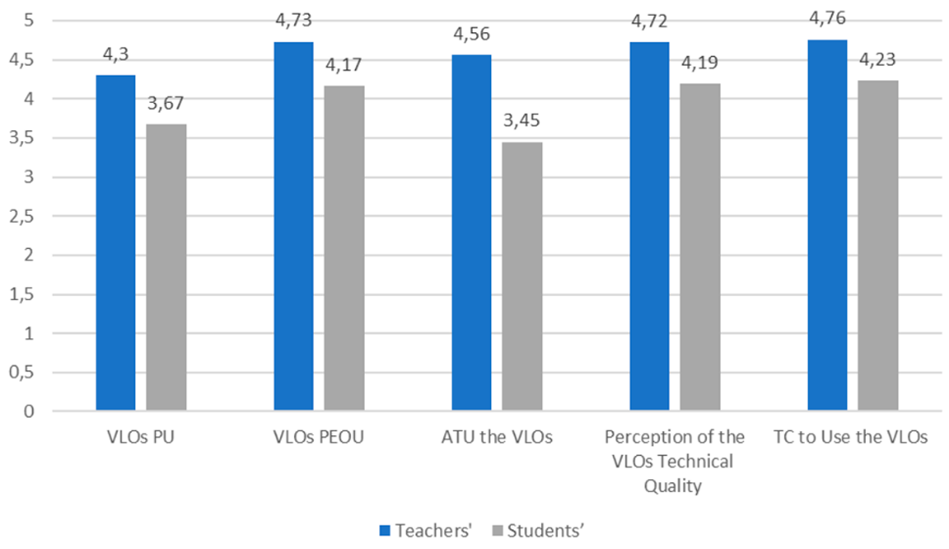
Figure 4presents the OMR in all categories analyzed, for both teachers and students. It shows that teachers have higher ratings in all categories, which suggests that teachers have a more positive perception of VLOs.
Discussion
This study shows that teachers and students perceive VLOs as very useful for teaching and learning English. For them, the videos, texts, podcasts, interactive exercises, and automatic feedback provided by VLOs are useful for language teaching or learning. Both teachers and students find that VLOs are related to the students’ academic lives, and that they help them develop technological skills.
Interestingly, for both teachers and students, VLOs provide a scaffold to complete tasks in online English courses. These results suggest that, as VLOs’ PU and PEOU from teachers and students are high, they are strong predictors of the likelihood of using them for online English teaching or learning (Nuryakin et al, 2023). These results also consistent with Ibrahim’s et al (2017), who used the TAM to explore the acceptance of e-learning and found that positive perceptions of usefulness and ease of use lead to high levels of self-efficacy and increase the intention to use an e-learning tool. These results agree with other studies that have found that automatic feedback helps improve students’ performance in the language “since feedback informed students’ learning by showing mistakes” (Cavalcanti et al, 2021, p. 5).
Results also show that teachers and students have a positive perception of the use of podcasts in VLOs. These results agree with Hernawan et al.’s findings (2021), who claim that teachers use podcasts because it helps addressing slow learners, students with reading difficulties, auditory learners, and provides enrichment opportunities for highly motivated students. They also state that students have a positive perception of podcasting because: “it contributes to uplifting academic achievement, enabling students to learn independently and by expository lecturing” (Hernawan, 2021, p. 89). These results show that both teachers and students have positive perceptions of the usefulness and ease of use of VLOs’ videos. Likewise, Nagy (2018) states that “perceived ease of use does not have a direct effect on video usage because videos for educational purposes, accessible online prove to be easy” (p. 174).
Findings also show that attitude toward using VLOs vary between teachers and students. While teachers have a more positive attitude toward VLOs -for them, VLOs make teaching English a pleasant and interesting experience-, the students, at a lower degree, consider VLOs as fun, interesting and helpful for learning English. These results agree with Karasneh (2021), who reported positive attitudes of teachers towards using e-learning tools, as they felt well-prepared for teaching online. Aligned with them, Kučina Softić (2015) reported that teachers exhibit positive attitudes towards e-learning when the conditions do not make them feel threatened. Additionally, teachers are more likely to adopt new technologies when they perceive that these technologies offer a better way to accomplish their work and achieve their goals.
These results show that teachers have a slightly higher perceived level of TC compared to students. Teachers can handle VLOs’ technical features while students can navigate VLOs by finding links and buttons easily. These results contrast with Karasneh (2021), who reported that one factor that prevents teachers from using technology is their low levels of technical and pedagogical skills.
Conclusions
This study concludes that VLOs are strongly oriented towards the needs of teachers and teaching and less oriented to learners and learning. This has an impact in teachers’ perception of VLOs, viewing them as useful, easy to use, and showing a positive attitude toward them, which are strong predictors of VLO usage. Teachers also rate their TC higher, as they feel more competent using VLOs compared to students. Even though students are competent using VLOs in their learning process and find specific features such as videos and interactive exercises useful, they perceive VLOs as less engaging and less supportive of their learning process.
The study suggests that VLOs effectively foster teaching presence in online environments, aligning with Garrison’s (2007) framework. Teachers’ higher technological competence likely contributes to their more positive attitudes and increased likelihood of using VLOs. Both teachers and students agree on the utility of VLOs in providing scaffolding for task completion, with automatic feedback and podcasts being particularly valued.
To improve student acceptance of VLOs, it is recommended to update the content to better address students’ current needs and interests. Incorporating tools or strategies commonly used by students, such as educational games, may enhance engagement and effectiveness.
Limitations and Pedagogical Implications
This study had three main limitations. First, we faced challenges in reaching a larger number of teachers and students due to restricted access to institutional contact databases. Second, the length and time-consuming nature of the questionnaires may have led to participant fatigue, potentially deterring some from completing them. Third, including additional research instruments, such as qualitative interviews or focus groups, could have provided a broader understanding of the acceptability of VLOs by teachers and students.
This study suggests several pedagogical implications for teaching and learning English with VLOs. First, improving the quality of VLOs’ automatic feedback and incorporating advanced tools to monitor students’ progress, such as an artificial intelligence component or a learning analytics tool, could enhance the usefulness and acceptance of VLOs. Second, adding an adaptive learning component to personalize content, assessments, and activities according to each participant’s level could better meet individual students’ needs. Third, to promote the development of oral skills and collaborative learning, integrating oral production tools and team-based activities into VLOs could be beneficial. Fourth, incorporating a gamification component might increase the appeal of VLOs to students. Fifth, developing a mobile version of VLOs is crucial, as students often use mobile devices to access learning content. Finally, it is essential to consider the needs and disabilities of participants by implementing assistive technologies and ensuring content and design accommodations.
Avenues for Further Research
Future research could delve deeper into the effectiveness of the described interventions in bridging the gap between teacher and student perceptions of VLOs in online language learning settings. Additionally, exploring the acceptance of other elements within online English courses-such as online lessons, methodological proposals (e-Tasks), and e-Portfolios, which were excluded from this study-would provide valuable insights. Finally, replicating this study with a larger sample would strengthen the generalizability of the findings.

