




 English (pdf)
 Article in xml format
 Article references
 Automatic translation
 Send this article by e-mail
 Cited by SciELO
  Cited by Google
  Similars in
SciELO
Similars in
SciELO  Similars in Google
 Permalink

Introduction
The teacher’s role in classroom actions is fundamental to the successful improvement of students’ learning outcomes. Studies in Teacher Education (TE) (McLean Davies et al., 2015) and international reports (World Bank, 2018) indicate that enriching and improving the education of future teachers requires careful consideration. Since teachers are essential agents in education systems, playing a crucial role in improving students’ learning outcomes, TE —and more specifically, Pre-service Language Teacher Education (PLTE)— becomes central to acknowledge challenges posed by educational settings that demand teacher effectiveness. However, international and national perspectives (Imbernon, 2010; Tello, 2005) have raised concerns about TE, arguing that it is “not preparing future teachers well enough for the complexity of the profession due to disappointing outcomes in the programs” (Gudmundsdottir & Hatlevik, 2018, p. 1). Additionally, initiatives of TE transformation are not substantially developed (Vaillant, 2017), impacting not only teacher effectiveness but also retention in the profession. Studying and improving of key processes in PLTE is crucial, with international organizations and policy reforms that focuse on the initial stages of TE, since “still the question of how teachers learn may be fundamental to the development of effective approaches in teacher education” (Korthagen, 2017, p. 2). Accordingly, pre-service teachers (PSTs) in foreign language education must demonstrate that teaching involves facing challenges to conduct effective teaching in complex learning environments; a crucial stage in their preparation for this is the practicum.
In this study, the practicum period (PP) is the stage during which PSTs have the opportunity to put into practice the theoretical knowledge acquired from their program curriculum, including pedagogical theories and instructional design methods targeted to teach a particular discipline (Mauri et al., 2019). PP is considered “an integral part of learning” (Trevethan, 2017, p. 219) and serves as a motivating factor in engaging PSTs with their future profession (Castañeda Trujillo et al., 2022; Fajardo & Miranda, 2015). During this period, PSTs gain experience in various aspects of teaching, including “student-teacher relationships, classroom environments, complications of content, personal and professional qualities, and working environments with other professionals and managers” (Khanam, 2015, p. 690). These experiences are essential for dealing with emerging situations from their future educational contexts. The PP is highly valued for its role in bridging theory and practice, shaping teaching approaches, and serving as a fundamental tool for teacher training (Rodríguez & Grilli, 2016). However, Lucero and Roncancio-Castellanos (2019) highlight the complexities of the PP, emphasizing the influence of mentor teachers, PSTs’ anxiety and emotions, classroom discussions, teaching strategies, and the challenges of applying theoretical concepts in practice. Furthermore, the PP is hindered by the persistent divide between theory and practice, with theory often framed within a transmissionist perspective, resulting in a scant and reductive approach to explaining the various factors influencing PSTs learning during this period. The PP process involves understanding PSTs’ perceptions, beliefs, expectations, and contextual factors, yet it has been undervalued. It necessitates collaborative efforts among university supervisors, school mentors, and PSTs for enriching teaching practices.
The different dimensions of the teacher —as a knower, as a person, and within a social context— shape PSTs’ learning. Thus, it is important to avoid prescribing the PP to a merely technical-oriented vision. With these considerations, this study sought to determine how the practicum experience helps PSTs to learn effectively how to teach knowledge, skills, and attitudes using a reflective formative research approach, where emerging elements can be resignified. PSTs’ practicum experiences are often overlooked in teacher training programs, assuming that teaching quality relates to content knowledge delivery.
As evidenced in the literature, theory studied in TE is not automatically implemented in practice (Korthagen, 2017), and how or when such implementation occurs has not been clearly identified in research Davis and Sumara (2008) also explain that the existing disconnect between theory and practice in TE programs could be partially explained by the fact that most of the suggested solutions are produced independently of the why, who, where, and what to teach, since programs are mostly focused on finding solutions to challenges related to how to teach. In fact, according to Korthagen (2017), the question on how PSTs learn is still critical for developing effective approaches for TE. The PLTE program of this study focuses on a wide PP of 2.5 years for PSTs to promote pedagogical practices in schools. However, a formal setting recognizing the role of reflections as a strategy for enhancing meaning and sense for PSTs learning under the guidance of teacher educators and mentors during this time was not properly established. As such, PSTs were left to undergo this key process mostly on their own, affecting PSTs learning outcomes. Therefore, this study aimed to identify those learning opportunities within a formative research approach during the PP, demonstrating its potential to enhance PST professional learning outcomes. Additionally, it underscores the importance of research in both the curriculum and the pedagogical practices in TE programs (Grossman and MacDonalds, 2008). As such, this study aimed at answering the following question: What learning opportunities does the practicum offer under the formative research process to enhance teaching effectiveness among pre-service teachers?
To conduct this study, semi-open interviews, the mentorship document from their research tutor, and teaching and research artefacts were collected. The study was framed within a descriptive qualitative research, using a case study of three PSTs and their tutor over a two-and-a-half-year period.
Theoretical Framework
Pre-Service Teachers’ Learning and Outcomes of Knowledge
There is a natural emphasis on the qualifications that teachers are expected to acquire at the end of a program, which are represented within two categories: “what I know” and “what I am in the process of knowing”, serving as specific outcomes from ILTE configurations. These outcomes are generally expressed in terms of skills, tasks, routines, and strategy use. PLTE is configured not only based on specific considerations to attain its proposed goals (Díaz et al., 2019), but it is also grounded in various teaching and learning foundations that explain how knowledge, skills, and routines are developed and how teachers engage with this knowledge. This consideration corresponds to a conceptualization. According to Feiman-Nemser (1990), a conceptual orientation is a comprehensive perspective on teaching, learning, and pedagogical training that provides direction for the practical activities in TE. This conception underpins how knowledge is understood and delivered (learning), as well as how the purposes of PLTE are conceived, underlined, and supported. This “knowledge” can take forms or representations, such as behaviors, skills, imitations, and reflections, all of which require cognitive processes for demonstration, application, and use. However, one aspect stands out in most PLTE conceptions: Knowledge is received by students—often in the form of prepackaged or fixed skills, procedures, theories, or reflections (Kumaravadivelu, 2001)—with the assumption that PSTs will internalize it (Korthagen, 2017). This fundamental assumption implies a cause-and-effect nature in teachers’ learning, as it prompts learning. As a result, the teacher knowledge base has traditionally been defined by transmissionist models as encompassing all areas related to what teachers need to know and how to work professionally (Kumaravadivelu, 2001). Nonetheless, this study aligns with Korthagen’s (2010) assertion that PSTs should have equal consideration regarding their cognitive, affective, and motivational dimensions, as they are regarded as whole human beings. Therefore, PSTs should be guided with this perspective in mind through approaches such as formative research, which encourages reflection and analysis within a situational school context.
Illeris (2007) asserts that learning is influenced by the specificities of a context, emphasizing its crucial role in providing varying learning conditions. The author identifies two distinct processes involved in learning: interaction (interpersonal and societal) and acquisition (biological in nature). The first one takes place between the individual and the environment, while the second takes place within the individual in response to the impulses and influences of that interaction. Illeris explains that in acquisition, which refers to the individual process, two simultaneous components occur: content and incentive. Content pertains to the forms or representations of knowledge, understanding, or skills—essentially, what is needed to learn. Incentive, on the other hand, refers to the “mental energy needed to learn something” (p. 24), thus encompassing “motivation, emotion, and volition” (p. 26). Personal dimensions also play a role in shaping teachers’ identity construction, ultimately influencing how they perceive themselves as professionals. Figure 1 shows how learning processes unfold within Illeris’ thesis.
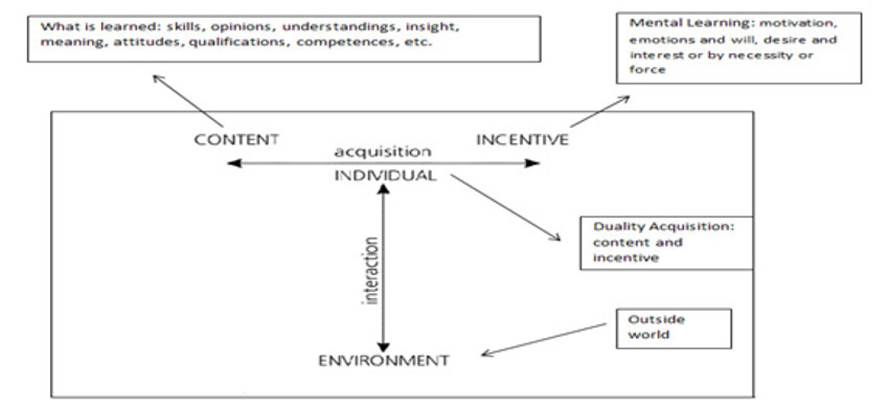
However, according to IIIeris (2007), the interaction involved in learning—in the form of perception, experience, imitation, activity, and participation—has often been conceived within PLTE models from a transmissionist understanding. Similarly, Ejea (2007) affirms that traditional views of learning correspond to the transmissionist approach in teacher education. As education is a social phenomenon, learning is not solely an individual effort; rather, the environment also influences that process. Therefore, schools, with their unique classroom dynamics, provide meaningful experiences that help give sense and meaning to theoretical knowledge.
Consequently, this study views PSTs’ learning as the process through which teachers’ knowledge is produced—both by intentionally investigating their classrooms and schools and by examining and interpreting the knowledge and theory produced by others (Cochran-Smith & Lytle, 1999). In the same line, Fenstermacher (1994) defines practical knowledge as “what teachers know as a result of their experience as teachers” (p. 3). Teachers’ learning is closely determined by their contextual experiences. Thus, meaningful opportunities for reflection can emerge during the PP concerning teaching effectiveness for PLTE programs (Lucero & Roncancio-Castellanos, 2019). Lucero and Cortes-Ibañez (2021) also suggest that practicum serves as a space for PSTs to consolidate knowledge, pedagogical content, and professional development.
A key determinant in this process is the reflective practices that PSTs develop. Hernández (2015) demonstrated the value of reflection to empower PSTs, helping them become aware of their learning and teaching beliefs and shaping their professional identity. Mann and Walsh (2017) also claim how reflective practice can contribute to professional self-development as a continuous learning tool. Reflective practices, they claimed, need to be revitalized and researched with appropriate and sustained data. This study highlights the importance of considering cognitive, emotional, and motivational factors in PSTs informed academic practice and behavior (Korthagen, 2010).
Building Professional Competence for Teacher Effectiveness
In general, professional competence has been assumed to be one of the qualifications people need to develop in terms of their knowledge, skills, professional attributes, personality traits, attitudes, values, and beliefs (Kulshrestha & Pandey, 2013; Liakopoulou, 2011). In TE, the professional competencies of teachers are closely related to students’ learning outcomes (Darling-Hammond, 2017). However, as Liakopoulou (2011) notes, a teacher’s personality traits are also a critical aspect of their overall professional competence. These traits are important to their role as teachers, where characteristics such as tolerance for students’ appearances, sense of humor, fairness, patience, enthusiasm, creativity, care, and interest in their students all play a part in defining what constitutes effective instruction.
Teachers’ attitudes on teaching, learning, and their professional roles are essential for improving the quality of education. These attitudes not only shape their classroom actions but also serve as the foundation for their professional growth. Liakopoulou (2011) emphasizes the importance of pedagogy and didactics in guiding teachers’ decisions when addressing emerging situations in the classroom. However, knowledge and skills are also linked to emotional and affective learning factors (Illeris, 2007). These factors are crucial in PLTE, influencing all agents in education. Yet, they are not always explicitly acknowledged within PLTE programs. According to Méndez (2020), PSTs experience both positive and negative emotions during the PP due to the novelty of the situations they encounter. However, more studies have focused on the influence of emotions on teachers’ motivations and expectations, particularly in relation to burnout, retention, and beliefs (Kostadinova & Gruncheva, 2018; Villarreal-Ballesteros et al., 2020). In the case of PSTs in the practicum experiences—where a wide variety of emotions may arise and influence critical learning decisions —there is still a lack of research on this issue. Therefore, this PP needs to consider all these emotional factors to provide suitable support and guidance during this process. As indicated by Mercer et al. (2016), positive psychology is essential to promote teachers’ professional well-being.
Context of Study
This study was carried out in a PLTE program at a public university in Colombia. The practicum spans five semesters, during which PSTs are assigned to a school where they undertake a dual role: engaging in pedagogical practices and conducting research to identify an issue and propose a solution. This process follows three stages: observation, teaching assistantship, and proposal implementation. At the assigned public school, students participated in a four-hour Saturday program designed to reinforce their English classes from the weekdays. The program aimed to develop children’s English communicative skills, with students placed into levels within each grade. The participant PSTs were assigned to the sixth grade. However, when the practicum began, they encountered several challenges, including students’ lack of interest, incorrect English placement, lack of motivation, and absenteeism.
Participants
The three PSTs (Identified as PST1-PST2-PST3) and their research tutor were part of the Foreign Language Teacher Education Program and a research group. Their research tutor, a full-time professor in the program, remained with them until they completed their research project and was different from their practicum teacher educators. At the start of the practicum, the PSTs were between 21 and 23 years old. Both the research tutor and students started during the assistantship stage. At the school, the PSTs were guided by a mentor teacher. Before participating in this study, they signed a written consent form addressing ethical considerations, ensuring their privacy and the protection of their real names for publication purposes. The PSTs started their PP in the fifth semester and completed it in the ninth, spanning two and a half years. Pre-service teachers were allowed to work in groups of up to three to conduct their study at the assigned school. Their research tutor began mentoring them in their seventh semester.
Methodology
A qualitative approach was used to collect and analyze data, allowing for the description and interpretation of findings to reveal learning outcomes concerning knowledge, skills, and professional attributes during the two-and-a-half year period. This approach enables an in-depth inquiry into learning in the PP by examining how individuals perceive and interpret the world within their referential framework (Sandin, 2003). The methods used in this approach provided opportunities to closely examine participants’ behaviors, experiences, and understandings within this case study. By focusing on individuals within their everyday settings, conducting a case study departs from the understanding that contexts are unique and dynamic, allowing for the investigation of complex interactions of events, human relationships, and other factors (Cohen et al., 2007).
Instruments to Collect Data
Semi-open interviews in Spanish (L1) were conducted with PSTs and their research tutor. The interviews with PSTs were structured to collect information from three stages: before, during, and after their practicum. The study collected information on expectations, emotions, teaching methods, and research processes for the before starting stage, as PST feedback is crucial for evaluating the positive impacts of TE programs. The second stage focused on accomplished expectations, practicum process, research training, and pedagogical proposal development. The final stage included evaluation and feedback from the practicum period.
The research tutor’s semi-open interview was adapted from Abad and Pineda (2018)’s model, where the participant is encouraged to provide detailed information about the research mentoring while maintaining flexibility for in-depth inquiry in areas of concern. The interview focused on the teacher’s role, goals, and strategies for mentoring, as well as affective factors related to PSTs. Additionally, it explored the research competencies developed by students, the research tutor’s approach to monitoring and feedback, challenges, difficulties, and the knowledge knowledge PSTs acquired in both teaching and research.
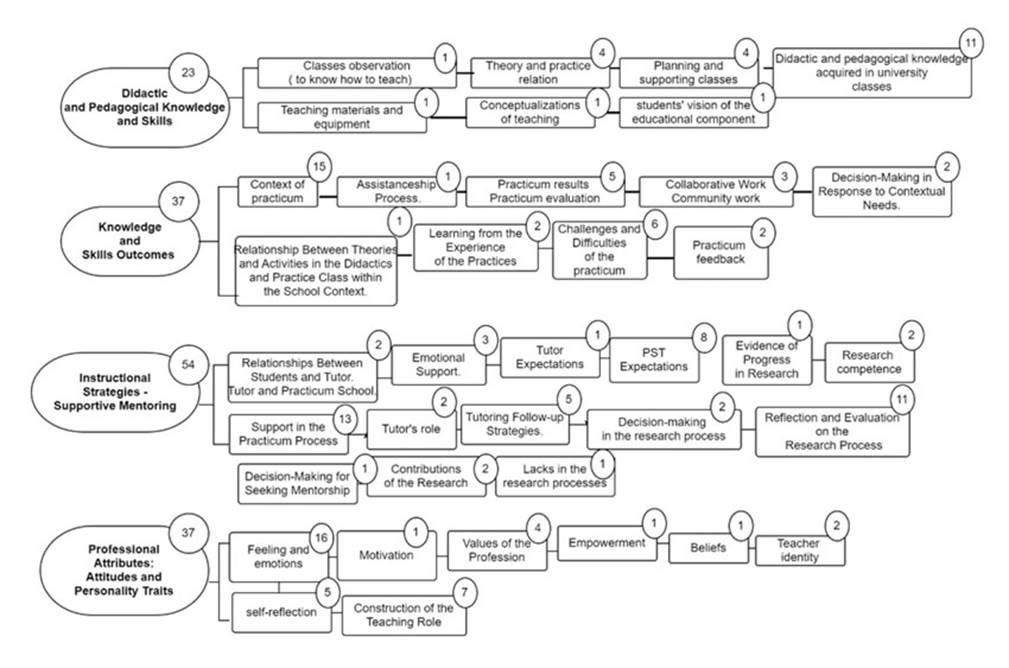
Codes emerged in relation to a pedagogical knowledge base, context, action, feelings, strategies or behaviors. Excerpts—ranging from paragraphs to individual words—were systematically assigned to emerging codes from the transcribed texts of seven interviews and mentoring documents. This qualitative coding process was rigorous and structured. A total of 151 excerpts were categorized under 38 codes (Figure 2), which were later grouped into major themes, forming the categories of analysis. Four main categories were identified: didactic and pedagogical knowledge and skills, knowledge and skill outcomes, professional attributes (attitudes and personality traits), and instructional strategies for supportive mentoring. Although some data included aspects of affectvity and identity, they were not substantial enough to be established as major categories.
The second instrument was the mentoring registration document (MRD), used to record dates, goals, reflective questions, products, follow-ups, feedback, activities, assignments, and the tutor’s comments. To triangulate the information, the tutor’s comments about the stages were coded under the major themes that emerged in the interview content analysis.
The third instrument corresponds to the teaching artifacts as outcomes of their practicum. Artifacts and outcomes offered convergence and corroboration of the oral discourse from the interviews, as they “embody the knowledge, skills, and attitudes held by the artifact creators” (Douglas et al., 2015, p. 26.235.2). These artifacts were represented in the research report and the pedagogical proposal designing.
Content analysis was used as a descriptive qualitative approach for interpretation. In the first stage, researchers established some preliminary categories based on the interview, with separate categories identified for PSTs and the research tutor. The second stage involved analyzing the transcriptions, which revealed common categories across the text analysis. Initially, ten categories were identified, but they were later refined into four major categories: affectivity, the importance of practice, mentoring, and phases of research training. The resulting categories were compared with products, follow-ups, and feedback from the research revision template. Goals and products were evaluated against the expected outcomes for each semester of the practicum period. Teaching artifacts and research outcomes were analyzed to understand how they shaped their teaching practices, strategies, organization, students’ roles, resource utilization, and the use of materials in the pedagogical proposal. To ensure internal validity, data triangulation was conducted.
Findings
The four major categories—didactic and pedagogical knowledge and skills, knowledge and skill outcomes, professional attributes (attitudes and personality traits), and instructional strategies for supportive mentoring—were analyzed. Although some data included affectvity and identity, they were not substantial enough to be established as major categories.
Category One: Didactic and Pedagogical Knowledge and Skills
This category encompasses the knowledge and skills teachers need to acquire and apply. Interviews revealed that PST participants emphasized the importance of classroom practice, didactics, and their impact on children’s learning processes. Developing these aspects appropriately was a key concern. PST 3’s excerpt illustrates these interests:
PST 3: Yes, that the way I am/was going to like it if the activities I proposed were going to be interesting, and if I would really manage to engage students to learn and and develop a process of teaching and learning* (sic)
PST participants’ fundamental concerns revolved around their pedagogical and didactic work during their practices while also conducting research, including their own evaluation of successful learning outcomes. A recurrent concern was their desire both to implement more activities and to improve those existed material designed for children. Before starting the practicum, PSTs expressed concerns about pedagogy, as covered in their university coursework. However, they did not see a straightforward way to align that knowledge in practical terms in the classroom. PST 3’s excerpt illustrates her concerns on how to put into practice one of the subject’s concepts to be developed in her students:
PST 3: maybe the part of, of the human development, would help a lot, that is to say that one would know a lot or know the students, their personalities, their ways of being, all that, maybe it helps a lot, but I was not clear how, how it would help me” (sic)
Findings suggest that PSTs initially focused on the “how-to” aspects of both formative research and practice, gradually shifting toward a focus on “why” at the end of the practicum. They gave great relevance to didactics and pedagogy for designing learning environments that improve children’s learning. However, first-class preparations were primarily intuitive and survival-oriented, relying on the guidance of former teachers and mentor teachers at theirs schools.
PST1: Well, from lived experiences, in the sense of how I learned it. Also from the classes during the university semesters with the professors, activities for example with XXX and XXX, activities that we had done before and that I thought I could use directly for the class.
Additionally, contextual factors, such as class size and limited resources became increasingly relevant in PSTs’ decision-making process for lesson preparation. Children’s needs, identified as part of PST’s data collection research, proved to be essential and very connected with didactics and lesson planning during all stages. Although lesson planning was developed in their practicum courses at the university before PP. PST 3’s excerpt below reveals that this preparation alone was insufficient to meet the expected learning goals. PSTs needed to make sense of their theoretical knowledge by applying it in real teaching scenarios. Their concerns gradually became more reflective, aligning with their students’ specific contexts:
PST 3: How to teach, what we really had to teach, what was the objective of what, what we were doing at that time and where the group was going for, what was the goal of this group? What was to achieve and how we we’re going to teach and evaluate. (sic)
These concerns were directly linked to improving the school’s course syllabus or malla curricular PSTs received to prepare classes for the levels in PP so that it serves to guide suitable teaching practices for children and their learning as teachers. As part of their research, PSTs found the malla curricular was not sufficiently comprehensive to support university PSTs during their PP. Their interest in planning activities played a key role in developing effective classroom strategies for children.
Category Two: Knowledge and Skills Outcomes
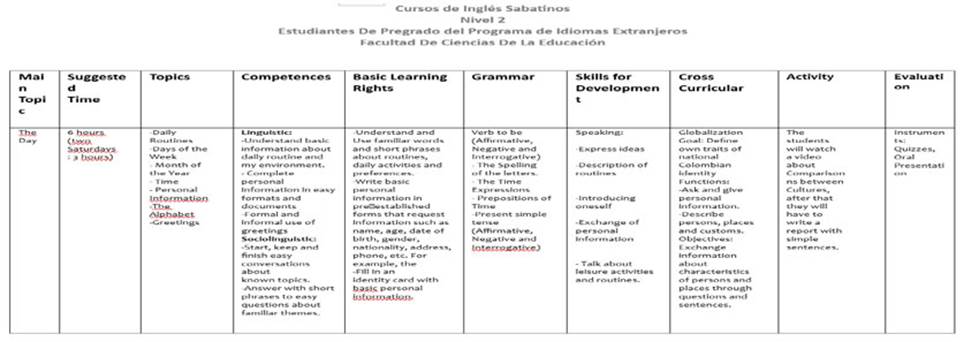
Regarding knowledge acquired by PSTs, practicum outcomes can be framed within a decision-making process aimed at designing the course syllabus to align with students’ learning goals, PSTs’ course guidelines, and the school’s goals. The second key outcome relates to the pedagogical intervention applied to their target population: school children. The analysis revealed that lesson plans were designed based on the practical knowledge PST acquired during PP. The units they developed maintained a consistent structure, with topics selected according to students’ interests. Classroom routines played a fundamental role, despite the high variety of activities in each section. The activities are learner-centered, promoting active student engagement and continuous participation. This designing denotes that PSTs’ role tends to be mostly that of a facilitator. Analysis also revealed that cross-curricular (transversality) topics such as: Define own traits of national Colombian identity (Unit 1) are still scant in their lesson plans and classroom actions.
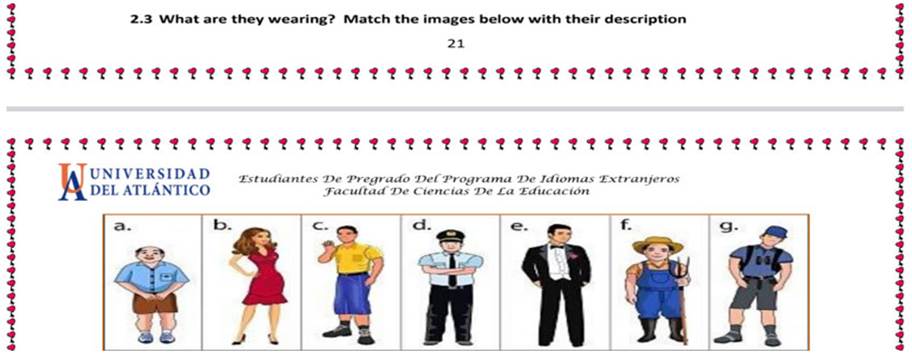
Additionally, data revealed these topics were not appropriately developed, despite the malla curricular proposing a structured plan for their integration (Figure 3). The lessons plans incorporated various teaching strategies to develop the four skills, such as brainstorming, matching, guessing meaning, etc. Figure 4 presents an example.
Curriculum theory helped PSTs review checklists from official guiding documents and relate these guidelines to the theoretical foundations supporting curriculum adaptations. In this context, PSTs drew on both official documents and the theories they studied to develop materials and strategies aimed at enhancing children’s learning in school. They constructed their teaching knowledge by actively engaging with their specific educational context:
PST2: how to teach, what we needed to teach, the goal of our actions at the moment, and the direction of the group, what was the goal of this group to achieve, how we were going to teach it and evaluate it.
The activities they need to do and why they needed them resulted from their own awareness.
PST 2: The desire for us to find a solution ourselves, but lacking a foundation. Let’s put it this way: we were the ones who made an attempt to develop the syllabus (a more complete) ourselves. We thought about what to do and how to do it, which gave us a clear idea of creating something.
There was also an awareness that it was not a problem for them, but for the whole community that the context represents: school intentions to improve children’s learning, their peers in practicum, their learning, and ultimately, school children’s learning.
PST3: Let’s say that being responsible meant both the teaching of English to the learners and their behavior, as well as everything that represented English teaching time in school. How was that process going to be reflected in the school, the impact that learning would have, and how they were going to evaluate the process and ourselves?
For these reasons, the content guide provided by the school was insufficient for both the PSTs and the children. More reliable materials were needed—ones that genuinely considered children’s interests (with more meaningful topics) and needs to foster effective learning: As PST1 noted: “Because the girls already liked it, they learned in a better way, and at least we felt that they were gaining something that would actually be useful to them.”
Category Three: Instructional Strategies - Supportive Mentoring
Concerning the formative research (FR) process, categories resulting from interviews, as well as the mentoring registration document (MRD), the participant tutor (PT) demonstrates how her role has a twofold meaning: as a facilitator and guide in the research process while also being aware of her learners’ feeling and emotional reactions.
PT: In the first part of the tutoring sessions, students arrive very anxious and distressed because they don’t have a clear picture, they are unfamiliar with the process even though they have already studied theories; when faced with a real context, this becomes less evident… My role is not only training in terms of research, but also from the perspective that they should reflect on the actions they are taking.
In relation to knowledge and skills in research, this process extended beyond mere academic orientation. As one PT said:
PT: This stage of making them see that research is not that myth—that imaginary notion of being something very difficult, that what they are doing is completely wrong—well, that imaginary notion is broken in that first session, which sometimes even makes them realize that the decision they had made up to that point regarding the problem was not so far from reality.
It also required attention to affective factors, which can positively influence how vital and and relevant research becomes as a tool to improve teaching practices regularly.
PST3: Yes, we knew that the research process was underway, and we were open and eager to see all the possible causes or situations that could help us establish what the problem was for this investigation.
Furthermore, through mentoring PSTs commenced understanding inquiry to acknowledge the challenges of contexts, which generally comprise more than one, such resources, the textbook, motivation, assessment, curricular guidelines. According to PST1 “Everything revolved around that book, so that book was a bit intricate, but it really wasn’t contributing anything. So we saw the need to first look for other activities and do other things”.
However, decisions on learning issues needed to focus on priority issues while deciding what to improve. PST3 highlights: “It was about what strategy could be used to teach the skills; I had focused mostly on that part of teaching in English”.
In this sense, the PT defined the observation process conducted by PSTs for identifying problematic issues (i.e. the problem to be solved) as key. In particular, this group was able to partially recognize the problem before taking the research mentoring as can be seen in the following excerpt.
PST1: back in the (school) induction, they gave us a course curriculum... I did notice that when they provided the curriculum, it was like, ‘look, follow the topics that are there.’ Sometimes those topics didn’t relate to each other or things like that.
It was clear that once PSTs’ started to work as teachers of the target population, difficulties emerged, such as learners’ motivation and the activities that needed improvement. However, determining how to start researching that was confusing for the PSTs since connecting their theory classes at the university about on the research stages within to the real context and of living experiences were unclear:
PST 1: “we felt lost because we had that kind of research from the university, was like a requirement, really our guidance was (name omitted), there came the point where we felt that we started to see what we had to do, what we had to follow.” (sic)
Their PTs’ mentoring process emerged as a critical factor for success in their research process. Furthermore, this process of mentoring for research training was supported by the fact that questions formulated during the participants’ sessions enhanced intellectual thinking and facilitated decision-making. The PTs’ mentoring document shows leading questions used in sessions: “Why do you think that is a problem? What are the consequences? How do you see that it does not contribute to the improvement? (…) (PT’s MRD, session 1, p. 2)
Data revealed that different strategies, such as questioning for reflections, feedback, self-monitoring, also supported mentoring so PSTs could grab and understand how their own research process works: “PST1: She explained the processes well detailed, she made us outlines, showed us, used us comparisons, that is, she showed us examples”.
The mentoring registration document (MRD) seeks to provide sense and understanding to PSTs concerning the issues identified in the school context and the research stages. The once-a-month mentoring sessions aimed to cover the stages of a the research design and to demand required the corresponding products to advance for progress. As a qualitative inquiry, it can be seen how back-and-forth procedures are determinant to the decision-making research process. The following example from the MRD shows PT’s comments as PSTs support their decisions in the theoretical framework heading the end of the process: PT: And this topic that is here? Why did you choose it, and how does that help?” (MRD, column Goals and activities of the session, p. 9). PT: Where is the target population defined? The context background? The pre-service teachers’ considerations?” (Comment E4 on Methodology chapter).
Another important aspect was the intention of giving sense to the theory studied at the institution. PSTs engaged with how theory can illuminate informed their practices concerning their pedagogical proposal designed to improve within the particularities teaching by addressing children’s needs and and context needs the specificities of the context: “How do I design lesson plans in light of this methodological approach helping to improve the context?” (MRD, column Tutor’s comments and observations, p. 9)
Likewise, mentoring strategies are developed to show why theory can help teachers understand the issue and indicate why it is a barrier in the specific context to attaining improvement. This particular purpose was expressed through questions posed to PSTs. “She explained the processes well detailed, she made us outlines, showed us, used us comparisons, that is, she showed us examples” (PST 1)
This comment is reinforced by one of the goals PT establishes for one her sessions:
To establish the bases of the methodological framework: design, glimpsing the path. The exemplification with a certain context will help them in this process. The works of (XXXX) and (XXX). (PT’s RFT, column 2: Session goals; session 7)
PTs are encouraged to provide answers to the different decision-making processes in research and the pedagogical proposal they needed to design and apply. The total number of MRD entries is framed in an atmosphere of offering justification based on reflective thinking. Reflective questions were addressed to find ways to conduct the study. Reflective questions also served as an invitation to provoke analysis of how the theory PSTs were consulting could help inform decisions regarding methodological research stages:
“What does the theory say about the identified problem? How do I relate that information to my context? What is that information going to do for them? Why?” (MRD, column Tutor’s comments and observations, p. 6).
Approaches and strategies to teaching on the basis to give sense to actions taken for the classroom, children, and the practicum peers are intentionally focused through reflective questions for PSTs:
Why did we choose these approaches over others?” MRD, column Tutor’s comments and observations, p. 8) “How will this theory help you to suggest a proposal more appropriate to the context?. (MRD, column Tutor’s comments and observations, p. 10)
Reflection was used as a source for knowledge construction because it could give coherence and meaning to theory within the contextual needs in practicum. For feedback and revision, PT solidifies what information is missing, so their tutees could link this with what they have studied through theory. Feedback was mostly aimed at guiding PSTs in understanding why they were correcting and guiding them with specific information to solve their doubts.
Category Four: Professional Attributes: Attitudes and Personality Traits
Within this category, we grouped all personality traits and attitudes, projecting teaching roles that could be developed or be useful according to data collection. These attitudes also have an impact in the processes during the practicum, especially regarding PSTs’ beliefs, identity, and empowerment. In general, these professional attributes were categorized within two possibilities: teaching and research inquiry. Concerning teaching, PSTs’ roles were related to the effectiveness they wanted to achieve in children’s learning. Their lesson plans included a defined role of the teacher as a facilitator with the same pattern along six units. Integrated skills orientation was used to design units revolving around a particular topic, as learners complete their tasks with an active role, including the use of ICT tools, as a way to practice vocabulary and grammar.
In the case of research skills, PSTs embraced not only focusing on one student’s skill to improve, but they also focused on their own learning and peers. Their decisions suggest a sense of community and collaborative endeavors because their particular class assigned for practicum will benefit along with the institution and peers.
PT: (...)And there was a sense of collectivity, because acknowledging that in the process they were through, so were their partners, that is, the other students who were also doing the practicum in that institution; understanding that it was like a shared problem” (...)
Discussion and Conclusions
Findings suggest that the practicum poses great opportunities for prospective teachers to build up professional competencies that contribute to education’s ultimate goal: guaranteeing successful children’s learning. It is important to mention that this study provided PSTs with scenarios beyond the classroom, which most institutional implementations have restricted in teaching practices. This university has linked teaching practices with a research process that serves both PSTs to learn how to teach and foster learning outcomes among children. The first concerns of PSTs were focused on their pedagogical and didactic work during the practicum, including their own evaluation as good teachers. However, they did not see a straightforward way to align that knowledge in practical terms in the classroom. These findings coincide with Ulvik and Smith’s (2011) assumption that this knowledge “has to be translated into the unique context” (p. 519). Once the practicum started and contextual issues emerged and student learning needs encouraged PSTs to do their best in fostering kwoledge while also getting them involved in questioning how to improve the scenario. This setting encouraged PSTs to get involved in a natural integration of the school site. In this sense, this study suggests that this knowledge and skills, associated with the content and incentive learning equation (Figure 1), as proposed by Illeris (2007), make sense when PSTs reflected about the needs of the school (environment). Although PSTs were attending classes in related subjects at the university, they could not link that with the process at school. For this reason, mentoring, framed in reflective guidance, comes as a strategy for fostering “the ability to make sense of what one knows” (Tello, 2005, p. 288). Therefore, guided reflection can enhance the link between theory and practice (Camacho et al., 2012), which is critical to developing a process of understanding theory by giving sense and meaning on how it can help schools’ particular needs and why.
This PP gave signs of a more integrative teaching view, setting itself appart from a more reductive technical-oriented perspective of this process (Kumaravadivelu, 2001). This enable teachers to start thinking more about the real needs when they designed their pedagogical proposal framed under local and national needs (malla curricular, cross-curricular topics from the school, Derechos Básicos del Aprendizaje**). For knowledge and skills in pedagogical and didactic areas, this study suggests that PSTs training was given with experiences on how real curricular decisions can be taken, based on the context particularities: e.g., working from inside and outside (Sanchez, 2013). The study lays the groundwork for reflecting upon how syllabus guidelines may be enriched, taking into account the experiences provided by the context needs. As Aubusson et al. (2010) show, PSTs’ progress is evidenced when moving from descriptions of what is happening in their classes to more of an understanding of their practice experiences.
Practicum needs careful considerations to avoid replicating the naïve image of a pre-package of behaviors and thoughts student teachers are expected to display (Kumaravadivelu, 2012; Tello, 2005). Given that suppose students are to replicate methodological and technical approaches, they also need to know how to connect with the why (reflect) of things and the where (context) (Davis & Sumara, 2008). Thus, if we need to prepare teachers who can transform, they need to be encouraged to develop “attitude in front of knowledge and in the way of thinking about school realities in contexts” (Tello, 2005, pp. 284-285). The point to be remarked here is that formative research and reflective mentoring offered opportunities to consider the decisions teachers needed to make. It is important to be aware that this research of this practicum falls into what Cochran-Smith and Lytle (1990) remark on: “from discrepancies between what is intended and what occurs” (p. 5). Therefore, acknowledging context particularities, PSTs engaged in improving not only children’s learning outcomes but also their learning by understanding that the syllabus provided (malla curricular in this context) was short on guidelines. They were able to have a broader understanding that children’s needs are improved inside and outside the classroom: malla curricular, PSTs learning how to teach and mentoring, which means interconnected. Concerning lesson planning, according to findings of teaching artifacts, this learning was dependent on children’s interest and methodological aspects. This is because PSTs gave learners an active role and assumed for themselves the role of facilitators.
Figure 5 presents an overview of the PP that includes ten stages. The blue forms represent the research process that needs to be carried out while being in the school, while the dotted lines represent some of the situations PST experienced throughout this time. The Figure also illustrates a cyclical process. Although a number was stipulated for each stage to get a better understanding, this cycle shows a non-linear process and the different incentive and content of elements affecting learning in PP. The fact that PST took this project to benefit context beyond the classroom (malla curricular) proves they can decide to work for the unexpected, which is one necessary attribute that teachers need to incorporate.
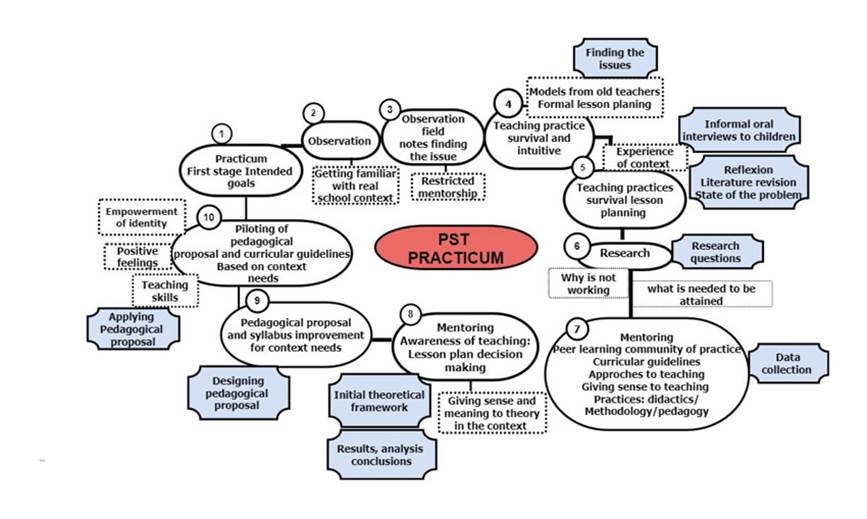
Findings suggest that mentoring within a supportive and reflective-integrative orientation can sustain the core of the PP since it encourages reflection for learning while being immersed in schools. It can also be concluded that TE programs need careful consideration to determine what an effective pedagogy is for teacher education (Korthagen, 2017). This study suggests the relevance of what Dewey (1938, as cited in Marcelo & Vaillant, 2010) emphasizes about experience in relation to teaching: that it is not the experience per se, but the quality of the experience. Therefore, teacher educators’ institutional and teaching strategies as well as mentor teachers from school require more integration for practicum implementation (Gan, 2014). Their configuration is key to the development of teacher effectiveness within a framework of sense and meaning that supports the learning and rich opportunities pre-service teachers are required to develop.
In the mentoring process, the tutor’s feedback became an important support for the development of self-reflection in learning (Nicol & Macfarlane-Dick, 2006). Indeed, the students were able to reflect on their experiences during PP, as these essions based on questions encourage students’ reflection on how research enables a better understanding of the complexity of teaching practices. The study highlights the importance of mentorship and self-reflection in preceptors’ educational experiences, but further research is needed to understand other aspects of teaching, such as identity construction, beliefs, and emotions, which were not covered in this study.
The curriculum of TE should foster teamwork between practicum and research teachers and school mentors, ensuring a close relationship. Finally, PSTs should be seen as valuable support for teaching-learning processes and professional work, leading to increased commitment to close mentorship at school.

