




 English (pdf)
 Article in xml format
 Article references
 Automatic translation
 Send this article by e-mail
 Cited by SciELO
  Cited by Google
  Similars in
SciELO
Similars in
SciELO  Similars in Google
 Permalink

Introduction
Accidents involving animals and humans, a relatively common occurrence in the medical practice, include cases with damage caused by trauma and/or venom produced by reptiles, amphibians, fishes and invertebrates1-3. The events generally course with mild severity; however, in certain circumstances, significant disabilities and death may occur.
Conceptually, venomous animals are those that have venom-producing glands and inoculating apparatuses - such as stingers and grooved or hollowed teeth -, which makes them capable of introducing toxic substances directly into the victim's body; examples include the freshwater and marine stingrays. Poisonous animals are devoid of inoculating structures, instead they are capable of causing illness through the direct contact of the toxic substances they produce with their victims' skin and/or mucous membranes; in this context, the ingestion of fish known as puffer fish, of the Tetraodontiformes order, can be mentioned4-6. Regardless of how the accident occurred, both venoms and poisons contain toxins capable of causing dose-dependent pathophysiological injury to another organism6,7.
Injuries caused by fishes (whether of marine or freshwater habitats) are relatively common, especially in countries where fishing is a frequent activity8. In addition to the trauma produced directly by the animal - caused by the presence of stingers, spines, the penetration through orifices, or the production of electrical discharges, among others -, poisoning, through the direct contact of the animal's skin and/or glands with the victim's skin or mucosa, or by ingesting toxic products located in vertebrate animal tissues, and venomous accidents caused by the inoculation of toxic substances are described as well3,4.
Based on these considerations, the present article aims to address the etiological (animals involved), pathophysiological, clinical and therapeutic aspects that concern accidents involving fishes distinguishing traumatic, ichthyacanthotoxic (venomous fish)9 and ichthyosarcotoxic (poisonous fish)10 events - of medical importance in Brazil.
Traumatic accidents: non-venomous and non-poisonous fishes
In this type of accident there is a direct physical action caused by the presence of teeth, spurs and electrical discharges, without the participation of venom glands. Such vertebrates produce lesions of variable continuities, depths and lengths. In Brazil, accidents caused by the animals described below gain importance11-14.
(1) Lesions caused by bites, carried out mainly by piranhas (Pygocentrus and Serrasalmus genus), traíras (Hoplias spp.) and sharks (around 100 species, highlighting the Galeocerdo cuvier, known as the tiger shark, and the Carcharhinus leucas, known as the flat-headed shark or bull shark).15 The main manifestations of these occurrences are local pain and hemo rrhages, having potentially fatal outcomes depending on the location and extent of the lesion. In therapeutical terms, trau matic accidents treatments vary depending on the type, the extent and the region affected. In cases caused by fish bite, the initial treatment aims to contain the hemorrhage and to minimize pain which can be done with local and/or systemic analgesics, if necessary16. Cleaning of the wound and tetanus prophylaxis are also indicated. Based on the information of other animal bites, since literature about fish illness is scarce, the prophylactic use of antibiotics is not usually recommen ded. Monitoring the evolution of the wound, especially in accidents caused by sharks, should be done in a meticulous manner, since there is a high rate of wound infection with several studies analyzing the main causing bacteria, with a predominance of enterobacteria (Enterobacter spp. and Es cherichia coli) as well as other gram-negative bacteria (espe cially Vibrio spp.)17-19. Therefore, a culture and antimicrobial susceptibility testing of the bacteria present in the wound are indicated, in case of infection. A combined therapy targeting gram-negative and gram-positive bacteria is recommended — for example, amoxicillin/clavulanate or levofloxacin. Tetra cyclines and amikacin may be used in some cases18. Accor ding to the ISAF (International Shark Attack File) database of the Florida Museum of Natural History, in the year 2020 there were about 113 confirmed cases of accidents involving sharks in the world, with 10 of them ending in death.
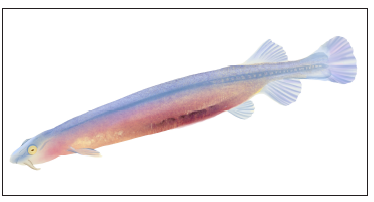
(2) Injuries due to the invasion of natural human orifices, such as in accidents involving Vandellia cirrhosa, also known as the vampire fish or candiru (Figure 01). It is a small, thin, freshwa ter catfish that is semitransparent on its ventral region and has a reddish-brown color on its dorsal region, varying in size and reaching from 2 to 20 cm in length, with a width of 3 to 6 mm in its adult form. This fish is a hematophagous endopara site that has opercular spines and rigid rays in its pectoral fins used to attach itself to larger fish (usually on the gills), which allows it to feed on its host’s blood. This animal is known to penetrate bodily orifices, such as the human urethra, during baths and dives20. There is some divergence in literature as to why the candiru penetrates these orifices; the most accep ted explanation currently is that the candiru is a urinophilic fish, so the fish is attracted by the human urine, because the smell is the same as the urea odor present in the gills of large fish that the candiru parasite. There is, however, other resear chers who believes that the physical stimulus produced by the flow of urine during urination is the responsible to attract the candiru, because this simulates the flow of water passing through the gills of fishes that this vertebrate commonly fe eds on. The clinical condition caused by this species of catfish is normally composed of pain, urethral bleeding and urinary retention and the therapeutical options for these accidents are scarce, with the possible need for surgical removal of the causative organism21.
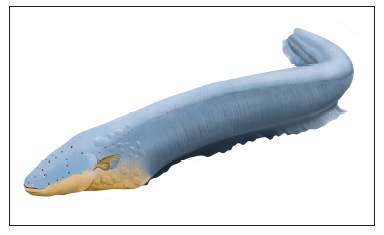
(3) Disorders caused by electric discharges, whose key animals are the poraquê (Electrophorus electricus) - also known as the electric fish or as the electric eel - and the tremetreme stingray (Narcine brasiliensis). The poraquê (Figure 02) has a long cylindrical body, a flat head and can reach a length of 2.5 meters and a weight of around 20 kg22. Its coloring is typically brown, it has three fins - two lateral fins and one caudal fin - and it has the ability of generating an electric discharge of up to 600 volts23,24. Found in the lakes and rivers of the Amazon, in the north of South America, this fish has the ability of producing powerful electric discharges, with extremely harmful potential to other animals, including H. sapiens. Electricity is produced by electrocytes, modified muscular cells that are arranged in sets called myoelectric plates. An adult specimen has around 5 to 10 thousand myoelectric plates and each one of these plates can produce minuscule impulses that remotely activate the motor neurons of animals that are close by, provoking contractions and consequent muscular fatigue, which can immobilize the affected individual and, depending on the intensity of the electrical discharge, can cause burns, protein coagulation, cardiac arrest and death25. Studies have reported that muscle involvement in humans, when the attack occurs out of water, is usually restricted to the affected limb, while accidents that occur in the water lead to involvement that varies greatly with the distance between the animal and the victim, with the main effect, in humans, being tetany, which can lead to severe pain and muscle exhaustion. Lethal accidents are usually not caused by direct electrocution, but by muscle exhaustion followed by drowning26.
Table 1 Types of accidents caused by fishes, their main causal agents and symptoms.
| Type of Accidents | Main Causal Agents | Main symptoms |
|---|---|---|
| Traumatic accidents | Piranhas, traíras, sharks, candiru (vampire fish), poraquê (electric eel). | The main manifestations of these occurrences are local pain and hemorrhages, depending on the location and extent of the lesion. |
| Acanthotoxic accidents | Stingrays, catfishes, mandís, scorpion fish and frogfish. | Intense local pain, edema, erythema, ulceration, skin necrosis, local paralysis, fever, gangrene, sweating, nausea, vomiting, tachycardia and systemic arterial hypotension. |
| Icthysarcotoxic accidents | Puffer fish, grouper, barracuda and bicuda. | Paresthesia of the tongue and lips, headaches, nausea, vomits, diarrhea, blurred vision, paresis, ataxia, muscle paralysis, cardiac dysfunction and altered sensation of hot and cold. |
Other animals involved in disorders due to electric discharges are the stingrays of the Narcine brasiliensis species, popularly known as tremetreme ray. These cartilaginous fish have a discoid shaped body, usually greater in width than in length, and can reach up to 30 cm in length. Its dorsal coloration can vary from brown to grey, with darker transversal stripes, and its ventral region is a light-yellow color. In addition, it has a cartilaginous skeleton and two lateral fins as well as a well-developed caudal fin. They have the habit of burying themselves in the aquatic environment, leaving only their eyes visible, which makes them difficult to visualize, increasing the rate of accidents27. This species has two types of electric organs - a main one and an auxiliary one - which, as in poraquê, are modified muscle tissues that produce electric discharges ranging from 14 to 56 volts, causing a considerable shock, leading to pain and local erythema28.
In accidents caused by electric discharges, either by the poraquê or by the tremetreme ray, the indication is to rescue and transfer the victim to a dry place, taking the precautions to guarantee that new accidents do not occur29. The recommended management follows the rationale of any electric shock and aims to minimize the damage already caused during the accident. Attention should be paid to the presence of burns caused by electric shock, and tetanus prophylaxis is indicated in these cases. Although the electric discharge of these animals is of low amperage, and therefore of lesser severity to humans, it is known that cardiorespiratory arrest is a complication that can occur in these situations and, if present, the Advanced Cardiology Life Support (ACLS) protocol should be followed for cardiopulmonary resuscitation30,31
Acanthotoxic accidents: venomous fishes
Accidents caused by these kinds of fishes (acanthotoxic derives from the latin word acanthus = sharp, prickly) have a necrotizing nature and result from the inoculation of venom from injuries caused by spikes and stingers of these animals. Such accidents usually occur when fishermen try to manipulate the animal, after being caught in nets and hooks. In Brazil, events of this type are mainly caused by the animals briefly commented below.
Salt water stingrays (Dasyatidae, Gymnuridae, Urolophidae, Myliobatidae and Rhinopterinae families) and fresh water stingrays (Potamotrygonidae family) are cartilaginous fishes with a dorsoventrally flattened body that have eyes located on their backs, ventral mouths and gill slits and, on their tail, they have one or more retrograde stingers that are surrounded by a specialized integument containing toxin-producing cells. Accidents by freshwater stingrays are usually more common and very serious, thus considered one of the most important injuries caused by aquatic animals in South America. The most common clinical manifestations are intense local pain, edema, erythema, ulceration and skin necrosis of the injured area, with a relevant secondary infection rate. Fatal cases are rare and are usually associated with penetrating chest trauma, visceral lacerations with impairment of the respiratory tract, injury coursing with late cardiac tamponade, vascular damage with hemorrhagic shock, in addition to gangrene and septic shock32.
Saltwater catfishes (Ariidae family) are the animals that cause the greatest number of accidents involving venomous fishes in Brazil, affecting mainly fishermen when handling fishing nets and bathers when they step on the dead animal on the beach, since the poison still has effect even if the fish has died in the last 24 hours. The most common clinical manifestations of this accident are severe and prolonged pain, cramps and local paralysis, edema, malaise, fever, in addition to gangrene, sweating, nausea and vomiting33.
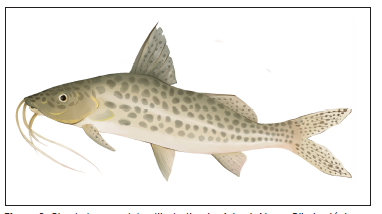
Mandí (Pimelodidae family - many species), popularly known as the painted catfish or the yellow mandí (Figure 03), is a Brazilian species of freshwater catfish that is characterized by a greenish-yellow color with dark spots along its body and, like other catfishes, has stingers covered with a toxic mucus located in its pectoral and dorsal fins. The common symptoms in these accidents are intense local pain, edema, erythema and necrosis, which can lead, in more severe cases, to loss of movement, mutilation and even death34.
Scorpion fish, mangangá or beatinha (Scorpaenidae family) are marine vertebrates known for their enormous dorsal spines and striped coloring. They are commonly found near rocks and coral reefs where they camouflage easily, facilitating the occurrence of accidents. Accidents caused by animals of this species leads to various cytotoxic and neurotoxic manifestations, such as severe pain, sweating, fever, erythema, nausea, vomiting, tachycardia, respiratory stress and systemic arterial hypotension35.
Frogfish or niquim (Batrachoididae family) is the name given to a marine fish of approximately 15 cm in length with a flattened head, which has poisonous spines in the upper region of its face, above the operculum. The venom of this animal is composed of toxins that cause excruciating pain, local edema and ischemic necrotic lesions that are difficult to regenerate. In addition, the poison also promotes hemolytic, proteolytic and myotoxic activities, which can cause thrombosis, direct damage to myocyte membranes and kidney damage, with the release of vasoactive factors and decreased electrolyte transport36.
There is currently no specific therapy. Thus, the approach should be symptomatic, focusing on the pain and the other pathogenic effects of the venom, in addition to the prevention or treatment of secondary infections. The wound should be washed with soap and water and the affected area should be immersed in warm water (40°C to 45°C) for 30 to 60 min, since the elevated temperature can reduce the pain. In specific situations, the use of local anesthetics without vasoconstrictors are indicated for pain relief, for the removal of foreign bodies and for cleaning the wound more thoroughly.
In some cases, systemic analgesia may also be necessary. Tetanus prophylaxis is indicated and, in addition, the use of antimicrobials is recommended when signs or symptoms of infection are present; therefore, antibiotic prophylaxis is not usually indicated.
Ichthyosarcotoxic (passive) accidents: poisonous fish
This modality occurs due to the ingestion of animals and/ or toxins present in their tissues. In several countries of the world - including Brazil - many fishes are consumed by humans and are prepared in different forms. The most relevant examples include poisonings caused by puffer fish (Chilomycterus genus), grouper (Serranidae family) and barracuda or bicuda (Sphyraena genus).
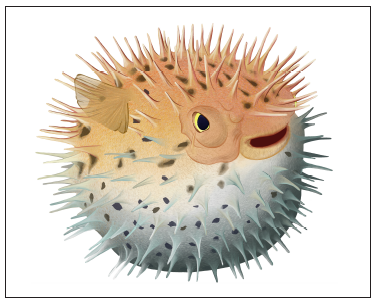
Baiacu and puffer fish are the popular designations of fishes in the Diodontidae family, mainly those of the Chilomycterus genus (Figure 04). They are mostly marine, measure up to 40 cm in length, are a yellowish color and are usually covered in external spines. They have the ability to inflate when threatened, increasing in size and further exposing their spines. and, which is a water-soluble toxin that is stable at high temperatures, so the cooking of the animal does not cancel out the toxic effect of the contaminated meat. TTX is a sodium channel blocker and affects excitable tissues in humans, suchas muscles and nerves, disabling their ability to transmit electric signals. Initial clinical manifestations include paresthesia of the tongue and lips, followed by headaches and vomiting, and may progress to paresis and ataxia. In more severe cases, cardiorespiratory arrest may occur, leading to death23,37.
Grouper is the popular name given to several species of fishes in the Serranidae family. They are active predators that inhabit tropical, subtropical and temperate oceans. They have a large mouth, sharp teeth, different coloring and some species can reach up to more than 2 meters in length and 300 kg in weight. Barracuda or bicuda are popular names given to fishes of the Sphyraena genus, mainly those of the Sphyraena barracuda species. They are predators that have strong jaws and large teeth, a long body covered with smooth scales and can reach up to 2 meters in length and 30 cm in diameter38.
Both fishes of the Serranidae family and those of the Sphyraena genus can cause ciguatera, a food-borne disease caused by eating fish contaminated with ciguatoxins (CTXs), a type of potent neurotoxin produced by dinoflagellates, which adhere to algae and are consumed by herbivorous fishes39,40. CTXs are tasteless, colorless, odorless and stable at high and low temperatures; therefore, freezing or cooking contaminated food does not inactivate these toxins40. The substance lowers the threshold for opening voltage-gated sodium channels which leads to depolarization and can cause muscle paralysis, cardiac dysfunction and altered sensation of hot and cold41. Larger carnivorous fishes, such as those mentioned above, accumulate this toxin when feeding on these smaller herbivores, storing the toxin in their meat, which can later be consumed by humans, causing ciguatera.
Clinical manifestations due to intoxication by ciguatoxins vary, with a predominance of gastrointestinal manifestations, such as abdominal pain, nausea, vomiting and diarrhea, in addition to neurological manifestations, such as paresthesias, blurred vision, metallic taste in the mouth, dental pain and dysesthesias40,42,43.
The treatment in both accidents, sarcotoxic and ciguatoxic, is not specific and basically includes supportive measures, especially gastric lavage, use of antiemetics and laxatives. Dehydration can occur due to vomiting and diarrhea, so the need for fluid replacement with isotonic saline solutions should be assessed.42 In some cases, there is a need for ventilatory assistance in an intensive care setting, with possible endotracheal intubation.
Final considerations
Despite the fact that most accidents involving animals, especially those caused by fishes, are of low risk, they are important events in the health professionals' practice, considering the potential severity and the recent increase in the number of notifications of these events, mainly in rural areas, riversides and along the country's beaches44,45. Therefore, it is necessary to make an effort, on the part of health professionals, for the immediate identification and adequate conduct in the face of these potentially morbid events.
Table 2 Types of accidents caused by fishes and their main clinical management.
| Type of Accidents | Clinical Management |
|---|---|
| Traumatic accidents | The treatment aims to contain the hemorrhage and to minimize pain which can be done with local and/or systemic analgesics. Cleaning of the wound and tetanus prophylaxis are also indicated. In cases of shark trauma, a culture and antimicrobial susceptibility testing of the bacteria present in the wound is indicated, if there is signs or symptoms of infection. A combined therapy targeting gram-negative and gram-positive bacteria is recommended - for example, amoxicillin/ clavulanate or levofloxacin. In cases of invasion of natural human orifices by the vampire fish surgical removal can be indicated. In the accidents caused by electric discharges, like with the electric eel, the treatment is like any other electric shock, and tetanus prophylaxis is indicated in these cases. |
| Acanthotoxic accidents | The wound should be washed with soap and water and the affected area should be immersed in warm water (around 40° C). The treatment should be symptomatic, with anesthetics without vasoconstrictors. Tetanus prophylaxis is indicated and antibiotic is also indicated if there are signs or symptoms of infection. |
| Icthysarcotoxic accidents | Both sarcotoxic and ciguatoxic accidents includes supportive measures, with gastric lavage, use of antiemetics and laxatives, and fluid replacement in cases of dehydration. |
Source: table made by the authors.
Although there is currently no specific therapy for accidents involving fishes, it is essential to know the recommended actions for this type of morbid condition, for example, the proper cleaning of the affected limb and symptomatic treatment. Furthermore, the development of popular health education actions is essential to clarify appropriate procedures, both preventive and curative. In this perspective, it is expected that the information described in this article can characterize these adverse events and provide subsidies to assist the diagnosis, contribute to therapy, reduce severity and reduce the number of deaths of accident involving fishes.

