




 English (pdf)
 Article in xml format
 Article references

 Automatic translation
 Send this article by e-mail
 Cited by SciELO
 Cited by Google
 Similars in
SciELO
 Similars in Google

 Permalink


Introduction
The Cerro Machín Volcano (CMV) is one of the most dangerous in Colombia due to its high potential for outbursts, the extent of its deposits, and the magnitude of its eruptions (Cortés, 2001). Following the Holdridge (1966) classification system, it is situated in the life zones of premontane wet forest (wf-P) and lower montane wet forest (wf-LM) (Servicio Geológico Colombiano, 2007). Andean rainforests are seriously threatened by anthropogenic interventions in Colombia, including wood extraction, agriculture, traffic, and urbanization (Armenteras et al., 2017). Many of these forests have been turned into Eucalyptus spp. and Pinus patula plantations, with negative effects on the diversity, composition, and structure of lichenized fungi communities (Ardila et al., 2015; Simijaca et al., 2018).
Aguirre et al. (2008) reported that the Colombian Andean region harbors 1,396 species of lichens representing 89% of all the species in the country according to the checklist by Sipman et al. (2008). More recently, Sipman & Aguirre (2016) reported 1,674 lichen species in Colombia, corrected to 1,672 by Lücking et al. (2021). The most recent report considerably increased this number to 2,670 species, placing Colombia in the top ten countries with the highest diversity of these organisms (Moncada et al., 2022). However, the number of species in the Andean region has not been updated.
In Andean ecosystems, lichens are an important biological element associated with tree bark and shrubs. They are pioneers in the colonization of soils and exposed rocks (Watanabe & Kitagawa, 2004; Alfonso, 2016) and they contribute to the water (McCune, 2000) and nutrient cycles, especially the nitrogen input (Benner et al., 2007). Many studies in Colombia have focused on the Andean ecosystems (Moncada et al., 2022), documenting an enormous richness in mid and high-mountain zones (Soto Medina et al., 2021). However, little is known about the lichen biota of volcanic landscapes in the Colombian Andes (Sipman, 1989; Wolf, 1994) and the factors influencing the colonization by epiphyte communities under these harsh conditions (Díaz-Escandon et al., 2016). The recent discovery of new species, including Cora celestinoa, Sticta lobarioides, and Sticta phyllidiokunthii, on volcanic mountains in Colombia (Moncada et al., 2013a; Lücking et al., 2017), suggest that these ecosystems harbor unique lichen assemblages.
In recent years, research in the department of Tolima has focused on the mid and high altitude mountain forests of the Andean ecosystems leading to the discovery of several new species and new records in diverse groups of organisms (Neita-Moreno & Ratcliffe, 2019; Volkova, 2020; Rincon-Gonzalez & Escalante, 2020; Rincón-González et al., 2020; Correa-Carmona et al., 2021; Fernández-Alonso, 2021; Murillo-Serna et al., 2021; Anganoy-Criollo et al., 2022; Orejuela et al., 2022; Sierra-Ariza et al., 2022). These findings show the significance of the department of Tolima as a refuge for the Colombian flora and fauna. However, information about the lichenized fungi in this department is still limited.
Lichen research performed in Tolima includes the report of different species in the premontane plant formation of the upper basin of the Combeima River (Esquivel & Nieto, 2003). Additionally, the diversity and composition of lichens in different urban areas of Ibagué (Barreto & Esquivel, 2020), lichens as pollution bioindicators in its city reserves (Díaz-Villanueva & Morales-Nieto, 2019), and the metabolites of some species of the genus Sticta have been evaluated (Albornoz et al., 2022). One of these studies in Ibagué examined the preferences of lichens towards certain phorophytes (Zárate-Arias et al., 2019), a topic rarely studied in Colombia (Soto et al., 2012; Ardila-Ríos et al., 2015; Gutiérrez et al., 2019; Zárate-Arias et al., 2019). Besides phorophyte preferences, the different factors influencing the composition, diversity, and establishment of lichens in tree vertical layers have been the focus of some few studies (Wolf, 1993 a b; Simijaca, 2011; Díaz-Escandón et al., 2016; Simijaca et al., 2018).
Focusing on phorophyte preferences, Ardíla-Ríos et al. (2015) reported that planting exotic Eucalyptus species decreased species richness, possibly influenced by the peeling of the bark. Lichen communities are also sensitive to variations in bark pH (Wolf, 1993a; Cáceres et al., 2007; Díaz-Escandón et al., 2016; Zárate-Arias et al., 2019). Simijaca et al. (2018) noted that bark roughness affects species composition since certain lichens prefer smooth bark while others tend to grow on rough bark. It is also known that trees with a high number of grooves or lumps on the trunk bark limit the growth of crustose lichens (Rosabal et al., 2013) and that the age of the trees influences species composition (Ellis & Coppins, 2006, 2007). Besides phorophyte features, lichen community composition is influenced by light intensity variations (Soto-Medina et al., 2012), including forest types or tree layers (Lücking, 1999; Koch et al., 2013; Käffer et al., 2021; Koch et al., 2022).
Given the unique characteristics of Cerro Machín: being one of the lowest altitude volcanoes of Colombia, having a strong topography, and the influence of fumaroles, and considering the lack of information about its lichen biota, this region is an exceptional study area to assess the diversity, composition, structure, and phorophyte preferences of its lichen biota.
Materials and methods
Study area
The study area was located 17 km west of the municipality of Ibagué (4°29'11"N and 75°22'54''W), on the eastern flank of the Cordillera Central of Colombia (Moreno, 2012). It is part of the San Diego-Machín volcano-tectonic province (Martínez et al., 2014) (Figure 1). The volcanic complex has an area of 13 km2 and its crater has a diameter of 2.4 km (Piedrahita et al., 2018) enclosed by three domes with a height ranging between 1,524 and 2,750 m (Moreno, 2012). Climatic conditions vary from temperate to warm, with dry and rainy periods throughout the year, a temperature oscillating between 20°C and 22°C, average annual rainfall reaching 1150 mm, and relative humidity of 85% (Servicio Geológico Colombiano, 2007).
Sampling
Sampling was done between August 20, 2021, and January 10, 2022, in six field trips. Plots were selected along an altitudinal gradient from the base of the volcano at 2000 m to the top at 2750 m on the southeast and northwestern faces of the main dome. Forests were predominant (63%), with some grasslands from local agricultural farms (36%), and streams accounting for 1% of the area (CORTOLIMA & Universidad del Tolima, 2008; Vargas et al, 2007). Plots P1, P2, P3, P4, and P8 were located within the lower montane wet forest (wf-LM) and plots P5, P6, and P7 were in the premontane wet forest (wf-P) (Holdridge, 1966). Most of the trees at plot locations ranged from 10 to 25 meters in height and bryophytes predominated in their bark (Candela & Fernández, 2021). Other specific characteristics of the zones are detailed in table S1,https://www.raccefyn.co/index.php/raccefyn/article/view/2638/4465.
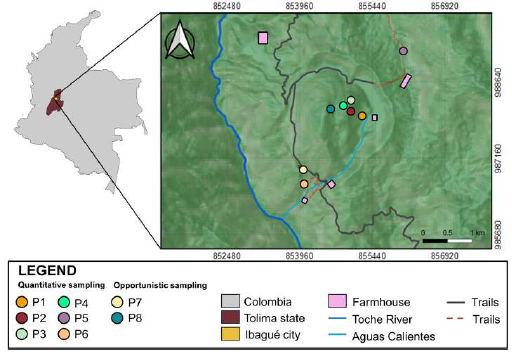
We conducted two types of sampling: first, quantitative, for the analysis of community composition and structure in six plots, P1 to P6 (20 m x 50 m in size) (Figure 1, table S1, https://www.raccefyn.co/index.php/raccefyn/article/view/2638/4465). We selected four phorophytes from Weinmannia pubescens, Hedyosmum bonplandianum, Clusia multiflora, and Myrcia popayanensis species in each of the six plots, adding up to 24 studied trees. For lichen recording, we used 20 cm x 50 cm rectangles fixed to each phorophyte at breast height on the side of the trunk with the highest lichen coverage (Soto Medina et al., 2012). For the opportunistic sampling, lichens were collected outside the plots on different selected substrates to complement the recorded species (Sipman, 1996). Access to P7 and P8 was difficult and the trees suggested for quantitative sampling were never found, so these plots were used for opportunistic sampling (Figure 1).
Taxonomy
We identified lichen samples using taxonomic keys, with the help of a dissecting microscope and an OMAX M82ES-SC100-LP100 compound microscope. For genus-level identifications, we used the neotropical lichen key by Sipman (2005) and the identification guide of Colombian lichens by Moncada & Lücking (preprint). For species-level identifications, we used specialized literature depending on the group (Rivas-Plata et al., 2008; Lücking et al., 2009; Moncada, 2012; Moncada et al., 2013b; Aptroot & Lücking, 2016; Gumboski et al., 2018; Sarlej et al., 2018; Kitaura et al., 2018; Kitaura et al., 2019). Chemical tests followed the standardized methods for lichen chemotaxonomy (Orange et al., 2001; McCune et al., 2002) employing potassium hydroxide (K), sodium hypochlorite (C), paraphenylenediamine (P), and iodine (I). The collections are deposited in the herbarium of the University of Tolima (TOLI), with selected duplicates in the Emilio Mahecha Forest herbarium (UBDC).
Phorophyte characteristics
We assessed four parameters for each phorophyte sample. We calculated the diameter at breast height (DBH) of the tree by measuring the circumference at 1.30 m and dividing this value by Pi. We assessed bark pH by collecting superficial bark fragments and analyzing them in the lab. A gram of bark was mixed with 10 ml of distilled water and after an hour, the pH was measured with a digital pH meter (Tester CHECKER® HI 98103) (Kricke, 2002). Light intensity was estimated using hemispherical photographs of the canopy above each phorophyte taken with a 180° fisheye lens (OPTEKA Hd2 0.20) mounted on a CANON T3 digital camera. The camera was positioned one meter above the ground and oriented towards the selected side of the tree, with the lens pointing to the magnetic north, determined using a compass (Koch et al., 2012; Menezes, 2013) to standardize the photographs across all phorophytes. The images were analyzed using the Gap Light Analyzer (GLA) software with a setting according to the orientation parameters and the coordinates of each phorophyte (Frazer et al., 2000). Finally, bark roughness was measured using a twine to draw the bark topography (ridges and hollows) over 10 cm marked with a plastic ruler. The roughness coefficient resulted from the difference between the twine length divided by the 10 cm ruler, a method modified from Rosabal et al., (2012).
Data analysis
We measured alpha diversity on each of the 24 phorophyte samples as the number of species and using a quantitative diversity measure through the effective number of species of order q0 (richness of species), q1 (number of common or frequent effective species), and q2 (number of dominant effective species) (Hill, 1973; McCune et al., 2002). We evaluated sample coverage to determine the representativeness of the samples relative to the proportion of species found (Chao & Jost, 2012) and calculated rarefaction curves to allow comparisons of the richness between the plots studied without considering the frequency of each species (Gotelli & Colwell, 2001). For these analyses, we used the Rstudio iNEXT package (Hsieh et al., 2016; Moreno, 2019). We also produced a species accumulation curve to evaluate the completeness of the sampling using the Jackknife 1 estimator and we made comparisons with the rarefaction curves using PAST® version 4.10 (Hammer et al., 2001).
Beta diversity was measured using Serensen's relative dissimilarity index calculated for each pair of the 24 phorophyte samples resulting in 276 pairwise comparisons (McCune et al., 2002). We also employed this index to evaluate the differences between the six plots pooling the four trees within each sampling site.
We evaluated potential phorophyte preferences using non-metric multidimensional scaling (NMDS) with the Serensen index. The NMDS was conducted with 999 randomizations using a stability criterion of 0.000001 and 100 iterations. Additionally, a two-way cluster analysis was done based on the same Serensen distance matrix index (McCune et al., 2002). These two analyses were complemented by an analysis of indicator species with Monte Carlo simulations to test which lichen species had statistically significant preferences for the different groups of phorophytes based on the criteria of significance (p<0.05) and marginal significance (p<0.1) (McCune et al., 2002). For the statistical analysis, we used the PC-ORD® software version 5.0 (McCune et al., 2002). Results
Taxonomic composition
The inventory of the Cerro Machín volcano resulted in 113 species belonging to 47 genera and 26 families. The quantitative sampling yielded 77 species, 37 genera, and 19 families, and the opportunistic sampling 57 species, 27 genera, and 16 families (Table 1). The quantitative and opportunistic sampling shared only 21 species (19%); the quantitative sampling resulted in 55 species (almost 49%) and the opportunistic sampling resulted in 36 species (32%); i.e., the first sampling method yielded a higher richness. Sticta was the richest genus, with 11 species, followed by Parmotrema (9), Pyrenula (7), Leptogium (7), and Cladonia (7).
Cyanobacterial photobionts occurred in 25 species (22% of those recorded), including the genera Coccocarpia, Cora, Leptogium, Peltigera, and several species of Sticta. Species with chlorococcoid photobiont (green algae) represented 53% of the total, including the genera Lobariella and Yoshimuriella, and another set of Sticta species. Graphidaceae, Pyrenulaceae, and Trypetheliaceae species (amounting to 25% of the species) featured a trentepohlioid photobiont (Table 1).
Thirty five (35) species were new records for the department of Tolima: Allographa macella, Aspidothelium cinerascens, Cladonia macilentoides, Emmanuelia tenuis, Hypotrachyna horrescens, Kalbographa cabbalistica, Leptogium javanicum, Lobariella pallida, Parmotrema sancti-angelii, Phaeographis scalpturata, Pyrenula acutispora, P. quassiicola, Sticta pseudolobaria, and Yoshimuriella peltigera. Additionally, Allographa superans, Architrypethelium penuriixanthum, Graphis breussii, Lepra tropica, Phaeo-graphis coriaria, and Pyrenula montocensis were new records for Colombia (Figure 2).
Table 1 Lichenized fungi species at the CMV. Sampling type (P: plots - quantitative sampling; O: opportunistic) and photobiont type (trente = trentepohlioide, cloroc = clorococcoide, cyano = cyanobacteria).
| Species | Sampling type | Photobiont |
|---|---|---|
| Allographa macella (Kremp.) R. Lücking & K. Kalb* | P | trente |
| Architrypetheliumpenuriixanthum Flakus & Aptroot ** | P | trente |
| Arthonia sp. | P | trente |
| Aspidothelium cinerascens Vain. * | P | trente |
| Bacidia sp. | P | cloroc |
| Brigantiaea leucoxantha (Spreng.) R.Sant. & Hafellner | O | cloroc |
| Chrysothrix chlorina (Ach.) J.R.Laundon | O | cloroc |
| Cladonia arbuscula (Wallr.) Flot. | O | cloroc |
| Cladonia didyma (Fée) Vain. | O | cloroc |
| Cladonia grayi G. Merr. Ex Sandst | O | cloroc |
| Cladonia macilentoides Ahti & Fleig * | O | cloroc |
| Cladonia rangiferina (L.) Weber | O | cloroc |
| Cladonia sp1. | O | cloroc |
| Cladonia sp2. | O | cloroc |
| Coccocarpia erythroxyli (Spreng.) Swinscow & Krog | O | cyano |
| Coccocarpia palmicola (Spreng.) Arv. & D.J. Galloway | O | cyano |
| Coccocarpia pellita (Ach.) Müll. Arg. | P | cyano |
| Coenogonium linkii Ehrenb. | P, O | trente |
| Coenogonium roumeguerianum (Müll. Arg.) Kalb* | P | trente |
| Coenogonium sp. | P | trente |
| Coniarthonia sp. | P | trente |
| Cora applanata B. Moncada, Soto-Medina & Lücking | O | cyano |
| Cora aspera Wilk, Lücking & E. Morales* | O | cyano |
| Cora sp2. | O | cyano |
| Crocodia aurata (Ach.) Link | O | cyano |
| Cryptothecia sp. | P | trente |
| Emmanuelia tenuis (Vain.) Lücking, B. Moncada & Gumboski * | P | cloroc |
| Graphis breussii G. Neuwirth & Lücking* | P | trente |
| Graphis nanodes Vain. | O | trente |
| Graphis sp1. | P | trente |
| Graphis sp2. | P | trente |
| Graphis superans Müll. Arg. * | P | trente |
| Herpothallon roseocinctum (Fr.) Aptroot, Lücking & G. Thor | P, O | trente |
| Heterodermia comosa (Eschw.) Follmann & Redón | O | cloroc |
| Hypotrachyna horrescens (Taylor) Krog & Swinscow * | P | cloroc |
| Hypotrachyna imbricatula (Zahlbr.) Hale | P | cloroc |
| Hypotrachyna laevigata (Sm.) Hale | P | cloroc |
| Hypotrachyna rockii (Zahlbr.) Hale | P | cloroc |
| Kalbographa cabbalistica (Nyl.) Lücking* | P | trente |
| Lecanora sp. | P | trente |
| Lepra sp. | P, O | cloroc |
| Lepra tropica (Vain.) Lendemer & R.C. Harris* | P | cloroc |
| Leptogium andinum P.M. Jerg. | P | cyano |
| Leptogium azureum (Sw.) Mont. | P, O | cyano |
| Leptogium cyanescens (Ach.) Körb. | O | cyano |
| Leptogium foveolatum Nyl. | P, O | cyano |
| Leptogium javanicum Mont.* | O | cyano |
| Leptogium phyllocarpum (Pers.) Mont. | O | cyano |
| Leptogium punctulatum Nyl. | P, O | cyano |
| Leucodermia circinalis (Zahlbr.) Kalb | O | cloroc |
| Leucodermia leucomelos (L.) Kalb | P, O | cloroc |
| Lobariella flavomedullosa B. Moncada, Betanc. & Lücking | P | cloroc |
| Lobariella pallida (Hook.) B. Moncada & Lücking* | O | cloroc |
| Lobariella parmeloides B. Moncada & Lücking* | O | cloroc |
| Lopezaria versicolor (Flot.) Kalb & Hafellner | P, O | cloroc |
| Malmidea nigromarginata (Malme) Lücking & Breuss | P | cloroc |
| Megalospora tuberculosa ( Fée) Sipman | P | cloroc |
| Parmotrema cetratum (Ach.) Hale | P | cloroc |
| Parmotrema commensuratum (Hale) Hale | O | cloroc |
| Parmotrema dilatatum (Vain.) Hale | P, O | cloroc |
| Parmotrema gardneri (C.W. Dodge) Sérus.* | P | cloroc |
| Parmotrema louisianae (Hale) Hale* | P | cloroc |
| Parmotrema robustum (Degel.) Hale | O | cloroc |
| Parmotrema sancti-angeli (Lynge) Hale * | O | cloroc |
| Parmotrema subtinctorium (Zahlbr.) Hale * | P | cloroc |
| Parmotrema zollingeri (Hepp) Hale* | P | cloroc |
| Peltigera austroamericana Zahlbr. | O | cyano |
| Peltigera dolichorhiza (Nyl.) Nyl. | O | cyano |
| Pertusaria tetrathalamia (Fée) Nyl. | O | cloroc |
| Phaeographis coriaria (M. Wirth & Hale) M. Cáceres, Aptroot, Parnmen & Lücking * | P | trente |
| Phaeographis dendritica (Ach.) Müll. | P, O | cloroc |
| Phaeographis scalpturata (Ach.) Staiger* | P | trente |
| Phlyctis cf. Brasiliensis Nyl. | P | trente |
| Phyllopsora furfuracea (Pers.) Zahlbr. | P | cloroc |
| Phyllopsora janeirensis (Müll. Arg.) Swinscow & Krog* | P | cloroc |
| Phyllopsora parvifolia (Pers.) Müll. Arg. | P | cloroc |
| Polyblastidium corallophorum (Taylor) Kalb* | P | cloroc |
| Polyblastidium japonicum (M. Satô) Kalb* | P, O | cloroc |
| Pseudocyphellaria sandwicensis (Zahlbr.) B. Moncada & Lücking | P, O | cyano |
| Punctelia sp. | P | cloroc |
| Pyrenula acutispora Kalb & Hafellner * | P | trente |
| Pyrenula complanata (Mont.) Trevis. | P | trente |
| Pyrenula montocensis Lücking* | P | trente |
| Pyrenula platystoma (Müll. Arg.) Aptroot | P | trente |
| Pyrenula quassiicola Fée* | P | trente |
| Pyrenula sp. | P | trente |
| Pyrenula thelomorpha Tuck. ** | P | trente |
| Ramalina camptospora Nyl. | P, O | cloroc |
| Ramalina celastri (Spreng.) A. Massal. | P, O | cloroc |
| Ramalina pusiola Müll. Arg. | O | cloroc |
| Ramalina usnea (L.) R. Howe* | O | cloroc |
| Remototrachyna costaricensis (Nyl.) Divakar, Lumbsch, Ferencová, Prado & A. Crespo | P | cloroc |
| Stereocaulon ramulosum Raeusch. | O | cloroc |
| Sticta andina B. Moncada, Lücking & Lumbsch | P, O | cyano |
| Sticta cometia Ach. | P | cyano |
| Sticta cordillerana Gyeln. | P, O | cloroc |
| Sticta dilatata (Nyl.) Vain. | O | cyano |
| Sticta leucoblepharis Tuck. & Mont. | P, O | cyano |
| Sticta neopulmonarioides B. Moncada & Coca | P | cloroc |
| Sticta plumbeociliata B. Moncada, A. Suárez & Lücking | P | cyano |
| Sticta pseudolobaria B. Moncada & Coca* | P, O | cloroc |
| Sticta roseocyphellata Bungartz, Moncada & Sipman | P, O | cyano |
| Sticta subfilicinella B. Moncada, Coca & Lücking* | P | cyano |
| Sticta tomentosa (Sw.) Ach. | O | cyano |
| Teloschistes exilis (Michx.) Vain. | O | cloroc |
| Teloschistesflavicans (Sw.) Norman | O | cloroc |
| Thalloloma astroideum (Müll. Arg.) Staiger* | P | trente |
| Usnea columbiana Motyka ex Räsänen | P | cloroc |
| Usnea rubicunda Stirt. | P, O | cloroc |
| Varicellaria velata (Turner) I. Schmitt & Lumbsch* | P | cloroc |
| Yoshimuriella dissecta (Sw.) B. Moncada & Lücking | P, O | cloroc |
| Yoshimuriella peltigera (Vain.) Lücking & B. Moncada * | P | cloroc |
| Yoshimuriella subdissecta (Nyl.) B. Moncada & Lücking | P | cloroc |
Completeness and rarefaction
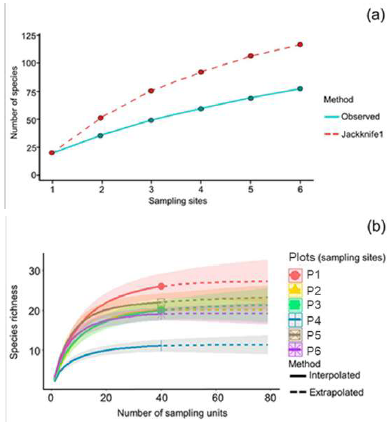
The quantitative sampling yielded 77 species. The proportion of completeness based on the Jackknife 1 estimator (116 species) was 66.3% (Figure 3a). The rarefaction curves showed significant differences between P4 richness values and the other sampling sites. When the values in the curves were close to the total of sampling units (48), an asymptotic pattern was observed, which remained after the extrapolation (Figure 3b), evidencing sample coverage oscillating between 96% (Plot 1) and 99% (Plot 6) (Table S2, https://www.raccefyn.co/index.php/raccefyn/article/view/2638/4465).
Alpha diversity
Hedyosmum, Myrcia, and Weinmannia had the same mean richness value per sample (seven lichen species) and Clusia had a lower one (five species). Individually, the richest phorophyte was Hediosmum 1, with 10 species, followed by Weinmannia 5 (9) and Myrcia 5 and Hedyosmum 3 (both with 8). Clusia 4 had the lowest diversity per sample (only 3 species) (Table S3,https://www.raccefyn.co/index.php/raccefyn/article/view/2638/4465). When we examined effective species values at standardized sample coverage (98%), Plot 1 was the most diverse site (0D= 27; 1D= 22; 2D= 19), followed by Plot 5 (0D= 22; 1D= 18; 2D= 16). In contrast, Plot 4 (0D= 11; 1D= 8; 2D= 6) showed less diversity and significant differences in the qD values and the rarefaction (Figure 3b, figure 4). The qD values showed the same pattern when comparisons were based on observed values vs. standardized sample coverage (Table 2).
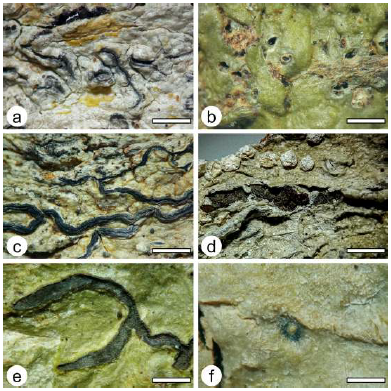
Figure 2 New records of lichenized fungi for Colombia. a. Allographa superans. b. Architrypethelium penuriixanthum. c. Graphis breussii. d. Lepra tropica (Photo taken to a humid sample making the thallus look greenish). e. Phaeographis coriaria. f. Pyrenula montocensis. Scale bar: 1 mm
Beta diversity
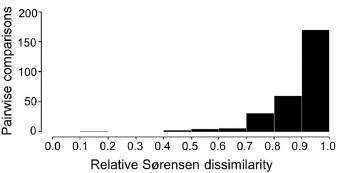
Beta diversity measured with the Serensen dissimilarity index showed that 95% of the pairwise comparisons among the phorophyte samples had values greater than 0.7, 4.7% ranged between 0.4 and 0.6, and only 0.3 % had a distance value of 0.1 or lower, indicating high sample heterogeneity (Figure 5). Similar patterns were found when comparing the plots, with all pairwise comparisons showing values above 0.68 % (Table 3).
The high sample heterogeneity was also evident in the cluster analysis, resulting in distinct groups of phorophytes with few shared species (Figure 6). A substantial proportion of the species (57 out of 77, 74%) were rare. Out of these, 41 were very rare, recorded only on one phorophyte, and the remaining 16 were rare, i.e., found on two phorophytes (Figure 6).
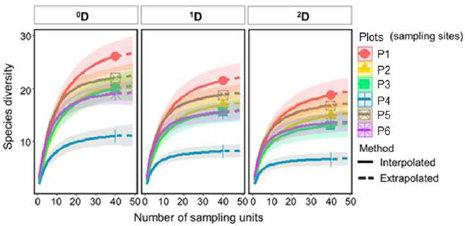
Figure 4 Diversity profiles (qD) for the study sites depicting the effective number of species in each order
Table 2 Values for the three orders of diversity based on the effective number of species for each of the six plots and value comparison based on sample coverage at 98%
| Plots | 0 D | 2 D | 0 D [SC 98%] | 'D* [SC 98%] | 2 D* [SC 98%] | |
|---|---|---|---|---|---|---|
| P1 | 26 | 21.5 | 18.8 | 27 | 22.1 | 19.4 |
| P2 | 20 | 16.9 | 14.8 | 20 | 16.7 | 14.7 |
| P3 | 20 | 15.6 | 13.1 | 20 | 15.8 | 13.3 |
| P4 | 11 | 8.1 | 6.7 | 11 | 8.0 | 6.6 |
| P5 | 22 | 18.8 | 16.8 | 22 | 18.8 | 16.8 |
| P6 | 19 | 15.5 | 13.5 | 19 | 15.3 | 13.2 |
Phorophyte relations
The NMDS analysis (stress = 0.107) did not show a marked separation of lichen communities based on phorophytes, except for Weinmannia phorophytes, which formed a separate group in the lower left portion of the diagram (Figure 7). Bark pH (R2= 0.21) and richness (R2= 0.25) showed a significant correlation with axis two (p < 0.1) (Table 4). Weinmannia individuals had a lower pH compared to the other phorophyte species (Table S1,https://www.raccefyn.co/index.php/raccefyn/article/view/2638/4465), although the Kruskal-Wallis test showed no significant differences (p > 0.05) among the four phorophyte species for this and other environmental variables (Table S3,https://www.raccefyn.co/index.php/raccefyn/article/view/2638/4465).
Table 3 Paired comparisons of beta diversity among the study sites based on the Serensen index
| P1 | P2 | P3 | P4 | P5 | P6 | |
|---|---|---|---|---|---|---|
| P1 | 0 | |||||
| P2 | 0.78 | 0 | ||||
| P3 | 0.83 | 0.75 | 0 | |||
| P4 | 0.95 | 0.68 | 0.68 | 0 | ||
| P5 | 0.83 | 0.71 | 0.81 | 0.82 | 0 | |
| P6 | 0.82 | 0.95 | 0.9 | 0.93 | 0.76 | 0 |
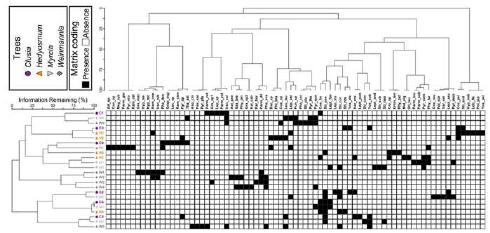
Figure 6 Two-way cluster dendrogram based on the Sørensen similarity index. The numbers (1 to 6) represent the study sites
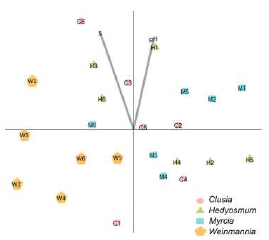
Figure 7 NMDS ordination plot based on the four phorophyte species evaluated showing the correlation of richness and pH parameters with axis two
Table 4 Significance and correlations for the two NMDS dimensions based on the environmental variables.
| NMDS1 | NMDS2 | r2 | p | |
|---|---|---|---|---|
| Eleva | 0.1774 | -0.98414 | 0.086 | 0.391 |
| Roug | -0.98836 | 0.15213 | 0.0424 | 0.626 |
| DBH | 0.2778 | 0.96064 | 0.1912 | 0.098 |
| Cop | -0.87577 | 0.48273 | 0.1169 | 0.283 |
| pH | 0.23542 | 0.97189 | 0.2101 | 0.087 |
| S | -0.35552 | 0.93467 | 0.2559 | 0.056 |
Eleva: Elevation; Roug: Roughness, DBH: diameter at breast height; Cop: Canopy Openness; S: Richness; * significant values
Clusia included the individuals with the roughest bark (average = 2.25), and Myrcia trees had the smoothest bark (1.75). Canopy openness was higher for Weinmannia individuals (average = 20.2 W/m2) and lower for Hedyosmum phorophytes (16.8 W/m2). Clusia individuals' trunks had the highest DBH (average = 30.0 cm), and Weinmannia individuals had the lowest one (20.2 cm) (Table S1,https://www.raccefyn.co/index.php/raccefyn/article/view/2638/4465).
The indicator species analysis (ISA) detected few species with significant preferences for a given phorophyte species, namely Parmotrema dilatatum (IV = 50.0) and Phaeographis scalpturata (IV=66.7), both significantly related (p < 0.05) with Weinmannia phorophytes.
Discussion
This is the first assessment of lichenized fungi diversity on the Cerro Machín volcano. The 113 lichen species we found represent 4.2% of the currently documented lichen biota in Colombia. Similar richness values were observed in the area of the Puracé Volcano, where 104 species were collected from 30 phorophytes at three different study sites (Díaz-Escandón et al., 2016). A study in Parque Los Nevados resulted in 178 species, with 37 to 51 species per study site depending on their elevation (Wolf, 1993a). The Cerro Machín volcano houses a similar number of species; the richness of the altitudinal zones varies between 11 and 26. Exploring undocumented areas offers the opportunity to learn about rare species occupying habitats in need of protection (Stropp et al., 2020). The number of species recorded in Cerro Machín volcano is remarkable for the department of Tolima, given that previous studies had only documented 21 to 38 species for given localities (Villanueva & Morales-Nieto, 2019, Zárate-Arias et al., 2019, Barreto & Esquivel, 2020).
The following species are newly recorded for the Colombian territory (Figure 2): Allographa superans (Müll. Arg.) Lücking & Kalb, originally described from barks in a tall forest at the Lutindi Forest Reserve, Tanzania (Müller, 1894); Architrypethelium penuriixanthum Flakus & Aptroot, previously reported in a cloud forest in the Yungas geographical region of Bolivia (Flakus & Aptroot, 2016); Graphis breussii G. Neuwirth & Lücking, first documented from Venezuela, Amazonas state, near the border with Colombia, on the edges of River Orinoco (Neuwirth & Lücking, 2009); Lepra tropica (Vain.) Lendemer & R.C. Harris, first discovered in Serra da Chela, Angola, and originally described as Pertusaria tropica (Vainio, 1901); Phaeographis coriaria (M. Wirth & Hale) M. Cáceres, Aptroot, Parnmen & Lücking, originally found in a mossy forest on the island of Dominica in Morne Anglais, at an elevation of 3000 to 3600 m, and then reported as Phaeographina coriaria (Wirth & Hale, 1978), and, finally, Pyrenula montocensis Lücking, first discovered in San Pedro de Montes de Oca in Costa Rica, in an area that is now an urban fabric with factories (Aptroot et al., 2008). These new records highlight the importance of tropical cloud forests as a reservoir of biodiversity (Soto-Medina et al., 2019).
Cloud forests are suitable for colonization by cyanolichens due to their high humidity, mostly acidic bark, and dense canopy cover (Benítez et al., 2018, Simijaca et al., 2018, Chuquimarca et al., 2019). Cyanolichens are an important component in ecosystems for their usual association with specific microhabitats such as preserved primary forests (Merinero et al., 2014). Accordingly, in the study area, we found several species of cyanolichens, such as Cora applanata, Leptogium foveolatum, and Sticta cometia.
Other lichen biotypes, characteristic of well-preserved forests, were also identified in this study, for example, lichenized fungi with perithectoid and thelotremoid ascomata, considered a good indicator of forest health in the tropics, were abundant (Rivas-Plata et al., 2008). The presence of lobarioid Peltigeraceae with green algae photobiont is also considered indicative of conserved forests (Ramírez-Morán et al., 2016). The Cerro Machín volcano yielded nine species of lobarioid Peltigeraceae with green algal photobionts, six species with perithecioid ascomata, and one thelotremoid taxon, indicating that the study area is still relatively well conserved.
Phorophyte preferences have been evaluated based on diverse tree species from various habitats throughout the tropics (Nöske, 2004; Käffer et al., 2009, Cáceres et al., 2007). In Colombia, stands of Quercus humboldtii harbored 41 to 109 species (Ardila-Rios et al., 2015; Simijaca, 2011; Simijaca et al., 2018) with up to 50 species per tree (Sipman, 2006), and studies on Weinmannia have recorded 54 to 104 species associated with this genus (Díaz-Escandón et al., 2016; Ramírez-Morán et al., 2016). Our study resulted in a total of 29 species on Weinmannia, with an average of seven species of lichens per tree, indicating a much lower diversity. However, the lichen richness on Weinmania at Cerro Machín volcano is similar to the richness on other phorophytes examined by Zárate-Arias et al. (2019) in urban green areas in Ibagué (Tolima), with 21 species and an average of three species on each phorophyte. Clusia genus has been reported to host between six and eight lichen species per phorophyte (Soto Medina et al., 2012), while in our study it was between three and six species per tree.
The overall low richness values per tree may be explained by the exhausts from the fumaroles in the study area, which emanate sulfur dioxide as steam at high pressure and temperature. The steam then condenses or dissolves in rainwater that subsequently precipitates as acid rain or fog (Hochstein & Browne, 2000). The acid precipitation may affect the lichens directly or indirectly by changing tree bark characteristics such as pH. This effect was observed by Díaz-Escandón et al. (2016) with sulfur dioxide-containing steam emerging from the El Vinagre River in the area of the Puracé volcano. According to their findings, the trees closest to pollution sources had a lower bark pH, richness, and lichenized fungi coverage, in line with our study, where trees also exhibited low bark pH (between 4 to 6). This was particularly evident in Weinmmania phorophytes, which had the lowest pH values of all the studied trees. Also, P4, located 30 m from fumaroles, showed the lowest lichen diversity, and the remaining plots, located 95 to 560 m from them, had increasing diversity. However, P5 and P6 might potentially be affected by anthropogenic intervention in the area given their location near hot springs and trails. There, we observed uncontrolled tourist activities with high traffic resulting in environmental pressures, soil degradation, and vegetation damage. We also observed habitat fragmentation caused by extensive livestock farming in the area surrounding the Cerro Machín volcano, which may contribute to a loss of biodiversity in the region (CORTOLIMA, 2020).
Diversity per phorophyte at Cerro Machín volcano was less than in other studies but the contribution of beta diversity to the overall site richness (gamma diversity) coincides with findings in other tropical forests, especially regarding the high number of rare species (Cáceres et al., 2007; Soto-Medina et al., 2012; Ardila-Ríos et al., 2015; Díaz-Escandón et al., 2016), which supports the idea that beta diversity is the most important component of lichen diversity in tropical forests (Komposch & Hafellner, 2000; Cáceres et al., 2007). Besides the specific conditions found in tropical forests and their great diversity of microhabitats (Gradstein et al., 1996; Victorino, 2012), sampling techniques may also play a role in the detection of many rare species (Soto-Medina et al., 2012). In our study, we used the microsquare technique to quantify species frequency, which allowed for the detection of more inconspicuous taxa compared to opportunistic sampling (Cáceres et al., 2007).
Since rare species add a strong stochastic component to the data, evidence of phorophyte preferences or even the specificity of lichens may be more difficult to detect. In our study, the Weinmannia genus was the one that seemed to filter certain lichen species; the subtle trends detected may be explained by the moderate influence of bark pH as seen in the ordination analysis. This is supported by the study of Cáceres et al. (2007), who also highlighted the influence of bark pH on lichen communities, along with other bark features such as lenticels or shedding. Díaz-Escandon et al. (2016) also reported that Weinmannia trees, with their low average pH (4.15), hosted only three species on average, had less coverage, and even absence of lichens sometimes. Generally, bark acidity directly impacts the lichen thallus, preventing the establishment and reproduction of certain species (Brodo, 1973).
Other parameters, such as bark roughness, also influence the composition of lichen communities. Here, we recorded 1.7 to 2.2 averages, relatively high compared to the study by Rosabal et al. (2013) in Cuba, who reported average values slightly over 1.0 and a negative correlation between species richness and bark roughness. Similarly, Cáceres et al. (2007) found that the density and size of bark lenticels were negatively correlated with lichen area cover but did not affect the species richness. In another study in Colombia, Q. humboldtii trees exhibited a lower bark roughness average and lower richness compared to Pinus patula trees (Simijaca et al., 2018). One may assume that phorophytes with rough barks host a greater number of species, as they allow better thallus adherence. However, particularly crustose lichens may have difficulties establishing and growing on rough bark in competition with three-dimensional macrolichens (Rosabal et al., 2013).
Light intensity is an important factor in shaping lichen communities. In foliicolous lichens, the community composition was associated mainly with the distribution of light gaps (Lücking, 1998; 1999a, b, c). The degree of canopy openness has also been linked to lichens with specific functional traits (Benítez et al., 2018; Soto-Medina et al., 2019). In this sense, López et al. (2016) identified a positive correlation between richness and luminosity, an effect not detected in the present study, likely because there was no strong variation in canopy openness in our study sites.
On the other hand, certain lichen biotypes have been associated with shady microhabitats in closed-canopy forests. In a sub-Andean forest in Popayán, Coccocarpia, Phyllopsora, Sticta, and Coniarthonia lichens were associated with shaded microsites (López et al., 2016). Also, filamentous lichens belonging to the genus Coenogonium are mostly found in shaded forest microhabitats (Sipman & Harris, 1989; Brodo et al., 2001). Certain crustose growth forms represent an adaptation to low light conditions (Koch et al., 2013), since they may cover large areas with little biomass (Lakatos et al., 2006; Koch et al., 2013). Some notable such genera include Cryptothecia and Herpothallon (Lakatos et al., 2006; Benítez et al., 2018); we recorded a high number of species in these genera in Cerro Machín, among them, Coccocarpia erythroxyli, C. palmicola, Coenogonium linkii, C. roumeguerianum, Herpothallon roseocinctum, Sticta subfilicinella, S. neopulmonarioides, and S. tomentosa. Canopy opening measurements in our study displayed a pattern of homogeneity as to the amount of light entering the understory, with averages ranging from 17% to 20% per phorophyte, considered low in comparison to Soto et al. (2012), who observed a range from 20% to 40% for this parameter, which influenced the composition of the lichen communities in their study.
In general, our results support other findings on possible lichen preference towards some aspects of tree bark such as pH or structure, but very rarely genuine specificity between lichen and tree species (Cáceres et al., 2007; Soto-Medina et al., 2012). The absence of phorophyte specificity may be related to the high diversity of trees present in tropical forests since many tree species share traits and there are no obvious differences between them. Phorophyte specificity would be disadvantageous for lichens, as it lowers the abundance of appropriate substrates and involves a lower chance of a lichen species establishment, typically because dispersion of diaspores follows stochastic patterns (Cáceres et al., 2007).

