

SciELO - Scientific Electronic Library Online

 
vol.8 issue1Sex- and Gender-Related Disparities in the Management of Acute Coronary Syndrome: A Mixed-Methods StudyData-driven Subclassification of Treated Hypertensive Adults: Implications for Personalized Management author indexsubject indexarticles search
Home Pagealphabetic serial listing  

Services on Demand

Journal

Article

Indicators

Related links

  • On index processCited by Google
  • Have no similar articlesSimilars in SciELO
  • On index processSimilars in Google

Share


Revista de investigación e innovación en ciencias de la salud

On-line version ISSN 2665-2056

Rev. Investig. Innov. Cienc. Salud vol.8 no.1 Medellín Jan./June 2026  Epub Oct 01, 2025

https://doi.org/10.46634/riics.474 

Research Article

Prevalence of Obesity, Diabetes, Hypertension, and Cardiovascular Risk Factors among Mexican Indigenous Groups

Prevalencia de obesidad, diabetes, hipertensión y factores de riesgo cardiovascular entre grupos Indígenas Mexicanos

Luis E. Simental-Mendía1  * 
http://orcid.org/0000-0002-3617-4921

Martha Sosa-Macías2 
http://orcid.org/0000-0002-4586-0851

Laura Jazel Barragán-Zúñiga2 
http://orcid.org/0000-0002-9925-6668

Carlos Galaviz-Hernández2 
http://orcid.org/0000-0001-8969-0543

Blanca Patricia Lazalde-Ramos3 
http://orcid.org/0000-0002-1995-1696

1 Unidad de Investigación Biomédica; Instituto Mexicano del Seguro Social; Durango; México.

2 Laboratorio de Biología Molecular; Academia de Genómica; Instituto Politécnico Nacional; Centro Interdisciplinario de Investigación para el Desarrollo Integral Regional Durango; Durango; México.

3 Unidad Académica de Ciencias Químicas; Universidad Autónoma de Zacatecas; Zacatecas; México.


Abstract

Objective.

To describe the prevalence of obesity, diabetes, hypertension, and cardiovascular risk factors in the Indigenous populations of Northwest Mexico.

Method.

A cross-sectional study was conducted among Indigenous and rural Mestizo populations of Northwest Mexico, including Coras, Huicholes, Mexicaneros, Tarahumaras, and Tepehuanos, and Mestizos. Obesity was defined by a body mass index (BMI) ≥30 kg/m2. The following cardiovascular risk factors were considered: high waist circumference, hyperglycemia or previous diagnosis of diabetes, elevated blood pressure or previous diagnosis of hypertension, hypertriglyceridemia, and low HDL-C.

Results.

A total of 472 subjects were enrolled in the study, including Mestizos (n = 48), Coras (n = 73), Huicholes (n = 93), Mexicaneros (n = 74), Tarahumaras (n = 81), and Tepehuanos (n = 103). The prevalence of obesity in the overall population was 11.2%, while specifically in Mestizos, Coras, Huicholes, Mexicaneros, Tarahumaras, and Tepehuanos it was 35%, 18%, 7.5%, 9.4%, 7.4%, and 1.9%, respectively. According to the presence of diabetes, the prevalence in the total population was 3.8%, which in Mestizos, Coras, Huicholes, Mexicaneros, Tarahumaras, and Tepehuanos was 2.0%, 7.8%, 0.0%, 4.0%, 9.8%, and 0.0%, respectively. Regarding hypertension, the prevalence in the overall population was 12.7, whilst in Mestizos, Coras, Huicholes, Mexicaneros, Tarahumaras, and Tepehuanos was 39%, 11.8%, 8.6%, 9.4%, 18.5%, and 1.9%, respectively.

Conclusion.

Our results revealed that Mexican Indigenous groups exhibit a high prevalence of obesity and hypertension, as well as high blood pressure, hypertriglyceridemia, and low HDL-C.

Keywords: Obesity; diabetes; hypertension; Indigenous groups

Resumen

Objetivo.

Describir la prevalencia de obesidad, diabetes, hipertensión y factores de riesgo cardiovascular en las poblaciones Indígenas del noroeste de México.

Método.

Se realizó un estudio transversal en grupos rurales Indígenas y Mestizos del noroeste de México, incluyendo Coras, Huicholes, Mexicaneros, Tarahumaras, Tepehuanos y Mestizos. La obesidad se definió como un índice de masa corporal (IMC) ≥30 kg/m². Se consideraron los siguientes factores de riesgo cardiovascular: circunferencia de cintura alta, hiperglucemia o diagnóstico previo de diabetes, presión arterial elevada o diagnóstico previo de hipertensión, hipertrigliceridemia y colesterol HDL bajo.

Resultados.

Se incluyeron 472 sujetos en el estudio, incluyendo Mestizos (n = 48), Coras (n = 73), Huicholes (n = 93), Mexicaneros (n = 74), Tarahumaras (n = 81) y Tepehuanos (n = 103). La prevalencia de obesidad en la población general fue del 11.2%, mientras que en la población Mestiza, Cora, Huichol, Mexicanera, Tarahumara y Tepehuana fue del 35%, 18%, 7.5%, 9.4%, 7.4% y 1.9%, respectivamente. En cuanto a diabetes, la prevalencia en la población total fue del 3.8%, mientras que en la población Mestiza, Cora, Huichol, Mexicanera, Tarahumara y Tepehuana fue del 2.0%, 7.8%, 0.0%, 4.0%, 9.8% y 0.0%, respectivamente. En cuanto a la hipertensión, la prevalencia en la población general fue de 12.7, mientras que en Mestizos, Coras, Huicholes, Mexicaneros, Tarahumaras y Tepehuanos fue de 39%, 11.8%, 8.6%, 9.4%, 18.5% y 1.9%, respectivamente.

Conclusión.

Nuestros resultados revelaron que los grupos Indígenas Mexicanos presentan una prevalencia alta de obesidad e hipertensión, así como de presión arterial elevada, hipertrigliceridemia y colesterol HDL bajo.

Palabras clave: Obesidad; diabetes; hipertensión; grupos indígenas

Introduction

In Mexico, obesity in adults has increased by 42.2% over the last 30 years, resulting in a major public health concern [1]. In 2022, the national survey reported that 36.9% of the Mexican adult population had obesity, with the rate being higher in women than in men [2]. Additionally, individuals with obesity have an increased risk of developing diabetes, hypertension, and dyslipidemia compared with those of normal weight [3,4]. As a consequence, there is an increasing prevalence of diabetes and hypertension in Mexico, which are some of the main causes of mortality. In 2022, the prevalence of diabetes was 18.3%, including 12.6% for diagnosed and 5.8% for undiagnosed diabetes [5], being the second cause of death and the first of disability in Mexico [6]. It was reported that 10.5% of the world’s population (536 million people) were living living with diabetes, and this figure is estimated to rise to 12.2% (783 million) by 2045 [7].

On the other hand, hypertension is the leading of cardiovascular mortality globally, and mortality from this condition has increased in recent years, reaching 10.8 million deaths in 2019 [8]. It has been estimated that the prevalence of hypertension in adults is 35.4% worldwide and the age-standardized prevalence in Latin America is between 20.7-56.4% [9,10]. In Mexico, the prevalence of hypertension in 2019 was 32.1% [9] and 70% of adults with this disease were unaware of their diagnosis in 2020 [11]. Given that hypertension may be asymptomatic initially or its symptoms can be confused with other diseases, its diagnosis is often delayed.

It has been estimated that in about a fifth of localities in Mexico, mostly dispersed rural areas, almost half of the inhabitants are Indigenous, resulting in 21.5% of the overall population [12]. In these populations, deficiencies in outpatient services, which are the entry point to the health system, represent a problem determined by social and cultural factors [13], in addition to the changing pattern of use of outpatient services due to the epidemiological transition [14]. Additionally, the Indigenous and rural Mestizo populations exhibit unique aspects due to genetic predispositions, socioeconomic factors, and distinct dietary patterns, which may increase their risk for metabolic disorders, including obesity, diabetes, and hypertension [15]. However, few investigations have explored the presence of cardiovascular risk factors in Indigenous Mexican populations, which have specific genetic and environmental factors [15,16]. Hence, the objective of this study was to describe the prevalence of obesity, diabetes, hypertension, and cardiovascular risk factors in the Indigenous populations of Northwest Mexico.

Method

This study was carried out in accordance with the Declaration of Helsinki and with the approval of the Research Ethics Committee of the Durango General Hospital of the Mexican Health Ministry (CI-HG450-24/165). Also, written and informed consent was obtained from all participants.

Subjects from different Indigenous groups and rural Mestizo populations of Northwest Mexico were eligible to participate in a cross-sectional study. A routine clinical examination was performed on enrolled men and nonpregnant women aged 18 years and older, with no upper age limit. The participants corroborated their indigenous ancestry and indicated that their parents and grandparents belonged to the same ethnic group. Additionally, the Indigenous ancestry of the studied groups was ratified by the analysis of 15 short tandem repeats (STRs) loci [17]. Demographic aspects, medical status, and dietary habits were evaluated. Trained personnel conducted the following procedures: administration of questionnaires, collection of medical history, and blood sampling and processing.

Definitions

Weight and height were measured using a standard stadimeter. Body mass index (BMI) was calculated as weight (kg)/height (m)2. Waist circumference was measured in centimeters at the umbilical level. Blood pressure was obtained using a mercury sphygmomanometer, following standard recommendations [18].

After 10-12 hours of overnight fasting, the biochemical parameters such as glucose, high-density lipoprotein-cholesterol (HDL-C), and triglyceride plasma levels were determined by enzymatic methods, according to the manufacturer’s procedures (BioSystems, Reagents & Instruments; Analyzer A15 ( Biosystems, Barcelona).

Obesity was defined by as a body mass index (BMI) ≥30 kg/m2 [19].

Diabetes was considered present if there was a diagnosis and/or ongoing antidiabetic treatment, or fasting plasma glucose ≥126 mg/dl at the time of the study [20].

Hypertension was defined by a previous diagnosis and/or the use of antihypertensive drugs, or values of systolic blood pressure ≥140 mmHg and/or diastolic blood pressure ≥90 mmHg at the time of the study [21].

The cardiovascular risk factors were considered according to the following criteria: waist circumference ≥94 cm in men and ≥80 in women, fasting glucose ≥100 mg/dL or previous diagnosis of diabetes, systolic blood pressure (SBP) ≥130 mmHg or diastolic blood pressure (DBP) ≥85 mmHg or pharmacological treatment for hypertension, triglyceride concentrations ≥150 mg/dL, and HDL-C levels <40 mg/dL in men and <50 mg/dL in women [22].

Sample size

The sample size was calculated based on the prevalence of diabetes (18.3%) [5], considering a precision of 5%, the estimated sample size was 226 subjects.

Statistical analysis

Numerical variables are provided as mean ± standard deviation and categorical variables as proportions.

The prevalence of obesity, diabetes, and hypertension among Mexican Indigenous groups (Mestizos, Coras, Huicholes, Mexicaneros, Tarahumaras, and Tepehuanos) was presented as proportions.

Differences between the Indigenous groups (anthropometric and biochemical parameters) were determined by a one-way ANOVA test for numerical variables and the χ2 test for categorical variables.

The statistical significance was established with a p value <0.05 and 95% confidence interval (95% CI). The Statistical Package for the Social Sciences (SPSS) for Windows version 20.0 (SPSS Inc., Chicago, IL) was used for the statistical analysis.

Results

A total of 472 subjects were enrolled in the study, including Mestizos (n=48), Coras (n=73), Huicholes (n=93), Mexicaneros (n=74), Tarahumaras (n=81), and Tepehuanos (n=103). The ethnic groups showed significant differences in all parameters except sex (Table 1). The prevalence of obesity in the overall population was 11.2%, while specifically in Mestizos, Coras, Huicholes, Mexicaneros, Tarahumaras, and Tepehuanos was 35%, 18%, 7.5%, 9.4%, 7.4%, and 1.9%, respectively (Figure 1). For diabetes, the prevalence in the total population was 3.8%, which in Mestizos, Coras, Huicholes, Mexicaneros, Tarahumaras, and Tepehuanos was 2.0%, 7.8%, 0.0%, 4.0%, 9.8%, and 0.0%, respectively (Figure 1). Regarding hypertension, the prevalence in the overall population was 12.7, whilst in Mestizos, Coras, Huicholes, Mexicaneros, Tarahumaras, and Tepehuanos was 39%, 11.8%, 8.6%, 9.4%, 18.5%, and 1.9%, respectively (Figure 1).

Table 1 Anthropometric and biochemical characteristics of the Indigenous groups. n = 472. 

Mestizos Coras Huicholes Mexicaneros Tarahumaras Tepehuanos p-value
N 48 73 93 74 81 103
Age, years 49.9 ± 14.3 47.7 ± 20.7 38.3 ± 17.0 38.5 ± 13.6 41.4 ± 12.9 36.3 ± 13.3 <0.001
Women, n (%) 23 (47) 50 (68) 58 (62) 44 (59) 57 (70) 69 (66) 0.44*
Body mass index, kg/m2 28.4 ± 6.6 25.4 ± 5.3 23.9 ± 5.0 24.5 ± 3.4 23.7 ± 4.4 22.2 ± 3.3 <0.001
Waist circumference, cm 101.8 ± 18.3 87.9 ± 12.9 89.4 ± 11.6 86.6 ± 9.8 83.2 ± 9.6 80.0 ± 8.3 <0.001
Systolic blood pressure, mmHg 120.6 ± 14.5 119.7 ± 14.8 110.1 ± 18.9 113.6 ± 15.8 121.1 ± 18.1 104.9 ± 16.1 <0.001
Diastolic blood pressure, mmHg 82.7 ± 11.8 77.6 ± 10.3 70.2 ± 11.2 73.1 ± 10.5 78.3 ± 9.6 69.0 ± 11.4 <0.001
Fasting glucose, mg/dl 74.9 ± 20.9 89.6 ( 47.1 66.8 ± 13.8 86.4 ( 25.0 84.3 ± 15.6 78.6 ± 14.3 <0.001
HDL cholesterol, mg/dL 59.3 ± 12.5 37.2 ( 10.7 44.7 ± 8.8 41.1 ( 11.2 42.0 ± 10.8 51.2 ± 12.6 <0.001
Triglycerides, mg/dL 107.4 ± 79.1 177.4 ( 101.5 142.4 ± 75.7 176.7 ( 92.4 162.3 ± 89.9 110.6 ± 62.7 <0.001
Total cholesterol, mg/dL 158.1 ( 39.9 164.9 ( 37.0 165.6 ( 31.9 184.9 ( 48.0 145.4 ( 30.8 154.0 ( 41.2 <0.001

Notes. Values are expressed as mean ± standard deviation. P-value was estimated using one-way ANOVA with the Bonferroni post hoc test. * p-value was estimated using the χ2 test.
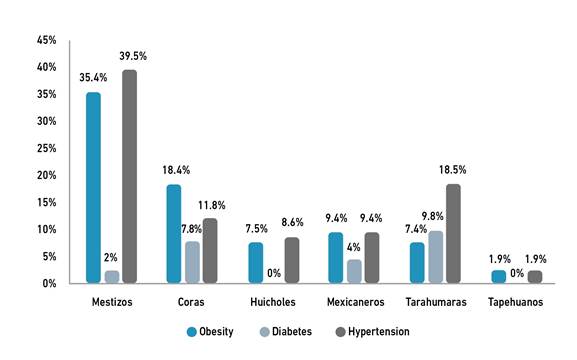
Figure 1 Prevalence of obesity, diabetes, and hypertension by Mexican Indigenous groups. 

Table 2 presents the prevalence of cardiovascular risk factors among Indigenous groups. Specifically, the frequency of high waist circumference was elevated in all Indigenous groups, except among Tepehuanos. The prevalence of elevated blood pressure was greater in Mestizos, Tarahumaras, and Coras. According to hyperglycemia, it was higher in Coras, Mestizos, and Tarahumaras. With respect to hyperglycemia, higher rates were observed in Coras, Mestizos, and Tarahumaras. Concerning low HDL-C, the frequency was greater in Coras, Mexicaneros, and Tarahumaras (Table 2).

Table 2 Prevalence of cardiovascular risk factors among Indigenous groups. N=472. 

Mestizos N=47 Coras N=73 Huicholes N=93 Mexicaneros N=74 Tarahumaras N=81 Tepehuanos N=103
High waist circumference, n (%) 37 (78) 44 (60) 62 (66) 45 (61) 43 (53) 36 (35)
Elevated blood pressure, n (%) 30 (63) 20 (27) 16 (17) 15 (20) 26 (32) 9 (9)
Hyperglycemia, n (%) 7 (14) 13 (18) 1 (1) 6 (8) 9 (11) 10 (10)
Hypertriglyceridemia, n (%) 25 (53) 37 (50) 34 (36) 39 (53) 40 (49) 18 (17)
Low HDL-cholesterol, n (%) 23 (48) 58 (79) 56 (61) 54 (73) 54 (66) 41 (40)

Discussion

In the overall population, the prevalence of obesity and hypertension, as well as the frequencies of cardiovascular risk factors, were elevated in some Mexican Indigenous groups. To the best of our knowledge, this is the first study to report the prevalence of obesity, diabetes, hypertension, high waist circumference, elevated blood pressure, hyperglycemia, hypertriglyceridemia, and low HDL-C in Mestizos, Coras, Huicholes, Mexicaneros, Tarahumaras, and Tepehuanos.

Interestingly, the prevalence of obesity, diabetes, and hypertension in Mexican Indigenous populations was considerably lower compared with the last National survey, reporting 36.9% for obesity, 18.3% for diabetes, and 47.8% for hypertension [2]. These findings may be explained because some Indigenous communities remain isolated from urban areas by the distance, inaccessible roads, low income, traditional lifestyle, and language [23]. Given that they live in small and dispersed places of remote regions and retain traditional language, marginalization contributes to limited access to public health services and, therefore, timely diagnosis and treatment of non-communicable diseases, including hypertension, is deficient [23].

It is crucial to highlight that the vulnerability of the Coras and Tarahumaras to metabolic disorders is vinculated to several factors. In Mexico, these groups often live in conditions of poverty and marginalization with limited access to healthcare, which predisposes them to chronic degenerative diseases [23]. On the other hand, some indigenous communities have adopted lifestyles and dietary habits more closely aligned with urban areas, increasing their risk of developing diseases such as diabetes, obesity, and hypertension [24]. This trend is further exacerbated by the nutritional transition, marked by a decline in the consumption of traditional, fiber-rich foods and an increase in the intake of processed foods high in saturated fats and added sugars [25]. Social behavior patterns, which vary based on geographical location and educational disparities among different ethnic groups in Mexico [26,27], also play a central role in the prevalence of chronic diseases. Communities that maintain traditional practices and remain partially isolated tend to exhibit lower rates of metabolic disorders [28]. This could explain, at least in part, the relatively low prevalence of obesity, diabetes, and hypertension observed in the Tepehuanos group. Despite facing social disadvantages, this group displays protective factors, as evidenced by metabolic and biochemical differences that suggest a reduced risk of obesity [29,30].

Interestingly, the frequency of cardiovascular risk factors (high waist circumference, elevated blood pressure, hyperglycemia, hypertriglyceridemia, and low HDL-C) varied among the groups studied, which may be attributed to the interaction of genetic predispositions, dietary habits, lifestyle, and environmental factors specific to each group [31,32]. In this regard, Mestizos exhibited the highest frequencies of cardiovascular risk factors among the Indigenous communities, likely due to habits related to urbanization and lifestyle changes, such as high-calorie diets and sedentary behavior [29,30]. In contrast, Tepehuanos had the lowest prevalences, which may be attributed to protective factors such as a traditional diet low in fat and high in fiber, greater physical activity, and potential genetic differences that confer protection for the development of cardiovascular disease [33]. These variations between groups also highlight the critical role of ancestral genetics in developing metabolic diseases [34]. Specifically, the Mestizos and Huicholes presented significantly higher waist circumference values compared to other groups. However, the Coras and Mexicaneros showed an unfavorable lipid profile, characterized by lower HDL-C and elevated triglyceride levels. Interestingly, the prevalence of hyperglycemia was low across all the ethnic groups. From a biochemical perspective, central obesity, leads to excessive lipid accumulation in organs such as the liver and muscles, in addition to subcutaneous adipose tissue [35]. This phenomenon can cause an increase in fatty acids entering the mitochondria of these cells [36]. When mitochondrial oxidative capacity is exceeded, free fatty acids accumulate, contributing to the development of insulin resistance [35]. Normally, insulin facilitates glucose uptake by cells by binding to specific receptors on their membranes. However, insulin resistance impairs this function, disrupting normal glucose metabolism and reducing its storage as hepatic glycogen [37]. This abnormal glucose metabolism also causes an imbalance between fatty acid oxidation and absorption, which could explain the observed link between hypertriglyceridemia and reduced fasting glucose levels in these populations [38]. Additionally, another factor that may be related to these findings is the type of diet followed by these ethnic groups and the prolonged fasting periods they often undertake [39]. These habits could explain why blood glucose levels rarely rise, leading to a low prevalence of hyperglycemia [40]. However, this condition can increase the activation of hepatic and muscular glycolysis, mobilizing lipid reserves to maintain adequate glucose levels for the body’s basic energy needs [41], causing a reduction in subcutaneous fat with increased lipid mobilization to other tissues [40,42].

The main strength of our study is the inclusion of several Mexican Indigenous communities. Although our study provides valuable insights, several limitations should be acknowledged. First, the cross-sectional design precludes establishing a causal relationship between Indigenous groups and cardiovascular risk factors. Future longitudinal studies would be necessary to confirm our results, including exploration of genetic, dietary, and environmental factors, which could deepen our understanding of their influence on metabolic abnormalities. These studies could help uncover the specific biological and socio-cultural mechanisms driving the differences in metabolic health across different ethnic groups. However, it is important to note that not all ethnic groups were included; therefore, our results cannot be generalized to the whole Mexican population of the Northwest. Second, the influence of potential confounders such as diet and physical activity cannot be entirely excluded; however, each Indigenous group was analyzed separately for cardiovascular risk factors to minimize the influence of habits among communities.

Conclusions

The results of our study revealed that Mexican Indigenous groups exhibit a high prevalence of obesity and hypertension, as well as cardiovascular risk factors. Particularly, the prevalence of obesity was high in Mestizos and Coras, the prevalence of diabetes only was high in Tarahumaras, and the prevalence of hypertension was high in Mestizos, Coras, and Tarahumaras. Therefore, these findings warrant the need for further investigation into the underlying factors contributing to ethnic disparities. Understanding how genetic predispositions, lifestyle changes, and socio-economic conditions interact in these populations could lead to more effective prevention and treatment strategies.

References

1. Barquera S, Hernández-Barrera L, Trejo-Valdivia B, Shamah T, Campos-Nonato I, Rivera-Dommarco J. Obesidad en México, prevalencia y tendencias en adultos. Ensanut 2018-19. Salud Publica Mex [Internet]. 2020;62(6):682-92. doi: https://doi.org/10.21149/11630Links ]

2. Campos-Nonato I, Galván-Valencia O, Hernández-Barrera L, Oviedo-Solís C, Barquera S. Prevalencia de obesidad y factores de riesgo asociados en adultos mexicanos: resultados de la Ensanut 2022. Salud Publica Mex [Internet]. 2023;65:s238-47. doi: https://doi.org/10.21149/14809Links ]

3. Brown CD, Higgins M, Donato KA, Rohde FC, Garrison R, Obarzanek E, et al. Body mass index and the prevalence of hypertension and dyslipidemia. Obes Res [Internet]. 2000;8(9):605-19. doi: https://doi.org/10.1038/OBY.2000.79Links ]

4. Wannamethee SG, Shaper AG. Weight change and duration of overweight and obesity in the incidence of type 2 diabetes. Diabetes Care [Internet]. 1999;22(8):1266-72. doi: https://doi.org/10.2337/DIACARE.22.8.1266Links ]

5. Basto-Abreu A, López-Olmedo N, Rojas-Martínez R, Aguilar-Salinas CA, Moreno-Banda GL, Carnalla M, et al. Prevalencia de prediabetes y diabetes en México: Ensanut 2022. Salud Publica Mex [Internet]. 2023;65:s163-8. doi: https://doi.org/10.21149/14832Links ]

6. Basto-Abreu A, López-Olmedo N, Rojas-Martínez R, Aguilar-Salinas CA, Cruz-Góngora VV, Rivera-Dommarco J, et al. Prevalence of diabetes and glycemic control in Mexico: national results from 2018 and 2020. Salud Publica Mex [Internet]. 2021;63(6):725-33. doi: https://doi.org/10.21149/12842Links ]

7. Sun H, Saeedi P, Karuranga S, Pinkepank M, Ogurtsova K, Duncan BB, et al. IDF Diabetes Atlas: Global, regional and country-level diabetes prevalence estimates for 2021 and projections for 2045. Diabetes Res Clin Pract [Internet]. 2022;183:109119. doi: https://doi.org/10.1016/J.DIABRES.2021.109119Links ]

8. GBD 2019 Risk Factors Collaborators. Global burden of 87 risk factors in 204 countries and territories, 1990-2019: a systematic analysis for the Global Burden of Disease Study 2019. Lancet [Internet]. 2020;396:1223-49. doi: https://doi.org/10.1016/S0140-6736(20)30752-2Links ]

9. NCD Risk Factor Collaboration (NCD-RisC). Worldwide trends in hypertension prevalence and progress in treatment and control from 1990 to 2019: a pooled analysis of 1201 population-representative studies with 104 million participants. Lancet [Internet]. 2021;398(10304):957-80. doi: https://doi.org/10.1016/S0140-6736(21)01330-1Links ]

10. Nguyen TN, Chow CK. Global and national high blood pressure burden and control. Lancet [Internet]. 2021;398(10304):932-3. doi: https://doi.org/10.1016/S0140-6736(21)01688-3Links ]

11. Campos-Nonato I, Hernández-Barrera L, Oviedo-Solís C, Ramírez-Villalobos D, Hernández-Prado B, Barquera S. Epidemiología de la hipertensión arterial en adultos mexicanos: diagnóstico, control y tendencias. Ensanut 2020. Salud Publica Mex [Internet]. 2021;63(6):692-704. doi: https://doi.org/10.21149/12851Links ]

12. Flores-Hernández S, Mendoza-Alvarado LR, Vieyra-Romero WI, Moreno-Zegbe E, Bautista-Morales AC, Reyes-Morales H. La condición indígena en los servicios de salud: comparación de la calidad en la atención 2012-2018 para la población en pobreza. Salud Publica Mex [Internet]. 2019;61(6):716-725. doi: https://doi.org/10.21149/10562Links ]

13. Juárez-Ramírez C, Márquez-Serrano M, Salgado de Snyder N, Pelcastre-Villafuerte BE, Ruelas-González MG, Reyes-Morales H. La desigualdad en salud de grupos vulnerables de México: adultos mayores, indígenas y migrantes. Rev Panam Salud Publica [Internet]. 2014;35(4):284-90. Available from: https://iris.paho.org/handle/10665.2/8166Links ]

14. Gutiérrez JP, García-Saisó S, Espinosa-de la Peña R, Balandrán DA. Desigualdad en indicadores de enfermedades crónicas y su atención en adultos en México: análisis de tres encuestas de salud. Salud Publica Mex [Internet]. 2016;58(6):666-75. doi: https://doi.org/10.21149/spm.v58i6.7923Links ]

15. Mendoza-Caamal EC, Barajas-Olmos F, García-Ortiz H, Cicerón-Arellano I, Martínez-Hernández A, Córdova EJ, et al. Metabolic syndrome in indigenous communities in Mexico: a descriptive and cross-sectional study. BMC Public Health [Internet]. 2020;20:339. doi: https://doi.org/10.1186/S12889-020-8378-5Links ]

16. Garcia DO, Morrill KE, Lopez-Pentecost M, Villavicencio EA, Vogel RM, Bell ML, et al. Nonalcoholic Fatty Liver Disease and Associated Risk Factors in a Community-Based Sample of Mexican-Origin Adults. Hepatol Commun [Internet]. 2022;6(6):1322-35. doi: https://doi.org/10.1002/HEP4.1896Links ]

17. Rangel-Villalobos H, Martínez-Sevilla VM, Salazar-Flores J, Martínez-Cortez G, Muñoz-Valle JF, Galaviz-Hernández C, et al. Forensic parameters for 15 STRs in eight Amerindian populations from the north and west of Mexico. Forensic Sci Int Genet [Internet]. 2013;7(3):E62-5. doi: https://doi.org/10.1016/J.FSIGEN.2013.02.003Links ]

18. Jones DW, Hall JE. Seventh report of the Joint National Committee on Prevention, Detection, Evaluation, and Treatment of High Blood Pressure and evidence from new hypertension trials. Hypertension [Internet]. 2004;43(1):1-3. doi: https://doi.org/10.1161/01.HYP.0000110061.06674.CALinks ]

19. Jensen MD, Ryan DH, Apovian CM, Ard JD, Comuzzie AG, Donato KA, et al. 2013 AHA/ACC/TOS guideline for the management of overweight and obesity in adults: a report of the American College of Cardiology/American Heart Association Task Force on Practice Guidelines and The Obesity Society. Circulation [Internet]. 2014;129(25, Suppl 2). doi: https://doi.org/10.1161/01.CIR.0000437739.71477.EELinks ]

20. ElSayed NA, Aleppo G, Aroda VR, Bannuru RR, Brown FM, Bruemmer D, et al. 2. Classification and Diagnosis of Diabetes: Standards of Care in Diabetes-2023. Diabetes Care [Internet]. 2023;46(Suppl 1):S19-40. doi: https://doi.org/10.2337/dc23-S002Links ]

21. James PA, Oparil S, Carter BL, Cushman WC, Dennison-Himmelfarb C, Handler J, et al. 2014 evidence-based guideline for the management of high blood pressure in adults: report from the panel members appointed to the Eighth Joint National Committee (JNC 8). JAMA [Internet]. 2014;311(5):507-20. doi: https://doi.org/10.1001/jama.2013.284427Links ]

22. Grundy SM, Cleeman JI, Daniels SR, Donato KA, Eckel RH, Franklin BA, et al. Diagnosis and management of the metabolic syndrome: an American Heart Association/National Heart, Lung, and Blood Institute Scientific Statement. Circulation [Internet]. 2005;112:2735-52. doi: https://doi.org/10.1161/CIRCULATIONAHA.105.169404Links ]

23. Walker J, Lovett R, Kukutai T, Jones C, Henry D. Indigenous health data and the path to healing. Lancet [Internet]. 2017;390(10107):2022-3. doi: https://doi.org/10.1016/S0140-6736(17)32755-1Links ]

24. Jimenez-Corona A, Nelson RG, Jimenez-Corona ME, Franks PW, Aguilar-Salinas CA, Graue-Hernandez EO, et al. Disparities in prediabetes and type 2 diabetes prevalence between indigenous and nonindigenous populations from Southeastern Mexico: The Comitan Study. J Clin Transl Endocrinol [Internet]. 2019;16:100191. doi: https://doi.org/10.1016/J.JCTE.2019.100191Links ]

25. Damman S, Eide WB, Kuhnlein HV. Indigenous peoples’ nutrition transition in a right to food perspective. Food Policy [Internet]. 2008;33(2):135-55. doi: https://doi.org/10.1016/J.FOODPOL.2007.08.002Links ]

26. Flores R, Telles E. Social Stratification in Mexico: Disentangling Color, Ethnicity, and Class. Am Sociol Rev [Internet]. 2012;77(3):486-94. doi: https://doi.org/10.1177/0003122412444720Links ]

27. Armenta-Paulino N, Wehrmeister FC, Arroyave L, Barros AJD, Victora CG. Ethnic inequalities in health intervention coverage among Mexican women at the individual and municipality levels. EClinicalMedicine [Internet]. 2021;43:101228. doi: https://doi.org/10.1016/J.ECLINM.2021.101228Links ]

28. King M. Chronic diseases and mortality in Canadian Aboriginal peoples: Learning from the knowledge. Chronic Dis Can [Internet]. 2010;31(1):2-3. doi: https://doi.org/10.24095/HPCDP.31.1.02Links ]

29. Lares-Asseff I, Lujín-García A, Sosa-Macías M, Lazalde-Ramos B, Loera-Castañeda V, Galaviz-Hernández C, et al. Biochemical differences in ethnic groups in Durango, Mexico. Ethn Dis. 2012;22(1):102-5. PMID: 22774317. [ Links ]

30. Delgadillo Guzmán D, Marchat Marchau LA, Reyes JL, Loera Castañeda V, Sosa Macías M, García Vivas J, et al. Leptin levels and nutritional status of indigenous Tepehuán and Mestizo subjects in Durango, Mexico. Dis Markers [Internet]. 2014;2014. doi: https://doi.org/10.1155/2014/974503Links ]

31. Severson TJ, Besur S, Bonkovsky HL. Genetic factors that affect nonalcoholic fatty liver disease: A systematic clinical review. World J Gastroenterol [Internet]. 2016;22(29):6742-56. doi: https://doi.org/10.3748/WJG.V22.I29.6742Links ]

32. Chinchilla-López P, Ramírez-Pérez O, Cruz-Ramón V, Canizales-Quinteros S, Domínguez-López A, Ponciano-Rodríguez G, et al. More Evidence for the Genetic Susceptibility of Mexican Population to Nonalcoholic Fatty Liver Disease through PNPLA3. Ann Hepatol [Internet]. 2018;17(2):250-5. doi: https://doi.org/10.5604/01.3001.0010.8644Links ]

33. Rodríguez-Morán M, Guerrero-Romero F, Brito-Zurita O, Rascón-Pacheco RA, Pérez-Fuentes R, Sánchez-Guillén MC, et al. Cardiovascular risk factors and acculturation in Yaquis and Tepehuanos Indians from Mexico. Arch Med Res [Internet]. 2008;39(3):352-7. doi: https://doi.org/10.1016/j.arcmed.2007.12.003Links ]

34. Oliveira JS, Miranda GN, Ribeiro IJS, Freire IV, Casotti CA, Barbosa AAL, et al. Relationship between genetic ancestry and metabolic syndrome in community-dwelling old adults. Aspects of Molecular Medicine [Internet]. 2023;2:100027. doi: https://doi.org/10.1016/J.AMOLM.2023.100027Links ]

35. Kojta I, Chacińska M, Błachnio-Zabielska A. Obesity, Bioactive Lipids, and Adipose Tissue Inflammation in Insulin Resistance. Nutrients [Internet]. 2020;12(5):1305. doi: https://doi.org/10.3390/NU12051305Links ]

36. Nowinski SM, Solmonson A, Rusin SF, Maschek JA, Bensard CL, Fogarty S, et al. Mitochondrial fatty acid synthesis coordinates oxidative metabolism in mammalian mitochondria. Elife [Internet]. 2020;9:1-35. doi: https://doi.org/10.7554/ELIFE.58041Links ]

37. Chandrasekaran P, Weiskirchen R. Cellular and Molecular Mechanisms of Insulin Resistance. Current Tissue Microenviron Rep [Internet]. 2024;5:79-90. doi: https://doi.org/10.1007/S43152-024-00056-3Links ]

38. Parhofer KG. Interaction between Glucose and Lipid Metabolism: More than Diabetic Dyslipidemia. Diabetes Metab J [Internet]. 2015;39(5):353-62. doi: https://doi.org/10.4093/DMJ.2015.39.5.353Links ]

39. Antoni R, Johnston KL, Collins AL, Robertson MD. Effects of intermittent fasting on glucose and lipid metabolism. Proc Nutr Soc [Internet]. 2017;76(3):361-8. doi: https://doi.org/10.1017/S0029665116002986Links ]

40. Kersten S. The impact of fasting on adipose tissue metabolism. Biochim Biophys Acta Mol Cell Biol Lipids [Internet]. 2023;1868(3):159262. doi: https://doi.org/10.1016/J.BBALIP.2022.159262Links ]

41. Han HS, Kang G, Kim JS, Choi BH, Koo SH. Regulation of glucose metabolism from a liver-centric perspective. Exp Mol Med [Internet]. 2016;48(3):e218. doi: https://doi.org/10.1038/EMM.2015.122Links ]

42. Harney DJ, Cielesh M, Chu R, Cooke KC, James DE, Stöckli J, et al. Proteomics analysis of adipose depots after intermittent fasting reveals visceral fat preservation mechanisms. Cell Rep [Internet]. 2021;34(9):108804. doi: https://doi.org/10.1016/J.CELREP.2021.108804Links ]

Copyright: © 2025 María Cano University Foundation. The Revista de Investigación e Innovación en Ciencias de la Salud provides open access to all its content under the terms of the Creative Commons Attribution-NonCommercial-NoDerivatives 4.0 International (CC BY-NC-ND 4.0) license.

Editors: Fraidy-Alonso Alzate-Pamplona, MSc. https://orcid.org/0000-0002-6342-3444

2Efrén Murillo-Zamora, Ph.D. https://orcid.org/0000-0002-1118-498X

Declaration of interests: The authors declare no conflicts of interest.

Funding: This research received no external funding.

Ethics statement: This study was approved by the Research Ethics Committee, General Hospital 450, Health Secretariat of Durango, Mexico (approval no. CI-HG450-24/165). All participants provided written informed consent prior to participation.

Data availability: All data supporting the findings of this study are available within the article. For additional details, please contact the corresponding author.

Author Contributions

Luis E. Simental-Mendía: conceptualization, formal analysis, methodology, writing - original draft, writing - review & editing.

Martha Sosa-Macías: conceptualization, data curation, investigation, methodology, supervision, validation, writing - original draft, writing - review & editing.

Laura Jazel Barragán-Zúñiga: conceptualization, data curation, investigation, validation, writing - original draft, writing - review & editing.

Carlos Galaviz-Hernández: conceptualization, data curation, investigation, supervision, validation, writing - original draft, writing - review & editing.

Blanca Patricia Lazalde-Ramos: conceptualization, methodology, supervision, writing - original draft, writing - review & editing.

Generative AI declaration: The authors declare that no generative AI tools were used in the writing, editing, data analysis, or any other part of the preparation of this manuscript.

Cite this article: Simental-Mendía LE, Sosa-Macías M, Barragán-Zúñiga LJ, Galaviz-Hernández C, Lazalde-Ramos BP. Prevalence of obesity, diabetes, hypertension, and cardiovascular risk factors among Mexican indigenous groups. Revista de Investigación e Innovación en Ciencias de la Salud. 2026;8(1):1-12. e-v8n1a474. https://doi.org/10.46634/riics.474

Disclaimer: The content of this article is the sole responsibility of the authors and does not necessarily reflect the official views of their affiliated institutions or the Revista de Investigación e Innovación en Ciencias de la Salud.

Received: April 24, 2025; Revised: June 06, 2025; Accepted: August 18, 2025

*Correspondence: Luis E. Simental-Mendía. Email: luis_simental81@hotmail.com

Creative Commons License This is an open-access article distributed under the terms of the Creative Commons Attribution License