


 English (pdf)
 Article in xml format
 Article references
 Automatic translation
 Send this article by e-mail
 Cited by SciELO
  Cited by Google
  Similars in
SciELO
Similars in
SciELO  Similars in Google
 Permalink

Introduction
Parkinson’s disease (PD) is a neurodegenerative disorder characterized by a multifactorial clinical syndrome involving diverse causes and manifestations [1]. Its incidence increases with age, occurring more frequently in individuals over 60 years old and showing a higher prevalence in men [2].
The etiology of PD combines genetic and environmental factors. Environmental elements associated with increased risk include pesticide exposure, industrialization, and repeated traumatic brain injury [1-3]. In recent years, the intestinal microbiota has been proposed as playing a relevant role in PD pathophysiology. The so-called “gut-brain hypothesis” suggests that dysbiosis and chronic intestinal inflammation may contribute to disease progression, supported by early detection of pathological alpha-synuclein aggregates in the gastrointestinal tract [4].
According to the World Health Organization [5], the global prevalence of PD has doubled over the past 25 years, affecting more than 8.5 million people worldwide in 2019. In Chile, between 1990 and 2016, the prevalence of PD increased by 19.9%, representing the highest rise reported in Latin America.
PD is characterized by dopamine depletion, leading to typical motor symptoms such as bradykinesia, resting tremor, rigidity, and postural instability [6-7]. These symptoms compromise speech motor control, affecting processes such as respiration, phonation, articulation, resonance, prosody, and fluency [8]. Although these impairments are widely recognized, the trajectory of speech symptoms throughout disease progression remains unclear. It has been suggested that non-dopaminergic mechanisms, distinct from those underlying motor symptoms in the limbs, may also be involved [9].
Disease progression can be assessed using various scales, among which the Hoehn and Yahr scale [10] is one of the most widely used for determining the severity and evolution of motor symptoms.
Given that the voice is a complex and multifactorial system, its assessment must integrate multiple approaches, including laryngoscopic examination, perceptual evaluation, aerodynamic and acoustic analyses, and self-reported vocal assessments [11]. This comprehensive approach, combining clinical and technological tools, facilitates a more complete understanding of vocal health [12].
In PD, perceptual voice characteristics commonly described include reduced loudness, tremor, roughness, asthenia, and breathiness. Acoustic alterations have also been documented, including changes in fundamental frequency (F0), increased frequency and amplitude instability, and elevated glottal noise [13-15], which may appear even in early disease stages [13]. These findings underscore their relevance as potential biomarkers for early diagnosis and monitoring of disease progression [16].
At the perceptual level, it has also been observed that individuals with PD may become more introverted over time, and their satisfaction with their voice tends to decrease as the disease progresses. However, studies have not found a significant relationship between scores on the Voice Handicap Index and disease progression [17-18].
To date, few studies have analyzed the vocal profile of individuals with PD using a truly multidimensional approach that integrates acoustic, perceptual, and self-rated measures across different disease stages. Previous studies have tended to address these components separately [17-24], and their findings have been generally heterogeneous and inconclusive regarding the evolution of vocal changes over the course of the disease.
Romero et al. [25] evaluated biomechanical voice parameters in individuals with PD using the VHI-30, the GRBAS scale, and the LAB Online App from Voice Clinical Systems, which provides a quantitative assessment of 22 biomechanical variables. Although they identified acoustic and biomechanical alterations, these were heterogeneous and not statistically significant, a result that may be attributed to the small sample size and the fact that all participants were younger than 60 years of age.
More recently, Jara et al. [12] published the study titled “Multidimensional Analysis of Voice in Users with Parkinson’s Disease: A Case Study”, in which they observed glottic closure defects in most participants, alterations in acoustic parameters such as F0, shimmer, increased harmonic-to-noise ratio (HNR), and an abrupt spectral slope (Alpha ratio). These preliminary findings, obtained from a small sample, form part of the expanded work presented in the current study.
One of the main limitations reported in previous studies has been reduced sample size -national studies have included no more than 18 participants [12,20,25]- which has limited the ability to accurately describe the evolution of these changes [13-16].
This study aimed to identify and analyze the acoustic, perceptual, and self-reported vocal parameters of patients with PD, establishing associations between voice profiles differentiated by sex and the various stages of disease progression. For this purpose, the following hypothesis was proposed: Significant differences exist in acoustic, perceptual, and self-reported vocal parameters across the different stages of PD, reflecting progressive vocal alterations associated with advancing motor and neurological deterioration.
Methods
The present study marks the final phase of a broader research project, following earlier publications with preliminary findings from smaller samples [12-17]. The main contribution of the current study lies in its expanded sample of 42 participants, allowing for a more detailed characterization of vocal parameters differentiated by sex and by disease stage. In addition, it integrates acoustic information from both voice and speech through the analysis of formant values, frequency measures, and long-term measures, along with perceptual voice evaluations conducted by external judges and self-assessments provided by the participants themselves, offering a comprehensive perspective on the phenomenon under consideration.
A descriptive, observational, cross-sectional study design was used. The population consisted of individuals with PD who were members of the Parkinson’s Association of Temuco, Chile. Sampling was non-probabilistic and based on convenience.
Inclusion criteria were men and women with a diagnosis of idiopathic PD, with no age restrictions. Exclusion criteria included: (1) patients with PD who presented voice problems associated with other neurological disorders or with organic-functional laryngeal pathology; (2) patients with cognitive impairment; and (3) patients with chronic respiratory diseases or ongoing acute respiratory infections.
All participants had a confirmed medical diagnosis of PD by a neurologist and were undergoing pharmacological treatment as prescribed by their treating physician. Cognitive impairment was ruled out using the Mini-Mental State Examination (MMSE).
At the time of evaluation, all participants were assessed during their medicated “on” state. For acoustic recordings, evaluations were conducted two hours after medication intake.
After applying the inclusion and exclusion criteria, the final sample consisted of 42 participants. Three individuals were excluded due to cognitive impairment, and two were excluded due to comorbid Alzheimer’s disease. This represented the total number of individuals attending the Parkinson’s Association during the year in which the study was conducted.
This study was approved by the Ethics Committee of the Araucanía South Health Service (Approval No. 8).
Evaluation Instruments
The instruments used in this study are described below, presented in the order of their administration:
Hoehn and Yahr Scale
This scale was used to classify participants according to the stage of progression of their disease, following the criteria proposed by Hoehn and Yahr [10]. It evaluates symptom severity on a scale from 0 to 5, where 0 corresponds to asymptomatic patients; 1 indicates unilateral motor involvement; 2 represents bilateral involvement without balance impairment; 3 indicates mild to moderate bilateral involvement with some postural instability but physical independence; 4 corresponds to severe disability, though the person is still able to stand or walk without assistance; and 5 represents patients who are confined to a wheelchair or bed or who are bedridden [8,26]. This scale is widely used in research on PD [27].
Voice Handicap Index (VHI-30)
This instrument was used to assess the perceived impact of voice on the physical, functional, and emotional domains. According to Núñez et al. [28], the VHI-30 demonstrates high test-retest reliability (r = 0.822; p < 0.001) and excellent internal consistency (α = 0.93). Its use has been extensively validated in national and international voice research [29-30].
Praat Software (Version 6.1.08)
Praat was used for acoustic voice analysis, allowing quantitative data processing, audio signal manipulation, and observation of vocal emission parameters [31-32].
GRBAS Scale
This scale was used for auditory-perceptual evaluation of the voice and is one of the most widely recognized tools worldwide. Focused on laryngeal-level assessment, it demonstrates a high degree of reliability [33-34] and is frequently used in clinical practice due to its ease of application. Ratings are based on an ordinal numerical scale ranging from 0 to 3 [35].
Procedures
Initially, participants received information about the study’s objectives and procedures, and then they signed informed consent forms approved by the ethics committee. Once this stage was completed, appointments were coordinated, and participants were scheduled at the Voice Laboratory of the Universidad de La Frontera to carry out the evaluations and administer the instruments.
Evaluations were conducted individually, in sessions lasting approximately one hour. First, a medical history was taken to collect basic information about the disease and to determine whether participants met the inclusion criteria. Motor involvement was then assessed using the Hoehn and Yahr scale, which was scored by a physical therapist specializing in PD. Next, the VHI-30 was administered to quantify self-perceived vocal disability.
Finally, to obtain acoustic parameters, voice samples were recorded consisting of sustained phonation of the vowel /a/ for 5 seconds and a one-minute reading of the text El Abuelo [36-37]. Recordings were performed at a comfortable pitch and loudness for participants and were captured and stored using the Praat acoustic analysis software installed on a MacBook Air. All recordings were made with a sampling rate of 44.1 kHz and a 16-bit resolution [38].
A Focusrite Scarlett 2i2 interface connected to a flat-response omnidirectional Behringer ECM-8000 microphone was used. The microphone was placed 10 cm from the participant’s mouth at a 45° angle relative to the vocal tract axis to reduce aerodynamic noise.
All recordings were carried out inside an Eckel AB-4250 sound-treated booth, which had been acoustically characterized by a sound engineer to comply with the standards of the National Center for Voice and Speech. This characterization included a reverberation time below 0.2 seconds, considered optimal, and a background noise level of 29.8 dB, measured with an EXTECH 407740 sound level meter. For the analysis of vibratory modes, the recording microphone was positioned at the center of the booth, where measurements indicated that room modes did not significantly affect voice recordings, due to minimal decibel loss and similar response across a wide frequency range.
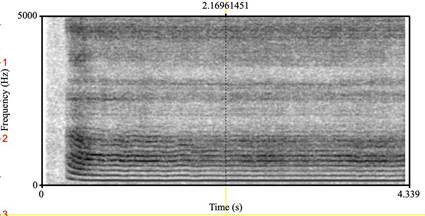
Perceptual evaluation was conducted using the GRBAS scale [34] and performed by three external judges, independent of the study, each with more than five years of clinical experience in the area of voice and postgraduate training in the specialty. Each judge received coded vocal samples from each participant (sustained /a/ and reading of El Abuelo) in WAV format. Additionally, a narrow-band spectrogram image generated from the sustained /a/ production was included so that judges could classify dysphonia severity using the Yanagihara scale [39]. Responses were recorded on a form specifically designed for this purpose (Annex 1). The combined use of voice samples and spectrograms enabled more precise classifications.
Before receiving the audio samples for evaluation, a 40-minute calibration session was conducted in which the evaluation form and five voice samples not included in the study were reviewed. Auditory severity criteria for each GRBAS parameter were discussed and agreed upon under the guidance of an expert evaluator [40]. To assess intra-rater consistency, 20% of the voice samples were randomly selected for reevaluation by the same judge 14 days after the initial assessment.
The following variables were analyzed: (1) spectral slope (alpha ratio), (2) formants, (3) fundamental frequency, (4) self-perceived vocal disability, (5) disease stage, (6) vocal quality according to the GRBAS scale, and (7) dysphonia severity.
Acoustic variables (spectral slope, formants, and fundamental frequency) were obtained from the reading of El Abuelo, as it represents a more representative sample of connected speech. Vocal quality, according to GRBAS, was determined from both the sustained vowel and the reading tasks. Finally, dysphonia severity was determined from the narrow-band spectrogram of the sustained vowel.
Statistical analysis
The data obtained from the assessments were initially entered and tabulated in an Excel spreadsheet (Microsoft Excel, version 10.0). The data were then imported into statistical software, which was used to establish the data distribution using the Shapiro-Wilk test. The results indicated that the assumptions of data normality were met (p > 0.05). Cronbach's alpha coefficient was calculated to assess the internal consistency of the VHI-30 scale items, and the reliability of the judges' perceptual assessment was evaluated using the Intraclass Correlation Coefficient.
Prior to applying the ANOVA, the assumptions of normality were assessed using the Shapiro-Wilk test, and homogeneity of variances was evaluated according to Levene's test. The results indicated that these assumptions were met (p > 0.05), so an analysis of variance (ANOVA) was performed to compare the means and determine if there were statistically significant differences between the variables evaluated. Finally, IBM SPSS Statistics, version 30.0, was used for the statistical analysis of the data.
Results
Of the total sample, there was a predominance of male participants (64.2%); additionally, 83.3% of the participants were older adults (over 65 years of age) (see Figure 1). Regarding the stage of disease progression, the sample was mostly distributed across Hoehn and Yahr stages 2, 3, and 4 [10], with fewer participants at the extreme stages (see Figure 2). This pattern is not new, as it has been consistently reported in studies where researchers have attempted to classify participants by disease stage. The Voice Handicap Index showed that most participants (n = 34) perceived a mild degree of vocal disability, while the remaining individuals reported moderate (n = 4) or severe disability (n = 4) (Figure 3).
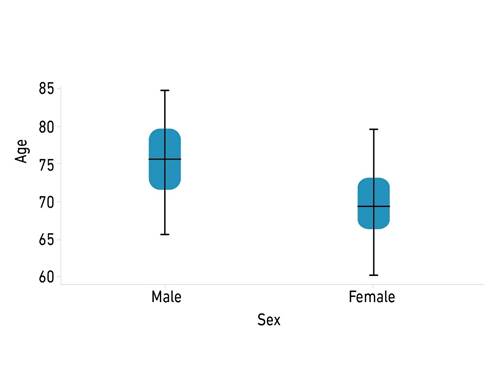
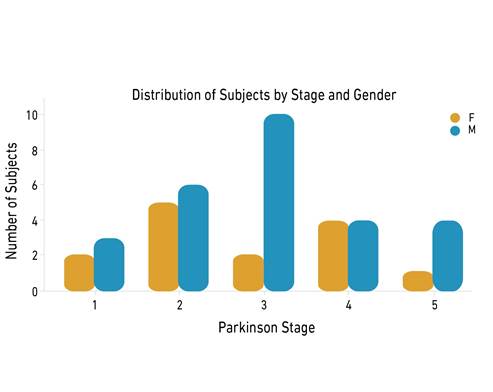
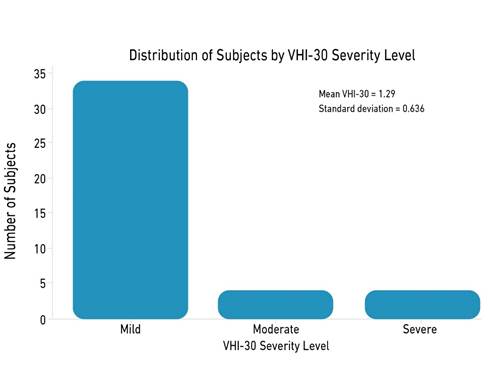
Table 1 shows the inter- and intra-rater reliability of the perceptual evaluation using the GRBAS scale, assessed through the ICC. For inter-rater reliability, single measurements show poor reliability (ICC = 0.285), indicating high variability. In contrast, average measurements demonstrated good to excellent reliability (ICC = 0.878), reflecting low inter-rater variability. This confirms that the use of averaged ratings is appropriate and reliable, even when single measurements are not. Regarding intra-rater reliability, only judges 1 and 2 demonstrated significant correlations.
Table 1 Intra- and inter-rater reliability of the GRBAS scale.
| Intraclass correlation | 95% confidence interval | F test with True value 0 | |||||
|---|---|---|---|---|---|---|---|
| Lower Bound | Upper Bound | Value | gl1 | gl2 | Sig | ||
| Inter-rater reliability | |||||||
| Single measures | ,285 | ,134 | ,591 | 14,644 | 9 | 153 | <,001 |
| Average measures | ,878 | ,736 | ,963 | 14,644 | 9 | 153 | <,001 |
| Intra-rater reliability Judge 1 | |||||||
| Single measures | ,077 | -,007 | ,342 | 2,096 | 8 | 88 | <,044 |
| Average measures | ,500 | -,098 | ,862 | 2,096 | 8 | 88 | <,044 |
| Intra-rater reliability Judge 2 | |||||||
| Single measures | ,096 | ,019 | ,339 | 3,695 | 8 | 88 | <,001 |
| Average measures | ,560 | ,192 | ,860 | 3,695 | 8 | 88 | <,001 |
| Intra-rater reliability Judge 3 | |||||||
| Single measures | ,030 | -,019 | ,213 | 1,545 | 8 | 88 | >,153 |
| Average measures | ,270 | -,295 | ,764 | 1,545 | 8 | 88 | >,153 |
The mean perceptual ratings according to disease stage and sex are presented in Table 2. The values of the acoustic parameters and self-perceived vocal disability were regrouped according to the participants’ disease stages and stratified by sex, as shown in Table 3. No statistically significant sex-related differences were noted in the results for spectral slope and self-perceived vocal disability (Table 4). Finally, when examining associations among disease stage, self-perceived vocal status, dysphonia grade (Yanagihara), and spectral slope, no statistically significant relationships were found, and the observed correlations were very weak (Table 5).
Table 2 Perceptual ratings according to disease stage in men and women.
| Stage 1 | Stage 2 | Stage 3 | Stage 4 | Stage 5 | ||||||
|---|---|---|---|---|---|---|---|---|---|---|
| Mean | S.D | Mean | S.D | Mean | S.D | Mean | S.D | Mean | S.D | |
| Male | ||||||||||
| G | 1,00 | 0,577 | 1,00 | 0,548 | 2,00 | 0,886 | 1,00 | 0,516 | 1,00 | 0,577 |
| R | 1,00 | 0,500 | 1,00 | 0,447 | 1,00 | 0,756 | 1,00 | 0,894 | 1,00 | 0,577 |
| B | 1,00 | 0,577 | 1,00 | 0,707 | 1,00 | 1,069 | 1,00 | 0,516 | 1,00 | 0,577 |
| A | 0,00 | 0,577 | 1,00 | 0,837 | 1,00 | 0,756 | 1,00 | 0,753 | 1,00 | 0,577 |
| S | 1,00 | 0,816 | 1,00 | 0,548 | 1,00 | 0,707 | 1,00 | 0,753 | 0,00 | 0,577 |
| Yanagihara dysphonia grade | 2,00 | 0,500 | 1,00 | 0,548 | 2,00 | 0,835 | 2,00 | 0,983 | 3,00 | 0,577 |
| Female | ||||||||||
| G | 1,00 | 0,000 | 1,00 | 0,707 | 1,00 | 0,516 | 1,00 | 0,500 | 1,00 | 1,00 |
| R | 0,00 | 0,577 | 1,00 | 0,000 | 1,00 | 0,000 | 1,00 | 0,500 | 1,00 | 0,00 |
| B | 0,00 | 0,577 | 1,00 | 1,414 | 1,00 | 0,983 | 0,00 | 0,500 | 0,00 | 0,00 |
| A | 1,00 | 0,577 | 0,00 | 0,707 | 0,00 | 0,516 | 0,00 | 0,500 | 0,00 | 1,00 |
| S | 0,00 | 0,000 | 1,00 | 1,414 | 0,00 | 0,408 | 0,00 | 0,500 | 1,00 | 0,00 |
| Yanagihara dysphonia grade | 1,00 | 0,577 | 2,00 | 0,000 | 2,00 | 0,632 | 1,00 | 0,000 | 1,00 | 1,00 |
Table 3 Acoustic variables and self-perception according to disease stage in men and women.
| Stage 1 Mean | Stage 2 Mean | Stage 3 Mean | Stage 4 Mean | Stage 5 Mean | |
|---|---|---|---|---|---|
| Male | |||||
| F0 | 153,50 | 162,40 | 172,75 | 156,83 | 164,67 |
| F1 | 624,00 | 547,60 | 702,75 | 630,17 | 799,00 |
| F2 | 1394,0 | 1300,40 | 1353,63 | 1323,83 | 1443,67 |
| F3 | 2738,50 | 2599,20 | 2535,75 | 2892,50 | 2986,67 |
| F4 | 3647,25 | 3925,80 | 3835,25 | 4006,33 | 3583,67 |
| Spectral slope | -2,50 | -6,20 | -3,88 | -2,17 | -2,33 |
| VHI | 2,00 | 12,00 | 29,00 | 22,00 | 39,00 |
| Female | |||||
| F0 | 165,00 | 162,50 | 179,17 | 190,75 | 107,00 |
| F1 | 625,33 | 692,50 | 789,33 | 779,00 | 466,00 |
| F2 | 1273,33 | 1471,50 | 1334,00 | 1427,75 | 1256,00 |
| F3 | 2536,00 | 3035,50 | 3042,50 | 2873,25 | 2895,00 |
| F4 | 3888,67 | 3970,00 | 3997,67 | 3942,75 | 3718,00 |
| Spectral slope | -4,00 | -7,00 | - 2,33 | -3,00 | -6,00 |
| VHI | 8,00 | 8,00 | 15,00 | 8,00 | 28,00 |
Note. F0: fundamental frequency; F1: formant 1; F2: formant 2; F3: formant 3; F4: formant 4.
Table 4 One-way ANOVA.
| Sum of Squares | gl | Mean Squares | F | Sig. | ||
|---|---|---|---|---|---|---|
| Spectral slope | Between groups | ,256 | 1 | ,256 | ,031 | ,862 |
| Within groups | 334,030 | 40 | 8,351 | |||
| Total | 334,286 | 41 | ||||
| Total VHI | Between groups | 879,112 | 1 | 879,112 | 1,741 | ,195 |
| Within groups | 20197,007 | 40 | 504,925 | |||
| Total | 21076,119 | 41 | ||||
Discussion
For better clarity, the discussion is organized into sections according to the evaluations and variables analyzed. When examining the sociodemographic characteristics of this sample, it was observed that the mean age of participants of both sexes exceeded 70 years. This is consistent with evidence identifying age as one of the main risk factors for PD, which is the second most common neurodegenerative disorder worldwide among individuals over 60 years of age [41-42].
Regarding sex distribution, 64.2% of participants were men, which reflects the higher prevalence of the disease in this group. The literature indicates that PD affects men between 1.5 and 2 times more frequently than women [2,17,42,43].
Disease Progression Stages
To classify patients according to the progression of PD, the Hoehn and Yahr staging system [10] was used. This scale is one of the most widely applied and referenced tools in the literature. Its selection was based on its simplicity and its ability to categorize disease progression based on motor symptoms, an aspect particularly relevant for analyzing how these symptoms may influence the vocal alterations observed in this study.
When examining the distribution of participants across disease stages, most were concentrated in stages 2 and 3, with a notable decrease in representation at the initial and final stages. This trend may be explained by the limited manifestation of perceptible symptoms in the early stages and the substantial motor restrictions characteristic of advanced stages, both of which reduce the likelihood of participation in research studies.
Individuals in stage 5 typically present severe motor impairment, complete loss of autonomy, and total dependence for mobility, often being bedridden or wheelchair-bound. This condition substantially limits their access to healthcare centers and, therefore, their inclusion in research. This pattern has been consistently reported in studies conducted both in Chile and internationally, which have documented an absence or paucity of participants in advanced stages of PD due to the challenges associated with attending outpatient evaluations [12,20].
Acoustic Voice Parameters
Regarding fundamental frequency, the men in the sample presented a mean value of 163 Hz, which is higher than the normal range described as being between 120 and 140 Hz [44-46]. In contrast, the women showed a mean of 172 Hz, which is lower than the reference values established around 200 Hz [44-46]. These findings align with previous research [19], which reported a slight increase in fundamental frequency in men and a decrease in women with PD. Possible explanations include laryngeal and respiratory muscle rigidity, as well as reduced mobility of the pharyngolaryngeal tract [13,15,18,47-49].
Other authors have suggested that the increase in F0 in men may be related to generalized increased muscle tone, particularly in the laryngeal musculature. In contrast, the decrease in women may be associated with deficits in intonation control [13]. It is essential to consider that the study population consisted of older adults, who naturally experience anatomical and physiological changes linked to aging, including modifications to the phonatory system and, consequently, to vocal characteristics. Nevertheless, Landazuri et al. [19], in a study of acoustic parameters in 10 individuals with PD, reported differences between older adults with and without PD.
However, the specific contribution of aging, PD itself, and individual compensatory mechanisms to vocal quality remains unclear. Additionally, contradictory results have been reported in studies such as Romero et al. [25], where most participants with PD did not exhibit F0 alterations and remained within normal ranges. This may be attributed to the small sample size and the fact that all participants were under 60 years of age.
With respect to formants, a reduction in F1 was observed in both sexes, which is physiologically related to jaw opening. These findings are consistent with previous studies that have also reported a decrease in F1 [50]. Variations in F2 and F3 further suggest alterations in jaw opening and tongue positioning, influenced by the motor symptoms of the disease. In Chile, research on formants in this population is limited; however, the work of Martínez and Soto [20] stands out. They analyzed the phonetic-acoustic performance of Spanish vowels in speakers with PD and reported significant differences in F1 values for /e/ and /u/ in men with and without PD. The authors attributed these changes to reduced jaw opening resulting from diminished movement amplitude and muscular rigidity, both characteristic features of PD [20].
In the present study, F2 and F3 values for the vowel /a/ differed between sexes: in men, F2 remained within normal limits, whereas in women it was reduced. Conversely, F3 was reduced in men but remained within normal limits in women. For F4, both men and women showed increased values compared to average normative data for individuals without vocal pathology [44]. F1 and F2 vary according to jaw opening and tongue position, whereas F3 and F4 depend primarily on the length and width of the vocal tract. Thus, considering these mechanisms, the alterations observed in individuals with PD may be explained by reduced muscular activity caused by hallmark symptoms of the disease, such as hypokinesia, bradykinesia, and rigidity, which manifest as limited jaw opening, restricted and slowed tongue movements, and rigidity with shortening of the vocal tract [13,20].
Finally, regarding spectral slope (Alpha ratio), typical values range between 6 and 12 dB per octave depending on phonation type [35]. In this study, mean values were −3.54 for men and −3.63 for women. Although no PD-specific studies on spectral slope have been identified, research conducted on individuals with normal and dysphonic voices reports negative values in the latter group, associated with breathier and more hypofunctional voices, features frequently observed in patients with PD. The literature describes that these patients often exhibit reduced vocal fold adduction, resulting in hypophonic voice quality [13,38]. These findings are consistent with those reported previously by Jara et al. [12] in a pilot sample of 10 individuals with PD, where a visual analysis through laryngeal nasofibroscopy revealed vocal fold hypotonia and fusiform glottic gaps in most participants.
Self-Perceived Vocal Disability
Regarding the self-perception of vocal disability, assessed using the VHI-30 questionnaire, 81% of participants (n = 34) reported a mild level of disability. The remaining eight subjects were evenly distributed between moderate and severe disability. This trend may be explained by the fact that most of the sample was in the earlier stages of the disease, whereas only 33% were in stages 4 and 5. This finding aligns with a previous study in which 90% of individuals with PD reported mild impairment [25].
In the more advanced stages of the disease, the most significant motor alterations occur, which supports the hypothesis that greater motor impairment is associated with increased self-perceived vocal disability. Some earlier studies found no significant association between vocal disability and disease severity; however, these results have been attributed to reduced sample sizes and the inclusion of participants predominantly in the early stages of PD [17,51]. When analyzing perceived disability by sex, men reported greater difficulties, which is consistent with other studies [17,18]. Nevertheless, this may be related to the fact that men nearly doubled the number of women in the sample, and PD is more prevalent in men.
Another relevant issue concerns the actual awareness that individuals with PD have regarding their vocal difficulties. A study by Majdinasab et al. [18] compared self-perceived vocal difficulties using the VHI-30 with the perceptions of a family member or caregiver. Their findings revealed differences in the scores, showing that the impact of the voice problem was perceived to be greater by the family member than by the individual with PD. This raises the possibility of a perceptual deficit in individuals with PD regarding their own vocal loudness and speech characteristics. This aspect is particularly relevant in the present study, as the disability ratings were provided exclusively by the participants themselves. Therefore, it is worth questioning whether the results in this section truly reflect the actual disability experienced by individuals with PD or rather their subjective perception of it.
Similar results were recently reported in another study conducted in Chile, which compared the vocal difficulties perceived by individuals with PD and their relatives. Regardless of the stage of disease progression, relatives perceived the vocal difficulties as more severe than the patients themselves, particularly regarding functional aspects, indicating that individuals with PD tend to become more introverted over time [52].
In this context, several studies support this interpretation, suggesting that individuals with PD exhibit a somatosensory deficit that limits their ability to perceive their own vocal difficulties, particularly in the physical domain (e.g., sensations of effort, tension, or air loss). A greater awareness of such difficulties often emerges only when swallowing becomes compromised or when depressive symptoms are more pronounced [53,54].
Additionally, it is important to consider whether the VHI-30 is a valid and reliable instrument for assessing the specific types of vocal difficulties experienced by individuals with PD. Although it is widely used to measure self-perceived vocal difficulties, it was not designed to capture the unique vocal challenges associated with this population. Therefore, it is possible that certain vocal difficulties in people with PD may not be fully captured by this instrument.
Notably, adaptations of the VHI already exist for transgender populations, pediatric populations, and singers, among others, underscoring the importance of tailoring assessment tools to the specific characteristics and needs of different groups.
Perceptual Voice Evaluation
The auditory-perceptual evaluation of participants’ voices, conducted by three external judges using the GRBAS scale, showed that the most frequently altered vocal parameters were roughness, followed by breathiness and asthenia. This is consistent with the literature [13-14,48,55], which reports that individuals with PD may present: (1) roughness, attributed to compensatory mechanisms in response to generalized body and laryngeal rigidity; (2) hoarseness, potentially associated with rigidity of the cricothyroid muscle; (3) asthenia, resulting from inadequate respiratory support and incomplete glottal closure; and (4) breathiness, due to insufficient vocal fold adduction [13-14].
According to the Yanagihara classification of hoarseness, 83% of the sample fell within grades 1 and 2, which may be related to most participants being in the early stages of the disease.
Integration of Findings
When jointly analyzing the acoustic measures, perceptual evaluation, and self-perceived vocal disability, a pattern consistent with the pathophysiology of PD becomes evident. Rigidity, hypokinesia, and reduced articulatory amplitude generate alterations in formant frequencies (F1-F4) and produce a more negative spectral slope, which perceptually manifests as roughness, breathiness, and asthenia. However, these objective alterations are not always reflected in higher self-reported vocal disability, which aligns with evidence suggesting a possible somatosensory deficit characteristic of PD that may limit patients’ awareness of their own vocal difficulties.
The absence of statistically significant differences across disease stages suggests that vocal impairments may emerge early and remain relatively stable as PD progresses. This could explain the similar acoustic and perceptual patterns observed in stages 2 and 3. Additionally, the reduced sample size within each disease stage likely decreased the statistical power needed to detect differences. Similar findings were reported by Majdanisab et al. [18], who also found no association between disease severity and vocal disability in a sample composed primarily of individuals in the early years of disease progression.
Internationally, the study by Cavazos [56] is noteworthy for including 47 individuals with PD and assessing videostroboscopy, acoustic parameters, and self-perception of voice. Although no significant associations among the evaluated parameters were found, all measures were altered relative to normative values from individuals without vocal pathology, a finding that is consistent with the results of the present study.
The clinical heterogeneity of PD may also explain variability among studies. Several authors [57-58] have suggested the existence of distinct disease subtypes, considering differences in clinical presentation, the presence of age-related comorbidities, and variability in motor symptom progression. Some studies describe a rapid progression of motor symptoms during Hoehn and Yahr stages 1 and 2, followed by stabilization in stages 3 and 4 [59-61]; however, other studies, like that of Scollo et al. [58], have not confirmed this pattern, partly due to the limited number of participants in advanced stages.
Regarding the absence of sex-related differences, the findings suggest that the impact of PD on phonatory function may be sufficiently broad to attenuate baseline anatomical and physiological differences between male and female larynges. This aligns with the observations of Gnerre et al. [62], who reported no sex differences in jitter, shimmer, or harmonic-to-noise ratio among individuals with PD, unlike in healthy controls. Furthermore, biomechanical studies have shown that variables such as fundamental frequency, maximum phonation time, and glottal closure tend to be affected similarly in both sexes [25]. This phenomenon may also help explain the lack of differences in self-perceived vocal difficulties across sex and disease stage.
Finally, Chiaramonte and Bonfiglio [13] noted that many acoustic studies in PD rely on small samples and heterogeneous methodologies, which limit the ability to detect subtle effects or sex-related differences. This widely documented methodological limitation may also contribute to the lack of significant associations in the present study’s comparative analyses.
Despite these challenges, the present findings hold important scientific and clinical implications. Having a sample of 42 participants represents a valuable contribution, given the well-known difficulty of recruiting individuals with PD for research studies. The results provide a multidimensional understanding of the impact of PD on voice by integrating acoustic, perceptual, and self-perceptual measures, and they offer insight into how individuals with PD experience and recognize their vocal difficulties. Clinically, these findings reinforce the need to continue developing and validating PD-specific assessment protocols, as well as to further explore the roles of age, disease progression, and individual variability in the mechanisms underlying vocal alterations in PD.
Limitations
One of the main limitations when studying specific populations, such as individuals with PD, is the difficulty in obtaining an adequate sample size, particularly in the early and late stages of the disease.
Additionally, the sample was composed of participants from a single city who attended the same local PD association, which does not reflect the diversity of individuals with PD across different regions. Therefore, future studies should consider recruiting participants from various geographic locations and diverse contexts. Another limitation was the lack of a PD-specific self-assessment scale for vocal function validated in Chile, which hampers the ability to accurately measure self-perceived vocal difficulties among this population.
A potential source of bias stems from collecting vocal samples at only one time of day. The voice is known to fluctuate in PD even during the same day, largely influenced by medication intake. Previous research has shown that fundamental frequency (F0) may vary depending on whether the individual is in the “on” or “off” medication state (Pinho et al., 2018). This variability may partly explain why it is so challenging to characterize a pathognomonic vocal profile for PD or to distinguish vocal characteristics across disease stages.
Conclusion
This study identified consistent alterations in the acoustic parameters and vocal quality of individuals with PD, confirming the impact of motor dysfunction on voice production. No significant sex-related differences were observed, which suggested that the phonatory impairment associated with the disease may attenuate the anatomical and physiological differences typically found between men and women.
Regarding self-perceived vocal disability, most participants reported a mild level, raising important questions about vocal awareness in this population and about the ability of currently available instruments to adequately capture specific PD-related difficulties. Furthermore, although variations were identified across the different disease stages, no statistically significant associations were found, likely due to the reduced sample size in some subgroups.
Further research with larger and more balanced samples, particularly those including a greater representation of individuals in the early and advanced stages of the disease, is recommended. Such studies would help strengthen current findings, contribute to a more precise characterization of the vocal profile in PD, and support the development of more specific and sensitive clinical assessment and intervention strategies for this population.