

SciELO - Scientific Electronic Library Online

 
vol.56Experiences during the covid 19 pandemic of postpartum women, Boyacá, Colombia, 2021Long duration exercise decreases the body oscillations in active older adults author indexsubject indexarticles search
Home Pagealphabetic serial listing  

Services on Demand

Journal

Article

Indicators

Related links

  • On index processCited by Google
  • Have no similar articlesSimilars in SciELO
  • On index processSimilars in Google

Share


Revista de la Universidad Industrial de Santander. Salud

Print version ISSN 0121-0807On-line version ISSN 2145-8464

Rev. Univ. Ind. Santander. Salud vol.56  Bucaramanga Dec. 2024  Epub Mar 21, 2024

https://doi.org/10.18273/saluduis.56.e:24023 

Artículo de investigación e innovación

Prevalence, associated causes, and explanatory variables of non-adherence of generic imatinib in chronic myeloid leukemia

Prevalencia, causas asociadas y variables explicativas de la no adherencia del imatinib genérico en pacientes con leucemia mieloide crónica

Jorge Estrada-Acevedo1  * 
http://orcid.org/0000-0001-6721-9267

Juliana Madrigal-Cadavid2 
http://orcid.org/0000-0001-8914-6732

Alejandra Rendon-Montoya2 
http://orcid.org/0000-0002-9116-1410

Carlos Alberto Gómez-Mercado1 
http://orcid.org/0000-0003-4123-2812

Erika Alejandra Giraldo-Gallo1 
http://orcid.org/0000-0003-2262-7341

Dorys Cardona-Arango1 
http://orcid.org/0000-0003-4338-588X

Angela María Segura-Cardona1 
http://orcid.org/0000-0002-0010-1413

1 Universidad CES, Medellín, Colombia.

2 helPharma. Medellín, Colombia.


Abstract

Introduction:

Imatinib has become the standard first-line therapy CML in chronic accelerated and blastic phases and has demonstrated hematologic, cytogenetic, and molecular response rates of over 90%. The non-adherence represents one of the main reasons for not achieving therapeutic success, increased disease progression, risk of resistance, and higher mortality rates. Although drug adherence to imatinib has been analyzed in several studies, its prevalence and associated causes are widely variable.

Objective:

To determine the prevalence of non-adherence of generic imatinib in chronic myeloid leukemia, associated causes, the proportion of patients who improve this non-compliance, and its explanatory variables.

Methods:

A retrospective observational cross-sectional analytical study was performed on patients with Chronic Myeloid Leukemia regarding treatment with imatinib generic brand, dispensed by a health institution between August 2018 and December 2022. Drug adherence status was defined as the dependent variable and sociodemographic, clinical, and pharmacological variables as independent variables. The information was extracted from a database of pharmacotherapeutic follow-ups performed on patients automatically identified through algorithms as non-adherent. Pharmacists contacted the patient to intervene and improve this compliance. Univariate, bivariate, and multivariate analysis was performed.

Results:

A total of 315 patients were analyzed, with a mean age of 52±17 years, median treatment time of 250 days [RIC 97-362], 11% were polymedicated and 16.8% were multimorbid; 30.5% were non-adherent. The associated causes were lack of specialist appointment (39.6%), delay in authorization by the insurer (31.9%) and not having a current medical prescription (5.5%). Of the non-adherent patients, 86% had a history of pharmacological non-adherence and 61% of non-timely claims. After the pharmacist's intervention, 80% improved this inadequate compliance. During the bivariate analysis, the variables age, time on treatment, and having a history of non-adherence were found to be significant, which, in the multivariate model, behaved as risks with statistical significance. When adjusting the model for the other variables, although they continued to behave as risks, only the variable of a history of non-adherence remained statistically significant.

Conclusion:

The prevalence of non-adherence is higher than that reported in the literature, the associated causes are mainly administrative, and the persons at greater risk of presenting this health outcome are those with greater age, less time in treatment, and those with a history of non-adherence to other medications.

Keywords: Medication adherence; Leukemia, Myelogenous, Chronic, BCR-ABL Positive; Risk factors

Resumen

Introduccion:

El imatinib se ha convertido en el tratamiento estándar de primera línea de la LMC en las fases crónica acelerada y blástica y ha demostrado tasas de respuesta hematológica, citogenética y molecular superiores al 90%. La falta de adherencia representa una de las principales razones para no alcanzar el éxito terapéutico, el aumento de la progresión de la enfermedad, el riesgo de resistencia y las mayores tasas de mortalidad. Aunque la adherencia al tratamiento con imatinib se ha analizado en varios estudios, su prevalencia y las causas asociadas son muy variables.

Objetivo:

Determinar la prevalencia de la no adherencia al imatinib genérico en leucemia mieloide crónica, causas asociadas, proporción de pacientes que mejoran y sus variables explicativas.

Métodos:

Se realizó un estudio observacional, retrospectivo, transversal analítico, en pacientes con leucemia mieloide crónica en tratamiento con imatinib de marca genérica, dispensados por una institución de salud entre agosto de 2018 y diciembre de 2022. Se definió el estado de adherencia al medicamento como variable dependiente y las variables sociodemográficas, clínicas y farmacológicas como variables independientes. La información se extrajo de una base de datos de seguimientos farmacoterapéuticos realizados a pacientes identificados automáticamente mediante algoritmos como no adherentes. Los farmacéuticos contactaron al paciente para intervenir y mejorar la adherencia. Se realizó análisis univariado, bivariado y multivariado.

Resultados:

Se analizaron 315 pacientes, con una edad media de 52 ± 17 años y una mediana de tiempo de tratamiento de 250 días [RIC 97-362], el 11 % eran polimedicados y el 16,8 % multimórbidos. El 30,5 % eran no adherentes. Las causas asociadas a la no adherencia fueron la falta de cita con el especialista (39,6 %), el retraso en la autorización por parte de la aseguradora (31,9 %) y no disponer de prescripción médica vigente (5,5 %). De los pacientes no adherentes, el 86 % tenía antecedentes de falta de adherencia farmacológica y el 61 % de reclamaciones fuera de plazo. Tras la intervención del farmacéutico, el 80 % mejoró este cumplimiento inadecuado. En el análisis bivariado se encontraron significativas las variables edad, tiempo en tratamiento y tener antecedentes de no adherencia, que en el modelo multivariado se comportaron como riesgos con significancia estadística. Al ajustar el modelo para las demás variables, aunque siguieron comportándose como riesgos, sólo la variable de antecedentes de falta de adherencia se mantuvo estadísticamente significativa.

Conclusión:

La prevalencia de no adherencia es superior a la reportada en la literatura, las causas asociadas son principalmente administrativas y las personas con mayor riesgo de presentar este resultado de salud son aquellas con mayor edad, menor tiempo en tratamiento y con antecedentes de no adherencia a otros medicamentos.

Palabras clave: Cumplimiento de la Medicación; Leucemia mielógena crónica BCR-ABL Positiva; Factores de riesgo

Introduction

Chronic myeloid leukemia (CML) is a hematological disorder, mainly associated (in more than 95% of cases) with a reciprocal translocation between chromosomes 9 and 22, known as the Philadelphia chromosome, which gives rise to the formation of the BCR/ABL1 hybrid gene responsible for the pathogenesis of the disease due to its increased tyrosine kinase activity, which generates excessive production of leukocytes, accumulation of myeloid cells and precursors1,2. It represents 15% of hematologic neoplasms in adults3, with an annual incidence of 1.5 cases per 100,000 individuals4 with a median age of 67 years5 and with a ratio of 2.2 males per 1.4 females4.

The introduction of tyrosine kinase inhibitors (TKIs) in 2006 revolutionized the treatment of CML, increasing the 5-year survival rate from 22% to 80%6-8, markedly improving quality of life9 and dramatically changing its prognosis to the point where treatment can discontinue when the patient achieves a deep and stable molecular response over time10. Imatinib has become the standard first-line therapy CML in chronic11, accelerated, and blastic phases12; it has demonstrated hematologic, cytogenetic, and molecular response rates of over 90%4; a response that in turn has been strongly associated with adherence to drug treatment12,13.

The fact of not having adequate pharmacological adherence, defined as the period elapsed from the beginning to the premature discontinuation of treatment14,15by the decision of the patient or for reasons beyond the patient's control15-17; represents one of the main reasons for not achieving therapeutic success18,19, increased disease progression, risk of resistance and higher mortality rates4,20,21.

Although drug adherence to imatinib has been analyzed in several studies, its prevalence and associated causes are widely variable3,4,12,14,16,22because sociodemographic, economic, and pharmacological factors have been dynamic and interrelated22; however, the main are adverse effects, untimely access to treatment, lack of knowledge of the therapy and the disease by the patient3,4,12,22-26.

Some studies have shown the specific approach and intervention of this undesirable event through multiple methods, among which the history of medication claims in pharmacy has been considered relatively objective27-29. Some experiences show how drug claim rates increase after the detection of inconsistent patients through lists generated by the pharmacy, impacting their correction through the evaluation of the causes and the establishment of resolution measures for each one of them30-32.

Accordingly, the present study was designed to determine the prevalence of non-adherence, the associated causes, the proportion of patients who improve this inappropriate compliance and its explanatory variables.

Methodology

A retrospective, observational, cross-sectional analytical study was performed. The population were patients attended by a health institution, diagnosed with CML, and on treatment with the generic imatinib, dispensed by a health institution between August 2018 and December 2022.

Dependent variable: Pharmacological adherence status. Patients who do not claim their medication in a timely and systematic according to the periodicity indicated in the medication guideline are considered non-persistent.

Independent variables: Age, gender, type of insurance, schooling, polymedication (5 or more concomitant medications), multimorbidity (3 or more concomitant pathologies), city of residence, daily doses, time on treatment, history of non-adherence.

Other variables to describe: Causes of non-adherence, the origin of the causes (administrative: the patient is not involved; patient: the patient has a direct relationship with the cause), intervening cause, and non-adherence improvement.

The information necessary to carry out the study was extracted from a database with information on outpatient pharmacy claims and pharmacotherapeutic follow-up and notes of pharmacists in the history clinical of a health institution. The institution carries out a standardized process to manage and intervene in the non-timely claiming of the drug. The patient's non-adherence is identified automatically through algorithms that are applied to all medications regardless of their claim frequency. Then, pharmacists call the patients to identify, manage, and intervene in the causes that originated the non-adherence. The group of patients finally contacted constitutes a convenience sample according to the availability of the patients and the number of professionals dedicated to the contact work. A patient with consecutive monthly prescription claims for generic imatinib was considered adherent and the treatment adherence was calculated using the Morisky Green test applied by the pharmacist. A digital capture system was used to collect the information, which offered the advantage of validating and superimposing the data entered during the pharmacist's consultation, thus providing greater accuracy and quality of the data, and allowing interfacing with the Excel program, thus reducing typing errors.

A univariate analysis was performed in which absolute and relative frequencies (simple and cumulative) were used for qualitative variables, and for quantitative variables summary measures such as central tendency (mean), dispersion (range, interquartile range, standard deviation) and position (median and quartiles). We worked with a power of 80%, confidence of 95%, and an alpha error of 5%. The Kolmogorov-Smirnov normality test was performed for quantitative variables. During the bivariate analysis, the t-Student hypothesis test was used to compare dichotomous qualitative variables and quantitative variables that were normally distributed (Mann-Whitney U if the quantitative variable was not normally distributed). For the multivariate analysis, binary multiple logistic regression was used for explanatory purposes, considering those variables that were statistically significant during the bivariate analysis, met the Hosmer-Lemeshow criterion, or were defined as relevant by the clinical criterion of the subject matter expert. The R Core Team (2021) statistical package was used.

Results

During the observation period, 315 patients with a diagnosis of CML and treatment with first-line therapy generic imatinib were analyzed, with a mean age of 52±17 years, where the youngest was 9, and the oldest was 98 years old. The male-to-female ratio was 1:1, 98.4% were affiliated to the contributory health regime, 72.5% had maximum secondary schooling, 96% had a daily dose of 400 mg or less, which implied one dose per day, the median treatment time was 250 days [RIC 97-362], 11% were polymedicated, and 16.8% were multimorbid (Table 1).

Table 1 Characterization of the population. 

Variable % p-value
Age range (years) 46 - 65 years 44.4% 0.07866*
19 - 45 years 29.5%
>65 years <18 years 22.9% 3.2%
Gender Male 52.4% 0.4308
Female 47.6%
Contributory 98.4%
Health Regime Subsidized 1.6% 1

  • Basic

  • Primary

15.6%

  • Basic

  • Secondary

56.9%
Schooling

  • Professional Technician

  • Professional

  • Technological

11.9% 12.5% 3.1% 0.9979
Polymedicated Yes 10.8% 0.399
No 89.2%
Multimorbid Yes 16.8% 0.6593
No 83.2%
Range time in treatment 6 months or less 38.1% 0.0002*
6 - 12 months 35.9%

  • 12 - 18 months

  • 24 months or more

  • 18 - 24 months

14.9% 9.5% 1.6%
History of non-adherence With record 86.0% 0.00132*
No record 14.0%

It could be observed that 30.5% were non-adherent in the imatinib claim, the main cause of non-adherence was the lack of specialist appointment for drug formulation (39.6%), followed by the delay in the authorization of the drug by the health insurer (31.9%) and finally, not having the medical formula at the time of dispensing (5.5%) Figure 1. Of the causes detected by the pharmacist, 94.8% were intervened, of which 42.7% were directed to the medical staff, 35.4% to the health insurer's authorization platform and 21.9% to the patient. After the intervention performed, 80% of the patients improved this inadequate compliance (reaching a timely claim every 28±2 days and systematic as a function of time).

During the bivariate or inferential analysis, it was detected that the variables age (p-value: 0.00073), time on treatment (p-value < 0.00000) and having a history of non-adherence (p-value: 0.00133), presented a statistically significant association, which were included in the multivariate model, where it was shown that the crude measures of strength of association (OR) behaved as risks of non-adherence and continued to be statistically significant. When adjusting the model for the other variables, they continued to behave as risks of non-adherence (Table 2). The multiple logistic regression model for explanatory purposes aims to obtain the value contributed by each individual variable on the dependent variable, adjusting for the effect of the other covariates.
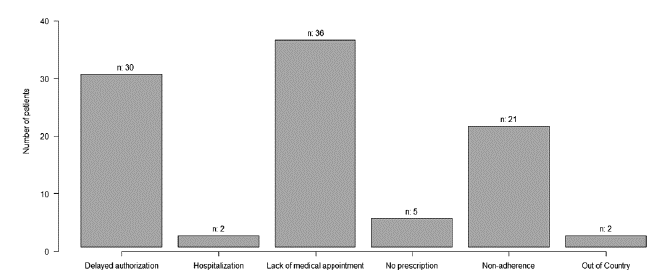
Figure 1 Description of the causes associated with pharmacological non-adherence.  

Table 2 Relationship between pharmacological non-adherence and associated individual variables. 

Variable Crude OR* [95% CI] p-value Adjusted OR** [95% CI] p-value
Age range (years)
≥65 years 4.14 [1.03-16.9] 0.04202 3.49 [0.81-15.1] 0.08799
46 - 65 years 2.11 [0.56-7.95] 0.25601 1.97 [0.49-7.86] 0.32728
19 - 45 years 1.91 [0.49-7.32] 0.33492 1.61 [0.39-6.60] 0.49486
≤18 years 1 1
Time in treatment
≤6 months 3.82 [1.60-9.15] 0.002435 2.91 [1.16-7.22] 0.02115
6 - 12 months 1.51 [0.65-3.42] 0.325660 1.19 [0.49-2.80] 0.69133
12 - 18 months 0.87 [0.34-2.18] 0.765257 0.69 [0.26-1.82] 0.46505
18 - 24 months 0.51 [0.06-3.51] 0.493727 0.52 [0.06-3.76] 0.51654
≥24 months 1 1
History of non-adherence
With record 2.97 [1.55-5.72] 0.00102 2.52 [1.26-5.05] 0.00866
No record 1 1

*Simple binary logistic regression for explanatory purposes; **Binary multiple logistic regression for explanatory purposes.

Discussion

In some studies of adherence to imatinib therapy, correlations between poor adherence, reduced failure-free survival and increased healthcare costs have been identified, and a prevalence of drug non-adherence of approximately 11.3 %33-39. In our study, a prevalence of approximately 3 times higher (30.5%) was identified, similar to a study performed by Anderson et al21, in our case which can be explained by the fact that pharmacists do not spend time identifying patients but are identified through an information system allowing the pharmacist to focus solely and exclusively on the management of these pharmacological risks to ensure adherence to treatment and appropriate use of the drug.

Although the most frequent causes associated with pharmacological non-adherence reported in the literature are related to the patient's situations, such as underdosing, not attending medical appointments, forgetting to take the medication, financial difficulties, low social support, lack of patient knowledge, adverse reactions, in our cohort the most frequent causes were related to situations beyond the patient's control or administrative causes4,14,19,22,25,40,41. The most frequent causes were such as lack of an appointment with a specialist to formulate the drug (39.6%), delay in authorization by the health insurer (31.9%), and finally, not having the medical prescription at the time of dispensing (5.5%).

It should be noted that, although the prevalence of non-adherence detected is higher than that reported in the literature, the proportion of patients who improve this inappropriate compliance following intervention by the pharmacist through pharmacotherapeutic follow-up is 80%.

Finally, according to the literature, the sociodemographic variables that most explain pharmacological non-adherence are age, gender, schooling, and monthly income, and the pharmacological variables are mainly the duration of treatment, frequency, dose, polymedication, and comorbidities4,21,22,25,39,40. These results were like those identified in our study, where in addition to these variables, having a history of non-adherence was also relevant when evaluating the possibility of pharmacological non-adherence. Some studies suggest that the generic imatinib may have higher adherence rates, associated with the cost of the drug and out-of-pocket costs. However, in the Colombian health system, the health insurer covers this drug and the patient's out-of-pocket cost is relatively low42.

Since this is a retrospective study, it has some limitations, such as the omission of important measurements or whether the data capture was adequate, as well as the possibility of selection bias or misclassification. However, an attempt was made to control for selection bias by including 100% of the available records and for information bias by excluding variables with a data loss of more than 10%. In addition, potential confounders were controlled by applying adjusted models (multivariate analysis).

Conclusions

The prevalence of non-adherence in patients diagnosed with CML and on treatment with generic imatinib is higher than that reported in the literature, the causes associated with this pharmacological risk are mainly administrative (external to the patient) and the people at greatest risk of presenting this health outcome are those who are older, have been on treatment for less time and have a history of non-adherence to other drugs. It is important to carry out other studies with other methodological designs to identify other causes associated with the non-claiming of medications in a timely.

References

1. González AR. Leucemia mieloide crónica, paradigma de tratamiento en Oncohematología. Rev Cuba Hematol Inmunol Hemoterapia. 2020; 36(3). [ Links ]

2. Meza-Espinoza JP, González-García JR, Contreras-Gutiérrez JA, Picos-Cárdenas VJ. Leucemia mieloide crónica: Un artículo de divulgación científica. REVMEDUAS. 2022; 12: 257-271. doi: https://doi.org/10.28960/revmeduas.2007-8013.v12.n3.010 [ Links ]

3. Phuar HL, Begley CE, Chan W, Krause TM. Tyrosine kinase inhibitors and the relationship with adherence, costs, and health care utilization in commercially insured patients with newly diagnosed chronic myeloid leukemia. Am J Clin Oncol. 2020; 43: 517-525. doi: https://doi.org/10.1097/ COC.0000000000000700 [ Links ]

4. Alves AR, Lima WG, Nagai MM, Rodrigues JPV, Ayres LR. Adherence and/or discontinuation of imatinib mesylate in patients with chronic myeloid leukemia. Brazilian J Pharm Sci. 2016; 52(4): 581-589. doi: https://doi.org/10.1590/s1984-82502016000400001 [ Links ]

5. Deininger MW, Shah NP, Altman JK, Berman E, Bhatia R, Bhatnagar B, et al. Chronic myeloid leukemia, version 2.2021, NCCN clinical practice guidelines in oncology. J Natl Compr Can Netw. 2020; 18(10): 1385-1415. doi: https://doi.org/10.6004/jnccn.2020.0047 [ Links ]

6. Poudel G, Tolland MG, Hughes TP, Pagani IS. Mechanisms of resistance and implications for treatment strategies in chronic myeloid leukaemia. Cancers (Basel). 2022; 14(14): 3300. doi: https://doi.org/10.3390/cancers14143300 [ Links ]

7. Siegel RL, Miller KD, Fuchs HE, Jemal A. Cancer statistics, 2022. CA Cancer J Clin. 2022; 72(1): 7-33. doi: https://doi.org/10.3322/caac.21708 [ Links ]

8. Maas CCHM, van Klaveren D, Ector GICG, Posthuma EFM, Visser O, Westerweel PE, et al. The evolution of the loss of life expectancy in patients with chronic myeloid leukaemia: a populationbased study in the Netherlands, 1989-2018. Br J Haematol. 2022; 196(5): 1219-1224. doi: https://doi.org/10.1111/bjh.17989 [ Links ]

9. Yu L, Wang H, Gale RP, Qin Y, Lai Y, Shi H, et al. Impact of socio-demographic co-variates on prognosis, tyrosine kinase-inhibitor use and outcomes in persons with newly-diagnosed chronic myeloid leukaemia. J Cancer Res Clin Oncol. 2022; 148: 449-459. doi: https://doi.org/10.1007/s00432-021-03624-4 [ Links ]

10. Breccia M, Efficace F, Colafigli G, Scalzulli E, Di Prima A, Martelli M, et al. Tyrosine kinase inhibitor discontinuation in the management of chronic myeloid leukemia: a critical review of the current practice. Expert Rev Hematol. 2020; 13: 1311-1318. doi: https://doi.org/10.1080/17474086.2021.1852924 [ Links ]

11. Corral Alaejos Á, Zarzuelo Castañeda A, Jiménez Cabrera S, Sánchez-Guijo F, Otero MJ, Pérez-Blanco JS. External evaluation of population pharmacokinetic models of imatinib in adults diagnosed with chronic myeloid leukaemia. Br J Clin Pharmacol. 2022; 88: 1913-1924. doi: https://doi.org/10.1111/bcp.15122 [ Links ]

12. Noens L, van Lierde M-A, De Bock R, Verhoef G, Zachée P, Berneman Z, et al. Prevalence, determinants, and outcomes of nonadherence to imatinib therapy in patients with chronic myeloid leukemia: the ADAGIO study. Blood. 2009; 113: 5401-5411. doi: https://doi.org/10.1182/blood-2008-12-196543 [ Links ]

13. Heiney SP, Sorrell M, Sheng J, Adams SA, Nelson K, Nguyen LA, et al. Interventions to Improve Adherence to Tyrosine Kinase Inhibitors in Chronic Myeloid Leukemia. Am J Clin Oncol. 2021; 44: 291-298. doi: https://doi.org/10.1097/COC.0000000000000818 [ Links ]

14. Klil-Drori AJ, Yin H, Azoulay L, Harnois M, Gratton M-O, Busque L, et al. Adherence with generic imatinib for chronic myeloid leukemia: a matched cohort study. Haematologica. 2019; 104: e293-295. doi: https://doi.org/10.3324/haematol.2018.211235 [ Links ]

15. Suárez-Artime P, Durán-Piñeiro G, Rodríguez-Cobos M, Rojo-Valdés JM, Martínez-Bahamonde FJ, Zarra-Ferro I. Medication adherence to obeticholic acid: a real-world experience using medication event monitoring systems. Farm Hosp. 2022; 46: 260-264. [ Links ]

16. Schneider MP, Achtari Jeanneret L, Chevaux B, Backes C, Wagner AD, Bugnon O, et al. A Novel approach to better characterize medication adherence in oral anticancer treatments. Front Pharmacol. 2019; 9. doi: https://doi.org/10.3389/fphar.2018.01567 [ Links ]

17. Lima PRG, Gonçalves GMS, Rodrigues RCM, Oliveira-Kumakura AR de S. Factors related to patient adherence to the use of new oral anticoagulants. Rev Esc Enferm USP. 2022; 56. doi: https://doi.org/10.1590/1980-220x-reeusp-2021-0191 [ Links ]

18. Signorelli J, Bell C, Monaco S. Oral oncolytic monitoring pilot with patient-reported outcomes and adherence assessments. Journal of Oncology Pharmacy Practice. 2022: 107815522211126. doi: https://doi.org/10.1177/10781552221112603 [ Links ]

19. Reis SRC dos, Quixadá AT de S, Nunes ST, Cid DMC, Souza JH de, Costa CMBE da, et al. Adherence to treatment with imatinib in chronic myeloid leukemia: a study of the first decade of responses obtained at a Brazilian hospital. Rev Bras Hematol Hemoter. 2013; 35: 174. doi: https://doi.org/10.5581/1516-8484.20130053 [ Links ]

20. Kim Y, Go T-H, Jang J, Lee JB, Lim ST, Shim KY, et al. Survival impact of adherence to tyrosine kinase inhibitor in chronic myeloid leukemia. Korean J Intern Med. 2021; 36: 1450-8. doi: https://doi.org/10.3904/kjim.2021.158 [ Links ]

21. Anderson KR, Chambers CR, Lam N, Yau PS, Cusano F, Savoie ML, et al. Medication adherence among adults prescribed imatinib, dasatinib, or nilotinib for the treatment of chronic myeloid leukemia. J Oncol Pharm Pract. 2015; 21: 19-25. doi: https://doi.org/10.1177/1078155213520261 [ Links ]

22. Kapoor J, Agrawal N, Ahmad R, Sharma SK, Gupta A, Bhurani D. Factors influencing adherence to imatinib in Indian chronic myeloid leukemia patients: a cross-sectional study. Mediterr J Hematol Infect Dis. 2015; 7: e2015013. doi: https://doi.org/10.4084/mjhid.2015.013 [ Links ]

23. Verbrugghe M, Duprez V, Beeckman D, Grypdonck M, Quaghebeur M, Verschueren C, et al. Factors Influencing Adherence in Cancer Patients Taking Oral Tyrosine Kinase Inhibitors. Cancer Nurs. 2016; 39: 153-162. doi: https://doi.org/10.1097/NCC.0000000000000250 [ Links ]

24. Noens L, Hensen M, Kucmin-Bemelmans I, Lofgren C, Gilloteau I, Vrijens B. Measurement of adherence to BCR-ABL inhibitor therapy in chronic myeloid leukemia: current situation and future challenges. Haematologica. 2014; 99: 437-447. doi: https://doi.org/10.3324/haematol.2012.082511 [ Links ]

25. Chuah PL, Jamal NF, Siew CJ, Ahmad Bustamam RS, Jeyasingam V, Khong KC. Assessment of adherence to imatinib and health-related quality of life among patients with gastrointestinal stromal tumor: A cross-sectional study in an oncology clinic in Malaysia. Patient Prefer Adherence. 2021; 15: 2175-2184. doi: https://doi.org/10.2147/PPA. S310409 [ Links ]

26. Ran P, Li J, Wu X, Yang H, Zhang J. Primary localized gastrointestinal stromal tumors: Medication adherence and prognosis according to gender. Patient Prefer Adherence. 2022; 16: 2077-2087. doi: https://doi.org/10.2147/PPA.S376843 [ Links ]

27. Puigventós F, Riera M, Delibes C, Peñaranda M, Fuente L de la, Boronat A. Estudios de adherencia a los fármacos antirretrovirales. Una revisión sistemática. Med Clin (Barc). 2002; 119: 130-137. doi: https://doi.org/10.1016/S0025-7753(02)73341-1 [ Links ]

28. Codina C, Martínez M, Tuset M, del Cacho E, Teresa Martín MM, Miró J, et al. Comparación de tres métodos de cálculo de adherencia en pacientes con tratamiento antirretroviral. Enferm Infecc Microbiol Clin. 2002; 20: 484-490. doi: https://doi.org/10.1016/S0213-005X(02)72850-4 [ Links ]

29. Blaschke TF, Osterberg L, Vrijens B, Urquhart J. Adherence to Medications: Insights Arising from Studies on the Unreliable Link Between Prescribed and Actual Drug Dosing Histories. Annu Rev Pharmacol Toxicol. 2012; 52: 275-301. doi: https://doi.org/10.1146/annurev-pharmtox-011711-113247 [ Links ]

30. Chatha ZF, Rashid U, Olsen S, Din F ud, Khan A, Nawaz K, et al. Pharmacist-led counselling intervention to improve antiretroviral drug adherence in Pakistan: a randomized controlled trial. BMC Infect Dis. 2020; 20: 874. doi: https://doi.org/10.1186/s12879-020-05571-w [ Links ]

31. Hovland R, Bremer S, Frigaard C, Henjum S, Faksvåg PK, Sœther EM, et al. Effect of a pharmacist-led intervention on adherence among patients with a first-time prescription for a cardiovascular medicine: a randomized controlled trial in Norwegian pharmacies. Int J Pharm Pract. 2020; 28: 337-345. doi: https://doi.org/10.1111/ijpp.12598 [ Links ]

32. Burnier M, Egan BM. Adherence in Hypertension. Circ Res. 2019; 124: 1124-1240. doi: https://doi.org/10.1161/CIRCRESAHA.118.313220 [ Links ]

33. Abou Dalle I, Kantarjian H, Burger J, Estrov Z, Ohanian M, Verstovsek S, et al. Efficacy and safety of generic imatinib after switching from original imatinib in patients treated for chronic myeloid leukemia in the United States. Cancer Med. 2019; 8: 6559-8565. doi: https://doi.org/10.1002/cam4.2545 [ Links ]

34. Bonifacio M, Scaffidi L, Binotto G, Miggiano MC, Danini M, Minotto C, et al. Safety and efficacy of switching from branded to generic imatinib in chronic phase chronic myeloid leukemia patients treated in Italy. Leuk Res. 2018; 74: 75-79. doi: https://doi.org/10.1016/j.leukres.2018.09.018 [ Links ]

35. Scalzulli E, Colafigli G, Latagliata R, Pepe S, Diverio D, Stocchi F, et al. Switch from branded to generic imatinib: impact on molecular responses and safety in chronic-phase chronic myeloid leukemia patients. Ann Hematol. 2020; 99: 2773-2777. doi: https://doi.org/10.1007/s00277-020-04096-1 [ Links ]

36. Danthala M, Gundeti S, Kuruva SP, Puligundla KC, Adusumilli P, Karnam AP, et al. Generic Imatinib in Chronic Myeloid Leukemia: Survival of the Cheapest. Clin Lymphoma Myeloma Leuk. 2017; 17: 457-462. doi: https://doi.org/10.1016/j.clml.2017.05.006 [ Links ]

37. Dou X, Qin Y, Lai Y, Shi H, Huang X, Jiang Q. Comparable efficacy, and safety of generic imatinib and branded imatinib in patients with newly diagnosed chronic myeloid leukemia with a consideration of socioeconomic characteristics: a retrospective study from a single center. Clin Lymphoma Myeloma Leuk. 2020; 20: e304-315. doi: https://doi.org/10.1016/j.clml.2020.01.009 [ Links ]

38. Awidi A, Abbasi S, Alrabi K, Kheirallah KA. Generic imatinib therapy among Jordanians: An observational assessment of efficacy and safety in routine clinical practice. Clin Lymphoma Myeloma Leuk. 2017; 17: e55-61. doi: https://doi.org/10.1016/j.clml.2017.08.001 [ Links ]

39. Trivedi D, Landsman-Blumberg P, Darkow T, Smith D, Mc DM, Daniel Mullins C. Adherence and persistence among chronic myeloid leukemia patients during second-line tyrosine kinase inhibitor treatment. J Manag Care Spec Pharm. 2014; 20: 1006-1015. doi: https://doi.org/10.18553/JMCP.2014.20.10.1006 [ Links ]

40. Feng W, Henk H, Thomas S, Baladi J, Hatfield A, Goldberg GA, et al. Compliance and persistency with imatinib. J Clin Oncol. 2006; 24: 6038-6038. doi: https://doi.org/10.1200/jco.2006.24.18_suppl.6038 [ Links ]

41. Chang CS, Yang YH, Hsu CN, Lin MT. Trends in the treatment changes and medication adherence of chronic myeloid leukemia in Taiwan from 1997 to 2007: a longitudinal population database analysis. BMC Health Serv Res. 2012; 12: 359. doi: https://doi.org/10.1186/1472-6963-12-359 [ Links ]

42. Cole AL, Jazowski SA, Dusetzina SB. Initiation of generic imatinib may improve medication adherence for patients with chronic myeloid leukemia. Pharmacoepidemiol Drug Saf. 2019; 28: 1529-1533. doi: https://doi.org/10.1002/pds.4893 [ Links ]

Editorial Note This article met the requirements to be published in Salud UIS, and the authors have stated that they have no conflict of interest. However, the editorial committee has concerns due to a possible conflict of interest of the authors and makes it publicly known to its readers.

Nota Editorial Este artículo cumplió los requisitos para ser publicado en Salud UIS, y los autores han manifestado que no tienen conflicto de interés. Sin embargo, el comité editorial tiene preocupaciones por posible conflicto de interés de los autores y lo deja manifiesta de manera pública a sus lectores.

Suggested citation: Estrada Acevedo J, Madrigal Cadavid J, Rondón Montoya A, Gómez Mercado CA, Giraldo Gallo EA, Cardona Arango D, et al. Prevalence, associated causes, and explanatory variables of non-adherence of generic imatinib in chronic myeloid leukemia. Salud UIS. 2024; 56: e24023. doi: https://doi.org/10.18273/saluduis.56.e:24023

Authors contribution

JEA, CAGM, EAGG and AMSC contributed to the conception and planning of the study. JEA, JMC and ARM did the data collection, analysis, and interpretation. CAGM, EAGG, DCA and AMSC participated in the orientation of the research. JEA, JMC, ARM and CAGM prepared and drafted the manuscript and EAGG, DCA and AMSC critically revised it. All authors read and approved the final version of the manuscript.

Ethical considerations According to article 11 of resolution 008430 of 1993 of the Ministry of Health of Colombia, this research is considered as "no risk". The identifying data was suppressed, thus guaranteeing the confidentiality and privacy of the information. The work was endorsed by the research committee of the health institution.

Funding The authors state that they did not receive funding for this research. Likewise, the research groups Epidemiology and Biostatistics (CES University) and Pharmacoepidemiology and Risk Management (helPharma) declare that they did not receive any funding for the development of this research.

Technological support The authors report that they did not use artificial intelligence, language models, machine learning or similar technologies to create or assist with the elaboration or editing of any of the contents of this document.

Received: June 06, 2023; Accepted: May 01, 2024

* joestradaa@uces.edu.co

Conflicts of interest

The author reports no conflicts of interest in this work.

Creative Commons License This is an open-access article distributed under the terms of the Creative Commons Attribution License