




 Inglês (pdf)
 Artigo em XML
 Referências do artigo

 Tradução automática
 Enviar este artigo por email
 Citado por SciELO
 Citado por Google
 Similares em
SciELO
 Similares em Google

 Permalink


Introduction
Hearing loss (HL) has emerged as a topic of interest in aging due to its increasing prevalence, as well as being considered a risk factor for developing dementia [1,2]. It is estimated that 1.57 billion people worldwide suffer from HL, with a prevalence of 62.1% in people over 50 [3]. The severity of HL in older people ranges from moderate to severe in most cases [4], affecting communicative skills, language, cognition, mental health, and quality of life [5-8].
Loughrey et al. (2017) [9] report a significant association between HL and the development of dementia and cognitive impairment. The literature suggests that HL may accelerate cognitive decline in healthy older adults by 30-40% [6]. Several studies highlight the negative impact of HL on neuropsychological tests, primarily affecting performance in verbal and non-verbal skills [10-13]. Also, cognitive-linguistic decline in older people with HL relates to increased social isolation, leading to a higher risk of cognitive impairment and dementia [14,15].
HL treatment has been widely studied in the pediatric and adult populations. The evidence in children and adolescents often emphasizes the importance of auditory rehabilitation during sensitive stages, such as brain development, for acquiring cognitive-linguistic skills [16-18]. In contrast, Birman and Hassarati (2023) [19] highlight the importance of hearing technologies, such as hearing aids and cochlear implants, for auditory rehabilitation in older adults due to their vital role in maintaining cognitive and communicative abilities and quality of life.
There is evidence that HL rehabilitation in healthy older people increases cognitive effort and anatomical-functional changes, improving quality of life and cognitive-linguistic skills [20]. Thus, early rehabilitation in healthy aging would be crucial to mitigate cognitive-linguistic declines and even delay the progression to more severe conditions (e.g., dementia) [21]. However, a systematic review [22] focused on the use of hearing aids and their effect on cognitive function showed inconclusive results regarding the utility of hearing aids on neuropsychological performance (cognitive-linguistics).
The knowledge of cognitive-linguistic profiles in older adults has provided guidelines for improving the distinction between normal and pathological aging [23]. Previous systematic reviews [24-26] showed that auditory rehabilitation improves memory or executive function, but these studies were limited to pathological aging (e.g., cognitive impairment or dementia) and did not consider cognitive and linguistic benefits for healthy adults.
Based on the evidence described above, the following research question arises: What are the effects of HL rehabilitation in cognitive and linguistic performance in healthy older adults? Therefore, this systematic review aims to profile cognitive-linguistic performance after HL rehabilitation in healthy older adults.
Methodology
This systematic review followed PRISMA 2020 reporting guidelines [27] and was previously registered in the PROSPERO repository (CRD42024517607; registration date February 25, 2024).
Sources and search strategy
The identification of bibliographic references included Medline by PubMed, Scopus, and Web of Science databases, focusing on articles published from January 2000 to May 2024. The search syntax was as follows: [hearing impairment OR hearing loss OR deafness OR hypoacusis] AND [hearing aids OR aid OR aids OR ear molds OR cochlear implant OR rehabilitation auditory] AND [cognition OR memory OR working memory OR memories OR short-term memory OR immediate memory OR immediate recall OR processing speed OR executive function OR verbal fluency]. Moreover, we adapted all the terms to improve the search in each database.
Study selection and eligibility criteria
The inclusion criteria were as follows: a) healthy people over 60 years; b) healthy older adults with moderate to profound HL, considering only older adults with HL related to the aging process, and healthy for this research purpose consider people without neurological conditions (e.g., stroke, cognitive impairment, among others); c) people using hearing aids, cochlear implants, or any auditory technology to facilitate the functional cognitive-communicative process; d) randomized and non-randomized clinical trials published in English; and e) studies reporting neuropsychological assessment for cognition and/or language skills. On the other hand, the exclusion criteria were: a) editorial documents, systematic reviews (with or without meta-analyses), protocols, or theses, b) people with subjective cognitive impairment, and c) healthy older adults with a clinical history of depression, psychosis, and/or schizophrenia.
Data extraction
The research team imported all the studies to Rayyan software [28] and eliminated the duplicates. Considering the inclusion and exclusion criteria, two reviewers (Francisca Mansilla-Jara and Teresa Julio-Ramos) filtered the articles independently. It is essential to highlight that the research team accessed the full text for clarification when the title and abstract were insufficient to decide its inclusion or exclusion. In addition, a third researcher (David Toloza-Ramirez) reached a consensus on selecting these studies.
Risk of Bias Assessment Tool
The risk of bias was assessed using the Cochrane Collaboration tool [29], and we created the traffic light plot and a summary plot using “the robvis tool” [30]. Six domains were considered for evaluation: D1 related to selection bias, D2 related to performance bias, D3 related to detection bias, D4 for attrition bias, D5 related to reporting bias, and the overall risk of bias. The risk of bias evaluation criteria for each domain considered a judgment of high, low, or unclear (some concerns). Based on this, Francisca Mansilla-Jara and Teresa Julio-Ramos assessed the articles included independently, and in case of disagreement, David Toloza-Ramirez contributed to the consensus.
Data synthesis strategy
A narrative synthesis of the findings of the included studies is summarized in Table 1, considering relevant general characteristics of the studies, including source, sample size, number of withdrawn, sex, mean age, and HL severity. In addition, we provided information about intervention characteristics and primary outcomes considering the following aspects: auditory technology used, auditory implementation characteristics, and the main findings regarding cognitive-linguistic performance after rehabilitation in healthy older adults with HL.
Table 1 Summary of studies included regarding older adults with HL.
| Source | Sample (n) | Withdrawn (n) | Sex (n) | Mean age (SD) | HL severity | Auditory technology | Auditory implementation | Measure | Summary of cognitive-linguistic findings | |||||
|---|---|---|---|---|---|---|---|---|---|---|---|---|---|---|
| ♀ | ♂ | Mod | Sev | Pro | HA | CI | Uni | Bil | ||||||
| Henshaw et al. (2022) [31] | 57 | 0 | 30 | 27 | 66.2 (6.3) | ✓ | - | - | ✓ | - | - | ✓ | ||
| HHIE | ||||||||||||||
| Völter et al. (2021) [32] | 71 | 12 | 47 | 24 | 66.3 (9.2) | - | ✓ | ✓ | ✓ | ✓ | ✓ | ✓ | ||
| Pre 682.25 ( 190.24; Post 609.29 ( 230.80 (p = .0007) | ||||||||||||||
| VF | Pre 804.29 ( 77.93; Post 750.77 ( 114.49 (p = .00006) | |||||||||||||
| Wick et al. (2020) [33] | 70 | 0 | 19 | 51 | 74 (-) | ✓ | ✓ | ✓ | - | ✓ | ✓ | - | ||
| QoL | Pre 0.850 (0.803 to 0.897); Post 0.949 (0.924 to 0.974); Difference 0.099 (0.049 to 0.149) | |||||||||||||
| Souza et al. (2019) [34] | 49 | 9 | 19 | 21 | 72 (-) | ✓ | - | - | ✓ | - | ✓ | ✓ | ||
| 0.10 (0.08, 0.12), 0.011 (p = <.001) | ||||||||||||||
| Magalhães and Iório (2011) [35] | 50 | 0 | 23 | 27 | - | - | ✓ | - | ✓ | - | - | ✓ | ||
| MSME | Pre 32.9 ( 5.9; Post 8.8 ( 5.1 (p = .0001) | |||||||||||||
Note. ✓: Specified. -: Not reported/Not specified. SD: Standard Deviation. HL: Hearing loss. Mod: Moderate. Sev: Severe. Pro: Profound. HA: Hearing Aids. CI: Cochlear Implant. Uni: Unilateral. Bil: Bilateral. PTA: Pure-tone audiometry. WM: Working memory. VLM: Visual letter monitoring task. MCRM: Modified coordinate response measure. TEA: Test of Everyday Attention. DS: Digit Span. WAIS-III: Wechsler Adult Intelligence Scale - Third Edition. TAIL: Test of attention in listening. RT: Reaction time. SICSPAN: Size comparison span. OSPAN: Operation span. GHABP: Glasgow Hearing Aid Benefit Profile. HHIE: Hearing Handicap Inventory for the Elderly. BEEST: British English Semantic Sentence Test. GDS: Geriatric Depression Scale. MWT-B: Multiple Word Sentence Test - Part B. M3T: M3 Test. RT: Recall Test. DRT: Delayed Recall Test. 0-Back: 0 Back Test. 2-Back: 2 Back Test. cFlanker: compatible Flanker test. iFlanker: incompatible Flanker test. OSPAN: Operation Span. TMT A: Trail Making Test, part A. TMT B: Trail Making Test, part B. VF: Verbal fluency. SP: Speech perception. HUI3: Health Utilities Index Mark 3. SSQ: Speech, Spatial, and Qualities of Hearing Scale. DUQ: Device Use Questionnaire. MoCA: Montreal Cognitive Assessment. QoL: Quality of life. RST: Reading span test. PHAST-R: Practical Hearing Aid Skills Test-Revised. SR: Speech recognition. IPRF: Speech recognition percent index. MSME: Mental State Mini Exam.
Results
Literature search
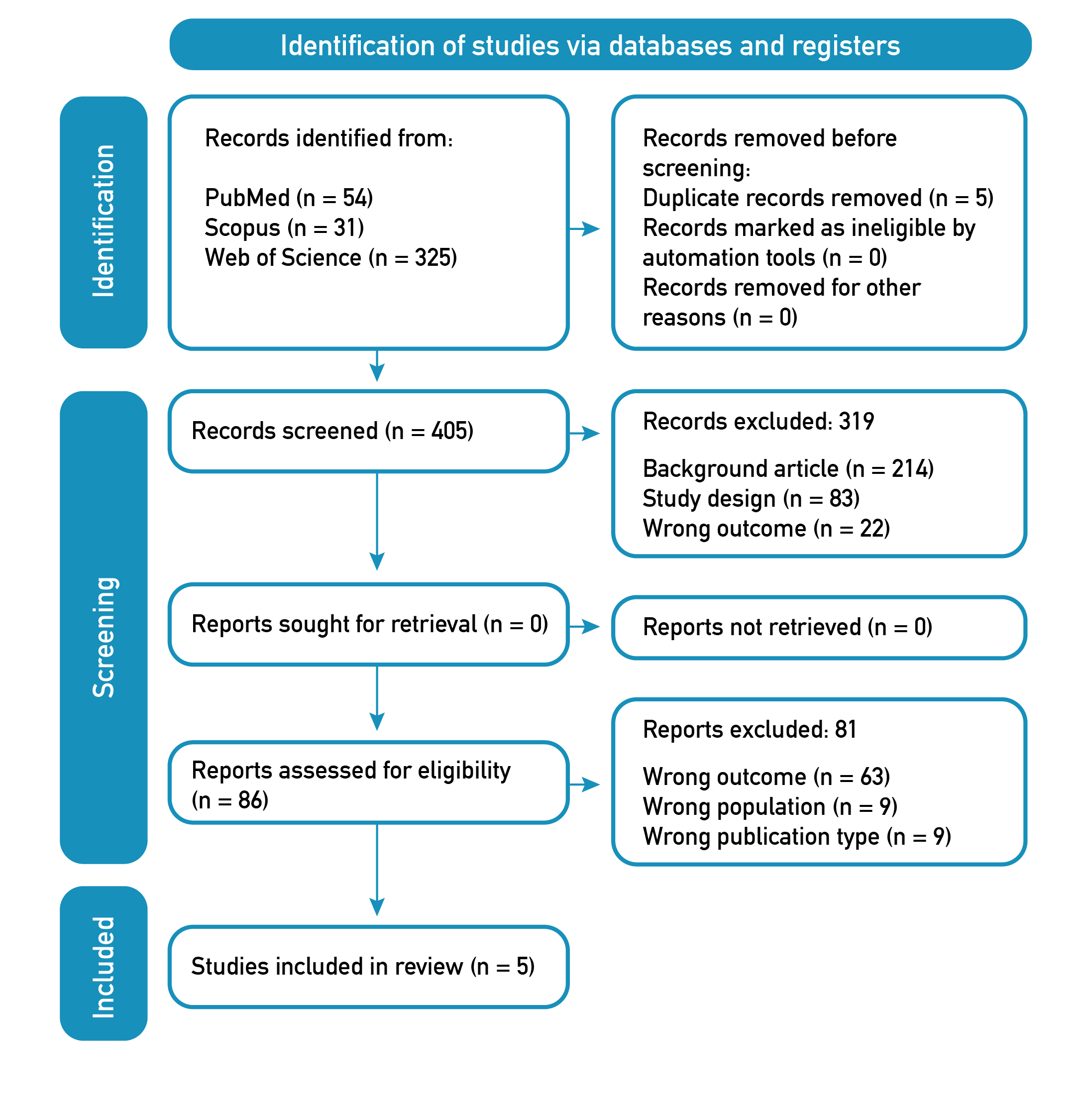
The PRISMA flowchart [27] illustrates the article selection process (Figure 1). We identified titles and abstracts of 410 articles, considering five duplicates. After applying the inclusion/exclusion criteria, 319 articles were excluded: 214 based on background article, 83 based on study design, and 22 based on wrong outcome. Of the 86 full-text articles selected for eligibility, 63 were excluded based on wrong outcome, nine on wrong population, and nine on wrong publication type. Finally, five articles were included for qualitative analysis in this systematic review.
General characteristics of the studies
Table 1 summarizes the general characteristics of the five included studies [31-35]. The total sample consisted of 297 participants, of whom 21 withdrew from the study (7%). Regarding age and sex variables, the mean age was 69.6 years (SD: 7.75), and 150 volunteers were men (52%).
HL rehabilitation characteristics
Concerning HL severity, Table 1 shows heterogeneity among the five studies, including the most reported severity in healthy older adults with HL ranging from moderate to severe. The auditory technology most used for rehabilitation was hearing aids (reported in 4/5 studies), and cochlear implants were implemented only in 2/5 of the studies analyzed. Finally, it is essential to highlight that concerning the auditory implementation for hearing rehabilitation, the five articles included did not show differences in uni or bilateral implementation choices (50% unilateral and 50% bilateral).
Cognitive-linguistic performance was analyzed in all the studies included as well. Our qualitative analysis suggests that the cognitive contribution of HL rehabilitation mainly focuses on three abilities: working memory, delayed recall, and attention. Language performance showed benefits in semantic and phonological fluency, speech perception, and language comprehension skills. As a complement to Table 1, we present a descriptive summary of each study below:
Study 1 [31]
Cognition in healthy older adults with HL showed benefits in the working memory domain after auditory rehabilitation. However, no significant benefits in this cognitive domain were reported after six months of auditory rehabilitation. Indeed, results suggest that the slight improvement in working memory does not contribute to other cognitive domains, such as attention. Moreover, results highlight a significant increase in attention capacity in healthy older adults after rehabilitation compared to baseline. On the other hand, language performance did not show changes in the HL group. Indeed, semantic skills were maintained after auditory training in healthy older adults with HL, and only a slight improvement in speech perception was found.
Study 2 [32]
Results suggest healthy older adults with HL improved cognitive-linguistic performance after 12 months of implementing auditory technology, but the effects are limited to unilateral CI implementation. On the one hand, significant effects were observed after auditory rehabilitation in cognitive domains such as attention, delayed recall, working memory, and inhibition. However, processing speed and executive function did not show benefits after auditory implementation. On the other hand, language performance considered improvements in auditory speech comprehension, speech perception, and verbal fluency skills (semantic and phonological).
Study 3 [33]
After auditory implementation, cognitive-linguistic performance in healthy older adults with HL showed no significant benefits. Cognitive effects were observed in executive function, memory, attention, delayed recall, and visuoconstructive skills. Moreover, naming skills and semantic and phonological fluency improved after the implementation; however, those effects were insignificant. Based on these findings, it is essential to highlight that all participants were assessed after six months of auditory rehabilitation. This could explain no long-term duration of cognitive-linguistic effects.
Study 4 [34]
Results suggest healthy older adults with HL improved working memory after auditory rehabilitation. Moreover, the authors highlight that a better working memory capacity does not depend on age in this group. On the other hand, working memory benefits correlated with better speech recognition and intelligibility, which could contribute to language performance. Indeed, better speech recognition can promote language comprehension and functional communication in older people.
Study 5 [35]
Results highlight better cognitive-linguistic performance in the HL group after rehabilitation. The main improvements considered memory capacity, memory recall, attention, and language (comprehension, repetition, and following instructions skills). Moreover, the study suggests that cognitive-linguistic domains' benefits promote more social participation in older people with HL.
Risk of bias assessment
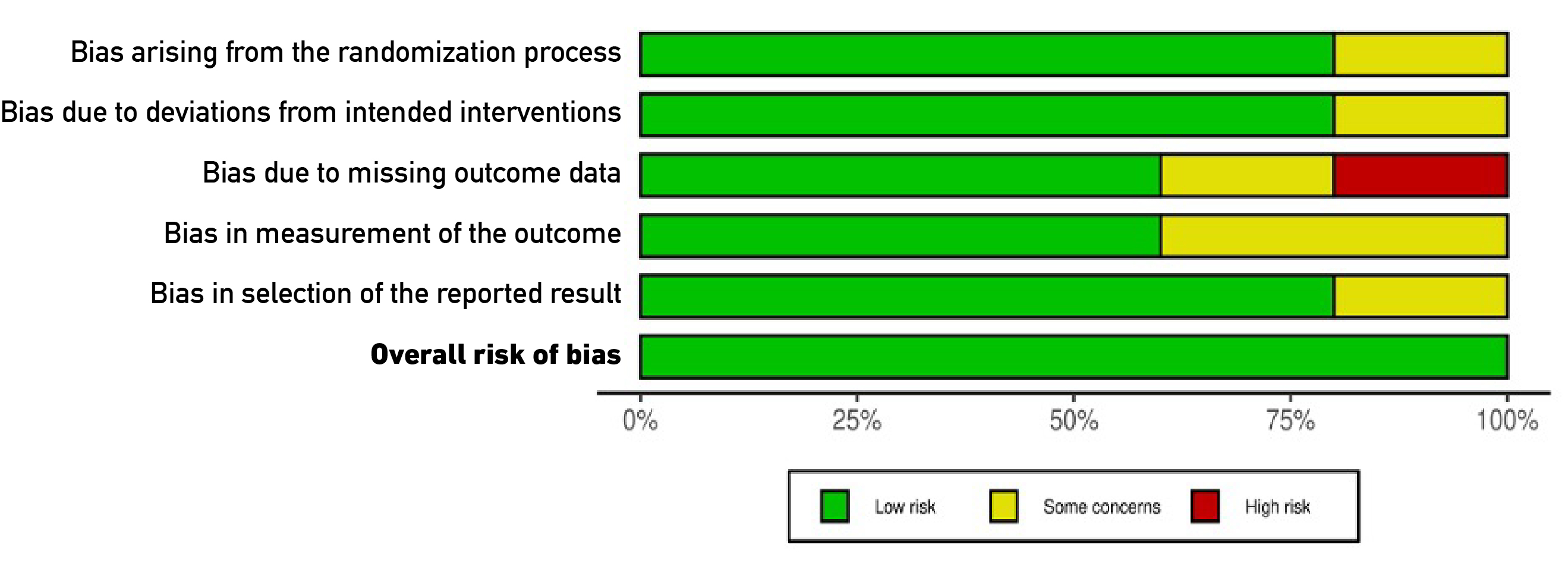
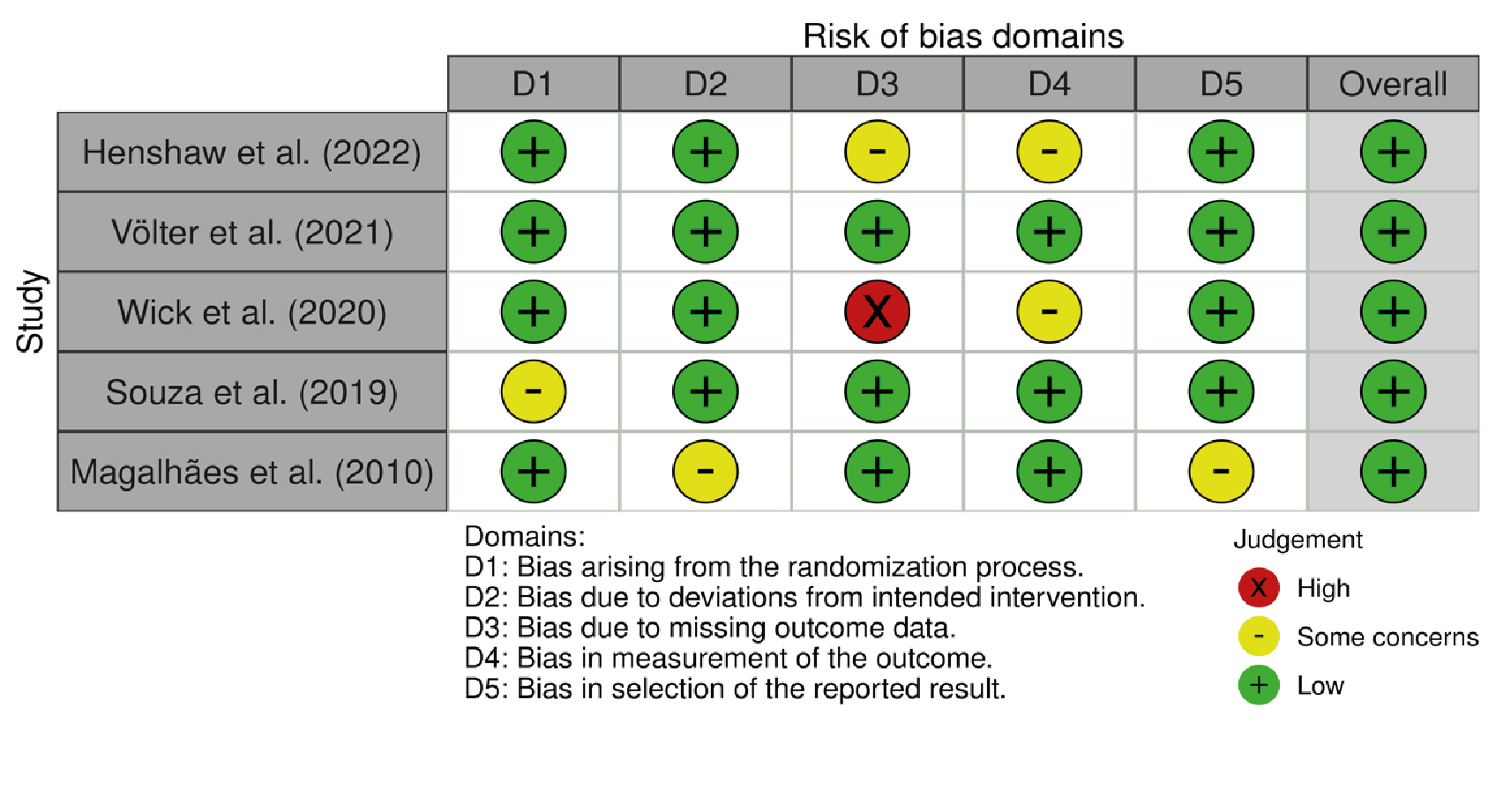
We analyzed the five studies based on six domains from the Cochrane tool [29], and the results are presented in Figures 2 and 3 [30]. A low risk of bias was observed for selection bias (D1), performance bias (D2), and reporting bias (D5) (80%, respectively, for each domain). Regarding domains three and four (detection bias and attrition bias), 60% of studies were classified as low risk of bias. Moreover, it is essential to highlight that 40% of the articles in the detection bias item (D3) were classified as high and unclear risks (20% each). Finally, in 5/5 studies (100%), a "low risk" classification for overall risk of bias was observed. The summary plot of the risk of bias is presented in Figure 2, in addition to a traffic light plot, which shows the analysis of each study performed (Figure 3).
Discussion
We profiled cognitive-linguistic performance after HL rehabilitation in healthy older adults. Results suggest that cognitive-linguistic performance improves in specific domains, but only semantic skills are maintained after auditory rehabilitation.
Working memory is crucial for retaining information during linguistic tasks and comprehending, producing, and storing new information. Likewise, it has been reported that language and working memory tasks activate standard neural systems, indicating that working memory responds to cognitive demand, mainly influencing phonological processing [36]. Indeed, the literature suggests that working memory is a cognitive domain that improves after HL rehabilitation because it can potentially reduce cognitive burden, facilitating auditory processing and the functioning of other cognitive subdomains [37]. Thus, this is an essential concern in typical aging, where working memory tends to reduce capacity, which could progress to pathological stages such as mild cognitive impairment [38].
The follow-up study by Fernándes et al. [39] reported improvement in memory capacity and attention after HL rehabilitation, with positive effects on cognitive performance as a result of hearing aid devices. The authors emphasize that this potential effect is limited to healthy older adults with mild to moderate HL. These findings align with previous studies [40-43] that showed the potential short-term impacts of auditory rehabilitation in older people, especially in memory and attention abilities, which is also suggested in our revision. Nevertheless, differences emerge when comparing our findings with broader reviews, such as Sanders et al. [22]. While Sanders et al. identified a more comprehensive range of impacts of auditory rehabilitation on cognitive abilities in diverse populations, our review integrates language as an essential cognitive function. Indeed, the search strategy used by the authors considers only cognitive domains such as memory, attention, and executive function; however, they do not include language as a critical cognitive term. Therefore, considering our search strategy, this could explain the lower number of studies included for qualitative analysis. Despite this, our review provides a general understanding of cognitive and linguistic domains after HL rehabilitation. Moreover, our review highlights the need for standardized cognitive assessment protocols and long-term randomized methodology-based follow-ups, echoed by Sanders et al. and subsequent literature. These differences allow us to emphasize that our findings complement previous studies, focusing on domains that require further integration, such as language, which has been considered in cognitive neurosciences as a cognitive function.
Our review did not find significant changes in executive function or processing speed post-auditory rehabilitation. However, a recent investigation by Yang et al. [24] revealed that healthy older people who use hearing aid devices can enhance cognitive performance, specifically executive function, but in people with Alzheimer's Disease or dementia, no substantial changes in cognitive performance were reported despite the use of hearing aids. Likewise, Maharani et al. [44] found that hearing aids are associated with a slower mental decline in older adults, highlighting its potential in executive function and speed processing. Furthermore, another previous study by Dawes et al. [45] reported better performance in executive tasks in healthy older adults who constantly used their hearing aids than those who did not. These results align with a previous longitudinal study, highlighting that HL based on hearing aids could improve cognitive performance in older people for three years [46].
Language performance, especially semantic skills, also improved after HL rehabilitation, in association with better working memory performance. Our revision suggests this association occurs in people with mild to moderate HL; thus, the severity of HL could influence semantic benefits after auditory rehabilitation [47]. In addition, other studies [48,49] have supported our findings concerning semantic and phonological fluency, demonstrating that auditory rehabilitation could improve verbal fluency abilities in healthy older adults.
Comprehensive skills were also reported as potential benefits of HL rehabilitation. Literature suggests that auditory rehabilitation benefits auditory perception, facilitating better integration of acoustic information and interpreting the information in several linguistic contexts [50,51]. Likewise, it has been postulated that auditory rehabilitation in older people also contributes to more effective communication and a better quality of life [52,53]. Furthermore, our results revealed differences based on the type of auditory adaptation (unilateral or bilateral), with more significant cognitive-linguistic performance improvements observed in individuals with bilateral adaptation. So far, this observation is consistent with Chen's findings in 2023 [54], suggesting that bilateral auditory rehabilitation presents a significant therapeutic option for individuals with age-related HL and mild cognitive impairment. Chen's study underscores the importance of implementing protocols that effectively manage age-related hearing loss to mitigate cognitive decline.
Our qualitative review also found enhancement in social participation after the cognitive-linguistic benefits of HL rehabilitation. Age-related HL is associated with a higher risk of social isolation in older adults, which may imply a higher risk of dementia or cognitive decline [55]. Similarly, a previous study indicates that in people with HL, verbal communication failures could imply social integration difficulties [56]. Dawes et al. [45] found that HL intervention, such as hearing aids, may improve cognitive performance, but this is not explained by reduced social isolation.
Limitations
This systematic review has some limitations. We did not perform a meta-analysis of the HL rehabilitation programs. The rehabilitation schedule characterized in our review only considered the implementation of hearing devices, excluding articles based on cognitive-linguistic conventional stimulation (e.g., cognitive or language therapy). On the other hand, we established a limit of years for the article's inclusion, which could contribute to a bias in the research process. Finally, we only included articles in English, but we are conscious that there are several investigations in other languages (e.g., Spanish, German, and others).
Future Directions and Contribution
These findings have clinical implications, such as defining the most appropriate approach to hearing intervention in people with age-related HL [57,58]. This approach could consider cognitive-linguistic intervention in addition to hearing aids or cochlear implants. Besides this review, we suggest including cognitive assessment in older adults with HL to diagnose and monitor possible cognitive declines [59].
Conclusions
HL rehabilitation could improve cognitive-linguistic performance; however, combining hearing devices with neuropsychological stimulation programs is still necessary. The evidence is limited to the effects of HL rehabilitation and its contribution to anatomical-functional effects on the brain. Therefore, promoting follow-up studies could prevent the progression from healthy aging to pathological stages, which has been reported as critical for functional impact on activities of daily living, quality of life, and neuropsychological performance.

