The role of sourcing service agents in the competitiveness of Mexico as an international sourcing region
El papel de los proveedores de servicios de abasto para la competitividad de México como una región de abastecimiento internacional
María del Pilar Ester Arroyo-López a & José Antonio Ramos-Rangel b
a Departamento de Ingeniería Industrial, Escuela de Ingeniería, Instituto Tecnológico de Monterrey, Campus Toluca, Mexico,. pilar.arroyo@itesm.mx
b Posgrado en Ingeniería Industrial, Escuela de Ingeniería, Instituto Tecnológico de Monterrey, Campus Toluca, Mexico. joseantonio.ramos@itesm.mx
Received: January 28th, 2015. Received in revised form: March 26th, 2015. Accepted: April 30th, 2015.
]]>This work is licensed under a Creative Commons Attribution-NonCommercial-NoDerivatives 4.0 International License.
Abstract
The purpose of this work was to explore and define the sourcing services of Mexican third parties in order to provide a better understanding of how they contribute to the attractiveness of the country as a low-cost production region. Given the exploratory nature of this research, the case study was the research method selected to collect relevant information. Two Mexican companies associated with global supply chains of different types-product-driven and buyer-driven-were selected as representative cases. Primary information was collected through in-depth personal interviews, site visits and secondary documents. The analysis of the two cases allowed the determination of the supplier governance structure and the assessment of the third parties' contribution to the integration of local suppliers to global supply chains (GSC). In addition, the analysis contributes to the establishment of the value outsourcing services represent for international buyers as well.
Keywords: Global supply chains; international sourcing; third parties; supplier governance.
Resumen
El objetivo de este trabajo fue el explorar y definir los servicios de abastecimiento de terceras partes mexicanas para proporcionar un mejor entendimiento en relación a cómo estos agentes contribuyen al atractivo del país como una región de producción de bajo-costo. Dada la naturaleza exploratoria del estudio, el estudio de caso fue el método cualitativo de investigación elegido. Dos compañías mexicanas asociadas a cadenas de suministro global de diferente tipo -impulsada por el producto e impulsada por el comprador- fueron seleccionadas como casos representativos. La información primaria fue recolectada a través de entrevistas personales a fondo, visitas en sitio y documentos secundarios. A partir del análisis de los dos casos se determina la estructura de gobierno en la cadena, la contribución que realizan las terceras partes a la integración de los proveedores locales a cadenas de suministro globales (CSG) así como el valor que sus servicios de tercerización del abasto representa para los compradores internacionales.
Palabras clave: Cadenas de suministro global; abastecimiento internacional; terceras partes; gobernabilidad de proveedor.
1. Introduction
]]> The North American Free Trade Agreement (NAFTA) contributed to increasing export activities in Mexico and facilitated the entrance of global firms seeking opportunities to decrease their production costs. NAFTA and the geographical location of Mexico improved the attractiveness of the country as a low-cost sourcing region in comparison with other alternatives, such as China and countries located in East Asia or Eastern Europe. However, in many cases, the lower logistics and labour costs may not compensate for the transaction costs of selecting, monitoring and managing relations with local suppliers, governmental agencies and unions. To overcome this difficulty, third parties that are able to coordinate the activities of multiple local suppliers have emerged to facilitate sourcing from Mexico. International traders serving clothing and apparel firms in East Asia and Eastern Europe, as well as contract manufacturers that produce whole products or components on behalf of Original Equipment Manufacturers (OEM) in the electronics sector are examples of such third parties [1-5]. The portfolio of services of these advanced sourcing service firms is not limited to the coordination of multiple and highly interdependent manufacturing activities. Additional activities performed by these agents include: the co-design of new products, the transference of designs to manufacturing, the quality assessment of production, the assistance provided to suppliers to satisfy the performance criteria defined by the buyer, the delivery of orders to the buyer and the distribution of final products through different channels.Gereffi [6] categorized global supply chains (GSC) as buyer or product-driven, depending on the profile of the focal or leading firm, i.e. the organization with a substantial influence over the other participants in the chain. For buyer-driven GSC, the focal firms are large retailers, distributors and brand owners. The core capabilities of these leading firms are not manufacturing but design, merchandising and distribution; therefore, an increasing number of these relinquish control over manufacturing and logistics to third parties. The leading company focuses on its core competences while the third parties manage production. These entities are also recognized as focal firms because they manage all the supply chain activities required to produce goods that are labour-intensive [7]. Typical buyer-driven GSCs are those of the apparel, shoe and clothing industries. In contrast, focal firms of product-driven GSCs are OEMs that perform the chain's most valuable activities, namely the design and production of complex goods that are more capital and technology intensive. This second type of chain is characterized by a more hierarchical structure and higher barriers of entry to suppliers, particularly for those sourcing high-tech components. In a product-driven chain, the focal firm usually sustains close relationships with critical suppliers; in addition, relations with parts and basic components manufacturers are solely transactional. This type of chain is representative of the automotive and electronics industry. The focal firms of both types of GSCs are interested in international sourcing as a means to sustain their competitive advantage through lower costs, high product quality, shorter product development and delivery times and the flexibility to respond to demand changes [8,9]. For Latin American industries, specifically those located in Colombia, the previous elements explain 63% of the variance in their competitiveness [10]. However, international sourcing represents a challenge because of the geographical dispersion and diversity of suppliers. Therefore, focal firms rely on third parties to implement an effective supplier management program able to identify and mitigate the risks associated with disruptions, bankruptcy and unsatisfactory quality of subcontracted suppliers.
Bitran et al. [11] discussed the potential contribution of neutral third parties to the integration of GSC by introducing the concept of "mini-maestro", an entity that controls a particular segment of the complete chain and functions as the unique link between the focal firm and their suppliers. Depending on the type of GSC and the required control over suppliers, as critical enablers of information and communication technologies for supply chain integration, sourcing agents may select distinct forms of supplier governance as well as different strategies to integrate processes and improve productivity and the relationship with participant suppliers [12].
For the product-driven chain, where tighter controls are required, insourcing is the preferred procurement strategy. This is illustrated by the case of the manufacturing contractor, Flextronics, which produces complex goods for companies in the electronics sector. These products are manufactured by Flextronics' suppliers in the industrial parks administered by this third party. A contrasting case is Li & Fung, a Hong Kong-based company that coordinates all the production and logistics activities of the textile and apparel chain of leading brand-owners. This trader does not own production facilities, but supplies the orders of international buyers by capitalizing on its knowledge regarding the manufacturing capabilities of Asian suppliers and on the relationships established when working as a trading broker. Whatever the supplier governance structure chosen by the sourcing agents, it should effectively identify problems and non-compliance incidents that may affect supply performance and generate disruptions of product and information flows. After analysing which factors contribute more to the efficiency of the sourcing process, a third party must decide to focus more on improving the coordination with suppliers or increasing the efficiency of the sourcing transactions (identification, selection and control of suppliers) [13].
The objective of this study was to explore in detail how sourcing service companies operating in Mexico create value for buyers, facilitate the integration of local suppliers in a GSC and contribute to the competitiveness of the country as a global sourcing region. To attain this objective, a qualitative research approach was used. Two case studies were analysed to obtain in-depth insight regarding the mechanisms used by the sourcing agents to assure a continuous flow of quality products to multinationals sourcing from Mexico. The organization of the article is as follows. The first section discusses the concepts of supply chain integration and the role of third parties in global sourcing. The next section outlines the methodology used to collect information regarding the activities performed by the third parties responsible for sourcing, followed by a description of these activities. Thereafter, research findings from the case analysis are presented in a set of research propositions accompanied by a detailed discussion. The final section of the paper provides general conclusions and uncovers the contribution of sourcing agents to the competitiveness of Mexico as a sourcing region.
2. Theoretical background
Third parties are recognized as important members of the supply chain that conduct multiple operational, administrative and manufacturing activities commonly performed internally by multinationals. Increasingly often, buying firms outsource or delegate complete supply chain processes, such as the administration of central warehouses or the manufacturing of complete products, with the objective to reduce their operational costs, obtain specialized support or increase their service level [14]. The demand for more valuable and integrated services has backed the advancement of the outsourcing market.
In their study regarding the contribution of third party logistics providers (3PLs) to supply chain integration, Fabbe-Costes et al. [15] conclude the neutrality of 3PLs, their abilities to understand the customers' needs and adapt their services to buyers' demands are critical for the coordination of any SC process. These authors note the need to increase understanding regarding the role of 3PLs in the integration and performance of the supply chain, and the importance of recognizing them as pro-active "actors" in the chain, not just as "tools". According to Masson et al. [4] and Bitran et al. [11], trading agents and contract manufacturers are examples of SC coordinators that support global sourcing and contribute to the operational efficiency, flexibility and responsiveness of global supply chains. In the specific case of traders, their intangible knowledge-based capabilities in addition to their ability to respond to the hyper-dynamism of the business environment facilitate the development of a relationship network that could play a significant role in integrating the fragmented activities of the supply chain [1,4,16]. However, the study of these types of third parties has mainly focused on the value they deliver to their customers with a limited understanding of the traders' contribution to the attractiveness of a sourcing region.
Supply chain management (SCM) has been conceptualized as the integration of business processes across independent firms to provide products, information and services to create value for the final customer [4]. The final purpose of supply chain management is the achievement of sustainable competitive advantage through the seamless coordination of business processes (connectivity) and elimination of processes' redundancies (simplification) [18]. Integration of the chain may be attained at different levels and entail different actions [19]. Internal or cross-functional integration requires changes in the organizational structure as well as changes in key performance indicators at firm level. Meanwhile external integration demands collaboration and synchronization of processes and decisions among the SC's participants [20].
]]> The concept of supply chain integration (SCI) is broad and multi-dimensional and requires coordination of products, processes and information flows. This concept requires the alignment of individual objectives and the distribution of responsibilities within and across organizational boundaries [21]. Supply chain integration is influenced by several factors related to the uncertainty in the demand and the complexity of the business environment. Simple conditions (low competition, high production volumes of standardized products and make-to-stock) require low integration, whereas complex conditions (strong competition, high product variety, small batches and make-to-order) require high levels of inter-organizational integration [18].Alternative forms of business activity coordination may be employed to achieve SCI given the business environment and the capabilities of leading firms. For example, Cao et al. [5] identified three different coordination structures for the textile-apparel chains: vertical integration, an efficiency oriented chain and a third-party (3P) hub chain. In the first two cases, leading or original design manufacturers that own and run manufacturing facilities worldwide figure as coordinators of the chain. However, in the 3P-hub, an external firm assumes the responsibility of integrating and simplifying all supply chain activities to provide finished goods to dominant retailers and brand owners [4,5]. These coordination models match with the sourcing methods identified by Mihm [22] in the complex business context of fast fashion. The first method is supported by a fully vertically integrated chain where the focal firm conducts the core activities of design, manufacturing of products in firm-owned factories and logistics. The second method, known as house branding, implies control of design and distribution while subcontracting manufacturing. Under this hybrid coordination scheme, a retailer/distributor partnership leads the chain. Efficiency is attained because both parties, the retailer and the manufacturer, combine their expertise and capabilities to span all the chain's activities. The third method is full outsourcing, whereby an expert third party controls all activities from design to product delivery to customers and may even manage final distribution. Under this scheme, the third party assumes the responsibility to coordinate all the sourcing processes including the management of suppliers [13].
The previous coordination structures and associated modes of production subcontracting imply different degrees of decision making centralization. Vertical integration entails centralized and unidirectional decision making, whereas the other options (house branding focused on efficiency and third party) involve synchronized decision making across different lines of organizational authority and responsibility. It has been suggested that this last type of integration may work better than hierarchical structures provided that the coordinator firm be able to persuade other firms to collaborate via shared benefits and trust [17]. Particularly under full outsourcing, trust acts as a substitute of hierarchical control facilitating relationships, reducing opportunism and transaction costs, improving performance of the buyer-supplier dyad and increasing the commitment and loyalty of the suppliers [23,24]. Collaborative supplier-buyer relations are characterized not only by trust but also by different degrees of interdependence [25]: asymmetric, symmetric and no perceived interdependence. Asymmetric interdependence resembles a hierarchical relation whereby the power imbalance leads to unilateral governance, centralized decision making and low investment in the relationship. Conversely, symmetric interdependence implies both parties are equally dependent on each other. This power balance encourages a fair relationship that contributes to knowledge and resource sharing, increases commitment, and facilitates relationships and collaborative integration [16,21,25,26]. No interdependence occurs when both parties do not perceive they depend on each other; under this scheme, the relationship may be more competitive than cooperative.
Sourcing service providers may use different types of control in addition to trust, to complement their supplier governance strategy. The control options are output, behavioural or social control. Output control is based on the evaluation of a supplier's performance; behavioural control implies monitoring a process to ensure it is appropriately performed, and social control refers to the development of shared values, beliefs and goals [26]. Authors such as Wathne [27] conclude that output control is useful to ascertain certain aspects of the supplier (quality, reliability and financial strength) to make selections, whereas behavioural control not only ensures performance but also contributes to knowledge sharing and mutual learning [26].
Although there are advantages to the development of cooperative and close relationships, it also implies higher management costs, which is why authors such as Gadde and Snehota [28] argue that close relationships should not be promoted with all suppliers. It is more appropriate to sustain several types of relationships depending on the expected benefits. This explains why leading firms in the SC choose to establish collaborative relationships only with strategic suppliers (tiers 1 or 2). Furthermore, leading firms may choose to delegate the management of relations with lower-tier suppliers to a third party while maintaining a close relationship with the sourcing service provider. This firm, in turn, should determine what type of relationships to sustain within its network of suppliers.
3. Methodology
This research examines in detail how third parties coordinate the activities of local suppliers to serve multinational firms sourcing from Mexico. Given the exploratory nature of this work, the case study was chosen as the research methodology. The flexibility of this qualitative approach is appropriate to explore in detail how a sourcing service provider contributes to the integration of local suppliers to GSC and to the attractiveness of the country as a sourcing region. The case study method is desirable when "how" or "why" questions are posed regarding a complex issue or object over which the researcher has no control [29]. When investigating events that may have little theoretical background, the researcher may select a few cases representing the phenomenon to generate theoretical propositions with the potential for generalizability. In this research, two cases were selected to elicit the practices and value generated by sourcing service providers operating in two contrasting supply chain frameworks [6]. Then, the role and scope of services of these third parties may vary significantly because of the distinctive characteristics of the buyer or product-driven supply chains. For the buyer-driven supply chain, Aztex Trading, a trader with recognized capabilities to provide full-package production (sourcing of final products not only the assembly of garments) to leading firms in the apparel industry was selected. For the product-driven supply chain, American Industries was identified as a third party that supplies secondary raw materials, supplementary products (commodities), administrative and trading services to international firms in the sectors of aerospace, electronics, automotive, and medical devices.
Executives of both firms were contacted by phone and a personal interview in the company headquarters was requested. Data were collected through a combination of site visits and semi-structured interviews with key informants. The interviews lasted 2-4 hours and were recorded with previous authorization of the interviewees. Additional information regarding the company was collected through observations of procedures and dialogues during on-site visits as well as analysis of secondary sources: Web pages, open documents and internal reports provided by the companies. These documents in addition to transcripts and notes taken during the visits were relevant to ensure reliability of the cases. The interview guide was designed to capture: a) the extension and depth of the activities performed by the two sourcing service companies, b) how they manage their supplier base, c) how they create value to suppliers and consumers and d) how they facilitate international sourcing. In accordance with Balabanis [30], two types of activities were considered: transaction and physical-fulfilment services. Transaction services included all activities related to the generation of foreign demand such as the product design, the development of relationships with international buyers, the promotion of regional suppliers and the negotiation of agreements between suppliers and buyers. The physical-fulfilment services refer to activities required to satisfy an order, such as production planning, elaboration of export/import documents and invoices, export packaging, warehousing and freight transportation. A third type of service related to manufacturing control was also included, such as: identification and selection of suppliers, sourcing of raw materials, monitoring of production, quality control and supplier relation management.
]]> 4. Description of cases
CASE 1. The first third party analysed, Aztex Trading, is defined by executives as a "service and knowledge company", which provides customers with a full-service package, from in-sourcing to delivery of final products to the customer's warehouse. This trading company has been in operation for 20 years and has a staff of approximately 40 people working at the 16 offices located around the country (Mexico City, North, Central and Southeast Mexico).
According to the company founder, initially Aztex was identified as a "supervisor of production" on behalf of leading brand owners. This was because the company's services were limited to: 1) monitoring that subcontracted suppliers produce the garment according to the designs provided by the retailer and 2) preparing the documentation for custom clearance. However, when international customers decided to source from Asia at the beginning of 2000, Aztex radically changed its strategy to serve large and prestigious local retailers and brand owners. These customers were not seeking low prices and large volumes of commodity products, but sought prime quality clothes with good quality and "fitness" (well-shaped clothes adjusted to local taste). Eventually, new international buyers also became Aztex's customers. Then, the trader assumed the responsibility of providing-within strict reliability standards-complete product lines according to the buyer's guidelines.
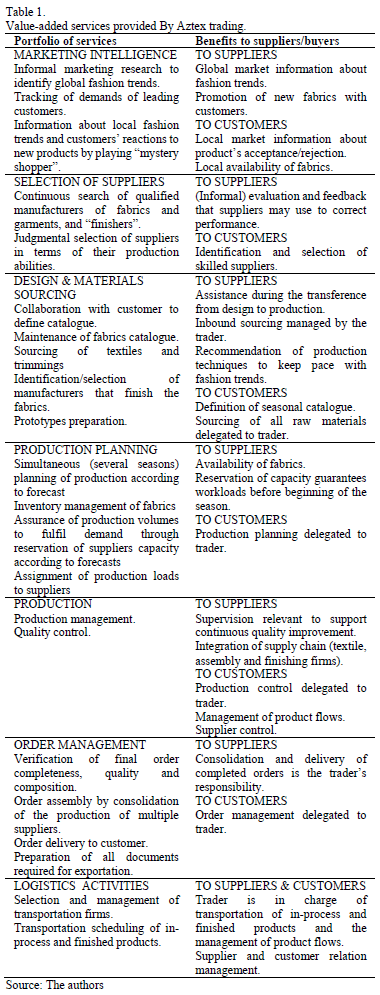
The first activity performed when a customer decides to use Aztex' services is the defining of the season catalogue that will guide sourcing and production. The fabrics and designs are defined by the buyer using the trader's advice, which recommends local fabrics available in its textile directory. All fabrics (domestic and imported) selected by the customer are sourced by the trader. The interaction with customers is intense during this design phase, but once customers have selected the season's catalogue, they rely completely on the trader to complete production. "That's why they contract us, it's our job" stated the trader's executives. Once the catalogue is defined, Aztex selects the suppliers that will source/produce the textiles and produce the garments. Selection is made considering the production capabilities of suppliers. Then, the contract conditions (delivery time, quality standards and prices) are settled without the participation of the customer. When new designs are to be produced, Aztex's personnel supports suppliers throughout the design transference phase to guarantee strict conformity with the product's catalogue. Personal communication is sustained with the selected suppliers through multiple visits by Aztex's supervisors resulting in behavioural control. Given the fragmentation of the textile and garment chains in Mexico, semi-finished garments and individual pieces of an outfit (e.g., trousers and jackets) are produced by a particular supplier and picked up by the trader that is in charge of the administration of product and information flows related to a particular order.
The trader's services portfolio is described in detail in the first column of Table 1. Based on this description, the value these activities represent to customers and suppliers is inferred and described in the second column of the Table.
CASE 2. The second third party analysed, American Industries (AI), is defined by executives as "a knowledge intensive business services company" that facilitates production in Mexico by "easing the landing of international companies".
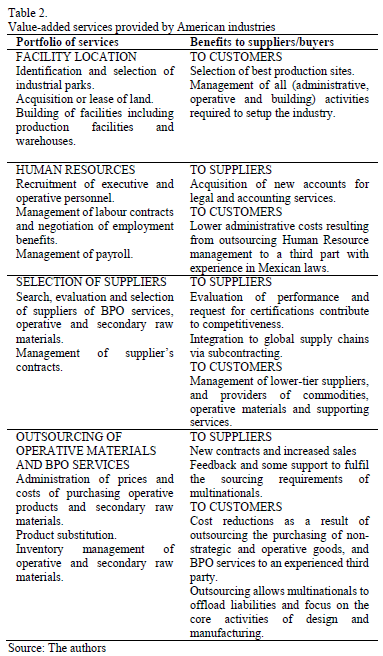
AI headquarters are located in Chihuahua City but the third party has offices in the main industrial zones in Mexico, including Querétaro, Guadalajara. Irapuato, Monterrey, Torreón, Chihuahua, Ciudad Juarez, Delicias and Laredo. Additionally, the company has the resources to open new offices in other zones, depending on the sourcing preferences of its customers. Currently, AI has 47 customers; all are leading firms of global supply chains driven by the product. Among these customers that operate in the aeronautics, automotive, electronics and medical devices sectors, Cessna, Embraer, Electrolux, Dana, and Federal Mogul stand out. AI offers "shelter services" to multinational companies that decided to produce in Mexico. AI's portfolio of services is extensive and includes: assistance to select the best production sites based on current incentives for foreign investment, the competitiveness of the regional supplier base, the infrastructure supporting production, and logistics costs [31]. Additional services include the acquisition of land and the building of industrial facilities; the recruitment of personnel at all levels; business process outsourcing services (BPO); the selection of suppliers of supporting services catering) and indirect materials (lubricants, uniforms, and (cleaning, facility maintenance, surveillance, and safety equipment). In sum, AI is able to provide all the administrative transactions required to transfer production operations to Mexico. To deliver this broad portfolio of services, AI relies on its employees but also on external suppliers.
AI's policy is "international companies have the know-how and expertise on production. They are not seeking strategic suppliers in the country, they ask theirs to move to Mexico but still need suppliers of many indirect materials and services, and we can find them". Currently, AI has a base of approximately 8,000 suppliers from which to select the most qualified according to the customers' needs. Suppliers in the AI directory are continuously evaluated in terms of product quality, reliability and delivery times; customers provide important feedback to assess the supplier's performance. Some suppliers are asked to be certified to be included in the directory; for example, transportation companies are required to have the Customs Trade Partnership Against Terrorism (C-TPAG), the Business Alliance for Secure Commercial (BASC)
]]> and the "Nuevo Esquema de Empresas Certificadas" (NEEC) certifications to guarantee the security of the shipments. None of the suppliers subcontracted by AI are directly involved in manufacturing activities; therefore, according to Mexican laws, they are not considered employees of the international firm. This outsourcing scheme simplifies administrative processes and permits the inclusion of new suppliers and easy replacement of those with poor performance resulting in close behavioural control.
5. Analysis and discussion of results
The analysis of the cases is summarized in the form of three theoretical propositions.
Proposition 1. To advance supply chain integration, a sourcing agent needs to combine different modes of coordination: logistics synchronization, organization of production, information management, and incentive alignment. This integration is a requirement for full outsourcing and outsourcing of strategic purchases.
This proposition is stated from the evidence of the first case and in contrast with the second case. Aztex's top management indicated that garment assembly (maquila) at low cost is no longer an order winner. International buyers expect to source complete product lines without needing to negotiate with multiple suppliers or needing to supply raw materials (textiles and accessories). Therefore, the trader needs to coordinate production plans and the movement of semi- and finished products across several production units. However, this coordination of product and information flows is performed without simplifying processes or synchronizing decisions [18]. The main role of the sourcing company in the first case is as an integrator of a flexible supply chain organized according to a specific customer order [4]. To attain product flexibility, Aztex follows a strategy based on postponement; "the same textile can be dyed or finished in distinct forms to have a large variety of fabrics, and something similar can be done with a pattern to produce outfits with different designs". To attain volume flexibility, the trader relies on the abilities of the suppliers to accommodate several orders given a reservation schedule negotiated well before the beginning of the season.
With respect to the four coordination modes, the first one, logistics synchronization is centralized by the trader and executed by subcontracted transportation services. Aztex requires moving in-process products nationwide and delivering finished products to customer's warehouses in Mexico; therefore, there is no need to coordinate activities with the producers. With respect to information integration, the trader provides suppliers with selective information regarding market trends and sustains continuous communication with them during the production phase. Information technologies are not used to enhance visibility (e.g., production status of other assemblers) or to facilitate communication with suppliers [12] because personal interaction is perceived as more cost-beneficial and convenient to promote collaboration.
In terms of incentive alignment, the first point is the sourcing service agent does not compete with the GSC's leading firms or with the suppliers because the trader is a service company without brands or manufacturing facilities. With respect to local suppliers, the incentives of those working with a trader such as Aztex are: 1) to remain specialized while the trader links their production processes with those of other manufacturers (for example, textiles are directly delivered to assemblers); and 2) the indirect acquisition of new customers without the need to establish direct contact with them. Finally, the coordination of production is mainly accomplished through direct supervision and support during the design phase. This technical support has resulted in a major benefit for buyers in terms of a significant reduction in the duration of the design transfer and order cycle phases: "One of our major accomplishments is the reduction of the lead time by shrinking the time from design to manufacturing […] we can deliver orders in 8 weeks, while garments produced in East Asia take 3 months".
AI does not participate in any critical production activity nor does it supply critical goods; its role is to facilitate the establishment of a vertical SC in Mexico. It is the manufacturing foreign firm that dominates production, establishes and governs the dyadic relationships with the main suppliers through ownership or creation of strategic links. Given the structure of the GSC in which AI operates, a GSC driven by the product, inner production or internal supply management of strategic purchases is preferred because of the required tighter control over supplier performance [32].
Logistic synchronization and management of information are performed by AI when delivering commodities, but these activities do not involve high complexity because suppliers are local and solely provide finished goods. With respect to incentive alignment, the main motivation of both, AI and the suppliers in its network, is to obtain contracts from the multinationals. However, the guarantee of a purchasing contract from AI provides the supplier "the security of financing any investment required for fulfilling the contract" and results in an increased commitment to the third party. However, AI may easily substitute suppliers because of the type of purchases, and the long-term relationships with the most qualified suppliers help to lower transaction costs.
]]> Therefore, the contribution that the two third parties make to the integration of the supply chain is less relevant in comparison to the coordination structure identified as full outsourcing. This happens because Aztex only participates in the segment of the chain related to local production, and AI's role is to simplify the establishment of a vertical chain in Mexico.Proposition 2. When an external firm, such as a third party with low power influence on other organizations, assumes the responsibility of managing multiple suppliers, it needs to develop a governance structure mainly based on the supervision of performance (output control). Behavioural and social controls are used only if the relation represents high benefits for the sourcing agent.
For Aztex, its relations with suppliers are characterized as symmetric and interdependent. The firm's executives consider close and cooperative relationships with suppliers are critical to generate trust, compromise and loyalty. "We value our suppliers […] close personal relationships are important to obtain supplier's collaboration and to make suggestions to them".
AI also takes full responsibility for supplier performance; however, instead of supporting disadvantaged suppliers, AI substitutes them. This is possible due to the competitiveness of the market of suppliers of commodities, BPO services, and supplementary materials and services. Therefore, relations are more of the no-interdependence type (except for unique or highly qualified suppliers) but without competition.
The combination of output and behavioural control utilized by the two third parties reduces the risk of poor supplier performance and is a substitute of the mandatory control that characterizes vertically integrated chains. Because suppliers are legally independent of the sourcing agents, the third parties do not have the authority to modify their internal processes; therefore, they use "softer" governance mechanisms such as qualification, process monitoring and substitution of suppliers. The actualization of supplier directories and the evaluation of a supplier's performance are critical to the supplier management system of the third parties. Collaboration, knowledge interchanges and shared benefits are governance mechanisms used solely with outstanding suppliers; this conclusion is discussed in more detail after our last theoretical proposition.
Proposition 3. The international sourcing facilitated by a third party contributes to the integration of local suppliers to global supply chains because of the promotion and endorsement of the sourcing agent. However, the contribution of the sourcing agent to the integration of local suppliers to GSC is moderated by the supplier's profile.
The third parties analysed contribute to promoting Mexico as a competitive sourcing region either by supporting the establishment of international manufacturers in Mexico or by sourcing complete products to leading firms in the clothing and apparel industry. Because of the outsourcing of strategic and non-strategic purchases, global firms can focus on their core capabilities, reduce the risks of international sourcing and eliminate the transaction costs of managing a local supplier base. This clearly describes the value that the sourcing agents represent to the customer. With respect to suppliers, benefits are less evident. Additional analysis of the interviews and documents revealed that the sourcing agents need to compete with other "customers" to obtain outstanding suppliers, which are in a position to directly negotiate their participation in a global supply chain. In contrast, less powerful suppliers have less chance of being directly connected with the GSCs' leading firms as evidenced by the following statement made by AI's CEO:
"There are good suppliers of commodities and [supporting] services, we know who they are and, we are ready to subcontract with them after the approval [if necessary] of the customer who relies on our recommendations".
Additionally, the supervision of production and services performed by the sourcing agent is a potential benefit to suppliers because the supervision provides access to information regarding the production qualifiers set by international buyers. In addition, the supervision provides rules to improve supplier's performance and fulfil the specifications of leading customers.
The perception of a symbiotic relation with suppliers, expressed by one of the third parties, is mainly explained in terms of the interdependence of this sourcing agent on prime suppliers [33]. Within the segment of the supply chain coordinated by Aztex, different types of relationships coexist. Some are long-term and collaborative but others, even when durable, are transactional, sporadic and driven by economic and short-term benefits. Given the weak power influence of the third party on the supplier, this last firm is in a position to decide the degree of cooperation, commitment, trust and dependence of its relation with the third party. This result is in accordance with Gadde and Snehota [25] who state that a buying firm, in this case, the sourcing agent, may be highly involved with a limited number of suppliers because "heavy involvement with a supplier is not always feasible […] [because] the supplier may lack the necessary motivation and interest".
]]>6. Conclusions
There are third parties in Mexico that provide sourcing and logistics services that facilitate the supply of final products and the production activities of multinational firms [11]. For the textile & clothing sector, characterized by buyer-driven chains, international buyers sourcing from Mexico demand full-package production that many national suppliers, particularly small ones, cannot offer. Therefore, third parties such as Aztex Trading support international sourcing by coordinating all the isolated production activities required to deliver a complete product line to these global customers. In contrast, given the preferred hierarchical structure of product-driven chains, it is the sourcing agent's value-added services that enable the necessary conditions to start foreign manufacturing operations. These services include building facilities, staffing the plants and managing suppliers of operative and secondary raw materials and BPO services.
The main findings of this research are summarized in three propositions that are aimed at understanding how sourcing agents govern their relations with domestic suppliers, what are the values they add to the international buyers and local suppliers, and finally how they contribute to the competitiveness of Mexico as a global sourcing region. The analysis of two contrasting cases (product and buyer-driven GSC) concluded that the different modes of coordination-logistics synchronization, management of information, incentive alignment and production organization-required to boost supply chain integration are deployed by the Mexican third parties to the extent needed to satisfy current demands. Currently, these demands are not very high because of the limited participation of both agents in the GSC. Hence, there is an opportunity to increase the value of the outsourcing services in particular with respect to logistics synchronization and management of information by participating in additional supply chain processes, for example distribution [12].
The governance structure of the supplier network coordinated by third parties also varies depending on the type of chain and purchase. For the clothing supply chain, the sourcing agent seeks close and long-term relationships with their suppliers. However, only those with restricted accessibility to the GSCs because of their limited capabilities are motivated to establish symmetric interdependent relationships with the third party. Large suppliers able to offer full-package production achieve economic and short-term benefits from their relationships with the sourcing agents. Because the sourcing agents studied mainly supply non-strategic products, output control is the main internal governance mechanism, whereas the competitiveness of the supplier market becomes the principal external mechanism. Therefore, third party-supplier relationships are characterized as non-interdependent but fairly symmetrical. The output control is exerted through identification, auditing, selection and substitution, whereas behavioural control is exerted via production monitoring and personal contact. Both forms of control require continuous information regarding customers' needs and suppliers' skills. Thus, effective sourcing agents are characterized as "knowledge" firms with extensive experience regarding the capabilities of the national supplier base within a particular sector.
Finally, with respect to the contribution of third parties to the enhancement of Mexico as a sourcing region, this contribution was mainly assessed in this work through the evidence of the value added activities performed on behalf of the customers. International firms benefit from the experience and knowledge that third parties have accumulated regarding local suppliers. This substantially decreases the cost of supplier management and the risk of international sourcing or foreign production. The portfolio of services of the sourcing agent varies according to the demands of the international customers that are more advanced when complete product (lines) are required. However, the analysed Mexican agents do not qualify as "supply chain integrators" [11] because they administer the processes in the middle portion of the chain (the labour-intensive production activities) or provide non-core supporting services. Front (sales and design) and back end (international logistics) activities, and relation management with strategic suppliers are processes that are still controlled by the GSC's leading firms. This implies that the sourcing method preferred by global buyers in Mexico is house branding: design and distribution are controlled by the leading firm and selective manufacturing processes are subcontracted to local suppliers via third parties. The contribution that sourcing agents make, in terms of foreign investment or employee creation, was not measured because this contribution requires a quantitative approach and information of a representative sample of sourcing agents. Nevertheless, evidence of the sourcing agents' contribution to supplier development via selection and control was presented mainly for Aztex.
The major weakness of this work is the limited generalizability of results; additional cases including information provided by suppliers and customers are required to validate the theoretical propositions. Also, a quantitative approach is required to specifically measure the contribution of third parties to the development of local suppliers and to the competitiveness of Mexico as an international sourcing region.
Acknowledgments
As part of the National Research Network "Sistemas de Transporte y Logística", the authors acknowledge all the support provided by the National Council of Science and Technology of Mexico (CONACYT) through the research program "Redes Temáticas de Investigación". At the same time, we acknowledge the determination and effort performed by the Mexican Logistics and Supply Chain Association (AML) and the Mexican Institute of Transportation (IMT) for providing us an internationally recognized collaboration platform, the International Congress on Logistics and Supply Chain [CiLOG].
]]>References
[1] Popp, A., Swamped in information but starved of data: Information and intermediaries in clothing supply chains. Supply Chain Management, 5 (3), pp. 151-160, 2000. DOI: 10.1108/13598540010338910 [ Links ]
[2] Feenstra, R.C. and Hanson, G.H., Intermediaries in entrepốt trade: Hong Kong re-exports of Chinese goods. Journal of Economics & Management Strategy, 13 (1), pp. 3-35, 2004. DOI: 10.1111/j.1430-9134.2004.00002.x [ Links ]
[3] Lam, J.K.C. and Postle, R., Textile and apparel supply chain management in Hong Kong. International Journal of Clothing Science and Technology, 18 (4), pp. 265-277, 2006. DOI: 10.1108/09556220610668491 [ Links ]
[4] Masson, R., Iosif, L., MacKerron, G. and Fernie, J., Managing complexity in agile global fashion industry supply chains. The International Journal of Logistics Management, 18 (2), pp. 238-254, DOI: 10.1108/09574090710816959 [ Links ]
[5] Cao, N., Zhang, Z., To, K.M. and Ng, K.P., How are supply chains coordinated? Journal of Fashion Marketing and Management, 12 (3), pp. 384-397, 2008. DOI: 10.1108/13612020810889326 [ Links ]
[6] Gereffi, G., Shifting governance structures in global commodity chains, with special reference to the Internet. American Behavioral Scientist, 44 (10), pp. 1616-1637, 2001. DOI: 10.1177/00027640121958087 [ Links ]
[7] Bair, J. and Gereffi, G., NAFTA and the apparel commodity chain, in Gereffi, G., Spener, D. and Bair, J. (Eds.), Free trade and uneven development. Philadelphia: Ed. Temple University Press, pp. 23-50, 2002. [ Links ]
]]>[8] Trent, R.J. and Monczka, R.M., Achieving excellence in global sourcing. Sloan Management Review, 47 (1), pp. 24-32, 2005. [ Links ]
[9] Cho, J. and Kang, J., Benefits and challenges of global sourcing: Perceptions of US apparel retail firms. International Marketing Review, 18 (5), pp. 542-560, 2001. DOI: 10.1108/EUM0000000006045 [ Links ]
[10] Leguízamo-Díaz T.P. and Moreno-Mantilla C.E., Effect of competitive priorities on the greening of the supply chain with TQM as a mediator. DYNA, 81 (187), pp. 240-248, 2014. DOI: 10.15446/dyna.v81n187.46106 [ Links ]
[11] Bitran, G.R., Gurumurthi, S. and Sam, S.L., Third-party coordination in supply chain governance. MIT Sloan Management Review, 48 (3), pp. 30-37, 2007. [ Links ]
[12] Correa-Espinal A. and Gómez-Montoya R. A., Information technologies in supply chain management. DYNA, 76 (157), pp. 37-48, 2008. [ Links ]
[13] Chopra, S. y Meindl, P., Administración de la cadena de suministro. Estrategia, planeación y operación. México: Ed. Pearson & Prentice-Hall, 2008. [ Links ]
]]>[14] Monterrey-Meana M., New trends in process outsourcing. A study of Spanish and European cases. DYNA 80 (177), pp. 4-12, 2013. [ Links ]
[15] Fabbe-Costes, N., Jahre, M. and Roussat, C., Supply chain integration: The role of logistics service providers. International Journal of Productivity and Performance Management, 58 (1), pp. 71-91, 2009. DOI: 10.1108/17410400910921092 [ Links ]
[16] Fung, P.K.O., Chen, I.S.N. and Yip, L.S.C., Relationships and performance of trade intermediaries: An exploratory study. European Journal of Marketing, 41 (1/2), pp. 159-180, 2007. DOI: 10.1108/03090560710718166 [ Links ]
[17] Cooper, M.C., Lambert, D.M. and Pagh, J.D., Supply chain management: More than a new name for logistics. The International Journal of Logistics Management, 8 (1), pp. 10-18, 1997. DOI: 10.1108/09574099710805556 [ Links ]
[18] Chen, H., Daugherty, P.J. and Roath, A.S., Defining and operationalizing supply chain process integration. Journal of Business Logistics, 30 (1), pp. 63-78, 2009. DOI: 10.1002/j.2158-1592.2009.tb00099.x [ Links ]
[19] Mouritsen, J., Skjott-Larsen, T. And Kotzab, H., Exploring the contours of supply chain management. Journal of Manufacturing Technology Management, 14 (8), pp. 686-696, 2003. DOI: 10.1108/09576060310503483 [ Links ]
[20] Rodrigues, A.M., Stank, T.P. and Lynch, D.F., Linking strategy, structure, process and performance in integrated logistics. Journal of Business Logistics, 25 (2), pp. 65-89, 2004. DOI: 10.1002/j.2158-1592.2004.tb00182.x [ Links ]
[21] Richey, R.G. Jr., Roath, A.S., Whipple, J.M. and Fawcett, S.E., Exploring a governance theory of supply chain management: Barriers and facilitators to integration. Journal of Business Logistics, 31 (1), pp. 237-253, 2010. DOI: 10.1002/j.2158-1592.2010.tb00137.x [ Links ]
[22] Mihm, B., Fast fashion in a flat world: Global sourcing strategies. International Business and Economics Research Journal, 9 (6), pp. 55-63, 2010. [ Links ]
[23] Agarwal, A. and Shankar, R., On-line trust building in e-enabled supply chain. Supply Chain Management: An International Journal, 8 (4), pp. 324-334, 2003. DOI: 10.1108/13598540310490080 [ Links ]
[24] Knemeyer, A.M. and Murphy, P.R., Evaluating the performance of third-party logistics arrangements: A relationship marketing perspective. Journal of Supply Chain Management, 40 (1), pp. 35-51, 2004. DOI: 10.1111/j.1745-493X.2004.tb00254.x [ Links ]
[25] Jambulingam, T., Kathuria, R. and Nevin, J.R., Fairness-trust-loyalty relationship under varying conditions of supplier-buyer interdependence. Journal of Marketing Theory and Practice, 19 (1), pp. 39-56, 2011. [ Links ]
[26] Hernández-Espallardo, M., Rodríguez-Orejuela, A. and Sánchez-Pérez, M., Inter-organizational governance, learning and performance in supply chains. Supply Chain Management: An International Journal, 15 (2), pp. 101-114, 2010. DOI: 10.1108/13598541011028714 [ Links ]
[27] Wathne, K.H. and Heide, J.B., Relationship governance in a supply chain network. Journal of Marketing, 68 (January), pp. 73-89, 2004. [ Links ]
[28] Gadde, L.E. and Snehota, I., Making the most of supplier relationships. Industrial Marketing Management, 29, pp. 305-316, 2000. [ Links ]
]]>[29] Yin, R.K., Case study research. Design and methods, 5th. Ed. London: Ed. Sage Publications. 2014 [ Links ]
[30] Balabanis, G.I., Factors affecting export intermediaries' service offerings: The Gritish example. Journal of International Business Studies, 31 (4), pp. 83-99, 2000. [ Links ]
[31] Avelar-Sosa L., García-Alcaraz J.L., Cedillo-Campos M.G., Adarme-Jaimes W., Effects of regional infrastructure and offered services in the supply chains performance: Case Ciudad Juarez. DYNA 81 (186), pp. 208-217, 2014. [ Links ]
[32] Maltz, A. and Ellram, L., Outsourcing supply management, The Journal of Supply Chain Management, 35 (2), pp. 4-17, 1999. DOI: 10.1111/j.1745-493X.1999.tb00232.x [ Links ]
[33] Camarero-Izquierdo, C. and Gutiérrez-Cillán, J., The interaction of dependence and trust in long-term industrial relationships. European Journal of Marketing, 38 (8), pp. 974-994, 2004. DOI: 10.1108/03090560410539122 [ Links ]
P.E. Arroyo-López, is a Professor at the department of Industrial Engineering at Tecnológico of Monterrey campus Toluca, Mexico. She holds a PhD degree in Business Administration from the Tecnológico de Monterrey in Mexico. She is member of the Mexico National Research System and has published articles on diverse topics such as outsourcing, third party logistics, social marketing for health care and environmental protection in international journals such as Journal of Supply Chain Management: An International Journal, International Journal of Operations & Production Management, Journal of Management and Sustainability, Qualitative Marketing Research and Mexican journals such as the Journal of Accounting and Business Administration UNAM.
J.A. Ramos-Rangel, is a PhD student at the Industrial Engineering program at Tecnológico de Monterrey campus Toluca, Mexico. He holds a MSc. degree in Sciences Decision Making from the State of Mexico University. He has extensive professional logistics experience acquired by working for several years in the automotive industry. He is currently working on his PhD thesis, which is related to strategic purchasing, supplier evaluation and supplier development.
]]>