<?xml version="1.0" encoding="ISO-8859-1"?><article xmlns:mml="http://www.w3.org/1998/Math/MathML" xmlns:xlink="http://www.w3.org/1999/xlink" xmlns:xsi="http://www.w3.org/2001/XMLSchema-instance">
<front>
<journal-meta>
<journal-id>0120-0690</journal-id>
<journal-title><![CDATA[Revista Colombiana de Ciencias Pecuarias]]></journal-title>
<abbrev-journal-title><![CDATA[Rev Colom Cienc Pecua]]></abbrev-journal-title>
<issn>0120-0690</issn>
<publisher>
<publisher-name><![CDATA[Facultad de Ciencias Agrarias, Universidad de Antioquia]]></publisher-name>
</publisher>
</journal-meta>
<article-meta>
<article-id>S0120-06902006000400004</article-id>
<title-group>
<article-title xml:lang="en"><![CDATA[Tales of mice and men: Natural History of Arenaviruses]]></article-title>
<article-title xml:lang="es"><![CDATA[Cuentos de ratones y de hombres: Historia Natural de los Arenavirus]]></article-title>
</title-group>
<contrib-group>
<contrib contrib-type="author">
<name>
<surname><![CDATA[Rodas]]></surname>
<given-names><![CDATA[Juan D]]></given-names>
</name>
<xref ref-type="aff" rid="A01"/>
</contrib>
<contrib contrib-type="author">
<name>
<surname><![CDATA[Salvato]]></surname>
<given-names><![CDATA[Maria S]]></given-names>
</name>
<xref ref-type="aff" rid="A02"/>
</contrib>
</contrib-group>
<aff id="A01">
<institution><![CDATA[,Universidad de Antioquia Grupos de investigación en Ciencias Veterinarias &ldquo;Centauro&rdquo; Facultad de Ciencias Agrarias]]></institution>
<addr-line><![CDATA[ ]]></addr-line>
</aff>
<aff id="A02">
<institution><![CDATA[,, University of Maryland at Baltimore Institute of Human Virology ]]></institution>
<addr-line><![CDATA[ ]]></addr-line>
</aff>
<pub-date pub-type="pub">
<day>00</day>
<month>12</month>
<year>2006</year>
</pub-date>
<pub-date pub-type="epub">
<day>00</day>
<month>12</month>
<year>2006</year>
</pub-date>
<volume>19</volume>
<numero>4</numero>
<fpage>382</fpage>
<lpage>400</lpage>
<copyright-statement/>
<copyright-year/>
<self-uri xlink:href="http://www.scielo.org.co/scielo.php?script=sci_arttext&amp;pid=S0120-06902006000400004&amp;lng=en&amp;nrm=iso"></self-uri><self-uri xlink:href="http://www.scielo.org.co/scielo.php?script=sci_abstract&amp;pid=S0120-06902006000400004&amp;lng=en&amp;nrm=iso"></self-uri><self-uri xlink:href="http://www.scielo.org.co/scielo.php?script=sci_pdf&amp;pid=S0120-06902006000400004&amp;lng=en&amp;nrm=iso"></self-uri><abstract abstract-type="short" xml:lang="en"><p><![CDATA[Nowadays, Arenaviruses are among the most feared viruses due to their potential as weapons for bioterrorism purposes. This potential is based on their increasing diversity and the fact that they are carried by rodentswhose biologic success compares only wit insects and humans. The prototype of this family is Lymphocytic Choriomeningitis Virus which has been and excellent tool for a myriad of discoveries in immunology. Arenaviruses have been known for over 70 years but the number of members of the family is growing thanks to their insidious subsistence in third world countries and to the nature of their genome, that makes of them sorts of skilful machines for evolution This review collects some of the work of the authors about the best-known features described for this group of viruses, among the many still-to-be discovered characteristics of this puzzling, and hard-to-study, group of zoonotic viruses.]]></p></abstract>
<abstract abstract-type="short" xml:lang="es"><p><![CDATA[En la actualidad, los arenavirus son considerados uno de los grupos de virus más temidos debido a su potencial uso como armas para el bio-terrorismo, debido a su diversidad creciente y a que son portados por roedores, cuyo éxito para sobrevivir, y adaptarse, solo puede compararse con el de los mosquitos y los seres humanos. El prototipo de esta familia viral, el virus de la coriomeningitis linfocítica, ha servido como herramienta para una gran cantidad de descubrimientos sobre la respuesta inmune. Los arenavirus han sido conocidos por más de 70 años, pero la familia aún sigue creciendo, gracias a su subsistencia insidiosa en los países del tercer mundo, y a su naturaleza genética, que les permite comportarse como máquinas &ldquo;habilidosas&rdquo; para la evolución. Esta revisión, recoge algunos de los resultados de los autores sobre los rasgos mejor conocidos, entre los muchos que aún no han sido descubiertos en grupo de virus zoonóticos, intrigante y muy difíciles de estudiar.]]></p></abstract>
<kwd-group>
<kwd lng="en"><![CDATA[hemorrhagic fever]]></kwd>
<kwd lng="en"><![CDATA[LCM]]></kwd>
<kwd lng="en"><![CDATA[rodent-borne viruses]]></kwd>
<kwd lng="es"><![CDATA[Fiebre hemorrágica]]></kwd>
<kwd lng="es"><![CDATA[LCMV]]></kwd>
<kwd lng="es"><![CDATA[virus trasmitidos por roedores]]></kwd>
</kwd-group>
</article-meta>
</front><body><![CDATA[  <b>Tales of mice and men: Natural History of Arenaviruses</b>    <br>       <br>   Juan D Rodas<sup>1</sup> MV, Ph.D, Maria S Salvato<sup>2</sup> Ph.D.             <br>             <br>         <sup>1</sup>Facultad de Ciencias Agrarias, Escuela de Medicina Veterinaria, Grupos de investigaci&oacute;n en Ciencias     Veterinarias &ldquo;Centauro&rdquo; y Grupo Inmunovirolog&iacute;a, Universidad de Antioquia.     <br>     <sup>2</sup>Institute of Human Virology, University of Maryland at Baltimore            <br>        juandavid.rodas@gmail.com             <br>             <br>         (Recibido: 16 de febrero, 2006, aceptado: 6 de octubre, 2006)             <br>             ]]></body>
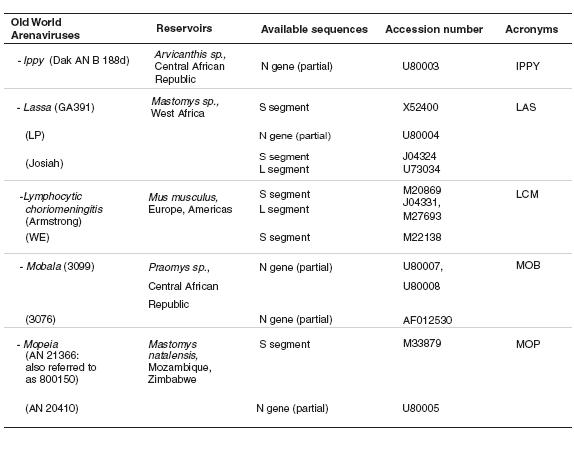
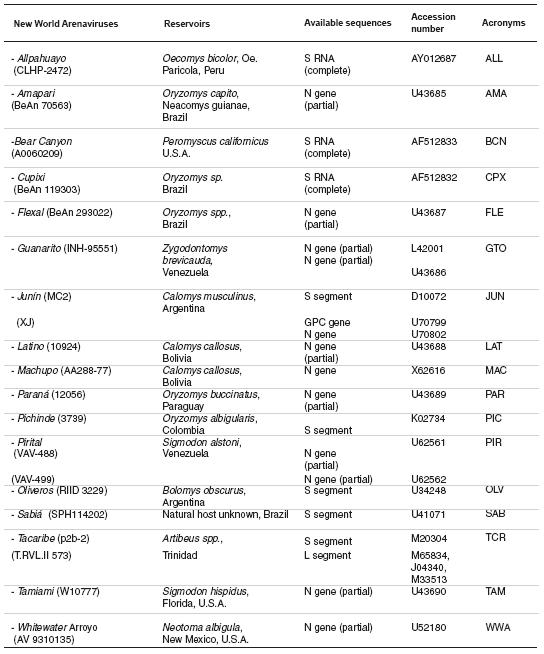
<body><![CDATA[<br>         <i><b>Summary</b></i>    <br>             <br> 		<b><i>Nowadays, Arenaviruses are among the most feared viruses due to their   potential as weapons for bioterrorism purposes. This potential is based on   their increasing diversity and the fact that they are carried by rodentswhose   biologic success compares only wit insects and humans. The prototype of this   family is&nbsp;Lymphocytic Choriomeningitis Virus which has been and excellent   tool for a myriad of discoveries in immunology. Arenaviruses have been known   for over 70 years but the number of members of the family is growing thanks to   their insidious subsistence in third world countries and to the nature of their   &nbsp;genome, that makes of them sorts of skilful machines for evolution This   review collects some of the work of the authors about the best-known features   described for this group of viruses, among the many still-to-be discovered characteristics of this puzzling, and   hard-to-study, group of zoonotic viruses. </i></b>    <br>       <br>   <b>Key words:</i></b> <i>hemorrhagic fever, LCM, rodent-borne viruses.</i>    <br>       <br>   <b>Discovery and early characterization of arenaviruses</b>    <br>       <br>The     arenaviruses are enveloped, single-stranded RNA viruses (meaning, with     Ribonucleic acid as a genome), that are primarily carried by rodents and     occasionally transmitted to humans. Old World and New World arenaviruses have     been isolated on the African and American continents respectively and the members of each group are shown in tables 1 and 2. The arenaviruses are     important clinically as human pathogens and experimentally as models for persistent infection and     cellular immune responses (141).         <br>    ]]></body>
<body><![CDATA[<br> 	The prototype virus, lymphocytic choriomeningitis virus, was first isolated from a     human diagnosed with St Louis encephalitis; tissue homogenates passaged through     monkeys and mice caused fever and aseptic meningitis (7). A year later, a     filterable agent was isolated from the      cerebrospinal fluids of two patients; this agent      elicited similar symptoms in mice (132). At the same time, Traub (157)     discovered a contaminant virus      in the mouse colony of the Rockefeller      Laboratories. Viruses were exchanged between the three laboratories and their     identity was confirmed by neutralization <i>in vitro</i> and cross-protection in vivo     (133). Lymphocytic choriomeningitis virus      (LCMV) has frequently been found as a      contaminant of laboratory mice, rats and hamsters in North America and Europe,     and may have     entered North America via mice from Europe.     Studies of murine LCMV infection have contributed to a wealth of information on     the mechanisms of     viral persistence and the interactions of viruses     with host immune systems.         <br>         <br>In 1956, the non-pathogenic Tacaribe virus was isolated from Caribbean fruit bats     (49), and since then it has been the only arenavirus not      isolated from rodents. With the agricultural expansion in South America, two     pathogenic arenaviruses emerged: Junin, isolated from humans with Argentine     haemorrhagic fever (125) and Machupo, isolated from humans with      Bolivian haemorrhagic fever (80). Collaboration between field workers, the Yale     Arbovirus Laboratories and the Rockefeller Laboratories documented the     morphology and antigenicity of the &lsquo;Tacaribe group&rsquo; of viruses. A     non-pathogenic member of this group, Pichinde virus, was isolated during a     trapping program in Colombia, and has      since served in many biochemical studies (156).         <br>    <br>It     was not until the late 1960s that the      morphological similarities between LCMV and the Tacaribe group of viruses were     noted: both were enveloped viruses with a granular or sandy      appearance. Serological tests later confirmed the relationship and they were     named arenaviruses after the Latin arena for &lsquo;sandy&rsquo; (40, 78, 138). When Lassa     fever virus emerged in Africa, it was quickly      identified as an arenavirus based on morphological      and serological criteria (116). Arenaviruses are considered &lsquo;emerging     pathogens&rsquo; because new      isolates are coming to our attention with great      frequency (36).         <br>    <br>     <b>Table 1.</b> Species in the Genus    <br> <img src="/img/revistas/rccp/v19n4/4a04t1.JPG" width="574" height="455" />    <br> <b>Table 2.</b> New world arenaviruses.       <br>   <img src="/img/revistas/rccp/v19n4/4a04t2.JPG" width="544" height="654" />    ]]></body>
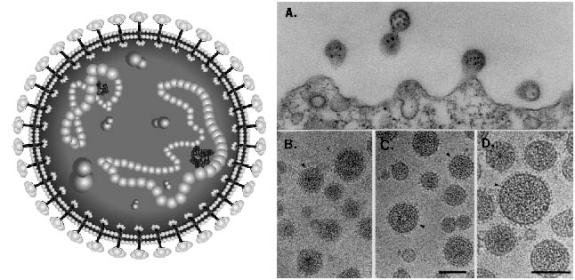
<body><![CDATA[<br>   <b>Physical characteristics of arenaviruses </b>    <br>       <br>   Arenaviruses are spherical with a mean diameter of 110-130 nanometers (nm),     and a dense      lipid envelope which is covered by club-shaped      projections of 8-10 nm in length. Variable number      of electrodense ribonucleoprotein particles      (RNP) of 20-25nm can be found within viral      particles (see Figure 1). The genome consists of      two single stranded, RNA molecules, L (for Large)      and S (for Short), of length about 7.5 kb and 3.5 kb respectively. The 3&rsquo;     terminal sequences (19-30     nucleotides, nt) are similar between the two RNAs and between different     arenaviruses and are     largely complementary to the 5&rsquo; end sequences.Although the RNA genomic species are thought      to be present in virions in the form of circular      nucleocapsids (450 to 1300 nm in circumference),      the genomicRNA is not covalently closed.      Preparationsof purified virus may also     contain RNAs of cellular origin that include ribosomal RNAs. The viral m RNA (messangerRNA) species are associated      with NP (149, 150).    <br>     <img src="/img/revistas/rccp/v19n4/4a04f1.jpg" width="575" height="280" />    <br>     <b>Figure 1.</b> Diagrammatic representation of virion structure L, L protein (RNA dependent RNApolymerase); NC, nucleocapsid; R, ribosome. (Andrew Featherstone and         Christopher Clegg, CAMR). (Right) Electron microscopic images of lymphocytic         choriomeningitis virus. A. Thin section showing several virions budding from the surface of an infected BHK-21 cell. B         - D. Cryo-electron microscopic images of purified unstained virions frozen in         vitreous ice, taken at &ndash;1.5, &ndash;3 and &ndash;4 microns de focus. Arrowheads indicate         glycoprotein spikes which are composed of a transmembrane GP2 and globular GP1         head arranged in a tetrameric configuration. Bars indicate 100 nm. (Ronald         Milligan, John Burns and Michael Buchmeier, Scripps Research Institute). Figure         on the left taken form the International Committee for Taxonomy of Viruses and         photo on the right, obtained from reference 143.             <br>             <br>The     most abundant structural protein is the nucleoprotein (N or NP), a     non-glycosylated polypeptide (63 kDa) found tightly associated with the virus genomic RNA in the form of a ribonucleoprotein complex or nucleocapsid structure. A minor component is the L     protein, an RNA polymerase (200 kDa). A putative zinc      binding protein (Z, 11-14 kDa) is also a structural component of the virus     (142). Two glycosylated proteins (GP1, GP2; 34 and 44 kDa respectively) are found in all members of the family and are   derived by posttranslational cleavage from an intracellular precursor, GPC (75-76 kDa) (28, 30).           <br>    <br> 	  Other minor proteins and enzymatic activities      have been described associated with virions     including poly (U) and poly (A) polymerases, and a protein kinase that can     phosphorylate N. It is      thought unlikely that these are virally encoded.      Lipids represent about 20% of virion dry weight and are similar in       composition to those of the host plasma membrane. Carbohydrates in the form of complex glycans on GP1 (five to       six sites in LCMV) and GP2 (two sites in LCMV) represent about 8% of virion dry weight (28, 120).     <br>    ]]></body>
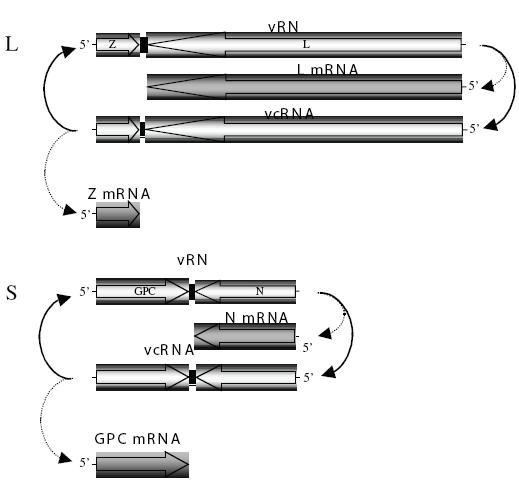
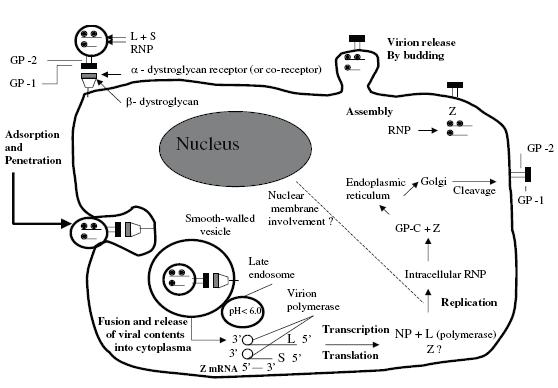
<body><![CDATA[<br> <b>Genome organization and virus replication</b>    <br>     <br> The L and S RNAs of arenaviruses each have      an ambisense coding arrangement (see Figure 2).      The L RNA encodes the L protein in its      viral-complementary sequence, and the Z protein (&lt; 0.5 kb) in its     viral-sense 5&rsquo; end. The N protein is     encoded in the viral-complementary sequence      corresponding to the 3&rsquo; half of the S RNA,      while the viral glycoprotein precursor (GPC) is encoded in the viral-sense     sequence corresponding to the 5&rsquo; half of S.      The mRNAs are capped and contain 1-5      non-templated nucleotides of heterogeneous      sequence at their 5&rsquo; ends. The mRNAs are not polyadenylated. The     transcription mechanism is not      fully elucidated. Initiation of transcription may      involve cap-snatching or <i>de novo</i> cap     synthesis. The 3&rsquo; termini of the mRNAs have been      mapped to locations in the intergenic regions (64, 149).         <br>         <br> 	The process of infection (see Figure 3),     involves attachment to cell receptors, entry via the     endosomal route, uncoating and mRNA     transcription in the cytoplasm of infected cells.      There have been a number of recent studies  describing the participation of &alpha;-dystroglycan as a viral receptor for the viruses within this viral     family. However, differences in affi nity and avidity     have also been detected for different virus species,     suggesting that additional proteins are needed for this step of the virus life cycle (31, 88).    <br>     <img src="/img/revistas/rccp/v19n4/4a04f2.JPG" width="519" height="498" />    <br>     <b>Figure 2.</b> Organization, transcription and ambi-sense coding strategy of     the arenavirus L and S RNAs.     <br>         <br>     Regions encoding the L, Z, GPC and N proteins are shown as     boxes with arrowheads indicating the direction of translation. The intergenic regions separating the open reading frames are     indicated by black boxes. The subgenomic RNAs which function as     messengers are shaded grey. RNA transcription and replication     processes are indicated by dotted and solid arrows respectively. vRN means viral RNA nucleic acid, vcRNA means viral copy of RNA     for small (S) and large (L) segments and L, Z, N and GPC mRNA     are the RNA messengers for the L, Z, N and GPC genes encoding     the polymerase, the zinc-binding, the nucleo and the glyco proteins,     respectively (After Victor Romanowski, Universidad Nacional de la     Plata). This figure was generously provided to the second author of     this review for Dr. Romanowski.    <br>    ]]></body>
<body><![CDATA[<br>     <img src="/img/revistas/rccp/v19n4/4a04f3.JPG" width="558" height="388" />    <br>         <br>     <b>Figure 3.</b> Arenavirus life cycle.         <br>         <br>     L, large RNA segment; S, small RNA segment; RNP,     ribonucleoprotein; (modified from Southern <i>et al</i>, 1996 and taken     reference 143).    <br>         <br>     Because of the ambisense coding arrangement, only N and L mRNAs can be synthesized from     the genomic S and L RNAs respectively, by the     virion polymerase, prior sythesis of GPc and Z.     The products of N and L genes are     presumed to be involved in the synthesis of full-length viral complementary    <br>     species, which serve as templates for the     synthesis of GPc and Z mRNAs and the     synthesis of full-length viral RNAs. The     process of RNAreplication, which may     involve a &ldquo;slippage&rdquo; mechanism during     initiation, and read-through of transcription termination signals, is not completely clear. However, the presence of full-length viral-complementary genomic RNAs and viral subgenomic mRNA species in virus preparations     may affect this perceived temporal order of RNA     and protein synthesis (140, 142).         <br>    <br> 	The viral envelope glycoproteins are     synthesized in cells as a single mannose-rich precursor molecule, which is proteolytically     cleaved and processed to contain     complex glycans during transport to the     plasma membrane. Virions mature by budding at sites on the surface of cells. There     are still many questions to be answered regarding replication, transcription and     expression of arenaviruses during their life cycle using <i>in vitro</i> and in vivo conditions (28). Due to the recent success with the reverse genetic     systems for negative strand RNA viruses (15, 25,     27, 90, 118, 145) and the obvious benefi ts of having such a great tool to answer many of these unsolved questions regarding viral transcription and     replication as well as the molecular mechanisms     underlying arenavirus persistence and pathogenesis, we tried to develop an infectious clone for LCMV     (unpublished results).    ]]></body>
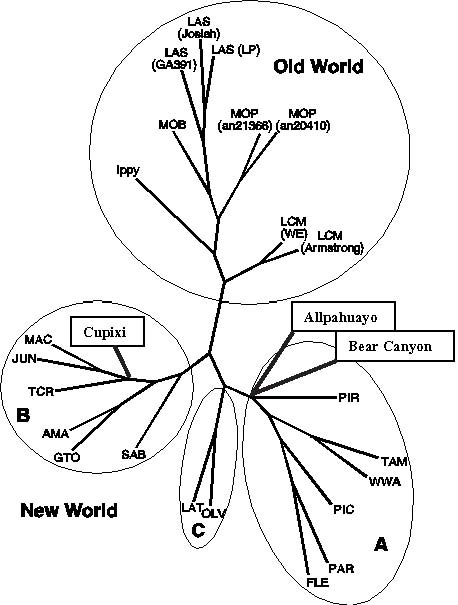
<body><![CDATA[<br>         <br>     <b>Classification of arenaviruses</b>    <br>         <br>     Arenaviruses have been classifi ed according to     host, geographical location, antigenic cross-reactivity and nucleic acid sequence homologies. Type-specifi c    <br>     antigens on the 44 kDa GP1 of LCMV are involved     in virus neutralization. Cross-neutralization tests     have demonstrated partially shared antigens between Tacaribe virus and Junin virus and cross-protection has been demonstrated against Junin     virus following prior infection by Tacaribe virus, or against Lassa virus following infection by Mopeia virus.     Major complement-fixing antigens are associated with the viral N proteins, which were used to     define the Tacaribe complex of arenaviruses. Monoclonal antibodies react with common     epitopes on the N and Gp2 proteins of all     arenaviruses, one of these was described by Buchmeier (aminoacids 374-378) with no reports of its function (29). A second (aminoacids 289-301) apparently plays an important role in viral entry as a fusion region (44, 71, 72).    <br>    <br>     By monoclonal and polyclonal antibody analyses, the African arenaviruses are distinguishable     from the New World arenaviruses. Fluorescent antibody studies show that antisera against New World     viruses, as well as those against African     viruses, react with LCMV. Cytotoxic T-lymphocyte epitopes have been identified on the nucleoprotein     and glycoproteins of LCMV. The number and location of epitopes vary depending on the virus strain and host major histocompatibility complex (MHC)     class I molecules (121, 122, 169).    <br>    <br>     Nucleic acid sequences from the N genes of all the known arenaviruses have provided the basis for phylogenetic analysis, which supports previously defined antigenic groupings and further defines virus relationships within them (see Figure 4). Sequence data derived from other regions of the genome, where available, is largely consistent with this analysis.     Among the Old World viruses, Lassa, Mopeia and Mobala viruses are monophyletic, while Ippy virus and LCMV are more distantly related (23). The New World viruses can be divided into three groups on the basis of the sequence data. In group A are Pirital, Pichinde, Parana, Flexal, and a recently     found Allpahuayo (Per&uacute;) virus from South America (112) , together with Tamiami, Whitewater Arroyo and newly added Bear Canyon viruses from North America. Group B contains the human pathogenic viruses Machupo, Junin, Guanarito, and Sabia and the non-pathogenic Tacaribe, Amapari, and Cupixi (Brazil) viruses (33, 34, 65). Latino and Oliverosviruses form a small separate group (group C) (22) . The     division of the arenaviruses into Old World     and New World groups, as well as the subdivision     of New World arenaviruses into three groups, is strongly supported by bootstrap resampling     analysis. It is important to note that the trait     of human pathogenicity appears to have arisen     on at least two independent occasions during arenavirus evolution (24) .    <br>    ]]></body>
<body><![CDATA[<br>     <img src="/img/revistas/rccp/v19n4/4a04f4.jpg" width="458" height="605" />    <br>         <br>     <b>Figure 4.</b> Phylogenetic relationships among the Arenaviridae.    <br>         <br>     <b>Abbreviations</b>    <br>         <br>     <b>LAS</b>: Lassa     <br>     <b>LAT</b>: Latino     <br>     <b>MOP</b>: Mopeia     <br>     <b>OLV</b>: Oliveros    ]]></body>
<body><![CDATA[<br>     <b>LCM</b>: Lymphocytic Choriomeningitis     <br>     <b>PIR</b>: Pirital    <br>     <b>MAC</b>: Machupo     <br>     <b>TAM</b>: Tamiami    <br>     <b>JUN</b>: Junin     <br>     <b>WWA</b>: White Water Arroyo    <br>     <b>TCR</b>: Tacaribe     <br>     <b>PIC</b>: Pichinde    <br>     <b>AMA</b>: Amapari     <br>     <b>PAR</b>: Parana    ]]></body>
<body><![CDATA[<br>     <b>GTO</b>: Guanarito     <br>     <b>FLE</b>: Flexal    <br>     <b>SAB</b>: Sabia    <br>         <br>     Partial N gene nucleotide sequences corresponding to nt 1770-2418 of Tacaribe virus S RNA sequence (GenBank accession no. M20304) were aligned (PILEUP, adjusted manually) and analysed by maximum parsimony using PAUP (Michael Bowen, C.J. Peters, Stuart Nichol, CDC). BCN, and ALL recently join group A and CPX joined group B. Taken from reference 143.    <br>    <br>     It is apparent that recombination has influenced the evolution of several RNA viruses, including arenaviruses. There is published evidence that the Whitewater Arroyo, Tamiami, and Bear Canyon     virus S segments are the product of recombination between ancestral arenaviruses from different lineages. In fact, the nucleocapsid and glycoprotein genes of the Whitewater Arroyo virus, theTamiami virus, and the Bear Canyon virus have divergent phylogenetic histories (6, 33, 34). Separate analysis of full-length amino acid sequences using maximum parsimony or neighbor-joining methods show that the nucleocapsid protein genes of these three viruses are related     to those of Pichinde virus and Pirital virus (New World lineage A), while the glycoprotein genes are more closely related to those of Junin, Tacaribe, and Sabia viruses (New World lineage B). Recombination seems to have also played a role in the genome of R&iacute;o Carcara&ntilde;&aacute; virus, but sequence data are incomplete. By way of comparison, amino acid (AA) distances observed between Amapari and Cupixi viruses     (GPC gene = 31.4%, NP gene = 14.6%) and     between Junin and Machupo viruses (GPC gene = 30.0%, NP gene = 14.4%) are the lowest observed between distinct arenaviruses species. R&iacute;o     Carcara&ntilde;&aacute; virus from Argentina has recently been described by Ghiringelli <i>et al</i> (68) and is not yet considered a species.    <br>         <br>     This thesis employs the Old World LCMV     strains, WE and Armstrong, in a monkey model for hemorrhagic fever. These viruses are 60%     homologus to Lassa fever virus (Josiah strain) and     86% homologus to each other. Their differences     are critical in defining virulent outcomes for     LCMV WE and benign outcomes for LCMV-ARM in this model.    <br>    ]]></body>
<body><![CDATA[<br>     <b>Arenaviral host-range, tropism and transmission    </b>    <br>         <br>Arenaviruses replicate in a broad range of mammalian hosts and in almost every tissue of the host, reaching high titers in brain, kidney, liver and secondary lymphoid organs.    <br>         <br>     Virus replication is restricted in lymphocytes, macrophages and terminally differentiated neurons, probably because of the absence of host cell factors (21, 42, 128). Arenaviruses are often propagated in adherent cell lines such as BHK-21 cells, mouse L cells or Vero cells.    <br>         <br>     The reservoir hosts of almost all the arenaviruses     are species of rodents. LCMV is found in <i>Mus sp</i> and the African viruses mainly in the rodents <i>Mastomys</i> and <i>Praomys</i> (82, 111) in the sub-family <i>Murinae</i>.     <br> 	    <br> 	The New World viruses are mostly found in the Sigmodontine rodents <i>Calomys, Neacomys, Neotoma, Oryzomys</i> and <i>Sigmodon</i> (79, 87,156). The majority of the rodents associated with arenaviruses are commensals or semi-commensals, living within human dwellings or in cultivated fields.     Exceptionally, Tacaribe virus was isolated from fruit-eating bats (<i>Artibeus spp.</i>) (49), but subsequent attempts to     recover it from bats or from other potential hosts     have been unsuccessful. It is notable that the     geographic range of an arenavirus is generally     much more restricted than that of its cognate     rodent host. Most of the viruses induce a persistent, frequently asymptomatic infection in their     reservoir hosts, in which chronic viremia and     viruria occur (139).    <br>         ]]></body>
<body><![CDATA[<br>     Strain, dose, route of exposure and passage     history of arenaviruses inoculated into     experimental animals have a marked effect on lethality, tissue tropism and development of     persistent infection (50). Age of the host can also have a critical effects on the type of infection     that results (164).    <br>         <br>     Most arenaviruses do not normally infect other mammals or humans, however, Lassa virus is the cause of widespread human infection (Lassa fever) in West Africa (Nigeria, Sierra Leone, Liberia,     Guinea) (102), and Junin virus causes Argentine hemorrhagic fever in agricultural workers in an increasingly large area of that country (167).     Machupo virus has caused isolated outbreaks     of similar disease in Bolivia (78), and Guanarito     virusis associated with human disease in Venezuela (155). Sabia virus was isolated from a fatal human case in Brazil (36). LCMV acquired from mice has also caused a highly fatal hepatitis in captive Callitrichid primates (8, 151, 152). Severe laboratory-acquired infections have occurred with LCMV, Lassa, Junin, Machupo, Sabia and     Flexal viruses and asymptomatic infections with Pichinde virus have also been reported     (19, 51, 159).    <br>         <br>     Vertical transmission in uterus is the major mechanism of LCMV maintenance in <i>Mus musculus</i>. Horizontal transmission also occurs in the natural hosts by milk-, saliva- or urine-borne routes. Horizontal transmission within and     between species occurs by aerosol routes and gastrointestinal tract (113, 114). No arthropod     vectors are thought to be involved in the     normal transmission process.         <br>         <br>     Rodent-to-human infections are thought to probably occur primarily through aerosols or     wound-contact with rodent blood, droplets and     fomites (35, 91, 153). In the past LCMV has been implicated in about 8% of the patients diagnosed with viral meningitis, and serological studies have suggested an incidence of LCMV infection of up to 10-15% in the general population. Most of these infections are probably mild or sub-clinical (124). The aerosol stability of arenaviruses seems to be high. Studies with Lassa virus indicate a biological half-life of 55 minutes at 25&deg;C and 30% relative humidity or 18 minutes at 25&deg;C and 80% relative humidity. Arenaviruses are susceptible though to heat and desiccation (153).    <br>         <br>     Some relatively recent studies support the feasibility of mucosal infection by intragastric (ig) inoculation of mice (130, 131) guinea pigs (Lukashevich <i>et al</i>, unpublished data) and of     monkeys (95). Several pathogens, such as <i>Vibrio cholera </i>and HIV, depend on mucosal transmission for the majority of natural infections, even though     the pathogens are highly unstable in the gastrointestinal tract (5, 32). Acid-treated LCMV and Lassa virus clearly lose infectivity     (43, 44, 70), but they are still able to infect by the     ig route. Acidic pH triggers membrane fusion     activity and the glycoprotein spike complex     undergoes irreversible changes hat result in the     release of GP-1 from LCM virions, in this way previously concealed GP-2 epitopes are exposed (43, 44). Nevertheless, it is likely that infectious particles are protected within aggregates of virus     after exposure to stomach acid or the loss of GP-1 could expose regions of GP-2 (fusion peptide of arenaviruses) capable of mediating virus entry (70, 72). In this sense, previous biochemical results showed that proteolytic removal of all viral glycoproteins (to an undetectable level) did not     affect dramatically the infectivity of LCMV     particles (26). This suggested that only a few molecules of GP-2 could be enough to initiatefusion and entry into cells. In addition it is also     likely that virus uptake occurs so rapidly that     infection might happen before complete viral inactivation, this theory is supported by previous     studies in mice, where 104 reduction of infectivity     may take 30 minutes in acid yet uptake may occur within the first 5 minutes after inoculation (130, 131).    <br>         ]]></body>
<body><![CDATA[<br>     Human-to-human spread has been reported for Lassa fever in the community and in hospital settings (104), whereas only a few cases of     nosocomial transmission have been reported for Bolivian hemorrhagic fever (127) and none for Argentine hemorrhagic fever virus. There have     been reports suggestive of sexual transmission of     Lassa and Machupo viruses from convalescing patients (48). Aerosol spread and direct contact are the most likely routes of infection between     humans. Neonates are at risk of infection through their mother&rsquo;s milk.    <br>         <br>     So far there are no reports of experimentally controlled transmission studies in the monkey     model as a way to test the likelihood of mucosal human infection by this route. It has been proven     that ingestion of food contaminated with rodent     urine or the direct consumption of rodents, as it is customary in regions of Africa where Lassa fever is endemic; represents a clear opportunity for human infection     with the Lassa virus (154, 162). The experiments performed during the PhD program of the first     author attempted to fill out the experimental gap in our knowledge of mucosal infection     with hemorrhagic fever viruses.    <br>         <br>     <b>Clinical manifestations of viral infection    </b>    <br>         <br>All arenaviruses establish persistent infection in the natural rodent host after virus infection     in uterus or within a few days of birth. Adult     mice inoculated intracerebrally with LCMV     develop tremor with characteristic extensor spasm     of the legs and they finally go into convulsions     and die (120). A diversity of clinical manifestations, most of which are mediated by the immune     system, has been described in the mousemodel (123). A summary of the role played by the LCMV murine model in the     development of immunology as a science can be     found somewhere else (141, 169).    <br>         <br>     LCMV infection of human beings may be asymptomatic, mild or moderately severe with CNS manifestation. Lymphocytic choriomeningitis     begins with fever, malaise, weakness, myalgia and headache associated with photophobia. Anorexia, nausea and dizziness are common (55). It has also been reported that LCMV has teratogenic     capacity (14, 18).    <br>         ]]></body>
<body><![CDATA[<br>     In man, the arenavirus hemorrhagic fevers are often severe, generalized febrile diseases with multi-organ involvement. Tissue and pulmonary edema with prominent hypovolemic shock and acute respiratory distress syndrome are     associated with fatality rates of about 16&ndash;30%     in untreated hospitalized patients (58, 60).     The onset of Lassa fever is characterized by generalized symptoms such as high fever, joint     and back pain and severe headache, leading to     dry cough and exudative pharyngitis (63, 81, 104). Edema and bleeding may occur together or independently. Acute neurological manifestations such as unilateral or bilateral deafness and     moderate or severe diffuse encephalopathy with     or without seizures are also common in Lassa     fever. Lassa fever is severe in pregnant women especially during the third trimester when fetal/neonatal loss is 87% (129).    <br>         <br>     Several of the South American arenaviruses     have been found by screening rodent populations     but are not associated with human disease; for     example, Oliveros virus is carried by 20&ndash;30% of <i>Bolomys obscurus</i> in the Argentine hemorrhagic     fever areas (109).    <br>         <br>     South American Hemorrhagic Fevers are     clinically very similar (36, 78, 96, 98, 127, 166). Symptoms include malaise, high fever, severe myalgia, arthralgia, anorexia, relative     bradycardia, lumbar pain, epigastric pain,     abdominal tenderness, conjunctivitis and retro-orbital pain, with photophobia. In severe cases     there is nausea, vomiting, diarrhea, tremorand convulsions (158). Fatal cases show hemorrhagic disorders due to     vascular collapse with hypotensive shock, hypothermia and pulmonary edema. In contrast     to Lassa fever, bleeding with severe     thrombocytopenia is more common in     Argentine and Bolivian hemorrhagic fevers (58).    <br>         <br>     Arenavirus hemorrhagic fever (HF) in man is unlike the classical LCMV diseases of rodents,     neither the acute T-cell mediated disease nor the     chronic immune-complex disease are seen. In fact     there is no mouse model for HF and hence the     reliance on less thoroughly characterized and more expensive species such as guinea pigs and     non-human primates. Guinea pig studies showed that animals infected with Lassa virus developed homologus neutralizing antibodies, but that other Old world arenaviruses induced little or no serum neutralizing response to Lassa virus.     Nevertheless, guinea pigs infected with other Old     World arenavirus were often protected against     virulent Lassa challenge (94, 95, 126). In the     Lassa infection of guinea pigs the mortality     rate is very high and is marked by respiratory     symptoms and pathologic evidence of myocarditis, pulmonary edema and hepatocellular damage. Survivors apparently harbor no virus but develop     high antibody titers. In addition, pathogenicity     of LCMV or Lassa virus for guinea pigs varies     widely with strain. Whereas the Josiah strain of     Lassa has an LD50 of 0.3 plaque forming units (pfu)     for strain 13 guinea pigs, the same virus only     kills about 30% of outbred Hartley animals with     doses varying from 2 to 200.000 pfu. For LCMV the lethal dose is less than 1 pfu for the WE strain and more than 106 pfu for the Armstrong strain (99). Reassortants of WE and Arm strain have     been used to map the virulence determinants of     LCMV to the large RNA segment (45, 93, 134, 135).    <br>         <br>     <b>Infected primates as a model for hemorrhagic fever</b>    <br>         ]]></body>
<body><![CDATA[<br>Lassa virus infection of rhesus and cynomolgus monkeys results in fever by day 5, accompanied by significant anorexia and progressive wasting. The infections end almost invariably with death after     10-15 days with vascular collapse, shock, and     moderate hemorrhage affecting primarily mucosal surfaces. Focal hepatic and adrenal necrosis and interstitial pneumonitis are consistent pathological findings (107, 161). In agreement with the symptoms described in humans, high levels of virus in blood and hepatic liver enzymes, particularly ALT,     were regularly high in all the animals tested. It must be borne in mind, however, that the rhesus model differs from humans with Lassa fever in     their higher mortality rate and the prominence of     meningo-encephalomyelitis, pulmonary vascular lesions (e.g. thrombocytopenia) and systemic     arteritis. Although Lassa virus is pantropic, the     most consistent findings are mild hepatic focal necrosis without significant inflammatory     response, some evidence of interstitial edema and     focal adrenal cortical necrosis. In addition even     though the liver is the most affected organ,     biochemical measures of liver function and the     extent of tissue necrosis are inadequate to account      for death due to hepatic failure (107). Likewise,     the absence of significant disturbances in     coagulation makes disseminated intravascular coagulation (DIC) unlikely as a primary     pathologic process. Trombocytopenia is rare, but platelet function is markedly depressed. The     existence of a plasma inhibitor of platelet     aggregation has been suggested in patients with Lassa fever (38, 39, 56, 57). There is also     evidence for disturbance of endothelial function related to depression in production of prostacyclin     in postmortem vascular samples from Lassa     infected animals compared to uninfected controls (62). Presumably these changes in vascular     function could be enough to account for the     failure of integrity in the intravascular     compartment leading to edema, shock and     effusions observed at the autopsies (58). The viral glycoprotein G2 has been found associated     with circulating neutrophils and although the significance of this finding is uncertain since the     platelet inhibitor may also affect neutrophil     function some consideration should be given to the role of neutrophils in the pathogenesis of severe     Lassa fever (136).    <br>         <br>     Since the 1960&rsquo;s it was known that LCMV-WE produces a rapidly fatal infection in rhesus and cynomolgus monkeys after inoculation by peripheral, intravenous (iv) or aerosol routes. In contrast monkeys inoculated with LCMV Arm had an uneventful course (94, 126). Previous     work has exploited the remarkable similarity of LCMV WE infection of macaques to human     Lassa fever (95). The use of a BSL-3 virus,     LCMV-WE, instead of Lassa, has allowed us to     do monkey research at a lower biosafety level, and     it is much easier to find facilities that will support     this research. In rhesus and cynomolgus monkeys     the infection with the WE strain of LCMV is fatal within two weeks and the disease course resembles     the severest form of Lassa fever. Viremia reaches     107 to 108 pfu/ml by the time of death (75, 126).     Initial leukopenia is followed by a leukocytosis, and primarily neutrophilia as it has been     previously observed in Lassa fever infected     primates and humans. All monkeys show     intradermal hemorrhage (petechia and     ecchymoses) and epistaxis. At the autopsy large effusions have been found and high titers     of virus have been detected in all tissues. Serum aspartate aminotransferase (AST) levels are     elevated in LCMV-WE infection (95) as in Lassa     fever (102, 103). Junin and Machupo virus     infections of non-human primates also simulate the disease in humans, with fever, anorexia, weight     loss and gastrointestinal symptoms. The animals     die with cachexia and severe dehydration (11, 52,     84, 165).    <br>         <br>     Most infected monkeys seroconvert with antibodies     being detectable by immune-fluorescence     or complement fixation. Early antibody responses     are neither associated with reduced viremia nor with recovery from disease. In contrast the neutralizing antibody response was undetectable     before 45 days, suggesting that neutralizing     antibody was not critical to viremia clearance (126). <i>In vitro</i> lymphocyte proliferation tests during the acute     phase of the disease show impaired responses to     non-specific mitogens suggesting inhibition of     lymphocyte function that could explain the lack of     inflammatory infiltration observed in tissues from Lassa infected humans and monkeys (102, 161-163).    <br>         <br>     Past vaccine studies have suggested an important role the cell-mediated immunity in protection against a lethal challenge with Lassa fever virus (LFV) in monkeys (59, 61). These suggestions stem from weak humoral responses and highlight the abysmal absence of cell-mediated immunity (CMI) data in the literature. A recent study in our laboratory provides the     first measure of cytotoxic T lymphocytes (CTL) responses in monkey surviving lethal exposure to an Old World arenavirus (137). According to this, cytotoxic T lymphocytes would be playing a crucial role in recovery after infection and protection against the otherwise lethal iv challenge with the WE strain of LCMV. This study shows also the ability of the avirulent Arm strain given by iv or intragastric (ig) routes to cross-protect against lethal challenge with the WE strain. By performing several immunological measurements of infected monkeys our lab addresses a large gap in the literature.    <br>         <br>     <b>Arenavirus vaccines and treatments</b>    <br>         ]]></body>
<body><![CDATA[<br>     The development of a safe and effective vaccine     for arenavirus infections of humans has proved     difficult. Several killed and live attenuated vaccines have been tested for Lassa, Junin and Machupo     viruses, none of which has shown to be suitable for widespread human use. Many of these vaccines are still in the stage of animal trials. A live attenuated Junin virus vaccine, Candid1, has been shown to be safe and immunogenic in non-human primates (16, 37, 108). Laboratory animals infected with various avirulent viruses serologically related to Lassa virus, including LCMV, Mopeia and Mobala viruses, survived a subsequent challenge with virulent Lassa virus (77, 161). Similar strategies for protection against Junin virus with heterologous live vaccines have repeatedly demonstrated protection against Junin virus in guinea pigs and hamsters (16). Other vaccine trials with inactivated Lassa and Machupo viruses have given mixed results, although they are immunogenic. Immunization with inactivated Lassa virus protects <i>Papio hamadryas</i> monkeys from a subsequent challenge with Lassa virus (86), but fails to protect rhesus monkeys even though there is a secondary, high titer antibody response to the major structural proteins of Lassa virus in these vaccinated monkeys (106).    <br>         <br>     Killed antigen vaccine has proved ineffective for Lassa virus (106) and an attenuated virus vaccine is not available; so a live recombinant vaccine provides a very attractive alternative. Recombinant vaccinia virus vaccines, which express either the Lassa virus nucleoprotein or the glycoprotein gene, successfully protect guinea pigs from a lethal Lassa virus     infection, but offer incomplete protection in     primates (9, 10, 115). Fisher-Hoch <i>et al</i> have tested a variety of LAS vaccines delivered to non-human primates via the NYBH vaccinia vector. In one study     the authors described the outcome after the     vaccination of 44 monkeys with Mopeia or vaccinia expressing Lassa S segments genes (G1, G2, N, G1+G2 or combinations of them). A third of the monkeys were Cynomolgus macaques and the remainder monkeys were Rhesus and all of them were challenged with a lethal dose (105 pfu) of Lassa virus (Josiah strain). The data indicate that vaccines delivering all genes of the Lassa S RNA (both N and G) are more protective than vaccines with only the glycoprotein genes and these later     are more protective than vaccines with only the     N gene (61). In murine experiments with the recombinant Lassa vectors, a weak but measurable cross-protection against LCMV intracranial challenge can be mediated by Lassa Gp-specific CD4+ T cells or by Salmonella or Vaccinia recombinants expressing Lassa Np (46, 47, 89). Vaccine trials so far have suggested but not proved     that cell-mediated immune response must be activated to protect against challenge with arenaviruses.    <br>         <br>     Immunization with recombinant vaccinia virus that expresses the LCMV glycoprotein (VV GP) or nucleoprotein (VV NP) protects mice from LCM disease by induction of a protective CTL response in an H-2 haplotype-dependent manner (73, 85, 119). Mice can be specifically protected by subcutaneous inoculation of recombinant LCMV proteins     (GP or NP) or just the T cell epitope of the LCMV nucleoprotein as an unmodified free synthetic peptide in incomplete Freund&rsquo;s adjuvant (12, 146, 147). Vaccination with DNA encoding the LCMV nucleoprotein or the glycoprotein also confers protection against lethal LCMV challenge and     against persistent LCMV infection in an MHC-dependent manner by priming CD8+ cytotoxic lymphocytes (100, 168). In certain circumstances, however, immunization with VV GP or VV NP aggravates disease. For example, Balb/C mice     infected with a high dose of the LCMV - Docile     usually survive, unless they are pre-injected with VV NP or VV GP (119). In this case, low-level immunization may accelerate development of immunopathology. High dose immune-supression, often mentioned by the Zinkernagel lab, is caused by high viral antigen being inappropriately     presented thereby inactivating the cell response     (20).This example illustrates the potential value of CTL vaccines and highlights at the same time the limitations of subunit vaccines. To protect an outbred population in an MHC-restricted fashion, it will be necessary to make a vaccine that consists of a     cocktail of relevant peptides and to ensure that none     of its components aggravates the disease in a subsequent virus challenge.         <br>    <br>LCMV-induced persistent infection in mice is a classic example of viral persistence and serves as a model to study basic principles of immune clearance     in persistent and disseminated infections in general. This model system makes it possible to test the     potential of specific immune therapy to clear virus     from a chronically infected host and to study the     effector mechanisms responsible for clearing such infections. Volkert was the first to show that the     adoptive transfer of spleen cells from LCMV-challenged immune adult mice results in reduction of infectious virus in carrier mice (160). This has been confirmed by a number of workers (1, 3, 13, 69). Nevertheless there is no evidence for persistent arenavirus infection of man and our monkey model is more applicable for the acute human disease.    <br>         <br>     Clearance of viral materials (infectious virus, viral nucleic acid and proteins) from several organs of persistently infected mice probably occurs by reconstitution of LCMV-specific CTL that had been deleted during viral infection. By using mice that     are recombinant in the H-2 region and by selective depletion of lymphocyte subpopulations, it has been shown that viral clearance is mediated by     co-operation between virus-specific CD8+ T cells and non-specific bone marrow-derived mononuclear     cells from the carrier host (2). The effector     mechanisms responsible for eliminating the     persistent and disseminated LCMV infection of     mice are dependent on the lytic ability of CTL,     because perforin-negative transgenic mice are unable to clear infection (83). Likewise, the important role played in protection by the CMI has also been observed through cross-protection experiments carried out using spleen cells from guinea pigs inoculated with Lassa, Mopeia or LCMV     Armstrong and syngeneic guinea pig kidney target     cells. Spleen cells from guinea pigs infected with Lassa virus lyse infected kidney cell targets. In contrast Mopeia-immunized spleen cells lysed     Lassa or Mopeia-infected targets but not LCMV-infected ones and LCMV-immune spleen cells recognized Lassa and LCMV-infected targets but not Mopeia-infected ones (126). Unfortunately, adoptive transfer of effector cells has been a failure in human trials (66) and is not really a viable     approach for treatment of outbred populations     (e.g. human beings).    <br>         ]]></body>
<body><![CDATA[<br>     Early success of Lassa virus immune plasma in the treatment of Lassa fever (92) and immunotherapy     of Machupo virus infections in primates (53) showed promise for the treatment of arenavirus infections in humans. Convalescent phase plasma from Junin virus patients reduced mortality from 16% to 1% in those who were treated in the first 8 days of illness (97), and the efficacy of the plasma seemed to be directly related to the concentration of neutralizing     antibodies of the plasma. However, better understandings of the limitations of this approach     and reduced success in subsequent cases have     restricted its use. A late neurological syndrome developed 4&ndash;6 weeks after the onset of acute illness in about 10% of the cases treated with Junin virus immune plasma (4). Passive antibody therapy     depends on collection of plasma from people known     to have been infected with the virus, testing the     plasma or screening the donor for antibodies to     blood-borne agents such as hepatitis and proper storage of plasma until it is used.    <br>         <br>     In summary, research is needed in primate models of acute arenavirus infection to further define vaccines, treatments and immune correlates of protection. The antiviral drug ribavirin has proved effective in the treatment of Lassa fever in laboratory animals (75, 76) and in humans (105), especially when administered during the first 6     days after the onset of illness. Later the pathogenesis of the infection is less reversible. Ribavirin is perhaps more effective if given intravenously than orally (101, 105). It is the drug of choice for treatment and for prophylaxis in cases of possible exposure to Lassa virus, in laboratory or hospitals. Studies with     Junin virus infections indicate that ribavirin may     also have beneficial effect in Argentine     hemorrhagic fever (54). A single case of     laboratory-acquired Sabia virus infection was successfully treated with intravenous ribavirin (17) at a dosage recommended by the Centers for Disease Control and Prevention (CDC, USA) for other arenavirus infections (a loading dose of 30 mg/kg body weight, followed by a dose of 15 mg/kg     every 6 hours for 4 days and then by a dose of 7.5 mg/kg three times daily for 6 days). A study for combined antibody and Ribavirin therapy has     also been performed in the mouse model (148)     and shows that the two treatments are complementary.    <br>    <br>     <i><b>Resumen</b></i>    <br>         <br>     <i><b>Cuentos de ratones y de hombres: Historia Natural de los Arenavirus    <br>         <br>     En la actualidad, los arenavirus son considerados uno de los grupos de virus m&aacute;s temidos debido a su potencial uso como armas para el bio-terrorismo, debido a su diversidad creciente y a que son portados por roedores, cuyo &eacute;xito para sobrevivir, &nbsp;y adaptarse, solo puede compararse con el de los mosquitos y los seres humanos. El prototipo de esta familia viral, el virus de la coriomeningitis linfoc&iacute;tica, ha servido como herramienta para una gran cantidad de descubrimientos sobre la respuesta inmune. Los arenavirus han sido conocidos por m&aacute;s de 70 a&ntilde;os, pero la &nbsp;familia a&uacute;n sigue creciendo, gracias a su subsistencia insidiosa en los pa&iacute;ses del tercer mundo, y a su naturaleza gen&eacute;tica, que les permite comportarse como m&aacute;quinas &ldquo;habilidosas&rdquo; para la evoluci&oacute;n. Esta revisi&oacute;n, recoge algunos de los resultados de los autores sobre los rasgos mejor conocidos, entre los muchos que a&uacute;n no han sido descubiertos en grupo de virus zoon&oacute;ticos, intrigante y muy dif&iacute;ciles de estudiar.</b></i>    <br>         ]]></body>
<body><![CDATA[<br>     <b>Palabras clave</b>: <i>Fiebre hemorr&aacute;gica, LCMV, virus trasmitidos por roedores.</i>    <br>         <br>     <b>References</b>    <br>         <!-- ref --><br>     1. Ahmed RBD, Jamieson BD D, Porter D. Immune therapy     of a persistent and disseminated viral infection. J Virol     1987; 61:3920-3929[    &nbsp;&nbsp;&nbsp;&nbsp;&nbsp;&nbsp;&nbsp;&nbsp;[&#160;<a href="javascript:void(0);" onclick="javascript: window.open('/scielo.php?script=sci_nlinks&ref=000177&pid=S0120-0690200600040000400001&lng=','','width=640,height=500,resizable=yes,scrollbars=1,menubar=yes,');">Links</a>&#160;]<!-- end-ref -->STANDARDIZEDENDPARAG]<br>    <!-- ref --><br>     2. Ahmed R, King CC, Oldstone MB. Virus-lymphocyte interaction: T cells of the helper subset are infected with lymphocytic choriomeningitis virus during persistent infection in vivo. J Virol 1987; 61:1571-1576.    &nbsp;&nbsp;&nbsp;&nbsp;&nbsp;&nbsp;&nbsp;&nbsp;[&#160;<a href="javascript:void(0);" onclick="javascript: window.open('/scielo.php?script=sci_nlinks&ref=000179&pid=S0120-0690200600040000400002&lng=','','width=640,height=500,resizable=yes,scrollbars=1,menubar=yes,');">Links</a>&#160;]<!-- end-ref --><br>    <!-- ref --><br>     3. Allan JE, Doherty PC. Immune T cells can protect or induce fatal neurological disease in murine lymphocytic choriomeningitis. Cell Immunol 1985; 90:401-407.    &nbsp;&nbsp;&nbsp;&nbsp;&nbsp;&nbsp;&nbsp;&nbsp;[&#160;<a href="javascript:void(0);" onclick="javascript: window.open('/scielo.php?script=sci_nlinks&ref=000181&pid=S0120-0690200600040000400003&lng=','','width=640,height=500,resizable=yes,scrollbars=1,menubar=yes,');">Links</a>&#160;]<!-- end-ref --><br>    ]]></body>
<body><![CDATA[<!-- ref --><br>     4. Alvarez FA, Biquard C, Figini HA, Guti&eacute;rrez M&aacute;rquez     JM, <i>et al</i>. [Neurological complications of Argentinian hemorrhagic fever]. Neurol Neurocir Psiquiatr 1977;     18:357-373.    &nbsp;&nbsp;&nbsp;&nbsp;&nbsp;&nbsp;&nbsp;&nbsp;[&#160;<a href="javascript:void(0);" onclick="javascript: window.open('/scielo.php?script=sci_nlinks&ref=000183&pid=S0120-0690200600040000400004&lng=','','width=640,height=500,resizable=yes,scrollbars=1,menubar=yes,');">Links</a>&#160;]<!-- end-ref --><br>         <!-- ref --><br>     5. Amerongen HM, Weltzin R, Farnet CM, <i>et al</i>. Transepithelial transport of HIV-1 by intestinal M cells: a mechanism     for transmission of AIDS. J Acquir Immune Defic Syndr 1991; 4:760-765.    &nbsp;&nbsp;&nbsp;&nbsp;&nbsp;&nbsp;&nbsp;&nbsp;[&#160;<a href="javascript:void(0);" onclick="javascript: window.open('/scielo.php?script=sci_nlinks&ref=000185&pid=S0120-0690200600040000400005&lng=','','width=640,height=500,resizable=yes,scrollbars=1,menubar=yes,');">Links</a>&#160;]<!-- end-ref --><br>         <!-- ref --><br>     6. Archer AM, Rico-Hesse R. High genetic divergence     and recombination in Arenaviruses from the Americas. Virology 2002; 304:274-281.    &nbsp;&nbsp;&nbsp;&nbsp;&nbsp;&nbsp;&nbsp;&nbsp;[&#160;<a href="javascript:void(0);" onclick="javascript: window.open('/scielo.php?script=sci_nlinks&ref=000187&pid=S0120-0690200600040000400006&lng=','','width=640,height=500,resizable=yes,scrollbars=1,menubar=yes,');">Links</a>&#160;]<!-- end-ref --><br>    <br>     7. Armstrong C, Lillie RD. Experimental lymphocytic choriomeningitis of monkeys and mice produced by a     virus encountered in studies of the 1933 St Louis encephalitis epidemic. Pub Health Rep (Washington) 1934; 49:1019&ndash;1027.    <br>    <!-- ref --><br>     8. Asper MP, Hofmann C, Osmann J, <i>et al</i>. First outbreak of callitrichid hepatitis in Germany: genetic characterization of the causative lymphocytic choriomeningitis virus strains. Virology 2001; 284:203-213.    &nbsp;&nbsp;&nbsp;&nbsp;&nbsp;&nbsp;&nbsp;&nbsp;[&#160;<a href="javascript:void(0);" onclick="javascript: window.open('/scielo.php?script=sci_nlinks&ref=000191&pid=S0120-0690200600040000400008&lng=','','width=640,height=500,resizable=yes,scrollbars=1,menubar=yes,');">Links</a>&#160;]<!-- end-ref --><br>         ]]></body>
<body><![CDATA[<br>     9. Auperin DD. In M. S. Salvato (ed.), The Arenaviridae. Construction and evaluation of recombinant virus vaccines for Lassa fever. Plenum Press, New York, 1993,     p. 259&ndash;280.    <br>    <!-- ref --><br>     10. Auperin DD, Esposito JJ, Lange JV, Bauer SP,     Knight J, Sasso DR, and McCormick JB. Construction of a recombinant vaccinia virus expressing the Lassa virus glycoprotein gene and protection of guinea pigs from a     lethal Lassa virus infection. Virus Res 1988; 9:233-248.    &nbsp;&nbsp;&nbsp;&nbsp;&nbsp;&nbsp;&nbsp;&nbsp;[&#160;<a href="javascript:void(0);" onclick="javascript: window.open('/scielo.php?script=sci_nlinks&ref=000195&pid=S0120-0690200600040000400010&lng=','','width=640,height=500,resizable=yes,scrollbars=1,menubar=yes,');">Links</a>&#160;]<!-- end-ref --><br>    <!-- ref --><br>     11. &Aacute;vila MM, Samoilovich SR, Laguens RP, <i>et al</i>. Protection  of Junin virus-infected marmosets by passive administration of immune serum:  association with late neurologic signs. J Med Virol 1987; 21:67-74.    &nbsp;&nbsp;&nbsp;&nbsp;&nbsp;&nbsp;&nbsp;&nbsp;[&#160;<a href="javascript:void(0);" onclick="javascript: window.open('/scielo.php?script=sci_nlinks&ref=000197&pid=S0120-0690200600040000400011&lng=','','width=640,height=500,resizable=yes,scrollbars=1,menubar=yes,');">Links</a>&#160;]<!-- end-ref --><br>     <!-- ref --><br> 12.&nbsp;Bachmann MF, Kundig TM, Freer G, <i>et al</i>. Induction  of protective cytotoxic T cells with viral proteins. Eur    J Immunol 1994; 24:2228-2236.    &nbsp;&nbsp;&nbsp;&nbsp;&nbsp;&nbsp;&nbsp;&nbsp;[&#160;<a href="javascript:void(0);" onclick="javascript: window.open('/scielo.php?script=sci_nlinks&ref=000199&pid=S0120-0690200600040000400012&lng=','','width=640,height=500,resizable=yes,scrollbars=1,menubar=yes,');">Links</a>&#160;]<!-- end-ref --><br>     <!-- ref --><br> 13.&nbsp;Baenziger J, Hengartner H, Zinkernagel RM, Cole GA.  Induction or prevention of immunopathological disease by cloned cytotoxic T  cell lines specific for lymphocytic choriomeningitis virus. Eur J Immunol 1986;  16:387-393.    &nbsp;&nbsp;&nbsp;&nbsp;&nbsp;&nbsp;&nbsp;&nbsp;[&#160;<a href="javascript:void(0);" onclick="javascript: window.open('/scielo.php?script=sci_nlinks&ref=000201&pid=S0120-0690200600040000400013&lng=','','width=640,height=500,resizable=yes,scrollbars=1,menubar=yes,');">Links</a>&#160;]<!-- end-ref --><br>    ]]></body>
<body><![CDATA[<!-- ref --><br> 14.&nbsp;Baldridge JR, Pearce BD, Parekh BS, Buchmeier MJ. Teratogenic  effects of neonatal arenavirus infection on the developing rat cerebellum are  abrogated by passive immunotherapy. Virology 1993; 197:669-677.    &nbsp;&nbsp;&nbsp;&nbsp;&nbsp;&nbsp;&nbsp;&nbsp;[&#160;<a href="javascript:void(0);" onclick="javascript: window.open('/scielo.php?script=sci_nlinks&ref=000203&pid=S0120-0690200600040000400014&lng=','','width=640,height=500,resizable=yes,scrollbars=1,menubar=yes,');">Links</a>&#160;]<!-- end-ref --><br>    <!-- ref --><br> 15.&nbsp;Ballart I, Eschle D, Cattaneo R, Schmid A, <i>et al</i>. Udem,  and M. A. Billeter. Infectious measles virus from cloned cDNA. Embo J 1990;  9:379-384.    &nbsp;&nbsp;&nbsp;&nbsp;&nbsp;&nbsp;&nbsp;&nbsp;[&#160;<a href="javascript:void(0);" onclick="javascript: window.open('/scielo.php?script=sci_nlinks&ref=000205&pid=S0120-0690200600040000400015&lng=','','width=640,height=500,resizable=yes,scrollbars=1,menubar=yes,');">Links</a>&#160;]<!-- end-ref --><br>     <!-- ref --><br> 16.&nbsp;Barrera Oro JG, McKee KT. Toward a vaccine against  Argentine hemorrhagic fever. Bull Pan Am Health Organ 1991; 25:118-126.    &nbsp;&nbsp;&nbsp;&nbsp;&nbsp;&nbsp;&nbsp;&nbsp;[&#160;<a href="javascript:void(0);" onclick="javascript: window.open('/scielo.php?script=sci_nlinks&ref=000207&pid=S0120-0690200600040000400016&lng=','','width=640,height=500,resizable=yes,scrollbars=1,menubar=yes,');">Links</a>&#160;]<!-- end-ref --><br>    <!-- ref --><br> 17.&nbsp;Barry M, Russi M, Armstrong L, Geller D, <i>et al</i>. Brief  report: treatment of a laboratory-acquired Sabia virus infection.    N Engl J Med 1995; 333:294-296.    &nbsp;&nbsp;&nbsp;&nbsp;&nbsp;&nbsp;&nbsp;&nbsp;[&#160;<a href="javascript:void(0);" onclick="javascript: window.open('/scielo.php?script=sci_nlinks&ref=000209&pid=S0120-0690200600040000400017&lng=','','width=640,height=500,resizable=yes,scrollbars=1,menubar=yes,');">Links</a>&#160;]<!-- end-ref --><br>     <!-- ref --><br> 18.&nbsp;Barton LL, Peters CJ, Ksiazek TG. Lymphocytic  choriomeningitis virus: an unrecognized teratogenic pathogen. Emerg Infect Dis  1995; 1:152-153.    &nbsp;&nbsp;&nbsp;&nbsp;&nbsp;&nbsp;&nbsp;&nbsp;[&#160;<a href="javascript:void(0);" onclick="javascript: window.open('/scielo.php?script=sci_nlinks&ref=000211&pid=S0120-0690200600040000400018&lng=','','width=640,height=500,resizable=yes,scrollbars=1,menubar=yes,');">Links</a>&#160;]<!-- end-ref --><br>    ]]></body>
<body><![CDATA[<!-- ref --><br> 19.&nbsp;Biggar RJ, Schmidt TJ, Woodall JP. Lymphocytic  choriomeningitis in laboratory personnel exposed to hamsters inadvertently  infected with LCM virus. J Am Vet Med Assoc 1977; 171:829-832.    &nbsp;&nbsp;&nbsp;&nbsp;&nbsp;&nbsp;&nbsp;&nbsp;[&#160;<a href="javascript:void(0);" onclick="javascript: window.open('/scielo.php?script=sci_nlinks&ref=000213&pid=S0120-0690200600040000400019&lng=','','width=640,height=500,resizable=yes,scrollbars=1,menubar=yes,');">Links</a>&#160;]<!-- end-ref --><br>    <!-- ref --><br> 20.&nbsp;Bonilla WV, Pinschewer DD, Klenerman P, <i>et al</i>. Effects  of promyelocytic leukemia protein on virus-host balance.    J Virol 2002; 76:3810-3818.    &nbsp;&nbsp;&nbsp;&nbsp;&nbsp;&nbsp;&nbsp;&nbsp;[&#160;<a href="javascript:void(0);" onclick="javascript: window.open('/scielo.php?script=sci_nlinks&ref=000215&pid=S0120-0690200600040000400020&lng=','','width=640,height=500,resizable=yes,scrollbars=1,menubar=yes,');">Links</a>&#160;]<!-- end-ref --><br>     <!-- ref --><br> 21.&nbsp;Borrow P, Tishon A, Oldstone MB. Infection of  lymphocytes by a virus that aborts cytotoxic T lymphocyte activity and  establishes persistent infection. J Exp Med 1991; 174:203-212.    &nbsp;&nbsp;&nbsp;&nbsp;&nbsp;&nbsp;&nbsp;&nbsp;[&#160;<a href="javascript:void(0);" onclick="javascript: window.open('/scielo.php?script=sci_nlinks&ref=000217&pid=S0120-0690200600040000400021&lng=','','width=640,height=500,resizable=yes,scrollbars=1,menubar=yes,');">Links</a>&#160;]<!-- end-ref --><br>    <!-- ref --><br> 22.&nbsp;Bowen MD, Peters CJ, Mills JN, Nichol ST. Oliveros  virus: a novel arenavirus from Argentina. Virology 1996; 217:362-366.    &nbsp;&nbsp;&nbsp;&nbsp;&nbsp;&nbsp;&nbsp;&nbsp;[&#160;<a href="javascript:void(0);" onclick="javascript: window.open('/scielo.php?script=sci_nlinks&ref=000219&pid=S0120-0690200600040000400022&lng=','','width=640,height=500,resizable=yes,scrollbars=1,menubar=yes,');">Links</a>&#160;]<!-- end-ref --><br>    <!-- ref --><br> 23.&nbsp;Bowen MD, Peters CJ, Nichol ST. Phylogenetic    analysis of the Arenaviridae: patterns of virus evolution  and evidence for cospeciation between arenaviruses and their rodent hosts. Mol  Phylogenet Evol 1997; 8:301-316.    &nbsp;&nbsp;&nbsp;&nbsp;&nbsp;&nbsp;&nbsp;&nbsp;[&#160;<a href="javascript:void(0);" onclick="javascript: window.open('/scielo.php?script=sci_nlinks&ref=000221&pid=S0120-0690200600040000400023&lng=','','width=640,height=500,resizable=yes,scrollbars=1,menubar=yes,');">Links</a>&#160;]<!-- end-ref --><br>    ]]></body>
<body><![CDATA[<!-- ref --><br> 24.&nbsp;Bowen MD, Peters CJ, Nichol ST. The phylogeny of  New World (Tacaribe complex) arenaviruses. Virology 1996; 219:285-290.    &nbsp;&nbsp;&nbsp;&nbsp;&nbsp;&nbsp;&nbsp;&nbsp;[&#160;<a href="javascript:void(0);" onclick="javascript: window.open('/scielo.php?script=sci_nlinks&ref=000223&pid=S0120-0690200600040000400024&lng=','','width=640,height=500,resizable=yes,scrollbars=1,menubar=yes,');">Links</a>&#160;]<!-- end-ref --><br>    <!-- ref --><br> 25.&nbsp;Bridgen A, Elliott RM. Rescue of a segmented  negative-strand RNA virus entirely from cloned complementary DNAs. Proc Natl  Acad Sci U S A, 1996; 93:15400-15404.    &nbsp;&nbsp;&nbsp;&nbsp;&nbsp;&nbsp;&nbsp;&nbsp;[&#160;<a href="javascript:void(0);" onclick="javascript: window.open('/scielo.php?script=sci_nlinks&ref=000225&pid=S0120-0690200600040000400025&lng=','','width=640,height=500,resizable=yes,scrollbars=1,menubar=yes,');">Links</a>&#160;]<!-- end-ref --><br>    <!-- ref --><br> 26.&nbsp;Bruns M, Lehmann-Grube F. Lymphocytic  choriomeningitis virus. VII. Structural alterations of the virion by treatment  with proteolytic enzymes without loss of infectivity. J Gen Virol 1984; 65 ( Pt  8):1431-1435.    &nbsp;&nbsp;&nbsp;&nbsp;&nbsp;&nbsp;&nbsp;&nbsp;[&#160;<a href="javascript:void(0);" onclick="javascript: window.open('/scielo.php?script=sci_nlinks&ref=000227&pid=S0120-0690200600040000400026&lng=','','width=640,height=500,resizable=yes,scrollbars=1,menubar=yes,');">Links</a>&#160;]<!-- end-ref --><br>    <!-- ref --><br> 27.&nbsp;Buchholz, U J, S Finke, KK Conzelmann. Generation  of bovine respiratory syncytial virus (BRSV) from cDNA: BRSV NS2 is not  essential for virus replication in tissue culture, and the human RSV leader  region acts as a    functional BRSV genome promoter. J Virol 1999;    73:251-259.    &nbsp;&nbsp;&nbsp;&nbsp;&nbsp;&nbsp;&nbsp;&nbsp;[&#160;<a href="javascript:void(0);" onclick="javascript: window.open('/scielo.php?script=sci_nlinks&ref=000229&pid=S0120-0690200600040000400027&lng=','','width=640,height=500,resizable=yes,scrollbars=1,menubar=yes,');">Links</a>&#160;]<!-- end-ref --><br>    <!-- ref --><br> 28.&nbsp;Buchmeier MJ. Arenaviruses: protein structure and    function. Curr Top Microbiol Immunol 2002;    262:159-173.    &nbsp;&nbsp;&nbsp;&nbsp;&nbsp;&nbsp;&nbsp;&nbsp;[&#160;<a href="javascript:void(0);" onclick="javascript: window.open('/scielo.php?script=sci_nlinks&ref=000231&pid=S0120-0690200600040000400028&lng=','','width=640,height=500,resizable=yes,scrollbars=1,menubar=yes,');">Links</a>&#160;]<!-- end-ref --><br>    ]]></body>
<body><![CDATA[<!-- ref --><br> 29.&nbsp;Buchmeier MJ, Lewicki HA, Tomori O, <i>et al</i>. Monoclonal  antibodies to lymphocytic choriomeningitis and pichinde viruses: generation,  characterization, and cross-reactivity with other arenaviruses. Virology 1981;  113:73-85.    &nbsp;&nbsp;&nbsp;&nbsp;&nbsp;&nbsp;&nbsp;&nbsp;[&#160;<a href="javascript:void(0);" onclick="javascript: window.open('/scielo.php?script=sci_nlinks&ref=000233&pid=S0120-0690200600040000400029&lng=','','width=640,height=500,resizable=yes,scrollbars=1,menubar=yes,');">Links</a>&#160;]<!-- end-ref --><br>     <!-- ref --><br> 30.&nbsp;Buchmeier MJ, Parekh BS. Protein structure and  expression among arenaviruses. Curr Top Microbiol Immunol 1987; 133:41-57.    &nbsp;&nbsp;&nbsp;&nbsp;&nbsp;&nbsp;&nbsp;&nbsp;[&#160;<a href="javascript:void(0);" onclick="javascript: window.open('/scielo.php?script=sci_nlinks&ref=000235&pid=S0120-0690200600040000400030&lng=','','width=640,height=500,resizable=yes,scrollbars=1,menubar=yes,');">Links</a>&#160;]<!-- end-ref --><br>    <!-- ref --><br> 31.&nbsp;Cao W,  Henry MD, Borrow P, Yamada H, <i>et al</i>. Identification of alpha-dystroglycan as a  receptor for lymphocytic choriomeningitis virus and Lassa fever virus. Science  1998; 282:2079-2081.    &nbsp;&nbsp;&nbsp;&nbsp;&nbsp;&nbsp;&nbsp;&nbsp;[&#160;<a href="javascript:void(0);" onclick="javascript: window.open('/scielo.php?script=sci_nlinks&ref=000237&pid=S0120-0690200600040000400031&lng=','','width=640,height=500,resizable=yes,scrollbars=1,menubar=yes,');">Links</a>&#160;]<!-- end-ref --><br>     <!-- ref --><br> 32.&nbsp;Cash RA, Alam J, and Toaha KM. Gastric acid  secretion in cholera patients. Lancet&nbsp;1970; 2:1192.    &nbsp;&nbsp;&nbsp;&nbsp;&nbsp;&nbsp;&nbsp;&nbsp;[&#160;<a href="javascript:void(0);" onclick="javascript: window.open('/scielo.php?script=sci_nlinks&ref=000239&pid=S0120-0690200600040000400032&lng=','','width=640,height=500,resizable=yes,scrollbars=1,menubar=yes,');">Links</a>&#160;]<!-- end-ref --><br>    <!-- ref --><br> 33.&nbsp;Charrel RN, Lamballerie X, Fulhorst CF. The  Whitewater Arroyo virus: natural evidence for genetic recombination among  Tacaribe serocomplex viruses (family Arenaviridae). Virology 2001; 283:161-166.    &nbsp;&nbsp;&nbsp;&nbsp;&nbsp;&nbsp;&nbsp;&nbsp;[&#160;<a href="javascript:void(0);" onclick="javascript: window.open('/scielo.php?script=sci_nlinks&ref=000241&pid=S0120-0690200600040000400033&lng=','','width=640,height=500,resizable=yes,scrollbars=1,menubar=yes,');">Links</a>&#160;]<!-- end-ref --><br>    ]]></body>
<body><![CDATA[<!-- ref --><br> 34.&nbsp;Charrel RN, Feldmann H, Fulhorst CF, <i>et al</i>. Phylogeny  of&nbsp;New World arenaviruses based on the complete coding sequences of the  small genomic segment identified an evolutionary lineage produced by  intrasegmental recombination. Biochem Biophys Res Commun&nbsp;2002;  296:1118-1124.    &nbsp;&nbsp;&nbsp;&nbsp;&nbsp;&nbsp;&nbsp;&nbsp;[&#160;<a href="javascript:void(0);" onclick="javascript: window.open('/scielo.php?script=sci_nlinks&ref=000243&pid=S0120-0690200600040000400034&lng=','','width=640,height=500,resizable=yes,scrollbars=1,menubar=yes,');">Links</a>&#160;]<!-- end-ref --><br>     <!-- ref --><br> 35.&nbsp;Childs JE, Glass GE, Ksiazek TG, <i>et al</i>.Human-rodent  contact and infection with lymphocytic choriomeningitis and Seoul viruses in an  inner-city population. Am J Trop Med Hyg 1991; 44:117-121.    &nbsp;&nbsp;&nbsp;&nbsp;&nbsp;&nbsp;&nbsp;&nbsp;[&#160;<a href="javascript:void(0);" onclick="javascript: window.open('/scielo.php?script=sci_nlinks&ref=000245&pid=S0120-0690200600040000400035&lng=','','width=640,height=500,resizable=yes,scrollbars=1,menubar=yes,');">Links</a>&#160;]<!-- end-ref --><br>     <br> 36.&nbsp;Coimbra TL, and Nassar ES. New arenavirus isolated  in Brazil. Lancet 1994; 343:391&ndash;392.     <br>    <!-- ref --><br> 37.&nbsp;Contigiani MS, Medeot SI, Diaz GE, <i>et al</i>. Rapid  vascular clearance of two strains of Junin virus in Calomys musculinus:  selective macrophage clearance. Acta Virol 1991; 35:144-151.    &nbsp;&nbsp;&nbsp;&nbsp;&nbsp;&nbsp;&nbsp;&nbsp;[&#160;<a href="javascript:void(0);" onclick="javascript: window.open('/scielo.php?script=sci_nlinks&ref=000249&pid=S0120-0690200600040000400037&lng=','','width=640,height=500,resizable=yes,scrollbars=1,menubar=yes,');">Links</a>&#160;]<!-- end-ref --><br>     <!-- ref --><br> 38.&nbsp;Cummins D, Fisher-Hoch SP, Walshe KJ, <i>et al</i>. A  plasma inhibitor of platelet aggregation in patients with Lassa fever. Br J  Haematol 1989; 72:543-548.    &nbsp;&nbsp;&nbsp;&nbsp;&nbsp;&nbsp;&nbsp;&nbsp;[&#160;<a href="javascript:void(0);" onclick="javascript: window.open('/scielo.php?script=sci_nlinks&ref=000251&pid=S0120-0690200600040000400038&lng=','','width=640,height=500,resizable=yes,scrollbars=1,menubar=yes,');">Links</a>&#160;]<!-- end-ref --><br>     ]]></body>
<body><![CDATA[<!-- ref --><br> 39.&nbsp;Cummins D, Molinas FC, Lerer G, Maiztegui JI, <i>et  al</i>. A plasma inhibitor of platelet aggregation in patients with Argentine  hemorrhagic fever. Am J Trop Med Hyg 1990; 42:470-475.    &nbsp;&nbsp;&nbsp;&nbsp;&nbsp;&nbsp;&nbsp;&nbsp;[&#160;<a href="javascript:void(0);" onclick="javascript: window.open('/scielo.php?script=sci_nlinks&ref=000253&pid=S0120-0690200600040000400039&lng=','','width=640,height=500,resizable=yes,scrollbars=1,menubar=yes,');">Links</a>&#160;]<!-- end-ref --><br>     <!-- ref --><br> 40.&nbsp;Dalton AJ, Rowe WP, Smith GH, <i>et al</i>. Morphological  and cytochemical studies on lymphocytic choriomeningitis virus. J Virol 1968;  2:1465-1478.    &nbsp;&nbsp;&nbsp;&nbsp;&nbsp;&nbsp;&nbsp;&nbsp;[&#160;<a href="javascript:void(0);" onclick="javascript: window.open('/scielo.php?script=sci_nlinks&ref=000255&pid=S0120-0690200600040000400040&lng=','','width=640,height=500,resizable=yes,scrollbars=1,menubar=yes,');">Links</a>&#160;]<!-- end-ref --><br>     <!-- ref --><br> 41.&nbsp;Danes L, Benda R, Fuchsova M. (In Czech.)  Experimentalni inhalacni nakaza opic druhu macacus cynomolgus a macacus rhesus  virem lymphocitarni choriomeningitidy (kmenem WE). (In Czech.) Bratisl Lek  Listy 1963; 43:71-79.    &nbsp;&nbsp;&nbsp;&nbsp;&nbsp;&nbsp;&nbsp;&nbsp;[&#160;<a href="javascript:void(0);" onclick="javascript: window.open('/scielo.php?script=sci_nlinks&ref=000257&pid=S0120-0690200600040000400041&lng=','','width=640,height=500,resizable=yes,scrollbars=1,menubar=yes,');">Links</a>&#160;]<!-- end-ref --><br>    <!-- ref --><br> 42.&nbsp;de la   Torre JC, Rall G, Oldstone C, Sanna PP, <i>et al</i>. Replication of  lymphocytic choriomeningitis virus is restricted in terminally differentiated  neurons. J Virol 1993; 67:7350-7359.    &nbsp;&nbsp;&nbsp;&nbsp;&nbsp;&nbsp;&nbsp;&nbsp;[&#160;<a href="javascript:void(0);" onclick="javascript: window.open('/scielo.php?script=sci_nlinks&ref=000259&pid=S0120-0690200600040000400042&lng=','','width=640,height=500,resizable=yes,scrollbars=1,menubar=yes,');">Links</a>&#160;]<!-- end-ref --><br>     <!-- ref --><br> 43.&nbsp;Di Simone C, Buchmeier MJ. Kinetics and pH  dependence of acid-induced structural changes in the lymphocytic  choriomeningitis virus glycoprotein complex. Virology 1995; 209:3-9.    &nbsp;&nbsp;&nbsp;&nbsp;&nbsp;&nbsp;&nbsp;&nbsp;[&#160;<a href="javascript:void(0);" onclick="javascript: window.open('/scielo.php?script=sci_nlinks&ref=000261&pid=S0120-0690200600040000400043&lng=','','width=640,height=500,resizable=yes,scrollbars=1,menubar=yes,');">Links</a>&#160;]<!-- end-ref --><br>     ]]></body>
<body><![CDATA[<!-- ref --><br> 44.&nbsp;Di Simone C, Zandonatti MA, Buchmeier MJ. Acidic pH  triggers LCMV membrane fusion activity and conformational change in the  glycoprotein spike. Virology 1994; 198:455-465.    &nbsp;&nbsp;&nbsp;&nbsp;&nbsp;&nbsp;&nbsp;&nbsp;[&#160;<a href="javascript:void(0);" onclick="javascript: window.open('/scielo.php?script=sci_nlinks&ref=000263&pid=S0120-0690200600040000400044&lng=','','width=640,height=500,resizable=yes,scrollbars=1,menubar=yes,');">Links</a>&#160;]<!-- end-ref --><br>    <!-- ref --><br> 45.&nbsp;Djavani M, Lukashevich IS, Salvato MS. Sequence  comparison of the large genomic RNA segments of two strains of lymphocytic  choriomeningitis virus differing in pathogenic potential for guinea pigs. Virus  Genes 1998; 17:151-155.    &nbsp;&nbsp;&nbsp;&nbsp;&nbsp;&nbsp;&nbsp;&nbsp;[&#160;<a href="javascript:void(0);" onclick="javascript: window.open('/scielo.php?script=sci_nlinks&ref=000265&pid=S0120-0690200600040000400045&lng=','','width=640,height=500,resizable=yes,scrollbars=1,menubar=yes,');">Links</a>&#160;]<!-- end-ref --><br>    <!-- ref --><br> 46.&nbsp;Djavani M, Yin C, Lukashevich IS, Rodas J, <i>et al</i>. Mucosal  immunization with Salmonella typhimurium expressing Lassa virus nucleocapsid  protein cross-protects mice from lethal challenge with lymphocytic  choriomeningitis virus. J Hum Virol 2001; 4:103-108.    &nbsp;&nbsp;&nbsp;&nbsp;&nbsp;&nbsp;&nbsp;&nbsp;[&#160;<a href="javascript:void(0);" onclick="javascript: window.open('/scielo.php?script=sci_nlinks&ref=000267&pid=S0120-0690200600040000400046&lng=','','width=640,height=500,resizable=yes,scrollbars=1,menubar=yes,');">Links</a>&#160;]<!-- end-ref --><br>     <!-- ref --><br> 47.&nbsp;Djavani M, Yin C, Xia L, Lukashevich IS, <i>et al</i>.  Salvato. Murine immune responses to mucosally delivered Salmonella expressing  Lassa fever virus nucleoprotein. Vaccine 2000; 18:1543-1554.    &nbsp;&nbsp;&nbsp;&nbsp;&nbsp;&nbsp;&nbsp;&nbsp;[&#160;<a href="javascript:void(0);" onclick="javascript: window.open('/scielo.php?script=sci_nlinks&ref=000269&pid=S0120-0690200600040000400047&lng=','','width=640,height=500,resizable=yes,scrollbars=1,menubar=yes,');">Links</a>&#160;]<!-- end-ref --><br>     <br> 48.&nbsp;Douglas GR, Wiebenga NH, Couch RB. Bolivian  hemorrhagic fever probably transmitted by personal    contact. Am J Epidemiol 1965; 82:85&ndash;91.     <br>    ]]></body>
<body><![CDATA[<br> 49.&nbsp;Downs WG, Anderson CR, <i>et al</i>. Tacaribe virus: a new   agent isolated from Artibeus bats and mosquitoes in    Trinidad, West Indies. Am J Trop Med Hyg 1963;    12:640&ndash;646.     <br>     <!-- ref --><br> 50.&nbsp;Dutko FJ, Oldstone MB. Genomic and biological  variation among commonly used lymphocytic choriomeningitis virus strains. J Gen  Virol 1983; 64 (Pt 8):1689-1698.    &nbsp;&nbsp;&nbsp;&nbsp;&nbsp;&nbsp;&nbsp;&nbsp;[&#160;<a href="javascript:void(0);" onclick="javascript: window.open('/scielo.php?script=sci_nlinks&ref=000275&pid=S0120-0690200600040000400050&lng=','','width=640,height=500,resizable=yes,scrollbars=1,menubar=yes,');">Links</a>&#160;]<!-- end-ref --><br>    <!-- ref --><br> 51.&nbsp;Dykewicz CA, Dato VM, Fisher-Hoch SP, <i>et al</i>. Lymphocytic  choriomeningitis outbreak associated with nude mice in a research institute. JAMA  1992;    267:1349-1353.    &nbsp;&nbsp;&nbsp;&nbsp;&nbsp;&nbsp;&nbsp;&nbsp;[&#160;<a href="javascript:void(0);" onclick="javascript: window.open('/scielo.php?script=sci_nlinks&ref=000277&pid=S0120-0690200600040000400051&lng=','','width=640,height=500,resizable=yes,scrollbars=1,menubar=yes,');">Links</a>&#160;]<!-- end-ref --><br>     <!-- ref --><br> 52.&nbsp;Eddy GA, Scott SK, Wagner FS, Brand OM.  Pathogenesis of Machupo virus infection in primates. Bull World Health Organ  1975; 52:517-521.    &nbsp;&nbsp;&nbsp;&nbsp;&nbsp;&nbsp;&nbsp;&nbsp;[&#160;<a href="javascript:void(0);" onclick="javascript: window.open('/scielo.php?script=sci_nlinks&ref=000279&pid=S0120-0690200600040000400052&lng=','','width=640,height=500,resizable=yes,scrollbars=1,menubar=yes,');">Links</a>&#160;]<!-- end-ref --><br>    <!-- ref --><br> 53.&nbsp;Eddy GA, Wagner FS, Scott SK, Mahlandt BJ. Protection  of monkeys against Machupo virus by the passive administration of Bolivian  haemorrhagic fever immunoglobulin (human origin). Bull World Health    Organ 1975; 52:723-727.    &nbsp;&nbsp;&nbsp;&nbsp;&nbsp;&nbsp;&nbsp;&nbsp;[&#160;<a href="javascript:void(0);" onclick="javascript: window.open('/scielo.php?script=sci_nlinks&ref=000281&pid=S0120-0690200600040000400053&lng=','','width=640,height=500,resizable=yes,scrollbars=1,menubar=yes,');">Links</a>&#160;]<!-- end-ref --><br>     ]]></body>
<body><![CDATA[<!-- ref --><br> 54.&nbsp;Enria DA, Maiztegui JI. Antiviral treatment of  Argentine hemorrhagic fever. Antiviral Res 1994; 23:23-31.    &nbsp;&nbsp;&nbsp;&nbsp;&nbsp;&nbsp;&nbsp;&nbsp;[&#160;<a href="javascript:void(0);" onclick="javascript: window.open('/scielo.php?script=sci_nlinks&ref=000283&pid=S0120-0690200600040000400054&lng=','','width=640,height=500,resizable=yes,scrollbars=1,menubar=yes,');">Links</a>&#160;]<!-- end-ref --><br>    <br> 55.&nbsp;Farmer TW, Janeway CA. Infections with the virus of  lymphocytic choriomeningitis. Medicine 1942; 21:1&ndash;64.     <br>    <!-- ref --><br> 56.&nbsp;Fisher-Hoch S. Pathophysiology  of&nbsp;shock&nbsp;and&nbsp;haemorrhage in viral haemorrhagic fevers. Southeast  Asian J Trop    Med Public Health 1987; 18:390-391.    &nbsp;&nbsp;&nbsp;&nbsp;&nbsp;&nbsp;&nbsp;&nbsp;[&#160;<a href="javascript:void(0);" onclick="javascript: window.open('/scielo.php?script=sci_nlinks&ref=000287&pid=S0120-0690200600040000400056&lng=','','width=640,height=500,resizable=yes,scrollbars=1,menubar=yes,');">Links</a>&#160;]<!-- end-ref --><br>    <!-- ref --><br> 57.&nbsp;Fisher-Hoch S, McCormick JB, Sasso D, Craven RB. Hematologic  dysfunction in Lassa fever. J Med    Virol 1988; 26:127-135.    &nbsp;&nbsp;&nbsp;&nbsp;&nbsp;&nbsp;&nbsp;&nbsp;[&#160;<a href="javascript:void(0);" onclick="javascript: window.open('/scielo.php?script=sci_nlinks&ref=000289&pid=S0120-0690200600040000400057&lng=','','width=640,height=500,resizable=yes,scrollbars=1,menubar=yes,');">Links</a>&#160;]<!-- end-ref --><br>    <br> 58.&nbsp;Fisher-Hoch SP. <i>In</i> M. Salvato S (ed.), The  Arenaviridae. Arenavirus pathophysiology. Plenum Press, New York 1993, p.  299&ndash;323     <br>     ]]></body>
<body><![CDATA[<!-- ref --><br> 59.&nbsp;Fisher-Hoch SP, Hutwagner L, Brown B, McCormick JB.  Effective vaccine for lassa fever. J Virol 2000;    74:6777-6783.    &nbsp;&nbsp;&nbsp;&nbsp;&nbsp;&nbsp;&nbsp;&nbsp;[&#160;<a href="javascript:void(0);" onclick="javascript: window.open('/scielo.php?script=sci_nlinks&ref=000293&pid=S0120-0690200600040000400059&lng=','','width=640,height=500,resizable=yes,scrollbars=1,menubar=yes,');">Links</a>&#160;]<!-- end-ref --><br>    <!-- ref --><br> 60.&nbsp;Fisher-Hoch SP, McCormick JB. Pathophysiology and  treatment of Lassa fever. Curr Top Microbiol Immunol 1987; 134:231-239.    &nbsp;&nbsp;&nbsp;&nbsp;&nbsp;&nbsp;&nbsp;&nbsp;[&#160;<a href="javascript:void(0);" onclick="javascript: window.open('/scielo.php?script=sci_nlinks&ref=000295&pid=S0120-0690200600040000400060&lng=','','width=640,height=500,resizable=yes,scrollbars=1,menubar=yes,');">Links</a>&#160;]<!-- end-ref --><br>    <!-- ref --><br> 61.&nbsp;Fisher-Hoch SP, McCormick JB. Towards a human Lassa  fever vaccine. Rev Med Virol 2001; 11:331-341.    &nbsp;&nbsp;&nbsp;&nbsp;&nbsp;&nbsp;&nbsp;&nbsp;[&#160;<a href="javascript:void(0);" onclick="javascript: window.open('/scielo.php?script=sci_nlinks&ref=000297&pid=S0120-0690200600040000400061&lng=','','width=640,height=500,resizable=yes,scrollbars=1,menubar=yes,');">Links</a>&#160;]<!-- end-ref --><br>    <!-- ref --><br> 62.&nbsp;Fisher-Hoch SP, Platt GS, Lloyd G, <i>et al</i>. Haematological  and biochemical monitoring of Ebola infection in rhesus monkeys: implications  for patient management. Lancet 1983; 2:1055-1058.    &nbsp;&nbsp;&nbsp;&nbsp;&nbsp;&nbsp;&nbsp;&nbsp;[&#160;<a href="javascript:void(0);" onclick="javascript: window.open('/scielo.php?script=sci_nlinks&ref=000299&pid=S0120-0690200600040000400062&lng=','','width=640,height=500,resizable=yes,scrollbars=1,menubar=yes,');">Links</a>&#160;]<!-- end-ref --><br>     <!-- ref --><br> 63.&nbsp;Fisher-Hoch SP, Price ME, Craven RB, <i>et al</i>. Safe  intensive-care management of a severe case of Lassa fever with simple barrier  nursing techniques. Lancet 1985; 2:1227-1229.    &nbsp;&nbsp;&nbsp;&nbsp;&nbsp;&nbsp;&nbsp;&nbsp;[&#160;<a href="javascript:void(0);" onclick="javascript: window.open('/scielo.php?script=sci_nlinks&ref=000301&pid=S0120-0690200600040000400063&lng=','','width=640,height=500,resizable=yes,scrollbars=1,menubar=yes,');">Links</a>&#160;]<!-- end-ref --><br>     ]]></body>
<body><![CDATA[<!-- ref --><br> 64.&nbsp;Franze-Fernandez MT, Zetina C, Iapalucci S, <i>et al</i>.  Molecular structure and early events in the replication of Tacaribe arenavirus  S RNA. Virus Res 1987; 7:309-324.    &nbsp;&nbsp;&nbsp;&nbsp;&nbsp;&nbsp;&nbsp;&nbsp;[&#160;<a href="javascript:void(0);" onclick="javascript: window.open('/scielo.php?script=sci_nlinks&ref=000303&pid=S0120-0690200600040000400064&lng=','','width=640,height=500,resizable=yes,scrollbars=1,menubar=yes,');">Links</a>&#160;]<!-- end-ref --><br>     <!-- ref --><br> 65.&nbsp;Fulhorst CF, Bennett SG, Milazzo ML, <i>et al</i>. Bear  Canyon virus: an arenavirus naturally associated with the California mouse  (Peromyscus californicus). Emerg Infect Dis 2002; 8:717-721.    &nbsp;&nbsp;&nbsp;&nbsp;&nbsp;&nbsp;&nbsp;&nbsp;[&#160;<a href="javascript:void(0);" onclick="javascript: window.open('/scielo.php?script=sci_nlinks&ref=000305&pid=S0120-0690200600040000400065&lng=','','width=640,height=500,resizable=yes,scrollbars=1,menubar=yes,');">Links</a>&#160;]<!-- end-ref --><br>     <!-- ref --><br> 66.&nbsp;Gandhi RT, Walker BD. Promises and pitfalls in the  reconstitution of immunity in patients who have HIV-1 infection. Curr Opin  Immunol 2002; 14:487-494.    &nbsp;&nbsp;&nbsp;&nbsp;&nbsp;&nbsp;&nbsp;&nbsp;[&#160;<a href="javascript:void(0);" onclick="javascript: window.open('/scielo.php?script=sci_nlinks&ref=000307&pid=S0120-0690200600040000400066&lng=','','width=640,height=500,resizable=yes,scrollbars=1,menubar=yes,');">Links</a>&#160;]<!-- end-ref --><br>     <!-- ref --><br> 67.&nbsp;Gandsman EJ, Aaslestad HG, Ouimet TC, Rupp WD. Sabia  virus incident at Yale University. Am Ind Hyg    Assoc J 1997; 58:51-53.    &nbsp;&nbsp;&nbsp;&nbsp;&nbsp;&nbsp;&nbsp;&nbsp;[&#160;<a href="javascript:void(0);" onclick="javascript: window.open('/scielo.php?script=sci_nlinks&ref=000309&pid=S0120-0690200600040000400067&lng=','','width=640,height=500,resizable=yes,scrollbars=1,menubar=yes,');">Links</a>&#160;]<!-- end-ref --><br>    <br> 68.&nbsp;Ghiringhelli PD, Go&ntilde;i SS, Lozano ME, Posik  DM,&nbsp;Romanowski V. Presented at the XII International    Congress of Virology, Paris, France 2002.     <br>    ]]></body>
<body><![CDATA[<!-- ref --><br> 69.&nbsp;Gilden DH, Cole GA, Monjan AA, Nathanson N.  Immunopathogenesis of acute central nervous system disease produced by  lymphocytic choriomeningitis virus. I. Cyclophosphamide-mediated induction by  the virus-carrier state in adult mice. J Exp Med 1972;    135:860-873.    &nbsp;&nbsp;&nbsp;&nbsp;&nbsp;&nbsp;&nbsp;&nbsp;[&#160;<a href="javascript:void(0);" onclick="javascript: window.open('/scielo.php?script=sci_nlinks&ref=000313&pid=S0120-0690200600040000400069&lng=','','width=640,height=500,resizable=yes,scrollbars=1,menubar=yes,');">Links</a>&#160;]<!-- end-ref --><br>    <!-- ref --><br> 70.&nbsp;Glushakova SE, Lukashevich IS. Early events in  arenavirus replication are sensitive to lysosomotropic compounds. Arch Virol  1989; 104:157-161.    &nbsp;&nbsp;&nbsp;&nbsp;&nbsp;&nbsp;&nbsp;&nbsp;[&#160;<a href="javascript:void(0);" onclick="javascript: window.open('/scielo.php?script=sci_nlinks&ref=000315&pid=S0120-0690200600040000400070&lng=','','width=640,height=500,resizable=yes,scrollbars=1,menubar=yes,');">Links</a>&#160;]<!-- end-ref --><br>    <!-- ref --><br> 71.&nbsp;Glushakova SE, Lukashevich IS, Baratova LA.  Prediction of arenavirus fusion peptides on the basis of computer   analysis of envelope protein sequences. FEBS Lett 1990;  269:145-147.    &nbsp;&nbsp;&nbsp;&nbsp;&nbsp;&nbsp;&nbsp;&nbsp;[&#160;<a href="javascript:void(0);" onclick="javascript: window.open('/scielo.php?script=sci_nlinks&ref=000317&pid=S0120-0690200600040000400071&lng=','','width=640,height=500,resizable=yes,scrollbars=1,menubar=yes,');">Links</a>&#160;]<!-- end-ref --><br>    <br> 72.&nbsp;Glushakova SE, Omelyanenko VG, Lukashevitch IS, <i>et  al</i>.    The fusion of artificial lipid membranes induced by the  synthetic arenavirus &lsquo;fusion peptide&rsquo;. Biochim Biophys Acta 1992; 1110:202-208.     <br>     <!-- ref --><br> 73.&nbsp;Hany M, Oehen S, Schulz M, Hengartner H, <i>et al</i>. Anti-viral  protection and prevention of lymphocytic choriomeningitis or of the local  footpad swelling   reaction in mice by immunization with vaccinia-recombinant  virus expressing LCMV-WE nucleoprotein or glycoprotein. Eur J Immunol 1989;  19:417-424.    &nbsp;&nbsp;&nbsp;&nbsp;&nbsp;&nbsp;&nbsp;&nbsp;[&#160;<a href="javascript:void(0);" onclick="javascript: window.open('/scielo.php?script=sci_nlinks&ref=000321&pid=S0120-0690200600040000400073&lng=','','width=640,height=500,resizable=yes,scrollbars=1,menubar=yes,');">Links</a>&#160;]<!-- end-ref --><br>     ]]></body>
<body><![CDATA[<!-- ref --><br> 74.&nbsp;Hinman AR, Fraser DW, Douglas RG, <i>et al</i>. Outbreak  of lymphocytic choriomeningitis virus infections in medical center personnel. Am  J Epidemiol 1975; 101:103-110.    &nbsp;&nbsp;&nbsp;&nbsp;&nbsp;&nbsp;&nbsp;&nbsp;[&#160;<a href="javascript:void(0);" onclick="javascript: window.open('/scielo.php?script=sci_nlinks&ref=000323&pid=S0120-0690200600040000400074&lng=','','width=640,height=500,resizable=yes,scrollbars=1,menubar=yes,');">Links</a>&#160;]<!-- end-ref --><br>     <!-- ref --><br> 75.&nbsp;Jahrling PB,. Hesse RA, Eddy GA, Johnson KM, <i>et al</i>.  Lassa virus infection of rhesus monkeys: pathogenesis and treatment with  ribavirin. J Infect Dis 1980; 141:580-589.    &nbsp;&nbsp;&nbsp;&nbsp;&nbsp;&nbsp;&nbsp;&nbsp;[&#160;<a href="javascript:void(0);" onclick="javascript: window.open('/scielo.php?script=sci_nlinks&ref=000325&pid=S0120-0690200600040000400075&lng=','','width=640,height=500,resizable=yes,scrollbars=1,menubar=yes,');">Links</a>&#160;]<!-- end-ref --><br>     <!-- ref --><br> 76.&nbsp;Jahrling PB, Peters CJ. Passive antibody therapy of  Lassa fever in cynomolgus monkeys: importance of neutralizing antibody and  Lassa virus strain. Infect Immun 1984;    44:528-533.    &nbsp;&nbsp;&nbsp;&nbsp;&nbsp;&nbsp;&nbsp;&nbsp;[&#160;<a href="javascript:void(0);" onclick="javascript: window.open('/scielo.php?script=sci_nlinks&ref=000327&pid=S0120-0690200600040000400076&lng=','','width=640,height=500,resizable=yes,scrollbars=1,menubar=yes,');">Links</a>&#160;]<!-- end-ref --><br>    <!-- ref --><br> 77.&nbsp;Jahrling PB, Peters CJ. Serology and virulence  diversity among Old-World arenaviruses, and the relevance to    vaccine development. Med Microbiol Immunol (Berl) 1986;  175:165-167.    &nbsp;&nbsp;&nbsp;&nbsp;&nbsp;&nbsp;&nbsp;&nbsp;[&#160;<a href="javascript:void(0);" onclick="javascript: window.open('/scielo.php?script=sci_nlinks&ref=000329&pid=S0120-0690200600040000400077&lng=','','width=640,height=500,resizable=yes,scrollbars=1,menubar=yes,');">Links</a>&#160;]<!-- end-ref --><br>    <!-- ref --><br> 78.&nbsp;Johnson KM. Epidemiology of Machupo virus  infection. 3. Significance of virological observations in man and    animals. Am J Trop Med Hyg 1965; 14:816-818.    &nbsp;&nbsp;&nbsp;&nbsp;&nbsp;&nbsp;&nbsp;&nbsp;[&#160;<a href="javascript:void(0);" onclick="javascript: window.open('/scielo.php?script=sci_nlinks&ref=000331&pid=S0120-0690200600040000400078&lng=','','width=640,height=500,resizable=yes,scrollbars=1,menubar=yes,');">Links</a>&#160;]<!-- end-ref --><br>    ]]></body>
<body><![CDATA[<!-- ref --><br> 79.&nbsp;Johnson KM, Kuns ML, Mackenzie RB, Webb PA, Yunker  CE. Isolation of Machupo virus from wild rodent    Calomys callosus. Am J Trop Med Hyg 1966; 15:103-106.    &nbsp;&nbsp;&nbsp;&nbsp;&nbsp;&nbsp;&nbsp;&nbsp;[&#160;<a href="javascript:void(0);" onclick="javascript: window.open('/scielo.php?script=sci_nlinks&ref=000333&pid=S0120-0690200600040000400079&lng=','','width=640,height=500,resizable=yes,scrollbars=1,menubar=yes,');">Links</a>&#160;]<!-- end-ref --><br>    <!-- ref --><br> 80.&nbsp;Johnson KM, Mackenzie RB, Webb PA, Kuns ML. Chronic  infection of rodents by Machupo virus. Science 1965; 150:1618-1619.    &nbsp;&nbsp;&nbsp;&nbsp;&nbsp;&nbsp;&nbsp;&nbsp;[&#160;<a href="javascript:void(0);" onclick="javascript: window.open('/scielo.php?script=sci_nlinks&ref=000335&pid=S0120-0690200600040000400080&lng=','','width=640,height=500,resizable=yes,scrollbars=1,menubar=yes,');">Links</a>&#160;]<!-- end-ref --><br>    <!-- ref --><br> 81.&nbsp;Johnson KM, McCormick JB, Webb PA, <i>et al</i>. Clinical  virology of Lassa fever in hospitalized patients. J Infect Dis, 1987;  155:456-464.    &nbsp;&nbsp;&nbsp;&nbsp;&nbsp;&nbsp;&nbsp;&nbsp;[&#160;<a href="javascript:void(0);" onclick="javascript: window.open('/scielo.php?script=sci_nlinks&ref=000337&pid=S0120-0690200600040000400081&lng=','','width=640,height=500,resizable=yes,scrollbars=1,menubar=yes,');">Links</a>&#160;]<!-- end-ref --><br>     <!-- ref --><br> 82.&nbsp;Johnson KM, Taylor P, Elliott LH, Tomori O.  Recovery of a Lassa-related arenavirus in Zimbabwe. Am J Trop    Med Hyg 1981; 30:1291-1293.    &nbsp;&nbsp;&nbsp;&nbsp;&nbsp;&nbsp;&nbsp;&nbsp;[&#160;<a href="javascript:void(0);" onclick="javascript: window.open('/scielo.php?script=sci_nlinks&ref=000339&pid=S0120-0690200600040000400082&lng=','','width=640,height=500,resizable=yes,scrollbars=1,menubar=yes,');">Links</a>&#160;]<!-- end-ref --><br>    <!-- ref --><br> 83.&nbsp;Kagi D, Vignaux F, Ledermann B, Burki K, <i>et al</i>. Fas  and perforin pathways as major mechanisms of T cell-mediated cytotoxicity. Science  1994; 265:528-530.    &nbsp;&nbsp;&nbsp;&nbsp;&nbsp;&nbsp;&nbsp;&nbsp;[&#160;<a href="javascript:void(0);" onclick="javascript: window.open('/scielo.php?script=sci_nlinks&ref=000341&pid=S0120-0690200600040000400083&lng=','','width=640,height=500,resizable=yes,scrollbars=1,menubar=yes,');">Links</a>&#160;]<!-- end-ref --><br>     ]]></body>
<body><![CDATA[<!-- ref --><br> 84.&nbsp;Kastello MD, Eddy GA, Kuehne RW. A rhesus monkey  model for the study of Bolivian hemorrhagic fever.    J Infect Dis 1976; 133:57-62.    &nbsp;&nbsp;&nbsp;&nbsp;&nbsp;&nbsp;&nbsp;&nbsp;[&#160;<a href="javascript:void(0);" onclick="javascript: window.open('/scielo.php?script=sci_nlinks&ref=000343&pid=S0120-0690200600040000400084&lng=','','width=640,height=500,resizable=yes,scrollbars=1,menubar=yes,');">Links</a>&#160;]<!-- end-ref --><br>    <!-- ref --><br> 85.&nbsp;Klavinskis LS, Whitton JL, Joly E, Oldstone MB.    Vaccination and protection from a lethal viral infection:  identification, incorporation, and use of a cytotoxic T lymphocyte glycoprotein  epitope. Virology 1990;    178:393-400.    &nbsp;&nbsp;&nbsp;&nbsp;&nbsp;&nbsp;&nbsp;&nbsp;[&#160;<a href="javascript:void(0);" onclick="javascript: window.open('/scielo.php?script=sci_nlinks&ref=000345&pid=S0120-0690200600040000400085&lng=','','width=640,height=500,resizable=yes,scrollbars=1,menubar=yes,');">Links</a>&#160;]<!-- end-ref --><br>    <!-- ref --><br> 86.&nbsp;Krasnianskii VP, Potryvaeva NV, Borisevich IV, <i>et  al</i>. [A trial to produce an inactivated Lassa fever vaccine].    Vopr Virusol 1993; 38:276-279.    &nbsp;&nbsp;&nbsp;&nbsp;&nbsp;&nbsp;&nbsp;&nbsp;[&#160;<a href="javascript:void(0);" onclick="javascript: window.open('/scielo.php?script=sci_nlinks&ref=000347&pid=S0120-0690200600040000400086&lng=','','width=640,height=500,resizable=yes,scrollbars=1,menubar=yes,');">Links</a>&#160;]<!-- end-ref --><br>     <!-- ref --><br> 87.&nbsp;Kuns ML. Epidemiology of Machupo virus infection. II.  Ecological and control studies of hemorrhagic fever.    Am J Trop Med Hyg 1965; 14:813-816.    &nbsp;&nbsp;&nbsp;&nbsp;&nbsp;&nbsp;&nbsp;&nbsp;[&#160;<a href="javascript:void(0);" onclick="javascript: window.open('/scielo.php?script=sci_nlinks&ref=000349&pid=S0120-0690200600040000400087&lng=','','width=640,height=500,resizable=yes,scrollbars=1,menubar=yes,');">Links</a>&#160;]<!-- end-ref --><br>    <!-- ref --><br> 88.&nbsp;Kunz S, Borrow P, Oldstone MB. Receptor structure,  binding, and cell entry of arenaviruses. Curr Top    Microbiol Immunol 2002; 262:111-137.    &nbsp;&nbsp;&nbsp;&nbsp;&nbsp;&nbsp;&nbsp;&nbsp;[&#160;<a href="javascript:void(0);" onclick="javascript: window.open('/scielo.php?script=sci_nlinks&ref=000351&pid=S0120-0690200600040000400088&lng=','','width=640,height=500,resizable=yes,scrollbars=1,menubar=yes,');">Links</a>&#160;]<!-- end-ref --><br>     ]]></body>
<body><![CDATA[<!-- ref --><br> 89.&nbsp;La   Posta VJ, Auperin DD, Kamin-Lewis R, Cole GA. Cross-protection  against lymphocytic choriomeningitis virus mediated by a CD4+ T-cell clone  specific for an envelope glycoprotein epitope of Lassa virus. J Virol 1993;  67:3497-3506.    &nbsp;&nbsp;&nbsp;&nbsp;&nbsp;&nbsp;&nbsp;&nbsp;[&#160;<a href="javascript:void(0);" onclick="javascript: window.open('/scielo.php?script=sci_nlinks&ref=000353&pid=S0120-0690200600040000400089&lng=','','width=640,height=500,resizable=yes,scrollbars=1,menubar=yes,');">Links</a>&#160;]<!-- end-ref --><br>    <!-- ref --><br> 90.&nbsp;Lee KJ, de la Torre JC. Reverse genetics of arenaviruses. Curr  Top Microbiol Immunol 2002; 262:175-193.    &nbsp;&nbsp;&nbsp;&nbsp;&nbsp;&nbsp;&nbsp;&nbsp;[&#160;<a href="javascript:void(0);" onclick="javascript: window.open('/scielo.php?script=sci_nlinks&ref=000355&pid=S0120-0690200600040000400090&lng=','','width=640,height=500,resizable=yes,scrollbars=1,menubar=yes,');">Links</a>&#160;]<!-- end-ref --><br>    <!-- ref --><br> 91. Lehmann-Grube F. Portraits of viruses: arenaviruses. Intervirology  1984; 22:121-145.    &nbsp;&nbsp;&nbsp;&nbsp;&nbsp;&nbsp;&nbsp;&nbsp;[&#160;<a href="javascript:void(0);" onclick="javascript: window.open('/scielo.php?script=sci_nlinks&ref=000357&pid=S0120-0690200600040000400091&lng=','','width=640,height=500,resizable=yes,scrollbars=1,menubar=yes,');">Links</a>&#160;]<!-- end-ref --><br>    <!-- ref --><br> 92.&nbsp;Leifer E, Gocke DJ, Bourne H. Lassa fever, a new  virus disease of man from West Africa. II. Report of a laboratory-acquired  infection treated with plasma from a person recently recovered from the  disease. Am J Trop Med Hyg 1970; 19:677-679.    &nbsp;&nbsp;&nbsp;&nbsp;&nbsp;&nbsp;&nbsp;&nbsp;[&#160;<a href="javascript:void(0);" onclick="javascript: window.open('/scielo.php?script=sci_nlinks&ref=000359&pid=S0120-0690200600040000400092&lng=','','width=640,height=500,resizable=yes,scrollbars=1,menubar=yes,');">Links</a>&#160;]<!-- end-ref --><br>    <!-- ref --><br> 93.&nbsp;Lukashevich IS. Generation of reassortants between    African arenaviruses. Virology 1992; 188:600-605.    &nbsp;&nbsp;&nbsp;&nbsp;&nbsp;&nbsp;&nbsp;&nbsp;[&#160;<a href="javascript:void(0);" onclick="javascript: window.open('/scielo.php?script=sci_nlinks&ref=000361&pid=S0120-0690200600040000400093&lng=','','width=640,height=500,resizable=yes,scrollbars=1,menubar=yes,');">Links</a>&#160;]<!-- end-ref --><br>    ]]></body>
<body><![CDATA[<!-- ref --><br> 94.&nbsp;Lukashevich IS, Djavani M, Rodas JD, Zapata JC,    <i>et al</i>. Hemorrhagic fever occurs after intravenous, but not  after intragastric, inoculation of rhesus macaques with lymphocytic  choriomeningitis virus. J Med Virol 2002; 67:171-186.    &nbsp;&nbsp;&nbsp;&nbsp;&nbsp;&nbsp;&nbsp;&nbsp;[&#160;<a href="javascript:void(0);" onclick="javascript: window.open('/scielo.php?script=sci_nlinks&ref=000363&pid=S0120-0690200600040000400094&lng=','','width=640,height=500,resizable=yes,scrollbars=1,menubar=yes,');">Links</a>&#160;]<!-- end-ref --><br>     <!-- ref --><br> 95.&nbsp;Lukashevich IS, Tikhonov I, Rodas JD, <i>et al</i>. Arenavirus-mediated  liver pathology: acute lymphocytic choriomeningitis virus infection of rhesus  macaques is characterized by high-level interleukin-6 expression and hepatocyte  proliferation. J Virol 2003; 77:1727-1737.    &nbsp;&nbsp;&nbsp;&nbsp;&nbsp;&nbsp;&nbsp;&nbsp;[&#160;<a href="javascript:void(0);" onclick="javascript: window.open('/scielo.php?script=sci_nlinks&ref=000365&pid=S0120-0690200600040000400095&lng=','','width=640,height=500,resizable=yes,scrollbars=1,menubar=yes,');">Links</a>&#160;]<!-- end-ref --><br>     <br> 96.&nbsp;Mackenzie RB, Beye HK, <i>et al</i>.  Epidemic&nbsp;hemorrhagic    fever in Bolivia. 1. A preliminary report of the epidemiologic  and clinical findings in a new epidemic area South America. Am J Trop Med Hyg  1964;    13:620&ndash;625.     <br>     <!-- ref --><br> 97.&nbsp;Maiztegui JI, Fernandez NJ, de Damilano AJ. Efficacy  of immune plasma in treatment of Argentine haemorrhagic fever and association  between treatment and a late neurological syndrome. Lancet 1979; 2:1216-1217.    &nbsp;&nbsp;&nbsp;&nbsp;&nbsp;&nbsp;&nbsp;&nbsp;[&#160;<a href="javascript:void(0);" onclick="javascript: window.open('/scielo.php?script=sci_nlinks&ref=000369&pid=S0120-0690200600040000400097&lng=','','width=640,height=500,resizable=yes,scrollbars=1,menubar=yes,');">Links</a>&#160;]<!-- end-ref --><br>    <!-- ref --><br> 98.&nbsp;Maiztegui JI, Laguens RP, Cossio PM, <i>et al</i>.  Ultrastructural and immunohistochemical studies in five cases of Argentine  hemorrhagic fever. J Infect Dis 1975;    132:35-53.    &nbsp;&nbsp;&nbsp;&nbsp;&nbsp;&nbsp;&nbsp;&nbsp;[&#160;<a href="javascript:void(0);" onclick="javascript: window.open('/scielo.php?script=sci_nlinks&ref=000371&pid=S0120-0690200600040000400098&lng=','','width=640,height=500,resizable=yes,scrollbars=1,menubar=yes,');">Links</a>&#160;]<!-- end-ref --><br>     ]]></body>
<body><![CDATA[<!-- ref --><br> 99.&nbsp;Martinez Peralta LA, Laguens M, Ponzinibbio C,  Laguens RP. Infection of guinea pigs with two strains of lymphocytic  choriomeningitis virus. Medicina    (B Aires) 1990; 50:225-229.    &nbsp;&nbsp;&nbsp;&nbsp;&nbsp;&nbsp;&nbsp;&nbsp;[&#160;<a href="javascript:void(0);" onclick="javascript: window.open('/scielo.php?script=sci_nlinks&ref=000373&pid=S0120-0690200600040000400099&lng=','','width=640,height=500,resizable=yes,scrollbars=1,menubar=yes,');">Links</a>&#160;]<!-- end-ref --><br>    <!-- ref --><br> 100. Martins LP, Lau LL, Asano MS, Ahmed R. DNA vaccination  against persistent viral infection. J Virol 1995;    69:2574-2582.    &nbsp;&nbsp;&nbsp;&nbsp;&nbsp;&nbsp;&nbsp;&nbsp;[&#160;<a href="javascript:void(0);" onclick="javascript: window.open('/scielo.php?script=sci_nlinks&ref=000375&pid=S0120-0690200600040000400100&lng=','','width=640,height=500,resizable=yes,scrollbars=1,menubar=yes,');">Links</a>&#160;]<!-- end-ref --><br>    <br> 101. McCormick JB. 1990. Arenaviruses. In B. N. Fields and  D. M. Knipe (ed.), Fields&rsquo; Virology, 2nd edn ed. Raven Press, New York. p.  1245&ndash;1267.     <br>    <!-- ref --><br> 102. McCormick, J. B. Clinical, epidemiologic, and therapeutic  aspects of Lassa fever. Med Microbiol Immunol (Berl), 1986; 175:153-5.    &nbsp;&nbsp;&nbsp;&nbsp;&nbsp;&nbsp;&nbsp;&nbsp;[&#160;<a href="javascript:void(0);" onclick="javascript: window.open('/scielo.php?script=sci_nlinks&ref=000379&pid=S0120-0690200600040000400102&lng=','','width=640,height=500,resizable=yes,scrollbars=1,menubar=yes,');">Links</a>&#160;]<!-- end-ref --><br>    <!-- ref --><br> 103. McCormick JB, Fisher-Hoch SP. Lassa fever. Curr Top  Microbiol Immunol 2002; 262:75-109.    &nbsp;&nbsp;&nbsp;&nbsp;&nbsp;&nbsp;&nbsp;&nbsp;[&#160;<a href="javascript:void(0);" onclick="javascript: window.open('/scielo.php?script=sci_nlinks&ref=000381&pid=S0120-0690200600040000400103&lng=','','width=640,height=500,resizable=yes,scrollbars=1,menubar=yes,');">Links</a>&#160;]<!-- end-ref --><br>    ]]></body>
<body><![CDATA[<!-- ref --><br> 104. McCormick JB, King IJ, Webb PA, Johnson KM, <i>et al</i>. A  case-control study of the clinical diagnosis and course of Lassa fever. J  Infect Dis 1987; 155:445-455.    &nbsp;&nbsp;&nbsp;&nbsp;&nbsp;&nbsp;&nbsp;&nbsp;[&#160;<a href="javascript:void(0);" onclick="javascript: window.open('/scielo.php?script=sci_nlinks&ref=000383&pid=S0120-0690200600040000400104&lng=','','width=640,height=500,resizable=yes,scrollbars=1,menubar=yes,');">Links</a>&#160;]<!-- end-ref --><br>     <!-- ref --><br> 105. McCormick JB, King IJ,. Webb PA, Scribner CL, <i>et al.</i>  Lassa fever. Effective therapy with ribavirin. N Engl    J Med 1986; 314:20-26.    &nbsp;&nbsp;&nbsp;&nbsp;&nbsp;&nbsp;&nbsp;&nbsp;[&#160;<a href="javascript:void(0);" onclick="javascript: window.open('/scielo.php?script=sci_nlinks&ref=000385&pid=S0120-0690200600040000400105&lng=','','width=640,height=500,resizable=yes,scrollbars=1,menubar=yes,');">Links</a>&#160;]<!-- end-ref --><br>     <!-- ref --><br> 106. McCormick JB, Mitchell SW, Kiley MP, Ruo S,    Fisher-Hoch SP. Inactivated Lassa virus elicits a non  protective immune response in rhesus monkeys. J Med Virol 1992; 37:1-7.    &nbsp;&nbsp;&nbsp;&nbsp;&nbsp;&nbsp;&nbsp;&nbsp;[&#160;<a href="javascript:void(0);" onclick="javascript: window.open('/scielo.php?script=sci_nlinks&ref=000387&pid=S0120-0690200600040000400106&lng=','','width=640,height=500,resizable=yes,scrollbars=1,menubar=yes,');">Links</a>&#160;]<!-- end-ref --><br>    <!-- ref --><br> 107. McCormick JB, Walker DH, King IJ, Webb PA, L, <i>et al</i>. Lassa  virus hepatitis: a study of fatal Lassa fever in humans. Am J Trop Med Hyg  1986; 35:401-407.    &nbsp;&nbsp;&nbsp;&nbsp;&nbsp;&nbsp;&nbsp;&nbsp;[&#160;<a href="javascript:void(0);" onclick="javascript: window.open('/scielo.php?script=sci_nlinks&ref=000389&pid=S0120-0690200600040000400107&lng=','','width=640,height=500,resizable=yes,scrollbars=1,menubar=yes,');">Links</a>&#160;]<!-- end-ref --><br>     <!-- ref --><br> 108. McKee KT,&nbsp;Oro JG, Kuehne AI, Spisso JA, Mahlandt  B.. Safety and immunogenicity of a live-attenuated Junin (Argentine hemorrhagic  fever) vaccine in rhesus    macaques. Am J Trop Med Hyg 1993; 48:403-411.    &nbsp;&nbsp;&nbsp;&nbsp;&nbsp;&nbsp;&nbsp;&nbsp;[&#160;<a href="javascript:void(0);" onclick="javascript: window.open('/scielo.php?script=sci_nlinks&ref=000391&pid=S0120-0690200600040000400108&lng=','','width=640,height=500,resizable=yes,scrollbars=1,menubar=yes,');">Links</a>&#160;]<!-- end-ref --><br>    ]]></body>
<body><![CDATA[<!-- ref --><br> 109. Mills JN, Barrera Oro JG, Bressler DS, <i>et al</i>.    Characterization of Oliveros virus, a new member of    the Tacaribe complex (Arenaviridae: Arenavirus).    Am J Trop Med Hyg 1996; 54:399-404.    &nbsp;&nbsp;&nbsp;&nbsp;&nbsp;&nbsp;&nbsp;&nbsp;[&#160;<a href="javascript:void(0);" onclick="javascript: window.open('/scielo.php?script=sci_nlinks&ref=000393&pid=S0120-0690200600040000400109&lng=','','width=640,height=500,resizable=yes,scrollbars=1,menubar=yes,');">Links</a>&#160;]<!-- end-ref --><br>     <!-- ref --><br> 110. Mills JN, Ellis BA, McKee KT, Ksiazek TG, <i>et al.</i> Junin  virus activity in rodents from endemic and nonendemic loci in central  Argentina. Am J Trop Med Hyg 1991; 44:589-597.    &nbsp;&nbsp;&nbsp;&nbsp;&nbsp;&nbsp;&nbsp;&nbsp;[&#160;<a href="javascript:void(0);" onclick="javascript: window.open('/scielo.php?script=sci_nlinks&ref=000395&pid=S0120-0690200600040000400110&lng=','','width=640,height=500,resizable=yes,scrollbars=1,menubar=yes,');">Links</a>&#160;]<!-- end-ref --><br>     <!-- ref --><br> 111. Monath TP, Newhouse VF, Kemp GE, Setzer HW, Cacciapuoti  A. Lassa virus isolation from Mastomys natalensis rodents during an epidemic in  Sierra Leone. Science 1974; 185:263-265.    &nbsp;&nbsp;&nbsp;&nbsp;&nbsp;&nbsp;&nbsp;&nbsp;[&#160;<a href="javascript:void(0);" onclick="javascript: window.open('/scielo.php?script=sci_nlinks&ref=000397&pid=S0120-0690200600040000400111&lng=','','width=640,height=500,resizable=yes,scrollbars=1,menubar=yes,');">Links</a>&#160;]<!-- end-ref --><br>     <!-- ref --><br> 112. Moncayo AC, Hice CL, Watts DM, <i>et al</i>. Allpahuayo virus:  a newly recognized arenavirus (arenaviridae) from arboreal rice rats (oecomys bicolor  and oecomys paricola) in northeastern peru. Virology 2001; 284:277-286.    &nbsp;&nbsp;&nbsp;&nbsp;&nbsp;&nbsp;&nbsp;&nbsp;[&#160;<a href="javascript:void(0);" onclick="javascript: window.open('/scielo.php?script=sci_nlinks&ref=000399&pid=S0120-0690200600040000400112&lng=','','width=640,height=500,resizable=yes,scrollbars=1,menubar=yes,');">Links</a>&#160;]<!-- end-ref --><br>     <!-- ref --><br> 113. Montali RJ, Connolly BM, Armstrong DL, Scanga CA,  Holmes KV. Pathology and immunohistochemistry of callitrichid hepatitis, an  emerging disease of captive    New World primates caused by lymphocytic choriomeningitis  virus. Am J Pathol 1995; 147:1441-1449.    &nbsp;&nbsp;&nbsp;&nbsp;&nbsp;&nbsp;&nbsp;&nbsp;[&#160;<a href="javascript:void(0);" onclick="javascript: window.open('/scielo.php?script=sci_nlinks&ref=000401&pid=S0120-0690200600040000400113&lng=','','width=640,height=500,resizable=yes,scrollbars=1,menubar=yes,');">Links</a>&#160;]<!-- end-ref --><br>    ]]></body>
<body><![CDATA[<!-- ref --><br> 114. Montali RJ, Scanga CA, Pernikoff D, Wessner DR,    Ward R, Holmes KV. A common-source outbreak of callitrichid  hepatitis in captive tamarins and marmosets.    J Infect Dis 1993; 167:946-950.    &nbsp;&nbsp;&nbsp;&nbsp;&nbsp;&nbsp;&nbsp;&nbsp;[&#160;<a href="javascript:void(0);" onclick="javascript: window.open('/scielo.php?script=sci_nlinks&ref=000403&pid=S0120-0690200600040000400114&lng=','','width=640,height=500,resizable=yes,scrollbars=1,menubar=yes,');">Links</a>&#160;]<!-- end-ref --><br>    <!-- ref --><br> 115. Morrison HG, Bauer SP, Lange JV, Esposito JJ, <i>et al</i>. Protection  of guinea pigs from Lassa fever by vaccinia virus recombinants expressing the  nucleoprotein or the envelope glycoproteins of Lassa virus. Virology 1989;  171:179-188.    &nbsp;&nbsp;&nbsp;&nbsp;&nbsp;&nbsp;&nbsp;&nbsp;[&#160;<a href="javascript:void(0);" onclick="javascript: window.open('/scielo.php?script=sci_nlinks&ref=000405&pid=S0120-0690200600040000400115&lng=','','width=640,height=500,resizable=yes,scrollbars=1,menubar=yes,');">Links</a>&#160;]<!-- end-ref --><br>     <!-- ref --><br> 116. Murphy FA. Arenavirus taxonomy: a review. Bull World  Health Organ 1975; 52:389-391.    &nbsp;&nbsp;&nbsp;&nbsp;&nbsp;&nbsp;&nbsp;&nbsp;[&#160;<a href="javascript:void(0);" onclick="javascript: window.open('/scielo.php?script=sci_nlinks&ref=000407&pid=S0120-0690200600040000400116&lng=','','width=640,height=500,resizable=yes,scrollbars=1,menubar=yes,');">Links</a>&#160;]<!-- end-ref --><br>    <!-- ref --><br> 117. Murphy FA, Johnson KM. An exotic viral disease    acquired in a laboratory. N Engl J Med 1995; 333:317-318.    &nbsp;&nbsp;&nbsp;&nbsp;&nbsp;&nbsp;&nbsp;&nbsp;[&#160;<a href="javascript:void(0);" onclick="javascript: window.open('/scielo.php?script=sci_nlinks&ref=000409&pid=S0120-0690200600040000400117&lng=','','width=640,height=500,resizable=yes,scrollbars=1,menubar=yes,');">Links</a>&#160;]<!-- end-ref --><br>    <!-- ref --><br> 118. Neumann G, Watanabe T, Ito H, Watanabe S, <i>et al</i>. Generation  of influenza A viruses entirely from cloned cDNAs. Proc Natl Acad Sci U S A  1999; 96:9345-9350.    &nbsp;&nbsp;&nbsp;&nbsp;&nbsp;&nbsp;&nbsp;&nbsp;[&#160;<a href="javascript:void(0);" onclick="javascript: window.open('/scielo.php?script=sci_nlinks&ref=000411&pid=S0120-0690200600040000400118&lng=','','width=640,height=500,resizable=yes,scrollbars=1,menubar=yes,');">Links</a>&#160;]<!-- end-ref --><br>     ]]></body>
<body><![CDATA[<!-- ref --><br> 119. Oehen S, Hengartner H, Zinkernagel RM. Vaccination for  disease. Science 1991; 251:195-198.    &nbsp;&nbsp;&nbsp;&nbsp;&nbsp;&nbsp;&nbsp;&nbsp;[&#160;<a href="javascript:void(0);" onclick="javascript: window.open('/scielo.php?script=sci_nlinks&ref=000413&pid=S0120-0690200600040000400119&lng=','','width=640,height=500,resizable=yes,scrollbars=1,menubar=yes,');">Links</a>&#160;]<!-- end-ref --><br>    <!-- ref --><br> 120. Oldstone MB. The arenaviruses--an introduction.    Curr Top Microbiol Immunol 1987; 134:1-4.    &nbsp;&nbsp;&nbsp;&nbsp;&nbsp;&nbsp;&nbsp;&nbsp;[&#160;<a href="javascript:void(0);" onclick="javascript: window.open('/scielo.php?script=sci_nlinks&ref=000415&pid=S0120-0690200600040000400120&lng=','','width=640,height=500,resizable=yes,scrollbars=1,menubar=yes,');">Links</a>&#160;]<!-- end-ref --><br>    <!-- ref --><br> 121. Oldstone MB, Tishon A, Geckeler R, Lewicki H, Whitton  JL.. A common antiviral cytotoxic T-lymphocyte epitope for diverse major  histocompatibility complex haplotypes: implications for vaccination. Proc Natl  Acad Sci U S A 1992; 89:2752-2755.    &nbsp;&nbsp;&nbsp;&nbsp;&nbsp;&nbsp;&nbsp;&nbsp;[&#160;<a href="javascript:void(0);" onclick="javascript: window.open('/scielo.php?script=sci_nlinks&ref=000417&pid=S0120-0690200600040000400121&lng=','','width=640,height=500,resizable=yes,scrollbars=1,menubar=yes,');">Links</a>&#160;]<!-- end-ref --><br>    <!-- ref --><br> 122. Oldstone MB, Whitton JL, Lewicki H, Tishon A. Fine  dissection of a nine amino acid glycoprotein epitope, a major determinant  recognized by lymphocytic choriomeningitis virus-specific class I-restricted  H-2Db cytotoxic T lymphocytes. J Exp Med 1988; 168:559-570.    &nbsp;&nbsp;&nbsp;&nbsp;&nbsp;&nbsp;&nbsp;&nbsp;[&#160;<a href="javascript:void(0);" onclick="javascript: window.open('/scielo.php?script=sci_nlinks&ref=000419&pid=S0120-0690200600040000400122&lng=','','width=640,height=500,resizable=yes,scrollbars=1,menubar=yes,');">Links</a>&#160;]<!-- end-ref --><br>    <!-- ref --><br> 123. Oldstone MB. A. In N. Natason (ed.), Viral  pathogenesis. Lymphocytic Choriomeningitis Virus. Lippincott-Raven,  Philadelphia, 1997, p. 593-627.    &nbsp;&nbsp;&nbsp;&nbsp;&nbsp;&nbsp;&nbsp;&nbsp;[&#160;<a href="javascript:void(0);" onclick="javascript: window.open('/scielo.php?script=sci_nlinks&ref=000421&pid=S0120-0690200600040000400123&lng=','','width=640,height=500,resizable=yes,scrollbars=1,menubar=yes,');">Links</a>&#160;]<!-- end-ref --><br>    ]]></body>
<body><![CDATA[<!-- ref --><br> 124. Park JY, Peters CJ, Rollin PE, Ksiazek TG, <i>et al</i>. Development  of a reverse transcription-polymerase chain reaction assay for diagnosis of  lymphocytic choriomeningitis virus infection and its use in a    prospective surveillance study. J Med Virol 1997;    51:107-114.    &nbsp;&nbsp;&nbsp;&nbsp;&nbsp;&nbsp;&nbsp;&nbsp;[&#160;<a href="javascript:void(0);" onclick="javascript: window.open('/scielo.php?script=sci_nlinks&ref=000423&pid=S0120-0690200600040000400124&lng=','','width=640,height=500,resizable=yes,scrollbars=1,menubar=yes,');">Links</a>&#160;]<!-- end-ref --><br>     <br> 125. Parodi AS, Greenway DJ, <i>et al</i>. Sobre la etiolog&iacute;a    del brote epid&eacute;mico de Jun&iacute;n. Diagn Med 1958;    30:2300&ndash;2302.     <br>     <!-- ref --><br> 126. Peters, C. J., P. B. Jahrling, C. T. Liu, R. H. Kenyon,  K. T. McKee, Jr., and J. G. Barrera Oro. Experimental studies of arenaviral  hemorrhagic fevers. Curr Top Microbiol Immunol, 1987; 134:5-68.    &nbsp;&nbsp;&nbsp;&nbsp;&nbsp;&nbsp;&nbsp;&nbsp;[&#160;<a href="javascript:void(0);" onclick="javascript: window.open('/scielo.php?script=sci_nlinks&ref=000427&pid=S0120-0690200600040000400126&lng=','','width=640,height=500,resizable=yes,scrollbars=1,menubar=yes,');">Links</a>&#160;]<!-- end-ref --><br>    <!-- ref --><br> 127. Peters CJ, Kuehne RW, Mercado RR, Le Bow RH, Spertzel  RO, Webb PA. 1974. Hemorrhagic fever in Cochabamba, Bolivia, Am J Epidemiol  1971; 99:425-433.    &nbsp;&nbsp;&nbsp;&nbsp;&nbsp;&nbsp;&nbsp;&nbsp;[&#160;<a href="javascript:void(0);" onclick="javascript: window.open('/scielo.php?script=sci_nlinks&ref=000429&pid=S0120-0690200600040000400127&lng=','','width=640,height=500,resizable=yes,scrollbars=1,menubar=yes,');">Links</a>&#160;]<!-- end-ref --><br>    <!-- ref --><br> 128. Polyak SJ, Zheng S, Harnish DG. Analysis of Pichinde  arenavirus transcription and replication in human THP-1 monocytic cells. Virus  Res 1995; 36:37-48.    &nbsp;&nbsp;&nbsp;&nbsp;&nbsp;&nbsp;&nbsp;&nbsp;[&#160;<a href="javascript:void(0);" onclick="javascript: window.open('/scielo.php?script=sci_nlinks&ref=000431&pid=S0120-0690200600040000400128&lng=','','width=640,height=500,resizable=yes,scrollbars=1,menubar=yes,');">Links</a>&#160;]<!-- end-ref --><br>    ]]></body>
<body><![CDATA[<!-- ref --><br> 129. Price ME, Fisher-Hoch SP, Craven RB, McCormick JB. A  prospective study of maternal and fetal outcome in acute Lassa fever infection  during pregnancy. British Med    J 1988; 297:584-587.    &nbsp;&nbsp;&nbsp;&nbsp;&nbsp;&nbsp;&nbsp;&nbsp;[&#160;<a href="javascript:void(0);" onclick="javascript: window.open('/scielo.php?script=sci_nlinks&ref=000433&pid=S0120-0690200600040000400129&lng=','','width=640,height=500,resizable=yes,scrollbars=1,menubar=yes,');">Links</a>&#160;]<!-- end-ref --><!-- ref --> 130. Rai SK, Cheung DS, Wu MS, Warner TF, Salvato MS. Murine  infection with lymphocytic choriomeningitis    virus following gastric inoculation. J Virol 1996;    70:7213-7218.    &nbsp;&nbsp;&nbsp;&nbsp;&nbsp;&nbsp;&nbsp;&nbsp;[&#160;<a href="javascript:void(0);" onclick="javascript: window.open('/scielo.php?script=sci_nlinks&ref=000434&pid=S0120-0690200600040000400130&lng=','','width=640,height=500,resizable=yes,scrollbars=1,menubar=yes,');">Links</a>&#160;]<!-- end-ref --><br>    <!-- ref --><br> 131. Rai SK, Micales BK, Wu MS, Cheung DS, <i>et al</i>. Timed  appearance of lymphocytic choriomeningitis virus    after gastric inoculation of mice. Am J Pathol 1997;    151:633-639.    &nbsp;&nbsp;&nbsp;&nbsp;&nbsp;&nbsp;&nbsp;&nbsp;[&#160;<a href="javascript:void(0);" onclick="javascript: window.open('/scielo.php?script=sci_nlinks&ref=000436&pid=S0120-0690200600040000400131&lng=','','width=640,height=500,resizable=yes,scrollbars=1,menubar=yes,');">Links</a>&#160;]<!-- end-ref --><br>     <br> 132. Rivers TM, Scott TFM. Meningitis in man caused by    a filterable virus. Science 1935; 81:439&ndash;440.     <br>    <br> 133. Rivers TM, Scott TFM. Meningitis in man caused by a  filterable virus. 2. Identification of the etiological agent.    J Exp Med 1936; 63:415&ndash;432.     <br>    <!-- ref --><br> 134. Riviere Y, Ahmed R, Oldstone MB. The use  of&nbsp;lymphocytic choriomeningitis virus reassortants to map viral genes  causing virulence. Med Microbiol Immunol (Berl) 1986; 175:191-192.    &nbsp;&nbsp;&nbsp;&nbsp;&nbsp;&nbsp;&nbsp;&nbsp;[&#160;<a href="javascript:void(0);" onclick="javascript: window.open('/scielo.php?script=sci_nlinks&ref=000442&pid=S0120-0690200600040000400134&lng=','','width=640,height=500,resizable=yes,scrollbars=1,menubar=yes,');">Links</a>&#160;]<!-- end-ref --><br>    <!-- ref --><br> 135. Riviere Y, Oldstone MB. Genetic reassortants of  lymphocytic choriomeningitis virus: unexpected disease and mechanism of  pathogenesis. J Virol 1986; 59:363-368.    &nbsp;&nbsp;&nbsp;&nbsp;&nbsp;&nbsp;&nbsp;&nbsp;[&#160;<a href="javascript:void(0);" onclick="javascript: window.open('/scielo.php?script=sci_nlinks&ref=000444&pid=S0120-0690200600040000400135&lng=','','width=640,height=500,resizable=yes,scrollbars=1,menubar=yes,');">Links</a>&#160;]<!-- end-ref --><br>    <!-- ref --><br> 136. Roberts PJ, Cummins D, Bainton AL, Walshe KJ, <i>et al</i>.  Plasma from patients with severe Lassa fever profoundly modulates f-met-leu-phe  induced superoxide generation in neutrophils. Br J Haematol 1989; 73:152-157.    &nbsp;&nbsp;&nbsp;&nbsp;&nbsp;&nbsp;&nbsp;&nbsp;[&#160;<a href="javascript:void(0);" onclick="javascript: window.open('/scielo.php?script=sci_nlinks&ref=000446&pid=S0120-0690200600040000400136&lng=','','width=640,height=500,resizable=yes,scrollbars=1,menubar=yes,');">Links</a>&#160;]<!-- end-ref --><br>     <!-- ref --><br> 137. Rodas JD, Lukashevich I, Zapata JC, <i>et al</i>. Mucosal  arenavirus infection&nbsp;of primates can protect from lethal hemorrhagic  fever. J Med Virol 2004; 72: 424-435.    &nbsp;&nbsp;&nbsp;&nbsp;&nbsp;&nbsp;&nbsp;&nbsp;[&#160;<a href="javascript:void(0);" onclick="javascript: window.open('/scielo.php?script=sci_nlinks&ref=000448&pid=S0120-0690200600040000400137&lng=','','width=640,height=500,resizable=yes,scrollbars=1,menubar=yes,');">Links</a>&#160;]<!-- end-ref --><br>     <!-- ref --><br> 138. Rowe WP, Murphy FA, Bergold GH, Casals J, <i>et al</i>. Arenoviruses:  proposed name for a newly defined virus group. J Virol 1970; 5:651-652.    &nbsp;&nbsp;&nbsp;&nbsp;&nbsp;&nbsp;&nbsp;&nbsp;[&#160;<a href="javascript:void(0);" onclick="javascript: window.open('/scielo.php?script=sci_nlinks&ref=000450&pid=S0120-0690200600040000400138&lng=','','width=640,height=500,resizable=yes,scrollbars=1,menubar=yes,');">Links</a>&#160;]<!-- end-ref --><br>     <!-- ref --><br> 139. Salazar-Bravo J, Ruedas LA, Yates L. Mammalian  reservoirs of arenaviruses. Curr Top Microbiol Immunol 2002; 262:25-63.    &nbsp;&nbsp;&nbsp;&nbsp;&nbsp;&nbsp;&nbsp;&nbsp;[&#160;<a href="javascript:void(0);" onclick="javascript: window.open('/scielo.php?script=sci_nlinks&ref=000452&pid=S0120-0690200600040000400139&lng=','','width=640,height=500,resizable=yes,scrollbars=1,menubar=yes,');">Links</a>&#160;]<!-- end-ref --><br>    <!-- ref --><br> 140. Salvato M, Shimomaye E, Oldstone MB. The primary  structure of the lymphocytic choriomeningitis virus L gene encodes a putative  RNA polymerase. Virology 1989; 169:   377-384.    &nbsp;&nbsp;&nbsp;&nbsp;&nbsp;&nbsp;&nbsp;&nbsp;[&#160;<a href="javascript:void(0);" onclick="javascript: window.open('/scielo.php?script=sci_nlinks&ref=000454&pid=S0120-0690200600040000400140&lng=','','width=640,height=500,resizable=yes,scrollbars=1,menubar=yes,');">Links</a>&#160;]<!-- end-ref --><br>    <br> 141. Salvato MS, Rai SK. In Mahy B (ed.), Topley and  Wilson&rsquo;s microbiology and microbiology and microbial infections, 9th ed. Arenaviruses.  Arnold, London, United Kingdom, 1997, p. 629-650.     <br>    <!-- ref --><br> 142. Salvato MS, Schweighofer KJ, Burns J, Shimomaye EM. Biochemical  and immunological evidence that the 11 kDa zinc-binding protein of lymphocytic  choriomeningitis    virus is a structural component of the virus. Virus Res  1992; 22:185-198.    &nbsp;&nbsp;&nbsp;&nbsp;&nbsp;&nbsp;&nbsp;&nbsp;[&#160;<a href="javascript:void(0);" onclick="javascript: window.open('/scielo.php?script=sci_nlinks&ref=000458&pid=S0120-0690200600040000400142&lng=','','width=640,height=500,resizable=yes,scrollbars=1,menubar=yes,');">Links</a>&#160;]<!-- end-ref --><br>    <br> 143. Salvato MS, Rodas JD. <i>In</i>: Topley and Wilson&rsquo;s  Microbiology and Microbial infections, (10 ed). Chapter 49: Arenavirus Virology  volume, Mahy B and ter Meulen V (Eds), 2005.     <br>     <!-- ref --><br> 144. Samoilovich SR, Carballal G, Frigerio MJ, Weissenbacher  MC. [Detection of laboratory infections caused by Junin virus using the  neutralization and immunofluorescence technics comparatively]. Rev Argent  Microbiol 1983; 15:113-118.    &nbsp;&nbsp;&nbsp;&nbsp;&nbsp;&nbsp;&nbsp;&nbsp;[&#160;<a href="javascript:void(0);" onclick="javascript: window.open('/scielo.php?script=sci_nlinks&ref=000462&pid=S0120-0690200600040000400144&lng=','','width=640,height=500,resizable=yes,scrollbars=1,menubar=yes,');">Links</a>&#160;]<!-- end-ref --><br>    <!-- ref --><br> 145. Schnell MJ, Mebatsion T, Conzelmann KK. Infectious    rabies viruses from cloned cDNA. Embo J 1994;    13:4195-4203.    &nbsp;&nbsp;&nbsp;&nbsp;&nbsp;&nbsp;&nbsp;&nbsp;[&#160;<a href="javascript:void(0);" onclick="javascript: window.open('/scielo.php?script=sci_nlinks&ref=000464&pid=S0120-0690200600040000400145&lng=','','width=640,height=500,resizable=yes,scrollbars=1,menubar=yes,');">Links</a>&#160;]<!-- end-ref --><br>    <!-- ref --><br> 146. Schulz M, Aichele P, Schneider R, Hansen TH, <i>et al</i>.  Major histocompatibility complex binding and T cell recognition of a viral  nonapeptide containing a minimal tetrapeptide. Eur J Immunol 1991;  21:1181-1185.    &nbsp;&nbsp;&nbsp;&nbsp;&nbsp;&nbsp;&nbsp;&nbsp;[&#160;<a href="javascript:void(0);" onclick="javascript: window.open('/scielo.php?script=sci_nlinks&ref=000466&pid=S0120-0690200600040000400146&lng=','','width=640,height=500,resizable=yes,scrollbars=1,menubar=yes,');">Links</a>&#160;]<!-- end-ref --><br>     <!-- ref --><br> 147. Schulz M, Zinkernagel RM, Hengartner H. Peptide-induced  antiviral protection by cytotoxic T cells. Proc Natl Acad Sci U S A 1991;  88:991-993.    &nbsp;&nbsp;&nbsp;&nbsp;&nbsp;&nbsp;&nbsp;&nbsp;[&#160;<a href="javascript:void(0);" onclick="javascript: window.open('/scielo.php?script=sci_nlinks&ref=000468&pid=S0120-0690200600040000400147&lng=','','width=640,height=500,resizable=yes,scrollbars=1,menubar=yes,');">Links</a>&#160;]<!-- end-ref --><br>    <!-- ref --><br> 148. Seiler P, Senn BM, Klenerman P, Kalinke U, Hengartner  H, Zinkernagel RM. Additive effect of neutralizing antibody and antiviral drug  treatment in preventing virus escape and persistence. J Virol 2000;  74:5896-5901.    &nbsp;&nbsp;&nbsp;&nbsp;&nbsp;&nbsp;&nbsp;&nbsp;[&#160;<a href="javascript:void(0);" onclick="javascript: window.open('/scielo.php?script=sci_nlinks&ref=000470&pid=S0120-0690200600040000400148&lng=','','width=640,height=500,resizable=yes,scrollbars=1,menubar=yes,');">Links</a>&#160;]<!-- end-ref --><br>    <br> 149. Southern PJ. In Fields BN,. Knipe DM, <i>et al</i> (ed.),  Arenaviridae: the viruses and their replication, Fields&rsquo; Virology, 3rd ed. Raven  Press, New York, 1996,    p. 1505&ndash;19.     ]]></body>
<body><![CDATA[<br>     <!-- ref --><br> 150. Southern PJ, Singh MK, Riviere Y, Jacoby DR, Buchmeier  MJ, Oldstone MB. Molecular characterization of the genomic S RNA segment from  lymphocytic choriomeningitis virus. Virology 1987; 157:145-155.    &nbsp;&nbsp;&nbsp;&nbsp;&nbsp;&nbsp;&nbsp;&nbsp;[&#160;<a href="javascript:void(0);" onclick="javascript: window.open('/scielo.php?script=sci_nlinks&ref=000474&pid=S0120-0690200600040000400150&lng=','','width=640,height=500,resizable=yes,scrollbars=1,menubar=yes,');">Links</a>&#160;]<!-- end-ref --><br>    <!-- ref --><br> 151. Stephensen CB, Jacob JR, Montali RJ, Holmes KV, <i>et al</i>.  Isolation of an arenavirus from a marmoset with callitrichid hepatitis and its  serologic association with disease. J Virol 1991; 65:3995-4000.    &nbsp;&nbsp;&nbsp;&nbsp;&nbsp;&nbsp;&nbsp;&nbsp;[&#160;<a href="javascript:void(0);" onclick="javascript: window.open('/scielo.php?script=sci_nlinks&ref=000476&pid=S0120-0690200600040000400151&lng=','','width=640,height=500,resizable=yes,scrollbars=1,menubar=yes,');">Links</a>&#160;]<!-- end-ref --><br>     <!-- ref --><br> 152. Stephensen CB, Park JY, Blount and SR. cDNA sequence  analysis confirms that the etiologic agent of callitrichid hepatitis is  lymphocytic choriomeningitis virus. J Virol 1995; 69:1349-1352.    &nbsp;&nbsp;&nbsp;&nbsp;&nbsp;&nbsp;&nbsp;&nbsp;[&#160;<a href="javascript:void(0);" onclick="javascript: window.open('/scielo.php?script=sci_nlinks&ref=000478&pid=S0120-0690200600040000400152&lng=','','width=640,height=500,resizable=yes,scrollbars=1,menubar=yes,');">Links</a>&#160;]<!-- end-ref --><br>    <!-- ref --><br> 153. Stephenson EH, Larson EW, Dominik JW. Effect of  environmental factors on aerosol-induced Lassa virus infection. J Med Virol  1984; 14:295-303.    &nbsp;&nbsp;&nbsp;&nbsp;&nbsp;&nbsp;&nbsp;&nbsp;[&#160;<a href="javascript:void(0);" onclick="javascript: window.open('/scielo.php?script=sci_nlinks&ref=000480&pid=S0120-0690200600040000400153&lng=','','width=640,height=500,resizable=yes,scrollbars=1,menubar=yes,');">Links</a>&#160;]<!-- end-ref --><br>    <!-- ref --><br> 154. Ter Meulen J, Lukashevich I, Sidibe K, Inapogui A, <i>et  al</i>. Hunting of peridomestic rodents and consumption of their meat as possible  risk factors for rodent-to-human transmission of Lassa virus in the Republic of  Guinea.    Am J Trop Med Hyg 1996; 55:661-666.    &nbsp;&nbsp;&nbsp;&nbsp;&nbsp;&nbsp;&nbsp;&nbsp;[&#160;<a href="javascript:void(0);" onclick="javascript: window.open('/scielo.php?script=sci_nlinks&ref=000482&pid=S0120-0690200600040000400154&lng=','','width=640,height=500,resizable=yes,scrollbars=1,menubar=yes,');">Links</a>&#160;]<!-- end-ref --><br>     <!-- ref --><br> 155. Tesh RB, Wilson ML, Salas R, <i>et al</i>. Field studies on  the epidemiology of Venezuelan hemorrhagic fever: implication of the cotton rat  Sigmodon alstoni as the   probable rodent reservoir. Am J Trop Med Hyg 1993;    49:227-235.    &nbsp;&nbsp;&nbsp;&nbsp;&nbsp;&nbsp;&nbsp;&nbsp;[&#160;<a href="javascript:void(0);" onclick="javascript: window.open('/scielo.php?script=sci_nlinks&ref=000484&pid=S0120-0690200600040000400155&lng=','','width=640,height=500,resizable=yes,scrollbars=1,menubar=yes,');">Links</a>&#160;]<!-- end-ref --><!-- ref --> 156. Trapido H, Sanmartin C. Pichinde virus, a new virus of  the Tacaribe group from Colombia. Am J Trop Med    Hyg 1971; 20:631-641.    &nbsp;&nbsp;&nbsp;&nbsp;&nbsp;&nbsp;&nbsp;&nbsp;[&#160;<a href="javascript:void(0);" onclick="javascript: window.open('/scielo.php?script=sci_nlinks&ref=000485&pid=S0120-0690200600040000400156&lng=','','width=640,height=500,resizable=yes,scrollbars=1,menubar=yes,');">Links</a>&#160;]<!-- end-ref --><br>     <br> 157. Traub E. A filterable virus recovered from white mice.    Science 1935; 81:298&ndash;299.     <br>     <!-- ref --><br> 158. Vainrub B, Salas R. Latin American hemorrhagic fever.  Infect Dis Clin North Am 1994; 8:47-59.    &nbsp;&nbsp;&nbsp;&nbsp;&nbsp;&nbsp;&nbsp;&nbsp;[&#160;<a href="javascript:void(0);" onclick="javascript: window.open('/scielo.php?script=sci_nlinks&ref=000489&pid=S0120-0690200600040000400158&lng=','','width=640,height=500,resizable=yes,scrollbars=1,menubar=yes,');">Links</a>&#160;]<!-- end-ref --><br>    <!-- ref --><br> 159. Vanzee BE, Douglas RG, Betts RF, <i>et al</i>. Lymphocytic  choriomeningitis in university hospital personnel.    Clinical features. Am J Med 1975; 58:803-809.    &nbsp;&nbsp;&nbsp;&nbsp;&nbsp;&nbsp;&nbsp;&nbsp;[&#160;<a href="javascript:void(0);" onclick="javascript: window.open('/scielo.php?script=sci_nlinks&ref=000491&pid=S0120-0690200600040000400159&lng=','','width=640,height=500,resizable=yes,scrollbars=1,menubar=yes,');">Links</a>&#160;]<!-- end-ref --><br>     ]]></body>
<body><![CDATA[<br> 160. Volkert M. Studies on immunological tolerance to LCM   V. 2. Treatment of virus carrier mice by adoptive  immunization. Acta Pathol Microbiol Scand 1963;    57: 465&ndash;487.     <br>    <!-- ref --><br> 161. Walker DH, Johnson KM, Lange JV, Gardner JJ, <i>et al</i>. Experimental  infection of rhesus monkeys with Lassa virus and a closely related arenavirus,  Mozambique    virus. J Infect Dis 1982; 146:360-368.    &nbsp;&nbsp;&nbsp;&nbsp;&nbsp;&nbsp;&nbsp;&nbsp;[&#160;<a href="javascript:void(0);" onclick="javascript: window.open('/scielo.php?script=sci_nlinks&ref=000495&pid=S0120-0690200600040000400161&lng=','','width=640,height=500,resizable=yes,scrollbars=1,menubar=yes,');">Links</a>&#160;]<!-- end-ref --><br>     <!-- ref --><br> 162. Walker DH, McCormick JB, Johnson KM, <i>et al</i>. Pathologic  and virologic study of fatal Lassa fever in man. Am J Pathol 1982; 107:349-356.    &nbsp;&nbsp;&nbsp;&nbsp;&nbsp;&nbsp;&nbsp;&nbsp;[&#160;<a href="javascript:void(0);" onclick="javascript: window.open('/scielo.php?script=sci_nlinks&ref=000497&pid=S0120-0690200600040000400162&lng=','','width=640,height=500,resizable=yes,scrollbars=1,menubar=yes,');">Links</a>&#160;]<!-- end-ref --><br>     <!-- ref --><br> 163. Walker DH, Wulff H, Lange JV, Murphy FA.    Comparative pathology of Lassa virus infection in    monkeys, guinea-pigs, and Mastomys natalensis. Bull    World Health Organ 1975; 52:523-534.    &nbsp;&nbsp;&nbsp;&nbsp;&nbsp;&nbsp;&nbsp;&nbsp;[&#160;<a href="javascript:void(0);" onclick="javascript: window.open('/scielo.php?script=sci_nlinks&ref=000499&pid=S0120-0690200600040000400163&lng=','','width=640,height=500,resizable=yes,scrollbars=1,menubar=yes,');">Links</a>&#160;]<!-- end-ref --><br>     <!-- ref --><br> 164. Webb PA, Justines G, Johnson KM. Infection of wild and  laboratory animals with Machupo and Latino viruses.    Bull World Health Organ 1975; 52:493-499.    &nbsp;&nbsp;&nbsp;&nbsp;&nbsp;&nbsp;&nbsp;&nbsp;[&#160;<a href="javascript:void(0);" onclick="javascript: window.open('/scielo.php?script=sci_nlinks&ref=000501&pid=S0120-0690200600040000400164&lng=','','width=640,height=500,resizable=yes,scrollbars=1,menubar=yes,');">Links</a>&#160;]<!-- end-ref --><br>    ]]></body>
<body><![CDATA[<!-- ref --><br> 165. Weissenbacher MC, Calello MA, Colillas OJ, Rondinone  SN, Frigerio MJ. Argentine hemorrhagic fever: a primate model. Intervirology  1979; 11:363-365.    &nbsp;&nbsp;&nbsp;&nbsp;&nbsp;&nbsp;&nbsp;&nbsp;[&#160;<a href="javascript:void(0);" onclick="javascript: window.open('/scielo.php?script=sci_nlinks&ref=000503&pid=S0120-0690200600040000400165&lng=','','width=640,height=500,resizable=yes,scrollbars=1,menubar=yes,');">Links</a>&#160;]<!-- end-ref --><br>    <!-- ref --><br> 166. Weissenbacher MC, Laguens RP, Coto CE. Argentine  hemorrhagic fever. Curr Top Microbiol Immunol 1987; 134:79-116.    &nbsp;&nbsp;&nbsp;&nbsp;&nbsp;&nbsp;&nbsp;&nbsp;[&#160;<a href="javascript:void(0);" onclick="javascript: window.open('/scielo.php?script=sci_nlinks&ref=000505&pid=S0120-0690200600040000400166&lng=','','width=640,height=500,resizable=yes,scrollbars=1,menubar=yes,');">Links</a>&#160;]<!-- end-ref --><br>    <!-- ref --><br> 167. Weissenbacher MC, Sabattini MS, Avila MM,    Sangiorgio PM, <i>et al</i>. Junin virus activity in two rural  populations of the Argentine hemorrhagic fever    (AHF) endemic area. J Med Virol 1983; 12:273-280.    &nbsp;&nbsp;&nbsp;&nbsp;&nbsp;&nbsp;&nbsp;&nbsp;[&#160;<a href="javascript:void(0);" onclick="javascript: window.open('/scielo.php?script=sci_nlinks&ref=000507&pid=S0120-0690200600040000400167&lng=','','width=640,height=500,resizable=yes,scrollbars=1,menubar=yes,');">Links</a>&#160;]<!-- end-ref --><br>     <!-- ref --><br> 168. Yokoyama M, Zhang J, Whitton JL. DNA immunization  confers protection against lethal lymphocytic choriomeningitis virus infection.  J Virol 1995; 69:2684-2688.    &nbsp;&nbsp;&nbsp;&nbsp;&nbsp;&nbsp;&nbsp;&nbsp;[&#160;<a href="javascript:void(0);" onclick="javascript: window.open('/scielo.php?script=sci_nlinks&ref=000509&pid=S0120-0690200600040000400168&lng=','','width=640,height=500,resizable=yes,scrollbars=1,menubar=yes,');">Links</a>&#160;]<!-- end-ref --><br>    <!-- ref --><br> 169. Zinkernagel RM, Dunlop MB, Doherty PC. Cytotoxic T cell  activity is strain-specific in outbred mice infected with lymphocytic  choriomeningitis virus. J Immunol    1975; 115:1613-1616.    &nbsp;&nbsp;&nbsp;&nbsp;&nbsp;&nbsp;&nbsp;&nbsp;[&#160;<a href="javascript:void(0);" onclick="javascript: window.open('/scielo.php?script=sci_nlinks&ref=000511&pid=S0120-0690200600040000400169&lng=','','width=640,height=500,resizable=yes,scrollbars=1,menubar=yes,');">Links</a>&#160;]<!-- end-ref --> ]]></body><back>
<ref-list>
<ref id="B1">
<label>1</label><nlm-citation citation-type="journal">
<person-group person-group-type="author">
<name>
<surname><![CDATA[Ahmed]]></surname>
<given-names><![CDATA[RBD]]></given-names>
</name>
<name>
<surname><![CDATA[Jamieson]]></surname>
<given-names><![CDATA[BD D]]></given-names>
</name>
<name>
<surname><![CDATA[Porter]]></surname>
<given-names><![CDATA[D]]></given-names>
</name>
</person-group>
<article-title xml:lang="en"><![CDATA[Immune therapy of a persistent and disseminated viral infection]]></article-title>
<source><![CDATA[J Virol]]></source>
<year>1987</year>
<volume>61</volume>
<page-range>3920-3929</page-range></nlm-citation>
</ref>
<ref id="B2">
<label>2</label><nlm-citation citation-type="journal">
<person-group person-group-type="author">
<name>
<surname><![CDATA[Ahmed]]></surname>
<given-names><![CDATA[R]]></given-names>
</name>
<name>
<surname><![CDATA[King]]></surname>
<given-names><![CDATA[CC]]></given-names>
</name>
<name>
<surname><![CDATA[Oldstone]]></surname>
<given-names><![CDATA[MB]]></given-names>
</name>
</person-group>
<article-title xml:lang="en"><![CDATA[Virus-lymphocyte interaction: T cells of the helper subset are infected with lymphocytic choriomeningitis virus during persistent infection in vivo]]></article-title>
<source><![CDATA[J Virol]]></source>
<year>1987</year>
<volume>61</volume>
<page-range>1571-1576</page-range></nlm-citation>
</ref>
<ref id="B3">
<label>3</label><nlm-citation citation-type="journal">
<person-group person-group-type="author">
<name>
<surname><![CDATA[Allan]]></surname>
<given-names><![CDATA[JE]]></given-names>
</name>
<name>
<surname><![CDATA[Doherty]]></surname>
<given-names><![CDATA[PC]]></given-names>
</name>
</person-group>
<article-title xml:lang="en"><![CDATA[Immune T cells can protect or induce fatal neurological disease in murine lymphocytic choriomeningitis]]></article-title>
<source><![CDATA[Cell Immunol]]></source>
<year>1985</year>
<volume>90</volume>
<page-range>401-407</page-range></nlm-citation>
</ref>
<ref id="B4">
<label>4</label><nlm-citation citation-type="journal">
<person-group person-group-type="author">
<name>
<surname><![CDATA[Alvarez]]></surname>
<given-names><![CDATA[FA]]></given-names>
</name>
<name>
<surname><![CDATA[Biquard]]></surname>
<given-names><![CDATA[C]]></given-names>
</name>
<name>
<surname><![CDATA[Figini]]></surname>
<given-names><![CDATA[HA]]></given-names>
</name>
<name>
<surname><![CDATA[Gutiérrez Márquez]]></surname>
<given-names><![CDATA[JM]]></given-names>
</name>
</person-group>
<article-title xml:lang="en"><![CDATA[Neurological complications of Argentinian hemorrhagic fever]]></article-title>
<source><![CDATA[Neurol Neurocir Psiquiatr]]></source>
<year>1977</year>
<volume>18</volume>
<page-range>357-373</page-range></nlm-citation>
</ref>
<ref id="B5">
<label>5</label><nlm-citation citation-type="journal">
<person-group person-group-type="author">
<name>
<surname><![CDATA[Amerongen]]></surname>
<given-names><![CDATA[HM]]></given-names>
</name>
<name>
<surname><![CDATA[Weltzin]]></surname>
<given-names><![CDATA[R]]></given-names>
</name>
<name>
<surname><![CDATA[Farnet]]></surname>
<given-names><![CDATA[CM]]></given-names>
</name>
</person-group>
<article-title xml:lang="en"><![CDATA[Transepithelial transport of HIV-1 by intestinal M cells: a mechanism for transmission of AIDS]]></article-title>
<source><![CDATA[J Acquir Immune Defic Syndr]]></source>
<year>1991</year>
<volume>4</volume>
<page-range>760-765</page-range></nlm-citation>
</ref>
<ref id="B6">
<label>6</label><nlm-citation citation-type="journal">
<person-group person-group-type="author">
<name>
<surname><![CDATA[Archer]]></surname>
<given-names><![CDATA[AM]]></given-names>
</name>
<name>
<surname><![CDATA[Rico-Hesse]]></surname>
<given-names><![CDATA[R]]></given-names>
</name>
</person-group>
<article-title xml:lang="en"><![CDATA[High genetic divergence and recombination in Arenaviruses from the Americas]]></article-title>
<source><![CDATA[Virology]]></source>
<year>2002</year>
<volume>304</volume>
<page-range>274-281</page-range></nlm-citation>
</ref>
<ref id="B7">
<label>7</label><nlm-citation citation-type="journal">
<person-group person-group-type="author">
<name>
<surname><![CDATA[Armstrong]]></surname>
<given-names><![CDATA[C]]></given-names>
</name>
<name>
<surname><![CDATA[Lillie]]></surname>
<given-names><![CDATA[RD]]></given-names>
</name>
</person-group>
<article-title xml:lang="en"><![CDATA[Experimental lymphocytic choriomeningitis of monkeys and mice produced by a virus encountered in studies of the 1933 St Louis encephalitis epidemic]]></article-title>
<source><![CDATA[Pub Health Rep]]></source>
<year>1934</year>
<volume>49</volume>
<page-range>1019&ndash;1027</page-range></nlm-citation>
</ref>
<ref id="B8">
<label>8</label><nlm-citation citation-type="journal">
<person-group person-group-type="author">
<name>
<surname><![CDATA[Asper]]></surname>
<given-names><![CDATA[MP]]></given-names>
</name>
<name>
<surname><![CDATA[Hofmann]]></surname>
<given-names><![CDATA[C]]></given-names>
</name>
<name>
<surname><![CDATA[Osmann]]></surname>
<given-names><![CDATA[J]]></given-names>
</name>
</person-group>
<article-title xml:lang="en"><![CDATA[First outbreak of callitrichid hepatitis in Germany: genetic characterization of the causative lymphocytic choriomeningitis virus strains]]></article-title>
<source><![CDATA[Virology]]></source>
<year>2001</year>
<volume>284</volume>
<page-range>203-213</page-range></nlm-citation>
</ref>
<ref id="B9">
<label>9</label><nlm-citation citation-type="book">
<person-group person-group-type="author">
<name>
<surname><![CDATA[Auperin]]></surname>
<given-names><![CDATA[DD]]></given-names>
</name>
</person-group>
<source><![CDATA[The Arenaviridae. Construction and evaluation of recombinant virus vaccines for Lassa fever]]></source>
<year>1993</year>
<page-range>259&ndash;280</page-range><publisher-loc><![CDATA[New York ]]></publisher-loc>
<publisher-name><![CDATA[Plenum Press]]></publisher-name>
</nlm-citation>
</ref>
<ref id="B10">
<label>10</label><nlm-citation citation-type="journal">
<person-group person-group-type="author">
<name>
<surname><![CDATA[Auperin]]></surname>
<given-names><![CDATA[DD]]></given-names>
</name>
<name>
<surname><![CDATA[Esposito]]></surname>
<given-names><![CDATA[JJ]]></given-names>
</name>
<name>
<surname><![CDATA[Lange]]></surname>
<given-names><![CDATA[JV]]></given-names>
</name>
<name>
<surname><![CDATA[Bauer]]></surname>
<given-names><![CDATA[SP]]></given-names>
</name>
<name>
<surname><![CDATA[Knight]]></surname>
<given-names><![CDATA[J]]></given-names>
</name>
<name>
<surname><![CDATA[Sasso]]></surname>
<given-names><![CDATA[DR]]></given-names>
</name>
<name>
<surname><![CDATA[McCormick]]></surname>
<given-names><![CDATA[JB]]></given-names>
</name>
</person-group>
<article-title xml:lang="en"><![CDATA[Construction of a recombinant vaccinia virus expressing the Lassa virus glycoprotein gene and protection of guinea pigs from a lethal Lassa virus infection]]></article-title>
<source><![CDATA[Virus Res]]></source>
<year>1988</year>
<volume>9</volume>
<page-range>233-248</page-range></nlm-citation>
</ref>
<ref id="B11">
<label>11</label><nlm-citation citation-type="journal">
<person-group person-group-type="author">
<name>
<surname><![CDATA[Ávila]]></surname>
<given-names><![CDATA[MM]]></given-names>
</name>
<name>
<surname><![CDATA[Samoilovich]]></surname>
<given-names><![CDATA[SR]]></given-names>
</name>
<name>
<surname><![CDATA[Laguens]]></surname>
<given-names><![CDATA[RP]]></given-names>
</name>
</person-group>
<article-title xml:lang="en"><![CDATA[Protection of Junin virus-infected marmosets by passive administration of immune serum: association with late neurologic signs]]></article-title>
<source><![CDATA[J Med Virol]]></source>
<year>1987</year>
<volume>21</volume>
<page-range>67-74</page-range></nlm-citation>
</ref>
<ref id="B12">
<label>12</label><nlm-citation citation-type="journal">
<person-group person-group-type="author">
<name>
<surname><![CDATA[Bachmann]]></surname>
<given-names><![CDATA[MF]]></given-names>
</name>
<name>
<surname><![CDATA[Kundig]]></surname>
<given-names><![CDATA[TM]]></given-names>
</name>
<name>
<surname><![CDATA[Freer]]></surname>
<given-names><![CDATA[G]]></given-names>
</name>
</person-group>
<article-title xml:lang="en"><![CDATA[Induction of protective cytotoxic T cells with viral proteins]]></article-title>
<source><![CDATA[Eur J Immunol]]></source>
<year>1994</year>
<volume>24</volume>
<page-range>2228-2236</page-range></nlm-citation>
</ref>
<ref id="B13">
<label>13</label><nlm-citation citation-type="journal">
<person-group person-group-type="author">
<name>
<surname><![CDATA[Baenziger]]></surname>
<given-names><![CDATA[J]]></given-names>
</name>
<name>
<surname><![CDATA[Hengartner]]></surname>
<given-names><![CDATA[H]]></given-names>
</name>
<name>
<surname><![CDATA[Zinkernagel]]></surname>
<given-names><![CDATA[RM]]></given-names>
</name>
<name>
<surname><![CDATA[Cole]]></surname>
<given-names><![CDATA[GA]]></given-names>
</name>
</person-group>
<article-title xml:lang="en"><![CDATA[Induction or prevention of immunopathological disease by cloned cytotoxic T cell lines specific for lymphocytic choriomeningitis virus]]></article-title>
<source><![CDATA[Eur J Immunol]]></source>
<year>1986</year>
<volume>16</volume>
<page-range>387-393</page-range></nlm-citation>
</ref>
<ref id="B14">
<label>14</label><nlm-citation citation-type="journal">
<person-group person-group-type="author">
<name>
<surname><![CDATA[Baldridge]]></surname>
<given-names><![CDATA[JR]]></given-names>
</name>
<name>
<surname><![CDATA[Pearce]]></surname>
<given-names><![CDATA[BD]]></given-names>
</name>
<name>
<surname><![CDATA[Parekh]]></surname>
<given-names><![CDATA[BS]]></given-names>
</name>
<name>
<surname><![CDATA[Buchmeier]]></surname>
<given-names><![CDATA[MJ]]></given-names>
</name>
</person-group>
<article-title xml:lang="en"><![CDATA[Teratogenic effects of neonatal arenavirus infection on the developing rat cerebellum are abrogated by passive immunotherapy]]></article-title>
<source><![CDATA[Virology]]></source>
<year>1993</year>
<volume>197</volume>
<page-range>669-677</page-range></nlm-citation>
</ref>
<ref id="B15">
<label>15</label><nlm-citation citation-type="journal">
<person-group person-group-type="author">
<name>
<surname><![CDATA[Ballart]]></surname>
<given-names><![CDATA[I]]></given-names>
</name>
<name>
<surname><![CDATA[Eschle]]></surname>
<given-names><![CDATA[D]]></given-names>
</name>
<name>
<surname><![CDATA[Cattaneo]]></surname>
<given-names><![CDATA[R]]></given-names>
</name>
<name>
<surname><![CDATA[Schmid]]></surname>
<given-names><![CDATA[A]]></given-names>
</name>
</person-group>
<article-title xml:lang="en"><![CDATA[Udem, and M. A. Billeter: Infectious measles virus from cloned cDNA]]></article-title>
<source><![CDATA[Embo J]]></source>
<year>1990</year>
<volume>9</volume>
<page-range>379-384</page-range></nlm-citation>
</ref>
<ref id="B16">
<label>16</label><nlm-citation citation-type="journal">
<person-group person-group-type="author">
<name>
<surname><![CDATA[Barrera Oro]]></surname>
<given-names><![CDATA[JG]]></given-names>
</name>
<name>
<surname><![CDATA[McKee]]></surname>
<given-names><![CDATA[KT]]></given-names>
</name>
</person-group>
<article-title xml:lang="en"><![CDATA[Toward a vaccine against Argentine hemorrhagic fever]]></article-title>
<source><![CDATA[Bull Pan Am Health Organ]]></source>
<year>1991</year>
<volume>25</volume>
<page-range>118-126</page-range></nlm-citation>
</ref>
<ref id="B17">
<label>17</label><nlm-citation citation-type="journal">
<person-group person-group-type="author">
<name>
<surname><![CDATA[Barry]]></surname>
<given-names><![CDATA[M]]></given-names>
</name>
<name>
<surname><![CDATA[Russi]]></surname>
<given-names><![CDATA[M]]></given-names>
</name>
<name>
<surname><![CDATA[Armstrong]]></surname>
<given-names><![CDATA[L]]></given-names>
</name>
<name>
<surname><![CDATA[Geller]]></surname>
<given-names><![CDATA[D]]></given-names>
</name>
</person-group>
<article-title xml:lang="en"><![CDATA[Brief report: treatment of a laboratory-acquired Sabia virus infection]]></article-title>
<source><![CDATA[N Engl J Med]]></source>
<year>1995</year>
<volume>333</volume>
<page-range>294-296</page-range></nlm-citation>
</ref>
<ref id="B18">
<label>18</label><nlm-citation citation-type="journal">
<person-group person-group-type="author">
<name>
<surname><![CDATA[Barton]]></surname>
<given-names><![CDATA[LL]]></given-names>
</name>
<name>
<surname><![CDATA[Peters]]></surname>
<given-names><![CDATA[CJ]]></given-names>
</name>
<name>
<surname><![CDATA[Ksiazek]]></surname>
<given-names><![CDATA[TG]]></given-names>
</name>
</person-group>
<article-title xml:lang="en"><![CDATA[Lymphocytic choriomeningitis virus: an unrecognized teratogenic pathogen]]></article-title>
<source><![CDATA[Emerg Infect Dis]]></source>
<year>1995</year>
<volume>1</volume>
<page-range>152-153</page-range></nlm-citation>
</ref>
<ref id="B19">
<label>19</label><nlm-citation citation-type="journal">
<person-group person-group-type="author">
<name>
<surname><![CDATA[Biggar]]></surname>
<given-names><![CDATA[RJ]]></given-names>
</name>
<name>
<surname><![CDATA[Schmidt]]></surname>
<given-names><![CDATA[TJ]]></given-names>
</name>
<name>
<surname><![CDATA[Woodall]]></surname>
<given-names><![CDATA[JP]]></given-names>
</name>
</person-group>
<article-title xml:lang="en"><![CDATA[Lymphocytic choriomeningitis in laboratory personnel exposed to hamsters inadvertently infected with LCM virus]]></article-title>
<source><![CDATA[J Am Vet Med Assoc]]></source>
<year>1977</year>
<volume>171</volume>
<page-range>829-832</page-range></nlm-citation>
</ref>
<ref id="B20">
<label>20</label><nlm-citation citation-type="journal">
<person-group person-group-type="author">
<name>
<surname><![CDATA[Bonilla]]></surname>
<given-names><![CDATA[WV]]></given-names>
</name>
<name>
<surname><![CDATA[Pinschewer]]></surname>
<given-names><![CDATA[DD]]></given-names>
</name>
<name>
<surname><![CDATA[Klenerman]]></surname>
<given-names><![CDATA[P]]></given-names>
</name>
</person-group>
<article-title xml:lang="en"><![CDATA[Effects of promyelocytic leukemia protein on virus-host balance]]></article-title>
<source><![CDATA[J Virol]]></source>
<year>2002</year>
<volume>76</volume>
<page-range>3810-3818</page-range></nlm-citation>
</ref>
<ref id="B21">
<label>21</label><nlm-citation citation-type="journal">
<person-group person-group-type="author">
<name>
<surname><![CDATA[Borrow]]></surname>
<given-names><![CDATA[P]]></given-names>
</name>
<name>
<surname><![CDATA[Tishon]]></surname>
<given-names><![CDATA[A]]></given-names>
</name>
<name>
<surname><![CDATA[Oldstone]]></surname>
<given-names><![CDATA[MB]]></given-names>
</name>
</person-group>
<article-title xml:lang="en"><![CDATA[Infection of lymphocytes by a virus that aborts cytotoxic T lymphocyte activity and establishes persistent infection]]></article-title>
<source><![CDATA[J Exp Med]]></source>
<year>1991</year>
<volume>174</volume>
<page-range>203-212</page-range></nlm-citation>
</ref>
<ref id="B22">
<label>22</label><nlm-citation citation-type="journal">
<person-group person-group-type="author">
<name>
<surname><![CDATA[Bowen]]></surname>
<given-names><![CDATA[MD]]></given-names>
</name>
<name>
<surname><![CDATA[Peters]]></surname>
<given-names><![CDATA[CJ]]></given-names>
</name>
<name>
<surname><![CDATA[Mills]]></surname>
<given-names><![CDATA[JN]]></given-names>
</name>
<name>
<surname><![CDATA[Nichol]]></surname>
<given-names><![CDATA[ST]]></given-names>
</name>
</person-group>
<article-title xml:lang="en"><![CDATA[Oliveros virus: a novel arenavirus from Argentina]]></article-title>
<source><![CDATA[Virology]]></source>
<year>1996</year>
<volume>217</volume>
<page-range>362-366</page-range></nlm-citation>
</ref>
<ref id="B23">
<label>23</label><nlm-citation citation-type="journal">
<person-group person-group-type="author">
<name>
<surname><![CDATA[Bowen]]></surname>
<given-names><![CDATA[MD]]></given-names>
</name>
<name>
<surname><![CDATA[Peters]]></surname>
<given-names><![CDATA[CJ]]></given-names>
</name>
<name>
<surname><![CDATA[Nichol]]></surname>
<given-names><![CDATA[ST]]></given-names>
</name>
</person-group>
<article-title xml:lang="en"><![CDATA[Phylogenetic analysis of the Arenaviridae: patterns of virus evolution and evidence for cospeciation between arenaviruses and their rodent hosts]]></article-title>
<source><![CDATA[Mol Phylogenet Evol]]></source>
<year>1997</year>
<volume>8</volume>
<page-range>301-316</page-range></nlm-citation>
</ref>
<ref id="B24">
<label>24</label><nlm-citation citation-type="journal">
<person-group person-group-type="author">
<name>
<surname><![CDATA[Bowen]]></surname>
<given-names><![CDATA[MD]]></given-names>
</name>
<name>
<surname><![CDATA[Peters]]></surname>
<given-names><![CDATA[CJ]]></given-names>
</name>
<name>
<surname><![CDATA[Nichol]]></surname>
<given-names><![CDATA[ST]]></given-names>
</name>
</person-group>
<article-title xml:lang="en"><![CDATA[The phylogeny of New World (Tacaribe complex) arenaviruses]]></article-title>
<source><![CDATA[Virology]]></source>
<year>1996</year>
<volume>219</volume>
<page-range>285-290</page-range></nlm-citation>
</ref>
<ref id="B25">
<label>25</label><nlm-citation citation-type="journal">
<person-group person-group-type="author">
<name>
<surname><![CDATA[Bridgen]]></surname>
<given-names><![CDATA[A]]></given-names>
</name>
<name>
<surname><![CDATA[Elliott]]></surname>
<given-names><![CDATA[RM]]></given-names>
</name>
</person-group>
<article-title xml:lang="en"><![CDATA[Rescue of a segmented negative-strand RNA virus entirely from cloned complementary DNAs]]></article-title>
<source><![CDATA[Proc Natl Acad Sci U S A]]></source>
<year>1996</year>
<volume>93</volume>
<page-range>15400-15404</page-range></nlm-citation>
</ref>
<ref id="B26">
<label>26</label><nlm-citation citation-type="journal">
<person-group person-group-type="author">
<name>
<surname><![CDATA[Bruns]]></surname>
<given-names><![CDATA[M]]></given-names>
</name>
<name>
<surname><![CDATA[Lehmann-Grube]]></surname>
<given-names><![CDATA[F]]></given-names>
</name>
</person-group>
<article-title xml:lang="en"><![CDATA[Lymphocytic choriomeningitis virus. VII.: Structural alterations of the virion by treatment with proteolytic enzymes without loss of infectivity]]></article-title>
<source><![CDATA[J Gen Virol]]></source>
<year>1984</year>
<volume>65</volume>
<numero>^s8</numero>
<issue>^s8</issue>
<supplement>8</supplement>
<page-range>1431-1435</page-range></nlm-citation>
</ref>
<ref id="B27">
<label>27</label><nlm-citation citation-type="journal">
<person-group person-group-type="author">
<name>
<surname><![CDATA[Buchholz]]></surname>
<given-names><![CDATA[U J]]></given-names>
</name>
<name>
<surname><![CDATA[Finke]]></surname>
<given-names><![CDATA[S]]></given-names>
</name>
<name>
<surname><![CDATA[Conzelmann]]></surname>
<given-names><![CDATA[KK]]></given-names>
</name>
</person-group>
<article-title xml:lang="en"><![CDATA[Generation of bovine respiratory syncytial virus (BRSV) from cDNA: BRSV NS2 is not essential for virus replication in tissue culture, and the human RSV leader region acts as a functional BRSV genome promoter]]></article-title>
<source><![CDATA[J Virol]]></source>
<year>1999</year>
<volume>73</volume>
<page-range>251-259</page-range></nlm-citation>
</ref>
<ref id="B28">
<label>28</label><nlm-citation citation-type="journal">
<person-group person-group-type="author">
<name>
<surname><![CDATA[Buchmeier]]></surname>
<given-names><![CDATA[MJ]]></given-names>
</name>
</person-group>
<article-title xml:lang="en"><![CDATA[Arenaviruses: protein structure and function]]></article-title>
<source><![CDATA[Curr Top Microbiol Immunol]]></source>
<year>2002</year>
<volume>262</volume>
<page-range>159-173</page-range></nlm-citation>
</ref>
<ref id="B29">
<label>29</label><nlm-citation citation-type="journal">
<person-group person-group-type="author">
<name>
<surname><![CDATA[Buchmeier]]></surname>
<given-names><![CDATA[MJ]]></given-names>
</name>
<name>
<surname><![CDATA[Lewicki]]></surname>
<given-names><![CDATA[HA]]></given-names>
</name>
<name>
<surname><![CDATA[Tomori]]></surname>
<given-names><![CDATA[O]]></given-names>
</name>
</person-group>
<article-title xml:lang="en"><![CDATA[Monoclonal antibodies to lymphocytic choriomeningitis and pichinde viruses: generation, characterization, and cross-reactivity with other arenaviruses]]></article-title>
<source><![CDATA[Virology]]></source>
<year>1981</year>
<volume>113</volume>
<page-range>73-85</page-range></nlm-citation>
</ref>
<ref id="B30">
<label>30</label><nlm-citation citation-type="journal">
<person-group person-group-type="author">
<name>
<surname><![CDATA[Buchmeier]]></surname>
<given-names><![CDATA[MJ]]></given-names>
</name>
<name>
<surname><![CDATA[Parekh]]></surname>
<given-names><![CDATA[BS]]></given-names>
</name>
</person-group>
<article-title xml:lang="en"><![CDATA[Protein structure and expression among arenaviruses]]></article-title>
<source><![CDATA[Curr Top Microbiol Immunol]]></source>
<year>1987</year>
<volume>133</volume>
<page-range>41-57</page-range></nlm-citation>
</ref>
<ref id="B31">
<label>31</label><nlm-citation citation-type="journal">
<person-group person-group-type="author">
<name>
<surname><![CDATA[Cao]]></surname>
<given-names><![CDATA[W]]></given-names>
</name>
<name>
<surname><![CDATA[Henry]]></surname>
<given-names><![CDATA[MD]]></given-names>
</name>
<name>
<surname><![CDATA[Borrow]]></surname>
<given-names><![CDATA[P]]></given-names>
</name>
<name>
<surname><![CDATA[Yamada]]></surname>
<given-names><![CDATA[H]]></given-names>
</name>
</person-group>
<article-title xml:lang="en"><![CDATA[Identification of alpha-dystroglycan as a receptor for lymphocytic choriomeningitis virus and Lassa fever virus]]></article-title>
<source><![CDATA[Science]]></source>
<year>1998</year>
<volume>282</volume>
<page-range>2079-2081</page-range></nlm-citation>
</ref>
<ref id="B32">
<label>32</label><nlm-citation citation-type="journal">
<person-group person-group-type="author">
<name>
<surname><![CDATA[Cash]]></surname>
<given-names><![CDATA[RA]]></given-names>
</name>
<name>
<surname><![CDATA[Alam]]></surname>
<given-names><![CDATA[J]]></given-names>
</name>
<name>
<surname><![CDATA[Toaha]]></surname>
<given-names><![CDATA[KM]]></given-names>
</name>
</person-group>
<article-title xml:lang="en"><![CDATA[Gastric acid secretion in cholera patients]]></article-title>
<source><![CDATA[Lancet]]></source>
<year>1970</year>
<volume>2</volume>
<page-range>1192</page-range></nlm-citation>
</ref>
<ref id="B33">
<label>33</label><nlm-citation citation-type="journal">
<person-group person-group-type="author">
<name>
<surname><![CDATA[Charrel]]></surname>
<given-names><![CDATA[RN]]></given-names>
</name>
<name>
<surname><![CDATA[Lamballerie]]></surname>
<given-names><![CDATA[X]]></given-names>
</name>
<name>
<surname><![CDATA[Fulhorst]]></surname>
<given-names><![CDATA[CF]]></given-names>
</name>
</person-group>
<article-title xml:lang="en"><![CDATA[The Whitewater Arroyo virus: natural evidence for genetic recombination among Tacaribe serocomplex viruses (family Arenaviridae)]]></article-title>
<source><![CDATA[Virology]]></source>
<year>2001</year>
<volume>283</volume>
<page-range>161-166</page-range></nlm-citation>
</ref>
<ref id="B34">
<label>34</label><nlm-citation citation-type="journal">
<person-group person-group-type="author">
<name>
<surname><![CDATA[Charrel]]></surname>
<given-names><![CDATA[RN]]></given-names>
</name>
<name>
<surname><![CDATA[Feldmann]]></surname>
<given-names><![CDATA[H]]></given-names>
</name>
<name>
<surname><![CDATA[Fulhorst]]></surname>
<given-names><![CDATA[CF]]></given-names>
</name>
</person-group>
<article-title xml:lang="en"><![CDATA[Phylogeny of New World arenaviruses based on the complete coding sequences of the small genomic segment identified an evolutionary lineage produced by intrasegmental recombination]]></article-title>
<source><![CDATA[Biochem Biophys Res Commun]]></source>
<year>2002</year>
<volume>296</volume>
<page-range>1118-1124</page-range></nlm-citation>
</ref>
<ref id="B35">
<label>35</label><nlm-citation citation-type="journal">
<person-group person-group-type="author">
<name>
<surname><![CDATA[Childs]]></surname>
<given-names><![CDATA[JE]]></given-names>
</name>
<name>
<surname><![CDATA[Glass]]></surname>
<given-names><![CDATA[GE]]></given-names>
</name>
<name>
<surname><![CDATA[Ksiazek]]></surname>
<given-names><![CDATA[TG]]></given-names>
</name>
</person-group>
<article-title xml:lang="en"><![CDATA[Human-rodent contact and infection with lymphocytic choriomeningitis and Seoul viruses in an inner-city population]]></article-title>
<source><![CDATA[Am J Trop Med Hyg]]></source>
<year>1991</year>
<volume>44</volume>
<page-range>117-121</page-range></nlm-citation>
</ref>
<ref id="B36">
<label>36</label><nlm-citation citation-type="journal">
<person-group person-group-type="author">
<name>
<surname><![CDATA[Coimbra]]></surname>
<given-names><![CDATA[TL]]></given-names>
</name>
<name>
<surname><![CDATA[and Nassar]]></surname>
<given-names><![CDATA[ES]]></given-names>
</name>
</person-group>
<article-title xml:lang="en"><![CDATA[New arenavirus isolated in Brazil]]></article-title>
<source><![CDATA[Lancet]]></source>
<year>1994</year>
<volume>343</volume>
<page-range>391&ndash;392</page-range></nlm-citation>
</ref>
<ref id="B37">
<label>37</label><nlm-citation citation-type="journal">
<person-group person-group-type="author">
<name>
<surname><![CDATA[Contigiani]]></surname>
<given-names><![CDATA[MS]]></given-names>
</name>
<name>
<surname><![CDATA[Medeot]]></surname>
<given-names><![CDATA[SI]]></given-names>
</name>
<name>
<surname><![CDATA[Diaz]]></surname>
<given-names><![CDATA[GE]]></given-names>
</name>
</person-group>
<article-title xml:lang="en"><![CDATA[Rapid vascular clearance of two strains of Junin virus in Calomys musculinus: selective macrophage clearance]]></article-title>
<source><![CDATA[Acta Virol]]></source>
<year>1991</year>
<volume>35</volume>
<page-range>144-151</page-range></nlm-citation>
</ref>
<ref id="B38">
<label>38</label><nlm-citation citation-type="journal">
<person-group person-group-type="author">
<name>
<surname><![CDATA[Cummins]]></surname>
<given-names><![CDATA[D]]></given-names>
</name>
<name>
<surname><![CDATA[Fisher-Hoch]]></surname>
<given-names><![CDATA[SP]]></given-names>
</name>
<name>
<surname><![CDATA[Walshe]]></surname>
<given-names><![CDATA[KJ]]></given-names>
</name>
</person-group>
<article-title xml:lang="en"><![CDATA[A plasma inhibitor of platelet aggregation in patients with Lassa fever]]></article-title>
<source><![CDATA[Br J Haematol]]></source>
<year>1989</year>
<volume>72</volume>
<page-range>543-548</page-range></nlm-citation>
</ref>
<ref id="B39">
<label>39</label><nlm-citation citation-type="journal">
<person-group person-group-type="author">
<name>
<surname><![CDATA[Cummins]]></surname>
<given-names><![CDATA[D]]></given-names>
</name>
<name>
<surname><![CDATA[Molinas]]></surname>
<given-names><![CDATA[FC]]></given-names>
</name>
<name>
<surname><![CDATA[Lerer]]></surname>
<given-names><![CDATA[G]]></given-names>
</name>
<name>
<surname><![CDATA[Maiztegui]]></surname>
<given-names><![CDATA[JI]]></given-names>
</name>
</person-group>
<article-title xml:lang="en"><![CDATA[A plasma inhibitor of platelet aggregation in patients with Argentine hemorrhagic fever]]></article-title>
<source><![CDATA[Am J Trop Med Hyg]]></source>
<year>1990</year>
<volume>42</volume>
<page-range>470-475</page-range></nlm-citation>
</ref>
<ref id="B40">
<label>40</label><nlm-citation citation-type="journal">
<person-group person-group-type="author">
<name>
<surname><![CDATA[Dalton]]></surname>
<given-names><![CDATA[AJ]]></given-names>
</name>
<name>
<surname><![CDATA[Rowe]]></surname>
<given-names><![CDATA[WP]]></given-names>
</name>
<name>
<surname><![CDATA[Smith]]></surname>
<given-names><![CDATA[GH]]></given-names>
</name>
</person-group>
<article-title xml:lang="en"><![CDATA[Morphological and cytochemical studies on lymphocytic choriomeningitis virus]]></article-title>
<source><![CDATA[J Virol]]></source>
<year>1968</year>
<volume>2</volume>
<page-range>1465-1478</page-range></nlm-citation>
</ref>
<ref id="B41">
<label>41</label><nlm-citation citation-type="journal">
<person-group person-group-type="author">
<name>
<surname><![CDATA[Danes]]></surname>
<given-names><![CDATA[L]]></given-names>
</name>
<name>
<surname><![CDATA[Benda]]></surname>
<given-names><![CDATA[R]]></given-names>
</name>
<name>
<surname><![CDATA[Fuchsova]]></surname>
<given-names><![CDATA[M]]></given-names>
</name>
</person-group>
<article-title xml:lang="en"><![CDATA[Experimentalni inhalacni nakaza opic druhu macacus cynomolgus a macacus rhesus virem lymphocitarni choriomeningitidy (kmenem WE)]]></article-title>
<source><![CDATA[Bratisl Lek Listy]]></source>
<year>1963</year>
<volume>43</volume>
<page-range>71-79</page-range></nlm-citation>
</ref>
<ref id="B42">
<label>42</label><nlm-citation citation-type="journal">
<person-group person-group-type="author">
<name>
<surname><![CDATA[de la Torre]]></surname>
<given-names><![CDATA[JC]]></given-names>
</name>
<name>
<surname><![CDATA[Rall]]></surname>
<given-names><![CDATA[G]]></given-names>
</name>
<name>
<surname><![CDATA[Oldstone]]></surname>
<given-names><![CDATA[C]]></given-names>
</name>
<name>
<surname><![CDATA[Sanna]]></surname>
<given-names><![CDATA[PP]]></given-names>
</name>
</person-group>
<article-title xml:lang="en"><![CDATA[Replication of lymphocytic choriomeningitis virus is restricted in terminally differentiated neurons]]></article-title>
<source><![CDATA[J Virol]]></source>
<year>1993</year>
<volume>67</volume>
<page-range>7350-7359</page-range></nlm-citation>
</ref>
<ref id="B43">
<label>43</label><nlm-citation citation-type="journal">
<person-group person-group-type="author">
<name>
<surname><![CDATA[Di Simone]]></surname>
<given-names><![CDATA[C]]></given-names>
</name>
<name>
<surname><![CDATA[Buchmeier]]></surname>
<given-names><![CDATA[MJ]]></given-names>
</name>
</person-group>
<article-title xml:lang="en"><![CDATA[Kinetics and pH dependence of acid-induced structural changes in the lymphocytic choriomeningitis virus glycoprotein complex]]></article-title>
<source><![CDATA[Virology]]></source>
<year>1995</year>
<volume>209</volume>
<page-range>3-9</page-range></nlm-citation>
</ref>
<ref id="B44">
<label>44</label><nlm-citation citation-type="journal">
<person-group person-group-type="author">
<name>
<surname><![CDATA[Di Simone]]></surname>
<given-names><![CDATA[C]]></given-names>
</name>
<name>
<surname><![CDATA[Zandonatti]]></surname>
<given-names><![CDATA[MA]]></given-names>
</name>
<name>
<surname><![CDATA[Buchmeier]]></surname>
<given-names><![CDATA[MJ]]></given-names>
</name>
</person-group>
<article-title xml:lang="en"><![CDATA[Acidic pH triggers LCMV membrane fusion activity and conformational change in the glycoprotein spike]]></article-title>
<source><![CDATA[Virology]]></source>
<year>1994</year>
<volume>198</volume>
<page-range>455-465</page-range></nlm-citation>
</ref>
<ref id="B45">
<label>45</label><nlm-citation citation-type="journal">
<person-group person-group-type="author">
<name>
<surname><![CDATA[Djavani]]></surname>
<given-names><![CDATA[M]]></given-names>
</name>
<name>
<surname><![CDATA[Lukashevich]]></surname>
<given-names><![CDATA[IS]]></given-names>
</name>
<name>
<surname><![CDATA[Salvato]]></surname>
<given-names><![CDATA[MS]]></given-names>
</name>
</person-group>
<article-title xml:lang="en"><![CDATA[Sequence comparison of the large genomic RNA segments of two strains of lymphocytic choriomeningitis virus differing in pathogenic potential for guinea pigs]]></article-title>
<source><![CDATA[Virus Genes]]></source>
<year>1998</year>
<volume>17</volume>
<page-range>151-155</page-range></nlm-citation>
</ref>
<ref id="B46">
<label>46</label><nlm-citation citation-type="journal">
<person-group person-group-type="author">
<name>
<surname><![CDATA[Djavani]]></surname>
<given-names><![CDATA[M]]></given-names>
</name>
<name>
<surname><![CDATA[Yin]]></surname>
<given-names><![CDATA[C]]></given-names>
</name>
<name>
<surname><![CDATA[Lukashevich]]></surname>
<given-names><![CDATA[IS]]></given-names>
</name>
<name>
<surname><![CDATA[Rodas]]></surname>
<given-names><![CDATA[J]]></given-names>
</name>
</person-group>
<article-title xml:lang="en"><![CDATA[Mucosal immunization with Salmonella typhimurium expressing Lassa virus nucleocapsid protein cross-protects mice from lethal challenge with lymphocytic choriomeningitis virus]]></article-title>
<source><![CDATA[J Hum Virol]]></source>
<year>2001</year>
<volume>4</volume>
<page-range>103-108</page-range></nlm-citation>
</ref>
<ref id="B47">
<label>47</label><nlm-citation citation-type="journal">
<person-group person-group-type="author">
<name>
<surname><![CDATA[Djavani]]></surname>
<given-names><![CDATA[M]]></given-names>
</name>
<name>
<surname><![CDATA[Yin]]></surname>
<given-names><![CDATA[C]]></given-names>
</name>
<name>
<surname><![CDATA[Xia]]></surname>
<given-names><![CDATA[L]]></given-names>
</name>
<name>
<surname><![CDATA[Lukashevich]]></surname>
<given-names><![CDATA[IS]]></given-names>
</name>
</person-group>
<article-title xml:lang="en"><![CDATA[Salvato: Murine immune responses to mucosally delivered Salmonella expressing Lassa fever virus nucleoprotein]]></article-title>
<source><![CDATA[Vaccine]]></source>
<year>2000</year>
<volume>18</volume>
<page-range>1543-1554</page-range></nlm-citation>
</ref>
<ref id="B48">
<label>48</label><nlm-citation citation-type="journal">
<person-group person-group-type="author">
<name>
<surname><![CDATA[Douglas]]></surname>
<given-names><![CDATA[GR]]></given-names>
</name>
<name>
<surname><![CDATA[Wiebenga]]></surname>
<given-names><![CDATA[NH]]></given-names>
</name>
<name>
<surname><![CDATA[Couch]]></surname>
<given-names><![CDATA[RB]]></given-names>
</name>
</person-group>
<article-title xml:lang="en"><![CDATA[Bolivian hemorrhagic fever probably transmitted by personal contact]]></article-title>
<source><![CDATA[Am J Epidemiol]]></source>
<year>1965</year>
<volume>82</volume>
<page-range>85&ndash;91</page-range></nlm-citation>
</ref>
<ref id="B49">
<label>49</label><nlm-citation citation-type="journal">
<person-group person-group-type="author">
<name>
<surname><![CDATA[Downs]]></surname>
<given-names><![CDATA[WG]]></given-names>
</name>
<name>
<surname><![CDATA[Anderson]]></surname>
<given-names><![CDATA[CR]]></given-names>
</name>
</person-group>
<article-title xml:lang="en"><![CDATA[Tacaribe virus: a new agent isolated from Artibeus bats and mosquitoes in Trinidad, West Indies]]></article-title>
<source><![CDATA[Am J Trop Med Hyg]]></source>
<year>1963</year>
<volume>12</volume>
<page-range>640&ndash;646</page-range></nlm-citation>
</ref>
<ref id="B50">
<label>50</label><nlm-citation citation-type="journal">
<person-group person-group-type="author">
<name>
<surname><![CDATA[Dutko]]></surname>
<given-names><![CDATA[FJ]]></given-names>
</name>
<name>
<surname><![CDATA[Oldstone]]></surname>
<given-names><![CDATA[MB]]></given-names>
</name>
</person-group>
<article-title xml:lang="en"><![CDATA[Genomic and biological variation among commonly used lymphocytic choriomeningitis virus strains]]></article-title>
<source><![CDATA[J Gen Virol]]></source>
<year>1983</year>
<volume>64</volume>
<numero>^s8</numero>
<issue>^s8</issue>
<supplement>8</supplement>
<page-range>1689-1698</page-range></nlm-citation>
</ref>
<ref id="B51">
<label>51</label><nlm-citation citation-type="journal">
<person-group person-group-type="author">
<name>
<surname><![CDATA[Dykewicz]]></surname>
<given-names><![CDATA[CA]]></given-names>
</name>
<name>
<surname><![CDATA[Dato]]></surname>
<given-names><![CDATA[VM]]></given-names>
</name>
<name>
<surname><![CDATA[Fisher-Hoch]]></surname>
<given-names><![CDATA[SP]]></given-names>
</name>
</person-group>
<article-title xml:lang="en"><![CDATA[Lymphocytic choriomeningitis outbreak associated with nude mice in a research institute]]></article-title>
<source><![CDATA[JAMA]]></source>
<year>1992</year>
<volume>267</volume>
<page-range>1349-1353</page-range></nlm-citation>
</ref>
<ref id="B52">
<label>52</label><nlm-citation citation-type="journal">
<person-group person-group-type="author">
<name>
<surname><![CDATA[Eddy]]></surname>
<given-names><![CDATA[GA]]></given-names>
</name>
<name>
<surname><![CDATA[Scott]]></surname>
<given-names><![CDATA[SK]]></given-names>
</name>
<name>
<surname><![CDATA[Wagner]]></surname>
<given-names><![CDATA[FS]]></given-names>
</name>
<name>
<surname><![CDATA[Brand]]></surname>
<given-names><![CDATA[OM]]></given-names>
</name>
</person-group>
<article-title xml:lang="en"><![CDATA[Pathogenesis of Machupo virus infection in primates]]></article-title>
<source><![CDATA[Bull World Health Organ]]></source>
<year>1975</year>
<volume>52</volume>
<page-range>517-521</page-range></nlm-citation>
</ref>
<ref id="B53">
<label>53</label><nlm-citation citation-type="journal">
<person-group person-group-type="author">
<name>
<surname><![CDATA[Eddy]]></surname>
<given-names><![CDATA[GA]]></given-names>
</name>
<name>
<surname><![CDATA[Wagner]]></surname>
<given-names><![CDATA[FS]]></given-names>
</name>
<name>
<surname><![CDATA[Scott]]></surname>
<given-names><![CDATA[SK]]></given-names>
</name>
<name>
<surname><![CDATA[Mahlandt]]></surname>
<given-names><![CDATA[BJ]]></given-names>
</name>
</person-group>
<article-title xml:lang="en"><![CDATA[Protection of monkeys against Machupo virus by the passive administration of Bolivian haemorrhagic fever immunoglobulin (human origin)]]></article-title>
<source><![CDATA[Bull World Health Organ]]></source>
<year>1975</year>
<volume>52</volume>
<page-range>723-727</page-range></nlm-citation>
</ref>
<ref id="B54">
<label>54</label><nlm-citation citation-type="journal">
<person-group person-group-type="author">
<name>
<surname><![CDATA[Enria]]></surname>
<given-names><![CDATA[DA]]></given-names>
</name>
<name>
<surname><![CDATA[Maiztegui]]></surname>
<given-names><![CDATA[JI]]></given-names>
</name>
</person-group>
<article-title xml:lang="en"><![CDATA[Antiviral treatment of Argentine hemorrhagic fever]]></article-title>
<source><![CDATA[Antiviral Res]]></source>
<year>1994</year>
<volume>23</volume>
<page-range>23-31</page-range></nlm-citation>
</ref>
<ref id="B55">
<label>55</label><nlm-citation citation-type="journal">
<person-group person-group-type="author">
<name>
<surname><![CDATA[Farmer]]></surname>
<given-names><![CDATA[TW]]></given-names>
</name>
<name>
<surname><![CDATA[Janeway]]></surname>
<given-names><![CDATA[CA]]></given-names>
</name>
</person-group>
<article-title xml:lang="en"><![CDATA[Infections with the virus of lymphocytic choriomeningitis]]></article-title>
<source><![CDATA[Medicine]]></source>
<year>1942</year>
<volume>21</volume>
<page-range>1&ndash;64</page-range></nlm-citation>
</ref>
<ref id="B56">
<label>56</label><nlm-citation citation-type="journal">
<person-group person-group-type="author">
<name>
<surname><![CDATA[Fisher-Hoch]]></surname>
<given-names><![CDATA[S]]></given-names>
</name>
</person-group>
<article-title xml:lang="en"><![CDATA[Pathophysiology of shock and haemorrhage in viral haemorrhagic fevers]]></article-title>
<source><![CDATA[Southeast Asian J Trop Med Public Health]]></source>
<year>1987</year>
<volume>18</volume>
<page-range>390-391</page-range></nlm-citation>
</ref>
<ref id="B57">
<label>57</label><nlm-citation citation-type="journal">
<person-group person-group-type="author">
<name>
<surname><![CDATA[Fisher-Hoch]]></surname>
<given-names><![CDATA[S]]></given-names>
</name>
<name>
<surname><![CDATA[McCormick]]></surname>
<given-names><![CDATA[JB]]></given-names>
</name>
<name>
<surname><![CDATA[Sasso]]></surname>
<given-names><![CDATA[D]]></given-names>
</name>
<name>
<surname><![CDATA[Craven]]></surname>
<given-names><![CDATA[RB]]></given-names>
</name>
</person-group>
<article-title xml:lang="en"><![CDATA[Hematologic dysfunction in Lassa fever]]></article-title>
<source><![CDATA[J Med Virol]]></source>
<year>1988</year>
<volume>26</volume>
<page-range>127-135</page-range></nlm-citation>
</ref>
<ref id="B58">
<label>58</label><nlm-citation citation-type="book">
<person-group person-group-type="author">
<name>
<surname><![CDATA[Fisher-Hoch]]></surname>
<given-names><![CDATA[SP]]></given-names>
</name>
</person-group>
<person-group person-group-type="editor">
<name>
<surname><![CDATA[M. Salvato]]></surname>
<given-names><![CDATA[S]]></given-names>
</name>
</person-group>
<source><![CDATA[The Arenaviridae. Arenavirus pathophysiology]]></source>
<year>1993</year>
<page-range>299&ndash;323</page-range><publisher-loc><![CDATA[New York ]]></publisher-loc>
<publisher-name><![CDATA[Plenum Press]]></publisher-name>
</nlm-citation>
</ref>
<ref id="B59">
<label>59</label><nlm-citation citation-type="journal">
<person-group person-group-type="author">
<name>
<surname><![CDATA[Fisher-Hoch]]></surname>
<given-names><![CDATA[SP]]></given-names>
</name>
<name>
<surname><![CDATA[Hutwagner]]></surname>
<given-names><![CDATA[L]]></given-names>
</name>
<name>
<surname><![CDATA[Brown]]></surname>
<given-names><![CDATA[B]]></given-names>
</name>
<name>
<surname><![CDATA[McCormick]]></surname>
<given-names><![CDATA[JB]]></given-names>
</name>
</person-group>
<article-title xml:lang="en"><![CDATA[Effective vaccine for lassa fever]]></article-title>
<source><![CDATA[J Virol 2000]]></source>
<year></year>
<volume>74</volume>
<page-range>6777-6783</page-range></nlm-citation>
</ref>
<ref id="B60">
<label>60</label><nlm-citation citation-type="journal">
<person-group person-group-type="author">
<name>
<surname><![CDATA[Fisher-Hoch]]></surname>
<given-names><![CDATA[SP]]></given-names>
</name>
<name>
<surname><![CDATA[McCormick]]></surname>
<given-names><![CDATA[JB]]></given-names>
</name>
</person-group>
<article-title xml:lang="en"><![CDATA[Pathophysiology and treatment of Lassa fever]]></article-title>
<source><![CDATA[Curr Top Microbiol Immunol]]></source>
<year>1987</year>
<volume>134</volume>
<page-range>231-239</page-range></nlm-citation>
</ref>
<ref id="B61">
<label>61</label><nlm-citation citation-type="journal">
<person-group person-group-type="author">
<name>
<surname><![CDATA[Fisher-Hoch]]></surname>
<given-names><![CDATA[SP]]></given-names>
</name>
<name>
<surname><![CDATA[McCormick]]></surname>
<given-names><![CDATA[JB]]></given-names>
</name>
</person-group>
<article-title xml:lang="en"><![CDATA[Towards a human Lassa fever vaccine]]></article-title>
<source><![CDATA[Rev Med Virol]]></source>
<year>2001</year>
<volume>11</volume>
<page-range>331-341</page-range></nlm-citation>
</ref>
<ref id="B62">
<label>62</label><nlm-citation citation-type="journal">
<person-group person-group-type="author">
<name>
<surname><![CDATA[Fisher-Hoch]]></surname>
<given-names><![CDATA[SP]]></given-names>
</name>
<name>
<surname><![CDATA[Platt]]></surname>
<given-names><![CDATA[GS]]></given-names>
</name>
<name>
<surname><![CDATA[Lloyd]]></surname>
<given-names><![CDATA[G]]></given-names>
</name>
</person-group>
<article-title xml:lang="en"><![CDATA[Haematological and biochemical monitoring of Ebola infection in rhesus monkeys: implications for patient management]]></article-title>
<source><![CDATA[Lancet]]></source>
<year>1983</year>
<volume>2</volume>
<page-range>1055-1058</page-range></nlm-citation>
</ref>
<ref id="B63">
<label>63</label><nlm-citation citation-type="journal">
<person-group person-group-type="author">
<name>
<surname><![CDATA[Fisher-Hoch]]></surname>
<given-names><![CDATA[SP]]></given-names>
</name>
<name>
<surname><![CDATA[Price]]></surname>
<given-names><![CDATA[ME]]></given-names>
</name>
<name>
<surname><![CDATA[Craven]]></surname>
<given-names><![CDATA[RB]]></given-names>
</name>
</person-group>
<article-title xml:lang="en"><![CDATA[Safe intensive-care management of a severe case of Lassa fever with simple barrier nursing techniques]]></article-title>
<source><![CDATA[Lancet]]></source>
<year>1985</year>
<volume>2</volume>
<page-range>1227-1229</page-range></nlm-citation>
</ref>
<ref id="B64">
<label>64</label><nlm-citation citation-type="journal">
<person-group person-group-type="author">
<name>
<surname><![CDATA[Franze-Fernandez]]></surname>
<given-names><![CDATA[MT]]></given-names>
</name>
<name>
<surname><![CDATA[Zetina]]></surname>
<given-names><![CDATA[C]]></given-names>
</name>
<name>
<surname><![CDATA[Iapalucci]]></surname>
<given-names><![CDATA[S]]></given-names>
</name>
</person-group>
<article-title xml:lang="en"><![CDATA[Molecular structure and early events in the replication of Tacaribe arenavirus S RNA]]></article-title>
<source><![CDATA[Virus Res]]></source>
<year>1987</year>
<volume>7</volume>
<page-range>309-324</page-range></nlm-citation>
</ref>
<ref id="B65">
<label>65</label><nlm-citation citation-type="journal">
<person-group person-group-type="author">
<name>
<surname><![CDATA[Fulhorst]]></surname>
<given-names><![CDATA[CF]]></given-names>
</name>
<name>
<surname><![CDATA[Bennett]]></surname>
<given-names><![CDATA[SG]]></given-names>
</name>
<name>
<surname><![CDATA[Milazzo]]></surname>
<given-names><![CDATA[ML]]></given-names>
</name>
</person-group>
<article-title xml:lang="en"><![CDATA[Bear Canyon virus: an arenavirus naturally associated with the California mouse (Peromyscus californicus)]]></article-title>
<source><![CDATA[Emerg Infect Dis]]></source>
<year>2002</year>
<volume>8</volume>
<page-range>717-721</page-range></nlm-citation>
</ref>
<ref id="B66">
<label>66</label><nlm-citation citation-type="journal">
<person-group person-group-type="author">
<name>
<surname><![CDATA[Gandhi]]></surname>
<given-names><![CDATA[RT]]></given-names>
</name>
<name>
<surname><![CDATA[Walker]]></surname>
<given-names><![CDATA[BD]]></given-names>
</name>
</person-group>
<article-title xml:lang="en"><![CDATA[Promises and pitfalls in the reconstitution of immunity in patients who have HIV-1 infection]]></article-title>
<source><![CDATA[Curr Opin Immunol]]></source>
<year>2002</year>
<volume>14</volume>
<page-range>487-494</page-range></nlm-citation>
</ref>
<ref id="B67">
<label>67</label><nlm-citation citation-type="journal">
<person-group person-group-type="author">
<name>
<surname><![CDATA[Gandsman]]></surname>
<given-names><![CDATA[EJ]]></given-names>
</name>
<name>
<surname><![CDATA[Aaslestad]]></surname>
<given-names><![CDATA[HG]]></given-names>
</name>
<name>
<surname><![CDATA[Ouimet]]></surname>
<given-names><![CDATA[TC]]></given-names>
</name>
<name>
<surname><![CDATA[Rupp]]></surname>
<given-names><![CDATA[WD]]></given-names>
</name>
</person-group>
<article-title xml:lang="en"><![CDATA[Sabia virus incident at Yale University]]></article-title>
<source><![CDATA[Am Ind Hyg Assoc J]]></source>
<year>1997</year>
<volume>58</volume>
<page-range>51-53</page-range></nlm-citation>
</ref>
<ref id="B68">
<label>68</label><nlm-citation citation-type="confpro">
<person-group person-group-type="author">
<name>
<surname><![CDATA[Ghiringhelli]]></surname>
<given-names><![CDATA[PD]]></given-names>
</name>
<name>
<surname><![CDATA[Goñi]]></surname>
<given-names><![CDATA[SS]]></given-names>
</name>
<name>
<surname><![CDATA[Lozano]]></surname>
<given-names><![CDATA[ME]]></given-names>
</name>
<name>
<surname><![CDATA[Posik]]></surname>
<given-names><![CDATA[DM]]></given-names>
</name>
<name>
<surname><![CDATA[Romanowski]]></surname>
<given-names><![CDATA[V]]></given-names>
</name>
</person-group>
<source><![CDATA[]]></source>
<year></year>
<conf-name><![CDATA[12 Congress of Virology]]></conf-name>
<conf-date>2002</conf-date>
<conf-loc>Paris </conf-loc>
</nlm-citation>
</ref>
<ref id="B69">
<label>69</label><nlm-citation citation-type="journal">
<person-group person-group-type="author">
<name>
<surname><![CDATA[Gilden]]></surname>
<given-names><![CDATA[DH]]></given-names>
</name>
<name>
<surname><![CDATA[Cole]]></surname>
<given-names><![CDATA[GA]]></given-names>
</name>
<name>
<surname><![CDATA[Monjan]]></surname>
<given-names><![CDATA[AA]]></given-names>
</name>
<name>
<surname><![CDATA[Nathanson]]></surname>
<given-names><![CDATA[N]]></given-names>
</name>
</person-group>
<article-title xml:lang="en"><![CDATA[Immunopathogenesis of acute central nervous system disease produced by lymphocytic choriomeningitis virus: I. Cyclophosphamide-mediated induction by the virus-carrier state in adult mice]]></article-title>
<source><![CDATA[J Exp Med]]></source>
<year>1972</year>
<volume>135</volume>
<page-range>860-873</page-range></nlm-citation>
</ref>
<ref id="B70">
<label>70</label><nlm-citation citation-type="journal">
<person-group person-group-type="author">
<name>
<surname><![CDATA[Glushakova]]></surname>
<given-names><![CDATA[SE]]></given-names>
</name>
<name>
<surname><![CDATA[Lukashevich]]></surname>
<given-names><![CDATA[IS]]></given-names>
</name>
</person-group>
<article-title xml:lang="en"><![CDATA[Early events in arenavirus replication are sensitive to lysosomotropic compounds]]></article-title>
<source><![CDATA[Arch Virol]]></source>
<year>1989</year>
<volume>104</volume>
<page-range>157-161</page-range></nlm-citation>
</ref>
<ref id="B71">
<label>71</label><nlm-citation citation-type="journal">
<person-group person-group-type="author">
<name>
<surname><![CDATA[Glushakova]]></surname>
<given-names><![CDATA[SE]]></given-names>
</name>
<name>
<surname><![CDATA[Lukashevich]]></surname>
<given-names><![CDATA[IS]]></given-names>
</name>
<name>
<surname><![CDATA[Baratova]]></surname>
<given-names><![CDATA[LA]]></given-names>
</name>
</person-group>
<article-title xml:lang="en"><![CDATA[Prediction of arenavirus fusion peptides on the basis of computer analysis of envelope protein sequences]]></article-title>
<source><![CDATA[FEBS Lett]]></source>
<year>1990</year>
<volume>269</volume>
<page-range>145-147</page-range></nlm-citation>
</ref>
<ref id="B72">
<label>72</label><nlm-citation citation-type="journal">
<person-group person-group-type="author">
<name>
<surname><![CDATA[Glushakova]]></surname>
<given-names><![CDATA[SE]]></given-names>
</name>
<name>
<surname><![CDATA[Omelyanenko]]></surname>
<given-names><![CDATA[VG]]></given-names>
</name>
<name>
<surname><![CDATA[Lukashevitch]]></surname>
<given-names><![CDATA[IS]]></given-names>
</name>
</person-group>
<article-title xml:lang="en"><![CDATA[The fusion of artificial lipid membranes induced by the synthetic arenavirus &lsquo;fusion peptide&rsquo;]]></article-title>
<source><![CDATA[Biochim Biophys Acta]]></source>
<year>1992</year>
<volume>1110</volume>
<page-range>202-208</page-range></nlm-citation>
</ref>
<ref id="B73">
<label>73</label><nlm-citation citation-type="journal">
<person-group person-group-type="author">
<name>
<surname><![CDATA[Hany]]></surname>
<given-names><![CDATA[M]]></given-names>
</name>
<name>
<surname><![CDATA[Oehen]]></surname>
<given-names><![CDATA[S]]></given-names>
</name>
<name>
<surname><![CDATA[Schulz]]></surname>
<given-names><![CDATA[M]]></given-names>
</name>
<name>
<surname><![CDATA[Hengartner]]></surname>
<given-names><![CDATA[H]]></given-names>
</name>
</person-group>
<article-title xml:lang="en"><![CDATA[Anti-viral protection and prevention of lymphocytic choriomeningitis or of the local footpad swelling reaction in mice by immunization with vaccinia-recombinant virus expressing LCMV-WE nucleoprotein or glycoprotein]]></article-title>
<source><![CDATA[Eur J Immunol]]></source>
<year>1989</year>
<volume>19</volume>
<page-range>417-424</page-range></nlm-citation>
</ref>
<ref id="B74">
<label>74</label><nlm-citation citation-type="journal">
<person-group person-group-type="author">
<name>
<surname><![CDATA[Hinman]]></surname>
<given-names><![CDATA[AR]]></given-names>
</name>
<name>
<surname><![CDATA[Fraser]]></surname>
<given-names><![CDATA[DW]]></given-names>
</name>
<name>
<surname><![CDATA[Douglas]]></surname>
<given-names><![CDATA[RG]]></given-names>
</name>
</person-group>
<article-title xml:lang="en"><![CDATA[Outbreak of lymphocytic choriomeningitis virus infections in medical center personnel]]></article-title>
<source><![CDATA[Am J Epidemiol]]></source>
<year>1975</year>
<volume>101</volume>
<page-range>103-110</page-range></nlm-citation>
</ref>
<ref id="B75">
<label>75</label><nlm-citation citation-type="journal">
<person-group person-group-type="author">
<name>
<surname><![CDATA[Jahrling]]></surname>
<given-names><![CDATA[PB]]></given-names>
</name>
<name>
<surname><![CDATA[Hesse]]></surname>
<given-names><![CDATA[RA]]></given-names>
</name>
<name>
<surname><![CDATA[Eddy]]></surname>
<given-names><![CDATA[GA]]></given-names>
</name>
<name>
<surname><![CDATA[Johnson]]></surname>
<given-names><![CDATA[KM]]></given-names>
</name>
</person-group>
<article-title xml:lang="en"><![CDATA[Lassa virus infection of rhesus monkeys: pathogenesis and treatment with ribavirin]]></article-title>
<source><![CDATA[J Infect Dis]]></source>
<year>1980</year>
<volume>141</volume>
<page-range>580-589</page-range></nlm-citation>
</ref>
<ref id="B76">
<label>76</label><nlm-citation citation-type="journal">
<person-group person-group-type="author">
<name>
<surname><![CDATA[Jahrling]]></surname>
<given-names><![CDATA[PB]]></given-names>
</name>
<name>
<surname><![CDATA[Peters]]></surname>
<given-names><![CDATA[CJ]]></given-names>
</name>
</person-group>
<article-title xml:lang="en"><![CDATA[Passive antibody therapy of Lassa fever in cynomolgus monkeys: importance of neutralizing antibody and Lassa virus strain]]></article-title>
<source><![CDATA[Infect Immun]]></source>
<year>1984</year>
<volume>44</volume>
<page-range>528-533</page-range></nlm-citation>
</ref>
<ref id="B77">
<label>77</label><nlm-citation citation-type="journal">
<person-group person-group-type="author">
<name>
<surname><![CDATA[Jahrling]]></surname>
<given-names><![CDATA[PB]]></given-names>
</name>
<name>
<surname><![CDATA[Peters]]></surname>
<given-names><![CDATA[CJ]]></given-names>
</name>
</person-group>
<article-title xml:lang="en"><![CDATA[Serology and virulence diversity among Old-World arenaviruses, and the relevance to vaccine development]]></article-title>
<source><![CDATA[Med Microbiol Immunol]]></source>
<year>1986</year>
<volume>175</volume>
<page-range>165-167</page-range></nlm-citation>
</ref>
<ref id="B78">
<label>78</label><nlm-citation citation-type="journal">
<person-group person-group-type="author">
<name>
<surname><![CDATA[Johnson]]></surname>
<given-names><![CDATA[KM]]></given-names>
</name>
</person-group>
<article-title xml:lang="en"><![CDATA[Epidemiology of Machupo virus infection: 3. Significance of virological observations in man and animals]]></article-title>
<source><![CDATA[Am J Trop Med Hyg]]></source>
<year>1965</year>
<volume>14</volume>
<page-range>816-818</page-range></nlm-citation>
</ref>
<ref id="B79">
<label>79</label><nlm-citation citation-type="journal">
<person-group person-group-type="author">
<name>
<surname><![CDATA[Johnson]]></surname>
<given-names><![CDATA[KM]]></given-names>
</name>
<name>
<surname><![CDATA[Kuns]]></surname>
<given-names><![CDATA[ML]]></given-names>
</name>
<name>
<surname><![CDATA[Mackenzie]]></surname>
<given-names><![CDATA[RB]]></given-names>
</name>
<name>
<surname><![CDATA[Webb]]></surname>
<given-names><![CDATA[PA]]></given-names>
</name>
<name>
<surname><![CDATA[Yunker]]></surname>
<given-names><![CDATA[CE]]></given-names>
</name>
</person-group>
<article-title xml:lang="en"><![CDATA[Isolation of Machupo virus from wild rodent Calomys callosus]]></article-title>
<source><![CDATA[Am J Trop Med Hyg]]></source>
<year>1966</year>
<volume>15</volume>
<page-range>103-106</page-range></nlm-citation>
</ref>
<ref id="B80">
<label>80</label><nlm-citation citation-type="journal">
<person-group person-group-type="author">
<name>
<surname><![CDATA[Johnson]]></surname>
<given-names><![CDATA[KM]]></given-names>
</name>
<name>
<surname><![CDATA[Mackenzie]]></surname>
<given-names><![CDATA[RB]]></given-names>
</name>
<name>
<surname><![CDATA[Webb]]></surname>
<given-names><![CDATA[PA]]></given-names>
</name>
<name>
<surname><![CDATA[Kuns]]></surname>
<given-names><![CDATA[ML]]></given-names>
</name>
</person-group>
<article-title xml:lang="en"><![CDATA[Chronic infection of rodents by Machupo virus]]></article-title>
<source><![CDATA[Science]]></source>
<year>1965</year>
<volume>150</volume>
<page-range>1618-1619</page-range></nlm-citation>
</ref>
<ref id="B81">
<label>81</label><nlm-citation citation-type="journal">
<person-group person-group-type="author">
<name>
<surname><![CDATA[Johnson]]></surname>
<given-names><![CDATA[KM]]></given-names>
</name>
<name>
<surname><![CDATA[McCormick]]></surname>
<given-names><![CDATA[JB]]></given-names>
</name>
<name>
<surname><![CDATA[Webb]]></surname>
<given-names><![CDATA[PA]]></given-names>
</name>
</person-group>
<article-title xml:lang="en"><![CDATA[Clinical virology of Lassa fever in hospitalized patients]]></article-title>
<source><![CDATA[J Infect Dis]]></source>
<year>1987</year>
<volume>155</volume>
<page-range>456-464</page-range></nlm-citation>
</ref>
<ref id="B82">
<label>82</label><nlm-citation citation-type="journal">
<person-group person-group-type="author">
<name>
<surname><![CDATA[Johnson]]></surname>
<given-names><![CDATA[KM]]></given-names>
</name>
<name>
<surname><![CDATA[Taylor]]></surname>
<given-names><![CDATA[P]]></given-names>
</name>
<name>
<surname><![CDATA[Elliott]]></surname>
<given-names><![CDATA[LH]]></given-names>
</name>
<name>
<surname><![CDATA[Tomori]]></surname>
<given-names><![CDATA[O]]></given-names>
</name>
</person-group>
<article-title xml:lang="en"><![CDATA[Recovery of a Lassa-related arenavirus in Zimbabwe]]></article-title>
<source><![CDATA[Am J Trop Med Hyg]]></source>
<year>1981</year>
<volume>30</volume>
<page-range>1291-1293</page-range></nlm-citation>
</ref>
<ref id="B83">
<label>83</label><nlm-citation citation-type="journal">
<person-group person-group-type="author">
<name>
<surname><![CDATA[Kagi]]></surname>
<given-names><![CDATA[D]]></given-names>
</name>
<name>
<surname><![CDATA[Vignaux]]></surname>
<given-names><![CDATA[F]]></given-names>
</name>
<name>
<surname><![CDATA[Ledermann]]></surname>
<given-names><![CDATA[B]]></given-names>
</name>
<name>
<surname><![CDATA[Burki]]></surname>
<given-names><![CDATA[K]]></given-names>
</name>
</person-group>
<article-title xml:lang="en"><![CDATA[Fas and perforin pathways as major mechanisms of T cell-mediated cytotoxicity]]></article-title>
<source><![CDATA[Science]]></source>
<year>1994</year>
<volume>265</volume>
<page-range>528-530</page-range></nlm-citation>
</ref>
<ref id="B84">
<label>84</label><nlm-citation citation-type="journal">
<person-group person-group-type="author">
<name>
<surname><![CDATA[Kastello]]></surname>
<given-names><![CDATA[MD]]></given-names>
</name>
<name>
<surname><![CDATA[Eddy]]></surname>
<given-names><![CDATA[GA]]></given-names>
</name>
<name>
<surname><![CDATA[Kuehne]]></surname>
<given-names><![CDATA[RW]]></given-names>
</name>
</person-group>
<article-title xml:lang="en"><![CDATA[A rhesus monkey model for the study of Bolivian hemorrhagic fever]]></article-title>
<source><![CDATA[J Infect Dis]]></source>
<year>1976</year>
<volume>133</volume>
<page-range>57-62</page-range></nlm-citation>
</ref>
<ref id="B85">
<label>85</label><nlm-citation citation-type="journal">
<person-group person-group-type="author">
<name>
<surname><![CDATA[Klavinskis]]></surname>
<given-names><![CDATA[LS]]></given-names>
</name>
<name>
<surname><![CDATA[Whitton]]></surname>
<given-names><![CDATA[JL]]></given-names>
</name>
<name>
<surname><![CDATA[Joly]]></surname>
<given-names><![CDATA[E]]></given-names>
</name>
<name>
<surname><![CDATA[Oldstone]]></surname>
<given-names><![CDATA[MB]]></given-names>
</name>
</person-group>
<article-title xml:lang="en"><![CDATA[Vaccination and protection from a lethal viral infection: identification, incorporation, and use of a cytotoxic T lymphocyte glycoprotein epitope]]></article-title>
<source><![CDATA[Virology]]></source>
<year>1990</year>
<volume>178</volume>
<page-range>393-400</page-range></nlm-citation>
</ref>
<ref id="B86">
<label>86</label><nlm-citation citation-type="journal">
<person-group person-group-type="author">
<name>
<surname><![CDATA[Krasnianskii]]></surname>
<given-names><![CDATA[VP]]></given-names>
</name>
<name>
<surname><![CDATA[Potryvaeva]]></surname>
<given-names><![CDATA[NV]]></given-names>
</name>
<name>
<surname><![CDATA[Borisevich]]></surname>
<given-names><![CDATA[IV]]></given-names>
</name>
</person-group>
<article-title xml:lang="en"><![CDATA[[A trial to produce an inactivated Lassa fever vaccine]]]></article-title>
<source><![CDATA[Vopr Virusol]]></source>
<year>1993</year>
<volume>38</volume>
<page-range>276-279</page-range></nlm-citation>
</ref>
<ref id="B87">
<label>87</label><nlm-citation citation-type="journal">
<person-group person-group-type="author">
<name>
<surname><![CDATA[Kuns]]></surname>
<given-names><![CDATA[ML]]></given-names>
</name>
</person-group>
<article-title xml:lang="en"><![CDATA[Epidemiology of Machupo virus infection: II. Ecological and control studies of hemorrhagic fever]]></article-title>
<source><![CDATA[Am J Trop Med Hyg]]></source>
<year>1965</year>
<volume>14</volume>
<page-range>813-816</page-range></nlm-citation>
</ref>
<ref id="B88">
<label>88</label><nlm-citation citation-type="journal">
<person-group person-group-type="author">
<name>
<surname><![CDATA[Kunz]]></surname>
<given-names><![CDATA[S]]></given-names>
</name>
<name>
<surname><![CDATA[Borrow]]></surname>
<given-names><![CDATA[P]]></given-names>
</name>
<name>
<surname><![CDATA[Oldstone]]></surname>
<given-names><![CDATA[MB]]></given-names>
</name>
</person-group>
<article-title xml:lang="en"><![CDATA[Receptor structure, binding, and cell entry of arenaviruses]]></article-title>
<source><![CDATA[Curr Top Microbiol Immunol]]></source>
<year>2002</year>
<volume>262</volume>
<page-range>111-137</page-range></nlm-citation>
</ref>
<ref id="B89">
<label>89</label><nlm-citation citation-type="journal">
<person-group person-group-type="author">
<name>
<surname><![CDATA[La Posta]]></surname>
<given-names><![CDATA[VJ]]></given-names>
</name>
<name>
<surname><![CDATA[Auperin]]></surname>
<given-names><![CDATA[DD]]></given-names>
</name>
<name>
<surname><![CDATA[Kamin-Lewis]]></surname>
<given-names><![CDATA[R]]></given-names>
</name>
<name>
<surname><![CDATA[Cole]]></surname>
<given-names><![CDATA[GA]]></given-names>
</name>
</person-group>
<article-title xml:lang="en"><![CDATA[Cross-protection against lymphocytic choriomeningitis virus mediated by a CD4+ T-cell clone specific for an envelope glycoprotein epitope of Lassa virus]]></article-title>
<source><![CDATA[J Virol]]></source>
<year>1993</year>
<volume>67</volume>
<page-range>3497-3506</page-range></nlm-citation>
</ref>
<ref id="B90">
<label>90</label><nlm-citation citation-type="journal">
<person-group person-group-type="author">
<name>
<surname><![CDATA[Lee]]></surname>
<given-names><![CDATA[KJ]]></given-names>
</name>
<name>
<surname><![CDATA[de la Torre]]></surname>
<given-names><![CDATA[JC]]></given-names>
</name>
</person-group>
<article-title xml:lang="en"><![CDATA[Reverse genetics of arenaviruses]]></article-title>
<source><![CDATA[Curr Top Microbiol Immunol]]></source>
<year>2002</year>
<volume>262</volume>
<page-range>175-193</page-range></nlm-citation>
</ref>
<ref id="B91">
<label>91</label><nlm-citation citation-type="journal">
<person-group person-group-type="author">
<name>
<surname><![CDATA[Lehmann-Grube]]></surname>
<given-names><![CDATA[F]]></given-names>
</name>
</person-group>
<article-title xml:lang="en"><![CDATA[Portraits of viruses: arenaviruses]]></article-title>
<source><![CDATA[Intervirology]]></source>
<year>1984</year>
<volume>22</volume>
<page-range>121-145</page-range></nlm-citation>
</ref>
<ref id="B92">
<label>92</label><nlm-citation citation-type="journal">
<person-group person-group-type="author">
<name>
<surname><![CDATA[Leifer]]></surname>
<given-names><![CDATA[E]]></given-names>
</name>
<name>
<surname><![CDATA[Gocke]]></surname>
<given-names><![CDATA[DJ]]></given-names>
</name>
<name>
<surname><![CDATA[Bourne]]></surname>
<given-names><![CDATA[H]]></given-names>
</name>
</person-group>
<article-title xml:lang="en"><![CDATA[Lassa fever, a new virus disease of man from West Africa: Report of a laboratory-acquired infection treated with plasma from a person recently recovered from the disease]]></article-title>
<source><![CDATA[Am J Trop Med Hyg]]></source>
<year>1970</year>
<volume>19</volume>
<page-range>677-679</page-range></nlm-citation>
</ref>
<ref id="B93">
<label>93</label><nlm-citation citation-type="journal">
<person-group person-group-type="author">
<name>
<surname><![CDATA[Lukashevich]]></surname>
<given-names><![CDATA[IS]]></given-names>
</name>
</person-group>
<article-title xml:lang="en"><![CDATA[Generation of reassortants between African arenaviruses]]></article-title>
<source><![CDATA[Virology]]></source>
<year>1992</year>
<volume>188</volume>
<page-range>600-605</page-range></nlm-citation>
</ref>
<ref id="B94">
<label>94</label><nlm-citation citation-type="journal">
<person-group person-group-type="author">
<name>
<surname><![CDATA[Lukashevich]]></surname>
<given-names><![CDATA[IS]]></given-names>
</name>
<name>
<surname><![CDATA[Djavani]]></surname>
<given-names><![CDATA[M]]></given-names>
</name>
<name>
<surname><![CDATA[Rodas]]></surname>
<given-names><![CDATA[JD]]></given-names>
</name>
<name>
<surname><![CDATA[Zapata]]></surname>
<given-names><![CDATA[JC]]></given-names>
</name>
</person-group>
<article-title xml:lang="en"><![CDATA[Hemorrhagic fever occurs after intravenous, but not after intragastric, inoculation of rhesus macaques with lymphocytic choriomeningitis virus]]></article-title>
<source><![CDATA[J Med Virol]]></source>
<year>2002</year>
<volume>67</volume>
<page-range>171-186</page-range></nlm-citation>
</ref>
<ref id="B95">
<label>95</label><nlm-citation citation-type="journal">
<person-group person-group-type="author">
<name>
<surname><![CDATA[Lukashevich]]></surname>
<given-names><![CDATA[IS]]></given-names>
</name>
<name>
<surname><![CDATA[Tikhonov]]></surname>
<given-names><![CDATA[I]]></given-names>
</name>
<name>
<surname><![CDATA[Rodas]]></surname>
<given-names><![CDATA[JD]]></given-names>
</name>
</person-group>
<article-title xml:lang="en"><![CDATA[Arenavirus-mediated liver pathology: acute lymphocytic choriomeningitis virus infection of rhesus macaques is characterized by high-level interleukin-6 expression and hepatocyte proliferation]]></article-title>
<source><![CDATA[J Virol]]></source>
<year>2003</year>
<volume>77</volume>
<page-range>1727-1737</page-range></nlm-citation>
</ref>
<ref id="B96">
<label>96</label><nlm-citation citation-type="journal">
<person-group person-group-type="author">
<name>
<surname><![CDATA[Mackenzie]]></surname>
<given-names><![CDATA[RB]]></given-names>
</name>
<name>
<surname><![CDATA[Beye]]></surname>
<given-names><![CDATA[HK]]></given-names>
</name>
</person-group>
<article-title xml:lang="en"><![CDATA[Epidemic hemorrhagic fever in Bolivia: A preliminary report of the epidemiologic and clinical findings in a new epidemic area South America]]></article-title>
<source><![CDATA[Am J Trop Med Hyg]]></source>
<year>1964</year>
<volume>13</volume>
<page-range>620&ndash;625</page-range></nlm-citation>
</ref>
<ref id="B97">
<label>97</label><nlm-citation citation-type="journal">
<person-group person-group-type="author">
<name>
<surname><![CDATA[Maiztegui]]></surname>
<given-names><![CDATA[JI]]></given-names>
</name>
<name>
<surname><![CDATA[Fernandez]]></surname>
<given-names><![CDATA[NJ]]></given-names>
</name>
<name>
<surname><![CDATA[de Damilano]]></surname>
<given-names><![CDATA[AJ]]></given-names>
</name>
</person-group>
<article-title xml:lang="en"><![CDATA[Efficacy of immune plasma in treatment of Argentine haemorrhagic fever and association between treatment and a late neurological syndrome]]></article-title>
<source><![CDATA[Lancet]]></source>
<year>1979</year>
<volume>2</volume>
<page-range>1216-1217</page-range></nlm-citation>
</ref>
<ref id="B98">
<label>98</label><nlm-citation citation-type="journal">
<person-group person-group-type="author">
<name>
<surname><![CDATA[Maiztegui]]></surname>
<given-names><![CDATA[JI]]></given-names>
</name>
<name>
<surname><![CDATA[Laguens]]></surname>
<given-names><![CDATA[RP]]></given-names>
</name>
<name>
<surname><![CDATA[Cossio]]></surname>
<given-names><![CDATA[PM]]></given-names>
</name>
</person-group>
<article-title xml:lang="en"><![CDATA[Ultrastructural and immunohistochemical studies in five cases of Argentine hemorrhagic fever]]></article-title>
<source><![CDATA[J Infect Dis]]></source>
<year>1975</year>
<volume>132</volume>
<page-range>35-53</page-range></nlm-citation>
</ref>
<ref id="B99">
<label>99</label><nlm-citation citation-type="journal">
<person-group person-group-type="author">
<name>
<surname><![CDATA[Martinez Peralta]]></surname>
<given-names><![CDATA[LA]]></given-names>
</name>
<name>
<surname><![CDATA[Laguens]]></surname>
<given-names><![CDATA[M]]></given-names>
</name>
<name>
<surname><![CDATA[Ponzinibbio]]></surname>
<given-names><![CDATA[C]]></given-names>
</name>
<name>
<surname><![CDATA[Laguens]]></surname>
<given-names><![CDATA[RP]]></given-names>
</name>
</person-group>
<article-title xml:lang="en"><![CDATA[Infection of guinea pigs with two strains of lymphocytic choriomeningitis virus]]></article-title>
<source><![CDATA[Medicina]]></source>
<year>1990</year>
<volume>50</volume>
<page-range>225-229</page-range></nlm-citation>
</ref>
<ref id="B100">
<label>100</label><nlm-citation citation-type="journal">
<person-group person-group-type="author">
<name>
<surname><![CDATA[Martins]]></surname>
<given-names><![CDATA[LP]]></given-names>
</name>
<name>
<surname><![CDATA[Lau]]></surname>
<given-names><![CDATA[LL]]></given-names>
</name>
<name>
<surname><![CDATA[Asano]]></surname>
<given-names><![CDATA[MS]]></given-names>
</name>
<name>
<surname><![CDATA[Ahmed]]></surname>
<given-names><![CDATA[R]]></given-names>
</name>
</person-group>
<article-title xml:lang="en"><![CDATA[DNA vaccination against persistent viral infection]]></article-title>
<source><![CDATA[J Virol]]></source>
<year>1995</year>
<volume>69</volume>
<page-range>2574-2582</page-range></nlm-citation>
</ref>
<ref id="B101">
<label>101</label><nlm-citation citation-type="book">
<person-group person-group-type="author">
<name>
<surname><![CDATA[McCormick]]></surname>
<given-names><![CDATA[JB]]></given-names>
</name>
</person-group>
<article-title xml:lang="en"><![CDATA[Arenaviruses]]></article-title>
<person-group person-group-type="editor">
<name>
<surname><![CDATA[Fields]]></surname>
<given-names><![CDATA[B. N.]]></given-names>
</name>
<name>
<surname><![CDATA[Knipe]]></surname>
<given-names><![CDATA[D. M.]]></given-names>
</name>
</person-group>
<source><![CDATA[Virology]]></source>
<year></year>
<edition>2</edition>
<page-range>1245&ndash;1267</page-range><publisher-loc><![CDATA[New York ]]></publisher-loc>
<publisher-name><![CDATA[Raven Press]]></publisher-name>
</nlm-citation>
</ref>
<ref id="B102">
<label>102</label><nlm-citation citation-type="journal">
<person-group person-group-type="author">
<name>
<surname><![CDATA[McCormick]]></surname>
<given-names><![CDATA[J. B]]></given-names>
</name>
</person-group>
<article-title xml:lang="en"><![CDATA[Clinical, epidemiologic, and therapeutic aspects of Lassa fever]]></article-title>
<source><![CDATA[Med Microbiol Immunol]]></source>
<year>1986</year>
<volume>175</volume>
<page-range>153-5</page-range></nlm-citation>
</ref>
<ref id="B103">
<label>103</label><nlm-citation citation-type="journal">
<person-group person-group-type="author">
<name>
<surname><![CDATA[McCormick]]></surname>
<given-names><![CDATA[JB]]></given-names>
</name>
<name>
<surname><![CDATA[Fisher-Hoch]]></surname>
<given-names><![CDATA[SP]]></given-names>
</name>
</person-group>
<article-title xml:lang="en"><![CDATA[Lassa fever]]></article-title>
<source><![CDATA[Curr Top Microbiol Immunol]]></source>
<year>2002</year>
<volume>262</volume>
<page-range>75-109</page-range></nlm-citation>
</ref>
<ref id="B104">
<label>104</label><nlm-citation citation-type="journal">
<person-group person-group-type="author">
<name>
<surname><![CDATA[McCormick]]></surname>
<given-names><![CDATA[JB]]></given-names>
</name>
<name>
<surname><![CDATA[King]]></surname>
<given-names><![CDATA[IJ]]></given-names>
</name>
<name>
<surname><![CDATA[Webb]]></surname>
<given-names><![CDATA[PA]]></given-names>
</name>
<name>
<surname><![CDATA[Johnson]]></surname>
<given-names><![CDATA[KM]]></given-names>
</name>
</person-group>
<article-title xml:lang="en"><![CDATA[A case-control study of the clinical diagnosis and course of Lassa fever]]></article-title>
<source><![CDATA[J Infect Dis]]></source>
<year>1987</year>
<volume>155</volume>
<page-range>445-455</page-range></nlm-citation>
</ref>
<ref id="B105">
<label>105</label><nlm-citation citation-type="journal">
<person-group person-group-type="author">
<name>
<surname><![CDATA[McCormick]]></surname>
<given-names><![CDATA[JB]]></given-names>
</name>
<name>
<surname><![CDATA[King]]></surname>
<given-names><![CDATA[IJ]]></given-names>
</name>
<name>
<surname><![CDATA[Webb]]></surname>
<given-names><![CDATA[PA]]></given-names>
</name>
<name>
<surname><![CDATA[Scribner]]></surname>
<given-names><![CDATA[CL]]></given-names>
</name>
</person-group>
<article-title xml:lang="en"><![CDATA[Lassa fever: Effective therapy with ribavirin]]></article-title>
<source><![CDATA[N Engl J Med]]></source>
<year>1986</year>
<volume>314</volume>
<page-range>20-26</page-range></nlm-citation>
</ref>
<ref id="B106">
<label>106</label><nlm-citation citation-type="journal">
<person-group person-group-type="author">
<name>
<surname><![CDATA[McCormick]]></surname>
<given-names><![CDATA[JB]]></given-names>
</name>
<name>
<surname><![CDATA[Mitchell]]></surname>
<given-names><![CDATA[SW]]></given-names>
</name>
<name>
<surname><![CDATA[Kiley]]></surname>
<given-names><![CDATA[MP]]></given-names>
</name>
<name>
<surname><![CDATA[Ruo]]></surname>
<given-names><![CDATA[S]]></given-names>
</name>
<name>
<surname><![CDATA[Fisher-Hoch]]></surname>
<given-names><![CDATA[SP]]></given-names>
</name>
</person-group>
<article-title xml:lang="en"><![CDATA[Inactivated Lassa virus elicits a non protective immune response in rhesus monkeys]]></article-title>
<source><![CDATA[J Med Virol]]></source>
<year>1992</year>
<volume>37</volume>
<page-range>1-7</page-range></nlm-citation>
</ref>
<ref id="B107">
<label>107</label><nlm-citation citation-type="journal">
<person-group person-group-type="author">
<name>
<surname><![CDATA[McCormick]]></surname>
<given-names><![CDATA[JB]]></given-names>
</name>
<name>
<surname><![CDATA[Walker]]></surname>
<given-names><![CDATA[DH]]></given-names>
</name>
<name>
<surname><![CDATA[King]]></surname>
<given-names><![CDATA[IJ]]></given-names>
</name>
<name>
<surname><![CDATA[Webb]]></surname>
<given-names><![CDATA[PA]]></given-names>
</name>
</person-group>
<article-title xml:lang="en"><![CDATA[Lassa virus hepatitis: a study of fatal Lassa fever in humans]]></article-title>
<source><![CDATA[Am J Trop Med Hyg]]></source>
<year>1986</year>
<volume>35</volume>
<page-range>401-407</page-range></nlm-citation>
</ref>
<ref id="B108">
<label>108</label><nlm-citation citation-type="journal">
<person-group person-group-type="author">
<name>
<surname><![CDATA[McKee]]></surname>
<given-names><![CDATA[KT]]></given-names>
</name>
<name>
<surname><![CDATA[Oro]]></surname>
<given-names><![CDATA[JG]]></given-names>
</name>
<name>
<surname><![CDATA[Kuehne]]></surname>
<given-names><![CDATA[AI]]></given-names>
</name>
<name>
<surname><![CDATA[Spisso]]></surname>
<given-names><![CDATA[JA]]></given-names>
</name>
<name>
<surname><![CDATA[Mahlandt]]></surname>
<given-names><![CDATA[B]]></given-names>
</name>
</person-group>
<article-title xml:lang="en"><![CDATA[Safety and immunogenicity of a live-attenuated Junin (Argentine hemorrhagic fever) vaccine in rhesus macaques]]></article-title>
<source><![CDATA[Am J Trop Med Hyg]]></source>
<year>1993</year>
<volume>48</volume>
<page-range>403-411</page-range></nlm-citation>
</ref>
<ref id="B109">
<label>109</label><nlm-citation citation-type="journal">
<person-group person-group-type="author">
<name>
<surname><![CDATA[Mills]]></surname>
<given-names><![CDATA[JN]]></given-names>
</name>
<name>
<surname><![CDATA[Barrera Oro]]></surname>
<given-names><![CDATA[JG]]></given-names>
</name>
<name>
<surname><![CDATA[Bressler]]></surname>
<given-names><![CDATA[DS]]></given-names>
</name>
</person-group>
<article-title xml:lang="en"><![CDATA[Characterization of Oliveros virus, a new member of the Tacaribe complex (Arenaviridae: Arenavirus)]]></article-title>
<source><![CDATA[Am J Trop Med Hyg]]></source>
<year>1996</year>
<volume>54</volume>
<page-range>399-404</page-range></nlm-citation>
</ref>
<ref id="B110">
<label>110</label><nlm-citation citation-type="journal">
<person-group person-group-type="author">
<name>
<surname><![CDATA[Mills]]></surname>
<given-names><![CDATA[JN]]></given-names>
</name>
<name>
<surname><![CDATA[Ellis]]></surname>
<given-names><![CDATA[BA]]></given-names>
</name>
<name>
<surname><![CDATA[McKee]]></surname>
<given-names><![CDATA[KT]]></given-names>
</name>
<name>
<surname><![CDATA[Ksiazek]]></surname>
<given-names><![CDATA[TG]]></given-names>
</name>
</person-group>
<article-title xml:lang="en"><![CDATA[Junin virus activity in rodents from endemic and nonendemic loci in central Argentina]]></article-title>
<source><![CDATA[Am J Trop Med Hyg]]></source>
<year>1991</year>
<volume>44</volume>
<page-range>589-597</page-range></nlm-citation>
</ref>
<ref id="B111">
<label>111</label><nlm-citation citation-type="journal">
<person-group person-group-type="author">
<name>
<surname><![CDATA[Monath]]></surname>
<given-names><![CDATA[TP]]></given-names>
</name>
<name>
<surname><![CDATA[Newhouse]]></surname>
<given-names><![CDATA[VF]]></given-names>
</name>
<name>
<surname><![CDATA[Kemp]]></surname>
<given-names><![CDATA[GE]]></given-names>
</name>
<name>
<surname><![CDATA[Setzer]]></surname>
<given-names><![CDATA[HW]]></given-names>
</name>
<name>
<surname><![CDATA[Cacciapuoti]]></surname>
<given-names><![CDATA[A]]></given-names>
</name>
</person-group>
<article-title xml:lang="en"><![CDATA[Lassa virus isolation from Mastomys natalensis rodents during an epidemic in Sierra Leone]]></article-title>
<source><![CDATA[Science]]></source>
<year>1974</year>
<volume>185</volume>
<page-range>263-265</page-range></nlm-citation>
</ref>
<ref id="B112">
<label>112</label><nlm-citation citation-type="journal">
<person-group person-group-type="author">
<name>
<surname><![CDATA[Moncayo]]></surname>
<given-names><![CDATA[AC]]></given-names>
</name>
<name>
<surname><![CDATA[Hice]]></surname>
<given-names><![CDATA[CL]]></given-names>
</name>
<name>
<surname><![CDATA[Watts]]></surname>
<given-names><![CDATA[DM]]></given-names>
</name>
</person-group>
<article-title xml:lang="en"><![CDATA[Allpahuayo virus: a newly recognized arenavirus (arenaviridae) from arboreal rice rats (oecomys bicolor and oecomys paricola) in northeastern peru]]></article-title>
<source><![CDATA[Virology]]></source>
<year>2001</year>
<volume>284</volume>
<page-range>277-286</page-range></nlm-citation>
</ref>
<ref id="B113">
<label>113</label><nlm-citation citation-type="journal">
<person-group person-group-type="author">
<name>
<surname><![CDATA[Montali]]></surname>
<given-names><![CDATA[RJ]]></given-names>
</name>
<name>
<surname><![CDATA[Connolly]]></surname>
<given-names><![CDATA[BM]]></given-names>
</name>
<name>
<surname><![CDATA[Armstrong]]></surname>
<given-names><![CDATA[DL]]></given-names>
</name>
<name>
<surname><![CDATA[Scanga]]></surname>
<given-names><![CDATA[CA]]></given-names>
</name>
<name>
<surname><![CDATA[Holmes]]></surname>
<given-names><![CDATA[KV]]></given-names>
</name>
</person-group>
<article-title xml:lang="en"><![CDATA[Pathology and immunohistochemistry of callitrichid hepatitis, an emerging disease of captive New World primates caused by lymphocytic choriomeningitis virus]]></article-title>
<source><![CDATA[Am J Pathol]]></source>
<year>1995</year>
<volume>147</volume>
<page-range>1441-1449</page-range></nlm-citation>
</ref>
<ref id="B114">
<label>114</label><nlm-citation citation-type="journal">
<person-group person-group-type="author">
<name>
<surname><![CDATA[Montali]]></surname>
<given-names><![CDATA[RJ]]></given-names>
</name>
<name>
<surname><![CDATA[Scanga]]></surname>
<given-names><![CDATA[CA]]></given-names>
</name>
<name>
<surname><![CDATA[Pernikoff]]></surname>
<given-names><![CDATA[D]]></given-names>
</name>
<name>
<surname><![CDATA[Wessner]]></surname>
<given-names><![CDATA[DR]]></given-names>
</name>
<name>
<surname><![CDATA[Ward]]></surname>
<given-names><![CDATA[R]]></given-names>
</name>
<name>
<surname><![CDATA[Holmes]]></surname>
<given-names><![CDATA[KV]]></given-names>
</name>
</person-group>
<source><![CDATA[J Infect Dis]]></source>
<year>1993</year>
<volume>167</volume>
<page-range>946-950</page-range></nlm-citation>
</ref>
<ref id="B115">
<label>115</label><nlm-citation citation-type="journal">
<person-group person-group-type="author">
<name>
<surname><![CDATA[Morrison]]></surname>
<given-names><![CDATA[HG]]></given-names>
</name>
<name>
<surname><![CDATA[Bauer]]></surname>
<given-names><![CDATA[SP]]></given-names>
</name>
<name>
<surname><![CDATA[Lange]]></surname>
<given-names><![CDATA[JV]]></given-names>
</name>
<name>
<surname><![CDATA[Esposito]]></surname>
<given-names><![CDATA[JJ]]></given-names>
</name>
</person-group>
<article-title xml:lang="en"><![CDATA[Protection of guinea pigs from Lassa fever by vaccinia virus recombinants expressing the nucleoprotein or the envelope glycoproteins of Lassa virus]]></article-title>
<source><![CDATA[Virology]]></source>
<year>1989</year>
<volume>171</volume>
<page-range>179-188</page-range></nlm-citation>
</ref>
<ref id="B116">
<label>116</label><nlm-citation citation-type="journal">
<person-group person-group-type="author">
<name>
<surname><![CDATA[Murphy]]></surname>
<given-names><![CDATA[FA]]></given-names>
</name>
</person-group>
<article-title xml:lang="en"><![CDATA[Arenavirus taxonomy: a review]]></article-title>
<source><![CDATA[Bull World Health Organ]]></source>
<year>1975</year>
<volume>52</volume>
<page-range>389-391</page-range></nlm-citation>
</ref>
<ref id="B117">
<label>117</label><nlm-citation citation-type="journal">
<person-group person-group-type="author">
<name>
<surname><![CDATA[Murphy]]></surname>
<given-names><![CDATA[FA]]></given-names>
</name>
<name>
<surname><![CDATA[Johnson]]></surname>
<given-names><![CDATA[KM]]></given-names>
</name>
</person-group>
<article-title xml:lang="en"><![CDATA[An exotic viral disease acquired in a laboratory]]></article-title>
<source><![CDATA[N Engl J Med]]></source>
<year>1995</year>
<volume>333</volume>
<page-range>317-318</page-range></nlm-citation>
</ref>
<ref id="B118">
<label>118</label><nlm-citation citation-type="journal">
<person-group person-group-type="author">
<name>
<surname><![CDATA[Neumann]]></surname>
<given-names><![CDATA[G]]></given-names>
</name>
<name>
<surname><![CDATA[Watanabe]]></surname>
<given-names><![CDATA[T]]></given-names>
</name>
<name>
<surname><![CDATA[Ito]]></surname>
<given-names><![CDATA[H]]></given-names>
</name>
<name>
<surname><![CDATA[Watanabe]]></surname>
<given-names><![CDATA[S]]></given-names>
</name>
</person-group>
<article-title xml:lang="en"><![CDATA[Generation of influenza A viruses entirely from cloned cDNAs]]></article-title>
<source><![CDATA[Proc Natl Acad Sci U S A]]></source>
<year>1999</year>
<volume>96</volume>
<page-range>9345-9350</page-range></nlm-citation>
</ref>
<ref id="B119">
<label>119</label><nlm-citation citation-type="journal">
<person-group person-group-type="author">
<name>
<surname><![CDATA[Oehen]]></surname>
<given-names><![CDATA[S]]></given-names>
</name>
<name>
<surname><![CDATA[Hengartner]]></surname>
<given-names><![CDATA[H]]></given-names>
</name>
<name>
<surname><![CDATA[Zinkernagel]]></surname>
<given-names><![CDATA[RM]]></given-names>
</name>
</person-group>
<article-title xml:lang="en"><![CDATA[Vaccination for disease]]></article-title>
<source><![CDATA[Science]]></source>
<year>1991</year>
<volume>251</volume>
<page-range>195-198</page-range></nlm-citation>
</ref>
<ref id="B120">
<label>120</label><nlm-citation citation-type="journal">
<person-group person-group-type="author">
<name>
<surname><![CDATA[Oldstone]]></surname>
<given-names><![CDATA[MB]]></given-names>
</name>
</person-group>
<article-title xml:lang="en"><![CDATA[The arenaviruses--an introduction]]></article-title>
<source><![CDATA[Curr Top Microbiol Immunol]]></source>
<year>1987</year>
<volume>134</volume>
<page-range>1-4</page-range></nlm-citation>
</ref>
<ref id="B121">
<label>121</label><nlm-citation citation-type="journal">
<person-group person-group-type="author">
<name>
<surname><![CDATA[Oldstone]]></surname>
<given-names><![CDATA[MB]]></given-names>
</name>
<name>
<surname><![CDATA[Tishon]]></surname>
<given-names><![CDATA[A]]></given-names>
</name>
<name>
<surname><![CDATA[Geckeler]]></surname>
<given-names><![CDATA[R]]></given-names>
</name>
<name>
<surname><![CDATA[Lewicki]]></surname>
<given-names><![CDATA[H]]></given-names>
</name>
<name>
<surname><![CDATA[Whitton]]></surname>
<given-names><![CDATA[JL]]></given-names>
</name>
</person-group>
<article-title xml:lang="en"><![CDATA[A common antiviral cytotoxic T-lymphocyte epitope for diverse major histocompatibility complex haplotypes: implications for vaccination]]></article-title>
<source><![CDATA[Proc Natl Acad Sci U S A]]></source>
<year>1992</year>
<volume>89</volume>
<page-range>2752-2755</page-range></nlm-citation>
</ref>
<ref id="B122">
<label>122</label><nlm-citation citation-type="journal">
<person-group person-group-type="author">
<name>
<surname><![CDATA[Oldstone]]></surname>
<given-names><![CDATA[MB]]></given-names>
</name>
<name>
<surname><![CDATA[Whitton]]></surname>
<given-names><![CDATA[JL]]></given-names>
</name>
<name>
<surname><![CDATA[Lewicki]]></surname>
<given-names><![CDATA[H]]></given-names>
</name>
<name>
<surname><![CDATA[Tishon]]></surname>
<given-names><![CDATA[A]]></given-names>
</name>
</person-group>
<article-title xml:lang="en"><![CDATA[Fine dissection of a nine amino acid glycoprotein epitope, a major determinant recognized by lymphocytic choriomeningitis virus-specific class I-restricted H-2Db cytotoxic T lymphocytes]]></article-title>
<source><![CDATA[J Exp Med]]></source>
<year>1988</year>
<volume>168</volume>
<page-range>559-570</page-range></nlm-citation>
</ref>
<ref id="B123">
<label>123</label><nlm-citation citation-type="book">
<person-group person-group-type="author">
<name>
<surname><![CDATA[Oldstone]]></surname>
<given-names><![CDATA[MB]]></given-names>
</name>
</person-group>
<article-title xml:lang="en"><![CDATA[A]]></article-title>
<person-group person-group-type="editor">
<name>
<surname><![CDATA[Natason]]></surname>
<given-names><![CDATA[N]]></given-names>
</name>
</person-group>
<source><![CDATA[Viral pathogenesis: Lymphocytic Choriomeningitis Virus]]></source>
<year>1997</year>
<page-range>593-627</page-range><publisher-loc><![CDATA[Philadelphia ]]></publisher-loc>
<publisher-name><![CDATA[Lippincott-Raven]]></publisher-name>
</nlm-citation>
</ref>
<ref id="B124">
<label>124</label><nlm-citation citation-type="journal">
<person-group person-group-type="author">
<name>
<surname><![CDATA[Park]]></surname>
<given-names><![CDATA[JY]]></given-names>
</name>
<name>
<surname><![CDATA[Peters]]></surname>
<given-names><![CDATA[CJ]]></given-names>
</name>
<name>
<surname><![CDATA[Rollin]]></surname>
<given-names><![CDATA[PE]]></given-names>
</name>
<name>
<surname><![CDATA[Ksiazek]]></surname>
<given-names><![CDATA[TG]]></given-names>
</name>
</person-group>
<article-title xml:lang="en"><![CDATA[Development of a reverse transcription-polymerase chain reaction assay for diagnosis of lymphocytic choriomeningitis virus infection and its use in a prospective surveillance study]]></article-title>
<source><![CDATA[J Med Virol]]></source>
<year>1997</year>
<volume>51</volume>
<page-range>107-114</page-range></nlm-citation>
</ref>
<ref id="B125">
<label>125</label><nlm-citation citation-type="journal">
<person-group person-group-type="author">
<name>
<surname><![CDATA[Parodi]]></surname>
<given-names><![CDATA[AS]]></given-names>
</name>
<name>
<surname><![CDATA[Greenway]]></surname>
<given-names><![CDATA[DJ]]></given-names>
</name>
</person-group>
<article-title xml:lang="en"><![CDATA[Sobre la etiología del brote epidémico de Junín]]></article-title>
<source><![CDATA[Diagn Med]]></source>
<year>1958</year>
<volume>30</volume>
<page-range>2300&ndash;2302</page-range></nlm-citation>
</ref>
<ref id="B126">
<label>126</label><nlm-citation citation-type="journal">
<person-group person-group-type="author">
<name>
<surname><![CDATA[Peters]]></surname>
<given-names><![CDATA[C. J]]></given-names>
</name>
<name>
<surname><![CDATA[P. B.]]></surname>
<given-names><![CDATA[Jahrling]]></given-names>
</name>
<name>
<surname><![CDATA[Liu]]></surname>
<given-names><![CDATA[C. T]]></given-names>
</name>
<name>
<surname><![CDATA[Kenyon]]></surname>
<given-names><![CDATA[R. H]]></given-names>
</name>
<name>
<surname><![CDATA[McKee]]></surname>
<given-names><![CDATA[K. T]]></given-names>
</name>
<name>
<surname><![CDATA[Barrera Oro]]></surname>
<given-names><![CDATA[J. G]]></given-names>
</name>
</person-group>
<article-title xml:lang="en"><![CDATA[Experimental studies of arenaviral hemorrhagic fevers]]></article-title>
<source><![CDATA[Curr Top Microbiol Immunol]]></source>
<year>1987</year>
<volume>134</volume>
<page-range>5-68</page-range></nlm-citation>
</ref>
<ref id="B127">
<label>127</label><nlm-citation citation-type="journal">
<person-group person-group-type="author">
<name>
<surname><![CDATA[Peters]]></surname>
<given-names><![CDATA[CJ]]></given-names>
</name>
<name>
<surname><![CDATA[Kuehne]]></surname>
<given-names><![CDATA[RW]]></given-names>
</name>
<name>
<surname><![CDATA[Mercado]]></surname>
<given-names><![CDATA[RR]]></given-names>
</name>
<name>
<surname><![CDATA[Le Bow]]></surname>
<given-names><![CDATA[RH]]></given-names>
</name>
<name>
<surname><![CDATA[Spertzel]]></surname>
<given-names><![CDATA[RO]]></given-names>
</name>
<name>
<surname><![CDATA[Webb]]></surname>
<given-names><![CDATA[PA]]></given-names>
</name>
</person-group>
<article-title xml:lang="en"><![CDATA[1974: Hemorrhagic fever in Cochabamba, Bolivia]]></article-title>
<source><![CDATA[Am J Epidemiol]]></source>
<year>1971</year>
<volume>99</volume>
<page-range>425-433</page-range></nlm-citation>
</ref>
<ref id="B128">
<label>128</label><nlm-citation citation-type="journal">
<person-group person-group-type="author">
<name>
<surname><![CDATA[Polyak]]></surname>
<given-names><![CDATA[SJ]]></given-names>
</name>
<name>
<surname><![CDATA[Zheng]]></surname>
<given-names><![CDATA[S]]></given-names>
</name>
<name>
<surname><![CDATA[Harnish]]></surname>
<given-names><![CDATA[DG]]></given-names>
</name>
</person-group>
<article-title xml:lang="en"><![CDATA[Analysis of Pichinde arenavirus transcription and replication in human THP-1 monocytic cells]]></article-title>
<source><![CDATA[Virus Res]]></source>
<year>1995</year>
<volume>36</volume>
<page-range>37-48</page-range></nlm-citation>
</ref>
<ref id="B129">
<label>129</label><nlm-citation citation-type="journal">
<person-group person-group-type="author">
<name>
<surname><![CDATA[Price]]></surname>
<given-names><![CDATA[ME]]></given-names>
</name>
<name>
<surname><![CDATA[Fisher-Hoch]]></surname>
<given-names><![CDATA[SP]]></given-names>
</name>
<name>
<surname><![CDATA[Craven]]></surname>
<given-names><![CDATA[RB]]></given-names>
</name>
<name>
<surname><![CDATA[McCormick]]></surname>
<given-names><![CDATA[JB]]></given-names>
</name>
</person-group>
<article-title xml:lang="en"><![CDATA[A prospective study of maternal and fetal outcome in acute Lassa fever infection during pregnancy]]></article-title>
<source><![CDATA[British Med J]]></source>
<year>1988</year>
<volume>297</volume>
<page-range>584-587</page-range></nlm-citation>
</ref>
<ref id="B130">
<label>130</label><nlm-citation citation-type="journal">
<person-group person-group-type="author">
<name>
<surname><![CDATA[Rai]]></surname>
<given-names><![CDATA[SK]]></given-names>
</name>
<name>
<surname><![CDATA[Cheung]]></surname>
<given-names><![CDATA[DS]]></given-names>
</name>
<name>
<surname><![CDATA[Wu]]></surname>
<given-names><![CDATA[MS]]></given-names>
</name>
<name>
<surname><![CDATA[Warner]]></surname>
<given-names><![CDATA[TF]]></given-names>
</name>
<name>
<surname><![CDATA[Salvato]]></surname>
<given-names><![CDATA[MS]]></given-names>
</name>
</person-group>
<article-title xml:lang="en"><![CDATA[Murine infection with lymphocytic choriomeningitis virus following gastric inoculation]]></article-title>
<source><![CDATA[J Virol]]></source>
<year>1996</year>
<volume>70</volume>
<page-range>7213-7218</page-range></nlm-citation>
</ref>
<ref id="B131">
<label>131</label><nlm-citation citation-type="journal">
<person-group person-group-type="author">
<name>
<surname><![CDATA[Rai]]></surname>
<given-names><![CDATA[SK]]></given-names>
</name>
<name>
<surname><![CDATA[Micales]]></surname>
<given-names><![CDATA[BK]]></given-names>
</name>
<name>
<surname><![CDATA[Wu]]></surname>
<given-names><![CDATA[MS]]></given-names>
</name>
<name>
<surname><![CDATA[Cheung]]></surname>
<given-names><![CDATA[DS]]></given-names>
</name>
</person-group>
<article-title xml:lang="en"><![CDATA[Timed appearance of lymphocytic choriomeningitis virus after gastric inoculation of mice]]></article-title>
<source><![CDATA[Am J Pathol]]></source>
<year>1997</year>
<volume>151</volume>
<page-range>633-639</page-range></nlm-citation>
</ref>
<ref id="B132">
<label>132</label><nlm-citation citation-type="journal">
<person-group person-group-type="author">
<name>
<surname><![CDATA[Rivers]]></surname>
<given-names><![CDATA[TM]]></given-names>
</name>
<name>
<surname><![CDATA[Scott]]></surname>
<given-names><![CDATA[TFM]]></given-names>
</name>
</person-group>
<article-title xml:lang="en"><![CDATA[Meningitis in man caused by a filterable virus]]></article-title>
<source><![CDATA[Science]]></source>
<year>1935</year>
<volume>81</volume>
<page-range>439&ndash;440</page-range></nlm-citation>
</ref>
<ref id="B133">
<label>133</label><nlm-citation citation-type="journal">
<person-group person-group-type="author">
<name>
<surname><![CDATA[Rivers]]></surname>
<given-names><![CDATA[TM]]></given-names>
</name>
<name>
<surname><![CDATA[Scott]]></surname>
<given-names><![CDATA[TFM]]></given-names>
</name>
</person-group>
<article-title xml:lang="en"><![CDATA[Meningitis in man caused by a filterable virus: 2. Identification of the etiological agent]]></article-title>
<source><![CDATA[J Exp Med]]></source>
<year>1936</year>
<volume>63</volume>
<page-range>415&ndash;432</page-range></nlm-citation>
</ref>
<ref id="B134">
<label>134</label><nlm-citation citation-type="journal">
<person-group person-group-type="author">
<name>
<surname><![CDATA[Riviere]]></surname>
<given-names><![CDATA[Y]]></given-names>
</name>
<name>
<surname><![CDATA[Ahmed]]></surname>
<given-names><![CDATA[R]]></given-names>
</name>
<name>
<surname><![CDATA[Oldstone]]></surname>
<given-names><![CDATA[MB]]></given-names>
</name>
</person-group>
<article-title xml:lang="en"><![CDATA[The use of lymphocytic choriomeningitis virus reassortants to map viral genes causing virulence]]></article-title>
<source><![CDATA[Med Microbiol Immunol]]></source>
<year>1986</year>
<volume>175</volume>
<page-range>191-192</page-range></nlm-citation>
</ref>
<ref id="B135">
<label>135</label><nlm-citation citation-type="journal">
<person-group person-group-type="author">
<name>
<surname><![CDATA[Riviere]]></surname>
<given-names><![CDATA[Y]]></given-names>
</name>
<name>
<surname><![CDATA[Oldstone]]></surname>
<given-names><![CDATA[MB]]></given-names>
</name>
</person-group>
<article-title xml:lang="en"><![CDATA[Genetic reassortants of lymphocytic choriomeningitis virus: unexpected disease and mechanism of pathogenesis]]></article-title>
<source><![CDATA[J Virol]]></source>
<year>1986</year>
<volume>59</volume>
<page-range>363-368</page-range></nlm-citation>
</ref>
<ref id="B136">
<label>136</label><nlm-citation citation-type="journal">
<person-group person-group-type="author">
<name>
<surname><![CDATA[Roberts]]></surname>
<given-names><![CDATA[PJ]]></given-names>
</name>
<name>
<surname><![CDATA[Cummins]]></surname>
<given-names><![CDATA[D]]></given-names>
</name>
<name>
<surname><![CDATA[Bainton]]></surname>
<given-names><![CDATA[AL]]></given-names>
</name>
<name>
<surname><![CDATA[Walshe]]></surname>
<given-names><![CDATA[KJ]]></given-names>
</name>
</person-group>
<article-title xml:lang="en"><![CDATA[Plasma from patients with severe Lassa fever profoundly modulates f-met-leu-phe induced superoxide generation in neutrophils]]></article-title>
<source><![CDATA[Br J Haematol]]></source>
<year>1989</year>
<volume>73</volume>
<page-range>152-157</page-range></nlm-citation>
</ref>
<ref id="B137">
<label>137</label><nlm-citation citation-type="journal">
<person-group person-group-type="author">
<name>
<surname><![CDATA[Rodas]]></surname>
<given-names><![CDATA[JD]]></given-names>
</name>
<name>
<surname><![CDATA[Lukashevich]]></surname>
<given-names><![CDATA[I]]></given-names>
</name>
<name>
<surname><![CDATA[Zapata]]></surname>
<given-names><![CDATA[JC]]></given-names>
</name>
</person-group>
<article-title xml:lang="en"><![CDATA[Mucosal arenavirus infection of primates can protect from lethal hemorrhagic fever]]></article-title>
<source><![CDATA[J Med Virol]]></source>
<year>2004</year>
<volume>72</volume>
<page-range>424-435</page-range></nlm-citation>
</ref>
<ref id="B138">
<label>138</label><nlm-citation citation-type="journal">
<person-group person-group-type="author">
<name>
<surname><![CDATA[Rowe]]></surname>
<given-names><![CDATA[WP]]></given-names>
</name>
<name>
<surname><![CDATA[Murphy]]></surname>
<given-names><![CDATA[FA]]></given-names>
</name>
<name>
<surname><![CDATA[Bergold]]></surname>
<given-names><![CDATA[GH]]></given-names>
</name>
<name>
<surname><![CDATA[Casals]]></surname>
<given-names><![CDATA[J]]></given-names>
</name>
</person-group>
<article-title xml:lang="en"><![CDATA[Arenoviruses: proposed name for a newly defined virus group]]></article-title>
<source><![CDATA[J Virol]]></source>
<year>1970</year>
<volume>5</volume>
<page-range>651-652</page-range></nlm-citation>
</ref>
<ref id="B139">
<label>139</label><nlm-citation citation-type="journal">
<person-group person-group-type="author">
<name>
<surname><![CDATA[Salazar-Bravo]]></surname>
<given-names><![CDATA[J]]></given-names>
</name>
<name>
<surname><![CDATA[Ruedas]]></surname>
<given-names><![CDATA[LA]]></given-names>
</name>
<name>
<surname><![CDATA[Yates]]></surname>
<given-names><![CDATA[L]]></given-names>
</name>
</person-group>
<article-title xml:lang="en"><![CDATA[Mammalian reservoirs of arenaviruses]]></article-title>
<source><![CDATA[Curr Top Microbiol Immunol]]></source>
<year>2002</year>
<volume>262</volume>
<page-range>25-63</page-range></nlm-citation>
</ref>
<ref id="B140">
<label>140</label><nlm-citation citation-type="journal">
<person-group person-group-type="author">
<name>
<surname><![CDATA[Salvato]]></surname>
<given-names><![CDATA[M]]></given-names>
</name>
<name>
<surname><![CDATA[Shimomaye]]></surname>
<given-names><![CDATA[E]]></given-names>
</name>
<name>
<surname><![CDATA[Oldstone]]></surname>
<given-names><![CDATA[MB]]></given-names>
</name>
</person-group>
<article-title xml:lang="en"><![CDATA[The primary structure of the lymphocytic choriomeningitis virus L gene encodes a putative RNA polymerase]]></article-title>
<source><![CDATA[Virology]]></source>
<year>1989</year>
<volume>169</volume>
<page-range>377-384</page-range></nlm-citation>
</ref>
<ref id="B141">
<label>141</label><nlm-citation citation-type="book">
<person-group person-group-type="author">
<name>
<surname><![CDATA[Salvato]]></surname>
<given-names><![CDATA[MS]]></given-names>
</name>
<name>
<surname><![CDATA[Rai]]></surname>
<given-names><![CDATA[SK]]></given-names>
</name>
</person-group>
<article-title xml:lang="en"><![CDATA[Arenaviruses]]></article-title>
<person-group person-group-type="editor">
<name>
<surname><![CDATA[Mahy]]></surname>
<given-names><![CDATA[B]]></given-names>
</name>
</person-group>
<source><![CDATA[Topley and Wilson&rsquo;s microbiology and microbial infections]]></source>
<year>1997</year>
<edition>9</edition>
<page-range>629-650</page-range><publisher-loc><![CDATA[London ]]></publisher-loc>
<publisher-name><![CDATA[Arnold]]></publisher-name>
</nlm-citation>
</ref>
<ref id="B142">
<label>142</label><nlm-citation citation-type="journal">
<person-group person-group-type="author">
<name>
<surname><![CDATA[Salvato]]></surname>
<given-names><![CDATA[MS]]></given-names>
</name>
<name>
<surname><![CDATA[Schweighofer]]></surname>
<given-names><![CDATA[KJ]]></given-names>
</name>
<name>
<surname><![CDATA[Burns]]></surname>
<given-names><![CDATA[J]]></given-names>
</name>
<name>
<surname><![CDATA[Shimomaye]]></surname>
<given-names><![CDATA[EM]]></given-names>
</name>
</person-group>
<article-title xml:lang="en"><![CDATA[Biochemical and immunological evidence that the 11 kDa zinc-binding protein of lymphocytic choriomeningitis virus is a structural component of the virus]]></article-title>
<source><![CDATA[Virus Res]]></source>
<year>1992</year>
<volume>22</volume>
<page-range>185-198</page-range></nlm-citation>
</ref>
<ref id="B143">
<label>143</label><nlm-citation citation-type="">
<person-group person-group-type="author">
<name>
<surname><![CDATA[Salvato]]></surname>
<given-names><![CDATA[MS]]></given-names>
</name>
<name>
<surname><![CDATA[Rodas]]></surname>
<given-names><![CDATA[JD]]></given-names>
</name>
</person-group>
<article-title xml:lang="en"><![CDATA[Arenavirus Virology volume]]></article-title>
<person-group person-group-type="editor">
<name>
<surname><![CDATA[Mahy]]></surname>
<given-names><![CDATA[B]]></given-names>
</name>
<name>
<surname><![CDATA[ter Meulen]]></surname>
<given-names><![CDATA[V]]></given-names>
</name>
</person-group>
<source><![CDATA[Topley and Wilson&rsquo;s Microbiology and Microbial infections]]></source>
<year>2005</year>
<edition>10</edition>
</nlm-citation>
</ref>
<ref id="B144">
<label>144</label><nlm-citation citation-type="journal">
<person-group person-group-type="author">
<name>
<surname><![CDATA[Samoilovich]]></surname>
<given-names><![CDATA[SR]]></given-names>
</name>
<name>
<surname><![CDATA[Carballal]]></surname>
<given-names><![CDATA[G]]></given-names>
</name>
<name>
<surname><![CDATA[Frigerio]]></surname>
<given-names><![CDATA[MJ]]></given-names>
</name>
<name>
<surname><![CDATA[Weissenbacher]]></surname>
<given-names><![CDATA[MC]]></given-names>
</name>
</person-group>
<article-title xml:lang="en"><![CDATA[[Detection of laboratory infections caused by Junin virus using the neutralization and immunofluorescence technics comparatively]]]></article-title>
<source><![CDATA[Rev Argent Microbiol]]></source>
<year>1983</year>
<volume>15</volume>
<page-range>113-118</page-range></nlm-citation>
</ref>
<ref id="B145">
<label>145</label><nlm-citation citation-type="journal">
<person-group person-group-type="author">
<name>
<surname><![CDATA[Schnell]]></surname>
<given-names><![CDATA[MJ]]></given-names>
</name>
<name>
<surname><![CDATA[Mebatsion]]></surname>
<given-names><![CDATA[T]]></given-names>
</name>
<name>
<surname><![CDATA[Conzelmann]]></surname>
<given-names><![CDATA[KK]]></given-names>
</name>
</person-group>
<article-title xml:lang="en"><![CDATA[Infectious rabies viruses from cloned cDNA]]></article-title>
<source><![CDATA[Embo J]]></source>
<year>1994</year>
<volume>13</volume>
<page-range>4195-4203</page-range></nlm-citation>
</ref>
<ref id="B146">
<label>146</label><nlm-citation citation-type="journal">
<person-group person-group-type="author">
<name>
<surname><![CDATA[Schulz]]></surname>
<given-names><![CDATA[M]]></given-names>
</name>
<name>
<surname><![CDATA[Aichele]]></surname>
<given-names><![CDATA[P]]></given-names>
</name>
<name>
<surname><![CDATA[Schneider]]></surname>
<given-names><![CDATA[R]]></given-names>
</name>
<name>
<surname><![CDATA[Hansen]]></surname>
<given-names><![CDATA[TH]]></given-names>
</name>
</person-group>
<article-title xml:lang="en"><![CDATA[Major histocompatibility complex binding and T cell recognition of a viral nonapeptide containing a minimal tetrapeptide]]></article-title>
<source><![CDATA[Eur J Immunol]]></source>
<year>1991</year>
<volume>21</volume>
<page-range>1181-1185</page-range></nlm-citation>
</ref>
<ref id="B147">
<label>147</label><nlm-citation citation-type="journal">
<person-group person-group-type="author">
<name>
<surname><![CDATA[Schulz]]></surname>
<given-names><![CDATA[M]]></given-names>
</name>
<name>
<surname><![CDATA[Zinkernagel]]></surname>
<given-names><![CDATA[RM]]></given-names>
</name>
<name>
<surname><![CDATA[Hengartner]]></surname>
<given-names><![CDATA[H]]></given-names>
</name>
</person-group>
<article-title xml:lang="en"><![CDATA[Peptide-induced antiviral protection by cytotoxic T cells]]></article-title>
<source><![CDATA[Proc Natl Acad Sci U S A]]></source>
<year>1991</year>
<volume>88</volume>
<page-range>991-993</page-range></nlm-citation>
</ref>
<ref id="B148">
<label>148</label><nlm-citation citation-type="journal">
<person-group person-group-type="author">
<name>
<surname><![CDATA[Seiler]]></surname>
<given-names><![CDATA[P]]></given-names>
</name>
<name>
<surname><![CDATA[Senn]]></surname>
<given-names><![CDATA[BM]]></given-names>
</name>
<name>
<surname><![CDATA[Klenerman]]></surname>
<given-names><![CDATA[P]]></given-names>
</name>
<name>
<surname><![CDATA[Kalinke]]></surname>
<given-names><![CDATA[U]]></given-names>
</name>
<name>
<surname><![CDATA[Hengartner]]></surname>
<given-names><![CDATA[H]]></given-names>
</name>
<name>
<surname><![CDATA[Zinkernagel]]></surname>
<given-names><![CDATA[RM]]></given-names>
</name>
</person-group>
<article-title xml:lang="en"><![CDATA[Additive effect of neutralizing antibody and antiviral drug treatment in preventing virus escape and persistence]]></article-title>
<source><![CDATA[J Virol]]></source>
<year>2000</year>
<volume>74</volume>
<page-range>5896-5901</page-range></nlm-citation>
</ref>
<ref id="B149">
<label>149</label><nlm-citation citation-type="book">
<person-group person-group-type="author">
<name>
<surname><![CDATA[Southern]]></surname>
<given-names><![CDATA[PJ]]></given-names>
</name>
<name>
<surname><![CDATA[In Fields]]></surname>
<given-names><![CDATA[BN]]></given-names>
</name>
<name>
<surname><![CDATA[Knipe]]></surname>
<given-names><![CDATA[DM]]></given-names>
</name>
</person-group>
<source><![CDATA[Arenaviridae: the viruses and their replication, Fields&rsquo; Virology]]></source>
<year>1996</year>
<edition>3</edition>
<page-range>1505&ndash;19</page-range><publisher-loc><![CDATA[New York ]]></publisher-loc>
<publisher-name><![CDATA[Raven Press]]></publisher-name>
</nlm-citation>
</ref>
<ref id="B150">
<label>150</label><nlm-citation citation-type="journal">
<person-group person-group-type="author">
<name>
<surname><![CDATA[Southern]]></surname>
<given-names><![CDATA[PJ]]></given-names>
</name>
<name>
<surname><![CDATA[Singh]]></surname>
<given-names><![CDATA[MK]]></given-names>
</name>
<name>
<surname><![CDATA[Riviere]]></surname>
<given-names><![CDATA[Y]]></given-names>
</name>
<name>
<surname><![CDATA[Jacoby]]></surname>
<given-names><![CDATA[DR]]></given-names>
</name>
<name>
<surname><![CDATA[Buchmeier]]></surname>
<given-names><![CDATA[MJ]]></given-names>
</name>
<name>
<surname><![CDATA[Oldstone]]></surname>
<given-names><![CDATA[MB]]></given-names>
</name>
</person-group>
<article-title xml:lang="en"><![CDATA[Molecular characterization of the genomic S RNA segment from lymphocytic choriomeningitis virus]]></article-title>
<source><![CDATA[Virology]]></source>
<year>1987</year>
<volume>157</volume>
<page-range>145-155</page-range></nlm-citation>
</ref>
<ref id="B151">
<label>151</label><nlm-citation citation-type="journal">
<person-group person-group-type="author">
<name>
<surname><![CDATA[Stephensen]]></surname>
<given-names><![CDATA[CB]]></given-names>
</name>
<name>
<surname><![CDATA[Jacob]]></surname>
<given-names><![CDATA[JR]]></given-names>
</name>
<name>
<surname><![CDATA[Montali]]></surname>
<given-names><![CDATA[RJ]]></given-names>
</name>
<name>
<surname><![CDATA[Holmes]]></surname>
<given-names><![CDATA[KV]]></given-names>
</name>
</person-group>
<article-title xml:lang="en"><![CDATA[Isolation of an arenavirus from a marmoset with callitrichid hepatitis and its serologic association with disease]]></article-title>
<source><![CDATA[J Virol]]></source>
<year>1991</year>
<volume>65</volume>
<page-range>3995-4000</page-range></nlm-citation>
</ref>
<ref id="B152">
<label>152</label><nlm-citation citation-type="journal">
<person-group person-group-type="author">
<name>
<surname><![CDATA[Stephensen]]></surname>
<given-names><![CDATA[CB]]></given-names>
</name>
<name>
<surname><![CDATA[Park]]></surname>
<given-names><![CDATA[JY]]></given-names>
</name>
<name>
<surname><![CDATA[Blount and]]></surname>
<given-names><![CDATA[SR]]></given-names>
</name>
</person-group>
<article-title xml:lang="en"><![CDATA[cDNA sequence analysis confirms that the etiologic agent of callitrichid hepatitis is lymphocytic choriomeningitis virus]]></article-title>
<source><![CDATA[J Virol]]></source>
<year>1995</year>
<volume>69</volume>
<page-range>1349-1352</page-range></nlm-citation>
</ref>
<ref id="B153">
<label>153</label><nlm-citation citation-type="journal">
<person-group person-group-type="author">
<name>
<surname><![CDATA[Stephenson]]></surname>
<given-names><![CDATA[EH]]></given-names>
</name>
<name>
<surname><![CDATA[Larson]]></surname>
<given-names><![CDATA[EW]]></given-names>
</name>
<name>
<surname><![CDATA[Dominik]]></surname>
<given-names><![CDATA[JW]]></given-names>
</name>
</person-group>
<article-title xml:lang="en"><![CDATA[Effect of environmental factors on aerosol-induced Lassa virus infection]]></article-title>
<source><![CDATA[J Med Virol]]></source>
<year>1984</year>
<volume>14</volume>
<page-range>295-303</page-range></nlm-citation>
</ref>
<ref id="B154">
<label>154</label><nlm-citation citation-type="journal">
<person-group person-group-type="author">
<name>
<surname><![CDATA[Ter Meulen]]></surname>
<given-names><![CDATA[J]]></given-names>
</name>
<name>
<surname><![CDATA[Lukashevich]]></surname>
<given-names><![CDATA[I]]></given-names>
</name>
<name>
<surname><![CDATA[Sidibe]]></surname>
<given-names><![CDATA[K]]></given-names>
</name>
<name>
<surname><![CDATA[Inapogui]]></surname>
<given-names><![CDATA[A]]></given-names>
</name>
</person-group>
<article-title xml:lang="en"><![CDATA[Hunting of peridomestic rodents and consumption of their meat as possible risk factors for rodent-to-human transmission of Lassa virus in the Republic of Guinea]]></article-title>
<source><![CDATA[Am J Trop Med Hyg]]></source>
<year>1996</year>
<volume>55</volume>
<page-range>661-666</page-range></nlm-citation>
</ref>
<ref id="B155">
<label>155</label><nlm-citation citation-type="journal">
<person-group person-group-type="author">
<name>
<surname><![CDATA[Tesh]]></surname>
<given-names><![CDATA[RB]]></given-names>
</name>
<name>
<surname><![CDATA[Wilson]]></surname>
<given-names><![CDATA[ML]]></given-names>
</name>
<name>
<surname><![CDATA[Salas]]></surname>
<given-names><![CDATA[R]]></given-names>
</name>
</person-group>
<article-title xml:lang="en"><![CDATA[Field studies on the epidemiology of Venezuelan hemorrhagic fever: implication of the cotton rat Sigmodon alstoni as the probable rodent reservoir]]></article-title>
<source><![CDATA[Am J Trop Med Hyg]]></source>
<year>1993</year>
<volume>49</volume>
<page-range>227-235</page-range></nlm-citation>
</ref>
<ref id="B156">
<label>156</label><nlm-citation citation-type="journal">
<person-group person-group-type="author">
<name>
<surname><![CDATA[Trapido]]></surname>
<given-names><![CDATA[H]]></given-names>
</name>
<name>
<surname><![CDATA[Sanmartin]]></surname>
<given-names><![CDATA[C]]></given-names>
</name>
</person-group>
<article-title xml:lang="en"><![CDATA[Pichinde virus, a new virus of the Tacaribe group from Colombia]]></article-title>
<source><![CDATA[J Trop Med Hyg]]></source>
<year>1971</year>
<volume>20</volume>
<page-range>631-641</page-range></nlm-citation>
</ref>
<ref id="B157">
<label>157</label><nlm-citation citation-type="journal">
<person-group person-group-type="author">
<name>
<surname><![CDATA[Traub]]></surname>
<given-names><![CDATA[E]]></given-names>
</name>
</person-group>
<article-title xml:lang="en"><![CDATA[A filterable virus recovered from white mice]]></article-title>
<source><![CDATA[Science]]></source>
<year>1935</year>
<volume>81</volume>
<page-range>298&ndash;299</page-range></nlm-citation>
</ref>
<ref id="B158">
<label>158</label><nlm-citation citation-type="journal">
<person-group person-group-type="author">
<name>
<surname><![CDATA[Vainrub]]></surname>
<given-names><![CDATA[B]]></given-names>
</name>
<name>
<surname><![CDATA[Salas]]></surname>
<given-names><![CDATA[R]]></given-names>
</name>
</person-group>
<article-title xml:lang="en"><![CDATA[Latin American hemorrhagic fever]]></article-title>
<source><![CDATA[Infect Dis Clin North Am]]></source>
<year>1994</year>
<volume>8</volume>
<page-range>47-59</page-range></nlm-citation>
</ref>
<ref id="B159">
<label>159</label><nlm-citation citation-type="journal">
<person-group person-group-type="author">
<name>
<surname><![CDATA[Vanzee]]></surname>
<given-names><![CDATA[BE]]></given-names>
</name>
<name>
<surname><![CDATA[Douglas]]></surname>
<given-names><![CDATA[RG]]></given-names>
</name>
<name>
<surname><![CDATA[Betts]]></surname>
<given-names><![CDATA[RF]]></given-names>
</name>
</person-group>
<article-title xml:lang="en"><![CDATA[Lymphocytic choriomeningitis in university hospital personnel: Clinical features]]></article-title>
<source><![CDATA[Am J Med]]></source>
<year>1975</year>
<volume>58</volume>
<page-range>803-809</page-range></nlm-citation>
</ref>
<ref id="B160">
<label>160</label><nlm-citation citation-type="journal">
<person-group person-group-type="author">
<name>
<surname><![CDATA[Volkert]]></surname>
<given-names><![CDATA[M]]></given-names>
</name>
</person-group>
<article-title xml:lang="en"><![CDATA[Studies on immunological tolerance to LCM V: 2. Treatment of virus carrier mice by adoptive immunization]]></article-title>
<source><![CDATA[Acta Pathol Microbiol Scand]]></source>
<year>1963</year>
<volume>57</volume>
<page-range>465&ndash;487</page-range></nlm-citation>
</ref>
<ref id="B161">
<label>161</label><nlm-citation citation-type="journal">
<person-group person-group-type="author">
<name>
<surname><![CDATA[Walker]]></surname>
<given-names><![CDATA[DH]]></given-names>
</name>
<name>
<surname><![CDATA[Johnson]]></surname>
<given-names><![CDATA[KM]]></given-names>
</name>
<name>
<surname><![CDATA[Lange]]></surname>
<given-names><![CDATA[JV]]></given-names>
</name>
<name>
<surname><![CDATA[Gardner]]></surname>
<given-names><![CDATA[JJ]]></given-names>
</name>
</person-group>
<article-title xml:lang="en"><![CDATA[Experimental infection of rhesus monkeys with Lassa virus and a closely related arenavirus, Mozambique virus]]></article-title>
<source><![CDATA[J Infect Dis]]></source>
<year>1982</year>
<volume>146</volume>
<page-range>360-368</page-range></nlm-citation>
</ref>
<ref id="B162">
<label>162</label><nlm-citation citation-type="journal">
<person-group person-group-type="author">
<name>
<surname><![CDATA[Walker]]></surname>
<given-names><![CDATA[DH]]></given-names>
</name>
<name>
<surname><![CDATA[McCormick]]></surname>
<given-names><![CDATA[JB]]></given-names>
</name>
<name>
<surname><![CDATA[Johnson]]></surname>
<given-names><![CDATA[KM]]></given-names>
</name>
</person-group>
<article-title xml:lang="en"><![CDATA[Pathologic and virologic study of fatal Lassa fever in man]]></article-title>
<source><![CDATA[Am J Pathol]]></source>
<year>1982</year>
<volume>107</volume>
<page-range>349-356</page-range></nlm-citation>
</ref>
<ref id="B163">
<label>163</label><nlm-citation citation-type="journal">
<person-group person-group-type="author">
<name>
<surname><![CDATA[Walker]]></surname>
<given-names><![CDATA[DH]]></given-names>
</name>
<name>
<surname><![CDATA[Wulff]]></surname>
<given-names><![CDATA[H]]></given-names>
</name>
<name>
<surname><![CDATA[Lange]]></surname>
<given-names><![CDATA[JV]]></given-names>
</name>
<name>
<surname><![CDATA[Murphy]]></surname>
<given-names><![CDATA[FA]]></given-names>
</name>
</person-group>
<article-title xml:lang="en"><![CDATA[Comparative pathology of Lassa virus infection in monkeys, guinea-pigs, and Mastomys natalensis]]></article-title>
<source><![CDATA[Bull World Health Organ]]></source>
<year>1975</year>
<volume>52</volume>
<page-range>523-534</page-range></nlm-citation>
</ref>
<ref id="B164">
<label>164</label><nlm-citation citation-type="journal">
<person-group person-group-type="author">
<name>
<surname><![CDATA[Webb]]></surname>
<given-names><![CDATA[PA]]></given-names>
</name>
<name>
<surname><![CDATA[Justines]]></surname>
<given-names><![CDATA[G]]></given-names>
</name>
<name>
<surname><![CDATA[Johnson]]></surname>
<given-names><![CDATA[KM]]></given-names>
</name>
</person-group>
<article-title xml:lang="en"><![CDATA[Infection of wild and laboratory animals with Machupo and Latino viruses]]></article-title>
<source><![CDATA[Bull World Health Organ]]></source>
<year>1975</year>
<volume>52</volume>
<page-range>493-499</page-range></nlm-citation>
</ref>
<ref id="B165">
<label>165</label><nlm-citation citation-type="journal">
<person-group person-group-type="author">
<name>
<surname><![CDATA[Weissenbacher]]></surname>
<given-names><![CDATA[MC]]></given-names>
</name>
<name>
<surname><![CDATA[Calello]]></surname>
<given-names><![CDATA[MA]]></given-names>
</name>
<name>
<surname><![CDATA[Colillas]]></surname>
<given-names><![CDATA[OJ]]></given-names>
</name>
<name>
<surname><![CDATA[Rondinone]]></surname>
<given-names><![CDATA[SN]]></given-names>
</name>
<name>
<surname><![CDATA[Frigerio]]></surname>
<given-names><![CDATA[MJ]]></given-names>
</name>
</person-group>
<article-title xml:lang="en"><![CDATA[Argentine hemorrhagic fever: a primate model]]></article-title>
<source><![CDATA[Intervirology]]></source>
<year>1979</year>
<volume>11</volume>
<page-range>363-365</page-range></nlm-citation>
</ref>
<ref id="B166">
<label>166</label><nlm-citation citation-type="journal">
<person-group person-group-type="author">
<name>
<surname><![CDATA[Weissenbacher]]></surname>
<given-names><![CDATA[MC]]></given-names>
</name>
<name>
<surname><![CDATA[Laguens]]></surname>
<given-names><![CDATA[RP]]></given-names>
</name>
<name>
<surname><![CDATA[Coto]]></surname>
<given-names><![CDATA[CE]]></given-names>
</name>
</person-group>
<article-title xml:lang="en"><![CDATA[Argentine hemorrhagic fever]]></article-title>
<source><![CDATA[Curr Top Microbiol Immunol]]></source>
<year>1987</year>
<volume>134</volume>
<page-range>79-116</page-range></nlm-citation>
</ref>
<ref id="B167">
<label>167</label><nlm-citation citation-type="journal">
<person-group person-group-type="author">
<name>
<surname><![CDATA[Weissenbacher]]></surname>
<given-names><![CDATA[MC]]></given-names>
</name>
<name>
<surname><![CDATA[Sabattini]]></surname>
<given-names><![CDATA[MS]]></given-names>
</name>
<name>
<surname><![CDATA[Avila]]></surname>
<given-names><![CDATA[MM]]></given-names>
</name>
<name>
<surname><![CDATA[Sangiorgio]]></surname>
<given-names><![CDATA[PM]]></given-names>
</name>
</person-group>
<article-title xml:lang="en"><![CDATA[Junin virus activity in two rural populations of the Argentine hemorrhagic fever (AHF) endemic area]]></article-title>
<source><![CDATA[J Med Virol]]></source>
<year>1983</year>
<volume>12</volume>
<page-range>273-280</page-range></nlm-citation>
</ref>
<ref id="B168">
<label>168</label><nlm-citation citation-type="journal">
<person-group person-group-type="author">
<name>
<surname><![CDATA[Yokoyama]]></surname>
<given-names><![CDATA[M]]></given-names>
</name>
<name>
<surname><![CDATA[Zhang]]></surname>
<given-names><![CDATA[J]]></given-names>
</name>
<name>
<surname><![CDATA[Whitton]]></surname>
<given-names><![CDATA[JL]]></given-names>
</name>
</person-group>
<article-title xml:lang="en"><![CDATA[DNA immunization confers protection against lethal lymphocytic choriomeningitis virus infection]]></article-title>
<source><![CDATA[J Virol]]></source>
<year>1995</year>
<volume>69</volume>
<page-range>2684-2688</page-range></nlm-citation>
</ref>
<ref id="B169">
<label>169</label><nlm-citation citation-type="journal">
<person-group person-group-type="author">
<name>
<surname><![CDATA[Zinkernagel]]></surname>
<given-names><![CDATA[RM]]></given-names>
</name>
<name>
<surname><![CDATA[Dunlop]]></surname>
<given-names><![CDATA[MB]]></given-names>
</name>
<name>
<surname><![CDATA[Doherty]]></surname>
<given-names><![CDATA[PC]]></given-names>
</name>
</person-group>
<article-title xml:lang="en"><![CDATA[Cytotoxic T cell activity is strain-specific in outbred mice infected with lymphocytic choriomeningitis virus]]></article-title>
<source><![CDATA[J Immunol]]></source>
<year>1975</year>
<volume>115</volume>
<page-range>1613-1616</page-range></nlm-citation>
</ref>
</ref-list>
</back>
</article>