<?xml version="1.0" encoding="ISO-8859-1"?><article xmlns:mml="http://www.w3.org/1998/Math/MathML" xmlns:xlink="http://www.w3.org/1999/xlink" xmlns:xsi="http://www.w3.org/2001/XMLSchema-instance">
<front>
<journal-meta>
<journal-id>0120-0690</journal-id>
<journal-title><![CDATA[Revista Colombiana de Ciencias Pecuarias]]></journal-title>
<abbrev-journal-title><![CDATA[Rev Colom Cienc Pecua]]></abbrev-journal-title>
<issn>0120-0690</issn>
<publisher>
<publisher-name><![CDATA[Facultad de Ciencias Agrarias, Universidad de Antioquia]]></publisher-name>
</publisher>
</journal-meta>
<article-meta>
<article-id>S0120-06902010000100002</article-id>
<title-group>
<article-title xml:lang="en"><![CDATA[Emission filter design to detect poultry skin tumors using fluorescence hyperspectral imaging]]></article-title>
<article-title xml:lang="es"><![CDATA[Diseño del filtro de emisión para detectar tumores cutáneos en canales de aves usando imagenes de fluorescencia hiperespectral]]></article-title>
<article-title xml:lang="pt"><![CDATA[Desenho de um filtro de emissão para detectar tumores cutâneos em carcaças de aves usando imagens de fluorescência hiperespectral]]></article-title>
</title-group>
<contrib-group>
<contrib contrib-type="author">
<name>
<surname><![CDATA[Taemin]]></surname>
<given-names><![CDATA[Kim]]></given-names>
</name>
<xref ref-type="aff" rid="A01"/>
</contrib>
<contrib contrib-type="author">
<name>
<surname><![CDATA[Byoung-Kwan]]></surname>
<given-names><![CDATA[Cho]]></given-names>
</name>
<xref ref-type="aff" rid="A02"/>
</contrib>
<contrib contrib-type="author">
<name>
<surname><![CDATA[Moon]]></surname>
<given-names><![CDATA[Kim]]></given-names>
</name>
<xref ref-type="aff" rid="A03"/>
</contrib>
</contrib-group>
<aff id="A01">
<institution><![CDATA[,Department of Electrical Engineering and Computer Science Korea Advanced Institute of Science and Technology ]]></institution>
<addr-line><![CDATA[ ]]></addr-line>
<country>Republic of Korea</country>
</aff>
<aff id="A02">
<institution><![CDATA[,Chungnam National University College of Agricultural and Life Science Department of Bioindustrial Machinery Engineering]]></institution>
<addr-line><![CDATA[ ]]></addr-line>
<country>Republic of Korea</country>
</aff>
<aff id="A03">
<institution><![CDATA[,Agricultural Research Service Department of Agriculture Food Safety Laboratory]]></institution>
<addr-line><![CDATA[ ]]></addr-line>
<country>USA</country>
</aff>
<pub-date pub-type="pub">
<day>00</day>
<month>03</month>
<year>2010</year>
</pub-date>
<pub-date pub-type="epub">
<day>00</day>
<month>03</month>
<year>2010</year>
</pub-date>
<volume>23</volume>
<numero>1</numero>
<fpage>9</fpage>
<lpage>16</lpage>
<copyright-statement/>
<copyright-year/>
<self-uri xlink:href="http://www.scielo.org.co/scielo.php?script=sci_arttext&amp;pid=S0120-06902010000100002&amp;lng=en&amp;nrm=iso"></self-uri><self-uri xlink:href="http://www.scielo.org.co/scielo.php?script=sci_abstract&amp;pid=S0120-06902010000100002&amp;lng=en&amp;nrm=iso"></self-uri><self-uri xlink:href="http://www.scielo.org.co/scielo.php?script=sci_pdf&amp;pid=S0120-06902010000100002&amp;lng=en&amp;nrm=iso"></self-uri><abstract abstract-type="short" xml:lang="en"><p><![CDATA[This paper presents an optimal emission filter of the fluorescence imaging system to detect skin tumors on poultry carcasses. The secure production of disease-free meat is crucial in the mass production environment. The fluorescence spectra have been gaining the practical use in many areas because the fluorescence response is very sensitive in detecting trace elements. The spectral features of the specimen are embedded across broad spectral bands and have been analyzed in various methods. We apply the linear discriminant analysis to determine the emission filter of fluorescence imaging system. It provides the optimal attenuation of emission wavelengths in terms of discriminant power. The attenuation values prioritize wavelengths to select significant spectral bands. With the optimal filter, skin tumor parts of chicken carcasses are enhanced saliently in resultant fluorescence images.]]></p></abstract>
<abstract abstract-type="short" xml:lang="es"><p><![CDATA[La producción de carne libre de enfermedades es crucial en producción pecuaria intensiva. Los espectros de fluorescencia se han estado usando en forma práctica en muchas áreas, ya que la respuesta de fluorescencia es muy sensible para detectar elementos traza. Este artículo presenta un óptimo filtro de emisión para el sistema de imágenes de fluorescencia utilizado para detectar tumores cutáneos en canales de pollo. Las características espectrales de la muestra --insertas en bandas espectrales amplias- se han analizado por varias metodologías. En este artículo aplicamos el análisis lineal discriminante para determinar el filtro de emisión del sistema de imágenes por fluorescencia, mediante el cual se obtiene la atenuación optima de las ondas de emisión en términos de poder discriminante. Los valores de atenuación priorizan las longitudes de onda para seleccionar las bandas espectrales más significativas. Gracias a la utilización de este filtro optimizado, los tumores cutáneos existentes en la canal de pollo son magnificados, de modo que se alcanzan a diferenciar perfectamente en las imágenes de fluorescencia resultantes.]]></p></abstract>
<abstract abstract-type="short" xml:lang="pt"><p><![CDATA[A produção de carne livre de doenças é crucial em produção pecuária intensiva. Os espectros de fluorescência temse estado utilizando em forma prática em muitas áreas, já que a resposta da fluorescência é muito sensível para detectar elementos traça. Este artículo apresenta um óptimo filtro de emissão para o sistema de imagens de fluorescência utilizado para detectar tumores cutâneos em carcaças de frangos. As características espectrais da amostra, insertas em bandas espectrais amplas são utilizadas por varias metodologias. Neste artículo aplicamos a análises linear discriminante para determinar o filtro de emissão do sistema de imagens por fluorescência, mediante o qual obtém-se a atenuação óptima das ondas de emissão em termos de poder discriminante. Os valores de atenuação dão prioridade às longitudes de onda para seleccionar as bandas espectrais mais significativas. Graças à utilização do filtro optimizado, os tumores cutâneos existentes na carcaça de frango são magnificados, de fato que são diferenciados perfeitamente nas imagens de fluorescência resultantes.]]></p></abstract>
<kwd-group>
<kwd lng="en"><![CDATA[emission filter]]></kwd>
<kwd lng="en"><![CDATA[hyperspectral imaging model]]></kwd>
<kwd lng="en"><![CDATA[image enhancement]]></kwd>
<kwd lng="en"><![CDATA[linear discriminant analysis]]></kwd>
<kwd lng="en"><![CDATA[poultry skin tumors]]></kwd>
<kwd lng="en"><![CDATA[spectrofluorimetry]]></kwd>
<kwd lng="es"><![CDATA[análisis discriminante lineal]]></kwd>
<kwd lng="es"><![CDATA[espectrofluorimetría]]></kwd>
<kwd lng="es"><![CDATA[filtro de emisión]]></kwd>
<kwd lng="es"><![CDATA[mejoramiento de imagen]]></kwd>
<kwd lng="es"><![CDATA[modelo de imagen hiperespectral]]></kwd>
<kwd lng="es"><![CDATA[tumor cutáneo en aves]]></kwd>
<kwd lng="pt"><![CDATA[análises discriminante lineal]]></kwd>
<kwd lng="pt"><![CDATA[espectrofluorimetria]]></kwd>
<kwd lng="pt"><![CDATA[filtro de emissão]]></kwd>
<kwd lng="pt"><![CDATA[melhoramento de imagem]]></kwd>
<kwd lng="pt"><![CDATA[modelo de imagem hiperespectral]]></kwd>
<kwd lng="pt"><![CDATA[tumor cutâneo]]></kwd>
</kwd-group>
</article-meta>
</front><body><![CDATA[ <p align="right"><font face="Verdana, Arial, Helvetica, sans-serif" size="2"><b>Art&iacute;culo especial</b></font></p>     <p><font face="Verdana, Arial, Helvetica, sans-serif" size="4"><b>Emission filter design to detect poultry skin tumors using fluorescence hyperspectral imaging<Sup>&curren; </Sup></b></font></p>     <p><font face="Verdana, Arial, Helvetica, sans-serif" size="3"><b><I>Dise&ntilde;o del filtro de emisi&oacute;n para detectar tumores cut&aacute;neos en canales de aves usando imagenes de fluorescencia hiperespectral </I></b></font></p>     <p><font face="Verdana, Arial, Helvetica, sans-serif" size="3"><b><I>Desenho de um filtro de emiss&atilde;o para detectar tumores cut&acirc;neos em carca&ccedil;as de aves usando imagens de fluoresc&ecirc;ncia hiperespectral </I></b></font></p>     <p>&nbsp;</p>     <p><font face="Verdana, Arial, Helvetica, sans-serif" size="2">Kim Taemin<I>&sup1;*</I>, Computer Scientist, Ph.D; Cho Byoung-Kwan<I>&sup2;, </I>Agricultural Engineer, Ph.D; Kim Moon S<I>&sup3;</I>.    Natural Resource Scientist, Ph.D. </font></p>     <p><font face="Verdana, Arial, Helvetica, sans-serif" size="2"><I>&sup1; Intelligent Robotics Group, NASA Ames Research Center, MS 269-3, Moffett Field, CA 94035, USA. Department o</I><I>f </I><I>Electrical Engineering and Computer Science, Korea Advanced Institute of Science and Technology, 335 Gwahak-ro</I><I>, </I><I>Yuseong-gu, Daejeon 305-701, Republic of Korea. e-mail: tmkim@kaist.ac.k</I><I>r </I><I>&sup2; Department of Bioindustrial Machinery Engineering, College of Agricultural and Life Science, Chungnam Nationa</I><I>l </I><I>University, 220 Gung-Dong, Yusung-Gu, Daejeon 305-764, Republic of Kore</I><I>a </I><I>&sup3; Food Safety Laboratory, U.S. Department of Agriculture, Agricultural Research Service, 10300 Baltimore Avenue</I><I>, </I><I>Beltsville, MD 20705, US</I><I>A </I></font></p>     <p><font face="Verdana, Arial, Helvetica, sans-serif" size="2"><I>(Recibido: 26 enero, 2010; aceptado: 23 febrero, 2010</I><I>) </I></font></p>     <p>&nbsp;</p><hr size="1">     <p><font face="Verdana, Arial, Helvetica, sans-serif" size="2"><I><b>Summary</b></I></font></p>     ]]></body>
<body><![CDATA[<p><font face="Verdana, Arial, Helvetica, sans-serif" size="2"><I>This paper presents an optimal emission filter of the fluorescence imaging system to detect skin tumors on poultry carcasses. The secure production of disease-free meat is crucial in the mass production environment. The fluorescence spectra have been gaining the practical use in many areas because the fluorescence response is very sensitive in detecting trace elements. The spectral features of the specimen are embedded across broad spectral bands and have been analyzed in various methods. We apply the linear discriminant analysis to determine the emission filter of fluorescence imaging system. It provides the optimal attenuation of emission wavelengths in terms of discriminant power. The attenuation values prioritize wavelengths to select significant spectral bands. With the optimal filter, skin tumor parts of chicken carcasses are enhanced saliently in resultant fluorescence images. </I></font></p>     <p><font face="Verdana, Arial, Helvetica, sans-serif" size="2"><b>Key words:</b> <I>emission filter, hyperspectral imaging model, image enhancement, linear discriminant analysis, poultry skin tumors, spectrofluorimetry. </I></font></p>     <p><font face="Verdana, Arial, Helvetica, sans-serif" size="2">&curren; 	Para citar este art&iacute;culo: Kim T, Byoung-Kwan C, Kim M. Detection of poultry skin tumors based on fluorescence hyperspectral Imaging. Rev Colomb Cienc Pecu 2010; 23:9-16 </font></p>     <p><font face="Verdana, Arial, Helvetica, sans-serif" size="2">* Autor para correspondencia: Taemin Kim. NASA Ames Research Center, MS 269-3, Moffett Field, CA 94035 . Correo electr&oacute;nico: <a href="mailto:taemin.kim@nasa.gov">taemin.kim@nasa.gov</a></font></p>     <p>&nbsp;</p><hr size="1">     <p><font face="Verdana, Arial, Helvetica, sans-serif" size="2"><I><b>Resumen </b></I></font></p>     <p><font face="Verdana, Arial, Helvetica, sans-serif" size="2"><I>La producci&oacute;n de carne libre de enfermedades es crucial en producci&oacute;n pecuaria intensiva. Los espectros de fluorescencia se han estado usando en forma pr&aacute;ctica en muchas &aacute;reas, ya que la respuesta de fluorescencia es muy sensible para detectar elementos traza. Este art&iacute;culo presenta un &oacute;ptimo filtro de emisi&oacute;n para el sistema de im&aacute;genes de fluorescencia utilizado para detectar tumores cut&aacute;neos en canales de pollo. Las caracter&iacute;sticas espectrales de la muestra --insertas en bandas espectrales amplias- se han analizado por varias metodolog&iacute;as. En este art&iacute;culo aplicamos el an&aacute;lisis lineal discriminante para determinar el filtro de emisi&oacute;n del sistema de im&aacute;genes por fluorescencia, mediante el cual se obtiene la atenuaci&oacute;n optima de las ondas de emisi&oacute;n en t&eacute;rminos de poder discriminante. Los valores de atenuaci&oacute;n priorizan las longitudes de onda para seleccionar las bandas espectrales m&aacute;s significativas. Gracias a la utilizaci&oacute;n de este filtro optimizado, los tumores cut&aacute;neos existentes en la canal de pollo son magnificados, de modo que se alcanzan a diferenciar perfectamente en las im&aacute;genes de fluorescencia resultantes. </I></font></p>     <p><font face="Verdana, Arial, Helvetica, sans-serif" size="2"><b>Palabras clave</b>: <I>an&aacute;lisis discriminante lineal, espectrofluorimetr&iacute;a, filtro de emisi&oacute;n, mejoramiento de imagen, modelo de imagen hiperespectral, tumor cut&aacute;neo en aves. </I></font></p>     <p>&nbsp;</p><hr size="1">     <p><font face="Verdana, Arial, Helvetica, sans-serif" size="2"><I><b>Resumo </b></I></font></p>     ]]></body>
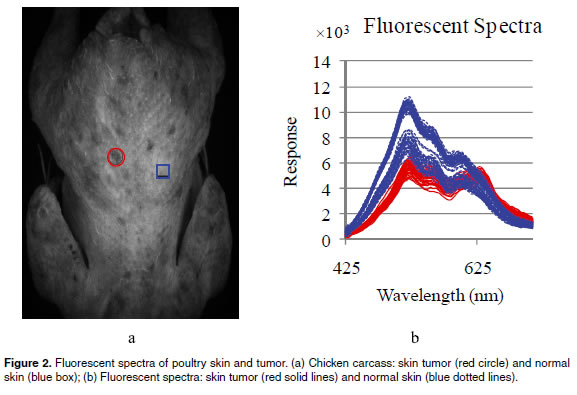
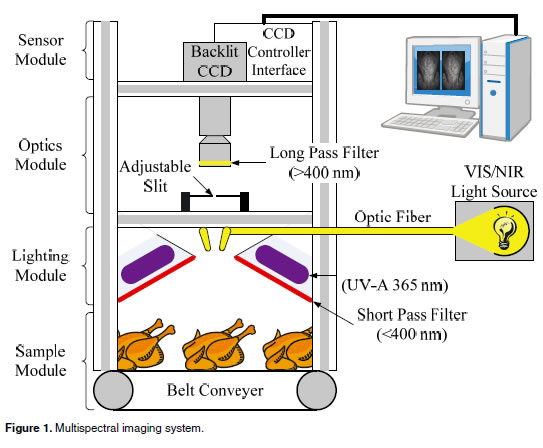
<body><![CDATA[<p><font face="Verdana, Arial, Helvetica, sans-serif" size="2"><I>A produ&ccedil;&atilde;o de carne livre de doen&ccedil;as &eacute; crucial em produ&ccedil;&atilde;o pecu&aacute;ria intensiva. Os espectros de fluoresc&ecirc;ncia temse estado utilizando em forma pr&aacute;tica em muitas &aacute;reas, j&aacute; que a resposta da fluoresc&ecirc;ncia &eacute; muito sens&iacute;vel para detectar elementos tra&ccedil;a. Este art&iacute;culo apresenta um &oacute;ptimo filtro de emiss&atilde;o para </I><I>o sistema de imagens de fluoresc&ecirc;ncia utilizado para detectar tumores cut&acirc;neos em carca&ccedil;as de frangos. As caracter&iacute;sticas espectrais da amostra, insertas em bandas espectrais amplas s&atilde;o utilizadas por varias metodologias. Neste art&iacute;culo aplicamos a an&aacute;lises linear discriminante para determinar o filtro de emiss&atilde;o do sistema de imagens por fluoresc&ecirc;ncia, mediante o qual obt&eacute;m-se a atenua&ccedil;&atilde;o &oacute;ptima das ondas de emiss&atilde;o em termos de poder discriminante. Os valores de atenua&ccedil;&atilde;o d&atilde;o prioridade &agrave;s longitudes de onda para seleccionar as bandas espectrais mais significativas. Gra&ccedil;as &agrave; utiliza&ccedil;&atilde;o do filtro optimizado, os tumores cut&acirc;neos existentes na carca&ccedil;a de frango s&atilde;o magnificados, de fato que s&atilde;o diferenciados perfeitamente nas imagens de fluoresc&ecirc;ncia resultantes. </I></font></p>     <p><font face="Verdana, Arial, Helvetica, sans-serif" size="2"><b>Palavras chave:</b> <I>an&aacute;lises discriminante lineal, espectrofluorimetria, filtro de emiss&atilde;o, melhoramento de imagem, modelo de imagem hiperespectral, tumor cut&acirc;neo. </I></font></p>     <p>&nbsp;</p><hr size="1">     <p><font face="Verdana, Arial, Helvetica, sans-serif" size="3"><b>Introduction</b></font></p>     <p><font face="Verdana, Arial, Helvetica, sans-serif" size="2">Automatic inspection systems of live and slaughtered poultry have been requested for food safety as poultry production and consumption increased (Bilgili, 2001; United States Department of Agriculture, 2006). Market forces are encouraging the use of more sophisticated technology for food safety along with an expanded array of food safety practices (Park <I>et al., 2003; </I>Gowen <I>et al</I>., 2007). The use of computer vision, hyperspectral imaging, and optical systems for poultry inspection are prevailing to discriminate wholesome from unwholesome chicken carcasses (Park <I>et al.</I>, 2002; Lawrence <I>et al.</I>, 2003). In particular, the hyperspectral imaging technique provides powerful process analytical tools for non-destructive food analysis even though this technique is originated from remote sensing (Gowen <I>et al.</I>, 2007; Kim <I>et al.</I>, 2004). A laboratory&minus;based hyperspectral imaging system which employs a pushbroom method was developed (Kim <I>et al.</I>, 2001). Recently, a hyperspectral imaging model and an applied linear discriminant analysis were developed to determine system parameters of hyperspectral inspection system for poultry feces on chicken carcasses (Kim <I>et al.</I>, 2008). </font> </p>     <p><font face="Verdana, Arial, Helvetica, sans-serif" size="2">Hyperspectral fluorescence imaging offers an instant, noninvasive inspection method for detecting skin tumors (Chao and Chen, 2002; Zhang <I>et al.</I>, 1999). Poultry skin tumors are ulcerous lesions that are surrounded by a rim of thickened skin and dermis. Tumorous carcasses often demonstrate swollen or enlarged tissue caused by the uncontrolled growth of new tissue. Tumor is not as visually obvious since its spatial signature appears as shape distortion rather than discoloration. </font></p>     <p><font face="Verdana, Arial, Helvetica, sans-serif" size="2">The objective of this study is to propose a mathematical model of hyperspectral fluorescence imaging system, design its optimal emission fi lter, and synthesize the hyperspectral images into a single-spectral image for poultry skin tumors. </font></p>     <p>&nbsp;</p>     <p><font face="Verdana, Arial, Helvetica, sans-serif" size="3"><b>Material and methods </b></font></p>     <p><font face="Verdana, Arial, Helvetica, sans-serif" size="2"><I>Chickens carcasses </I></font></p>     ]]></body>
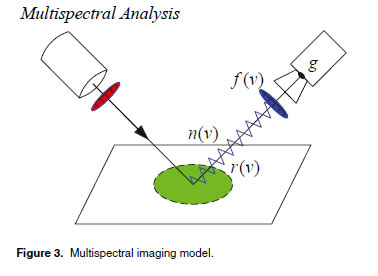
<body><![CDATA[<p><font face="Verdana, Arial, Helvetica, sans-serif" size="2">Hyperspectral images of chicken carcasses collected in Du and Kong (2007) were used to design an emission filter and summarized here shortly. Twelve chicken carcasses were collected from a poultry processing plant (Allen Family Foods, Inc., Cordova, MD) in March and May 2002. A Food Safety and Inspection Service veterinarian at the plant identifies the condition of the poultry carcasses. </font></p>     <p><font face="Verdana, Arial, Helvetica, sans-serif" size="2"><I>Hyperspectral </I><I>fl</I><I> uorescence images </I></font></p>     <p><font face="Verdana, Arial, Helvetica, sans-serif" size="2">A laboratory-based line-by-line hyperspectral imaging system capable of reflectance and fluorescence imaging for uses in food safety and quality research was develop by Instrumentation and Sensing Laboratory (ISL) at Beltsville Agricultural Research Center (Beltsville, MD) (Zhang <I>et al.</I>, 1999; Kong <I>et al</I>., 2004). The system employs a pushbroom method in which a line of spatial information with a full spectral range per spatial pixel was captured sequentially to cover a volume of spatial and spectral data. The ISL hyperspectral imaging system was equipped with a charge coupled device (CCD) camera, a spectrograph, a sample transport mechanism, and two lighting sources for refl ectance and fluorescence sensing (<a href="#f1">Figure 1</a>)(Du and Kong, 2007).</font></p>     <p><font face="Verdana, Arial, Helvetica, sans-serif" size="2"><img src="/img/revistas/rccp/v23n1/v23n1a02f01.jpg"><a name="f1"></a></font></p>     <p><font face="Verdana, Arial, Helvetica, sans-serif" size="2">Two fluorescent lamp assemblies were installed to provide a near uniform UV-A (365 nm) excitation to the sample area for fl uorescence measurements. A short-pass filter placed in front of the lamp housing were installed to prevent transmittance of radiations greater than approximately 400 nm, and thus eliminate the potential spectral contamination by pseudo-fluorescence. The system acquires the data via line-by-line scans while transporting sample materials via a precision positioning table. </font></p>     <p><font face="Verdana, Arial, Helvetica, sans-serif" size="2">A hyperspectral image of chicken carcasses consists of 460*400 pixels with 65 spectral bands. The spectral band had discrete wavelengths from 425.4 nm to 710.7 nm. The representative emission plot of poultry skin and tumor are shown in <a href="#f2">Figure 2</a>. </font></p>     <p><font face="Verdana, Arial, Helvetica, sans-serif" size="2"><img src="/img/revistas/rccp/v23n1/v23n1a02f02.jpg"><a name="f2"></a></font></p>     <p><font face="Verdana, Arial, Helvetica, sans-serif" size="2"><img src="/img/revistas/rccp/v23n1/v23n1a02f03.jpg"><a name="f3"></a></font></p>     <p><font face="Verdana, Arial, Helvetica, sans-serif" size="2">Hyperspectral imaging techniques have been utilized in many scientific disciplines, from microscopic studies to airborne remote&minus;sensing applications. Hyperspectral data are three&minus; dimensional data containing two&minus;dimensional information measured at a sequence of individual wavelengths across a sufficiently broad spectral range. The optimal emission fi lter is designed for poultry skin tumors through linear discriminant analysis (LDA). A mathematical model for a hyperspectral imaging system is proposed and its emission fi lter is optimally determined by LDA. A fast numerical scheme is presented for numerical implementation. Spectrofl uorimetric data of organic materials and feces of chicken carcasses were analyzed by LDA. </font></p>     <p><font face="Verdana, Arial, Helvetica, sans-serif" size="2">The multi-spectral imaging system for spectrofl uorimetry of poultry skin tumors consists of a light source, emission fi lter, and camera as shown i n <a href="#f3">Figure 3</a> (Reichman, 2000). The light source is assumed to be fi xed and the camera has the uniform sensitivity for all wavelengths. Spectral signature reveals the characteristics of the different types of tissues. <a href="#f2">Figure 2</a> shows the relative fluorescence intensity of hyperspectral image data at each spectral band for normal tissues and tumors (Kim <I>et al.</I>, 2004). Suppose that a specimen shows its own hyperspectral response <I>r</I>(<I>v</I>) with random noise <I>n</I>(<I>v</I>). Its spectrofl uorimetric response is: </font></p>     ]]></body>
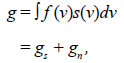
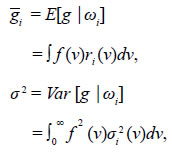
<body><![CDATA[<p><font face="Verdana, Arial, Helvetica, sans-serif" size="2"><I>s</I>(<I>v</I>) = <I>r </I>(<I>v</I>)<I>+n</I>(<I>v</I>) </font></p>     <p><font face="Verdana, Arial, Helvetica, sans-serif" size="2">The noise characteristic of hyperspectral response was investigated. The noise <I>n</I>(<I>v</I>) is assumed to be a Gaussian random noise: </font></p>     <p><font face="Verdana, Arial, Helvetica, sans-serif" size="2"><I>n</I>(<I>v</I>) ~ <I>N </I>(0,<I>&sigma;</I><Sup>2 </Sup>(<I>v</I>))<I>, </I></font></p>     <p><font face="Verdana, Arial, Helvetica, sans-serif" size="2">where <I>&sigma;</I><Sup>2</Sup>(<I>v</I>) is variance at <I>v</I>. The intensity <I>g </I>through a filter <I>f</I>(<I>v</I>) is: </font></p>     <p><font face="Verdana, Arial, Helvetica, sans-serif" size="2"><img src="/img/revistas/rccp/v23n1/v23n1a02f06.jpg"></font></p>     <p><font face="Verdana, Arial, Helvetica, sans-serif" size="2">where <I>g</I><Sub><I>s</I></Sub><I> = </I>&#8747;<I>f</I>(<I>v</I>)<I>r</I>(<I>v</I>)<I>dv </I>and <I>g</I><Sub><I>n</I></Sub><I> = </I>&#8747;<I>f</I>(<I>v</I>)<I>n</I>(<I>v</I>)<I>dv </I>be a signal and a noise of intensity, respectively. The sample mean and variance of intensity are obtained by: </font></p>     <p><font face="Verdana, Arial, Helvetica, sans-serif" size="2"><img src="/img/revistas/rccp/v23n1/v23n1a02f07.jpg"></font></p>     <p><font face="Verdana, Arial, Helvetica, sans-serif" size="2">For multiple specimens the sample mean and variance of the intensity of the <I>i</I>th specimen are</font></p>     <p><font face="Verdana, Arial, Helvetica, sans-serif" size="2"><img src="/img/revistas/rccp/v23n1/v23n1a02f08.jpg"></font></p>     <p><font face="Verdana, Arial, Helvetica, sans-serif" size="2">where <I>&omega;</I><Sub><I>i</I></Sub> denotes the <I>i</I>th specimen, <I>r</I><Sub><I>i</I></Sub> and <I>&sigma;</I><Sub><I>i </I></Sub><Sup>2</Sup> are mean and variance of spectrofl uorimetric response of <I>&omega;</I><Sub><I>i</I></Sub>. The total mean of intensity is: </font></p>     ]]></body>
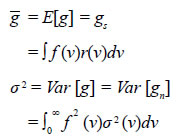
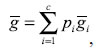
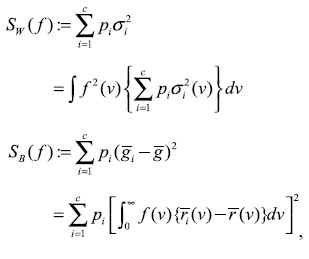
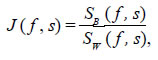
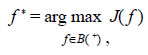
<body><![CDATA[<p><font face="Verdana, Arial, Helvetica, sans-serif" size="2"><img src="/img/revistas/rccp/v23n1/v23n1a02f09.jpg"></font></p>     <p><font face="Verdana, Arial, Helvetica, sans-serif" size="2">where <I>p</I><Sub><I>i</I></Sub> is prior probability of the <I>i</I>th specimen. The within and between variances are obtained by (Duda and Stork, 2001): </font></p>     <p><font face="Verdana, Arial, Helvetica, sans-serif" size="2"><img src="/img/revistas/rccp/v23n1/v23n1a02f10.jpg"></font></p>     <p><font face="Verdana, Arial, Helvetica, sans-serif" size="2">The emission filter should be chosen to maximize the discriminant power of specimens. The discriminability in LDA is defined by </font></p>     <p><font face="Verdana, Arial, Helvetica, sans-serif" size="2"><img src="/img/revistas/rccp/v23n1/v23n1a02f11.jpg"></font></p>     <p><font face="Verdana, Arial, Helvetica, sans-serif" size="2">The discriminability varies with form of <I>f</I> but not scalar product. Their function space is restricted to positive unit functions: </font></p>     <p><font face="Verdana, Arial, Helvetica, sans-serif" size="2"><img src="/img/revistas/rccp/v23n1/v23n1a02f12.jpg"></font></p>     <p><font face="Verdana, Arial, Helvetica, sans-serif" size="2">where <I>B</I>(<Sup>+</Sup>) is a collection of all positive unit functions. The optimal emission fi lters is obtained numerically. </font></p>     <p>&nbsp;</p>     <p><font face="Verdana, Arial, Helvetica, sans-serif" size="3"><b>Results</b></font></p>     ]]></body>
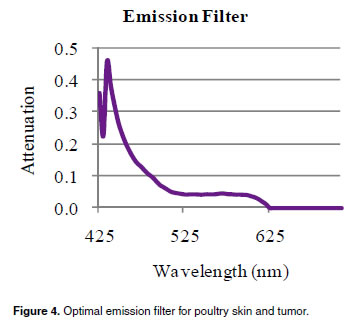
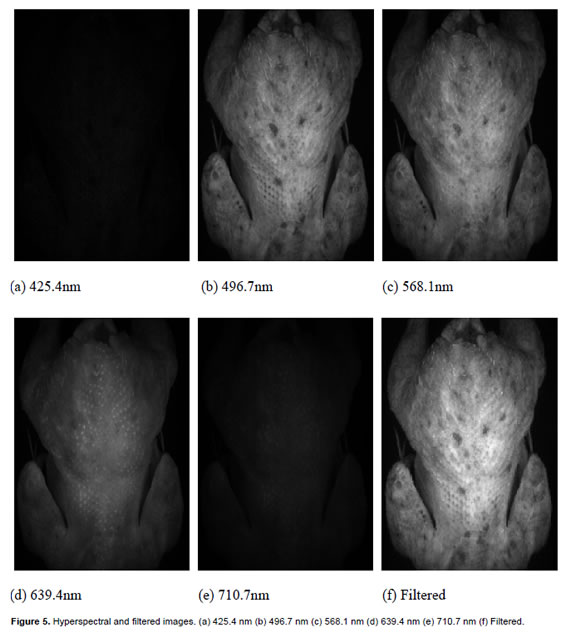
<body><![CDATA[<p><font face="Verdana, Arial, Helvetica, sans-serif" size="2">MATLAB software was used to calculate discriminability from spectral data of seven specimens and to obtain the optimal emission fi lter. Continuous <I>f</I> were discretized by the same resolution, initialized with constant functions, and obtained by solving a generalized eigenvalue problem. The relative attenuation of optimal emission filter is shown  in <a href="#f4">Figure 4</a>. The proposed method provides continuous forms, while previous research presented selective bandwidths. A bandpass filter with 425-475 nm bandwidth was most appropriate. </font></p>     <p><font face="Verdana, Arial, Helvetica, sans-serif" size="2"><img src="/img/revistas/rccp/v23n1/v23n1a02f04.jpg"><a name="f4"></a></font></p>     <p><font face="Verdana, Arial, Helvetica, sans-serif" size="2">The optimal emission filter of a multispectral was synthesized from all bands of hyperspectral imaging system for poultry skin tumor is consistent fluorescent images (<a href="#f5">Figure 5</a>). The filtered image with what experts provided in previous research. has much better contrast than all hyperspectral With this emission filter, the fluorescent image images and enhances the part of skin tumors.</font></p>     <p><font face="Verdana, Arial, Helvetica, sans-serif" size="2"><img src="/img/revistas/rccp/v23n1/v23n1a02f05.jpg"><a name="f5"></a></font></p>     <p>&nbsp;</p>     <p><font face="Verdana, Arial, Helvetica, sans-serif" size="3"><b>Discussion</b></font></p>     <p><font face="Verdana, Arial, Helvetica, sans-serif" size="2">The resultant spectra can be used, in principle,    to characterize and identify any given material, but    the hyperspectral imaging system will be downsized    by reducing the spectra. The design of optical fi lters is crucial to build a hyperspectral imaging    system. Many researchers focus on selecting    significant bands for their purposes (Cho and Kim,    2007). Principal component analysis technique    was employed to fi nds an effective representation  of spectral signature in a reduced dimensional feature space and a support vector machine to   makes a decision whether each pixel falls in normal    or tumor categories (Fletcher and Kong, 2003).   A method for detecting skin tumors on chicken    carcasses using hyperspectral fluorescence imaging    data was proposed (Kim et al., 2004). A spectral    band selection method for feature dimensionality   reduction in hyperspectral image analyses was    presented for detecting skin tumors on poultry    carcasses (Du and Kong, 2007). However, the    proposed method estimates the weight of each band    according to its discriminability and provides a   systematic way to design the emission filter.</font></p>     <p><font face="Verdana, Arial, Helvetica, sans-serif" size="2">The optimal emission filter was designed for poultry skin tumor using linear discriminant analysis. A mathematical model for hyperspectral imaging system was proposed and its system parameter, i.e., emission filter was optimally determined by linear discriminant analysis. The optimal emission filter was obtained by solving a generalized eigenvalue problem from its positive nature. The optimal emission filter was validated to enhance the original hyperspectral images in an effective way. Physical implementation is also important because of limitation in the emission filter. </font></p>     <p><font face="Verdana, Arial, Helvetica, sans-serif" size="2">The proposed method can be use to select significant wavelengths and provides a continuous priority of selected bands. The relative attenuation of the wavelength can be interpreted as its relative significance so that the selection priority is determined by sorting the relative attenuation. Larger number of selected bands always contains the small number of bands while selected bands changes depending on their number in Du and Kong (2007). </font></p>     <p><font face="Verdana, Arial, Helvetica, sans-serif" size="2">Lighting sources are also important design parameters to improve the discriminability of the fluorescence imaging system. Experts and experienced researchers often determine light sources by intuition. For example, in many cases fluorescent lamps of UV-A (365 nm) are used to provide excitation to the sample for fluorescence measurements. The discriminability of the classes can be derived by the excitation fi lter and maximized in a similar way that develop ed in 2.3. </font></p>     ]]></body>
<body><![CDATA[<p><font face="Verdana, Arial, Helvetica, sans-serif" size="2">The study suggests that a systematic method to determine the optical filters of fluorescence hyperspectral imaging systems to maximize the discriminability of poultry skin and tumor. The resultant image through the optical filter has the larger contrast than any other single band images. The proposed method is applicable for other agricultural products which are distinguishable by their spectral properties. </font></p>     <p>&nbsp;</p>     <p><font face="Verdana, Arial, Helvetica, sans-serif" size="3"><b>References</b></font></p>     <!-- ref --><p><font face="Verdana, Arial, Helvetica, sans-serif" size="2">Bilgili, SF.  Poultry meat inspection and grading. Poultry Meat Processing 2001; 47-71. </font>&nbsp;&nbsp;&nbsp;&nbsp;&nbsp;&nbsp;&nbsp;&nbsp;[&#160;<a href="javascript:void(0);" onclick="javascript: window.open('/scielo.php?script=sci_nlinks&ref=000076&pid=S0120-0690201000010000200001&lng=','','width=640,height=500,resizable=yes,scrollbars=1,menubar=yes,');">Links</a>&#160;]<!-- end-ref --><!-- ref --><p><font face="Verdana, Arial, Helvetica, sans-serif" size="2">Chao K, Mehl PM, Chen YR.  Use of hyper-and multispectral imaging for detection of chicken skin tumors. Applied Engineering in Agriculture 2002; 18:113-120. </font>&nbsp;&nbsp;&nbsp;&nbsp;&nbsp;&nbsp;&nbsp;&nbsp;[&#160;<a href="javascript:void(0);" onclick="javascript: window.open('/scielo.php?script=sci_nlinks&ref=000077&pid=S0120-0690201000010000200002&lng=','','width=640,height=500,resizable=yes,scrollbars=1,menubar=yes,');">Links</a>&#160;]<!-- end-ref --><!-- ref --><p><font face="Verdana, Arial, Helvetica, sans-serif" size="2">Chen YR, Hruschka WR, Early H. A chicken carcass inspection system using Visible/near-infrared reflectance: In-plant trials. Journal of Food Process Engineering 2000; 23:89-100. </font>&nbsp;&nbsp;&nbsp;&nbsp;&nbsp;&nbsp;&nbsp;&nbsp;[&#160;<a href="javascript:void(0);" onclick="javascript: window.open('/scielo.php?script=sci_nlinks&ref=000078&pid=S0120-0690201000010000200003&lng=','','width=640,height=500,resizable=yes,scrollbars=1,menubar=yes,');">Links</a>&#160;]<!-- end-ref --><!-- ref --><p><font face="Verdana, Arial, Helvetica, sans-serif" size="2">Cho B, Kim MS. Study on optimal fluorescence excitation and emission bands for poultry surface inspection. Journal of the Korean Society for Agricultural Machinery 2007; 12:438-441. </font>&nbsp;&nbsp;&nbsp;&nbsp;&nbsp;&nbsp;&nbsp;&nbsp;[&#160;<a href="javascript:void(0);" onclick="javascript: window.open('/scielo.php?script=sci_nlinks&ref=000079&pid=S0120-0690201000010000200004&lng=','','width=640,height=500,resizable=yes,scrollbars=1,menubar=yes,');">Links</a>&#160;]<!-- end-ref --><!-- ref --><p><font face="Verdana, Arial, Helvetica, sans-serif" size="2">Duda RO, Hart PE, Stork DG. Pattern classifi cation. Wiley Interscience 2001; 2da edn. </font>&nbsp;&nbsp;&nbsp;&nbsp;&nbsp;&nbsp;&nbsp;&nbsp;[&#160;<a href="javascript:void(0);" onclick="javascript: window.open('/scielo.php?script=sci_nlinks&ref=000080&pid=S0120-0690201000010000200005&lng=','','width=640,height=500,resizable=yes,scrollbars=1,menubar=yes,');">Links</a>&#160;]<!-- end-ref --><!-- ref --><p><font face="Verdana, Arial, Helvetica, sans-serif" size="2">Du Z, Jeong MK, Kong SG. Band selection of hyperspectral images for automatic detection of poultry skin tumors. IEEE Transactions on Automation Science and Engineering 2007; 4:332-339. </font>&nbsp;&nbsp;&nbsp;&nbsp;&nbsp;&nbsp;&nbsp;&nbsp;[&#160;<a href="javascript:void(0);" onclick="javascript: window.open('/scielo.php?script=sci_nlinks&ref=000081&pid=S0120-0690201000010000200006&lng=','','width=640,height=500,resizable=yes,scrollbars=1,menubar=yes,');">Links</a>&#160;]<!-- end-ref --><!-- ref --><p><font face="Verdana, Arial, Helvetica, sans-serif" size="2">Fletcher JT, Kong SG.  Principal component analysis for poultry tumor inspection using hyperspectral fluorescence imaging. in International Joint Conference on Neural Networks 2003. </font>&nbsp;&nbsp;&nbsp;&nbsp;&nbsp;&nbsp;&nbsp;&nbsp;[&#160;<a href="javascript:void(0);" onclick="javascript: window.open('/scielo.php?script=sci_nlinks&ref=000082&pid=S0120-0690201000010000200007&lng=','','width=640,height=500,resizable=yes,scrollbars=1,menubar=yes,');">Links</a>&#160;]<!-- end-ref --><!-- ref --><p><font face="Verdana, Arial, Helvetica, sans-serif" size="2">Gowen AA, O'Donnell CP, Cullen PJ, <I>et al</I>. Hyperspectral imaging-an emerging process analytical tool for food quality and safety control. Trends in Food Science &amp; Technology 2007; 18:590-598. </font>&nbsp;&nbsp;&nbsp;&nbsp;&nbsp;&nbsp;&nbsp;&nbsp;[&#160;<a href="javascript:void(0);" onclick="javascript: window.open('/scielo.php?script=sci_nlinks&ref=000083&pid=S0120-0690201000010000200008&lng=','','width=640,height=500,resizable=yes,scrollbars=1,menubar=yes,');">Links</a>&#160;]<!-- end-ref --><!-- ref --><p><font face="Verdana, Arial, Helvetica, sans-serif" size="2">Kim I, Kim MS, Chen YR, <I>et al</I>. Detection of skin tumors on chicken carcasses using hyperspectral fluorescence imaging. Transactions of the American Society of Agricultural Engineers 2004; 47:1785-1792. </font>&nbsp;&nbsp;&nbsp;&nbsp;&nbsp;&nbsp;&nbsp;&nbsp;[&#160;<a href="javascript:void(0);" onclick="javascript: window.open('/scielo.php?script=sci_nlinks&ref=000084&pid=S0120-0690201000010000200009&lng=','','width=640,height=500,resizable=yes,scrollbars=1,menubar=yes,');">Links</a>&#160;]<!-- end-ref --><!-- ref --><p><font face="Verdana, Arial, Helvetica, sans-serif" size="2">Kim MS, Chen YR, Mehl PM, <I>et al</I>. Hyperspectral reflectance and fluorescence imaging system for food quality and safety. Transactions of the American Society of Agricultural Engineers 2001; 44: 721-729. </font>&nbsp;&nbsp;&nbsp;&nbsp;&nbsp;&nbsp;&nbsp;&nbsp;[&#160;<a href="javascript:void(0);" onclick="javascript: window.open('/scielo.php?script=sci_nlinks&ref=000085&pid=S0120-0690201000010000200010&lng=','','width=640,height=500,resizable=yes,scrollbars=1,menubar=yes,');">Links</a>&#160;]<!-- end-ref --><!-- ref --><p><font face="Verdana, Arial, Helvetica, sans-serif" size="2">Kim MS, Lefcourt AM, Chen YR.  Optimal fluorescence excitation and emission bands for detection of fecal contamination. Journal of Food Protection&amp;# 2003; 174: 66: 1198-1207. </font>&nbsp;&nbsp;&nbsp;&nbsp;&nbsp;&nbsp;&nbsp;&nbsp;[&#160;<a href="javascript:void(0);" onclick="javascript: window.open('/scielo.php?script=sci_nlinks&ref=000086&pid=S0120-0690201000010000200011&lng=','','width=640,height=500,resizable=yes,scrollbars=1,menubar=yes,');">Links</a>&#160;]<!-- end-ref --><!-- ref --><p><font face="Verdana, Arial, Helvetica, sans-serif" size="2">Kim T, Cho BK, Kim MS, <I>et al</I>. Optimal optical filters of fluorescence excitation and emission for poultry fecal discrimination. in ASABE Annual International Meeting 2008. </font>&nbsp;&nbsp;&nbsp;&nbsp;&nbsp;&nbsp;&nbsp;&nbsp;[&#160;<a href="javascript:void(0);" onclick="javascript: window.open('/scielo.php?script=sci_nlinks&ref=000087&pid=S0120-0690201000010000200012&lng=','','width=640,height=500,resizable=yes,scrollbars=1,menubar=yes,');">Links</a>&#160;]<!-- end-ref --><!-- ref --><p><font face="Verdana, Arial, Helvetica, sans-serif" size="2">Kong SG, Chen YR, Kim I, <I>et al. </I>Analysis of hyperspectral fluorescence images for poultry skin tumor inspection. Applied optics 2004; 43: 824-833. </font>&nbsp;&nbsp;&nbsp;&nbsp;&nbsp;&nbsp;&nbsp;&nbsp;[&#160;<a href="javascript:void(0);" onclick="javascript: window.open('/scielo.php?script=sci_nlinks&ref=000088&pid=S0120-0690201000010000200013&lng=','','width=640,height=500,resizable=yes,scrollbars=1,menubar=yes,');">Links</a>&#160;]<!-- end-ref --><!-- ref --><p><font face="Verdana, Arial, Helvetica, sans-serif" size="2">Lawrence KC, Windham WR, Park B, <I>et al</I>. A hyperspectral imaging system for identification of faecal and ingesta contamination on poultry carcasses. Journal of Near Infrared Spectroscopy 2003; 11: 269-282. </font>&nbsp;&nbsp;&nbsp;&nbsp;&nbsp;&nbsp;&nbsp;&nbsp;[&#160;<a href="javascript:void(0);" onclick="javascript: window.open('/scielo.php?script=sci_nlinks&ref=000089&pid=S0120-0690201000010000200014&lng=','','width=640,height=500,resizable=yes,scrollbars=1,menubar=yes,');">Links</a>&#160;]<!-- end-ref --><!-- ref --><p><font face="Verdana, Arial, Helvetica, sans-serif" size="2">Park B, Lawrence KC, Windham WR, <I>et al</I>. Hyperspectral imaging for detecting fecal and ingesta contamination on poultry carcasses. Transactions of the American Society of Agricultural Engineers 2002; 45: 2017-2026 </font>&nbsp;&nbsp;&nbsp;&nbsp;&nbsp;&nbsp;&nbsp;&nbsp;[&#160;<a href="javascript:void(0);" onclick="javascript: window.open('/scielo.php?script=sci_nlinks&ref=000090&pid=S0120-0690201000010000200015&lng=','','width=640,height=500,resizable=yes,scrollbars=1,menubar=yes,');">Links</a>&#160;]<!-- end-ref --><!-- ref --><p><font face="Verdana, Arial, Helvetica, sans-serif" size="2">Park B, Lawrence KC, Windham WR, <I>et al</I>. Assessment of hyperspectral imaging system for poultry safety inspection. in SPIE 2003. </font>&nbsp;&nbsp;&nbsp;&nbsp;&nbsp;&nbsp;&nbsp;&nbsp;[&#160;<a href="javascript:void(0);" onclick="javascript: window.open('/scielo.php?script=sci_nlinks&ref=000091&pid=S0120-0690201000010000200016&lng=','','width=640,height=500,resizable=yes,scrollbars=1,menubar=yes,');">Links</a>&#160;]<!-- end-ref --><!-- ref --><p><font face="Verdana, Arial, Helvetica, sans-serif" size="2">Park B, Lawrence KC, Windham WR, <I>et al</I>. Detection of cecal contaminants in visceral cavity of broiler carcasses using hyperspectral imaging. Applied Engineering in Agriculture 2005; 21:627-635. </font>&nbsp;&nbsp;&nbsp;&nbsp;&nbsp;&nbsp;&nbsp;&nbsp;[&#160;<a href="javascript:void(0);" onclick="javascript: window.open('/scielo.php?script=sci_nlinks&ref=000092&pid=S0120-0690201000010000200017&lng=','','width=640,height=500,resizable=yes,scrollbars=1,menubar=yes,');">Links</a>&#160;]<!-- end-ref --><!-- ref --><p><font face="Verdana, Arial, Helvetica, sans-serif" size="2">Reichman J. Handbook of optical fi lters for fluorescence microscopy. Chroma Technology Corporation: 2000. United States Department of Agriculture.  Review of the pathogen reduction; hazard analysis and critical control point systems final rule pursuant to section 610 of the regulatory flexibility act. Washington, D.C. 2006. </font>&nbsp;&nbsp;&nbsp;&nbsp;&nbsp;&nbsp;&nbsp;&nbsp;[&#160;<a href="javascript:void(0);" onclick="javascript: window.open('/scielo.php?script=sci_nlinks&ref=000093&pid=S0120-0690201000010000200018&lng=','','width=640,height=500,resizable=yes,scrollbars=1,menubar=yes,');">Links</a>&#160;]<!-- end-ref --><!-- ref --><p><font face="Verdana, Arial, Helvetica, sans-serif" size="2">Windham WR, Lawrence KC, Park B, <I>et al</I>. Visible/nir spectroscopy for characterizing fecal contamination of chicken carcasses. Transactions of the American Society of Agricultural Engineers 2003; 46:747-751. </font>&nbsp;&nbsp;&nbsp;&nbsp;&nbsp;&nbsp;&nbsp;&nbsp;[&#160;<a href="javascript:void(0);" onclick="javascript: window.open('/scielo.php?script=sci_nlinks&ref=000094&pid=S0120-0690201000010000200019&lng=','','width=640,height=500,resizable=yes,scrollbars=1,menubar=yes,');">Links</a>&#160;]<!-- end-ref --><!-- ref --><p><font face="Verdana, Arial, Helvetica, sans-serif" size="2">Zhang J, Chang CI, Miller SJ, <I>et al</I>. Optical biopsy of skin tumors. in Annual International Conference of the IEEE Engineering in Medicine and Biology Society 1999. </font>&nbsp;&nbsp;&nbsp;&nbsp;&nbsp;&nbsp;&nbsp;&nbsp;[&#160;<a href="javascript:void(0);" onclick="javascript: window.open('/scielo.php?script=sci_nlinks&ref=000095&pid=S0120-0690201000010000200020&lng=','','width=640,height=500,resizable=yes,scrollbars=1,menubar=yes,');">Links</a>&#160;]<!-- end-ref --> ]]></body><back>
<ref-list>
<ref id="B1">
<nlm-citation citation-type="journal">
<person-group person-group-type="author">
<name>
<surname><![CDATA[Bilgili]]></surname>
<given-names><![CDATA[SF]]></given-names>
</name>
</person-group>
<article-title xml:lang="en"><![CDATA[Poultry meat inspection and grading]]></article-title>
<source><![CDATA[Poultry Meat Processing]]></source>
<year>2001</year>
<page-range>47-71</page-range></nlm-citation>
</ref>
<ref id="B2">
<nlm-citation citation-type="journal">
<person-group person-group-type="author">
<name>
<surname><![CDATA[Chao]]></surname>
<given-names><![CDATA[K]]></given-names>
</name>
<name>
<surname><![CDATA[Mehl]]></surname>
<given-names><![CDATA[PM]]></given-names>
</name>
<name>
<surname><![CDATA[Chen]]></surname>
<given-names><![CDATA[YR]]></given-names>
</name>
</person-group>
<article-title xml:lang="en"><![CDATA[Use of hyper-and multispectral imaging for detection of chicken skin tumors]]></article-title>
<source><![CDATA[Applied Engineering in Agriculture]]></source>
<year>2002</year>
<volume>18</volume>
<page-range>113-120</page-range></nlm-citation>
</ref>
<ref id="B3">
<nlm-citation citation-type="journal">
<person-group person-group-type="author">
<name>
<surname><![CDATA[Chen]]></surname>
<given-names><![CDATA[YR]]></given-names>
</name>
<name>
<surname><![CDATA[Hruschka]]></surname>
<given-names><![CDATA[WR]]></given-names>
</name>
<name>
<surname><![CDATA[Early]]></surname>
<given-names><![CDATA[H]]></given-names>
</name>
</person-group>
<article-title xml:lang="en"><![CDATA[A chicken carcass inspection system using Visible/near-infrared reflectance: In-plant trials]]></article-title>
<source><![CDATA[Journal of Food Process Engineering]]></source>
<year>2000</year>
<volume>23</volume>
<page-range>89-100</page-range></nlm-citation>
</ref>
<ref id="B4">
<nlm-citation citation-type="journal">
<person-group person-group-type="author">
<name>
<surname><![CDATA[Cho]]></surname>
<given-names><![CDATA[B]]></given-names>
</name>
<name>
<surname><![CDATA[Kim]]></surname>
<given-names><![CDATA[MS]]></given-names>
</name>
</person-group>
<article-title xml:lang="en"><![CDATA[Study on optimal fluorescence excitation and emission bands for poultry surface inspection]]></article-title>
<source><![CDATA[Journal of the Korean Society for Agricultural Machinery]]></source>
<year>2007</year>
<volume>12</volume>
<page-range>438-441</page-range></nlm-citation>
</ref>
<ref id="B5">
<nlm-citation citation-type="book">
<person-group person-group-type="author">
<name>
<surname><![CDATA[Duda]]></surname>
<given-names><![CDATA[RO]]></given-names>
</name>
<name>
<surname><![CDATA[Hart]]></surname>
<given-names><![CDATA[PE]]></given-names>
</name>
<name>
<surname><![CDATA[Stork]]></surname>
<given-names><![CDATA[DG]]></given-names>
</name>
</person-group>
<source><![CDATA[Pattern classifi cation]]></source>
<year>2001</year>
<edition>2</edition>
<publisher-name><![CDATA[Wiley Interscience]]></publisher-name>
</nlm-citation>
</ref>
<ref id="B6">
<nlm-citation citation-type="journal">
<person-group person-group-type="author">
<name>
<surname><![CDATA[Du]]></surname>
<given-names><![CDATA[Z]]></given-names>
</name>
<name>
<surname><![CDATA[Jeong]]></surname>
<given-names><![CDATA[MK]]></given-names>
</name>
<name>
<surname><![CDATA[Kong]]></surname>
<given-names><![CDATA[SG]]></given-names>
</name>
</person-group>
<article-title xml:lang="en"><![CDATA[Band selection of hyperspectral images for automatic detection of poultry skin tumors]]></article-title>
<source><![CDATA[IEEE Transactions on Automation Science and Engineering]]></source>
<year>2007</year>
<volume>4</volume>
<page-range>332-339</page-range></nlm-citation>
</ref>
<ref id="B7">
<nlm-citation citation-type="">
<person-group person-group-type="author">
<name>
<surname><![CDATA[Fletcher]]></surname>
<given-names><![CDATA[JT]]></given-names>
</name>
<name>
<surname><![CDATA[Kong]]></surname>
<given-names><![CDATA[SG]]></given-names>
</name>
</person-group>
<source><![CDATA[Principal component analysis for poultry tumor inspection using hyperspectral fluorescence imaging: in International Joint Conference on Neural Networks]]></source>
<year>2003</year>
</nlm-citation>
</ref>
<ref id="B8">
<nlm-citation citation-type="journal">
<person-group person-group-type="author">
<name>
<surname><![CDATA[Gowen]]></surname>
<given-names><![CDATA[AA]]></given-names>
</name>
<name>
<surname><![CDATA[O'Donnell]]></surname>
<given-names><![CDATA[CP]]></given-names>
</name>
<name>
<surname><![CDATA[Cullen]]></surname>
<given-names><![CDATA[PJ]]></given-names>
</name>
</person-group>
<article-title xml:lang="en"><![CDATA[Hyperspectral imaging-an emerging process analytical tool for food quality and safety control]]></article-title>
<source><![CDATA[Trends in Food Science & Technology]]></source>
<year>2007</year>
<volume>18</volume>
<page-range>590-598</page-range></nlm-citation>
</ref>
<ref id="B9">
<nlm-citation citation-type="journal">
<person-group person-group-type="author">
<name>
<surname><![CDATA[Kim]]></surname>
<given-names><![CDATA[I]]></given-names>
</name>
<name>
<surname><![CDATA[Kim]]></surname>
<given-names><![CDATA[MS]]></given-names>
</name>
<name>
<surname><![CDATA[Chen]]></surname>
<given-names><![CDATA[YR]]></given-names>
</name>
</person-group>
<article-title xml:lang="en"><![CDATA[Detection of skin tumors on chicken carcasses using hyperspectral fluorescence imaging]]></article-title>
<source><![CDATA[Transactions of the American Society of Agricultural Engineers]]></source>
<year>2004</year>
<volume>47</volume>
<page-range>1785-1792</page-range></nlm-citation>
</ref>
<ref id="B10">
<nlm-citation citation-type="journal">
<person-group person-group-type="author">
<name>
<surname><![CDATA[Kim]]></surname>
<given-names><![CDATA[MS]]></given-names>
</name>
<name>
<surname><![CDATA[Chen]]></surname>
<given-names><![CDATA[YR]]></given-names>
</name>
<name>
<surname><![CDATA[Mehl]]></surname>
<given-names><![CDATA[PM]]></given-names>
</name>
</person-group>
<article-title xml:lang="en"><![CDATA[Hyperspectral reflectance and fluorescence imaging system for food quality and safety]]></article-title>
<source><![CDATA[Transactions of the American Society of Agricultural Engineers]]></source>
<year>2001</year>
<volume>44</volume>
<page-range>721-729</page-range></nlm-citation>
</ref>
<ref id="B11">
<nlm-citation citation-type="journal">
<person-group person-group-type="author">
<name>
<surname><![CDATA[Kim]]></surname>
<given-names><![CDATA[MS]]></given-names>
</name>
<name>
<surname><![CDATA[Lefcourt]]></surname>
<given-names><![CDATA[AM]]></given-names>
</name>
<name>
<surname><![CDATA[Chen]]></surname>
<given-names><![CDATA[YR]]></given-names>
</name>
</person-group>
<article-title xml:lang="en"><![CDATA[Optimal fluorescence excitation and emission bands for detection of fecal contamination]]></article-title>
<source><![CDATA[Journal of Food Protection]]></source>
<year>2003</year>
<volume>174</volume>
<numero>66</numero>
<issue>66</issue>
<page-range>1198-1207</page-range></nlm-citation>
</ref>
<ref id="B12">
<nlm-citation citation-type="confpro">
<person-group person-group-type="author">
<name>
<surname><![CDATA[Kim]]></surname>
<given-names><![CDATA[T]]></given-names>
</name>
<name>
<surname><![CDATA[Cho]]></surname>
<given-names><![CDATA[BK]]></given-names>
</name>
<name>
<surname><![CDATA[Kim]]></surname>
<given-names><![CDATA[MS]]></given-names>
</name>
</person-group>
<source><![CDATA[Optimal optical filters of fluorescence excitation and emission for poultry fecal discrimination]]></source>
<year>2008</year>
<conf-name><![CDATA[ ASABE Annual International Meeting]]></conf-name>
<conf-loc> </conf-loc>
</nlm-citation>
</ref>
<ref id="B13">
<nlm-citation citation-type="journal">
<person-group person-group-type="author">
<name>
<surname><![CDATA[Kong]]></surname>
<given-names><![CDATA[SG]]></given-names>
</name>
<name>
<surname><![CDATA[Chen]]></surname>
<given-names><![CDATA[YR]]></given-names>
</name>
<name>
<surname><![CDATA[Kim]]></surname>
<given-names><![CDATA[I]]></given-names>
</name>
</person-group>
<article-title xml:lang="en"><![CDATA[Analysis of hyperspectral fluorescence images for poultry skin tumor inspection]]></article-title>
<source><![CDATA[Applied optics]]></source>
<year>2004</year>
<volume>43</volume>
<page-range>824-833</page-range></nlm-citation>
</ref>
<ref id="B14">
<nlm-citation citation-type="journal">
<person-group person-group-type="author">
<name>
<surname><![CDATA[Lawrence]]></surname>
<given-names><![CDATA[KC]]></given-names>
</name>
<name>
<surname><![CDATA[Windham]]></surname>
<given-names><![CDATA[WR]]></given-names>
</name>
<name>
<surname><![CDATA[Park]]></surname>
<given-names><![CDATA[B]]></given-names>
</name>
</person-group>
<article-title xml:lang="en"><![CDATA[A hyperspectral imaging system for identification of faecal and ingesta contamination on poultry carcasses]]></article-title>
<source><![CDATA[Journal of Near Infrared Spectroscopy]]></source>
<year>2003</year>
<volume>11</volume>
<page-range>269-282</page-range></nlm-citation>
</ref>
<ref id="B15">
<nlm-citation citation-type="journal">
<person-group person-group-type="author">
<name>
<surname><![CDATA[Park]]></surname>
<given-names><![CDATA[B]]></given-names>
</name>
<name>
<surname><![CDATA[Lawrence]]></surname>
<given-names><![CDATA[KC]]></given-names>
</name>
<name>
<surname><![CDATA[Windham]]></surname>
<given-names><![CDATA[WR]]></given-names>
</name>
</person-group>
<article-title xml:lang="en"><![CDATA[Hyperspectral imaging for detecting fecal and ingesta contamination on poultry carcasses]]></article-title>
<source><![CDATA[Transactions of the American Society of Agricultural Engineers]]></source>
<year>2002</year>
<volume>45</volume>
<page-range>2017-2026</page-range></nlm-citation>
</ref>
<ref id="B16">
<nlm-citation citation-type="confpro">
<person-group person-group-type="author">
<name>
<surname><![CDATA[Park]]></surname>
<given-names><![CDATA[B]]></given-names>
</name>
<name>
<surname><![CDATA[Lawrence]]></surname>
<given-names><![CDATA[KC]]></given-names>
</name>
<name>
<surname><![CDATA[Windham]]></surname>
<given-names><![CDATA[WR]]></given-names>
</name>
</person-group>
<article-title xml:lang="en"><![CDATA[Assessment of hyperspectral imaging system for poultry safety inspection]]></article-title>
<source><![CDATA[]]></source>
<year></year>
<conf-name><![CDATA[ SPIE]]></conf-name>
<conf-date>2003</conf-date>
<conf-loc> </conf-loc>
</nlm-citation>
</ref>
<ref id="B17">
<nlm-citation citation-type="journal">
<person-group person-group-type="author">
<name>
<surname><![CDATA[Park]]></surname>
<given-names><![CDATA[B]]></given-names>
</name>
<name>
<surname><![CDATA[Lawrence]]></surname>
<given-names><![CDATA[KC]]></given-names>
</name>
<name>
<surname><![CDATA[Windham]]></surname>
<given-names><![CDATA[WR]]></given-names>
</name>
</person-group>
<article-title xml:lang="en"><![CDATA[Detection of cecal contaminants in visceral cavity of broiler carcasses using hyperspectral imaging]]></article-title>
<source><![CDATA[Applied Engineering in Agriculture]]></source>
<year>2005</year>
<volume>21</volume>
<page-range>627-635</page-range></nlm-citation>
</ref>
<ref id="B18">
<nlm-citation citation-type="book">
<person-group person-group-type="author">
<name>
<surname><![CDATA[Reichman]]></surname>
<given-names><![CDATA[J]]></given-names>
</name>
</person-group>
<source><![CDATA[Handbook of optical fi lters for fluorescence microscopy]]></source>
<year>2000</year>
<publisher-name><![CDATA[Chroma Technology Corporation]]></publisher-name>
</nlm-citation>
</ref>
<ref id="B19">
<nlm-citation citation-type="journal">
<person-group person-group-type="author">
<name>
<surname><![CDATA[Windham]]></surname>
<given-names><![CDATA[WR]]></given-names>
</name>
<name>
<surname><![CDATA[Lawrence]]></surname>
<given-names><![CDATA[KC]]></given-names>
</name>
<name>
<surname><![CDATA[Park]]></surname>
<given-names><![CDATA[B]]></given-names>
</name>
</person-group>
<article-title xml:lang="en"><![CDATA[Visible/nir spectroscopy for characterizing fecal contamination of chicken carcasses]]></article-title>
<source><![CDATA[Transactions of the American Society of Agricultural Engineers]]></source>
<year>2003</year>
<volume>46</volume>
<page-range>747-751</page-range></nlm-citation>
</ref>
<ref id="B20">
<nlm-citation citation-type="confpro">
<person-group person-group-type="author">
<name>
<surname><![CDATA[Zhang]]></surname>
<given-names><![CDATA[J]]></given-names>
</name>
<name>
<surname><![CDATA[Chang]]></surname>
<given-names><![CDATA[CI]]></given-names>
</name>
<name>
<surname><![CDATA[Miller]]></surname>
<given-names><![CDATA[SJ]]></given-names>
</name>
</person-group>
<article-title xml:lang="en"><![CDATA[Optical biopsy of skin tumors]]></article-title>
<source><![CDATA[]]></source>
<year></year>
<conf-name><![CDATA[ Annual International Conference of the IEEE Engineering in Medicine and Biology Society]]></conf-name>
<conf-date>1999</conf-date>
<conf-loc> </conf-loc>
</nlm-citation>
</ref>
</ref-list>
</back>
</article>