LITERATURE REVIEW
doi: 10.17533/udea.rccp.v28n2a01
Dietary organic acids for broiler chickens: a review¤
Ácidos orgánicos en la dieta de pollos de engorde: revisión de literatura
Dietas ácidos orgânicos sobre frangos de corte: revisão de literatura
]]>
Jong Woong Kim, AnSc, MS; Jong Hyuk Kim, AnSc, MS; Dong Yong Kil*, AnSc, PhD.
Department of Animal Science and Technology, Chung-Ang University, Anseong-si, Gyeonggi-do 456-756, Republic of Korea.
*Corresponding author: Dong Yong Kil, Department of Animal Science and Technology, Chung - Ang University, Anseong-si, Gyeonggi-do 456-756, Republic of Korea. Tel:+82 316703028, Fax:+82 316762196. Email: dongyong@cau.ac.kr
Received: April 8, 2013; accepted: March 30, 2014
Summary
]]> The objective was to summarize and describe the possible mode of action of dietary organic acids and their effects on growth performance of broiler chickens. Previous experiments have suggested that dietary organic acids decrease pH in diets and subsequently reduce pH in the proximal and distal intestine, increase nutrient utilization, and inhibit pathogenic bacterial growth in the gastrointestinal tract (GIT). The degree of pH reduction is usually greater in the upper part of the GIT (crop, proventriculus, and gizzard) than in the lower part of the GIT (duodenum, jejunum, ileum, and cecum). Bactericidal effects of dietary organic acids have been observed for pathogenic bacteria and even for beneficial bacteria to some extent. However, few significant results regarding bacterial modulation in the GIT have been reported. Dietary organic acids can improve dry matter and protein utilization in some experiments, but the extent of improvement in nutrient utilization is smaller than has been anticipated. Growth performance is likely improved, but results have been inconsistent due to variations in sources and inclusion levels of dietary organic acids. Differences in other dietary components and experimental environments among previous experiments likely contribute to the variable results. This review suggests that the effects of dietary organic acids on broiler chickens are not fully understood. Further experiments are required to reliably demonstrate the mode of action of dietary organic acids and their growth-promoting effects on broiler chickens.Keywords: acidifiers, gastrointestinal pH, growth performance, microbial population, nutrient utilization.
Resumen
El objetivo fue resumir y describir el posible modo de acción de los ácidos orgánicos en la dieta y sus efectos sobre el crecimiento de los pollos de engorde. Experimentos previos sugieren que los ácidos orgánicos dietarios disminuyen el pH de la dieta y posteriormente reducen el pH en el intestino proximal y distal, aumentan la utilización de los nutrientes, e inhiben el crecimiento de bacterias patógenas en el tracto gastrointestinal (GIT). El grado de reducción del pH es generalmente mayor en la parte superior (buche, proventrículo y molleja) que en la parte inferior del GIT (duodeno, yeyuno, íleon y ciego). Se han observado efectos bactericidas de los ácidos orgánicos sobre bacterias patógenas e incluso sobre bacterias beneficiosas en cierta medida. Sin embargo, se han reportado algunos resultados significativos con respecto a la modulación bacteriana en el GIT. Los ácidos orgánicos en la dieta pueden mejorar la utilización de la materia seca y la proteína en algunos experimentos, pero el grado de mejora en la utilización de los nutrientes es más bajo que lo esperado. El crecimiento probablemente mejora, pero los resultados han sido inconsistentes debido a las variaciones en las fuentes y a los niveles de inclusión de los ácidos orgánicos en la dieta. Las diferencias en otros componentes de la dieta y entornos experimentales entre los ensayos anteriores probablemente contribuyen a la variacion en los resultados. Esta revisión sugiere que los efectos de los ácidos orgánicos en la dieta de pollos de engorde no son totalmente comprendidos. Se requieren más experimentos para demostrar de manera fiable el modo de acción de los ácidos orgánicos dietarios y sus efectos sobre la promocion del crecimiento en pollos de engorde.
Palabras clave: acidificantes, desempeño del crecimiento, pH gastrointestinal, población microbiana, utilización de nutrientes.
Resumo
Este estudo se fez para resumir e descrever o possível modo de ação dos ácidos orgânicos na dieta e seus efeitos sobre o desempenho do crescimento de frangos de corte. Pesquisas feitas nesta área tem descrito que os ácidos orgânicos nas dietas diminuem o pH da dieta e subsequentemente diminuem o pH no intestino proximal e distal, aumentam a utilização de nutrientes e inibem o crescimento de bactérias patogénicas no trato gastrointestinal (GIT). O grau de redução do pH é normalmente maior na parte superior do GIT (colheita, proventrículos e moela) do que na parte inferior do GIT (duodeno, jejuno, íleo e ceco). Com a inclusão de ácidos orgânicos nas dietas tem-se observado efeitos bactericidas tanto sobre as bactérias patogénicas quanto para as bactérias benéficas, em certa medida. Porém, tem-se reportado alguns resultados significativos enquanto à modulação bacteriana no GIT. A adição de ácidos orgânicos na dieta pode melhorar o aproveitamento de matéria seca e proteína em alguns testes, mas o grau de melhora na utilização dos nutrientes é menor do que o esperado. Provavelmente melhora o crescimento, mas os resultados têm sido inconsistentes, devido as variações nas fontes e aos níveis de inclusão de ácidos orgânicos na dieta. As diferenças em outros componentes da dieta e os lugares onde se fazem os testes contribuem para a variação dos resultados. Esta análise sugere que os efeitos dos ácidos orgânicos nas dietas de frangos de corte não são totalmente compreendidos. Precisam-se mais pesquisas para demonstrar uma maneira fiável do modo de ação dos ácidos orgânicos incluídos na dieta e seus efeitos sobre a promoção do crescimento em frangos de corte.
Palavras chave: acidificantes, desempenho produtivo, pH gastrointestinal, população microbiana, utilização de nutriente.
]]> Introduction
Antibiotic growth promoters (AGPs) have been widely used in poultry diets for years. The use of AGPs, however, has been either regulated or banned because of public concerns over possible antibiotic residual problems and the development of antibioticresistant bacteria (Leeson, 2007). Consequently, many researchers have searched for potential alternatives to AGPs. Organic acids, organic minerals, bacteriophages, probiotics, and prebiotics have been suggested as a useful dietary means for compensating the loss in productive performance when AGPs are removed from poultry diets (Jackson et al., 2004; Yan et al., 2012). Among these alternatives, dietary organic acids have gained great attention because of their antimicrobial activity against pathogenic bacteria and the fact that these compounds can induce a pH reduction in the gastrointestinal tract (GIT), which can improve nutrient utilization in poultry diets (Eidelsburger et al., 1992; Boling et al., 2000; Partanen, 2001; Kil et al., 2011a).
Dietary acids for poultry diets are classified as inorganic and organic acids. However, organic acids have been more often used for poultry diets. Organic acids can be defined as carboxylic acids including fatty acids, which have the chemical structure of R-COOH with acidic properties. However, not all organic acids have been used as feed additives in poultry diets. Short chain fatty acids such as formic (C1), acetic (C2), propionic (C3), and butyric acid (C4), and other carboxylic acids such as lactic, malic, tartaric, fumaric, and citric acid have been most commonly used in the poultry industry because their chemical and physical properties are applicable to poultry diets (Dibner and Buttin, 2002). Previously, several reviews have discussed the effects of dietary organic acids on broiler chickens (Dibner and Buttin, 2002; Ricke, 2003; Anjum and Chaudhry, 2010; Islam, 2012). However, previous reviews have not provided a complete evaluation of the potential mechanisms, and have not compiled the effects of dietary organic acids on broiler performance with the recent data. The objective of this review, therefore, was to summarize and describe the possible mode of action of dietary organic acids for broiler chickens and the effects of dietary organic acids on the growth performance of broiler chickens.
Potential mode of action of dietary organic acids
The mode of action of organic acids in animal diets has not been clearly elucidated; this incomplete understanding has limited the application of organic acids in broiler diets. However, several possible mechanisms have been proposed and most of them have been associated with: (1) decreased pH in diets and subsequent reduction of the pH in the GIT, (2) improved nutrient utilization in diets by increasing nutrient retention, and (3) inhibition of pathogenic bacterial growth (Afsharmanesh and Pourreza, 2005; Mroz, 2005). Further research has been performed to elucidate the mode of action of dietary organic acids in various animal species, but the results remain controversial.
Effects on the pH of the gastrointestinal tract (GIT)
The degree of pH reduction in diets and digesta by dietary organic acids is likely dependent of both the pKa values of the respective organic acids and the pH conditions of the GIT (Kim et al., 2005). As expected, the pH of broiler diets was clearly decreased with increasing inclusion levels of dietary organic acids in a dose-dependent manner (Table 1), as was also observed in pig diets (Kil et al., 2011a). Subsequently, the addition of organic acids to broiler diets resulted in the pH reduction of digesta in various parts of the GIT. In general, the degree of pH reduction was usually greater in the upper part of GIT (crop, proventriculus, and gizzard) as compared to the lower part of the GIT (duodenum, jejunum, ileum, and cecum). In seven previous experiments, 11 of 13 organic acid-supplemented groups showed decreased crop pH compared with the control groups, with 7 of 11 observations being significant. Three experiments reported that the pH reductions in the crop were dosedependent. The average pH reduction in the crop was 0.37 (standard error [SE] = 0.10) and it is likely that, of all locations in the GIT, the crop showed the greatest pH reduction. This observation may be related to the short transit of the acids to the crop in addition to the less acidic conditions of the crop (Thompson and Hinton, 1997).
In four previous experiments (Paul et al., 2007; Samanta et al., 2008; Panda et al., 2009a; Salgado-Tránsito et al., 2011), 6 out of 10 organic acid-supplemented groups showed pH reduction in the proventriculus compared with the control groups. However, the reduction achieved statistical significance in only one experiment (Panda et al., 2009a). The average pH reduction in the proventriculus was 0.12 (SE = 0.07), which was less than the pH reduction as observed in the crop. In the lower part of the GIT, the effects of dietary organic acids on digesta pH were more variable than in the upper part of the GIT. Samanta et al. (2008), Panda et al. (2009a), and Nourmohammadi et al. (2011) reported a significant pH reduction in the duodenum, whereas other studies found no significant pH reductions in the duodenum. Similar tendencies for pH reduction were observed in the jejunum, ileum, and cecum. It has been reported that only small amounts of added organic acids in diets may reach the lower part of the GIT because organic acids are very readily absorbed in the upper part of the GIT (Hume et al., 1993). This may explain the lack of pH reduction in the lower part of the GIT as a result of dietary organic acids. Taken together, the data indicate that the effects of dietary organic acids on the pH of the GIT may be limited to the upper part of the GIT in broiler chickens.
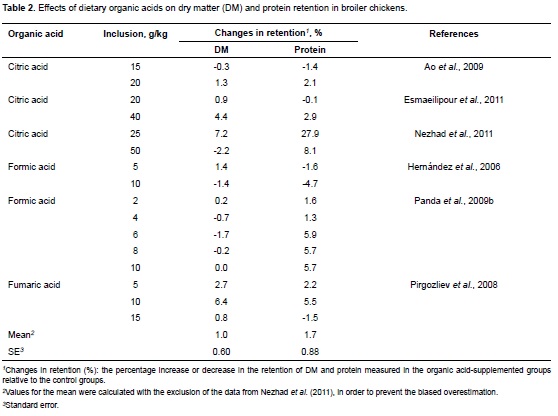
]]> Effects on nutrient utilizationReduced pH in the upper part of the GIT may increase nutrient digestibility, and therefore, nutrient utilization in diets. In the stomach, a reduction in gastric pH activates pepsinogen and other zymogens by adjusting gastric acidity closer to that required for optimal activity (Jongbloed et al., 2000); this increased enzyme activity can improve the digestion of proteins and possibly other nutrients. Furthermore, acidic digesta may decrease gastric emptying, and therefore provide more time for nutrient digestion in the GIT (Kidder and Manners, 1978; Mayer, 1994). Several researchers have demonstrated that dietary supplementation of organic acids can improve the retention of protein and other nutrients. The data from the five previous experiments indicated that broiler chickens fed diets containing various inclusion levels of dietary organic acids generally had greater retention of dry matter (DM) and protein than those fed control diets (Table 2). Average improvements in the retention of DM and protein were 1.0% (SE = 0.60) and 1.7% (SE = 0.88), respectively. However, we excluded the data from Nezhad et al. (2011) in the calculations of the average improvements in the retention of DM and protein because of the unexpectedly high improvement in the retention of protein. Among 14 organic acid supplemented groups, 7 and 9 groups showed a numerical increase in the retention of DM and protein, respectively; however, no significant improvements were verified. In addition, it is unlikely that there were dose dependent responses of organic acids to nutrient retention. When we considered the ratio of the number of positive responses to the number of negative responses by dietary organic acid supplementation, however, broiler chickens fed diets containing organic acids may have improved nutrient retention. However, it appears that the extent of the improvements in nutrient retention may be smaller than anticipated. Surprisingly, there have been few data pertaining to the effects of dietary organic acids on amino acid digestibility in diets fed to broiler chickens compared with other animal species. Further experiments investigating standardized ileal digestibility and true ileal digestibility of amino acid are required to verify the effects of dietary organic acids on nutrient utilization especially for amino acids in diets fed to broiler chickens.
Effects on pathogenic bacteria
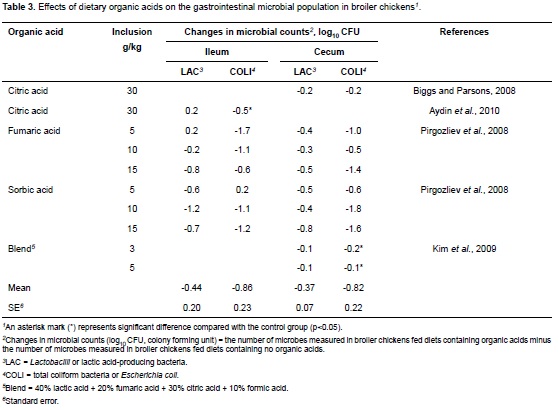
An increased population of pathogenic bacteria in the GIT often results in reduced growth performance of broiler chickens. Therefore, the prevention of pathogenic bacterial over-growth in the GIT may be one of the most important strategies for enhancing growth performance when supplemental AGPs are not used in animal diets. Organic acids can easily penetrate the bacteria cell wall and disrupt normal cellular functions, including replication and protein synthesis of bacteria (Denyer and Stewart, 1998; Davidson, 2001). The proposed sequential mechanisms of bactericidal action are followed as (Mani-Lopez et al., 2012): (1) acid form of organic acids (protonated form) can penetrate across the bacteria cell wall, (2) penetrated organic acids within bacterial cells dissociate into the conjugated base form (non-protonated form) with a concomitant reduction in cellular pH, and (3) decreased pH creates a stressful environment leading to cellular dysfunctions, and thus prevents bacterial growth. Such reactions are likely to occur mainly with pH-sensitive bacteria species, which include the wide range of pathogenic bacteria. Akyurek et al. (2011) reported that broiler chickens fed diets containing organic acid blends had less pathogenic bacterial loads such as coliforms and Clostridia but greater beneficial bacteria such as Lactobacilli in the ileum compared with those fed diets containing AGPs. It is also likely that the decreased pH in the GIT induced by dietary organic acids may play a role in preventing bacterial transfer from the diet or environment. However, most of the previous experiments regarding the effects of dietary organic acids on microbial populations in the GIT reported few significant benefits on microbial populations in the GIT (Table 3). In our summary, moreover, the birds fed diets containing organic acids had slightly lower lactic acid-producing bacteria or Lactobacilli counts in the ileum (0.44 log10 ± 0.20 colony forming units [CFU]) and the cecum (0.37 ± 0.07 log10 CFU) than those fed control diets although these species are generally considered as beneficial bacteria. This observation was inconsistent with the findings of Akyurek et al. (2011). There have been only few experiments showing a significant reduction in coliform bacteria or Escherichia coli counts in e GIT by feeding diets containing organic acids to broiler chickens. Average reductions in the numbers of coliform bacteria or E. coli count were 0.86 ± 0.23 log10 CFU for the ileum and 0.82 ± 0.22 log10 CFU for the cecum. However, the average reductions in the numbers of coliform bacteria or E. coli count were greater than those of lactic acid-producing bacteria or Lactobacilli counts in the ileum or the cecum. The reason that lactic acid-producing bacteria or Lactobacilli may be less affected by dietary organic acids than coliform bacteria or E. coli may be related to the fact that coliform bacteria or E. coli are more sensitive to pH reductions than lactic acid-producing bacteria or Lactobacilli in the GIT. Because previous experiments have focused on the specific bacteria species, the effects of dietary organic acids on the change in the entire microbial populations in the GIT are still unknown. Therefore, further experiments are necessary to demonstrate the effects of dietary organic acids across the whole microbial populations. In addition, the application of molecular-based techniques such as real-time polymerase chain reaction (RT-PCR), and pyrosequencing procedures may yield more valuable and accurate results than conventional culture-based techniques (Kil and Swanson, 2011b).
Other possible effects
Previous experiments have reported that dietary organic acids can increase phosphorus utilization in corn-soybean meal diets fed to broiler chickens (Boling et al., 2000; Esmaeilipour et al., 2011). Phosphorus utilization may be increased due to the chelating properties of organic acids with calcium, which can result in increased phytate-phosphorus solubility, increasing their ability to be hydrolyzed (Centeno et al., 2007). Some researchers have also proposed that organic acids may stimulate energy metabolism by providing energy sources for epithelial cells in the GIT (Ravindran and Kornegay, 1993; Partanen and Mroz, 1999). For instance, some organic acids such as fumaric and citric acids are intermediates of the tricarboxylic acid cycle, and butyric acid is the direct energy source for epithelial cells in the GIT (Partanen and Mroz, 1999; Pryde et al., 2002). However, no data have elucidated the cellular roles of organic acids sin the energy metabolism of broiler chickens.
Organic acids and growth performance ]]>
There has been accumulating evidence that broiler chickens fed diets containing various sources and levels of organic acids have improved growth performance. In the current review, we surveyed 31 recent publications and compared the effects of diets containing various organic acids on body weight gain, feed intake, and feed efficiency (gain to feed ratio) with those of control diets in broiler chickens (Table 4). The results for individual organic acid are detailed below.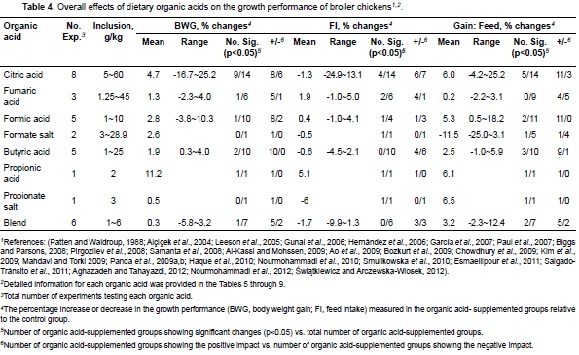
Citric acid
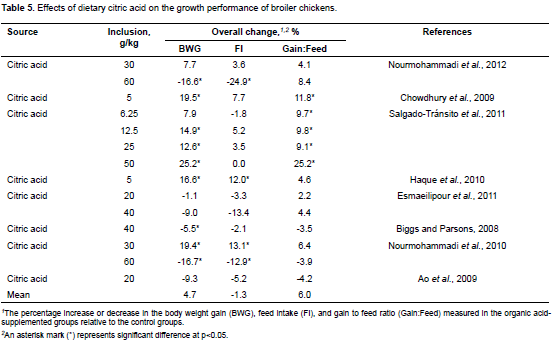
Citric acid (C6H8O7) is a weak organic acid and has been used as a natural preservative. Citric acid has been widely used as an organic acid supplement for pigs and chickens. We examined eight previous experiments using various inclusion levels of dietary citric acid (Table 5). The data indicated that dietary citric acid generally led to increased body weight gain and feed efficiency but decreased feed intake of broiler chickens; however, there was high variation in the ratio of the number of positive responses to the number of negative responses. The average improvements in body weight gain and feed efficiency were 4.7 and 6.0%, respectively. It is noteworthy that feed efficiency in most acid-supplemented groups was improved except for three treatment groups. Regardless of the inclusion levels of citric acid, half of the acid-supplemented groups reported significant increase in body weight gain (Chowdhury et al., 2009; Haque et al., 2010; Nourmohammadi et al., 2010; Salgado-Tránsito et al., 2011). However, only two experiments reported significant improvements in feed intake (Haque et al., 2010; Nourmohammadi et al., 2010) and feed efficiency (Chowdhury et al., 2009; Salgado-Tránsito et al., 2011). It is postulated that excessive amounts of dietary citric acid inclusion may compromise performance because two experiments using 60 g/kg citric acid in diets reported significant decreases in body weight gain.
Fumaric acid
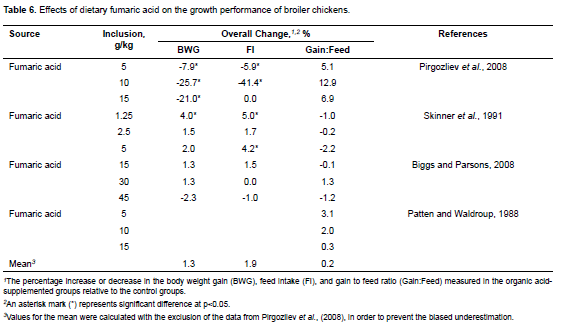
Fumaric acid (C4H4O4) is a weak organic acid with a fruit-like taste. Published data from three previous experiments (Patten and Waldroup, 1988; Skinner et al., 1991; Biggs and Parsons, 2008) indicated that broiler chickens fed diets containing various inclusion levels of fumaric acid had increased body weight gain and feed intake, except for the data from 45 g/kg of fumaric acid-supplemented groups of one experiment (Biggs and Parsons, 2008; Table 6). On the contrary, Pirgozliev et al. (2008) reported that adding 5, 10, or 15 g/kg fumaric acid to broiler diets significantly reduced body weight gain by 7.9 to 25.7% and feed intake by 5.9 to 41.4% compared with the control groups. The reason for this large negative impact on broiler performance is unclear. As a result, we excluded the data from Pirgozliev et al. (2008) from our calculations of the average change in the growth performance to prevent the results of the current study obscuring the effects of dietary fumaric acid on the growth performance. Subsequently, the average improvements in body weight gain and feed intake were 1.3 and 1.9%, respectively. Feed efficiency was slightly improved by an average of 0.2%. However, it is difficult to conclude that dietary fumaric acid has positive effects on broiler performance because of the scarcity of data.
Formic acid and its salts
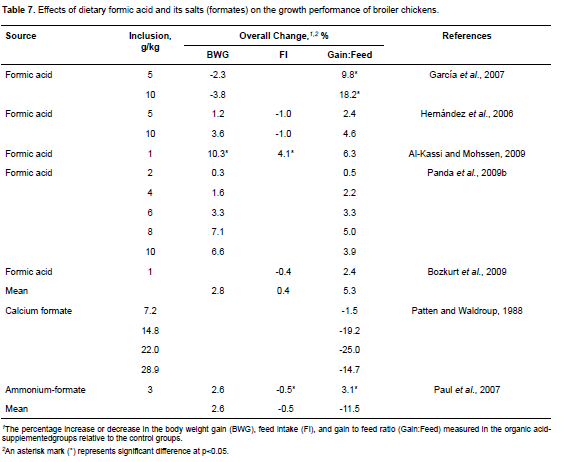
Formic acid (CH2O2) is the simplest carboxylic acid. Formic acid is very volatile and has a pungent smell. Therefore, the free form of formic acid has not been widely used as a dietary supplement, whereas its salts (as formates), which are less pungent and easier to handle, have been often added to broiler diets. We reviewed seven previous experiments using formic acids or formates as dietary supplements for broiler chickens (Table 7). Feeding broiler chickens with diets containing 1 to 10 g/kg of formic acid was reported to increase body weight gain, feed intake, and feed efficiency. The average improvements were 2.8, 0.4, and 5.3% for body weight gain, feed intake, and feed efficiency, respectively. With the exception of García et al. (2007) who reported that the birds fed diets containing 5 or 10 g/kg of formic acid had less body weight gain than those fed the control diets, positive effects on body weight gain were reported for all formic acid-supplemented groups. Furthermore, clear dose-dependent positive effects on body weight gain were also reported in some experiments (Hernández et al., 2006; Panda et al., 2009b). However, the results for dietary formates were inconsistent. Patten and Waldroup (1988) observed decreased feed efficiency by dietary supplementation of calcium formate from 7.2 to 28.9 g/kg, whereas Paul et al. (2007) reported improved body weight gain and feed efficiency with diets containing 3 g/kg ammonium formate. The differences in the form of formates and the inclusion levels among experiments may cause these inconsistent results. It may be reasonable to conclude that the free form of formic acid has positive effects on the growth performance of broiler chickens, but the effects of formates are questionable. ]]>
Butyric acid
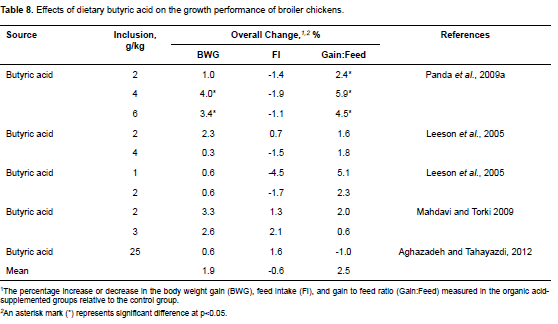
In the past decade, butyric acid (C4H8O2) has been the most intensively studied by many poultry researchers. Butyric acid is considered important for the normal development of epithelial cells because it can be used as a direct energy source by epithelial cells and has bactericidal activity in the GIT (Pryde et al., 2002). We examined five previous experiments using butyric acid (Table 8). When butyric acid was added to broiler diets, body weight gain and feed efficiency were generally improved. Average percentage improvements were 1.9 and 2.5% for body weight gain and feed efficiency, respectively. However, the improvements in feed efficiency were likely caused by decreased feed intake along with no or little change in body weight gain because 6 of 10 butyric acid-supplemented groups showed decreased feed intake. No clear explanation for this anorexic effect has been postulated. In addition, high inclusion levels of butyric acid may have a negative effect on feed efficiency because Aghazadeh and TahaYazdi (2012) reported that 25 g/kg of dietary butyric acid decreased feed efficiency by 1.0%. Based on the current data, however, it appears that butyric acid at low inclusion levels may have the most promising effects on broiler performance among dietary organic acids.
Other organic acids
Other sources of organic acids and mixtures (or blends) of various organic acids have also been tested for their utilization in broiler diets (Table 9). Al-Kassi and Mohssen (2009) reported that adding 2 g/kg of propionic acid to broiler diets resulted in significant improvements in body weight gain, feed intake, and feed efficiency by 11.2, 5.1, and 6.1%, respectively. Likewise, Paul et al. (2007) also reported that broiler chickens fed diets containing 3 g/kg of calcium propionate had significantly improved feed efficiency by 6.5% compared with those fed control diets. In recent years, there has been increasing attention on the blending type (i.e., mixtures) of organic acids based on the assumption that synergistically positive effects of individual organic acid exist (Kil et al., 2011a). We examined six previous experiments investigating this aspect. Alçiçek et al. (2004) reported that feeding broiler chickens with 2.5 g/kg of blends of lactic acid, formic acid, and citric acid improved growth performance although the improvements did not reach statistical significance. Gunal et al. (2006) also observed that birds fed diets containing 2 g/kg blends of propionate salts and formates had numerically greater body weight gain and feed intake than those fed the control diets. Similar improvements have also been reported by Samanta et al. (2008) who added 1 g/kg of acid blends of formic acid, propionic acid, calcium propionate, and ortho-phosphoric acid to broiler diets. Kim et al. (2009) also reported that body weight gain in acid blend-supplemented groups was increased by from 1.8 to 3.2%, whereas feed efficiency was improved by nearly 4.0%.
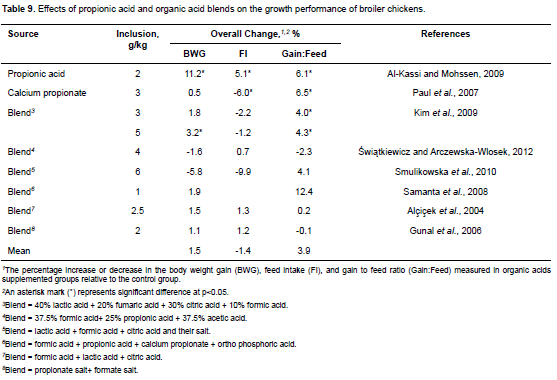
In contrast, two previous experiments observed negative effects of dietary acid blends on body weight gain of broiler chickens. Swiatkiewicz and Arczewska- Wlosek (2012) reported that broiler chickens fed diets containing 4 g/kg of acid blends had less body weight gain and feed efficiency. Similarly, Smulikowska et al. (2010) reported decreased body weight gain and feed intake of broiler chickens fed diets containing 6 g/kg of acid blends. Considering the number of positive and negative responses, the effectiveness and synergism of acid blends for broiler chickens remain unclear.
Factors affecting inconsistent results
The responses of broiler chickens to dietary organic acids have shown considerable inconsistency. There have been many successful demonstrations of positive effects of dietary organic acids on growth performance, whereas other studies were unable to find beneficial effects or even reported negative effects on growth performance. The extent of the effects was also variable among the previous experiments using different inclusion levels and sources of organic acids. Several possible factors responsible for these variations can be identified. ]]>
One factor could be the variation in other dietary ingredients and their chemical properties such as buffering capacity (Mroz et al., 1997; Partanen, 2001). The sources and amounts of dietary protein and minerals may affect the buffering capacity of diets, which can influence the degree of acidification that occurs with the inclusion of organic acids (Partanen and Mroz, 1999). Although the related data for broiler chickens have been limited, the effects of buffering capacity on the effectiveness of dietary organic acids have been reported in pigs. Ravindran and Kornegay (1993) reported that the positive effects of dietary organic acids on weanling pigs were greater for the diets of low buffering capacity (simple corn-soybean meal-based diets) than for the diets of high buffering capacity (complex diets containing various protein sources). Therefore, the inconsistent responses to dietary organic acids in broiler chickens are likely associated with the specific chemical properties of experimental diets such as buffering capacity. Another possible factor causing variation in results may be experimental conditions such as the sanitation level of the environment. Dietary organic acids may affect the microbial population in the GIT. It may be expected, therefore, that the antimicrobial effects of organic acids would be more pronounced when birds are exposed to less sanitary conditions (Kil et al., 2010). Therefore, difference in sanitary conditions among experiments may be the possible reason for the inconsistent results. In addition, based on the data we have reviewed, feed palatability is likely affected by the sources and inclusion levels of dietary organic acids, and therefore appears to influence the efficacy of dietary organic acids. More research is required to determine the effects of dietary organic acids on feed palatability or feed choice in broiler chickens.
Conclusions
Dietary organic acids have been considered as potential alternatives to AGPs for improving growth performance and health status of broiler chickens. The possible mode of action of organic acids supports the notion that they could be effective in broiler chickens. The pH reduction in the GIT through diet acidification leads to an increase in nutrient utilization and inhibition of pathogenic bacterial growth. Direct growth-inhibiting effects on pathogenic bacteria have also been identified. However, the effects of various sources and inclusion levels of organic acids on the pH of the GIT appear to be limited to the upper part of the GIT because these acids are highly absorbable, and thus little amounts of dietary organic acids may reach the lower part of the GIT. A protected form of dietary organic acids may overcome this problem and further experiments are needed to study the effects of the protected forms of organic acids on the pH of the GIT. It is also difficult to confirm the effects of organic acids on nutrient utilization because the extent of improvements in nutrient retention appears to be smaller than anticipated. As previous reviews have reported, we observed that most dietary organic acids improve growth performance of broiler chickens, despite some inconsistent results. However, the appropriate inclusion levels are unknown, and no clear dose-dependent responses to dietary organic acids are available. Differences in dietary ingredients, physical and chemical properties of the diets, and rearing conditions are most likely responsible for these variations. Therefore, it is difficult to conclude whether dietary organic acids have consistently positive effects on growth performance, and whether they are promising alternatives to AGPs for broiler chickens. Further studies are needed to elucidate the mode of action of dietary organic acids and their effects on growth performance of broiler chickens.
Acknowledgements
This research was carried out with the support of the Cooperative Research Program for Agriculture Science and Technology Development (ID: PJ010932042015), Rural Development Administration, Republic of Korea. This research was also supported by the Chung-Ang University Research Scholarship Grants in 2015.
Conflicts of interest
The authors declare they have no conflicts of interest with regard to the work presented in this report.
]]>Notes
¤To cite this article: Kim JW, Kim JH, Kil DY. Dietary organic acids for broiler chickens: a review. Rev Colomb Cienc Pecu 2015; 28:109-123.
References
Afsharmanesh M, Pourreza J. Effects of calcium, citric acid, ascorbic acid, vitamin D3 on the efficacy of microbial phytase in broiler starters fed wheat-based diets I. Performance, bone mineralization and ileal digestibility. Int J Poult Sci 2005; 4(6):418-424.
Aghazadeh AM, TahaYazdi M. Effect of butyric acid supplementation and whole wheat inclusion on the performance and carcass traits of broilers. S Afr J Anim Sci 2012; 42:241-248.
Akyurek H, Ozduven ML, Okur AA, KocF, Samli HE. The effect of supplementing an organic acid blend and/or microbial phytase to a corn-soybean based diet fed to broiler chickens. Afr J Agric Res 2011; 6:642-649.
Alçiçek A, Bozkurt M, Çabuk M. The effect of a mixture of herbal essential oils, an organic acid or a probiotic on broiler performance. S Afr J Anim Sci 2004; 34:217-222.
Al-KassiAG, Mohssen MA. Comparative study between single organic acid effect and synergistic organic acid effect on broiler performance. Pak J Nutr 2009; 8:896-899.
]]> Anjum MS, Chaudhry AS. Using enzymes and organic acids in broiler diets. J Poult Sci 2010; 47:97-105.Ao T, Cantor AH, Pescatore AJ, Ford MJ, Pierce JL, Dawson KA. Effect of enzyme supplementation and acidification of diets on nutrient digestibility and growth performance of broiler chicks. Poult Sci 2009; 88:111-117.
Atapattu NSBM, Nelligaswatta CJ. Effects of citric acid on the performance and the utilization of phosphorous and crude protein in broiler chickens fed on rice by-products based diets. Int J Poult Sci 2005; 4:990-993.
Aydin A, Pekel AY, Issa G, Demirel G, Patterson PH. Effects of dietary copper, citric acid, and microbial phytase on digesta pH and ileal and carcass microbiota of broiler chickens fed a low available phosphorus diet. J Appl Poultry Res 2010; 19:422-431.
Biggs P, Parsons CM. The effects of several organic acids on growth performance, nutrient digestibilities, and cecal microbial populations in young chicks. Poult Sci 2008; 87(12): 2581-2589.
Boling SD, Webel DM, Mavromichalis I, Parsons CM, Baker DH. The effects of citric acid on phytate phosphorus utilization in young chicks and pigs. J Anim Sci 2000; 78:682-689.
Bozkurt M, Küçükyilmaz K, Çatli AU, Çinar M. The effect of single or combined dietary supplementation of prebiotics, organic acid, and probiotics on performance and slaughter characteristics of broilers. S Afr J Anim Sci 2009; 39:197-205.
Centeno C, Arija I, Viveros A, Brenes A. Effects of citric acid and microbial phytase on amino acid digestibility in broiler chickens. Br Poult Sci 2007; 48:469-479.
Chowdhury R, Islam KMS, Khan MJ, Karim MR, Haque MN, Khatun M, Pesti GM. Effect of citric acid, avilamycin, and their combination on the performance, tibia ash, and immune status of broilers. Poult Sci 2009; 88:1616-1622.
Davidson PM. Chemical preservatives and natural antimicrobial compounds. In: Doyle MP, Beuchat LR, Montville TJ, editors. Food microbiology-fundamentals and frontiers.2nd ed. Washington, DC: American society for microbiology; 2001. p.593-627.
]]> Denyer SP, Stewart GSAB. Mechanisms of action of disinfectants. Int Biodet Biodegr 1998; 41:261-268.Dibner JJ, Buttin P. Use of organic acids as a model to study the impact of gut microflora on nutrition and metabolism. J Appl Poultry Res 2002; 11:453-463.
Eidelsburger U, Kirchgessner M, Roth FX. Influence of formic acid, calcium formate and sodium bicarbonate on pH, concentration of carbonic acids and ammonia in different segments of the gastrointestinal tract: 8 liberation. Nutritive value of organic acids in piglet rearing. J Anim Physiol An N 1992; 68:20-32.
Esmaeilipour O, Shivazad M, Moravej H, Aminzadeh S, Rezaian M, van Krimpen MM. Effects of xylanase and citric acid on the performance, nutrient retention, and characteristics of gastrointestinal tract of broilers fed low-phosphorus wheat-based diets. Poult Sci 2011; 90:1975-1982.
García V, Catalá-Gregori P, Hernández F, Megías MD, Madrid J. Effect of formic acid and plant extracts on growth, nutrient digestibility, intestine mucosa morphology, and meat yield of broilers. Br Poult Sci 2007; 16:555-562.
Gunal M, Yayli G, Kaya O, Karahan N, Sulak O. The effects of antibiotic growth promoter, probiotic or organic acid supplementation on performance, intestinal microflora and tissue of broilers. Int J Poult Sci 2006; 5:149-155.
Haque MN, Islam KMS, Akbar MA, Chowdhury R, Khatun M, Karim MR, Kemppainen BW. Effect of dietary citric acid, flavomycin and their combination on the performance, tibia ash, and immune status of broiler. Can J Anim Sci 2010; 90:57-63.
Hernández F, García V, Madrid J, Orengo J, Catalá P, Megías MD. Effect of formic acid on performance, digestibility, intestinal histomorphology, and plasma metabolite levels of broiler chickens. Br Poult Sci 2006; 47:50-56.
Hume ME, Corrier DE, Ivie GW, Deloach JR. Metabolism of [14C] propionic acid in broiler chickens. Poult Sci 1993; 72:786-793.
Islam KMS. Use of citric acid in broiler diets. Worlds Poult Sci J 2012; 68:104-118.
]]> Jackson ME, Geronian K, Knox A, McNab J, McCartney E. A dose-response study with the feed enzyme β-mannanase in broilers provided with corn-soybean meal based diets in the absence of antibiotic growth promoters. Poult Sci 2004; 83:1992-1996.Jongbloed AW, Mroz Z, Van der Weij-Jongbloed R, Kemme PA. The effects of microbial phytase, organic acids and their interaction in diets for growing pigs. Livest Prod Sci 2000; 67:113-122.
Kidder DE, Manners MJ. Digestion in the pig. Bath UK: Kingstone Press; 1978.
Kil DY, Kwon WB, Kim BG. Dietary acidifiers in weanling pig diets: a review. Rev Colomb Cienc Pecu 2011a; 24:231-247.
Kil DY, Swanson KS. Role of microbes in canine and feline health. J Anim Sci 2011b; 89:1498-1505.
Kim DW, Kim JH, Kim SK, Kang GH, Kang HK, Lee SJ, Kim SH. A study on the efficacy of dietary supplementation of organic acid mixture in broiler chicks. Kor J Anim Sci Technol 2009; 51: 207-216.
Kim YY, Kil DY, Oh HK, Han IK. Acidifier as an alternative material to antibiotics in animal feed. Asian-Australas J Anim Sci 2005; 18:1048-1060.
Lesson S. Butyrate lancing science versus societal issues in poultry nutrition. Nutr Abstr Rev 2007; 71:1-5.
Leeson S, Namkung H, Antongiovanni M, Lee EH. Effect of butyric acid on the performance and carcass yield of broiler chickens. Poult Sci 2005; 84:1418-1422.
Mahdavi R, Torki M. Study on period of dietary protected butyric acid on performance, carcass characteristics, serum metabolite levels and humoral immune response of broiler chickens. J Anim Vet Adv 2009; 8:1702-1709.
]]> Mani-López E, García HS, López-Malo A. Organic acids as antimicrobials to control Salmonella in meat and poultry products. Food Res Int 2012; 45:713-721.Mayer EA. The physiology of gastric storage andemptying. In: physiology of the gastrointestinal Tract. 3rd ed. New York: Lippincott Raven Press; 1994. p.929-76.
Mroz Z. Organic acids as potential alternatives to antibiotic growth promoters for pigs. Adv Pork Prod 2005; 16:169-182.
Mroz Z, Jongbloed AW, Partanen K, Vreman K, van Diepen JTM, Kemme PA, Kogut J. In report ID-DLO 97. 014. The effect of dietary buffering capacity and organic acid supplementation (formic, fumaric, or n-butyric acid) on digestibility of nutrients (protein, aminoacids, energy, and minerals), water intake, and excreta production ingrowing pigs. 1997. p.65.
Nezhad YE, Gale-Kandi JG, Farahvash T, Yeganeh AR. Effect of combination of citric acid and microbial phytase on digestibility of calcium, phosphorous and mineralization parameters of tibia bone in broilers. Afr J Biotechnol 2011; 10:15089-15093.
Nourmohammadi R, Hosseini SM, Farhangfar H. Effect of dietary acidification on some blood parameters and weekly performance of broiler chickens. J Anim Vet Adv 2010; 9:3092-3097.
Nourmohammadi R, Hosseini SM, Farhangfar H, Bashtani M. Effect of citric acid and microbial phytase enzyme on ileal digestibility of some nutrients in broiler chicks fed corn-soybean meal diets. Ital J Anim Sci 2012; 10:36-40.
Nourmohammadi R, Hosseini SM, Saraee H, Arab A, Arefinia H. Plasma thyroid hormone concentrations and pH values of some GI-tract segments of broilers fed on different dietary citric acid and microbial phytase levels. J Anim Vet Adv 2011; 10:1450-1454.
Panda AK, Rao SVR, Raju MVLN, Sunder GS. Effect of butyric acid on performance, gastrointestinal tract health and carcass characteristics in broiler chickens. Asian-Australas J Anim Sci 2009a; 22:1026-1031.
Panda AK, Raju MVLN, Rama Rao SV, Shyam Sunder G, Reddy MR. Effect of graded levels of formic acid on gut microflora count, serum biochemical parameters, performance, and carcass yield of broiler chickens. Indian J Anim Sci 2009b; 79:1165-1168.
]]> Partanen K. Organic acids-their efficacy and modes of action in pigs. In: Piva KE, Knudsen B, Lindberg JE, editors. Gut environment of pigs. Nottingham UK: Nottingham University Press; 2001. p.201-17.Partanen KH, Mroz Z. Organic acids for performance enhancement in pig diets. Nutr Res Rev 1999; 12:117-145.
Patten JD, Waldroup PW. Use of organic acids in broiler diets. Poult Sci 1988; 67:1178-1182.
Paul SK, Halder G, Mondal MK, Samanta G. Effect of organic acid salt on the performance and gut health of broiler chicken. J Poult Sci 2007; 44:389-395.
Pirgozliev V, Murphy TC, Owens B, George J, McCann MEE. Fumaric and sorbic acid as additives in broiler feed. Res Vet Sci 2008; 84:387-394.
Pryde SE, Duncan SH, Hold GL, Stewart CS, Flint HJ. The microbiology of butyrate formation in the human colon. FEMS Microbiol Lett 2002; 217:133-139.
Ravindran V, Kornegay ET. Acidification of weaner pig diets: a review. J Sci Food Agr 1993; 62:313-322.
Ricke SC. Perspective on the use of organic acids and short chain acids as antimicrobials. Poult Sci 2003; 82:632-639.
Salgado-Tránsito L, Del Río-García JC, Arjona-Román, JL, Moreno-Martínez E, Méndez-Albores A. Effect of citric acid supplemented diets on aflatoxin degradation, growth performance, and serum parameters in broiler chickens. Arch Med Vet 2011; 43:215-222.
Samanta S, Haldar S, Ghosh TK. Production and carcase traits in broiler chickens given diets supplemented with inorganic trivalent chromium and an organic acid blend. Br Poult Sci 2008; 49:155-163.
]]> Skinner JT, Izat AL, Waldroup PW. Fumaricacid enhances performance of broiler chickens. Poult Sci 1991; 70:1444-1447.Smulikowska S, Czerwinski J, Mieczkowska A. Effect of an organic acid blend and phytase added to a rapeseed cakecontaining diet on performance, intestinal morphology, caecalmicroflora activity, and thyroid status of broiler chickens. J Anim Physiol An N 2010; 94:15-23.
Swiatkiewicz S, Arczewska-Wlosek A. Bone quality characteristics and performance in broiler chickens fed diets supplemented with organic acids. Czech J Anim Sci 2012; 57:193-205.
Thompson JL, Hinton M. Antibacterial activity of formic and propionic acids in the diets of hens on salmonellas in the crop. Br Poult Sci 1997; 38:59-65.
Yan L, Hong SM, Kim IH. Effect of bacteriophage supplementation on the growth performance, nutrient digestibility, blood characteristics, and fecal microbial shedding in growing pigs. Asian-Australas J Anim Sci 2012; 25:1451-1456.
]]>