<?xml version="1.0" encoding="ISO-8859-1"?><article xmlns:mml="http://www.w3.org/1998/Math/MathML" xmlns:xlink="http://www.w3.org/1999/xlink" xmlns:xsi="http://www.w3.org/2001/XMLSchema-instance">
<front>
<journal-meta>
<journal-id>0120-0690</journal-id>
<journal-title><![CDATA[Revista Colombiana de Ciencias Pecuarias]]></journal-title>
<abbrev-journal-title><![CDATA[Rev Colom Cienc Pecua]]></abbrev-journal-title>
<issn>0120-0690</issn>
<publisher>
<publisher-name><![CDATA[Facultad de Ciencias Agrarias, Universidad de Antioquia]]></publisher-name>
</publisher>
</journal-meta>
<article-meta>
<article-id>S0120-06902015000200003</article-id>
<article-id pub-id-type="doi">10.17533/udea.rccp.v28n2a02</article-id>
<title-group>
<article-title xml:lang="en"><![CDATA[Enteric methane mitigation strategies in ruminants: a review]]></article-title>
<article-title xml:lang="es"><![CDATA[Estrategias de mitigación de metano entérico en rumiantes: revisión de literatura]]></article-title>
<article-title xml:lang="pt"><![CDATA[Estratégias de mitigação de metano entérico em ruminantes: revisão de literatura]]></article-title>
</title-group>
<contrib-group>
<contrib contrib-type="author">
<name>
<surname><![CDATA[Ribeiro Pereira]]></surname>
<given-names><![CDATA[Luiz Gustavo]]></given-names>
</name>
<xref ref-type="aff" rid="A01"/>
<xref ref-type="aff" rid="A05"/>
</contrib>
<contrib contrib-type="author">
<name>
<surname><![CDATA[Machado]]></surname>
<given-names><![CDATA[Fernanda S]]></given-names>
</name>
<xref ref-type="aff" rid="A01"/>
</contrib>
<contrib contrib-type="author">
<name>
<surname><![CDATA[Campos]]></surname>
<given-names><![CDATA[Mariana M]]></given-names>
</name>
<xref ref-type="aff" rid="A01"/>
</contrib>
<contrib contrib-type="author">
<name>
<surname><![CDATA[Guimaraes Júnior]]></surname>
<given-names><![CDATA[Roberto]]></given-names>
</name>
<xref ref-type="aff" rid="A02"/>
</contrib>
<contrib contrib-type="author">
<name>
<surname><![CDATA[Tomich]]></surname>
<given-names><![CDATA[Thierry R]]></given-names>
</name>
<xref ref-type="aff" rid="A01"/>
</contrib>
<contrib contrib-type="author">
<name>
<surname><![CDATA[Reis]]></surname>
<given-names><![CDATA[Larissa G]]></given-names>
</name>
<xref ref-type="aff" rid="A03"/>
</contrib>
<contrib contrib-type="author">
<name>
<surname><![CDATA[Coombs]]></surname>
<given-names><![CDATA[Cassius]]></given-names>
</name>
<xref ref-type="aff" rid="A04"/>
</contrib>
</contrib-group>
<aff id="A01">
<institution><![CDATA[,Rumen Gases Network  ]]></institution>
<addr-line><![CDATA[ ]]></addr-line>
</aff>
<aff id="A02">
<institution><![CDATA[,University of Sydney  ]]></institution>
<addr-line><![CDATA[ ]]></addr-line>
</aff>
<aff id="A03">
<institution><![CDATA[,University of Sydney  ]]></institution>
<addr-line><![CDATA[ ]]></addr-line>
</aff>
<aff id="A04">
<institution><![CDATA[,University of Sydney  ]]></institution>
<addr-line><![CDATA[ ]]></addr-line>
</aff>
<aff id="A05">
<institution><![CDATA[,Embrapa Gado de Leite  ]]></institution>
<addr-line><![CDATA[ ]]></addr-line>
</aff>
<pub-date pub-type="pub">
<day>00</day>
<month>06</month>
<year>2015</year>
</pub-date>
<pub-date pub-type="epub">
<day>00</day>
<month>06</month>
<year>2015</year>
</pub-date>
<volume>28</volume>
<numero>2</numero>
<fpage>124</fpage>
<lpage>143</lpage>
<copyright-statement/>
<copyright-year/>
<self-uri xlink:href="http://www.scielo.org.co/scielo.php?script=sci_arttext&amp;pid=S0120-06902015000200003&amp;lng=en&amp;nrm=iso"></self-uri><self-uri xlink:href="http://www.scielo.org.co/scielo.php?script=sci_abstract&amp;pid=S0120-06902015000200003&amp;lng=en&amp;nrm=iso"></self-uri><self-uri xlink:href="http://www.scielo.org.co/scielo.php?script=sci_pdf&amp;pid=S0120-06902015000200003&amp;lng=en&amp;nrm=iso"></self-uri><abstract abstract-type="short" xml:lang="en"><p><![CDATA[Livestock farming in Latin America has been criticized because of its large greenhouse gas (GHG) production resulting from the use of degraded forage and low-efficiency production performance. Agriculture contributes a significant amount of the three main greenhouse gases: methane (CH4), carbon dioxide (CO2), and nitrous oxide (N2O). Methane has a global warming potential 25 times greater than CO2. Enteric methane is an important greenhouse gas responsible for approximately 15% of global warming. The trend and legal obligation of mitigating greenhouse gas emissions will likely directly influence improved efficiency of livestock systems, including animal nutrition and handling. The development of mitigation strategies and the viability of their practical applications have been researched around the world. Various nutritional strategies to mitigate enteric methane have been studied and developed. All of them differ in terms of viability, cost, and acceptance by the producers. Their adoption should be based on the capacity to reduce methane emissions in association with economic viability and animal performance. Animal performance improvement will be achieved in production systems (mainly those related to efficient forage use) associated with good management of nutrition, health and reproduction. These are important strategies to consolidate Brazil as a food producer to the world, respecting the demands regarding land, water, biodiversity conservation and emission of greenhouse gases.]]></p></abstract>
<abstract abstract-type="short" xml:lang="es"><p><![CDATA[La industria pecuaria latinoamericana ha sido criticada por la emisión significativa de gases con efecto invernadero (GHG). Dicha crítica se fundamenta en los bajos indicadores zootécnicos observados en los sistemas de producción animal basados en pasturas degradadas o que se encuentran por debajo de su potencial de producción. La industria agropecuaria contribuye de manera significativa con la emisión de los tres principales GHG: metano (CH4), dióxido de carbono (CO2) y óxido nitroso (NO2). El gas metano tiene un potencial de calentamiento global 25 veces mayor que el de CO2. El metano entérico es un importante gas de efecto invernadero, que es responsable de aproximadamente el 15% del calentamiento global. La tendencia o la obligación legal de mitigar las emisiones de GHG tendrá una influencia directa sobre la necesidad del aumento de la eficiencia zootécnica en los sistemas pecuarios relacionado con el manejo nutricional de los animales que deberá ser adoptado. El desarrollo de estrategias de mitigación y la viabilidad de su aplicación práctica representan áreas de investigación alrededor del mundo. Existen diversas estrategias nutricionales que se han estudiado y desarrollado con el fin de mitigar el metano entérico. Dichas estrategias presentan diferentes viabilidades, costos y posibilidades para que sean aceptadas por los productores. La elección de la estrategia de mitigación a ser adoptada deberá estar centrada en la capacidad de reducción de las emisiones de metano asociada con la viabilidad económica y el mantenimiento del desempeño animal. El aumento de los indicadores zootécnicos que se obtendrán en los sistemas de producción (principalmente aquellos que utilicen de manera eficiente el forraje) asociado a una buena nutrición, salud y manejo reproductivo, son estrategias importantes para la consolidación de Brasil como un importante productor de alimentos para el mundo, teniendo en cuenta las demandas relacionadas con el uso del suelo, del agua, la conservación de la biodiversidad y de la emisión de gases con efecto invernadero.]]></p></abstract>
<abstract abstract-type="short" xml:lang="pt"><p><![CDATA[A pecuária da América Latina tem sido criticada por emitir quantidades significativas de gases de efeito estufa (GHG). Tal crítica tem sido fundamentada nos baixos índices zootécnicos verificados em sistemas de exploração animal baseados em pastagens degradadas ou que se encontram abaixo do seu potencial de produção. A agropecuária contribui de forma significativa com a emissão dos três principais GHG: metano (CH4), dióxido de carbono (CO2) e óxido nitroso (NO2). O gás metano apresenta potencial de aquecimento global 25 vezes maior que o CO2. O metano entérico é um importante gás de efeito estufa, que é responsável por aproximadamente 15% do aquecimento global. A tendência ou obrigação legal de mitigar as emissões de GHG influenciará diretamente a necessidade de aumento da eficiência zootécnica nos sistemas pecuários, atrelado ao manejo nutricional dos animais a ser adotado. O desenvolvimento de estratégias de mitigação e a viabilidade da aplicação prática dessas estratégias são áreas atuais de pesquisa em todo o mundo. Existem várias estratégias de nutrição para mitigar metano entérico que têm sido estudados e desenvolvidos. Todos estes têm diferentes viabilidades, custos e possibilidades de serem adotadas pelos produtores. A escolha de qual vai ser utilizado deve basear-se na capacidade de reduzir as emissões de metano associadas com viabilidade econômica e a manutenção do desempenho do animal. O aumento nos índices zootécnicos que serão obtidos em sistemas de produção (principalmente os relacionados ao uso de forragem eficiente) associada a uma boa nutrição, saúde e manejo reprodutivo são estratégias importantes para consolidar o Brasil como um importante produtor de alimentos para o mundo, respeitando as demandas relacionadas ao uso da terra, da água, da conservação da biodiversidade e da emissão de gases de efeito estufa.]]></p></abstract>
<kwd-group>
<kwd lng="en"><![CDATA[climate change]]></kwd>
<kwd lng="en"><![CDATA[global warming]]></kwd>
<kwd lng="en"><![CDATA[greenhouse gas]]></kwd>
<kwd lng="en"><![CDATA[livestock]]></kwd>
<kwd lng="en"><![CDATA[sustainability]]></kwd>
<kwd lng="es"><![CDATA[calentamiento global]]></kwd>
<kwd lng="es"><![CDATA[cambios climáticos]]></kwd>
<kwd lng="es"><![CDATA[ganadería]]></kwd>
<kwd lng="es"><![CDATA[gases de efecto invernadero]]></kwd>
<kwd lng="es"><![CDATA[sostenibilidad]]></kwd>
<kwd lng="pt"><![CDATA[aquecimento global]]></kwd>
<kwd lng="pt"><![CDATA[gases de efeito estufa]]></kwd>
<kwd lng="pt"><![CDATA[mudanças climáticas]]></kwd>
<kwd lng="pt"><![CDATA[pecuária]]></kwd>
<kwd lng="pt"><![CDATA[sustentabilidade]]></kwd>
</kwd-group>
</article-meta>
</front><body><![CDATA[  <font face="Verdana, Arial, Helvetica, sans-serif" size="2">     <p align="right"><b><font size="3">LITERATURE REVIEW</font></b>      <p>&nbsp;</p>     <p align="right">doi: <a href="http://dx.doi.org/10.17533/udea.rccp.v28n2a02" target="_blank">10.17533/udea.rccp.v28n2a02</a></p>      <p align="center"><font size="4"><b>Enteric methane mitigation strategies in ruminants: a review<a name="a1"><a href="#a0"><sup>&curren;</sup></a></a></b></font>     <p align="center">&nbsp;</p>     <p align="center"><font size="3"><i><b>Estrategias de mitigaci&oacute;n de metano ent&eacute;rico en rumiantes: revisi&oacute;n de literatura</b></i></font></p>     <p align="center">&nbsp;</p> <font size="3">    <p align="center"><i>   <b>Estrat&eacute;gias de mitiga&ccedil;&atilde;o de metano ent&eacute;rico em ruminantes: revis&atilde;o de literatura</b></i></p>     <p align="center">&nbsp;</p> </font>     ]]></body>
<body><![CDATA[<p align="left"><b>Luiz Gustavo Ribeiro Pereira<sup>1*</sup>, Med Vet, PhD; Fernanda S Machado<sup>1</sup>, Med Vet, MSci, PhD; Mariana M Campos<sup>1</sup>, Med Vet, MSci, PhD; Roberto Guimaraes J&uacute;nior<sup>2</sup>, Med Vet, MSci, PhD; Thierry R Tomich<sup>1</sup>, Med Vet, MSci, PhD; Larissa G Reis<sup>3</sup>, Pharm; Cassius Coombs<sup>4</sup>, Zoot, Med Vet St.</b></p>     <p align="left">&nbsp;</p>      <p align="left"><i><sup>1 </sup>Embrapa Dairy Cattle and members of Rumen Gases Network. Embrapa/CNPq/FAPEMIG).     </i></p>     <p align="left"><i><sup>2 </sup>Embrapa Cerrados. </i></p>     <p align="left"><i><sup>3 </sup>CNPq- UFJF ''Science Without Borders'' program.</i></p>     <p align="left"><i>  <sup>4 </sup>University of Sydney.</i></p>     <p align="left">&nbsp;</p>     <p align="left"><a name="b1"><a href="#b0">*</a></a>Corresponding author: Luiz Gustavo Ribeiro Pereira. Embrapa Gado de Leite, Rua Eug&ecirc;nio do Nascimento, 610, Dom Bosco, CEP 36038-330. Juiz de Fora, Minas Gerais, Brasil. Tel: +55 32 33117529. Email: <a href="luiz.gustavo@embrapa.br" target="_blank">luiz.gustavo@embrapa.br</a></p>     <p align="left">&nbsp;</p>     <p align="left">Received: August 29, 2013; accepted: May 7, 2014</p>     ]]></body>
<body><![CDATA[<p align="left">&nbsp;</p> <hr size="1" />      <p><b>Summary</b></p>     <p>Livestock farming in Latin America has been criticized because of its large greenhouse gas (GHG)   production resulting from the use of degraded forage and low-efficiency production performance. Agriculture   contributes a significant amount of the three main greenhouse gases: methane (CH<sub>4</sub>), carbon dioxide (CO<sub>2</sub>),   and nitrous oxide (N<sub>2</sub>O). Methane has a global warming potential 25 times greater than CO<sub>2</sub>. Enteric methane   is an important greenhouse gas responsible for approximately 15% of global warming. The trend and legal   obligation of mitigating greenhouse gas emissions will likely directly influence improved efficiency of livestock   systems, including animal nutrition and handling. The development of mitigation strategies and the viability   of their practical applications have been researched around the world. Various nutritional strategies to mitigate   enteric methane have been studied and developed. All of them differ in terms of viability, cost, and acceptance   by the producers. Their adoption should be based on the capacity to reduce methane emissions in association   with economic viability and animal performance. Animal performance improvement will be achieved in   production systems (mainly those related to efficient forage use) associated with good management of nutrition,   health and reproduction. These are important strategies to consolidate Brazil as a food producer to the world, respecting the demands regarding land, water, biodiversity conservation and emission of greenhouse gases.</p>     <p><b>Keywords:</b> <i>climate change, global warming, greenhouse gas, livestock, sustainability. </i> <hr size="1" />     <p><b>Resumen</b></p>     <p>La industria pecuaria latinoamericana ha sido criticada por la emisi&oacute;n significativa de gases con efecto   invernadero (GHG). Dicha cr&iacute;tica se fundamenta en los bajos indicadores zoot&eacute;cnicos observados en los   sistemas de producci&oacute;n animal basados en pasturas degradadas o que se encuentran por debajo de su potencial   de producci&oacute;n. La industria agropecuaria contribuye de manera significativa con la emisi&oacute;n de los tres   principales GHG: metano (CH<sub>4</sub>), di&oacute;xido de carbono (CO<sub>2</sub>) y &oacute;xido nitroso (NO<sub>2</sub>). El gas metano tiene un   potencial de calentamiento global 25 veces mayor que el de CO<sub>2</sub>. El metano ent&eacute;rico es un importante gas de   efecto invernadero, que es responsable de aproximadamente el 15% del calentamiento global. La tendencia   o la obligaci&oacute;n legal de mitigar las emisiones de GHG tendr&aacute; una influencia directa sobre la necesidad del   aumento de la eficiencia zoot&eacute;cnica en los sistemas pecuarios relacionado con el manejo nutricional de los   animales que deber&aacute; ser adoptado. El desarrollo de estrategias de mitigaci&oacute;n y la viabilidad de su aplicaci&oacute;n   pr&aacute;ctica representan &aacute;reas de investigaci&oacute;n alrededor del mundo. Existen diversas estrategias nutricionales que   se han estudiado y desarrollado con el fin de mitigar el metano ent&eacute;rico. Dichas estrategias presentan diferentes   viabilidades, costos y posibilidades para que sean aceptadas por los productores. La elecci&oacute;n de la estrategia   de mitigaci&oacute;n a ser adoptada deber&aacute; estar centrada en la capacidad de reducci&oacute;n de las emisiones de metano   asociada con la viabilidad econ&oacute;mica y el mantenimiento del desempe&ntilde;o animal. El aumento de los indicadores   zoot&eacute;cnicos que se obtendr&aacute;n en los sistemas de producci&oacute;n (principalmente aquellos que utilicen de manera   eficiente el forraje) asociado a una buena nutrici&oacute;n, salud y manejo reproductivo, son estrategias importantes   para la consolidaci&oacute;n de Brasil como un importante productor de alimentos para el mundo, teniendo en cuenta   las demandas relacionadas con el uso del suelo, del agua, la conservaci&oacute;n de la biodiversidad y de la emisi&oacute;n de gases con efecto invernadero.</p>     <p><b>Palabras clave:</b> <i>calentamiento global, cambios clim&aacute;ticos, ganader&iacute;a, gases de efecto invernadero, sostenibilidad.</i></p> <hr size="1" />     <p><b>Resumo</b></p>     <p>A pecu&aacute;ria da Am&eacute;rica Latina tem sido criticada por emitir quantidades significativas de gases de efeito   estufa (GHG). Tal cr&iacute;tica tem sido fundamentada nos baixos &iacute;ndices zoot&eacute;cnicos verificados em sistemas   de explora&ccedil;&atilde;o animal baseados em pastagens degradadas ou que se encontram abaixo do seu potencial de   produ&ccedil;&atilde;o. A agropecu&aacute;ria contribui de forma significativa com a emiss&atilde;o dos tr&ecirc;s principais GHG: metano   (CH<sub>4</sub>), di&oacute;xido de carbono (CO<sub>2</sub>) e &oacute;xido nitroso (NO<sub>2</sub>). O g&aacute;s metano apresenta potencial de aquecimento   global 25 vezes maior que o CO<sub>2</sub>. O metano ent&eacute;rico &eacute; um importante g&aacute;s de efeito estufa, que &eacute; respons&aacute;vel   por aproximadamente 15% do aquecimento global. A tend&ecirc;ncia ou obriga&ccedil;&atilde;o legal de mitigar as emiss&otilde;es   de GHG influenciar&aacute; diretamente a necessidade de aumento da efici&ecirc;ncia zoot&eacute;cnica nos sistemas pecu&aacute;rios,   atrelado ao manejo nutricional dos animais a ser adotado. O desenvolvimento de estrat&eacute;gias de mitiga&ccedil;&atilde;o e   a viabilidade da aplica&ccedil;&atilde;o pr&aacute;tica dessas estrat&eacute;gias s&atilde;o &aacute;reas atuais de pesquisa em todo o mundo. Existem   v&aacute;rias estrat&eacute;gias de nutri&ccedil;&atilde;o para mitigar metano ent&eacute;rico que t&ecirc;m sido estudados e desenvolvidos. Todos   estes t&ecirc;m diferentes viabilidades, custos e possibilidades de serem adotadas pelos produtores. A escolha de qual   vai ser utilizado deve basear-se na capacidade de reduzir as emiss&otilde;es de metano associadas com viabilidade   econ&ocirc;mica e a manuten&ccedil;&atilde;o do desempenho do animal. O aumento nos &iacute;ndices zoot&eacute;cnicos que ser&atilde;o obtidos   em sistemas de produ&ccedil;&atilde;o (principalmente os relacionados ao uso de forragem eficiente) associada a uma   boa nutri&ccedil;&atilde;o, sa&uacute;de e manejo reprodutivo s&atilde;o estrat&eacute;gias importantes para consolidar o Brasil como um   importante produtor de alimentos para o mundo, respeitando as demandas relacionadas ao uso da terra, da &aacute;gua, da conserva&ccedil;&atilde;o da biodiversidade e da emiss&atilde;o de gases de efeito estufa.</p>     <p><b>Palavras chave: </b><i>aquecimento global, gases de efeito estufa, mudan&ccedil;as clim&aacute;ticas, pecu&aacute;ria, sustentabilidade.</i></p> <hr size="1">     ]]></body>
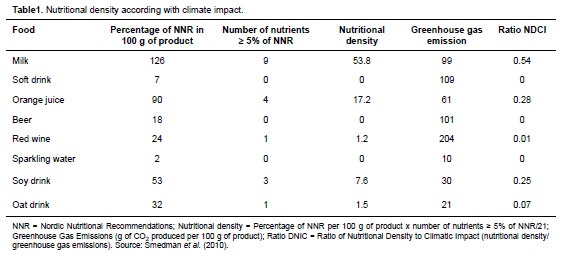
<body><![CDATA[<p>&nbsp;</p>     <p>&nbsp;</p>     <p><font size="3"><b>Introduction</b></font></p>     <p>Growth of global population and increased   purchase power has promoted a rapid increase in the   demand for food from animal sources. The world   population will have reached 9 billion by 2050, while   the demand for meat and milk products is expected   to increase to 465 million tons and 1.043 million   tons, respectively (FAO, 2006). Latin America has a   prominent position as an animal protein provider for the world (FAO, 2010). </p>     <p>Despite the importance of agriculture in food   production and revenue, there is a lot of discussion   about the environmental impact of livestock and   agricultural activities in relation to climate change.   Latin American livestock industries have been   criticized for their large greenhouse gas production   as a result of using degraded forage with performance   below production potential. The inefficiencies of these   low-production meat and milk systems cause large amounts of greenhouse gas emissions (IPCC, 2007).</p>     <p>Agriculture contributes a significant amount of the   three main greenhouse gases: methane (CH<sub>4</sub>), carbon   dioxide (CO<sub>2</sub>) and nitrous oxide (N<sub>2</sub>O). Methane has   a global warming potential 25 times greater than CO<sub>2</sub>,   persists 9 to 15 years in the atmosphere, and increases   7.0% each year (IPCC, 2006). Atmospheric methane   results from anaerobic fermentation of organic matter   in wetland environments, rice fields cropped by flood   irrigation, enteric fermentation, anaerobic treatment of animal residues, and biomass burning.</p>     <p>Cattle produce methane from enteric fermentation   (85 to 90%) and fecal excretion. A total of 95% of   rumen methane is excreted via eructation and from   the intestines, 89% of methane produced is exhaled   and around 1% excreted via the anus (Murray <i>et al.</i>,   1976). Methane from enteric fermentation represents   25% of methane anthropogenic emissions (Wuebbles and Hayhoe, 2002).</p>     <p>Beef cattle and sheep produce 107 to 300 g and   17.8 to 39.3 g CH<sub>4</sub>/day, respectively (Czerkawski,   1969; Holter and Young, 1992; McAllister <i>et al.</i>,   1996), resulting in 39.1 to 109.5 kg and 6.5 to 14.4 kg   annual emissions, respectively. India and Brazil are   the highest emitters of enteric methane, with 14.5 and   10.3 (x 10<sup>12</sup>) g/year, respectively. Brazil is the greatest   emitter of beef cattle methane followed by India and   the U.S. (9.6, 8.6, and 5.1 x10<sup>12</sup> g/year, respectively;   Thorpe, 2009). By 2005, agriculture was responsible for 22% of methane emissions in Brazil (MCT, 2009).</p>     <p>Enteric methane, responsible for 15% of global   warming, is directly related with rumen fermentation   efficiency because of the loss of carbon and   consequent loss of energy, which affects animal   performance (Cotton and Pielke, 1995; Bell <i>et al.</i>, 2011). It is important to understand methane synthesis mechanisms. The challenge is to develop diets and handling strategies to minimize methane production (CH<sub>4</sub>/kg of milk, meat, or wool), increase production efficiency and decrease livestock contribution to global warming.</p>     <p>Beef cattle have been labelled as the greatest   culprit of climate change, yet most of the criticism   is not scientifically based. We need to develop and   validate accurate methodologies to measure methane   emissions and create specific databases for the   production systems in each region (Lima <i>et al.</i>, 2006;   Grainger <i>et al.</i>, 2007). Misguided media information   regarding this issue could be used as an excuse to   create non-tariff obstacles to exporting Brazilian livestock products.</p>     ]]></body>
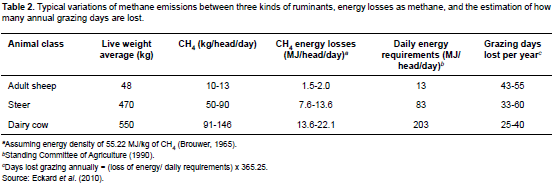
<body><![CDATA[<p>Discussions on how to reduce greenhouse gas   emissions have focused on production and supply   chain modifications of food through significant   changes in consumption patterns. Significant reductions   in the consumption of food from animal sources have   been proposed to decrease greenhouse emissions;   however, the nutritional value of different foods   needs to be considered to evaluate the impact of their production on the climate (Machado <i>et al.</i>, 2011).</p>     <p>NDCI unit (nutrient density/greenhouse emission)   was proposed by Smedman <i>et al.</i> (2010) and is   comprised of the ratio between nutritional density and   climate impact by combining the nutrient density of   food with the gas emissions from its production. The   authors compared greenhouse gas emissions from the   production of milk, soft drinks, orange juice, beer,   wine, sparkling water, soy drinks and oat drinks.   A total of 99 g of CO<sub>2</sub> were produced per 100 g of   milk&#8212;much greater compared to the other drinks.   However, when emissions were compared using   NDCI values, milk had an advantage because of its   high nutritional value (<a href="#t1">Table 1</a>). This result represents   a good argument to be presented in media discussions,   which sometimes encourage reducing consumption of   animal products to decrease the environmental impact associated with animal production.</p>     <p align="center"><a name="t1"><img src="/img/revistas/rccp/v28n2/v28n2a03t1.jpg"></a></p>     <p align="left">Livestock production is likely to be increasingly   affected by carbon emissions limits and environmental   laws. The trend and legal obligation to mitigate   greenhouse gas emissions is likely to have a direct influence on the efficiency of livestock   systems, including animal nutrition and handling.   Improvement of food practices can reduce methane   emissions per kg of food intake or per kg of product   (McAllister, 2011). Some alternatives to reduce   methane production include specific agents and diet   additives. Development of mitigation strategies and   their viability have been researched around the world (Thornton, 2010).</p>     <p align="left">&nbsp;</p> <font size="3"><font size="3"><b>Enteric methane production and its function in rumen ecosystem</b></font></p></font>     <p>Fermentation of diet components by rumen   microbiota results in the production of short   chain fatty acids (SCFAs)&#8212;an energy source for   ruminants&#8212;and gases (CO<sub>2</sub> and CH<sub>4</sub>) excreted via   eructation (Martin <i>et al.</i>, 2009a). Rumen fermentation   involves an oxidation process, generating reduced   co-factors (NADH, NADPH, and FADH), which   are then re-oxidized (NAD+, NADP and FAD+)   by dehydrogenation reactions, releasing hydrogen   in the rumen. As an electron acceptor process,   methanogenesis removes hydrogen gas (H<sub>2</sub>) from   the rumen. Methane production is therefore essential   for obtaining a high-performing rumen ecosystem   because H<sub>2</sub> accumulation, which could inhibit   dehydrogenase activity in re-oxidation co-factors,   is avoided. An efficient H<sub>2</sub> capture in the rumen   contributes to increase the rate of fermentation by   the lack of its inhibitory effect on the microbial   degradation of vegetative material (Wolin, 1979; McAllister and Newbold, 2008).</p>     <p align="left">Enteric methane is derived from the activity of   the methanogen <i>Archaea</i>, a microbial group distinct   from eukaryotes (protozoa and fungi), bacteria with   its own co-factors (coenzymes M, F420, and F430),   and fat (isoprene-glycerol esters). Despite the central   function of H<sub>2</sub> in the metabolism, methanogenesis   is important to rumen function and animal nutrition   although methanogens comprise only a small part   of the rumen's microbial biomass (Janssen and   Kirs, 2008). <i>Archaea</i> methanogens are responsible   for methane production in ruminants. Therefore,   considerable research efforts have been made to gather   more information about them (Attwood <i>et al.</i>, 2008;   Attwood <i>et al.</i>, 2011). Identification of their metabolic   activities and diversity is required for developing   strategies to mitigate enteric methane emissions.   Sequencing of their genomes will provide important   information to develop such strategies (Buddle <i>et al.</i>,   2010). Other microorganisms provide an appropriate   environment to facilitate methanogen survival   or produce substrates that would be available for   methanogens. Metabolic pathway for H<sub>2</sub> production   and interspecies relationships between methanogens   and other microorganisms of the ruminal ecosystem   should be considered in the strategies to control   methane emission by ruminants. The H<sub>2</sub> produced by microbial fermentation is an energy source to <i>Archaea</i> methanogens for methane production. Formate can be used to produce methane by methanogens; however, it is a less important methane precursor than H<sub>2</sub> and is responsible for approximately 18% of the methane produced (Hungate <i>et al.</i>, 1970). Ruminal fermentation products are not equivalent in terms of H<sub>2</sub> production; their amount depends on short chain fatty acid (SCFA) concentration and the relative ratio between acetate, propionate and butyrate (Owens and Goetsch, 1988; Eun <i>et al.</i>, 2004; Martin <i>et al.</i>, 2009a). Quantitative mathematic models consider fermentation stoichiometric calculations to balance formation of H<sub>2</sub>, SCFAs and other products for predicting methane production (Bannink <i>et al.</i>, 2006; Ellis <i>et al.</i>, 2008a).</p>     <p align="left">&nbsp;</p>      <p align="left"><b><font size="3">Enteric methane and energy losses</font></b></p>     <p align="left">At an energetic content of 55.22 MJ/kg (Brouwer,   1965), methane represents a significant amount of   energy in a production system (<a href="#t2">Table 2</a>). Approximately   5.5 to 6.5% of raw energy ingested is converted   to methane (Johnson and Ward, 1996). However,   measurements in respiratory chambers (indirect   calorimetry) show greater methane emissions: from 2   to 12% of raw energy ingested (Johnson and Johnson,   1995). Generally, as digestibility increases variation   in methane production also increases. According to   Johnson and Johnson (1995), there are two causes   of methane production variation: the amount of   carbohydrates fermented in the rumen, and the ratio of propionate to acetate produced.</p>     ]]></body>
<body><![CDATA[<p align="center"><a name="t2"><img src="/img/revistas/rccp/v28n2/v28n2a03t2.jpg"></a></p>     <p align="left">While evaluating methane production of steers   fed forage-based diets or diets with 80% concentrate,   Harper <i>et al.</i> (1999) observed that 8.1% and 2.1%   of raw energy was lost as methane, respectively.   According to Kaharabata <i>et al.</i> (2000), a dairy cow   weighing 600 kg can produce 268 to 450 g CH<sub>4</sub>   per day. This energy loss (13,344 kcal/g) would be   enough to produce between 4.55 and 7.65 kg of milk   containing 4% fat. Johnson <i>et al.</i> (1994) reported   256 L/day methane produced by steers (9.1% of raw   energy ingested), 193.9 L/day by heifers (5.6% of   raw energy), and 548.2 L/day (5.7% of raw energy) by lactating cows.</p>     <p align="left">It is important to consider the enteric methane   production per unit of animal product produced (kg   of milk, meat, or wool). A balance can be established   between the necessity of food produced for the   growing population and the emission of greenhouse   gases. A reduction of enteric methane production   without compromising animal productivity is thus   desired to mitigate greenhouse gas emissions and improve ruminant feed conversion efficiency. </p>     <p align="left">Improving product quality through reduction of   greenhouse gas emission levels can enhance efficiency   of systems in Latin America. According to Barioni <i>et al.</i> (2007), increasing birth rate of cows from 55 to   68%, reducing slaughter age from 36 to 28 months,   and reducing mortality from 7 to 4.5% in animals   younger than one year of age could reduce methane   emissions by 18% in relation to the equivalent level   of carcass production in Brazil by 2025. This could   be possible even with a 25.4% increase in meat   production. This means that actions oriented to   improve production efficiency would proportionally reduce methane emissions because more products   (meat, milk, or wool) will be obtained using the same   resources (Guimaraes Jr. <i>et al.</i>, 2010).      <p align="left">Yan <i>et al.</i> (2010) evaluated data from 20 energy   metabolism studies in open flow respiratory chambers   involving 579 lactating cows with varied genetic   merit, lactation number, lactation phase, and   live weight. The authors studied enteric methane   emissions using energy, efficiency, and productivity.   Results indicate that methane losses in relation to raw   energy ingested or milk energy are negatively related   to milk yield, metabolizable energy (q), and efficiency   to utilize the metabolizable energy for lactation (K<sub>l</sub>).   Therefore, selection of highly producing lactating   cows and a more efficient use of energy represent an   effective methane-mitigation strategy.</p>     <p align="left">&nbsp;</p>     <p align="left"><b><font size="3">Nutritional strategies to mitigate enteric methane</font></b>     <p align="left">The H<sub>2</sub> produced in the rumen is critically   important to the rumen ecosystem, mainly during   the fermentation process. H<sub>2</sub> should remain reduced,   allowing for the reoxidation of NADH, in order   to degrade nutrients for SCFA production. In this   methanogenesis process, H<sub>2</sub> manipulation in the   rumen is the key to controlling methane emissions (Joblin, 1999).</p>     <p align="left">According to Martin <i>et al.</i> (2009a), the metabolic   pathways involved in H<sub>2</sub> production and use and   methanogen populations should be considered in   strategies to control methane emissions. Strategies   need to focus on reducing H<sub>2</sub> production without   spoiling digestion, stimulating H<sub>2</sub> use through   alternative production pathways for ruminants, and/   or Archeaea methanogenic inhibition (number and/or   activity), associated with stimulation of pathways that   consume H<sub>2</sub> to avoid the negative effects of increasing partial H<sub>2</sub> pressure in the rumen.</p>     <p align="left"><i>Diet composition and quality</i>     ]]></body>
<body><![CDATA[<p align="left"><i>Concentrate.</i> Increasing the amount of concentrate   in the diet reduces the proportion of dietary energy   that is converted to methane (Blaxter and Clapperton,   1965). In other words, the addition of concentrate promotes the methane emission reduction as a   proportion of ingested energy or expressed as per unit of animal product (milk and/or meat).</p>      <p align="left">Fibrous carbohydrate substitution (cellulose and   hemicellulose) for non-fibrous carbohydrates (starch   and sugar) results in significant modifications in   both the physiochemical conditions in the rumen and   microbial populations. Increase of amylolytic bacteria   results in a change in SCFA production, promoting a   proportional increase of propionate and a reduction of   acetate. Consequently, methane production is reduced because of low H<sub>2</sub> availability in the rumen.</p>      <p align="left">However, according to Martin <i>et al.</i> (2009a), the   low acetate to propionate ratio does not always occur   when animals are fed concentrate-rich diets. In this   situation, the reduction of methane emissions can   be explained by the reduction in both pH and ciliate   protozoa. The low rumen pH can inhibit growth and/ or activity of methanogens and cellulolytic bacteria.</p>      <p align="left">In high concentrate diets, the factors that induce   methane reduction are: increasing propionate, which   reduces H<sub>2</sub> in the rumen, methanogenic (Hegarty,   1999), cellulolytic bacteria (Brossard <i>et al.</i>, 2004),   and ciliate protozoa inhibition via pH reduction.   According to Clarke (1977) rumen ciliated protozoa   are sensitive to pH changes and they cannot survive   if pH increases above 7.8 or decreases below 5.0.   Dehority (2005) reported death of <i>in vitro</i> protozoa   at pH values below 5.4 and bacteriocin production by   lactic bacteria, which inhibits methanogenic activity (Rodriguez and Campos, 2007).</p>     <p align="left">Methane losses are relatively constant in diets   with 30 to 40% concentrate (6 to 7% of raw energy   ingested) while methane losses decrease rapidly to   low values in diets containing 80 to 90% concentrate   (2 to 3% of raw energy ingested; Lovett <i>et al.</i>, 2003; Beauchemin and McGinn, 2005; Martin <i>et al.</i>, 2007).</p>     <p align="left">Berchielli <i>et al.</i> (2003) reported a quadratic   relationship to methane production in beef cattle   fed different dietary forage to concentrate ratios.   According to the authors, the results suggest that   concentrate addition in low amounts offers favorable   conditions for microorganisms by providing energy to degrade fiber fractions in the rumen. However, when 60% concentrate is added to the diet the   rumen environment becomes spoiled by microbial   methanogenesis, evidenced by a lower rumen pH.   Primavesi <i>et al.</i> (2004) also reported that substituting   forage with concentrate results in the maximum   methane emission when concentrate was added as   40% of DM.</p>     <p align="left">Concentrate addition to reduce methane emission   has economic and environmental limits. Possible   metabolic consequences of diets rich in non-fibrous   carbohydrates include ruminal acidosis, reduced   milk fat and shorter productive life of animals. The   economic viability of production systems with high   levels of concentrate is questionable in climates more   conducive to forage-based production, as in Brazil and other tropical countries.</p>     <p align="left">In addition, the consequences of the increased   energy density of diets should be analyzed. Greenhouse   gas emissions, such as as CO<sub>2</sub> and nitrous oxide   (N<sub>2</sub>O), originating from grain production, harvesting   and transportation can overcome the reduction of   enteric methane emissions caused by its inclusion in   ruminant diets. Johnson <i>et al.</i> (2002b) and Lovett <i>et al.</i> (2006) have reprted the flow of greenhouse gases in production systems.</p>     <p align="left">Concentrate composition also influences methane   production. Lovett <i>et al.</i> (2006) evaluated the effect of   pasture supplementation with concentrate composed   of fiber by-products (32.8% insoluble neutral   detergent fiber-NDF) on enteric methane emissions.   An increase of daily methane production (from 346   to 399 g/cow/day) was observed when concentrate   was added (due to its high fiber and low starch   levels). However, the authors observed a tendency   for methane emission/kg of milk produced to reduce because concentrate promotes milk yield.</p>     <p align="left"><i>Forage.</i> Methane emission (g/kg dry matter   ingested) is influenced by the type of forage the animal   has been ingesting. Usually, animals fed legumes have   less methane emissions than animals fed grasses.   According to Benchaar <i>et al.</i> (2001), the substitution   of Timothy-grass hay <i>(Phleum pratense)</i> for lucerne   <i>(Medicago sativa)</i> reduced methane emission by   21% (expressed as percentage of digestible energy). McCaughey <i>et al.</i> (1999) observed 10% reduction in methane production per unit of product in beef cattle at pasture, when a grass-exclusive diet was substituted for alfalfa and grass (ratio 70:30). The effect of legume use on methane emission can be explained by the presence of condensed tannins (Waghorn, 2007), different levels of fiber, increased ingestion of dry matter (DM) and consequent increased rate of passage in the rumen (O&acute;Mara <i>et al.</i>, 2004).</p>     ]]></body>
<body><![CDATA[<p align="left">There are many differences among the composition   of carbohydrates in forage, which influence their   methanogenic potential. C<sub>4</sub> grasses can produce more   methane per kg of DM ingested than grasses with C<sub>3</sub>  photosynthesis (Ulyatt <i>et al.</i>, 2002; Archim&egrave;de <i>et al.</i>,   2011). Corroborating this, Primavesi <i>et al.</i> (2004)   observed 121 to 147 kg CH<sub>4</sub>/animal/year emissions in   lactating cows under tropical conditions. These values   were higher in comparison to those in North America   (118 kg of CH<sub>4</sub>/animal/year for animals weighing 600   kg, lactation of 6,700 kg of milk/year, and ingestion   of 2.7% live weight of DM), and Eastern Europe   (100kg of CH4/animal/year for cows weighing 550   kg, lactation of 4200 kg of milk/year and ingestion   of 2.5% live weight of DM; IPCC, 1995; Johnson   and Ward, 1996). The authors attribute this difference   to the lower quality of tropical forage compared to   temperate forage, especially because of higher fiber   content and lower digestibility. Archim&egrave;de <i>et al.</i>   (2001) reported that methane emissions (L/kg of DM   ingested) were 17% higher when ruminants were fed C<sub>4</sub> grasses as compared to C<sub>3</sub> grasses.</p>     <p align="left">Another factor that lowers methane production   by lactating cows grazing on temperate pastures is   grain inclusion higher than 50%. The percentage   of CH4 produced in relation to raw energy ingested   ranges from 5.5 to 6.5% in North America and   Eastern Europe (United States, 1990). Primavesi <i>et al.</i>   (2004) obtained 8.3%, and 10.6% in crossbred Dutch   lactating cows kept in fertilized tobiat&atilde; grass pastures   <i>(Panicum maximum </i>cv. Tobiat&atilde;<i>)</i> and brachiaria <i>(Brachiaria decumbenses </i>Stapf.<i>)</i>, respectively.</p>     <p align="left">Conservation methods and forage processing   should also be considered. According to Beauchemin   <i>et al.</i> (2008), methanogenesis tends to be lower in   silage compared to hay and lower in finely-ground   feed or pellets compared to roughly picked feed. Forage milling and pelleting reduce methanogenesis</p>     <p align="left">(methane production decreases 20 to 40% per unit   of diet; Blaxter, 1989) due to increased passage rate.   However, these effects are not apparent when feed   consumption is restricted. Ammoniation or protein   supplementation of low quality forage increases   methane losses in proportion to digestibility, although   methane production per unit of product is reduced (Johnson and Johnson, 1995).</p>     <p align="left">Handling practices that improve forage quality   increase animal performance and productivity per unit   of area. Associated with performance increments, an   increase in methane emission is expected as a result of   greater ruminal fermentation. However, the amount   of methane per unit of product (milk or meat) is reduced when animal production or growth increases.</p>     <p align="left">Wins <i>et al.</i> (2010) evaluated the effects of two   DM levels in pre-pasture forage (low: 1000 kg/ha and   high: 2200 kg/ha) on methane emissions, voluntary   DM intake (VDMI), and milk yield of cows. Methane   emissions were measured in two experiments through   a SF6-tracer technique. The authors concluded that   low mass of pre-pasture forage improved the pasture   nutritional quality and consequently reduced methane   emissions (g/day; g/kg of milk; g/kg of milk solids and   g/kg of DM ingested). These results are in agreement   with Blaxter and Clapperton (1965) who observed   that CH4 decreases while digestibility increases with   higher intakes (two or three times the maintenance   level). Despite intake being the most important factor   in methane production, Wins <i>et al.</i> (2010) showed that other factors are involved in methane emissions.</p>     <p align="left">Robertson and Waghorn (2002) observed that   methane production per lactating cow increases as   forage matures (5 and 6.5% of raw energy ingested   for spring and summer, respectively). The relatively   low methane emissions observed for young forage can   be explained by higher levels of soluble carbohydrate   and linoleic acid. Hegarty (2001) analyzed the effect   of nutritional improvement of pasture on methane   production in Merino, sheep, finding that the   proportion of ingested energy losses in the form of   methane decreased from 6.6 to 6.0% with increasing forage digestibility.</p>     <p align="left">Therefore, implementation of adequate pasture handling increases feed quantity and quality and is a suitable strategy to mitigate enteric methane by increasing energy efficiency, reducing livestock's impact on the environment, and improving feed efficiency and profit (Chaves <i>et al.</i>, 2006). </p>     <p align="left"><i>Lipid addition.</i> Dietary supplementation with nonprotected   lipids reduces methane emissions through   multiple mechanisms: reduction of fermentable   organic matter (lipids are not a source of energy for   rumen bacteria); reduction of methanogenic activity   due to the presence of medium-chain fatty acids;   toxic effects on cellulolytic bacteria (Nagajara <i>et al.</i>,   1997) and protozoa (Doreau and Ferlay, 1995) due to   the effect of polyunsaturated fatty acids (PUFAs) and   biohydrogenation of PUFAs.</p>     <p align="left">Toxic effects of long chain fatty acids occur   through their action on cell membranes, particularly   gram-positive bacteria. Linoleic acid is toxic to   cellulolytic bacteria <i>(F. succinogenes, R. albus, </i>and<i> R. flavelasciens)</i> because it affects cell integrity and   fungus <i>Neocallimastix frontalis</i> growth (Maia <i>et al.</i>,   2007). Changes in rumen microbial populations favor   propionate production, increasing H<sub>2</sub> captured in the process.</p>     ]]></body>
<body><![CDATA[<p align="left">Despite PUFAs biohydrogenation resulting in H<sub>2</sub>  capture, they have little influence on methanogenesis   because a complete hydrogenation of 1 mol of linolenic   acid prevents the production of 0.75 mol of CH<sub>4</sub>  (Martin <i>et al.</i>, 2009). The use of metabolic hydrogen   during unsaturated fatty acids biohydrogenation is   lower (1%) compared to the reduction of CO<sub>2</sub> (48%),   SCFAs synthesis (33%), and bacterial cell synthesis (12%; Czerkawski, 1986).</p>     <p align="left">The effectiveness of lipid addition on reducing   methane emissions depends on supplementation level,   lipid source, method of supply (e.g. refined oil, oil seeds) and diet type (Beauchemin <i>et al.</i>, 2008).</p>     <p align="left">Despite the possibility of a methane reduction   greater than 40% when high levels of lipids are   added (Machmuller and Kreuzer, 1999; Jordan <i>et al.</i>, 2006b), a reduction from 10 to 25% is more   likely to be obtained (Beauchemin <i>et al.</i>, 2008). It   is recommended that lipid supplementation does not   exceed 6 to 7% DM to avoid the decrease of VDMI. Multiple action of lipid supplementation can affect the number and activity of rumen microbes, which can compromise digestion when toxic effects promote H<sub>2</sub> accumulation.</p>     <p align="left">Beauchemin <i>et al.</i> (2008) revised 17 studies on   beef cattle and sheep and established a connection   between levels of lipid addition (% of VDMI) and   methane emission (g/kg of DM intake) in different   oil and fat sources. Methane emissions would be   reduced by 5.6% per 1% lipid addition. The authors   found considerable variation among lipid sources   on methanogenesis. A sharp methane decline was   observed (g/kg of DM intake) in studies with coconut   oil (63.8% reduction with 7% addition; Machmuller   and Kreuzer, 1999) and myristic acid (58.3% reduction with 5% addition; Machmuller <i>et al.</i>, 2003).</p>     <p align="left">Martin <i>et al.</i> (2009a) summarized in vivo studies (67   diets supplemented with lipids, from 28 publications)   evaluating the effect of lipid sources on methane   emissions from beef cattle and sheep. The results were   3.8% methane reduction (g/kg of DM ingested) per 1% fat added to the diet (% of VDMI).</p>     <p align="left">It is evident that fatty acid effects on methanogenesis   depend on their chemical nature. Lipid supplements   rich in medium chain fatty acids (12 to 14 carbons)   such as coconut, palm or canola oils (rich in lauric   acid), or purified myristic acid, are more effective   in depressing methane emissions in diets rich in   concentrate and low in Ca (Machmuller <i>et al.</i>, 2003).   According to Dohme <i>et al.</i> (2001), lauric acid (C 12:0),   and myristic acid (C 14:0) showed similar effects   when provided separately, but when combined they   promoted a synergistic sharp-reducing effect on methane emissions (Soliva <i>et al.</i>, 2004).</p>     <p align="left">Few studies have evaluated the effects of   monounsaturated fatty acids (such as oleic acid in   canola), and saturated fatty acids (SFA, such as palmitic   and stearic in tallow) on rumen methanogenesis. A 30%   decline in methane production was observed when 12%   tallow was added to the diet of lactating dairy cows (Van   der Honing <i>et al.</i>, 1983). However, this effect was not   observed in other cow (Johnson <i>et al.</i>, 2002a; Woodward <i>et al.</i>, 2006) and sheep studies (Cosgrove <i>et al.</i>, 2008).</p>     <p align="left">The mechanism of action of saturated fatty acids has been related to their ability to damage cell membranes, leading to K+ leakage&#8212;an indicator of damaged membrane&#8212;followed by cell death. Among SFA, the most toxic to bacteria membrane is lauric acid (C 12:0), followed by myristic (C 14:0) acid, and both are used as antibacterial agents (Zhou et al, 2013). The aforementioned authors tested the effects of SFA on methanogenesis and <i>Methanobrevibacter ruminantium</i> viability and observed higher toxicity for lauric and myristic acids, which caused a greater decrease on methane production.</p>     <p align="left">Grainger <i>et al.</i> (2010b) evaluated methanogenesis   when cottonseed was added to dairy cow diets over   12 weeks. They observed a lasting methane emissions   reduction (mean 3.5 g CH<sub>4</sub>/kg of DM ingested) over   12 weeks as a result of cottonseed addition (2.61 kg   of DM/cow/day). This effect increased from 5.1% in the first week to 14.5% in the twelfth week.</p>     <p align="left">A compulsory inclusion of 5% biofuel to diesel fuel   since 2010 is driving Brazilian agriculture to adapt   oil seed production for non-food purposes. Some   options of raw materials have been studied (soybean,   castor bean, cotton, jatropha, palm kernel, licuri   palm, babassu palm, macauba palm, radish, peanut,   sunflower, canola, and coconut). Consequently,   many byproducts have been produced (milled meals,   pressed meals, and glycerin) and there is increased   availability of a variety of oils used in biodiesel   production, which have potential for ruminant diets, possibly contributing to mitigating enteric methane.</p>     ]]></body>
<body><![CDATA[<p align="left">Quantifying methane-mitigation potential by   using biodiesel byproducts is important because the   benefits of byproduct and oil inclusions in ruminant   diets can be combined with the benefits of biodiesel   as energy source (reduction of CO<sub>2</sub> emission) and   thereby contribute to consolidate Brazil as a global reference in biofuels.</p>     <p align="left"><i>Additives.</i> Another strategy to mitigate enteric   methane is the use of additives. Ruminal ecosystem   manipulation is an important tool used by nutritionists   to increase feed conversion efficiency and animal   performance. In the past, research was focused on   antimicrobial use (e.g. monensin). However, the growing   societal pressure against the use of this additive in animal   feed has encouraged the search for other alternative methods to manipulate the rumen environment.</p>     <p align="left">The ionophores are anti-methanogenic effects of   ionophores are more related to the inhibition of methane   precursors (formate and H<sub>2</sub>) than a direct effect on   methanogen populations because methanogens are   more resistant to ionophores than H<sub>2</sub>-producing   bacteria. Reduction of methane precursors would   be responsible for 45% of ionophore's effect on   methane production while the remainder would be   a consequence of decreased feed intake (Nagajara   <i>et al.</i>, 1997). The decline of methane as an effect of   ionophores can be associated with growth inhibition   of ciliate protozoa that produce H<sub>2</sub> and are colonized by methanogens (McAllister <i>et al.</i>, 1996).</p>     <p align="left">Johnson and Johnson (1995) revised ionophore   additions to grain-based and forage-based diets   finding a great variation in rumen methanogenesis   reduction (4 to 31%). They concluded that any   effect is short-lasting and methane returns to normal   levels after two weeks. Methane reduction was most   likely associated with decreased DM rather than a   direct effect on methanogenesis. Monensin effect on   methane reduction is dose-dependent. Studies revised   by Beauchemin <i>et al.</i> (2008) showed that doses lower   than 15 ppm have no effect on methanogenesis (g CH<sub>4</sub>/   day or g CH<sub>4</sub>/kg DM ingested) in dairy cows. Higher   doses (24 to 35 ppm) reduced methane production   (between 4 and 10% g/day; and 3 to 8% g/kg DM   ingested) by beef and dairy cattle (Sauer <i>et al.</i>, 1998;   McGinn <i>et al.</i>, 2004; Van Vugt <i>et al.</i>, 2005; Odongo   <i>et al.</i>, 2007). A 30% methane reduction was reported   when 33 ppm monensin was included in low or high forage diets (Guan <i>et al.</i>, 2006).</p>     <p align="left">Grainger <i>et al.</i> (2010a) evaluated the use of a higher   monensin dose (471 mg/day) in cows fed on ryegrass   pasture supplemented with 4 kg/day of barley grain.   Methane emissions were estimated in pasture animals   using both SF<sub>6</sub>-tracer gas technique and respiration   chambers. In both conditions, the monensin addition   did not increase milk production and did not promote   any effects on enteric methane emissions (g/day, g/kg of   milk and g/kg of DM ingested). The authors concluded   that monensin does not represent a viable strategy to   mitigate methane emissions from dairy cows when they are fed concentrate-supplemented pasture.</p>     <p align="left">The possible transitory effects of ionophores associated with the growing pressure to decrease antimicrobial use in animal production suggest that this strategy of methane mitigation does not represent a lasting solution for the problem.</p>     <p align="left">Organic acids (malate and fumarate) represent an   alternative to antimicrobial use in ruminant nutrition.   These substances can stimulate lactate capture by   <i>Selenomonas ruminantium</i> bacteria (Martin and Park,   1996) and act as a buffer to prevent rumen acidosis   when the diet is high in energy-rich concentrate. In   addition, organic acid supplements, which are direct   precursors of propionate, demonstrate a positive   dose-dependent effect on methanogenesis reduction (Asanuma <i>et al.</i>, 1999; O&acute;Mara, 2004).</p>     <p align="left">Commercial use of organic acids is limited for   ruminants because of their cost. Considering this,   forage can be provided as a source of dicarboxylic   acid. Intermediate components of the tricarboxylic   acid cycle accumulate in plant tissue. However,   according to O'Mara (2004), there is a great variation   in accumulation (0.6 to 7.5% of DM). Callaway <i>et al.</i> (1997) conducted a study to determine malate   concentrations present in hay of five alfalfa varieties   at different maturity stages. At more mature stages,   malate concentration was reduced from 6.5 to 7.0%   in young-harvested alfalfa and 2.9 to 4.5% when it   was harvested later. Martin (1998) suggested that high   levels of malate in fresh forage at initial stages of   growth, especially in alfalfa, can promote significant changes in rumen microbial fermentation.</p>     <p align="left">There is growing interest in the use of plant   secondary compounds (plant extracts) to mitigate   methane since this natural alternative avoids the use   of chemical additives. Some plants produce secondary   metabolites to protect them from fungi, bacteria,   insects and herbivores. The effects of these molecules   on rumen methanogenesis are highly variable. Most   studies have focused on tannins, saponins, and   essential oils. When high levels of these substances   are ingested, adverse effects on animal performance   and health can occur, but in low concentrations they   can improve rumen fermentation (Morais <i>et al.</i>, 2006; Beauchemin <i>et al.</i>, 2008).</p>     <p align="left">Tannins are polyphenolic substances with varied   molecular weight and complexity, and are classified as either hydrolysable or condensed. Antimethanogenic activity of tannins found in plants has been associated with condensed tannins. </p>     ]]></body>
<body><![CDATA[<p align="left">Dairy cows presented lower methane emissions   when fed <i>Lotus corniculatus</i> (26.9 g CH<sub>4</sub>/kg of DM   ingested and 378 g CH<sub>4</sub>/kg of milk solids) compared   to ryegrass silage-fed cows (35.23 g CH<sub>4</sub>/kg of DM   ingested and 434 g CH<sub>4</sub>/kg of milk solids) (Woodward   <i>et al.</i>, 2001). Oliveira <i>et al.</i> (2006) did not observe any   effect on methanogenesis when low and high tannin levels in sorghum silage diets were fed to beef cattle.</p>     <p align="left">Saponins in <i>Brachiaria decumbes</i> and alfalfa   <i>(Medicago sativa)</i> are glucosides with a direct   effect on rumen microorganisms. Saponins reduce   protein degradation and simultaneously favor   protein synthesis and microbial biomass synthesis;   both processes result in reduced H<sub>2</sub> availability to   methanogenesis (Martin <i>et al.</i>, 2009a). The main   antimethanogenic mechanism of saponins is related   to its toxic effects on ciliate protozoa. This compound   emulsifies the lipid cell membranes of protozoa,   altering permeability and consequently causes cell death (Wallace <i>et al.</i>, 2002).</p>     <p align="left">Hess <i>et al.</i> (2004) observed a 54% decrease in   protozoa numbers and 20% reduction in<i> in vitro</i>  methane production when saponins were used in high   levels (12 mg/g of DM). Guo <i>et al.</i> (2008) observed   methanogenesis reductions of 8% and protozoa   reductions of 50% when saponins were used in vitro.   The authors reported a decline in methanogenic   activity (76%), measured through mcrA (methyl   coenzyme-M reductase) gene expression with no effect on methanogen numbers.</p>     <p align="left">Essential oils are secondary metabolites responsible   for the smell and color of some plants. Some molecules   present in essential oils have antimicrobial activities   that act on gram-positive and gram-negative bacteria.   Among the essential oils studied, garlic oil <i>(Allium   sativa)</i> extracted through vaporization and distillation   showed some effect on <i>in vitro</i> methanogenesis.   Busquet <i>et al.</i> (2005) evaluated the effect of garlic oil   and four of its components (diallyl sulphide, diallyl   disulphide, allyl mercaptan, and allicin) on<i> in vitro</i>  ruminal fermentation. Methane production after 17   hours of fermentation was reduced significantly by garlic oil, allyl mercaptam, and diallyl disulfide.</p>     <p align="left">McAllister <i>et al.</i> (2008) studied a commercially   available allicin product, finding no effect on daily   SCFAs or ammonia (N-NH<sub>3</sub>) production at levels of   0, 2 and 20 &mu;g/mL. However, at 20 &mu;g/mL, methane   production was reduced significantly; this can be   related to the reduction in methanogen populations in relation to total bacteria.</p>     <p align="left">Watabane <i>et al.</i> (2010) evaluated cashew nut shell   liquid (CNSL). CNSL contains phenolic compounds   (e.g. anarcadic acid) that selectively inhibit Grampositive   bacteria. The authors carried out in vitro   experiments using a concentrate-rich diet (30:70   forage to concentrate) to evaluate different doses of   raw and thermal processed CNSL. Results indicated   that raw CNSL could be used for rumen manipulation,   increasing propionate production and reducing methane emissions.</p>     <p align="left"><i>Mitigation strategies via alternative pathways to use H<sub>2</sub></i></p>     <p align="left">Redirection of H<sub>2</sub> towards processes that produce   beneficial products to ruminants is another strategy to   mitigate methane. Some examples of these processes   are the addition of substrate, which can stimulate   propionate production and the attempts to insert   bacteria, which express reductive acetogenesis in   the rumen. These processes increase propionate and   acetate production, respectively, as well as reduce   H<sub>2</sub> availability for methanogenesis (Van Zijderveld   <i>et al.</i>, 2010). Nitrate and/or sulphate salts have also   been evaluated because they provide an alternative pathway for H<sub>2</sub> use.</p>     <p align="left"><i>Acetogenic probiotics.</i> In hindgut fermentation   species (such as humans, hamsters, rabbits and   rats), reductive acetogenesis is a natural mechanism   to use H<sub>2</sub> in the gastrointestinal tract. It is known   that acetogenesis occurs in the rumen, but the   hydrogenotrophic capacity and environmental significance are not well understood.</p>     <p align="left"><i>Eubacterium limosum</i> was the first acetogenic   microorganism discovered in the rumen. It was   isolated in sheep fed a molasses-based diet (Gethner   <i>et al.</i>, 1981). It demonstrated an ability to grow in   a medium with CO<sub>2</sub> and H<sub>2</sub> and produce acetate. Due to the difficulty of isolating acetogenic bacteria, it was concluded that these microorganisms were   foreign to the rumen and acetogenesis was not   considered a relevant ruminal process. However,   with the increasing discussion about the influence of   methane on global warming, the acetogenesis process   is starting to be considered as a potential methane mitigation strategy.</p>     ]]></body>
<body><![CDATA[<p align="left">In addition, acetate (final product of the reaction)   has an advantageous characteristic because it is an   additional source of energy to the host animal. However,   when comparing acetogenesis and methanogenesis as   competitors for reduction equivalents in the rumen,   acetogenesis is less efficient than methanogenesis   because it requires a higher concentration of H<sub>2</sub> to   reduce CO<sub>2</sub> to acetate than methanogens need to reduce   CO<sub>2</sub> to CH<sub>4</sub>. The latter reaction is thermodynamically favorable (Weimer, 1998).</p>     <p align="left">Recent studies indicate that ruminants have at   least a small population of acetogenic bacteria, the   density of which is influenced by the diet. Acetogenic   presence in the rumen is a defense mechanism to avoid   H<sub>2</sub> accumulation when methanogenesis is inhibited;   therefore, these microorganisms do not compete with   methanogens (Hegarty, 2001). Acetogenic bacteria are   present in high numbers when methanogenesis is not   established in newborn calves (Morvan <i>et al.</i>, 1994)   and when cattle are fed on low forage : concentrate   diets (Leedle and Greening, 1988). Recent isolation of   new gastrointestinal bacteria species using H<sub>2</sub> (Klieve   e Joblin, 2007) represents a new perspective for this mitigation strategy.</p>     <p align="left"><i>Nitrate and sulphate salts.</i> The use of nitrate as   an alternative to H<sub>2</sub> is not recommended because   of the toxic effects of nitrite, an intermediate   compound from the reduction of nitrate to ammonia.   Nitrate to nitrite reduction (&Delta;G<sub>T</sub> = -130 kJ/mol H<sub>2</sub>)   and subsequent reduction from nitrite to ammonia   (&Delta;G<sub>T</sub> = -124 kJ/mol H<sub>2</sub>) releases more energy than   reduction from CO<sub>2</sub> to CH<sub>4</sub> (&Delta;G<sub>T</sub> = -16.9 kJ/mol H<sub>2</sub>;   Ungerfeld and Kohn, 2006). This process could be   the main pathway to eliminate H<sub>2</sub> if sufficient nitrate   was available in the rumen. Reduction of nitrate to   ammonia consumes eight electrons and each mol   of reduced nitrate can reduce 1 mol of methane.   The ammonia produced could be available to other anabolic processes and would be an important source of fermentable N in diets deficient in crude protein, where lower concentrations of ammonia in the rumen limit microbial protein synthesis (van Zijderveld <i>et al.</i>, 2010).</p>     <p align="left">For animals not adapted to the use of nitrate in the   diet, the ability of rumen microorganisms to reduce   nitrate to nitrite is greater than the ability to reduce   nitrite to ammonia. This nitrate compound is absorbed   in the ruminal epithelium and promotes the conversion   of blood hemoglobin from ferrous form (Fe<sup>2+</sup>) to   ferric form (Fe<sup>3+</sup>), which inhibits hemoglobin's ability   to carry O<sub>2</sub> to tissues (methemoglobin), resulting in   general anoxia, decreasing animal performance, and   in severe cases, leading to fatality (Ozmen <i>et al.</i>,   2005). Supplementation with sulphur or cysteine can   decrease nitrite accumulation in the rumen because   sulphate is a reducer (&Delta;G<sub>T</sub> = - 21.1 kJ/mol of H<sub>2</sub>)   that competes for electrons, which decrease methane production (Ungerfiel and Kohn, 2006).</p>     <p align="left">Van Zijderveld <i>et al.</i> (2010) evaluated the   effects of nitrate and sulphate addition on methane   emissions with sheep diets (2.6% DM) in respiratory   chambers. Methane production was reduced while   the supplements were used (nitrate: 32% decrease;   sulphate: 16% decrease; nitrate and sulphate: 47%   decrease). The reduction in methane emissions due   to nitrate use was more pronounced when it was used   after feeding, while the sulphate effect was observed   throughout the day. The authors concluded that when   these compounds were provided in a safe way, nitrate   and sulphate salts are potential agents to mitigate enteric methane.</p>     <p align="left"><i>Vaccination against rumen methanogens.</i> The   efficiency of vaccination depends on the connection   between saliva antibodies and the methanogen surface   resulting in their inactivation or removal. Therefore   the vaccine's primary targets in the methanogens   are surface proteins or proteins associated with   membranes (Buddle <i>et al.</i>, 2010). This strategy   involves vaccination of animals to induce production   of saliva antibodies that are released in the rumen   to neutralize methanogen effects or reduce methane emissions.</p>     <p align="left">Cook <i>et al.</i> (2008) utilized a passive immunization technique using chicken egg yolk as a quick, economical and non-invasive source of antibody production (IgY) from a bird vaccine prepared from integral cells of three ruminal methanogen strains. The authors observed that the addition of high levels of bird antibody (IgY) reduced methane production in cultured rumen liquid<i> in vitro.</i> However, these results were not permanent; this was attributed to either the possible instability of antibodies in rumen liquid or to the presence of methanogens not grown in a prepared bird vaccine and therefore unaffected by IgY antibodies.</p>     <p align="left">A large amount of rumen methanogens cannot   be cultivated in a laboratory (Wright <i>et al.</i>, 2006);   therefore, it is possible that these non-cultivable   bacteria, of which there are no antibodies developed   for, may grow to replace the methanogens that have   developed antibodies (McAllister <i>et al.</i>, 2008).   Methanogen diversity in the rumen can be influenced   by diet and geographic location (Wright <i>et al.</i>, 2007).   There is a challenge to develop a vaccine with a vast   action spectrum against methanogens that can be effective in different conditions and regions.</p>     <p align="left">Wright <i>et al.</i> (2004) evaluated sheep immunization   using prepared integral cells of three methanogens   and observed 7.7% reduction in methane emissions.   However, when the study was repeated using   five methanogens the vaccine did not promote   immunization, although a change occurred in rumen   microbial fauna (Williams <i>et al.</i>, 2009). These results   emphasize the difficulty in producing an effective   vaccine that can reduce enteric methane emissions using prepared methanogen cells (Buddle <i>et al.</i>, 2010).</p>     <p align="left">The development of a recombinant vaccine against   cell surface proteins existing in several species   of methanogens can improve the effectiveness of   vaccination as a method to mitigate enteric methane   (McAllister <i>et al.</i>, 2008). Buddle <i>et al.</i> (2010)   proposed the development of vaccines against   proteins essential to the growth of methanogens and/   or methanogenesis, with cross-reactions to other   species through the genetic sequence information of <i>M. ruminantium.</i></p>     ]]></body>
<body><![CDATA[<p align="left"><i>Bacteriophages and bacteriocins.</i> Biological   control strategies, such as the use of bacteriophages and bacteriocins, can be effective to directly inhibit Archaea methanogens and redirect H<sub>2</sub> to reductive rumen bacteria that may be propiogenic or acetogenic (McAllister <i>et al.</i>, 2008).</p>     <p align="left">Bacteriophages are present in all biological   ecosystems and have the ability to penetrate and   consequently cause lysis in the host cell. This effect   of bacteriophages and their genes can be a potential   strategy to mitigate methane (Buddle <i>et al.</i>, 2010).   Only six <i>Archaea</i> bacteriophages have currently been   genetically sequenced and described and only two are   methanogenic bacteriophages: <i>Methanobacterium</i>  phages psi M1 and M2, and <i>Methanothermobacter</i>  phage psi M100 (Pfister <i>et al.</i>, 1998; Luo <i>et al.</i>,   2001). The quick adaptation of microorganisms to   bacteriophages challenges the use of this strategy and as   a result, bacteriophages have to be identified, sequenced   and characterized (Buddle <i>et al.</i>, 2010). Bacteriophages   are host-specific, which is another limiting factor for   using this strategy to reduce methane due to the high   number of methanogen species in the rumen (Janssen and Kirs, 2008; McAllister <i>et al.</i>, 2008).</p>     <p align="left">Bacteriocins, bactericidal peptides produced by   bacteria, could also be used (McAllister <i>et al.</i>, 2008).   However, there is scarce information on their effects   on methanogenesis. Nisine, a bactoriocin produced   by <i>Lactococcus lactis</i>, has been studied as a tool   for mitigating methane. Sar <i>et al.</i> (2005) evaluated   the effects of different concentrations of nisine on   methane production <i>in vitro</i> in a continuous culture   system. As its concentration increased from 5 to   30 &mu;mol/L, methane production was reduced from   14 to 40%. Cattle HC5 bacteriocin, produced by   <i>Streptococcus bovis</i>, inhibited <i>in vitro</i> methanogenesis up to 50% (Lee <i>et al.</i>, 2002).</p>     <p align="left">Identification of stable bacteriocins in the rumen   environment and specific to methanogenic bacteria   is an area for future research. <i>In vivo</i> studies are   necessary to establish the lasting adaptability and   effectiveness to use bacteriocins as a feed additive (Boadi <i>et al.</i>, 2004; McAliister <i>et al.</i>, 2008).</p>     <p align="left">&nbsp;</p>     <p align="left"><b><font size="3">Pasture handling and crop livestock systems</font></b></p>     <p align="left">The majority of enteric methane emissions in Brazil come from extensive cattle-farming systems (Lima, 2002) and grazing on degraded pastures. This   scenario generates inefficient production processes   that cause more methane production per unit of   animal product (Guimares Jr. <i>et al.</i>, 2010). Among   the alternatives to mitigate greenhouse gas emissions   from livestock enterprises is to use forage with higher   nutritional value, associated with adequate pasture handling (DeRamus <i>et al.</i>, 2003; Lassey, 2007). </p>     <p align="left">Investing in recuperating degraded pasture is   another potential strategy. According to a report from   FAO (2006), pasture (native and cultivated) represents   the second largest source of global potential carbon   (C) capture, draining 1.7 billion tons per year from   the atmosphere. This is second only to forest capture,   which can drain 2 billion tons of C per year. Adequate   pasture handling for improving soil fertility can help   accumulate soil C by a ratio of 0.3 T of C/ha/year   (IPCC, 2000) and mitigate 1.1 T of equivalent CO<sub>2</sub>/   ha/year. This would be enough to offset approximately   80% of the annual methane emission from one beef   cattle unit estimated at 57 kg (IPCC, 1996), which   is equivalent to 1.42 T of CO<sub>2</sub> (57 kg x 25 CH<sub>4</sub>/   year global warming potential of the gas = 1.42 T   of equivalent CO<sub>2</sub>). Productive and well-handled   forage can therefore provide favourable conditions to   significantly increase animal performance and absorb   large amounts of carbon emitted from livestock,   becoming an important component in the balance of greenhouse gases (Guimaraes Jr. <i>et al.</i>, 2010).</p>     <p align="left">Well-managed foraging areas can be important   sites for carbon accumulation and support stocking   rates of 1 to 3 animal units per ha. Recuperation of   degraded areas is an option for improving animal   production and to retain chemical and physical traits   of the land, while it simultaneously increases carbon stock (Boddey <i>et al.</i>, 2001).</p>     <p align="left">Crop-livestock integration has been recognized   as an alternative to reduce greenhouse gas emissions   from agriculture. The Brazilian Government added the   crop-livestock integration technology to the proposal   presented at the 15<sup>th </sup>Conference of the Parties (COP   15) by the Intergovernmental Panel on Climate   Change as a mitigation activity that can be applied   nationally to reduce greenhouse gas emissions. The   Government committed to implement this technology on 4 million hectares, expecting to reduce between 18 and 22 million T of equivalent CO<sub>2</sub>. It is therefore expected that the incentive to use this technology in Brazil in the coming years will grow through public development policies (Guimaraes Jr. <i>et al.</i>, 2010).</p>     ]]></body>
<body><![CDATA[<p align="left">&nbsp;</p>     <p align="left"><b><font size="3">Methodologies to evaluate enteric methane emissions</font></b></p>     <p>Before using mitigation strategies, it is necessary to   have enteric methane emissions measured accurately   to determine emissions from each management technique and to prepare national inventories.</p>     <p>Different techniques have been developed   to quantify methane emissions. Validation and   application in different production systems gives   credibility to activities related to national inventories   of greenhouse gas emissions from livestock and to   develop public policies towards tending to global   demands of reducing the environmental impacts of agriculture.</p>     <p>Methane emissions can be measured with<i> in vivo</i>  and in vitro methodologies (McAllister, 2011). The   use of experimental animals represents high costs.   Consequently, <i>in vitro</i> methodologies are the primary   option to evaluate methane reduction or inhibition.   In vitro techniques are less costly and allow for rapid   screening of diets and their combinations to evaluate   the effects of a wide range of additives and feed   ingredients on methanogenesis (Makkar and Vercoe,   2007). Diet additives and inhibitors able to reduce   methane <i>in vitro</i> can later be evaluated in vivo with   increased costs and details, addressing more practical feeding situations.</p>     <p>The <i>in vivo</i> reference method (gold standard) to   quantify enteric methane production involves the use   of respiratory chambers and gas collection (Rodriguez   <i>et al.</i>, 2007). McAllister (2011) indicated respiratory   chambers are the reference method to compare methane-mitigation agents.</p>     <p>Respiratory chambers require costly investments   and labor, restrict animal movement, and can only   evaluate a limited number of animals. Descriptions   about the conventional system of open flow respirometry can be found in studies by Yong <i>et al.</i> (1975), Bryant <i>et al.</i> (1977), McLean and Tobin (1987), and Miller and Koes (1988); modern systems are described by Grainger <i>et al.</i> (2007), Odongo <i>et al.</i> (2007), and Rodr&iacute;guez <i>et al.</i> (2007).</p>     <p>Methane emissions can be measured by inserting   indicators in the rumen, such as the sulphur   hexafluoride (SF<sub>6</sub>) tracer gas methodology (Johnson   <i>et al.</i>, 1994), which has been adopted as a standard method for grazing animals.</p>     <p>Tracer-SF<sub>6</sub> gas technique has been used to measure   methane emissions in grazing animals (Johnson <i>et al.</i>,   1994; Lassey <i>et al.</i>, 1997; Woodward <i>et al.</i>, 2006). A   small permeation tube with SF<sub>6</sub> of a known release   rate is inserted in the rumen. Expired air is sampled   through a stainless steel capillary tube (adapted to   halter) connected to a vacuum yoke (built of highresistance   PVC pipe), which is connected to a metal   valve with a sampling septum and a quick coupling.   The CH<sub>4</sub> and SF<sub>6</sub> concentrations are determined by   gas chromatography. Methane flow emissions can   be calculated from the release ratio of SF<sub>6</sub> in the   rumen and the concentration of CH<sub>4</sub> and SF<sub>6</sub> in the   sample (Johnson and Johnson, 1995; USEPA, 2000).   This technique does not require animals to be caged,   allowing them to move and graze (Johnson <i>et al.</i>, 2007).</p>     <p>Pinares-Pati&ntilde;o <i>et al.</i> (2011) reported that the tracer   gas methodology presents larger variability when   compared with respiratory chambers; therefore more   animals will be necessary to detect differences among treatments.</p>     ]]></body>
<body><![CDATA[<p>At IPCC (2006), specific information from each   country was reported; the models used to predict   enteric methane emissions included data such as   diet composition, enteric fermentation product   composition, seasonality, characterization of animal   population, feed quality and availability, and methane   mitigation strategies. Enteric methane emission   measurements are necessary to complete these   documents. National and international inventories of   greenhouse gases are based on mathematical models.   Mechanistic models and regression models allow   for the analysis of causes and variations in methane   production (Ellis <i>et al.</i>, 2008a). Multiple regression equations have been reported in the literature (Kriss, 1930; Axelsson, 1949; Blaxter and Clapperton, 1965; Moe and Tyrrel, 1979; Mills <i>et al.</i>, 2003; Ellis <i>et al.</i>, 2007; Ellis <i>et al.</i>, 2008a). The optimal equation to predict methane production will depend upon which diet will be used and whether the equation considers the variates for each specific situation (Ellis <i>et al.</i>, 2008a). Modeling has been applied to methane emission studies and is an important tool in developing greenhouse gas inventories and mitigation strategies.</p>     <p>&nbsp;</p>     <p><b><font size="3">Final considerations</font></b></p>     <p>Ruminant methane emissions are a consequence of   gastrointestinal fermentation processes, which allow   animals to transform cellulose-rich roughage into milk   and meat. A survey of methane emission potential   of agriculture systems and evaluation of mitigation   strategies should be holistic, considering carbon dynamics and balance in the entire production system.</p>     <p>Several nutritional strategies have been studied   and developed to mitigate enteric methane. They have   different viability and cost. The choice of which one   to adopt should be based on its capacity to reduce   methane emissions associated with economical viability and animal performance.</p>     <p>Improving production parameters related to   efficient forage-use and associated with good   nutritional, health and reproductive management is an   important strategy to consolidate tropical countries as   food producers for the world, attending the demands   related to land, water, biodiversity conservation, and greenhouse gases emissions.</p>     <p>&nbsp;</p>     <p><b><font size="3">Conflicts of interest</font></b></p>     <p>The authors declare they have no conflicts of interest with regard to the work presented in this report.</p>     <p>&nbsp;</p> <hr size="1">     ]]></body>
<body><![CDATA[<p><b><font size="3">Notes</font></b></p>     <p><font size="4"><b><a name="a0"><a href="#a1">&curren;</a></a></b></font>To cite this article: Ribeiro LG, Machado FS, Campos MM, Guimaraes R, Tomich TR, Reis LG, Coombs C. Enteric methane mitigation strategies in ruminants: a review. Rev Colomb Cienc Pecu 2015; 28:124-143.</p> <hr size="1">     <p>&nbsp;</p>     <p><b><font size="3">References</font></b></p>     <!-- ref --><p>Asanuma N, Iwamoto M, Hino T. Effect of the addition of   fumarate on methane production by ruminal microorganisms<i> in vitro</i>. J Dairy Sci 1999; 82:780-787.    &nbsp;&nbsp;&nbsp;&nbsp;&nbsp;&nbsp;&nbsp;&nbsp;[&#160;<a href="javascript:void(0);" onclick="javascript: window.open('/scielo.php?script=sci_nlinks&ref=000157&pid=S0120-0690201500020000300001&lng=','','width=640,height=500,resizable=yes,scrollbars=1,menubar=yes,');">Links</a>&#160;]<!-- end-ref --></p>     <!-- ref --><p>Attwood GT, Altermann E, Kelly WJ, Leahy SC, Zhang L,   Morrison M. Exploring rumen methanogen genomes to identify   targets for methane mitigation strategies. Anim Feed Sci Technol 2011; 166-167:6575.    &nbsp;&nbsp;&nbsp;&nbsp;&nbsp;&nbsp;&nbsp;&nbsp;[&#160;<a href="javascript:void(0);" onclick="javascript: window.open('/scielo.php?script=sci_nlinks&ref=000159&pid=S0120-0690201500020000300002&lng=','','width=640,height=500,resizable=yes,scrollbars=1,menubar=yes,');">Links</a>&#160;]<!-- end-ref --></p>     <!-- ref --><p>Attwood GT, Kelly WJ, Altermann EH, Leahy SC. Analysis of the<i> Methanobrevibacter ruminantium</i> draft genome: understanding   methanogen biology to inhibit their action in the rumen. Aust J   Exp Agric 2008; 48:83-88.    &nbsp;&nbsp;&nbsp;&nbsp;&nbsp;&nbsp;&nbsp;&nbsp;[&#160;<a href="javascript:void(0);" onclick="javascript: window.open('/scielo.php?script=sci_nlinks&ref=000161&pid=S0120-0690201500020000300003&lng=','','width=640,height=500,resizable=yes,scrollbars=1,menubar=yes,');">Links</a>&#160;]<!-- end-ref --></p>     ]]></body>
<body><![CDATA[<!-- ref --><p>Archim&egrave;de H, Eug&egrave;ne M, Marie Magdeleine C, Boval M, Martin   C, Morgavi DP, Lecomte P, Doreau M. Comparasion of methane   production between C<sub>3</sub> and C<sub>4</sub> grasses and legumes. Anim Feed   Sci Technol 2011; 166-167:59-64.    &nbsp;&nbsp;&nbsp;&nbsp;&nbsp;&nbsp;&nbsp;&nbsp;[&#160;<a href="javascript:void(0);" onclick="javascript: window.open('/scielo.php?script=sci_nlinks&ref=000163&pid=S0120-0690201500020000300004&lng=','','width=640,height=500,resizable=yes,scrollbars=1,menubar=yes,');">Links</a>&#160;]<!-- end-ref --></p>     <!-- ref --><p>Axelsson J. The amount of produced methane energy in the   European metabolic experiments with adult cattle. Ann R Agric   Coll Sweden 1949; 16:404-419.    &nbsp;&nbsp;&nbsp;&nbsp;&nbsp;&nbsp;&nbsp;&nbsp;[&#160;<a href="javascript:void(0);" onclick="javascript: window.open('/scielo.php?script=sci_nlinks&ref=000165&pid=S0120-0690201500020000300005&lng=','','width=640,height=500,resizable=yes,scrollbars=1,menubar=yes,');">Links</a>&#160;]<!-- end-ref --></p>     <!-- ref --><p>Bannink A, Kogut J, Dijkstra J, France J, Kebreab E, Van Vuuren   AM, Tamminga S. Estimation of the stoichiometry of volatile   fatty acid production in the rumen of lactating cows. J Theor Bio   2006; 238:36-51.    &nbsp;&nbsp;&nbsp;&nbsp;&nbsp;&nbsp;&nbsp;&nbsp;[&#160;<a href="javascript:void(0);" onclick="javascript: window.open('/scielo.php?script=sci_nlinks&ref=000167&pid=S0120-0690201500020000300006&lng=','','width=640,height=500,resizable=yes,scrollbars=1,menubar=yes,');">Links</a>&#160;]<!-- end-ref --></p>     <!-- ref --><p>Barioni LG, Lima MA de, Zen S, Guimar&atilde;es J&uacute;nior R, Ferreira   AC. Abaseline projection of methane emissions by the Brazilian   beef sector: preliminary results. In: Greenhouse Gases and   Animal Agriculture conference. Christchurch, New Zealand:   Proceedings; 2007.    &nbsp;&nbsp;&nbsp;&nbsp;&nbsp;&nbsp;&nbsp;&nbsp;[&#160;<a href="javascript:void(0);" onclick="javascript: window.open('/scielo.php?script=sci_nlinks&ref=000169&pid=S0120-0690201500020000300007&lng=','','width=640,height=500,resizable=yes,scrollbars=1,menubar=yes,');">Links</a>&#160;]<!-- end-ref --></p>     <!-- ref --><p>Bell MJ, Wall E, Simm G, Russel G. Effects of genetic line and   feeding system on methane from dairy systems. Anim Feed Sci   Technol 2011; 166-167:699-707.    &nbsp;&nbsp;&nbsp;&nbsp;&nbsp;&nbsp;&nbsp;&nbsp;[&#160;<a href="javascript:void(0);" onclick="javascript: window.open('/scielo.php?script=sci_nlinks&ref=000171&pid=S0120-0690201500020000300008&lng=','','width=640,height=500,resizable=yes,scrollbars=1,menubar=yes,');">Links</a>&#160;]<!-- end-ref --></p>     ]]></body>
<body><![CDATA[<!-- ref --><p>Benchaar C, Pomar C, Chiquette J. Evaluation of dietary strategies   to reduce methane production in ruminants: a modelling approach.   Can J Anim Sci 2001; 81:563-574.    &nbsp;&nbsp;&nbsp;&nbsp;&nbsp;&nbsp;&nbsp;&nbsp;[&#160;<a href="javascript:void(0);" onclick="javascript: window.open('/scielo.php?script=sci_nlinks&ref=000173&pid=S0120-0690201500020000300009&lng=','','width=640,height=500,resizable=yes,scrollbars=1,menubar=yes,');">Links</a>&#160;]<!-- end-ref --></p>     <!-- ref --><p>Berchielli TT, Pedreira MS, Oliveira SG, Primavesi O, Lima   M, Frigueto RTS. Determina&ccedil;&atilde;o da produ&ccedil;&atilde;o de metano e pH   ruminal em bovinos de corte alimentados com diferentes rela&ccedil;&otilde;es   volumoso:concentrado. Reuni&atilde;o anual da sociedade brasileira de   zootecnia, 40th [CD-ROM]. Santa Maria SBZ, 2003.    &nbsp;&nbsp;&nbsp;&nbsp;&nbsp;&nbsp;&nbsp;&nbsp;[&#160;<a href="javascript:void(0);" onclick="javascript: window.open('/scielo.php?script=sci_nlinks&ref=000175&pid=S0120-0690201500020000300010&lng=','','width=640,height=500,resizable=yes,scrollbars=1,menubar=yes,');">Links</a>&#160;]<!-- end-ref --></p>     <!-- ref --><p>Beauchemin KA, Kreuzer M, O'Mara F, McAllister TA.   Nutritional management for enteric methane abatement: a review.   Aust J Exp Agric 2008; 48:21-27.    &nbsp;&nbsp;&nbsp;&nbsp;&nbsp;&nbsp;&nbsp;&nbsp;[&#160;<a href="javascript:void(0);" onclick="javascript: window.open('/scielo.php?script=sci_nlinks&ref=000177&pid=S0120-0690201500020000300011&lng=','','width=640,height=500,resizable=yes,scrollbars=1,menubar=yes,');">Links</a>&#160;]<!-- end-ref --></p>     <!-- ref --><p>Beauchemin KA, McGinn SM. Methane emissions from feedlot   cattle fed barley or corn diets. J Anim Sci 2005; 83:653-661.    &nbsp;&nbsp;&nbsp;&nbsp;&nbsp;&nbsp;&nbsp;&nbsp;[&#160;<a href="javascript:void(0);" onclick="javascript: window.open('/scielo.php?script=sci_nlinks&ref=000179&pid=S0120-0690201500020000300012&lng=','','width=640,height=500,resizable=yes,scrollbars=1,menubar=yes,');">Links</a>&#160;]<!-- end-ref --></p>     <!-- ref --><p>Blaxter KL. Energy metabolism in animals and man. New York:   Cambridge University Press; 1989.    &nbsp;&nbsp;&nbsp;&nbsp;&nbsp;&nbsp;&nbsp;&nbsp;[&#160;<a href="javascript:void(0);" onclick="javascript: window.open('/scielo.php?script=sci_nlinks&ref=000181&pid=S0120-0690201500020000300013&lng=','','width=640,height=500,resizable=yes,scrollbars=1,menubar=yes,');">Links</a>&#160;]<!-- end-ref --></p>     ]]></body>
<body><![CDATA[<!-- ref --><p>Blaxter KL, Clapperton JL. Prediction of the amount of methane   produced by ruminants. Br J Nutr 1965; 19:511-522.    &nbsp;&nbsp;&nbsp;&nbsp;&nbsp;&nbsp;&nbsp;&nbsp;[&#160;<a href="javascript:void(0);" onclick="javascript: window.open('/scielo.php?script=sci_nlinks&ref=000183&pid=S0120-0690201500020000300014&lng=','','width=640,height=500,resizable=yes,scrollbars=1,menubar=yes,');">Links</a>&#160;]<!-- end-ref --></p>     <!-- ref --><p>Boadi D, Benchaar C, Chiquette J, Mass&eacute; D. Mitigation strategies   to reduce enteric methane emissions from dairy cows: update   review. Can J Anim Sci 2004; 830:319-335.    &nbsp;&nbsp;&nbsp;&nbsp;&nbsp;&nbsp;&nbsp;&nbsp;[&#160;<a href="javascript:void(0);" onclick="javascript: window.open('/scielo.php?script=sci_nlinks&ref=000185&pid=S0120-0690201500020000300015&lng=','','width=640,height=500,resizable=yes,scrollbars=1,menubar=yes,');">Links</a>&#160;]<!-- end-ref --></p>     <!-- ref --><p>Braun M, Schoberth S, Gottschalk G. Enumeration of bacteria   forming acetate from H<sub>2</sub> and CO<sub>2</sub> in anaerobic habitats. Arch   Microbiol 1979; 120(3):201-204.    &nbsp;&nbsp;&nbsp;&nbsp;&nbsp;&nbsp;&nbsp;&nbsp;[&#160;<a href="javascript:void(0);" onclick="javascript: window.open('/scielo.php?script=sci_nlinks&ref=000187&pid=S0120-0690201500020000300016&lng=','','width=640,height=500,resizable=yes,scrollbars=1,menubar=yes,');">Links</a>&#160;]<!-- end-ref --></p>     <!-- ref --><p>Brossard L, Martin C, Chaucheyras-Durand F, Michalet-Doreau   B. Protozoa at the origin of butyric and non-lactic latent acidosis in sheep. Reprod Nutr Dev 2004; 44:195-206.    &nbsp;&nbsp;&nbsp;&nbsp;&nbsp;&nbsp;&nbsp;&nbsp;[&#160;<a href="javascript:void(0);" onclick="javascript: window.open('/scielo.php?script=sci_nlinks&ref=000189&pid=S0120-0690201500020000300017&lng=','','width=640,height=500,resizable=yes,scrollbars=1,menubar=yes,');">Links</a>&#160;]<!-- end-ref --></p>     <!-- ref --><p>Brouwer, E. Report of subcommittee on constants and factors. In:   Blaxter KL, editor. Proceedings of the 3th Symposium on energy   Metabolism Academic Press; 1965; Londom. 1965; p.441-443.    &nbsp;&nbsp;&nbsp;&nbsp;&nbsp;&nbsp;&nbsp;&nbsp;[&#160;<a href="javascript:void(0);" onclick="javascript: window.open('/scielo.php?script=sci_nlinks&ref=000191&pid=S0120-0690201500020000300018&lng=','','width=640,height=500,resizable=yes,scrollbars=1,menubar=yes,');">Links</a>&#160;]<!-- end-ref --></p>     ]]></body>
<body><![CDATA[<!-- ref --><p>Buddle BM, Denis M, Attwood GT, Altermann E, Janssen PH,   Ronimus RS, Pinares-Pati&ntilde;o CS, Muetzel S, Neil Wedlock D.   Strategies to reduce methane emissions from farmed ruminants   grazing on pasture. Vet J 2011; 188(1):11-7.    &nbsp;&nbsp;&nbsp;&nbsp;&nbsp;&nbsp;&nbsp;&nbsp;[&#160;<a href="javascript:void(0);" onclick="javascript: window.open('/scielo.php?script=sci_nlinks&ref=000193&pid=S0120-0690201500020000300019&lng=','','width=640,height=500,resizable=yes,scrollbars=1,menubar=yes,');">Links</a>&#160;]<!-- end-ref --> doi:10.1016/j.   tvjl.2010.02.019.</p>     <!-- ref --><p>Busquet M, Calsamiglia S, Ferret A, Carro MD, Kamel C. Effect   of garlic oil and four of its compounds on rumen microbial   fermentation. J Dairy Sci 2005; 88:4393-4404.    &nbsp;&nbsp;&nbsp;&nbsp;&nbsp;&nbsp;&nbsp;&nbsp;[&#160;<a href="javascript:void(0);" onclick="javascript: window.open('/scielo.php?script=sci_nlinks&ref=000195&pid=S0120-0690201500020000300020&lng=','','width=640,height=500,resizable=yes,scrollbars=1,menubar=yes,');">Links</a>&#160;]<!-- end-ref --></p>     <!-- ref --><p>Callaway TR, Martin SA, Wampler JL, Hill NS, Hill GM. Malate   content of forage varieties commonly fed to cattle. J Dairy Sci   1997; 80:1651-1655.    &nbsp;&nbsp;&nbsp;&nbsp;&nbsp;&nbsp;&nbsp;&nbsp;[&#160;<a href="javascript:void(0);" onclick="javascript: window.open('/scielo.php?script=sci_nlinks&ref=000197&pid=S0120-0690201500020000300021&lng=','','width=640,height=500,resizable=yes,scrollbars=1,menubar=yes,');">Links</a>&#160;]<!-- end-ref --></p>     <!-- ref --><p>Chaves AV, Thompson LC, Iwaasa AD. Effect of pasture type   (alfalfa vs. grass) on methane and carbon dioxide production by   yearling beef heifers. Can J Anim Sci 2006; 86:409-418.    &nbsp;&nbsp;&nbsp;&nbsp;&nbsp;&nbsp;&nbsp;&nbsp;[&#160;<a href="javascript:void(0);" onclick="javascript: window.open('/scielo.php?script=sci_nlinks&ref=000199&pid=S0120-0690201500020000300022&lng=','','width=640,height=500,resizable=yes,scrollbars=1,menubar=yes,');">Links</a>&#160;]<!-- end-ref --></p>     <!-- ref --><p>Clarke RTJ. Protozoa in the rumen ecosystem. In: Clarke TTJ,   Bauchop T Editors. Microbial ecology of the gut. New York:   Academic Press; 1977. p.251-275.    &nbsp;&nbsp;&nbsp;&nbsp;&nbsp;&nbsp;&nbsp;&nbsp;[&#160;<a href="javascript:void(0);" onclick="javascript: window.open('/scielo.php?script=sci_nlinks&ref=000201&pid=S0120-0690201500020000300023&lng=','','width=640,height=500,resizable=yes,scrollbars=1,menubar=yes,');">Links</a>&#160;]<!-- end-ref --></p>     ]]></body>
<body><![CDATA[<!-- ref --><p>Cook SR, Maiti PK, Chaves AV, Benchaar C, Beauchemin KA,   McAllister TA. Avian (IgY) anti-methanogen antibodies for   reducing ruminal methane production:<i> in vitro</i> assessment of their   effects. Aust J Exp Agric 2008; 48(1-2):260-264. doi:10.1071/   EA07249&nbsp;&nbsp;&nbsp;&nbsp;&nbsp;&nbsp;&nbsp;&nbsp;[&#160;<a href="javascript:void(0);" onclick="javascript: window.open('/scielo.php?script=sci_nlinks&ref=000203&pid=S0120-0690201500020000300024&lng=','','width=640,height=500,resizable=yes,scrollbars=1,menubar=yes,');">Links</a>&#160;]<!-- end-ref --><!-- ref --><p>Cord-Ruwisch R, Sietz H J, Conrad R. The capacity of   hydrogenotrophic anaerobic bacteria to compete for traces of   hydrogen depends on the redox potential of terminal electron   acceptor. Arch Microbiol 1988; 149:350-357.    &nbsp;&nbsp;&nbsp;&nbsp;&nbsp;&nbsp;&nbsp;&nbsp;[&#160;<a href="javascript:void(0);" onclick="javascript: window.open('/scielo.php?script=sci_nlinks&ref=000204&pid=S0120-0690201500020000300025&lng=','','width=640,height=500,resizable=yes,scrollbars=1,menubar=yes,');">Links</a>&#160;]<!-- end-ref --></p>     <!-- ref --><p>Cosgrove GP, Waghorn GC, Anderson CB, Peters JS, Smith A,   Molano G, Deighton M. The effect of oils fed to sheep on methane   production and digestion of ryegrass pasture. Aust J Exp Agric   2008; 48:189-192.    &nbsp;&nbsp;&nbsp;&nbsp;&nbsp;&nbsp;&nbsp;&nbsp;[&#160;<a href="javascript:void(0);" onclick="javascript: window.open('/scielo.php?script=sci_nlinks&ref=000206&pid=S0120-0690201500020000300026&lng=','','width=640,height=500,resizable=yes,scrollbars=1,menubar=yes,');">Links</a>&#160;]<!-- end-ref --></p>     <!-- ref --><p>Cotton WR, Pielke RA. Human impacts on weather and climate.   Cambridge: Cambridge University; 1995. p.288.    &nbsp;&nbsp;&nbsp;&nbsp;&nbsp;&nbsp;&nbsp;&nbsp;[&#160;<a href="javascript:void(0);" onclick="javascript: window.open('/scielo.php?script=sci_nlinks&ref=000208&pid=S0120-0690201500020000300027&lng=','','width=640,height=500,resizable=yes,scrollbars=1,menubar=yes,');">Links</a>&#160;]<!-- end-ref --></p>     <!-- ref --><p>Czerkawski JW. Methane production in ruminants and its   significance. World Rev Nutr Diet 1969; 11:240-282.    &nbsp;&nbsp;&nbsp;&nbsp;&nbsp;&nbsp;&nbsp;&nbsp;[&#160;<a href="javascript:void(0);" onclick="javascript: window.open('/scielo.php?script=sci_nlinks&ref=000210&pid=S0120-0690201500020000300028&lng=','','width=640,height=500,resizable=yes,scrollbars=1,menubar=yes,');">Links</a>&#160;]<!-- end-ref --></p>     <!-- ref --><p>Czerkawski JW. Degradation of solid feeds in the rumen: spatial   distribution of microbial activities and its consequences. In:   Milligan LP, Grovum WL, Dobson A, editors. Control of digestion   and metabolism in ruminants. Englewood Cliffs (NJ): Prentice   Hall; 1986. p. 158-172.    &nbsp;&nbsp;&nbsp;&nbsp;&nbsp;&nbsp;&nbsp;&nbsp;[&#160;<a href="javascript:void(0);" onclick="javascript: window.open('/scielo.php?script=sci_nlinks&ref=000212&pid=S0120-0690201500020000300029&lng=','','width=640,height=500,resizable=yes,scrollbars=1,menubar=yes,');">Links</a>&#160;]<!-- end-ref --></p>     <!-- ref --><p>Dehority BA. Effect of pH on viability of<i> Entodinium caudatum,   Entodinium exiguum, Epidinium caudatum,</i> and <i>Ophryoscolex   purkynjei in vitro</i>. J Eukaryot Microbiol 2005; 52:339-342.    &nbsp;&nbsp;&nbsp;&nbsp;&nbsp;&nbsp;&nbsp;&nbsp;[&#160;<a href="javascript:void(0);" onclick="javascript: window.open('/scielo.php?script=sci_nlinks&ref=000214&pid=S0120-0690201500020000300030&lng=','','width=640,height=500,resizable=yes,scrollbars=1,menubar=yes,');">Links</a>&#160;]<!-- end-ref --></p>     <!-- ref --><p>DeRamus HA, Clement TC, Giampola DD, Dickson PC. Methane   emissions of beef cattle on forrages: efficiency of grazing   management systems. J Environ Qual 2003; 32:269-277.    &nbsp;&nbsp;&nbsp;&nbsp;&nbsp;&nbsp;&nbsp;&nbsp;[&#160;<a href="javascript:void(0);" onclick="javascript: window.open('/scielo.php?script=sci_nlinks&ref=000216&pid=S0120-0690201500020000300031&lng=','','width=640,height=500,resizable=yes,scrollbars=1,menubar=yes,');">Links</a>&#160;]<!-- end-ref --></p>     <!-- ref --><p>Denman SE, Tomkins NW, McSweeney CS. Quantitative and   diversity analysis of ruminal methanogenic populations in   response to antimethanogenic compound bromochloromethane. FEMS Microbiol Ecol 2007; 62:313-322.    &nbsp;&nbsp;&nbsp;&nbsp;&nbsp;&nbsp;&nbsp;&nbsp;[&#160;<a href="javascript:void(0);" onclick="javascript: window.open('/scielo.php?script=sci_nlinks&ref=000218&pid=S0120-0690201500020000300032&lng=','','width=640,height=500,resizable=yes,scrollbars=1,menubar=yes,');">Links</a>&#160;]<!-- end-ref --></p>     <!-- ref --><p>Dohme F, Machm&uuml;ller A, Wasserfallen A, Kreuzer M. Ruminal   methanogenesis as influenced by individual fatty acids   supplemented to complete ruminant diets. Lett Appl Microbiol   2001; 32:47-51.    &nbsp;&nbsp;&nbsp;&nbsp;&nbsp;&nbsp;&nbsp;&nbsp;[&#160;<a href="javascript:void(0);" onclick="javascript: window.open('/scielo.php?script=sci_nlinks&ref=000220&pid=S0120-0690201500020000300033&lng=','','width=640,height=500,resizable=yes,scrollbars=1,menubar=yes,');">Links</a>&#160;]<!-- end-ref --></p>     <!-- ref --><p>Doreau M, Ferlay A. Effect of dietary lipids on nitrogen metabolism   in the rumen: a review. Livest Prod Sci 1995; 43:97-110.    &nbsp;&nbsp;&nbsp;&nbsp;&nbsp;&nbsp;&nbsp;&nbsp;[&#160;<a href="javascript:void(0);" onclick="javascript: window.open('/scielo.php?script=sci_nlinks&ref=000222&pid=S0120-0690201500020000300034&lng=','','width=640,height=500,resizable=yes,scrollbars=1,menubar=yes,');">Links</a>&#160;]<!-- end-ref --></p>     <!-- ref --><p>Eckard RJ, Grainger C, Klein CAM. Options for the abatement of   methane and nitrous oxide from ruminant production: a review.   Livest Sci 2010; 130:47-56.    &nbsp;&nbsp;&nbsp;&nbsp;&nbsp;&nbsp;&nbsp;&nbsp;[&#160;<a href="javascript:void(0);" onclick="javascript: window.open('/scielo.php?script=sci_nlinks&ref=000224&pid=S0120-0690201500020000300035&lng=','','width=640,height=500,resizable=yes,scrollbars=1,menubar=yes,');">Links</a>&#160;]<!-- end-ref --></p>     <!-- ref --><p>Ellis JL, Kebreab E, Odongo NE, McBride BW, Okine EK, France   J. Prediction of methane production from dairy and beef cattle. J   Dairy Sci 2007; 90:3456-3466.    &nbsp;&nbsp;&nbsp;&nbsp;&nbsp;&nbsp;&nbsp;&nbsp;[&#160;<a href="javascript:void(0);" onclick="javascript: window.open('/scielo.php?script=sci_nlinks&ref=000226&pid=S0120-0690201500020000300036&lng=','','width=640,height=500,resizable=yes,scrollbars=1,menubar=yes,');">Links</a>&#160;]<!-- end-ref --></p>     <!-- ref --><p>Ellis JL, Dijkstra J, Kebreab E, Bannink A, Odongo NE,   McBride BW, France J. Aspects of rumen microbiology central   to mechanistic modeling of methane production in cattle. J Agric   Sci Camb 2008; 146:212-233.    &nbsp;&nbsp;&nbsp;&nbsp;&nbsp;&nbsp;&nbsp;&nbsp;[&#160;<a href="javascript:void(0);" onclick="javascript: window.open('/scielo.php?script=sci_nlinks&ref=000228&pid=S0120-0690201500020000300037&lng=','','width=640,height=500,resizable=yes,scrollbars=1,menubar=yes,');">Links</a>&#160;]<!-- end-ref --></p>     <!-- ref --><p>Estados Unidos. Enviromental Protection Agency. Greenhouse gas   emissions from agricultural systems. In: Workshop on Greenhouse   Gas Emissions from Agriculture, 1989 Washington. Proceedings.   Washington: United States Enviromental Protection Agency;   1990. v.1, p.VII-3-VII-22. Summary report.    &nbsp;&nbsp;&nbsp;&nbsp;&nbsp;&nbsp;&nbsp;&nbsp;[&#160;<a href="javascript:void(0);" onclick="javascript: window.open('/scielo.php?script=sci_nlinks&ref=000230&pid=S0120-0690201500020000300038&lng=','','width=640,height=500,resizable=yes,scrollbars=1,menubar=yes,');">Links</a>&#160;]<!-- end-ref --></p>     <!-- ref --><p>Eun JS, Fellner V, Gumpertz ML. Methane production by mixed   ruminal cultures incubated in dual-flow fermentors. J Dairy Sci   2004; 87:112-121.    &nbsp;&nbsp;&nbsp;&nbsp;&nbsp;&nbsp;&nbsp;&nbsp;[&#160;<a href="javascript:void(0);" onclick="javascript: window.open('/scielo.php?script=sci_nlinks&ref=000232&pid=S0120-0690201500020000300039&lng=','','width=640,height=500,resizable=yes,scrollbars=1,menubar=yes,');">Links</a>&#160;]<!-- end-ref --></p>     <!-- ref --><p>FAO - Food and Agriculture Organization of the United Nations.   FAO statistical databases 2006; [Access date: June 4, 2010] URL:   <a href="http://faostat.fao.org" target="_blank">http://faostat.fao.org</a>&nbsp;&nbsp;&nbsp;&nbsp;&nbsp;&nbsp;&nbsp;&nbsp;[&#160;<a href="javascript:void(0);" onclick="javascript: window.open('/scielo.php?script=sci_nlinks&ref=000234&pid=S0120-0690201500020000300040&lng=','','width=640,height=500,resizable=yes,scrollbars=1,menubar=yes,');">Links</a>&#160;]<!-- end-ref --><!-- ref --><p>FAO - Food and Agriculture Organization of the United Nations.   The State of Food and Agriculture. Livestock in the balance,   Roma: FAO; 2009. p.166; [Access date: February 5, 2010] URL:   <a href="http://www.fao.org/docrep/012/i0680e/i0680e.pdf" target="_blank">http://www.fao.org/docrep/012/i0680e/i0680e.pdf.    &nbsp;&nbsp;&nbsp;&nbsp;&nbsp;&nbsp;&nbsp;&nbsp;[&#160;<a href="javascript:void(0);" onclick="javascript: window.open('/scielo.php?script=sci_nlinks&ref=000235&pid=S0120-0690201500020000300041&lng=','','width=640,height=500,resizable=yes,scrollbars=1,menubar=yes,');">Links</a>&#160;]<!-- end-ref --></a></p>     <!-- ref --><p>Genthner BRS, Davis CL, Bryant MP. Features of rumen and   sludge strains of <i>Eubacterium limosum</i>, a methanol and H<sub>2</sub>-   CO<sub>2</sub>-utilising species. Appl Environ Microbiol 1981; 42:12-19.    &nbsp;&nbsp;&nbsp;&nbsp;&nbsp;&nbsp;&nbsp;&nbsp;[&#160;<a href="javascript:void(0);" onclick="javascript: window.open('/scielo.php?script=sci_nlinks&ref=000237&pid=S0120-0690201500020000300042&lng=','','width=640,height=500,resizable=yes,scrollbars=1,menubar=yes,');">Links</a>&#160;]<!-- end-ref --></p>     <!-- ref --><p>Goel G, Makkar HPS, Becker K. Inhibition of microbial   methanogens by bromochloromethane: effects on microbial   communities and rumen fermentation using batch and continuous   fermentations. Br J Nutr 2009; 101:1484-1492.    &nbsp;&nbsp;&nbsp;&nbsp;&nbsp;&nbsp;&nbsp;&nbsp;[&#160;<a href="javascript:void(0);" onclick="javascript: window.open('/scielo.php?script=sci_nlinks&ref=000239&pid=S0120-0690201500020000300043&lng=','','width=640,height=500,resizable=yes,scrollbars=1,menubar=yes,');">Links</a>&#160;]<!-- end-ref --></p>     <!-- ref --><p>Grainger C, Clarke T, McGinn SM, Auldist MJ, Beauchemin   KA, Hannah MC, Waghorn GC, Clark H, Eckard RJ. Methane   emissions from dairy cows measured using the sulfur   hexafluoride (SF<sub>6</sub>) tracer and chamber techniques. J Dairy Sci   2007; 90:27455-2766.    &nbsp;&nbsp;&nbsp;&nbsp;&nbsp;&nbsp;&nbsp;&nbsp;[&#160;<a href="javascript:void(0);" onclick="javascript: window.open('/scielo.php?script=sci_nlinks&ref=000241&pid=S0120-0690201500020000300044&lng=','','width=640,height=500,resizable=yes,scrollbars=1,menubar=yes,');">Links</a>&#160;]<!-- end-ref --></p>     ]]></body>
<body><![CDATA[<!-- ref --><p>Grainger C, Williams R, Eckard RJ, Hannah MC. A high dose   of monensina does not reduce methane emissions of dairy cows   offered pasture supplemented with grain. J Dairy Sci 2010a;   93:5300-5308.    &nbsp;&nbsp;&nbsp;&nbsp;&nbsp;&nbsp;&nbsp;&nbsp;[&#160;<a href="javascript:void(0);" onclick="javascript: window.open('/scielo.php?script=sci_nlinks&ref=000243&pid=S0120-0690201500020000300045&lng=','','width=640,height=500,resizable=yes,scrollbars=1,menubar=yes,');">Links</a>&#160;]<!-- end-ref --></p>     <!-- ref --><p>Grainger C, Williams R, Clarke T, Wright A-DG, Eckard RJ.   Supplementation with whole cottonseed causes long-term   reduction of methane emissions from lactating dairy cows offered a forage and cereal grain diet. J Dairy Sci 2010b; 93:2612-2619&nbsp;&nbsp;&nbsp;&nbsp;&nbsp;&nbsp;&nbsp;&nbsp;[&#160;<a href="javascript:void(0);" onclick="javascript: window.open('/scielo.php?script=sci_nlinks&ref=000245&pid=S0120-0690201500020000300046&lng=','','width=640,height=500,resizable=yes,scrollbars=1,menubar=yes,');">Links</a>&#160;]<!-- end-ref --><!-- ref --><p>Guan H, Wittenberg KM, Ominski KH, Krause DO. Efficacy of   ionophores in cattle diets for mitigation of enteric methane. J Anim   Sci 2006; 84:1896-1906. doi: 10.2527/jas.2005-652&nbsp;&nbsp;&nbsp;&nbsp;&nbsp;&nbsp;&nbsp;&nbsp;[&#160;<a href="javascript:void(0);" onclick="javascript: window.open('/scielo.php?script=sci_nlinks&ref=000246&pid=S0120-0690201500020000300047&lng=','','width=640,height=500,resizable=yes,scrollbars=1,menubar=yes,');">Links</a>&#160;]<!-- end-ref --><!-- ref --><p>Guimar&atilde;es J&uacute;nior R, Marchao RL, Vilela L, Pereira LGR. Produ&ccedil;&atilde;o   animal na integra&ccedil;&atilde;o lavoura-pecu&aacute;ria. In: 5th Simp&oacute;sio Mineiro   de Nutri&ccedil;&atilde;o de Gado de Leite; Belo Horizonte 2010. Belo   Horizonte: UFMG, 2010. p.111-123.    &nbsp;&nbsp;&nbsp;&nbsp;&nbsp;&nbsp;&nbsp;&nbsp;[&#160;<a href="javascript:void(0);" onclick="javascript: window.open('/scielo.php?script=sci_nlinks&ref=000247&pid=S0120-0690201500020000300048&lng=','','width=640,height=500,resizable=yes,scrollbars=1,menubar=yes,');">Links</a>&#160;]<!-- end-ref --></p>     <!-- ref --><p>Guo YQ, Liu JX, Lu Y, Zhu WY, Denman SE, McSweeney CS.   Effect of tea saponin on methanogenesis, microbial community   structure and expression of mcrA gene, in cultures of rumen microorganisms.   Lett Appl Microbiol 2008; 47:421-426.    &nbsp;&nbsp;&nbsp;&nbsp;&nbsp;&nbsp;&nbsp;&nbsp;[&#160;<a href="javascript:void(0);" onclick="javascript: window.open('/scielo.php?script=sci_nlinks&ref=000249&pid=S0120-0690201500020000300049&lng=','','width=640,height=500,resizable=yes,scrollbars=1,menubar=yes,');">Links</a>&#160;]<!-- end-ref --></p>     <!-- ref --><p>Harper LA, Denmead OT, Freney JR, Byers FM. Direct   measurements of methane emissions from grazing and feedlot   cattle. J Anim Sci 1999; 77:1392-1401.    &nbsp;&nbsp;&nbsp;&nbsp;&nbsp;&nbsp;&nbsp;&nbsp;[&#160;<a href="javascript:void(0);" onclick="javascript: window.open('/scielo.php?script=sci_nlinks&ref=000251&pid=S0120-0690201500020000300050&lng=','','width=640,height=500,resizable=yes,scrollbars=1,menubar=yes,');">Links</a>&#160;]<!-- end-ref --></p>     ]]></body>
<body><![CDATA[<!-- ref --><p>Hegarty R. Greenhouse gas emissions from the Australian   livestock sector what do we know, what can we do? Canberra   (NSW): Agriculture Australian Greenhouse Office; 2001. p.35.    &nbsp;&nbsp;&nbsp;&nbsp;&nbsp;&nbsp;&nbsp;&nbsp;[&#160;<a href="javascript:void(0);" onclick="javascript: window.open('/scielo.php?script=sci_nlinks&ref=000253&pid=S0120-0690201500020000300051&lng=','','width=640,height=500,resizable=yes,scrollbars=1,menubar=yes,');">Links</a>&#160;]<!-- end-ref --></p>     <!-- ref --><p>Hegarty RS, Bird SH, Vanselow BA, Woodgate R. Effects of the   absence of protozoa from birth or form weaning on the growth of   microorganisms. Biotechnol Bioeng 2008; 39:833-858.    &nbsp;&nbsp;&nbsp;&nbsp;&nbsp;&nbsp;&nbsp;&nbsp;[&#160;<a href="javascript:void(0);" onclick="javascript: window.open('/scielo.php?script=sci_nlinks&ref=000255&pid=S0120-0690201500020000300052&lng=','','width=640,height=500,resizable=yes,scrollbars=1,menubar=yes,');">Links</a>&#160;]<!-- end-ref --></p>     <!-- ref --><p>Hess H D, Beuret RA, Lotscher M, Hindrichsen IK, Machmuller   A, Carulla JE, Lascano CE, Kreuzer M. Ruminal fermentation,   methanogenesis and nitrogen utilization of sheep receiving   tropical grass hay-concentrate diets offered with Sapindus   saponaria fruits and Cratylia argentea foliage. Animal Science   2004; 79:177-189.    &nbsp;&nbsp;&nbsp;&nbsp;&nbsp;&nbsp;&nbsp;&nbsp;[&#160;<a href="javascript:void(0);" onclick="javascript: window.open('/scielo.php?script=sci_nlinks&ref=000257&pid=S0120-0690201500020000300053&lng=','','width=640,height=500,resizable=yes,scrollbars=1,menubar=yes,');">Links</a>&#160;]<!-- end-ref --></p>     <!-- ref --><p>Holter JB, Young AJ. Methane prediction in dry and lactating   Holstein cows. J Dairy Sci 1992; 75:2165-2175.    &nbsp;&nbsp;&nbsp;&nbsp;&nbsp;&nbsp;&nbsp;&nbsp;[&#160;<a href="javascript:void(0);" onclick="javascript: window.open('/scielo.php?script=sci_nlinks&ref=000259&pid=S0120-0690201500020000300054&lng=','','width=640,height=500,resizable=yes,scrollbars=1,menubar=yes,');">Links</a>&#160;]<!-- end-ref --></p>     <!-- ref --><p>Hungate RE, Smith W, Bauchop T, Yu I, Rabinowitz JC. Formate   as an intermediate in the rumen fermentation. J Bacteriol 1970;   102:384-397.    &nbsp;&nbsp;&nbsp;&nbsp;&nbsp;&nbsp;&nbsp;&nbsp;[&#160;<a href="javascript:void(0);" onclick="javascript: window.open('/scielo.php?script=sci_nlinks&ref=000261&pid=S0120-0690201500020000300055&lng=','','width=640,height=500,resizable=yes,scrollbars=1,menubar=yes,');">Links</a>&#160;]<!-- end-ref --></p>     ]]></body>
<body><![CDATA[<!-- ref --><p>IBGE - Instituto Brasileiro de Geografia e Estat&iacute;stica. Censo   Agropecu&aacute;rio 2006. Brasil, Grandes Regi&otilde;es e Unidades da   Federa&ccedil;&atilde;o. Rio de Janeiro: IBGE; 2009. 777p; [Access date:   February 2010] URL: <a href="http://www.ibge.gov.br/home/default.php" target="_blank">http://www.ibge.gov.br/home/default.php</a>&nbsp;&nbsp;&nbsp;&nbsp;&nbsp;&nbsp;&nbsp;&nbsp;[&#160;<a href="javascript:void(0);" onclick="javascript: window.open('/scielo.php?script=sci_nlinks&ref=000263&pid=S0120-0690201500020000300056&lng=','','width=640,height=500,resizable=yes,scrollbars=1,menubar=yes,');">Links</a>&#160;]<!-- end-ref --><!-- ref --><p>IPCC - Intergovernamental Panel on Climate Change. Climate   change 1994: radiative forcing of climate change and an   evaluation of the IPCC IS92 emission scenarios. Cambridge:   University Press; 1995. 339p.    &nbsp;&nbsp;&nbsp;&nbsp;&nbsp;&nbsp;&nbsp;&nbsp;[&#160;<a href="javascript:void(0);" onclick="javascript: window.open('/scielo.php?script=sci_nlinks&ref=000264&pid=S0120-0690201500020000300057&lng=','','width=640,height=500,resizable=yes,scrollbars=1,menubar=yes,');">Links</a>&#160;]<!-- end-ref --></p>     <!-- ref --><p>IPCC - Intergovernamental Panel on Climate Change. Emissions   from livestock and manure management.In: Eggleston HS,   Buendia L, Miwa K, Ngara T, Tabane K, editors. IPCC   Guideliness for nacional greenhouse gas inventories. Hayama:   IGES; 2006. p.747-846.    &nbsp;&nbsp;&nbsp;&nbsp;&nbsp;&nbsp;&nbsp;&nbsp;[&#160;<a href="javascript:void(0);" onclick="javascript: window.open('/scielo.php?script=sci_nlinks&ref=000266&pid=S0120-0690201500020000300058&lng=','','width=640,height=500,resizable=yes,scrollbars=1,menubar=yes,');">Links</a>&#160;]<!-- end-ref --></p>     <!-- ref --><p>IPCC - Intergovernmental Panel on Climate Change. Fourth   Assessment Report (AR4): Mitigation of Climate Change.   Cambridge, United Kingdom and New York, USA; 2007; [Access date: November 30, 2010] URL: <a href="http://www.ipcc.ch/publications_and_data/ar4/wg3/en/contents.html" target="_blank">http://www.ipcc.ch/publications_and_data/ar4/wg3/en/contents.html</a>&nbsp;&nbsp;&nbsp;&nbsp;&nbsp;&nbsp;&nbsp;&nbsp;[&#160;<a href="javascript:void(0);" onclick="javascript: window.open('/scielo.php?script=sci_nlinks&ref=000268&pid=S0120-0690201500020000300059&lng=','','width=640,height=500,resizable=yes,scrollbars=1,menubar=yes,');">Links</a>&#160;]<!-- end-ref --><!-- ref --><p>Janssen PH, Kirs M. Structure of the archaeal community of therumen. Appl Environ Microbiol 2008; 74:3619-3625.    &nbsp;&nbsp;&nbsp;&nbsp;&nbsp;&nbsp;&nbsp;&nbsp;[&#160;<a href="javascript:void(0);" onclick="javascript: window.open('/scielo.php?script=sci_nlinks&ref=000269&pid=S0120-0690201500020000300060&lng=','','width=640,height=500,resizable=yes,scrollbars=1,menubar=yes,');">Links</a>&#160;]<!-- end-ref --></p>     <!-- ref --><p>Joblin KN. Ruminal acetogens and their potential to lower ruminantmethane emissions. Aust J Agric Res 1999; 50(8):1321-1327.    &nbsp;&nbsp;&nbsp;&nbsp;&nbsp;&nbsp;&nbsp;&nbsp;[&#160;<a href="javascript:void(0);" onclick="javascript: window.open('/scielo.php?script=sci_nlinks&ref=000271&pid=S0120-0690201500020000300061&lng=','','width=640,height=500,resizable=yes,scrollbars=1,menubar=yes,');">Links</a>&#160;]<!-- end-ref --></p>     ]]></body>
<body><![CDATA[<!-- ref --><p>Johnson KA, Kincaid RL, Westberg HH, Gaskins CT, LambBK, Cronrath JD. The effect of oilseeds in diets of lactating cowson milk production and methane emissions. J Dairy Sci 2002a;85:1509-1515.    &nbsp;&nbsp;&nbsp;&nbsp;&nbsp;&nbsp;&nbsp;&nbsp;[&#160;<a href="javascript:void(0);" onclick="javascript: window.open('/scielo.php?script=sci_nlinks&ref=000273&pid=S0120-0690201500020000300062&lng=','','width=640,height=500,resizable=yes,scrollbars=1,menubar=yes,');">Links</a>&#160;]<!-- end-ref --></p>     <!-- ref --><p>Johnson DE, Phetteplace HW, Seidl AF. Methane, nitrous oxideand carbon dioxide emissions from ruminant livestock productionsystems. In: Takahashi J, Young BA, editors. Greenhouse gasesand animal agriculture. Amsterdam, The Netherlands: Elsevier;2002b. p.77-85.    &nbsp;&nbsp;&nbsp;&nbsp;&nbsp;&nbsp;&nbsp;&nbsp;[&#160;<a href="javascript:void(0);" onclick="javascript: window.open('/scielo.php?script=sci_nlinks&ref=000275&pid=S0120-0690201500020000300063&lng=','','width=640,height=500,resizable=yes,scrollbars=1,menubar=yes,');">Links</a>&#160;]<!-- end-ref --></p>     <!-- ref --><p>Johnson KA, Huyler MT, Westberg HH, Lamb BK, Zimmerman P. Measurement of methane emissions from ruminant livestock usinga SF<sub>6</sub> tracer technique. Environ Sci Technol 1994; 28:359-362&nbsp;&nbsp;&nbsp;&nbsp;&nbsp;&nbsp;&nbsp;&nbsp;[&#160;<a href="javascript:void(0);" onclick="javascript: window.open('/scielo.php?script=sci_nlinks&ref=000277&pid=S0120-0690201500020000300064&lng=','','width=640,height=500,resizable=yes,scrollbars=1,menubar=yes,');">Links</a>&#160;]<!-- end-ref --><!-- ref --><p>Johnson KA, Johnson DE. Methane emissions from cattle. J AnimSci 1995; 73:2483-2492.    &nbsp;&nbsp;&nbsp;&nbsp;&nbsp;&nbsp;&nbsp;&nbsp;[&#160;<a href="javascript:void(0);" onclick="javascript: window.open('/scielo.php?script=sci_nlinks&ref=000278&pid=S0120-0690201500020000300065&lng=','','width=640,height=500,resizable=yes,scrollbars=1,menubar=yes,');">Links</a>&#160;]<!-- end-ref --></p>     <!-- ref --><p>Johnson DE, Ward GM. Estimates of animal methane emissions. Environ Monit Assess 1996; 42:133-141.    &nbsp;&nbsp;&nbsp;&nbsp;&nbsp;&nbsp;&nbsp;&nbsp;[&#160;<a href="javascript:void(0);" onclick="javascript: window.open('/scielo.php?script=sci_nlinks&ref=000280&pid=S0120-0690201500020000300066&lng=','','width=640,height=500,resizable=yes,scrollbars=1,menubar=yes,');">Links</a>&#160;]<!-- end-ref --></p>     <!-- ref --><p>Jordan E, Lovett DK, Monahan FH, Callan J, Flynn B, O'MaraFP. Effect of re&#64257;ned coconut oil or copra meal on methane output, and on intake and performance of beef heifers. J Anim Sci 2006;84:162-170.    &nbsp;&nbsp;&nbsp;&nbsp;&nbsp;&nbsp;&nbsp;&nbsp;[&#160;<a href="javascript:void(0);" onclick="javascript: window.open('/scielo.php?script=sci_nlinks&ref=000282&pid=S0120-0690201500020000300067&lng=','','width=640,height=500,resizable=yes,scrollbars=1,menubar=yes,');">Links</a>&#160;]<!-- end-ref --></p>     <!-- ref --><p>Kaharabata SK, Schuepp P, Desjardins RL. Estimating methaneemissions from dairy cattle housed in a barn and feedlot using anatmospheric tracer. Environ Sci Technol 2000; 34(15):3296-3302.    &nbsp;&nbsp;&nbsp;&nbsp;&nbsp;&nbsp;&nbsp;&nbsp;[&#160;<a href="javascript:void(0);" onclick="javascript: window.open('/scielo.php?script=sci_nlinks&ref=000284&pid=S0120-0690201500020000300068&lng=','','width=640,height=500,resizable=yes,scrollbars=1,menubar=yes,');">Links</a>&#160;]<!-- end-ref --></p>     <!-- ref --><p>Klieve AV, Joblin K. Comparison in hydrogen utilisation of ruminal and marsupial reductive acetogens. In: Kennedy R, editor. 5 year research progress report 2002-2007. Wellington, NewZealand: The Pastoral Greenhouse Gas Research Consortium;2007. p.34-35.    &nbsp;&nbsp;&nbsp;&nbsp;&nbsp;&nbsp;&nbsp;&nbsp;[&#160;<a href="javascript:void(0);" onclick="javascript: window.open('/scielo.php?script=sci_nlinks&ref=000286&pid=S0120-0690201500020000300069&lng=','','width=640,height=500,resizable=yes,scrollbars=1,menubar=yes,');">Links</a>&#160;]<!-- end-ref --></p>     <!-- ref --><p>Kriss M. Quantitative relations of the dry matter of the food consumed the heat production, the gaseous outgo, and insensibleloss in body weight of cattle. J Agric Res 1930; 40:283-295.    &nbsp;&nbsp;&nbsp;&nbsp;&nbsp;&nbsp;&nbsp;&nbsp;[&#160;<a href="javascript:void(0);" onclick="javascript: window.open('/scielo.php?script=sci_nlinks&ref=000288&pid=S0120-0690201500020000300070&lng=','','width=640,height=500,resizable=yes,scrollbars=1,menubar=yes,');">Links</a>&#160;]<!-- end-ref --></p>     <!-- ref --><p>Lassey KR. Livestock methane emission: from the individual grazing animal through national inventories to the global methanecycle. Agric For Meteorol 2007; 142:120-132.    &nbsp;&nbsp;&nbsp;&nbsp;&nbsp;&nbsp;&nbsp;&nbsp;[&#160;<a href="javascript:void(0);" onclick="javascript: window.open('/scielo.php?script=sci_nlinks&ref=000290&pid=S0120-0690201500020000300071&lng=','','width=640,height=500,resizable=yes,scrollbars=1,menubar=yes,');">Links</a>&#160;]<!-- end-ref --></p>     <!-- ref --><p>Lassey KR, Ulyatt MJ, Martin RJ, Walker CF, Shelton ID. Methane emissions measured directly from grazing livestock in New Zealand. Atmos Environ 1997; 31:2905-2914.    &nbsp;&nbsp;&nbsp;&nbsp;&nbsp;&nbsp;&nbsp;&nbsp;[&#160;<a href="javascript:void(0);" onclick="javascript: window.open('/scielo.php?script=sci_nlinks&ref=000292&pid=S0120-0690201500020000300072&lng=','','width=640,height=500,resizable=yes,scrollbars=1,menubar=yes,');">Links</a>&#160;]<!-- end-ref --></p>     <!-- ref --><p>Lima MA. Agropecu&aacute;ria brasileira e as mudan&ccedil;as clim&aacute;ticasglobais: caracteriza&ccedil;&atilde;o do problema, oportunidades e desafios. Caderno de Ci&ecirc;ncia &amp; Tecnologia 2002; 19:451-472.    &nbsp;&nbsp;&nbsp;&nbsp;&nbsp;&nbsp;&nbsp;&nbsp;[&#160;<a href="javascript:void(0);" onclick="javascript: window.open('/scielo.php?script=sci_nlinks&ref=000294&pid=S0120-0690201500020000300073&lng=','','width=640,height=500,resizable=yes,scrollbars=1,menubar=yes,');">Links</a>&#160;]<!-- end-ref --></p>     <!-- ref --><p>Lima MA, Pessoa MCPY, Ligo MAV. Primeiro invent&aacute;riobrasileiro de emiss&otilde;es antr&oacute;picas de gases de efeito estufa. In: Relat&oacute;rios de refer&ecirc;ncia: Emiss&otilde;es de metano da pecu&aacute;ria. Bras&iacute;lia: Minist&eacute;rio da Ci&ecirc;ncia e Tecnologia; 2006.    &nbsp;&nbsp;&nbsp;&nbsp;&nbsp;&nbsp;&nbsp;&nbsp;[&#160;<a href="javascript:void(0);" onclick="javascript: window.open('/scielo.php?script=sci_nlinks&ref=000296&pid=S0120-0690201500020000300074&lng=','','width=640,height=500,resizable=yes,scrollbars=1,menubar=yes,');">Links</a>&#160;]<!-- end-ref --></p>     <!-- ref --><p>Lovett DK, Shalloo L, Dillon P, O'Mara FP. A system approachto quantify greenhouse gas fluxes from pastoral dairy productionas affected by management regime. Agr Syst 2006; 88:156-179.    &nbsp;&nbsp;&nbsp;&nbsp;&nbsp;&nbsp;&nbsp;&nbsp;[&#160;<a href="javascript:void(0);" onclick="javascript: window.open('/scielo.php?script=sci_nlinks&ref=000298&pid=S0120-0690201500020000300075&lng=','','width=640,height=500,resizable=yes,scrollbars=1,menubar=yes,');">Links</a>&#160;]<!-- end-ref --></p>     <!-- ref --><p>Lovett DK, Lovell S, Stack L, Callan J, Finlay M, Conolly J,O'Mara FP. Effect of forage/concentrate ratio and dietary coconut oil level on methane output and performance of finishing beefheifers. Livest Sci 2003; 84:135-146.    &nbsp;&nbsp;&nbsp;&nbsp;&nbsp;&nbsp;&nbsp;&nbsp;[&#160;<a href="javascript:void(0);" onclick="javascript: window.open('/scielo.php?script=sci_nlinks&ref=000300&pid=S0120-0690201500020000300076&lng=','','width=640,height=500,resizable=yes,scrollbars=1,menubar=yes,');">Links</a>&#160;]<!-- end-ref --></p>     <!-- ref --><p>Machado FS, Pereira LGR, Guimar&atilde;es J&uacute;nior R, Lopes FCF, Chaves AV, Campos MM, Morenz MJF. In: Embrapa Serie Documentos 147. Emiss&otilde;es de metano na pecu&aacute;ria: conceitos, m&eacute;todos de avalia&ccedil;&atilde;o e estrat&eacute;gias de mitiga&ccedil;&atilde;o. Juiz de Fora (MG): Embrapa Gado de Leite; 2011.    &nbsp;&nbsp;&nbsp;&nbsp;&nbsp;&nbsp;&nbsp;&nbsp;[&#160;<a href="javascript:void(0);" onclick="javascript: window.open('/scielo.php?script=sci_nlinks&ref=000302&pid=S0120-0690201500020000300077&lng=','','width=640,height=500,resizable=yes,scrollbars=1,menubar=yes,');">Links</a>&#160;]<!-- end-ref --></p>     <!-- ref --><p>Mackie RI, Bryant M P. Acetogenesis and the rumen: syntrophicrelationships. In: Drake HL, editor. Acetogenesis. New York: Chapman and Hall; 1994. p.331-364.    &nbsp;&nbsp;&nbsp;&nbsp;&nbsp;&nbsp;&nbsp;&nbsp;[&#160;<a href="javascript:void(0);" onclick="javascript: window.open('/scielo.php?script=sci_nlinks&ref=000304&pid=S0120-0690201500020000300078&lng=','','width=640,height=500,resizable=yes,scrollbars=1,menubar=yes,');">Links</a>&#160;]<!-- end-ref --></p>     <!-- ref --><p>Machmuller A, Kreuzer M. Methane suppression by coconut oiland associated effects on nutrient and energy balance in sheep. Can J Anim Sci 1999; 79:65-72.    &nbsp;&nbsp;&nbsp;&nbsp;&nbsp;&nbsp;&nbsp;&nbsp;[&#160;<a href="javascript:void(0);" onclick="javascript: window.open('/scielo.php?script=sci_nlinks&ref=000306&pid=S0120-0690201500020000300079&lng=','','width=640,height=500,resizable=yes,scrollbars=1,menubar=yes,');">Links</a>&#160;]<!-- end-ref --></p>     <!-- ref --><p>Machmuller A, Soliva CR, Kreuzer M. Methane-suppressing effect of myristic acid in sheep as affected by dietary calciumand forage proportion. Br J Nutr 2003; 90:529-540.    &nbsp;&nbsp;&nbsp;&nbsp;&nbsp;&nbsp;&nbsp;&nbsp;[&#160;<a href="javascript:void(0);" onclick="javascript: window.open('/scielo.php?script=sci_nlinks&ref=000308&pid=S0120-0690201500020000300080&lng=','','width=640,height=500,resizable=yes,scrollbars=1,menubar=yes,');">Links</a>&#160;]<!-- end-ref --></p>     <!-- ref --><p>Maia MRG, Chaudhary LC, Figueres L, Wallace RJ. Metabolismof polyunsaturated fatty acids and their toxicity to the microflora of the rumen. Antonie Van Leeuwenhoek 2007; 91:303-314.    &nbsp;&nbsp;&nbsp;&nbsp;&nbsp;&nbsp;&nbsp;&nbsp;[&#160;<a href="javascript:void(0);" onclick="javascript: window.open('/scielo.php?script=sci_nlinks&ref=000310&pid=S0120-0690201500020000300081&lng=','','width=640,height=500,resizable=yes,scrollbars=1,menubar=yes,');">Links</a>&#160;]<!-- end-ref --></p>     <!-- ref --><p>Martin SA. Manipulation of ruminal fermentation with organicacids: a review. J Anim Sci 1998; 76:3123-3132.    &nbsp;&nbsp;&nbsp;&nbsp;&nbsp;&nbsp;&nbsp;&nbsp;[&#160;<a href="javascript:void(0);" onclick="javascript: window.open('/scielo.php?script=sci_nlinks&ref=000312&pid=S0120-0690201500020000300082&lng=','','width=640,height=500,resizable=yes,scrollbars=1,menubar=yes,');">Links</a>&#160;]<!-- end-ref --></p>     <!-- ref --><p>Martin C, Rouel J, Jouany JP, Doreau M, Chilliard Y. Methane output and diet digestibility in response to feeding dairy cows crude linseed, extruded linseed, or linseed oil. J Anim Sci 2008; 86:2642-2650.    &nbsp;&nbsp;&nbsp;&nbsp;&nbsp;&nbsp;&nbsp;&nbsp;[&#160;<a href="javascript:void(0);" onclick="javascript: window.open('/scielo.php?script=sci_nlinks&ref=000314&pid=S0120-0690201500020000300083&lng=','','width=640,height=500,resizable=yes,scrollbars=1,menubar=yes,');">Links</a>&#160;]<!-- end-ref --></p>     <!-- ref --><p>Martin C, Morgavi DP, Doreau M. Methane mitigation inruminants: from microbes to the farm scale. Animal 2009a; 4(3):351-365.    &nbsp;&nbsp;&nbsp;&nbsp;&nbsp;&nbsp;&nbsp;&nbsp;[&#160;<a href="javascript:void(0);" onclick="javascript: window.open('/scielo.php?script=sci_nlinks&ref=000316&pid=S0120-0690201500020000300084&lng=','','width=640,height=500,resizable=yes,scrollbars=1,menubar=yes,');">Links</a>&#160;]<!-- end-ref --></p>     <!-- ref --><p>Martin C, Ferlay A, Chilliard Y, Doreau M. Decrease in methaneemissions in dairy cows with increase in dietary linseed content. In: British Society of Animal Science; 30 March-1 April 2009. Southport, UK; 2009b. p.21.    &nbsp;&nbsp;&nbsp;&nbsp;&nbsp;&nbsp;&nbsp;&nbsp;[&#160;<a href="javascript:void(0);" onclick="javascript: window.open('/scielo.php?script=sci_nlinks&ref=000318&pid=S0120-0690201500020000300085&lng=','','width=640,height=500,resizable=yes,scrollbars=1,menubar=yes,');">Links</a>&#160;]<!-- end-ref --></p>     <!-- ref --><p>Martin SA, Park CM. Effect of extracellular hydrogen onorganic acid utilization by the ruminal bacterium <i>Selenomonasruminantium</i>. Curr Microbiol 1996; 32:327-331.    &nbsp;&nbsp;&nbsp;&nbsp;&nbsp;&nbsp;&nbsp;&nbsp;[&#160;<a href="javascript:void(0);" onclick="javascript: window.open('/scielo.php?script=sci_nlinks&ref=000320&pid=S0120-0690201500020000300086&lng=','','width=640,height=500,resizable=yes,scrollbars=1,menubar=yes,');">Links</a>&#160;]<!-- end-ref --></p>     <!-- ref --><p>McAllister TA, Bae HD, Jone GA, Cheng KJ. Microbial attachment and feed digestion in the rumen. J Anim Sci 1994;72:3004-3018.    &nbsp;&nbsp;&nbsp;&nbsp;&nbsp;&nbsp;&nbsp;&nbsp;[&#160;<a href="javascript:void(0);" onclick="javascript: window.open('/scielo.php?script=sci_nlinks&ref=000322&pid=S0120-0690201500020000300087&lng=','','width=640,height=500,resizable=yes,scrollbars=1,menubar=yes,');">Links</a>&#160;]<!-- end-ref --></p>     <!-- ref --><p>McAllister TA, Newbold CJ. Redirecting rumen methane to reduce methanogenesis. Aust J Exp Agric 2008; 48:7-13.    &nbsp;&nbsp;&nbsp;&nbsp;&nbsp;&nbsp;&nbsp;&nbsp;[&#160;<a href="javascript:void(0);" onclick="javascript: window.open('/scielo.php?script=sci_nlinks&ref=000324&pid=S0120-0690201500020000300088&lng=','','width=640,height=500,resizable=yes,scrollbars=1,menubar=yes,');">Links</a>&#160;]<!-- end-ref --></p>     <!-- ref --><p>McAllister TA. Greenhouse gases in animal agriculture - Finding a balance between food production and emissions. Anim Feed Sci Tech 2011; 166-167:1-6.    &nbsp;&nbsp;&nbsp;&nbsp;&nbsp;&nbsp;&nbsp;&nbsp;[&#160;<a href="javascript:void(0);" onclick="javascript: window.open('/scielo.php?script=sci_nlinks&ref=000326&pid=S0120-0690201500020000300089&lng=','','width=640,height=500,resizable=yes,scrollbars=1,menubar=yes,');">Links</a>&#160;]<!-- end-ref --></p>     <!-- ref --><p>McAllister TA, Okine EK, Mathison GW, Cheng KJ. Dietary, environmental and microbiological aspects of methane production in ruminants. Can J Anim Sci 1996; 76:231-243.    &nbsp;&nbsp;&nbsp;&nbsp;&nbsp;&nbsp;&nbsp;&nbsp;[&#160;<a href="javascript:void(0);" onclick="javascript: window.open('/scielo.php?script=sci_nlinks&ref=000328&pid=S0120-0690201500020000300090&lng=','','width=640,height=500,resizable=yes,scrollbars=1,menubar=yes,');">Links</a>&#160;]<!-- end-ref --></p>     <!-- ref --><p>McCaughey WP, Wittenberg K, Corrigan D. Impact of pasturetype on methane production by lactating beef cows. Can J Anim Sci 1999, 79:221-226.    &nbsp;&nbsp;&nbsp;&nbsp;&nbsp;&nbsp;&nbsp;&nbsp;[&#160;<a href="javascript:void(0);" onclick="javascript: window.open('/scielo.php?script=sci_nlinks&ref=000330&pid=S0120-0690201500020000300091&lng=','','width=640,height=500,resizable=yes,scrollbars=1,menubar=yes,');">Links</a>&#160;]<!-- end-ref --></p>     <!-- ref --><p>McGinn SM, Beauchemin KA, Coates T, Colombatto D. Methaneemissions from beef cattle: effect of monensin, sunflower oil,enzymes, yeast, and fumaric acid. J Anim Sci 2004; 82:3346-3356.    &nbsp;&nbsp;&nbsp;&nbsp;&nbsp;&nbsp;&nbsp;&nbsp;[&#160;<a href="javascript:void(0);" onclick="javascript: window.open('/scielo.php?script=sci_nlinks&ref=000332&pid=S0120-0690201500020000300092&lng=','','width=640,height=500,resizable=yes,scrollbars=1,menubar=yes,');">Links</a>&#160;]<!-- end-ref --></p>     <!-- ref --><p>MCT - Minist&eacute;rio da Ci&ecirc;ncia e Tecnologia. Invent&aacute;rio Brasileiro das Emiss&otilde;es e Remo&ccedil;&otilde;es Antr&oacute;picas de Gases de Efeito Estufa.Informa&ccedil;&otilde;es Gerais e Valores Preliminares, 2009; [Access date:February 18, 2010] URL: <a href="http://www.mct.gov.br" target="_blank">http://www.mct.gov.br</a>&nbsp;&nbsp;&nbsp;&nbsp;&nbsp;&nbsp;&nbsp;&nbsp;[&#160;<a href="javascript:void(0);" onclick="javascript: window.open('/scielo.php?script=sci_nlinks&ref=000334&pid=S0120-0690201500020000300093&lng=','','width=640,height=500,resizable=yes,scrollbars=1,menubar=yes,');">Links</a>&#160;]<!-- end-ref --><!-- ref --><p>Mills JAN, Kebreab E, Yates CM, Crompton LA, Cammell SB, Dhanoa MS, Agnew RE, France J. Alternatives approaches top redicting methane emissions from dairy cows. J Anim Sci 2003;81:3141-3150.    &nbsp;&nbsp;&nbsp;&nbsp;&nbsp;&nbsp;&nbsp;&nbsp;[&#160;<a href="javascript:void(0);" onclick="javascript: window.open('/scielo.php?script=sci_nlinks&ref=000335&pid=S0120-0690201500020000300094&lng=','','width=640,height=500,resizable=yes,scrollbars=1,menubar=yes,');">Links</a>&#160;]<!-- end-ref --></p>     <!-- ref --><p>Moe PW, Tyrrel HF. Methane production in dairy cows. J Dairy Sci 1979; 62:1583-1586.    &nbsp;&nbsp;&nbsp;&nbsp;&nbsp;&nbsp;&nbsp;&nbsp;[&#160;<a href="javascript:void(0);" onclick="javascript: window.open('/scielo.php?script=sci_nlinks&ref=000337&pid=S0120-0690201500020000300095&lng=','','width=640,height=500,resizable=yes,scrollbars=1,menubar=yes,');">Links</a>&#160;]<!-- end-ref --></p>     <!-- ref --><p>Morais JAS, Berchielli TT, Reis RA. Aditivos. In: Berchielli TT, Pires AV, Oliveira SG, editors. Nutri&ccedil;&atilde;o de ruminantes. Jaboticabal: FUNEP; 2006. p.111-140.    &nbsp;&nbsp;&nbsp;&nbsp;&nbsp;&nbsp;&nbsp;&nbsp;[&#160;<a href="javascript:void(0);" onclick="javascript: window.open('/scielo.php?script=sci_nlinks&ref=000339&pid=S0120-0690201500020000300096&lng=','','width=640,height=500,resizable=yes,scrollbars=1,menubar=yes,');">Links</a>&#160;]<!-- end-ref --></p>     <!-- ref --><p>Morvan B, Dor&eacute; J, Rieu-Lesme F, Foucat L, Fonty G, Gouet P. Establishment of hydrogen-utilizing bacteria in the rumen of thenew born lamb. FEMS Microbiol Lett 1994; 117:249-256.    &nbsp;&nbsp;&nbsp;&nbsp;&nbsp;&nbsp;&nbsp;&nbsp;[&#160;<a href="javascript:void(0);" onclick="javascript: window.open('/scielo.php?script=sci_nlinks&ref=000341&pid=S0120-0690201500020000300097&lng=','','width=640,height=500,resizable=yes,scrollbars=1,menubar=yes,');">Links</a>&#160;]<!-- end-ref --></p>     ]]></body>
<body><![CDATA[<!-- ref --><p>Murray RM, Bryant AM, Leng RA. Rates of production ofmethane in the rumen and large intestines of sheep. Br J Nutr1976; 36:1-14.    &nbsp;&nbsp;&nbsp;&nbsp;&nbsp;&nbsp;&nbsp;&nbsp;[&#160;<a href="javascript:void(0);" onclick="javascript: window.open('/scielo.php?script=sci_nlinks&ref=000343&pid=S0120-0690201500020000300098&lng=','','width=640,height=500,resizable=yes,scrollbars=1,menubar=yes,');">Links</a>&#160;]<!-- end-ref --></p>     <!-- ref --><p>Nagaraja TG, Newbold CJ, Van Nevel CJ, Demeyer DI. Manipulation of ruminal fermentation. In: Hobson PN, StewartCS, editors. The rumen microbial ecosystem. London: Blackie Academic &amp; Professional; 1997. p.523-632.    &nbsp;&nbsp;&nbsp;&nbsp;&nbsp;&nbsp;&nbsp;&nbsp;[&#160;<a href="javascript:void(0);" onclick="javascript: window.open('/scielo.php?script=sci_nlinks&ref=000345&pid=S0120-0690201500020000300099&lng=','','width=640,height=500,resizable=yes,scrollbars=1,menubar=yes,');">Links</a>&#160;]<!-- end-ref --></p>     <!-- ref --><p>Odongo NE, Bagg R, Vessie G, Dick P, Or-Rashid MM, Hook SE, Gray JT, Kebreak E, France J, McBride BW. Long-term effects of feeding monensin on methane production in lactating dairy cows. J Dairy Sci 2007; 90:1781-1788.    &nbsp;&nbsp;&nbsp;&nbsp;&nbsp;&nbsp;&nbsp;&nbsp;[&#160;<a href="javascript:void(0);" onclick="javascript: window.open('/scielo.php?script=sci_nlinks&ref=000347&pid=S0120-0690201500020000300100&lng=','','width=640,height=500,resizable=yes,scrollbars=1,menubar=yes,');">Links</a>&#160;]<!-- end-ref --></p>     <!-- ref --><p>Oliveira SG, Berchielli TT, Pedreira MS, Primavesi O, Frighettoe R, Lima MA. Effect of tannin levels in sorghum silage and concentrate supplementation on apparent digestibility and methane emission in beef catle. Anim Feed Sci Tech 2006; 135(2007):236-248.    &nbsp;&nbsp;&nbsp;&nbsp;&nbsp;&nbsp;&nbsp;&nbsp;[&#160;<a href="javascript:void(0);" onclick="javascript: window.open('/scielo.php?script=sci_nlinks&ref=000349&pid=S0120-0690201500020000300101&lng=','','width=640,height=500,resizable=yes,scrollbars=1,menubar=yes,');">Links</a>&#160;]<!-- end-ref --></p>     <!-- ref --><p>O'Mara F. Greenhouse gas production from dairying: reducing methane production. Adv Dairy Technol 2004; 16:295-309.    &nbsp;&nbsp;&nbsp;&nbsp;&nbsp;&nbsp;&nbsp;&nbsp;[&#160;<a href="javascript:void(0);" onclick="javascript: window.open('/scielo.php?script=sci_nlinks&ref=000351&pid=S0120-0690201500020000300102&lng=','','width=640,height=500,resizable=yes,scrollbars=1,menubar=yes,');">Links</a>&#160;]<!-- end-ref --></p>     ]]></body>
<body><![CDATA[<!-- ref --><p>Ozmen OF, Sahinduran S, Unsal A. Pathological and toxicological investigations of chromic nitrate poisoning in cattle. Toxicol Envoron Chem 2005; 87:99-106.    &nbsp;&nbsp;&nbsp;&nbsp;&nbsp;&nbsp;&nbsp;&nbsp;[&#160;<a href="javascript:void(0);" onclick="javascript: window.open('/scielo.php?script=sci_nlinks&ref=000353&pid=S0120-0690201500020000300103&lng=','','width=640,height=500,resizable=yes,scrollbars=1,menubar=yes,');">Links</a>&#160;]<!-- end-ref --></p>     <!-- ref --><p>Owens FN, Goetsch AL. Ruminal fermentation. In: Church DC, editor. The ruminant animal: digestive physiology and nutrition.Waveland: Press; 1988. p.145-171.    &nbsp;&nbsp;&nbsp;&nbsp;&nbsp;&nbsp;&nbsp;&nbsp;[&#160;<a href="javascript:void(0);" onclick="javascript: window.open('/scielo.php?script=sci_nlinks&ref=000355&pid=S0120-0690201500020000300104&lng=','','width=640,height=500,resizable=yes,scrollbars=1,menubar=yes,');">Links</a>&#160;]<!-- end-ref --></p>     <!-- ref --><p>Pinares-Pati&ntilde;o CS, Lassey KR, Martin RJ, Molano G, Fernandez M, MacLean S, Sandoval E, Luo D, Clark H. Assessment of thesulphur hexafluoride (SF<sub>6</sub>) tracer technique using respiration chambers for estimation of methane emissions from sheep. Anim Feed Sci and Tech 2011; 166-167:201-209.    &nbsp;&nbsp;&nbsp;&nbsp;&nbsp;&nbsp;&nbsp;&nbsp;[&#160;<a href="javascript:void(0);" onclick="javascript: window.open('/scielo.php?script=sci_nlinks&ref=000357&pid=S0120-0690201500020000300105&lng=','','width=640,height=500,resizable=yes,scrollbars=1,menubar=yes,');">Links</a>&#160;]<!-- end-ref --></p>     <!-- ref --><p>Pressman BC. Ionophorus antibiotics as model for biological transport. Fed Proc 1976; 27:1283-1288.    &nbsp;&nbsp;&nbsp;&nbsp;&nbsp;&nbsp;&nbsp;&nbsp;[&#160;<a href="javascript:void(0);" onclick="javascript: window.open('/scielo.php?script=sci_nlinks&ref=000359&pid=S0120-0690201500020000300106&lng=','','width=640,height=500,resizable=yes,scrollbars=1,menubar=yes,');">Links</a>&#160;]<!-- end-ref --></p>     <!-- ref --><p>Primavesi O, Pedreira MS, Frighetto RST, Lima MA, Berchielli TT, Oliveira SG, Rodrigues AA, Barbosa PF. Manejo alimentar de bovinos leiteiros e sua rela&ccedil;&atilde;o com produ&ccedil;&atilde;o de metano ruminal. In: Embrapa Pecu&aacute;ria Sudeste. Circular T&eacute;cnica 39. S&atilde;o Carlos: Embrapa Pecu&aacute;ria Sudeste; 2004.    &nbsp;&nbsp;&nbsp;&nbsp;&nbsp;&nbsp;&nbsp;&nbsp;[&#160;<a href="javascript:void(0);" onclick="javascript: window.open('/scielo.php?script=sci_nlinks&ref=000361&pid=S0120-0690201500020000300107&lng=','','width=640,height=500,resizable=yes,scrollbars=1,menubar=yes,');">Links</a>&#160;]<!-- end-ref --></p>     ]]></body>
<body><![CDATA[<!-- ref --><p>Robertson LJ, Waghorn GC. Dairy industry perspectives on methane emissions and production from cattle fed pasture or totalmixed rations in New Zealand. Proceedings of the New Zealand Society Animal Production 2002; 62:213-218.    &nbsp;&nbsp;&nbsp;&nbsp;&nbsp;&nbsp;&nbsp;&nbsp;[&#160;<a href="javascript:void(0);" onclick="javascript: window.open('/scielo.php?script=sci_nlinks&ref=000363&pid=S0120-0690201500020000300108&lng=','','width=640,height=500,resizable=yes,scrollbars=1,menubar=yes,');">Links</a>&#160;]<!-- end-ref --></p>     <!-- ref --><p>Rodriguez NM, Campos WE. Manipula&ccedil;&atilde;o ruminal para redu&ccedil;&atilde;o da emiss&atilde;o de metano. In: 1th Simp&oacute;sio Nacional sobre Produ&ccedil;&atilde;o Animal e Ambiente; Belo Horizonte 2007. Anais Belo Horizonte: Universidade Federal de Minas Gerais, 2007, p.1-28.    &nbsp;&nbsp;&nbsp;&nbsp;&nbsp;&nbsp;&nbsp;&nbsp;[&#160;<a href="javascript:void(0);" onclick="javascript: window.open('/scielo.php?script=sci_nlinks&ref=000365&pid=S0120-0690201500020000300109&lng=','','width=640,height=500,resizable=yes,scrollbars=1,menubar=yes,');">Links</a>&#160;]<!-- end-ref --></p>     <!-- ref --><p>Sauer FD, Fellner V, Kinsman R, Kramer JKG, Jackson HA, Lee AJ, Chen S. Methane output and lactation response in Holstein cattle with monensina or unsaturated fat added to the diet. J Anim Sci 1998; 76:906-914.    &nbsp;&nbsp;&nbsp;&nbsp;&nbsp;&nbsp;&nbsp;&nbsp;[&#160;<a href="javascript:void(0);" onclick="javascript: window.open('/scielo.php?script=sci_nlinks&ref=000367&pid=S0120-0690201500020000300110&lng=','','width=640,height=500,resizable=yes,scrollbars=1,menubar=yes,');">Links</a>&#160;]<!-- end-ref --></p>     <!-- ref --><p>Smedman A, M&acirc;nsson-Lindmark H, Drewnowski A, Edman AM. Nutrient density of beverages in relation to climate impact. Food Nutr Res 2010; 54:5170-577.    &nbsp;&nbsp;&nbsp;&nbsp;&nbsp;&nbsp;&nbsp;&nbsp;[&#160;<a href="javascript:void(0);" onclick="javascript: window.open('/scielo.php?script=sci_nlinks&ref=000369&pid=S0120-0690201500020000300111&lng=','','width=640,height=500,resizable=yes,scrollbars=1,menubar=yes,');">Links</a>&#160;]<!-- end-ref --></p>     <!-- ref --><p>Soliva CR, Meile L, Cieslak A, Kreuzer M, Machmuller A. Rumen simulation technique study on the interactions of dietary lauric and myristic acid supplementation in suppressing ruminal methanogenesis. Br J Nutr 2004; 92: 689-700.    &nbsp;&nbsp;&nbsp;&nbsp;&nbsp;&nbsp;&nbsp;&nbsp;[&#160;<a href="javascript:void(0);" onclick="javascript: window.open('/scielo.php?script=sci_nlinks&ref=000371&pid=S0120-0690201500020000300112&lng=','','width=640,height=500,resizable=yes,scrollbars=1,menubar=yes,');">Links</a>&#160;]<!-- end-ref --></p>     ]]></body>
<body><![CDATA[<!-- ref --><p>Stumm CK, Gijzen HJ, Vogels GD. Association of methanogenic bacteria with ovine rumen ciliates. Br J nutr 1982; 47:95-99.    &nbsp;&nbsp;&nbsp;&nbsp;&nbsp;&nbsp;&nbsp;&nbsp;[&#160;<a href="javascript:void(0);" onclick="javascript: window.open('/scielo.php?script=sci_nlinks&ref=000373&pid=S0120-0690201500020000300113&lng=','','width=640,height=500,resizable=yes,scrollbars=1,menubar=yes,');">Links</a>&#160;]<!-- end-ref --><!-- ref --> Thorpe A. Enteric fermentation and ruminant eructation: the role (and control?) of methane in the climate change debate. Climatic change 2009; 93:407-431.    &nbsp;&nbsp;&nbsp;&nbsp;&nbsp;&nbsp;&nbsp;&nbsp;[&#160;<a href="javascript:void(0);" onclick="javascript: window.open('/scielo.php?script=sci_nlinks&ref=000374&pid=S0120-0690201500020000300114&lng=','','width=640,height=500,resizable=yes,scrollbars=1,menubar=yes,');">Links</a>&#160;]<!-- end-ref --></p>     <!-- ref --><p>Thornton PK. Livestock production: recent trends, future prospects. Philos Trans R Soc Lond B Biol Sci 2010; 365:2853-2867.    &nbsp;&nbsp;&nbsp;&nbsp;&nbsp;&nbsp;&nbsp;&nbsp;[&#160;<a href="javascript:void(0);" onclick="javascript: window.open('/scielo.php?script=sci_nlinks&ref=000376&pid=S0120-0690201500020000300115&lng=','','width=640,height=500,resizable=yes,scrollbars=1,menubar=yes,');">Links</a>&#160;]<!-- end-ref --></p>     <!-- ref --><p>Ulyatt MJ, Lassey KR, Shelton ID, Walker CF. Methane emission from dairy cows and wether sheep fed subtropical grass-dominant pastures in midsummer in New Zealand. New Zeal J Agr Res 2002; 45:227-234.    &nbsp;&nbsp;&nbsp;&nbsp;&nbsp;&nbsp;&nbsp;&nbsp;[&#160;<a href="javascript:void(0);" onclick="javascript: window.open('/scielo.php?script=sci_nlinks&ref=000378&pid=S0120-0690201500020000300116&lng=','','width=640,height=500,resizable=yes,scrollbars=1,menubar=yes,');">Links</a>&#160;]<!-- end-ref --></p>     <!-- ref --><p>Ungerfeld EM, Kohn RA. The role of thermodynamics in the control of ruminal fermentation. In: Sejrsen K, Hvelplund T, Nielsen MO, editors. Ruminant physiology. digestion, metabolism and impact of nutrition on gene expression, immunology and stress. Wageningen: Wageningen Academic Publishers; 2006.p.55-85.    &nbsp;&nbsp;&nbsp;&nbsp;&nbsp;&nbsp;&nbsp;&nbsp;[&#160;<a href="javascript:void(0);" onclick="javascript: window.open('/scielo.php?script=sci_nlinks&ref=000380&pid=S0120-0690201500020000300117&lng=','','width=640,height=500,resizable=yes,scrollbars=1,menubar=yes,');">Links</a>&#160;]<!-- end-ref --></p>     <!-- ref --><p>USEPA. United States Environmental Protection Agency. Evaluating Ruminant Livestock Efficiency Projects and Programs In: Peer Review Draft. Washington: DC; 2000. 48p.    &nbsp;&nbsp;&nbsp;&nbsp;&nbsp;&nbsp;&nbsp;&nbsp;[&#160;<a href="javascript:void(0);" onclick="javascript: window.open('/scielo.php?script=sci_nlinks&ref=000382&pid=S0120-0690201500020000300118&lng=','','width=640,height=500,resizable=yes,scrollbars=1,menubar=yes,');">Links</a>&#160;]<!-- end-ref --></p>     <!-- ref --><p>USDA. United States Department of Agriculture. Foreign Agricultural Service (FAS). Market and Trade Data: trade reports archives. [Access date: February 18, 2010] URL: <a href="http://www.fas.usda.gov/" target="_blank">http://www.fas.usda.gov/livestock_arc.asp</a>&nbsp;&nbsp;&nbsp;&nbsp;&nbsp;&nbsp;&nbsp;&nbsp;[&#160;<a href="javascript:void(0);" onclick="javascript: window.open('/scielo.php?script=sci_nlinks&ref=000384&pid=S0120-0690201500020000300119&lng=','','width=640,height=500,resizable=yes,scrollbars=1,menubar=yes,');">Links</a>&#160;]<!-- end-ref --><!-- ref --><p>Van der Honing Y, Tamminga S, Wieman BJ, Steg A, vanDonselaar B, Van Gils LGM. Further studies on the effect of fat supplementation of concentrates fed to lactating cows, 2: total digestion and energy utilization. Neth J Agr Sci 1983; 31:27-36.    &nbsp;&nbsp;&nbsp;&nbsp;&nbsp;&nbsp;&nbsp;&nbsp;[&#160;<a href="javascript:void(0);" onclick="javascript: window.open('/scielo.php?script=sci_nlinks&ref=000385&pid=S0120-0690201500020000300120&lng=','','width=640,height=500,resizable=yes,scrollbars=1,menubar=yes,');">Links</a>&#160;]<!-- end-ref --></p>     <!-- ref --><p>Van Vugt SJ, Waghorn GC, Clark DA, Woodward SL. Impact of monensin on methane production and performance of cows fed forage diets. Proceedings of the New Zealand Society of Animal Production 2005; 65:362-366.    &nbsp;&nbsp;&nbsp;&nbsp;&nbsp;&nbsp;&nbsp;&nbsp;[&#160;<a href="javascript:void(0);" onclick="javascript: window.open('/scielo.php?script=sci_nlinks&ref=000387&pid=S0120-0690201500020000300121&lng=','','width=640,height=500,resizable=yes,scrollbars=1,menubar=yes,');">Links</a>&#160;]<!-- end-ref --></p>     <!-- ref --><p>Van Zijderveld SM, Gerrits WJJ, Apajalahti JA, Newbold JR, Dijkstra J, Leng RA, Perdok HB. Nitrate and sulfate: Effective alternative hydrogen sinks for mitigation of ruminal methane production in sheep. J Dairy Sci 2010; 93:5856-5866.    &nbsp;&nbsp;&nbsp;&nbsp;&nbsp;&nbsp;&nbsp;&nbsp;[&#160;<a href="javascript:void(0);" onclick="javascript: window.open('/scielo.php?script=sci_nlinks&ref=000389&pid=S0120-0690201500020000300122&lng=','','width=640,height=500,resizable=yes,scrollbars=1,menubar=yes,');">Links</a>&#160;]<!-- end-ref --></p>     <!-- ref --><p>Wallace RJ, Czerkawski JW, Breckenridge G. Effect of monensin on the fermentation of basal rations in the simulation technique (Rusitec). Br J Nutr 2002; 114:101.    &nbsp;&nbsp;&nbsp;&nbsp;&nbsp;&nbsp;&nbsp;&nbsp;[&#160;<a href="javascript:void(0);" onclick="javascript: window.open('/scielo.php?script=sci_nlinks&ref=000391&pid=S0120-0690201500020000300123&lng=','','width=640,height=500,resizable=yes,scrollbars=1,menubar=yes,');">Links</a>&#160;]<!-- end-ref --></p>     ]]></body>
<body><![CDATA[<!-- ref --><p>Waghorn GC. Beneficial and detrimental effects of dietary condensed tannins for sustainable sheep and goat production: progress and challenges. Anim Feed Sci Techn 2007; 147:116-139.    &nbsp;&nbsp;&nbsp;&nbsp;&nbsp;&nbsp;&nbsp;&nbsp;[&#160;<a href="javascript:void(0);" onclick="javascript: window.open('/scielo.php?script=sci_nlinks&ref=000393&pid=S0120-0690201500020000300124&lng=','','width=640,height=500,resizable=yes,scrollbars=1,menubar=yes,');">Links</a>&#160;]<!-- end-ref --></p>     <!-- ref --><p>Watanabe Y, Suzuki R, Koike S, Nagashima K, Mochizuki M, Forster RJ, Kobayashi Y. <i>In vitro</i> evaluation of cashew nut shell liquid as a methane-inhibiting and propionate-enhancing agent of ruminants. J Dairy Sci 2010; 93:5258-5267.    &nbsp;&nbsp;&nbsp;&nbsp;&nbsp;&nbsp;&nbsp;&nbsp;[&#160;<a href="javascript:void(0);" onclick="javascript: window.open('/scielo.php?script=sci_nlinks&ref=000395&pid=S0120-0690201500020000300125&lng=','','width=640,height=500,resizable=yes,scrollbars=1,menubar=yes,');">Links</a>&#160;]<!-- end-ref --></p>     <!-- ref --><p>Weimer PJ. Manipulating ruminal fermentation: a microbial ecological perspective. J Anim Sci 1998; 76:3114-3122.    &nbsp;&nbsp;&nbsp;&nbsp;&nbsp;&nbsp;&nbsp;&nbsp;[&#160;<a href="javascript:void(0);" onclick="javascript: window.open('/scielo.php?script=sci_nlinks&ref=000397&pid=S0120-0690201500020000300126&lng=','','width=640,height=500,resizable=yes,scrollbars=1,menubar=yes,');">Links</a>&#160;]<!-- end-ref --></p>     <!-- ref --><p>Williams YJ, Popovski S, Rea SM, Skillman LC, Toovey AF, Northwood KS, Wright A-DG. A vaccine against rumen methanogens can alter the composition of <i>Archaea</i> populations. Appl Environ Microbiol 2009, 75:1860-1866.    &nbsp;&nbsp;&nbsp;&nbsp;&nbsp;&nbsp;&nbsp;&nbsp;[&#160;<a href="javascript:void(0);" onclick="javascript: window.open('/scielo.php?script=sci_nlinks&ref=000399&pid=S0120-0690201500020000300127&lng=','','width=640,height=500,resizable=yes,scrollbars=1,menubar=yes,');">Links</a>&#160;]<!-- end-ref --></p>     <!-- ref --><p>Wims CM, Deighton MH, Lewis E. Effect of pregrazing herba gemass on methane production, dry matter intake and milk production of grazing dairy cows during the mid-season period. J Dairy Sci 2010; 93:4976-4985.    &nbsp;&nbsp;&nbsp;&nbsp;&nbsp;&nbsp;&nbsp;&nbsp;[&#160;<a href="javascript:void(0);" onclick="javascript: window.open('/scielo.php?script=sci_nlinks&ref=000401&pid=S0120-0690201500020000300128&lng=','','width=640,height=500,resizable=yes,scrollbars=1,menubar=yes,');">Links</a>&#160;]<!-- end-ref --></p>     ]]></body>
<body><![CDATA[<!-- ref --><p>Wolin MJ. The rumen fermentation: a model for microbial interactions in anaerobic ecosystems. Adv Microb Ecol 1979; 3:49-77.    &nbsp;&nbsp;&nbsp;&nbsp;&nbsp;&nbsp;&nbsp;&nbsp;[&#160;<a href="javascript:void(0);" onclick="javascript: window.open('/scielo.php?script=sci_nlinks&ref=000403&pid=S0120-0690201500020000300129&lng=','','width=640,height=500,resizable=yes,scrollbars=1,menubar=yes,');">Links</a>&#160;]<!-- end-ref --></p>     <!-- ref --><p>Woodward, S. L. Waghorn GC, Ulyatt MJ, Lassey KR. Early indications that feeding <i>Lotus</i> will reduce methane emissions from ruminants. Proceedings of New Zealand Society of Animal Production 2001; 61:23-26.    &nbsp;&nbsp;&nbsp;&nbsp;&nbsp;&nbsp;&nbsp;&nbsp;[&#160;<a href="javascript:void(0);" onclick="javascript: window.open('/scielo.php?script=sci_nlinks&ref=000405&pid=S0120-0690201500020000300130&lng=','','width=640,height=500,resizable=yes,scrollbars=1,menubar=yes,');">Links</a>&#160;]<!-- end-ref --></p>     <!-- ref --><p>Woodward SL, Waghorn GC, Thomson NA. Supplementing dairy cows with oils to improve performance and reduce methane -does it work? Proceedings of the New Zealand Society of Animal Production 2006; 66:176-181.    &nbsp;&nbsp;&nbsp;&nbsp;&nbsp;&nbsp;&nbsp;&nbsp;[&#160;<a href="javascript:void(0);" onclick="javascript: window.open('/scielo.php?script=sci_nlinks&ref=000407&pid=S0120-0690201500020000300131&lng=','','width=640,height=500,resizable=yes,scrollbars=1,menubar=yes,');">Links</a>&#160;]<!-- end-ref --></p>     <!-- ref --><p>Wright A-DG, Kennedy P, O'Neill C, Toovey AF, Popovski S, Rea SM, Pimm CL, Klein L. Reducing methane emissions in sheep by immunization against rumen methanogens. Vaccine 2004; 22:3976-3985.    &nbsp;&nbsp;&nbsp;&nbsp;&nbsp;&nbsp;&nbsp;&nbsp;[&#160;<a href="javascript:void(0);" onclick="javascript: window.open('/scielo.php?script=sci_nlinks&ref=000409&pid=S0120-0690201500020000300132&lng=','','width=640,height=500,resizable=yes,scrollbars=1,menubar=yes,');">Links</a>&#160;]<!-- end-ref --></p>     <!-- ref --><p>Wright A-DG, Toovey AF, Pimm CL. Molecular identification of methanogenic archaea from sheep in Queensland, Australia reveal more uncultured novel <i>Archaea</i>. Anaerobe 2006;12:134-139.    &nbsp;&nbsp;&nbsp;&nbsp;&nbsp;&nbsp;&nbsp;&nbsp;[&#160;<a href="javascript:void(0);" onclick="javascript: window.open('/scielo.php?script=sci_nlinks&ref=000411&pid=S0120-0690201500020000300133&lng=','','width=640,height=500,resizable=yes,scrollbars=1,menubar=yes,');">Links</a>&#160;]<!-- end-ref --></p>     ]]></body>
<body><![CDATA[<!-- ref --><p>Wright A-DG, Auckland CH, Lynn DH. Molecular diversity of methanogens in feedlot cattle from two Ontario and Prince Edward Island. Appl Environ Microbiol 2007; 73:4206-4210.    &nbsp;&nbsp;&nbsp;&nbsp;&nbsp;&nbsp;&nbsp;&nbsp;[&#160;<a href="javascript:void(0);" onclick="javascript: window.open('/scielo.php?script=sci_nlinks&ref=000413&pid=S0120-0690201500020000300134&lng=','','width=640,height=500,resizable=yes,scrollbars=1,menubar=yes,');">Links</a>&#160;]<!-- end-ref --></p>     <!-- ref --><p>Wuebbles DJ, Hayhoe K. Atmospheric methane and globalchange. Earth-Sci Rev 2002; 57:177-210.    &nbsp;&nbsp;&nbsp;&nbsp;&nbsp;&nbsp;&nbsp;&nbsp;[&#160;<a href="javascript:void(0);" onclick="javascript: window.open('/scielo.php?script=sci_nlinks&ref=000415&pid=S0120-0690201500020000300135&lng=','','width=640,height=500,resizable=yes,scrollbars=1,menubar=yes,');">Links</a>&#160;]<!-- end-ref --></p>     <!-- ref --><p>Yan T, Mayne CS, Gordon FG. Mitigation of enteric methane emissions through improving efficiency of energy utilization and productivity in lactating dairy cows. J Dairy Sci 2010;93:2630-2638.    &nbsp;&nbsp;&nbsp;&nbsp;&nbsp;&nbsp;&nbsp;&nbsp;[&#160;<a href="javascript:void(0);" onclick="javascript: window.open('/scielo.php?script=sci_nlinks&ref=000417&pid=S0120-0690201500020000300136&lng=','','width=640,height=500,resizable=yes,scrollbars=1,menubar=yes,');">Links</a>&#160;]<!-- end-ref --></p>      <p>&nbsp;</p> </p> </font>      ]]></body><back>
<ref-list>
<ref id="B1">
<nlm-citation citation-type="journal">
<person-group person-group-type="author">
<name>
<surname><![CDATA[Asanuma]]></surname>
<given-names><![CDATA[N]]></given-names>
</name>
<name>
<surname><![CDATA[Iwamoto]]></surname>
<given-names><![CDATA[M]]></given-names>
</name>
<name>
<surname><![CDATA[Hino]]></surname>
<given-names><![CDATA[T]]></given-names>
</name>
</person-group>
<article-title xml:lang="en"><![CDATA[Effect of the addition of fumarate on methane production by ruminal microorganisms in vitro]]></article-title>
<source><![CDATA[J Dairy Sci]]></source>
<year>1999</year>
<volume>82</volume>
<page-range>780-787</page-range></nlm-citation>
</ref>
<ref id="B2">
<nlm-citation citation-type="journal">
<person-group person-group-type="author">
<name>
<surname><![CDATA[Attwood]]></surname>
<given-names><![CDATA[GT]]></given-names>
</name>
<name>
<surname><![CDATA[Altermann]]></surname>
<given-names><![CDATA[E]]></given-names>
</name>
<name>
<surname><![CDATA[Kelly]]></surname>
<given-names><![CDATA[WJ]]></given-names>
</name>
<name>
<surname><![CDATA[Leahy]]></surname>
<given-names><![CDATA[SC]]></given-names>
</name>
<name>
<surname><![CDATA[Zhang]]></surname>
<given-names><![CDATA[L]]></given-names>
</name>
<name>
<surname><![CDATA[Morrison]]></surname>
<given-names><![CDATA[M]]></given-names>
</name>
</person-group>
<article-title xml:lang="en"><![CDATA[Exploring rumen methanogen genomes to identify targets for methane mitigation strategies]]></article-title>
<source><![CDATA[Anim Feed Sci Technol]]></source>
<year>2011</year>
<volume>166-167</volume>
<page-range>6575</page-range></nlm-citation>
</ref>
<ref id="B3">
<nlm-citation citation-type="journal">
<person-group person-group-type="author">
<name>
<surname><![CDATA[Attwood]]></surname>
<given-names><![CDATA[GT]]></given-names>
</name>
<name>
<surname><![CDATA[Kelly]]></surname>
<given-names><![CDATA[WJ]]></given-names>
</name>
<name>
<surname><![CDATA[Altermann]]></surname>
<given-names><![CDATA[EH]]></given-names>
</name>
<name>
<surname><![CDATA[Leahy]]></surname>
<given-names><![CDATA[SC]]></given-names>
</name>
</person-group>
<article-title xml:lang="en"><![CDATA[Analysis of the Methanobrevibacter ruminantium draft genome: understanding methanogen biology to inhibit their action in the rumen]]></article-title>
<source><![CDATA[Aust J Exp Agric]]></source>
<year>2008</year>
<volume>48</volume>
<page-range>83-88</page-range></nlm-citation>
</ref>
<ref id="B4">
<nlm-citation citation-type="journal">
<person-group person-group-type="author">
<name>
<surname><![CDATA[Archimède]]></surname>
<given-names><![CDATA[H]]></given-names>
</name>
<name>
<surname><![CDATA[Eugène]]></surname>
<given-names><![CDATA[M]]></given-names>
</name>
<name>
<surname><![CDATA[Marie Magdeleine]]></surname>
<given-names><![CDATA[C]]></given-names>
</name>
<name>
<surname><![CDATA[Boval]]></surname>
<given-names><![CDATA[M]]></given-names>
</name>
<name>
<surname><![CDATA[Martin]]></surname>
<given-names><![CDATA[C]]></given-names>
</name>
<name>
<surname><![CDATA[Morgavi]]></surname>
<given-names><![CDATA[DP]]></given-names>
</name>
<name>
<surname><![CDATA[Lecomte]]></surname>
<given-names><![CDATA[P]]></given-names>
</name>
<name>
<surname><![CDATA[Doreau]]></surname>
<given-names><![CDATA[M]]></given-names>
</name>
</person-group>
<article-title xml:lang="en"><![CDATA[Comparasion of methane production between C3 and C4 grasses and legumes]]></article-title>
<source><![CDATA[Anim Feed Sci Technol]]></source>
<year>2011</year>
<volume>166-167</volume>
<page-range>59-64</page-range></nlm-citation>
</ref>
<ref id="B5">
<nlm-citation citation-type="journal">
<person-group person-group-type="author">
<name>
<surname><![CDATA[Axelsson]]></surname>
<given-names><![CDATA[J]]></given-names>
</name>
</person-group>
<article-title xml:lang="en"><![CDATA[The amount of produced methane energy in the European metabolic experiments with adult cattle]]></article-title>
<source><![CDATA[Ann R Agric Coll Sweden]]></source>
<year>1949</year>
<volume>16</volume>
<page-range>404-419</page-range></nlm-citation>
</ref>
<ref id="B6">
<nlm-citation citation-type="journal">
<person-group person-group-type="author">
<name>
<surname><![CDATA[Bannink]]></surname>
<given-names><![CDATA[A]]></given-names>
</name>
<name>
<surname><![CDATA[Kogut]]></surname>
<given-names><![CDATA[J]]></given-names>
</name>
<name>
<surname><![CDATA[Dijkstra]]></surname>
<given-names><![CDATA[J]]></given-names>
</name>
<name>
<surname><![CDATA[France]]></surname>
<given-names><![CDATA[J]]></given-names>
</name>
<name>
<surname><![CDATA[Kebreab]]></surname>
<given-names><![CDATA[E]]></given-names>
</name>
<name>
<surname><![CDATA[Van Vuuren]]></surname>
<given-names><![CDATA[AM]]></given-names>
</name>
<name>
<surname><![CDATA[Tamminga]]></surname>
<given-names><![CDATA[S]]></given-names>
</name>
</person-group>
<article-title xml:lang="en"><![CDATA[Estimation of the stoichiometry of volatile fatty acid production in the rumen of lactating cows]]></article-title>
<source><![CDATA[J Theor Bio]]></source>
<year>2006</year>
<volume>238</volume>
<page-range>36-51</page-range></nlm-citation>
</ref>
<ref id="B7">
<nlm-citation citation-type="">
<person-group person-group-type="author">
<name>
<surname><![CDATA[Barioni]]></surname>
<given-names><![CDATA[LG]]></given-names>
</name>
<name>
<surname><![CDATA[Lima]]></surname>
<given-names><![CDATA[MA de]]></given-names>
</name>
<name>
<surname><![CDATA[Zen]]></surname>
<given-names><![CDATA[S]]></given-names>
</name>
<name>
<surname><![CDATA[Guimarães Júnior]]></surname>
<given-names><![CDATA[R]]></given-names>
</name>
<name>
<surname><![CDATA[Ferreira]]></surname>
<given-names><![CDATA[AC]]></given-names>
</name>
</person-group>
<article-title xml:lang="en"><![CDATA[Abaseline projection of methane emissions by the Brazilian beef sector: preliminary results]]></article-title>
<source><![CDATA[Greenhouse Gases and Animal Agriculture conference]]></source>
<year></year>
<publisher-loc><![CDATA[Christchurch ]]></publisher-loc>
</nlm-citation>
</ref>
<ref id="B8">
<nlm-citation citation-type="journal">
<person-group person-group-type="author">
<name>
<surname><![CDATA[Bell]]></surname>
<given-names><![CDATA[MJ]]></given-names>
</name>
<name>
<surname><![CDATA[Wall]]></surname>
<given-names><![CDATA[E]]></given-names>
</name>
<name>
<surname><![CDATA[Simm]]></surname>
<given-names><![CDATA[G]]></given-names>
</name>
<name>
<surname><![CDATA[Russel]]></surname>
<given-names><![CDATA[G]]></given-names>
</name>
</person-group>
<article-title xml:lang="en"><![CDATA[Effects of genetic line and feeding system on methane from dairy systems]]></article-title>
<source><![CDATA[Anim Feed Sci Technol]]></source>
<year>2011</year>
<volume>166-167</volume>
<page-range>699-707</page-range></nlm-citation>
</ref>
<ref id="B9">
<nlm-citation citation-type="journal">
<person-group person-group-type="author">
<name>
<surname><![CDATA[Benchaar]]></surname>
<given-names><![CDATA[C]]></given-names>
</name>
<name>
<surname><![CDATA[Pomar]]></surname>
<given-names><![CDATA[C]]></given-names>
</name>
<name>
<surname><![CDATA[Chiquette]]></surname>
<given-names><![CDATA[J]]></given-names>
</name>
</person-group>
<article-title xml:lang="en"><![CDATA[Evaluation of dietary strategies to reduce methane production in ruminants: a modelling approach]]></article-title>
<source><![CDATA[Can J Anim Sci]]></source>
<year>2001</year>
<volume>81</volume>
<page-range>563-574</page-range></nlm-citation>
</ref>
<ref id="B10">
<nlm-citation citation-type="book">
<person-group person-group-type="author">
<name>
<surname><![CDATA[Berchielli]]></surname>
<given-names><![CDATA[TT]]></given-names>
</name>
<name>
<surname><![CDATA[Pedreira]]></surname>
<given-names><![CDATA[MS]]></given-names>
</name>
<name>
<surname><![CDATA[Oliveira]]></surname>
<given-names><![CDATA[SG]]></given-names>
</name>
<name>
<surname><![CDATA[Primavesi]]></surname>
<given-names><![CDATA[O]]></given-names>
</name>
<name>
<surname><![CDATA[Lima]]></surname>
<given-names><![CDATA[M]]></given-names>
</name>
<name>
<surname><![CDATA[Frigueto]]></surname>
<given-names><![CDATA[RTS]]></given-names>
</name>
</person-group>
<source><![CDATA[Determinação da produção de metano e pH ruminal em bovinos de corte alimentados com diferentes relações volumoso:concentrado. Reunião anual da sociedade brasileira de zootecnia, 40th]]></source>
<year></year>
<publisher-name><![CDATA[Santa Maria SBZ]]></publisher-name>
</nlm-citation>
</ref>
<ref id="B11">
<nlm-citation citation-type="journal">
<person-group person-group-type="author">
<name>
<surname><![CDATA[Beauchemin]]></surname>
<given-names><![CDATA[KA]]></given-names>
</name>
<name>
<surname><![CDATA[Kreuzer]]></surname>
<given-names><![CDATA[M]]></given-names>
</name>
<name>
<surname><![CDATA[O'Mara]]></surname>
<given-names><![CDATA[F]]></given-names>
</name>
<name>
<surname><![CDATA[McAllister]]></surname>
<given-names><![CDATA[TA]]></given-names>
</name>
</person-group>
<article-title xml:lang="en"><![CDATA[Nutritional management for enteric methane abatement: a review]]></article-title>
<source><![CDATA[Aust J Exp Agric]]></source>
<year>2008</year>
<volume>48</volume>
<page-range>21-27</page-range></nlm-citation>
</ref>
<ref id="B12">
<nlm-citation citation-type="journal">
<person-group person-group-type="author">
<name>
<surname><![CDATA[Beauchemin]]></surname>
<given-names><![CDATA[KA]]></given-names>
</name>
<name>
<surname><![CDATA[McGinn]]></surname>
<given-names><![CDATA[SM]]></given-names>
</name>
</person-group>
<article-title xml:lang="en"><![CDATA[Methane emissions from feedlot cattle fed barley or corn diets]]></article-title>
<source><![CDATA[J Anim Sci]]></source>
<year>2005</year>
<volume>83</volume>
<page-range>653-661</page-range></nlm-citation>
</ref>
<ref id="B13">
<nlm-citation citation-type="book">
<person-group person-group-type="author">
<name>
<surname><![CDATA[Blaxter]]></surname>
<given-names><![CDATA[KL]]></given-names>
</name>
</person-group>
<source><![CDATA[Energy metabolism in animals and man]]></source>
<year>1989</year>
<publisher-loc><![CDATA[New York ]]></publisher-loc>
<publisher-name><![CDATA[Cambridge University Press]]></publisher-name>
</nlm-citation>
</ref>
<ref id="B14">
<nlm-citation citation-type="journal">
<person-group person-group-type="author">
<name>
<surname><![CDATA[Blaxter]]></surname>
<given-names><![CDATA[KL]]></given-names>
</name>
<name>
<surname><![CDATA[Clapperton]]></surname>
<given-names><![CDATA[JL]]></given-names>
</name>
</person-group>
<article-title xml:lang="en"><![CDATA[Prediction of the amount of methane produced by ruminants]]></article-title>
<source><![CDATA[Br J Nutr]]></source>
<year>1965</year>
<volume>19</volume>
<page-range>511-522</page-range></nlm-citation>
</ref>
<ref id="B15">
<nlm-citation citation-type="journal">
<person-group person-group-type="author">
<name>
<surname><![CDATA[Boadi]]></surname>
<given-names><![CDATA[D]]></given-names>
</name>
<name>
<surname><![CDATA[Benchaar]]></surname>
<given-names><![CDATA[C]]></given-names>
</name>
<name>
<surname><![CDATA[Chiquette]]></surname>
<given-names><![CDATA[J]]></given-names>
</name>
<name>
<surname><![CDATA[Massé]]></surname>
<given-names><![CDATA[D]]></given-names>
</name>
</person-group>
<article-title xml:lang="en"><![CDATA[Mitigation strategies to reduce enteric methane emissions from dairy cows: update review]]></article-title>
<source><![CDATA[Can J Anim Sci]]></source>
<year>2004</year>
<volume>830</volume>
<page-range>319-335</page-range></nlm-citation>
</ref>
<ref id="B16">
<nlm-citation citation-type="journal">
<person-group person-group-type="author">
<name>
<surname><![CDATA[Braun]]></surname>
<given-names><![CDATA[M]]></given-names>
</name>
<name>
<surname><![CDATA[Schoberth]]></surname>
<given-names><![CDATA[S]]></given-names>
</name>
<name>
<surname><![CDATA[Gottschalk]]></surname>
<given-names><![CDATA[G]]></given-names>
</name>
</person-group>
<article-title xml:lang="en"><![CDATA[Enumeration of bacteria forming acetate from H2 and CO2 in anaerobic habitats]]></article-title>
<source><![CDATA[Arch Microbiol]]></source>
<year>1979</year>
<volume>120(3)</volume>
<page-range>201-204</page-range></nlm-citation>
</ref>
<ref id="B17">
<nlm-citation citation-type="journal">
<person-group person-group-type="author">
<name>
<surname><![CDATA[Brossard]]></surname>
<given-names><![CDATA[L]]></given-names>
</name>
<name>
<surname><![CDATA[Martin]]></surname>
<given-names><![CDATA[C]]></given-names>
</name>
<name>
<surname><![CDATA[Chaucheyras-Durand]]></surname>
<given-names><![CDATA[F]]></given-names>
</name>
<name>
<surname><![CDATA[Michalet-Doreau]]></surname>
<given-names><![CDATA[B]]></given-names>
</name>
</person-group>
<article-title xml:lang="en"><![CDATA[Protozoa at the origin of butyric and non-lactic latent acidosis in sheep]]></article-title>
<source><![CDATA[Reprod Nutr Dev]]></source>
<year>2004</year>
<volume>44</volume>
<page-range>195-206</page-range></nlm-citation>
</ref>
<ref id="B18">
<nlm-citation citation-type="">
<person-group person-group-type="author">
<name>
<surname><![CDATA[Brouwer]]></surname>
<given-names><![CDATA[E]]></given-names>
</name>
</person-group>
<article-title xml:lang="en"><![CDATA[Report of subcommittee on constants and factors]]></article-title>
<person-group person-group-type="editor">
<name>
<surname><![CDATA[Blaxter]]></surname>
<given-names><![CDATA[KL]]></given-names>
</name>
</person-group>
<source><![CDATA[Proceedings of the 3th Symposium on energy Metabolism Academic Press]]></source>
<year>1965</year>
<publisher-loc><![CDATA[Londom ]]></publisher-loc>
</nlm-citation>
</ref>
<ref id="B19">
<nlm-citation citation-type="journal">
<person-group person-group-type="author">
<name>
<surname><![CDATA[Buddle]]></surname>
<given-names><![CDATA[BM]]></given-names>
</name>
<name>
<surname><![CDATA[Denis]]></surname>
<given-names><![CDATA[M]]></given-names>
</name>
<name>
<surname><![CDATA[Attwood]]></surname>
<given-names><![CDATA[GT]]></given-names>
</name>
<name>
<surname><![CDATA[Altermann]]></surname>
<given-names><![CDATA[E]]></given-names>
</name>
<name>
<surname><![CDATA[Janssen]]></surname>
<given-names><![CDATA[PH]]></given-names>
</name>
<name>
<surname><![CDATA[Ronimus]]></surname>
<given-names><![CDATA[RS]]></given-names>
</name>
<name>
<surname><![CDATA[Pinares-Patiño]]></surname>
<given-names><![CDATA[CS]]></given-names>
</name>
<name>
<surname><![CDATA[Muetzel]]></surname>
<given-names><![CDATA[S]]></given-names>
</name>
<name>
<surname><![CDATA[Neil Wedlock]]></surname>
<given-names><![CDATA[D]]></given-names>
</name>
</person-group>
<article-title xml:lang="en"><![CDATA[Strategies to reduce methane emissions from farmed ruminants grazing on pasture]]></article-title>
<source><![CDATA[Vet J]]></source>
<year>2011</year>
<volume>188(1)</volume>
<page-range>11-7</page-range></nlm-citation>
</ref>
<ref id="B20">
<nlm-citation citation-type="journal">
<person-group person-group-type="author">
<name>
<surname><![CDATA[Busquet]]></surname>
<given-names><![CDATA[M]]></given-names>
</name>
<name>
<surname><![CDATA[Calsamiglia]]></surname>
<given-names><![CDATA[S]]></given-names>
</name>
<name>
<surname><![CDATA[Ferret]]></surname>
<given-names><![CDATA[A]]></given-names>
</name>
<name>
<surname><![CDATA[Carro]]></surname>
<given-names><![CDATA[MD]]></given-names>
</name>
<name>
<surname><![CDATA[Kamel]]></surname>
<given-names><![CDATA[C]]></given-names>
</name>
</person-group>
<article-title xml:lang="en"><![CDATA[Effect of garlic oil and four of its compounds on rumen microbial fermentation]]></article-title>
<source><![CDATA[J Dairy Sci]]></source>
<year>2005</year>
<volume>88</volume>
<page-range>4393-4404</page-range></nlm-citation>
</ref>
<ref id="B21">
<nlm-citation citation-type="journal">
<person-group person-group-type="author">
<name>
<surname><![CDATA[Callaway]]></surname>
<given-names><![CDATA[TR]]></given-names>
</name>
<name>
<surname><![CDATA[Martin]]></surname>
<given-names><![CDATA[SA]]></given-names>
</name>
<name>
<surname><![CDATA[Wampler]]></surname>
<given-names><![CDATA[JL]]></given-names>
</name>
<name>
<surname><![CDATA[Hill]]></surname>
<given-names><![CDATA[NS]]></given-names>
</name>
<name>
<surname><![CDATA[Hill]]></surname>
<given-names><![CDATA[GM]]></given-names>
</name>
</person-group>
<article-title xml:lang="en"><![CDATA[Malate content of forage varieties commonly fed to cattle]]></article-title>
<source><![CDATA[J Dairy Sci]]></source>
<year>1997</year>
<volume>80</volume>
<page-range>1651-1655</page-range></nlm-citation>
</ref>
<ref id="B22">
<nlm-citation citation-type="journal">
<person-group person-group-type="author">
<name>
<surname><![CDATA[Chaves]]></surname>
<given-names><![CDATA[AV]]></given-names>
</name>
<name>
<surname><![CDATA[Thompson]]></surname>
<given-names><![CDATA[LC]]></given-names>
</name>
<name>
<surname><![CDATA[Iwaasa]]></surname>
<given-names><![CDATA[AD]]></given-names>
</name>
</person-group>
<article-title xml:lang="en"><![CDATA[Effect of pasture type (alfalfa vs. grass) on methane and carbon dioxide production by yearling beef heifers]]></article-title>
<source><![CDATA[Can J Anim Sci]]></source>
<year>2006</year>
<volume>86</volume>
<page-range>409-418</page-range></nlm-citation>
</ref>
<ref id="B23">
<nlm-citation citation-type="book">
<person-group person-group-type="author">
<name>
<surname><![CDATA[Clarke]]></surname>
<given-names><![CDATA[RTJ]]></given-names>
</name>
</person-group>
<article-title xml:lang="en"><![CDATA[Protozoa in the rumen ecosystem]]></article-title>
<person-group person-group-type="editor">
<name>
<surname><![CDATA[Clarke]]></surname>
<given-names><![CDATA[TTJ]]></given-names>
</name>
<name>
<surname><![CDATA[Bauchop]]></surname>
<given-names><![CDATA[T]]></given-names>
</name>
</person-group>
<source><![CDATA[Microbial ecology of the gut]]></source>
<year>1977</year>
<publisher-loc><![CDATA[New York ]]></publisher-loc>
<publisher-name><![CDATA[Academic Press]]></publisher-name>
</nlm-citation>
</ref>
<ref id="B24">
<nlm-citation citation-type="journal">
<person-group person-group-type="author">
<name>
<surname><![CDATA[Cook]]></surname>
<given-names><![CDATA[SR]]></given-names>
</name>
<name>
<surname><![CDATA[Maiti]]></surname>
<given-names><![CDATA[PK]]></given-names>
</name>
<name>
<surname><![CDATA[Chaves]]></surname>
<given-names><![CDATA[AV]]></given-names>
</name>
<name>
<surname><![CDATA[Benchaar]]></surname>
<given-names><![CDATA[C]]></given-names>
</name>
<name>
<surname><![CDATA[Beauchemin]]></surname>
<given-names><![CDATA[KA]]></given-names>
</name>
<name>
<surname><![CDATA[McAllister]]></surname>
<given-names><![CDATA[TA]]></given-names>
</name>
</person-group>
<article-title xml:lang="en"><![CDATA[Avian (IgY) anti-methanogen antibodies for reducing ruminal methane production: in vitro assessment of their effects]]></article-title>
<source><![CDATA[Aust J Exp Agric]]></source>
<year>2008</year>
<volume>48(1-2)</volume>
<page-range>260-264</page-range></nlm-citation>
</ref>
<ref id="B25">
<nlm-citation citation-type="journal">
<person-group person-group-type="author">
<name>
<surname><![CDATA[Cord-Ruwisch]]></surname>
<given-names><![CDATA[R]]></given-names>
</name>
<name>
<surname><![CDATA[Sietz]]></surname>
<given-names><![CDATA[H J]]></given-names>
</name>
<name>
<surname><![CDATA[Conrad]]></surname>
<given-names><![CDATA[R]]></given-names>
</name>
</person-group>
<article-title xml:lang="en"><![CDATA[The capacity of hydrogenotrophic anaerobic bacteria to compete for traces of hydrogen depends on the redox potential of terminal electron acceptor]]></article-title>
<source><![CDATA[Arch Microbiol]]></source>
<year>1988</year>
<volume>149</volume>
<page-range>350-357</page-range></nlm-citation>
</ref>
<ref id="B26">
<nlm-citation citation-type="journal">
<person-group person-group-type="author">
<name>
<surname><![CDATA[Cosgrove]]></surname>
<given-names><![CDATA[GP]]></given-names>
</name>
<name>
<surname><![CDATA[Waghorn]]></surname>
<given-names><![CDATA[GC]]></given-names>
</name>
<name>
<surname><![CDATA[Anderson]]></surname>
<given-names><![CDATA[CB]]></given-names>
</name>
<name>
<surname><![CDATA[Peters]]></surname>
<given-names><![CDATA[JS]]></given-names>
</name>
<name>
<surname><![CDATA[Smith]]></surname>
<given-names><![CDATA[A]]></given-names>
</name>
<name>
<surname><![CDATA[Molano]]></surname>
<given-names><![CDATA[G]]></given-names>
</name>
<name>
<surname><![CDATA[Deighton]]></surname>
<given-names><![CDATA[M]]></given-names>
</name>
</person-group>
<article-title xml:lang="en"><![CDATA[The effect of oils fed to sheep on methane production and digestion of ryegrass pasture]]></article-title>
<source><![CDATA[Aust J Exp Agric]]></source>
<year>2008</year>
<volume>48</volume>
<page-range>189-192</page-range></nlm-citation>
</ref>
<ref id="B27">
<nlm-citation citation-type="book">
<person-group person-group-type="author">
<name>
<surname><![CDATA[Cotton]]></surname>
<given-names><![CDATA[WR]]></given-names>
</name>
<name>
<surname><![CDATA[Pielke]]></surname>
<given-names><![CDATA[RA]]></given-names>
</name>
</person-group>
<source><![CDATA[Human impacts on weather and climate]]></source>
<year>1995</year>
<publisher-loc><![CDATA[Cambridge ]]></publisher-loc>
<publisher-name><![CDATA[Cambridge University]]></publisher-name>
</nlm-citation>
</ref>
<ref id="B28">
<nlm-citation citation-type="journal">
<person-group person-group-type="author">
<name>
<surname><![CDATA[Czerkawski]]></surname>
<given-names><![CDATA[JW]]></given-names>
</name>
</person-group>
<article-title xml:lang="en"><![CDATA[Methane production in ruminants and its significance]]></article-title>
<source><![CDATA[World Rev Nutr Diet]]></source>
<year>1969</year>
<volume>11</volume>
<page-range>240-282</page-range></nlm-citation>
</ref>
<ref id="B29">
<nlm-citation citation-type="book">
<person-group person-group-type="author">
<name>
<surname><![CDATA[Czerkawski]]></surname>
<given-names><![CDATA[JW]]></given-names>
</name>
</person-group>
<article-title xml:lang="en"><![CDATA[Degradation of solid feeds in the rumen: spatial distribution of microbial activities and its consequences]]></article-title>
<person-group person-group-type="editor">
<name>
<surname><![CDATA[Milligan]]></surname>
<given-names><![CDATA[LP]]></given-names>
</name>
<name>
<surname><![CDATA[Grovum]]></surname>
<given-names><![CDATA[WL]]></given-names>
</name>
<name>
<surname><![CDATA[Dobson]]></surname>
<given-names><![CDATA[A]]></given-names>
</name>
</person-group>
<source><![CDATA[Control of digestion and metabolism in ruminants]]></source>
<year>1986</year>
<publisher-loc><![CDATA[Englewood Cliffs ]]></publisher-loc>
<publisher-name><![CDATA[Prentice Hall]]></publisher-name>
</nlm-citation>
</ref>
<ref id="B30">
<nlm-citation citation-type="journal">
<person-group person-group-type="author">
<name>
<surname><![CDATA[Dehority]]></surname>
<given-names><![CDATA[BA]]></given-names>
</name>
</person-group>
<article-title xml:lang="en"><![CDATA[Effect of pH on viability of Entodinium caudatum, Entodinium exiguum, Epidinium caudatum, and Ophryoscolex purkynjei in vitro]]></article-title>
<source><![CDATA[J Eukaryot Microbiol]]></source>
<year>2005</year>
<volume>52</volume>
<page-range>339-342</page-range></nlm-citation>
</ref>
<ref id="B31">
<nlm-citation citation-type="journal">
<person-group person-group-type="author">
<name>
<surname><![CDATA[DeRamus]]></surname>
<given-names><![CDATA[HA]]></given-names>
</name>
<name>
<surname><![CDATA[Clement]]></surname>
<given-names><![CDATA[TC]]></given-names>
</name>
<name>
<surname><![CDATA[Giampola]]></surname>
<given-names><![CDATA[DD]]></given-names>
</name>
<name>
<surname><![CDATA[Dickson]]></surname>
<given-names><![CDATA[PC]]></given-names>
</name>
</person-group>
<article-title xml:lang="en"><![CDATA[Methane emissions of beef cattle on forrages: efficiency of grazing management systems]]></article-title>
<source><![CDATA[J Environ Qual]]></source>
<year>2003</year>
<volume>32</volume>
<page-range>269-277</page-range></nlm-citation>
</ref>
<ref id="B32">
<nlm-citation citation-type="journal">
<person-group person-group-type="author">
<name>
<surname><![CDATA[Denman]]></surname>
<given-names><![CDATA[SE]]></given-names>
</name>
<name>
<surname><![CDATA[Tomkins]]></surname>
<given-names><![CDATA[NW]]></given-names>
</name>
<name>
<surname><![CDATA[McSweeney]]></surname>
<given-names><![CDATA[CS]]></given-names>
</name>
</person-group>
<article-title xml:lang="en"><![CDATA[Quantitative and diversity analysis of ruminal methanogenic populations in response to antimethanogenic compound bromochloromethane]]></article-title>
<source><![CDATA[FEMS Microbiol Ecol]]></source>
<year>2007</year>
<volume>62</volume>
<page-range>313-322</page-range></nlm-citation>
</ref>
<ref id="B33">
<nlm-citation citation-type="journal">
<person-group person-group-type="author">
<name>
<surname><![CDATA[Dohme]]></surname>
<given-names><![CDATA[F]]></given-names>
</name>
<name>
<surname><![CDATA[Machmüller]]></surname>
<given-names><![CDATA[A]]></given-names>
</name>
<name>
<surname><![CDATA[Wasserfallen]]></surname>
<given-names><![CDATA[A]]></given-names>
</name>
<name>
<surname><![CDATA[Kreuzer]]></surname>
<given-names><![CDATA[M]]></given-names>
</name>
</person-group>
<article-title xml:lang="en"><![CDATA[Ruminal methanogenesis as influenced by individual fatty acids supplemented to complete ruminant diets]]></article-title>
<source><![CDATA[Lett Appl Microbiol]]></source>
<year>2001</year>
<volume>32</volume>
<page-range>47-51</page-range></nlm-citation>
</ref>
<ref id="B34">
<nlm-citation citation-type="journal">
<person-group person-group-type="author">
<name>
<surname><![CDATA[Doreau]]></surname>
<given-names><![CDATA[M]]></given-names>
</name>
<name>
<surname><![CDATA[Ferlay]]></surname>
<given-names><![CDATA[A]]></given-names>
</name>
</person-group>
<article-title xml:lang="en"><![CDATA[Effect of dietary lipids on nitrogen metabolism in the rumen: a review]]></article-title>
<source><![CDATA[Livest Prod Sci]]></source>
<year>1995</year>
<volume>43</volume>
<page-range>97-110</page-range></nlm-citation>
</ref>
<ref id="B35">
<nlm-citation citation-type="journal">
<person-group person-group-type="author">
<name>
<surname><![CDATA[Eckard]]></surname>
<given-names><![CDATA[RJ]]></given-names>
</name>
<name>
<surname><![CDATA[Grainger]]></surname>
<given-names><![CDATA[C]]></given-names>
</name>
<name>
<surname><![CDATA[Klein]]></surname>
<given-names><![CDATA[CAM]]></given-names>
</name>
</person-group>
<article-title xml:lang="en"><![CDATA[Options for the abatement of methane and nitrous oxide from ruminant production: a review]]></article-title>
<source><![CDATA[Livest Sci]]></source>
<year>2010</year>
<volume>130</volume>
<page-range>47-56</page-range></nlm-citation>
</ref>
<ref id="B36">
<nlm-citation citation-type="journal">
<person-group person-group-type="author">
<name>
<surname><![CDATA[Ellis]]></surname>
<given-names><![CDATA[JL]]></given-names>
</name>
<name>
<surname><![CDATA[Kebreab]]></surname>
<given-names><![CDATA[E]]></given-names>
</name>
<name>
<surname><![CDATA[Odongo]]></surname>
<given-names><![CDATA[NE]]></given-names>
</name>
<name>
<surname><![CDATA[McBride]]></surname>
<given-names><![CDATA[BW]]></given-names>
</name>
<name>
<surname><![CDATA[Okine]]></surname>
<given-names><![CDATA[EK]]></given-names>
</name>
<name>
<surname><![CDATA[France]]></surname>
<given-names><![CDATA[J]]></given-names>
</name>
</person-group>
<article-title xml:lang="en"><![CDATA[Prediction of methane production from dairy and beef cattle]]></article-title>
<source><![CDATA[J Dairy Sci]]></source>
<year>2007</year>
<volume>90</volume>
<page-range>3456-3466</page-range></nlm-citation>
</ref>
<ref id="B37">
<nlm-citation citation-type="journal">
<person-group person-group-type="author">
<name>
<surname><![CDATA[Ellis]]></surname>
<given-names><![CDATA[JL]]></given-names>
</name>
<name>
<surname><![CDATA[Dijkstra]]></surname>
<given-names><![CDATA[J]]></given-names>
</name>
<name>
<surname><![CDATA[Kebreab]]></surname>
<given-names><![CDATA[E]]></given-names>
</name>
<name>
<surname><![CDATA[Bannink]]></surname>
<given-names><![CDATA[A]]></given-names>
</name>
<name>
<surname><![CDATA[Odongo]]></surname>
<given-names><![CDATA[NE]]></given-names>
</name>
<name>
<surname><![CDATA[McBride]]></surname>
<given-names><![CDATA[BW]]></given-names>
</name>
<name>
<surname><![CDATA[France]]></surname>
<given-names><![CDATA[J]]></given-names>
</name>
</person-group>
<article-title xml:lang="en"><![CDATA[Aspects of rumen microbiology central to mechanistic modeling of methane production in cattle]]></article-title>
<source><![CDATA[J Agric Sci Camb]]></source>
<year>2008</year>
<volume>146</volume>
<page-range>212-233</page-range></nlm-citation>
</ref>
<ref id="B38">
<nlm-citation citation-type="book">
<collab>Estados Unidos</collab>
<article-title xml:lang="en"><![CDATA[Enviromental Protection Agency. Greenhouse gas emissions from agricultural systems]]></article-title>
<source><![CDATA[Workshop on Greenhouse Gas Emissions from Agriculture, 1989 Washington. Proceedings]]></source>
<year></year>
<publisher-loc><![CDATA[Washington ]]></publisher-loc>
<publisher-name><![CDATA[United States Enviromental Protection Agency]]></publisher-name>
</nlm-citation>
</ref>
<ref id="B39">
<nlm-citation citation-type="journal">
<person-group person-group-type="author">
<name>
<surname><![CDATA[Eun]]></surname>
<given-names><![CDATA[JS]]></given-names>
</name>
<name>
<surname><![CDATA[Fellner]]></surname>
<given-names><![CDATA[V]]></given-names>
</name>
<name>
<surname><![CDATA[Gumpertz]]></surname>
<given-names><![CDATA[ML]]></given-names>
</name>
</person-group>
<article-title xml:lang="en"><![CDATA[Methane production by mixed ruminal cultures incubated in dual-flow fermentors]]></article-title>
<source><![CDATA[J Dairy Sci]]></source>
<year>2004</year>
<volume>87</volume>
<page-range>112-121</page-range></nlm-citation>
</ref>
<ref id="B40">
<nlm-citation citation-type="">
<collab>FAO - Food and Agriculture Organization of the United Nations</collab>
<source><![CDATA[FAO statistical databases 2006]]></source>
<year></year>
</nlm-citation>
</ref>
<ref id="B41">
<nlm-citation citation-type="book">
<collab>FAO - Food and Agriculture Organization of the United Nations</collab>
<source><![CDATA[The State of Food and Agriculture. Livestock in the balance]]></source>
<year>2009</year>
<page-range>166</page-range><publisher-loc><![CDATA[Roma ]]></publisher-loc>
<publisher-name><![CDATA[FAO]]></publisher-name>
</nlm-citation>
</ref>
<ref id="B42">
<nlm-citation citation-type="journal">
<person-group person-group-type="author">
<name>
<surname><![CDATA[Genthner]]></surname>
<given-names><![CDATA[BRS]]></given-names>
</name>
<name>
<surname><![CDATA[Davis]]></surname>
<given-names><![CDATA[CL]]></given-names>
</name>
<name>
<surname><![CDATA[Bryant]]></surname>
<given-names><![CDATA[MP]]></given-names>
</name>
</person-group>
<article-title xml:lang="en"><![CDATA[Features of rumen and sludge strains of Eubacterium limosum, a methanol and H2- CO2-utilising species]]></article-title>
<source><![CDATA[Appl Environ Microbiol]]></source>
<year>1981</year>
<volume>42</volume>
<page-range>12-19</page-range></nlm-citation>
</ref>
<ref id="B43">
<nlm-citation citation-type="journal">
<person-group person-group-type="author">
<name>
<surname><![CDATA[Goel]]></surname>
<given-names><![CDATA[G]]></given-names>
</name>
<name>
<surname><![CDATA[Makkar]]></surname>
<given-names><![CDATA[HPS]]></given-names>
</name>
<name>
<surname><![CDATA[Becker]]></surname>
<given-names><![CDATA[K]]></given-names>
</name>
</person-group>
<article-title xml:lang="en"><![CDATA[Inhibition of microbial methanogens by bromochloromethane: effects on microbial communities and rumen fermentation using batch and continuous fermentations]]></article-title>
<source><![CDATA[Br J Nutr]]></source>
<year>2009</year>
<volume>101</volume>
<page-range>1484-1492</page-range></nlm-citation>
</ref>
<ref id="B44">
<nlm-citation citation-type="journal">
<person-group person-group-type="author">
<name>
<surname><![CDATA[Grainger]]></surname>
<given-names><![CDATA[C]]></given-names>
</name>
<name>
<surname><![CDATA[Clarke]]></surname>
<given-names><![CDATA[T]]></given-names>
</name>
<name>
<surname><![CDATA[McGinn]]></surname>
<given-names><![CDATA[SM]]></given-names>
</name>
<name>
<surname><![CDATA[Auldist]]></surname>
<given-names><![CDATA[MJ]]></given-names>
</name>
<name>
<surname><![CDATA[Beauchemin]]></surname>
<given-names><![CDATA[KA]]></given-names>
</name>
<name>
<surname><![CDATA[Hannah]]></surname>
<given-names><![CDATA[MC]]></given-names>
</name>
<name>
<surname><![CDATA[Waghorn]]></surname>
<given-names><![CDATA[GC]]></given-names>
</name>
<name>
<surname><![CDATA[Clark]]></surname>
<given-names><![CDATA[H]]></given-names>
</name>
<name>
<surname><![CDATA[Eckard]]></surname>
<given-names><![CDATA[RJ]]></given-names>
</name>
</person-group>
<article-title xml:lang="en"><![CDATA[Methane emissions from dairy cows measured using the sulfur hexafluoride (SF6) tracer and chamber techniques]]></article-title>
<source><![CDATA[J Dairy Sci]]></source>
<year>2007</year>
<volume>90</volume>
<page-range>27455-2766</page-range></nlm-citation>
</ref>
<ref id="B45">
<nlm-citation citation-type="journal">
<person-group person-group-type="author">
<name>
<surname><![CDATA[Grainger]]></surname>
<given-names><![CDATA[C]]></given-names>
</name>
<name>
<surname><![CDATA[Williams]]></surname>
<given-names><![CDATA[R]]></given-names>
</name>
<name>
<surname><![CDATA[Eckard]]></surname>
<given-names><![CDATA[RJ]]></given-names>
</name>
<name>
<surname><![CDATA[Hannah]]></surname>
<given-names><![CDATA[MC]]></given-names>
</name>
</person-group>
<article-title xml:lang="en"><![CDATA[A high dose of monensina does not reduce methane emissions of dairy cows offered pasture supplemented with grain]]></article-title>
<source><![CDATA[J Dairy Sci]]></source>
<year>2010</year>
<month>a</month>
<volume>93</volume>
<page-range>5300-5308</page-range></nlm-citation>
</ref>
<ref id="B46">
<nlm-citation citation-type="journal">
<person-group person-group-type="author">
<name>
<surname><![CDATA[Grainger]]></surname>
<given-names><![CDATA[C]]></given-names>
</name>
<name>
<surname><![CDATA[Williams]]></surname>
<given-names><![CDATA[R]]></given-names>
</name>
<name>
<surname><![CDATA[Clarke]]></surname>
<given-names><![CDATA[T]]></given-names>
</name>
<name>
<surname><![CDATA[Wright]]></surname>
<given-names><![CDATA[A-DG]]></given-names>
</name>
<name>
<surname><![CDATA[Eckard]]></surname>
<given-names><![CDATA[RJ]]></given-names>
</name>
</person-group>
<article-title xml:lang="en"><![CDATA[Supplementation with whole cottonseed causes long-term reduction of methane emissions from lactating dairy cows offered a forage and cereal grain diet]]></article-title>
<source><![CDATA[J Dairy Sci]]></source>
<year>2010</year>
<month>b</month>
<volume>93</volume>
<page-range>2612-2619</page-range></nlm-citation>
</ref>
<ref id="B47">
<nlm-citation citation-type="journal">
<person-group person-group-type="author">
<name>
<surname><![CDATA[Guan]]></surname>
<given-names><![CDATA[H]]></given-names>
</name>
<name>
<surname><![CDATA[Wittenberg]]></surname>
<given-names><![CDATA[KM]]></given-names>
</name>
<name>
<surname><![CDATA[Ominski]]></surname>
<given-names><![CDATA[KH]]></given-names>
</name>
<name>
<surname><![CDATA[Krause]]></surname>
<given-names><![CDATA[DO]]></given-names>
</name>
</person-group>
<article-title xml:lang="en"><![CDATA[Efficacy of ionophores in cattle diets for mitigation of enteric methane]]></article-title>
<source><![CDATA[J Anim Sci]]></source>
<year>2006</year>
<volume>84</volume>
<page-range>1896-1906</page-range></nlm-citation>
</ref>
<ref id="B48">
<nlm-citation citation-type="book">
<person-group person-group-type="author">
<name>
<surname><![CDATA[Guimarães Júnior]]></surname>
<given-names><![CDATA[R]]></given-names>
</name>
<name>
<surname><![CDATA[Marchao]]></surname>
<given-names><![CDATA[RL]]></given-names>
</name>
<name>
<surname><![CDATA[Vilela]]></surname>
<given-names><![CDATA[L]]></given-names>
</name>
<name>
<surname><![CDATA[Pereira]]></surname>
<given-names><![CDATA[LGR]]></given-names>
</name>
</person-group>
<source><![CDATA[Produção animal na integração lavoura-pecuária]]></source>
<year>2010</year>
<publisher-loc><![CDATA[Belo Horizonte ]]></publisher-loc>
<publisher-name><![CDATA[UFMG]]></publisher-name>
</nlm-citation>
</ref>
<ref id="B49">
<nlm-citation citation-type="journal">
<person-group person-group-type="author">
<name>
<surname><![CDATA[Guo]]></surname>
<given-names><![CDATA[YQ]]></given-names>
</name>
<name>
<surname><![CDATA[Liu]]></surname>
<given-names><![CDATA[JX]]></given-names>
</name>
<name>
<surname><![CDATA[Lu]]></surname>
<given-names><![CDATA[Y]]></given-names>
</name>
<name>
<surname><![CDATA[Zhu]]></surname>
<given-names><![CDATA[WY]]></given-names>
</name>
<name>
<surname><![CDATA[Denman]]></surname>
<given-names><![CDATA[SE]]></given-names>
</name>
<name>
<surname><![CDATA[McSweeney]]></surname>
<given-names><![CDATA[CS]]></given-names>
</name>
</person-group>
<article-title xml:lang="en"><![CDATA[Effect of tea saponin on methanogenesis, microbial community structure and expression of mcrA gene, in cultures of rumen microorganisms]]></article-title>
<source><![CDATA[Lett Appl Microbiol]]></source>
<year>2008</year>
<volume>47</volume>
<page-range>421-426</page-range></nlm-citation>
</ref>
<ref id="B50">
<nlm-citation citation-type="journal">
<person-group person-group-type="author">
<name>
<surname><![CDATA[Harper]]></surname>
<given-names><![CDATA[LA]]></given-names>
</name>
<name>
<surname><![CDATA[Denmead]]></surname>
<given-names><![CDATA[OT]]></given-names>
</name>
<name>
<surname><![CDATA[Freney]]></surname>
<given-names><![CDATA[JR]]></given-names>
</name>
<name>
<surname><![CDATA[Byers]]></surname>
<given-names><![CDATA[FM]]></given-names>
</name>
</person-group>
<article-title xml:lang="en"><![CDATA[Direct measurements of methane emissions from grazing and feedlot cattle]]></article-title>
<source><![CDATA[J Anim Sci]]></source>
<year>1999</year>
<volume>77</volume>
<page-range>1392-1401</page-range></nlm-citation>
</ref>
<ref id="B51">
<nlm-citation citation-type="book">
<person-group person-group-type="author">
<name>
<surname><![CDATA[Hegarty]]></surname>
<given-names><![CDATA[R]]></given-names>
</name>
</person-group>
<source><![CDATA[Greenhouse gas emissions from the Australian livestock sector what do we know, what can we do?]]></source>
<year>2001</year>
<page-range>35</page-range><publisher-loc><![CDATA[Canberra ]]></publisher-loc>
<publisher-name><![CDATA[Agriculture Australian Greenhouse Office]]></publisher-name>
</nlm-citation>
</ref>
<ref id="B52">
<nlm-citation citation-type="journal">
<person-group person-group-type="author">
<name>
<surname><![CDATA[Hegarty]]></surname>
<given-names><![CDATA[RS]]></given-names>
</name>
<name>
<surname><![CDATA[Bird]]></surname>
<given-names><![CDATA[SH]]></given-names>
</name>
<name>
<surname><![CDATA[Vanselow]]></surname>
<given-names><![CDATA[BA]]></given-names>
</name>
<name>
<surname><![CDATA[Woodgate]]></surname>
<given-names><![CDATA[R]]></given-names>
</name>
</person-group>
<article-title xml:lang="en"><![CDATA[Effects of the absence of protozoa from birth or form weaning on the growth of microorganisms]]></article-title>
<source><![CDATA[Biotechnol Bioeng]]></source>
<year>2008</year>
<volume>39</volume>
<page-range>833-858</page-range></nlm-citation>
</ref>
<ref id="B53">
<nlm-citation citation-type="journal">
<person-group person-group-type="author">
<name>
<surname><![CDATA[Hess]]></surname>
<given-names><![CDATA[H D]]></given-names>
</name>
<name>
<surname><![CDATA[Beuret]]></surname>
<given-names><![CDATA[RA]]></given-names>
</name>
<name>
<surname><![CDATA[Lotscher]]></surname>
<given-names><![CDATA[M]]></given-names>
</name>
<name>
<surname><![CDATA[Hindrichsen]]></surname>
<given-names><![CDATA[IK]]></given-names>
</name>
<name>
<surname><![CDATA[Machmuller]]></surname>
<given-names><![CDATA[A]]></given-names>
</name>
<name>
<surname><![CDATA[Carulla]]></surname>
<given-names><![CDATA[JE]]></given-names>
</name>
<name>
<surname><![CDATA[Lascano]]></surname>
<given-names><![CDATA[CE]]></given-names>
</name>
<name>
<surname><![CDATA[Kreuzer]]></surname>
<given-names><![CDATA[M]]></given-names>
</name>
</person-group>
<article-title xml:lang="en"><![CDATA[Ruminal fermentation, methanogenesis and nitrogen utilization of sheep receiving tropical grass hay-concentrate diets offered with Sapindus saponaria fruits and Cratylia argentea foliage]]></article-title>
<source><![CDATA[Animal Science]]></source>
<year>2004</year>
<volume>79</volume>
<page-range>177-189</page-range></nlm-citation>
</ref>
<ref id="B54">
<nlm-citation citation-type="journal">
<person-group person-group-type="author">
<name>
<surname><![CDATA[Holter]]></surname>
<given-names><![CDATA[JB]]></given-names>
</name>
<name>
<surname><![CDATA[Young]]></surname>
<given-names><![CDATA[AJ]]></given-names>
</name>
</person-group>
<article-title xml:lang="en"><![CDATA[Methane prediction in dry and lactating Holstein cows]]></article-title>
<source><![CDATA[J Dairy Sci]]></source>
<year>1992</year>
<volume>75</volume>
<page-range>2165-2175</page-range></nlm-citation>
</ref>
<ref id="B55">
<nlm-citation citation-type="journal">
<person-group person-group-type="author">
<name>
<surname><![CDATA[Hungate]]></surname>
<given-names><![CDATA[RE]]></given-names>
</name>
<name>
<surname><![CDATA[Smith]]></surname>
<given-names><![CDATA[W]]></given-names>
</name>
<name>
<surname><![CDATA[Bauchop]]></surname>
<given-names><![CDATA[T]]></given-names>
</name>
<name>
<surname><![CDATA[Yu]]></surname>
<given-names><![CDATA[I]]></given-names>
</name>
<name>
<surname><![CDATA[Rabinowitz]]></surname>
<given-names><![CDATA[JC]]></given-names>
</name>
</person-group>
<article-title xml:lang="en"><![CDATA[Formate as an intermediate in the rumen fermentation]]></article-title>
<source><![CDATA[J Bacteriol]]></source>
<year>1970</year>
<volume>102</volume>
<page-range>384-397</page-range></nlm-citation>
</ref>
<ref id="B56">
<nlm-citation citation-type="book">
<collab>IBGE - Instituto Brasileiro de Geografia e Estatística</collab>
<source><![CDATA[Censo Agropecuário 2006. Brasil, Grandes Regiões e Unidades da Federação]]></source>
<year>2009</year>
<page-range>777</page-range><publisher-loc><![CDATA[Rio de Janeiro ]]></publisher-loc>
<publisher-name><![CDATA[IBGE]]></publisher-name>
</nlm-citation>
</ref>
<ref id="B57">
<nlm-citation citation-type="book">
<collab>IPCC - Intergovernamental Panel on Climate Change</collab>
<source><![CDATA[Climate change 1994: radiative forcing of climate change and an evaluation of the IPCC IS92 emission scenarios]]></source>
<year></year>
<publisher-loc><![CDATA[Cambridge ]]></publisher-loc>
<publisher-name><![CDATA[University Press]]></publisher-name>
</nlm-citation>
</ref>
<ref id="B58">
<nlm-citation citation-type="book">
<collab>IPCC - Intergovernamental Panel on Climate Change</collab>
<article-title xml:lang="en"><![CDATA[Emissions from livestock and manure management]]></article-title>
<person-group person-group-type="author">
<name>
<surname><![CDATA[Eggleston]]></surname>
<given-names><![CDATA[HS]]></given-names>
</name>
<name>
<surname><![CDATA[Buendia]]></surname>
<given-names><![CDATA[L]]></given-names>
</name>
<name>
<surname><![CDATA[Miwa]]></surname>
<given-names><![CDATA[K]]></given-names>
</name>
<name>
<surname><![CDATA[Ngara]]></surname>
<given-names><![CDATA[T]]></given-names>
</name>
<name>
<surname><![CDATA[Tabane]]></surname>
<given-names><![CDATA[K]]></given-names>
</name>
</person-group>
<source><![CDATA[IPCC Guideliness for nacional greenhouse gas inventories]]></source>
<year>2006</year>
<publisher-loc><![CDATA[Hayama ]]></publisher-loc>
<publisher-name><![CDATA[IGES]]></publisher-name>
</nlm-citation>
</ref>
<ref id="B59">
<nlm-citation citation-type="">
<collab>IPCC - Intergovernmental Panel on Climate Change</collab>
<source><![CDATA[Fourth Assessment Report (AR4): Mitigation of Climate Change]]></source>
<year>2007</year>
<publisher-loc><![CDATA[CambridgeNew York ]]></publisher-loc>
</nlm-citation>
</ref>
<ref id="B60">
<nlm-citation citation-type="journal">
<person-group person-group-type="author">
<name>
<surname><![CDATA[Janssen]]></surname>
<given-names><![CDATA[PH]]></given-names>
</name>
<name>
<surname><![CDATA[Kirs]]></surname>
<given-names><![CDATA[M]]></given-names>
</name>
</person-group>
<article-title xml:lang="en"><![CDATA[Structure of the archaeal community of therumen]]></article-title>
<source><![CDATA[Appl Environ Microbiol]]></source>
<year>2008</year>
<volume>74</volume>
<page-range>3619-3625</page-range></nlm-citation>
</ref>
<ref id="B61">
<nlm-citation citation-type="journal">
<person-group person-group-type="author">
<name>
<surname><![CDATA[Joblin]]></surname>
<given-names><![CDATA[KN]]></given-names>
</name>
</person-group>
<article-title xml:lang="en"><![CDATA[Ruminal acetogens and their potential to lower ruminantmethane emissions]]></article-title>
<source><![CDATA[Aust J Agric Res]]></source>
<year>1999</year>
<volume>50(8)</volume>
<page-range>1321-1327</page-range></nlm-citation>
</ref>
<ref id="B62">
<nlm-citation citation-type="journal">
<person-group person-group-type="author">
<name>
<surname><![CDATA[Johnson]]></surname>
<given-names><![CDATA[KA]]></given-names>
</name>
<name>
<surname><![CDATA[Kincaid]]></surname>
<given-names><![CDATA[RL]]></given-names>
</name>
<name>
<surname><![CDATA[Westberg]]></surname>
<given-names><![CDATA[HH]]></given-names>
</name>
<name>
<surname><![CDATA[Gaskins]]></surname>
<given-names><![CDATA[CT]]></given-names>
</name>
<name>
<surname><![CDATA[Lamb]]></surname>
<given-names><![CDATA[BK]]></given-names>
</name>
<name>
<surname><![CDATA[Cronrath]]></surname>
<given-names><![CDATA[JD]]></given-names>
</name>
</person-group>
<article-title xml:lang="en"><![CDATA[The effect of oilseeds in diets of lactating cowson milk production and methane emissions]]></article-title>
<source><![CDATA[J Dairy Sci]]></source>
<year>2002</year>
<month>a</month>
<volume>85</volume>
<page-range>1509-1515</page-range></nlm-citation>
</ref>
<ref id="B63">
<nlm-citation citation-type="book">
<person-group person-group-type="author">
<name>
<surname><![CDATA[Johnson]]></surname>
<given-names><![CDATA[DE]]></given-names>
</name>
<name>
<surname><![CDATA[Phetteplace]]></surname>
<given-names><![CDATA[HW]]></given-names>
</name>
<name>
<surname><![CDATA[Seidl]]></surname>
<given-names><![CDATA[AF]]></given-names>
</name>
</person-group>
<article-title xml:lang="en"><![CDATA[Methane, nitrous oxideand carbon dioxide emissions from ruminant livestock productionsystems]]></article-title>
<person-group person-group-type="editor">
<name>
<surname><![CDATA[Takahashi]]></surname>
<given-names><![CDATA[J]]></given-names>
</name>
<name>
<surname><![CDATA[Young]]></surname>
<given-names><![CDATA[BA]]></given-names>
</name>
</person-group>
<source><![CDATA[Greenhouse gasesand animal agriculture]]></source>
<year>2002</year>
<month>b</month>
<publisher-loc><![CDATA[Amsterdam ]]></publisher-loc>
<publisher-name><![CDATA[Elsevier]]></publisher-name>
</nlm-citation>
</ref>
<ref id="B64">
<nlm-citation citation-type="journal">
<person-group person-group-type="author">
<name>
<surname><![CDATA[Johnson]]></surname>
<given-names><![CDATA[KA]]></given-names>
</name>
<name>
<surname><![CDATA[Huyler]]></surname>
<given-names><![CDATA[MT]]></given-names>
</name>
<name>
<surname><![CDATA[Westberg]]></surname>
<given-names><![CDATA[HH]]></given-names>
</name>
<name>
<surname><![CDATA[Lamb]]></surname>
<given-names><![CDATA[BK]]></given-names>
</name>
<name>
<surname><![CDATA[Zimmerman]]></surname>
<given-names><![CDATA[P]]></given-names>
</name>
</person-group>
<article-title xml:lang="en"><![CDATA[Measurement of methane emissions from ruminant livestock usinga SF6 tracer technique]]></article-title>
<source><![CDATA[Environ Sci Technol]]></source>
<year>1994</year>
<volume>28</volume>
<page-range>359-362</page-range></nlm-citation>
</ref>
<ref id="B65">
<nlm-citation citation-type="journal">
<person-group person-group-type="author">
<name>
<surname><![CDATA[Johnson]]></surname>
<given-names><![CDATA[KA]]></given-names>
</name>
<name>
<surname><![CDATA[Johnson]]></surname>
<given-names><![CDATA[DE]]></given-names>
</name>
</person-group>
<article-title xml:lang="en"><![CDATA[Methane emissions from cattle]]></article-title>
<source><![CDATA[J AnimSci]]></source>
<year>1995</year>
<volume>73</volume>
<page-range>2483-2492</page-range></nlm-citation>
</ref>
<ref id="B66">
<nlm-citation citation-type="journal">
<person-group person-group-type="author">
<name>
<surname><![CDATA[Johnson]]></surname>
<given-names><![CDATA[DE]]></given-names>
</name>
<name>
<surname><![CDATA[Ward]]></surname>
<given-names><![CDATA[GM]]></given-names>
</name>
</person-group>
<article-title xml:lang="en"><![CDATA[Estimates of animal methane emissions]]></article-title>
<source><![CDATA[Environ Monit Assess]]></source>
<year>1996</year>
<volume>42</volume>
<page-range>133-141</page-range></nlm-citation>
</ref>
<ref id="B67">
<nlm-citation citation-type="journal">
<person-group person-group-type="author">
<name>
<surname><![CDATA[Jordan]]></surname>
<given-names><![CDATA[E]]></given-names>
</name>
<name>
<surname><![CDATA[Lovett]]></surname>
<given-names><![CDATA[DK]]></given-names>
</name>
<name>
<surname><![CDATA[Monahan]]></surname>
<given-names><![CDATA[FH]]></given-names>
</name>
<name>
<surname><![CDATA[Callan]]></surname>
<given-names><![CDATA[J]]></given-names>
</name>
<name>
<surname><![CDATA[Flynn]]></surname>
<given-names><![CDATA[B, O'MaraFP]]></given-names>
</name>
</person-group>
<article-title xml:lang="en"><![CDATA[Effect of re&#64257;ned coconut oil or copra meal on methane output, and on intake and performance of beef heifers]]></article-title>
<source><![CDATA[J Anim Sci]]></source>
<year>2006</year>
<volume>84</volume>
<page-range>162-170</page-range></nlm-citation>
</ref>
<ref id="B68">
<nlm-citation citation-type="journal">
<person-group person-group-type="author">
<name>
<surname><![CDATA[Kaharabata]]></surname>
<given-names><![CDATA[SK]]></given-names>
</name>
<name>
<surname><![CDATA[Schuepp]]></surname>
<given-names><![CDATA[P]]></given-names>
</name>
<name>
<surname><![CDATA[Desjardins]]></surname>
<given-names><![CDATA[RL]]></given-names>
</name>
</person-group>
<article-title xml:lang="en"><![CDATA[Estimating methaneemissions from dairy cattle housed in a barn and feedlot using anatmospheric tracer]]></article-title>
<source><![CDATA[Environ Sci Technol]]></source>
<year>2000</year>
<volume>34(15)</volume>
<page-range>3296-3302</page-range></nlm-citation>
</ref>
<ref id="B69">
<nlm-citation citation-type="book">
<person-group person-group-type="author">
<name>
<surname><![CDATA[Klieve]]></surname>
<given-names><![CDATA[AV]]></given-names>
</name>
<name>
<surname><![CDATA[Joblin]]></surname>
<given-names><![CDATA[K]]></given-names>
</name>
</person-group>
<article-title xml:lang="en"><![CDATA[Comparison in hydrogen utilisation of ruminal and marsupial reductive acetogens]]></article-title>
<person-group person-group-type="editor">
<name>
<surname><![CDATA[Kennedy]]></surname>
<given-names><![CDATA[R]]></given-names>
</name>
</person-group>
<source><![CDATA[5 year research progress report 2002-2007]]></source>
<year>2007</year>
<publisher-loc><![CDATA[Wellington ]]></publisher-loc>
<publisher-name><![CDATA[The Pastoral Greenhouse Gas Research Consortium]]></publisher-name>
</nlm-citation>
</ref>
<ref id="B70">
<nlm-citation citation-type="journal">
<person-group person-group-type="author">
<name>
<surname><![CDATA[Kriss]]></surname>
<given-names><![CDATA[M]]></given-names>
</name>
</person-group>
<article-title xml:lang="en"><![CDATA[Quantitative relations of the dry matter of the food consumed the heat production, the gaseous outgo, and insensibleloss in body weight of cattle]]></article-title>
<source><![CDATA[J Agric Res]]></source>
<year>1930</year>
<volume>40</volume>
<page-range>283-295</page-range></nlm-citation>
</ref>
<ref id="B71">
<nlm-citation citation-type="journal">
<person-group person-group-type="author">
<name>
<surname><![CDATA[Lassey]]></surname>
<given-names><![CDATA[KR]]></given-names>
</name>
</person-group>
<article-title xml:lang="en"><![CDATA[Livestock methane emission: from the individual grazing animal through national inventories to the global methanecycle]]></article-title>
<source><![CDATA[Agric For Meteorol]]></source>
<year>2007</year>
<volume>142</volume>
<page-range>120-132</page-range></nlm-citation>
</ref>
<ref id="B72">
<nlm-citation citation-type="journal">
<person-group person-group-type="author">
<name>
<surname><![CDATA[Lassey]]></surname>
<given-names><![CDATA[KR]]></given-names>
</name>
<name>
<surname><![CDATA[Ulyatt]]></surname>
<given-names><![CDATA[MJ]]></given-names>
</name>
<name>
<surname><![CDATA[Martin]]></surname>
<given-names><![CDATA[RJ]]></given-names>
</name>
<name>
<surname><![CDATA[Walker]]></surname>
<given-names><![CDATA[CF]]></given-names>
</name>
<name>
<surname><![CDATA[Shelton]]></surname>
<given-names><![CDATA[ID]]></given-names>
</name>
</person-group>
<article-title xml:lang="en"><![CDATA[Methane emissions measured directly from grazing livestock in New Zealand]]></article-title>
<source><![CDATA[Atmos Environ]]></source>
<year>1997</year>
<volume>31</volume>
<page-range>2905-2914</page-range></nlm-citation>
</ref>
<ref id="B73">
<nlm-citation citation-type="journal">
<person-group person-group-type="author">
<name>
<surname><![CDATA[Lima]]></surname>
<given-names><![CDATA[MA]]></given-names>
</name>
</person-group>
<article-title xml:lang="pt"><![CDATA[Agropecuária brasileira e as mudanças climáticasglobais: caracterização do problema, oportunidades e desafios]]></article-title>
<source><![CDATA[Caderno de Ciência & Tecnologia]]></source>
<year>2002</year>
<volume>19</volume>
<page-range>451-472</page-range></nlm-citation>
</ref>
<ref id="B74">
<nlm-citation citation-type="book">
<person-group person-group-type="author">
<name>
<surname><![CDATA[Lima]]></surname>
<given-names><![CDATA[MA]]></given-names>
</name>
<name>
<surname><![CDATA[Pessoa]]></surname>
<given-names><![CDATA[MCPY]]></given-names>
</name>
<name>
<surname><![CDATA[Ligo]]></surname>
<given-names><![CDATA[MAV]]></given-names>
</name>
</person-group>
<article-title xml:lang="pt"><![CDATA[Primeiro inventáriobrasileiro de emissões antrópicas de gases de efeito estufa]]></article-title>
<source><![CDATA[Relatórios de referência: Emissões de metano da pecuária]]></source>
<year>2006</year>
<publisher-loc><![CDATA[Brasília ]]></publisher-loc>
<publisher-name><![CDATA[Ministério da Ciência e Tecnologia]]></publisher-name>
</nlm-citation>
</ref>
<ref id="B75">
<nlm-citation citation-type="journal">
<person-group person-group-type="author">
<name>
<surname><![CDATA[Lovett]]></surname>
<given-names><![CDATA[DK]]></given-names>
</name>
<name>
<surname><![CDATA[Shalloo]]></surname>
<given-names><![CDATA[L]]></given-names>
</name>
<name>
<surname><![CDATA[Dillon]]></surname>
<given-names><![CDATA[P]]></given-names>
</name>
<name>
<surname><![CDATA[O'Mara]]></surname>
<given-names><![CDATA[FP]]></given-names>
</name>
</person-group>
<article-title xml:lang="en"><![CDATA[A system approachto quantify greenhouse gas fluxes from pastoral dairy productionas affected by management regime]]></article-title>
<source><![CDATA[Agr Syst]]></source>
<year>2006</year>
<volume>88</volume>
<page-range>156-179</page-range></nlm-citation>
</ref>
<ref id="B76">
<nlm-citation citation-type="journal">
<person-group person-group-type="author">
<name>
<surname><![CDATA[Lovett]]></surname>
<given-names><![CDATA[DK]]></given-names>
</name>
<name>
<surname><![CDATA[Lovell]]></surname>
<given-names><![CDATA[S]]></given-names>
</name>
<name>
<surname><![CDATA[Stack]]></surname>
<given-names><![CDATA[L]]></given-names>
</name>
<name>
<surname><![CDATA[Callan]]></surname>
<given-names><![CDATA[J]]></given-names>
</name>
<name>
<surname><![CDATA[Finlay]]></surname>
<given-names><![CDATA[M]]></given-names>
</name>
<name>
<surname><![CDATA[Conolly]]></surname>
<given-names><![CDATA[J,O'Mara FP]]></given-names>
</name>
</person-group>
<article-title xml:lang="pt"><![CDATA[Effect of forage/concentrate ratio and dietary coconut oil level on methane output and performance of finishing beefheifers]]></article-title>
<source><![CDATA[Livest Sci]]></source>
<year>2003</year>
<volume>84</volume>
<page-range>135-146</page-range></nlm-citation>
</ref>
<ref id="B77">
<nlm-citation citation-type="book">
<person-group person-group-type="author">
<name>
<surname><![CDATA[Machado]]></surname>
<given-names><![CDATA[FS]]></given-names>
</name>
<name>
<surname><![CDATA[Pereira]]></surname>
<given-names><![CDATA[LGR]]></given-names>
</name>
<name>
<surname><![CDATA[Guimarães Júnior]]></surname>
<given-names><![CDATA[R]]></given-names>
</name>
<name>
<surname><![CDATA[Lopes]]></surname>
<given-names><![CDATA[FCF]]></given-names>
</name>
<name>
<surname><![CDATA[Chaves]]></surname>
<given-names><![CDATA[AV]]></given-names>
</name>
<name>
<surname><![CDATA[Campos]]></surname>
<given-names><![CDATA[MM]]></given-names>
</name>
<name>
<surname><![CDATA[Morenz]]></surname>
<given-names><![CDATA[MJF]]></given-names>
</name>
</person-group>
<source><![CDATA[: Embrapa Serie Documentos 147. Emissões de metano na pecuária: conceitos, métodos de avaliação e estratégias de mitigação]]></source>
<year></year>
<publisher-loc><![CDATA[Juiz de Fora^eMG MG]]></publisher-loc>
<publisher-name><![CDATA[Embrapa Gado de Leite]]></publisher-name>
</nlm-citation>
</ref>
<ref id="B78">
<nlm-citation citation-type="book">
<person-group person-group-type="author">
<name>
<surname><![CDATA[Mackie]]></surname>
<given-names><![CDATA[RI]]></given-names>
</name>
<name>
<surname><![CDATA[Bryant]]></surname>
<given-names><![CDATA[M P]]></given-names>
</name>
</person-group>
<article-title xml:lang="en"><![CDATA[Acetogenesis and the rumen: syntrophicrelationships]]></article-title>
<person-group person-group-type="editor">
<name>
<surname><![CDATA[Drake]]></surname>
<given-names><![CDATA[HL]]></given-names>
</name>
</person-group>
<source><![CDATA[Acetogenesis]]></source>
<year>1994</year>
<page-range>331-364</page-range><publisher-loc><![CDATA[New York ]]></publisher-loc>
<publisher-name><![CDATA[Chapman and Hall]]></publisher-name>
</nlm-citation>
</ref>
<ref id="B79">
<nlm-citation citation-type="journal">
<person-group person-group-type="author">
<name>
<surname><![CDATA[Machmuller]]></surname>
<given-names><![CDATA[A]]></given-names>
</name>
<name>
<surname><![CDATA[Kreuzer]]></surname>
<given-names><![CDATA[M]]></given-names>
</name>
</person-group>
<article-title xml:lang="en"><![CDATA[Methane suppression by coconut oiland associated effects on nutrient and energy balance in sheep]]></article-title>
<source><![CDATA[Can J Anim Sci]]></source>
<year>1999</year>
<volume>79</volume>
<page-range>65-72</page-range></nlm-citation>
</ref>
<ref id="B80">
<nlm-citation citation-type="journal">
<person-group person-group-type="author">
<name>
<surname><![CDATA[Machmuller]]></surname>
<given-names><![CDATA[A]]></given-names>
</name>
<name>
<surname><![CDATA[Soliva]]></surname>
<given-names><![CDATA[CR]]></given-names>
</name>
<name>
<surname><![CDATA[Kreuzer]]></surname>
<given-names><![CDATA[M]]></given-names>
</name>
</person-group>
<article-title xml:lang="en"><![CDATA[Methane-suppressing effect of myristic acid in sheep as affected by dietary calciumand forage proportion]]></article-title>
<source><![CDATA[Br J Nutr]]></source>
<year>2003</year>
<volume>90</volume>
<page-range>529-540</page-range></nlm-citation>
</ref>
<ref id="B81">
<nlm-citation citation-type="journal">
<person-group person-group-type="author">
<name>
<surname><![CDATA[Maia]]></surname>
<given-names><![CDATA[MRG]]></given-names>
</name>
<name>
<surname><![CDATA[Chaudhary]]></surname>
<given-names><![CDATA[LC]]></given-names>
</name>
<name>
<surname><![CDATA[Figueres]]></surname>
<given-names><![CDATA[L]]></given-names>
</name>
<name>
<surname><![CDATA[Wallace]]></surname>
<given-names><![CDATA[RJ]]></given-names>
</name>
</person-group>
<article-title xml:lang="en"><![CDATA[Metabolismof polyunsaturated fatty acids and their toxicity to the microflora of the rumen]]></article-title>
<source><![CDATA[Antonie Van Leeuwenhoek]]></source>
<year>2007</year>
<volume>91</volume>
<page-range>303-314</page-range></nlm-citation>
</ref>
<ref id="B82">
<nlm-citation citation-type="journal">
<person-group person-group-type="author">
<name>
<surname><![CDATA[Martin]]></surname>
<given-names><![CDATA[SA]]></given-names>
</name>
</person-group>
<article-title xml:lang="en"><![CDATA[Manipulation of ruminal fermentation with organicacids: a review]]></article-title>
<source><![CDATA[J Anim Sci]]></source>
<year>1998</year>
<volume>76</volume>
<page-range>3123-3132</page-range></nlm-citation>
</ref>
<ref id="B83">
<nlm-citation citation-type="journal">
<person-group person-group-type="author">
<name>
<surname><![CDATA[Martin]]></surname>
<given-names><![CDATA[C]]></given-names>
</name>
<name>
<surname><![CDATA[Rouel]]></surname>
<given-names><![CDATA[J]]></given-names>
</name>
<name>
<surname><![CDATA[Jouany]]></surname>
<given-names><![CDATA[JP]]></given-names>
</name>
<name>
<surname><![CDATA[Doreau]]></surname>
<given-names><![CDATA[M]]></given-names>
</name>
<name>
<surname><![CDATA[Chilliard]]></surname>
<given-names><![CDATA[Y]]></given-names>
</name>
</person-group>
<article-title xml:lang="en"><![CDATA[Methane output and diet digestibility in response to feeding dairy cows crude linseed, extruded linseed, or linseed oil]]></article-title>
<source><![CDATA[J Anim Sci]]></source>
<year>2008</year>
<volume>86</volume>
<page-range>2642-2650</page-range></nlm-citation>
</ref>
<ref id="B84">
<nlm-citation citation-type="journal">
<person-group person-group-type="author">
<name>
<surname><![CDATA[Martin]]></surname>
<given-names><![CDATA[C]]></given-names>
</name>
<name>
<surname><![CDATA[Morgavi]]></surname>
<given-names><![CDATA[DP]]></given-names>
</name>
<name>
<surname><![CDATA[Doreau]]></surname>
<given-names><![CDATA[M]]></given-names>
</name>
</person-group>
<article-title xml:lang="en"><![CDATA[Methane mitigation inruminants: from microbes to the farm scale]]></article-title>
<source><![CDATA[Animal]]></source>
<year>2009</year>
<month>a</month>
<volume>4(3)</volume>
<page-range>351-365</page-range></nlm-citation>
</ref>
<ref id="B85">
<nlm-citation citation-type="">
<person-group person-group-type="author">
<name>
<surname><![CDATA[Martin]]></surname>
<given-names><![CDATA[C]]></given-names>
</name>
<name>
<surname><![CDATA[Ferlay]]></surname>
<given-names><![CDATA[A]]></given-names>
</name>
<name>
<surname><![CDATA[Chilliard]]></surname>
<given-names><![CDATA[Y]]></given-names>
</name>
<name>
<surname><![CDATA[Doreau]]></surname>
<given-names><![CDATA[M]]></given-names>
</name>
</person-group>
<article-title xml:lang="en"><![CDATA[Decrease in methaneemissions in dairy cows with increase in dietary linseed content]]></article-title>
<source><![CDATA[British Society of Animal Science]]></source>
<year>2009</year>
<month>b</month>
<publisher-loc><![CDATA[Southport ]]></publisher-loc>
</nlm-citation>
</ref>
<ref id="B86">
<nlm-citation citation-type="journal">
<person-group person-group-type="author">
<name>
<surname><![CDATA[Martin]]></surname>
<given-names><![CDATA[SA]]></given-names>
</name>
<name>
<surname><![CDATA[Park]]></surname>
<given-names><![CDATA[CM]]></given-names>
</name>
</person-group>
<article-title xml:lang="en"><![CDATA[Effect of extracellular hydrogen onorganic acid utilization by the ruminal bacterium Selenomonasruminantium]]></article-title>
<source><![CDATA[Curr Microbiol]]></source>
<year>1996</year>
<volume>32</volume>
<page-range>327-331</page-range></nlm-citation>
</ref>
<ref id="B87">
<nlm-citation citation-type="journal">
<person-group person-group-type="author">
<name>
<surname><![CDATA[McAllister]]></surname>
<given-names><![CDATA[TA]]></given-names>
</name>
<name>
<surname><![CDATA[Bae]]></surname>
<given-names><![CDATA[HD]]></given-names>
</name>
<name>
<surname><![CDATA[Jone]]></surname>
<given-names><![CDATA[GA]]></given-names>
</name>
<name>
<surname><![CDATA[Cheng]]></surname>
<given-names><![CDATA[KJ]]></given-names>
</name>
</person-group>
<article-title xml:lang="en"><![CDATA[Microbial attachment and feed digestion in the rumen]]></article-title>
<source><![CDATA[J Anim Sci]]></source>
<year>1994</year>
<volume>72</volume>
<page-range>3004-3018</page-range></nlm-citation>
</ref>
<ref id="B88">
<nlm-citation citation-type="journal">
<person-group person-group-type="author">
<name>
<surname><![CDATA[McAllister]]></surname>
<given-names><![CDATA[TA]]></given-names>
</name>
<name>
<surname><![CDATA[Newbold]]></surname>
<given-names><![CDATA[CJ]]></given-names>
</name>
</person-group>
<article-title xml:lang="en"><![CDATA[Redirecting rumen methane to reduce methanogenesis]]></article-title>
<source><![CDATA[Aust J Exp Agric]]></source>
<year>2008</year>
<volume>48</volume>
<page-range>7-13</page-range></nlm-citation>
</ref>
<ref id="B89">
<nlm-citation citation-type="journal">
<person-group person-group-type="author">
<name>
<surname><![CDATA[McAllister]]></surname>
<given-names><![CDATA[TA]]></given-names>
</name>
</person-group>
<article-title xml:lang="en"><![CDATA[Greenhouse gases in animal agriculture - Finding a balance between food production and emissions]]></article-title>
<source><![CDATA[Anim Feed Sci Tech]]></source>
<year>2011</year>
<volume>166-167</volume>
<page-range>1-6</page-range></nlm-citation>
</ref>
<ref id="B90">
<nlm-citation citation-type="journal">
<person-group person-group-type="author">
<name>
<surname><![CDATA[McAllister]]></surname>
<given-names><![CDATA[TA]]></given-names>
</name>
<name>
<surname><![CDATA[Okine]]></surname>
<given-names><![CDATA[EK]]></given-names>
</name>
<name>
<surname><![CDATA[Mathison]]></surname>
<given-names><![CDATA[GW]]></given-names>
</name>
<name>
<surname><![CDATA[Cheng]]></surname>
<given-names><![CDATA[KJ]]></given-names>
</name>
</person-group>
<article-title xml:lang="en"><![CDATA[Dietary, environmental and microbiological aspects of methane production in ruminants]]></article-title>
<source><![CDATA[Can J Anim Sci]]></source>
<year>1996</year>
<volume>76</volume>
<page-range>231-243</page-range></nlm-citation>
</ref>
<ref id="B91">
<nlm-citation citation-type="journal">
<person-group person-group-type="author">
<name>
<surname><![CDATA[McCaughey]]></surname>
<given-names><![CDATA[WP]]></given-names>
</name>
<name>
<surname><![CDATA[Wittenberg]]></surname>
<given-names><![CDATA[K]]></given-names>
</name>
<name>
<surname><![CDATA[Corrigan]]></surname>
<given-names><![CDATA[D]]></given-names>
</name>
</person-group>
<article-title xml:lang="en"><![CDATA[Impact of pasturetype on methane production by lactating beef cows]]></article-title>
<source><![CDATA[Can J Anim Sci]]></source>
<year>1999</year>
<volume>79</volume>
<page-range>221-226</page-range></nlm-citation>
</ref>
<ref id="B92">
<nlm-citation citation-type="journal">
<person-group person-group-type="author">
<name>
<surname><![CDATA[McGinn]]></surname>
<given-names><![CDATA[SM]]></given-names>
</name>
<name>
<surname><![CDATA[Beauchemin]]></surname>
<given-names><![CDATA[KA]]></given-names>
</name>
<name>
<surname><![CDATA[Coates]]></surname>
<given-names><![CDATA[T]]></given-names>
</name>
<name>
<surname><![CDATA[Colombatto]]></surname>
<given-names><![CDATA[D]]></given-names>
</name>
</person-group>
<article-title xml:lang="en"><![CDATA[Methaneemissions from beef cattle: effect of monensin, sunflower oil,enzymes, yeast, and fumaric acid]]></article-title>
<source><![CDATA[J Anim Sci]]></source>
<year>2004</year>
<volume>82</volume>
<page-range>3346-3356</page-range></nlm-citation>
</ref>
<ref id="B93">
<nlm-citation citation-type="">
<collab>MCT - Ministério da Ciência e Tecnologia</collab>
<source><![CDATA[Inventário Brasileiro das Emissões e Remoções Antrópicas de Gases de Efeito Estufa.Informações Gerais e Valores Preliminares, 2009]]></source>
<year></year>
</nlm-citation>
</ref>
<ref id="B94">
<nlm-citation citation-type="journal">
<person-group person-group-type="author">
<name>
<surname><![CDATA[Mills]]></surname>
<given-names><![CDATA[JAN]]></given-names>
</name>
<name>
<surname><![CDATA[Kebreab]]></surname>
<given-names><![CDATA[E]]></given-names>
</name>
<name>
<surname><![CDATA[Yates]]></surname>
<given-names><![CDATA[CM]]></given-names>
</name>
<name>
<surname><![CDATA[Crompton]]></surname>
<given-names><![CDATA[LA]]></given-names>
</name>
<name>
<surname><![CDATA[Cammell]]></surname>
<given-names><![CDATA[SB]]></given-names>
</name>
<name>
<surname><![CDATA[Dhanoa]]></surname>
<given-names><![CDATA[MS]]></given-names>
</name>
<name>
<surname><![CDATA[Agnew]]></surname>
<given-names><![CDATA[RE]]></given-names>
</name>
<name>
<surname><![CDATA[France]]></surname>
<given-names><![CDATA[J]]></given-names>
</name>
</person-group>
<article-title xml:lang="en"><![CDATA[Alternatives approaches top redicting methane emissions from dairy cows]]></article-title>
<source><![CDATA[J Anim Sci]]></source>
<year>2003</year>
<volume>81</volume>
<page-range>3141-3150</page-range></nlm-citation>
</ref>
<ref id="B95">
<nlm-citation citation-type="journal">
<person-group person-group-type="author">
<name>
<surname><![CDATA[Moe]]></surname>
<given-names><![CDATA[PW]]></given-names>
</name>
<name>
<surname><![CDATA[Tyrrel]]></surname>
<given-names><![CDATA[HF]]></given-names>
</name>
</person-group>
<article-title xml:lang="en"><![CDATA[Methane production in dairy cows]]></article-title>
<source><![CDATA[J Dairy Sci]]></source>
<year>1979</year>
<volume>62</volume>
<page-range>1583-1586</page-range></nlm-citation>
</ref>
<ref id="B96">
<nlm-citation citation-type="book">
<person-group person-group-type="author">
<name>
<surname><![CDATA[Morais]]></surname>
<given-names><![CDATA[JAS]]></given-names>
</name>
<name>
<surname><![CDATA[Berchielli]]></surname>
<given-names><![CDATA[TT]]></given-names>
</name>
<name>
<surname><![CDATA[Reis]]></surname>
<given-names><![CDATA[RA]]></given-names>
</name>
</person-group>
<article-title xml:lang="pt"><![CDATA[Aditivos]]></article-title>
<person-group person-group-type="editor">
<name>
<surname><![CDATA[Berchielli]]></surname>
<given-names><![CDATA[TT]]></given-names>
</name>
<name>
<surname><![CDATA[Pires]]></surname>
<given-names><![CDATA[AV]]></given-names>
</name>
<name>
<surname><![CDATA[Oliveira]]></surname>
<given-names><![CDATA[SG]]></given-names>
</name>
</person-group>
<source><![CDATA[Nutrição de ruminantes]]></source>
<year>2006</year>
<publisher-loc><![CDATA[Jaboticabal ]]></publisher-loc>
<publisher-name><![CDATA[FUNEP]]></publisher-name>
</nlm-citation>
</ref>
<ref id="B97">
<nlm-citation citation-type="journal">
<person-group person-group-type="author">
<name>
<surname><![CDATA[Morvan]]></surname>
<given-names><![CDATA[B]]></given-names>
</name>
<name>
<surname><![CDATA[Doré]]></surname>
<given-names><![CDATA[J]]></given-names>
</name>
<name>
<surname><![CDATA[Rieu-Lesme]]></surname>
<given-names><![CDATA[F]]></given-names>
</name>
<name>
<surname><![CDATA[Foucat]]></surname>
<given-names><![CDATA[L]]></given-names>
</name>
<name>
<surname><![CDATA[Fonty]]></surname>
<given-names><![CDATA[G]]></given-names>
</name>
<name>
<surname><![CDATA[Gouet]]></surname>
<given-names><![CDATA[P]]></given-names>
</name>
</person-group>
<article-title xml:lang="en"><![CDATA[Establishment of hydrogen-utilizing bacteria in the rumen of thenew born lamb]]></article-title>
<source><![CDATA[FEMS Microbiol Lett]]></source>
<year>1994</year>
<volume>117</volume>
<page-range>249-256</page-range></nlm-citation>
</ref>
<ref id="B98">
<nlm-citation citation-type="journal">
<person-group person-group-type="author">
<name>
<surname><![CDATA[Murray]]></surname>
<given-names><![CDATA[RM]]></given-names>
</name>
<name>
<surname><![CDATA[Bryant]]></surname>
<given-names><![CDATA[AM]]></given-names>
</name>
<name>
<surname><![CDATA[Leng]]></surname>
<given-names><![CDATA[RA]]></given-names>
</name>
</person-group>
<article-title xml:lang="en"><![CDATA[Rates of production ofmethane in the rumen and large intestines of sheep]]></article-title>
<source><![CDATA[Br J Nutr]]></source>
<year>1976</year>
<volume>36</volume>
<page-range>1-14</page-range></nlm-citation>
</ref>
<ref id="B99">
<nlm-citation citation-type="book">
<person-group person-group-type="author">
<name>
<surname><![CDATA[Nagaraja]]></surname>
<given-names><![CDATA[TG]]></given-names>
</name>
<name>
<surname><![CDATA[Newbold]]></surname>
<given-names><![CDATA[CJ]]></given-names>
</name>
<name>
<surname><![CDATA[Van Nevel]]></surname>
<given-names><![CDATA[CJ]]></given-names>
</name>
<name>
<surname><![CDATA[Demeyer]]></surname>
<given-names><![CDATA[DI]]></given-names>
</name>
</person-group>
<article-title xml:lang="en"><![CDATA[Manipulation of ruminal fermentation]]></article-title>
<person-group person-group-type="editor">
<name>
<surname><![CDATA[Hobson]]></surname>
</name>
<name>
<surname><![CDATA[Stewart]]></surname>
<given-names><![CDATA[CS]]></given-names>
</name>
</person-group>
<source><![CDATA[The rumen microbial ecosystem]]></source>
<year>1997</year>
<page-range>523-632</page-range><publisher-loc><![CDATA[London ]]></publisher-loc>
<publisher-name><![CDATA[Blackie Academic & Professional]]></publisher-name>
</nlm-citation>
</ref>
<ref id="B100">
<nlm-citation citation-type="journal">
<person-group person-group-type="author">
<name>
<surname><![CDATA[Odongo]]></surname>
<given-names><![CDATA[NE]]></given-names>
</name>
<name>
<surname><![CDATA[Bagg]]></surname>
<given-names><![CDATA[R]]></given-names>
</name>
<name>
<surname><![CDATA[Vessie]]></surname>
<given-names><![CDATA[G]]></given-names>
</name>
<name>
<surname><![CDATA[Dick]]></surname>
<given-names><![CDATA[P]]></given-names>
</name>
<name>
<surname><![CDATA[Or-Rashid]]></surname>
<given-names><![CDATA[MM]]></given-names>
</name>
<name>
<surname><![CDATA[Hook]]></surname>
<given-names><![CDATA[SE]]></given-names>
</name>
<name>
<surname><![CDATA[Gray]]></surname>
<given-names><![CDATA[JT]]></given-names>
</name>
<name>
<surname><![CDATA[Kebreak]]></surname>
<given-names><![CDATA[E]]></given-names>
</name>
<name>
<surname><![CDATA[France]]></surname>
<given-names><![CDATA[J]]></given-names>
</name>
<name>
<surname><![CDATA[McBride]]></surname>
<given-names><![CDATA[BW]]></given-names>
</name>
</person-group>
<article-title xml:lang="en"><![CDATA[Long-term effects of feeding monensin on methane production in lactating dairy cows]]></article-title>
<source><![CDATA[J Dairy Sci]]></source>
<year>2007</year>
<volume>90</volume>
<page-range>1781-1788</page-range></nlm-citation>
</ref>
<ref id="B101">
<nlm-citation citation-type="journal">
<person-group person-group-type="author">
<name>
<surname><![CDATA[Oliveira]]></surname>
<given-names><![CDATA[SG]]></given-names>
</name>
<name>
<surname><![CDATA[Berchielli]]></surname>
<given-names><![CDATA[TT]]></given-names>
</name>
<name>
<surname><![CDATA[Pedreira]]></surname>
<given-names><![CDATA[MS]]></given-names>
</name>
<name>
<surname><![CDATA[Primavesi]]></surname>
<given-names><![CDATA[O]]></given-names>
</name>
<name>
<surname><![CDATA[Frighettoe]]></surname>
<given-names><![CDATA[R]]></given-names>
</name>
<name>
<surname><![CDATA[Lima]]></surname>
<given-names><![CDATA[MA]]></given-names>
</name>
</person-group>
<article-title xml:lang="en"><![CDATA[Effect of tannin levels in sorghum silage and concentrate supplementation on apparent digestibility and methane emission in beef catle]]></article-title>
<source><![CDATA[Anim Feed Sci Tech]]></source>
<year>2006</year>
<volume>135(2007)</volume>
<page-range>236-248</page-range></nlm-citation>
</ref>
<ref id="B102">
<nlm-citation citation-type="journal">
<person-group person-group-type="author">
<name>
<surname><![CDATA[O'Mara]]></surname>
<given-names><![CDATA[F]]></given-names>
</name>
</person-group>
<article-title xml:lang="en"><![CDATA[Greenhouse gas production from dairying: reducing methane production]]></article-title>
<source><![CDATA[Adv Dairy Technol]]></source>
<year>2004</year>
<volume>16</volume>
<page-range>295-309</page-range></nlm-citation>
</ref>
<ref id="B103">
<nlm-citation citation-type="journal">
<person-group person-group-type="author">
<name>
<surname><![CDATA[Ozmen]]></surname>
<given-names><![CDATA[OF]]></given-names>
</name>
<name>
<surname><![CDATA[Sahinduran]]></surname>
<given-names><![CDATA[S]]></given-names>
</name>
<name>
<surname><![CDATA[Unsal]]></surname>
<given-names><![CDATA[A]]></given-names>
</name>
</person-group>
<article-title xml:lang="en"><![CDATA[Pathological and toxicological investigations of chromic nitrate poisoning in cattle]]></article-title>
<source><![CDATA[Toxicol Envoron Chem]]></source>
<year>2005</year>
<volume>87</volume>
<page-range>99-106</page-range></nlm-citation>
</ref>
<ref id="B104">
<nlm-citation citation-type="book">
<person-group person-group-type="author">
<name>
<surname><![CDATA[Owens]]></surname>
<given-names><![CDATA[FN]]></given-names>
</name>
<name>
<surname><![CDATA[Goetsch]]></surname>
<given-names><![CDATA[AL]]></given-names>
</name>
</person-group>
<article-title xml:lang="en"><![CDATA[Ruminal fermentation]]></article-title>
<person-group person-group-type="editor">
<name>
<surname><![CDATA[Church]]></surname>
<given-names><![CDATA[DC]]></given-names>
</name>
</person-group>
<source><![CDATA[The ruminant animal: digestive physiology and nutrition]]></source>
<year>1988</year>
<publisher-loc><![CDATA[Waveland ]]></publisher-loc>
<publisher-name><![CDATA[Press]]></publisher-name>
</nlm-citation>
</ref>
<ref id="B105">
<nlm-citation citation-type="journal">
<person-group person-group-type="author">
<name>
<surname><![CDATA[Pinares-Patiño]]></surname>
<given-names><![CDATA[CS]]></given-names>
</name>
<name>
<surname><![CDATA[Lassey]]></surname>
<given-names><![CDATA[KR]]></given-names>
</name>
<name>
<surname><![CDATA[Martin]]></surname>
<given-names><![CDATA[RJ]]></given-names>
</name>
<name>
<surname><![CDATA[Molano]]></surname>
<given-names><![CDATA[G]]></given-names>
</name>
<name>
<surname><![CDATA[Fernandez]]></surname>
<given-names><![CDATA[M]]></given-names>
</name>
<name>
<surname><![CDATA[MacLean]]></surname>
<given-names><![CDATA[S]]></given-names>
</name>
<name>
<surname><![CDATA[Sandoval]]></surname>
<given-names><![CDATA[E]]></given-names>
</name>
<name>
<surname><![CDATA[Luo]]></surname>
<given-names><![CDATA[D]]></given-names>
</name>
<name>
<surname><![CDATA[Clark]]></surname>
<given-names><![CDATA[H]]></given-names>
</name>
</person-group>
<article-title xml:lang="en"><![CDATA[Assessment of thesulphur hexafluoride (SF6) tracer technique using respiration chambers for estimation of methane emissions from sheep]]></article-title>
<source><![CDATA[Anim Feed Sci and Tech]]></source>
<year>2011</year>
<volume>166-167</volume>
<page-range>201-209</page-range></nlm-citation>
</ref>
<ref id="B106">
<nlm-citation citation-type="journal">
<person-group person-group-type="author">
<name>
<surname><![CDATA[Pressman]]></surname>
<given-names><![CDATA[BC]]></given-names>
</name>
</person-group>
<article-title xml:lang="en"><![CDATA[Ionophorus antibiotics as model for biological transport]]></article-title>
<source><![CDATA[Fed Proc]]></source>
<year>1976</year>
<volume>27</volume>
<page-range>1283-1288</page-range></nlm-citation>
</ref>
<ref id="B107">
<nlm-citation citation-type="book">
<person-group person-group-type="author">
<name>
<surname><![CDATA[Primavesi]]></surname>
<given-names><![CDATA[O]]></given-names>
</name>
<name>
<surname><![CDATA[Pedreira]]></surname>
<given-names><![CDATA[MS]]></given-names>
</name>
<name>
<surname><![CDATA[Frighetto]]></surname>
<given-names><![CDATA[RST]]></given-names>
</name>
<name>
<surname><![CDATA[Lima]]></surname>
<given-names><![CDATA[MA]]></given-names>
</name>
<name>
<surname><![CDATA[Berchielli]]></surname>
<given-names><![CDATA[TT]]></given-names>
</name>
<name>
<surname><![CDATA[Oliveira]]></surname>
<given-names><![CDATA[SG]]></given-names>
</name>
<name>
<surname><![CDATA[Rodrigues]]></surname>
<given-names><![CDATA[AA]]></given-names>
</name>
<name>
<surname><![CDATA[Barbosa]]></surname>
<given-names><![CDATA[PF]]></given-names>
</name>
</person-group>
<article-title xml:lang="es"><![CDATA[Manejo alimentar de bovinos leiteiros e sua relação com produção de metano ruminal]]></article-title>
<source><![CDATA[Embrapa Pecuária Sudeste. Circular Técnica 39]]></source>
<year>2004</year>
<publisher-loc><![CDATA[São Carlos ]]></publisher-loc>
<publisher-name><![CDATA[Embrapa Pecuária Sudeste]]></publisher-name>
</nlm-citation>
</ref>
<ref id="B108">
<nlm-citation citation-type="journal">
<person-group person-group-type="author">
<name>
<surname><![CDATA[Robertson]]></surname>
<given-names><![CDATA[LJ]]></given-names>
</name>
<name>
<surname><![CDATA[Waghorn]]></surname>
<given-names><![CDATA[GC]]></given-names>
</name>
</person-group>
<article-title xml:lang="en"><![CDATA[Dairy industry perspectives on methane emissions and production from cattle fed pasture or totalmixed rations in New Zealand]]></article-title>
<source><![CDATA[Proceedings of the New Zealand Society Animal Production]]></source>
<year>2002</year>
<volume>62</volume>
<page-range>213-218</page-range></nlm-citation>
</ref>
<ref id="B109">
<nlm-citation citation-type="book">
<person-group person-group-type="author">
<name>
<surname><![CDATA[Rodriguez]]></surname>
<given-names><![CDATA[NM]]></given-names>
</name>
<name>
<surname><![CDATA[Campos]]></surname>
<given-names><![CDATA[WE]]></given-names>
</name>
</person-group>
<source><![CDATA[Manipulação ruminal para redução da emissão de metano]]></source>
<year>2007</year>
<publisher-loc><![CDATA[Anais Belo Horizonte ]]></publisher-loc>
<publisher-name><![CDATA[Universidade Federal de Minas Gerais]]></publisher-name>
</nlm-citation>
</ref>
<ref id="B110">
<nlm-citation citation-type="journal">
<person-group person-group-type="author">
<name>
<surname><![CDATA[Sauer]]></surname>
<given-names><![CDATA[FD]]></given-names>
</name>
<name>
<surname><![CDATA[Fellner]]></surname>
<given-names><![CDATA[V]]></given-names>
</name>
<name>
<surname><![CDATA[Kinsman]]></surname>
<given-names><![CDATA[R]]></given-names>
</name>
<name>
<surname><![CDATA[Kramer]]></surname>
<given-names><![CDATA[JKG]]></given-names>
</name>
<name>
<surname><![CDATA[Jackson]]></surname>
<given-names><![CDATA[HA]]></given-names>
</name>
<name>
<surname><![CDATA[Lee]]></surname>
<given-names><![CDATA[AJ]]></given-names>
</name>
<name>
<surname><![CDATA[Chen]]></surname>
<given-names><![CDATA[S]]></given-names>
</name>
</person-group>
<article-title xml:lang="en"><![CDATA[Methane output and lactation response in Holstein cattle with monensina or unsaturated fat added to the diet]]></article-title>
<source><![CDATA[J Anim Sci]]></source>
<year>1998</year>
<volume>76</volume>
<page-range>906-914</page-range></nlm-citation>
</ref>
<ref id="B111">
<nlm-citation citation-type="journal">
<person-group person-group-type="author">
<name>
<surname><![CDATA[Smedman]]></surname>
<given-names><![CDATA[A]]></given-names>
</name>
<name>
<surname><![CDATA[Mânsson-Lindmark]]></surname>
<given-names><![CDATA[H]]></given-names>
</name>
<name>
<surname><![CDATA[Drewnowski]]></surname>
<given-names><![CDATA[A]]></given-names>
</name>
<name>
<surname><![CDATA[Edman]]></surname>
<given-names><![CDATA[AM]]></given-names>
</name>
</person-group>
<article-title xml:lang="en"><![CDATA[Nutrient density of beverages in relation to climate impact]]></article-title>
<source><![CDATA[Food Nutr Res]]></source>
<year>2010</year>
<volume>54</volume>
<page-range>5170-577</page-range></nlm-citation>
</ref>
<ref id="B112">
<nlm-citation citation-type="journal">
<person-group person-group-type="author">
<name>
<surname><![CDATA[Soliva]]></surname>
<given-names><![CDATA[CR]]></given-names>
</name>
<name>
<surname><![CDATA[Meile]]></surname>
<given-names><![CDATA[L]]></given-names>
</name>
<name>
<surname><![CDATA[Cieslak]]></surname>
<given-names><![CDATA[A]]></given-names>
</name>
<name>
<surname><![CDATA[Kreuzer]]></surname>
<given-names><![CDATA[M]]></given-names>
</name>
<name>
<surname><![CDATA[Machmuller]]></surname>
<given-names><![CDATA[A]]></given-names>
</name>
</person-group>
<article-title xml:lang="en"><![CDATA[Rumen simulation technique study on the interactions of dietary lauric and myristic acid supplementation in suppressing ruminal methanogenesis]]></article-title>
<source><![CDATA[Br J Nutr]]></source>
<year>2004</year>
<volume>92</volume>
<page-range>689-700</page-range></nlm-citation>
</ref>
<ref id="B113">
<nlm-citation citation-type="journal">
<person-group person-group-type="author">
<name>
<surname><![CDATA[Stumm]]></surname>
<given-names><![CDATA[CK]]></given-names>
</name>
<name>
<surname><![CDATA[Gijzen]]></surname>
<given-names><![CDATA[HJ]]></given-names>
</name>
<name>
<surname><![CDATA[Vogels]]></surname>
<given-names><![CDATA[GD]]></given-names>
</name>
</person-group>
<article-title xml:lang="en"><![CDATA[Association of methanogenic bacteria with ovine rumen ciliates]]></article-title>
<source><![CDATA[Br J nutr]]></source>
<year>1982</year>
<volume>47</volume>
<page-range>95-99</page-range></nlm-citation>
</ref>
<ref id="B114">
<nlm-citation citation-type="journal">
<person-group person-group-type="author">
<name>
<surname><![CDATA[Thorpe]]></surname>
<given-names><![CDATA[A]]></given-names>
</name>
</person-group>
<article-title xml:lang="en"><![CDATA[Enteric fermentation and ruminant eructation: the role (and control?) of methane in the climate change debate]]></article-title>
<source><![CDATA[Climatic change]]></source>
<year>2009</year>
<volume>93</volume>
<page-range>407-431</page-range></nlm-citation>
</ref>
<ref id="B115">
<nlm-citation citation-type="journal">
<person-group person-group-type="author">
<name>
<surname><![CDATA[Thornton]]></surname>
<given-names><![CDATA[PK]]></given-names>
</name>
</person-group>
<article-title xml:lang="en"><![CDATA[Livestock production: recent trends, future prospects]]></article-title>
<source><![CDATA[Philos Trans R Soc Lond B Biol Sci]]></source>
<year>2010</year>
<volume>365</volume>
<page-range>2853-2867</page-range></nlm-citation>
</ref>
<ref id="B116">
<nlm-citation citation-type="journal">
<person-group person-group-type="author">
<name>
<surname><![CDATA[Ulyatt]]></surname>
<given-names><![CDATA[MJ]]></given-names>
</name>
<name>
<surname><![CDATA[Lassey]]></surname>
<given-names><![CDATA[KR]]></given-names>
</name>
<name>
<surname><![CDATA[Shelton]]></surname>
<given-names><![CDATA[ID]]></given-names>
</name>
<name>
<surname><![CDATA[Walker]]></surname>
<given-names><![CDATA[CF]]></given-names>
</name>
</person-group>
<article-title xml:lang="en"><![CDATA[Methane emission from dairy cows and wether sheep fed subtropical grass-dominant pastures in midsummer in New Zealand]]></article-title>
<source><![CDATA[New Zeal J Agr Res]]></source>
<year>2002</year>
<volume>45</volume>
<page-range>227-234</page-range></nlm-citation>
</ref>
<ref id="B117">
<nlm-citation citation-type="book">
<person-group person-group-type="author">
<name>
<surname><![CDATA[Ungerfeld]]></surname>
<given-names><![CDATA[EM]]></given-names>
</name>
<name>
<surname><![CDATA[Kohn]]></surname>
<given-names><![CDATA[RA]]></given-names>
</name>
</person-group>
<article-title xml:lang="en"><![CDATA[The role of thermodynamics in the control of ruminal fermentation]]></article-title>
<person-group person-group-type="editor">
<name>
<surname><![CDATA[Sejrsen]]></surname>
<given-names><![CDATA[K]]></given-names>
</name>
<name>
<surname><![CDATA[Hvelplund]]></surname>
<given-names><![CDATA[T]]></given-names>
</name>
<name>
<surname><![CDATA[Nielsen]]></surname>
<given-names><![CDATA[MO]]></given-names>
</name>
</person-group>
<source><![CDATA[Ruminant physiology. digestion, metabolism and impact of nutrition on gene expression, immunology and stress]]></source>
<year>2006</year>
<publisher-loc><![CDATA[Wageningen ]]></publisher-loc>
<publisher-name><![CDATA[Wageningen Academic Publishers]]></publisher-name>
</nlm-citation>
</ref>
<ref id="B118">
<nlm-citation citation-type="">
<collab>USEPA. United States Environmental Protection Agency</collab>
<article-title xml:lang="en"><![CDATA[Evaluating Ruminant Livestock Efficiency Projects and Programs]]></article-title>
<source><![CDATA[Peer Review Draft]]></source>
<year>2000</year>
<publisher-loc><![CDATA[Washington ]]></publisher-loc>
</nlm-citation>
</ref>
<ref id="B119">
<nlm-citation citation-type="">
<collab>USDA. United States Department of Agriculture</collab>
<source><![CDATA[Foreign Agricultural Service (FAS). Market and Trade Data: trade reports archives]]></source>
<year></year>
</nlm-citation>
</ref>
<ref id="B120">
<nlm-citation citation-type="journal">
<person-group person-group-type="author">
<name>
<surname><![CDATA[Van der Honing]]></surname>
<given-names><![CDATA[Y]]></given-names>
</name>
<name>
<surname><![CDATA[Tamminga]]></surname>
<given-names><![CDATA[S]]></given-names>
</name>
<name>
<surname><![CDATA[Wieman]]></surname>
<given-names><![CDATA[BJ]]></given-names>
</name>
<name>
<surname><![CDATA[Steg]]></surname>
<given-names><![CDATA[A]]></given-names>
</name>
<name>
<surname><![CDATA[vanDonselaar]]></surname>
<given-names><![CDATA[B]]></given-names>
</name>
<name>
<surname><![CDATA[Van Gils]]></surname>
<given-names><![CDATA[LGM]]></given-names>
</name>
</person-group>
<article-title xml:lang="en"><![CDATA[Further studies on the effect of fat supplementation of concentrates fed to lactating cows, 2: total digestion and energy utilization]]></article-title>
<source><![CDATA[Neth J Agr Sci]]></source>
<year>1983</year>
<volume>31</volume>
<page-range>27-36</page-range></nlm-citation>
</ref>
<ref id="B121">
<nlm-citation citation-type="journal">
<person-group person-group-type="author">
<name>
<surname><![CDATA[Van]]></surname>
<given-names><![CDATA[Vugt SJ]]></given-names>
</name>
<name>
<surname><![CDATA[Waghorn]]></surname>
<given-names><![CDATA[GC]]></given-names>
</name>
<name>
<surname><![CDATA[Clark]]></surname>
<given-names><![CDATA[DA]]></given-names>
</name>
<name>
<surname><![CDATA[Woodward]]></surname>
<given-names><![CDATA[SL]]></given-names>
</name>
</person-group>
<article-title xml:lang="en"><![CDATA[Impact of monensin on methane production and performance of cows fed forage diets]]></article-title>
<source><![CDATA[Proceedings of the New Zealand Society of Animal Production]]></source>
<year>2005</year>
<volume>65</volume>
<page-range>362-366</page-range></nlm-citation>
</ref>
<ref id="B122">
<nlm-citation citation-type="journal">
<person-group person-group-type="author">
<name>
<surname><![CDATA[Van]]></surname>
<given-names><![CDATA[Zijderveld SM]]></given-names>
</name>
<name>
<surname><![CDATA[Gerrits]]></surname>
<given-names><![CDATA[WJJ]]></given-names>
</name>
<name>
<surname><![CDATA[Apajalahti]]></surname>
<given-names><![CDATA[JA]]></given-names>
</name>
<name>
<surname><![CDATA[Newbold]]></surname>
<given-names><![CDATA[JR]]></given-names>
</name>
<name>
<surname><![CDATA[Dijkstra]]></surname>
<given-names><![CDATA[J]]></given-names>
</name>
<name>
<surname><![CDATA[Leng]]></surname>
<given-names><![CDATA[RA]]></given-names>
</name>
<name>
<surname><![CDATA[Perdok]]></surname>
<given-names><![CDATA[HB]]></given-names>
</name>
</person-group>
<article-title xml:lang="en"><![CDATA[Nitrate and sulfate: Effective alternative hydrogen sinks for mitigation of ruminal methane production in sheep]]></article-title>
<source><![CDATA[J Dairy Sci]]></source>
<year>2010</year>
<volume>93</volume>
<page-range>5856-5866</page-range></nlm-citation>
</ref>
<ref id="B123">
<nlm-citation citation-type="journal">
<person-group person-group-type="author">
<name>
<surname><![CDATA[Wallace]]></surname>
<given-names><![CDATA[RJ]]></given-names>
</name>
<name>
<surname><![CDATA[Czerkawski]]></surname>
<given-names><![CDATA[JW]]></given-names>
</name>
<name>
<surname><![CDATA[Breckenridge]]></surname>
<given-names><![CDATA[G]]></given-names>
</name>
</person-group>
<article-title xml:lang="en"><![CDATA[Effect of monensin on the fermentation of basal rations in the simulation technique (Rusitec)]]></article-title>
<source><![CDATA[Br J Nutr]]></source>
<year>2002</year>
<volume>114</volume>
<page-range>101</page-range></nlm-citation>
</ref>
<ref id="B124">
<nlm-citation citation-type="journal">
<person-group person-group-type="author">
<name>
<surname><![CDATA[Waghorn]]></surname>
<given-names><![CDATA[GC]]></given-names>
</name>
</person-group>
<article-title xml:lang="en"><![CDATA[Beneficial and detrimental effects of dietary condensed tannins for sustainable sheep and goat production: progress and challenges]]></article-title>
<source><![CDATA[Anim Feed Sci Techn]]></source>
<year>2007</year>
<volume>147</volume>
<page-range>116-139</page-range></nlm-citation>
</ref>
<ref id="B125">
<nlm-citation citation-type="journal">
<person-group person-group-type="author">
<name>
<surname><![CDATA[Watanabe]]></surname>
<given-names><![CDATA[Y]]></given-names>
</name>
<name>
<surname><![CDATA[Suzuki]]></surname>
<given-names><![CDATA[R]]></given-names>
</name>
<name>
<surname><![CDATA[Koike]]></surname>
<given-names><![CDATA[S]]></given-names>
</name>
<name>
<surname><![CDATA[Nagashima]]></surname>
<given-names><![CDATA[K]]></given-names>
</name>
<name>
<surname><![CDATA[Mochizuki]]></surname>
<given-names><![CDATA[M]]></given-names>
</name>
<name>
<surname><![CDATA[Forster]]></surname>
<given-names><![CDATA[RJ]]></given-names>
</name>
<name>
<surname><![CDATA[Kobayashi]]></surname>
<given-names><![CDATA[Y]]></given-names>
</name>
</person-group>
<article-title xml:lang="en"><![CDATA[In vitro evaluation of cashew nut shell liquid as a methane-inhibiting and propionate-enhancing agent of ruminants]]></article-title>
<source><![CDATA[J Dairy Sci]]></source>
<year>2010</year>
<volume>93</volume>
<page-range>5258-5267</page-range></nlm-citation>
</ref>
<ref id="B126">
<nlm-citation citation-type="journal">
<person-group person-group-type="author">
<name>
<surname><![CDATA[Weimer]]></surname>
<given-names><![CDATA[PJ]]></given-names>
</name>
</person-group>
<article-title xml:lang="en"><![CDATA[Manipulating ruminal fermentation: a microbial ecological perspective]]></article-title>
<source><![CDATA[J Anim Sci]]></source>
<year>1998</year>
<volume>76</volume>
<page-range>3114-3122</page-range></nlm-citation>
</ref>
<ref id="B127">
<nlm-citation citation-type="journal">
<person-group person-group-type="author">
<name>
<surname><![CDATA[Williams]]></surname>
<given-names><![CDATA[YJ]]></given-names>
</name>
<name>
<surname><![CDATA[Popovski]]></surname>
<given-names><![CDATA[S]]></given-names>
</name>
<name>
<surname><![CDATA[Rea]]></surname>
<given-names><![CDATA[SM]]></given-names>
</name>
<name>
<surname><![CDATA[Skillman]]></surname>
<given-names><![CDATA[LC]]></given-names>
</name>
<name>
<surname><![CDATA[Toovey]]></surname>
<given-names><![CDATA[AF]]></given-names>
</name>
<name>
<surname><![CDATA[Northwood]]></surname>
<given-names><![CDATA[KS]]></given-names>
</name>
<name>
<surname><![CDATA[Wright]]></surname>
<given-names><![CDATA[A-DG]]></given-names>
</name>
</person-group>
<article-title xml:lang="en"><![CDATA[A vaccine against rumen methanogens can alter the composition of Archaea populations]]></article-title>
<source><![CDATA[Appl Environ Microbiol]]></source>
<year>2009</year>
<volume>75</volume>
<page-range>1860-1866</page-range></nlm-citation>
</ref>
<ref id="B128">
<nlm-citation citation-type="journal">
<person-group person-group-type="author">
<name>
<surname><![CDATA[Wims]]></surname>
<given-names><![CDATA[CM]]></given-names>
</name>
<name>
<surname><![CDATA[Deighton]]></surname>
<given-names><![CDATA[MH]]></given-names>
</name>
<name>
<surname><![CDATA[Lewis]]></surname>
<given-names><![CDATA[E]]></given-names>
</name>
</person-group>
<article-title xml:lang="en"><![CDATA[Effect of pregrazing herba gemass on methane production, dry matter intake and milk production of grazing dairy cows during the mid-season period]]></article-title>
<source><![CDATA[J Dairy Sci]]></source>
<year>2010</year>
<volume>93</volume>
<page-range>4976-4985</page-range></nlm-citation>
</ref>
<ref id="B129">
<nlm-citation citation-type="journal">
<person-group person-group-type="author">
<name>
<surname><![CDATA[Wolin]]></surname>
<given-names><![CDATA[MJ]]></given-names>
</name>
</person-group>
<article-title xml:lang="en"><![CDATA[The rumen fermentation: a model for microbial interactions in anaerobic ecosystems]]></article-title>
<source><![CDATA[Adv Microb Ecol]]></source>
<year>1979</year>
<volume>3</volume>
<page-range>49-77</page-range></nlm-citation>
</ref>
<ref id="B130">
<nlm-citation citation-type="journal">
<person-group person-group-type="author">
<name>
<surname><![CDATA[Woodward,]]></surname>
<given-names><![CDATA[S. L. Waghorn GC]]></given-names>
</name>
<name>
<surname><![CDATA[Ulyatt]]></surname>
<given-names><![CDATA[MJ]]></given-names>
</name>
<name>
<surname><![CDATA[Lassey]]></surname>
<given-names><![CDATA[KR]]></given-names>
</name>
</person-group>
<article-title xml:lang="en"><![CDATA[Early indications that feeding Lotus will reduce methane emissions from ruminants]]></article-title>
<source><![CDATA[Proceedings of New Zealand Society of Animal Production]]></source>
<year>2001</year>
<volume>61</volume>
<page-range>23-26</page-range></nlm-citation>
</ref>
<ref id="B131">
<nlm-citation citation-type="journal">
<person-group person-group-type="author">
<name>
<surname><![CDATA[Woodward]]></surname>
<given-names><![CDATA[SL]]></given-names>
</name>
<name>
<surname><![CDATA[Waghorn]]></surname>
<given-names><![CDATA[GC]]></given-names>
</name>
<name>
<surname><![CDATA[Thomson]]></surname>
<given-names><![CDATA[NA]]></given-names>
</name>
</person-group>
<article-title xml:lang="en"><![CDATA[Supplementing dairy cows with oils to improve performance and reduce methane -does it work?]]></article-title>
<source><![CDATA[Proceedings of the New Zealand Society of Animal Production]]></source>
<year>2006</year>
<volume>66</volume>
<page-range>176-181</page-range></nlm-citation>
</ref>
<ref id="B132">
<nlm-citation citation-type="journal">
<person-group person-group-type="author">
<name>
<surname><![CDATA[Wright]]></surname>
<given-names><![CDATA[A-DG]]></given-names>
</name>
<name>
<surname><![CDATA[Kennedy]]></surname>
<given-names><![CDATA[P]]></given-names>
</name>
<name>
<surname><![CDATA[O'Neill]]></surname>
<given-names><![CDATA[C]]></given-names>
</name>
<name>
<surname><![CDATA[Toovey]]></surname>
<given-names><![CDATA[AF]]></given-names>
</name>
<name>
<surname><![CDATA[Popovski]]></surname>
<given-names><![CDATA[S]]></given-names>
</name>
<name>
<surname><![CDATA[Rea]]></surname>
<given-names><![CDATA[SM]]></given-names>
</name>
<name>
<surname><![CDATA[Pimm]]></surname>
<given-names><![CDATA[CL]]></given-names>
</name>
<name>
<surname><![CDATA[Klein]]></surname>
<given-names><![CDATA[L]]></given-names>
</name>
</person-group>
<article-title xml:lang="en"><![CDATA[Reducing methane emissions in sheep by immunization against rumen methanogens]]></article-title>
<source><![CDATA[Vaccine]]></source>
<year>2004</year>
<volume>22</volume>
<page-range>3976-3985</page-range></nlm-citation>
</ref>
<ref id="B133">
<nlm-citation citation-type="journal">
<person-group person-group-type="author">
<name>
<surname><![CDATA[Wright]]></surname>
<given-names><![CDATA[A-DG]]></given-names>
</name>
<name>
<surname><![CDATA[Toovey]]></surname>
<given-names><![CDATA[AF]]></given-names>
</name>
<name>
<surname><![CDATA[Pimm]]></surname>
<given-names><![CDATA[CL]]></given-names>
</name>
</person-group>
<article-title xml:lang="en"><![CDATA[Molecular identification of methanogenic archaea from sheep in Queensland, Australia reveal more uncultured novel Archaea]]></article-title>
<source><![CDATA[Anaerobe]]></source>
<year>2006</year>
<volume>12</volume>
<page-range>134-139</page-range></nlm-citation>
</ref>
<ref id="B134">
<nlm-citation citation-type="journal">
<person-group person-group-type="author">
<name>
<surname><![CDATA[Wright]]></surname>
<given-names><![CDATA[A-DG]]></given-names>
</name>
<name>
<surname><![CDATA[Auckland]]></surname>
<given-names><![CDATA[CH]]></given-names>
</name>
<name>
<surname><![CDATA[Lynn]]></surname>
<given-names><![CDATA[DH]]></given-names>
</name>
</person-group>
<article-title xml:lang="en"><![CDATA[Molecular diversity of methanogens in feedlot cattle from two Ontario and Prince Edward Island]]></article-title>
<source><![CDATA[Appl Environ Microbiol]]></source>
<year>2007</year>
<volume>73</volume>
<page-range>4206-4210</page-range></nlm-citation>
</ref>
<ref id="B135">
<nlm-citation citation-type="journal">
<person-group person-group-type="author">
<name>
<surname><![CDATA[Wuebbles]]></surname>
<given-names><![CDATA[DJ]]></given-names>
</name>
<name>
<surname><![CDATA[Hayhoe]]></surname>
<given-names><![CDATA[K]]></given-names>
</name>
</person-group>
<article-title xml:lang="en"><![CDATA[Atmospheric methane and globalchange]]></article-title>
<source><![CDATA[Earth-Sci Rev]]></source>
<year>2002</year>
<volume>57</volume>
<page-range>177-210</page-range></nlm-citation>
</ref>
<ref id="B136">
<nlm-citation citation-type="journal">
<person-group person-group-type="author">
<name>
<surname><![CDATA[Yan]]></surname>
<given-names><![CDATA[T]]></given-names>
</name>
<name>
<surname><![CDATA[Mayne]]></surname>
<given-names><![CDATA[CS]]></given-names>
</name>
<name>
<surname><![CDATA[Gordon]]></surname>
<given-names><![CDATA[FG]]></given-names>
</name>
</person-group>
<article-title xml:lang="en"><![CDATA[Mitigation of enteric methane emissions through improving efficiency of energy utilization and productivity in lactating dairy cows]]></article-title>
<source><![CDATA[J Dairy Sci]]></source>
<year>2010</year>
<volume>93</volume>
<page-range>2630-2638</page-range></nlm-citation>
</ref>
</ref-list>
</back>
</article>