
<?xml version="1.0" encoding="ISO-8859-1"?><article xmlns:mml="http://www.w3.org/1998/Math/MathML" xmlns:xlink="http://www.w3.org/1999/xlink" xmlns:xsi="http://www.w3.org/2001/XMLSchema-instance">
<front>
<journal-meta>
<journal-id>0121-5051</journal-id>
<journal-title><![CDATA[Innovar]]></journal-title>
<abbrev-journal-title><![CDATA[Innovar]]></abbrev-journal-title>
<issn>0121-5051</issn>
<publisher>
<publisher-name><![CDATA[Facultad de Ciencias Económicas. Universidad Nacional de Colombia.]]></publisher-name>
</publisher>
</journal-meta>
<article-meta>
<article-id>S0121-50512011000100012</article-id>
<title-group>
<article-title xml:lang="en"><![CDATA[Financial crisis and market risk premium: Identifying multiple structural changes]]></article-title>
<article-title xml:lang="es"><![CDATA[Crisis financiera y prima de riesgo de mercado: identificando cambios estructurales múltiples]]></article-title>
<article-title xml:lang="pt"><![CDATA[Crise financière et prime de marché: identification de changements structurels multiples]]></article-title>
<article-title xml:lang="pt"><![CDATA[Crise financeira e prima de risco de mercado: identificando múltiplas mudanças estruturais]]></article-title>
</title-group>
<contrib-group>
<contrib contrib-type="author">
<name>
<surname><![CDATA[García-Machado]]></surname>
<given-names><![CDATA[Juan J]]></given-names>
</name>
<xref ref-type="aff" rid="A01"/>
</contrib>
<contrib contrib-type="author">
<name>
<surname><![CDATA[Congregado]]></surname>
<given-names><![CDATA[Emilio]]></given-names>
</name>
<xref ref-type="aff" rid="A02"/>
</contrib>
<contrib contrib-type="author">
<name>
<surname><![CDATA[Golpe]]></surname>
<given-names><![CDATA[Antonio A]]></given-names>
</name>
<xref ref-type="aff" rid="A03"/>
</contrib>
<contrib contrib-type="author">
<name>
<surname><![CDATA[de-la-Vega]]></surname>
<given-names><![CDATA[Juan J]]></given-names>
</name>
<xref ref-type="aff" rid="A04"/>
</contrib>
</contrib-group>
<aff id="A01">
<institution><![CDATA[,University of Huelva Department of Financial Economics, Accounting and Operations Management ]]></institution>
<addr-line><![CDATA[ ]]></addr-line>
<country>Spain</country>
</aff>
<aff id="A02">
<institution><![CDATA[,University of Huelva Department of Economics and Statistics ]]></institution>
<addr-line><![CDATA[ ]]></addr-line>
<country>Spain</country>
</aff>
<aff id="A03">
<institution><![CDATA[,University of Huelva Department of Economics and Statistics ]]></institution>
<addr-line><![CDATA[ ]]></addr-line>
<country>Spain</country>
</aff>
<aff id="A04">
<institution><![CDATA[,University of Huelva , Department of Financial Economics, Accounting and Operations Management ]]></institution>
<addr-line><![CDATA[ ]]></addr-line>
<country>Spain</country>
</aff>
<pub-date pub-type="pub">
<day>01</day>
<month>01</month>
<year>2011</year>
</pub-date>
<pub-date pub-type="epub">
<day>01</day>
<month>01</month>
<year>2011</year>
</pub-date>
<volume>21</volume>
<numero>39</numero>
<fpage>153</fpage>
<lpage>160</lpage>
<copyright-statement/>
<copyright-year/>
<self-uri xlink:href="http://www.scielo.org.co/scielo.php?script=sci_arttext&amp;pid=S0121-50512011000100012&amp;lng=en&amp;nrm=iso"></self-uri><self-uri xlink:href="http://www.scielo.org.co/scielo.php?script=sci_abstract&amp;pid=S0121-50512011000100012&amp;lng=en&amp;nrm=iso"></self-uri><self-uri xlink:href="http://www.scielo.org.co/scielo.php?script=sci_pdf&amp;pid=S0121-50512011000100012&amp;lng=en&amp;nrm=iso"></self-uri><abstract abstract-type="short" xml:lang="en"><p><![CDATA[The relationship between macroeconomic variables and stock market returns is, by now, well-documented in the literature. However, in this article we examine the long-run relationship between stock and bond markets returns over the period from 1991:11 to 2009:11, using Bai and Perron's multiple structural change approach. Findings indicate that while the market risk premium is usually positive, periods with negative values appear only in three periods (1991:1-1993:2, 1998:3-2002:2 and from 2007:1-2009:11) leading to changes in the GDP evolution. Thereby, the study shows the presence of structural breaks in the Spanish market risk premium and its relationship with business cycle. These findings contribute to a better understanding of close linkages between the financial markets and the macroeconomic variables such as GDP. Implications of the study and suggestions for future research are provided.]]></p></abstract>
<abstract abstract-type="short" xml:lang="es"><p><![CDATA[La relación entre variables macroeconómicas y los rendimientos del mercado bursátil está bien documentado en la literatura. Sin embargo, en este artículo examinamos la relación a largo plazo entre los rendimientos de los mercados de bonos durante el periodo 1991:11 - 2009:11, utilizando la metodología de cambios estructurales propuesta por Bai y Perron. Nuestros hallazgos indican que, mientras que la prima de riesgo es comúnmente positiva, aparecen tres períodos en los que ésta toma signo negativo (1991:1-1993:2, 1998:3-2002:2 and from 2007:1-2009:11) adelantando cambios en la evolución del PIB. De esta forma, el estudio muestra la existencia de cambios estructurales en la prima de riesgo española y la relación de ésta con el ciclo económico. Estos resultados contribuyen a una mejor comprensión de las estrechas relaciones entre los mercados financieros y el entorno macroeconómico. El trabajo también analiza las implicaciones del estudio así como sugerencias para la investigación futura.]]></p></abstract>
<abstract abstract-type="short" xml:lang="fr"><p><![CDATA[La relation entre les variables macroéconomiques et les rendements du marché boursier a bien été documentée dans les publications antérieures. Cependant, cet article examine la relation à long terme entre les rendements des marchés de bonus durant la période de 1991/11 à 2009/11, par la méthodologie des changements structurels proposée par Bai et Perron. Les résultats indiquent que, bien que la prime de risque soit généralement positive, elle est négative durant trois périodes (de 1991/1 à 1993/2, de 1998/3 à 2002/2 et de 2007/1 à 2009/11), entraînant des changements dans l'evolution du PIB. L'etude effectuée démontre l'existence de changements structurels concernant la prime de risque espagnole et son rapport avec le cycle économique. Ces résultats contribuent à une meilleure compréhension des relations étroites entre les marchés financiers et le cardre macroéconommique. L'article analyse également les implications de l'étude et fournit des propositions pour la recherche future.]]></p></abstract>
<abstract abstract-type="short" xml:lang="pt"><p><![CDATA[A relação entre variáveis macroeconômicas e os rendimentos da bolsa de valores está bem documentado na literatura. Sem embargo, neste artigo examinamos a relação a longo prazo entre os rendimentos dos mercados de bônus durante o período 1991:11 - 2009:11, utilizando a metodologia de múltiplas mudanças estruturais proposta por Bai e Perron. Nossas descobertas indicam que, enquanto que a prima de risco e comumente positiva, aparecem três períodos nos que esta se torna negativa (1991:1-1993:2, 1998:3-2002:2 e 2007:1-2009:11) adiantando mudanças na evolução do PIB. Desta forma, o estudo mostra a existência de mudanças estruturais na prima de risco espanhola e a relação desta com o ciclo econômico. Estes resultados contribuem a uma melhor compreensão das estreitas relações entre os mercados financeiros e o entorno macroeconômico. O trabalho também analisa as implicações do estudo assim como apresenta sugestões para a pesquisa futura.]]></p></abstract>
<kwd-group>
<kwd lng="en"><![CDATA[Financial crisis]]></kwd>
<kwd lng="en"><![CDATA[market risk premium]]></kwd>
<kwd lng="en"><![CDATA[risk free rate]]></kwd>
<kwd lng="en"><![CDATA[Spanish financial markets]]></kwd>
<kwd lng="en"><![CDATA[Spanish government bonds]]></kwd>
<kwd lng="en"><![CDATA[structural change]]></kwd>
<kwd lng="es"><![CDATA[crisis financiera]]></kwd>
<kwd lng="es"><![CDATA[prima de riesgo]]></kwd>
<kwd lng="es"><![CDATA[tipo sin riesgo]]></kwd>
<kwd lng="es"><![CDATA[mercados financieros]]></kwd>
<kwd lng="es"><![CDATA[bonos del Estado]]></kwd>
<kwd lng="es"><![CDATA[España]]></kwd>
<kwd lng="es"><![CDATA[cambio estructural]]></kwd>
<kwd lng="fr"><![CDATA[crise financière]]></kwd>
<kwd lng="fr"><![CDATA[prime de risque]]></kwd>
<kwd lng="fr"><![CDATA[type sans risque]]></kwd>
<kwd lng="fr"><![CDATA[marchés financiers]]></kwd>
<kwd lng="fr"><![CDATA[bonus de l'Etat]]></kwd>
<kwd lng="fr"><![CDATA[changement structurel]]></kwd>
<kwd lng="pt"><![CDATA[crise financeira]]></kwd>
<kwd lng="pt"><![CDATA[prima de risco]]></kwd>
<kwd lng="pt"><![CDATA[tipo sem risco]]></kwd>
<kwd lng="pt"><![CDATA[mercados financeiros]]></kwd>
<kwd lng="pt"><![CDATA[bônus do Estado]]></kwd>
<kwd lng="pt"><![CDATA[Espanha]]></kwd>
<kwd lng="pt"><![CDATA[mudança estrutural]]></kwd>
</kwd-group>
</article-meta>
</front><body><![CDATA[  <font size="2" face="verdana">     <p>&nbsp;</p>     <p>&nbsp;</p>     <p>       <center> <font size="4"><b>Financial crisis and market risk  premium:</b></font> <b><font size="3">Identifying multiple  structural changes   </font>   </b>   </center> </p>     <p>       <center>     <font size="3"><b>Crisis financiera y prima de riesgo de mercado:     identificando cambios estructurales m&uacute;ltiples</b></font>   </center> </p>     <p>       <center>     <font size="3"><b>Crise financi&egrave;re et prime de march&eacute;: identification de changements structurels multiples     </b></font>   </center> </p>     <p>       ]]></body>
<body><![CDATA[<center>     <font size="3"><b>Crise financeira e prima de risco de mercado: identificando m&uacute;ltiplas mudan&ccedil;as estruturais</b></font>   </center> </p>     <p>&nbsp;</p>     <p>  Juan J. Garc&iacute;a-Machado*, Emilio Congregado**,   Antonio A. Golpe*** &amp;   Juan J. de-la-Vega****</p>     <p>&nbsp;</p>     <p>*  Professor of Finance, Department of Financial Economics,   Accounting and Operations Management, University of Huelva (Spain). E-mail: <a href="mailto:machado@uhu.es">machado@uhu.es</a></p>     <p>**  Senior Lecturer of Economics, Department of Economics and Statistics,   University of Huelva (Spain). E-mail: <a href="mailto:congregado@uhu.es">congregado@uhu.es</a></p>     <p>***  Assistant Professor in Economics, Department of Economics and Statistics,   University of Huelva (Spain). E-mail: <a href="mailto:antonio.golpe@dehie.uhu.es">antonio.golpe@dehie.uhu.es</a></p>     <p>****  Senior Lecturer of Finance, Department of Financial Economics,   Accounting and Operations Management, University of Huelva (Spain). E-mail: <a href="mailto:vega@uhu.es">vega@uhu.es</a></p>     <p>&nbsp;</p>     <p>Recibido: diciembre de 2009 Aprobado: noviembre de 2010</p> <hr noshade size="1" />     ]]></body>
<body><![CDATA[<p>&nbsp;</p>     <p> <font size="3"><b>Abstract:</b></font></p>     <p>The relationship between macroeconomic variables and stock market returns is, by   now, well-documented in the literature. However, in this article we examine the long-run relationship   between stock and bond markets returns over the period from 1991:11 to 2009:11, using Bai   and Perron's multiple structural change approach. Findings indicate that while the market risk premium   is usually positive, periods with negative values appear only in three periods (1991:1-1993:2,   1998:3-2002:2 and from 2007:1-2009:11) leading to changes in the GDP evolution. Thereby, the   study shows the presence of structural breaks in the Spanish market risk premium and its relationship   with business cycle. These findings contribute to a better understanding of close linkages   between the financial markets and the macroeconomic variables such as GDP. Implications of the study and suggestions for future research are provided.</p>     <p> <font size="3"><b>Keywords:</b></font></p>     <p>Financial crisis, market risk premium, risk free rate, Spanish financial markets, Spanish government bonds, structural change.</p>     <p>&nbsp;</p>     <p> <font size="3"><b>Resumen:</b></font></p>     <p>La relaci&oacute;n entre variables macroecon&oacute;micas y los   rendimientos del mercado burs&aacute;til est&aacute; bien documentado en   la literatura. Sin embargo, en este art&iacute;culo examinamos la relaci&oacute;n   a largo plazo entre los rendimientos de los mercados de   bonos durante el periodo 1991:11 - 2009:11, utilizando la metodolog&iacute;a   de cambios estructurales propuesta por Bai y Perron.   Nuestros hallazgos indican que, mientras que la prima de riesgo   es com&uacute;nmente positiva, aparecen tres per&iacute;odos en los que &eacute;sta   toma signo negativo (1991:1-1993:2, 1998:3-2002:2 and from   2007:1-2009:11) adelantando cambios en la evoluci&oacute;n del PIB.   De esta forma, el estudio muestra la existencia de cambios estructurales   en la prima de riesgo espa&ntilde;ola y la relaci&oacute;n de &eacute;sta   con el ciclo econ&oacute;mico. Estos resultados contribuyen a una mejor   comprensi&oacute;n de las estrechas relaciones entre los mercados   financieros y el entorno macroecon&oacute;mico. El trabajo tambi&eacute;n   analiza las implicaciones del estudio as&iacute; como sugerencias para   la investigaci&oacute;n futura.</p>     <p><font size="3">  <b>Palabras Clave:</b></font></p>     <p>crisis financiera, prima de riesgo, tipo sin riesgo,   mercados financieros, bonos del Estado, Espa&ntilde;a, cambio estructural.</p>     ]]></body>
<body><![CDATA[<p>&nbsp;</p>     <p> <font size="3"><b>R&eacute;sum&eacute;:</b></font></p>     <p>La relation entre les variables macro&eacute;conomiques et   les rendements du march&eacute; boursier a bien &eacute;t&eacute; document&eacute;e dans   les publications ant&eacute;rieures. Cependant, cet article examine la   relation &agrave; long terme entre les rendements des march&eacute;s de bonus   durant la p&eacute;riode de 1991/11 &agrave; 2009/11, par la m&eacute;thodologie   des changements structurels propos&eacute;e par Bai et Perron.   Les r&eacute;sultats indiquent que, bien que la prime de risque soit g&eacute;n&eacute;ralement   positive, elle est n&eacute;gative durant trois p&eacute;riodes (de   1991/1 &agrave; 1993/2, de 1998/3 &agrave; 2002/2 et de 2007/1 &agrave; 2009/11),   entra&icirc;nant des changements dans l'evolution du PIB. L'etude   effectu&eacute;e d&eacute;montre l'existence de changements structurels   concernant la prime de risque espagnole et son rapport avec   le cycle &eacute;conomique. Ces r&eacute;sultats contribuent &agrave; une meilleure   compr&eacute;hension des relations &eacute;troites entre les march&eacute;s financiers   et le cardre macro&eacute;conommique. L'article analyse &eacute;galement   les implications de l'&eacute;tude et fournit des propositions pour   la recherche future.</p>     <p> <font size="3"><b>Mots-clefs:</b></font></p>     <p>crise financi&egrave;re, prime de risque, type sans risque,   march&eacute;s financiers, bonus de l'Etat, changement structurel.</p>     <p>&nbsp;</p>     <p> <font size="3"><b>Resumo:</b></font></p>     <p>A rela&ccedil;&atilde;o entre vari&aacute;veis macroecon&ocirc;micas e os rendimentos   da bolsa de valores est&aacute; bem documentado na literatura.   Sem embargo, neste artigo examinamos a rela&ccedil;&atilde;o a longo   prazo entre os rendimentos dos mercados de b&ocirc;nus durante o   per&iacute;odo 1991:11 - 2009:11, utilizando a metodologia de m&uacute;ltiplas   mudan&ccedil;as estruturais proposta por Bai e Perron. Nossas   descobertas indicam que, enquanto que a prima de risco e comumente   positiva, aparecem tr&ecirc;s per&iacute;odos nos que esta se torna   negativa (1991:1-1993:2, 1998:3-2002:2 e 2007:1-2009:11)   adiantando mudan&ccedil;as na evolu&ccedil;&atilde;o do PIB. Desta forma, o estudo   mostra a exist&ecirc;ncia de mudan&ccedil;as estruturais na prima de   risco espanhola e a rela&ccedil;&atilde;o desta com o ciclo econ&ocirc;mico. Estes   resultados contribuem a uma melhor compreens&atilde;o das estreitas   rela&ccedil;&otilde;es entre os mercados financeiros e o entorno macroecon&ocirc;mico.   O trabalho tamb&eacute;m analisa as implica&ccedil;&otilde;es do   estudo assim como apresenta sugest&otilde;es para a pesquisa futura.</p>     <p> <font size="3"><b>Palavras Chave:</b></font></p>     <p>crise financeira, prima de risco, tipo sem risco,  mercados financeiros, b&ocirc;nus do Estado, Espanha, mudan&ccedil;a  estrutural.</p>     ]]></body>
<body><![CDATA[<p>&nbsp;</p>     <p><font size="3"><b>Introduction</b></font> <a href="#1" name="s1">&#91;1&#93;</a></p>     <p>  In an article entitled Europeans start to worry that U.S. fever could be contagious,   the <i>Financial Times</i> warned that: "This was the week when the financial   crisis and its ripple effects finally spread out of the banking sector and   reverberated through the rest of corporate Europe" (Milne &amp; Guerrera, 2008,   p. 16). By May 2008, the European Central Bank indicated that "Demand for eurozone bank loans has tumbled and credit standards have tightened further, according to a European Central Bank survey that could dent confidence in the region's resilience" (Atkins, 2008, p. 2).</p>     <p>  For at least two decades, the European Union (EU) had   lagged behind the United States in regard to economic   growth and productivity improvements. Meanwhile, the   European financial markets were still not integrated, and   each nation still had its own regulatory standards.</p>     <p>  Some academics remained pessimistic about the future   growth in Europe, suggesting that the traditional forces   of government regulation and ownership, expensive social   security systems, and high taxes would place a growing   burden on all European countries, thereby constricting financial   oportunities. An important reality was that U. S.   GDP was nearly 25% of global GDP, so a change in U. S.   economic activity would inevitably have ripple effects   throughout the world. The 2007-2008 financial crisis has   demonstrated the close linkages between the financial   system and the economy as a whole (Conklin and Cadieux,   2008, p. 12).</p>     <p>  With regard to market risk premium, this is one of the most   important numbers in finance. Unfortunately, estimating   and understanding its value has proved to be difficult. Although   a substantial body of research shows that expected   returns vary over time, the static approach of estimating   the risk premium as the simple average of historical excess   stock returns remains the most commonly employed method   in practice (Mayfield, 2004, pp. 465-466).</p>     <p>  In Spain, market risk premium has experienced a remarkable   turnaround in the last three years. In particular, positive   market risk premium values during the most part of the   1990's and 2000's have turned into negative ones after   2007:1.</p>     <p>  This situation was expected as prior to the current financial   crisis, with the booming stock market and promising   return from stock market, people were inclined to invest in   this market with the expectation to achieve a quick benefit   within a short period.</p>     <p>  It is a well-known fact that the relationship between stock   and bond markets -among different types of assets- plays   an important role in asset allocation strategies and portfolio   diversification process. Given that, the stock and the   bond market are interdependent, dynamic allocation of   funds from one market to another is possible, which in turn   will result in balanced price increase in the bond market   and in declining price in the stock market.</p>     <p>  In particular, the strategic allocations of capital resources   between stocks and bonds and the degree of correlation   between them is one of the most important elements that   determine portfolio performance, given that stock and   bond market are closed substitute for balancing of portfolio   of assets.</p>     ]]></body>
<body><![CDATA[<p>  The dynamic nature of this asset allocation has been studied   from different perspectives. Recent works have explored   the long-run relationship between these two classes   of asset using co-integration analysis (Ahmed, 2009; Clare   et al., 1994; Mills, 1991). However, we will try to analyze   this relationship from a different perspective: testing the   existence of structural changes in the risk market premium   and showing that this allocation pattern changed during   2007 anticipating the current credit crunch.</p>     <p>  Therefore, the objective of this study is two folds: Firstly,   this study aims to examine the strategic (long-term) relationship   between stock and bond markets returns identifying   structural changes using the approach developed by   Bai and Perron (1998, 2003a). This procedure will allow   us to test endogenously for the presence of multiple structural   changes in this relationship.<a href="#2" name="s2">&#91;2&#93;</a> Secondly, given close   interdependence of these two markets and the macroeconomic   performance we will try to show in an informal way   if these structural changes have acted as leading indicators   to business cycles.</p>     <p>  The rest of the article is organized as follows: Section 2 represents   a selective review of the premium risk concept and   some previous related empirical literature on the relationship   between stock and bond markets. Section 3 briefly   describes the data and methodology, whereas Section 4   shows our main results. Finally, conclusions and implications   are presented in Section 5.</p>     <p>&nbsp;</p>     <p><font size="3"><b>  Theoretical background</b></font></p>     <p>  Many of available studies show the relationship between   the financial markets and the macroeconomic variables.   For example, Cooper et al. (2004) examine the cointegration   between macroeconomic variables and stock market   indices from Singapore Stock Exchange. H&ouml;rdahl (2008)   uses a dynamic term structure model based on an explicit   structural macroeconomic framework to estimate inflation   risk premium in the United States and the euro area.   Moreover, a lot of researches show that expected returns   vary over time. For example, Fama and Schwert (1977),   Shiller (1984), Campbell and Shiller(1988), Fama and   French (1988, 1989), Campbel (1991), Hodrick (1992) and Lamont (1998). Brunner et al. (1998) survey a sample of   27 "highly regarded corporations" and find that the estimates   of risk premium are generally based on either the   arithmetic or geometric average of historical excess market   returns.</p>     <p>  Recent studies provide historical evidence of a structural   shift in the market risk premium. Siegel (1992) documents   that the market premium has not been constant over the   past century and the excess stock returns during the mid-   1900s are abnormally large. Pastor and Stambaugh (2001)   use a Bayesian analysis to test for structural breaks in the   distribution of historical returns and to relate those breaks   to changes in the market risk premium. Fama and French   (2002) provide evidence of a structural shift in the market   risk premium by comparing the ex-ante risk premium from   a Gordon growth model with the ex-post risk premium   based on the historical average of excess market returns.   Evidence of a structural shift in the volatility of market returns   is also provided in earlier studies. Officer (1973) and   Schwert (1989) argue that market returns during the Great   Depression era were unusually volatile, and Pagan and   Schwert (1990) show that the volatility of market returns   during the Great Depression was inconsistent with stationary   models of heteroskedastic returns. Mayfield (2004)   provides a model with a structural basis for estimating the   impact of such a structural shift on the market risk premium.   Consistent with Pagan and Schwert (1990) and Pastor and   Stambaugh (2001), Mayfield found evidence of a statistically   significant shift in the underlying volatility process   that governs the evolution of volatility states following the   1930s. Because of the structural shift in the Markov transition   probabilities, the likelihood of entering into the highvolatility   state falls from about 39% before 1940 to less   than 5% after 1940. Given the lower likelihood of entering   the high-volatility state, the risk premium falls from about   20.1% before 1940 to 7.1% after 1940 (Mayfield, 2004,   p. 468).</p>     <p>  Further, given the assumed market efficiency in stock and   bond market, no arbitrage relationship is expected from   these two markets. The formation of such relation can be   explained as:</p>     <p>    <center><img src="/img/revistas/inno/v21n39/39a12e1.jpg"></center></p>     ]]></body>
<body><![CDATA[<p>take in and out money from these two markets until we   have equilibrium relationship of stock and bond markets.   In sum, stock market uncertainty could be important for   cross-market pricing influences and should be taken into   consideration when setting optimal portfolio allocations (Connolly et al., 2005).</p>     <p>  This relationship has been extensively explored. For instance,   Lo and MacKinlay (1988) or Fama and French   (1996) show that stock and bond returns do not follow a   random walk process. Further support to this finding can   be founded in Fleming and Remolona (1997), Clare and   Thomas (1992), Campbell and Hamao (1989), and Keim   and Stambaugh (1986). A second class of empirical works   are focused on the co-movement and causality between   stocks and bonds (Chordia et al., 2005; Fleming et al.,   1998; Hotchikiss and Ronen, 2002; Li, 2002; Li and Zou,   2008 Wainscott, 1990) whereas the most recent research   has looked for co-integration between stock and bond indexes   (Ahmed, 2009; Clare et al., 1994; Mills, 1991).</p>     <p>  In general, evidence suggests that correlation between   stock and bond return may play a crucial role in allocation   decisions leading to movements in some key macroeconomic   variables. Chan et al. (1997) studied whether stock   and bond prices were collinear in the long run. The results   of the unit root tests suggested that the bond and the   stock markets were integrated of the first order. Therefore,   a nonstationary component was driving these stock and   bond prices. They found that this nonstationary component   was not shared by the two prices, indicating that the   two prices could move apart over time.</p>     <p>&nbsp;</p>     <p><font size="3"><b>  Data and methodology</b></font></p>     <p>  The empirical analysis data uses monthly data on stock   and bond Spanish markets taken from the Spanish Central   Bank.<a href="#3" name="s3">&#91;3&#93;</a> To operationalize the concept of market risk   premium, we decided to use the concept of historical risk   premium,<a href="#4" name="s4">&#91;4&#93;</a> defining it as the historical differential return of the   stock market over treasury bonds. Therefore, the market   risk premium is calculated as the difference between   the stock return (<i>Rmsi</i>) and the risk free return or treasury   bond return (<i>Rsb</i>):</p>     <p>    <center><img src="/img/revistas/inno/v21n39/39a12e2.jpg"></center></p>     <p>To calculate Rmsi, we take natural logarithm on the monthy   Madrid Stock Market index in first-difference, multiplying   it by 12 to transform our original data in annual rates. Rsb is the risk free return expressed as annual rates.</p>     <p>  As we mentioned, an alternative though indirect way of   analyzing the relationship between stock and bond market   returns is by means of the market risk premium evolution,   testing the presence of structural changes in the Spanish   market risk over the period 1991:1-2009:11.</p>     ]]></body>
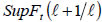
<body><![CDATA[<p>  As suggested above, we examine the possibility of instabilities   in this relationship to address the question of   whether the long-run relationship estimated between   stock and bond market returns is stable over time or it   exhibits some structural break allowing the instability to   occur at a unknown date. To carry out this task we use the   tests of multiple structural breaks proposed by Bai and   Perron (1998, 2003).</p>     <p>  Bai-Perron's approach allows to test for multiple breaks   at unknown dates, so that it successively estimates each   break point by using a specific-to-general strategy to determine   the number of breaks. Bai and Perron (1998) suggest   several statistics to indentify the break points: i) The   <i>SupF<sub>t</sub></i>(<i>k</i>) test, i.e. a sup F-type test of the null hypothesis   of non structural break vs the alternative of a fixed (arbitrary)   number of breaks estimating the long-run relationship   with multiple structural breaks k; ii) Two maximum   test of the null hyothesis of no structural break vs the alternative   of a unknown number of breaks given some upper   bound, i.e. <i>UD</i><sub>max</sub> test, an equal weighted version, and   <i>WD</i><sub>max</sub> test, with weights that depend on the number of   regressors and the significance level of the test; and iii)   The <img src="/img/revistas/inno/v21n39/39a12ep1.jpg" align="absmiddle"> test, i.e. a sequential test of the null   hypothesis of <img src="/img/revistas/inno/v21n39/39a12ele.jpg" align="baseline"> breaks vs the alternative <img src="/img/revistas/inno/v21n39/39a12ele.jpg" align="baseline">-1 of breaks.</p>     <p>&nbsp;</p>     <p><font size="3"><b>  Results</b></font></p>     <p>  We begin our analysis by examining the time-series properties   of the series. We use a modified version of the Dickey   and Fuller (1979, 1981) test (DF) and a modified version   of the Phillips and Perron (1988) tests (PP) proposed by Ng and Perron (2001) for the null hypothesis of a unit root   to solve the traditional problems associated to conventional   unit root tests. Ng and Perron (2001) propose a class of   modified tests, <img src="/img/revistas/inno/v21n39/39a12eme.jpg" align="baseline">, with GLS detrending of the data and   using the modified Akaike information criteria to select the   autoregressive truncation lag.</p>     <p> <a href="/img/revistas/inno/v21n39/39a12t1.jpg" target="_blank">Table 1</a> reports test statistics of Ng-Perron tests, <img src="/img/revistas/inno/v21n39/39a12ep2.jpg" align="absmiddle">. All test statistics formally examine   the unit root null hypothesis against the alternative of   stationarity. At the 5% level, the null hypothesis of nonstationarity   for the series in levels for <i>Rmsi</i> and <i>Rsb</i> cannot   be rejected by using Ng-Perron tests. By contrast, however   both ADF and KPSS tests suggest that the two series are stationary.</p>     <p>  The results of applying the Bai-Perron tests to the relationship   between stock and bond market are shown in <a href="/img/revistas/inno/v21n39/39a12t2.jpg" target="_blank">Table 2</a>.   To estimate the partial structural change model we consider   a particular specification with serially uncorrelated   errors, different distributions for the data across segments   and the same distribution for the errors across segments.</p>     <p>  We allowed up to eight breaks and used a trimming of   Îµ = 0.10, so that each regime has at least 22 observations.   We apply the procedure with a constant and account for   potential serial correlation via non-parametric adjustments.   The statistics <i>UD</i><sub>max</sub> and <i>WD</i><sub>max</sub> are highly significant which   implies that at least one break in the model exists. As we   can see, all the <i>SupF<sub>t</sub></i>(<i>k</i>) tests are significant with k running   between one and eight so that at least one break   could be present in this relationship. In turn, <img src="/img/revistas/inno/v21n39/39a12ep1.jpg" align="absmiddle"> the test is not significant for any  <img src="/img/revistas/inno/v21n39/39a12ele.jpg" align="baseline">â‰¥ 7, so the sequential  procedure selects six breaks. Hence, the results of the Bai-Perron tests would suggest a model of seven regimes, with   the dates of the breaks estimated at July 1993, October   1996, July 1998, August 2002, October 2004 and December   2006 (their confidence intervals are shown in <a href="/img/revistas/inno/v21n39/39a12t1.jpg" target="_blank">Table 1</a>).</p>     <p>  Finally, we proceed to estimate the market risk premium   for the seven sub-samples and the results are shown in the   columns of <a href="/img/revistas/inno/v21n39/39a12t3.jpg" target="_blank">Table 3</a>. As it can be seen, in the first, fourth   and last regime the market risk premium is negative. Comparing   these regimes with the evolution of the GDP we can   observe the similar pattern followed by these markets and the recent macroeconomic evolution (see, <a href="/img/revistas/inno/v21n39/39a12f1.jpg" target="_blank">Figure 1</a>). <a href="/img/revistas/inno/v21n39/39a12t3.jpg" target="_blank">Table 3</a> also includes both the Anova F test and the Barlett test   for testing the equality of means and variances between   regimes. In both cases, results reject the null hypothesis   of equality of means and variances, respectively between   the regimes.</p>     <p>  In the <a href="/img/revistas/inno/v21n39/39a12f1.jpg" target="_blank">figure 1</a>, shadow areas corresponds to regimes with   negative market risk premium (regimes 1, 4 and 7). As we   can observe these regimes corresponds to a deaccelaration   or crises episodies. In this sense, structural changes in the   evolution of the market risk premium lead to changes in   the business cycle.</p>     ]]></body>

<body><![CDATA[<p>&nbsp;</p>     <p><font size="3"><b>  Conclusions</b></font></p>     <p>  This paper tested the presence of structural breaks in the   Spanish risk market premium and its relationship with   business cycle. Defining market risk premium in terms of   the difference between the stock return and the risk free   return or treasury bond return, the results provide robust   evidence of structural changes leading to business cycles   changes. In particular, our findings indicate that while the   market risk premium is usually positive, periods with negative   values appear only in three periods (1991:1-1993:2,   1998:3-2002:2 and from 2007:1-2009:11) leading to   changes in the GDP evolution. Therefore, the strategic allocations of capital resources between stocks and bonds   as two close substitutes for balancing of portfolio of assets   must be considered a way to anticipate changes in   business cycles' phases, given that stock market uncertainty   has important cross-market pricing influences and   should be taken into consideration when setting optimal   portfolio allocations.</p>     <p>  This result also suggests that forecasting of financial return   series are subject to breaks and advises us on the   presence of certain correlation between these breaks in   the movement among stock and bond indices and macroeconomic   variables. In view of evidence that these structural   changes and regime shifts seem to lead business cycle   turningpoints, the use of the link between stock and bonds   returns and its structural breaks as a predictor of economic   crises would be present in the future research agenda, to   test the potential to increase the out-of-sample predictability   of GDP.</p>     <p>  However, we cannot rule out the possibility that it might   simply reflect data limitations given that our analysis focuses   on a singular country.<a href="#5" name="s5">&#91;5&#93;</a> Therefore, future work might   fruitfully apply the methodology used in this article to a   broader range of countries and should also seek to extend   the length of the data series which are utilized.</p>     <p>&nbsp;</p>     <p><font size="3"><b>Footnotes</b></font></p>     <p><a href="#s1" name="1">&#91;1&#93;</a> This procedure has a number of advantages over previous approaches (for details, see Bai and Perron, 2006).</p>     <p><a href="#s2" name="2">&#91;2&#93;</a> This procedure has a number of advantages over previous approaches (for details, see Bai and Perron, 2006).</p>     <p><a href="#s3" name="3">&#91;3&#93;</a> Asset Markets Time Series. In particular the two time series considered   are the treasury bond (10 years) average return and the   Madrid General Stock Index (IGBB, Bolsa de Madrid). Data were   downloaded from the BIEST (Spanish Central Bank Time series   search engine) collected by Spanish Central Bank on December,   2009. Available at: <a href="http://app.bde.es/tsi_www/paginaBienvenida.do?idioma=es" target="_blank">http://app.bde.es/tsi_www/paginaBienvenida.do?idioma=es</a> &#91;04/12/09&#93;. Data on Spanish real GDP are taken   from the Quarterly National Accounts database Available at: <a href="http://www.ine.es/jaxiBD/tabla.do?per=03&type=db&divi=CNTR&idtab=9" target="_blank">http://www.ine.es/jaxiBD/tabla.do?per=03&amp;type=db&amp;divi=CNTR&amp;idtab=9</a> &#91;04/12/09&#93;.</p>     ]]></body>
<body><![CDATA[<p> <a href="#s4" name="4">&#91;4&#93;</a> The concept of market risk premium can be considered from alternative   perspectives. For instance, as the incremental return of the   market over the return of treasury bonds required by an investor-   required market risk premium-or alternatively as the expected differential return of the stock market over treasury bonds -expected   market risk premium-. See Fern&aacute;ndez (2009) for a detailed discussion.</p>     <p><a href="#s5" name="5">&#91;5&#93;</a> Using G7 data, Kim and In (2007) found the correlation between   changes in stock prices and bond yields can differ from country to country and can also depend on the time scale.</p>     <p>&nbsp;</p>     <p><font size="3"><b>References</b></font></p>     <!-- ref --><p> Ahmed, H. J. A. (2009). The equilibrium relation between Stock Index   and Bond Index: Evidence from Bursa Malaisya. <i>International Research Journal of Finance and Economics</i>, <i>30</i>, 1-15.&nbsp;&nbsp;&nbsp;&nbsp;&nbsp;&nbsp;&nbsp;&nbsp;[&#160;<a href="javascript:void(0);" onclick="javascript: window.open('/scielo.php?script=sci_nlinks&ref=000097&pid=S0121-5051201100010001200001&lng=','','width=640,height=500,resizable=yes,scrollbars=1,menubar=yes,');">Links</a>&#160;]<!-- end-ref --><!-- ref --><p> Atkins, R. (2008, 10/11 May). Eurozone loan demand plunges. <i>Financial   Times</i>, p. 2.&nbsp;&nbsp;&nbsp;&nbsp;&nbsp;&nbsp;&nbsp;&nbsp;[&#160;<a href="javascript:void(0);" onclick="javascript: window.open('/scielo.php?script=sci_nlinks&ref=000098&pid=S0121-5051201100010001200002&lng=','','width=640,height=500,resizable=yes,scrollbars=1,menubar=yes,');">Links</a>&#160;]<!-- end-ref --><!-- ref --><p> Bai, J. &amp; Perron, P. (1998). Estimating and testing linear models with   multiple structural changes. <i>Econometrica</i>, <i>66</i>, 47-78.&nbsp;&nbsp;&nbsp;&nbsp;&nbsp;&nbsp;&nbsp;&nbsp;[&#160;<a href="javascript:void(0);" onclick="javascript: window.open('/scielo.php?script=sci_nlinks&ref=000099&pid=S0121-5051201100010001200003&lng=','','width=640,height=500,resizable=yes,scrollbars=1,menubar=yes,');">Links</a>&#160;]<!-- end-ref --><!-- ref --><p> Bai, J. &amp; Perron, P. (2003a). Computation and analysis of multiple structural   change models. <i>Journal of Applied Econometrics</i>, <i>18</i>, 1-22.&nbsp;&nbsp;&nbsp;&nbsp;&nbsp;&nbsp;&nbsp;&nbsp;[&#160;<a href="javascript:void(0);" onclick="javascript: window.open('/scielo.php?script=sci_nlinks&ref=000100&pid=S0121-5051201100010001200004&lng=','','width=640,height=500,resizable=yes,scrollbars=1,menubar=yes,');">Links</a>&#160;]<!-- end-ref --><!-- ref --><p> Bai, J. &amp; Perron, P. (2003b). Critical values for multiple structural change   tests. <i>Econometrics Journal</i>, <i>6</i>, 72-78.&nbsp;&nbsp;&nbsp;&nbsp;&nbsp;&nbsp;&nbsp;&nbsp;[&#160;<a href="javascript:void(0);" onclick="javascript: window.open('/scielo.php?script=sci_nlinks&ref=000101&pid=S0121-5051201100010001200005&lng=','','width=640,height=500,resizable=yes,scrollbars=1,menubar=yes,');">Links</a>&#160;]<!-- end-ref --><!-- ref --><p> Bai, J. &amp; Perron, P. (2006). Multiple structural change models: A simulation   analysis. In D. Corbae, S. N. Durlauf &amp; B. E. Hansen (Eds.),   <i>Econometric theory and practice: Frontiers of analysis and applied   research</i> (pp. 212-238). Cambridge: Cambridge University Press.&nbsp;&nbsp;&nbsp;&nbsp;&nbsp;&nbsp;&nbsp;&nbsp;[&#160;<a href="javascript:void(0);" onclick="javascript: window.open('/scielo.php?script=sci_nlinks&ref=000102&pid=S0121-5051201100010001200006&lng=','','width=640,height=500,resizable=yes,scrollbars=1,menubar=yes,');">Links</a>&#160;]<!-- end-ref --><!-- ref --><p> Bajo, O., D&iacute;az, C. &amp; Esteve, V. (2008). US deficit sustainability revisited:   A multiple structural change approach. <i>Applied Economics</i>, <i>40</i>,   1609-1613.&nbsp;&nbsp;&nbsp;&nbsp;&nbsp;&nbsp;&nbsp;&nbsp;[&#160;<a href="javascript:void(0);" onclick="javascript: window.open('/scielo.php?script=sci_nlinks&ref=000103&pid=S0121-5051201100010001200007&lng=','','width=640,height=500,resizable=yes,scrollbars=1,menubar=yes,');">Links</a>&#160;]<!-- end-ref --><!-- ref --><p> Brunner, R. F., Eades, K. M., Harris, R. S. &amp; Higgins, R. C. (1998). Best   practices in estimating the cost of capital, survey and synthesis.   <i>Financial Practice and Education</i>, 13-28.&nbsp;&nbsp;&nbsp;&nbsp;&nbsp;&nbsp;&nbsp;&nbsp;[&#160;<a href="javascript:void(0);" onclick="javascript: window.open('/scielo.php?script=sci_nlinks&ref=000104&pid=S0121-5051201100010001200008&lng=','','width=640,height=500,resizable=yes,scrollbars=1,menubar=yes,');">Links</a>&#160;]<!-- end-ref --><!-- ref --><p> Campbell, J. Y. (1991). A variance decomposition for stock returns. <i>Economic   Journal</i>, <i>101</i>, 157-179.&nbsp;&nbsp;&nbsp;&nbsp;&nbsp;&nbsp;&nbsp;&nbsp;[&#160;<a href="javascript:void(0);" onclick="javascript: window.open('/scielo.php?script=sci_nlinks&ref=000105&pid=S0121-5051201100010001200009&lng=','','width=640,height=500,resizable=yes,scrollbars=1,menubar=yes,');">Links</a>&#160;]<!-- end-ref --><!-- ref --><p>Campbell, J. Y. &amp; Hamao, Y. (1989). Predictable bond and stock returns   in the United States and Japan: A study of long-term capital market integration. <i>Journal of Finance</i>, <i>47</i>(1), 43-70.&nbsp;&nbsp;&nbsp;&nbsp;&nbsp;&nbsp;&nbsp;&nbsp;[&#160;<a href="javascript:void(0);" onclick="javascript: window.open('/scielo.php?script=sci_nlinks&ref=000106&pid=S0121-5051201100010001200010&lng=','','width=640,height=500,resizable=yes,scrollbars=1,menubar=yes,');">Links</a>&#160;]<!-- end-ref --><!-- ref --><p>  Campbell, J. Y. &amp; Shiller, R. J. (1988). The dividend-price ratio and expectations   of future dividends and discount factors. <i>Review of Financial Studies</i>, <i>1</i>, 195-227.&nbsp;&nbsp;&nbsp;&nbsp;&nbsp;&nbsp;&nbsp;&nbsp;[&#160;<a href="javascript:void(0);" onclick="javascript: window.open('/scielo.php?script=sci_nlinks&ref=000107&pid=S0121-5051201100010001200011&lng=','','width=640,height=500,resizable=yes,scrollbars=1,menubar=yes,');">Links</a>&#160;]<!-- end-ref --><!-- ref --><p>  Chan, K. C., Norrbin, S. C. &amp; Lai, P. (1997). Are stock and bond prices   collinear in the long run? <i>International Review of Economics and Finance</i>, <i>6</i>(2), 193-201.&nbsp;&nbsp;&nbsp;&nbsp;&nbsp;&nbsp;&nbsp;&nbsp;[&#160;<a href="javascript:void(0);" onclick="javascript: window.open('/scielo.php?script=sci_nlinks&ref=000108&pid=S0121-5051201100010001200012&lng=','','width=640,height=500,resizable=yes,scrollbars=1,menubar=yes,');">Links</a>&#160;]<!-- end-ref --><!-- ref --><p>  Chordia, T., Sarkar, A. &amp; Subrahmanyam, A. (2005). An empirical analysis   of stock and bond liquidity. <i>Review of Financial Studies</i>, <i>18</i>, 85-129.&nbsp;&nbsp;&nbsp;&nbsp;&nbsp;&nbsp;&nbsp;&nbsp;[&#160;<a href="javascript:void(0);" onclick="javascript: window.open('/scielo.php?script=sci_nlinks&ref=000109&pid=S0121-5051201100010001200013&lng=','','width=640,height=500,resizable=yes,scrollbars=1,menubar=yes,');">Links</a>&#160;]<!-- end-ref --><!-- ref --><p>  Clare, A. D. &amp; Thomas, S. H. (1992). International evidence for the predictability   of bond and stock returns. <i>Economic Letters</i>, <i>40</i>, 105-112.&nbsp;&nbsp;&nbsp;&nbsp;&nbsp;&nbsp;&nbsp;&nbsp;[&#160;<a href="javascript:void(0);" onclick="javascript: window.open('/scielo.php?script=sci_nlinks&ref=000110&pid=S0121-5051201100010001200014&lng=','','width=640,height=500,resizable=yes,scrollbars=1,menubar=yes,');">Links</a>&#160;]<!-- end-ref --><!-- ref --><p>  Clare, A. D., Thomas S. H. &amp; Wickens M. R. (1994). Is the Gilt-Equity   Yield Ratio useful for predicting UK stock returns? <i>The Economic Journal</i>, <i>104</i>(2), 303-315.&nbsp;&nbsp;&nbsp;&nbsp;&nbsp;&nbsp;&nbsp;&nbsp;[&#160;<a href="javascript:void(0);" onclick="javascript: window.open('/scielo.php?script=sci_nlinks&ref=000111&pid=S0121-5051201100010001200015&lng=','','width=640,height=500,resizable=yes,scrollbars=1,menubar=yes,');">Links</a>&#160;]<!-- end-ref --><!-- ref --><p>  Conklin, D. &amp; Cadieux, D. (2008, 30th June). The 2007-2008 financial   crisis: Causes, impacts, and the need for new regulations. Ivey   Publising. The University of Western Ontario. Available at: <a href="http://cases.ivey.uwo.ca/Cases/Pages/home" target="_blank">http://cases.ivey.uwo.ca/Cases/Pages/home</a>&nbsp;&nbsp;&nbsp;&nbsp;&nbsp;&nbsp;&nbsp;&nbsp;[&#160;<a href="javascript:void(0);" onclick="javascript: window.open('/scielo.php?script=sci_nlinks&ref=000112&pid=S0121-5051201100010001200016&lng=','','width=640,height=500,resizable=yes,scrollbars=1,menubar=yes,');">Links</a>&#160;]<!-- end-ref --><!-- ref --><p>  Connolly, R., Stivers, C. &amp; Sun, L. (2005). Stock market uncertainty and   the stock-bond return relation. <i>Journal of Financial and Quantitative Analysis</i>, <i>40</i>, 161-194.&nbsp;&nbsp;&nbsp;&nbsp;&nbsp;&nbsp;&nbsp;&nbsp;[&#160;<a href="javascript:void(0);" onclick="javascript: window.open('/scielo.php?script=sci_nlinks&ref=000113&pid=S0121-5051201100010001200017&lng=','','width=640,height=500,resizable=yes,scrollbars=1,menubar=yes,');">Links</a>&#160;]<!-- end-ref --><!-- ref --><p>  Cooper, R., Chuin, L. &amp; Atkin, M. (2004). Relationship between macroeconomic   variables and stock market indices: Cointegration evidence   from stock exchange of Singapore's All-S sector indices. <i>Journal Pengurusan</i>, <i>24</i>, 47-77.&nbsp;&nbsp;&nbsp;&nbsp;&nbsp;&nbsp;&nbsp;&nbsp;[&#160;<a href="javascript:void(0);" onclick="javascript: window.open('/scielo.php?script=sci_nlinks&ref=000114&pid=S0121-5051201100010001200018&lng=','','width=640,height=500,resizable=yes,scrollbars=1,menubar=yes,');">Links</a>&#160;]<!-- end-ref --><!-- ref --><p>  Fama, E. F. &amp; French, K. R. (1988). Dividend yields and expected stock returns. <i>Journal of Financial Economics</i>, <i>22</i>, 3-27.&nbsp;&nbsp;&nbsp;&nbsp;&nbsp;&nbsp;&nbsp;&nbsp;[&#160;<a href="javascript:void(0);" onclick="javascript: window.open('/scielo.php?script=sci_nlinks&ref=000115&pid=S0121-5051201100010001200019&lng=','','width=640,height=500,resizable=yes,scrollbars=1,menubar=yes,');">Links</a>&#160;]<!-- end-ref --><!-- ref --><p>  Fama, E. F. &amp; French, K. R. (1989). Business conditions and expected   returns on stocks and bonds. <i>Journal of Financial Economics</i>, <i>25</i>, 23-49.&nbsp;&nbsp;&nbsp;&nbsp;&nbsp;&nbsp;&nbsp;&nbsp;[&#160;<a href="javascript:void(0);" onclick="javascript: window.open('/scielo.php?script=sci_nlinks&ref=000116&pid=S0121-5051201100010001200020&lng=','','width=640,height=500,resizable=yes,scrollbars=1,menubar=yes,');">Links</a>&#160;]<!-- end-ref --><!-- ref --><p>  Fama, E. F. &amp; French K. R. (1996). Multifactor explanations of asset pricing anomalies. <i>Journal of Finance</i>, <i>51</i>, 55-84.&nbsp;&nbsp;&nbsp;&nbsp;&nbsp;&nbsp;&nbsp;&nbsp;[&#160;<a href="javascript:void(0);" onclick="javascript: window.open('/scielo.php?script=sci_nlinks&ref=000117&pid=S0121-5051201100010001200021&lng=','','width=640,height=500,resizable=yes,scrollbars=1,menubar=yes,');">Links</a>&#160;]<!-- end-ref --><!-- ref --><p>  Fama, E. F. &amp; French, K. R. (2002). The equity premium. <i>Journal of Finance</i>, <i>57</i>, 637-659.&nbsp;&nbsp;&nbsp;&nbsp;&nbsp;&nbsp;&nbsp;&nbsp;[&#160;<a href="javascript:void(0);" onclick="javascript: window.open('/scielo.php?script=sci_nlinks&ref=000118&pid=S0121-5051201100010001200022&lng=','','width=640,height=500,resizable=yes,scrollbars=1,menubar=yes,');">Links</a>&#160;]<!-- end-ref --><!-- ref --><p>  Fama, E. F. &amp; Schwert, G. W. (1977). Asset returns and inflation. <i>Journal of Financial Economics</i>, <i>5</i>, 115-146.&nbsp;&nbsp;&nbsp;&nbsp;&nbsp;&nbsp;&nbsp;&nbsp;[&#160;<a href="javascript:void(0);" onclick="javascript: window.open('/scielo.php?script=sci_nlinks&ref=000119&pid=S0121-5051201100010001200023&lng=','','width=640,height=500,resizable=yes,scrollbars=1,menubar=yes,');">Links</a>&#160;]<!-- end-ref --><!-- ref --><p>  Fern&aacute;ndez, P. (2009). <i>Equity risk premium: Historic, expected, required and implied</i>. MPRA Paper 14221, March.&nbsp;&nbsp;&nbsp;&nbsp;&nbsp;&nbsp;&nbsp;&nbsp;[&#160;<a href="javascript:void(0);" onclick="javascript: window.open('/scielo.php?script=sci_nlinks&ref=000120&pid=S0121-5051201100010001200024&lng=','','width=640,height=500,resizable=yes,scrollbars=1,menubar=yes,');">Links</a>&#160;]<!-- end-ref --><!-- ref --><p>  Fleming, M. J. &amp; Remolona, E. M. (1997). What moves the bond market? <i>Economic Policy Review</i>, <i>3</i>(4), 31-50.&nbsp;&nbsp;&nbsp;&nbsp;&nbsp;&nbsp;&nbsp;&nbsp;[&#160;<a href="javascript:void(0);" onclick="javascript: window.open('/scielo.php?script=sci_nlinks&ref=000121&pid=S0121-5051201100010001200025&lng=','','width=640,height=500,resizable=yes,scrollbars=1,menubar=yes,');">Links</a>&#160;]<!-- end-ref --><!-- ref --><p>  Fleming, M. J., Kirby, C. &amp; Ostdiek, B. (1998). Informational and volatility   linkage in the stock-bond and money market. <i>Journal of Financial Economics</i>, <i>49</i>, 111-137.&nbsp;&nbsp;&nbsp;&nbsp;&nbsp;&nbsp;&nbsp;&nbsp;[&#160;<a href="javascript:void(0);" onclick="javascript: window.open('/scielo.php?script=sci_nlinks&ref=000122&pid=S0121-5051201100010001200026&lng=','','width=640,height=500,resizable=yes,scrollbars=1,menubar=yes,');">Links</a>&#160;]<!-- end-ref --><!-- ref --><p>  Hartmann, D., Kempa, B. &amp; Pierdzioch, C. (2008). Economic and financial   crises and the predictability of U.S. stock returns. <i>Journal of Empirical Finance</i>, <i>15</i>(3), 468-480.&nbsp;&nbsp;&nbsp;&nbsp;&nbsp;&nbsp;&nbsp;&nbsp;[&#160;<a href="javascript:void(0);" onclick="javascript: window.open('/scielo.php?script=sci_nlinks&ref=000123&pid=S0121-5051201100010001200027&lng=','','width=640,height=500,resizable=yes,scrollbars=1,menubar=yes,');">Links</a>&#160;]<!-- end-ref --><!-- ref --><p>  Hodrick, R. (1992). Dividend yields and expected stock returns: Alternative   procedures for inference and measurement. <i>Review of Financial Studies</i>, <i>5</i>, 357-386.&nbsp;&nbsp;&nbsp;&nbsp;&nbsp;&nbsp;&nbsp;&nbsp;[&#160;<a href="javascript:void(0);" onclick="javascript: window.open('/scielo.php?script=sci_nlinks&ref=000124&pid=S0121-5051201100010001200028&lng=','','width=640,height=500,resizable=yes,scrollbars=1,menubar=yes,');">Links</a>&#160;]<!-- end-ref --><!-- ref --><p>  H&ouml;rdahl, P. (2008). The inflation risk premium in the term structure of interest rates. <i>BIS Quarterly Review</i>, September, 23-38.&nbsp;&nbsp;&nbsp;&nbsp;&nbsp;&nbsp;&nbsp;&nbsp;[&#160;<a href="javascript:void(0);" onclick="javascript: window.open('/scielo.php?script=sci_nlinks&ref=000125&pid=S0121-5051201100010001200029&lng=','','width=640,height=500,resizable=yes,scrollbars=1,menubar=yes,');">Links</a>&#160;]<!-- end-ref --><!-- ref --><p>  Keim, D. B. &amp; Stambaugh, R. F. (1986). Predicting returns in the stock and bond markets. <i>Journal of Financial Economics</i>, <i>17</i>, 357-390.&nbsp;&nbsp;&nbsp;&nbsp;&nbsp;&nbsp;&nbsp;&nbsp;[&#160;<a href="javascript:void(0);" onclick="javascript: window.open('/scielo.php?script=sci_nlinks&ref=000126&pid=S0121-5051201100010001200030&lng=','','width=640,height=500,resizable=yes,scrollbars=1,menubar=yes,');">Links</a>&#160;]<!-- end-ref --><!-- ref --><p>  Kim, S. &amp; In, F. (2007). On the relationship between changes in stock   prices and bond yields in the G7 countries: Wavelet analysis.   <i>Journal of International Financial Markets, Institutions and Money</i>, <i>17</i>(2), 167-179.&nbsp;&nbsp;&nbsp;&nbsp;&nbsp;&nbsp;&nbsp;&nbsp;[&#160;<a href="javascript:void(0);" onclick="javascript: window.open('/scielo.php?script=sci_nlinks&ref=000127&pid=S0121-5051201100010001200031&lng=','','width=640,height=500,resizable=yes,scrollbars=1,menubar=yes,');">Links</a>&#160;]<!-- end-ref --><!-- ref --><p>Lamont, O. (1998). Earnings and expected returns. <i>Journal of Finance</i>, <i>53</i>, 1563-1587.&nbsp;&nbsp;&nbsp;&nbsp;&nbsp;&nbsp;&nbsp;&nbsp;[&#160;<a href="javascript:void(0);" onclick="javascript: window.open('/scielo.php?script=sci_nlinks&ref=000128&pid=S0121-5051201100010001200032&lng=','','width=640,height=500,resizable=yes,scrollbars=1,menubar=yes,');">Links</a>&#160;]<!-- end-ref --><!-- ref --><p>  Li, L. (2002). <i>Macroeconomic factors and the correlation of stock and bond returns</i>. Yale TCF Working paper, November, No. 02-46.&nbsp;&nbsp;&nbsp;&nbsp;&nbsp;&nbsp;&nbsp;&nbsp;[&#160;<a href="javascript:void(0);" onclick="javascript: window.open('/scielo.php?script=sci_nlinks&ref=000129&pid=S0121-5051201100010001200033&lng=','','width=640,height=500,resizable=yes,scrollbars=1,menubar=yes,');">Links</a>&#160;]<!-- end-ref --><!-- ref --><p>  Li, L. &amp; Zou, L. P. (2008). How do policy and information shocks impact   co-movements of China's T-bond and stock markets? <i>Journal of Banking &amp; Finance</i>, <i>32</i>(3), 347-359.&nbsp;&nbsp;&nbsp;&nbsp;&nbsp;&nbsp;&nbsp;&nbsp;[&#160;<a href="javascript:void(0);" onclick="javascript: window.open('/scielo.php?script=sci_nlinks&ref=000130&pid=S0121-5051201100010001200034&lng=','','width=640,height=500,resizable=yes,scrollbars=1,menubar=yes,');">Links</a>&#160;]<!-- end-ref --><!-- ref --><p>  Lo, A. &amp; MacKinlay, A. (1988). Stock prices do not follow random walk. <i>Review of Financial Studies</i>, <i>1</i>, 41-66.&nbsp;&nbsp;&nbsp;&nbsp;&nbsp;&nbsp;&nbsp;&nbsp;[&#160;<a href="javascript:void(0);" onclick="javascript: window.open('/scielo.php?script=sci_nlinks&ref=000131&pid=S0121-5051201100010001200035&lng=','','width=640,height=500,resizable=yes,scrollbars=1,menubar=yes,');">Links</a>&#160;]<!-- end-ref --><!-- ref --><p>  Mayfield, E. S. (2004). Estimating the market risk premium. <i>Journal of Financial Economics</i>, <i>73</i>, 465-496.&nbsp;&nbsp;&nbsp;&nbsp;&nbsp;&nbsp;&nbsp;&nbsp;[&#160;<a href="javascript:void(0);" onclick="javascript: window.open('/scielo.php?script=sci_nlinks&ref=000132&pid=S0121-5051201100010001200036&lng=','','width=640,height=500,resizable=yes,scrollbars=1,menubar=yes,');">Links</a>&#160;]<!-- end-ref --><!-- ref --><p>  Mills, T. C. (1991). Equity Prices, Dividends and Gilt Yields in the U. K:   Cointegration, Error Correction and 'Confidence'. <i>Scottish Journal of Political Economy</i>, <i>38</i>(3), 242-255.&nbsp;&nbsp;&nbsp;&nbsp;&nbsp;&nbsp;&nbsp;&nbsp;[&#160;<a href="javascript:void(0);" onclick="javascript: window.open('/scielo.php?script=sci_nlinks&ref=000133&pid=S0121-5051201100010001200037&lng=','','width=640,height=500,resizable=yes,scrollbars=1,menubar=yes,');">Links</a>&#160;]<!-- end-ref --><!-- ref --><p>  Milne, R. &amp; Guerrera, F. (2008, 2nd May). Europeans start to worry that U. S. fever could be contagious. <i>Financial Times</i>, <i>16</i>.&nbsp;&nbsp;&nbsp;&nbsp;&nbsp;&nbsp;&nbsp;&nbsp;[&#160;<a href="javascript:void(0);" onclick="javascript: window.open('/scielo.php?script=sci_nlinks&ref=000134&pid=S0121-5051201100010001200038&lng=','','width=640,height=500,resizable=yes,scrollbars=1,menubar=yes,');">Links</a>&#160;]<!-- end-ref --><!-- ref --><p>  Ng, S. &amp; Perron, P. (2001). Lag length selection and the construction   of unit root tests with good size and power. <i>Econometrica</i>, <i>69</i>, 1529-1554.&nbsp;&nbsp;&nbsp;&nbsp;&nbsp;&nbsp;&nbsp;&nbsp;[&#160;<a href="javascript:void(0);" onclick="javascript: window.open('/scielo.php?script=sci_nlinks&ref=000135&pid=S0121-5051201100010001200039&lng=','','width=640,height=500,resizable=yes,scrollbars=1,menubar=yes,');">Links</a>&#160;]<!-- end-ref --><!-- ref --><p>  Officer, R. R. (1973). The variability of the market factor of the New York Stock Exchange. <i>Journal of Business</i>, <i>46</i>, 434-453.&nbsp;&nbsp;&nbsp;&nbsp;&nbsp;&nbsp;&nbsp;&nbsp;[&#160;<a href="javascript:void(0);" onclick="javascript: window.open('/scielo.php?script=sci_nlinks&ref=000136&pid=S0121-5051201100010001200040&lng=','','width=640,height=500,resizable=yes,scrollbars=1,menubar=yes,');">Links</a>&#160;]<!-- end-ref --><!-- ref --><p>  Pagan, A. R. &amp; Schwert, G. W. (1990). Alternative models for conditional stock volatility. <i>Journal of Econometrics</i>, <i>45</i>, 267-290.&nbsp;&nbsp;&nbsp;&nbsp;&nbsp;&nbsp;&nbsp;&nbsp;[&#160;<a href="javascript:void(0);" onclick="javascript: window.open('/scielo.php?script=sci_nlinks&ref=000137&pid=S0121-5051201100010001200041&lng=','','width=640,height=500,resizable=yes,scrollbars=1,menubar=yes,');">Links</a>&#160;]<!-- end-ref --><!-- ref --><p>  Pastor, L. &amp; Stambaugh, R. F. (2001). The equity premium and structural breaks. <i>Journal of Finance</i>, <i>56</i>, 1207-1239.&nbsp;&nbsp;&nbsp;&nbsp;&nbsp;&nbsp;&nbsp;&nbsp;[&#160;<a href="javascript:void(0);" onclick="javascript: window.open('/scielo.php?script=sci_nlinks&ref=000138&pid=S0121-5051201100010001200042&lng=','','width=640,height=500,resizable=yes,scrollbars=1,menubar=yes,');">Links</a>&#160;]<!-- end-ref --><!-- ref --><p>  Perron, P. &amp; Ng, S. (1996). Useful modifications to sorne unit root tests   with dependent errors and their local asymptotic properties. <i>Review of Economic Studies</i>, <i>63</i>, 435-463.&nbsp;&nbsp;&nbsp;&nbsp;&nbsp;&nbsp;&nbsp;&nbsp;[&#160;<a href="javascript:void(0);" onclick="javascript: window.open('/scielo.php?script=sci_nlinks&ref=000139&pid=S0121-5051201100010001200043&lng=','','width=640,height=500,resizable=yes,scrollbars=1,menubar=yes,');">Links</a>&#160;]<!-- end-ref --><!-- ref --><p>  Shiller, R. J. (1984). Stock prices and social dynamics. <i>Brookings Papers   on Economic Activity</i>, <i>2</i>, 457-498.&nbsp;&nbsp;&nbsp;&nbsp;&nbsp;&nbsp;&nbsp;&nbsp;[&#160;<a href="javascript:void(0);" onclick="javascript: window.open('/scielo.php?script=sci_nlinks&ref=000140&pid=S0121-5051201100010001200044&lng=','','width=640,height=500,resizable=yes,scrollbars=1,menubar=yes,');">Links</a>&#160;]<!-- end-ref --><!-- ref --><p>  Schwert, G. W. (1989). Why does stock market volatility change over   time? <i>Journal of Finance</i>, <i>44</i>, 1115-1153.&nbsp;&nbsp;&nbsp;&nbsp;&nbsp;&nbsp;&nbsp;&nbsp;[&#160;<a href="javascript:void(0);" onclick="javascript: window.open('/scielo.php?script=sci_nlinks&ref=000141&pid=S0121-5051201100010001200045&lng=','','width=640,height=500,resizable=yes,scrollbars=1,menubar=yes,');">Links</a>&#160;]<!-- end-ref --><!-- ref --><p>  Siegel, J. J. (1992). The equity premium: Stock and bond returns since   1802. <i>Financial Analysts Journal</i>, <i>48</i>, 28-38.&nbsp;&nbsp;&nbsp;&nbsp;&nbsp;&nbsp;&nbsp;&nbsp;[&#160;<a href="javascript:void(0);" onclick="javascript: window.open('/scielo.php?script=sci_nlinks&ref=000142&pid=S0121-5051201100010001200046&lng=','','width=640,height=500,resizable=yes,scrollbars=1,menubar=yes,');">Links</a>&#160;]<!-- end-ref --><!-- ref --><p>  Wainscott, C. B. (July-August 1990). The stock-bond correlation and   its implications for asset allocation. <i>Financial Analysts Journal</i>,   55-60.&nbsp;&nbsp;&nbsp;&nbsp;&nbsp;&nbsp;&nbsp;&nbsp;[&#160;<a href="javascript:void(0);" onclick="javascript: window.open('/scielo.php?script=sci_nlinks&ref=000143&pid=S0121-5051201100010001200047&lng=','','width=640,height=500,resizable=yes,scrollbars=1,menubar=yes,');">Links</a>&#160;]<!-- end-ref --> ]]></body><back>
<ref-list>
<ref id="B1">
<nlm-citation citation-type="journal">
<person-group person-group-type="author">
<name>
<surname><![CDATA[Ahmed]]></surname>
<given-names><![CDATA[H. J. A]]></given-names>
</name>
</person-group>
<article-title xml:lang="en"><![CDATA[The equilibrium relation between Stock Index and Bond Index: Evidence from Bursa Malaisya]]></article-title>
<source><![CDATA[International Research Journal of Finance and Economics]]></source>
<year>2009</year>
<volume>30</volume>
<page-range>1-15</page-range></nlm-citation>
</ref>
<ref id="B2">
<nlm-citation citation-type="journal">
<person-group person-group-type="author">
<name>
<surname><![CDATA[Atkins]]></surname>
<given-names><![CDATA[R]]></given-names>
</name>
</person-group>
<article-title xml:lang="en"><![CDATA[Eurozone loan demand plunges]]></article-title>
<source><![CDATA[Financial Times]]></source>
<year>2008</year>
<month>, </month>
<day>10</day>
<page-range>p. 2</page-range></nlm-citation>
</ref>
<ref id="B3">
<nlm-citation citation-type="journal">
<person-group person-group-type="author">
<name>
<surname><![CDATA[Bai]]></surname>
<given-names><![CDATA[J]]></given-names>
</name>
<name>
<surname><![CDATA[Perron]]></surname>
<given-names><![CDATA[P]]></given-names>
</name>
</person-group>
<article-title xml:lang="en"><![CDATA[Estimating and testing linear models with multiple structural changes]]></article-title>
<source><![CDATA[Econometrica]]></source>
<year>1998</year>
<volume>66</volume>
<page-range>47-78</page-range></nlm-citation>
</ref>
<ref id="B4">
<nlm-citation citation-type="journal">
<person-group person-group-type="author">
<name>
<surname><![CDATA[Bai]]></surname>
<given-names><![CDATA[J]]></given-names>
</name>
<name>
<surname><![CDATA[Perron]]></surname>
<given-names><![CDATA[P]]></given-names>
</name>
</person-group>
<article-title xml:lang="en"><![CDATA[Computation and analysis of multiple structural change models]]></article-title>
<source><![CDATA[Journal of Applied Econometrics]]></source>
<year>2003</year>
<month>a</month>
<volume>18</volume>
<page-range>1-22</page-range></nlm-citation>
</ref>
<ref id="B5">
<nlm-citation citation-type="journal">
<person-group person-group-type="author">
<name>
<surname><![CDATA[Bai]]></surname>
<given-names><![CDATA[J]]></given-names>
</name>
<name>
<surname><![CDATA[Perron]]></surname>
<given-names><![CDATA[P]]></given-names>
</name>
</person-group>
<article-title xml:lang="en"><![CDATA[Critical values for multiple structural change tests]]></article-title>
<source><![CDATA[Econometrics Journal]]></source>
<year>2003</year>
<month>b</month>
<volume>6</volume>
<page-range>72-78</page-range></nlm-citation>
</ref>
<ref id="B6">
<nlm-citation citation-type="book">
<person-group person-group-type="author">
<name>
<surname><![CDATA[Bai]]></surname>
<given-names><![CDATA[J]]></given-names>
</name>
<name>
<surname><![CDATA[Perron]]></surname>
<given-names><![CDATA[P]]></given-names>
</name>
</person-group>
<article-title xml:lang="en"><![CDATA[Multiple structural change models: A simulation analysis]]></article-title>
<person-group person-group-type="editor">
<name>
<surname><![CDATA[Corbae]]></surname>
<given-names><![CDATA[D]]></given-names>
</name>
<name>
<surname><![CDATA[Durlauf]]></surname>
<given-names><![CDATA[S. N]]></given-names>
</name>
<name>
<surname><![CDATA[Hansen]]></surname>
<given-names><![CDATA[B. E]]></given-names>
</name>
</person-group>
<source><![CDATA[Econometric theory and practice: Frontiers of analysis and applied research]]></source>
<year>2006</year>
<page-range>212-238</page-range><publisher-loc><![CDATA[Cambridge ]]></publisher-loc>
<publisher-name><![CDATA[Cambridge University Press]]></publisher-name>
</nlm-citation>
</ref>
<ref id="B7">
<nlm-citation citation-type="journal">
<person-group person-group-type="author">
<name>
<surname><![CDATA[Bajo]]></surname>
<given-names><![CDATA[O]]></given-names>
</name>
<name>
<surname><![CDATA[Díaz]]></surname>
<given-names><![CDATA[C]]></given-names>
</name>
<name>
<surname><![CDATA[Esteve]]></surname>
<given-names><![CDATA[V]]></given-names>
</name>
</person-group>
<article-title xml:lang="en"><![CDATA[US deficit sustainability revisited: A multiple structural change approach]]></article-title>
<source><![CDATA[Applied Economics]]></source>
<year>2008</year>
<volume>40</volume>
<page-range>1609-1613</page-range></nlm-citation>
</ref>
<ref id="B8">
<nlm-citation citation-type="journal">
<person-group person-group-type="author">
<name>
<surname><![CDATA[Brunner]]></surname>
<given-names><![CDATA[R. F]]></given-names>
</name>
<name>
<surname><![CDATA[Eades]]></surname>
<given-names><![CDATA[K. M]]></given-names>
</name>
<name>
<surname><![CDATA[Harris]]></surname>
<given-names><![CDATA[R. S]]></given-names>
</name>
<name>
<surname><![CDATA[Higgins]]></surname>
<given-names><![CDATA[R. C]]></given-names>
</name>
</person-group>
<article-title xml:lang="en"><![CDATA[Best practices in estimating the cost of capital, survey and synthesis]]></article-title>
<source><![CDATA[Financial Practice and Education]]></source>
<year>1998</year>
<page-range>13-28</page-range></nlm-citation>
</ref>
<ref id="B9">
<nlm-citation citation-type="journal">
<person-group person-group-type="author">
<name>
<surname><![CDATA[Campbell]]></surname>
<given-names><![CDATA[J. Y]]></given-names>
</name>
</person-group>
<article-title xml:lang="en"><![CDATA[A variance decomposition for stock returns]]></article-title>
<source><![CDATA[Economic Journal]]></source>
<year>1991</year>
<volume>101</volume>
<page-range>157-179</page-range></nlm-citation>
</ref>
<ref id="B10">
<nlm-citation citation-type="journal">
<person-group person-group-type="author">
<name>
<surname><![CDATA[Campbell]]></surname>
<given-names><![CDATA[J. Y]]></given-names>
</name>
<name>
<surname><![CDATA[Hamao]]></surname>
<given-names><![CDATA[Y]]></given-names>
</name>
</person-group>
<article-title xml:lang="en"><![CDATA[Predictable bond and stock returns in the United States and Japan: A study of long-term capital market integration]]></article-title>
<source><![CDATA[Journal of Finance]]></source>
<year>1989</year>
<volume>47</volume>
<numero>1</numero>
<issue>1</issue>
<page-range>43-70</page-range></nlm-citation>
</ref>
<ref id="B11">
<nlm-citation citation-type="journal">
<person-group person-group-type="author">
<name>
<surname><![CDATA[Campbell]]></surname>
<given-names><![CDATA[J. Y]]></given-names>
</name>
<name>
<surname><![CDATA[Shiller]]></surname>
<given-names><![CDATA[R. J]]></given-names>
</name>
</person-group>
<article-title xml:lang="en"><![CDATA[The dividend-price ratio and expectations of future dividends and discount factors]]></article-title>
<source><![CDATA[Review of Financial Studies]]></source>
<year>1988</year>
<volume>1</volume>
<page-range>195-227</page-range></nlm-citation>
</ref>
<ref id="B12">
<nlm-citation citation-type="journal">
<person-group person-group-type="author">
<name>
<surname><![CDATA[Chan]]></surname>
<given-names><![CDATA[K. C]]></given-names>
</name>
<name>
<surname><![CDATA[Norrbin]]></surname>
<given-names><![CDATA[S. C]]></given-names>
</name>
<name>
<surname><![CDATA[Lai]]></surname>
<given-names><![CDATA[P]]></given-names>
</name>
</person-group>
<article-title xml:lang="en"><![CDATA[Are stock and bond prices collinear in the long run?]]></article-title>
<source><![CDATA[International Review of Economics and Finance]]></source>
<year>1997</year>
<volume>6</volume>
<numero>2</numero>
<issue>2</issue>
<page-range>193-201</page-range></nlm-citation>
</ref>
<ref id="B13">
<nlm-citation citation-type="journal">
<person-group person-group-type="author">
<name>
<surname><![CDATA[Chordia]]></surname>
<given-names><![CDATA[T]]></given-names>
</name>
<name>
<surname><![CDATA[Sarkar]]></surname>
<given-names><![CDATA[A]]></given-names>
</name>
<name>
<surname><![CDATA[Subrahmanyam]]></surname>
<given-names><![CDATA[A]]></given-names>
</name>
</person-group>
<article-title xml:lang="en"><![CDATA[An empirical analysis of stock and bond liquidity]]></article-title>
<source><![CDATA[Review of Financial Studies]]></source>
<year>2005</year>
<volume>18</volume>
<page-range>85-129</page-range></nlm-citation>
</ref>
<ref id="B14">
<nlm-citation citation-type="journal">
<person-group person-group-type="author">
<name>
<surname><![CDATA[Clare]]></surname>
<given-names><![CDATA[A. D]]></given-names>
</name>
<name>
<surname><![CDATA[Thomas]]></surname>
<given-names><![CDATA[S. H]]></given-names>
</name>
</person-group>
<article-title xml:lang="en"><![CDATA[International evidence for the predictability of bond and stock returns]]></article-title>
<source><![CDATA[Economic Letters]]></source>
<year>1992</year>
<volume>40</volume>
<page-range>105-112</page-range></nlm-citation>
</ref>
<ref id="B15">
<nlm-citation citation-type="journal">
<person-group person-group-type="author">
<name>
<surname><![CDATA[Clare]]></surname>
<given-names><![CDATA[A. D]]></given-names>
</name>
</person-group>
<collab>Thomas S. H. & Wickens M. R.</collab>
<article-title xml:lang="en"><![CDATA[Is the Gilt-Equity Yield Ratio useful for predicting UK stock returns?]]></article-title>
<source><![CDATA[The Economic Journal]]></source>
<year>1994</year>
<volume>104</volume>
<numero>2</numero>
<issue>2</issue>
<page-range>303-315</page-range></nlm-citation>
</ref>
<ref id="B16">
<nlm-citation citation-type="book">
<person-group person-group-type="author">
<name>
<surname><![CDATA[Conklin]]></surname>
<given-names><![CDATA[D]]></given-names>
</name>
<name>
<surname><![CDATA[Cadieux]]></surname>
<given-names><![CDATA[D]]></given-names>
</name>
</person-group>
<source><![CDATA[The 2007-2008 financial crisis: Causes, impacts, and the need for new regulations]]></source>
<year>2008</year>
<month>, </month>
<day>30</day>
<publisher-name><![CDATA[Ivey PublisingThe University of Western Ontario]]></publisher-name>
</nlm-citation>
</ref>
<ref id="B17">
<nlm-citation citation-type="journal">
<person-group person-group-type="author">
<name>
<surname><![CDATA[Connolly]]></surname>
<given-names><![CDATA[R]]></given-names>
</name>
<name>
<surname><![CDATA[Stivers]]></surname>
<given-names><![CDATA[C]]></given-names>
</name>
<name>
<surname><![CDATA[Sun]]></surname>
<given-names><![CDATA[L]]></given-names>
</name>
</person-group>
<article-title xml:lang="en"><![CDATA[Stock market uncertainty and the stock-bond return relation]]></article-title>
<source><![CDATA[Journal of Financial and Quantitative Analysis]]></source>
<year>2005</year>
<volume>40</volume>
<page-range>161-194</page-range></nlm-citation>
</ref>
<ref id="B18">
<nlm-citation citation-type="journal">
<person-group person-group-type="author">
<name>
<surname><![CDATA[Cooper]]></surname>
<given-names><![CDATA[R]]></given-names>
</name>
<name>
<surname><![CDATA[Chuin]]></surname>
<given-names><![CDATA[L]]></given-names>
</name>
<name>
<surname><![CDATA[Atkin]]></surname>
<given-names><![CDATA[M]]></given-names>
</name>
</person-group>
<article-title xml:lang="en"><![CDATA[Relationship between macroeconomic variables and stock market indices: Cointegration evidence from stock exchange of Singapore's All-S sector indices]]></article-title>
<source><![CDATA[Journal Pengurusan]]></source>
<year>2004</year>
<volume>24</volume>
<page-range>47-77</page-range></nlm-citation>
</ref>
<ref id="B19">
<nlm-citation citation-type="journal">
<person-group person-group-type="author">
<name>
<surname><![CDATA[Fama]]></surname>
<given-names><![CDATA[E. F]]></given-names>
</name>
<name>
<surname><![CDATA[French]]></surname>
<given-names><![CDATA[K. R]]></given-names>
</name>
</person-group>
<article-title xml:lang="en"><![CDATA[Dividend yields and expected stock returns]]></article-title>
<source><![CDATA[Journal of Financial Economics]]></source>
<year>1988</year>
<volume>22</volume>
<page-range>3-27</page-range></nlm-citation>
</ref>
<ref id="B20">
<nlm-citation citation-type="journal">
<person-group person-group-type="author">
<name>
<surname><![CDATA[Fama]]></surname>
<given-names><![CDATA[E. F]]></given-names>
</name>
<name>
<surname><![CDATA[French]]></surname>
<given-names><![CDATA[K. R]]></given-names>
</name>
</person-group>
<article-title xml:lang="en"><![CDATA[Business conditions and expected returns on stocks and bonds]]></article-title>
<source><![CDATA[Journal of Financial Economics]]></source>
<year>1989</year>
<volume>25</volume>
<page-range>23-49</page-range></nlm-citation>
</ref>
<ref id="B21">
<nlm-citation citation-type="journal">
<person-group person-group-type="author">
<name>
<surname><![CDATA[Fama]]></surname>
<given-names><![CDATA[E. F]]></given-names>
</name>
<name>
<surname><![CDATA[French]]></surname>
<given-names><![CDATA[K. R]]></given-names>
</name>
</person-group>
<article-title xml:lang="en"><![CDATA[Multifactor explanations of asset pricing anomalies]]></article-title>
<source><![CDATA[Journal of Finance]]></source>
<year>1996</year>
<volume>51</volume>
<page-range>55-84</page-range></nlm-citation>
</ref>
<ref id="B22">
<nlm-citation citation-type="journal">
<person-group person-group-type="author">
<name>
<surname><![CDATA[Fama]]></surname>
<given-names><![CDATA[E. F]]></given-names>
</name>
<name>
<surname><![CDATA[French]]></surname>
<given-names><![CDATA[K. R]]></given-names>
</name>
</person-group>
<article-title xml:lang="en"><![CDATA[The equity premium]]></article-title>
<source><![CDATA[Journal of Finance]]></source>
<year>2002</year>
<volume>57</volume>
<page-range>637-659</page-range></nlm-citation>
</ref>
<ref id="B23">
<nlm-citation citation-type="journal">
<person-group person-group-type="author">
<name>
<surname><![CDATA[Fama]]></surname>
<given-names><![CDATA[E. F]]></given-names>
</name>
<name>
<surname><![CDATA[Schwert]]></surname>
<given-names><![CDATA[G. W]]></given-names>
</name>
</person-group>
<article-title xml:lang="en"><![CDATA[Asset returns and inflation]]></article-title>
<source><![CDATA[Journal of Financial Economics]]></source>
<year>1977</year>
<volume>5</volume>
<page-range>115-146</page-range></nlm-citation>
</ref>
<ref id="B24">
<nlm-citation citation-type="">
<person-group person-group-type="author">
<name>
<surname><![CDATA[Fernández]]></surname>
<given-names><![CDATA[P]]></given-names>
</name>
</person-group>
<source><![CDATA[Equity risk premium: Historic, expected, required and implied]]></source>
<year>2009</year>
<volume>14221</volume>
</nlm-citation>
</ref>
<ref id="B25">
<nlm-citation citation-type="journal">
<person-group person-group-type="author">
<name>
<surname><![CDATA[Fleming]]></surname>
<given-names><![CDATA[M. J]]></given-names>
</name>
<name>
<surname><![CDATA[Remolona]]></surname>
<given-names><![CDATA[E. M]]></given-names>
</name>
</person-group>
<article-title xml:lang="en"><![CDATA[What moves the bond market?]]></article-title>
<source><![CDATA[Economic Policy Review]]></source>
<year>1997</year>
<volume>3</volume>
<numero>4</numero>
<issue>4</issue>
<page-range>31-50</page-range></nlm-citation>
</ref>
<ref id="B26">
<nlm-citation citation-type="journal">
<person-group person-group-type="author">
<name>
<surname><![CDATA[Fleming]]></surname>
<given-names><![CDATA[M. J]]></given-names>
</name>
<name>
<surname><![CDATA[Kirby]]></surname>
<given-names><![CDATA[C]]></given-names>
</name>
<name>
<surname><![CDATA[Ostdiek]]></surname>
<given-names><![CDATA[B]]></given-names>
</name>
</person-group>
<article-title xml:lang="en"><![CDATA[Informational and volatility linkage in the stock-bond and money market]]></article-title>
<source><![CDATA[Journal of Financial Economics]]></source>
<year>1998</year>
<volume>49</volume>
<page-range>111-137</page-range></nlm-citation>
</ref>
<ref id="B27">
<nlm-citation citation-type="journal">
<person-group person-group-type="author">
<name>
<surname><![CDATA[Hartmann]]></surname>
<given-names><![CDATA[D]]></given-names>
</name>
<name>
<surname><![CDATA[Kempa]]></surname>
<given-names><![CDATA[B]]></given-names>
</name>
<name>
<surname><![CDATA[Pierdzioch]]></surname>
<given-names><![CDATA[C]]></given-names>
</name>
</person-group>
<article-title xml:lang="en"><![CDATA[Economic and financial crises and the predictability of U.S. stock returns]]></article-title>
<source><![CDATA[Journal of Empirical Finance]]></source>
<year>2008</year>
<volume>15</volume>
<numero>3</numero>
<issue>3</issue>
<page-range>468-480</page-range></nlm-citation>
</ref>
<ref id="B28">
<nlm-citation citation-type="journal">
<person-group person-group-type="author">
<name>
<surname><![CDATA[Hodrick]]></surname>
<given-names><![CDATA[R]]></given-names>
</name>
</person-group>
<article-title xml:lang="en"><![CDATA[Dividend yields and expected stock returns: Alternative procedures for inference and measurement]]></article-title>
<source><![CDATA[Review of Financial Studies]]></source>
<year>1992</year>
<volume>5</volume>
<page-range>357-386</page-range></nlm-citation>
</ref>
<ref id="B29">
<nlm-citation citation-type="journal">
<person-group person-group-type="author">
<name>
<surname><![CDATA[Hördahl]]></surname>
<given-names><![CDATA[P]]></given-names>
</name>
</person-group>
<article-title xml:lang="en"><![CDATA[The inflation risk premium in the term structure of interest rates]]></article-title>
<source><![CDATA[BIS Quarterly Review]]></source>
<year>2008</year>
<volume>September</volume>
<page-range>23-38</page-range></nlm-citation>
</ref>
<ref id="B30">
<nlm-citation citation-type="journal">
<person-group person-group-type="author">
<name>
<surname><![CDATA[Keim]]></surname>
<given-names><![CDATA[D. B]]></given-names>
</name>
<name>
<surname><![CDATA[Stambaugh]]></surname>
<given-names><![CDATA[R. F]]></given-names>
</name>
</person-group>
<article-title xml:lang="en"><![CDATA[Predicting returns in the stock and bond markets]]></article-title>
<source><![CDATA[Journal of Financial Economics]]></source>
<year>1986</year>
<volume>17</volume>
<page-range>357-390</page-range></nlm-citation>
</ref>
<ref id="B31">
<nlm-citation citation-type="journal">
<person-group person-group-type="author">
<name>
<surname><![CDATA[Kim]]></surname>
<given-names><![CDATA[S]]></given-names>
</name>
<name>
<surname><![CDATA[In]]></surname>
<given-names><![CDATA[F]]></given-names>
</name>
</person-group>
<article-title xml:lang="en"><![CDATA[On the relationship between changes in stock prices and bond yields in the G7 countries: Wavelet analysis]]></article-title>
<source><![CDATA[Journal of International Financial Markets, Institutions and Money]]></source>
<year>2007</year>
<volume>17</volume>
<numero>2</numero>
<issue>2</issue>
<page-range>167-179</page-range></nlm-citation>
</ref>
<ref id="B32">
<nlm-citation citation-type="journal">
<person-group person-group-type="author">
<name>
<surname><![CDATA[Lamont]]></surname>
<given-names><![CDATA[O]]></given-names>
</name>
</person-group>
<article-title xml:lang="en"><![CDATA[Earnings and expected returns]]></article-title>
<source><![CDATA[Journal of Finance]]></source>
<year>1998</year>
<volume>53</volume>
<page-range>1563-1587</page-range></nlm-citation>
</ref>
<ref id="B33">
<nlm-citation citation-type="">
<person-group person-group-type="author">
<name>
<surname><![CDATA[Li]]></surname>
<given-names><![CDATA[L]]></given-names>
</name>
</person-group>
<source><![CDATA[Macroeconomic factors and the correlation of stock and bond returns]]></source>
<year>2002</year>
<volume>02-46</volume>
</nlm-citation>
</ref>
<ref id="B34">
<nlm-citation citation-type="journal">
<person-group person-group-type="author">
<name>
<surname><![CDATA[Li]]></surname>
<given-names><![CDATA[L]]></given-names>
</name>
<name>
<surname><![CDATA[Zou]]></surname>
<given-names><![CDATA[L. P]]></given-names>
</name>
</person-group>
<article-title xml:lang="en"><![CDATA[How do policy and information shocks impact co-movements of China's T-bond and stock markets?]]></article-title>
<source><![CDATA[Journal of Banking & Finance]]></source>
<year>2008</year>
<volume>32</volume>
<numero>3</numero>
<issue>3</issue>
<page-range>347-359</page-range></nlm-citation>
</ref>
<ref id="B35">
<nlm-citation citation-type="journal">
<person-group person-group-type="author">
<name>
<surname><![CDATA[Lo]]></surname>
<given-names><![CDATA[A]]></given-names>
</name>
<name>
<surname><![CDATA[MacKinlay]]></surname>
<given-names><![CDATA[A]]></given-names>
</name>
</person-group>
<article-title xml:lang="en"><![CDATA[Stock prices do not follow random walk]]></article-title>
<source><![CDATA[Review of Financial Studies]]></source>
<year>1988</year>
<volume>1</volume>
<page-range>41-66</page-range></nlm-citation>
</ref>
<ref id="B36">
<nlm-citation citation-type="journal">
<person-group person-group-type="author">
<name>
<surname><![CDATA[Mayfield]]></surname>
<given-names><![CDATA[E. S]]></given-names>
</name>
</person-group>
<article-title xml:lang="en"><![CDATA[Estimating the market risk premium]]></article-title>
<source><![CDATA[Journal of Financial Economics]]></source>
<year>2004</year>
<volume>73</volume>
<page-range>465-496</page-range></nlm-citation>
</ref>
<ref id="B37">
<nlm-citation citation-type="journal">
<person-group person-group-type="author">
<name>
<surname><![CDATA[Mills]]></surname>
<given-names><![CDATA[T. C]]></given-names>
</name>
</person-group>
<article-title xml:lang="en"><![CDATA[Equity Prices, Dividends and Gilt Yields in the U. K: Cointegration, Error Correction and 'Confidence']]></article-title>
<source><![CDATA[Scottish Journal of Political Economy]]></source>
<year>1991</year>
<volume>38</volume>
<numero>3</numero>
<issue>3</issue>
<page-range>242-255</page-range></nlm-citation>
</ref>
<ref id="B38">
<nlm-citation citation-type="journal">
<person-group person-group-type="author">
<name>
<surname><![CDATA[Milne]]></surname>
<given-names><![CDATA[R]]></given-names>
</name>
<name>
<surname><![CDATA[Guerrera]]></surname>
<given-names><![CDATA[F]]></given-names>
</name>
</person-group>
<article-title xml:lang="en"><![CDATA[Europeans start to worry that U. S. fever could be contagious]]></article-title>
<source><![CDATA[Financial Times]]></source>
<year>2008</year>
<month>, </month>
<day>2n</day>
<volume>16</volume>
</nlm-citation>
</ref>
<ref id="B39">
<nlm-citation citation-type="journal">
<person-group person-group-type="author">
<name>
<surname><![CDATA[Ng]]></surname>
<given-names><![CDATA[S]]></given-names>
</name>
<name>
<surname><![CDATA[Perron]]></surname>
<given-names><![CDATA[P]]></given-names>
</name>
</person-group>
<article-title xml:lang="en"><![CDATA[Lag length selection and the construction of unit root tests with good size and power]]></article-title>
<source><![CDATA[Econometrica]]></source>
<year>2001</year>
<volume>69</volume>
<page-range>1529-1554</page-range></nlm-citation>
</ref>
<ref id="B40">
<nlm-citation citation-type="journal">
<person-group person-group-type="author">
<name>
<surname><![CDATA[Officer]]></surname>
<given-names><![CDATA[R. R]]></given-names>
</name>
</person-group>
<article-title xml:lang="en"><![CDATA[The variability of the market factor of the New York Stock Exchange]]></article-title>
<source><![CDATA[Journal of Business]]></source>
<year>1973</year>
<volume>46</volume>
<page-range>434-453</page-range></nlm-citation>
</ref>
<ref id="B41">
<nlm-citation citation-type="journal">
<person-group person-group-type="author">
<name>
<surname><![CDATA[Pagan]]></surname>
<given-names><![CDATA[A. R]]></given-names>
</name>
<name>
<surname><![CDATA[Schwert]]></surname>
<given-names><![CDATA[G. W]]></given-names>
</name>
</person-group>
<article-title xml:lang="en"><![CDATA[Alternative models for conditional stock volatility]]></article-title>
<source><![CDATA[Journal of Econometrics]]></source>
<year>1990</year>
<volume>45</volume>
<page-range>267-290</page-range></nlm-citation>
</ref>
<ref id="B42">
<nlm-citation citation-type="journal">
<person-group person-group-type="author">
<name>
<surname><![CDATA[Pastor]]></surname>
<given-names><![CDATA[L]]></given-names>
</name>
<name>
<surname><![CDATA[Stambaugh]]></surname>
<given-names><![CDATA[R. F]]></given-names>
</name>
</person-group>
<article-title xml:lang="en"><![CDATA[The equity premium and structural breaks]]></article-title>
<source><![CDATA[Journal of Finance]]></source>
<year>2001</year>
<volume>56</volume>
<page-range>1207-1239</page-range></nlm-citation>
</ref>
<ref id="B43">
<nlm-citation citation-type="journal">
<person-group person-group-type="author">
<name>
<surname><![CDATA[Perron]]></surname>
<given-names><![CDATA[P]]></given-names>
</name>
<name>
<surname><![CDATA[Ng]]></surname>
<given-names><![CDATA[S]]></given-names>
</name>
</person-group>
<article-title xml:lang="en"><![CDATA[Useful modifications to sorne unit root tests with dependent errors and their local asymptotic properties]]></article-title>
<source><![CDATA[Review of Economic Studies]]></source>
<year>1996</year>
<volume>63</volume>
<page-range>435-463</page-range></nlm-citation>
</ref>
<ref id="B44">
<nlm-citation citation-type="journal">
<person-group person-group-type="author">
<name>
<surname><![CDATA[Shiller]]></surname>
<given-names><![CDATA[R. J]]></given-names>
</name>
</person-group>
<article-title xml:lang="en"><![CDATA[Stock prices and social dynamics]]></article-title>
<source><![CDATA[Brookings Papers on Economic Activity]]></source>
<year>1984</year>
<volume>2</volume>
<page-range>457-498</page-range></nlm-citation>
</ref>
<ref id="B45">
<nlm-citation citation-type="journal">
<person-group person-group-type="author">
<name>
<surname><![CDATA[Schwert]]></surname>
<given-names><![CDATA[G. W]]></given-names>
</name>
</person-group>
<article-title xml:lang="en"><![CDATA[Why does stock market volatility change over time?]]></article-title>
<source><![CDATA[Journal of Finance]]></source>
<year>1989</year>
<volume>44</volume>
<page-range>1115-1153</page-range></nlm-citation>
</ref>
<ref id="B46">
<nlm-citation citation-type="journal">
<person-group person-group-type="author">
<name>
<surname><![CDATA[Siegel]]></surname>
<given-names><![CDATA[J. J]]></given-names>
</name>
</person-group>
<article-title xml:lang="en"><![CDATA[The equity premium: Stock and bond returns since 1802]]></article-title>
<source><![CDATA[Financial Analysts Journal]]></source>
<year>1992</year>
<volume>48</volume>
<page-range>28-38</page-range></nlm-citation>
</ref>
<ref id="B47">
<nlm-citation citation-type="journal">
<person-group person-group-type="author">
<name>
<surname><![CDATA[Wainscott]]></surname>
<given-names><![CDATA[C. B]]></given-names>
</name>
</person-group>
<article-title xml:lang="en"><![CDATA[The stock-bond correlation and its implications for asset allocation]]></article-title>
<source><![CDATA[Financial Analysts Journal]]></source>
<year>July</year>
<month>-A</month>
<day>ug</day>
<page-range>55-60</page-range></nlm-citation>
</ref>
</ref-list>
</back>
</article>
