Development of Spanish requests and apologies during study abroad*1
Desarrollo de las peticiones y las disculpas en español durante el estudio en el extranjero
Rachel L. Shively** ; Andrew D. Cohen ***
** Rachel L. Shively is an Assistant Professor of Applied Linguistics and Spanish at Illinois State University. Her research interests include SLA, pragmatics, discourse analysis, intercultural development, and language learning in study abroad. Email: rshivel@ilstu.edu
***Andrew D. Cohen is a professor in the Program in Second Language Studies at the University of Minnesota. He has published widely on language learner strategies, pragmatics, language assessment, and multilingual education. Email: adcohen@umn.edu
ABSTRACT
The present study analyzed the requests and apologies of 67 U.S. American study abroad students before and after spending one semester in a Spanish-speaking country. Ratings of students' pragmatic appropriateness by Spanish native speakers indicated that, overall, students improved their request and apology performance over the course of the semester. An analysis of students' request and apology strategy use, both pre- and post-study abroad, found that in certain ways students shifted their behavior to more closely resemble that of Spanish native-speaker baseline data, but that in some cases, they also remained or moved away from native-speaker norms. Another objective of the study was to examine the possible associations between students' background characteristics, contact with Spanish, and gains in intercultural sensitivity with gains over time in rated request and apology performance. Of these variables, only two of the language contact variables yielded statistically significant results. This study contributes to our understanding of second language pragmatic development and the influence of individual characteristics and environmental factors.
Key words: second language acquisition, pragmatics, requests, apologies, study abroad
RESUMEN
Este estudio analizó la realización de peticiones y disculpas en 67 estudiantes universitarios estadounidenses, antes y después de pasar un semestre en un país de habla hispana. La pertinencia pragmática de los estudiantes fue evaluada por hablantes nativos de español; esta evaluación indicó, en general, que aquellos mejoraron la realización de peticiones y disculpas en el transcurso del semestre. Además, el análisis de las estrategias empleadas para efectuar estos actos de habla mostró que los estudiantes modificaron su comportamiento en ciertas formas, asemejándose al de los hablantes nativos del español. Sin embargo, en algunos casos, dicho comportamiento permaneció igual o se distanció de las normas de los hablantes nativos. Otro objetivo del estudio fue examinar las posibles asociaciones entre las mejoras pragmáticas en la realización de las peticiones y las disculpas, y las características de los estudiantes, el contacto con el español y las mejoras en su competencia intercultural. Sólo dos de las variables de contacto lingüístico dieron resultados estadísticamente significativos. El presente estudio redunda en el conocimiento sobre el desarrollo pragmático en una segunda lengua y la influencia que sobre éste tienen las características de los aprendices y los factores ambientales.
Palabras clave: adquisición de una segunda lengua, pragmática, peticiones, disculpas, estudio en el extranjero
RÉSUMÉ
Cette étude a permis d'analyser les formules de requête et d'excuse employées par 67 étudiants américains, avant et après un séjour d'étude d'un semestre en milieu hispanophone. L'évaluation par des locuteurs natifs hispanophones de la validité pragmatique de ces formules indique que, dans l'ensemble, des progrès ont été accomplis sur la durée du semestre. Une analyse des stratégies utilisées pour formuler des requêtes et des excuses, préalablement au séjour à l'étranger et au terme de cette période, révèle que par certains côtés, les étudiants ont modifié leur comportement afin d'imiter plus précisément celui des locuteurs natifs qui leur servaient de référence, bien que dans certains cas ils ne se soient pas rapprochés de ce modèle d'authenticité, ou s'en soient même éloignés. Un autre objectif de cette étude a consisté à examiner les rapports potentiels entre, d'une part, le profil des étudiants, leur contact avec la langue espagnole et leurs progrès sur le plan de la sensibilité interculturelle, et d'autre part, les progrès mesurables sur la durée quant à leurs capacités à formuler des requêtes et des excuses. Parmi ces variables, seules celles qui concernent le contact avec la langue ont produit des résultats statistiquement signifiants. Cette étude contribue à une meilleure compréhension du développement pragmatique en langue seconde, ainsi que du rapport entre les caractères individuels et les facteurs liés au contexte d'apprentissage.
]]> Mots-clés: apprentissage d'une seconde langue, pragmatique, requêtes, excuses, études à l'étranger
1. INTRODUCTION
In addition to the body of research concerned with second language (L2) acquisition of grammar, fluency, and pronunciation during a semester or academic year studying abroad, a growing number of studies have investigated the development of L2 learners' pragmatic abilities in the study abroad context. Questions regarding how productive and receptive pragmatic features are acquired, whether certain pragmatic features are learned more easily, and the factors that influence L2 pragmatic development have been the subject of previous research. This research indicates that L2 learners tend to become somewhat more native-like in their perception and use of pragmatic features of the L2 during a stay abroad (cf. Churchill & DuFon, 2006; Kasper & Rose, 2002).
Aspects of L2 pragmatic ability that have been enhanced during a period of study abroad include comprehension and/or production of routine formulae in speech acts (Barron, 2003; DuFon, 1999; Hoffman-Hicks, 1999; Kondo, 1997; Marriott, 1995; Owen, 2002; Rodríguez, 2001; Shively, 2008), lexical mitigation of speech acts (Barron, 2003; Félix-Brasdefer, 2004), syntactic mitigation of speech acts (Cohen & Shively, 2007; Félix-Brasdefer, 2004), speech act strategies (Barron, 2003; Kondo, 1997; Matsumura, 2001; Rodríguez, 2001; Schauer, 2004; 2007), upgraders in refusals (Barron, 2007), terms of address (Kinginger & Belz, 2005; Marriott, 1995), and politeness (DuFon, 1999; Siegal, 1994). In addition to these issues, a few studies have addressed the issue of communicative or interactional competence (Lafford, 1995; Dings, 2006), with findings suggesting overall that study abroad learners make gains in their ability to converse in the target language (TL).
In considering the factors that influence or inhibit L2 pragmatic development in uninstructed settings, previous research has pointed to issues such as L1 transfer, complexity, learnability, and learners' values and beliefs. Scholars have also investigated the ways in which students' backgrounds, identities, motivations, and unique experiences are related to L2 pragmatic development. Siegal (1994; 1995), for example, analyzed the role of gender identity in the acquisition of politeness by L2 learners of Japanese studying in Japan. DuFon (1999) and Ishihara (2005) examined the impact of learner beliefs and ideologies on pragmatic behavior. Studies by Iino (1996) and Siegal (1994) indicate that the type of social interactions and input that students are exposed to play a part in the acquisition of politeness. These and other studies highlight the importance of taking students' backgrounds and particular study abroad experiences into account in an analysis of L2 pragmatic development.
Only one previous study (Kim, 2000) has quantitatively examined the relationship between the amount of input that learners are exposed to and pragmatic development. Kim's study found that, for example, the amount of time that learners spent speaking the TL with native speakers correlated significantly with target-like performance in L2 requests and apologies; the more time learners spent speaking, the more pragmatically target-like they were. Research in other areas of L2 acquisition has also pointed to the importance of considering how much contact learners have with the TL during study abroad (cf. special issue of Studies in Second Language Acquisition, 26(2), 2004). For example, Díaz-Campos (2004) discovered significant associations between aspects of phonological acquisition and language contact variables such as the length of previous study of the TL and the amount of time spent speaking the TL outside of class. The field of interlanguage pragmatics could also benefit from additional quantitative research on the role of environmental factors in learning L2 pragmatics during study abroad.
An additional factor in L2 development that has been largely overlooked in the literature is the connection between intercultural development2 and pragmatic competency. Learning how to be polite and to interact in a socially appropriate way in the TL involves not only the acquisition of linguistic forms, but also the ability to see the world from the target culture's point of view and to make linguistic choices in line with that culture's norms and values. Intercultural experiences such as study abroad have been shown to have the potential to bring about worldview shifts and a corresponding increase in intercultural sensitivity (Paige, 2003a, 2003b; Vande Berg, 2004). However, what has not yet been explored by previous research is whether intercultural development is related to pragmatic development.
The objective of the present study was to longitudinally examine the L2 pragmatic development of 67 study abroad learners of Spanish by analyzing native speaker ratings of students' request and apology performance on a production questionnaire prior to and immediately following a semester abroad. Furthermore, we quantitatively investigated the ways in which students' backgrounds, contact with Spanish, and intercultural development impact students' L2 pragmatic development. First, we provide an overview of the literature on the development of requests and apologies in an L2 and on the factors that may influence L2 acquisition during study abroad. Second, we report the results obtained in the study, and finally, we discuss the implications of our results in light of current theory and research in study abroad and interlanguage pragmatics.
]]>2. REVIEW OF THE LITERATURE
The first section of our review of the literature provides an overview of previous research concerning the development of requests and apologies in an L2. While requests have been studied rather extensively, apologies have been less thoroughly investigated, highlighting the need for more research in this area. In the second section, we discuss research on factors such as the amount of time that students report speaking the TL during a sojourn abroad and how these variables may have an impact on L2 acquisition in the study abroad context.
2.1 Requests
Studies on the L2 acquisition of requests in uninstructed contexts have described a number of developmental trends that characterize learners' performance as they move over time towards more target-like request behavior. The observed developments include movement from direct to indirect requests, reduced dependence on repetition and unanalyzed formulas, greater use of target-like formulaic routines, increased internal and external modification, and more target-like selection of speech act strategies. Each of these issues will be discussed briefly below.
Based on data from several longitudinal studies on the L2 acquisition of requests in English (Achiba, 2002; Ellis, 1992), Kasper and Rose (2002) have proposed that learners go through five stages in their development of requests as they move towards greater proficiency in the TL.As they progress through the stages, learner requests tend to feature less repetition, less dependency on unanalyzed formulaic expressions, and less overgeneralization of linguistic forms or strategies (Kasper & Rose, 2002). Félix-Brasdefer (2007) has more recently argued that crosssectional data from L2 learners of Spanish generally support the five proposed developmental stages for requests. However, both Félix-Brasdefer (2007) and Shively (2008) point out that as learners become more native-like in requesting in Spanish, they may actually move in the opposite direction: that is, away from indirect requests and towards more direct requests in situations and dialects in which direct requests are the norm in Spanish.
One finding that has been consistent in a number of speech act studies—including studies on requests—is that learners begin to incorporate formulaic speech into their speech act performance over time and, in doing so, make their speech sound more native-like. For example, Barron (2003) found that Irish study abroad students of German increased their use of the formulaic expression Ich wollte fragen, ob... ('I wanted to ask if...') which is a pragmatically native-like way to initiate a request in German. In another study, Shively (2008) reported that, during a semester abroad, some learners of Spanish adopted formulaic imperative (ponme..., 'give me...') and assertive (me pones...?, 'you give me...?') forms in their requests for products in service encounter interactions.
Research also indicates that learners reduce the amount of non-target-like formulaic expressions that are the result of L1 transfer in their speech act production. With regard to requests in German, Barron (2003) discovered that after one year abroad, Irish learners decreased their use of the literal translation of the English ''I wonder if...'' into German (Ich wundere mich...) in their efforts to mitigate German request utterances. The formulaic expression ''I wonder if...'' is used in requests in English, but its literal translation into German is not used and does not have illocutionary force of request mitigation. Shively (2008) also found a reduction over time in the use of the literal translation puedo tener...? ('can I have...?') in study abroad students' service encounter requests.
In addition to increased use of target-like formulaic expressions, research has also indicated that L2 learners incorporate more internal and external modification3 into their requests over time and as proficiency increases (cf. Félix-Brasdefer, 2004; Schauer, 2007). Some authors (cf. Achiba, 2003; Ellis, 1992; Trosberg, 1995) argue that internal modification develops earlier than external modification. Furthermore, some types of internal modifications may appear developmentally earlier than others. Schauer (2004), for example, argued that the acquisition of lexical downgrading (e.g., use of politeness markers, downtoners, understaters, hedges) preceded the acquisition of syntactic downgrading (e.g., verb tense, tag questions, conditional clauses). Looking at lexical downgrading, several studies have suggested that learners' reliance on the politeness marker please occurs particularly in the early stages of pragmatic development (Dittmar & Terborg, 1991; Scarcella, 1979) and that the use of this modifier decreases over time (Barron, 2003). In the study abroad context, for example, Barron (2003) found that advanced Irish learners of German reduced their use of bitte ('please') during a ten-month study abroad sojourn in Germany. Mir (1993) suggested that overuse of please among L2 learners reflects the relative ease of use (i.e., low propositional content) of this politeness marker.
Both lexical and syntactic downgrading have been shown to increase as a result of time spent studying abroad in an L2-speaking country (cf. Barron, 2003; 2007; Cohen & Shively, 2007; Félix-Brasdefer, 2004; Schauer, 2004; 2007).
]]> In a previous study, the present authors discovered that L2 learners of Spanish increased their use of conditional verbs in conventionally indirect requests after a semester abroad—a movement towards the TL norm (Cohen & Shively, 2007). Owen (2002) reported that English-speaking study abroad learners decreased their use of speaker-oriented verbs and increased their use of impersonal verbs in Russian requests, also in the direction of the TL norm. In addition, Félix-Brasdefer found positive correlations between a longer length of residence in a Spanish-speaking country and the greater use of lexical and syntactic downgrading in learners'Spanish refusals. Finally, while external modification may developmentally follow the acquisition of internal modification, Schauer (2007) reported that German learners of English increased their repertoire of external modifiers after an academic year abroad.In sum, previous research suggests that as experience and proficiency in the TL increase, uninstructed L2 learners often move toward TL norms by incorporating native-like formulaic speech, reducing repetition, and going beyond a reliance on lexically transparent and/or unanalyzed chunks. Learners also integrate more internal and external modification into their speech, acquiring strategies for both lexical and syntactic downgrading of requests. By some reports, internal modification of requests appears developmentally prior to external modification and lexical downgrading seems to be acquired before syntactic downgrading.
2.2 Apologies
While not as robust in comparison with requests, the L2 developmental pragmatics literature on apologies has grown over the years to include both crosssectional studies (Trosborg, 1987; 1995; Maeshiba, Yoshinaga, Kasper, & Ross, 1996; Rose, 2000; Sabaté i Dalmau & Curell i Gotor, 2007) and longitudinal studies (Cohen & Shively, 2007; Kondo, 1997; Warga & Schölmberger, 2007). The latter three studies were all conducted in the study abroad context. This section will present relevant findings from the developmental research on apologies available to date.
Based on existing studies, it is possible to outline some of the developmental tendencies observed as L2 proficiency and experience in the target language increase. Several studies have pointed out that lower-proficiency learners (beginning, intermediate) frequently overuse lexically transparent expressions of apology (i.e., illocutionary force indicating devices) and routinized chunks such as ''I'm sorry'' and ''excuse me'' in English (Rose, 2000; Sabaté i Dalmau & Curell i Gotor, 2007; Trosborg, 1995). Less proficient learners have also been found to transfer more strategies from their L1 than more advanced learners, with a decrease in L1 transfer evident as proficiency levels increase (Kondo, 1997; Maeshiba et al., 1996).
At the highest levels of proficiency studied, L2 learners appear to use a wider range of apology strategies and may also shift their use of strategies to be more similar to L2 native speakers (cf. Kondo, 1997; Sabaté i Dalmau & Curell i Gotor, 2007). For example, Sabaté i Dalmau & Curell i Gotor (2007) argue that their most advanced Catalan learners of English had access to as many strategies in the L2 as in the L1, and encountered few pragmalinguistic difficulties, but that they had not acquired the sociopragmatic competency to know when it was appropriate to employ specific strategies in a given social context. Furthermore, those authors found that their less-advanced learners had more pragmalinguistic difficulties than the more advanced learners. In Kondo's (1997) study of Japanese students learning English in the U.S. for one academic year, she concluded that learners moved towards using apology strategies that were more target-like, such as using explanations for the offense (e.g., ''It happened because of X'') more frequently and expressions of apology (e.g., ''sorry'') less frequently.
An increase in proficiency also appears to be related to the degree to which L2 learners intensify their apologies (e.g., I'm really sorry). Acquiring native-like intensification strategies is argued to be rather difficult. Although learners have been observed employing intensification more frequently at higher proficiency levels (Sabaté i Dalmau & Curell i Gotor, 2007; Trosborg, 1995), greater frequency of intensification does not always go hand in hand with nativelike apology realization. The most advanced learners in a study by Sabaté i Dalmau & Curell i Gotor (2007) did intensify apologies, but they did not achieve native-like ability, nor did they produce the full range of intensifiers, but rather, preferred a more limited set.
In sum, increased proficiency and time spent abroad have been argued to be factors that often favor more target-like apology performance by L2 learners (Kondo, 1997; Sabaté i Dalmau & Curell i Gotor, 2007; Rose, 2000; Trosborg, 1995). However, as Warga and Schölmberger (2007) point out, not all developments over time are in the direction of target-language norms. Those authors argue that L2 pragmatic development does not occur in a linear fashion, with developments over time always going in the direction of nativelike competency, but rather, that development is non-linear and characterized by fluctuation and instability.
Based on data from Austrian learners of French who studied for ten months in Quebec, Warga and Schölmberger describe the developmental path for one feature of their research participants'apologies (i.e., the use of malheureusement, 'unfortunately,'in excuses). Use of this lexical item in excuses was initially high in learners'apologies in French. The equivalent of malheureusement inAustrian German apologies is frequent, while French speakers employ malheureusement only infrequently, suggesting that learners transferred this strategy from their L1. At data collection times 2 and 3 in the study, the use of malheureusement decreased and was replaced by target-like chunks from the TL. In time 4, however, learners were more creative and controlled in their performance of apologies, but incorporated target-like chunks with strategies transferred from their L1 into their performance. The authors argue that the final stage of apology acquisition would ideally be characterized by native-like performance of apologies.
To conclude the discussion of L2 development of requests and apologies, the research described above provides insights into the features and developmental tendencies of learners as they reach higher levels of proficiency and gain more experience in the target language and culture, either through a period spent studying abroad or through study in the at-home context. It is worth pointing out that the literature presented above focused on the development of pragmatics in uninstructed environments. However, in those contexts in which learners receive explicit instruction about pragmatics, learning outcomes and developmental pathways may be different. For example, Shively (2008) reported that learners of Spanish transferred specific request forms learned through in-class pragmatics instruction into naturalistic interactions. In general, explicit instruction in pragmatics has proven to be an effective means to assist learners in learning L2 pragmatic norms (cf. Bouton, 1999; Kasper, 1997; Rose & Kasper, 2001) and could alter the sequencing of developments that have been observed in uninstructed contexts.
]]> 2.3 Language contact, student characteristics, and study abroadThe types of experiences that study abroad students have during a sojourn in an L2-speaking country are widely variable. Although it is common to refer to ''the study abroad context,'' in reality, the nature of that context may differ greatly among program sites, host countries, and individual students, not to mention other factors such as the structure of the study abroad program, on-site living arrangements, opportunities for social interaction with expert speakers of the TL, and students'own identities, goals, motivations, circumstances, and efforts to use the TL. The literature on study abroad has provided insights into exactly how the study abroad context can differ based on the target culture and individual students' experiences. For example, Polanyi (1995) reported that male study abroad students in Russia made more gains than female students. In examining students' journals, Polanyi argued that this difference could be explained by the fact that female students'participation in the host community was restricted due to experiences of sexual harassment. Living accommodation and program type may also have a significant influence on the opportunities available to students to interact with expert speakers and create ''dense social networks'' of individuals from the target culture (cf. Isabelli-García, 2006).
Ethnographic studies (cf. DuFon, 1999; Iino, 1996; Siegal, 1994; 1995) have provided in-depth insights into how students'experiences on site contribute to their L2 pragmatic development. However, relatively little quantitative research has been conducted to investigate the relationship between specific characteristics of students' experiences in an L2-speaking country and the acquisition of pragmatics. In past studies, the focus has largely been on length of residence as a factor in L2 pragmatic development. Various authors (cf. Bouton, 1999; Félix-Brasdefer, 2004; Olshtain & Blum-Kulka, 1985) have found positive correlations between longer length of residence in an L2-speaking country and more native-like pragmatic behavior.
Only one previous study that we are aware of (Kim, 2000) has quantitatively examined the connections between learners' degree of contact with the TL and speech act performance. In a study of requests and apologies by Korean learners of English, Kim examined a number of variables relating to the amount of input that learners received. Those variables included number of hours per week speaking English with roommates; reading newspapers, magazines, and books in English; and watching television or listening to the radio in English. In addition to these variables, Kim also investigated the association between age of arrival in the United States and target-like pragmatic behavior. Findings from Kim's study pointed to correlations both between quantity of input and age of arrival; those learners who arrived earlier and were exposed to more input in the TL were more native-like in their request and apology performance than those who arrived later and received less input. For example, ''time speaking English with native speakers'' and ''work experience in English environment'' were two variables that yielded statistically significant correlations with request and apology performance ratings.
While few interlanguage pragmatics have used quantitative measures to investigate the impact of environmental factors on L2 pragmatics acquisition, a series of studies have looked at the amount of language contact in study abroad and its relation to other aspects of L2 acquisition, namely, fluency and pronunciation (cf. special issue of Studies in Second Language Acquisition, 26(2), 2004). For example, Freed, Segalowitz, and Dewey (2004) reported that participation in out-of-class activities in which the L2 was used was associated with oral fluency gains. Similarly, Díaz-Campos (2004) reported that the amount of formal instruction in the TL prior to study abroad and the reported use of Spanish outside of the classroom were statistically significant predictors of native-like pronunciation.
In sum, the aforementioned studies highlight the need to more closely investigate students' interactions and contact with the TL during a sojourn abroad, both to better understand the environmental factors that favor pragmatic gains, and to help explain differences between students with respect to L2 pragmatic development. Furthermore, we are not aware of any previous studies that have attempted to discover associations between L2 acquisition and intercultural development, an issue that may also factor into L2 learning.
2.4 Research questions
The present study was designed to investigate L2 request and apology development in Spanish over the course of one semester of study abroad in a Spanish-speaking country and to identify environmental, input, and developmental factors related to gains in pragmatic performance during the sojourn abroad. The following research questions were drawn up in order to address those issues:
Do Spanish native speakers rate L2 learners as pragmatically more appropriate in their request and apology behavior after one semester studying in a Spanish-speaking country?
In what ways do L2 learners become more or less native-like in their request and apology performance after one semester studying abroad?
3. RESEARCH DESIGN
3.1 Participants
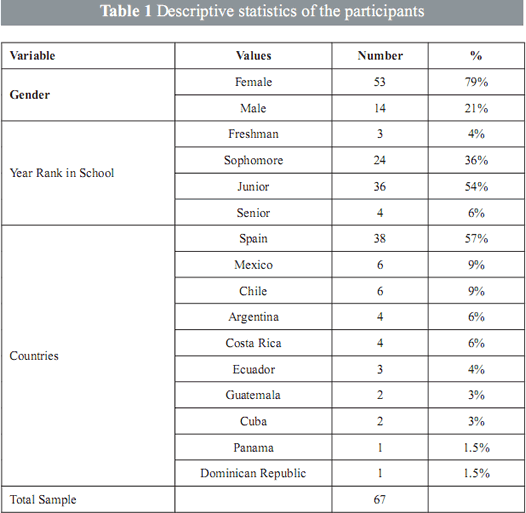
The participants in the study were 67 U.S. American learners of Spanish from seven universities in the Midwest United States who participated in a onesemester (4-5 months) study abroad program in a Spanish-speaking country during either spring or fall 2003. American English was the first language (L1) for 63 of the students. The remaining four students indicated that Bosnian, French, Hmong, and Russian were their L1s. Except in the case of the Bosnian speaker, English was listed as the dominant language of the students with non-English L1s. The average age of the students was 20 years with a range of 19 to 23 years. All participants had studied Spanish for at least three semesters prior to study abroad. Thirty-eight students studied in Spain and 29 studied in Latin America, the distributions of which are shown in Table 1 below.
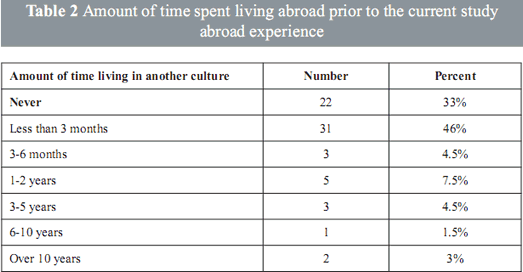
Looking at the international experience of the participants prior to study abroad, all but one student in the sample reported having spent their ''formative'' years living primarily in North America. The L1 Bosnian student grew up in Eastern Europe. With regard to experience living in other cultures, Table 2 below shows the length of time students reported living outside their home culture prior to the study abroad experience considered in this study. As can be seen, 79% of the participants had spent from no time to less than three months in another culture. Perhaps surprisingly, 21% of the participants reported having lived for one to ten years in another culture prior to this study abroad sojourn.
]]>
Study abroad program types varied: twenty-four students (35%) were directly enrolled in at least one class intended for Spanish native speakers, 57 (85%) were enrolled in sheltered classes for study abroad students, and 13 (19%) participated in a field study or internship. With regard to the students' living arrangements while abroad, 56 students (84%) lived with a host family and 11 (16%) lived in a student dormitory. The average length of formal study of Spanish prior to the semester abroad was 6.4 years, with a range of 1.5 to 15 years. Finally, thirty-eight different academic majors were represented in the sample, including such diverse fields as Marketing, Chemistry, Psychology, and Music. Twenty-six students (39%) listed Spanish as their major or as one of their majors.
3.2 Instrumentation
Data for the present study were gathered under the auspices of a larger research project (AUTHORS, YEAR) using a variety of instruments, including inventories,surveys, journals,andinterviews. All of the instruments employed in the larger study are listed below.
Instruments
Entrance background questionnaire
Exit language contact profile
Strategies Inventory for Learning Culture (AUTHORS, 2002)
Language Strategy Survey (AUTHORS, 2001)
Request and apology written production questionnaire
Journal entries
Post-study-abroad student interviews
The present analysis will focus only on data from four of the eight instruments: the entrance background questionnaire, the exit language contact profile, the Intercultural Development Inventory, and the request and apology written production questionnaire. Each of the four instruments for the present analysis is described in greater detail below (see Cohen, Paige, Shively, Emert, & Hoff (2005) for a discussion of the other instruments).
Entrance and exit questionnaires
Two self-report questionnaires were constructed by the researchers: the entrance background questionnaire and the exit language contact profile. Both of these surveys were based, in part, on instruments developed by Freed, Dewey, Segalowitz, and Halter (2004). The first of these, the entrance background questionnaire, was administered to students prior to their departure for study abroad, and queried students about background information such as age, gender, and academic major, as well as about their language backgrounds. With regard to language, students were asked to identify their native and dominant language(s), the language(s) that they used with their parents, and the length of time they had formally studied the TL and at which educational levels.
]]> The second questionnaire, the exit language contact profile, was administered to students near the end of their semester abroad. This survey sought information about students' study abroad language learning experiences, overseas living arrangements, study abroad programs, and types of classes taken. Therefore, students were asked detailed questions about who they spoke the TL with and for how long, who their friends were, who they lived with, and who they took classes with. In addition, students reported the types of extracurricular activities that they participated in and the study abroad program in which they were enrolled.Intercultural Development Inventory (Hammer & Bennett, 1998; 2001)
The Intercultural Development Inventory (IDI) was used to measure students' intercultural development. The IDI was chosen as the most appropriate instrument for measuring change over time in intercultural sensitivity due to its theoretical basis in the well-known Developmental Model of Intercultural Sensitivity (DMIS) (Bennett, 1993). In addition, the IDI has been subjected to extensive instrument validation procedures, which suggest its reliability and validity (Paige, 2003a; Hammer, Bennett, & Wiseman, 2003).
Regarding the theoretical basis of the IDI, Bennett's (1993) DMIS conceptualized interculturalsensitivityasadevelopmentalphenomenonconsistingofsixalternativeintercultural worldviews, three of which are ethnocentric (Denial, Defense, and Minimization) and three of which are ethnorelative (Acceptance, Adaptation, and Integration). The ethnocentric worldviews begin with Denial, where difference is avoided and ignored.ADefense worldview emerges when difference can no longer be ignored, but difference is threatening and is resisted. Minimization takes place when similarities are deemed more important than differences, which serves as a perceptual screen for being able to encounter difference more comfortably.
In the three ethnorelative worldviews, cultures are now seen in their own context and not necessarily as better or worse than one another. New principles inform Acceptance: that human beings are all cultural and operate within diverse cultural contexts, that culture is a major organizing influence in our lives, and that cultural differences are important. Adaptation is the worldview that involves the development of cognitive and behavioral skills necessary for functioning successfully in another culture. Integration refers to the worldview orientation where persons integrate two or more cultural frames of reference into their worldview.
The IDI, a 50-item instrument, measures each of the ethnocentric and ethnorelative worldviews in the DMIS and provides an overall intercultural sensitivity score, referred to as the Developmental Score (DS). In the present analysis, we compared students' pre- and posttest DS as a way to measure change over time with regard to intercultural sensitivity.
The written request and apology production questionnaire constituted an indirect assessment of spoken language in the form of a multiple-rejoinder discourse completion task (DCT), which included a total of 10 vignettes (five requests and five apologies). The multiple-rejoinder approach called for the respondent to fill in the blanks of a dialogue that included two to four responses from an interlocutor. The following is a sample apology item4 (''Meeting friend'') from the Peninsular Spanish version of the instrument:
You promise to meet your close friend from the host community, Sofía, in order to help her study for an important English literature exam. She has been really kind about helping you with your learning of Spanish. You agree to meet her outside the library, but you arrive 45 minutes late for the meeting.
Sofía (annoyed): Ey, ¿dónde estabas? Te he estado esperando más de media hora. 'Hey, where were you? I've been waiting for more than half an hour.' ]]>
You:
Sofía: ¿Ah, sí? Pues yo iba a entrar a estudiar sola. 'Oh, really? Well, I was just about to go inside to study alone.'
You:
Sofía: Estaba preocupada por si te había pasado algo. 'I was worried that something had happened to you.'
You:
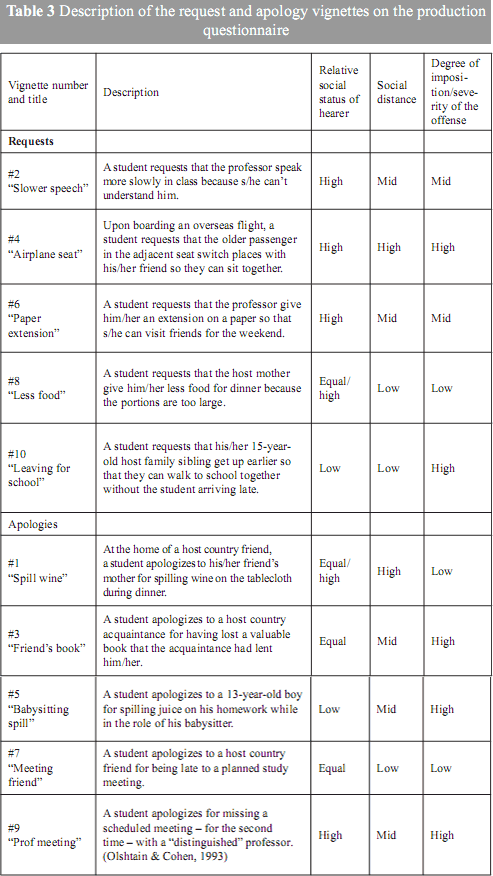
Each vignette was designed to capture social and situational variation based on three primary variables: social status, social distance, and degree of imposition (requests) or severity of the offense (apologies). An attempt was made to vary the 10 vignettes so as to include as many different combinations of these three social and situational variables as possible while, at the same time, only including the types of social interactions that students could potentially have encountered in the study abroad context (e.g., dinner with a host family, requesting extra time on a paper). A description of the 10 vignettes that made up the instrument is provided in Table 3.
]]> Two versions of the production questionnaire were developed: Peninsular Spanish and ''LatinAmerican'' Spanish. The goal in creating two different versions of the instrument was to partially address regional dialectal variation. The grouping of the various dialects of Latin American Spanish into one version was for the sake of expediency since the students were studying abroad in nine different Latin American countries and it was judged as infeasible to design, administer, and rate nine different dialectal versions of the production questionnaire.
Because the multiple-rejoinder DCT used in this study constituted an indirect and elicited measure of pragmatic ability in speaking, the data presumably would represent respondents' impressions as to what they thought they would say or what they thought was appropriate to say, rather than what they actually would say in each situation (Barron 2003; Golato, 2003). Indeed, several studies have shown DCT data to differ in significant ways from data collected in comparable natural settings (see Golato, 2003; Hartford & Bardovi-Harlig, 1992; Holmes, 1991). In addition, research has revealed method effects for DCTs versus multiple choice questionnaires (Rose, 1994), as well as method effects based on the format of the DCT employed (Johnston, Kasper, & Ross, 1998; Rose, 1994). For example, Johnston et al. reported method effects for the inclusion of a rejoinder as well as for rejoinder type, and Billmyer and Varghese (2000) discovered that responses were longer when the description of the DCT items included more contextual information. Thus, the results from using a particular DCT in pragmatics research need to be treated cautiously, in view of the potential differences between DCT responses and natural data, as well as differences between different DCT types.
Given the limitations associated with DCTs, it would have been preferable, but not feasible given restraints on time and resources, to gather naturallyoccurring request and apology data. However, the DCT format offered significant advantages. The written format of the instrument permitted the inclusion of a large number of participants in the study. Furthermore, because the data were elicited from all students by means of the same instrument, both pre- and posttest, the results for the pretest and the posttest could be easily compared. This method also allowed for control of sociolinguistic variables. In contrast, data collected in natural settings generally require a smaller sample size and do not lend themselves to comparisons of different groups of individuals and between different points in time, due to the highly contextualized nature of natural data. Given the quantitative focus of the present study, the DCT was deemed an appropriate means of data collection. Nonetheless, we should be cautious with regard to interpretations made from the data collected by the instrument.
3.3 Data Collection Procedures
The study had a pretest-posttest design whereby data were collected prior to the students' departure for study abroad and again near the end of their semester abroad. For the pretest, all participants completed a paper-and-pencil version of the eight instruments employed in the larger study during an in-person session that took place at a Midwest U.S. university. For the posttest, all participants completed the same eight instruments near the end of the semester abroad in an electronic format, using a web site created for the study.
The request and apology production questionnaire was also administered to 12 native speakers of Spanish (from Argentina, Colombia, Costa Rica, Ecuador, Honduras, Mexico, Peru, and Spain) who were living in the United States at the time. The data collected from these Spanish native speakers was used to provide a baseline comparison for the L2 learner request and apology data. Ideally, our native speaker data would have been collected from a larger sample and from individuals living in each of the countries represented in the sample; however, that method was not feasible given the constraints of the present study. Hence, the native-speaker request and apology baseline data should be viewed as suggestive of a native norm, and not as a rigorous benchmark.
3.4 Data Analysis Procedures
All of the data from the entrance background questionnaire, the exit language contact profile, and the request and apology production questionnaire were entered into SPSS (version 12.0) and analyzed quantitatively. The IDI data was first analyzed with proprietary software designed specifically for analysis of IDI data and then the Developmental Score was entered into SPSS. The rating and data analysis procedures for the request and apology production questionnaire are described in more detail below.
A total of four native speakers of Spanish rated the Spanish DCT data. Two raters from Spain rated the Peninsular Spanish data and two raters from Latin America (Mexico and El Salvador) rated the Latin American data. Both of the Spanish raters were in their early thirties, one male and one female, and both of the Latin American raters were in their early forties, both female. All four of the raters had been living in the U.S. for five to eight years at the time of the rating. The raters were instructors of Spanish and had frequent contact with Spanish-speaking communities in the U.S. and in their home countries.
The primary criterion for rating both requests and apologies was an ''overall success'' score, which was based on the native speakers' gut intuition about how they would react to the student's response if they were the hearer in each vignette. The ''overall success'' rating criterion for requests is shown below. The criterion for rating ''overall success'' of apologies was similar, but with slightly different wording: ''Please judge the overall success of the apology made by the respondent. Think about whether you would feel satisfied with the apology if you were in the position of the hearer.'' For both requests and apologies, the ratings were on a five-point scale, with five being the highest possible rating (see the request example below). The scale for apologies was similar but with slightly different wording. For example, a score of 5 for an apology was described in the following way: ''I would feel satisfied with the speaker's apology.''
]]> Overall Success of the Vignette (Request):Please judge the overall success of the request made by the respondent. Think about whether you would want to comply with the request if you were in the position of the hearer.
Based on the speaker's responses, if you were the hearer...
5 = I would happily comply with the speaker's request
4 = I would comply with the speaker's request, but somewhat reluctantly
3 = I would comply with the speaker's request, but reluctantly
2 = I would comply with the speaker's request, but only very reluctantly
1 = I would absolutely not want to comply with the speaker's request
Please briefly describe why you rated the way you did:
Each student's data were rated twice, once by each of the raters for the region in which the student studied. That is, for example, each of the two Peninsular Spanish judges rated the pretest and posttest of all of the students who studied abroad in Spain, yielding a total of four ratings for each student, two for the pretest and two for the posttest. It was a blind rating in that the raters did not know whether a request or apology response was from a student's pretest or posttest, orif the responseswere from thesamestudent.Students'requestsand apologies were presented to the raters in typed format, in random order with regard to student and time (i.e., pretest/posttest), and with only one vignette response per sheet of paper. Each vignette response was connected to a student and to the pretest or posttest by a code known only to the researchers.
]]> Prior to beginning their ratings, all four Spanish native speaker raters participated in a training and calibration session, with one session for the Latin American raters and another for the Peninsular Spanish raters. During each session, which lasted approximately two hours, the researchers provided a brief explanation of the project, described the instrument, the rating criteria and procedures, showed raters examples of Spanish natives speakers'responses to the ten vignettes, and went through a number of practice items with the raters. Raters were instructed not to focus on grammar errors in their ratings, but rather, on pragmatic appropriateness. Only if grammar errors impededcommunication or resulted in pragmatic inappropriateness were they to rate the student's response lower based on grammar. Finally, the raters completed a calibration period in which each rater individually rated practice responses to the request and apology vignettes (using data gathered from pilot testing), compared their ratings, and then, through discussion, arrived at a consensus regarding the appropriate rating for each vignette.
Native-speaker ratings were entered into SPSS (12.0). The ratings from each of the native speaker rater pairs were averaged to produce a final score for each vignette for each student's pretest and posttest. Using independent samples t-tests, it was determined that there were no statistically significant differences at the p<.05 level between the scores produced by each rater in the two pairs.
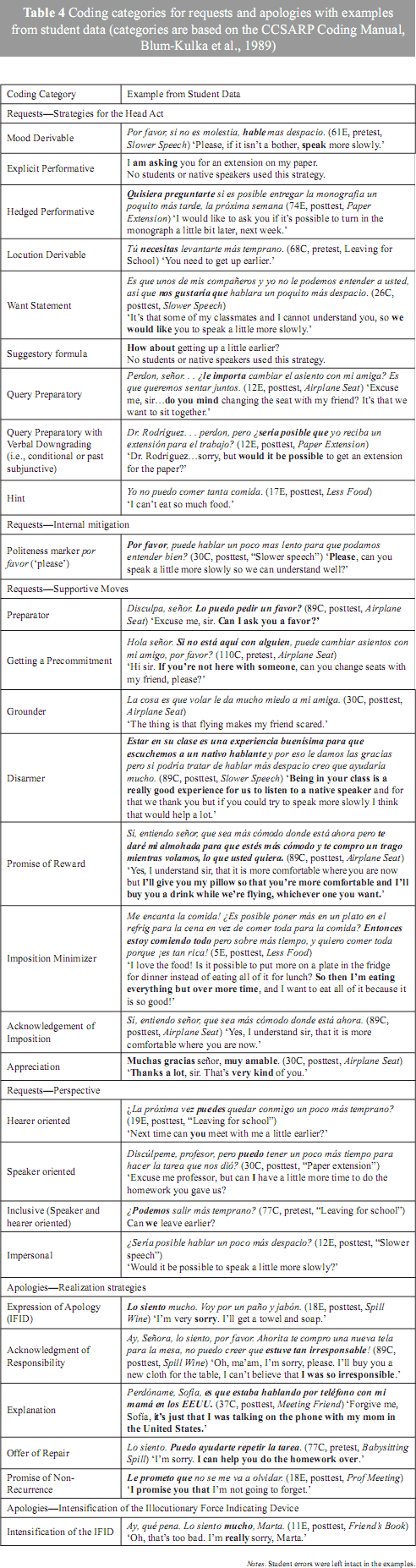
In addition to the native speaker ratings, the researchers also coded and quantified the use of request and apology strategies in the learner and native speaker baseline data. As shown in Table 4, eight head act strategies, eight supportive moves, and request perspective were coded for requests. In addition, internal modification with the politeness marker por favor ('please') was included as a separate category. For apologies, five categories were used to code apology strategies and an additional category was added to code instances in which respondents included an intensifier to the Illocutionary Force Indicating Device (IFID), which are defined as routinized expressions that make an apology explicit (Blum-Kulka et al., 1989). For both requests and apologies, categories were based on the CCSARP Coding Manual (Blum-Kulka et al., 1989), a coding system that has been widely utilized in pragmatics literature.
Finally, paired samples t-tests were used to compare students' request and apology ratings and strategy use in the pretest and posttest. Independent samples t-tests were conducted to compare students' pre- and posttest request and apology strategy use with those strategies employed by Spanish native speakers in the baseline sample. Gain scores for each request and apology vignette were calculated for each student by subtracting the pretest rating from the posttest rating. Then, t-tests and one-way ANOVA were conducted to analyze differences between students' request and apology gain scores based on the independent variables related to students' backgrounds and language contact. Finally, Pearson correlations were used to determine whether a statistical relationship existed between each student's pre-post changes in the IDI Developmental Score and to rate pre-post gains on the request and apology vignettes.
4. FINDINGS
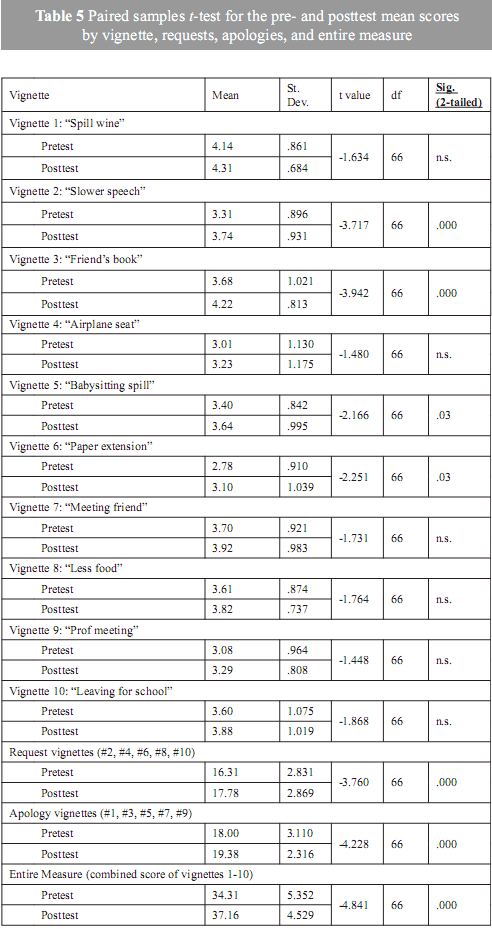
]]> 4.1 Research Question 1: Do Spanish native speakers rate L2 learners as pragmatically more appropriate in their request and apology behavior after one semester studying in a Spanish-speaking country?Our interest in posing this research question was to find out whether native speakers of Spanish would rate L2 learners' requests and apologies as more pragmatically appropriate after one semester studying abroad. Using a paired samples t-test, we found that the answer to this question was largely ''yes.'' Table 5 provides the mean scores and significance levels of students' pretest and posttest scores for each of the ten vignettes individually, the request and apology scores grouped together, and finally, all vignettes combined into a composite score. In every case, the mean rating in the posttest was higher than that in the pretest. However, statistically significant differences in the pre-post mean scores at the p<.05 level were found for two request vignettes (''Slower speech,'' ''Paper extension''), two apology vignettes (''Friend's book,'' ''Babysitting spill''), and for all three composite scores (i.e., requests, apologies, entire measure).
Looking at request and apology performance overall, the participants in this study were clearly rated higher after their sojourn abroad than before that experience. However, in the cases in which the pre-post difference was not statistically significant (i.e., three request vignettes and three apology vignettes), the sample as a whole did not make appreciable improvements in their performance. Considering the specific request vignettes in which students made statistically significant gains, it can be seen that both vignettes were with higher-status interlocutors (i.e., professors). In contrast, the two apology vignettes on which students improved significantly were with equal or lowerstatus interlocutors (i.e., a friend and a child, respectively).
The mean pretest and posttest scores indicate that, while students made progress over the course of the semester abroad in their request and apology performance, the sample as a whole was still only rated somewhat pragmatically appropriate by the end of the semester. That is, mean posttest scores ranged from a low score of 3.10 to a high of 4.31 on a five-point scale. As described above, a score of 3 for a request was defined as ''I would comply with the speaker's request, but reluctantly'' and a score of 4 as ''I would comply with the speaker's request, but somewhat reluctantly.'' Students never reached a mean score of 5 in either requests or apologies. These findings suggest that after a semester abroad, students remained somewhat inappropriate in the way that they made requests and apologies in Spanish.
4.2 Research Question 2: In what ways do L2 learners become more or less target-like in their request and apology performance after one semester studying abroad?
In order to address this research question, L2 learners' request and apology strategy use was compared to the strategies used by the 12 Spanish native speakers who also completed the request and apology production questionnaire. In addition, the researchers analyzed the content of the strategies and the comments made by native-speaker raters about why they gave students a particular rating. The results are presented first for requests and then for apologies.
Requests
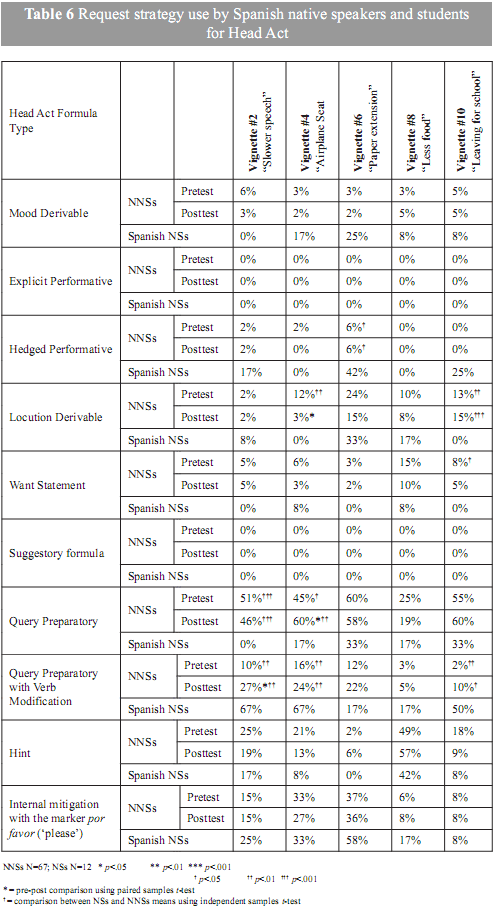
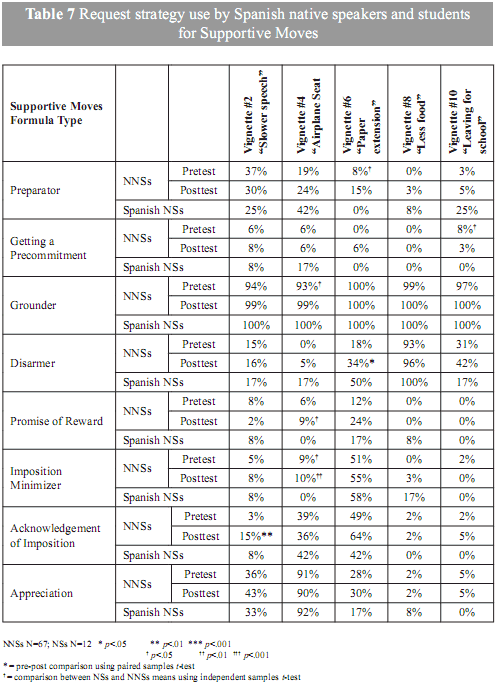
]]> a. Pre-post differences in students' request strategy useTables 6, 7, and 8 show the frequencies of use of strategies for students and native speakers, with statistical significance highlighted. First, we examined students' strategy use in the two request vignettes that yielded significant prepost differences in ratings (''Slower speech'' and ''Paper extension''), as reported above. It can be observed that those two requests were the only two in the instrument that included professors as the interlocutors. Looking specifically at ''Slower speech,'' Table 6 indicates that students became more indirect over time, with 17% more downgrading the verb (i.e., conditional, past subjunctive) of the Query Preparatory in the posttest than in the pretest. Students also used the supportive moves Acknowledgement of Imposition and Appreciation more frequently in the posttest (Table 7). Considering ''Paper extension,'' there was a similar increase in indirectness pre-post as a result of more frequent verbal downgrading in the Query Preparatory strategy and less frequent use of the direct strategy Locution Derivable. In the posttest, students also used more supportive moves, increasing their frequency of Preparator, Disarmer, Promise of Reward, Imposition Minimizer,Acknowledgment of Imposition, andAppreciation. While increases in strategy use were not all individually significant from pretest to posttest, the increase in verbal mitigation and the increased frequency of use of supportive moves may help explain why these particular vignettes were rated significantly more appropriate in the posttest, compared to the pretest.
Looking now at the pre-post differences in strategy use for all of the request items, beginning with the head act, it was found that the sample reduced the use of a Locution Derivable head act strategy from pretest (12%) to posttest (3%) (p<.05) on the ''Airplane seat'' vignette. This result goes in the direction of the Spanish native speakers, none of whom used this strategy in that vignette. The second significant pre-post result is the increase in use of the strategy Query Preparatory in the ''Airplane seat'' vignette from pretest (45%) to posttest (60%) (p<.05). This result goes in the direction of being less native-like, since the Spanish native speakers used this strategy in the same vignette only 17% of the time.
Third, an increase in the use of a Query Preparatory with Verb Modification in the ''Slower speech'' vignette was observed. While only 10% of the students used this strategy in the pretest, 27% used it in the posttest, a difference significant at the p<.05 level. This result goes in the target direction, given that the natives used this strategy in the same vignette 67% of the time. The results for the same strategy in the ''Airplane seat'' vignette show a similar pattern of increase in use of this strategy, but the difference was not significant. Thus, in the case of two head act strategies (Locution Derivable and Query Preparatory with Verb Modification) students moved in the direction of being more like the Spanish native speakers after a semester abroad, becoming more indirect over time. A qualitative analysis of the raters'comments suggest that syntactic downgrading through the use of the conditional or past subjunctive tense with a Query Preparatory (i.e., podría, pudiera) was an aspect of students' performance that the raters perceived as particularly appropriate for the request vignettes included in the performance questionnaire.
b. Differences between students and Spanish native speakers
Head act. Looking at the significant differences between students and Spanish native speakers, on the ''Paper extension'' vignette, students used the strategy Hedged Performative much less frequently (pretest: 6%; posttest: 6%) than the natives (42%), a difference significant at the p<.05 level. Not only did students use this strategy much less frequently than natives, they did not increase their frequency of use of this strategy during the semester abroad. Although it was not statistically significant, a similar pattern was found with this strategy in the ''Slower speech'' and ''Leaving for school'' vignettes, where the learners used a Hedged Performative very infrequently in both the pre- and posttest, while the Spanish natives used this strategy 17% and 25% of the time, respectively.
Second, in the pretest students employed Locution Derivable requests in the ''Airplane seat'' vignette more frequently (12%) than the Spanish native speakers (0%), which was significant at the p<.01 level. By the posttest, however, students had reduced their use of this semantic formula to a frequency similar to that of the natives (NNS=3%, NS=0%). In the ''Leaving for school'' vignette, students used a Locution Derivable head act more frequently (pre=13%, p<.01; post=15%, p<.001) than the Spanish natives (0%).
]]> The data analysis for a Query Preparatory indicated important differences between Spanish native speakers and learners in frequency of use. In ''Slower speech'' and ''Leaving for school,'' the learners used a Query Preparatory much more frequently than the Spanish native speakers. In the case of ''Slower speech,'' students used this strategy less frequently in the posttest than in the pretest (pre= 51%, post=46%), moving in the direction of the Spanish natives, who did not use this strategy at all. However, the difference between learners and Spanish native speakers was statistically significant in both the pre- and posttests. In the ''Airplane seat'' vignette, the students increased their frequency of use of the Query Preparatory (from 45% to 60%), a non-target like change. Although the results from the other vignettes were not statistically significant, the same pattern was observed: students used a Query Preparatory more frequently than the Spanish natives in both the pre- and posttest.The opposite trend occurred with the strategy Query Preparatory with Verb Modification. The Spanish native speakers used this strategy much more frequently overall than learners. This result is intimately connected with the previous one in that Spanish natives did frequently use the Query Preparatory strategy, but they tended to soften this strategy by downgrading the verb to the conditional or imperfect subjunctive form, which in our coding system was labeled as a separate strategy (e.g., ¿Me podría dar una prórroga?, 'Could you give me an extension?').
Students, on the other hand, used the Query Preparatory strategy at a similar frequency to the Spanish natives, but they did not downgrade the verb to soften the request. Instead, learners more frequently used the verb in the present tense (e.g., ¿Puedo tener una prórroga?, 'Can I have an extension?'). Thus, Table 6 shows that for the ''Slower speech'' vignette, learners' frequency of use of the Query Preparatory with Verb Modification was 10% in the pretest and 27% in the posttest, whereas natives' frequency was 67% in the same vignette. Similarly for the ''Airplane seat'' vignette, learners used a Query Preparatory with Verb Modification 16% in the pretest and 24% in the posttest, whereas natives used it 67% of the time. Finally, for the ''Leaving for school'' vignette, the learners used the downgraded Query Preparatory 2% in the pretest and 10% in the posttest, but the natives used it 50%. Overall, these results indicate that although students increased their use of verbal downgrading in the Query Preparatory from pretest to posttest, by the posttest they were still under using this strategy compared to Spanish native speakers. This pattern suggests that students were gradually acquiring more target-like use of the conditional and/or imperfect subjunctive as a means to soften requests.
The last significant difference between the learners and the Spanish native speakers is with regard to the Want Statement. In the pretest on the ''Leaving for school'' vignette, 8% of the students used this strategy whereas none of the Spanish NSs did, a difference significant at the p<.05 level. The students' posttest result indicated a change towards the native speaker frequency level, but was not significantly different.
Supportive moves. Looking at learners'supportive moves,Table 7 below shows the results from the pre-post and native-learner comparisons. Two vignettes show a significant increase in the use of Disarmer andAcknowledgement of Imposition from the pre-to the posttest. In the ''Paper extension'' vignette, learners moved from 18% frequency of use of Disarmer in the pretest to 34% in the posttest, which showed movement towards the frequency level of the natives (50%). In the second case, students used anAcknowledgement of Imposition in the ''Slower speech'' vignette 3% of the time in the pretest and 15% of the time in the posttest (p<.01). This change was still different from the frequency found for the Spanish native speakers, which was 8%.
Five significant differences were found between Spanish native speakers' and learners' frequency of use of supportive moves. First, while natives used a Preparator 8% of the time in the ''Paper extension'' vignette, learners did not use this supportive move at all in the same vignette (p<.05). Learners also used the supportive move Getting a Precommitment more frequently (8%) than the natives (0%) in the pretest, but reduced their use of this strategy by the posttest. The Spanish natives were unanimous in their use of a Grounder in all five request vignettes (i.e., 100% did so). Students only differed statistically from the natives on the ''Airplane seat'' vignette in the pretest; otherwise their use of Grounders was similar. Finally, two other supportive moves, Promise of Reward and Imposition Minimizer, showed significant differences between students and natives in the ''Airplane seat'' vignette. Students used both of these strategies more frequently (9%-10%) whereas natives did not employ these moves at all.
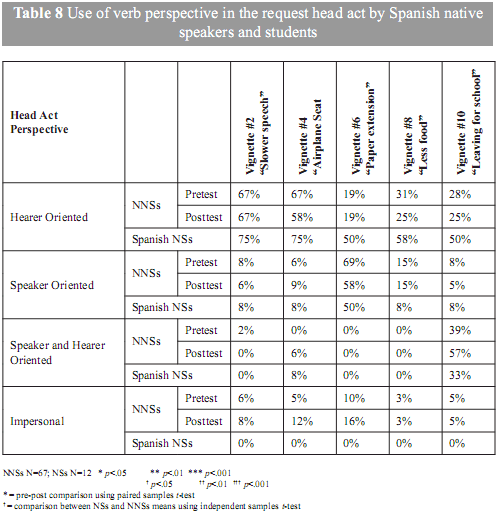
Request perspective. As Table 8 shows, there were no statistically significant differences between pre-and posttest scores or between the learners and Spanish native speakers with regard to the request perspective. Overall, learners tended to use the hearer-oriented perspective less frequently than natives and used the speaker-oriented and impersonal perspectives more frequently than natives. The inclusive perspective (speaker and hearer oriented) was used with somewhat similar frequency by learners and natives in ''Leaving for school.''
]]> c. Summary of results for requestsIn sum, the findings for requests indicate that learners moved toward target-like request behavior in certain ways, but remained non-target-like in other ways.
With regard to the head act, students increased their use of internal modification over time, specifically with regard to the Query Preparatory strategy, using the conditional and past subjunctive forms more frequently in the posttest than in the pretest, a change that moved in the target direction. However, in some cases, students' use of request head act strategies such as the Hedged Performative and Locution Derivable remained non-target-like in the posttest. Other areas of strategy use remained stable over time (e.g., the use of internal modification with por favor). With regard to supportive moves, a few minor shifts occurred, but changes went both in target-like and non-target-like directions. Analysis of request perspective did not yield any significant differences, although learners differed from Spanish native speakers in certain ways.
Apologies
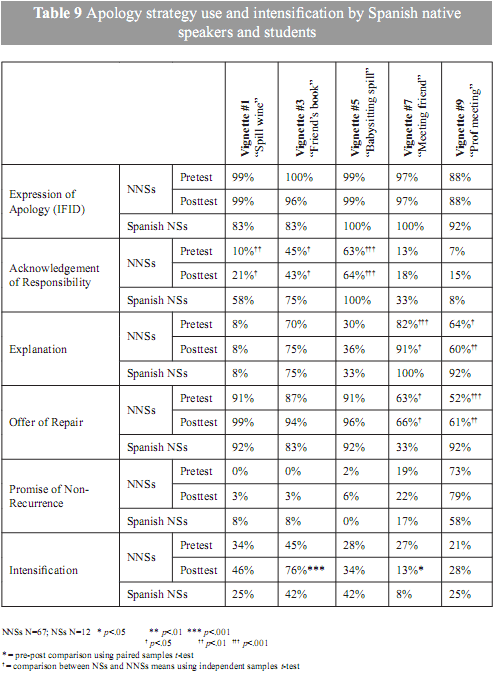
Turning now to strategy use in apologies before and after a semester abroad, as was the case with requests, learners both moved in the direction of the Spanish native speakers' strategy use and, in some cases, in a non-target direction. Looking first at the two apology vignettes that were rated significantly more appropriate in the posttest (i.e., ''Friend's book'' and ''Babysitting spill''), the most notable aspect of students' performance was the increase over time in the frequency of use of all five apology strategies as well as intensification. Although the pre-post increases were mostly not statistically significant, students used Acknowledgement of Responsibility, Explanation, Offer of Repair, Promise of Non-Recurrence, and Intensification of the IFID more frequently in the posttest. Except in the case of intensification, these increases either went in the direction of the Spanish native speaker norm or did not vary extraordinarily from that norm. Thus, increased strategy use may have played a role in making students' apologies more appropriate in these two vignettes.
a. Pre-post differences in students' apology strategy use
With regard to the pre-post differences in strategy use in all of the apologies, the only statistically significant change occurred with the strategy of ''intensification'' on apology vignettes ''Friend's book'' and ''Meeting friend.'' For ''Friend's book,'' a greater percentage of the sample employed intensification in the posttest (76%) compared to the pretest (45%). This difference was significant at the p<.001 level. Spanish native speakers used intensification in the same vignette only 42% of the time, suggesting that students moved in a direction of being less target-like. The reverse trend is true for the ''Meeting friend'' vignette; use of intensification decreased from pre- to posttest, moving from 27% to 13%, which was a statistically significant difference. In this case, the change was towards being more like the Spanish natives.
]]>
b. Differences between students and Spanish native speakers
Table 9 also indicates cases in which apology strategy use differed significantly between natives and learners. First, students were found to use the strategy Acknowledgement of Responsibility significantly less than natives both on the pretest and on the posttest in the ''Spill wine,'' ''Friend's book,'' and ''Babysitting spill'' vignettes. Second, students' use of Explanation in the ''Meeting friend'' and ''Prof meeting'' vignettes was also significantly lower than that of the natives. In the vignette ''Meeting friend,'' 100% of the natives used this strategy (students: pre=82%, post=91%) and in ''Prof meeting,'' 92% of natives did so (students: pre=64%, post=60%). Comparing the percentages of these two apology vignettes, however, the percent of students who used an Explanation in ''Meeting friend'' was noticeably closer to the natives than the percent of students who used this strategy in ''Prof meeting;'' that is, a 9% difference in comparison with a 32% difference between natives and learners.
Learners' use of Offer of Repair was found to differ significantly from that of the Spanish natives on two vignettes, ''Meeting friend'' and ''Prof meeting.'' In the case of ''Meeting friend,'' students used an Offer of Repair more frequently (pre=63%, post=66%) than the natives did (33%). On the ''Prof meeting'' vignette, the opposite is true; students used this strategy less frequently (pre=52%, post=61%) than natives did (92%). In this case, the posttest showed students moving towards, but not reaching, the native norm. Based on the comments of the raters, the content of the Offer of Repair was also important in determining their ratings. For example, in the ''Meeting friend'' apology, students who offered to buy their friend a drink or food in order to repair the offense were generally viewed as inappropriate. In terms of the content of the Offer of Repair, there were no observable changes from pretest to posttest.
Several final observations can be made. First, the use of the strategy Expression of Apology remained stable over time and was similar in frequency in the performance of both students and Spanish native speakers. However, in examining the content of that strategy, a pre-post difference was discovered: in the pretest, learners relied heavily on the formula lo siento ('I'm sorry') in their expressions of apology, whereas in the posttest most learners had incorporated a larger of range of target-like formulas such as perdón ('pardon'), perdóneme ('forgive me'), and discúlpeme ('I'm sorry'). A second observation is related to the content of apology strategies. In the Acknowledgement of Responsibility strategy, the use of the agentless construction, such as se me cayó (literally 'it fell from me') and se me perdió (literally, 'it was lost from me'), in the ''Babysitting spill'' and ''Lost book'' vignettes, respectively, was viewed as particularly appropriate by the raters. The agentless form allowed the speakers to distance themselves from responsibility in the offense, indicating that the infraction was out of their control. While no learners employed the agentless construction in the pretest, a few learners did so in the posttest, a fact that was pointed out as pragmatically appropriate by several of the raters.
c. Summary of results for apologies
To conclude, the developments over time during the semester abroad indicate that, in some instances, students did move in the direction of being more target-like in apology strategy use, such as in their use of an Explanation in the ''Meeting friend'' vignette. However, there were also cases in which learners' behavior shifted over time in the opposite direction of that of the natives,such aslearners'use ofanAcknowledgementof Responsibility''inthe ''Prof meeting.'' Overall, considering both requests and apologies, the results indicated ways in which students approximated native speaker norms as well as ways in which students remained non-target-like or moved in a non-targetlike direction over time.
4.3 Research Question 3: To what extent are gains in request and apology ratings associated with participants' background characteristics and the amount of reported language contact prior to and during a semester abroad? To what extent are pragmatic gains associated with gains in intercultural sensitivity?
]]> In order to investigate potential associations between pragmatic development and students'backgrounds and contact with Spanish, the researchers compared gains in performance ratings on the requests and apologies with data from the entrancebackground questionnaire and the exit language contact profile. The following independent variables were created based on the two questionnaires:
Gender
Year rank in university
Region of study abroad site (Spain vs. Latin America)
Country of study abroad site
Amount of time formally studying Spanish prior to study abroad
Number of years studying Spanish at university level prior to study abroad
Amount of time residing outside of North America prior to study abroad
Whether the student lived with a host family or not during study abroad
Whether the student participated in an internship during study abroad
Type of classes taken during study abroad (only ''sheltered'' classes with other international students vs. direct enrollment in at least one class with host country students)
Amount of time spent outside of class speaking Spanish with native or fluent speakers of Spanish
Amount of time spent outside of class speaking Spanish with friends (native or non-native)
Frequency with which the student had an extended conversation in Spanish with host family during study abroad (only those students who stayed with host families)
Number of friends who were native or fluent speakers of Spanish
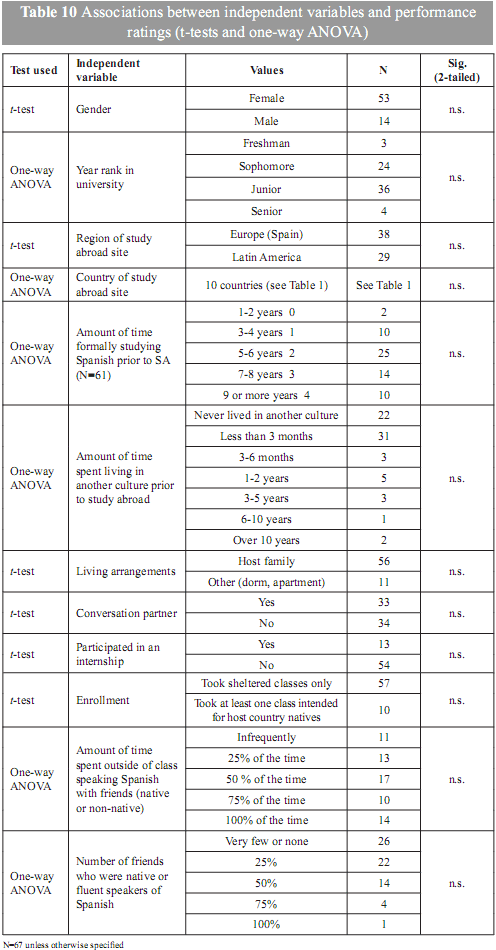
In order to test the association between the independent variables and the dependent variable of pragmatic gain over time, t-tests and one-way ANOVA were employed. Those independent variables that revealed no statistical association (p-value set at .05) with any of the gain scores of the dependent variable are displayed in Table 10 below. The independent variables that yielded statistically significant associations are discussed below, in greater detail.
As can be seen in Table 10, none of the participants' background characteristics and few of the language contact variables measured resulted in statistically significant associations with the rated performance gains in the request and apology vignettes or composite scores. The following variables were not found to be related to speech act gains: gender, year in university, region of study abroad site, country of study abroad, amount of previous formal study of Spanish, amount of previous residence outside NorthAmerica, living arrangements, conversation partner, internship, type of classes taken, and amount of time spent outside of class speaking Spanish with native or non-native friends.
]]>
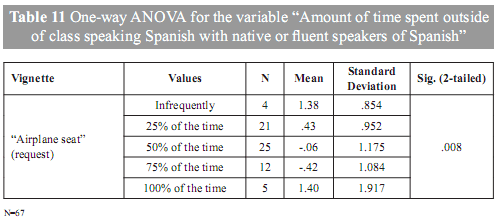
However, two of the variables investigated did yield significant associations. First, using a one-way ANOVA, an association was found for the variable ''Amount of time spent outside of class speaking Spanish with native or fluent speakers of Spanish'' and gains on one request vignette (''Airplane seat''), shown in Table 11. Note that the question for this variable on the exit language contact profile was worded in the following way: ''On average, when you talked with other people outside of class, how much of that time was spent speaking the target language with native or fluent speakers of that language?'' In answering this question, students were to choose a frequency category. Table 11 shows that students who, when they spoke to people outside of class during study abroad, spoke Spanish ''Infrequently'' and ''100% of the time'' gained significantly more on one request (''Airplane seat'') than the other groups.
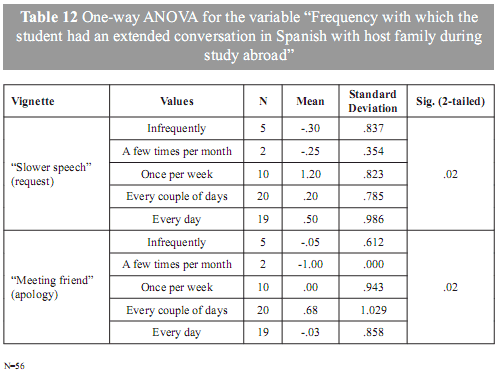
Second, there was a significant finding for the variable ''Frequency with which the student had an extended conversation in Spanish with host family during study abroad,'' calculated only for those students who stayed with a host family (N=56). As shown in Table 12, there was a significant association between this language contact variable and rated gains on the request vignette ''Slower speech'' and the apology vignette ''Meeting friend.'' The pattern that developed in these two vignettes for this independent variable was clearer than the previous finding. In both the request and the apology, the greater frequency with which students reported having an extended conversation (which we defined as a minimum of 30 minutes) in Spanish with their host family, generally favored gains in the appropriateness ratings for those two items.
In addition to our interest in students' background characteristics and contact with Spanish during their semester abroad, this research question also addresses the issue of intercultural sensitivity and its possible association with L2 pragmatic development. In order to assess the possible relationship between gains in pragmatics and gains in intercultural sensitivity (as measured by the Intercultural Development Inventory), we employed Pearson correlations.
As an antecedent to reporting this finding, it is important to point out that participants made statistically significant gains in their overall intercultural sensitivity (i.e., IDI Developmental Score or DS) from the pretest to the posttest. Using a paired samples t-test, it was found that the mean gain for overall intercultural sensitivity for the sample was 3.49 (N=67; pretest DS=98.92, SD=15.05; posttest DS=102.41; SD=15.84; p<.02). Thus, the group as a whole shifted in the direction of greater intercultural sensitivity over the course of one semester studying abroad, suggesting the benefits of international experience for developing intercultural sensitivity. However, when the IDI Developmental Change Score (i.e., mean change over time in the Developmental Score) was correlated with gains in performance ratings on requests and apologies, no statistically significant Pearson correlations at the p<.05 level were observed, which indicates that there were no measurable associations between gains in intercultural sensitivity and gains in request and apology performance.
]]>
To summarize the results for this research question, we found that only two of the background and language contact variables examined yielded statisticallysignificant associations with gains in request and apology ratings. They were ''Amount of time spent outside of class speaking Spanish with native or fluent speakers of Spanish'' and ''Frequency with which the student had an extended conversation in Spanish with host family during study abroad.'' Correlations between gains in intercultural sensitivity and gains in request and apology performance ratings were not statistically significant.
5. SUMMARY OF FINDINGS
The present study examined the pragmatic development of L2 learners of Spanish over the course of one semester studying abroad in a Spanish-speaking country. Based on pre-post ratings by Spanish native speakers, the results indicated that this group of learners as a whole was rated as pragmatically more appropriate overall in their request and apology performance after the sojourn abroad. This finding is consistent with previous research on pragmatic development in study abroad, which suggests that learners generally make improvements in their performance of speech acts as a result of a period of international study and residence. Despite these improvements, students' request and apology performance remained somewhat inappropriate in the posttest, based on the reactions of the Spanish native speaker raters. Comparisons between students' pre-post request and apology strategy use helped to explain some ways in which students became more pragmatically appropriate over time, for example, by becoming more indirect in requesting. An examination of the relationship between speech act gains over time and students' backgrounds, reported language contact, and intercultural sensitivity yielded several statistically significant associations.
6. LIMITATIONS
While this analysis has contributed insights to the field of study abroad and interlanguage pragmatics, we also recognize that it has some important limitations. As with all elicited data, the request and apology behavior reported in this study may not represent what respondents would actually do, but rather, what they think they should do (Golato, 2003).Additionally, despite the benefits in terms of consistency and ease of administration, the DCT format also has some important drawbacks, such as being less like natural discourse than other elicitation techniques such as role plays (cf. Félix-Brasdefer, 2003; Rose, 1994). The use of one instrument and only two raters to analyze the variety of regional dialects in Latin America is also a limitation. That is, participants may have learned regionally-specific pragmatic norms which could not be as carefully assessed by our more general evaluation of pragmatic development in Spanish.
]]>7. DISCUSSION AND CONCLUSIONS
In this section, we discuss the results of the present study in light of previous research and theory. Looking first at requests, our statistical analysis revealed that students were rated significantly higher in the posttest than in the pretest for all of the requests combined, and also, specifically, on the vignettes ''Slower speech'' and ''Paper extension.''An interesting observation is that these vignettes were the only two requests with professors and they were both characterized as mid-level degree of imposition. In comparison with the other request scenarios included in the instrument, the act of making a request of a professor may have been something students were more accustomed to and had gained some practice in doing while abroad, which may explain their improvements on those specific items.
The analysis of request strategy use yielded some results. In both the pretest and posttest, learners overwhelmingly preferred touse a Query Preparatory, a preference was also found in Félix-Brasdefer's (2007) study of intermediate and advanced learners of Spanish.While Spanish native speakers also used this strategy frequently on this instrument, natives downgraded the verb (i.e., employed syntactic mitigation with the conditional and past subjunctive) much more frequently than learners. By theendofthesemester abroad, learners were found tomovein the direction of native speakers by increasing the frequency with which they used verbal downgrading with a Query Preparatory. Learners also reduced their use of the relatively direct strategy Locution Derivable over time in one vignette, moving in the direction of the native speaker norm. These two changes reflect a movement, in a target-like direction, towards making requests in a more indirect fashion. Kasper and Rose (2002) have suggested that one aspect of the developmental path for requests in a second language is an increase in the use of indirect requests over time, something that holds true for this part of our results.
In their use of verbal downgrading with a Query Preparatory, students'requests also showed sociolinguistic variation. In the three requests in which the social status and/or social distance of the interlocutor was high (i.e., professor, older stranger), students used more verbal downgrading in both pre-and posttest than in the two requests with relatively equal or lower status and low social distance (i.e., host mother and host sibling). Students' relative directness with the host sibling in requesting that she get up earlier for school (arguably a high degree of imposition) appears to have been inappropriate pragmatically. Not only were Spanish native speakers more indirect than learners in the ''Leaving for school'' request, several Spanish raters commented that students should be indirect in that request because of its high imposition on the sibling. Furthermore, the fact that the interlocutor was a teenager should not affect the request from the raters' perspective. These comments reflect the intricacies of pragmatic competency in knowing when to be direct or indirect in an L2.
The observed increase in students'verbal downgrading appeared to be restricted only to the Query Preparatory strategy. The Hedged Performative, which Spanish native speakers used at a frequency of 42% for the ''Paper extension'' vignette, was carried out by natives through verbal downgrading in the form of the imperfect past tense, as in quería pedirle... ('I wanted to ask you for...'). Even though in English the past tense is available as a downgrading mechanism in this type of request strategy, very few students used this form in any of the request vignettes. Our results do not provide an answer to whether itwasgrammatical difficulty with theimperfectpasttense or learners'strategy preference that resulted in the lack of use of this strategy.
A final aspect of internal modification that is worth mentioning is the use of the politeness marker por favor ('please'). While no statistically significant differences were uncovered with regard to this marker, a pattern was observed in three requests in which Spanish native speakers used por favor more frequently than learners. Previous research has suggested that over time learners'dependence on this politeness marker tends to decrease (Barron, 2003; Dittmar & Terborg, 1991; Scarcella, 1979). Our participants, who were generally at an intermediate or advanced level of Spanish proficiency, may not have needed to rely on por favor as much as less-proficient learners would have. However, the fact that the students in this study used this strategy less than Spanish native speakers may suggest that they went too far in adopting other means to mitigate requests. An alternative explanation is that these students were captured at a point in a non-linear developmental path in which the frequency of use of this politeness marker was being transferred from their L1, assuming that please might be used less frequently in English than por favor is in Spanish in these situations.
Further analysis of requests revealed that students used more supportive moves than Spanish native speakers in some cases, and fewer in other cases. There was no general pattern suggesting either underuse or overuse of supportive moves, as has been reported in some interlanguage pragmatics studies (cf. Schauer, 2004). Students often differed from native speakers in their use of external modification, but in some cases, such as in the overwhelming use of Grounders in all five requests, learners were similar to natives in both the pre- and posttest.
Finally, while no statistically significant differences were uncovered regarding request perspective, learners tended to use the hearer-oriented perspective less frequently than Spanish native speakers and, instead, relied on the speakeroriented perspective more frequently. This pattern is arguably the result of L1 transfer, since speaker-oriented requests are preferred in English, while heareroriented requests are preferred in Spanish (cf. Márquez Reiter, 2000; 2002). Furthermore, our results did not indicate a pre-post change in request perspective. Félix-Brasdefer (2007) found that advanced proficiency learners employed hearer-oriented requests with greater frequency than beginning or intermediate learners, suggesting that acquisition of this aspect of requests develops over time, as proficiency increases. A four-to-five-month stay abroad (as in our study) may not be sufficient to see a change in learners at an intermediate proficiency with regard to the hearer-oriented perspective—at least not without instruction. Shively (2008) discovered, however, that students who received brief instruction about requests shifted from speaker-to hearer-oriented requests in service encounters after only four months abroad.
Turning to apologies, our results indicated that study abroad students gained significantly in the performance ratings from pretest to posttest on all apologies analyzed together and two vignettes individually: ''Friend's book'' and ''Babysitting spill.'' We argued above that an increase in the frequency of use of apology strategies (apart from an Expression of Apology) in those two vignettes may have contributed to the significant improvements in pragmatic appropriateness after one semester abroad.
]]> Indeed, the increase in the use of strategies apart from an Expression ofApology was a trend observed more generally in the data. That is, while students' use of Expression of Apology remained relatively stable from pretest to posttest (96100%) in all five apologies, other strategies, in most cases, experienced an overall increase in frequency. This result may point to the fact that, during study abroad, learners gained greater control over the use of more complex strategies. Previous research suggests that lower proficiency learners tend to rely on and overuse lexically transparent chunks such as lo siento ('I'm sorry') as an Expression of Apology and then, as proficiency increases, learners are able to widen their range of strategies and move towards more native-like use of strategies. In this study, while the students maintained a high frequency of use of an Expression of Apology in the posttest, by the end of the semester the content of that strategy was much more diversified, with most students using other lexical items such as perdóneme ('forgive me'), discúlpeme ('I'm sorry'), and qué pena ('I'm sorry,''that's too bad'). With this increase in apology strategies and lexical items as content to the Expression of Apology, learners' apologies were much less repetitive in the posttest than in the pretest, indicating a movement away from dependence on the repetition of a single chunk, lo siento.Sabaté i Dalmau and Curell i Gotor's (2007) argument that learners have access to as many apology strategies in the L2 as in the L1 seemed to be the case in the present study. Learners'main difficulty in the posttest was not related to the ability to produce any particular strategy, but rather, knowing when specific strategies and content of strategies were socially appropriate. For example, while high numbers of Spanish native speakers employed an Acknowledgement of Responsibility in the ''Spill wine,'' ''Friend's book,'' and ''Babysitting spill'' apologies, learners used this strategy much less frequently. With regard to the content, although natives frequently used the agentless construction in the Acknowledgement of Responsibility'' (e.g., se me cayó, 'it fell from me') as a way to indicate that the infraction was not their fault, learners only began to employ this structure in the posttest. Evidence from Colombian Spanish apologies indicates that the agentless construction in an Acknowledgement of Responsibility is an important way that Spanish speakers mitigate an apology (Gómez, 2008).
Another sociopragmatic stumbling block for learners was the content of the strategy Offer of Repair. Both in the pretest and the posttest, some learners were rated as less appropriate because of the content of this strategy. In the ''Spill wine'' vignette, a large number of students offered to buy a new tablecloth or to pay for the tablecloth. This type of offer was inappropriate for all raters and offensive for the two Latin American raters.The raters suggested that the most appropriate Offer of Repair was for the students to indicate that they were going to help clean up the spilled drink. In a similar role play situation with a spilled soda, Gómez (2008) also discovered that Colombian Spanish speakers typically made an Offer of Repair by helping to clean up the spill. Likewise, in the ''Meeting friend'' vignette, some students made inappropriate offers such as taking the friend out for a beer or offering to do her homework for her. Students'Offers of Repair in ''Babysitting spill'' included buying the boy ice cream or going in person to talk with the boy's teacher to explain the situation, which were also rated as inappropriate.
One rater commented that U.S. Americans are stereotyped in Latin America as thinking that money can solve every problem and as not focusing on the emotional and social value of an offense. Thus, these types of Offers of Repair may represent sociopragmatic transfer from the L1.Alternatively, this behavior could reflect an interlanguage phenomenon or be an artifact of our data collection method. As an interlanguage phenomenon, students may have experimented with strategies and gone out on a limb to try to be polite, diverging from what they would do in their L1. Another possibility is a method effect; students may have wanted to say something more elaborate than they would in real life because they were completing a questionnaire.
Finally with regard to apologies, we observed that the only statistically significant difference in apology performance between students' pre-and posttests was the dramatic increase (45% to 76%) in the use of intensification of the Expression of Apology in ''Friend's book.'' Increases in intensification also occurred in three other vignettes, although the pre-post differences were not significant. Previous work on apologies in a second language has indicated that learners have difficulties in being target-like when intensifying apologies (Sabaté i Dalmau & Curell i Gotor, 2007; Trosborg, 1995). Unlike Sabaté i Dalmau and Curell i Gotor (2007), however, the learners in the present study did greatly increase their intensification, so much so that it went beyond what was the norm for the Spanish native speakers. Furthermore, learners' intensification was primarily limited to the adverb mucho ('a lot') as a modifier of the routine expression lo siento. Other intensifiers such as de verdad ('in truth,' 'really') are available in Spanish and were employed by Spanish native speakers in this study. Therefore, while students may increase their frequency of intensification, they may not always do so in an appropriate way in the L2.
In addition to examining students' request and apology development, we also investigated possible variation in pragmatic development based on a quantitative assessment of students' backgrounds, contact with Spanish, and gains in intercultural sensitivity during study abroad. Of all of the background variables reported (e.g., gender, length of prior formal instruction, year in school, international experience), none yielded significant results. These findings suggest that the particular background variables that we analyzed did not have an impact on our participants' gains in L2 request and apology performance.
Considering the case of gender, perhaps the context of study abroad in Spain and Latin America did not create a situation for male or female learners that inhibited one or the other's pragmatic learning. Students' biweekly journals did not provide any indication that gender or gender identity restricted their L2 learning, unlike what has been reported for some female study abroad students in countries such as France (Kline, 1993), Russia (Polanyi, 1995), and Japan (Siegal, 1994; 1995). In addition, the amount of prior formal instruction in Spanish did not result in an advantage for any group of students, which may be related to the fact that pragmatic issues are rarely taught in formal language classes in the United States. Thus, the only advantage that students with more formal study prior to study abroad would have potentially had is a stronger grasp of Spanish grammar, pronunciation, and vocabulary.
With regard to the language contact variables that we measured, two yielded statistically significant associations with request and apology gains. The first was ''Amount of time spent outside of class speaking Spanish with native or fluent speakers of Spanish'' and the second, ''Frequency with which the student had an extended conversation in Spanish with host family during study abroad.'' In the case of the former, students who, when they spoke to people outside of class during study abroad, spoke Spanish ''Infrequently'' and ''100% of the time'' gained significantly more on one request (''Airplane seat'') than the other groups.
This finding does not follow the hypothesis that the more time spent outside of class speaking with native or fluent speakers of Spanish, the greater the pragmatic gains will be. Indeed, Kim (2000) reported that time spent speaking the TL outside of class did correlate with higher performance ratings. The hypothesis is supported by the fact that those students who reported Spanish 100% of the time gained the most in the request and apology ratings. However, those students who reported speaking Spanish outside of class only infrequently gained an almost equal amount. The frequencies in the middle (25%, 50%, and 75%) lost points or gained little. The fact that the groups on the two ends of the spectrum were relatively small in number compared to the other groups suggests that other variables may have intervened. For example, those four students who reported speaking Spanish outside of class infrequently may have been in a situation in which they did not have many opportunities to speak Spanish with native speakers, but they made an effort to learn Spanish by other means such as listening to the radio, watching television, and reading in Spanish.
The second significant result generally goes in the hypothesized direction. This is, for the most part, that the more time students reported having an extended conversation with their host families, the more they gained (or the fewer points they lost) on two vignettes, one request and one apology. This finding suggests that students can benefit in terms of pragmatic gains from having extended conversations with their host family.
]]> Despite the fact that, theoretically speaking, intercultural sensitivity is related to L2 pragmatic development, we did not find any significant correlations between gains on requests and apologies and gains in intercultural sensitivity as measured by the Intercultural Development Inventory (IDI). This finding may be explained by the rather broad shift that the Developmental Score in the IDI reflects. Such a broad measure as the Developmental Score may not be reflective of, or associated with, minor shifts in pragmatic behavior, such as those discovered in the data for this study.Another possibility is that, although students developed their intercultural sensitivity during the semester abroad, they may not have had access to enough specific input to effectively learn about how requests and apologies are made in Spanish. The theoretical model on which the IDI is based (i.e., Bennett's DMIS) predicts that as students move to the ethnorelative stages of intercultural development, they begin to both accept the importance of culture in shaping beliefs and behavior, and adopt and integrate appropriate behaviors from another culture into their own actions. However, if students were not able to glean much information about appropriate pragmatic behavior from the interactions in which they participated during study abroad, they may not have had native speaker models of appropriateness to imitate. Not only is pragmatics rarely taught in the classroom, but opportunities for observing native speakers making requests and apologies may be limited. Furthermore, host country natives do not typically offer learners unsolicited, explicit negative feedback on pragmatic issues (DuFon, 1999; Shively, 2008). All of these aspects restrict learning opportunities in pragmatics. Thus, while the learners in this study made gains in both pragmatic ability and intercultural sensitivity, the relationship between developments in both areas remains unclear and is in need of further research.
To conclude, we have reported on the development of requests and apologies by L2 learners of Spanish over the course of one semester studying abroad and examined how variables related to background, contact, and intercultural development did and did not impact students' pragmatic development. Our results represent a contribution to the literature on L2 pragmatic development and to the growing body of work on the impact of individual characteristics and environmental factors on pragmatic development. Based on these results, in the following sections we offer suggestions for future research and implications for language pedagogy.
8. SUGGESTIONS FOR FUTURE RESEARCH
As far as we know, our study is one of two (Kim, 2000) to quantitatively analyze the relationships between L2 pragmatic development and variables such as learner background characteristics, contact with the TL, and intercultural sensitivity. More research is needed in this area in order to more carefully uncover how students' experiences and development in other areas (e.g., intercultural sensitivity) relate to pragmatic development. Regarding intercultural sensitivity, while our study did not show an association between gains in pragmatic and intercultural development, our measure of the relationship between the two was admittedly rather broad. Future quantitative research may benefit from analyzing students'specific developmental level on the IDI (e.g., Minimization, Acceptance) and degree of pragmatic appropriateness on specific items, rather than limiting the analysis to gain scores. Because this study was, to our knowledge, the first to quantitatively analyze intercultural sensitivity and pragmatic development, future research may consider employing different instruments to measure intercultural development, other than the IDI. While the IDI is arguably the most appropriate instrument for more broadly measuring intercultural sensitivity, other existing instruments that measure aspects such as cultural identity and value orientations could prove valuable in better understanding the factors involved in specific L2 pragmatic developments. Paige (2004) provides a review of 35 ''intercultural instruments'' that could serve as a starting point for future research.
9. PEDAGOGICAL IMPLICATIONS
In our analysis, we observed that while participants in this study did make gains over the course of their semester abroad, those shifts in pragmatic behavior were rather modest. Further, in some cases, changes over time led to less native-like pragmatic choices. At the same time, we know that explicit pragmatic instruction can be quite effective in assisting learners in making more socially and contextually appropriate linguistic choices (cf. Bouton, 1999; Kasper, 1997; Rose & Kasper, 2001). For example, the students in this study could likely have benefited from a discussion on when direct and indirect verb forms are appropriate, as well as being made aware of the lexical and syntactic resources available in Spanish to indicate hesitation, deference, solidarity, and formality/informality, to name a few important factors. We envision the opportunities for pragmatic instruction for study abroad students to include predeparture language classes, on-site and in-person language classes, as well as self-access materials on the web or in print. Instruction in L2 pragmatics should include awareness-raising and strategy-building activities, discussions of target language and culture values and behavior, and opportunities for learners to observe native speakers making requests, apologies, and other communicative acts, as well as to practice doing these acts themselves.
]]> REFERENCES
1. Achiba, M. (2003). Learning to request in a second language: Child interlanguage pragmatics. Clevedon, England: Multilingual Matters. [ Links ]
2. Barron, A. (2003). Acquisition in interlanguage pragmatics. Learning how to do things with words in a study abroad context. Amsterdam: John Benjamins. [ Links ]
3. Barron,A. (2007). 'Ah no honestly we're okay:''Learning to upgrade in a study abroad context. Intercultural Pragmatics 4, 129—166. [ Links ]
4. Bennett, M. J. (1993). Toward ethnorelativism: A developmental model of intercultural sensitivity. In R. M. Paige (Ed.), Education for the intercultural experience (2nd ed.) (pp. 2171). Yarmouth, ME: Intercultural Press. [ Links ]
5. Billmyer, K., & Varghese, M. (2000). Investigating instrument-based pragmatic variability: effects of enhancing discourse completion tests. Applied Linguistics, 21, 517-552. [ Links ]
6. Blum-Kulka, S., House, J., and Kasper, G. (Eds.). (1989). Cross-cultural pragmatics: Requests and apologies. Norwood, NJ: Ablex. [ Links ]
7. Bouton, L. F. (1999). Developing nonnative speaker skills in interpreting conversational implicatures in English: Explicit teaching can ease the process (pp. 47-70). In E. Hinkel (Ed.), Culture in second language teaching and learning. Cambridge: Cambridge University Press. [ Links ]
8. Churchill, E., & DuFon, M. (2006). Evolving threads in study abroad research. In Margaret DuFon and Eton Churchill (Eds.), Language learners in study abroad contexts (pp. 1-27). Clevedon: Multilingual Matters. [ Links ]
9. Cohen, A. D., & Shively, R. L. (2007). Acquisition of requests and apologies in Spanish and French: Impact of study abroad and strategy-building intervention. The Modern Language Journal, 91, 189-212. [ Links ]
10. Díaz-Campos, M. (2004). Context of learning in the acquisition of Spanish second language phonology. Studies in Second Language Acquisition, 26, 249-274. [ Links ]
11. Dings, A. (2006). Native/non-native speaker interaction and the co-construction of interactional competence. Paper presented at Second Language Research Forum (October 6-8, Seattle, WA). [ Links ]
12. Dittmar, N., & Terborg, H. (1991). Modality and second language learning. In T. Huebner & C. A. Ferguson (Eds.), Crosscurrents in second language acquisition and linguistic theories (pp. 347—384). Amsterdam: Benjamins. [ Links ]
13. DuFon, M. (1999). The acquisition of linguistic politeness in Indonesian by sojourners in naturalistic interactions. Unpublished doctoral dissertation, University of Hawai'i. [ Links ]
14. Ellis, R. (1992). Learning to communicate in the classroom: Astudy of two learners'requests. Studies in Second Language Acquisition, 14, 1-23. [ Links ]
15. Félix-Brasdefer, J. C. (2004). Interlanguage refusals: Linguistic politeness and length of residence in the target community. Language Learning, 54, 587-653. [ Links ]
16. Felix-Brasdefer, J. C. (2007). Pragmatic development in the Spanish as a FL classroom: A cross-sectional study of learner requests. Intercultural Pragmatics, 4, 253-286. [ Links ]
17. Freed, B. F., Dewey, D. P., Segalowitz, N., & Halter, R. (2004). The language contact profile. Studies in Second Language Acquisition, 26, 349-356. [ Links ]
18. Freed, B. F., Segalowitz, N., & Dewey, D. P. (2004). Context of learning and second language fluency in French: Comparing regular classroom, study abroad, and intensive domestic immersion programs. Studies in Second Language Acquisition, 26, 275-302. [ Links ]
19. Golato, A. (2003). Studying compliment responses: A comparison of DCTs and recordings of naturally occurring talk. Applied Linguistics, 24, 90-121. [ Links ]
20. Gómez, T. (2008). Descripción del acto de habla de la disculpa: Un análisis del habla colombiana. Unpublished doctoral dissertation, University of Minnesota, Minneapolis. [ Links ]
21. Hartford, B. S., & Bardovi-Harlig, K. (1992). Experimental and observational data in the study of interlanguage pragmatics. In L. Bouton & Y. Kachru (Eds.), Pragmatics and language learning (Vol. 3, pp. 33—52). Urbana: University of Illinois at Urbana-Champaign. [ Links ]
22. Hammer, M. R., Bennett, M. J., & Wiseman, R. (2003). Measuring intercultural sensitivity: The Intercultural Development Inventory. International Journal of Intercultural Relations, 27, 421-443. [ Links ]
23. Hoffman-Hicks, S. (1999). The longitudinal development of French foreign language pragmatic competence: Evidence from study abroad. Unpublished doctoral dissertation, Indiana University. [ Links ]
24. Holmes, J. (1991). Review of cross-cultural pragmatics: Requests and apologies. Language in Society, 20, 119—126. [ Links ]
25. Iino, M. (1996). 'Excellent foreigner!': Gaijinization of Japanese language and culture in contact situations: An ethnographic study of dinner table conversations between Japanese host families and American students. Unpublished doctoral thesis, University of Pennsylvania, Philadelphia. [ Links ]
26. Isabelli-García, C. L. (2006). Study abroad social networks, motivation and attitudes: Implications for second language acquisition. In M. DuFon & E. Churchill (Eds.), Language learners in study abroad contexts. Clevedon, England: Multilingual Matters. [ Links ]
27. Ishihara, N. (2005). Exercising agency: L2 speakers' resistance to L2 pragmatic norms in authentic L2 use. Paper presented at the 16th International Conference on Pragmatics and Language Learning, Bloomington, Indiana. [ Links ]
28. Johnston, B., Kasper, G., & Ross, S. (1998). Effects of rejoinders in production questionnaires. Applied Linguistics, 19, 157—182. [ Links ]
29. Kasper, G. (1997). Can pragmatic competence be taught? NFLRC Network #6, University of Hawaii, Second Language Teaching & Curriculum Center. http://www.nflrc.hawaii.edu/NetWorks/NW06/ [ Links ]
30. Kasper, G., & Rose, K. (2002). Pragmatic Development in a Second Language. Malden, MA: Blackwell. [ Links ]
31. Kim, I. (2000). Relationship of onset age of ESL acquisition and extent of informal input to appropriateness and nativeness in performing four speech acts in English: A study of native Korean adult speakers of ESL. Unpublished doctoral dissertation, New York University. [ Links ]
32. Kinginger, C., & Belz, J. (2005). Socio-cultural perspectives on pragmatic development in foreign language learning: Microgenetic case studies from telecollaboration and residence abroad. Intercultural Pragmatics, 2, 369-421. [ Links ]
33. Kline, R. R. (1993). The social practice of literacy in a program of study abroad. Unpublished doctoral dissertation. The Pennsylvania State University, University Park. [ Links ]
34. Kondo, S. (1997). The development of pragmatic competence by Japanese learners of English: Longitudinal study on interlanguage apologies. Sophia Linguistica, 41, 265-284. [ Links ]
35. Lafford, B. A. (1995). Getting into, through and out of a survival situation: A comparison of communicative strategies used by students studying Spanish-abroad and 'at home'. In B. F. Freed (Ed.), Second language acquisition in a study abroad context (pp. 97-121). Amsterdam: John Benjamins. [ Links ]
36. Maeshiba, N., Yoshinaga, N., Kasper, G., & Ross, S. (1996). Transfer and proficiency in interlanguage apologizing. In S. M. Gass & J. Neu (Eds.), Speech acts across cultures. Challenges to communication in a second language (pp. 155–187). Berlin: Mouton de Gruyter. [ Links ]
37. Márquez Reiter, R. (2000). Linguistic Politeness in Britain and Uruguay: A Contrastive Study of Requests and Apologies. Amsterdam, Netherlands: Benjamins. [ Links ]
38. Márquez Reiter, R. (2002). A contrastive study of conventional indirectness in Spanish: Evidence from Peninsular and Uruguayan Spanish. Pragmatics, 12, 135—151. [ Links ]
39. Marriott, H. (1995). The acquisition of politeness patterns by exchange students in Japan. In B. F. Freed (Ed.), Second language acquisition in a study abroad context (pp. 197-224). Amsterdam: John Benjamins. [ Links ]
40. Matsumura, S. (2001). Learning the rules for offering advice:Aquantitative approach to second language socialization. Language Learning, 51, 635-679. [ Links ]
41. Mir, M. (1993). Direct requests can also be polite. Paper presented at the Annual Meeting of the International Conference on Pragmatics and Language Learning, Champaign, Illinois. [ Links ]
42. Olshtain, E., & Blum-Kulka, S. (1985). Degree of approximation: Nonnative reactions to native speech act behavior. In S. M. Gass & C. Madden (Eds.), Input in second language acquisition (pp. 303-325). Rowley, MA: Newbury House. [ Links ]
43. Owen, J. (2002). Interlanguage pragmatics in Russian: A study of the effects of study abroad and proficiency levels on request strategies. Unpublished doctoral dissertation, Bryn Mawr College. [ Links ]
44. Paige, R. M. (2003a). The intercultural development inventory: Acritical review of the research literature. Journal of Intercultural Communication, 6, 53-61. [ Links ]
45. Paige, R. M. (2003b). Editorial. In R. M. Paige (Guest Ed.). Special issue on intercultural development. International Journal of Intercultural Relations, 27, 383-385. [ Links ]
46. Paige, R. M. (2004). Instrumentation in intercultural training. In D. Landis, J. M. Bennett, & M. J. Bennett (Eds), Handbook of intercultural training (3rd. ed., pp. 85-128). Newbury Park, CA: Sage. [ Links ]
47. Polanyi, L. (1995). Language learning and living abroad: stories from the field. In B. F. Freed (Ed.), Second language acquisition in a study abroad context (pp. 271-291). Amsterdam: John Benjamins. [ Links ]
48. Rodríguez, S. (2001). The perception of requests in Spanish by instructed learners of Spanish in the second- and foreign-language contexts: A longitudinal study of acquisition patterns. Unpublished doctoral dissertation, Indiana University. [ Links ]
49. Rose, K. (1994). On the validity of discourse completion tests in non-western contexts. Applied Linguistics, 15, 1-14. [ Links ]
50. Rose, K. (2000). An exploratory cross-sectional study of interlanguage pragmatic development. Studies in Second Language Acquisition, 22, 27—67. [ Links ]
51. Rose, K., & Kasper, G. (Eds.). (2001). Pragmatics in language teaching. Cambridge: Cambridge University Press. [ Links ]
52. Sabaté i Dalmau, M., & Curell i Gotor, H. (2007). From ''Sorry very much'' to ''I'm ever so sorry:'' Acquisitional patterns in L2 apologies by Catalan learners of English. Intercultural Pragmatics, 4, 287-315. [ Links ]
53. Scarcella, R. (1979). On speaking politely in a second language. In C. A. Yorio, K. Perkins, & J. Schachter (Eds.), On TESOL '79: The learner in focus (pp. 275–287). Washington, DC: TESOL. [ Links ]
54. Schauer, G. A. (2004). May you speaker louder maybe? Interlanguage pragmatic development in requests. In S. H. Foster-Cohen, M. Sharwood Smith, A. Sorace, & M. Ota (Eds.), EUROSLA Yearbook No. 4 (pp. 253-273). Amsterdam: John Benjamins. [ Links ]
55. Schauer, G. A. (2007). Finding the right words in the study abroad context: The development of German learners' use of external modifiers in English. Intercultural Pragmatics, 4, 193-220. [ Links ]
56. Shively, R. L. (2008). Politeness and social interaction in study abroad: Service encounters in L2 Spanish. Unpublished doctoral dissertation, University of Minnesota, Minneapolis. [ Links ]
57. Siegal, M. (1994). Looking east: Learning Japanese as a second language and the interaction of race, gender, and social context. Unpublished doctoral dissertation, University of California, Berkeley. [ Links ]
58. Siegal, M. (1995). Individual differences and study abroad: Women learning Japanese in Japan. In B. Freed (Ed.), Second language acquisition in the study abroad context (pp. 225-245). Amsterdam, Netherlands: John Benjamins. [ Links ]
59. Trosborg, A. (1987). Apology strategies in native/non-native speakers of English. Journal of Pragmatics, 11, 147—167. [ Links ]
60. Trosborg, A. (1995). Interlanguage pragmatics: Requests, complaints, apologies. Berlin: Mouton de Gruyter. [ Links ]
61. Vande Berg, M. (2004). Guest editor. Special issue on study abroad research. Frontiers: The Interdisciplinary Journal of Study Abroad, 10, 253-276. [ Links ]
62. Warga, M., & Schölmberger, U. (2007). The acquisition of French apologetic behavior in a study abroad context. Intercultural Pragmatics, 4, 221-251. [ Links ]
* Recibido: 14-12-2007
Aceptado: 07-08-2008
NOTES
]]> 1 The analysis presented here was part of a larger research project funded by a grant through the International Research and Studies Program of the U.S. Department of Education