PEER-FEEDBACK AND ONLINE INTERACTION: A CASE STUDY
EVALUACIÓN DE PARES E INTERACCIÓN EN LÍNEA: UN ESTUDIO DE CASO
Martha Isabel Espitia*; Carolina Cruz Corzo**
* Departamento de Lenguas y Culturas Extranjeras, Universidad de la Sabana. Mailing address: Campus del Puente del Común, Km. 7, Autopista Norte de Bogotá. Chía, Colombia. Universidad de la Sabana. E-mail: marthaisabel.es@gmail.com
** Departamento de Lenguas y Culturas Extranjeras, Universidad de la Sabana. Mailing address: Campus del Puente del Común, Km. 7, Autopista Norte de Bogotá. Chía, Colombia. Universidad de la Sabana. E-mail: carolina.cruz@unisabana.edu.co
]]>Received: 2013-02-19/ Reviewed: 2013-05-16 / Accepted: 2013-05-21 / Published: 2013-08-01
How to reference this article: Espitia, M., & Cruz, C. (2013). Peer-feedback and online interaction: a case study. Íkala, revista de lenguaje y cultura, 18(2), 131–151
ABSTRACT
The implementation of information and communication technologies (ICTs) in the English as a Foreign Language (EFL) classroom has led to different practices and types of interaction. Online interaction allows teachers and students to use the target language beyond the classroom and provides students with more time to be exposed to and use the language. This case study aimed at understanding how a group of twelve students at Universidad de la Sabana, who participated in online forums as part of the requirements of a blended EFL course, interacted online to provide peer-feedback on written compositions. It also analyzed how online interaction was undertaken when using online forums. Findings suggest that participants raised awareness about the relevance of editing to avoid possible language problems by reviewing their peers' products and that the implementation of online peer feedback as an assessment strategy reveals students' beliefs towards language assessment.
Keywords: online collaboration, online interaction, peer-feedback
RESUMEN
El uso de tecnologías para la información y la comunicación (TICs) en el campo de enseñanza del inglés como lengua extranjera ha traído diferentes prácticas y tipos de interacción. La interacción en línea permite que estudiantes y docentes utilicen la lengua extranjera en ambientes externos al aula de clase y brinda a sus participantes más tiempo de contacto con el idioma. Este estudio de caso buscaba entender cómo un grupo de doce estudiantes de la Universidad de la Sabana, quienes participaron en foros virtuales como parte de un requisito de una de sus clases de inglés, interactuaron de manera virtual brindando una retroalimentación a los trabajos escritos de sus compañeros. De la misma forma, buscaba analizar cómo esta interacción virtual tomaba lugar al usar foros. Los resultados sugieren que al realizar procesos de coevaluación, los participantes generan conciencia de la relevancia del proceso de edición de escritos de sus compañeros y revela la percepción que los estudiantes tienen con relación al proceso de evaluación.
]]> Palabras clave: colaboración en línea, interacción en línea, coevaluación
1. INTRODUCTION
Current technological development has promoted constant interaction among communities that need to share a common language to communicate in today's global village (Canclini, 2003). English has emerged as one of the most used languages for communication since it has become ''the language of business, technology, science, the internet, popular entertainment, and even sports'' (Nunan, 2001, p. 605). Thus, the learning of English as a foreign language (EFL) has become necessary in different countries worldwide, especially in those that want to become more competitive in the global market. Because Colombia is part of this group, the national education system has implemented specific policies to promote EFL learning and teaching as part of the process of preparing competitive citizens. Higher education institutions such as Universidad de La Sabana have implemented language policies in which the use of information and communication technologies (ICTs) is key to the EFL learning- teaching processes.
Based on the aforementioned reality, the Department of Foreign Languages and Cultures (DFLC) of this university has worked on the integration of language and new technologies by creating blended EFL courses where learners are exposed to the language by using the resources that technology has made available. Within this perspective, students of English and elective courses have one online and three face-to-face (FtF) hours every week in a blended course. The DFLC established this modality to maximize teaching-learning time through an online setting that would go beyond the language classroom.
For the purposes of this study, blended learning is not analyzed in depth, but a closer look is given to a pedagogical experience in an online environment. This experience was intended to make a better use of time and to give learners more opportunities to use the target language, specifically in written forms, due to the fact that writing has become one of the abilities that the DFLC has given closer attention to.
Even though the DFLC has invested time and physical and human resources in the development of strategies to improve students' writing skills for academic purposes, students' competence in this area is still behind the expected results, i.e. a B2 level according to the Common European Framework (CEF). This phenomenon is evidenced in the results obtained by students in the international exams and has also been expressed by some faculty members. Additionally, some students have expressed in questionnaires and interviews that they perceive writing as a passive and meaningless activity due to the lack of audience and purpose for their compositions.
Bearing in mind that time in the FtF sessions is sometimes not enough to carry out all the activities proposed, it was decided to take advantage of the online time to perform a writing process in which members were encouraged to become active participants as they provided feedback to their peers. Yang and Wu (2011) explain that ''in both reading and writing classes, they (students) have less interaction with their peer learners and teachers due to the very limited time in language instruction'' (p. 2). Hence, the present experience describes how 12 students interacted online and provided peer feedback on written compositions while they used online forums as their main vehicle of communication.
]]> 2. THEORETICAL CONSIDERATIONS
The use of ICTs and the importance of online interaction in EFL pedagogical contexts have been explored and presented in different studies around the globe. Researchers such as Balaji and Chakrabarti (2010), Haythornthwaite (2006), and Warschauer (1995), to name a few, have reflected upon the uses and potential benefits of technology in EFL pedagogical contexts.
Additionally, Colombian educators and researchers including Rojas (2011) and Espitia and Clavijo (2011) have described significant experiences when using online tools in an EFL context. In this section, we present the theoretical foundations that guided this case study.
2.1. Blended Learning
Online learning has gained relevance within educational environments and has become an emerging trend, especially in higher education (Garrison & Kanuka, 2004). Educators and institutions have tried to identify and implement successful ways of incorporating technology in their teaching process without leaving FtF interaction behind. Thus, combining FtF with online learning environments is an approach that has become popular, especially and for the purposes of this paper, when learning a foreign language.
The aforementioned approach, referred to as Blended Learning (BL), has been defined by different authors as the combination of onsite and online learning environments where the learner is expected to achieve one same goal by integrating synchronous and asynchronous participation. Neumeier (2005) defines this approach as ''a combination of face-to-face and computer assisted learning in a single teaching and learning environment'' (p. 164). In addition, the author states that this integration takes place when both environments are combined effectively to achieve the same goal and when a possible isolation of both contexts is avoided. For this researcher, the most important aim of a Blended Learning design is to find the most effective and efficient combination of the two modes of learning for the individual learning subjects, contexts and objectives.
BL is also defined by Garrison and Kanuka (2004) as ''the concept of integrating the strengths of synchronous (face-to-face) and asynchronous (text-based Internet) learning activities'' (p. 96). In general terms, this integration is expected to be evident and connected so that it is meaningful to the learner. However, BL goes beyond the mere combination of FtF and online environments and requires different parameters to achieve the goals of this educational approach. Neumeier (2005) proposes a focus on mode and distribution of modes. The former refers to the selection of the predominant setting (FtF or text-based Internet) considering its relevance in the teaching process. According to Computer Assisted Learning (CAL) theory, determining the lead mode is essential in securing a clear layout and a transparent structure of the course design (Kerres, as cited in Neumeier, 2001, p. 276). The latter refers to an adequate distribution of the modes taking into consideration the whole learning process. Thus, the program implemented at the DFLC took into account the previous considerations and decided to devote more time to FtF sessions, while bearing in mind that online encounters deserve the same importance in the language learning process.
Considering the theory behind BL, FtF encounters are at the core of the development or design of a course. However, for the purposes of this paper, it is mainly the virtual setting and more specifically the aspects that promote online interaction that will be considered. Three main factors will serve as the theoretical support on this aspect: online interaction, online collaboration and peer feedback, and online discussion forums.
2.2. Online Interaction
The importance of using an online setting is highly related to the opportunity given to learners to use language in a context that goes beyond the classroom, allowing them to apply their acquired knowledge in a different academic setting where the main purpose is communication. Balaji and Chakrabarti (2010) justify the importance of online resources by asserting that their use ''expands the opportunities for students to reflect upon their thinking and experience the discourse with other students and instructor.
]]> It individualizes their learning experience facilitating development of deep level learning and 'new knowledge structures' '' (p. 37). Thus, online interaction gives students the possibility to share and build knowledge with other students where individual work is created with a specific purpose and for a specific audience.Online interaction can be seen from asynchronous and synchronous perspectives. The former is an opportunity given to students to participate at a time most convenient to them, whereas the latter follows similar parameters to a FtF class in which all participants get together at the same time, usually with their tutor as a moderator and guide. In this study, more relevance was given to asynchronous encounters which, as previously mentioned, afford flexibility in time and pace. Balaji and Chakrabarti (2010), for example, assert that ''using asynchronous communications facilitate personalization by allowing the students to learn at their own pace and according to their interest, previous knowledge and style'' (p. 3).
The use of asynchronous encounters can also be supported with the teaching-learning experiences at Universidad de La Sabana where it has been observed that once students get used to interacting with their peers online managing their own time and duties, they participate with more regularity. Arnold, Ducate, Lomicka and Lord (2009) state that asynchronous technologies such as e-mail and discussion boards provide opportunities for distance as well as blended learning environments to overcome the limitations of the physical classroom. The authors also assert that asynchronous exchanges have great potential for encouraging cognitive as well as social interaction between learners.
2.3. Online Collaboration and Peer Feedback
Collaborative e-learning within an educational setting can be explained from a constructivist view of learning associated with Vygotsky's (1986) zone of proximal development. This relates to the learner's level of understanding and cognitive development concerning social interaction and collaboration from expert guidance and capable peers.
Collaboration can be defined as an active construction of knowledge where learners share ideas and information through pair or group communication. Haythornthwaite (2006) claims ''collaboration entails working together toward a common goal'' (p. 7). In addition, collaboration aims at regulating a ''coordinated effort of all group members to regulate their activity and learning'' (Arnold, et al., 2009, p.12). In the foreign language classroom, collaboration can be seen as a social process in which learners work together to carry out a task or achieve the same goal and in which ''no single hand is visible in the final product, and thus assessment is of the work of the group as a whole, not of any individual'' (Haythornthwaite, 2006, p.12).
It is relevant then to mention some of the benefits of collaboration. Haythornthwaite (2006) explains that collaboration allows people to do more together than they could alone, thereby increasing the extent and efficiency of work. For his part, Garrison (as cited in Haythornthwaite, 2006) states that the goal of collaboration is to create a community of inquiry where students are fully engaged in collaborative activities constructing meaningful and worthwhile knowledge.
The main purpose of this study was to encourage learners to interact and collaborate online by providing peer feedback in which learners exchange personal opinions with their classmates and provide them with a regular evaluation based on written work. Pena-Shaff and Nicholls (2004) explain that ''the meaning making or knowledge construction process can become even more powerful when communication among peers is done in written form, because writing, done without the immediate feedback of another person as in oral communication, requires a fuller elaboration in order to successfully convey meaning'' (p. 245).
Kahiigi, Vesisenaho, Hansson, Danielson, and Tusubira (2012) explain that the peer review process within a collaborative e-learning environment involves students having access to their peers' work and providing each other with feedback in a context that can be accessed with flexibility. This strategy is an advantage for learners since, as Cantoni, Cellario and Porta (2004) explain, they can customize the learning material to their own needs, have more control over the learning process and have the possibility to better understand the material, leading to a faster learning curve. Finally, De Raadt, Toleman, and Watson (2005) suggest that electronic peer feedback can ''empower lecturers of large courses to produce rapid feedback, promote social interaction and encourage higher order learning for students'' (p. 159).
Following Arbaugh's (2007) viewpoint that higher-order learning experiences are best conducted as a community of inquiry composed of teachers and learners, it is possible to conclude that collaboration, specifically through online peer feedback, can be seen as a mechanism that helps learners build on or gain new knowledge while reviewing others' work from a more critical perspective. The tool used to interact online and provide peer feedback in this study is described as follows.
]]> 2.4 Online Discussion ForumsOnline Discussion Forums (ODF) has become an effective tool to support collaboration, reflection, and professional development as well as to overcome the barriers of time and place and provide learners with some extra time to reflect on the previous postings to the discussion thread (Anderson and Kanuka, 1997, p. 2). To Balaji and Chakrabarti (2010), ODF consists of ''an e-learning platform that allows students to post messages to the discussion threads, interact and receive feedback from other students and instructor, and foster deeper understanding towards the subject under study'' (p. 1). ODF can also be seen as a virtual learning environment where students have the opportunity to learn from each other as well as from course materials (Thomas, 2002).
In regards to the ODF's benefits, authors such as Balaji and Chakrabarti (2010) explain that ''in an ODF there is no loss of data as the students' written messages are stored in the virtual space, and can be retrieved and reviewed anytime'' (p.1). As the authors noted, this is an outstanding tool for e-tutors who need to keep track of the postings as an activity or project is taking place. A second benefit is the opportunity provided to learners to actively engage in their learning process through active participation where they can play a more dynamic role (Thomas, 2002). Finally, using ODF can remove some of the communication impediments associated with the FtF sessions since the mentioned forums may address issues through argumentative and collaborative discourse (Karacapilidis and Papadias, 2001).
3. METHOD
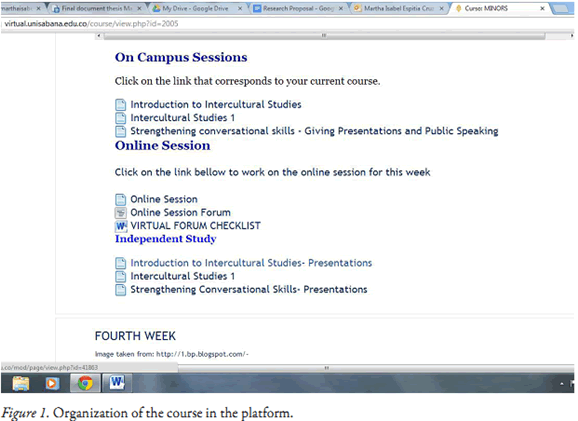
The experience analyzed in this study occurred in a 16- week period during the first semester of 2012 and took place through a Moodle platform, which in this specific case is called VirtualSabana. Moodle platforms have gained relevance in the last few years and it has been stated that in 2007 around 30,000 educational institutions around the globe were making use of this resource ''to deliver online and to supplement traditional FtF courses'' (Cole, J., & Foster, H., 2007, p. ix). In this case, ten forums, in which participants were encouraged to provide peer feedback to their partners' compositions, were proposed. See an example below of how these forums looked in the platform (Fig. 1).
This case study was conducted with two purposes. The first was to understand how students in an EFL class experienced peer feedback through online forums in a blended learning course. The second was to analyze how online interaction, when using the forums, was undertaken by the participating EFL students. The following section describes the population under study and the data collection procedures used.
]]> 3.1 Context and ParticipantsParticipants of this study were a group of twelve students who took an EFL blended course. These students had a B1 level of English at the time they took the class; they all shared an interest in improving their level of English because, according to the answers gathered in the interviews, they knew a better level of English would give them access to more academic and professional experiences in their lives. Participants were university students from different degrees/ majors who had taken EFL classes before and during their studies at the university. Their ages ranged from 17 to 23 at the time the course finished.
3.2 Data Collection
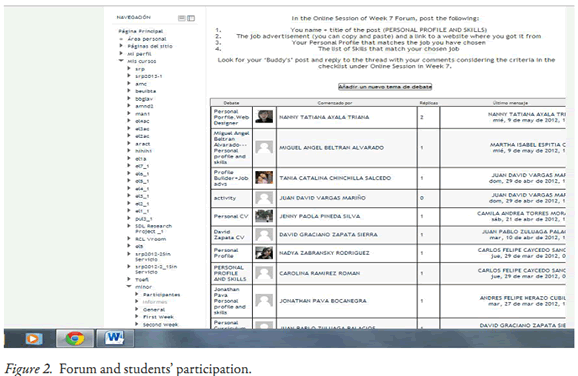
The instruments used to gather the data analyzed in this case study were students' entries in the online forums, interviews and a questionnaire. The forums used were part of the course's requirements and the teacher was in charge of opening the discussion threads in which participants posted their contributions and reflections to the topics addressed. As shown in the figure 2, the teacher guided students with clear instructions so that they could post their contribution as well as provide and receive feedback.
After analyzing the content posted in the virtual space, it was necessary to design and use other instruments to validate the information found in the forum. Unfortunately, after sending the questionnaire on two occasions, there were only four replies and therefore this process had to take place during one of the FtF classes as students requested. Later in the process, and after reading and analyzing the responses given to the questionnaire, a semi-structured interview was created. In this case participants were called and asked to be interviewed. The first instrument designed was the questionnaire whose main objective was to inquire into students' perceptions about the experience of providing online feedback to their peers. The questionnaire contained ten open questions which were piloted before the questionnaire was administered. According to Dörnyei (2003), questionnaires need to be piloted because ''regardless of how experienced the questionnaire's designer is, any attempt to shortcut the piloting stage will seriously jeopardize the quality of the question... By going through the careful editing procedures we can avoid a great deal of frustration and possible extra work'' (p. 65).
The process of piloting this instrument, as well as the other instruments used in this study, was carried out by considering the stages suggested by Dörnyei (2003) who explains the importance and the procedure to pilot instruments used for qualitative studies. The author proposes specific steps: the first is to ask a friend or a colleague to answer the questionnaire; the second recommends the administration of the questionnaire with a larger group of individuals who are willing to participate. In this second stage, the piloting was done with one of the participants that provided feedback on the type of questions, since after sending the digital questionnaire only one person replied and provided feedback. After piloting the questionnaire it was necessary to modify and rephrase some questions due to the fact that some were not clear and in some cases the answers were not relevant for the study. These adjustments were made by considering the comments from a colleague and the student who provided suggestions. After designing and applying the questionnaire, we worked on constructing a semi-structured interview (see appendix A) in order to inquire about participants' perspectives and general experiences about the process ofusing online discussion forums.
The actors under study participated in ten forums that were assigned over 16 weeks; they also completed an interview and a questionnaire after finishing the course. The analysis of the mentioned data is presented in the following section.
]]>4. FINDINGS
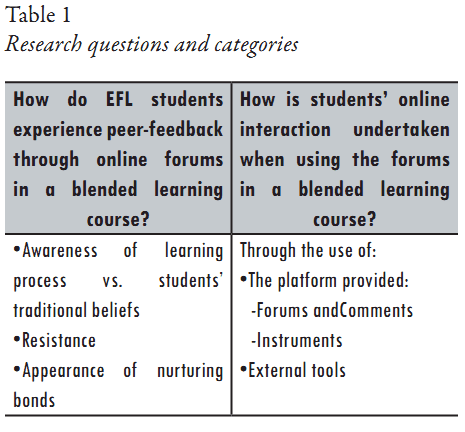
This case study uses grounded theory as the approach for analyzing data. The analysis of the data brought up five categories that are grouped in the chart below. Thus, the main objective was not to generate theory but to understand and explore the case presented here in depth. This type of analysis is explained by Charmaz (2000) who points out that ''grounded theory consists of systematic inductive guidelines for collecting and analyzing data to build middle- range theoretical frameworks that explain the collected data'' (p. 509). From a similar perspective, Strauss and Corbin (2008) have suggested understanding the analysis of the data as ''the process of examining something in order to find out what it is and how it works. To perform an analysis, a researcher can break apart a substance into its various components, then examine those components in order to identify their properties and dimensions'' (p.46). This study followed the procedures suggested by the above-mentioned authors and it used open, axial and selective coding to analyze the data and suggest the categories. As a result of this approach to data analysis, the categories shown in the following chart emerged (Tab. 1).
4.1 EFL students experiencing peer- feedback through online forums.
The first research question was aimed at analyzing how this group of EFL students experienced a peer feedback process in online forums. The findings led to three categories, as shown in the table above. These categories are discussed in the following section.
4.1. 1. Awareness of the EFL learning process vs. traditional beliefs.
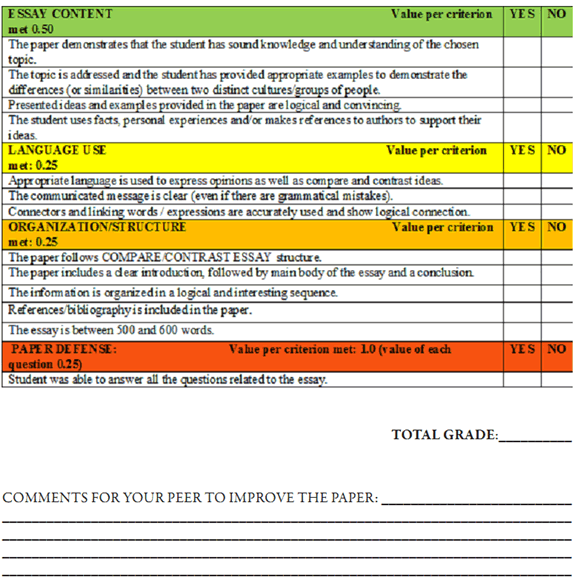
The process of providing peer feedback was enriching for the EFL students who took the course considering they were able to use some checklists to analyze and comment on their peers' tasks. Although these checklists were suggested by the teachers, students were asked to carry out a further analysis in order to propose changes that would enhance the instrument and make it more user-friendly (See appendix B). By making students part of the creation of the checklists which were used to evaluate their written production, students were made aware of the aspects to consider when writing their papers. In the questionnaire at the end of the course, students made comments such as: ''We knew what we had to check and this also helped us to know what we had to include in our task'' (S3, Q). ''Each question in the checklist helped us to know what the teacher was expecting with the task'' (S7, Q)
]]> According to these comments, the creation of the checklist helped students identify specific information to better understand what the task was about. All the participating students had taken EFL classes before, and all of them confirmed their previous teachers had always used rubrics to evaluate the written tasks. However, they pointed out how teachers were responsible for using the rubrics, but not them. The participants expressed that including them in the process of creating and using the rubrics to evaluate someone else's task gave them the tools to identify their own mistakes and improve their tasks by themselves.In the interview, one of the participants asserted: ''Cuando la profesora nos preguntaba sobre los items para incluir en la rubric yo creo que muchos no sabíamos que decir, uno no está acostumbrado a eso'' (S3, I). Even though at the beginning of the process students were not familiar with how to use a tool to evaluate their written production, teachers guided them and rubrics were constructed collaboratively. Comments from students were positive and highlighted the importance of knowing the criteria for a task and most importantly, understanding and being able to use them. In the interview, one of the participants asserted: ''Cuando la profesora nos preguntaba sobre los items para incluir en la rubric yo creo que muchos no sabíamos que decir, uno no está acostumbrado a eso'' (S3, I). Even though at the beginning of the process students were not familiar with how to use a tool to evaluate their written production, teachers guided them and rubrics were constructed collaboratively. Comments from students were positive and highlighted the importance of knowing the criteria for a task and most importantly, understanding and being able to use them.
The participating students valued what their classmates commented on and suggested about the writing pieces. ''It gives another point of view to your homework. It was useful because it was the opportunity to know how my product was and receive an evaluation from a partner'' (S10, Q). This participant explains how providing and receiving feedback from a peer was useful and enriching for their EFL language process. Concretely, the implementation of peer feedback enriched students' writing because they could identify and correct possible mistakes before the teacher's evaluation.
However, some aspects emerged that revealed another perspective of this experience. Providing peer feedback to other students was mediated by students' beliefs about traditional ways of getting feedback. In other words, students were not used to having other students help them improve their compositions since normally the teacher is the one who checks and provides feedback. This is worth mentioning because in some cases, students expected the immediacy and speed they associate with traditional, FtF teacher-student evaluation, as summarized in the following quote taken from one of the interviews:
Cuando uno piensa en virtual sabana espera que la realimentación sea más rápida que en el Aula, aunque yo entiendo que es tiempo que a ustedes no les dan pago y el estudiante siempre imagina que el profesor debe estar siempre contestando todo. Pero sería útil que fuera más rápida, o por lo menos que se supiera si el profesor recibió el trabajo. (S4, I)
Although the participant also refers to the time to get the replies (this specific aspect and its implications are analyzed later in this document), the focus of analysis here has been made on two relevant aspects. The first aspect is the participant's reference to the payment that teachers get for providing feedback. Traditionally, it is understood that evaluating students' work is among the duties teachers are paid for and consequently learners have this exact belief. The second aspect from the previous quote is students' expectation of hearing the teachers' voices in online environments. It is the teachers' responsibility to open, close and validate the activities and discussions that take place in online environments. Holding this traditional perspective also prevents students from trusting what their peers say and limits their contributions to their EFL learning process.
The above presented situation entails a reflection upon the teacher's role in online environments in particular and when providing feedback in general. As stated by Salmon (2004), many publications can be found in regards to the potential of educational technology, but there is not much information that contains a detailed description of teachers' and learners' roles in these contexts. The author also highlights that ''computers can provide vehicles for learning materials and interaction but students still need the 'champions' (teachers) who make the learning come alive- the e-moderators'' (p. 12). A specific role for teachers needs to be clear before any pedagogical use of an ICT tool, especially if providing feedback is an essential part of the process as it is in the experience analyzed in this study.
Picón (2012) shares an experience in which feedback was studied. He describes the EFL teacher's role as ''a facilitator, counselor or guide with a supportive attitude towards the learner and within a learner centered environment; a teacher is willing to release some power over the students on behalf of their development as independent, able learners'' (p. 149). As explained before, when working with technology teachers' and students' roles might vary and they are expected to be different from those that traditionally occur in the FtF classroom. The students' beliefs analyzed in this category show how it can be difficult for students to accept and interact when roles change.
In short, students recognize the pedagogical value of having another person commenting on their written compositions and of understanding the criteria for evaluation by commenting on others' work. They know peer feedback is a way to raise awareness of their EFL learning process and they acknowledge the importance of this aspect when learning English as a foreign language. However, the success of the peer feedback experience is limited because of the traditional beliefs students hold when getting feedback. The teacher is perceived as an expert, whose comments are mandatory throughout the process.
]]> 4.1.2 Resistance.In the traditional EFL classrooms, teachers are the ones who read and comment on work and correct possible mistakes that are related to language usage. The traditional ideas that have been identified in this study are connected to cultural aspects that are important to consider. ''En nuestra cultura se cree que el profesor sabe ''más'' que el estudiante, se supone que el docente tiene experticia en el tema entonces uno tiene certeza de que sus correcciones van a estar atadas a un conocimiento más estructurado'' (S4, I). The interviewed student relates her resistance to participating in peer feedback due to cultural aspects since education in Colombia has been focused on the teacher as being the one prepared to pass on specific knowledge.
New schools and perspectives in education have suggested student-centered classrooms but culture and tradition still remain. The previous quote summarizes how students perceive their learning process as teacher-centered: it is the teacher who knows the topic and students believe teachers' comments are the valid ones because they are supposedly founded in more elaborated knowledge. In a study published by De Raadt et al. (2005), this finding emerged as well. The authors mention:
The value of reviews and comments made by peers is not valued highly by many students... Students are not likely to be motivated by what their peers think when determining their willingness to use such a system. The use of a peer-review system could be challenged as a valid means of assessing and teaching. (p. 9)
Students recognize the value of having a wider audience, but tradition and their perception about other students make them resist undertaking this type of experience:
Yo a veces considero que evaluar a un compañero es muy bueno, tú puedes ayudar a retroalimentar la información que él tiene, y a su vez mejorarla o corregirla. Sin embargo, eso ya está implícito cuando tu haces un comentario en el foro y a su vez el estudiante considera que no es muy bueno que un estudiante, igual que él califique su trabajo, pues lo considera al mismo nivel. (S6, I)
Even though students recognize the mentioned value of having a peer commenting on their pieces of writing, paradoxically they do not believe a peer can actually contribute due to the fact they are in the same level in the process of learning the language. Kahiigi, et al. (2012) explain that by implementing peer review students might feel uncomfortable when assessing because they hold the belief that it is the teachers' responsibility to assess and award grades.
Lack of trust in peers' contributions to the EFL learning process is the first reason for students to resist online peer feedback. The second source of resistance is the tool used. Forums have been used in the EFL context as a way to maximize time because students have the possibility to work on assigned activities that will allow them to use the target language beyond the classroom. However, it has been identified that students resist the use of forums due to several aspects. In this study, students expressed the belief that communication through forums can be slow, which seems to upset learners who are used to communicating quickly and effectively by using other, more immediate messaging tools. Although participation in forums has been highly valued due to the fact that they allow students to carefully read other posts and to have the time to plan and post their comments, students have criticized the use of the tool because some participants published their feedback too late for them. Participants refer to this type of communication as slow and, according to them, this is the result of having a tool that allows others' replies at any time.
]]> An exploration of forums has highlighted many positive aspects of this tool, including time for students to think about their responses and a wider audience, making students feel their work has greater impact. However, the time to get a reply or an answer is a pitfall that needs to be considered before using this tool in the EFL classroom. In a study carried out by Thomas (2002), a similar finding was identified regarding the difficulty of having late responses in a forum when providing feedback. The author asserts that:while on occasion a contribution was answered within a 24-hour period, the total cumulative time in the evolution of a thread was often a period of several weeks... Students found the discussion forum to be far less immediate and interactive, more time consuming and more difficult. (Thomas, 2002, p. 361)
As stated by one of the participants: ''los mensajes llegaban muy tarde y las calificaciones también. (S10, I). The mentioned breakdown affected the way students experienced peer feedback since they perceived forums as slow and less effective than using social networks. The following quote shows another example of this viewpoint: ''It was difficult sometimes to evaluate it because he posted not at time his homework'' (S6, Q).
Online collaboration is key to understanding this type of resistance. In order to collaborate online, participants need to be committed to the other members of the online community; responses and interaction are important to keep the interaction going. If a participant does not see responses or there is no evidence that someone is reading what he or she posts, a breakdown in communication is likely to happen.
To summarize, the data analyzed shows how learners' beliefs and perceptions about their classmates prevent them from actively participating in the forums. Beliefs, traditional practices and the lack of collaboration from other members generate some sort of opposition from students when experiencing peer feedback through online forums. This resistance may affect the effectiveness of online interaction and it needs to be considered by teachers in order to alleviate its effects.
4.1.3 Appearance of nurturing bonds.
Even though it has been explained how and why students might oppose being part of a peer feedback experience through online forums, the participants under study actually worked on the suggested activities and provided comments. Peer feedback generated what has been called in this study nurturing bonds. These bonds are explained from two angles: the first one is the fact that students felt a social responsibility to their peer whereas the second refers to the personal and friendly relation that was created amongst them.
Having a wider audience for the written tasks created a socially constructed environment; students were informed that their participation affected the forum due to the fact that it was a public space where all the members of the class could have access to. Students' active participation had a positive effect in the sense that other members could read and reply, but if they did not participate as expected, they affected their peers and all the dynamics of the class in the online forum. Being aware of their social responsibility in the online forum, students were careful when sending the feedback and performed a caring role towards their peers. As one of the participants stated, they had someone to take care of: ''you have someone to ''take care'' during the course, even though sometimes you can't be as objective as you need.'' (S7, Q).
In addition, participants experienced peer feedback as a subjective process where it was more important to care for their peers than to comment on weaknesses and strengths. The caring performance of participants was key for students to undertake the online peer feedback process since they assumed a responsibility with their peers when commenting and providing feedback. Even though students hold beliefs that show the importance of having the teachers' comments as the last word in the class, they felt more comfortable with their peers as such comments were formative, kind, and a way to release stress that formal evaluations generate: ''It is useful because buddies are patient and are not strict'' (S11, Q).
As the above quote evidences, participants felt comfortable with their peers because there was more confidence when submitting written compositions. The most valued aspect of the peer feedback process was the feeling of having a classmate looking after the students who submitted written tasks. The sensation of being evaluated and judged creates anxiety and nervousness, but having a peer reading and commenting on a written composition with the purpose of improving one's production removes the tension that any evaluation might generate. The potential benefits of what peer feedback can bring to the EFL classroom need to be looked at from the perspective that a peer can actually help others by making them feel confident enough because their production has been revised before submission and in this way they can perform better. In a recent study, Espitia and Kwinta (2013) claimed that participants in their study ''liked the fact that their 'buddy' was patient, not strict at all, yet helpful in terms of having someone look over the work before they were graded by the teacher'' (p. 218). The authors concluded that the peer feedback system enabled students to gain a different perspective on their work and that proved to be very beneficial to them.
]]> To summarize, the first research question of this study aimed at analyzing how EFL students experienced peer feedback through online forums. The analysis and results suggest that students developed some degree of awareness about their language learning process, which helped them to monitor their written productions as well as others'. At the same time, although students valued their peers' comments, they held traditional beliefs about teaching, learning and the role of the teacher. The mentioned beliefs seemed to prevent EFL students from recognizing the full pedagogical value of this experience. Students' beliefs towards the teacher, peers and the EFL class create an aspect called resistance in this study. Students' resistance is related to two aspects: the tool and their traditional beliefs about the EFL class and teacher. Finally, a very important aspect that has been pointed out is the creation of nurturing bonds among participants. Such bonds helped to generate a friendlier and more caring experience through supportive and encouraging comments.4.2 The online interaction by EFL students through forums.
This section refers to the second research question that was stated in this case study. Two categories emerged considering the interaction that took place when using online forums. Then, this data was compared and analyzed with the questionnaire and interviews. Findings show online interaction through forums was undertaken by participants through the platform where the forums were included and through external tools. These categories are explained in the following section.
4.2.1. The platform provided.
Although it might sound evident that when implementing online forums in the EFL classroom students will use them to interact, this issue is more complex than it seems since they can use different channels to collaborate within and outside the online space. The analysis of the data brought to light a tension that was identified as the result of two basic aspects: forums and comments, and instruments and overcoming strategies.
Forums and Comments. Students participated in 10 forums over 16 weeks in which they were expected to provide, get and discuss feedback on written assignments. However, students focused their attention on providing and getting feedback on the mentioned assignments, not on discussing it. In general, comments seemed to be affected by three factors: lack of time, low language confidence, and type of interaction.
Students explained their lack of time based on their academic responsibilities as university students. In many cases they mentioned how they thought discussing in the forums was an important part of the process; however, they did not have enough time to do so:
La participación depende mucho del tiempo que pueda tener el estudiante, por ejemplo Migue nunca me comentó nada porque obviamente su carga académica era mucho más elevada. Para un estudiante es más importante sus materias de base de la carrera y no Inglés. (S3, I)
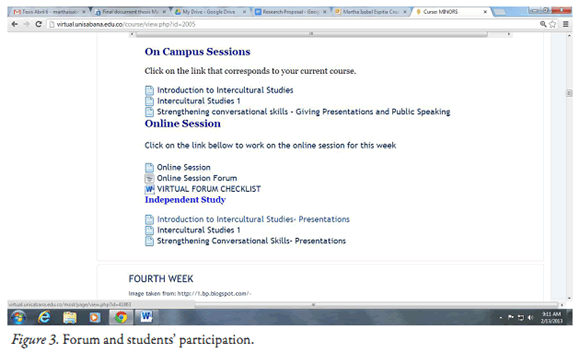
As shown in the previous quote, the participant points out a very sensitive but real aspect of the EFL teaching and learning practice in higher education. Students are aware of the importance of learning English for their professional and personal life. However, other academic responsibilities can be more appealing and relevant for them and in that sense time for their English class is limited. As EFL teachers, it is important to consider a way of combining students' professional fields with the English class. Integrating students' specific fields of knowledge with the English class will avoid time limitations and students will devote the time to fulfilling two purposes: learning the target language and working on contents from their specific degrees/majors. As suggested by the participant in the last quote, if time for other academic assignments does not interfere, students will participate and interact more with tools such as online forums. The figure 3 exemplifies the limited comments of the replies.
]]>
Also, figure 3 displays a short comment where students informed their peers they had published the format to provide feedback. The online interaction in the forums was also limited because students lack confidence when using the target language in a public space. In the interviews, participants expressed how the feeling of being exposed limited their participation: ''En un foro cuando uno publica una participación uno tiene miedo a equivocarse, más en inglés y cuando uno sabe que todo el mundo lo puede leer.'' (S2, I)
The lack of confidence is perceived as a factor that prevents students from participating and interacting as expected. Limited responses in the ODFs are a result of students' time constraints and lack of confidence to use the target language with a wider audience.
The analysis of the situations surrounding the limited discussions in the forums brings us to the way in which students interacted. Mainly, they understood the tool as a repository of the formats used to provide feedback. As a result of this situation, their interaction with the forums was undertaken to upload and download the formats and in some cases to ask peers to post their papers so that they could read them.
La interacción en los foros se limitó a una persona dando feedback a otra. No creo que ningún estudiante se hubiese preocupado por leer lo que los otros estudiantes pudo haber hecho. Uno buscaba al peer el resto no importaba y si esto pasaba para que utilizar un foro. (S4, I)
The previous quote summarizes the type of online interaction that took place in the experience analyzed. Interaction was assumed as the act of reading, filling out a form and posting it with a comment. The traditional idea of the interaction that takes place in the classroom is depicted here because when using asynchronous tools as a forum, the interaction happens between students and the resources or tools.
Interaction took place in two ways: the first between the reviewers with the paper posted and the second between the comments and the writers. In these cases, the patterns of interaction were generated because forums are asynchronous forms that sometimes do not allow participants to interchange and discuss concurrently. The interaction facilitated by this type of tool encourages students to interact with the text and not to have real-time interaction. In this regard, it is important to understand that it is the teacher's responsibility to think carefully about the tools and the pedagogical purpose of using them.
]]> Instruments and overcoming strategies. Participants interacted with the instruments that were created by the teachers. These instruments included checklists as well as the forms used for students to provide feedback, the instructions to participate in the forums and the samples to guide their writing.Students have manifested how the interaction with the forms to provide peer feedback was clear because they were self-explanatory. However, because of the lack of time and confidence that was explained before, the forms limited students' processes when providing feedback. Students felt everything they needed to consider was given in the forms, they just had to complete the forms and feedback was finished. The fact that the teacher designed the forms facilitated the task of analyzing others' pieces of writing but prevented students from using their own knowledge and actually contributing by using their expertise.
On the other hand, as the interaction that took place was undertaken by students with inanimate texts and instruments, misunderstandings and breakdowns in communication were more likely to happen. Students realized teachers were not experts in designing and creating technological tools and lack of organization and non-user- friendly tools were accepted with no surprise. They expected breakdowns when interacting with the tool and looked for ways to overcome these difficulties:
Al principio fue difícil porque la organización en Virtual Sabana no era tan clara. La interacción con la plataforma fue difícil y para solucionarlo le escribía a la profesora o tenía que leer todas las partes e instrucciones para poder entender qué debía hacer. (S4, I)
Students found different strategies to make up for the problems when interacting with the instruments. Among the resources that have been identified there is the use of interaction in the classroom to ask the teacher for clarification. In the same way, they used external tools to overcome communication breakdowns.
4.2.2 External tools.
In this study, external tools are understood to be all the other channels students used to communicate such as social networks, software to make internet calls, chats, e-mails or cellphones. The analysis of the data suggested that although students could discuss and make decisions collaboratively, they did not have much room for clarification or discussion to make quick decisions since replies and communication were not immediate. As a result, participants used several resources to communicate amongst themselves:
El profesor piensa que el estudiante utilizará la herramienta pero no es así; uno lo que hace es usar los medios alternos como el correo o llamadas al celular. No hay un espacio propio para los estudiantes dentro de la plataforma. Por fuera la interacción no era tan productiva, uno se salta hablar en inglés. (S5, I)
In the same way this participant states how the teacher had a different idea for students to interact when using online forums; s/he states how they used other media to solve communication issues and to make faster decisions. It is worth considering how this same participant acknowledges the fact that quick decisions are made in the L1. Interaction by using external tools is more practical to communicate fast and effectively. The complexity of this reality stems from the perception of the online forums as a useful and meaningful tool for using the target language, but at the same time, they are seen by students as a tool that does not provide them with a space to communicate effectively. It is important to highlight that the students' perception of the tool reflects a possible mismatch between its actual use and the pedagogical purpose of the activity. A possible way to overcome the stated discrepancy is the careful selection of the tool based on the learning objectives and what students are expected to do with it. In general, online forums are an outstanding instrument for students to improve written communication with real purposes, but if the purpose is to enhance real-time interaction other channels need to be considered.
This section has described how EFL students experienced peer feedback through online forums and how students' online interaction was undertaken. In regards to students' performance when interacting online, the analysis of the patterns of interaction and the use of external tools have revealed a tension between the pedagogical purposes of using a tool in the EFL class and the way students perceive these practices. Such tension is considered in the next section for describing the pedagogical implications and conclusions.
]]>5. CONCLUSIONS AND PEDAGOGICAL IMPLICATIONS
Online interaction and peer feedback within an EFL- blended environment was an experience that evidenced positive perceptions from students as well as parameters to bear in mind when carrying out similar pedagogical practices. Based on the analysis made, a variety of conclusions can be drawn.
First of all, it is relevant to take into consideration students' beliefs regarding evaluation, collaboration and the use of online environments since they can be perceived as a powerful tool to create awareness of the importance and relevance of the comments students made in the discussion threads. As discussed in the previous sections, most of the participants expressed a traditional perception regarding the teacher's role. This concept seems to have made them believe that the interaction they had with their peers was not accurate enough to be valuable since the tutor acted as an external participant. Considering this, teachers must contribute to the development of students' autonomy and self-esteem by valuing comments as an effective way to enhance their writing competence and, ultimately, to become better language learners.
Additionally, this study evidenced that guidance can foster students' awareness of the social and academic responsibility they have when providing peer feedback. The findings suggest that even though a resistance was identified during the process, this cannot only be seen as a negative factor. It would be interesting to identify external causes and specific reasons for this phenomenon. Another important conclusion is related to the nurturing bonds that appeared among participants and how they started creating closer relationships. The experience showed that these bonds are seen as an advantage that can be built upon.
Finally, this experience demonstrated that ICTs are tools educators and academic communities can incorporate making sure their implementation takes into account students' needs and interests as well as having specific purposes when proposing similar experiences. Although online interaction was limited and complemented with external tools, it is suggested to propose activities and discussion spaces in which learners identify and see more meaningful purposes when using ICTs. In brief, this experience opens doors to further research or pedagogical experiences in which the above mentioned conclusions can be considered in order to improve the use of ODFs in EFL settings.
6. FURTHER RESEARCH
Implementing an ICT tool in the EFL context requires an exploration of how students perceive the role of the EFL teacher and how the teacher understands the role of students when interacting in online environments. A suggestion for further research is to explore the implications of considering teachers' and students' beliefs about ICT-based learning environments and the way interaction is performed within those spaces.
The analysis of the role of culture and how it depicts performances in online environments is a relevant topic to be studied. This is because interaction and the roles that are assumed in online settings reveal personalities that are inserted in a specific context. Culture, educational background and experiences with ICTs in education affect not only the use of ICT tools but also performance and interaction online. Another important topic that should be explored is the fact that online interaction might vary depending on the ICT tool EFL teachers and students want to use in the English class. Each tool implies different practices and as a result diverse outcomes might be found.
]]>REFERENCES
1. Anderson, T. & Kanuka, H. (1997). On-line forums: New platforms for professional development and group collaboration. Journal of Computer-Mediated Communication, 3(3), 0-0. doi: 10.1111/j.1083-6101.1997.tb00078.x [ Links ]
2. Arbaugh, J. B. (2007). An Empirical Verification of the Community of Inquiry Framework. Journal of Asynchronous Learning Networks, 11(1), 73-85. [ Links ]
3. Arnold, N., Ducate, L., Lomicka, L., & Lord, G. (2009). Assessing online collaboration among language teachers: A cross-institutional case study. Journal of Interactive Online Learning, 8(2), 121-139. [ Links ]
4. Balaji, M. S., & Chakrabarti, D. (2010). Student interactions in online discussion forum: Empirical research from 'media richness theory' perspective. Journal of Interactive Online Learning, 9(1), 1-22. [ Links ]
5. Bates, A.W. (1997). The impact of technological change on open and distance learning. Distance Education, 18(1), 93-109. [ Links ]
6. Behrent, S., Doff, S., Marx, N., & Ziegler, G. (2011). Review of doctoral research in second language acquisition in Germany (2006-2009). Language Teaching, 44(2), 237-261. doi: http://dx.doi.org/10.1017/S0261444810000455 [ Links ]
7. Canclini, N. G. (2003). A globalização imaginada. Sao Paulo, Brazil: Editora Iluminuras Ltda. [ Links ]
8. Cantoni, V., Cellario, M., & Porta, M. (2004). Perspectives and challenges in e-learning: Towards natural interaction paradigms. Journal of Visual Languages & Computing, 15(5), 333-345. [ Links ]
9. Charmaz, K. (2000). Grounded theory: Objectivist and constructivist methods. In N. Denzin & I. Lincoln, (Eds.), A handbook of qualitative research (pp. 509-535). Thousand Oaks, CA: Sage. [ Links ]
10. Cole, J., & Foster, H. (2007). Using Moodle: teaching with the popular open source course management system. Sebastopol, CA: O'Reilly Media, Incorporated. [ Links ]
]]>11. Corbin, J., & Strauss, A. (2007). Basics of qualitative research: Techniques and procedures for developing grounded theory. Thousand Oaks, CA: Sage Publications, Incorporated. [ Links ]
12. Cummins, J. (2008). Technology, literacy, and young second language learners. In L. Parker. (Ed.). Technology-mediated learning environments for young English learners. (pp. 61-98). New York, NJ: Lawrence Erlbaum Associates. [ Links ]
13. De Raadt, M., Toleman, M., & Watson, R. (2005). Electronic peer review: A large cohort teaching themselves?. In Proceedings ASCILITE 2005: 22nd Annual Conference of the Australasian Society for Computers in Learning in Tertiary Education: Balance, Fidelity, Mobility- Maintaining the Momentum? (Vol. 1, pp. 159-168). Queensland University of Technology, Teaching and Learning Support Services. [ Links ]
14. Dörnyei, Z. (2003). Questionnaires in second language research: Construction, administration, and processing. London, England: Lawrence Erlbawm Associates Publishers. [ Links ]
15. Espitia, M. I., & Clavijo Olarte, A. (2011). Virtual forums: A pedagogical tool for collaboration and learning in teacher education. Colombian Applied Linguistics Journal, 13(2), 29-42. [ Links ]
]]>16. Espitia, M.I., & Kwinta, A. (2013). ''Buddy System'': A pedagogical innovation to promote online interaction. Profile Issues in Teachers Professional Development, 15(1), 207-221. [ Links ]
17. Garrison, D. R., & Kanuka, H. (2004). Blended learning: Uncovering its transformative potential in higher education. The internet and higher education, 7(2), 95-105. [ Links ]
18. Haythornthwaite, C. (2006). Facilitating collaboration in online learning. Journal of Asynchronous Learning Networks, 10(1), 7-24. [ Links ]
19. Kahiigi, E. K., Vesisenaho, M., Hansson, H., Danielson, M., & Tusubira, F. F. (2012). Modelling a peer assignment review process for collaborative e-learning. Journal of Interactive Online Learning, 11(2). [ Links ]
20. Karacapilidis, N., & Papadias, D. (2001). Computer supported argumentation and collaborative decision making: The HERMES system. Information Systems, 26(4), 259-277. [ Links ]
]]>21. Kern, R. (2006). Perspectives on technology in learning and teaching languages. Tesol Quarterly. 40 (1), 183-205. [ Links ]
22. Lotherington, H., & Jenson, J. (2011). Teaching multimodal and digital literacy in L2 settings: New literacies, new basics, new pedagogies. Annual Review of Applied Linguistics, 31, 226-246. doi: http://dx.doi.org/10.1017/S0267190511000110 [ Links ]
23. Neumeier, P. (2005). A closer look at blended learning– parameters for designing a blended learning environment for language teaching and learning. ReCALL, 17(02), 163-178. [ Links ]
24. Nunan, D. (2001), English as a global language. TESOL Quarterly, 35, 605–606. doi:10.2307/3588436 [ Links ]
25. Olivares, O. (2009). Collaborative vs. cooperative learning: The instructor's role in computer supported collaborative learning. In N. Kock (Ed.), E-Collaboration: Concepts, Methodologies, Tools, and Applications (pp. 129-141). Hershey, PA: Information Science Reference. doi:10.4018/978-1-60566-652-5.ch011 [ Links ]
26. O'Dowd, R. (2011). Online foreign language interaction: Moving from the periphery to the core of foreign language education? Language Teaching, 44(3), 368-380. doi: http://dx.doi.org/10.1017/S0261444810000194 [ Links ]
27. Orvis, K. L., & Lassiter, A. L. (2008). Computer- supported collaborative learning: Best practices and principles for instructors (pp. 1-352). doi:10.4018/978-1-59904-753-9 [ Links ]
28. Pena-Shaff, J. B., & Nicholls, C. (2004). Analyzing student interactions and meaning construction in computer bulletin board discussions. Computers & Education, 42(3), 243-265. [ Links ]
29. Picón, É. (2012). Promoting learner autonomy through teacher-student partnership assessment in an American high school: A cycle of action research. Profile Issues in Teachers Professional Development, 14(2), 145-162 [ Links ]
30. Rojas, G. (2011). Writing using blogs: A way to engage Colombian adolescents in meaningful communication. Profile Issues in Teachers' Professional Development, 13(2), 11-27. [ Links ]
31. Salmon, G. (2004). E-moderating: The key to online teaching and learning. London, England: Taylor & Francis Books Ltd. [ Links ]
32. Thomas, M. (2002). Learning within incoherent structures: the space of online discussion forums. Journal of Computer Assisted Learning, 18(3), 351-366. [ Links ]
33. Thorne, S. L. (2008). Computer-Mediated Communication. In N. Hornberger, & N. Van Duesen-Scholl (eds.), Encyclopedia of Language and Education, Volume 4: Second and Foreign Language Education (pp. 325-336). New York, NJ: Springer/Kluwer. [ Links ]
]]>34. Vygotsky, L. (1986). Thought and language (2nd ed.). Cambridge, MA: MIT Press. [ Links ]
35. Warschauer, M. (1995). Computer-mediated collaborative learning: Theory and practice. Honolulu, HI: University of Hawaii, Second Language Teaching & Curriculum Center. [ Links ]
36. Yang, Y. F., & Wu, S. P. (2011). A collective case study of online interaction patterns in text revisions. Supporting Organizations, 1. [ Links ].
APPENDIX A
Participation agreement
Dear students,
]]> The purpose of this interview is to your perception and your opinion about the process you carried using online discussion forums and the checklists to guide the way you provided feedback.Please answer the questions; it is important for us to have honest and sincere responses. This information is part of the research project you agreed to participate in and the information here will not affect your class performance.
1. Are checklists clear or not? Why?
2. Do you think your peer can help you improving your writing? How?
3. How do you feel when writing comments for your peer?
4. What would you change of this process?
APPENDIX B
NAME: ______________________________________________________ DATE: _____________________
Based on the student's written assignment select YES if you classmate t has met the criteria below or NO if the students has not. Based on the YES/NO criteria and their assigned value, provide a GRADE.
]]> OUTSTANDING (5.0): The student shows evidence of preparation and fulfills all the requirements with an excellent performance.GOOD (4.0): The student shows evidence of preparation and fulfills all the requirements with a good performance. However, there are some areas that lack development.
FAIR (3.0): The student shows evidence of preparation and fulfills all the requirements with a fair performance in the specific task. However there are some areas that are difficult to understand and the contribution lacks development.
BELOW AVERAGE (2.0): The student does not show enough evidence of preparation and does not fulfill all the requirements. The ideas are difficult to follow.
POOR: (1.0): The student does not show evidence of preparation and does not fulfill all the requirements. The contribution is incomplete, disorganized and difficult to understand.