ARTÍCULOS ORIGINALES
DOI: 10.17230/ad-minister.28.9
Mainstreaming Disaster Risk Management into Management Education: Case of the Mona School of Business & Management1
Incorporación de la gestión del riesgo de desastres a la educación gerencial: el caso de Mona School of Business & Management
INDIANNA MINTO-COY2, LILA RAO3
]]> 2 Mona School of Business and Management, The University of the West Indies, Mona, Kingston, Jamaica. Email: indianna.mintocoy@uwimona.edu.jm3 Mona School of Business and Management, The University of the West Indies, Mona, Kingston, Jamaica. Email: lila.rao@uwimona.edu.jm
JEL: I23, M14, Q54
Received: 22/06/2016 Modified: 25/06/2016 Accepted: 28/06/2016
ABSTRACT
The purpose of this paper is to provide a background to and guide for mainstreaming Disaster Risk Management (DRM) into higher education and training institutions in Small Island Developing States (SIDS), with the aim of increasing awareness and understanding of the complexity of DRM issues in business and management, based on their general and specific vulnerabilities. SIDS are considered a special category within the discussion on DRM, given a number of vulnerabilities generally and specifically. Furthermore, little attention has been paid to the business impact of disasters in such settings. It is proposed that one major route to improving this situation is through the educational and training institutions, which play a major role in shaping thinking and practices in such settings.
KEYWORDS Disaster risk management; disaster risk reduction; small island developing states; mainstreaming; busi ness; SMEs; Jamaica.
RESUMEN
El propósito de este artículo es proveer un contexto y guiar en la incorporación de la Gestión del Riesgo de Desastres (GRD) en las instituciones de educación superior y de formación en los Pequeños Estados Insulares en Desarrollo (PEID) con el propósito de aumentar el nivel de consciencia y comprensión sobre la complejidad de los asuntos relacionados con GRD en los negocios y la administración, teniendo como base vulnerabilidades generales y específicas. LOS PEID son considerados una categoría especial dentro de la discusión sobre GRD debido a la cantidad de vulnerabilidades generales y específicas con las que cuentan. Se propone que una de las principales rutas para mejorar esta situación es a través de las instituciones educativas y de formación, quienes desempeñan un papel importante en la conformación del pensamiento y las prácticas de aquellos entornos.
PALABRAS CLAVE Gestión del riesgo de desastres; reducción del riesgo de desastres; pequeños estados insulares; incorporación; negocios; PYME; Jamaica.
According to the International Federation of Red Cross and Red Crescent Societies (IFRC) a disaster is any event which severely ...''disrupts the functioning of a community or society and causes human, material, and economic or environmental losses that exceed the community's or society's ability to cope using its own level of resources''.5 Although disasters can result from natural hazards, Coppola (2015) argues that they do not occur naturally but are instead a direct function of the vulnerability of the affected region and its capacity to respond or recover from the damage caused by a natural or man-made hazard. This capacity to respond has been said to be directly related to the economic capacity of the affected country (Freeman et al., 2003) or, as in this case, region. Due to the reported fall out in economic activity that results from disasters, governments worldwide have focused on disaster management. However this is usually a post disaster mechanism which places substantial pressure on the financial resources of the country. Additionally, these strategies are usually ad hoc and provide only short term remedies.
Recently there has been a paradigm shift to more emphasis being placed on improving the resilience of those most vulnerable to disasters (Rogers & Tsirkunov, 2013). This new school of thought focuses on disaster risk reduction which involves pre and post disaster activities aimed at mitigating the impact of disasters on society. This change in thinking is fueled by the rising cost of disaster recovery and response. It has been noted that although natural hazards are becoming less deadly as persons in more economically stable regions have adapted their behaviour to accommodate these expected events, there is growing inability of nations to confine disasters within their own boundaries (Coppola, 2015). Furthermore, the proportion of poorer regions being adversely affected is growing with the number of people affected by any one disaster increasing. These trends are exacerbated by the increased frequency of these natural hazards. In the past, countries could prepare for a specified number of disasters at certain intervals, but they are now being forced to deal with multiple hazards often within the same period. These changing patterns have highlighted the need for more systematic and preventative approaches to responding to disasters.
Businesses, particularly those in the English-speaking Caribbean,6 have been slow in planning for and responding to disasters. The economic fall-out from the occurrence of natural hazards has negative implications for business continuity and prosperity. For instance, UNISDR notes the impact on competitiveness and supply chains and the associated losses (UNISDR, 2013). Small and medium sized firms are affected differently. However, risks associated with natural hazards are only one of the myriad challenges faced by businesses. It is perhaps for this reason that investors and businesses have been slow to recognise the need for DRM.
DRM initiatives do not suftciently involve business as partners and there have been only a few detailed attempts to focus on the effects on business as a specific group. For instance, the potential impact of rising sea levels on Jamaica's capital city, Kingston, including on the main business district of New Kingston has been modelled (Lyew-Ayee & Hamad, 2011). Generally, however, where the impact on business is considered, it is mainly the tourism industry that is discussed or some glancing attention is given to the economy but very little direct attention is focused on the impact on business as a specific group. Both locally and internationally the focus has been on society in a development context, on employment and livelihoods, and at the individual level on specific groups, such as women.7 Firm level impact and implications for traditional business concepts such as management, continuity, social responsibility, risk and generating and protecting business value have been largely ignored.8
In the Caribbean, DRM is largely considered an issue for governments with businesses paying insuftcient attention as it relates to the potential effects of disasters on growth projections and earning. This 'blindspot' or silence from business is seen, for instance, in the failure to equate costs relating to the increasing loss of productive hours from employees not being able to make it to work or terminating the work day prematurely due to the lack of water management. These issues are particularly pressing in a region which has not readily welcomed flexi-work week, mobile work or working from home, and where many MSMEs are inward looking so a heightened threat of a local disaster could send them into bankruptcy. The experiences in the region also mimic those overseas, although the effects are perhaps greater. For instance, the first two reports from the United Nations Oftce for Disaster Reduction (UNISDR)9 both focused attention broadly on governments and government bodies and the role of policy.
More recently however, there have been signs of a, mainly global, paradigm shift, with the increasing recognition of the importance of DRM and the need for the private sector to play a role in DRM and sustainable development. Regionally and internationally, companies including, PriceWaterhouseCoopers in the United Kingdom and Fujitsu Caribbean, are developing company-wide risk management plans which acknowledge all risks related to the business. These plans are aimed at mitigating three types of risks, corporate asset damage, activity disruption and collateral damage, which affect the company's ability to function in a time of a disaster.
These larger companies are more experienced at assessing risk than even the public sector. However, such examples do not reflect the DRM efforts in most SIDS where economic activities are largely dominated by Small, Medium and Micro Enterprises (SMEs). Obviously businesses in most SIDS do not have the resources to implement such sophisticated DRM plans but perhaps it should be equally obvious that there is still need for a cultural shift in the thinking and operations of businesses as it relates to disasters and DRM in the Caribbean and beyond.
The paradigm shift is also evident in processes that have culminated in the framing of documents such as the Sendai Framework for Disaster Risk Reduction (20152030), the Sustainable Development Goals, marking the post-2015 development agenda and the formation of institutions such as the World Business Council on Sustainable Development. Other solutions to DRM have been discussed in the United Nations Oftce for Disaster Reduction's Private Sector Alliance for Risk Sensitive Investment (UNISDR-ARISE), the publication of the UNISDR's third report and the activism of the Extreme Events Institute and their collective support for the ''Disaster Risk Management in Business Education'' initiative which supported the research for this paper.
It is recognised that management education has a major role to play in this culture change required in the private sector and wider society. Indeed, the role of educational institutions and business schools more specifically, as change agents is not a new topic (Morsing & Rovira, 2011; Prandini, Vervoort Isler, & Barthelmess, 2012). As the institutions that generate information and lead the discussions and theoretical developments that inform the practice and thinking around business, business schools are excellent agents of influence and shapers of practices and policies in the private sector. As such they should be major players in efforts to increase awareness of DRM among both the business and private sector. The Sendai Framework, in particular, is a formal acknowledgement of the role of business schools in mainstreaming DRM and influencing behaviour change within businesses.
]]> The purpose of this paper is to provide a background to and guide for mainstreaming Disaster Risk Management (DRM) into higher education and training institutions with the aim of improving understanding of disasters and the complexity of DRM issues in business and management. The particular area of focus is a developing and small island nation, which merits coverage in a discussion on Disaster Risk Management (DRM) or Disaster Risk Reduction (DRR) for a number of reasons. Key among these is recognition that states, including those in the Caribbean, currently face a number of environmental threats and peculiarities relating to business and management at the local and international levels that have heightened their vulnerability. These are considered in more detail in Section 3 of the paper and after a discussion of the methodology in Section 2. Section 4 reviews the particular approach to mainstreaming adopted here while section 5 reviews the case of the MSBM. Section 6 contains the main proposals for mainstreaming DRM in Management education and the paper closes with a conclusion in Section 7.The paper highlights the fact that while DRM has not traditionally been considered within businesses schools as well as businesses, more generally, it is increasingly viewed as an area requiring significant investments and attention by businesses. Given the role of business schools in directing and shaping practices and theories as well as the consciousness of managers and business leaders, it is imperative that the momentum and impetus for achieving a culture change in business practice as it relates to DRM be instigated by these institutions. The paper's contribution is in its approach to considering DRM in Management Education. This is founded on an underlying value of the concept of 'mainstreaming' (Porter & Sweetman, 2005) or normalization given the reality of DRM as an integral and cross-cutting theme in business and management, as opposed to a separate and distinct area of focus. The paper also contributes to the development of experiences and understandings as it relates to small and vulnerable settings, as well as the role of education and educational institutions in responding to socio-economic challenges more generally but specifically, where this is a small institution faced with competing demands and obligations. The final contribution is the development of a set of recommendations – an action plan – for business education and training at the undergraduate and postgraduate levels that are mindful of the constraints and challenges related to size and capacity. As such, the recommendations contained in the paper are informed by how a reform agenda can be introduced in such contexts.
METHODOLOGY
The study is largely qualitative and the methodology is detailed as follows: the research team first undertook a review and wrote an initial proposal of DRM as a concept and practice particularly as it relates to small island developing states, particularly those of the Caribbean including Jamaica. The review and proposals were contextualised, hence undertaken against the backdrop of the Caribbean and Jamaica as a Developing region comprising a grouping of SIDS. As such, specific attention was paid to this categorization in the context of DRM, generally and specifically as it relates to the Caribbean. Desk research also allowed for a select review of the existing literature on DRM to glean some of the general ideas and themes in the area. Based on the review the research team adopted a broad approach to identifying specific courses and training programmes into which DRM principles and issues could be integrated, making practical suggestions on how integration or mainstreaming might be accomplished. The suggestions were tailored based on one or more of the seven thematic areas:(1) Business Continuity Planning; (2) Business Ethics and Social Responsibility; (3) Strategic Investment and Financial Decisions; (4) Generating Business Value; (5) Sustainable Management; (6) Disaster Risk Metrics; and (7) Risk Transfer.
The Mona School of Business & Management (MSBM) offers a good case study in the area for a number of reasons. Among these is the institution's location in Jamaica, with the latter being included among the listing of small island developing
states10. The MSBM is the premier business school in the English-Speaking Caribbean, offering a suite of academic and training programs to Jamaica and the Region. The School has long been involved in the education and training of business leaders and managers, making it a major influence in directing business practices and thinking nationally and regionally.
DRM AND SMALL ISLAND DEVELOPING STATES (SIDS)
SIDS can be found in all major climate zones. They vary in size and geographical make up but are linked by certain characteristics. These include limited natural resources, geographic dispersion, dependence on external trade, and small land space. All of these characteristics expose them to external shocks especially as they usually depend heavily on a single revenue source such as tourism, agriculture or mining (Wright, 2013). The peculiarities of SIDS and the commitment to their sustainable development11 have long been a focus of research in the social sciences with arguments being made on either side as to the relevance of this designation. It is not our intention here to review the gamut of this literature particularly as many of the themes related to SIDS have been excellently covered in chapter 7 of the Global Assessment Report on Disaster Risk Reduction 2013: From shared Risks to Shared Value: The Business Case for Disaster Risk Reduction12 and are reflected in other documents such as the SAMOA (SIDS Accelerated Modalities of Action) Pathway of 2014. Rather, a more selective coverage is offered here.
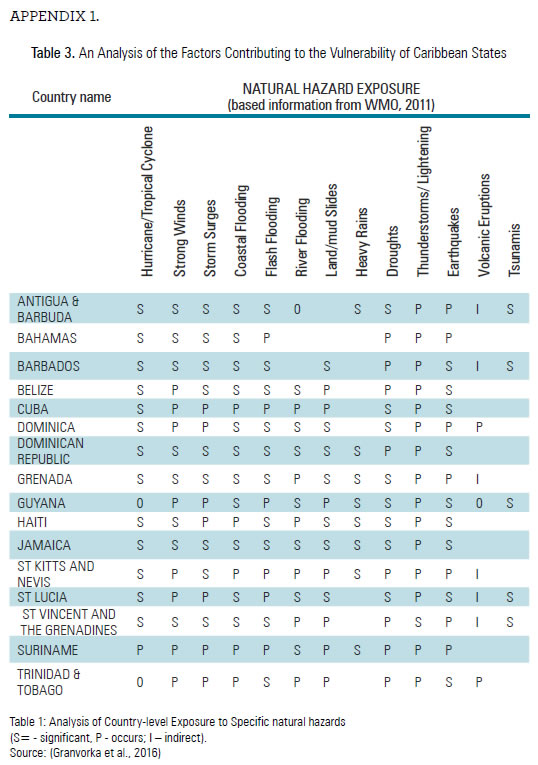
The case has been made for the relevance of the SIDS concept within business studies in order to help to advance traditional theories and concepts in areas such as international business (Williams, 2015; Williams & Morgan, 2012; Wint, 2003). More recently, however, the focus on climate change and resulting risks have heralded a new thinking, reinvigorating the SIDS concept in ways which have helped to more definitively address the issue of the relevance of SIDS and refocus attention on the vulnerability of the Caribbean (see Appendix 1) and other regions. For example, the specific case of countries in the Pacific has been used to support discussions on the effects of climate change and the need for action at the global level. One of the major focuses of DRM programmes globally is SIDS (Barnett & Campbell, 2010; UNISDR, 2013). Exposure to external shocks, such as natural hazards, is usually very devastating for such economies as they are unlikely to have the economic capacity to recover from calamities or implement comprehensive disaster management plans (Rautela, 20006). An excellent review of some the main risks and challenges related to climate change in the Caribbean can be found in a 2012 publication by the Climate Studies Group, which categorises climate change variables and extreme events and their impacts on major sectors, agendas (development) and groups across Jamaica (Climate Studies Group, 2012).
Research has also highlighted the impact of disasters on Caribbean societies (Climate Studies Group, 2012; Granvorka, Strobl, Walling, & Berman, 2016) and noted the effect of natural disasters in curtailing the best made development plans (MintoCoy & Berman, 2016). The disaster pattern is marked by hurricanes and increasingly prolonged periods of drought, interspersed with flooding from heavy rainfall, as well as earthquakes. UNISDR (2013) also identifies some of the specific qualities of SIDS that make them particularly vulnerable to disasters, including high levels of indebtedness, economic concentration, remoteness, narrow resource base and weak infrastructure. Additionally, the recent emergence of health threats never before seen, such as the Zika Virus, Chikungunya and the H1N1 flu virus have negative implications for workforce productivity, business continuity and health in the region.
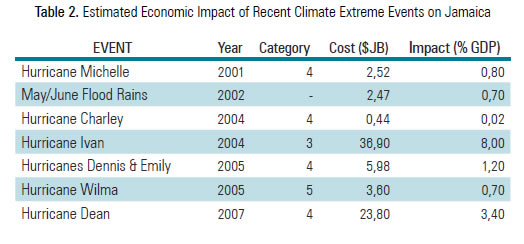
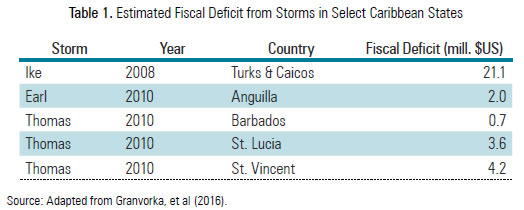
]]> DRM is particularly relevant to the region not only because of high-impact and high-profile events but also because of frequently occurring low-profile disasters; as well as flooding. Further, while the impact of a hurricane Katrina may have dented the US economy, arguably impacting more adversely on the national psyche, the impact of such a storm on a Caribbean city and its national economy is likely to be far greater (See Table 1 and 2).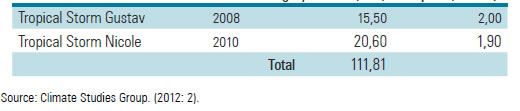
Measures to address DRM in the Caribbean include the streamlining of disaster management efforts. Each of the member states has national disaster management systems and organizations. These differ in size and scope according to the needs of the specific country. Additionally, Jamaica, Barbados and Dominican Republic have adopted strategies which demonstrate some forward thinking. Through inclusion or a proactive approach they have seen major success and to some extent have reduced the states' vulnerability to the risk of floods, storms and earthquakes. However, attention to concepts such as risk management, business or crisis communication and business continuity from a DRM perspective (Snedaker & Rima, 2013; Watters, 2014), as well as to how addressing DRM could affect competitiveness and create opportunities for the region has been scant or lacking. This even as other countries such as Canada have
MAINSTREAMING AS A CONCEPT
It is important to convey the specific understanding of the concept of ''mainstreaming'' that has guided the composition of this paper, that is, its use here is much the same as in public policy and development discourse.13 For instance, mainstreaming in education suggests purposeful efforts to integrate disabled and children with special needs into traditional classroom settings and activities within the school. Similarly the suggestion here is to include DRM in conventional subjects and practices, including training programmes of business schools. The aim of mainstreaming is for DRM to become a normal consideration in business education.
Such an approach is relevant for a number of reasons. Firstly, mainstreaming implies the inclusion of new material into existing programs not the introduction of new programmes. Secondly, it implies the inclusion is not done in a siloed fashion, particularly given the overarching and pervasiveness of DRM and its relevance to multiple areas of business performance and planning. Instead, what is argued for is a weaving of DRM into a number of existing courses and training programmes, specifically in the short term, with more focused topics being introduced over time. Thirdly, while templates are important, the suggestion here is that once there is an understanding that DRM as a general concept is to be worked into a programme, there should be some flexibility in program design and delivery which will allow for different DRM themes to be brought into specific courses as determined by the lecturer. Mainstreaming then, highlights the inter-linkages between DRM and other areas as opposed to being a distinct area of focus. Additionally, as the time frame for introducing new courses and programmes may be lengthy, the mainstreaming approach offers the ability to integrate DRM while the more costly investment in developing or formulating new courses or programmes, is considered over the long term. The approach to mainstreaming also suggests attention beyond in-class learning to all aspects of management education and training as well as other activities of the school. Finally, mainstreaming also provides for consideration the relevance of context. For example, the resources available for integrating DRM may be limited in a SIDS setting, and the types of disasters and the ways in which they impact a society may differ across regions.
For the Caribbean in particular, mainstreaming DRM is not only about immediate results but importantly about the sustainability of the region's economy and its ability to survive in an increasingly competitive and challenging global environment.
MONA SCHOOL OF BUSINESS AND MANAGEMENT: THE PREMIER INSTITUTION FOR MANAGEMENT EDUCATION IN THE CARIBBEAN
]]> The University of the West Indies (UWI) is a regional university with main campuses at Cave Hill, Barbados; St. Augustine, Trinidad and Tobago and Mona, Jamaica and an Open Campus serving eighteen English speaking countries in the Caribbean. It was established in 1948 as a College of the University of London. It gained independent university status in 1962. The total enrolment across all campuses ad sites for the 2014/2015 academic year was almost 500,000 of which 17,200 were in Jamaica14.Mona School of Business and Management (MSBM) was established on August 1, 2012. It evolved from the merger of the former Mona School of Business (MSB) that had a 25 year history of delivering master's level business management education and the Department of Management Studies (DOMS) which had a rich 42 year history of delivering undergraduate and graduate management programmes. Currently there are approximately 5,500 students enrolled in both graduate and undergraduate programmes. MSBM is the premier business school in the Caribbean, offering a suite of academic programmes (both graduate and undergraduate) and training programs to Jamaica and the Caribbean. It has long been involved in the education and training of business leaders and managers across Jamaica and the Caribbean, making it a major influence in directing business practices and thinking nationally. Its role has been recognised publically and it has been the recipient of a number of awards and acknowledgements from the local business community.
The location of MSBM in a small island and developing state is also of relevance not only in the practical sense of widening coverage in DRM beyond large or developed countries and in so doing, broadening the coverage of experiences, but also more generally. The use of this institution as a case study is also recognition that small island developing states (SIDS), including those in the Caribbean, currently face a number of environmental threats and peculiarities relating to business and management at the local and international levels which have heightened their vulnerability and that their unique perspective is of value to the partnership.
MSBM is a key plank of The University of the West Indies (UWI Mona's) value proposition to its constituents in Jamaica and the region. Specifically, its mandate is to be the arm of the University that facilitates effective business education and practices in the private and public sectors in order to advance the economic development agenda of Jamaica and the region by:
The School MSBM complements its unique academic programmes with cutting edge consultancy services and public policy research, the principal business objective being to provide decision makers with expert advice in handling their most critical strategic issues. It has handled a large portfolio of multidisciplinary projects in Jamaica and the region relating to leadership and management development, strategic thinking and management, project and performance management systems, and other areas of professional services and continues to contribute to the development of a particular ethos within the business community in Jamaica and the region.
Like most business schools of repute, MSBM conveys its unique perspectives and delivers cutting-edge business related content in its publication the MSB Business Review which was launched in 2010. In 2012 the magazine was renamed the MSBM Business Review to reflect the school's merger exercise.
Awards and Accolades
Over the years, the growth, development and academic achievements of the MSBM have been recognized through a number of awards and accolades.
In 2001, the School won the USAID, 40th Anniversary Award of Excellence for Education, and in 2004, it was admitted to Membership of the Association to Advance Collegiate Schools of Business (ACSB) International and in 2005, the School received the UWI's ''Principal's Award for Outstanding Contribution to Public Policy''.
The World Economic Forum (WEF) also selected MSBM as its partner institution for administering the Global Competitiveness Survey for Jamaica.
MSBM was awarded Best of Chamber (Small Enterprise) 2014 by the Jamaica Chamber of Commerce (JCC). The award is bestowed on ''an outstanding member company that has met the highest level of sector performance and best practices in the areas of corporate leadership, product and service quality, human resource development, marketing innovation, corporate citizenship and sustained growth''. MSBM joins a long list of distinguished Jamaican firms, organisations and individuals to be honoured by the JCC. The Chamber is one of the oldest business associations in the hemisphere, and this was the 33rd staging of the awards.
MSBM was among the top three winners of the Project Management Organization of the Year (PMOY) award 2015. The School was recognized by the Project Management Institute (PMI) for excellence in project management. MSBM was awarded second place for project management excellence in relation to the opening of the MSBM Finance Lab, the first of its kind in the Caribbean.
Specific MSBM programmes have also received international recognition. The Project Management Institute (PMI) has named MSBM a Registered Education Provider (R.E.P.). The R.E.P. designation validates that an organization meets or exceeds PMI's rigorous quality standards and can deliver world-class, effective project management training and education.
]]> In June 2011, the MSBM received accreditation from the Association of MBAs (AMBA) for a period of three years for achieving what AMBA describes as the highest standard in Postgraduate Business Education for its EMBA and MBA programmes. AMBA's accreditation is internationally recognised as the global standard for all MBA, MBM and DBA programmes. The programmes were re-accredited after another rigorous assessment in June 2014 for another three year period by the AMBA team. The re-accreditation by the AMBA is further proof that the MSBM has indeed become the centre of excellence in business and management education for the Caribbean.Overview of Programmes and Structure of Programmes
MSBM offers undergraduate (B.Sc.) degree programmes in Management Studies, Accounting, Entrepreneurship, Human Resource Management, Marketing, Operations, Management Information Systems (Western Jamaica Campus (WJC)), Banking and Finance (offered jointly with the Department of Economics), Chemistry Management (Administered by the Faculty of Science and Technology) and Tourism Management.
Postgraduate degree programmes offered by MSBM include: the Doctorate in Business Administration (DBA), Master in Business Administration (MBA), Master of Business Management (MBM) programmes, the (MSc.) degree programmes in: Tourism, National Security and Strategic Studies, Enterprise Risk Management (ERM), Accounting, Computer-based Management Information Systems (CBMIS), Taxation, Telecommunications Policy and Management, Sports Business Management, and the Diploma in Business Administration and Sports Business Management. These programmes are offered in an excellent learning environment, using a pool of talented and highly qualified local and international faculty.
Current Coverage of DRM in MSBM Programmes
An emerging focus on DRM directly and through the lens of sustainability is evidenced by ongoing research of members of faculty and the forthcoming Business and Management Conference, themed Connecting the Dots: Enterprise, Entrepreneurship and Sustainable Development.15
In terms of academic research a number of entities across the university campus conduct research in the area of disaster management (e.g. the Earthquake Unit, the Department of Geography and Geology and Mona GeoInformatics Institute) while at the MSBM, a major initiative is the research being conducted by Dr. Lila Rao-Graham and Dr. Maurice McNaughton through the Open & Collaborative Science in Development Network (OCSDNet), supported by Canada's International Development Research Centre and the UK Government's Department for International Development. This research is entitled Towards a Knowledge Broker for Collaborative Disaster Recovery Planning in the Small Island Developing States of the Caribbean and its aim is the development of a knowledge broker, an open source technical solution for the integration of silos of knowledge related to DRP dispersed throughout the Caribbean region (Rao & McNaughton, 2015). This project came about as the result of the recognition that many SIDS in the Caribbean are susceptible to natural disasters yet may lack the resources to develop comprehensive and effective Disaster Recovery Plans (DRP). Many SIDS are susceptible to the same types of disasters and have similar institutional structures and procedures in place for responding to them. However, there are many resources available for DRP, both locally and regionally, they currently exist as disparate silos. The authors recognised that if states collaborated and shared their existing data and the cost of the resources required to develop related plans it would lead to a more eftcient development methodology, more complete DRPs, and more effective recovery coordination after a disaster event. The focus of the research, at the moment, is at the government level, however, its implications are also relevant to businesses and there is potential for the tool to be used in some of the programmes suggested herein16.
Despite this emerging focus, there is a general dearth of material and a lack of inclusion of DRM as a theme in existing offerings. This is curious considering the significant impact of natural disasters in the country and region. This finding is not unique to the MSBM and the Caribbean. As part of the preparation for this paper we conducted a (somewhat limited) benchmarking exercise of what other universities internationally offer in this domain. A University that has a number of offerings in this domain (although not specific to the business school) is the University of Hawaii which is already in partnership with Jamaica and UWI through their Pacific Disaster Centre (PDC) (http://www.pdc.org/). The University of Hawaii offers a number of short courses (https://ndptc.hawaii.edu/training/catalog) that are extremely relevant to our region (e.g. Natural Disaster Awareness for Community Leaders (AWR-310), Leveraging Tools for Conducting Damage Assessments, Social Media Engagement Strategies). The University also offers a Bachelor of Arts in Public Administration with a concentration in Disaster Preparedness & Emergency Management and a certificate in Disaster Preparedness & Emergency Management. One of the courses in this programme which could be of critical importance and whose topics could be included in the curriculum of a business school is Disaster Recovery and Business Continuation.
The general conclusion is that while not much exists within the MSBM at present, there are opportunities for the introduction and integration of DRM throughout the School. These suggestions are also in line with the School's focus on internationalisation with membership in the proposed network of international business schools offering the possibility of internationalising the School's programmes and networks. The following section offers suggestions for how this might be accomplished.
For the MSBM, mainstreaming DRM is not an end in itself but rather an important step towards affecting behaviour change and practice among businesses; raising awareness among public policy makers of the implications of disasters for business and including the policy makers as key stakeholders in DRM policy-making; and upending the apathy and lack of connected thinking regarding DRM and productivity within the region and beyond. The productivity issue is particularly important in the context of the high rates of migration of the most skilled and educated Jamaicans. For instance, estimates suggest that up to 80% of the most skilled and highest trained Jamaicans have migrated, mainly to the US, UK and Canada, since the nation's independence in 1962 (Minto-Coy, 2009, 2011, 2016a). The role of management education in Jamaica and proposals contained in this paper are, therefore, not only about Jamaica and the Caribbean in the present, but importantly about educating Jamaicans now for global impact in the future.
]]> MAINSTREAMING DRM INTO MANAGEMENT EDUCATION IN JAMAICAWhile the general findings indicate a lack of DRM related issues in management education across the board, there are also a number of opportunities for introducing and integrating DRM into existing programmes. This includes introduction via established business and management concepts such as risk and business continuity. This section offers suggestions for how this can be accomplished. However, as per the particular context, the approach suggested is a phased one with specific themes in the Sendai Framework, being included at different periods, as opposed to an emphasis in the short term to ensure that one or two themes are integrated.
With the above in mind, the proposals have been grouped and presented for the short, medium and long term. The designation is guided by the investment and finance literature (George, 1984) with 'short' referring to a period under 1 year, medium to 1-5 years and long term covering a period over 5 years. Since the MSBM has modern technologies for streaming and delivering programmes in a synchronous, asynchronous, online and/or blended fashion with partnerships across member institutions to facilitate remote content delivery could be undertaken where the school does not have the resources to deliver a course unilaterally. Where this is the case, it is also anticipated that internal learning will also take place over time.
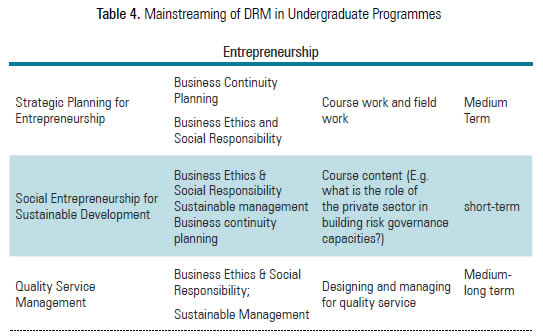
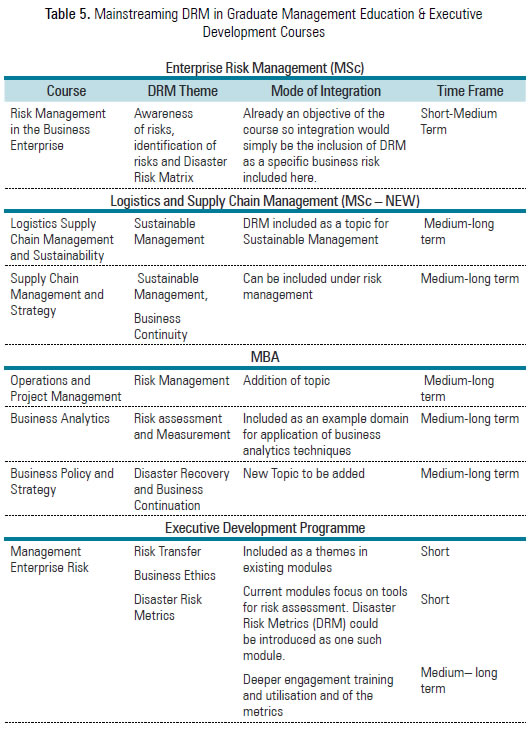
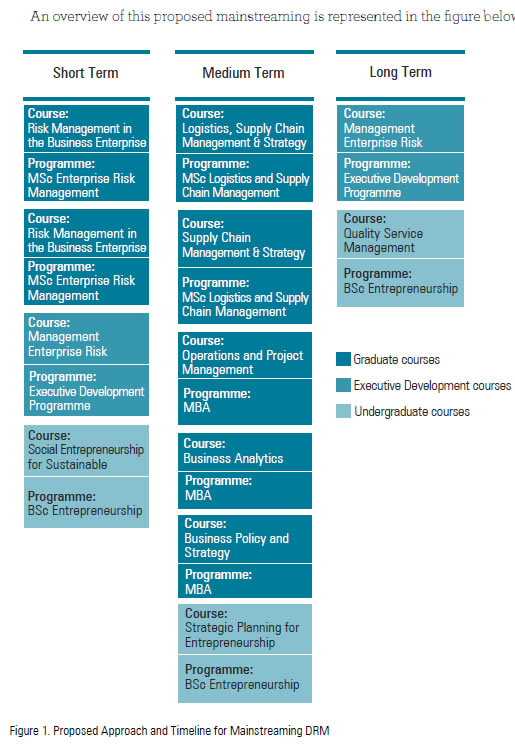
The specific programmes into which DRM will be integrated, the thematic area and mode of integration along with a figure representing the overall proposed approach are highlighted in Appendix 2. The courses selected naturally lend themselves to a consideration of DRM. They are also core courses or attract a large number of students (as electives). The aim is to increase the possibility that MSBM students, as well as those in other departments, undertaking crossdepartmental or -faculty courses will be introduced to some aspect of DRM. Additionally, the adoption of a broad-based approach as suggested here is contextually relevant, allowing for the best utilisation of limited resources including financial, physical and human (an ever-present consideration for any business school but even more so for one in a SIDS).
The proposals below are meant to accompany the suggestions in Appendix 2
Immediate
The adoption of DRM as a consideration on overall business performance will be approached firstly, from the collation of training materials, course outlines, case materials and other existing resource on DRM. Such material will be identified by reviewing the practices within other business schools which currently include courses on DRM. Secondly, core courses currently taught within the School will be selected as the first points for introducing DRM. These courses will serve as a route to reach a majority of students. Thirdly, a special panel on ''Sustainability and Management Education'' will be convened at the MSBM's Business & Management Conference to be held in Kingston, Jamaica, November 9-11, 2016. The panel will introduce the many ways in which business and DRM intersect. This will be facilitated by one of the authors in her role as conference co-chair and chair of the programme committee. The theme of the conference naturally lends itself to considering DRM and Sustainability.17 Finally, a research program that focuses on the impact of disasters on businesses, including small businesses, in Jamaica and the Caribbean will be developed. Execution will begin over the medium term with the aim being that the findings will strengthen the case for businesses to focus on DRM (e.g. determine precise losses and the number of businesses that have been wiped out by disasters) as well as, build local business cases for teaching and training purposes.
Medium Term
Over the medium term, an internal workshop for business and management educators and trainers will be convened with the aim of raising the awareness of DRM and the ways in which it can be introduced within the existing curriculum. The assumption here is that the expertise to lead such a workshop already resides in the proposed network of international business schools. This will herald the introduction of DRM into select courses and training programmes. The Caribbean, even while it shares common issues with other regions, has its own specific experience with DRM. The region therefore has much to offer in the way of practical teaching cases on how businesses are affected, currently and can address DRM. Key to this will be the development of a number of teaching cases on DRM in SIDS and particularly on SMEs. The executive training programmes and direct impact on business will also be considered via a special workshop to provide targeted DRR training for SMEs and the private sector.18
The MSBM will also invite, through the ongoing visiting scholars programme, an academic expert in the area of DRM for 3 months to assist the school in an audit of its programmes and a review of the suggestions contained in the present paper in order to develop a road map for implementation. The scholar would also work with MSBM academics to develop case studies and research papers for publication in internationally recognised journals and thus, incentivising locally based academics to focus on DRM in their research as well.19
]]> Other initiatives could include (i) the convening of an event (e.g. workshop or conference) aimed at drawing attention to DRM in business and management education and practice. This would contribute to the development and application of concepts, and the build-up of a network of researchers and a bank of material on DRM, while also providing a space for the private sector to be engaged in current and best practices around DRM in business. The conference could be hosted by a different region or partner should the decision be taken to have a recurring event each cycle. (ii) A survey of current industry surveys on current DRM practices among Jamaican and Caribbean based businesses to contribute to instructional material but also to raise awareness of DRM among businesses and assess the true state of affairs for Caribbean firms as it relates to DRM. (iii) Encouraging partnerships with other Business Schools in SIDS towards the exchange of information, best practices and development of technologies and strategies for DRM in business. (iv) The development of overview courses in professional management training programmes to introduce business and public sector managers to DRM as well as individual modules which then focus on each of the seven themes (including, Disaster Risk Metrics and Sustainable Business Management).Long Term
In seeking to escalate DRM mainstreaming, the long term move would be to introduce DRM as a specific area of study with professional training programmes and certification of individuals within the private sector as DRM professionals in their respective organisations. Indeed, the opportunity is there for management schools, through consultancies, to offer such services (e.g. DRM audits) for industry leaders. The possibility exists for the creation of a market for DRM services, which would help to raise the profile of DRM as an opportunity area. Here a ''training the trainers'' approach could be adopted, where Business Schools train individuals who would then assist firms to apply Disaster Risk Metrics in their own organisations.
A number of excellent sources on DRM and the private sector have been emerging over the years (some of which have been referred to in this document). However, the literature and training material as well as academic content still require much development in quantity, quality and depth. Additional content could be generated from workshops and conferences as well as through publications including targeted journals and securing a book series with a global publisher. This could encourage the emergence of DRM as a legitimate area in management studies, with its own concepts, theories and approaches that will allow for testing and generalisations. Aligned to this will be the development of an online repository for DRM professionals and educators. Such a repository would house important information, including instructional tools, cases and other materials with considerations to the value of open vs. paid access. The availability of openly-accessible resources could aid in mainstreaming efforts and lessen the burden on lecturers to generate completely new tools individually. On the other hand, this would also have to be considered in light of a desire for sustainability. Such a repository can be developed through various levels of support (financial and the provision of content) through the present partnership and managed by the MSBM.
A final goal for mainstreaming would be to secure funding for a DBA scholarship in DRM, which would contribute to the development of specific expertise as well as research in the area of DRM/DRR in the Caribbean over the long run.
Risk Factors for Successfully Mainstreaming DRM in Management Education
Ownership and Support from Highest Level of the Business School. Successful mainstreaming of DRM will require the support and leadership of the highest level of the business school (the Executive Director). Support will particularly be necessary over the short term in order to signal to the academy the level of intent and likely implementation of some actions recommended here. Ownership and management beyond the Board and Executive Director is also important. The Strategy Monitoring, Projects and Evaluation Unit will be tasked with overseeing the actual mainstreaming efforts and finalising the precise steps to be taken in actualising this paper.
Availability of Quality Material to Fit into Course Content. There is a likelihood that mainstreaming will be affected overtime by the extent to which instructional material and resources can be developed for the MSBM and other business schools to adopt and adapt.
Availability of Resources. Mainstreaming also requires attention to the practicalities of cost and the need for financial support beyond tuition fees particularly, in its early phases. The graduated approach to mainstreaming could assist, in the first instance, to alleviate (but not erase) some of the challenges around funding that a Business School in a small developing country such as Jamaica might face in designing course content.
Strength and Support of International Partnership. While the internal sustainability of the programmes will be important, there is no discounting the role of international support as envisioned, for instance, in the present proposal for a network of business schools in DRM. The role of the international partners may also be of particular importance in the case of SIDS where there has tended to be a reliance on external funding and knowledge exchange with such support acting to legitimize the adoption of new practices and thinking locally.
]]> Monitoring and EvaluationA level of flexibility is essential to the successful implementation of the strategies proposed in this paper. However, the proposals are not static and will be reworked over time, particularly given the time constraints in preparing the document. There should be periodic review following implementation by the Strategy Monitoring, Projects and Evaluation Unit, each review shaping the next set of proposals.
CONCLUSION
This paper aimed to offer a set of proposals for mainstreaming disaster risk management in management education. A particular approach to mainstreaming was adopted which suggests the integration of DRM themes on a phased basis. This approach also acknowledged that mainstreaming need not be about the adoption of new programmes but rather integration into existing programmes via e.g. course projects or through inclusion in those existing themes and modules which naturally allow for such inclusion. Additionally, the paper's detailing of the context and experiences as it relates to small and vulnerable settings such as SIDS, contributes to a broadening of understandings on the issues faced by these states.
A stages approach has been suggested with key steps categorised over the short, medium and long term. The proposals contained herein were considered mainly from the context of the proposing institution, the Mona School of Business and Management, in the Caribbean grouping of Small Island Developing States. As such, they are designed, as much as possible, to sit within the frame of existing supporting initiatives and ongoing programmes and, importantly, to be cognizant of the existing financial and other resource constraints faced by small institutions in small and developing settings. Hence, a final contribution of the paper is to the wider discussion of the role of education and educational institutions in responding to socio-economic challenges, and more specifically where this is a small institution faced with competing demands and obligations. Therefore, the set of recommendations – an action plan – for business education and training at the undergraduate and postgraduate levels is mindful of the constraints and challenges related to size and capacity. Nevertheless, the proposals are not completely outside the context of other developing or even developed states. As such, there is some resonance with other settings including the grouping of management education schools, more generally with proposals being made for exchange and cross-national learning and cooperation.
One of the major challenges foreseen in implementing this mainstreaming process is the need to ensure ''buy-in'' from the members of the faculty of the school who will be relied on to integrate this content. They must understand the importance and relevance of these topics and this may require some sensitisation. There is also need to ensure that those exposed to the content in an educational setting are motivated enough to implement what they have learnt in the businesses they belong to or will join. MSBM does have an advantage in that a number of students, especially at the graduate level, are currently working so they are well placed to begin implementation immediately.
Ultimately, the proposals have also been framed with an understanding that this paper is a living document. It is the intent of the MSBM to modify it over the course of this project and to document the MSBM's rationale and technical justification for actions at each level of implementation. These suggestions are deemed to be important in raising the profile of DRM at the level of the education and training institutions with the ultimate aim being to influence the future business managers and employees to create the change among their organisations and colleagues. The project will also complement the business school's ongoing efforts to engage key stakeholders, address pressing development and growth challenges and contribute to its role in identifying solutions to such challenges.
APPENDIX 2. MAINSTREAMING DRM INTO MANAGEMENT EDUCATION
The shift from a narrow focus on the risks in DRM to highlighting the value of DRM implies a number of opportunities for new ventures and the development of innovative products and services around DRM. Included here are opportunities for the introduction of insurance products tailored to specific businesses and the development of more resilient infrastructure.
]]> These themes lend themselves to a natural integration into the existing undergraduate courses, a sample of which and specific areas of integration noted below:Given the existing and upcoming MSBM graduate programmes there are a number of opportunities for introducing and/or expanding the already existing disaster and risk management topics in existing curriculum. Additionally, the MSBM recognizes that continued management education is important for success through the development the Professional Services Unit (PSU).
The PSU contributes to the economic development of Jamaica and the Caribbean region by providing creative solutions for improving the effectiveness and eftciency of private and public sector organizations. Currently, this is achieved through four pillars: (1) professional and executive development training, (2) general business consulting, (3) business cases and research databases, and (4) conferences, seminars, symposia and workshops.
Some of these are listed below:
1 The paper was initially prepared as part of the ''Disaster Risk Management in Business Education'' initiative organised by the Extreme Events Institute (EEI) at Florida International University (FIU). The initiative is endorsed by the United Nations Oftce for Disaster Reduction's Private Sector Alliance for Risk Sensitive Investment (UNISDR-ARISE) and supported by the Federal Republic of Germany's Ministry for Economic Cooperation and Development (BMZ).
4 The authors are aware of the variances over the years, including the most recent shift from an emphasis on DRM to Disaster Risk Reduction. However, DRM will be utilised as per the specific directions of the project guidelines.
5 Available at: http://www.ifrc.org/ar/what-we-do/disaster-management/about-disasters/what-is-a-disaster/.
]]> 6 This refers to the Commonwealth Caribbean which comprises the following territories: Anguilla, Antigua and Barbuda, Bahamas, Barbados, British Virgin Islands, Cayman Islands, Dominica, Grenada, Guyana, Jamaica, Montserrat, Puerto Rico, Saba, St. Eustatius, St. Kitts and Nevis, St. Lucia, St. Maarten, St. Vincent and the Grenadines, Trinidad and Tobago, Turks and Caicos and the U.S. Virgin Islands. Also see, (Minto-Coy, 2016b)7 See for instance the very comprehensive overview of the impact of climate change on Jamaica from the Climate Studies Group (2012).
8 For the Caribbean, the heavy reliance on development assistance and multinational engagements have tended to be focused on Government and its agencies with insuftcient role for the private sector in such arrangements. Again, this is not unique to the region but a long practice in international relations which has in the main tended to be focused on interactions between states (governments). The resulting emphasis on development (not growth) funding has only more recently begun to shift with attention from agencies such as USAID on growing the private sector in the Caribbean.
9 Global Assessment Report on Disaster Reduction, Risk and Poverty in a Changing Climate (GAR09) and Revealing Risk – Redefining Development (GAR11).
10 http://unohrlls.org/custom-content/uploads/2013/08/SIDS-Small-Islands-Bigger-Stakes.pdf
11 http://www.sids2014.org/samoapathway
12 http://www.preventionweb.net/english/hyogo/gar/2013/en/gar-pdf/GAR13_PressKit_EN.pdf
REFERENCES
Barnett, J., & Campbell, J. (2010). Climate Change and Small Island States: Power, Knowledge and the South Pacific. London; Washington: Earthscan. [ Links ]
]]>Climate Studies Group, M. C. (2012). State of the Jamaican Climate 2012: Information for Resilience Building (Summary for Policymakers). Kingston: Planning Institute of Jamaica (PIOJ). [ Links ]
Coppola, D. P. (2015). Introduction to International Disaster Management. Amsterdam: Elsevier. [ Links ]
Freeman, P., Martin, L., Linnerooth-Bayer, J., Mechler, R., Pflug, G., & Warner, K. (2003). Disaster Risk Management: National Systems for the Comprehensive Management of Disaster Risk and Financial Strategies for Natural Disaster Reconstruction. Washington: IDB. [ Links ]
George, F. (1984). The Science of Investment. Kent: Abacus Press. [ Links ]
Granvorka, C. G., Strobl, E. A., Walling, L., & Berman, E. M. (2016). Public Administration and Policy in the Caribbean. In I. Minto-Coy & E. Berman (Eds.), Public Administration and Policy in the Caribbean. Boca Raton: CRC Press. [ Links ]
]]>Lyew-Ayee, P., & Hamad, R. (2011). Natual Hazards Atlas of Jamaica. Kingston: UWI Press. [ Links ]
Minto-Coy, I. (2009). Diasporas and Development: An Assessment of the Irish Experience for the Caribbean The Caribbean Papers (Vol. Caribbean Paper No. 7). Waterloo: Centre for International Governance Innovation. [ Links ]
Minto-Coy, I. (2011). ''Beyond Remittancing'': An Investigation of the Role of ICTs in Facilitating and Extending the Diaspora's Contribution to the Caribbean. Canadian Foreign Policy Journal, 17(2), 129-141. DOI:10.10 80/11926422.2011.607021 [ Links ]
Minto-Coy, I. (2016a). Diaspora Engagement for Development in the Caribbean. In J. Crush, M. Walton-Roberts & A. Chikanda (Eds.), Diasporas, Development and Governance in the Caribbean. New York: Springer. [ Links ]
Minto-Coy, I. (2016b). The History of Public Administration in the Commonwealth Caribbean. In I. D. Minto-Coy & E. M. Berman (Eds.), Public Administration and Policy in the Caribbean. Boca Raton: CRC Press. [ Links ]
Minto-Coy, I., & Berman, E. M. (Eds.). (2016). Public Administration and Policy in the Caribbean. Boca Raton: CRC Press. [ Links ]
Morsing, M., & Rovira, A. S. (2011). Business Schools and their Contribution to Society. London: Sage. [ Links ]
Porter, F., & Sweetman, C. (Eds.). (2005). Mainstreaming Gender in Development: A Critical Review. Oxford: Oxfam. [ Links ]
Prandini, M., Vervoort Isler, P., & Barthelmess, P. (2012). Responsibile Management Education for 21st Century Leadership. Central European Business Review: Research Papers, 1(2), 16-22. [ Links ]
Rao, L., & McNaughton, M. (2015). Collaborative Disaster Preparedness through Shared Ontologies. Paper presented at the 9th Caribbean Conference on Comprehensive Disaster Management, Nassau, Bahamas. [ Links ]
Rautela, P. (2006). Redefining Disaster: Need for Managing Accidents as Disasters. Disaster Prevention and Management: An International Journal, 15(5), 799-809. [ Links ]
Rogers, D. P., & Tsirkunov, V. V. (2013). Weather & Climate Resilience: Effective Preparedeness Through National Meteorological and Hydrologic Services. Washington: World Bank. [ Links ]
Snedaker, S., & Rima, C. (2013). Business Continuity and Disaster Recovery Planning for IT Professionals. Waltham: MA Elsevier/Syngress. [ Links ]
UNISDR. (2013). Global Assessment Report on Disaster Risk Reduction 2013: From shared Risks to Shared Value: The Business Case for Disaster Risk Reduction. New York: UN/United Nations Office for Disaster Risk Reduction (UNISDR). [ Links ]
Watters, J. (2014). Disaster Recovery, Crisis Response, and Business Continuity: A Management Desk Reference. New York: Apress. [ Links ]
Williams, D. (2015). Competing Against Multinationals in Emerging Markets: Case Studies of SMEs in the Manufacturing Sector. London: Palgrave Macmillan. [ Links ]
Williams, D., & Morgan, B. (2012). Competitiveness of Small Nations: What Matters? Kingston: Arawak Publishers. [ Links ]
Wint, A. G. (2003). Competitiveness in Small Developing Economies: Insights from the Caribbean. Kingston: University of West Indies Press. [ Links ]
Wright, N. (2013). Background Paper Prepared for the Global Assessment Report on Disaster Risk Reduction 2013: Small Island Developing States, Disaster Risk Management, Disaster Risk Reduction, Climate Change Adaptation and Tourism. Geneva: UNISDR/GAR. [ Links ]
]]>